Tag: Lotte

  • Korean retail sales rise

    Korean retail sales rise

    Korea retail sales rose in June according to government data measuring major department stores and discount chains.

    The government said the year-on-year increase was fuelled by more holidays.

    The combined sales of three department stores – Hyundai, Lotte and Shinsegae – increased 11.8 per cent on-year in June, while those of major discount retailers – E-Mart, Lotte Mart and Home Plus – edged up 0.9 per cent during the same period, according to the data compiled by the Ministry of Trade, Industry and Energy.

    The ministry said sales went up as the number of holidays increased by one day from a year earlier.

    Sales at convenience stores jumped 18 per cent on-year last month, boosted by “a dramatic rise in food sales”, mostly of instant food. Convenience stores have retained double-digit growth rates since the last quarter of 2014 amid rising single-person households.

    The number of single-person households was estimated at 5.06 million in 2015, 7.7 times higher than the 661,000 households of 1985, according to the report by the state-run Korea Institute for Health and Social Affairs.

    Meanwhile, sales at hypermarkets, mostly run by large retailers, slid 7.8 per cent on-year.


  • Rising sales at department stores suggest recovery of retail sector

    Rising sales at department stores suggest recovery of retail sector

    South Korea’s major department store chains saw their sales move up 2.4 percent in the first quarter from a year earlier, government data showed Sunday, indicating a recovery may be under way in the retail sector.

    According to the data compiled by the Ministry of Trade, Industry and Energy, South Korea’s top three department store brands — Lotte, Hyundai and Shinsegae — saw their sales improve in the January-March period from a year earlier, recovering from the 1.2 percent on-year drop posted for all of 2015.

    Last year, local department stores suffered a drop in performances due to the outbreak of the Middle East Respiratory Syndrome (MERS) here, which induced South Koreans to avoid crowded areas and stay indoors.

    The department stores also saw their sales advance 4.3 percent on-year in April. While sales dropped 2.7 percent on-year in May, they still were better than at large-sized supermarket chains, which suffered a 6.3 percent drop in sales over the cited period.

    Industry watchers said the recovery may give birth to a new department store branch with annual sales of 1 trillion won (US$879 million).

    Last year, only three branches managed to post annual sales above 1 trillion won, with two of them being Lotte and the other Shinsegae.

    “As the sales of large branches are recovering, and as department stores are aggressively rolling out renewal projects, it is believed that the number of the so-called 1 trillion-won club branches will increase,” an industry watcher said.


  • Lotte Department Store to Introduce 3D Foot-Measuring Device

    Lotte Department Store to Introduce 3D Foot-Measuring Device

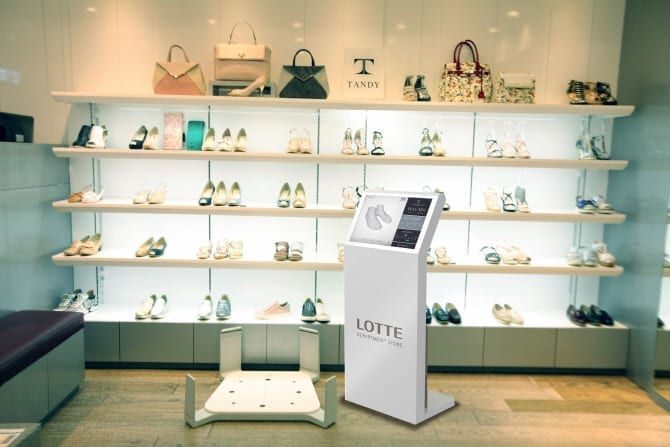
    Korean retail giant Lotte Department Store revealed Thursday that it will implement a new 3D foot-measuring device at its stores starting Friday, to provide quick and accurate measurements for custom shoe orders.

    By placing his or her foot on the device, a customer will able to obtain not only their foot’s length, but its overall shape, including width and height, to gather more accurate sizing information.

    The conventional foot-measuring process can make customers feel uncomfortable, and usually takes two to three minutes. But the new device will shorten the process to two seconds using 3D scanning technology, according to a Lotte official.

    After having their feet measured, customers will select the shoe design of their choice, and a final pair of handmade shoes will be delivered to their doorstep in about two weeks. Upon request, customers can even have their foot size information mailed to them or saved in the store’s computer system, so they can place more orders in the future without having to re-measure their feet.

    The 3D device was developed in collaboration with Swedish start-up Volumental, and will first make its debut at the Tandy shoe store in Lotte’s flagship department store in Myeongdong. The service will expand to other shoe brands in department stores across the country starting July 29.

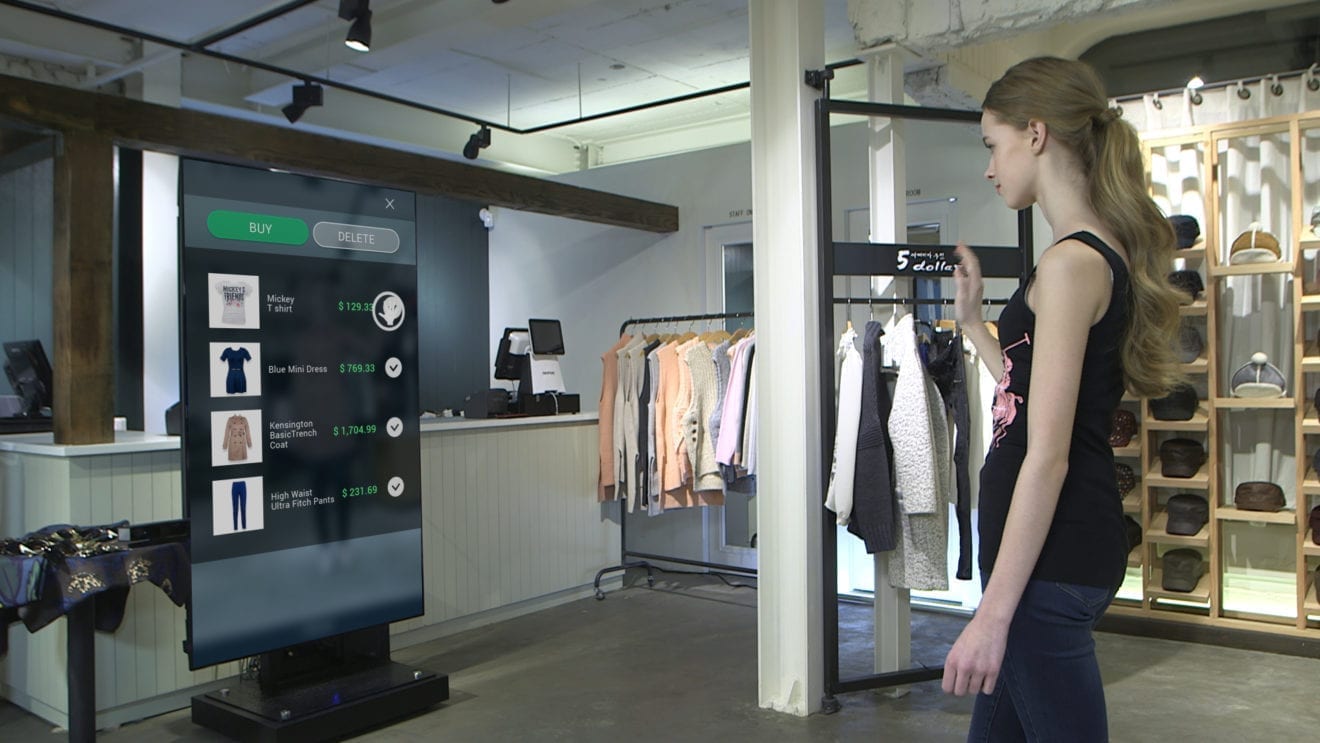
    Lotte Department Store also plans to launch a 3D virtual fitting service in the latter half of the year. The service uses a special mirror that provides a virtual reflection of the customer wearing clothing by applying a 3D image of the product to the customers’ body.

  • Indonesia shines for retail investment

    Indonesia shines for retail investment

    Southeast Asia’s largest economy, Indonesia, is ranked the world’s fifth most-attractive market for retail investment in AT Kearney’s 2016 Global Retail Development Index.

    In previous years it has ranked in the top 20.

    It is an exciting time to be investing in Indonesia’s retail sector, the index says. The country scores 64.3 in market size (out of a 0-100 scale) and low in country risk (38.9) – lower than the top three markets, China, India and Malaysia. Urgency to enter the market is rated at 68.9, and the overall score of 55.6 is just one point behind Kazakhstan.

    “Despite its relatively low retail sales per capita and currency volatility, Indonesia’s huge population and cities make it quite attractive to foreign retailers, which see untapped potential in the country and are investing heavily in new development,” says the report, which covers 30 developing countries that represent more than half of total global retail sales.

    This is reflected by burgeoning foreign retail investments in the country, reports the Jakarta Post. It cites Dubai-based Lulu, which opened its first hypermarket in Indonesia this month with an investment plan of US$500 million covering nine hypermarkets and a warehouse. Meanwhile, Singapore’s Courts, South Korea’s Lotte, and Ikea and H&M from Sweden all have a presence and expansion plans in Indonesia. Courts plans to open four stores by next March to add to its existing five, and has seen its sales growth double since opening in 2014.

    Indonesian convenience stores Alfamart and Indomaret have also been expanding. Indomaret plans to add 1600 outlets this year to its 12,210 stores, while Alfamart is aiming for six-fold sales growth this year driven by its upgraded online presence.

    The government has opened up eCommerce to foreign ownership where the business value is more than Rp100 billion (US$7.49 million). According to the Indonesian eCommerce Association (Idea), eCommerce transactions are expected to reach $24.6 billion this year, three times more than in 2013.

    Indonesian retailers Matahari and Mitra Adi Perkasa have launched online shopping, while grocers Alfamart and Happy Fresh are extending their online offering.

  • South Korea prosecutors raid more Lotte Group firms

    South Korea prosecutors raid more Lotte Group firms

    South Korean prosecutors carried out further raids on businesses of the Lotte Group, a sprawling conglomerate at the centre of a bribery probe.

    At least 10 divisions were raided including its chemical and confectionery businesses, a spokesman said.

    The raids come after police swooped on the group’s headquarters on Friday.

    This caused the company to pull out of a stock market share sale worth as much as $4.5bn (£3bn).

    The allegations and police action also led Korea’s fifth largest conglomerate to pull out of bidding for the US chemicals company.

    Shares in both the chemical and confectionery group have fallen sharply since Friday’s raid.

    Bid withdrawn

    People familiar with the matter told Reuters that Friday’s raids, which involved about 200 prosecutors and investigators, were part of an investigation into a possible slush fund, although the Seoul prosecutors office could not be reached for comment.

    Lotte’s offer of shares to the public, known as an initial public offering, had been intended in part to simplify the ownership structure and improve corporate governance at the group.

    This followed a bitter feud over succession among the founding Shin family last year drew wide public criticism.

    The group has more than 90 firms in sectors as diverse as beer, hotels and chemicals, and annual revenues of around $60bn, according to the Korea Fair Trade Commission.

  • Will Lotte Chairman Shin Dong-bin be questioned?

    Will Lotte Chairman Shin Dong-bin be questioned?

    A series of prosecution probes on alleged embezzlement and malpractice in subsidiaries of Korea’s retail giant Lotte Group hints that the nation’s fifth-largest family-controlled conglomerate’s chairman Shin Dong-bin may be questioned as well.A high-ranking official at Seoul Central District Prosecutor’s Office didn’t rule out the possibility that prosecutors may issue an arrest warrant; however, the time hasn’t ripened yet.

    “In prior cases such as SK and Hyosung, prosecution summoned a number of company officials and tracked the flow of funds to secure solid evidence before questioning group owners. I think it is too early to discuss whether or when to call Lotte chairman Shin,” a senior prosecutor told The Korea Times by telephone, Sunday.

    Key Lotte Group affiliates were being probed over their role to create a slush fund to bribe influential local politicians in return for winning advantages to push ahead the group’s fancy business projects and for massive accounting fraud.

    Prosecutors raided offices of Lotte Group, which were immediately reported to the chairman. Prosecutors issued an international travel ban on Shin’s confidants in what officials say is a preemptive measure before questioning the chairman.

    The official said Lotte’s senior executives “intentionally and systematically” destroyed evidence ahead of the raids, raising possibilities that the chairman was earlier informed of these actions.

    “Lotte Group attempted to destroy and hide related documents and evidence when it underwent a tax audit last year,” he said. “We confirmed that the group did the same this time but were able to secure most of the hidden documents.”

    Shin’s house was also raided while he was in the U.S. for business. The chairman is expected to be questioned by prosecutors upon his return to Korea, but some say it’s still uncertain whether the chairman will return next week, as scheduled.

    “The chairman will be notified of developments of the probe by prosecutors and his return date will be fixed according to the situation. The country’s top law firm Kim & Chang supports Shin,” said an official who is involved with the issue, by telephone.

    Prosecutors believe Chairman Shin has connections with his older sister Shin Young-ja, who allegedly coordinated bribery with failed business tycoon and lobbyist Nature Republic CEO Jung Woon-ho. Young-ja was said to take bribes from Jung in return for granting approval for Nature Republic to open its brand shops at Lotte Free Duty stores.

    No way out

    Due to growing uncertainties about the chairman’s destiny, Lotte’s key business plans have been stalled.
    In a statement, Lotte Chemical, the group’s key petrochemical affiliate, said it dropped its ambitious bid to purchase U.S. company Axiall. Lotte Chemical said the decision was mostly due to possibilities that the group may fall into managerial vacuum.
    More importantly, analysts say Lotte Group’s plan to put the Lotte Hotel for the listing in Korea, which has been slated for next month, may be delayed as the investigation is expected to be widen, hurting investor sentiment.

    The listing of Hotel Lotte is one of the reform pledges that Lotte Chairman Shin has made as part of his efforts to improve its corporate image overall.

    “It’s almost impossible to finalize the IPO by July. I don’t even think Lotte Hotel will be able to be listed this year. The initial IPO price for the hotel will be discounted further given the current market situation,” said a local analyst asking not to be identified.

    Meanwhile, the succession feud, which had seemed to come to an end, is seen to enter a second round with the latest prosecutors’ investigation as Shin’s older brother Shin Dong-joo preparing a fresh attack against the Lotte chairman over his alleged misconduct.

    Analysts say the latest probes are believed to hurt the credibility of Chairman Shin as group leader, and Dong-joo may bring up the issue at the shareholders’ meeting of Tokyo-based Lotte Holdings next week, which controls the group both in Korea and Japan.


  • South Korea’s Lotte Chemical makes $3.1bn counter bid for Axiall

    South Korea’s Lotte Chemical makes $3.1bn counter bid for Axiall

    The two companies last year formed a joint venture to build an ethylene cracker plant together in the US, which is due to start production in 2018.

    Lotte declined to reveal the exact terms of its offer, but analysts said the bid would top Westlake’s $3.1bn approach. The counter offer could prompt Westlake to raise its bid after Axiall, a maker of polyethylene products, rejected the approach in April, the analysts added.

    “Lotte Chemical will be seen as a white knight for Axiall,” Park Young-hoon, an analyst at LIG Investment & Securities, told Reuters.

    If successful, Lotte Chemical would use the acquisition of Atlanta-based Axiall to diversify its product portfolio and secure a foothold in the US.

    Axiall said it has been in talks with several potential buyers after its rejection of the first approach prompted Westlake to launch a proxy fight to oust Axiall’s board.

    However, investors were unimpressed by Tuesday’s counter-offer, driving Lotte Chemical shares down 3.5 per cent to Won260,500 — their lowest in more than four months — while the Kospi benchmark index closed up 1.3 per cent.

    “The deal could be positive for Lotte in terms of securing a stepping stone in the US, but its shares were weighed down by concerns that the acquisition price could be much higher than expected,” said Lee Ji-Yeon, analyst at IBK Securities.

    The deal would be Lotte Chemical’s largest overseas acquisition. The company, formerly named Honam Petrochemical, took over Malaysia’s Titan Chemicals for Won1.5tn in 2010.

    South Korean chemicals makers are trying build scale to compete better with lower-cost Chinese rivals, with Lotte Chemical buying Samsung Group’s chemicals business for $2.5bn last year.

    South Korean petrochemical companies posted record profits last year as lower oil prices drove down material costs. Lotte Chemical reported a Won990.7bn net profit in 2015 on sales of Won11.7tn. The company said it could afford the cross-border deal, with its annual cash flow reaching $2bn.

    Almost devoid of hydrocarbon deposits, South Korea relies on oil imports but is also a big exporter of petroleum and petrochemical products. More than half of its processed output goes to markets including China, Japan and the US.

    Separately, South Korea’s Hanwha Chemical said on Tuesday its Hanwha Advanced Materials unit had submitted a letter of intent to buy US automotive materials supplier Continental Structural Plastics. The group declined to give the details of the offer but the Maeil Business Newspaper said the deal could fetch $600m.

    Axiall’s New York-traded shares, which have lost one-third of their value over the past year, were down 2.5 per cent on Monday at $23.30, before news of Lotte’s approach was made public.


  • Lotte aims to take slice of Indonesia’s credit card industry

    Lotte aims to take slice of Indonesia’s credit card industry

    South Korean conglomerate Lotte Group announced its plans to delve into the credit card market in Indonesia following a meeting with President Joko “Jokowi” Widodo during his state visit to the East Asian nation last month.

    In a one-on-one meeting with President Jokowi on May 16 in Seoul, Lotte Group chairman Shin Dong-bin conveyed the company’s plans to advance its business and investment in Indonesia, including an idea to venture into the credit card market.

    “The Lotte’s management have told us that they want to invest in cinema, theme parks and the credit card business in Indonesia,” Creative Economy Agency head Triawan Munaf said recently.

    The company’s chain of hotels, amusement parks and duty-free shops generated more than 5.1 trillion won ( US$4.38 billion ) in revenue last year, Bloomberg reported.

    Foreign Affairs Minister Retno LP Marsudi said the group was eager to invest further in Indonesia as it had seen potential.

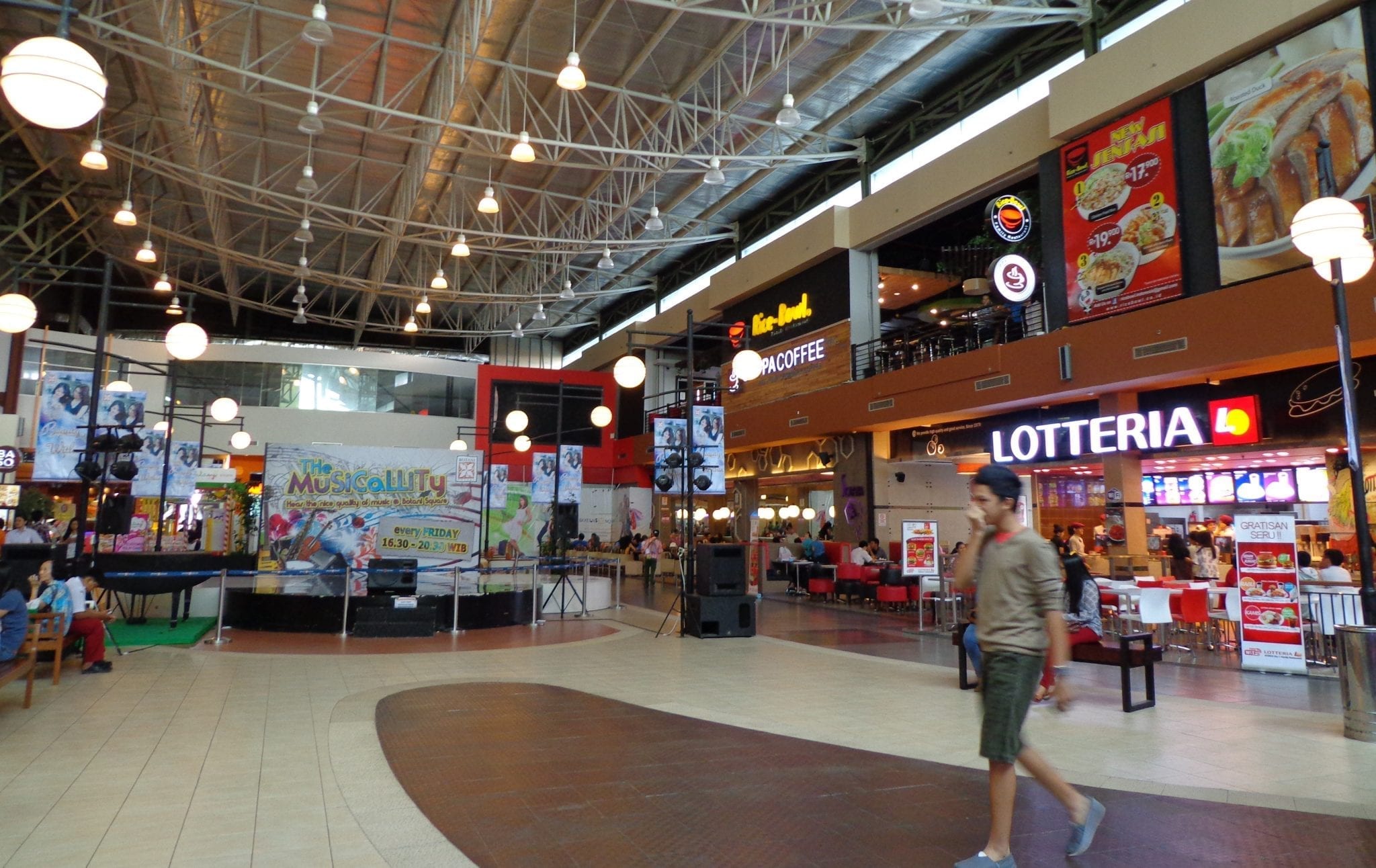
    With Lotte Mart having first opened its doors in Indonesia in 1993, the company, which employs 9,000 people in Indonesia, has become a major retail player in the country. It also operates Lotte Department Store with two duty-free stores, the Angel-in-us Coffee coffeehouse chain and Lotteria fast food chain.

    In 2013, the group opened Lotte Shopping Avenue near the busy Mega Kuningan central business district in Jakarta. It is a large-scale shopping complex that hosts its affiliates, including Lotte Department Store, a duty-free store and Lotteria.

    Despite having yet to hear Lotte’s plan, Indonesian Credit Card Association ( AKKI ) general manager Steve Marta said the South Korean group had actually engaged in a discussion with the association two years ago regarding its idea to enter the domestic credit card industry.

    “However, we haven’t heard any news from Lotte since then. As far as I know, the company started a partnership with Bank Negara Indonesia’s [BNI] credit card business,” he said on Friday, referring to the state-owned lender.

    Separately, BNI consumer banking director Anggoro Eko Cahyo said the bank had a partnership with Lotte Mart Indonesia through a co-branding credit card product called “BNI Lotte Mart Card”, which was launched in 2011.

    Bank Indonesia, which also supervises and regulates the country’s payment system, is yet to receive a report from Lotte Group on its plan to enter the domestic credit card market, Deputy Governor Ronald Waas said.

    “They are welcome, but we haven’t yet heard anything from them,” he said.

    As a potential new player in the credit card business in Indonesia, home to over 250 million people, Lotte still has an opportunity to penetrate the local market. There are currently only 16.9 million credit cards circulating in the country, Steve said.

    However, he said new players were expected to start venturing in non-traditional types of credit card market as existing issuers were largely concentrated in Jakarta and other big cities with similar customer profiles.

    “It would be better for new players to seek alternative customer profiling, such as micro and small and medium enterprise [MSME] segments. This will also help increase non-cash transactions in the country,” he said.

    The country saw 23.6 million credit card transactions worth Rp 22.1 trillion booked by 23 issuers in April, Bank Indonesia data shows.

    If its credit card operation in Indonesia is confirmed, Lotte will become the country’s second non-bank credit card issuer after AEON Credit Services, a consumer financing firm subsidiary of Japan’s conglomerate AEON Group.

    Despite the country’s credit card market being dominated by banks, Steve said non-bank credit card issuers still had good prospects as they owned captive markets amid a new global trend in which various multinational companies, such as airlines, had started to issue their own payment cards.

  • Lotte tests ‘Virtual Fitting Service’

    Lotte tests ‘Virtual Fitting Service’

    Lotte Department Store is to implement a ‘Virtual Fitting Service’ for customers to try on clothes, without actually putting them on.

    The service uses a special mirror that provides a virtual reflection of the customer wearing the clothing by applying a 3D image of the product to the customers’ body. It will also help customers to save both time and the nuisance of having to try on different clothes. The service is expected to launch in the latter half of 2016.

    Lotte will also install 3D foot measuring devices in the third quarter, at shoe stores located in its flagship store, and Jamsil and Yeongdeungpo branches. The devices can measure a customer’s  foot in just two seconds, and recommend products based on a client’s foot size and shape.

    “We’re trying to create a more convenient environment for our customers by making use of the latest advanced technologies,” said Lee Wan-shin, chief of marketing at Lotte Department Store.

    “We’ll continue our efforts to make store visits a more pleasant shopping experience.”

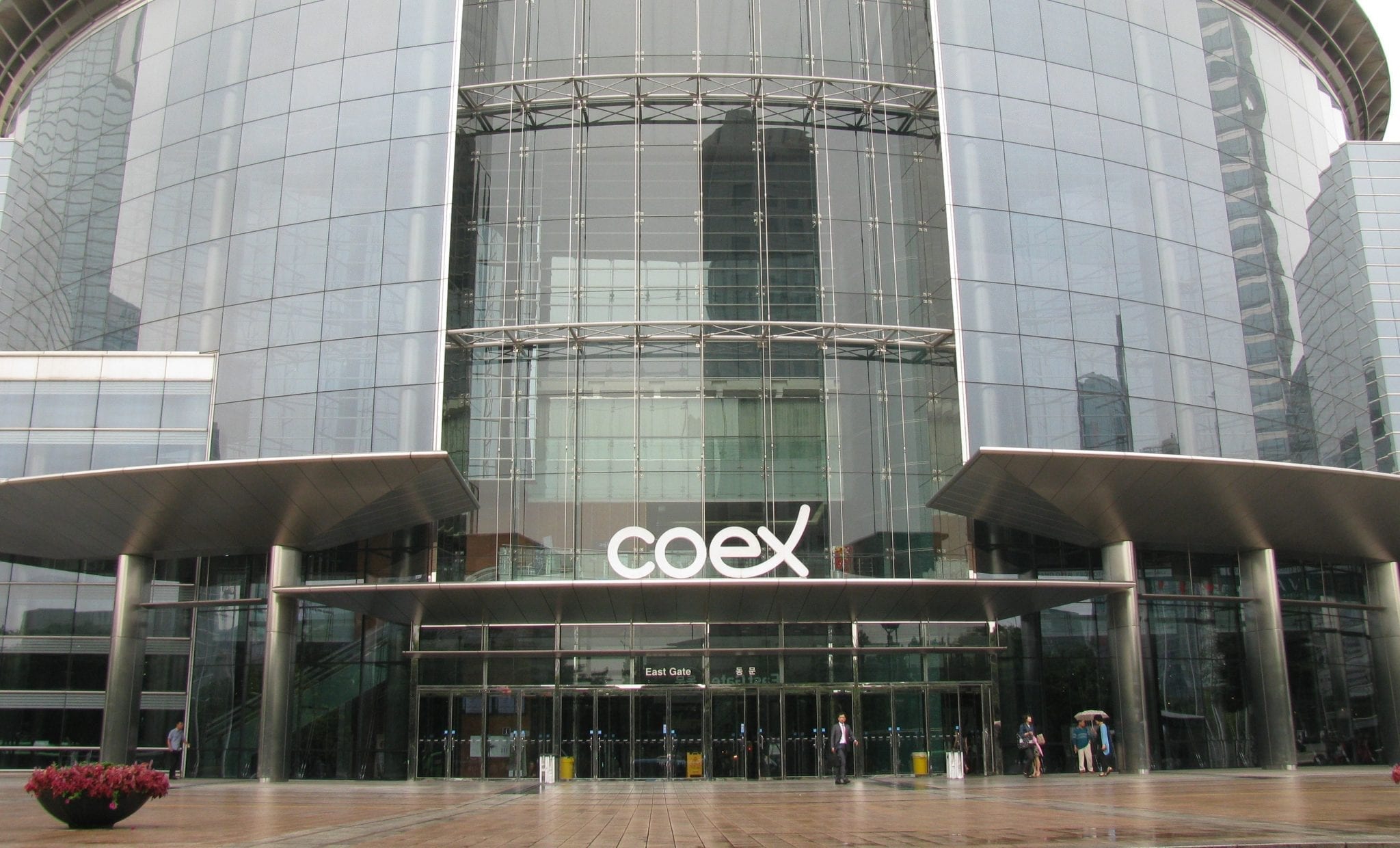
  • Coex Mall Seoul management goes to tender

    Coex Mall Seoul management goes to tender

    Outside management will be introduced for Coex Mall Seoul, which has been struggling to attract shoppers since reopening a year ago after renovation.

    Korea International Trade Association (KITA) chairman Kim In-ho says an entity to manage the mall will be named by the end of the year.

    This is being entrusted to an outsider so it can be more effectively managed, says Kim.

    “We will select the management firm in a fair and transparent manner in accordance with the law.”

    A wholly owned KITA subsidiary has been managing the mall, which has been hit by a prolonged consumption slump and intensifying competition, including eCommerce.

    “We have to ask ourselves this question: can we compete with Lotte, Hyundai and Shinsegae? I seriously doubt it,” says Kim. “I believe Coex Mall will be more efficiently managed by professionals, and generate larger profits and create more jobs.

    “KITA needs to make money from the mall to finance its work, promoting the country’s trade.”
    Meanwhile, KITA has started preparing to bid for a convention centre to be built in Jamsil Sports Complex, a few kilometers away from its Coex Convention Center.

  • Coach Asia revamps duty free network

    Coach Asia revamps duty free network

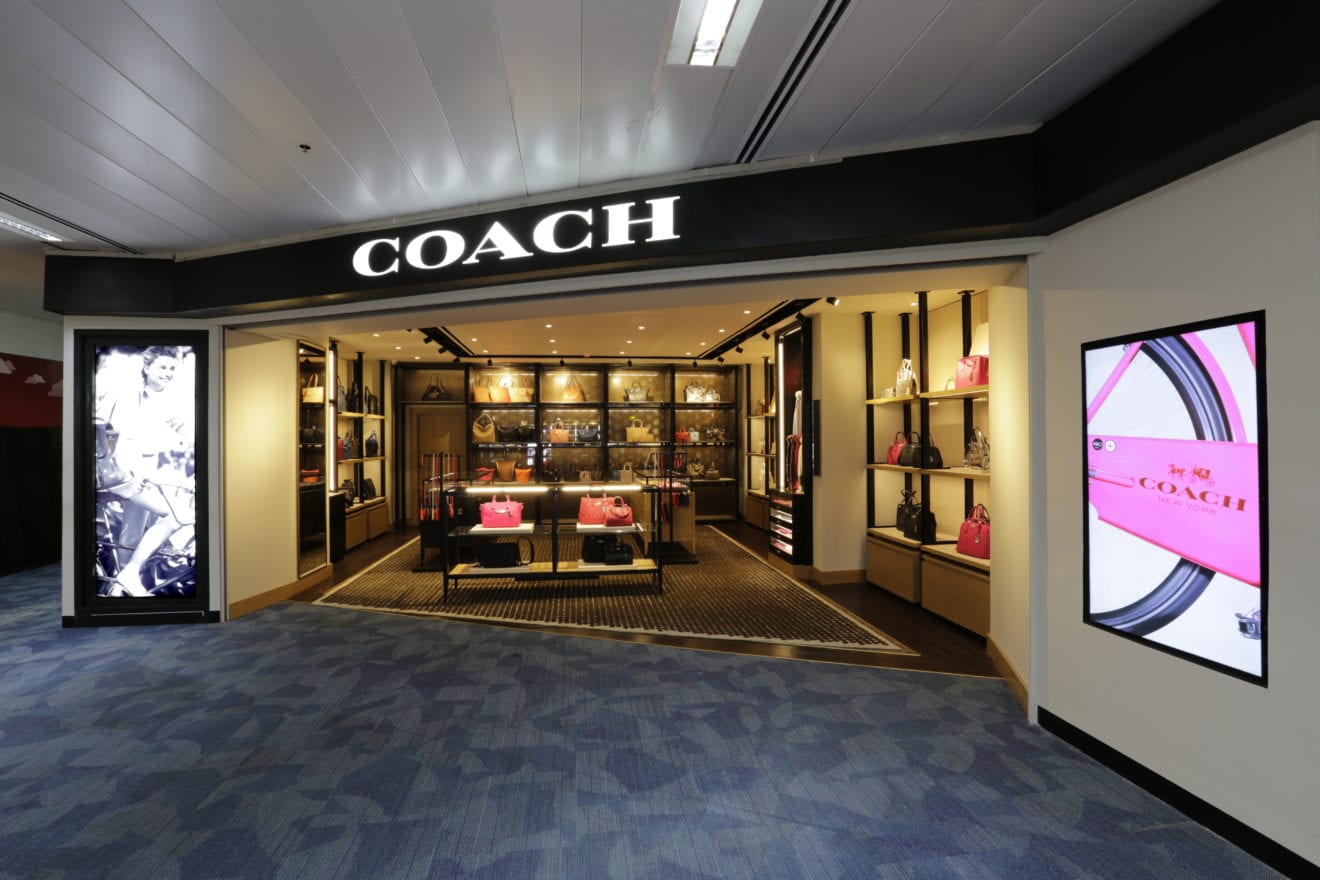
    US accessories and lifestyle label Coach Asia is remodelling its duty-free and travel retail stores to tie in with its new “modern luxury” concept, and is planning further expansion in the region.

    The company says the aim is to provide a “warm and inviting” environment in which to showcase the latest products from Coach creative director Stuart Vevers.

    “The performance of the renovated stores has been very strong, and the concept has been extremely well received by the Asian consumer,” Coach International division vice-president of sales Paulo Colino said.

    “We are pleased with the progress we have made updating the stores and expect to have nearly half of our shops in the region remodelled by the summer of next year.”

    Coach has nearly 80 shops spread over 15 countries, including airport and cruise-ship locations.
    Key stores for the renovation include DFS and China Duty Free in Siem Reap, Ginza with Lotte in Tokyo, Kansai Airport with JatCo, Hongqiao Wing 5 with Dufry and Kunming Airport with Lagardere TR, Phuket downtown with King Power, Sentosa Plaza with Valiram in Singapore, and Sunplaza and Chinachem with DFS in Hong Kong.

    “Given the success we have seen in this region, we plan to expand into additional countries in Asia, including India and Myanmar,” says Colino.

    Coach is now a quarter way through the refit program.

  • Hotel Lotte IPO expected to become S. Korea’s biggest offering

    Hotel Lotte IPO expected to become S. Korea’s biggest offering

    South Korean retail giant Lotte Group’s hotel unit said Thursday it will go public on the KOSPI market on June 29, which is expected to fetch over 5 trillion won (US$4.19 billion) to mark as the nation’s largest-ever initial public offering (IPO).

    Hotel Lotte Co. said in a regulatory filing that it will offer 47.85 million shares at a range between 97,000 won to 120,000 won per share.

    The offering is estimated to be around 4.6 trillion to 5.7 trillion won, and its medium range of price would surpass the record amount of 4.9 trillion sale by Samsung Life Insurance Co. in 2010. 

    Hotel Lotte, the world’s No. 3 duty-free operator, said it will use the fund to step up its duty-free business, hotel chain and theme park to offer comprehensive options to travelers.

    “Hotel Lotte will use the IPO fund to invest in expansion of duty-free stores at home and abroad to become the world’s largest duty-free operator,” the company said in a statement.

    The duty-free business is the company’s key source of income, accounting for 86 percent of its total sales.

    Starting from next month, Hotel Lotte plans to hold a series of deal roadshows in major cities, including New York, London, Singapore and Hong Kong, according to company officials.

    The listing of Hotel Lotte is one of the reform pledges that Lotte Group Chairman Shin Dong-bin has made as part of efforts to improve corporate image after a bitter family feud for control of the retail-focused conglomerate, which has sprawling businesses both in South Korea and Japan.

    The prolonged family feud has virtually come to an end as the founder’s second son and incumbent chief won shareholder support in March to tighten his grip on the nation’s fifth-largest conglomerate.

    On Thursday, Lotte founder Shin Kyuk-ho, who was undergoing a mental competence evaluation to prevent a legal guardian appointment, abruptly rejected the procedure and left Seoul National University in just three days of hospitalization.

    In December, the 94-year-old founder’s younger sister requested a Seoul court to name her as his legal guardian, claiming her aging brother was no longer capable of making consistent decisions.

    As a result, the aged tycoon was unseated from board seats at major affiliates during a shareholders’ meeting in March.

    Experts say Shin’s early discharge from the hospital has raised the likelihood of his sister becoming his legal guardian.

    “The case of dementia requires at least two weeks of hospitalization for examination. His discharge from hospital in just three days means that officials could not proceed with normal procedure,” Lee Hyun-kon, the lawyer for Shin’s younger sister, said. “The possibility of (the court’s) appointment of a legal guardian for Shin has risen as he could not prove that there’s no problem with his mental health.”

    Dong-joo has claimed he is his father’s hand-picked successor, but Dong-bin argued that his father is unable to make reasonable judgments due to mental health problems.

  • Jokowi holds business meetings with Lotte & Posco during South Korea visit

    President Joko “Jokowi” Widodo held closed-door meetings with two major South Korean firms on Monday as part of the government’s efforts to explore new business opportunities.

    President Jokowi held the separate meetings with South Korean conglomerate Lotte Group and giant steel producer Posco on the second day of his visit to South Korea.

    In the first meeting with Lotte Jokowi was accompanied by Coordinating Economic Minister Darmin Nasution, Trade Minister Thomas Lembong, Foreign Minister Retno LP Marsudi, Creative Economy Agency ( Bekraf ) chairman Triawan Munaf, Investment Coordination Board ( BKPM ) chairman Franky Sibarani, National Economy and Industry Committee ( KEIN ) chairman Sutrisno Bachir and Presidential chief of staff Teten Masduki.

    Lotte was represented by the Lotte Group chairman Shin Dong-bin, Lotte Group president Hwang Kag-gyu, Lotte Group executive managing director Lim Byung-yun, Lotte Chemical president and chief executive officer Huh Soo Young, Lotte Mart president and CEO Kim Jong-in and Lotte Engineering president and CEO Kim Chee-hyun.

    Lotte runs a number of businesses in Indonesia, including some in the retail and petrochemical sectors.

    Jokowi then held a meeting with Posco where he met CEO Kwon Oh-joon, Posco president Kim Jin-il, executive vice president Kwak Jeong-shik, Posco senior vice president Lim Seung-kyu and Posco Indonesia Inti president Kim Jhi-yong.

    Steelmaker Posco has previously collaborated with Indonesia’s steel maker PT Krakatau Steel, with the two firms establishing a joint venture company, PT Krakatau Posco, in 2010.

    No details of the meetings have emerged yet.

    Jokowi is also scheduled to meet South Korean President Park Geun-hye on Monday to discuss billateral issues including trade and investment.

    South Korea is the fifth-largest foreign investor in Indonesia, Southeast Asia’s largest economy, according to data from BKPM having realized US$1.21 billion worth of investment projects in 2015.

  • Lotte L Pay takes on Apple and Samsung

    Lotte L Pay takes on Apple and Samsung

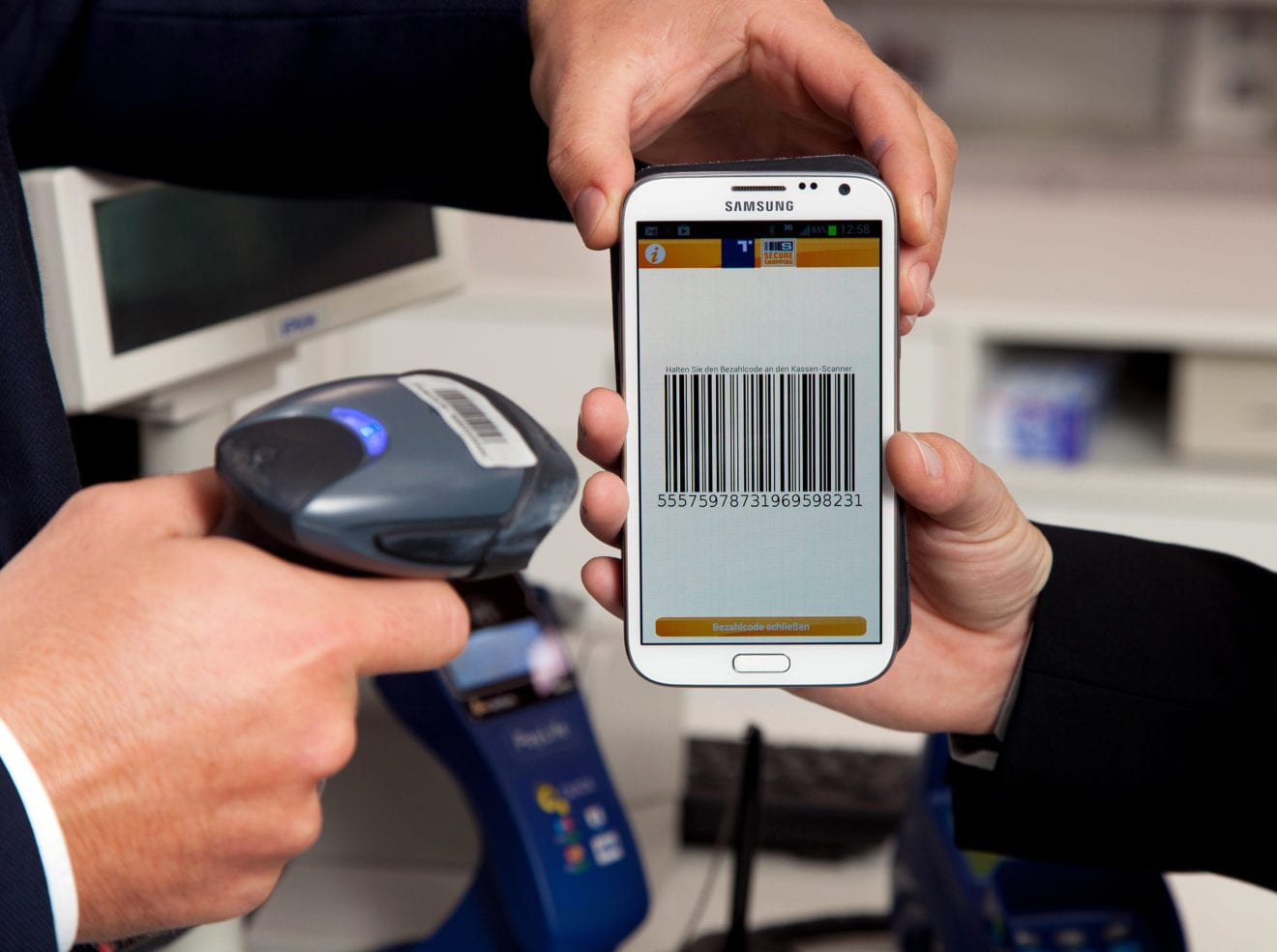
    South Korea’s retail conglomerate Lotte Group is ratcheting up efforts to promote its own mobile payment platform, L Pay, industry watchers said Wednesday, as such services gained popularity over previous months amid the rising number of smartphone users.

    Lotte Group chairman Shin Dong-bin was recently quoted as saying by corporate officials that L Pay is an “important asset” for the business group, adding that Lotte should expand the scope and quality of the services provided by the L Pay platform.

    1201_epay_pcShin also highlighted the importance of expanding business partnerships to garner a larger slice of users in the market.
    The business group has been making efforts to establish “omnichannel” solutions, which refer to bringing together online and offline shopping platforms.

    L Pay is significant as it allows users to manage their mileage at shops and restaurants operated by Lotte Group, including Lotte Cinema, 7-Eleven and Lotte Department Store.

    The service has been forging ties with eight South Korean credit card firms and is also in talks with Samsung Electronics Co. to have L Pay applied to Samsung Pay.

  • Foreign retailers in Vietnam under attack

    Foreign retailers in Vietnam under attack

    Complaints by Ho Chi Minh City businesses about foreign retailers in Vietnam have sparked the prime minister to order an investigation.

    Members of the Ho Chi Minh City Union of Business Associations (HUBA) say the growing number of foreign retailers in Vietnam have a loose rein to expand at a pace that will eventually hurt local companies.

    HUBA has sent at least two letters to the government raising questions about the legality of some business activities by foreign retailers, reports Thanh Nien News.

    Vietnam laws forbid foreign businesses to distribute products such as rice, cane sugar and cigarettes, but these items are still available at the supermarkets and convenience stores of most foreign retailers, including South Korea’s Lotte and Big C, Tuoi Tre reports.

    Following the complaints, Prime Minister Nguyen Xuan Phuc has ordered relevant agencies to check into foreign retailers, including mergers and acquisitions.

    Media reports say Mega Market Vietnam, which owns Metro wholesale stores, is expected to be first to face the scrutiny. The stores were originally run by Germany’s Metro before being acquired by Thailand consumer group TCC this year.

    Statistics show that Vietnam is home to more than 700 supermarkets and 132 shopping malls, mostly in the main centres of Hanoi and Ho Chi Minh City.

    Meanwhile, Hanoi Association of Supermarkets chairman Vu Vinh Phu says a supermarket in the northern city of Hai Phong had its revenue fall 30 per cent six months after a foreign superstore opened.

    Foreign companies now control more than half of Vietnam’s retail market, says the association, and many producers complain they are struggling to have their products in foreign supermarkets mainly because the retailers ask for high discounts, says HUBA vice-chairman Pham Ngoc Hung.
    Meanwhile, products from countries such as Japan, Malaysia, South Korea and Thailand are becoming more and more popular.

    Vietnam’s retail sales rose 10.6 per cent from 2014 to VND2469 trillion (US$109.4 billion) last year, official figures show.