Tag: LVMH

  • Louis Vuitton looks for shops to close in China

    Louis Vuitton looks for shops to close in China

    Louis Vuitton is about to get smaller in China, and other luxury goods makers might follow as the heady days of expansion in that market are over.

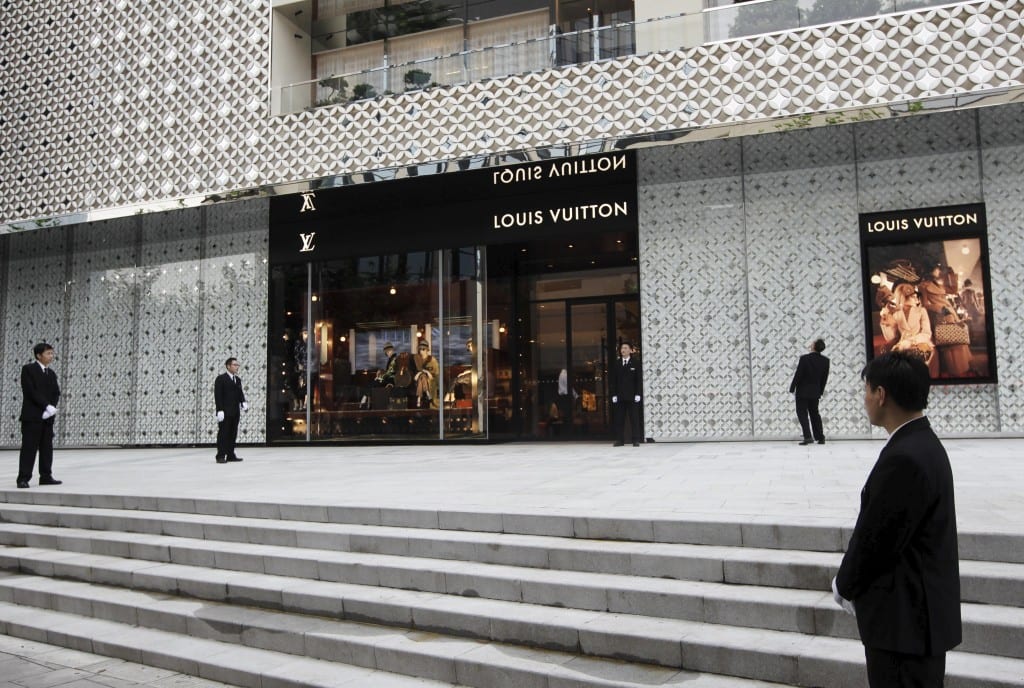
    The French maker of monogrammed luggage is reviewing eight stores in second-tier cities, or about a fifth of the total in China, according to a source familiar with the situation.

    While some might be moved or refurbished rather than closed outright, the Chinese store count will drop, said the source, who asked not to be identified as the plans are private and no final decision has been made.

    Vuitton is closing stores “to avoid being overexposed” as market dynamics change and more Chinese shop abroad, said Mario Ortelli, an analyst at Sanford C. Bernstein in London. “This is something that is quite normal when you have a fast expansion of a store network.”

    Vuitton is evaluating its exposure to China as consumers shift more of their spending to Japan and Europe, where the weak yen and euro make it even cheaper to shop. A government campaign against extravagance has also weighed on demand in China and neighboring markets. Watchmaker TAG Heuer shuttered a store in Hong Kong in August and Burberry Group PLC said earlier this month it would reduce the size of its largest store in the territory.

    Vuitton has 41 stores in China out of 453 worldwide, according to Exane BNP Paribas. A spokesman for parent company LVMH said Vuitton would continue to invest in its retail network in China, adding that the company would open two stores and refurbish two there next year. He declined to comment on closures.

    Closures by other luxury goods makers might follow, Exane analyst Luca Solca said.

    Kering SA-owned Gucci and Burberry, both of which have also struggled in China, have more stores there than Vuitton, Exane said.

    Chinese consumers account for about a third of global luxury sales. Gucci has 57 stores in China, while Burberry has 55.

    “As more sales move abroad on the back of large price gaps, mainland China stores risk poor space productivity, hence the adjustment,” Solca said.

    A Burberry spokesman said: “There is no change in our plans as we continue to evolve our Chinese store network.”

    A spokesman for Kering declined to comment on store plans in China.

    LVMH chief financial officer Jean-Jacques Guiony last month said that Vuitton might shut a couple of boutiques in China where it has two in second-tier cities. Its Chinese store count should remain “reasonably flat for the years to come,” he said.

    Globally, the market for personal luxury goods is set to grow as little as 1 percent this year, the weakest rate since 2009, Bain & Co estimates.

    LVMH, whose full name is LVMH Moet Hennessy Louis Vuitton SE, reported third-quarter fashion and leather goods sales that rose 3 percent on an organic basis, trailing estimates.
  • Richemont Revenue Beats Estimates on Japan, Europe Demand

    Richemont Revenue Beats Estimates on Japan, Europe Demand

    Richemont, the world’s biggest jewelry maker, said sales growth accelerated as weaker currencies attracted big-spending tourists to Japan and Europe, spurring the stock’s steepest intraday gain in more than two years.

    Sales increased 4 percent excluding currency shifts in the five months through August, the Geneva-based company said in a statement Wednesday. Analysts expected a 1 percent gain, according to the median estimate in a Bloomberg survey. The shares climbed as much as 7.5 percent.

    Sales rose 48 percent in Japan and 26 percent in Europe, offsetting an 18 percent decline in Asia-Pacific. The results mirror comments by peers in the luxury business, such as Hermes International SCA, which reported higher first-half sales, fueled by an acceleration in Japan. LVMH Moet Hennessy Louis Vuitton SE in July posted strong revenue growth in Europe and the U.S., which helped offset a decline in China, Macau and Hong Kong.

    “Japan and Europe more than compensate for the weak development in Hong Kong,” said Rene Weber, an analyst at Bank Vontobel AG in Zurich. “The strong performance of those markets mean the Swiss watch industry can weather the Asian weakness, at least this year.”

    Shares in the Swiss owner of the Cartier jewelry brand, whose full name is Cie. Financiere Richemont SA, rose 6.4 percent to 76.65 francs as of 11:40 a.m. in Zurich. The report bolstered shares in the luxury-goods industry, with Hermes up 4.8 percent and LVMH gaining 3.5 percent.

    Richemont said sales in Hong Kong and Macau were “significantly lower,” while mainland China returned to growth with retail sales growing at a “strong double-digit rate.” The company reports five-month sales figures each year on the day of its annual meeting with shareholders.

    “Part of the crisis in confidence in the watch industry in Asia-Pacific is fragile confidence by independent retailers amid the problems in Hong Kong and Macau,” said Jon Cox, an analyst at Kepler Cheuvreux in Zurich, adding that Richemont’s comments about China were reassuring.

    Still, Richemont said its wholesale business continues to be weighed down by weakness in the Asia-Pacific region, which is still “extremely challenging.”

    Luxury spending in Hong Kong has been suffered since late 2012 when the Chinese government has been discouraging exuberant spending among officials. Political protests in Hong Kong last year forced some stores to shut and weighed on tourism.

    Among other luxury stocks, Swatch Group AG, the maker of Omega watches, rose 3 percent, and Kering SA, which owns Gucci, rose 4.4 percent.

  • Hong Kong retail sales fall for fourth month as tourism slows

    Hong Kong retail sales fall for fourth month as tourism slows

    Hong Kong retail sales fell for the fourth straight month in June as a drop in tourist arrivals continued to hit sales of big-ticket items such as jewellery and watches.

    Retail sale slipped 0.4 per cent from a year earlier in value terms to HK$37 billion ($4.8 billion) in June. That followed a revised 0.1 per cent decline in May, 2.1 per cent drop in April and 2.9 per cent slide in March. In volume terms, sales rose 4.4 per cent in June, against revised growth of 4.7 per cent in May.

    The city’s retailers have been hammered by slowing mainland tourist arrivals and high operating costs in rent and labour.

    “The near-term performance of retail sales is still subject to uncertainties, depending on inbound tourism growth and any spillover to consumption sentiment from the recent stock market volatility,” the government said in a statement.

    For the first six months, the value of retail sales fell 1.6 per cent from a year earlier, while volume was up 1.7 per cent.

    China’s slowing economy and volatile stock markets have hit retail spending and tourism.

    The Hong Kong Retail Management Association said the majority of its members forecast that the declining trend in retail sales will continue in the third quarter with no particularly favourable factors in sight.

    Visitor numbers to Hong Kong fell 2.9 per cent in June on the year, compared with year-earlier growth of 6.9 per cent, Hong Kong Tourism Board data showed. Mainland tourist numbers in June slid 1.8 per cent, against 7.8 per cent growth a year earlier.

    In June, sales of jewellery and watches fell 10.4 per cent by value, compared to a 14.9 per cent fall in May. Medicines and cosmetics declined 4.2 per cent, against 1.9 per cent fall in May.

    Last week, luxury retailer Emperor Watch warned of turning in a loss for the first half as foot traffic dropped due to a strong Hong Kong dollar and unfavourable tourism environment after protracted political unrest last year.

    The world’s biggest jewellery retailer Chow Tai Fook Jewellery saw its retail sales fall in the April-to-June quarter, while cosmetic chain Sa Sa saw a dip in its turnover for the quarter ended June. .

    Like rivals Burberry and Gucci’s parent Kering , the world’s No.1 luxury goods group LVMH said it was in talks with mall owners in Hong Kong to renegotiate prices amid falling sales.

  • Louis Vuitton snaps up Singapore start-up

    Louis Vuitton snaps up Singapore start-up

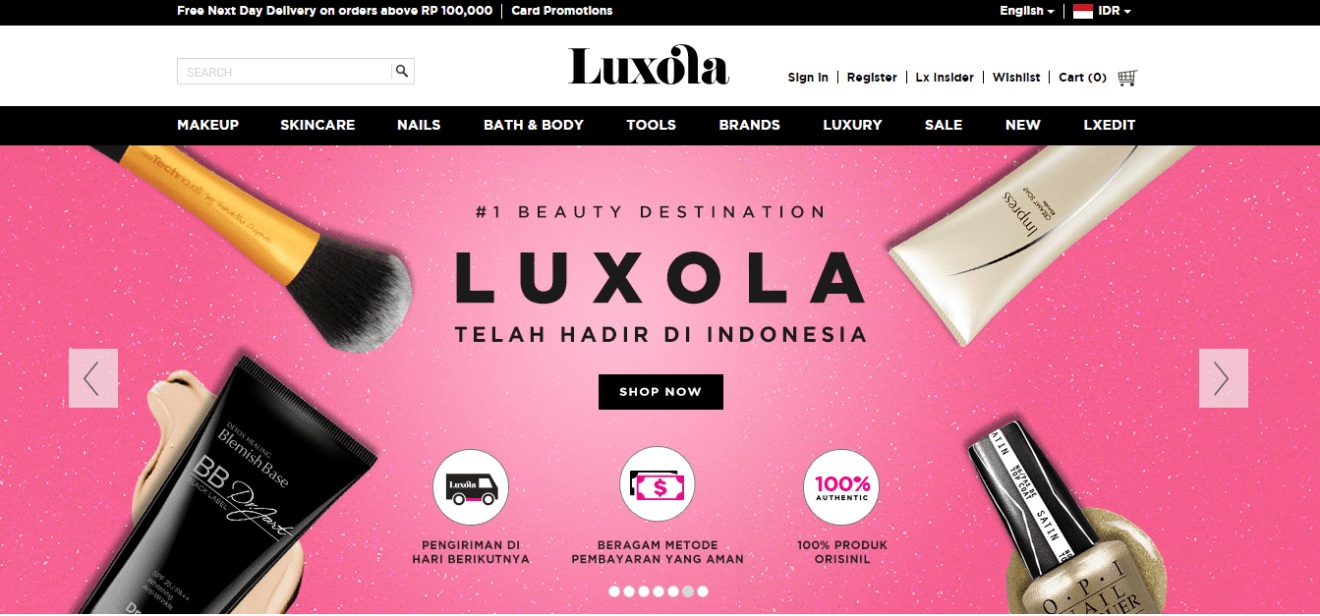
    Louis Vuitton has bought Singapore online cosmetics retailer Luxola and LVMH’s subsidiary Sephora has made a further investment in the business.

    Few details of the transactions have been revealed, including the size of the investments, howeverCrunchbase reports Luxola raised US$15.6 million in four earlier rounds of venture funding.

    Luxola was launched in 2011 by Alexis Horowitz-Burdick, has a staff of 120 and sells a wide variety of beauty products and accessories under 250 brands in 11 markets.

    Horowitz-Burdick, now Luxola CEO, said Sephora’s investment would allow the founders to take the company’s vision further.

    “With greater market reach and brand depth, we will offer an unparalleled customer experience.”

    Sephora Asia president Anne-Veronique Bruel said investing in Luxola gave her brand the opportunity to accelerate Sephora’s growth in Asia and penetrate the growing online beauty market.

    “We are thrilled to welcome Luxola to the Sephora family.”

  • Louis Vuitton rescues Jones the Grocer model

    Louis Vuitton rescues Jones the Grocer model

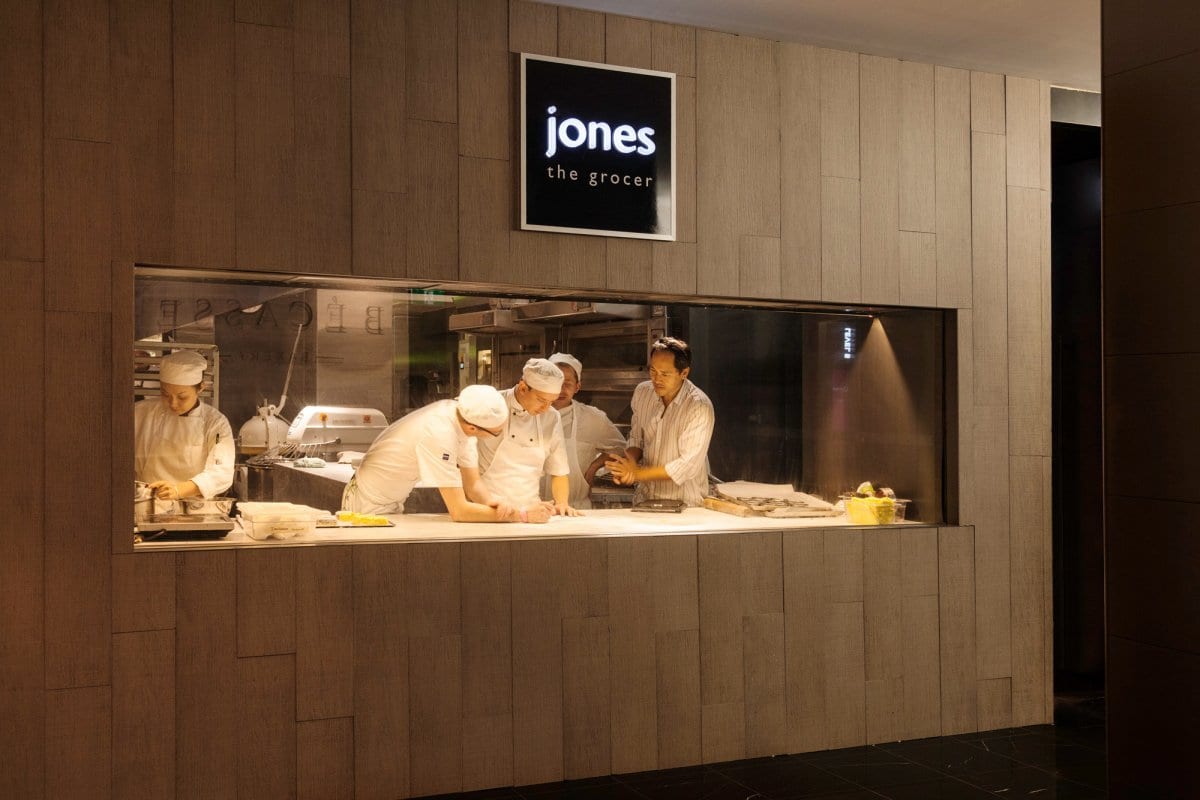
    Louis Vuitton’s personal fairness arm L Capital Asia has purchased the stays of collapsed Singapore gourmand meals retailer Jones the Grocer.

    The upmarket grocery retailer was initially based in Australia, however collapsed final yr. It has shops on Dempsey Hill and in Mandarin Gallery.

    L Capital Asia had taken a 63 per cent stake within the Singapore arm of the enterprise, Jones the Grocer Worldwide, (JTGI), three years in the past, believing the model and idea had robust potential in Asia. However it was positioned beneath judicial administration in December.

    The Singapore Enterprise Occasions reported the corporate had money owed of $15 million and a financial institution stability of $61,000 on the time.

    Recent Bay Investments, a subsidiary of L Capital Asia, has paid S$2.75 million for the model rights and different belongings of the enterprise, however not the debt, probably angering some suppliers. Singapore information media report L Capital has already acquired the worldwide model rights from the Australian firm which it additionally has a majority stake in.

    In addition to its unique funding, and final week’s $2.75 million for the shell, Recent Bay has reportedly ploughed an extra $17 million into maintaining the enterprise afloat till now.

    L Capital Asia managing companion Ravi Thakran informed AsiaOne Enterprise that his firm knew the Jones the Grocer enterprise greatest and was subsequently the only option to rebuild the model.

  • Online store merger prods luxury goods makers towards internet

    Online store merger prods luxury goods makers towards internet

    The merger of the world’s two biggest online fashion stores, Net-a-Porter, or NAP, and Yoox, sends a warning to luxury brands to embrace the Internet with more vim after years of resistance.

    Top brands such as Prada and LVMH’s Christian Dior still baulk at the idea of selling clothing online as well as through their plush boutiques.

    “Considering the level of sophistication and image of our ready-to-wear, we feel the shopping experience has to remain immaculate and in-store,” says Stefano Cantino, head of marketing and commercial development at Prada.

    “You need the physical environment to try the product on and you need an exclusive service which you can only get in a boutique.”

    But as more people choose to buy through a website instead of going to Rue St Honore or New Bond Street, that position looks increasingly untenable. Brands whose goods are not available online risk losing customers to rivals.

    Luxury executives understand the Internet will be vital for future sales, particularly to so-called Millennials — web-savvy customers born between 1980 and 2000.

    Yet top brands such as LVMH’s Louis Vuitton, Hermes, Prada and Chanel have been slow to invest in e-commerce as other retail sectors have done in the last decade.

    Some have focused as much on the shopping experience as on the products themselves, spending heavily on worldwide expansion and revamping stores with help from famous designers.

    “Many luxury brands have not figured out yet how to be innovative and creative online,” said Anant Sharma of consultancy Matter of Form. “It looks like they are scared to try things out.”

    Sharma said many brands’ websites mimicked the appearance of Net-a-Porter’s black-and-white portal. “If they had the same approach to physical retail, we’d all be shopping in whitewashed rooms with clothes lined up against the four walls.”

    Immediately after the Yoox/NAP deal was unveiled last month, Chanel said it would start retailing online next year. This month, it is selling a new jewelry line exclusively through NAP for just three weeks.

    “The merger between Yoox and NAP sends the message that you need to be online or you may be out of the game,” Euromonitor luxury goods analyst Fflur Roberts said.

    Euromonitor expects 40 percent of all luxury goods sales will be made via the Internet in less than five years.

    Online annual luxury goods sales have been growing at 15-25 percent while the industry’s average growth rate has slumped to 5 percent this year from above 10 percent four years ago as brands have completed big global roll-outs.

    Analysts estimate that 5-6 percent of luxury goods are purchased online, although that jumps to around 8 percent for leather goods such as shoes and handbags.

    Designer websites vary in usability but few offer customers as much help as sites like NAP, which shows clothes on models, gives details of fit and sizing and carries styling tips.

    Prada’s e-commerce site carries no ready-to-wear, sticking to bags, shoes and other accessories.

    Kering’s Saint Laurent and Gucci have slicker sites, offering a wide range of clothing and proposing complete looks. Saint Laurent also features designer Hedi Slimane’s black and white photographs of musicians such as Marilyn Manson and Marianne Faithful.

    But Hermes’s iconic 8,000 euro Birkin or Kelly bags still cannot be bought online — and may take more than year to arrive after being ordered from a store.

    ?????????????????Department stores push

    While many big luxury brands are still figuring out an Internet strategy, high-end department stores already sell their products online.

    The Neiman Marcus chain, which includes New York’s Bergdorf Goodman, does 24 percent of its business online, up from 15 percent five or six years ago. Last year, it acquired German online fashion retailer My Theresa, aiming to better serve customers outside the United States.

    London’s Harrods, whose website gets 3 million visitors a month and sells brands such as Valentino and LVMH’s Givenchy, is also stepping up online investment.

    “Our customer demands an omni-channel shopping experience, and to remain at the forefront of luxury retail we need to respond to this,” Harrods managing director Michael Ward said.

    Chief Executive Bernard Arnault said at LVMH’s annual general meeting last week that “more and more products would be sold online” and the group was “currently adapting to this situation”.

    LVMH labels such as Fendi, Kenzo and Emilio Pucci already offer many products online — Fendi sells 750 euro baguette bags and 6,180 euro blue feathered dresses — but Louis Vuitton sells only accessories, pens, watches and jewelry.

    Richemont’s Cartier brand has sold jewelry online in the United States since 2010 and its online store now ranks third behind its two main flagships in terms of sales.

    Privately owned Patek Philippe, does not sell any of its 10,000 euro plus timepieces on the Internet, however, and told Reuters last month it has no intention of doing so.

  • LVMH 2014 profit boosted by Hermès stake sale

    LVMH 2014 profit boosted by Hermès stake sale

    LVMH Moët Hennessy Louis Vuitton SA said on Tuesday that US consumers helped drive revenue gains last year, offsetting continued sluggish sales in China.

  • FENDI launches e-commerce globally

    FENDI launches e-commerce globally

    FENDI (LVMH Group) announces the launch of its e-commerce in 28 European countries starting with this year. Japan will be followed by the US in 2016. The strategic retail approach towards e-commerce follows many other top luxury fashion brands, with several to follow suit by the end of this year.