Tag: LVMH

  • LVMH completes $20 billion acquisition of Tiffany, replaces leadership team

    LVMH completes $20 billion acquisition of Tiffany, replaces leadership team

    LVMH Moët Hennessy Louis Vuitton SE installed new management at Tiffany & Co., as the French conglomerate seeks to place its imprint on the U.S. jeweler and steer it through the pandemic.

    LVMH executive Anthony Ledru is returning to Tiffany, where he previously oversaw North American operations, as chief executive, effective immediately. Alexandre Arnault, the son of LVMH CEO Bernard Arnault, was appointed executive vice president of product and communications. Michael Burke, the CEO of Louis Vuitton, will become Tiffany’s chairman.

    Tiffany’s current CEO Alessandro Bogliolo will depart on Jan. 22. Reed Krakoff, the chief artistic director, and Daniella Vitale, executive vice president and chief brand officer, also will leave after a short transition.

    LVMH completed its $15.8 billion acquisition of the U.S. jeweler on Thursday after months of wrangling over the price that led to both companies suing each other. Bernard Arnault threatened to pull out of the deal, arguing that the Covid-19 pandemic had harmed Tiffany’s business. In the end, he agreed to pay a 2.6% discount to the original price.

  • Strong third quarter arrests LVMH’s sales decline for the year

    Strong third quarter arrests LVMH’s sales decline for the year

    Luxury items and liquor-retail group LVMH recorded a 21-per-cent decline in income throughout the first 9 months of this year in what it describes as a “very turbulent environment” in the wake of the Covid-19 pandemic.

    The decline in sales – 30.3 billion euros – largely occurred throughout the first two quarters of the three, with the decline recovering to an extra modest 7 percent in the third quarter, largely pushed by rebounding sales of cognac, vogue, and leather-based items. This was particularly sturdy in the US and Asia.

    Liquor sales fell 15 percent over the 9 months and three percent over the third quarter, whereas sales of vogue and leather-based items, led by Louis Vuitton and Dior, have been down by 11 percent for the full 9 months however surged at a double-digit rate in the third quarter. 

    Covid-19 noticed the suspension of the worldwide journeys and the closure of the group’s shops and manufacturing websites in most nations over an interval of a number of months.

    Sales in its watches & jewelry division led by Tag Heuer, Bulgari and Chaumet, declined by 30 percent in the first 9 months, however, a rebound in China throughout the third quarter was inadequate to arrest a general decline of 14 percent for the full interval.

    LVMH’s selective retailing division skilled a 31-per-cent drop in sales throughout the 9 months. The beauty-retail chain Sephora demonstrated “good resilience during the health crisis,” in keeping with the firm regardless of the closure of virtually all its shops globally for almost two months earlier than sales improved in the third quarter.

    Strong online sales noticed Sephora develop market share throughout its major markets. However, DFS predictably noticed a big decline in its exercise in most locations because of the suspension of a worldwide journey.

  • Celine pop up store in Shanghai at Plaza 66

    Celine pop up store in Shanghai at Plaza 66

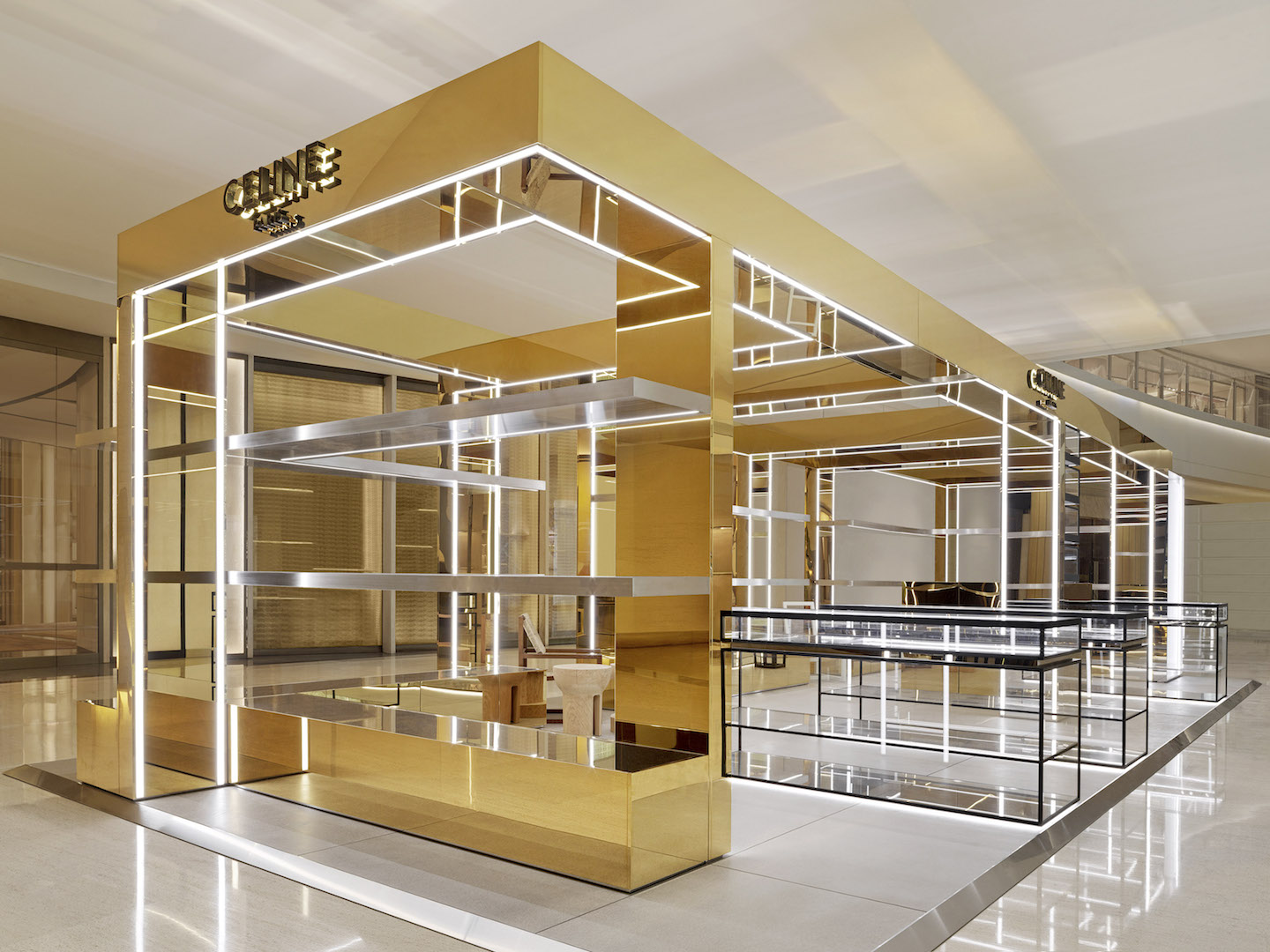
    French luxury fashion brand CELINE has opened a new concept pop-up store in Shanghai at thePlaza 66 Mall. The store which has been entirely designed by Creative Director, Hedi Slimane, features women’s footwear, handbags and other leather accessories.

    There is also a selection of Celine’s fragrances. Even the furniture was personally designed by Hedi Slimane. CELINE is fully owned by LVMH, which is also the owner of Plaza 66 Mall, one of the most prestigious in China.

    CELINE new pop-up store in Shanghai at Plaza 66 Mall


  • LVMH whitdrawing Tiffany deal

    LVMH whitdrawing Tiffany deal

    French luxury-goods group LVMH has dropped its plan to take over Tiffany & Co, prompting the  New York jeweler to announce it will file a lawsuit to enforce the deal.

    The US$16.2 billion takeovers was agreed to before the advent of the Covid-19 pandemic and the jeweler’s share price had dropped well below the price LVMH had agreed to pay.

    However, LVMH’s board is using geopolitical and taxation factors to defend its position with the board issuing a brief statement late Wednesday Asian time after a board meeting confirming it would “not be able to complete the acquisition of Tiffany & Co”.

    The statement referred to a letter from the French European and Foreign Affairs Minister which directed LVMH to “differ” (sic) – thought to mean defer – the acquisition until after January 6 next year in “reaction to the threat of taxes on French products by the US”.

    Tiffany & Co had earlier requested LVMH to extend the closing date for the deal from the current expiry date of November 24 to December 31.

    LVMH’s board, having taken legal advice from advisors to its teams, said it resolved to comply with the merger agreement signed by the two companies in November last year, which stipulated the November 2020 closing date.

    “As it stands, the Group LVMH will therefore not be able to complete the acquisition of Tiffany & Co.”

    Tiffany & Co meanwhile, is alleging that LVMH has deliberately stalled the takeover to force a renegotiation of the price.

    The company will file a lawsuit with the Delaware Court of Chancery Wednesday US time seeking to force LVMH to close the transaction by the November deadline.

    “Tiffany alleges that LVMH has delayed the EU regulatory process to avoid closing before a mandated deadline, and threatened to walk away from the takeover unless the price tag is reduced,” the FT reported, citing “people briefed about the matter”.

    The Tiffany & Co sale has been the subject of considerable ongoing speculation since the impact of Covid-19 on luxury retailing and international travel.

    At one point, analysts were speculating that LVMH might begin acquiring shares on the open market at a price lower than the company had agreed to pay under the merger agreement. However, after a board meeting in June, LVMH issued a statement reiterating it would not buy shares on the market and was sticking to the deal.

    Reuters reported back then, however, that LVMH CEO Bernard Arnault was exploring ways to reopen negotiations in an attempt to reduce the price.

    “While Arnault now has concerns about overpaying for Tiffany, he still believes in the deal’s strategic rationale, according to the sources,” reported Reuters. “Tiffany will give LVMH a bigger share of the lucrative US market and expand its offerings in jewelry, the fastest-growing sector in the luxury goods industry.”

  • China stands out in tough LVMH first half year

    China stands out in tough LVMH first half year

    China proved a standout market in every product category for luxury-goods retail group LVMH in the first half-year.

    While sales in Europe and the Americas suffered from long-drawn-out disruption due to Covid-19, there were signs of a recovery in Mainland China.

    LVMH group sales fell by 27 percent to €18.4 billion during the half and by 38 percent in the second quarter.

    “Asia has seen a marked improvement in trends, with a strong rebound in China in particular,” the company noted in its results filing, noting the trend was particularly notable in the second quarter.

    Profit from recurring operations amounted to €1.671 billion euros for the first half of 2020 and operating margin stood at 9 percent. “The profitability of Louis Vuitton, Christian Dior, and Moet Hennessy remained at a high level,” the company said.

    “LVMH showed exceptional resilience to the serious health crisis the world experienced in the first half of 2020,” added Bernard Arnault, LVMH’s chairman and CEO. “Our maisons have shown remarkable agility in implementing measures to adapt their costs and accelerate the growth of online sales.”

    LVMH’s flagship fashion & leather-goods business group reported a 24-per-cent decline in organic sales for the half-year, but China recorded “a very strong recovery in revenue in the second quarter”.

    Sales of perfumes & cosmetics fell by 29 percent, with the company’s larger brands showing good resistance despite an overall decline in the makeup market. In China, LVMH singled out the Fresh skincare brand as enjoying strong momentum.

    Sales of watches & jewelry fell by 39 percent in the first half of 2020. “Confronted in January with the decline of the Chinese market, then with the closure of other markets from mid-March, Bulgari quickly took advantage of the recovery in China in the second quarter,” the company reported.

    However, watch brands TAG Heuer and Hublot were hit by declining orders from retailers due to lockdowns.

    In the company’s selective retailing division, sales were down by 33 percent. Sephora showed good resistance during the pandemic, the brand growing market share in its main markets, in part due to a solid omnichannel strategy. However, the DFS travel-retail business saw sales decline in most destinations due to the suspension of international travel.

    The wines & spirits business group saw sales decline by 23 percent in the first half.

  • LVMH’s Tiffany takeover is in doubt as virus outbreak hits jeweller’s sales

    LVMH’s Tiffany takeover is in doubt as virus outbreak hits jeweller’s sales

    The US$16.2 billion Tiffany takeover by luxury-goods group LVMH appears in doubt.

    The New York-listed jeweler’s share price tumbled 9 percent after Women’s Wear Daily reported that LVMH board members held a special meeting in Paris to discuss the bid.

    Both Tiffany and LVMH have declined to comment on the matter, and the absence of denial seemed to further fuel speculation.

    Reuters today has reported that LVMH CEO Bernard Arnault is exploring ways to reopen negotiations in an attempt to reduce the price.

    “While Arnault now has concerns about overpaying for Tiffany, he still believes in the deal’s strategic rationale, according to the sources,” reported Reuters. “Tiffany will give LVMH a bigger share of the lucrative US market and expand its offerings in jewelry, the fastest-growing sector in the luxury goods industry.”

    Store closures in the wake of the Covid-19 pandemic, the collapse of tourism and social unrest in the US related to the death of George Floyd at the hands of Minneapolis police are raising concerns about the state of the US economy. The LVMH board is reportedly questioning whether the jeweler will be able to meet its debt obligations once the takeover is complete.

    Terms of the Tiffany takeover were agreed last November, well before the Covid-19 crisis hit China and then North America, both key markets for the jeweller. LVMH had planned to pay $135 per share for Tiffany, representing its largest acquisition to date, before rolling it into the jewelry & watches division where it would sit alongside Bulgari and Tag Heuer.

    Tiffany stores have been closed in the US since mid-March due to the pandemic and this week, many were boarded up to protect them from looting during the US protests.

    In Hong Kong, where the company used to command strong sales to mainland Chinese tourists, sales have taken a severe hit, first due to protests and then due to the closure of borders due to coronavirus.

  • LVMH chairman Bernard Arnault buying stakes in Lagardere

    LVMH chairman Bernard Arnault buying stakes in Lagardere

    LVMH chairman Bernard Arnault will buy a stake in Arnaud Lagardere’s publishing and media group Lagardere Capital & Management (LCM).

    The transaction between the two French billionaires is expected to see Arnault pick up about a quarter of LCM’s share capital, according to a Reuters report.

    Lagardere’s portfolio includes numerous global travel retail stores, many of which are in Asia. In Hong Kong it is in a joint venture with China Duty-Free running key airport concessions for liquor & tobacco and it has a license to roll out the Thai-based Dean & Deluca cafes in airports in Europe and Asia.

    According to a statement released by LVMH and Lagardere, the move is set to “strengthen the corporate structure and financial capacities of LCM”.

    “The family groups led by Bernard Arnault and Arnaud Lagardere will act in concert with regard to Lagardere SCA”.

    Lagardere has recently been resisting attempts by leading shareholder Amber Capital to extend its influence over the firm by replacing the firm’s supervisory board. The moves are partly in response to criticism of the firm for its overly broad range of business interests and flagging stock exchange performance.

  • Resilient LVMH caps sales decline during coronavirus

    Resilient LVMH caps sales decline during coronavirus

    LVMH has reported a sales decline of 15 percent for the first quarter of this year, a staggering achievement given its most lucrative market, China, was shut down for most of the period.

    “Thanks to everyone’s commitment and the strength of its brands, the LVMH group maintains good resilience in the face of this worldwide challenge,” said Bernard Arnault, chairman and CEO.

    Nevertheless, the company has trimmed its previously announced dividend and Arnault and other executives will work for free during April and May as the company works through the next stage of the coronavirus crisis.

    “For several weeks, our teams have once again demonstrated that excellence, creativity, and responsiveness will allow us not only to overcome this crisis but, above all, to emerge even stronger when it fades,” he said.

    Group-wide revenue reached €10.6 billion for the quarter, with all divisions in the group recording sales declines.

    Worst hit were the watches and jewelry business and selective retailing (including Sephora and DFS) which both fell by 26 percent, largely linked to enforced store closures in Greater China.

    Bvlgari, Tag Heuer and Hublot were particularly hit by store closures in Asia and while all Sephora beauty stores were closed in China for a major part of the quarter, those located in Europe and the US have been closed since mid-March. However, online sales rose “significantly”  over the quarter and shopping in stores has gradually picked up in China since the end of the quarter, the company said.

    DFS experienced “a significant decline” in activity in most destinations as a result of the suspension of international travel.

    A positive currency effect and a policy of firm increases in prices partially offset a decline in volume sold, resulting in a 14-per-cent year-on-year decline in sales for the liquor business group. “The US market demonstrated its good resilience over the period, supported by advance orders from distributors,” the company said. Sales of Hennessy cognac slowed in China due to lower demand linked to the coronavirus pandemic, and the timing of Lunar New Year.

    Sales by LVMH’s perfumes & cosmetics division fell by 19 percent as retailers reduced their inventory levels, however, online sales grew rapidly.

    And the fashion & leather goods business group recorded a 10-per-cent decline in sales, again impacted by store closures, but mitigated in part by strong online growth.

    “LVMH has proven its ability to be resilient in an economic environment disrupted by a serious health crisis that has led to the closure of stores and manufacturing sites in most countries in recent weeks, as well as the suspension of international travel,” the company said in a statement.

    “In a very turbulent context, the group will maintain a strategy focused on preserving the value of its brands, based on the exceptional quality of its products and the responsiveness of its teams. In the current situation, the group will further strengthen its policy of controlling costs and being selective in its investments. The closures of the group’s manufacturing sites and stores in most of the world’s countries in the first half will have an impact on the annual revenue and results. This impact cannot be precisely evaluated at this stage without knowing the timetable for a return to normal business in the different areas where the group operates.

    “We can only hope that the recovery happens gradually from May or June after a second-quarter which will still be very affected by the crisis, in particular in Europe and the US.”
  • LVMH caps sales decline with 15 percent

    LVMH caps sales decline with 15 percent

    LVMH has reported a sales decline of 15 percent for the first quarter of this year, a staggering achievement given its most lucrative market, China, was shut down for most of the period.

    “Thanks to everyone’s commitment and the strength of its brands, the LVMH group maintains good resilience in the face of this worldwide challenge,” said Bernard Arnault, chairman and CEO.

    Nevertheless, the company has trimmed its previously announced dividend and Arnault and other executives will work for free during April and May as the company works through the next stage of the coronavirus crisis.

    “For several weeks, our teams have once again demonstrated that excellence, creativity and responsiveness will allow us not only to overcome this crisis but, above all, to emerge even stronger when it fades,” he said.

    Group-wide revenue reached €10.6 billion for the quarter, with all divisions in the group recording sales declines.

    Worst hit were the watches and jewelry business and selective retailing (including Sephora and DFS) which both fell by 26 percent, largely linked to enforced store closures in Greater China.

    Bvlgari, Tag Heuer and Hublot were particularly hit by store closures in Asia and while all Sephora beauty stores were closed in China for a major part of the quarter, those located in Europe and the US have been closed since mid-March. However, online sales rose “significantly”  over the quarter and shopping in stores has gradually picked up in China since the end of the quarter, the company said.

    DFS experienced “a significant decline” inactivity in most destinations as a result of the suspension of international travel.

    A positive currency effect and a policy of firm increases in prices partially offset a decline in volume sold, resulting in a 14-per-cent year-on-year decline in sales for the liquor business group. “The US market demonstrated its good resilience over the period, supported by advance orders from distributors,” the company said. Sales of Hennessy cognac slowed in China due to lower demand linked to the coronavirus pandemic, and the timing of Lunar New Year.

    Sales by LVMH’s perfumes & cosmetics division fell by 19 percent as retailers reduced their inventory levels, however, online sales grew rapidly.

    And the fashion & leather goods business group recorded a 10-per-cent decline in sales, again impacted by store closures, but mitigated in part by strong online growth.

    “LVMH has proven its ability to be resilient in an economic environment disrupted by a serious health crisis that has led to the closure of stores and manufacturing sites in most countries in recent weeks, as well as the suspension of international travel,” the company said in a statement.

    “In a very turbulent context, the group will maintain a strategy focused on preserving the value of its brands, based on the exceptional quality of its products and the responsiveness of its teams. In the current situation, the group will further strengthen its policy of controlling costs and being selective in its investments. The closures of the group’s manufacturing sites and stores in most of the world’s countries in the first half will have an impact on the annual revenue and results. This impact cannot be precisely evaluated at this stage without knowing the timetable for a return to normal business in the different areas where the group operates.

    “We can only hope that the recovery happens gradually from May or June after a second-quarter which will still be very affected by the crisis, in particular in Europe and the US.”
  • LVMH-backed L Catterton invests in Japanese cosmetics company Etvos

    LVMH-backed L Catterton invests in Japanese cosmetics company Etvos

    Japanese cosmetics brand Etvos has received a significant investment from global private-equity firm L Catterton’s Asia fund.

    The LVMH and Groupe Arnault-backed fund will partner with Etvos’s existing management to extend growth, with special attention to expanding store footprints and enhancing customer experiences.

    Following the completion of this investment, LVMH Japan president Norbert Leuret and Chanel G.K former special advisor Masatoshi Kuroda will join Etvos as non-executive directors to enhance the board composition.

    “This investment is a testament to the tremendous efforts and hard work of the Etvos team and we are pleased to partner with L Catterton as we accelerate our growth,” said Etvos CEO Hifumi Ogawa. “We look forward to leveraging L Catterton’s unmatched sector expertise and wide network of industry contacts as we expand our retail footprint, enhance the customer experience, and further expand our high-quality product portfolio.”

    The investment is L Catterton’s first in a Japanese cosmetics brand.

  • LVMH Group brands invite consumers to travel abroad

    LVMH Group brands invite consumers to travel abroad

    LVMH Group brands are using social media campaigns to allow consumers to “escape differently” with branded content inspired by “nomadic thinking” during the coronavirus crisis.

    Multiple brands within the LVMH stable are embracing the concept which is in response to the global imperative for people to stay home in the midst of the pandemic.

    “With physical travel limited to a strict minimum and billions of people around the world asked to remain at home, the desire for distant horizons has rarely been felt so strongly,” the company explains. “People confined to their home must battle boredom as they ponder the closed doors in front of them…”

    One of the LVMH Group brands involved in the project is luxury luggage label Rimowa whose Japanese designer Naoto Fukasawa who transformed its iconic aluminum suitcase into a chair, “an invitation to rest, reflect and dream of a radiant future”.

    Another example was the firm’s beauty brand Benefit Cosmetics, which invited followers to join a “globe-spinning” contest to win a year of cosmetics supplies.

    Clos19, the Moet Hennessy e-commerce platform, is publishing content that offers followers a chance to broaden their knowledge of vineyards and grape varieties.

    Part of the LVMH Group brands campaign dips into the pages of its history to share photos shot by French photographer Jean Lariviere in the 1980s for several emblematic advertisements.

    In a separate response to the pandemic, LVMH has moved to provide several million surgical masks in France to help those affected by Covid-19.

  • LVMH-Tiffany deal signed

    LVMH-Tiffany deal signed

    Subject to regulatory approvals, the LVMH-Tiffany deal is sealed: the French luxury fashion powerhouse will take over the iconic New York City-headquartered jeweler.

    But it may be mid next year before the transaction is completed after shareholder and regulatory processes are complete.

    LVMH will pay US$135 per share in cash for Tiffany, giving the jeweler an equity value of €14.7 billion or $16.2 billion.

    The LVMH-Tiffany deal provides “an exciting path forward,” said Tiffany chairman Roger N Farah, describing LVMH as “a group that appreciates and will invest in Tiffany’s unique assets and strong human capital, while delivering a compelling price with value certainty to our shareholders”.

    Bernard Arnault, chairman, and CEO of LVMH and now within striking distance of becoming the world’s richest man when this deal is settled, described Tiffany as “a company with an unparalleled heritage and unique position in the global jewelry world”.

    “We have immense respect and admiration for Tiffany and intend to develop this jewel with the same dedication and commitment that we have applied to each and every one of our Maisons. We will be proud to have Tiffany sit alongside our iconic brands and look forward to ensuring that Tiffany continues to thrive for centuries to come.”

    It was a quick deal, coming little more than one month after the rumors of negotiations broke and will mark the beginning of a new chapter in the 180-year-old company’s history.  But the two spokesmen said completing regulatory filings and the formalities of shareholder approval might take until “mid-2020”.

    With more than 300 stores worldwide, Tiffany will give LVMH a strong position in the jewelry sector in which it is underrepresented compared to luxury-goods rival Richemont. The French company says the LVMH-Tiffany deal will strengthen its watches and jewelry division and complement its huge portfolio of 75 brands. Most significantly, it gives the luxury retail group a strong presence in the key US market.

    Farah said Tiffany undertook “a thoughtful internal process” and sought expert external advice before agreeing to terms with LVMH.

  • LVMH takeover of Tiffany & Co looks to be settled

    LVMH takeover of Tiffany & Co looks to be settled

    Luxury jeweler Tiffany & Co looks set to be bought by French luxury group LVMH after the latter increased its offer to more than US$16 billion.

    Sources have told multiple international media organizations that a deal may be announced as early as today, Europen time before stock markets there open.

    The two companies’ boards met yesterday to finalize the deal, which would be LVMH’s largest acquisition yet and substantially boost its North American business.

    LVMH initially bid $14.5 billion for Tiffany in late October when it had a market valuation of $11.9 billion, but the target company’s board rejected the offer saying it undervalued the business.

    An analyst at OC&C Strategy Consultants in Hong Kong said adding an iconic American brand to its portfolio would enable the French luxury group to get closer to the heart of American luxury customers.

    “It would reinforce LVMH’s jewelry portfolio, which was relatively limited until now compared to rival luxury groups like Richemont. Acquiring Tiffany provides LVMH not only the entry into the fine jewelry segment but also the more accessible segment, which is growing at a faster pace than fine jewelry,” he said.

    During recent years, Tiffany has achieved success in rejuvenating the brand, expanding its jewelry collections from a wedding and engagement-focused jewelry to more fashionable, everyday collections to better cater to younger consumers’ increasing need of self-indulgence.

    “To satisfy consumers’ pursuit of “newness”, they shortened the cycle of new product launches. In addition, they are also one of the pioneer luxury players in embracing digital platforms by opening a pop-up store on Tmall Luxury Pavilion and engaging with consumers creatively through WeChat, among others,” said the analyst.

  • LVMH results down off Hong Kong protest effect

    LVMH results down off Hong Kong protest effect

    Luxury goods group LVMH has shrugged off the impact of the recent Hong Kong protests and global economic uncertainty, recording a 19 percent increase in sales of leather goods and fashion during the third quarter.

    The Paris-headquartered group singled out its Louis Vuitton and Christian Dior brands as major contributors to the rise, describing their performance as “remarkable.’.

    Analysts at Bloomberg said the group’s performance allays some concerns about the effects of the Hong Kong disruptions, “showing that the Chinese demand that is increasingly driving growth in the industry remains robust”.

    In short, while Mainland Chinese consumers are shunning Hong Kong, they are still buying goods elsewhere, including at home where tariffs have eased.

    In August, the month when protests closed Hong Kong International Airport and inbound tourist numbers plummeted, luxury goods sales in the territory plunged about 40 percent and some retailers have flagged even greater declines in the subsequent weeks.

    “We believe that the bulk of the Hong Kong weakness has been compensated in other markets,” Citi analyst Thomas Chauvet said in a note, as reported by Bloomberg. “This sets the bar pretty high for peers.”

    LVMH’s share price surged 5.5 percent after the results were released this week and the stock is up by about 45 percent year to date.

    Overall group sales – including through its Sephora cosmetics division – rose 11 percent to US$14.6 billion, well ahead of analyst predictions of around 9 percent.

    “The US and Europe saw good progress in the third quarter, as did Asia, despite the difficult context in Hong Kong,” the company said in an earnings statement.

  • LVMH sales up 15 per cent despite global tensions

    LVMH sales up 15 per cent despite global tensions

    Luxury brand owner LVMH has reported a solid 15 percent increase in sales in the first half of this year, shrugging off gloomy consumer sentiment in many markets.

    The parent of Louis Vuitton, Christian Dior, Bulgari, Sephora, DFS, Moet and a raft of other brands recorded sales of €25.1 billion. Organic growth was 12 percent ahead of the same period a year earlier.

    Second quarter growth was also up by 15 per cent of the beginning of the year, with the US, Asia and Europe all showing good growth and an obvious rebound in France in the second quarter.

    While the company noted a slowdown in demand in Hong Kong and Macau over the past few months, its DFS department-store subsidiary recorded “good” performance during the first half of the year.

    Profit from recurring operations was €5.295 billion for the first half, up by 14 percent, with an operating margin reaching 21.1 per cent – about the same as last year.

    “These results once again illustrate the effectiveness of our strategy and the exceptional desirability of our Maisons, whose products transcend time,” said chairman and CEO Bernard Arnault.

    “Their constant demand for quality and their consistently refreshed creativity are key to LVMH’s success, always guided by a long-term vision, combining exemplarity and responsibility in all the company’s actions. Despite buoyant demand, we will continue to manage costs and remain vigilant into the second half of the year. We are therefore entering the second half of the year with confidence and count on the talent of our teams and their shared entrepreneurial passion to further increase, once again in 2019, our leadership in the world of high-quality products.”

    The company’s fashion and leather goods business group recorded organic sales growth of 18 percent and profit from recurring operations was up 17 percent. The Louis Vuitton brand business achieved growth in all businesses and regions. Christian Dior had “a remarkable performance during the first half,” the company said, with its new 30 Montaigne line a standout.

    The selective retailing business group achieved organic revenue growth of 8 percent, with profit from recurring operations up 17 percent. Within that group, Sephora recorded strong revenue growth and gained market share in all of its locations, LVMH reported.