Retail News CRM

Tag: Management

  • Carousell Expands Executive Team to Strengthen Operations and Leadership

    Carousell Expands Executive Team to Strengthen Operations and Leadership

    Carousell, one of the world’s largest and fastest growing classifieds, announced the appointment of industry veteran Su Lin Tan as Vice President of Operations, while Colin Bryar has taken on an advisory role. The new additions reflect the company’s steadfast commitment to solidify its market-leading position in the classifieds industry and to continuously improve user experience of our marketplace in the region.

    “We are always on the lookout for world-class talent who shares our values and passion for solving meaningful problems with technology, and we are tremendously fortunate to have found that in Su Lin and Colin,” said Siu Rui Quek, Carousell Co-founder and CEO. “Their collective experience and proven track record in transforming organisations amidst complex digital environments will be invaluable as we power through our next chapter of growth. It is an absolute privilege and I look forward to learning from them as we continue to innovate classifieds in an AI-first world.”

    Su Lin, previously Deputy Chief Marketing Officer and Senior Vice President of Sales Strategy and Operations at Singapore Press Holdings (SPH), brings over two decades of leadership experience in digital strategy, marketing and the classified space to Carousell. Having overseen sizable advertising sales and digital organisations and working across complex organisational eco-systems, she was most recently associated with the launch of Singapore’s first and only digital publisher alliance, the Singapore Media Exchange, Su Lin serves as the Vice President of Operations to lead the teams in scaling up operations in Singapore and across the region. In her new role at Carousell, she reports to Co-founder and CEO, Siu Rui Quek.

    “I am deeply honoured and humbled at the chance to work alongside Carousell’s visionary founding team. I knew they were destined to achieve great things from the first time we met back when they had first started the company,” said Su Lin. “Despite their incredible success in a short span of six years, the leadership team’s deep commitment and mission-driven values to make an impactful change in the world have never wavered. Their humility and willingness to learn and grow, not only themselves but also their people, moved me. I am excited for the opportunity to help make the founders’ dream come true so that we might show the world what Singapore born and bred
    companies are capable of.”

    In his new advisory role to Carousell’s executive leadership team, Colin will focus on identifying opportunities for faster growth and providing a world-class customer experience for users across the region. Colin has successfully led digital platform businesses in all stages of evolution for over 25 years in various senior leadership roles at Amazon, IMDb and Alibaba-owned RedMart. He also served two years as Technical Advisor to Jeff Bezos. This unique blend of experience makes Colin a great fit for the next phase of Carousell’s growth.

    Colin shares his excitement for tackling new challenges at Carousell, “In my many years of working with major tech companies, the potential I saw in Carousell and the impact it can bring to many more millions of users around the world is something really special. I have profound admiration and respect for the founders and their vision for the company. It’s an exciting time to be part of a team that is aggressively expanding its capabilities to bring simpler and more trusted solutions to help people discover new possibilities when buying, selling and connecting with one another.”

  • MSIG Hong Kong names Philip Kent as new CEO

    MSIG Hong Kong names Philip Kent as new CEO

    General insurer, MSIG, has announced the appointment of Philip Kent to the role of Chief Executive Officer (CEO). He succeeds former CEO, Kenneth J. Reid, who has retired after 26 years with MSIG Hong Kong. Philip Kent most recently served as Executive Vice President of Planning for the Singapore-based regional holding company, MSIG Holdings Asia, over the last two years leading business development across the region and spearheading the regional digital strategy in Asia. With more than 28 years in the insurance industry, he has broad insurance market experience encompassing leadership and technical roles across Asia, including Indonesia, Thailand and Hong Kong.

    “We are pleased to have Philip lead MSIG Hong Kong as CEO. His accomplishments and track record of building strong partner relationships and inspiring colleagues make him an ideal leader. He is also very familiar with the market having worked in Hong Kong for 11 years,” said Alan J. Wilson, regional CEO, MSIG Holdings Asia.
    “The industry is dynamic with many insurers going digital and leveraging on new technologies. With Philip’s experience, he will be able to continue the digital transformation that Ken has started for MSIG, ensuring that we are well placed to continue serving the needs of our customers in Hong Kong,” he added.

    Outgoing CEO Kenneth J. Reid has retired after leading MSIG Hong Kong as CEO for 13 years and after a successful career of nearly 35 years with the Group. During his tenure, Mr Reid led MSIG Hong Kong to more than double its gross written premiums and played an instrumental role in forming a partnership with DUAL Asia in 2009, significantly expanding MSIG’s business portfolio. He also contributed to Hong Kong’s general insurance industry as Chairman of the Motor Insurer’s Bureau of Hong Kong from 2015 to 2017.

    “Ken’s vision, accomplishments and impressive track record of building strong client relationships, have materially strengthened MSIG Hong Kong. He leaves a firm foundation and a resilient company. I would like to sincerely thank him on behalf of the Board and the Group for his substantial contribution to MSIG,” Mr Wilson said.


  • CapitaLand forms JV to acquire prime CBD in Shanghai for RMB2.75 billion

    CapitaLand forms JV to acquire prime CBD in Shanghai for RMB2.75 billion

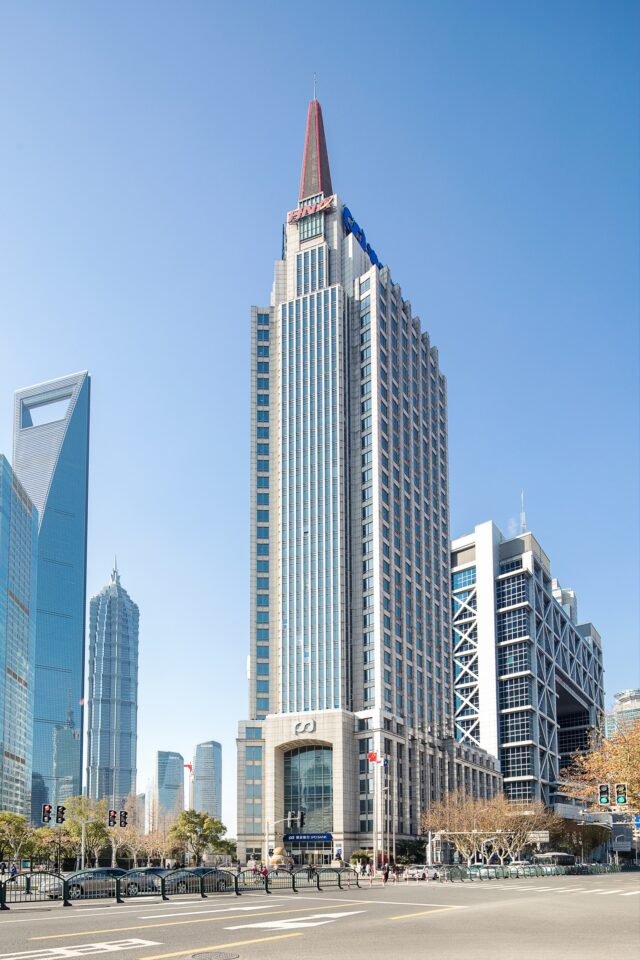
    CapitaLand has formed a 50:50 joint venture with an unrelated third party to acquire approximately 70% of Pufa Tower in Shanghai, China, for RMB2,752 million (about S$546.3 million). The operational office property has been identified as a seed asset for a value-add fund which CapitaLand is setting up to invest in commercial real estate in key gateway cities in Asia. The acquisition also marks the Group’s first office property in Shanghai’s core Lujiazui central business district (CBD) in Pudong New Area.

    Pufa Tower is 34-storey tall with three basement levels of car park. Post transaction, CapitaLand and its joint venture partner will own levels 8 to 19 and levels 21 to 32 with a total gross floor area (GFA) of 41,773 square metres (sq m), as well as 61 car park lots with property title. Pufa Tower’s ground floor lobby and refuge floor on level 20 are co-owned with Shanghai Pudong Development Bank, which owns the rest of the building.

    Lujiazui CBD, where Pufa Tower is located, is Shanghai’s most coveted office location for financial and professional services companies. With an unabating demand for office space and limited new supply, Lujiazui CBD commands the highest office rents in the city. In view of a sharp decline in Pudong’s office supply from 2019, office rents in Lujiazui CBD are expected to continue trending upwards over the next few years.

    Mr Lucas Loh, President (China & Investment Management), CapitaLand Group, said: “We are pleased to enter Shanghai’s core Lujiazui CBD soon after securing our third Raffles City development in the city. Shanghai is the top investment destination in China, with strong end-user demand for commercial properties. The acquisition of Pufa Tower, an operational asset, will immediately contribute to the Group’s recurring income. It will also strategically diversify CapitaLand’s commercial portfolio into a key CBD to capture new growth, while entrenching the Group’s leadership as the foreign developer with the largest portfolio under management in Shanghai.”

    Mr Loh added: “Continual high demand for quality commercial properties in China’s top tier cities, coupled with low supply, have made the renewal of ageing commercial assets a compelling investment strategy in these markets. Pufa Tower is a prime asset to be seeded into the commercial value-add fund we are raising. We see significant potential in enhancing its asset value by upgrading specifications, tenant mix and improving operational efficiencies. By tapping on third party equity, we are driving capital efficiency to provide CapitaLand with the financial impetus to further accelerate our growth.”
    2

    Mr Puah Tze Shyang, Chief Investment Officer, CapitaLand China, said: “Pufa Tower has not had a major renovation since its completion in 2002. While the building is properly maintained, the interior finishes offer room for improvement. After acquisition, we will focus on extracting greater value from the property through a comprehensive asset enhancement initiative. Leveraging CapitaLand’s asset enhancement capabilities and track record, we are confident of rejuvenating Pufa Tower in ways that will increase and maximise the efficiency of this well-located property.”

    With more than 1,300 multinational companies headquartered in Shanghai, the city continues to power ahead as China’s financial and business centre. In 2017, Shanghai became the first Chinese city to top GDP of RMB3.0 trillion1, of which contribution from Pudong accounted for about 30%2. The continual expansion of Shanghai’s financial sector is expected to drive the demand for prime office space in Pudong2.

    Including this latest acquisition, CapitaLand now owns/manages 21 commercial properties in Shanghai that span close to 1.9 million sq m in GFA. Shanghai is part of the five core city clusters under CapitaLand’s China strategy, which comprises Beijing/Tianjin, Shanghai/Hangzhou/Suzhou/Ningbo, Guangzhou/Shenzhen, Chengdu/Chongqing/Xi’an, and Wuhan.

    In 2018, CapitaLand actively reconstituted its portfolio to enhance its readiness to seize new growth opportunities. During the year, CapitaLand divested close to S$2 billion worth of assets in China, including a group of companies that held 20 non-core retail assets. CapitaLand subsequently redeployed the capital into a mixed-use site Chongqing, one mixed-use site and two residential sites in Guangzhou, as well as a stake in Shanghai’s tallest twin towers – the Group’s third Raffles City development in the city – through Raffles City China Investment Partners III.

  • E-Land’s owners step down from management

    E-Land’s owners step down from management

    Owner family members of fashion conglomerate E-Land Group stepped down from management on Thursday, handing over the helm to younger executives internally promoted to leadership roles. The move comes in an effort to rejuvenate its governance structure to strengthen the role of the board of directors of each affiliate and enhance their autonomy when it comes to making business decisions.

    Founder Park Sung-su, 65, will step down from the day-to-day management of the group while remaining chairman. He will focus on nurturing next-generation leaders and developing new businesses instead of being directly involved in the management of subsidiaries.

    “In the past, our chairman made a lot of important decisions across the group, but since late 2016, we’ve been making preparations to give more autonomy to affiliates and develop their capacity to make business decisions on their own,” said an E-Land spokesman.

    Park’s younger sister Park Sung-kyung, 62, also stepped down from her position as vice chairwoman of the group. Having worked at E-Land for more than 12 years, Park has led the group when it comes to external affairs in the last few years. She also managed E-Land’s global operations, including in China.

    Stepping aside from management, Park Sung-kyung will chair the board of directors of the E-Land Welfare Foundation, which pursues charity activities inside the group.

    To fill the void, two vice chairmen were appointed. Former E-Land Retail CEO Choi Jong-rang has been promoted to vice chairman of the retail subsidiary, which operates NewCore department stores as well as popular shoe brand Shoopen. Kim Il-kyu has also been newly appointed as vice chairman of E-Land World, which manages the group’s key clothing brands.

    E-Land also promoted a handful of top executives in their 30s and 40s to head up their respective business divisions.

    Choi Wan-sik was promoted to CEO of E-Land World’s fashion division. Choi previously gained recognition for his performance as the director of Spao.

    At E-Land Park, which manages the group’s resorts and restaurant chains, 35-year-old Kim Wan-sik took over the reins as the subsidiary’s head of restaurants, which includes buffet franchises Ashley and Pizza Mall.

  • Raf Simons exits Calvin Klein

    Raf Simons exits Calvin Klein

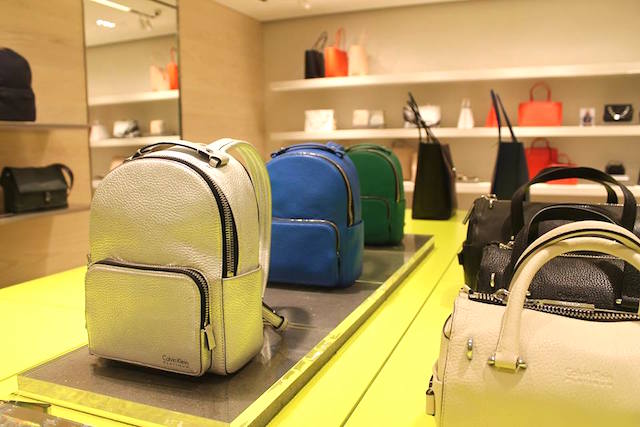
    Raf Simons is exiting Calvin Klein less than two years after his debut as its first chief creative officer and eight months before the end of his contract. The brand will not stage a runway show in February. The designer’s stint at Calvin Klein — coming after his turn as artistic director of women’s haute couture, ready-to-wear and accessory collections at Dior — won plaudits within the industry but failed to resonate commercially. His exit was widely expected after Calvin Klein parent PVH Corp. chief executive Emanuel Chirico last month criticised the brand’s uneven financial performance and skew toward “high-fashion” under Simons.

    “Both parties have amicably decided to part ways after Calvin Klein Inc. decided on a new brand direction which differs from Simons’ creative vision,” the company said in a statement. A representative for Simons declined to comment.

    Simons’ appointment in 2016 was met with much fanfare. The Belgian designer, as well known for his cult menswear label as his well-regarded stints at Jil Sander and Dior, was given a multi-million-dollar salary and the title of chief creative officer, with oversight over all aspects of marketing and design for the American megabrand, a degree of control he did not have at Dior.

    From the start, hiring a high-concept fashion designer for a brand best known to consumers for its denim, underwear and provocative marketing was a risky move. But PVH leadership saw competing businesses like Ralph Lauren stagnating for lack of creative innovation, while European stalwarts like Gucci soared after radical creative overhauls.

    With Simons, Calvin Klein hoped to not only generate a halo effect for its lower-priced products, but transform the label’s high-end ready-to-wear business, renamed 205W39NYC, from a marketing expense into a commercial powerhouse.

    But from the very beginning of Simons’ tenure, there was a disconnect between his personal aesthetic and the needs of a multi-billion-dollar, multi-tiered brand, driven less by high design and more by mass marketing, an area in which Simons had no experience. His first advertising campaign for the ready-to-wear collection, received mixed feedback. Shot by longtime collaborator Willy Vanderperre, it was arty and bloodless; far from the sexualised minimalism for which the brand was so well known.

    Yet there was plenty of industry praise for Simons’ catwalk shows. And in the first season alone, doors selling 205W39NYC jumped from 30 to 300. What’s more, Simons seemed committed to the cause of translating his designs into mass sales, visiting with Macy’s executives and hiring the Kardashian family to pose for underwear and denim advertisements.

    As recently as March, PVH appeared committed to the partnership as well, with Chirico touting the “credibility” that 205W39NYC would bring to the brand’s other lines. But PVH’s patience began to wear thin over the course of 2018, as the buzz generated by Simons failed to translate into consistent revenue growth.

    In September, a runway concept that required Simons to show off-site (recent catwalks have been held on the ground floor of the company’s headquarters) was scrapped due to budgetary constraints. Then, according to multiple sources, PVH expressed concerns that Calvin Klein’s extensive partnership with the Andy Warhol Foundation — which included merchandise — was too arty and high-brow for a mass audience.

    PVH, which also owns Tommy Hilfiger, missed sales projections in its most recent quarter. And Chirico last month called out the 205W39NYC ready-to-wear collection’s failures, adding that Calvin Klein’s recent denim collection had been a “fashion miss.” The brand’s revenue grew just 2 percent in the third quarter to $963 million. PVH shares are down 35 percent this year.

    “We will cut back on a number of these planned investments in the 205 collection business, and as we move forward, we will [be taking] a more … commercial approach to this important business,” Chirico said after PVH released financial results in November, adding that Calvin Klein will shift the focus of its marketing campaigns from high-fashion to more affordable items targeting a more mainstream audience.

    In recent months, the company had begun to dial back on some of Simons’ responsibilities, installing L’Oréal veteran Marie Gulin-Merle to be Calvin Klein’s new chief marketing officer, reporting not to Simons but to the brand’s chief executive Steve Shiffman.

    Simons earned multiple awards from the Council of Fashion Designers of America during his time at Calvin Klein and his absence will be keenly felt at New York Fashion Week, where he was one of the few designers who could command true international attention.

    “Raf brought a unique point of view to American fashion and the CFDA wishes him future success,” said CFDA chief executive Steven Kolb. “Calvin Klein is an iconic American brand that will continue to flourish under new creative direction.”

  • Arch Capital tops Taiwanese shopping mall acquisition

    Arch Capital tops Taiwanese shopping mall acquisition

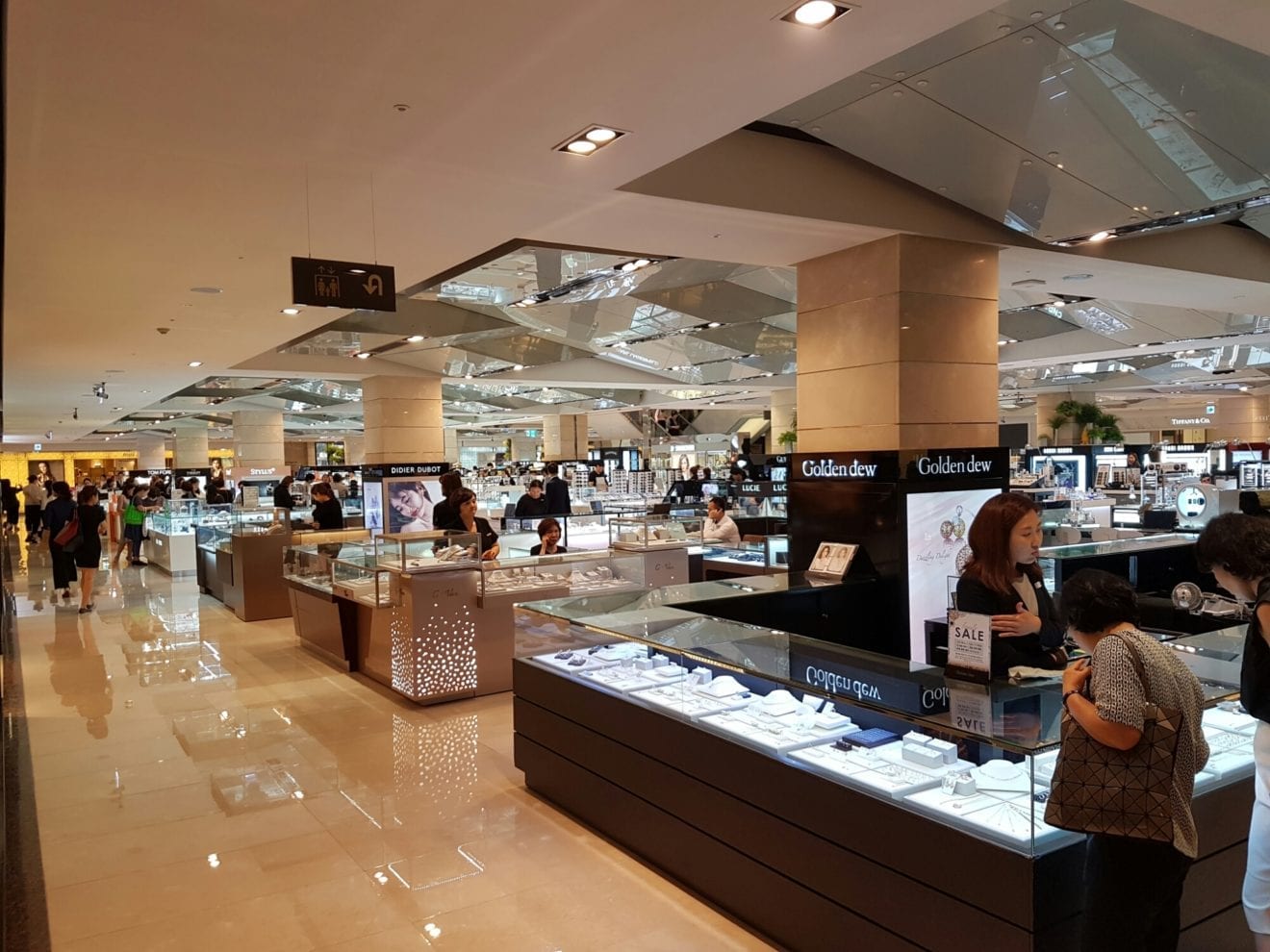
    Arch Capital Property Advisors has bought a Taiwanese shopping mall for US$450 million on behalf of private investors. The deal marks the Hong Kong-based company’s first foray into Taiwan’s retail property business. After settlement, Arch Capital will assume management of the property.

    The target property – Taimall Shopping Center in Taoyuan – has been acquired on behalf of an unnamed institutional investor, which has partnered with Taiwanese investment trust Millerful REIT.

    The 100,000sqm mall is Taoyuan’s largest, home to more than 300 retail stores, a cinema and sports complex.

    Arch Capital Property MD James Chou said that his company saw “a rare opportunity to acquire an established premium retail asset offering stable income and sustained revenue growth potential over the longer term” in the Taiwan deal.

    Taiwan-listed Millerful largely focuses on the commercial sector, and reportedly has plans to buy more shopping centres, hotels and office buildings.

  • Vietjet CEO becomes first Vietnamese Bloomberg game changer

    Vietjet CEO becomes first Vietnamese Bloomberg game changer

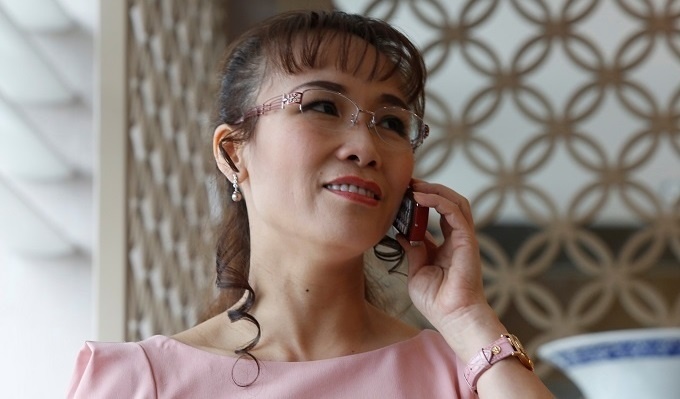
    Nguyen Thi Phuong Thao is in Bloomberg’s list of 50 people who’ve been business game changers in 2018. Thao is the first Vietnamese citizen to be named in the Bloomberg list, which highlights key players in all fields, from finance to fashion, media to manufacturing, banking to biotech, politics to philanthropy, entertainment to energy. The founder and CEO of budget carrier Vietjet Air wants to take on regional giants like Indonesia’s Lion Air and Malaysia’s AirAsia Group Bhd.

    The carrier has forecast that the number of passengers it serves this year will rise 40 percent to 24 million, as it begins to tap into Vietnam’s growing middle class by expanding overseas routes.

    The expansion further changes the face of Vietnam’s aviation market that has been long dominated by state-owned Vietnam Airlines JSC, as VietJet offers millions of Vietnamese customers who have never flown the chance to buy a cheap ticket, Bloomberg says.

    Thao, 48, has extensive experience in doing business in Vietnam and abroad in many fields, including finance, banking, aviation, realestate, and retail.

    She launched Vietjet in 2011. The airline now leads the domestic market with a 45 percent share. It operates 385 flights daily within Vietnam and to Japan, Hong Kong, South Korea, Taiwan, Singapore, mainland China, Thailand, Myanmar, and Malaysia.

    The carrier made an IPO on the Ho Chi Minh City Stock Exchange on February last year, becoming the first airline in Vietnam to list publicly.

    Thao also has interests in banking and real estate, which includes owning three beach resorts.

    Bloomberg says it comes up with the list by utilizing its worldwide resources, including the work of 2,400 journalists and unique, proprietary data and analytics.

    Also on the list this year are Jerome Powell, the U.S. Federal Reserve chairman, Amy Hood, chief financial officer at Microsoft Corp, and Ryan Coogler, director of Maverl’s movie Black Panther.

    Just last week, Thao was named the 44th most powerful woman in the world byForbes, up 11 places from last year.

    Forbes estimated the richest woman in Vietnam to have a net worth of around $2.6 billion.

  • Lazada Group appointed new CEO

    Lazada Group appointed new CEO

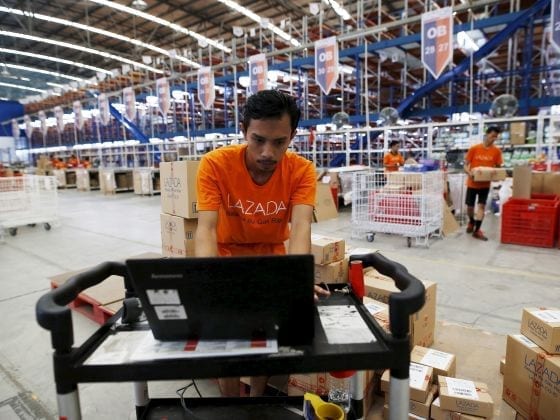
    Lazada Group has announced its second new CEO this year, with group executive president Pierre Poignant taking the role immediately. Incumbent Lucy Peng, who took over the role nine months ago after moving from major investor Alibaba, will remain with the business, assuming the title executive chairwoman.

    In a media statement, Lazada described the change as “succession planning”.

    Poignant, who was appointed president in August, will lead the company’s strategic development into new growth pillars, while continuing to manage Lazada’s operations in Indonesia, Malaysia, the Philippines, Singapore, Thailand and Vietnam, working closely with country CEOs and regional functional team leaders.

    “Pierre is a well-respected Lazada co-founder, who has contributed tirelessly to the company for the past six years,” said Peng. “He and the team of other co-founders had the vision to build our logistics network from the ground up back in the days when no one in Southeast Asia believed in e-commerce – this valuable asset has now set us apart from the competition. Over the years, Pierre has consistently delivered beyond his call of duty and excelled in every role he has taken up.”

    Poignant said Lazada has benefitted from the Alibaba ecosystem, from the technological prowess to the logistics network.

    “This year is a turning point for Lazada. We have improved and evolved and now come out stronger, more efficient, and more agile than the start of the year. Our transformation has just begun and I am confident next year will be another watershed year,” said Poignant.

  • Glossier’s president and CFO quits

    Glossier’s president and CFO quits

    One of Glossier’s earliest executives is leaving. Henry Davis, president and chief financial officer, is exiting the direct-to-consumer beauty brand after almost five years to pursue his own entrepreneurial opportunities. This comes weeks after Davis’ position changed from chief operating officer to chief financial officer, a role the company has been trying to fill since former vice president of finance Matthew Weiler departed the company earlier this year.

    In addition to Davis and Weiler, former creative director Helen Steed left Glossier a year ago to join New York-based branding and design agency Aruliden as vice president and creative director. Glossier confirmed Davis’ departure. His last day will be December 31.

    “Henry has been my partner since the earliest days of Glossier. He was one of the first people to understand the opportunity to build a new kind of company — one that leverages technology to create in collaboration with its customers,” Emily Weiss, founder and chief executive, told BoF. “I’m excited for him as he begins his own entrepreneurial journey.”

    After Weiss, Davis was the most public face of the business. He was one of the first executives hired by Weiss and joined the brand in June 2014, three months before launching in October of that year.

    Previously, Davis worked at Index Ventures, an early investor in Glossier that also led, along with Institutional Venture Partners, a $52 million Series C round of funding in February.

    A changing of the guards in upper management follows a handful of new hires including Marie Suter, who left Condé Nast after a 13-year tenure to join Glossier as creative director in March.

    Facebook alum Maykel Loomans is now head of digital product design, and Kym Davis, formerly of Fenty Beauty, is leading product development.

    Ashley Mayer, who came from Silicon Valley-based venture firm Social Capital, is head of communications, and former head of communications, Amy Snook, recently became chief of staff.

    The company, which has almost 200 employees, has raised $86 million and, according to a source close to the company, is on track to do over $100 million in revenue this year.

    In November, Glossier opened a flagship location in New York City that by customer accounts was one of the most bustling stores in the area.

    To date, the brand has only sold its range of skincare, cosmetics and body care through direct channels, an anomaly for direct-to-consumer lines that have begun to rely on retail partnerships to scale. Since inception, Weiss’ mission has been to retain complete control of its brand experience by creating a direct retail network to support the digital first line.

    And even though this may have resulted in the brand not yet scaling to the size of many other heavily funded startups, Weiss’ — and by extension Glossier’s — influence is outsized. Weiss has stayed true to her direct roots and in doing so has managed to build a cult following and community of engaged consumers willing to buy anything put forth by the brand, from its best-selling Boy Brow grooming pomade to its Milky Jelly Cleanser.

    The brand’s most engaged consumers have become ambassadors that are treated like influencers — some unpaid and others receive cash and shopping credits for their efforts in spreading the word.

    Weiss has been thoughtful about international expansion. Despite global demand from the onset, she took three years to sell outside the US. Glossier started selling in Canada and the UK last year and this year entered Ireland, Sweden, Denmark and France. The brand now sells across seven countries.

    “This team has proven that building a business alongside your customers is the future — not only in the world of beauty, but for all internet-first brands,” Davis said. “I couldn’t be more bullish about Glossier’s future as I embark on founding my own company.”

    Nabil Mallick, a partner at Thrive Capital and Glossier board member, will serve as interim CFO. A search for a full-time CFO is underway.

  • Indonesia’s Traveloka Co-Founder Resigns

    Indonesia’s Traveloka Co-Founder Resigns

    Indonesian unicorn startup Traveloka announced the resignation of its co-founder, Derianto Kusuma, from his position as chief technology officer on Tuesday. Derianto was one of three persons involved in the establishment in February 2012 of the online ticketing and hotel booking service, which has since become one of the leading tech companies in Southeast Asia.

    “Deri has played an unparalleled role in Traveloka’s development and success by building, scaling, and making not only sustainable technology capability and systems but also a sustainable organization,” said Ferry Unardi, chief executive and co-founder of Traveloka.

    Following his exit from the company, Derianto took to online publishing platform Medium to write about his journey. In his post, he wrote about what drove him to start the company and the actual implementation of different business models throughout the nearly seven years since Traveloka was founded.

    He also touched on why he decided it was best for him to leave.

    “A few years ago, the battle started to show trends towards being more commercially than innovation-driven, predatory than productive, perception-oriented than fundamentals-oriented,” Derianto wrote.

    With these new trends, Derianto felt that his duty – building the technological foundation – had been fulfilled.

    “Two years ago, I ensured Traveloka had strong technological, organizational foundations built for scale and sustainability, and put in place a solid senior team that can take them forward,” Derianto wrote.

    Though Derianto wrote that he would be spending more time with family and friends after resigning, he said he “yearns” to develop a new venture in a noncompeting category, a technology that would “fundamentally transform society.”

    “I’m glad that we have finally reached this milestone where I believe it’s a win-win for everyone involved,” Derianto wrote.

  • Cavalli appoints new General Manager Asia Pacific & China

    Cavalli appoints new General Manager Asia Pacific & China

    Founded in the Seventies, when fashion designer and entrepreneur Roberto Cavalli launched the brand, the label has recently seen a rapid growth in the region. Effective from 1st December Ivan Perra reports directly to the CEO regarding the region. Prior to this new role, Ivan Perra was Business Development Director APAC leading both wholesale and retail expansion in the region.

    Ivan has spent 12 years in the region.  He started his career in Retail for Kartell opening and managing the first 2 stores in HK in 2006; to later move to Lanificio F.lli Cerruti dal 1881 as Regional Sales Manager (APAC and North Asia) with focus on B2B and MtM markets.

    After 6 years in Cerruti Ivan took over a new challenge as Area Manager of Cote&Ciel (Parisian premium accessory brand) starting retail and wholesale development for the brand in Asia that now counts more than 10 mono-brand boutiques among Hong Kong, Macau, Thailand, Japan and China.

    Before joining Roberto Cavalli Ivan spent 3 years in charge of Business Development for the French Maison Kenzo (LVMH group) opening over 70 mono-brand stores in the region and in charge of over 120 POS.

    Ivan takes up this new role with a series of brand activations in the pipeline to strengthen the brand positioning in the region.


  • Safilo appoints new executive to head e-commerce

    Safilo appoints new executive to head e-commerce

    Eyewear firm Safilo has appointed Andrea Bulgarelli to the newly created role of digital transformation director, as the Dutch-owned Italian company sets its sights on renovating its e-commerce infrastructure by 2020. An e-commerce fashion veteran, Bulgarelli comes from fellow Italian firm Benetton, which he joined in 2015 as group digital business director.

    Prior to his two year stint at Benetton, Bulgarelli was pivotal in the creation of e-commerce sites at luxury fashion Max Mara from 2007 to 2015, serving as the group global digital and e-commerce director for eight years. He came to Max Mara as operations and innovation director, after two year’s experience in sales.

    He is a graduate in telecommunications engineering and has an MBA in business administration.

    In his new role at Safilo, Bulgarelli will oversee the management of all consumer-facing touchpoints including merchandising planning, direct e-commerce, digital marketing, content production and CRM – all functions that he performed, among others, at Benetton.

    His appointment underpins Safilo’s direct-to-consumer strategy currently being executed, within its industrial plan for 2020.

    “Digital initiatives are at the heart of our growth and development strategy […] thanks to Andrea Bulgarelli’s leadership, we will finally be able to accelerate our e-commerce activities and our digital transformation,” explained Safilo CEO Angelo Trocchia.

    However, Safilo’s most recent financials were far from rosy. On November 3, the group reported third-quarter revenues of €221.5 million, down 9% at current exchange rates compared to the same period in 2017.

    The situation was similar over the first nine months of the year, with revenue down 9.7% to €713.7 million, compared to €790.5 million in 2017.

    Founded in 1934 by Guglielmo Tabacchi in Pieve di Cador, Safilo Group today designs, produces and distributes prescription frames, sunglasses, sports eyewear and helmets under its own five house brands and 32 licensed brands including Dior, Fendi, Givenchy, Moschinoand Tommy Hilfiger and is owned by Hal Holdings since 2008, the Dutch investment firm which holds 37.23% of the company.


  • Samsung Electronics gives stability a try

    Samsung Electronics gives stability a try

    The CEOs of Samsung Electronics semiconductors, smartphones and consumer electronics divisions all kept their jobs in the company’s annual corporate reshuffle announced Thursday. Kim Ki-nam, head of Samsung’s device solutions division, which includes semiconductors, retained his position but has been promoted from president to vice chairman. Samsung’s semiconductor business has seen operating profit grow for the past 11 quarters as of September.

    The other two division heads – Koh Dong-jin of IT and mobile communications and Kim Hyun-suk of consumer electronics – were reappointed as CEOs and will retain their current president job titles.

    Roh Tae-moon of the IT & mobile communications division was promoted from vice president to president and will continue to head the smartphone development team. Roh has been at the core of technology development for Samsung’s Galaxy smartphone brand since the range was first introduced.

    For a company well known for rapidly exchanging executives based on performance, the minor superficial changes at the top made this year suggest that Samsung is shifting instead to put more weight on stability rather than expansion next year.

    The company already went through a major generation change last year when it laid off older executives to replace them with younger ones. A total of 14 top executives were reshuffled at the time. Samsung said in a statement on Thursday that it “re-appointed business executives from last year to realize ‘innovation within stability.’”

    The drive for stability also comes at a time when Samsung faces several uncertain factors that analysts say will halt this year’s rally of record profits. The global chip market, which has been on an unusually long supercycle over the last few years, is anticipated to slow down in 2019.

    Outlooks on the global economy are also grim due to the remaining risk of the United States and China continuing their trade war.

    Samsung also stuck to its performance-based HR strategy by heavily compensating executives and managers in the device solutions division, including CEO Kim Ki-nam.

    Kim has been heading the semiconductor business at Samsung since December 2014. Under his lead, the company celebrated the last two years as the No. 1 chip manufacturer in the world. Chips were also a major contributor to Samsung’s record-high quarterly profits this year.

    Kim wasn’t the only one to be rewarded. Among a total of 158 senior executives promoted at Samsung, including those below president, 80 were from his division.

    Samsung employees in the device solutions division will receive bonuses between 300 to 500 percent of annual wages. Even external partners and suppliers for the division will reap incentives this year of up to 89.7 billion won ($79.8 million) in total.

    Meanwhile, this was the first time in three years that Samsung Electronics has released annual reshuffle results at the year’s end – a sign that Samsung is getting back on its feet after Vice President Lee Jae-yong’s return from prison in February.

    There were no annual reshuffles at all in 2016 when Lee was investigated for bribery charges regarding former President Park Geun-hye. It was only in October last year that the company announced a reshuffle plan among top executives.

    Other Samsung affiliates announced annual reshuffle results on Thursday. Samsung C&T Vice President Kim Myeong-soo was promoted to president. He was in charge of the task force in charge of improving competitiveness in engineering, procurement and construction.

    Vice Chairman Lee’s sister Lee Seo-hyun was appointed as chairman of the Samsung Foundation, which conducts social welfare projects. She was formerly president of the fashion division at Samsung C&T.

  • Jeju Air co-CEO plans to depart

    Jeju Air co-CEO plans to depart

    Jeju Air said on Wednesday that co-CEO Ahn Yong-chan has expressed his intent to step down from his post, leaving the company to operate under the sole leadership of current co-CEO Lee Seok-ju. Ahn leaves Jeju Air after working under the company’s parent Aekyung Group since 1987.

    The co-CEO served in numerous positions at Jeju Air’s group affiliates such as in Aekyung Petrochemical and Aekyung Industry.

    The company said that Ahn served as CEO at the group’s affiliate companies for 23 years, and that he felt it was right to leave the company at a time when it is performing well, along with his original plan to retire at 61-years-old.

    Jeju Air has become a sizeable contender in the low-cost carrier industry in Korea. It reported 349.5 billion won ($311.6 million) in revenue in the third quarter this year, a 31 percent increase from the previous year.

    Ahn is the son-in-law of Aekyung Group’s Chairwoman, Chang Young-shin.

  • Esprit appointed new chief product and brand officer

    Esprit appointed new chief product and brand officer

    Struggling fashion retailer Esprit has tapped a former Burberry and Tommy Hilfiger executive to become its chief product and brand officer. Mia Ouakim will take up the new role – a crucial post in the brand’s turnaround plan – in February, reporting to the group CEO.  She will be responsible for managing the product creation and design of all product divisions, as well as the consistent execution of the brand strategy across all product divisions and consumer touch points, according to Esprit in a stock exchange filing.

    Ouakim’s experience spans corporate strategy, product design, merchandising, planning and development, brand and communication, and distribution gained from luxury and premium fashion brands. Her most recent role was senior VP of Tommy Hilfiger menswear and tailored, overseeing the brand’s menswear division globally. Prior to that, she served as VP at Tommy Jeans, formerly known as Hilfiger Denim (Women & Men) between 2014 and

    2017 where she had full business responsibility of the denim division globally.

    Before joining Tommy Hilfiger, Ouakim held various roles with Burberry, working in product, merchandising and design roles for childrenswear between 2006 and 2014. Before that, she was with Children Worldwide Fashion in the UK, responsible for brand, communication and public relations of various luxury and premium brands, including Burberry, Timberland, Kenzo, Nike, Elle and DKNY childrenswear.