Tag: Management

  • Enhance Inventory Management With Satellite Pallet Racking Systems

    Enhance Inventory Management With Satellite Pallet Racking Systems

    Innovative solutions are in high demand as businesses seek to enhance efficiency and maximize storage space. Implementing efficient inventory management systems can significantly improve operational efficiency, streamline workflows, and increase profits. A revolutionary trend on the rise is using satellite pallet racking systems.   

    This article delves into the details of satellite pallet racking and explores how it can enhance inventory management. You’ll discover the benefits of these systems and the impact they can have on your business operations.   

    Understanding Satellite Pallet Racking Systems   

    In the world of warehouse management, pallet racking systems are essential. They’re the backbone of most storage environments, providing efficient use of space and easy access to products. Satellite pallet racking systems take this concept to the next level.   

    These systems use automated satellite vehicles that move along the racking system’s rails, storing and retrieving pallets as required. They function with precision, speed, and efficiency, making them a powerful asset for any warehouse.   

    Maximizing Space With Satellite Pallet Racking   

    One significant advantage of satellite pallet racking systems is their ability to maximize storage space. Traditional racking systems often leave unused space that could be utilized more effectively.   

    With satellite racking, you’ll experience space utilization like never before. The satellite vehicles operate within the racking, eliminating the need for wide aisles to accommodate forklifts. It leads to a higher storage density and better use of warehouse space.   

    In the next section, you’ll delve into these systems’ operational efficiency.   

    Boosting Operational Efficiency   

    Satellite pallet racking systems aren’t just about saving space; they also enhance operational efficiency. Human errors are significantly reduced as these automated vehicles handle most of the work. The consistency of automated operations allows for better planning and forecasting.   

    Not only do these systems save time on handling products, but they also reduce the physical demand on your staff. It can increase team member satisfaction and productivity, making your business operations more effective overall.   

    As you’ll see in the next section, satellite pallet racking systems also contribute to inventory management and control.   

    Revolutionizing Inventory Management And Control   

    Inventory management and control are crucial for all businesses, and satellite pallet racking systems provide a major leap forward. Automated operations and digital controls make inventory tracking significantly more precise.   

    Satellite vehicles are often equipped with sensors and tracking systems, offering real-time updates on your inventory. It ensures accurate inventory control, aids in preventing losses, and enhances overall business efficiency.   

    Furthermore, this level of precision and control allows for better planning and forecasting, minimizing issues with overstocking or understocking.   

    Improving Inventory Accuracy and Reducing Loss  

    The advantages of satellite pallet racking systems are manifold, and a significant aspect where they excel is in improving inventory accuracy and reducing loss, which is critical to maintaining a profitable business. Here’s how they do it: 

    • Inventory accuracy: Thanks to the automation and digitization of satellite pallet racking systems, tracking inventory becomes easier and more accurate. Each pallet’s location is tracked in real time, reducing the chances of misplacement and contributing to improved inventory accuracy.  
    • Reduced loss: The likelihood of misplaced or lost items decreases with precise tracking. It could translate into substantial savings over time, especially for businesses dealing with high-value items.  
    • Minimized damage: Using automated vehicles for storing and retrieving pallets reduces the chance of human errors that can lead to product damage. Satellite vehicles are designed to handle pallets with care, ensuring the integrity of your products.  

    The next section will focus on the environmental benefits that these systems offer.  

    Creating an Environmentally Friendly Warehouse   

    In today’s world, sustainability isn’t merely a trend; it’s a business necessity. More and more businesses are realizing the importance of implementing green practices. Not only can these efforts improve a company’s reputation, but they can also contribute to global sustainability. Satellite pallet racking systems can play a significant role in these efforts.   

    One of the ways these systems contribute to sustainability is through the efficient use of space. By maximizing space utilization, a warehouse can significantly reduce its energy consumption. It’s because less energy is required for lighting and climate control in a well-organized space.   

    Moreover, many components of satellite pallet racking systems are made from recyclable materials. It means that even when the system eventually needs to be replaced, it won’t contribute significantly to landfill waste. Instead, many of its parts can be recycled, thus further contributing to sustainability efforts.   

    Finally, automated operations and optimized logistics require fewer forklifts and other vehicles. It leads to a decrease in carbon emissions, helping to lower your business’s carbon footprint.   

    Conclusion   

    In conclusion, satellite pallet racking systems are an investment worth considering for businesses seeking to maximize storage space, boost operational efficiency, and enhance inventory control. These systems have a proven track record of driving business performance and could be the key to unlocking your warehouse’s potential.


     

  • UBS Mulls Iqbal Khan as Sole Wealth Management Head

    UBS Mulls Iqbal Khan as Sole Wealth Management Head

    The Swiss bank could be considering ending the co-management of its global wealth unit as it places its potential leader into position for the future.

    UBS is currently evaluating whether to promote Iqbal Khan as the sole head of the global wealth management business.

    The current co-head of the wealth management business, Tom Naratil, may keep his current role as head of the UBS business in the Americas, the news service said, citing people with knowledge of the matter.

    The step could also serve to position Khan as current UBS chief executive Ralph Hamers’ successor, although no final decision has been made yet, it said.

    Given that Hamers has only run UBS for two years, the management change is unlikely to be imminent, the report added. Khan came to UBS from Credit Suisse in 2019, where he ran that bank’s international wealth management business.

    Naratil originally started working for PaineWebber in 1983, a US brokerage purchased by UBS in 2000. He was previously the UBS chief financial officer and chief operating officer in Zurich before returning to manage the US wealth business in 2016.

  • PepsiCo names new CEO for Australia/New Zealand

    PepsiCo names new CEO for Australia/New Zealand

    PepsiCo has announced the appointment of Kyle Faulconer as the new CEO of Australia and New Zealand, effective January 2022.

    Faulconer will replace outgoing CEO, Danny Celoni, who was recently appointed to the Asahi Beverages Oceania Executive Leadership Team as the new CEO of Carlton & United Breweries, effective February 2022.

    To take up the new position, Faulconer will relocate to Sydney from the US, where he is currently Vice President and General Manager at PepsiCo’s Frito-Lay snacks business.

    He has had a 14-year tenure at PepsiCo and is a passionate advocate for consumer-centric innovation. Most recently he was responsible for leading the strategic agenda for Walmart, one of PepsiCo’s largest global customers.

    Wern-Yuen Tan, CEO, PepsiCo APAC, says that Faulconer’s strong market experience and people-first approach will be a great asset to the Australia and New Zealand team.

    “We are delighted to welcome Kyle to ANZ and know he will lead the team to new heights,” said Tan.

    In his new role, Faulconer will work to strengthen operations and drive innovation and growth across PepsiCo’s portfolio of drinks and snacks.

    He said: “I’m thrilled to join the world-class team and help the PepsiCo business continue to grow across Australia and New Zealand. I look forward to creating new opportunities to accelerate our positive, purpose-led impact for our partners, customers ad consumers.”

  • Singapore Banks Joins China’s Wealth Management Connect

    Singapore Banks Joins China’s Wealth Management Connect

    DBS and OCBC have announced partnerships as part of the cross-border wealth management scheme between Hong Kong and China.

    DBS Bank (Hong Kong) will be working with the Postal Savings Bank of China (PSBC), while OCBC Wing Hang Bank, OCBC’s Hong Kong subsidiary has tied up with China’s Ping An Bank to provide wealth-management services in the Greater Bay Area under the Wealth Management Connect scheme.

    The link, which was announced in September, residents of special administrative regions Hong Kong and Macau will be allowed to buy investment products from the remaining nine Greater Bay Area cities, and vice-versa.

    A total of 300 billion yuan ($46.5 billion) has been set as the aggregate quota for the two-way channel – 150 billion yuan each – with a limit of 1 million yuan per individual investor.

    DBS Hong Kong is the group’s largest franchise outside Singapore, while PSBC is one of the largest state-owned banks in China, targeting agriculture, rural areas and farmers, urban and rural residents, as well as small and medium-sized enterprises.

    Greater China is the second-largest market for OCBC after Singapore, while Ping An is among the top banks in China.

    However, DBS is currently only allowed to sell products via the southbound route, while OCBC can provide two-way services under the scheme.

  • Comviva’s customer value management platform drives breakthrough growth for Indosat Ooredoo

    Comviva’s customer value management platform drives breakthrough growth for Indosat Ooredoo

    Fueled by an intensely competitive operating environment in Indonesia’s mobile sector, Indosat Ooredoo partnered with Comviva in delivering a front-to-end real-time marketing management platform, as well as subscribers’ loyalty and rewards program to yield increased customer retention and revenue within months from implementation.

    In a country where 98% of mobile phone users fall back on prepaid subscriptions, telecommunications operators in Indonesia’s competitive mobile market face the gargantuan challenge of retaining customers. In a heterogeneous market already characterized by low loyalty and high churn rates, matters are made worst when high costs deter telecommunications operators from reaching out to and acquiring new subscribers in under-served populations in far-flung areas.Indosat Ooredoo taps on Comviva’s expertise in innovation-driven growth marketing

    It is costlier to replace churned customers than retaining them. Amid intense competition and dismal financials, Indosat Ooredoo recognized that the path to profitable growth is an improved customer value management (CVM) platform that manages customer lifecycle holistically to uncover customer insights and drive meaningful engagements.

    Having collaborated on other deployments with much success, Indosat appointed Comviva, a global leader in mobile solutions for telecommunication operators, as a strategic partner to spearhead its Big Data CVM 2.0 program in April 2019.

    Aimed at improving customer lifetime value to achieve incremental revenue, Comviva developed a three year digital roadmap with front-to-end digital strategies. The suite of solutions spans different stages from implementing, operating, optimizing and providing timely, in-depth post-implementation analysis to transforming customer experiences critical to the success of the program.

    Overcoming key challenges with technology

    Before partnering with Comviva, Indosat Ooredoo was missing out on opportunities to influence customers’ micro-moments at critical junctures in the customer journey. To maximize the value of individual customers and micro-moments of interactions, Comviva’s first step was adding real-time capabilities to the operator’s CVM platform.

    A machine learning (ML), real-time interaction management platform, Comviva’s MobiLytixTM Real Time Marketing capitalizes on actionable analytics to steer CVM excellence. It integrates data across multiple sources to build intelligence and act on real-time events to orchestrate engagements with customers.

    Adding complexity to critical decision-making was the lack of federated data across Indosat Ooredoo’s various departments. To get to the root of this problem, Comviva developed a big data Hadoop-based centralized management system that effectively captures over 800 attributes about Indosat Ooredoo’s prepaid and post-paid subscribers to create a single view of its subscribers. This system brings focus to descriptive, predictive and prescriptive attributes of subscribers to serve as a unified customer data system accessible to the operator’s campaign management, business and applications teams.

    Comviva also identified the absence of a pervasive artificial intelligence (AI) technology to measure campaign effectiveness as another shortfall. To this end, Comviva developed models founded on AI and ML to accurately predict customers’ behaviors.

    Finally, Indosat introduced imPoin, a loyalty and rewards program to extend instant gratification to loyal customers and reward loyal customers preferentially. Powered by Comiva’s MobiLytixTM Loyalty and Rewards Platform, this program allows Indosat Ooredoo to predict customer engagement activities and positively influence customer behavior through reward-based engagements. To yield the best outcomes, a framework was developed to measure, monitor, and optimize the program.

    Comprising a 4-tier membership model – namely Red, Silver, Gold and Platinum, with Platinum being the highest tier – better benefits are rolled out for higher tiers. Members are motivated to earn benefits for all their engagements, which can be accumulated and redeemed via the myIM3 mobile app. Members can look forward to receiving a mix of lifestyle and experiential rewards such as fuel, shopping, dining as well as gaming vouchers.  

  • HSBC Names Malaysia Head of Wealth and Personal Banking

    HSBC Names Malaysia Head of Wealth and Personal Banking

    HSBC has appointed a successor for the role of wealth and personal banking head in Malaysia after it was left vacant for three months.

    HSBC named Renee Bullock-Cann as head of wealth and personal banking (WPB) in Malaysia, according to a statement, succeeding Tara Latini who was named head of WPB in the U.S. in April.

    Bullock-Cann reports to HSBC Malaysia chief executive Stuart Milne and APAC regional head of wealth and personal banking Greg Hinston.

    Bullock-Cann was most recently the head of distribution for WPB in Malaysia after relocating to the country in 2019. Previously, she was head of WPB for HSBC Bermuda.

    According to HSBC, Malaysia is a priority market for the bank which has made various investments including $18 million from 2018 to 2020 to improve branches and client experience; $40 million from 2021 to 2023 to add tech capabilities to branches; the creation of 200 new roles; and the roll-out of various digital services.

    Our ambition is simple: we want to be the bank that Malaysians turn to for their international needs, Milne said.

    We will leverage our unparalleled international network, enhance our range of wealth solutions and focus on building our digital capabilities including our mobile functionality, our in-branch technology, and our people’s digital skills.

  • Cafe de Coral Group appoints new managing director

    Cafe de Coral Group appoints new managing director

    Café de Coral has promoted Piony Leung to managing director (Hong Kong) with immediate effect.  In her new position, Leung reports to group CEO Peter Lo and manages business operations and provides strategic leadership across Café de Coral Group’s business in the city, including quick-service restaurants, casual dining, and institutional catering. She will also play a pivotal role in meeting the company’s growth goals in the Hong Kong F&B sector.

    Piony was previously managing director (quick-service restaurants) of Café de Coral Group, and boasts more than 25 years of experience in the retail and fast-moving consumer goods industries. Under her leadership in 2020, the group’s quick-service restaurants business took a number of actions to address weak market conditions, shifted marketing focus to promote take-away and delivery services, redesigned menus to meet changing demand, and introduced an e-commerce platform for selling popular seasonal products such as poon choi and party sets.

    “In the face of unprecedented challenges, I am deeply impressed by our frontline staff who have gone above and beyond to service our customers while doing their best to meet our business goals. Although the economic outlook remains uncertain, I am committed to working side by side with my team members to explore future business opportunities and retain the Group’s leadership position in this rapidly changing market,” she commented.

    Speaking of Leung’s appointment, Lo said her leadership skills had led the team through major market shocks and adapted to the challenging business landscape.

    “In the post-pandemic era, it is essential that the group is able to capture opportunities bought by the fast-changing market and consumer behaviours. I have every confidence that she will be able to maximize business synergies and build a stronger brand portfolio by integrating the quick service restaurants, casual dining and institutional catering business as a whole, offering a wide range of food options that cater to the diverse tastes of the greater community,” Lo explained.

  • UBS Wealth Management Starts Job Cull

    UBS Wealth Management Starts Job Cull

    A new organizational structure, intended to speed up decision making, is being introduced in Asia, with other regions to follow.

    UBS has begun cutting jobs at its wealth management unit in Europe and Asia, with as much as 20 percent of its workforce in European regions and management layers in Asia affected.

    The round of cuts will affect about 500 employees, with cuts affecting staff at every level, from managing directors to assistants, according to people familiar with the matter. However, staff in the U.S. and Switzerland are less likely to be affected by the cuts, the report said.

    In December, UBS announced it would dismantle its ultra-high net worth business, the first major move under new private bank co-head Iqbal Khan, who joined from Credit Suisse in September 2019.

    Earlier in January, it said it would be restructuring its private bank and break up its European, Middle East, and African wealth business into three regions to speed up local decision making.

  • Finantix Expands to Australia

    Finantix Expands to Australia

    Finantix, a global provider of trusted technology to the wealth management, insurance, and banking industries, opened an office in Sydney to further support its expansion in the Asia-Pacific region.

    The Sydney-based office will be run by Martin McCabe who joins Finantix as sales country manager for Australia and Todd Yarrow, senior business development executive for Australia, according to a media release on Friday.

    Australia’s sophisticated financial services sector and ideal position as a key hub for the Asia-Pacific region makes Australia a very attractive market, the firm further said. In addition, the wealth management sector has identified automation as an opportunity to do more with less as a response to rising expectations by Australian consumers, Damien Piper, APAC director at Finantix, said.

    This means that the potential for technology to assist with the remediation of the underlying pain points remains largely unrealized, representing an important growth opportunity for us, he added.

    Martin McCabe has over 20 years of experience in financial technology sales, starting his career at Lloyds of London, before moving to Australia 16 years ago. Since his move, he has worked with IBM servicing the big four banks, was a client director at DST and most recently was with FIS where he was responsible for significantly growing the policy admin/wealth platform business across Asia-Pacific.

    Todd Yarrow brings extensive business development experience to the firm, having previously held a similar role at Iress where he worked with clients in the wealth management and stockbroking markets. He is passionate about introducing next-generation software solutions to the Australian financial services market and is keen to share the benefits of the Finantix portfolio offering with clients to deliver technology solutions across their prospect base.

  • Nissan Motor Company Appoints New CEO And COO

    Nissan Motor Company Appoints New CEO And COO

    Nissan Motor Company has appointed Makoto Uchida as its new chief executive officer (CEO). Uchida has been serving as a senior vice president in the company along with being the president of Dongfeng Motor Company. The Japanese carmaker has also appointed Ashwani Gupta as chief operating officer (COO) and representative executive officer. Gupta has been serving as chief operating officer (COO) at Mitsubishi Motors. Nissan’s Senior Vice President Jun Seki has been appointed to the position of vice-chief operating officer, reporting to Gupta.

    Speaking on the appointment, Chairman of the Board of Directors, Yasushi Kimura said, “The board concluded that Uchida is the right leader to drive the business forward. Nissan’s Nomination Committee led the nomination process and assessed candidates thoroughly in line with the new three-committee governance structure established in June. We expect Uchida to lead the company as one team, immediately focus on the recovery of the business and revitalize the company. We look forward to Gupta and Seki fully leveraging their expertise and experience to support the new CEO.” Both Uchida and Gupta will be taking on their positions from January 1, 2020.

  • Deutsche Bank Hires Head of China Onshore Wealth Management

    Deutsche Bank Hires Head of China Onshore Wealth Management

    Deutsche Bank’s recruitment drive for the private bank in Asia persists, this time with the hire of a new head of onshore wealth management in China.

    Jeffrey Yen Chieh Peng joins the bank as managing director and head of China onshore wealth management, effective today. According to the bank’s announcement, Peng will oversee and strengthen the onshore platform, develop and execute long-term expansion strategies and advise on the overall Greater China business.

    In his new Shanghai-based role, Peng report to Kanas Chan, head of North Asia wealth management; Feng Gao, chairman of Deutsche Bank (China) Co., Ltd. and China chief country officer of Deutsche Bank; and Rose Zhu, president of Deutsche Bank (China) Co., Ltd.

    Prior to joining Deutsche Bank, Peng was most recently with Bank of Singapore where he was a managing director and head of strategic alliance and «IAM Excellence Center» for Greater China and North Asia. Previously, Peng also spent 11 years with UBS where he was last an executive director and head of wealth management investment products and services in China.

    Despite cost-cutting pressures, the bank has stayed in line with its commitment to focus on wealth management, especially in high growth markets like Asia. And within the region, the bank’s recent moves signal its focus on major markets: China and India.

    The bank’s persistent hiring drive recently included the addition of three ex-Julius Baer bankers covering the non-resident Indian segment. And on China, the bank not only notes the still rapidly growing wealth from the segment but an increasingly business-friendly onshore environment.

    We see opportunities in onshore China markets as the high-net-worth client segment grows exponentially, while the environment grows increasingly business-friendly and promising, said Deutsche Bank’s Kansas Chan.

    Peng’s hire is to support our Global China Strategy, investing in and strengthening our onshore and offshore China platform.

  • HSBC Singapore Adds Directors to Board

    HSBC Singapore Adds Directors to Board

    The two new board members will help the bank accelerate its business transformation in Singapore and deepen its foray into the digital space.

    HSBC Bank (Singapore), the local subsidiary of HSBC that includes retail banking and wealth management businesses, is adding Penny Goh and Josh Bottomley to its board of directors, the firm said in a press release on Wednesday.

    Goh is a co-chairman and senior partner of Allen & Gledhill, and leads the law firm’s corporate real estate practice. With the appointment, she will become a member of HSBC Singapore’s Audit and Risk committees. Bottomley is HSBC’s global head of Digital, Retail Banking and Wealth Management, a role he has held since May 2013. He has also held various senior appointments at Google and LexisNexis.

    HSBC said in June 2018 that Singapore was one of eight priority markets globally. In September 2018, HSBC Singapore said it would double the overall combined retail and private banking total wealth and hire more than 400 retail and private banking customer-facing employees over five years.

    Singapore is a growth market for HSBC and one where we want to build scale, and both appointments have a very strong and significant connection in support of delivering the strategy, Mukhtar Hussain, HSBC Singapore chairman and HSBC’s Asia Pacific head for Belt and Road Initiative, said about the appointments.

    Together, both will bring a very strong blend of experience, expertise and ambition in the oversight of HSBC’s Retail Banking and Wealth Management business in Singapore. Moreover, the appointment of such high-caliber individuals reflects the importance and rising prominence of the Singapore franchise for HSBC globally, Hussain added.

    Earlier this month, HSBC CEO John Flint, 51, announced his sudden departure after being at the helm for only 18 months, saying the bank needed a change at the top to address the «challenging global environment.» In the meantime, Noel Quinn, HSBC’s head of global commercial banking is holding the role of interim CEO.

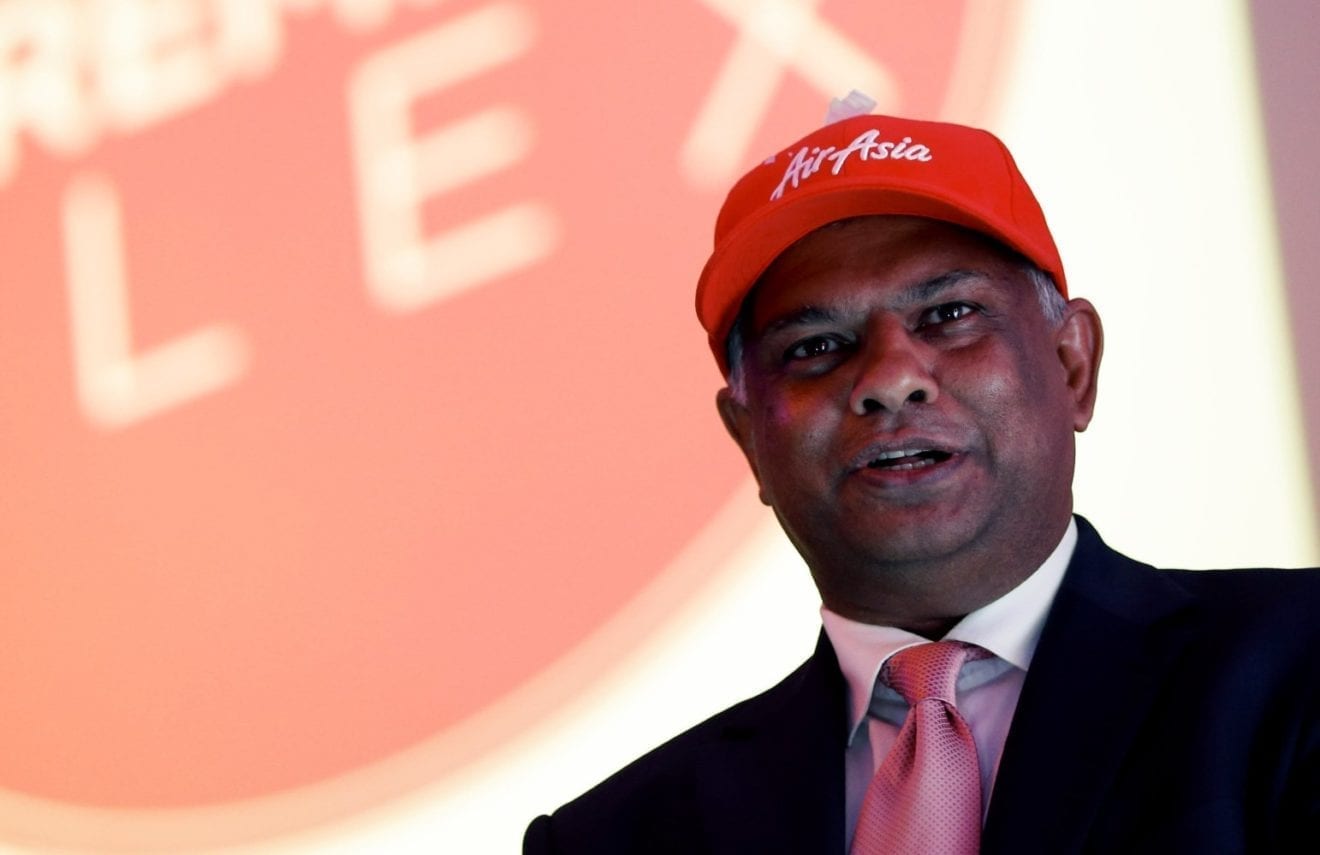
  • AirAsia’s Tony Fernandes: ‘Too Many Leaders Stay Too Long’

    AirAsia’s Tony Fernandes: ‘Too Many Leaders Stay Too Long’

    The public nature of aviation means it tends to attract large-scale palace intrigue about executive leadership changes from employees, customers and other stakeholders and observers. With the industry typically having small margins and many uncontrollable events, it is easy to hope the executive change will improve the experience, hence calls for Bob Crandall to return to American Airlines.

    Change can be a sensitive topic, but not to AirAsia co-founder Tony Fernandes. “Retirement is important,” he said at the Rise technology conference in Hong Kong this month. “Too many leaders stay too long. I think leadership needs to be refreshed.”

    His comments were not directed at anyone or prompted by any events, but leadership change discussion can come up often for executives.

    Emirates President Sir Tim Clark has spent most of his professional life at the Dubai giant, including almost 17 years as president. He is routinely asked of his future plans, not only because of his long tenure as president but also because that at 69 years old, he is above the government’s retirement limit of 65. The official retirement age is 60 for non-Emiratis but this can be extended up to 65, the government says.

    Clark is asked so often about retirement that he has talking points with the eloquence he is known for. “Time will knock on the door and this is a younger man’s business,” he said in 2018. That is similar to his 2015 comment that “It’s a younger man’s game.”

    He deflects to the owner – the Dubai government – and told Airline Ratings: “My succession will be determined by the shareholder.” He said, “I believe that the owner will have plenty of scope there.”

  • YouTube promises to give users better control

    YouTube promises to give users better control

    In a surprising move, YouTube revealed plans to offer users more control over their Homepage and Up Next videos. Apparently, three specific changes will be introduced in the coming days, which will allow YouTube users to set their preferences when it comes to what videos appears on their page.

    For starters, YouTube users will be able t explore topics and related videos easier than before. A new set of options will be added, which are based on their existing personalized suggestions and should help them find what they’re looking for faster than ever. The new feature will be implemented directly on the homepage, so you should see it when you scroll up. It’s also on Up Next when browsing. Initially, the feature will be available on the YouTube app for Android, while iOS users will get it soon.

    Another new tool that will give users better control over their videos is a new option that will make it easy to stop suggesting videos from a particular channel. This is very useful when YouTube gets your suggested videos wrong and a way to permanently fix the problem. Simply tap the three-dot menu next to a video on the homepage or Up next and choose “Don’t recommend channel.” This specific new feature will be available globally on the YouTube app for Android and iOS today.

    Last but not least, YouTube users will now receive more information about the videos they’re recommended from channels they haven’t seen before, which are based on what other viewers with similar interests have liked and watched in the past. A small box under the video will offer more information on these suggested videos. As per YouTube’s announcement, this feature is now available to everyone on the YouTube app for iOS, while Android users will get it “soon.”

  • Alibaba management shakeup sees CFO promoted

    Alibaba management shakeup sees CFO promoted

    The most significant Alibaba management shakeup since founder Jack Ma revealed he would step aside next September 10 sees high-profile CFO Maggie Wu take on a new role.

    Wu will take over responsibility for strategic investments by the group, charged with finding new growth streams for the technology and retail giant as its growth in the e-commerce sector begins to slow. She will oversee a team focused on investment, taking over that responsibility from executive vice-chairman Joe Tsai.

    The Alibaba management changes were revealed via the company’s official WeChat account by CEO Daniel Zhang.

    “To guarantee innovation, invest in our future, Alibaba is undertaking an organisational upgrade,” he said.

    Wu has been Alibaba’s CFO for six years.

    In other changes, Alibaba said its supermarket chain Freshippo – also known as Hema and now numbering 160 stores – will become a standalone business. DingTalk, the group’s enterprise software business unit, will be merged into the Alibaba Cloud business unit.

    These changes come ahead of a planned IPO in Hong Kong later this year which could raise as much as US$20 billion in fresh capital for expansion via investment.