Tag: Manufacturing

  • Pakistan Cotton Arrivals Rise 19 Percent to 2.39 Million Bales

    Pakistan Cotton Arrivals Rise 19 Percent to 2.39 Million Bales

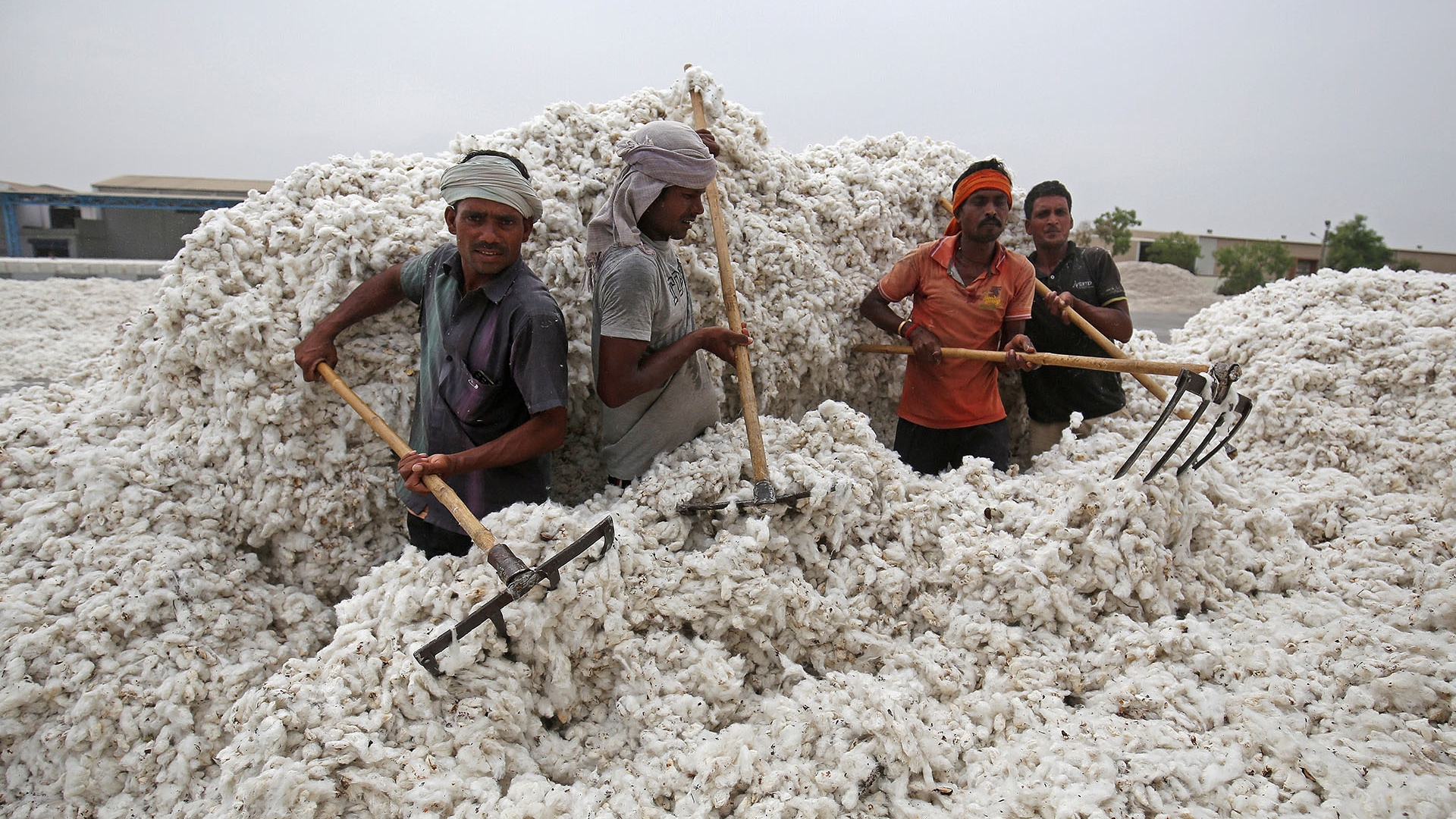
    Cotton arrivals at Pakistani ginning factories reached 2.389 million bales by September 15. That volume is up 19 percent from 2.004 million bales during the same period last year.

    The early surge lifts industry projections for full-year national output above six million bales. Last season yielded roughly 5.5 million bales.

    Provincial receipts showed uneven growth across primary growing regions. Punjab deliveries jumped 24.73 percent to 860,942 bales, while Sindh processed 1.528 million bales, a rise of 16.25 percent. Active facilities totaled 205 ginning factories in Punjab and 207 in Sindh.

    Regional Splits and Factory Volumes

    Sindh led early harvesting through intensive picking in key southern districts. Sanghar district alone delivered 888,607 bales to local ginners by mid-September. That single district outpaced the combined intake of all ginning units in Punjab.

    Steady field conditions across Matiari, Tando Allahyar, Hyderabad, Mirpurkhas, Nawabshah and Naushahro Feroze supported the southern haul. In Punjab, picking concentrated across Bahawalpur, Bahawalnagar, Dera Ghazi Khan, Multan, Vehari, Rahim Yar Khan, Muzaffargarh and Rajanpur.

    Mill Demand and Price Competition

    Domestic spinning and textile mills secured the bulk of intake, buying 2.035 million bales by the reporting deadline. Raw cotton exporters booked 93,000 bales. Ginners were left holding an unsold inventory of approximately 261,000 bales.

    Spot prices dropped sharply across trading hubs despite steady buying by domestic spinners. Over seven days, lint prices fell by about Rs1,000 per maund. Rates settled near Rs18,600 in Punjab and Rs18,400 in Sindh.

    Lower import parity prices for Brazilian raw cotton prompted several Pakistani mills to place overseas orders, dampening local price support. Cheaper imported fiber caps production costs for downstream yarn and fabric makers. Domestic growers, however, face tighter margins at the farm gate.

    This price squeeze creates supply chain risks for regional fashion retailers who rely on Pakistani mills for yarn and finished garments. Falling domestic lint prices could erode farm profits. That risk threatens to reverse acreage recovery in future planting cycles and drive higher import dependency across the South Asian textile corridor.

    Data Gaps and Acreage Shifts

    Cotton acreage in Punjab faces land competition from sugarcane, which has expanded into traditional cotton tracts. That shift explains part of the volume gap between the two provinces.

    Official production figures also show large reporting discrepancies between agencies. The Pakistan Cotton Ginners Association recorded 860,942 bales in Punjab through September 15. The Punjab Crop Reporting Service estimated 1.483 million bales by September 17. That represents a 72 percent gap between factory receipts and provincial field estimates.

    Pest Control and Final Crop Risks

    Early arrivals do not guarantee an unbroken harvest, field specialists warn. Agronomists have identified pink bollworm infestations in both provinces. Whitefly, jassid and thrips also apply localized pressure.

    Pest management over the coming weeks will determine whether crop yields hold.

    “The next few weeks will be critical,” Mahmood said, stressing continuous monitoring of bolls, timely pest-control measures and picking to protect both yield and lint quality.

    Growers and ginners are tracking pest counts and late-season rainfall across southern Punjab and Sindh. The next fortnightly arrival report will confirm whether picking maintains the six-million-bale trajectory.

  • Tesla Audits Chinese Suppliers Ahead of Optimus Robot Launch

    Tesla Audits Chinese Suppliers Ahead of Optimus Robot Launch

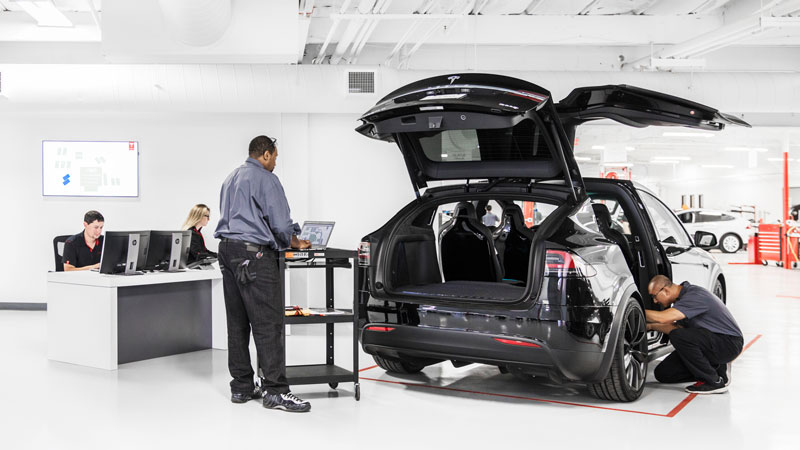
    Tesla officials and engineers have begun auditing Chinese suppliers as Elon Musk’s company prepares to ramp up production of its Optimus humanoid robot ahead of its global release later this year.

    The audits target component manufacturers based in eastern China’s Zhejiang province, including heat-control maker Zhejiang Sanhua Intelligent Controls, auto parts supplier Ningbo Joyson Electronic, and chassis producer Tuopu Group, two corporate executives told the South China Morning Post.

    Most of the vendors being examined already supply automotive parts for Tesla’s electric vehicles, and the inspections come as the company plans to place additional orders before mass production begins at its plant in Fremont, California.

    Vendors selected for the audit round operate under strict non-disclosure agreements carrying breach penalties worth millions of dollars. The inspections examine whether high-volume auto manufacturing lines can pivot quickly to produce actuators, thermal sensors, and structural frames designed for humanoid robotics.

    Zhejiang Supply Hub

    Concentrating component qualification in Zhejiang exploits an established industrial supply cluster that already builds high-precision electric vehicle parts at scale. Actuator maker Tuopu Group saw its stock rise 2.8 per cent following news of the audits, while Sanhua and Joyson Electronic each advanced more than 1 per cent. Drawing from existing electric car component supply lines allows the manufacturer to bypass years of tooling development.

    Specialised Chinese component makers hold structural pricing power that Western suppliers struggle to match. As Chen Jinzhu, chief executive of Shanghai Mingliang Auto Service consultancy, observed: “They enjoy cost and technological advantages over their domestic and overseas rivals.”

    Factory Reallocation in Fremont

    Sourcing hardware from mainland China reveals how closely the company’s robotics ambitions mirror its early electric vehicle manufacturing strategy. While software development and final assembly remain in California, the physical bill of materials depends on Asian supply chains to achieve viable unit economics. Sourcing mechanical actuators and thermal hardware from Chinese suppliers reduces capital intensity, yet exposes output volumes to cross-border logistics lanes and geopolitical friction.

    For regional manufacturers, robotics supply contracts offer a crucial hedge against tightening margins in the domestic electric vehicle market. Intense price competition among Chinese automakers has squeezed Tier 1 suppliers, driving component producers to seek higher-margin hardware contracts in industrial automation and embodied artificial intelligence.

    Rival Makers Accelerate Schedules

    Chinese electric vehicle brands are moving on parallel tracks to commercialise bipedal machines for retail, logistics, and assembly work. Xpeng secured 900 million dollars in private funding to accelerate development of its Iron humanoid robot, backed by its own vehicle manufacturing network. Domestic competitors operate with direct access to local supply chains, eliminating transpacific shipping delays that affect US assembly lines.

    Tesla began reshaping its production footprint in January by halting assembly of Model S and Model X vehicles in Fremont to convert factory floor space for robotics manufacturing. That retooling followed statements in April from Tesla China president Allan Wang Hao, who confirmed the Shanghai Gigafactory retains the industrial capacity to manufacture complete humanoid robots once global rollout begins.

    Assembly Timelines

    Final component allocations depend on audit sign-offs scheduled across Zhejiang over the coming weeks. Factory engineers in Fremont require validated parts deliveries before the targeted commercial rollout date at the end of the year.

  • Apple Passes $10 Billion in India Sales as Made-In-India Pro Models Ship Worldwide

    Apple Passes $10 Billion in India Sales as Made-In-India Pro Models Ship Worldwide

    Apple crossed $10 billion in annual revenue in India in fiscal 2026 as local production lines began supplying flagship devices directly to overseas store shelves.

    Revenue rose at a double-digit rate from roughly $9 billion a year earlier, driven by premium handset upgrades and larger contributions from MacBooks and iPads.

    The milestone coincided with the retail rollout of the iPhone 18 Pro and Pro Max, which started selling on Friday from Rs 164,900 ($1,970) and Rs 179,900 respectively. Foxconn and Tata Electronics assembled the devices locally around the clock, exporting launch-day inventory to the United States and other international markets ahead of the retail debut. Last year, Indian factories assembled only the standard iPhone 17 variants for worldwide launch day, while Pro assembly followed months later.

    Value Gains Defy Falling Shipment Volumes

    Consumer demand in India continues to tilt toward higher price brackets even as overall unit volume contracts. Handset shipments fell 4.1 per cent year-on-year to 31 million units in the first quarter of 2026, according to IDC data. Market value rose 5.8 per cent over the same period as average selling prices climbed 10.4 per cent to a record $302.

    Counterpoint Research data recorded premium devices accounting for 29 per cent of the total Indian smartphone market by volume during the first half of 2026. Apple captured 28 per cent of total market revenue in the first quarter despite accounting for only 9 per cent of unit volume, according to IDC. Samsung and Apple together took the vast majority of premium sales.

    Retailers across major metro markets reported steady traffic driven by structured financing, trade-in allowances, and multi-year credit card instalments that offset upfront list prices. Reliance Digital and Apple’s six company-owned flagship stores saw pre-dawn queues across Mumbai, Delhi, and Bengaluru as shoppers traded in older handsets.

    Contract Manufacturers Expand Pro Production

    For electronics manufacturers across Asia, the shift alters the operational playbook. Apple is no longer using Indian assembly plants solely to bypass local import tariffs or serve domestic buyers with older models. Placing day-one global manufacturing of flagship Pro hardware in Tamil Nadu and Karnataka shifts industrial weight away from mainland China’s assembly clusters.

    Suppliers face tighter technical requirements. Assembling top-tier hardware demands tighter tolerances, specialized cleanroom environments, and faster component turnaround times than entry-level lines require. Foxconn and Tata Electronics have absorbed those requirements, forcing second-tier domestic component suppliers to upgrade production quality or lose supply allocations to global tier-one vendors.

    Industrial Policy Drives Supply Chain Deepening

    The transition reflects years of targeted state incentives designed to build a domestic tech manufacturing base. Total mobile phone production in India climbed from Rs 18,900 crore in fiscal 2015 to Rs 6.27 lakh crore in fiscal 2026. Handset exports rose from Rs 1,566 crore to Rs 2.60 lakh crore over the same decade, making mobile phones the country’s largest single export category.

    Federal support through the Production Linked Incentive program drew more than Rs 20,600 crore in cumulative capital investment by March 31, 2026. Cumulative production under that program reached Rs 11.62 lakh crore, with exports topping Rs 6.53 lakh crore.

    New Delhi is now pushing beyond surface-mount assembly into core components through the Electronics Component Manufacturing Scheme. Ashwini Vaishnaw, the electronics and information technology minister, described the initiative as a deliberate step to build domestic supply lines for precision parts and raw materials. Regulators approved 106 component projects representing Rs 69,548 crore in pledged investment, with 38 factories operational as of August.

    Imported Foldable Tests Peak Price Ceilings

    Apple will test the upper limit of domestic purchasing power next month with the launch of its first foldable handset, the iPhone Duo. That model starts at Rs 299,900 for the 256GB version and rises to Rs 444,900 for the 2TB configuration. Unlike the Pro line, the foldable device will arrive as a fully imported unit assembled outside India.

    Retail networks will monitor inventory turnover for the ultra-premium foldable closely to assess whether local credit appetite can absorb handsets priced above Rs 300,000 without dedicated manufacturing subsidies.

  • Panasonic Energy Opens Osaka Battery Hub to Double Development Efficiency

    Panasonic Energy Opens Osaka Battery Hub to Double Development Efficiency

    Panasonic Energy opened a research hub in Kadoma near Osaka to double battery development efficiency by March 2031. The site brings material design, cell engineering and prototyping under one roof.

    Around 500 staff will work at the facility, named Energy Innovation Square, alongside 300 manufacturing engineers at the nearby Suminoe site. Together, the 800-person Osaka cluster represents one of Japan’s largest battery research networks.

    Consolidating cell design in Kadoma

    The facility integrates design and testing operations that were previously dispersed across separate locations. Panasonic Energy expects this centralisation to cut development times and associated transit requirements by more than 15 per cent.

    Engineers at the Kadoma hub will use a digital platform that combines computer simulations with physical test data. Continuous monitoring and statistical analysis are designed to refine digital modelling, allowing faster handoffs from initial cell prototypes to commercial assembly lines.

    Deploying Osaka technology to US plants

    Process improvements developed in Osaka will feed directly into the company’s manufacturing footprint. That network includes domestic Japanese plants alongside high-volume battery facilities in Nevada and Kansas.

    For supply chains, the consolidation tightens the link between Japanese material engineering and North American vehicle assembly. Automakers buying from Panasonic’s US factories require cells with higher energy density and extended operating lifespans to compete against cheaper lithium iron phosphate chemistry.

    Beyond automotive cells, Panasonic is targeting server farms. Expanding artificial intelligence infrastructure requires high-performance backup power systems, giving battery suppliers an alternative revenue stream outside passenger vehicles.

    Defending global battery market share

    Panasonic faces sustained pressure from Chinese battery makers that dominate global electric vehicle supply chains. Data from SNE Research shows Panasonic held 3.7 per cent of the global electric vehicle battery cell market in 2025.

    Market leader CATL held 39.2 per cent and BYD took 16.4 per cent over the same period. Panasonic ranked behind LG Energy Solution, CALB, Gotion High-Tech and SK On, reflecting the rapid growth of Chinese manufacturing capacity across Asia and Europe.

    Energy Innovation Square will serve as a core hub for Panasonic Energy’s battery development, strengthening collaboration from next-generation product development through mass production and enhancing our global competitiveness.

    The Osaka site is now operational, with the company tracking productivity metrics against its FY2024 baseline as it works toward the FY2031 doubling target.

  • China Tech Boom Fuels August Factory Output as Domestic Spending Stalls

    China Tech Boom Fuels August Factory Output as Domestic Spending Stalls

    China’s industrial sector showed renewed strength in August as an AI-driven tech boom fuelled factory output, according to data reported by Reuters this week.

    The readings highlighted deepening imbalances in the world’s second-largest economy, where resilient manufacturing and exports are sustaining growth even as sluggish consumption and a worsening investment slump weigh on domestic demand.

    Factory gains split from retail demand

    Industrial production accelerated through August on higher orders for computing equipment, semiconductors, and automated factory machinery. Tech supply chains absorbed high component volumes, keeping coastal industrial belts busy throughout the month.

    Consumer-facing businesses saw none of that momentum. Retail cash registers recorded sluggish turnover across apparel, home furnishings, and department stores, extending a pattern where consumers withhold discretionary spending while property values slide.

    Property drag hits consumer sentiment

    Household wealth remains tied up in residential real estate, where falling prices continue to deter family spending on non-essential goods. Shoppers in major metropolitan areas have shifted budgets toward essentials and discounted product lines rather than big-ticket purchases.

    For retail landlords and store operators across tier-one and tier-two cities, this split complicates leasing and store expansion plans. Brand owners face rising warehouse inventories because finished goods leave assembly lines faster than domestic retail networks can clear them.

    The export reliance risk

    The gap between manufacturing capability and domestic retail absorption leaves consumer goods makers dependent on overseas shipments to balance their books. That trade balance face headwinds if external import demand slows or overseas tariffs tighten on Chinese-made goods.

    Retailers across the country now look to third-quarter national retail sales totals and upcoming autumn trade figures to gauge whether household demand will stabilize before the year-end shopping season.

  • Xpeng Expands Foreign Tech Licensing Beyond Volkswagen Deal

    Xpeng Expands Foreign Tech Licensing Beyond Volkswagen Deal

    Xpeng is pitching its vehicle software, computing chips and electronic architecture to foreign automakers. It wants to expand high-margin technology licensing beyond its anchor partnership with Volkswagen.

    Services revenue at the Chinese electric vehicle maker jumped 93.9 per cent to 2.7 billion yuan ($400 million) in the second quarter of 2026. Gross margins reached 75.1 per cent.

    A strategic commercialisation team formed six months ago in Guangzhou to field inquiries from overseas manufacturers, foreign software vendors and tier-one automotive suppliers. The technology catalogue includes electrical and electronic architecture, digital cockpit operating systems, in-house Turing AI semiconductors and Vision-Language-Action (VLA) driver-assistance software. Licensing packages also cover operational systems for robotaxis and physical artificial intelligence deployments.

    The Software Stack Open to Rivals

    Engineers at the firm spent years building vertical integration to counter domestic price cuts. Selling that technology stack outward shifts the company from pure hardware manufacturing into enterprise software. Automakers that sign deals can purchase standalone sub-systems or integrate full platform architectures directly into their own global vehicle lines.

    That push extends past passenger cars. The company plans to license operational systems for robotaxi fleets alongside Iron, its general-purpose humanoid robot platform aimed at industrial and retail automation buyers.

    Margin Divergence Drives Strategic Pivot

    Wholesale vehicle assembly in mainland China faces fierce pricing competition that continues to compress factory returns. In the second quarter, Xpeng’s automotive gross margin fell to 12.1 per cent from 14.3 per cent a year earlier. Total vehicle revenue grew just 1.0 per cent. The company recorded a quarterly net loss of 1.34 billion yuan.

    Licensing intellectual property requires almost zero factory overhead once developed. That revenue cushions sustained research and development budgets. For legacy overseas automakers struggling to build software in-house, buying Chinese electronic architecture cuts years off their electric development cycles.

    Precedent Set by Volkswagen Collaboration

    This commercial model stems from Volkswagen’s July 2023 investment, when the German group paid roughly $700 million for a 4.99 per cent equity stake in Xpeng. That alliance yielded the ID.UNYX 08 electric crossover. The vehicle entered mass assembly in March 2026, exactly 24 months after technical teams began joint integration work.

    Management confirmed in August earnings disclosures that research fees billed to Volkswagen accounted for the bulk of the recent doubling in services income. Volkswagen also committed to becoming the launch customer for the upgraded VLA 2.0 smart driving system across future localized releases.

    Next Steps on Hardware and Overseas Deployments

    Xpeng launched its G9L family sport utility vehicle in China at 231,800 yuan ($34,300) with both pure electric and extended-range powertrains. The vehicle makes its international debut at the Paris Motor Show ahead of localized production in Europe.

    Factory tooling for the Iron humanoid robot completes trial runs ahead of volume production in late December. Customer deliveries begin in early 2027.

  • BYD Plans 4 European Plants to Support Sales Targets and Comply with EU Rules

    BYD Plans 4 European Plants to Support Sales Targets and Comply with EU Rules

    BYD plans to establish three vehicle assembly plants and one battery factory across Europe over the long term. The manufacturing footprint aims to support local sales targets and comply with European Union regulations.

    The company expects to decide on its second European assembly site by the end of this year. It favors acquiring and refurbishing an existing facility over building from scratch, with Spain and France among the leading candidates.

    Alfredo Altavilla, European adviser to BYD and a former Fiat Chrysler executive, outlined the plans in Turin late on Wednesday. The company is in talks with European automakers and governments to take over underutilized car factories.

    Choosing Between Spain, France and Italy

    Rome pitched for the project, but Italian facilities trail on operating economics, Altavilla confirmed.

    “Italy remains a plan B,” Altavilla said, noting that BYD is seeking the most competitive industrial conditions across the continent.

    Production work has already started at BYD’s first European passenger vehicle factory in Hungary. Adding two more assembly plants and a dedicated battery site will give it the scale to bypass steep trade barriers and comply with pending local-content mandates.

    Tariff Defenses and Regional Trade Rules

    Brussels has imposed definitive tariffs on Chinese battery electric vehicles. European Union authorities also want limits on Chinese hybrid imports. Localising the full supply chain from cells to finished cars removes tariff friction. It also qualifies BYD for national fleet purchase subsidies.

    Taking over distressed assembly capacity pits BYD directly against European legacy carmakers on labour and parts pricing. For Asian component suppliers and retail dealership groups, shifting from imports to regional production cuts lead times and secures steady parts availability across continental networks.

    Export Volumes Overtake Chinese Domestic Revenue

    This European manufacturing push follows a rapid rebalancing of BYD’s revenue base. Overseas revenue surpassed domestic Chinese income for the first time in the first half of the year. That shift provides relief against intense price competition at home.

    Export momentum accelerated through the summer. The company sold 1,162,260 vehicles outside China in the first eight months of the year, up 85.72 per cent from a year earlier. In August alone, overseas shipments hit a record 189,466 units, accounting for 43.03 per cent of total group volume.

    Expanding Luxury Retailing Across Europe

    BYD is also rolling out its premium sub-brand Denza across core luxury markets. The carmaker opened dedicated Denza showrooms in Turin and Paris this week to compete directly with German premium marques.

    Management raised its full-year 2026 international sales target to between 1.9 million and 2.0 million vehicles, according to Deutsche Bank research. It targets more than 2.5 million units in 2027. Site selection for the second European production facility will wrap up before the December deadline.

  • China Accounts for 97% of Global Humanoid Robot Shipments

    China Accounts for 97% of Global Humanoid Robot Shipments

    Chinese manufacturers now account for 97 per cent of global humanoid robot shipments, establishing near-total supply chain dominance over the emerging hardware category.

    The concentration reflects rapid assembly scaling across mainland manufacturing hubs after Beijing designated humanoid robotics an official priority sector in late 2023, even as commercial deployment remains heavily concentrated in domestic test environments and state-backed pilot facilities.

    Where the Hardware Goes

    Domestic electronics assembly plants, automotive factories, and automated fulfillment warehouses absorb the vast majority of current production. Factory operators deploy the bipedal units for repetitive handling, parts transfer, and precision testing tasks where fixed automation arms cannot easily maneuver.

    Hardware pricing runs from 15,000 to 50,000 dollars per unit depending on sensor arrays and dexterity capabilities. Chinese assemblers maintain a structural cost edge through local sourcing of actuators, harmonic reducers, and lithium power packs.

    Western competitors face higher component costs and longer assembly timelines. That gap mirrors earlier hardware buildouts in consumer drones and commercial service bots, where Chinese component density squeezed foreign assemblers out of entry-level price tiers.

    The Deployment Bottleneck

    Supply chain supremacy does not instantly create sustainable commercial demand. Most delivered units operate in controlled trial environments rather than fully automated commercial workflows.

    Retailers, logistics operators, and facility managers hesitate to replace standard wheeled automated guided vehicles with expensive bipedal robots. Wheeled units cost a fraction of the price and execute warehouse transport without balancing risks.

    Earlier Manufacturing Milestones

    Beijing designated humanoid robotics an official priority sector in late 2023, setting targets for mass production and supply chain independence by 2025. That policy push directed subsidies and venture capital into domestic component makers, accelerating prototype development into commercial runs.

    Commercial viability now depends on software reliability and real-world task completion rates rather than shipment volumes. Factory trials scheduled across Chinese automotive plants throughout the final quarter will determine whether large-scale enterprise purchase orders materialize.

  • Renault and Geely Invest More in Brazil for New Electric Vehicle

    Renault and Geely Invest More in Brazil for New Electric Vehicle

    Renault and China’s Geely have increased their investment in Brazil this week to produce a new electric vehicle. The cash broadens their shared manufacturing footprint in Latin America.

    Fresh funds will upgrade local assembly lines. The push targets regional demand for affordable electric passenger models.

    Expanding the Sino-French Production Alliance

    This decision deepens an industrial alliance between the French automaker and the Hangzhou-based automotive group. The two partners already pool engineering, hybrid architectures, and powertrain tech across multiple global markets to cut development costs.

    Local assembly in Brazil lets Geely and Renault reduce exposure to import tariffs on finished Chinese electric vehicles. The hub also creates a launchpad for vehicle distribution across South American trade corridors.

    Competitive Pressures in Latin America

    Chinese electric vehicle makers are accelerating overseas factory commitments. They want to bypass regional trade barriers and counter slowing domestic growth. Rivals including BYD and Great Wall Motor have already bought manufacturing assets in Brazil to anchor regional supply chains.

    Asian component suppliers must now establish secondary delivery routes and local sub-assembly units within South America. The spending shifts component sourcing risk onto local networks. Still, it locks in vehicle platforms designed in China and Europe.

    Platform Strategy and Next Steps

    Geely and Renault have steadily integrated their powertrain and vehicle architecture operations over recent quarters, creating dedicated joint venture platforms for hybrid and pure electric models. The Brazilian project serves as an operational extension of that platform-sharing agreement.

    Factory tooling schedules and regional rollout timelines will determine when the first units leave the Brazilian assembly floor for regional dealerships.

  • Delta Electronics Singapore Unit Seeks $1.5 Billion in Exchangeable Bonds

    Delta Electronics Singapore Unit Seeks $1.5 Billion in Exchangeable Bonds

    Delta Electronics International Singapore is raising $1.5 billion through bonds exchangeable into shares of Bangkok-listed Delta Electronics Thailand.

    Through the transaction, the Singapore holding entity, a subsidiary of Taiwan-listed Delta Electronics Inc, can monetize part of its Thai equity stake. The structure also locks in substantial share price premiums.

    Pricing Terms and Tranches

    The proposed offering splits into two maturities. A shorter tranche consists of $500 million in bonds maturing in September 2027. These carry an initial exchange price of 266.8 baht per share, representing a 15 percent premium over the reference share price.

    A larger $1 billion tranche due in September 2031 sets an initial exchange price of 301.6 baht, or roughly $9.08 per share, pricing in a 30 percent premium. Investors in these notes face early redemption terms set at 99.25 percent of the principal amount after 18 months, falling to 98.51 percent after three years from issuance.

    Equity Dilution and Parent Control

    Full exercise of the exchange rights across both tranches would convert the debt into approximately 172.1 million existing shares. That volume represents about 1.38 percent of Delta Electronics Thailand’s total issued equity.

    Taiwan’s Delta Electronics holds 42.85 percent of the Thai subsidiary through the Singapore vehicle, according to LSEG data. By delivering existing equity rather than issuing new treasury stock, the transaction avoids direct share dilution for minority investors while generating liquidity for regional operations.

    Expansion Capital for Supply Chains

    Proceeds from the bond sale will fund general working capital and ongoing manufacturing expansion. Across Southeast Asia, regional hardware makers continue to build capacity to meet global demand for power management systems, data center components, and electric vehicle parts.

    Production for the parent group’s regional network remains anchored in Thailand, centered at its manufacturing facility in the Bangpoo Industrial Estate in Samut Prakan province.

    Final settlement of the offering will set the conversion terms and the timeline for bondholder redemption rights running through September 2031.

  • Hyundai Motor Shelves Boston Dynamics IPO Plans for 2027

    Hyundai Motor Shelves Boston Dynamics IPO Plans for 2027

    Hyundai Motor Group will not list its robotics subsidiary Boston Dynamics in 2027, delaying a public offering while the unit works through heavy financial losses.

    A regulatory filing from Hyundai Glovis shows the robotics developer lost 528.4 billion won in 2025, bringing cumulative losses between 2021 and 2025 to nearly 1.7 trillion won.

    The Seoul-based automotive group bought a controlling stake in the Massachusetts robot builder in 2021. In July, Hyundai agreed to buy out SoftBank’s remaining 10 per cent stake for approximately 500 billion won, or 371.5 million dollars, turning Boston Dynamics into a wholly owned subsidiary. Commercial deployment of the Atlas humanoid robot has not reached factory scale, pushing listing plans beyond the immediate horizon.

    The cost of scaling humanoid hardware

    Industrial automation across Asian supply chains has rewarded specialised logistics machinery, but general-purpose humanoid robots remain expensive to build and unproven on high-speed assembly lines. Hyundai wants Boston Dynamics to supply working units across its vehicle manufacturing network, yet the gap between demonstration prototypes and repetitive factory shifts remains wide. Automakers betting on humanoid labor face steep component costs, software reliability hurdles and long testing cycles before seeing labor cost savings.

    For regional manufacturers and component suppliers, the delay tempers market hype around immediate automated factory turnarounds. Tesla continues to face similar manufacturing bottlenecks with its Optimus project, while Chinese competitors such as UBTech and Unitree focus on lower-cost, narrower task automation. The real contest in manufacturing robotics is not agility in a laboratory, but component longevity on a twenty-four-hour assembly floor.

    “It’s not difficult to make robots dancing, but it’s challenging to make them carry heavy loads and get involved in manufacturing at plants,” said Kim Hyun-su, senior fund manager at IBK Asset Management in Seoul.

    Valuation targets and factory schedules

    Brokerages in Seoul remain split on the financial trajectory of the robotics unit. Samsung Securities puts market valuation estimates between 50 trillion and 100 trillion won, while IBK Securities projects a valuation of 141 trillion won by 2030 based on an estimated 11 trillion won in annual revenue. Meritz Securities analyst Kim Joon-sung estimates that an initial public offering will take until 2029 or 2030 because the company must gather operating data from internal factory floors before pitching systems to third-party commercial clients.

    Investor interest in the technology previously lifted Hyundai Motor shares to record highs following the presentation of the production-ready Atlas robot in Las Vegas in January. The stock has since surrendered a portion of those gains as markets demanded concrete delivery schedules and operating metrics.

    Georgia plant tests set the timeline

    Hyundai plans to build a dedicated facility capable of producing 30,000 robots a year by 2028. The group aims to initiate operational trials of Atlas robots at its electric vehicle manufacturing facility in the US state of Georgia that same year, using those assembly lines to test reliability under commercial factory conditions before rolling units out to wider operations in South Korea.

  • Trump Says Chinese Automakers Can Build in US Despite 100% Tariffs

    Trump Says Chinese Automakers Can Build in US Despite 100% Tariffs

    Donald Trump has stated that his administration would not block Chinese automakers from building electric vehicles in the United States, even as imports face 100 per cent tariffs.

    Speaking in September 2026, Trump indicated that Chinese manufacturers could establish assembly plants in states such as Tennessee or Alabama, despite warnings from the domestic automotive sector that local Chinese production could threaten traditional US carmakers.

    While fully built electric cars from China remain virtually barred under the existing 100 per cent tariff wall, industry analysts note that manufacturers cannot easily replicate China’s integrated parts ecosystem and low-cost supply chain in the American South.

    Supply Chain Realities in the US Market

    RetailNews Asia notes that Chinese electric vehicle brands are directing capital toward markets with clearer regulatory frameworks. Automakers such as BYD and XPENG are opening assembly hubs and distribution networks across Southeast Asia, Europe, Australia, Latin America and Africa. Those regions offer established trade corridors, predictable import policies and faster adoption rates than the North American retail market.

    For Asian parts suppliers and battery vendors, building factories in North America brings heightened political exposure. Shifts in US federal policy make long-term factory payback calculations unreliable. Expanding in ASEAN, South America and Central Europe allows Chinese automotive groups to utilize their domestic supply networks while building local retail presence near high-demand consumer clusters.

    Regional Diversification Beyond North America

    American automotive retail conditions remain difficult for foreign pure-play electric vehicle brands. Charging network rollouts in the US lag behind China and Western Europe, while consumer demand for battery-electric passenger cars has softened relative to hybrid options. Chinese original equipment manufacturers achieve better factory utilization rates by serving emerging markets across Asia and South America, where entry-level city cars face minimal competition from legacy American brands.

    Legacy US car companies have used the 100 per cent import tariff to protect sales of high-margin petrol sport utility vehicles and pickup trucks. If Chinese manufacturers establish US assembly operations, domestic producers will face direct price pressure on their home turf. That outcome would force domestic brands to accelerate their own electric platform cost reductions or surrender market share in entry-level passenger car segments.

    Tariff Walls and Industrial Strategy

    Washington escalated tariffs on Chinese electric cars to 100 per cent to shelter domestic producers from lower-cost imports. That defensive trade posture accelerated the construction of Chinese automotive plants in Thailand, Brazil and Hungary rather than drawing assembly capital into North America.

    Chinese automotive executives are tracking whether the US federal government establishes formal foreign investment security rules for automotive production sites before submitting any state-level factory applications.

  • Thailand Water Heater Sales Face 10% Drop as Property Market Slows

    Thailand Water Heater Sales Face 10% Drop as Property Market Slows

    Thailand’s water heater market will shrink by 10 per cent this year. Weak consumer spending and a property glut have stalled home equipment purchases.

    The drop follows a 2025 market valuation of 3.3 billion baht. Regional appliance makers must now lean harder on overseas shipments and replacement fittings. High household debt and tighter urban budgets have pushed shoppers to delay non-essential bathroom upgrades. Meanwhile, an oversupply of unsold homes across Bangkok and neighbouring provinces has choked off bulk orders from residential developers.

    Property Slump Curbs Domestic Demand

    Stiebel Eltron Asia runs three production facilities in Thailand and targets 1.4 billion baht in sales revenue this year despite the slump. Domestic sales make up 77 per cent of that target. Exports provide 21 per cent, while original equipment manufacturing accounts for the remaining 2 per cent. The German manufacturer aims for 2 per cent annual revenue growth by redirecting commercial teams toward home renovations, online retail and new product launches.

    Rising costs have compounded the domestic slowdown. Industrial copper prices climbed alongside electricity tariffs tied to Middle East tensions, driving up per-unit manufacturing costs at local assembly plants. Retail suppliers across Southeast Asia face similar margin squeezes. In response, hardware distributors are trimming inventory holding times and demanding faster stock turnarounds from brand owners.

    Export Buffer Across Southeast Asia

    Foreign markets offer vital relief for factories based in Thailand. Stiebel Eltron ships appliances across the Asia-Pacific region, led by volume shipments to Indonesia, Vietnam and the Philippines. Expanding distribution agreements across ASEAN helps protect regional production lines when domestic housing absorption stalls.

    Competitors in Southeast Asia have taken a similar approach. They balance domestic factory capacity against export demand to keep plant utilisation rates high. Weak Thai consumer credit drove the shift. Brands that once relied on Bangkok condominium handovers must now compete directly for retail shelf space and e-commerce baskets in faster-growing developing markets.

    Weather Takes a Back Seat to Debt

    Climate patterns are also playing a role. In August, the Thai Meteorological Department warned that developing El Nino patterns would drive temperatures above normal through November. Hotter weather traditionally dampens water heater adoption in tropical markets. Even so, factory chiefs view macroeconomics as the real drag on consumer behaviour.

    “In general, I worry more about the economy than the weather,” said Roland Hoehn, chief executive of Stiebel Eltron Asia.

    Manufacturers are now rolling out revised product catalogues for the final quarter, testing whether renovation demand can deliver the 1.4 billion baht revenue benchmark before year-end.

  • Heineken Malaysia Cuts Brewery Emissions 45 Percent and Replaces Secondary Plastic

    Heineken Malaysia Cuts Brewery Emissions 45 Percent and Replaces Secondary Plastic

    Heineken Malaysia cut production emissions by 45 percent at its Sungei Way brewery against a 2022 baseline. On-site solar generation and renewable grid procurement drove the reduction.

    The brewer took top honours in two categories at the ESG Positive Impact Awards 2025. It recycled all 35,637 tonnes of its production waste and eliminated 195 tonnes of single-use packaging plastic.

    Sungei Way Brewery Energy and Water Overhauls

    Power for the Petaling Jaya facility now comes entirely from renewable sources via Tenaga Nasional Berhad’s Green Electricity Tariff programme. An array of 3,500 rooftop solar panels adds roughly 2,600 megawatt-hours annually. For heat, the site relies partly on an upgraded wastewater treatment plant. That RM7 million facility captures biogas during effluent processing to supply approximately 4 percent of thermal requirements.

    Water management forms the other major capital focus at the site. Using flow meters, equipment overhauls and recycling loops, the brewer improved water efficiency by 36 percent compared with 2014 levels. Independent auditor LimnoTech verified the results. In 2025, the company hit 221 percent of its targeted water balancing volume, returning more treated water to the watershed than its operations consumed.

    Value Chain Pressures for Regional Brewers

    Breweries across Southeast Asia face tougher scrutiny from institutional investors and retail off-trade buyers over Scope 3 supply chain footprints. Malaysian beverage makers must balance high excise duties against the capital expenditure needed to electrify thermal brewing. Decarbonising industrial heat remains difficult. To cut upstream emissions, Heineken brought 40 tier-one suppliers into the UN Global Compact’s ESG Start programme, pushing compliance down to local packaging and logistics vendors that lack dedicated sustainability budgets.

    Competitors like Carlsberg Malaysia and Thai Beverage are deploying similar resource reduction programmes to protect operating margins against rising industrial water tariffs and volatile power costs. Packaging penalties loom for laggards. Grocery chains now demand certified recycled content and paperboard alternatives. The steepest financial risk sits in thermal energy replacement: replacing remaining fossil fuel boilers requires heavy capital that cannot be offset by rooftop solar alone.

    Tracking Circularity and Watershed Protection

    At the Sungei Way site, operational adjustments build on long-term capital investments. Heineken Malaysia has routed zero production waste to landfill since 2017. The site sends organic outputs like spent brewing grains into animal feed and agricultural upcycling streams. For packaging, the company switched secondary can wraps from shrink plastic to paperboard, cutting single-use plastic across retail channels.

    Community watershed investments run alongside the plant works. The SPARK Foundation, the brewer’s corporate responsibility arm, has spent more than RM16 million since 2007 on peatland restoration, rainwater harvesting installations and river rehabilitation projects around Selangor’s river basins.

    Managing Director Martijn van Keulen and his supply chain team are aligning the Petaling Jaya plant with the group’s Brew a Better World 2030 roadmap. That plan sets binding deadlines for net-zero carbon production and complete water circularity across all Asian operations.

  • Xi Visits India for First Time in Seven Years as Business Ties Stall

    Xi Visits India for First Time in Seven Years as Business Ties Stall

    Chinese President Xi Jinping arrived in New Delhi this week for his first visit to India in seven years, facing entrenched regulatory barriers that continue to block major bilateral investments.

    Cross-border commercial projects remain frozen across consumer electronics, automotive manufacturing and financial services despite tentative diplomatic progress at the annual BRICS summit.

    Indian authorities have blocked a proposal by Ant Group affiliate Alipay to connect to the domestic instant payments system on national security grounds. Regulators are also reviewing a recommendation by the Serious Fraud Investigation Office to investigate smartphone vendor Xiaomi over alleged foreign investment law breaches. Xiaomi stated it complies with all local regulations and has received no notice from investigators.

    Carriers and Factories Caught in Scrutiny

    Industrial hurdles run both ways across the border. Vehicle makers BYD and Great Wall Motor shelved planned manufacturing outlays in India following heightened regulatory checks from New Delhi, while Beijing has instructed domestic suppliers to withhold shipments of critical mobile manufacturing equipment, solar panels and port hardware.

    Heavy industrial machinery remains caught in transit. Massive Chinese tunnel-boring machines designated for Indian urban transit and infrastructure sites have sat stranded at customs checkpoints for more than a year, while business executives from both sides report recurring visa rejections.

    Supply Chains Face use Risks

    For consumer electronics vendors and appliance assemblers, the standoff keeps operating costs elevated across South Asia. Indian contract manufacturers rely heavily on Chinese tooling and sub-assemblies to feed domestic assembly lines, leaving production schedules exposed whenever border customs tighten component inspections.

    Suppliers attempting to build local joint ventures face a double squeeze. Beijing now subjects outward technology transfers to stricter internal reviews, while New Delhi retains case-by-case screening on foreign capital from bordering nations even after easing rules for select solar and capital goods ventures in March.

    China has economic heft and there is a good opportunity to use that and emerge as a reliable partner, especially when both nations are impacted by America’s trade policies.

    The Path Since Galwan

    Bilateral economic relations chilled after a 2020 border clash in the Galwan Valley resulted in casualties on both sides, prompting New Delhi to ban hundreds of Chinese apps and restrict direct foreign investment. Direct commercial flights between the two countries resumed last year alongside an initial pilot easing business visa clearance protocols.

    A preliminary assembly partnership between India’s Dixon Technologies and handset maker Vivo Mobile secured formal clearance following those initial concessions. Whether additional industrial joint ventures gain clearance now hinges on the scheduling of a formal bilateral meeting between Prime Minister Narendra Modi and Xi before the summit concludes.