Tag: Marketing

  • Red Bull apologises to Indonesia over offensive ad

    Red Bull apologises to Indonesia over offensive ad

    Red Bull has publicly apologised for shooting a commercial in which an athlete performed acrobatic stunts across one of Indonesia’s ancient holy temples, an official said Thursday.

    Red Bull has issued an apology in Indonesia’s national newspapers admitting it shot an advert at the 9th-century Borobudur temple “without permission from the appropriate authorities”

    The energy drink manufacturer issued an apology in national newspapers admitting it shot the video at the 9th-century Borobudur temple “without permission from the appropriate authorities”.

    The video — in which a famous “free running” athlete is shown jumping between the temple’s stone stupas — triggered outrage in Indonesia, where Borobudur is a revered Buddhist site and national icon.

    In one scene, the athlete is seen walking past a sign clearly stating “No Climbing” in both English and Indonesian before performing acrobatics throughout the UNESCO-listed heritage site.

    The video was shot secretly despite the crew having been issued a warning by temple guards, Borobudur Conservation Agency head Marsis Sutopo told AFP.

    “They must have shot again while our guards were not looking,” he said.

    The video, uploaded online on March 18, sparked outrage within Indonesia and prompted the government to threaten a legal suit against Red Bull.

    Authorities later issued a warning to the drink company after determining no physical damage had been incurred.

    Red Bull met with government officials in early June and agreed to place formal apologies in national newspapers.

    “We want to set an example because we painstakingly try to conserve this historical site,” education ministry official Hilmar Farid told AFP.

    “It was obvious as there was a “No Climbing” sign there too.”

    Red Bull have also been asked to shoot a new video explaining the importance of protecting holy sites, Farid added.

  • Ksubaka’s PlaySpots Deliver Friso Gold Engagement Campaign

    Ksubaka’s PlaySpots Deliver Friso Gold Engagement Campaign

    Ksubaka today announced that it has successfully delivered an interactive in-store engagement campaign in CRV, WuMart and MerryMart retail stores in China for Friso Gold.

    The objectives:

    The campaign objectives were to attract in-store shoppers to a Friso Gold interactive experience and communicate to mums that Friso helps prevent heat and constipation in babies because the Friso Gold molecules are smaller and easier to digest.

    Equally as important, was to collect data through an onscreen shopper survey to verify that the Friso Gold Interactive Experience was effectively reaching the target audience and educate new potential customers about the product benefits.

    The campaign experience:

    Ksubaka designed a Friso Gold interactive experience, which was provisioned over-the-air to 231 playSpots across 37 retail stores (comprising a mix of CRV, WuMart and MerryMart) within the Ksubaka media network. The gameplay involved catching as many small Friso molecules as possible within 30 seconds, while avoiding the larger molecules falling from a competitor’s product. Shoppers caught the molecules by moving a baby back and forth on bottom of the screen. To emphasise the difference between small and large molecules, when the baby caught the Friso molecules they smiled and raised their hands in happiness and when they caught the large molecules the frowned and cried. 

    At end of the gameplay, key product messages were reiterated along with a pack shot and the shopper was offered a 1 for 1 discount by scanning a WeChat QR Code to get a coupon. The short survey was then displayed on-screen asking shoppers for a little information on their preferences.   

    The results:

    Working to a set of agreed KPIs, the Ksubaka Friso Gold 31 day campaign delivered:

    • Campaign Exposures – 4.4 million +193% on KPI
    • Shopper Impressions – 6.6 million +200% on KPI
    • Mojo engagement – 82K +64% on KPI (Mojo is a completed shopper brand engagement that ends at the reward screen)
    • Total number of surveys completed 1.3k

    “The Friso Gold campaign is an excellent example of how Ksubaka is able to drive mass consumer engagement at the point of purchase while, at the same time, giving live and meaningful insight for brands,” said Julian Corbett, CEO and founder, Ksubaka.

  • How smaller retailers can win market share and drive growth

    How smaller retailers can win market share and drive growth

    I’m always interested in the small business owners I meet across the world, many running generations-old businesses that offer one-of-a-kind treasures. These shop owners, with their time-honored craftsmanship, quickly win over even the most casual window shopper, effortlessly converting passersby into loyal customers.

    Creating this sort of memorable customer experience is one of the keys to success for small retailers in the fashion and luxury goods sector.

    However, as the worlds of fashion, luxury and media descend upon New York for Fashion Week, these experiences and transactions seem increasingly quaint and inconsequential; one could be forgiven for thinking that high fashion remains the exclusive preserve of global retailers and big-name luxury brands.

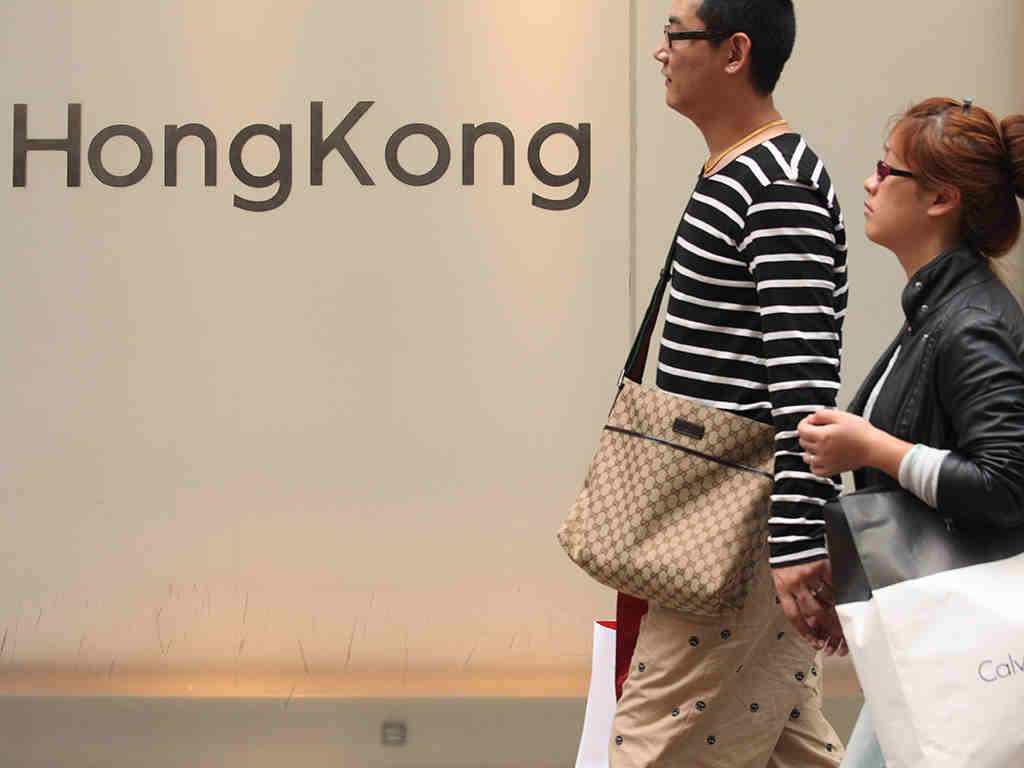
    While that may once have been true, it’s no longer the case. Remarkably, more and more fashion retailers are starting to embrace being ‘small’ as a strategy for success and growth. Increasingly user-friendly technology tools are helping smaller retailers to speak and deliver to their niche customer sets across all channels with the same voice as they would in a shop in Hong Kong.  So what is driving their success?

    Tech-savvy

    According to research from eMarketer, e-commerce growth is projected to double the retail industry average at least until 2017. Half of all shoppers discover new products when searching with smartphones, and 82 percent of smartphone owners look online for product information when shopping. Smartphones already account for over 40 percent of ecommerce transactions in Japan and South Korea, so it is no wonder that small retailers are realizing that they need to be as tech-savvy and flexible as their customers. That means engaging and delighting shoppers on mobiles, social media and online channels.

    Highly personal

    Technological advancements and the democratizing power of the Internet have allowed retailers to scale up without sacrificing intimacy and personal service. As customers no longer think about retailers’ brands in a silo, neither does the small retailer. They analyze insights from website visitor traffic, social media interactions, and newsletter click-through rates to better understand their customers. Any retailer with a Facebook page can now easily discover that their average customer is, for example, female, aged between 16 and 24, listens to Adele, and by using this data to precisely tailor their sales and marketing strategy, they can more effectively engage and delight their customers.

    Cultivate and engage a community

    It is much more profitable to sell to loyal customers than to constantly look for new ones. A Bain study showed that just a five percent growth in customer retention could boost profitability by 75 percent.

    Small retailers are starting to use this insight to build loyal online communities, which do the selling for them. No wonder a brief Google search on the words ‘e-commerce’ and ‘social media’ turns out 101 million results, with articles such as ’12 Social Media Tactics to Drive Traffic to your E-commerce Site’ being the most visited. Another way is through loyalty programs, which 30 percent of independent retailers are planning to implement in 2016. This is on top of the quarter of independent retailers who already have a loyalty program in place.

  • Ribbit.me Rebrands as Loyyal

    Ribbit.me Rebrands as Loyyal

    Ribbit.me announces that it has renamed as Loyyal, in order to better reflect the underlying industry and the Company’s business objectives.

    Loyyal has built the first universal loyalty and rewards platform using distributed ledger and smart contract technology, introducing frictionless interoperability to the currently fragmented industry.

    “As our company has evolved in such a short period of time, we feel that the name Loyyal better represents who we are and what we do,” said Greg Simon, Loyyal CEO and co-founder.

    “We seek to increase loyalty program operator’s ability to dynamically incentivize each customer uniquely by removing technological barriers, so a twist on the word loyal is a perfect way to reinforce our message,” said Sean Dennis, COO and co-founder.

  • Prince Albert of Monaco appreciates Wonderful indonesia

    Prince Albert of Monaco appreciates Wonderful indonesia

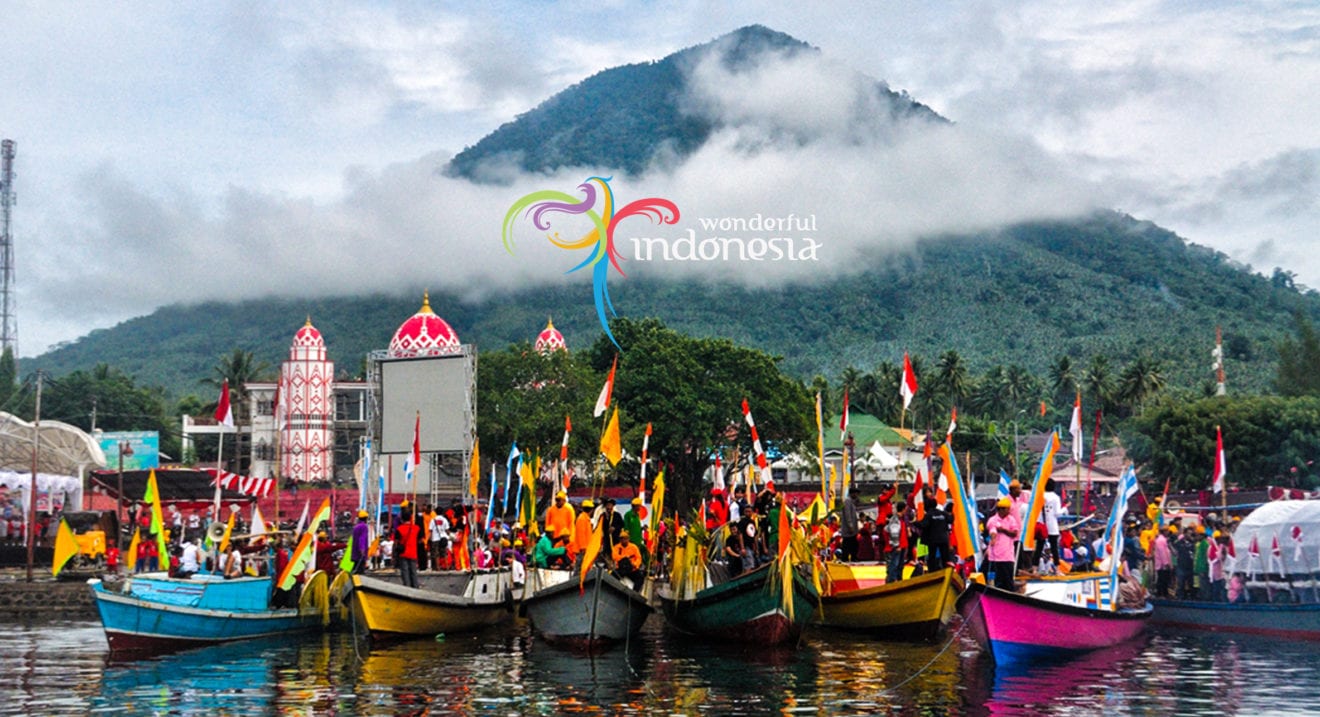
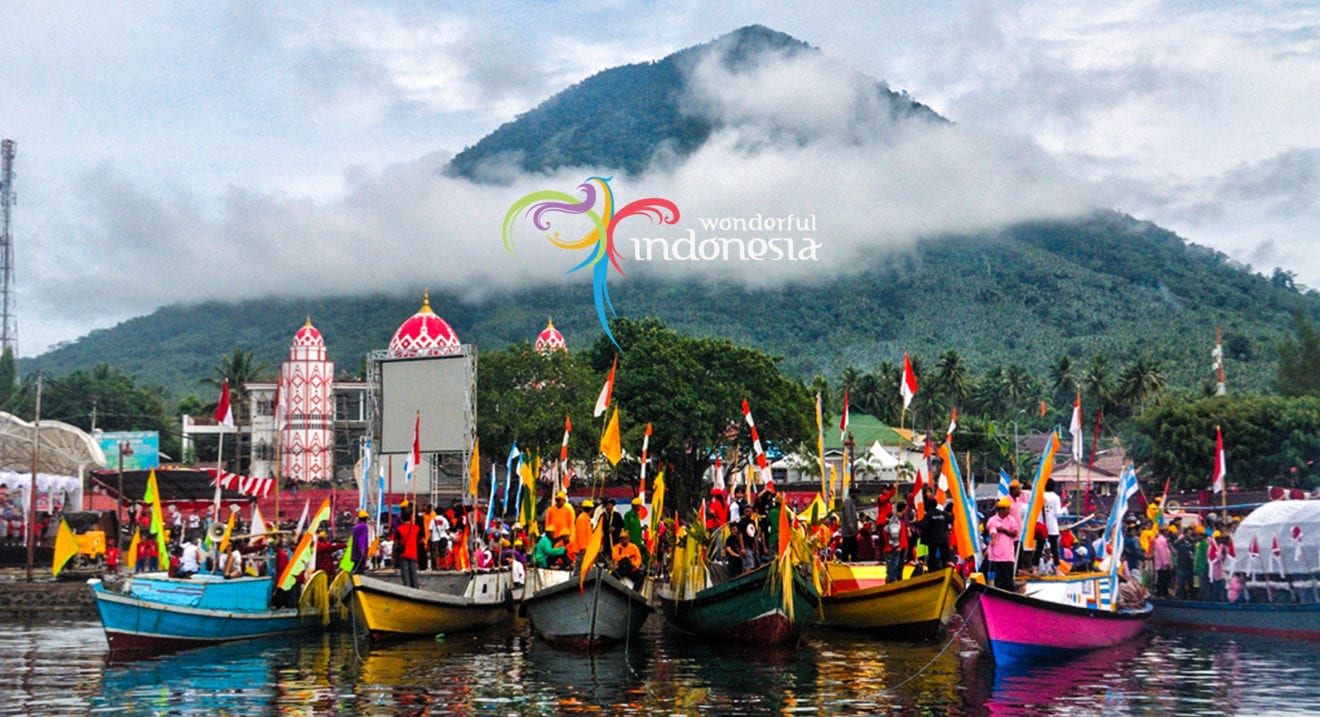
    Prince Albert II of Monaco appreciated Wonderful Indonesia, Indonesia’s tourism promotion branding initiative, during an Indonesia-Monaco Friendship Night in Monte Carlo on April 20.

    The Tourism Ministry Secretary, Ukus Kuswara, said in Monaco on Saturday that Monaco’s head of state expressed his appreciation for the campaign when he attended the friendship night, where cultural and arts performances were the highlight.

    Apart from Prince Albert II, the friendship night, an initiative of the Indonesian tourism ministry and the Indonesian Embassy in Paris, was also attended by government officials, the head of state palace, the head of Monaco Economic Agency, industrialists and tourism business players of the kingdom state.

    The tourism ministry presented the Paulus Surya Orchestra & Vocalia from Semarang, Central Java, featuring 10 musicians and five dancers. Dressed in Bali’s exotic costumes, they danced to traditional music as audiences joined the revelries, shaking their heads, their bodies jiving to keep up with the tempo.

    A medley of European songs, including the O Bambino Caro, a favorite of the mother of Prince Albert II, mesmerized the audience. Besides the orchestra, Indonesian textiles were also displayed by noted designer Oscar Lawalata.

    Oscar Lawalata displayed 60 personal classic textile collections from various regions in Indonesia.

    After the Wonderful Indonesia program, the event continued with a business meeting between the two countries.

    The Indonesian delegation was led by Kuswara, accompanied by Hirmansyah Sambudhy Thaib, the chairman of the working group for development acceleration of 10 national tourism destinations.

    On the Monaco side, the event was attended by the country’s businessmen and industrialists who were offered investment cooperation and a chance to visit Indonesia. They were offered investment opportunities in Indonesia’s Tourism Special Economic Zone, now being developed in 10 tourism destinations.

  • Indonesia promotes Wonderful Indonesia at Portugal tourism fair

    Indonesia promotes Wonderful Indonesia at Portugal tourism fair

    Indonesia promoted the Wonderful Indonesia brand at the biggest tourism exhibition in Portugal, called Bolsa Turismo de Lisboa (BTL), at the Feira Internacional de Lisboa (FIL) Lisbon.

    The event was organized by the Association of Industries of Portugal (AIP) and was opened by the Prime Minister of Portugal, Antonio Costa.

    Indonesian pavilion featured art performances and a seminar titled Dream, Explore and Discover Wonderful Indonesia. The seminar was organized by the Visit Indonesia Tourism Officer (VITO) Paris, a statement from the Indonesian Embassy in Lisbon received by ANTARA said here on Wednesday.

    This exhibition is being held regularly for the last 28. During the March 2 to 6 event, the Indonesian booth entertained about 2,000 visitors.

    Data from the Portugal Ministry of Immigration showed an increase in the number of Portuguese tourists to Indonesia, from 18,312 tourists in 2014 to at least 21,000 in 2015.

    Indonesias target is to attract through the BTL event 25,000 Portuguese tourists during 2016.

    At the BTL, Indonesia introduced 10 new destinations, namely Lake Toba (North Sumatra), Tanjung Kelayang Beach (Belitung), Seribu Islands (Jakarta), Tanjung Lesung Beach (Banten), Borobudur Temple (Central Java), Bromo-Tengger-Semeru (a volcano complex area in East Java), Mandalika (West Nusa Tenggara), Wakatobi (East Nusa Tenggara), Morotai Island (North Maluku), Labuan Bajo (East Nusa Tenggara).

    The Indonesian Ambassador to Portugal, Wirana Mulya, said the bilateral relations between the two countries are becoming ever stronger.

    The Indonesian government extends a visa-free visit policy for 30 days to the citizens of Portugal to visit Indonesia.

    The ambassador called upon stakeholders in the field of tourism to encourage Schengen visa exemption for Indonesian tourists to European countries.

  • A new way for brands to boost sales with social media

    A new way for brands to boost sales with social media

    Have retailers been looking at social media all wrong?

    Often lost among the chatter about how brands can use these platforms to boost their sales is the inverse argument: How they can use social conversations to predict – and improve – revenue trends.

    A new study by Networked Insights, which monitors social conversations across networks including Twitter, YouTube and Reddit, found there’s a correlation between the way consumers talk about certain brand metrics, and a retailer’s same-store sales. The firm determines a brand’s health by gauging customer satisfaction, loyalty and advocacy across social media.

  • Tesco’s opening salvo in 2015: Price cuts

    Tesco’s opening salvo in 2015: Price cuts

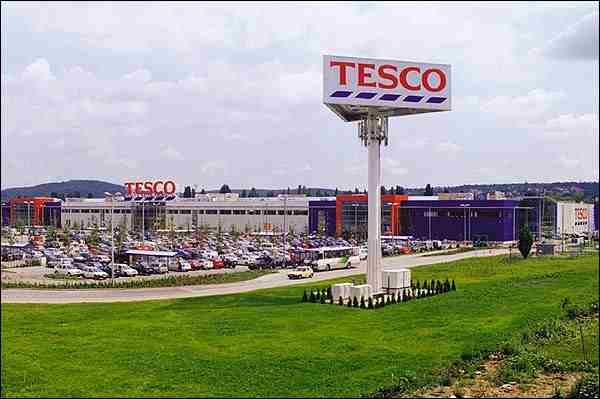
    UK supermarket giant Tesco PLC has announced “difficult changes” to its business at the start of the year, including the closure of 43 stores, lower prices on the country’s favourite brands, flat investment in payroll, and significant revision to its store building program and reduced capital expenditure budget.

    “I am very conscious that the consequences of these changes are significant for all stakeholders in our business but we are facing the reality of the situation. Our recent performance gives us confidence that when we pull together and put the customer first we can deliver the right results,” said Tesco Chief Dave Lewis.

    This came at the heels of group sales for the 19 weeks to 3 January 2015 declining by 0.6 percent at constant rates, including fuel and by 1.9 percent, including fuel.

    In Asia, total sales for the 19 week period declined by 1.5 percent at constant rates, with like-for-like sales declining by 4.6 percent.

    It said market conditions across the region remain challenging. In Thailand, sales trends improved over the period as we annualized the impact of the external pressures linked to political disruption last year. In Korea, a higher number of enforced Sunday closures under the DIDA opening regulations affected the performance of all large retailers.

    Speaking to Jody Hodges, Group Project Planning Director at Tesco, in a video interview, Lewis said there are three priorities now: recovering the competitiveness in the core UK business, protecting and strengthening the balance sheet, rebuilding the trust and the transparency in the brand and the business.

    On 8 January, Tesco cut prices on hundreds of branded products in response to demands from customers for simpler, lower and more stable prices.

    “We know that brands are important to our customers: they’re the products families don’t want to do without. So from today, customers will be able to buy many of their favourite products cheaper at Tesco – from Tetley Tea to Colgate Triple Action Toothpaste, Hovis White Bread to Kellogg’s Cornflakes,” said Tesco’s Chief Customer Officer, Jill Easterbrook in a statement.

    She added that overall, the company is cutting the prices of around 380 branded products by an average of 25 percent.

  • Tesco may seal Lotus’ fate Thurs

    Tesco may seal Lotus’ fate Thurs

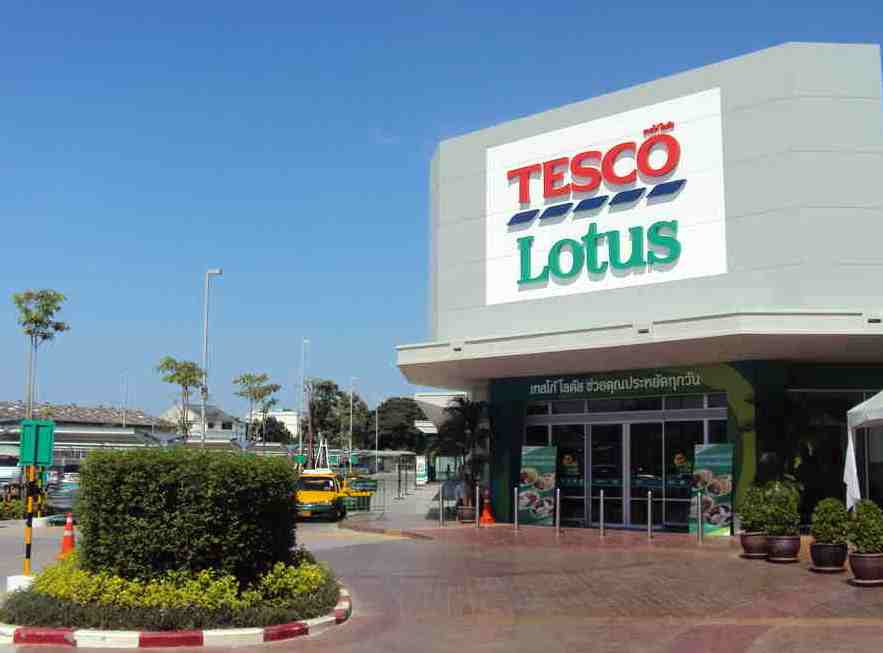
    New Tesco boss Dave Lewis is expected to focus on cost cuts and asset sales — including the possible sale of its Tesco-Lotus venture in Thailand – when he provides an update on his plans to revive the troubled British grocer’s fortunes on Thursday.

  • Amazon’s third-party merchants are a growing piece of the sales pie

    Amazon’s third-party merchants are a growing piece of the sales pie

    To help fuel its growth, Amazon.com is increasingly turning to the millions of businesses that use its site to sell their own goods. That’s a good thing for Amazon, because those third party sales tend to have higher margins, according to some analysts, and it’s an inexpensive way to fill out its online catalog.

    To view the full article (note: you must be a Wall Street Journal Online subscriber), visit The Wall Street Journal Online.

  • HK still world’s most expensive retail market

    HK still world’s most expensive retail market

    Hong Kong ranks as the world’s most expensive high-street retail destination, surpassing New York, Paris, London and Tokyo by a substantial margin, according to the latest research from CBRE.

    CBRE’s regular quarterly ranking of the world’s prime global retail markets saw little change in the third quarter of 2014, with global and hot-growth markets continuing to lead the rankings.

    It said this is the third consecutive year that Hong Kong has ranked top of the global list.

    According to CBRE, Hong Kong (USD4,327 per sq. ft. per annum) maintained a wide lead over the number-two market, New York (USD3,570 per sq. ft. per annum) where prime rents along Fifth Avenue are at record levels.

    “The Occupy Central protest, which began late in Q3, has not yet materially impacted retail rents in Hong Kong as most prime retail shops are located beyond protest areas,” said Joe Lin, Executive Director, Retail Services, CBRE Hong Kong.

    While the top four cities continue to hold their leading positions, there was some movement lower in the top ten rankings. Rents rose in Tokyo (USD1,076 per sq. ft. per annum), and fell in Zurich (USD895 per sq. ft. per annum) and Sydney (USD730 per sq. ft. per annum), resulting in the cities changing positions this quarter.

    In Q3 2014, Tokyo continued to lead rental growth in Asia-Pacific, with the continued lack of space in major high-street retail locations pushing up retail rents 7.7 percent quarter-over-quarter.

    Strong rental growth was also recorded in a number of emerging markets in the region, particularly in India and Vietnam, reflecting the recent resumption of structural economic reforms following the general lack of progress over the past few years. Highlights included a strong 5.9% quarter-over-quarter rental growth in Ho Chi Minh City and a 4 percent quarter-over-quarter rental growth in Mumbai.

  • Carl’s Jr. to re-enter Japan, aim for 150 burger bars nationwide

    Carl’s Jr. to re-enter Japan, aim for 150 burger bars nationwide

    US hamburger chain operator CKE Restaurants Holdings Inc. said on Friday it will open a Carl’s Jr. outlet in Tokyo next year before a nationwide rollout that will represent its second stab at the Japanese market since 1989.

    Its local partner will be Tokyo-based Mitsuuroko Group Holdings Co., whose main business is providing gas and power. Mitsuuroko said Friday it had set up Carl’s Jr. Japan Inc. to run the restaurants.

    CKE Restaurants said the first store will open in Tokyo next fall and that it aims to open 150 nationwide in the next 10 years.