Tag: mastercard

  • Ekata Protects 2.5 Billion Digital Interactions Globally in 2021

    Ekata Protects 2.5 Billion Digital Interactions Globally in 2021

    2021 was a transformative year for Ekata, capped by joining the Mastercard family to accelerate our shared goal of building trust in the digital economy. As consumers moved more of their lives online, online businesses grew to serve them. Over the course of the year, Ekata solutions protected billions of digital interactions from fraud and enabled better, faster and more trustworthy onboarding and transaction experiences for consumers and merchants.

    “By any measure, this was an incredible year for us as a business and as a team,” said Rob Eleveld, Ekata’s CEO. “We had the right mix of product, people and strategy to anticipate and navigate the tectonic changes taking place in the global economy. And now, as a part of Mastercard, we have the partnerships and scale to help more businesses know their customers, and, in turn, enable more people to safely interact online.”

    Entering the second year of the global pandemic, consumers continued to transform the way they shop, bank and work, pushing many day-to-day transactions online and rapidly expanding the digital economy. While the availability of vaccines allowed in-person interactions to rebound somewhat in the US, Mastercard found that roughly 20% of the peak in the shift to ecommerce has stuck permanently for the retail sector. According to Mastercard SpendingPulse™, which measures overall retail sales across all payment types including cash and check, US ecommerce sales increased 9.4% year-over year in November 2021.

    The rapid adoption of online commerce also offered new opportunities and new incentives to fraudsters. For businesses, this only increased the challenge of providing frictionless experiences for consumers while minimizing fraud. As the digital economy continued to grow at a rapid pace in 2021, accurate and seamless digital identity verification became even more critical to businesses.

    As a result, we saw unprecedented query volume around the world. Here are a few highlights:

    • Powered by machine learning and an unparalleled data set, Ekata protected close to 2.5 billion digital interactions globally against fraudulent activities in 2021.
    • Query volume grew 258% in APAC, in part driven by new partnerships, and 35% in LATAM in 2021 over the previous year as reflected in the volume of API calls to the Ekata Identity Engine.
    • New partnerships helped drive a 48% increase in partner-related queries from 2020 to 2021.
    • Query volume among banking and lending (+55%) and ecommerce (+26%) customers was up significantly.
    • In 2021, Ekata also saw great gains in the financial service sector being driven by new partnerships with Equifax and Feedzai.

    The introduction of new products and improvements to existing solutions also helped Ekata meet emerging market needs:

    • New fraud detection model releases helped customers even better identify genuine versus risky interactions, with a 10% increase in product efficacy across the globe.
    • We introduced a new Merchant Onboarding solution to help payment service providers (PSPs) and B2B lenders better onboard the growing number of micro-merchants, sole proprietors, and independent contractors across the globe.

    We are grateful to our customers, partners, and employees for their continued commitment to building trust in the digital economy. As we enter 2022, we’re thrilled to accelerate our mission together with Mastercard.

  • Singapore Crypto Startups Join Mastercard Engagement Program

    Singapore Crypto Startups Join Mastercard Engagement Program

    Two Singapore startups will help the payment giant accelerate innovation around digital asset technology. Singapore-based Mintable, a non-fungible token (NFT) marketplace; and Stacs, which provides a blockchain infrastructure for the financial industry to unlock value and enable effective sustainable financing, are among of a new cohort of seven startups at Mastercard’s «Start Path» global startup engagement program.

    The program supports fast-growing digital assets, blockchain, and cryptocurrency companies by providing access to strategic partnership opportunities, insights, and tools to grow. Companies participating in the new program aim to address pain points including asset tokenization, data accuracy, digital security, and seamless access between the traditional and digital economy.

    The announcement comes amid increased enthusiasm for a broader range of payment technologies in the Asia Pacific region as a result of the pandemic, and growing awareness of cryptocurrencies among the general public. Mastercard also said consumers are increasingly showing interest in being able to spend crypto assets for everyday purchases.

    We believe we can play a key role in digital assets, helping to shape the industry and provide consumer protection and security. Part of our role is to forge the future of cryptocurrency, and we’re doing that by bridging mainstream financial principles with digital assets innovations, Jess Turner, Executive Vice President of New Digital Infrastructure and Fintech, Mastercard, commented.

    Mastercard announced last week that it was looking to simplify for its partners the conversion from cryptocurrency to traditional fiat currency, and would be leveraging partnerships to help crypto companies offer card programs.

    Earlier this month, rival Visa reported that consumers spent more than $1 billion worth of cryptocurrency on goods and services through Visa’s crypto-linked cards in the first half of 2021.

  • Mastercard Eyes Digital Yuan Opportunities

    Mastercard Eyes Digital Yuan Opportunities

    Global payments giant Mastercard is in talks with various central banks with an eye on opportunities in central bank digital currencies.

    Amongst the central banks in discussion with Mastercard is the People’s Bank of China, according to a report citing APAC co-president Ling Hai.

    Circulation of central bank digital currencies (CBDC) outside of their home country could be converted into foreign currencies with a card clearing network acting as the conversion agent, Ling explained.

    While central banks can address their domestic issues associated with digital sovereign currencies, the role we can always play is on interoperability when the payment goes beyond a country’s borders, he said. For us, supporting a central bank digital currency is similar to adding another fiat currency onto our network.

    Mastercard is already increasingly establishing its digital currency capabilities with an existing partnership with the Bahamas where it provides prepaid card services to help travelers convert their CBDC – the Bahamas Sand dollar – into other fiat currencies.

    Centralized digital currencies aside, Mastercard also announced plans to increase support for select decentralized cryptocurrencies.

    Within China, it is also awaiting final approval for a license to conduct its card business onshore.

  • Mastercard expands digital convenience and security for premium cardholders in Asia

    Mastercard expands digital convenience and security for premium cardholders in Asia

    Focusing on digital convenience and security, Mastercard is delivering more perks in more markets for premium cardholders in the Asia Pacific region with a comprehensive online portal, hassle-free e-commerce insurance and enhanced benefits.

    As people make a lasting shift to online spending, Mastercard has created a seamless and secure digital experience for Platinum, Titanium, World and World Elite cardholders wherever and whenever they choose. The journey begins right at home, where cardholders can shop online with peace of mind.

    Mastercard’s e-commerce insurance protection automatically covers incomplete or non-delivery of items and the delivery of wrong or improperly functioning items from local and international online sellers. Mastercard has expanded this benefit to more markets and offers coverage of up to US$1,000 per year. Cardholders get the convenience of a digital claims process, eliminating the need to send paper forms.

    Via the Mastercard Travel and Lifestyle Services portal, cardholders can access special deals, redeem lifestyle benefits and search, book and pay for trips all in one place. Certain card types can also enjoy digital access to Priority Pass airport lounges and complimentary data roaming when travel resumes.

    Cardholders can make direct reservations and enjoy 1-for-1 deals at more than 400 restaurants with Mastercard’s One Dines Free program in 10 markets. Premium credit cardholders can also book staycations, explore local activities and enjoy up to 10% discounts with Mastercard online travel partners Agoda and Klook.

    “While global travel has yet to return to normal, there is pent-up demand for when the time comes and great opportunities in the meantime for domestic tourism in many places,” said Sandeep Malhotra, Executive Vice President, Products & Innovation, Asia Pacific, Mastercard. “With these enhanced benefits in Asia Pacific, Mastercard is offering a range of digital tools and solutions to help premier cardholders shop, pay and travel with even more safety, security and flexibility.”

    For card issuers, the expanded program enhances benefits that can be offered to cardholders and improves the overall cardholder journey as part of Mastercard’s industry-leading initiatives to drive digital commerce with frictionless and secure payment experiences.

    See the Priceless Specials site for the full range of offers and experiences – from travel, dining and culture to sports, shopping and entertainment – curated by Mastercard.

  • Samsung will develop payment cards with fingerprint scanners with Mastercard

    Samsung will develop payment cards with fingerprint scanners with Mastercard

    Samsung and Mastercard have partnered up to develop a fingerprint-authenticated payment card. Yes, we’re talking about an actual, physical card with a built-in fingerprint scanner. This innovation will increase the security of contactless payments and give users another layer of safety – while looking pretty darn cool.

    The card will work with every in-store (POS) terminal that supports Mastercard. When buying, the user will use their fingerprint rather than their PIN to secure the payment that they make. Especially in a pandemic this new type of card introduces a safer and more convenient way for users to authenticate their way of payment, because it excludes the need to touch the POS device.

    The new security chipset will be delivered by Samsung’s System LSI Business and will not use existing Mastercard hardware.

    “As consumers embrace the safety and convenience of contactless payments, Mastercard will leverage its cybersecurity and intelligence expertise and global payments network in this three-way partnership to enhance cardholder security with a biometric solution supporting fast, frictionless payment experiences that are protected at every point,” said Karthik Ramanathan, Senior Vice President, Cyber & Intelligence Solutions, Asia Pacific, Mastercard.

    In 2017 Mastercard unveiled their plans for a similar card that doesn’t require users to put their PIN in. This new endeavor uses the same concept but the sensors are now going to be produced by Samsung.

    Samsung Card is owned by Samsung Life Insurance, which is one of the biggest credit card companies in South Korea. The company will be the one releasing the product in South Korea later this year.

  • Mastercard Backs Cryptocurrencies

    Mastercard Backs Cryptocurrencies

    Credit card and payments firm Mastercard becomes the latest crypto backer as it announces plans to offer support for select cryptocurrencies.

    Currently, Mastercard is already offering cards that allow customers to transact using their cryptocurrencies without going through its network. The latest move is expected to further expand business opportunities for merchants.

    Doing this work will create a lot more possibilities for shoppers and merchants, allowing them to transact in an entirely new form of payment,» Mastercard said, though it noted that tighter compliance measures were still needed for many of the hundreds of digital assets in circulation.

    This change may open merchants up to new customers who are already flocking to digital assets.

    Mastercard becomes the latest corporate giant to join the crypto wave just days after Tesla revealed that it had purchased $1.5 billion of bitcoin and that it would soon be accepted as a form of payment.

    Also in this week, DBS group chief executive Piyush Gupta signaled bullishness in crypto demand, revealing that its digital exchange registered 300 trades per day since launching in December last year.

    So far it’s looking good, but I think we have the opportunity to scale, given the amount of interest and energy around tokenized assets, Gupta said.

  • Mastercard partners with SAP Concur to deliver automated expense and invoice management for businesses in APAC

    Mastercard partners with SAP Concur to deliver automated expense and invoice management for businesses in APAC

    Mastercard has partnered with SAP Concur to deliver a faster and more efficient expense and invoice management process to banks, companies and government agencies in Asia Pacific for transactions with corporate cards.

    As businesses and governments seek to increase visibility across payments, optimize credit lines and leverage data to strengthen supplier relationships, the partnership offers best-in-class transaction solutions along with closer alignment between commercial card providers and their clients.

    “This powerful pairing offers the best of both worlds by combining SAP Concur’s expense management expertise with Mastercard’s global payments network, extensive partnerships, industry-leading security and comprehensive solutions and services,” said Mostafa Sabet, Vice President, Product Management, Asia Pacific, Mastercard.

    “In today’s competitive environment and rapidly evolving digital economy, Mastercard’s integration with SAP Concur solutions will deliver the tools and insights that businesses and governments need to control costs and manage expenses tightly, transparently and efficiently.”

    Using commercial cards in conjunction with SAP Concur solutions for corporate travel booking, expense management and invoice processing will help to speed up reconciliation and payments while strengthening cost controls and improving compliance.

    For Mastercard’s issuing customers, the partnership improves the processing of corporate payments and supports the extension of SAP Concur solutions to business and government clients of all sizes.

  • Mastercard launches one-stop resource site to support digital transformation of SMEs in Asia Pacific

    Mastercard launches one-stop resource site to support digital transformation of SMEs in Asia Pacific

    To help small and medium enterprises (SMEs) recover from the pandemic and prepare for the future, Mastercard has launched the Digital Acceleration for Small Businesses microsite across most of its Asia Pacific websites with information and resources on how to digitalize and run businesses more efficiently.

    As COVID-19 drives a rapid and lasting shift to e-commerce and contactless payments, the one-stop center features guides on digital transformation, e-learning courses, information about Mastercard products and services for SMEs, cyber security insights and tools to reduce vulnerabilities and access to discounts on business software solutions, e-commerce platforms and digital marketing services.

    “SMEs have taken a particularly hard hit from the pandemic, so it’s vital for them to get the knowledge, skills and resources they need to offer an omnichannel shopping and payment experience that drives business and builds customer loyalty in the physical and digital worlds,” said Sandeep Malhotra, Executive Vice President, Products & Innovation, Asia Pacific, Mastercard.

    “With consumer buying habits and expectations evolving so quickly, this initiative is just one of the ways that Mastercard is fostering financial inclusion and helping small businesses to go digital across their operations to reduce costs, increase efficiency and improve cashflow management – all while staying safe and protected from cyber risks and fraud.”

    The Digital Acceleration for Small Businesses center is available across Mastercard’s English-language websites for Hong Kong, Singapore, Malaysia, the Philippines, Thailand, India and Southeast Asia. It will be rolled out selectively on non-English sites in the future.

    To enhance the resources for SMEs, Mastercard has joined forces with popular website builder Wix and with Zoho, a cloud solutions provider with more than 60 million users. These partners are sponsoring online guides and articles on various topics – from creating an online store and choosing the right domain name to migrating to an online expense management and accounting platform.

    “As the world shifts beyond short-term survival, SMEs need to plan for long-term success in a new world of online shopping. At Wix, we’ve seen first-hand how the past year challenged businesses in so many ways but also how it brought out their resilience, grit and adaptability,” said Liat Karpel Gurwicz, Head of eCommerce Marketing at Wix.com. “We will draw on the collective learning of the Wix team who built our eCommerce platform and the merchants who run their businesses on it to help SMEs plan and strategize for 2021.”

    “Even as organizations are trying to reimagine their business models, dwelling in rich content helps unlock ideas. We are excited to participate in this initiative by Mastercard, a company that is committed to empower businesses to innovate and implement superior solutions for business transformation,” said Gibu Mathew, Vice President and GM, Asia Pacific, Zoho Corp. “This initiative will further enhance and deepen digital awareness and know-how, allowing business owners and top management to make informed decisions when selecting solutions that best support evolving business needs.”

    The resources site in Asia Pacific is part of Mastercard’s global efforts to help SMEs “Get Paid, Get Capital and Get Digital” through new product development, partnerships and distribution channels. These include initiatives in North America, the Caribbean, Australia and New Zealand.

    After reaching its goal to bring 500 million people into the financial system, Mastercard strengthened its commitment to inclusion by pledging to help a total of 1 billion people get access to the digital economy by 2025, including 50 million small businesses and 25 million women entrepreneurs.

    Beyond supporting businesses, the benefits of going digital are far-reaching. Digitalization of SMEs could add US$2.6 trillion to US$3.1 trillion to Asia Pacific’s GDP by 2024, a recent study by International Data Corporation showed. Due to the impact of COVID-19, it said, nearly 70% of SMEs in Asia Pacific are accelerating digitization and 86% believe this will help build resilience against future events.

    Reflecting the huge shift to a “digital first” mindset, contactless payments via the Mastercard network were 41% of in-person transactions in the third quarter of 2020 – up from 37% in the second quarter and 30% a year earlier.

  • Mastercard Advances Multi-Rail Strategy to Modernize Business Payments

    Mastercard Advances Multi-Rail Strategy to Modernize Business Payments

    Mastercard continues to deliver on its multi-rail strategy with the addition of Account-to-Account (A2A) payments functionality to Mastercard Track™ Business Payment Service.

    This launch represents the next phase in Mastercard’s journey to modernize business payments by solving persistent pain points that Buyers and Suppliers experience today.  Building on the success of card payments within Mastercard Track Business Payment Service, businesses can now have a similar experience for A2A payments – exchanging data with greater efficiency and facilitating payments across multiple payment rails including Real Time Payments (RTP) and the Automated Clearing House (ACH) in the United States.

    The Account-to-Account payments functionality in Track Business Payment Service is now available in the U.S. and will be available in all regions by the end of 2021. Cross-border payments are also on the roadmap for next year.

    Track Business Payment Service gives businesses greater control of their payments and supports rich data exchanges and the ability to automate payments without the need to share sensitive bank account information. About 80% of mid-size and large Suppliers view the sharing of bank account data as a business risk, according to Mastercard research.1 The risk of bank account data being compromised is reduced because Suppliers no longer need to share their confidential bank account details with Buyers, nor do Buyers need to store those details.

    “Today, the vast majority of B2B payments are made through bank account transfers.  Extending Mastercard Track Business Payment Service to support these transfers is a step on our way to building out the best and most secure B2B payment network in the world,” saidJames Anderson, Executive Vice President of Global Commercial and B2B Solutions at Mastercard. “Our commitment to supporting multiple payment rails has always been about helping customers operate more efficiently and effectively leveraging all the capabilities available in the market with as little change as possible. This milestone is another step in the journey away from paper-based frustration, incomplete data and manual reconciliation work and toward a fully digitized business payments process.”

    Modernizing B2B Payments Across New Geographies and Partners

    In May 2020, Mastercard announced the commercial launch of Track Business Payment Service for U.S. card payments. Today, businesses of all sizes can use this service to pay and get paid with card through new distribution partners around the world including: bzPay, Gardenia Technologies, Girasol Payment Solutions, Network International, Pendo Technologies Corp., Plastiq, Today Payments, Inc., Transcard, Ukheshe, and Yak Pay.

    Now, through Track Business Payment Service, commercial businesses have access to more control and greater simplicity in how they pay and get paid across multiple payment types.

    “B2B payments terms and delays can create debilitating negative cashflow dilemmas for business. bzPay helps with a practical way to reduce debt, accelerate payments and optimize cashflow through a single payments platform. Mastercard’s Track Business Payment Service multi-rail solution provides a New Payment Platform enablement and a scalable payment solution for our customers. By enabling payment flexibility options, Mastercard paves the way for a globally connected eCommerce solution.” – Aleks Kostadinovic, CEO bzPay Pty Ltd.

    “Our company is focused on delivering data-driven working capital solutions including advanced analytics and finance to corporates. Mastercard Track Business Payment Service offers much-improved visibility into the source-to-pay and order-to-cash processes, as well as critical insights into payments for financial products and transactional reporting.” – Rupert Schneider, Co-Founder, Gardenia Technologies

    “Payment behavior in the B2B market space is a crucial pain point in the Caribbean, mainly due to complex processes from different business cultures. As our company focuses on facilitating the business payment ecosystem with innovative technologies, it is our mission to add value to the way business payments are made. Mastercard Track Business Payment Service solution allows us to adopt global payment standards and add value by increasing transparency and providing rich reconciliation/remittance data in a secure trusted environment on both cards and A2A payment rails.” – Marwan Rozier, Chief Operating Officer, Girasol Payment Solutions

    “We are delighted to be among the first partners in the Middle East and Africa to launch the Mastercard Track Business Payment Service solution that will address long-standing pain points in the B2B payment sector by creating an innovative service that responds to the industry’s urgent need for seamless and automated collection and reconciliation. We anticipate that Track Business Payment Service will act as a game changer, providing the scale and capability that will support our clients’ business needs.” – Samer Soliman, Managing Director – Middle East, Network International

    “Pendo focuses on disruptive technologies and innovation leveraging business and technology trends to develop innovative solutions that alleviate many payments process pain points that both big corporations and small- and medium-sized enterprises encounter every day. We are delighted to partner with Mastercard Track Business Payment Service to help businesses reduce costs, increase speed, improve efficiencies and create healthier cash flow.” –  Oscar Uribe, Co-Founder & Chief Commercial Officer, Pendo Technologies Corp.

    “Businesses are in constant need to access new forms of working capital and streamline their payments. Plastiq’s ability to help businesses do more with their commercial cards is very aligned with Mastercard Track Business Payment Service’s global vision for making B2B payments frictionless. We’re excited to partner with Mastercard to help offer businesses more optimized payment solutions.” – Sameer Gulati, President & COO of Plastiq

    “Suppliers/Billers need rich data exchanges, including itemized revenue transaction data, not just batch deposit summaries afforded them via direct connect banking. Track Business Payment Service magnificently delivers this expanded data. Our Today Payments API, an award-winning software innovation, automates the process of recording the rich, complex data efficiently. We are thrilled to provide this cutting-edge solution for all B2B transactions in what I consider to be the most real-world, revolutionary enhancement to business payments with the Track Business Payments Service.” – Leigh Cook, CEO, Today Payments, Inc.

    “Traditional approaches to making and receiving B2B payments are inefficient, unnecessarily complex and risky. The combination of the Mastercard Track Business Payment Service and Transcard’s integration platform eliminates friction in B2B payments by digitally connecting buyers and sellers and facilitating touch-free real-time payments and the exchange of rich remittance information directly between trading partner ERPs and banks.” – Greg Bloh, CEO of Transcard

    “Ukheshe, a digital banking platform focused on addressing financial inclusion in Africa, demands world-class partners and solutions that can address real customer concerns. With Mastercard Track Business Payment Service, we are able to ensure the secure transmission of payment details to multiple bill presenters, giving peace of mind to all parties involved.” – Mike Smits, Co-Founder, Ukheshe

    “After seven years of processing B2B payments for thousands of our small business clients, we are on a mission to make their payments easier, faster and more secure. Yak Pay is delighted to be working with Mastercard to help achieve this, and Mastercard Track Business Payment Service is an excellent example of innovation helping small businesses operate more efficiently, profitably and securely.” – Sam Plowman, CEO of Payment Logic and Yak Pay
  • Mastercard and Asian Development Bank build multi-stakeholder alliance to digitalize supply chains

    Mastercard and Asian Development Bank build multi-stakeholder alliance to digitalize supply chains

    Mastercard and its partners N-Frnds, SGeBIZ and Finastra have formed an alliance with the support of the Asian Development Bank (ADB) to create technology solutions to drive greater digital efficiency across the retail supply chain in Asia and increase wholesalers’ access to credit.

    “These unprecedented times underscore the importance of building an inclusive, sustainable digital economy, including through the application of technology to digitize trade, which can make it easier for small and medium-sized businesses to participate in global supply chains,” commented Michael Froman, Vice-Chairman and President, Strategic Growth for Mastercard. “Innovative partnerships like this one can support the agility and resilience of supply chains, accelerating access to finance and improving efficiency.”

    The global pandemic and accompanying economic impact have severely disrupted supply chains and trade networks, particularly for small and medium enterprises (SMEs) that account for 90% of all global businesses, employ about half of all workers and deliver more than half of GDP.

    The pandemic has also reduced control over cash flow and access to credit by SMEs. Even before COVID-19, the ADB estimated there was a $1.5 trillion funding gap in 2018, with smaller businesses most impacted. The International Chamber of Commerce estimates a potential $2 trillion to $5 trillion shortfall in trade financing through 2021 if demand returns to the global economy.

    As a result, it is vital for the public and private sectors to come together to enable a faster and more efficient shift towards digitalization for SMEs across global supply chains, trade and access to financing. Mastercard, in line with its broader commitment to bring 1 billion individuals and 50 million micro and small businesses into the digital economy, has responded by developing a collaborative market-leading solution with SGeBIZ, Finastra and N-Frnds. The program will start in Indonesia with 500 retailers and aims to build to 5,000 retailers by the end of Q1 2021.

    “COVID-19 has had an adverse impact on the global supply chain and these collaborative solutions are critical to ensuring grocery stores stay stocked, pharmacies have access to medicines and people can buy the daily goods they need,” said Safdar Khan, Divisional President, SEA Emerging Markets Mastercard. “Mastercard is proud to work with like-minded partners to integrate digital payments with the flow of commerce to deliver solutions for SMEs that help them navigate today’s environment and thrive in the future.”

    “ADB has been working closely with the Government of Indonesia in its efforts to alleviate the impact of the coronavirus disease (COVID-19) pandemic, including through the $1.5 billion financing approved in April 2020. Our partnership with Mastercard and its alliance partners in the pilot digital supply chain project will provide critical access to finance to affected MSMEs and immediate assistance to keep the food and essential goods supply chain running,” said Ahmed Saeed, Vice President for East Asia, Southeast Asia and the Pacific, Asian Development Bank.

    The results of the alliance are a technology solution that provides two key benefits:

    1. Wholesaler access to credit: Mastercard will leverage supply chain data from N-Frnds, SGeBIZ’s digital procure-2-pay platform and other sources to partner with Finastra and its Trade Bank customers to automate access to working capital finance.

    The collaboration will increase the digital data available to assess creditworthiness and create new models to evaluate it. Access to the resulting lines of credit will enable wholesalers to react more quickly to upcoming promotions, increase their inventory levels and build their businesses.

    “One of the most fundamental problems for SMEs and micro-businesses across Asia is access to finance,” said Simon Paris, CEO, Finastra. “Without credit, financially excluded businesses become caught in cycles that restrict their capacity to grow and leave them underprepared for the effects of market disruption. Technology is the enabler to tackle financial inclusion challenges. As part of this collaboration, we are able to drive change to bring positive outcomes, through digital transformation and innovative new lending pathways.”

    1. Fully digitalized marketing campaigns: Through integrating digital payments and supply chain data with promotions, FMCG trade spend can be allocated more efficiently with better visibility and inclusion of SME retailers.

    The alliance will leverage N-Frnds’ mobile solution – which optimizes logistics and operations by connecting FMCG companies with wholesalers for placing orders, coordinating deliveries and monitoring inventory levels – to better communicate upcoming promotional efforts between suppliers and wholesalers.

    “We are excited to join N-Frnds, our strategic partner for the last mile in this new initiative to digitalize and streamline trade financing and promotions in traditional markets. We believe that this new collaboration will enable us to lead the transformation of value chains in Indonesia, both by extending credit and ensuring that our promotional spend is significantly more effective and enjoyed by the four million grocery stores in Indonesia,” says Kadir Gunduz, President Director, Coca-Cola Amatil Indonesia.

  • Mastercard Deepens Commitment to Myanmar; Announces Local Presence

    Mastercard Deepens Commitment to Myanmar; Announces Local Presence

    Mastercard today announced that it is deepening its commitment to Myanmar by taking steps to incorporate an entity in the country – thereby establishing a local office presence in Yangon – and to appoint a country business development manager.

    Mastercard aims to support the advancement of Myanmar’s digital payments ecosystem and its efforts to build a futuristic and inclusive cashless society. The establishment of the local office also underscores Mastercard’s long-term commitment to advancing Myanmar’s national digital agenda and reflects the company’s continued confidence in the market.

    Myanmar’s GDP growth is expected to rebound to six percent in 2021, making it one of the fastest-growing economies in the Southeast Asian region. The market has successfully leapfrogged several of the usual transition steps on its way to becoming a digital economy. For example, despite less than a quarter of the country having a bank account, 80 percent of its citizens own a mobile phone, with many using their devices to conduct transactions and remit funds digitally. The government of Myanmar has been actively leveraging these advances to lay the foundation for a modern payments’ infrastructure designed to allow entrepreneurs and businesses to capitalize on opportunities across consumer, commercial and government payment flows.

    “With its futuristic vision to enable sophisticated capabilities like real-time payments for its citizens and businesses, Myanmar is at a truly pivotal stage in its economic evolution.  Mastercard has a long and established history in partnering with hundreds of nations around the world on growing and scaling their payments ecosystems. Mastercard’s ambition for Myanmar is no different – the organization is focused on bringing its global best practices, coupled with a deeply rooted local presence and understanding of the domestic environment, to bear, to help the country secure a digital future defined by efficiency, agility, and security” said Safdar Khan, Division President, Southeast Asia Emerging Markets, Mastercard.

    “As Myanmar continues its digital transformation, it is also necessary to empower its people with the skill sets and knowledge they need to participate actively in the digital economy. Mastercard will bring to Myanmar decades of experience in technology skilling that will enable the country to accelerate human capital development. Furthermore, as part of the organization’s commitment to grow the local talent pool, Mastercard is well on its way to assembling a local team which will lead the local efforts and facilitates Mastercard’s objective for sustainable, domestically relevant, long-term success” he added.

    Mastercard has been working for nearly a decade, with government and key stakeholders in Myanmar, to digitalize its payments environment, achieving a number of critical firsts and milestones, including:

    • Being the first international payments network to issue a license to a local bank (Co-Operative Bank Limited), paving the way for Mastercard cards to be issued and accepted in the country
    • Reducing the month-long national SME registration process to just one day by launching the MSME Webportal, an e-government web portal, in partnership with CB Bank and the Myanmar government
    • Issuing Myanmar’s first credit card designed exclusively for women, MAB Lady’s, in partnership with Myanmar Apex Bank
    • Partnering with Yoma Bank to digitalize and tailor products and solutions for the bank’s customers, including SMEs
    • Curating exclusive offers for all Mastercard cardholders to enjoy until 2021 in celebration of Mastercard’s 8th year in Myanmar
  • Mastercard and WeLab Bank Announce the Launch of  Numberless WeLab Debit Card

    Mastercard and WeLab Bank Announce the Launch of Numberless WeLab Debit Card

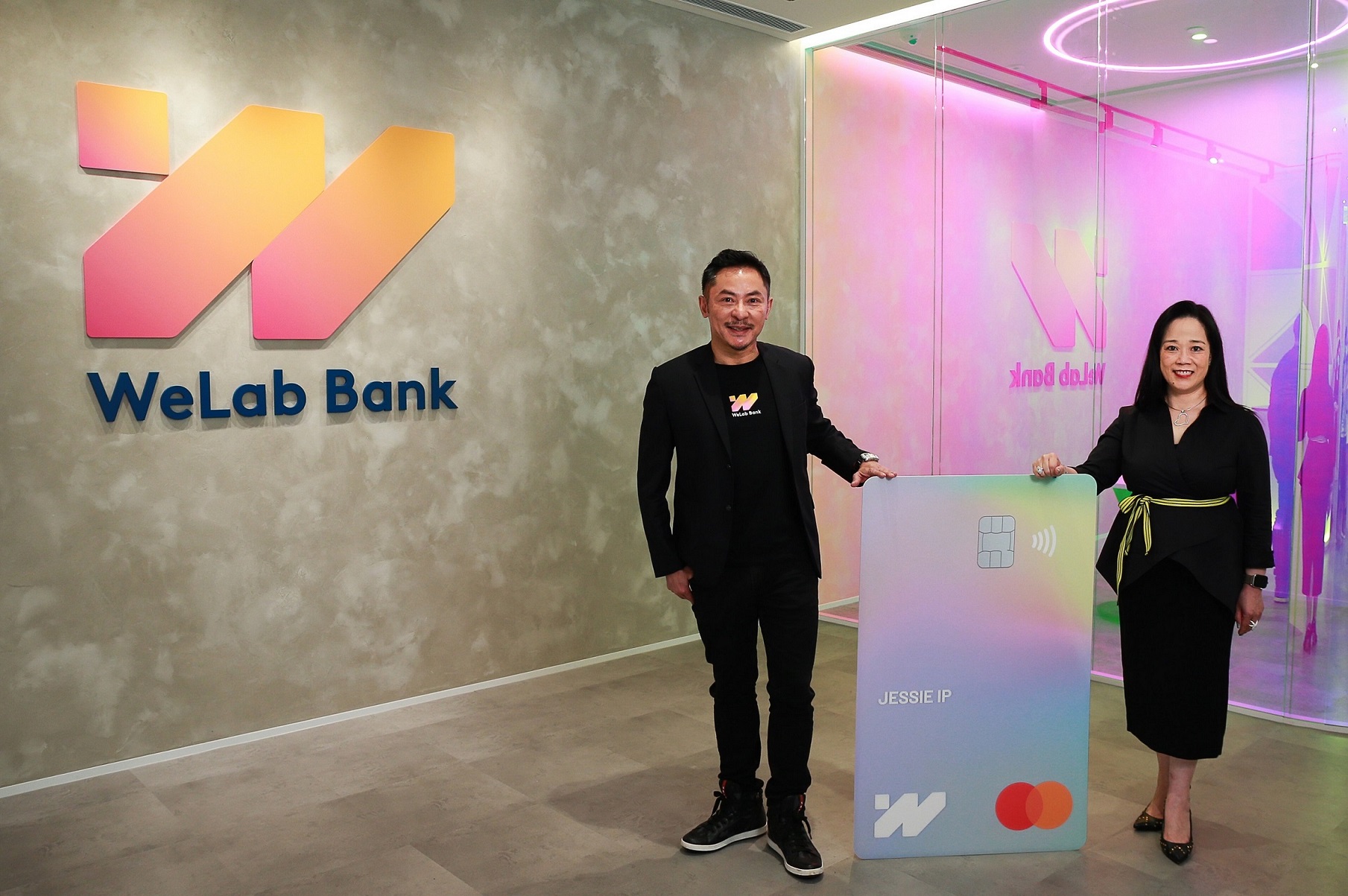
    Mastercard and WeLab Bank Limited (“WeLab Bank”), a homegrown virtual bank licensed by the Hong Kong Monetary Authority (“HKMA”), today announced a partnership to launch a numberless bank card that is part of a simple, intuitive and fully digital banking service that specifically caters to the tech-savvy needs and lifestyles of people all over Hong Kong.

    While WeLab Bank services are purposely designed to be 100 percent operated from the mobile phone, a physical card may have wider acceptance and provide added convenience to consumers’ daily lives, such as when making payments at certain merchants or withdrawing cash. Unlike traditional bank cards, the WeLab Debit Card is available for use immediately after opening a WeLab Bank account in the form of a virtual card from the WeLab Bank app, followed by the delivery of a physical card.

    The physical card is also good-looking and sleek, adopting a minimalist design with only the embedded multi-function chip and cardholders’ name to compliment the Mastercard and WeLab Bank logos, with all other information accessed safely from the mobile app. This is made possible by Mastercard’s fast, secure and reliable global network, providing WeLab Bank cardholders with robust, multi-layered protection when making purchases.  Some highlights are:

    • Private and secure – No card number, no card validation code (CVC2), no expiry date displayed on the physical card. Everything can be accessed privately and securely from within the WeLab Bank app.
    • Hassle-free lost card reporting – Simply open the WeLab Bank app and tap on “report lost card” to deactivate the card immediately. New card credentials will be issued to customers shortly thereafter, allowing them to continue making transactions straight away.
    • No hidden fees – No annual card fee, no reissuance fees for lost card, and no hidden transaction fees.
    • Accepted everywhere – offline or online 24/7 – Purchase items offline with a simple tap of the card, or online by copying the debit card number located in WeLab Bank’s app and your order can be completed swiftly, even from 10,000 miles away!
    • Easy access to cash withdrawals – Withdraw cash from any JETCO ATM in Hong Kong and CIRRUS ATMs that accept Mastercard cards worldwide.

    Looking at the transactions processed over the last few months, over 51 percent of physical card transactions were for Food & Beverages, followed by 31 percent for Groceries. Unsurprisingly, the daily average usage on weekends was about 1.5 times more than the volume on weekdays, consistent with the boost seen in restaurants since the most recent relaxation of social-distancing rules. Online transactions were much more diverse,  with the top two categories – Food & Beverage (leading at 31 percent) and Entertainment (13 percent) – accounting for just 44 percent compared to offline transactions where they totaled 82 percent. Both top categories are closely tied to the increased propensity to stay at home.

    Beyond local spending, over 30 percent of online transactions were processed by merchants outside of Hong Kong, powered by the worldwide acceptance and processing capabilities of Mastercard’s global network. Such data insights from customers’ behavior can further bolster WeLab Bank’s partnership with Mastercard, as well as the bank’s relationship with merchants, enabling them to deliver more relevant offers to customers.

    Ensuring further reliability for local consumers, WeLab Bank takes pride in being a homegrown virtual bank licensed by the HKMA and a member of the Deposit Protection Scheme, which means that customers’ eligible savings at WeLab Bank are protected up to a limit of HKD500,000 per depositor.

    “We want to empower the Hong Kong people by bringing them a more digital, secure and seamless banking experience, and it all starts with the card. We understand that people don’t want a traditional bank card, but a card that can bring excitement and fit with their daily lives. While Mastercard is a global leader in digital payments and WeLab Bank is a fintech pioneer entrenched in Hong Kong, we trust that our partnership combines the best of both worlds, allowing us to continue designing innovative tools for the future. We hope our customers enjoy using their gorgeous cards just as much as we have enjoyed building it.” said Adrian Tse, Chief Executive of WeLab Bank.

    “More and more Hong Kong people are adjusting their lifestyles to become technologically savvier. Understanding their evolving needs, Mastercard has partnered with WeLab Bank, a homegrown virtual bank that shares the Mastercard vision of providing a new digital banking experience where technology and innovation are the backbone. This collaboration also showcases Mastercard’s progressiveness as a leader in the payments industry, especially in safety and security, as well as its dedication in pushing forward the development of Hong Kong as a smart city,” said Helena Chen, Managing Director, Hong Kong and Macau, Mastercard.

    As a result of this collaboration between WeLab Bank and Mastercard, Hong Kong people will be able to embrace a digital lifestyle, enjoying a safe, secure and convenient banking experience.

  • Mastercard and Mox Partner to Launch All-In-One Numberless Bank Card

    Mastercard and Mox Partner to Launch All-In-One Numberless Bank Card

    Mastercard today announced its partnership with Mox Bank Limited (“Mox”), a new virtual bank backed by Standard Chartered in partnership with PCCW, HKT and Trip.com, to introduce an all-in-one numberless bank card to Hong Kong. The innovative solution offers one card for all purchases and ATM withdrawals, creating a simple, smart, safe and secure payment experience for cardholders.

    Fostering smart city development, the new card adopts the “digital first” principle by featuring only the embedded chip, the cardholder’s name and the Mastercard and Mox logos. Other pieces of information visible on traditional bank cards – such as the card number, expiry date and card validation code (CVC2) – are saved in the chip and can only be accessed digitally, further enhancing privacy and security.

    With its fast, secure and reliable global network, Mastercard gives Mox cardholders robust, multi-layered protection. As important card details are digitally stored, cardholders benefit from greater security and convenience by simply logging in to Mox’s mobile app and verifying their identities to obtain the required information when making purchases.

    “Mastercard has been known for its technological innovation in the payments industry for years. We are excited to partner with Mastercard on our journey as we look to make banking simpler, smarter and safer through the launch of our virtual bank in Hong Kong this year, and through the introduction of the new numberless bank card,” saidDeniz Güven, Chief Executive Officer, Mox.

    “Through innovative payment technology such as the digital first, numberless bank card, Mastercard is proud to showcase its leadership in the payments industry. Mastercard’s partnership with virtual bank Mox to provide a fast, safe and convenient cashless payment experience also demonstrates its commitment to pushing forward the development of Hong Kong as a smart city,” said Helena Chen, Managing Director, Hong Kong and Macau, Mastercard.

    Getting the Mox card is fast, secure and free. When Mox launches, you can open a Mox account simply and start using the digital card within a few minutes from your mobile phone anytime, anywhere. A physical card, which features one-tap card activation via near-field communication (NFC) technology, is also available to cardholders. The Mox card carries the 3-D Secure software designed for safe online purchases, as well as a lock/unlock function that lets cardholders have full control over their card usage.

    Cardholders can also monitor their real-time account activity and balance with instant categorization. With Mox’s intelligent 24/7 monitoring system in effect, users are protected from fraudulent, unauthorized transactions. The card face designs come in a beautiful blue or in a limited-edition black stainless steel exclusively for Founding Members, adding style and creativity to the cashless experience.

    Go digital and experience a fast, hassle-free, safe and secure way to pay with the Mox card powered by Mastercard.


  • Mastercard to Support Scottish Fintech’s APAC Expansion

    Mastercard to Support Scottish Fintech’s APAC Expansion

    Mastercard has announced an expanded strategic partnership with Eedenbull to cover the Asia Pacific as the Scottish fintech eyes a slice of the region’s business-to-business payments market.

    Building on its partnership in Europe, Eedenbull will leverage Mastercard’s advisory experience, commercial solutions, and network of customers and partners as it rolls out its new commercial cards platform to banks in the region, the announcement on Tuesday said.

    Based in Norway, Scotland, and Singapore, EedenBull is a technology-agnostic innovation company built by banking, payment, and technology professionals. It operates a spend management platform to digitize the slow and costly processing of checks and cash.

    «While payment products and services are now more user-friendly, product management is growing more complex and requires access to specialists in marketing, revenue management, IT, legal, regulatory, and many other areas,» Nicki Bull Bisgaard, CEO EedenBull, said in the statement.

  • Mastercard study shows consumers moving to contactless payments for everyday purchases as they seek cleaner

    Mastercard study shows consumers moving to contactless payments for everyday purchases as they seek cleaner

    During February and March, as many countries imposed or strengthened social distancing measures due to COVID-19, a significant majority of consumers turned to contactless card payments for necessary purchases. Citing safety and cleanliness, 79 percent of people worldwide and 91 percent in Asia Pacific say they are now using tap-and-go payments.

    Consumer polling by Mastercard, studying changing consumer behaviors in 19 countries around the world, paints a picture of accelerated and sustained contactless adoption.

    The act of going to the store for eggs, toilet paper, medicine and other necessities has changed dramatically this year. Shoppers have had to adjust to new challenges when buying everyday supplies – a shift in behavior that is particularly clear at checkout as people express a desire for contactless cards and voice concerns over cleanliness and safety at the point of sale.

    The new Mastercard survey shows:

    • Contactless cards move to top of wallet – Perceptions of safety and convenience have spurred a preference for contactless cards and reminded consumers of the ease of tapping. Globally, 46  percent of respondents have swapped their top-of-wallet card for one that offers contactless. In Asia Pacific, 51 percent of people have made the swap.
    • Confidence in contactless – COVID-19 has increased concerns about cash usage and led to positive perceptions about contactless due to the safety and peace of mind it provides. The majority of respondents (82 percent) globally view contactless as the cleaner way to pay, with 80 percent in Asia Pacific saying the same. Contactless payments are up to 10 times faster than other in-person payment methods, enabling customers to get in and out of stores faster.  
    • Contactless is here to stay – We are in a sustained period where consumers are making purchases in a very focused way. That’s reinforcing contactless use in markets where adoption is more mature and it’s stimulating use in newer markets. This trend appears to be here to stay as 74 percent of people globally and 75 percent in Asia Pacific state they will continue to use contactless after the pandemic is over.

    “Mastercard’s survey shows a clear shift to contactless – especially in Asia Pacific – as COVID-19 changes the payments landscape and the way people shop now and in the future,” said Sandeep Malhotra, Executive Vice President, Products & Innovation, Asia Pacific, Mastercard. “The fact that 3 in 4 people intend to keep using tap-and-go after the pandemic is a strong sign that consumers see the long-term benefits of having a safer, cleaner way to pay, checking out faster and being more socially responsible.”

    Contactless Tipping Point

    Mastercard has been spearheading the worldwide shift to contactless for years, championing the simple, safe and fast way to pay. Now, as consumers increasingly seek ways to get in and out of stores quickly without touching payment terminals, Mastercard data reveals more than 40 percent growth in contactless transactions globally in the first quarter of 20201. More than 80 percent of contactless transactions are under US$25, a range typically dominated by cash.

    While countries worldwide are at different stages of contactless card deployment and usage for daily shopping, Mastercard’s insights on trends at grocery stores and pharmacies – where many day-to-day essentials are being purchased – showed nearly all regions experienced significant spikes in February and March.

    Reinforcing changing behaviors and consumer checkout preferences, Mastercard saw the number of tap-and-go card payments at grocery stores and pharmacies grow twice as fast as non-contactless transactions globally and 2.5 times faster in Asia Pacific2.

    Just last month, Mastercard announced commitments to increase contactless payment limits in more than 50 countries worldwide in Europe, the Middle East, Africa, Asia Pacific, Canada, Latin America and the Caribbean. Limit increases were part of Mastercard’s global effort to make sure consumers, merchants and small businesses have the resources to pay safely, receive payment and maintain operations during the COVID-19 crisis.