Tag: mastercard

  • Citi Marketeer Joins Mastercard

    Citi Marketeer Joins Mastercard

    His career spans multiple functions and geographies, bringing together data, technology and culture in building Citi’s brand strategy and positioning.

    After 16 years at Citibank, marketeer Mayank Dutt is joining Mastercard as its head of marketing and communications for Southeast Asia, the exec announced on LinkedIn.

    He will report to both Safdar Khan, division president, Southeast Asia Emerging Markets and Rustom Dastoor, senior vice president, head of marketing and communications, Asia Pacific, and will work closely with them to accelerate Mastercard’s core business, diversify its customers and build new businesses across Southeast Asia, a spokesperson said.

    Dutt joined Citi in 2004 as AVP and branding head, and has held a number of senior roles at the bank, including chief marketing officer, where he led a team of marketing, insights and digital acquisition specialists; customer franchise head for the consumer banking business in Vietnam; and most recently, director, regional insurance, APAC EMEA, according to his LinkedIn profile.

    With a young and tech-savvy population, Southeast Asia is one of the world’s fastest-growing regions, reinforcing the need for Mastercard to design and deliver experiences that are simple, seamless and secure. With almost two decades of digital marketing experience, Dutt is very well placed to accelerate the brand to greater heights in this region, Dastoor said about the hire.

  • Mastercard to Enter China Payments Market

    Mastercard to Enter China Payments Market

    Mastercard’s joint venture in China has been the green light given by the People’s Bank of China for it to begin formal preparations to set up a domestic bankcard clearing institution in China.

    Mastercard’s joint venture with NetsUnion Clearing will need to complete preparation work within a year, following its approval to begin operations in the country, China’s central bank said in a press statement on Tuesday.

    The approval of the preparation application of the bank card clearing institution of Wanshilian is another concrete reflection of China’s opening up of the financial industry and deepening financial supply-side reform, PBOC said in the statement.

    In 2015, China opened its bank card clearing market to foreign players but in practice has been slow to actually spur competition currently still dominated by state-owned UnionPay. The first foreign company to start preparations for the business was American Express in 2018 through a joint venture with Chines fintech firm LianLian.

    China is a vital market for us and we have reiterated our unwavering commitment to helping drive a safer, more inclusive and seamless payments ecosystem for Chinese consumers and businesses, Ajay Banga, president and CEO, Mastercard, said in a statement.

    China’s mobile payments market is worth some $27 trillion, according to iResearch.

    American Express is also close to receiving approval for its bank card clearing business in China. Earlier in January, the People’s Bank of China announced the acceptance of its application.

  • Australia Mulls Breaking Card Payment Duopoly

    Australia Mulls Breaking Card Payment Duopoly

    Australian regulators are considering intervention to stop banks from using Visa and MasterCard as their default options to route debit card payments in a move that would save up to $230 million per year.

    The pro-consumer move targets «tap-and-go» card payments made through the two global networks which according to a retailer association results in $203 million to $230 million of additional costs per year. Governor Philip Lowe was quoted in a report as advocating for retailers to be given cheaper alternatives such as local payment network EFTPOS (Electronic Funds Transfer at Point Of Sale) which would cost half as much as Visa or Mastercard.

    We have made it very clear to the banking industry that we expect them to develop the functionality to allow the merchant to choose which payment rails it goes through, the international schemes or the EFTPOS schemes, Lowe said in Canberra after a speech. If that process doesn’t work, then we would have to consider a regulatory solution.

    The Reserve Bank of Australia (RBA) is currently reviewing the country’s payment regulations to address strategic issues such as the impact of new payment technologies, new fintech players, regulatory technology and potential for digital currency. Whilst intervention is not preferred, governor Lowe noted that is an option that authorities will consider.

    Regulating here is not the preferred option but it is a fallback option if we don’t see the required change, he said.

    Earlier this week, RBA’s head of payments policy Tony Richards also commented on the matter earlier this week and suggested that legacy issues were the root of the problem.

    One of the possible reasons for the major banks dragging their feet on least-cost routing is that they each havvery extensive relationships with the large international schemes – we will be exploring this in the review.

  • Mastercard Partners with Dah Sing Bank and BBPOS MSL to Launch Hong Kong’s First Mobile App Card Payment Acceptance Solution for Local SMEs

    Mastercard Partners with Dah Sing Bank and BBPOS MSL to Launch Hong Kong’s First Mobile App Card Payment Acceptance Solution for Local SMEs

    Mastercard today announced its partnership with local companies Dah Sing Bank and BBPOS MSL to launch Tap on Phone, a first-of-its-kind solution that will allow small- and medium enterprises (SMEs) in Hong Kong to accept contactless card payments via mobile phone. At the same time, Mastercard is also introducing its sonic branding in Hong Kong to complement the new payment acceptance method.

    Tap on Phone is a simple, fast, safe and secure contactless payment acceptance solution that will allow local SMEs to accept contactless payments via the mobile app with any NFC-enabled Android phone. The new payments technology solution will provide business owners with an edge as it allows them to accept payments from contactless-enabled credit, debit and prepaid cards, mobile wallets and even smartwatches.

    In addition to the convenience and efficiency that Tap on Phone offers, the Mastercard melody indicates a successful and securely made payment, concluding a pleasant consumer journey for Mastercard cardholders.

    “We are thrilled to be the first bank in Hong Kong to partner with Mastercard for the Tap on Phone launch. It is in line with Dah Sing Bank’s commitment to bringing seamless digital experiences to our customers and supports our focus on facilitating the sustainable development of local SMEs, a vision that we share with Mastercard. Given the increasing prevalence of cashless transactions amongst consumers in Hong Kong, we have been prioritizing on bringing simple, diversified payment acceptance services to merchant customers so they can do business more easily and cost efficiently,” said Mickey Tang, general manager, head of banking products, retail banking division, Dah Sing Bank, Limited.

    “We are proud to partner with the visionary and innovative Mastercard team in developing the Tap on Phone mobile app payment acceptance technology. The app gives local merchants convenient features, and all they need to do is install it in their phones with no extra cost incurred to install a payment acceptance terminal,” said Alex Choi, president and chief executive officer, BBPOS MSL.

    With BBPOS MSL as the technology partner in developing the mobile point-of-sale app and Dah Sing Bank as the acquiring bank to process payments on merchants’ behalf, the solution also supports SMEs’ efforts to go paperless with electronic customer receipts. SMEs can also tap onto other business solutions such as invoicing, inventory management and analytics reporting.

    “Mastercard is committed to supporting local enterprises, especially SMEs. The new Tap on Phone solution helps merchants to lower their costs while processing fast, safe and secure payments. This partnership is also for Mastercard to further demonstrate its drive to contribute to Hong Kong’s development as a smart city. When cardholders hear the Mastercard melody they will have peace of mind knowing that their payment has gone through safely and securely,” said Helena Chen, managing director, Hong Kong and Macau, Mastercard.

    As the world’s fastest and most reliable global payments network, the same robust and multi-layered security protections that come with paying with a Mastercard are now provided by Tap on Phone to local merchants and consumers alike.

    Local SMEs are looking forward to welcoming the simple, fast and secure payment procedure. Kala Chan, shop manager at Yotsuba Café, said, “Sometimes, I have to manage the shop by myself including making coffee, handling cash transactions and cleaning tables. Having not enough cash for change at the shop is a major inconvenience.”

    Cindy Lo, senior marketing manager at Exhibition Group Limited, added, “If we wanted to receive payments in credit cards, we needed to ask banks to install traditional payment terminals, which is time consuming and incurs costs. We usually just accept cash, but it is inconvenient and unsafe to carry around large amounts of money in exhibitions.” Tap on Phone offers a solution to these common issues among local SMEs by allowing them to download just one app with no added hardware, which saves time and lowers costs.

  • Mastercard partners with Tappy to embed payment functions into wearables

    Mastercard partners with Tappy to embed payment functions into wearables

    Payments technology company Mastercard and wearable token service provider Tappy Technologies are collaborating to enable contactless payments through wearables.

    The collaboration involves embedding the two firms’ respective technologies into a range of accessories, starting with analog watches by Timex Group.

    Tappy’s contactless payment chips can be embedded into virtually any fashion accessory, transforming them into payment-enabled wearables. Tappy is now integrating its technology platform with Mastercard Digital Enablement Service (MDES) to tokenise payment credentials when consumers use their mechanical or digital watch or wearable to make a purchase at any merchant that accepts Mastercard contactless payments.

    “Fashion-conscious consumers are now looking to their favorite brands to add payment capabilities to their watches, jewelry, and other accessories,” said Tappy Technologies CEO

    Wayne Leung. “Our partnership with Mastercard means that fashion brands can now easily respond to consumer needs and take full advantage of this fast-growing trend.”

    The first fashion-forward brand to embed these payment technologies into their wearables is Timex Group. Starting with timepieces, Timex Group will debut its payment-enabled range in the first half of next year, across a variety of collections and straps, which will be sold separately and made available for purchase on Timex.com.

    “For 165 years, we have created quality timepieces that our consumers love, delivering on fashion, variety and accessibility,” said Timex Group SVP advanced technology Shawn Lawson Cummings. “Now, thanks to our partnership with Tappy, we can offer convenient payment-enabled timepieces that will transform our relationship with our consumers, offering them even greater functionality that keeps up with how they interact with the world around them.”

    Mastercard has been actively fostering ties with technology providers such as Tappy through Mastercard Accelerate – a global platform that gives fintechs and emerging technology brands access to everything they need to grow quickly. Offering a simple, single entry-point to a wide portfolio of specialized programs, Mastercard Accelerate offers start-ups and emerging brands support and assistance for every stage of their growth and transformation, including market entry and global expansion.

    The Accelerate program that connected Mastercard with Tappy is Mastercard Engage – an initiative that identifies qualified technology partners and connects them with thousands of Mastercard customers to help scale their business, quickly and efficiently.

    “The innovation Tappy offers, fuelled by Mastercard’s payments and secure tokenisation technology, is a great example of how the power of partnerships is expanding the fintech landscape,” said Mastercard Digital Payments and Labs Asia Pacific SVP Ben Gilbey. “Mastercard’s exciting journey in the wearables space is a testament to our commitment to driving contactless payments. Through the Accelerate platform, Mastercard offers a range of solutions to help fintechs rise to the next level and scale their business more rapidly through access to powerful resources, tools and insights.”

  • Mastercard Joins ASEAN Fintech Platform

    Mastercard Joins ASEAN Fintech Platform

    It will join AFIN’s board of directors and work with the platform to support the global fintech community and financial industry to foster greater financial inclusion.

    Southeast Asia’s fintech community has been given a boost with Mastercard joining the ASEAN Financial Innovation Network (AFIN) as the platform’s second corporate founding member, the two parties announced in a press release on Thursday.

    Mastercard’s participation in AFIN will enable the firm to work with fintechs to provide engagement and support, and it will bring its Start Path program members onto AFIN’s API Exchange (APIX) ecosystem, the statement said.

    «Having worked with tech start-ups around the globe, Mastercard looks forward to extending its support to ASEAN’s community of builders and change agents by providing access to its technology solutions, expertise and strategic partnerships to enable start-ups to rapidly and effectively scale up,» Rama Sridhar, executive vice president, Digital & Emerging Partnerships and New Payment Flows, Asia Pacific, Mastercard, said.

    AFIN is a non-profit network established in 2018 by the Monetary Authority of Singapore (MAS), the World Bank Group’s International Finance Corporation (IFC) and the ASEAN Bankers Association that aims to help financial institutions, fintech firms and regulators address issues of connectivity, local compliance and cross border compatibility.

    Its flagship product is a cloud-based APIX platform, an online marketplace for financial institutions to collaborate with innovative fintech solutions in areas from design to marketing.

  • Samsung Pay Cash is a new virtual prepaid card aiming to help you spend less

    Samsung Pay Cash is a new virtual prepaid card aiming to help you spend less

    Samsung Pay has come a long way since making its US and Korea debut more than four years ago, spreading to over two dozen additional markets around the world and pretty much working anywhere physical credit and debit cards are accepted nowadays. That said, the mobile payment service seems to have slowed down its expansion and development a little in the last few months, returning to the spotlight just yesterday by releasing a killer new feature that its two main rivals are yet to support.

    But there’s actually another addition to the digital wallet platform worth discussing today in Samsung Pay Cash functionality. Despite what the name suggests, this doesn’t involve the exchange of real cash money, instead of keeping your funds within Samsung Pay “like cash in your wallet.” The idea is basically to help you spend less, which feels rather counterintuitive for an app that still has a long way to go before catching up to Apple Pay in terms of how many transactions it processes worldwide.
    Apart from simply storing your conventional credit and debits cards digitally, the newly launched feature enables Samsung Pay users to transfer funds from said cards or even directly from your bank account to a “virtual prepaid cash card.” That way, you can better manage your budget by only keeping a certain amount of money on hand for routine spending. In case you’re wondering, no, Samsung isn’t also launching its own physical credit or debit card to go after you-know-who.
    Your Samsung Pay Cash funds will obviously be accessible wherever you can use the main Samsung Pay platform, which means you’ll be able to spend this money in physical stores that use either NFC or magnetic POS terminals, as well as online at supporting e-commerce retailers. You can even effortlessly send money from your Samsung Pay Cash card to contacts in your phone. By the way, you’ll still need one of only a few Galaxy devices to download and access the Samsung Pay app, as well as this Pay Cash functionality. The list essentially includes all flagships starting with the Galaxy S6.
    Last but not least, it’s certainly worth pointing out that early Samsung Pay Cash adopters have a little something, something to gain from signing up for a “virtual prepaid cash card.” The first 20,000 people in the US to complete the registration process will receive a free $5 credit that they can use immediately without having to transfer any of their own funds.
  • Asia Pacific’s five most popular cities o pay with Mastercard

    Asia Pacific’s five most popular cities o pay with Mastercard

    Five destinations attract 22 per cent of all international traveller arrivals in Asia Pacific and a quarter of travel spend in the region, according to a new Mastercard report.

    Asia Pacific’s five most popular destinations for international travellers – Bangkok, Singapore, Kuala Lumpur, Tokyo and Seoul – welcomed over one-fifth of all overnight visitors to the region’s top 161 cities and regional centres last year. Hong Kong is notably absent from the list.

    The data has been revealed in Mastercard’s Asia Pacific Destinations Index (APDI), a regional subset of the Global Destination Cities Index (GDCI) which is now in its tenth year.

    Primarily driven by explosive growth in outbound travel from Mainland China, these five cities are also capturing more than 25.2 per cent of total international travel spending in the region.

    Last year, Asia Pacific hosted travellers making 342.2 million business and leisure trips, up from 159.1 million in 2009, representing an 8.9-per-cent compound annual growth rate (CAGR) over the nine-year period. During the same period, travel spending in Asia Pacific more than doubled, rising from US$117.6 billion to $281.1 billion, equating to a compound annual growth rate of 10.2 per cent.

    “While the world’s economic, geopolitical, technological and societal landscapes have all changed dramatically since Mastercard launched this research 10 years ago, one thing has remained constant: the desire of ever-growing numbers of people to explore the world beyond their own borders,” said Mastercard’s senior VP data & services Asia Pacific Rupert Naylor. “With the top 20 cities attracting nearly half (49.8 per cent) of all international overnight arrivals to the 161 destinations ranked in the APDI, it is important to understand not only how continuously rising travel numbers impact cities and destinations for the better, but also the challenges they pose. This equips governments, merchants and the global travel industry with the information and insights they need to better serve their residents and visitors.

    The research shows that Mainland China continues to exert the greatest influence over travel patterns and expenditure flows. Since 2009, overnight arrivals by Mainland Chinese travellers in markets across Asia Pacific surged from 10.5 million to 62.4 million last year, representing a 21.9 per cent compound annual growth rate over the period.

    “While Mainland China serves as a focal point for Asia Pacific’s top destinations, there are also bright spots in South Korea, Japan and India,” said Naylor. “As travellers from these markets continue to increase by remarkable percentages year over year, it is imperative that we bring together resources from both the public and private sectors to help tourism partners better understand commerce patterns and deliver attractive experiences for eager travellers from across the region.”

  • Mastercard Further Extends Payment Network with Acquisition of Transfast

    Mastercard Further Extends Payment Network with Acquisition of Transfast

    Mastercard announced the completion of the acquisition of Transfast, a global payments company with significant cross-border network reach. Mastercard originally declared the intent to buy Transfast on March 8, 2019.

    The acquisition builds on Mastercard’s strength in payments and drives improved transparency and certainty in cross-border transactions, enabling people and businesses to send and receive money beyond borders with greater speed and ease.

    Transfast will enable Mastercard to continue servicing the growing needs of consumers and businesses as well as governments and merchants in cross-border transactions.  It builds on Mastercard’s strategy to offer choice to its customers through the expansion of the Mastercard global network. This move adds to Mastercard’s leading position in meeting business, government and consumer payment requirements, whether it’s business to business, person to person or other payment flows.

    Stephen Grainger, Executive Vice President, Mastercard comments:

    “Today’s announcement is an exciting milestone for Mastercard in helping to further build democratised access to predictable and faster payments globally. People and businesses expect certain and predictable real-time payments that keep pace with modern life and everyday demands, and now, with reach into 90% of global GDP flows, Mastercard is in a prime position to support their cross-border requirements.”

    Increasingly, people and businesses across the globe want timely, reliable and cost-effective ways to pay and get paid. The acquisition allows Mastercard to service businesses and organisations across a wider variety of sectors with different needs. This includes businesses paying suppliers and employees across borders. 

    Samish Kumar, CEO, Transfast comments:

    “This is a pivotal day for Transfast as we embark on the natural next step in our journey. Mastercard’s global reach complements our own network across over 100 countries, and together we will grow within the account-to-account payments space, helping organisations improve operational efficiencies and supporting wider economic growth. Alongside Mastercard, we look forward to developing new innovations and products to support people and businesses to predict and plan when they pay people and get paid, enabling them to thrive.”

  • HSBC Gets New Trade Finance Head from OCBC

    HSBC Gets New Trade Finance Head from OCBC

    The move comes as HSBC Singapore looks to strengthen its regional coverage and increase its headcount across its entire business by more than 10 percent over a three-year period from 2018.

    HSBC Singapore on Monday announced the appointment of Tze Tze Lee as the bank’s head of product and propositions, a new position created within the bank’s global trade and receivables finance (GTRF) team.

    Lee began her new role on April 29 and reports to GTRF country head Iain Morrison and Sanjay Tandon, the Asia-Pacific head of product and propositions.

    According to her LinkedIn profile, Lee was previously head of Trade Finance Product Management at OCBC Bank, where she worked for two and a half years. Prior to that, she spent five years at Swedish commercial group Skandinaviska Enskilda Banken, where she was responsible for its product management of Cash Management and Trade Finance business. She was also employed by DBS Bank for 11 years, including as head of supply chain financing.

    HSBC Singapore recently completed a live and fully digitised trade finance transaction on a scalable blockchain platform and a fully digitised end-to-end trade finance transaction.

  • Mastercard to Expand Footprint in India

    Mastercard to Expand Footprint in India

    The payments giant is set to make India a vital node in its global infrastructure, which will serve other markets including Southeast Asia.

    Mastercard will invest $1 billion into its India operations as part of a five-year expansion plan, which is aimed at converting the country into a global technology node, its second after the United States, the firm announced on Monday.

    There is a very large presence that Mastercard has built, and now, after having seen the last five years, we are very bullish on the overall Indian economy and what the future looks like, and clearly very excited about the digital payments ecosystem and payments ecosystem in general,» Ari Sarker, co-president, Asia Pacific at Mastercard told.

    About $350 million will go towards setting up a new payments processing center, which is expected to open in the next 18 months and create additional employment for 1,000 people.

    The node will do more than just authorization and processing, handling tasks such as circuit switching for ATMs, prepaid and PoS, e-commerce, and services like fraud mitigation, tokenization, and authentication. It would also be used to balance the processing load between the U.S. and India, and would likely serve other markets, including Southeast Asia and Asia-Pacific.

    The firm has invested $1 billion in India in the previous five years as it built up its India workforce from 30 in 2014 to 2,000 today. It is the firm’s second-largest globally after the U.S. in terms of the size of its workforce.

  • Relax, Eat and Enjoy Special Discounts with Mastercard

    Relax, Eat and Enjoy Special Discounts with Mastercard

    Want to stay away from the coming summer heat while filling yourself up with your favorite food and drinks? Satisfy your cravings in the comfort of your own home! You can now enjoy special offers and discounts when ordering from Deliveroo, with Mastercard!

    From May 1 to December 31, 2019, Mastercard cardholders can enjoy exclusive discounts when they order from the Deliveroo website or mobile app with their Mastercard cards.

    New Deliveroo Customers

    First-time Deliveroo customers can enjoy a HK$20 discount on their first three orders worth HK$100 or more (excluding delivery fees) when paying with Mastercard by simply registering and using the promo code “MC2019NEW” before checkout.

    Current Deliveroo Customers

    Current Deliveroo customers who use their Mastercard cards can enjoy a HK$25 discount twice a month on orders of HK$250 or more (excluding delivery fees)1 by applying the corresponding monthly promo codes2 before checkout. Order now to avail of this exclusive treat.

    Treat your taste buds and fill yourself up! Tap on your mobile phones or devices now with Mastercard!

  • More Food, Snacks and Drinks for Less with Mastercard

    More Food, Snacks and Drinks for Less with Mastercard

     Shopping for your daily needs such as fresh food, snacks and beverages can be turned into fun and rewarding experiences! Pay with your mobile phones or devices and make every trip to the supermarket enjoyable with these exclusive offers and discounts with Mastercard!

    Every Saturday and Sunday from April 20 to June 30, 2019, Mastercard cardholders can enjoy a HK$40 instant discount for every single transaction of HK$500 when paying via Apple Pay, Google Pay or Samsung Pay linked with a Mastercard card at Wellcome Supermarket, Market Place by Jasons, 3hreesixty, Oliver’s The Delicatessen, Jasons .Food & Living and Jasons ichiba.

    Spend less and enjoy more when shopping with Mastercard!

  • Hong Kong Retail Sales Drop around Chinese New Year

    Hong Kong Retail Sales Drop around Chinese New Year

    Following 21 consecutive months of retail sales growth, Hong Kong retail sales declined in February, according to the latest Mastercard SpendingPulse™ Hong Kong Report. Mastercard SpendingPulse, which measures consumer spending across all payment types, including cash, found that retail sales contracted by 3.2 percent in February compared to last year.

    The drop, compared to last year’s extraordinary growth, is attributed to various factors, such as diminishing consumer confidence and warmer-than-usual winter. In addition, the Chinese New Year celebrations landed in early February this year, causing the majority of New Year purchases to be made in January. The drop in February retail sales was seen across the board, with clothing, grocery, health & beauty, jewelry, and furniture all experiencing a year-on-year decrease.

    However, the low unemployment rate (2.8 percent), the lowest level since February 1998, may help to improve the retail sales performance. Some growth was seen towards the month’s latter half, due to lower comparative statistics from last year’s New Year period.

    “After an impressive 21-month growth trend, we have seen a decline in retail sales in Hong Kong, particularly around Chinese New Year, due to various reasons ranging from the unusually warm winter to consumer confidence,” said Sasha Krstic, executive vice president, Services – Asia Pacific, Mastercard.

    Analyzing local retail performance and spending, the macroeconomic report uses aggregated and anonymous transaction data, along with all other payment forms including cash, to offer insights into consumer spending trends, providing an early overview of market indices to help retailers, investors, card issuers, banks and government agencies in their decision-making processes.

    The Mastercard SpendingPulse™ report is available to subscribers the third week of every month and shares quality insights on consumer spending. The monthly report also includes an overall retail sales and price index, so that subscribers can understand whether spending growth is truly being driven by increased shopping or by inflation or increased promotions.

    SpendingPulse™ is currently available to subscribers in Australia, Brazil, Canada, Hong Kong, Japan, the United Kingdom, and the United States, and is delivered ahead of retail spending figures provided by other sources. It is one of the most quoted reports on macroeconomic trends in the US and is often used as a source of reference by major international news outlets.

  • Apple introduces Apple Card: Daily Cash, no fees

    Apple introduces Apple Card: Daily Cash, no fees

    Apple has announced a brand new service: Apple Card. Starting this summer in the US, users will be able to sign up for a real Apple credit card that’s going to reside within the Wallet app. Requesting a virtual Apple Card living in your iPhone will be very easy, as you’ll be able to do it straight from your device. Issuing a new Apple Card shouldn’t take more than a few minutes. Once issued, your Apple Card should be right there in your Wallet app.
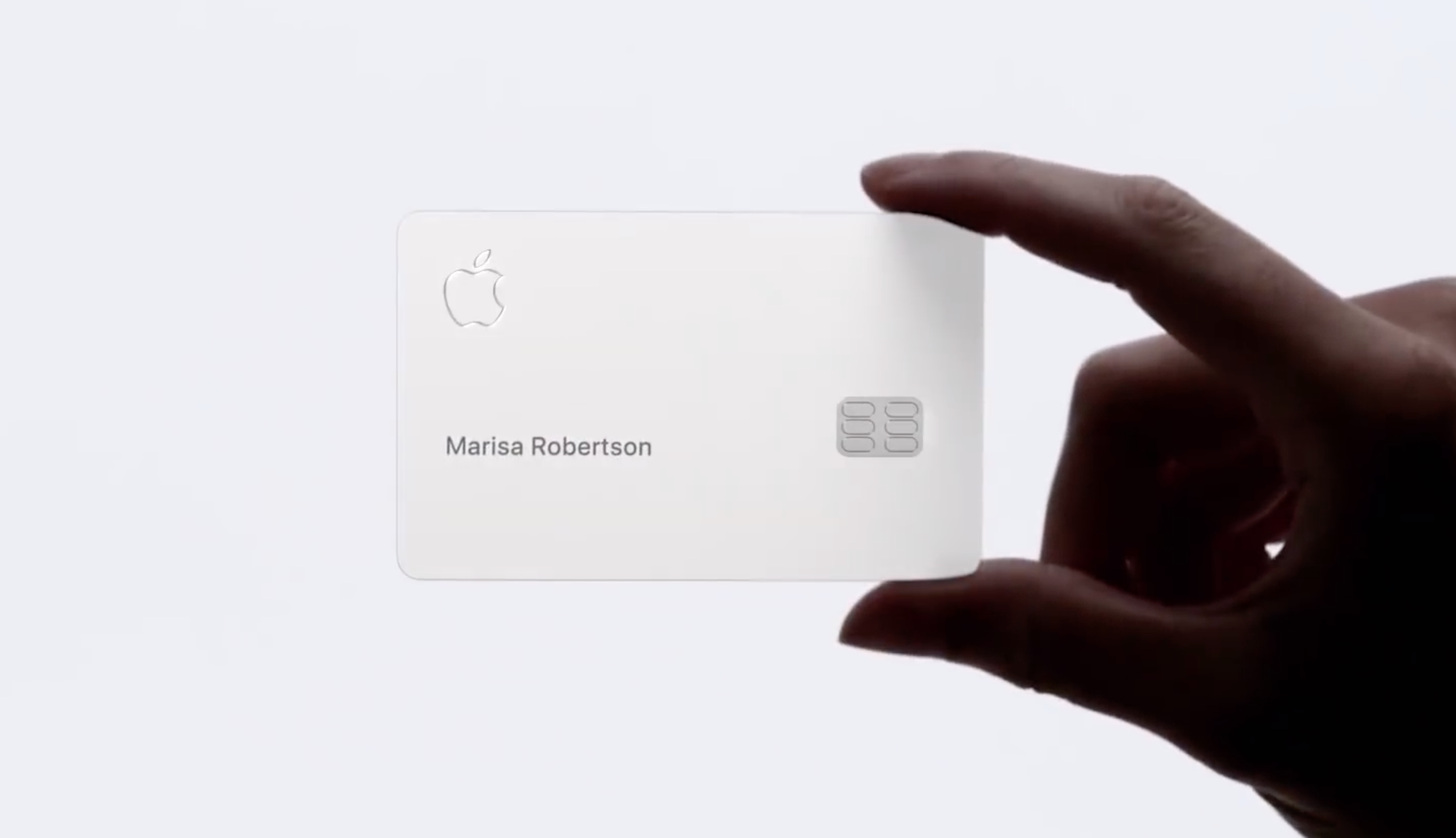
    What’s even cooler is that users will also be able to request a physical credit card, which will be made of titanium and have the user’s name laser-etched. No card numbers, CVV, or expiration dates will be printed on the card, making it that much more secure.
    Apple is creating Apple Card in partnership with Goldman Sachs. As it’ll be using the Mastercard payment network, the card will be accepted worldwide. Card support is going to be handled by Apple directly in a delightful new way: through Apple Messages. Just text Apple with your questions or requests, and the company will respond right there, in Messages. Apple Card will be available this summer in the US. Unfortunately, the company isn’t revealing any details regarding a future international rollout of the service.

    Daily Cash

    With Card, Apple is introducing a welcome new take on the cash back program. It’s called Daily Cash for a reason: you’ll be receiving your cash back amount daily, and you’ll be free to spend it again through Apple Pay, put it towards your Apple Card balance, or send it to family or friends through Apple Messages.
    Customers will be receiving Daily Cash to the tune of 2% on all of their Apple Card payments outside of Apple’s ecosystem. When it comes to Apple’s own stores, like Apple Stores, iTunes or the App Store, the Daily Cash amount will be 3%. And for purchases made using the physical Apple Card, the Daily Cash amount will be 1% of the purchase value.

    Apple helping you have a better financial culture

    Apple is building a number of new features around Apple Card, designed to help you have a better understanding of your spending. For starters, it’ll help you track your purchases more easily by using machine learning and Apple Maps in order to ‘translate’ the names of merchants in your purchases log. You are probably familiar with how merchant names often appear fairly cryptic when you view then through your bank’s web portal or mobile app; with Apple Card, Apple will make sure to have them all clearly labeled so that you’ll immediately know which transaction was made with whom.
    Color coding will also help with the organization of your transactions: products from distinct categories such as Food and Drinks or Shopping and Entertainment will be assigned a different color so that you can immediately find the ones you’re looking for. This, in tandem with the new weekly and monthly spending summaries, Apple hopes will give you a better vantage point over your overall expenditures.
    What’s more, Apple Card will include a tool to help users pay less interest by making their options more transparent. It’ll be suggesting a range of payment options and a handy calculator that estimates the interest cost on different amounts, so that each users can pick the option that suits their budget the best.

    Physical Apple credit card made of titanium

    Apple knows that for customers to fully embrace its payment service, it needs to be universally accepted. So, to let you deal with those merchants that don’t support Apple Pay yet, the company is creating a real, physical credit card with the signature Apple minimalist design. The company hasn’t released some of the technicalities, such as if it’s going to charge you for issuing such a card, but at least we know how it’s going to look like.
    No card numbers, expiration dates, or CVV numbers will be present on the card, making for an extremely clean look, with only the Apple logo and the holder’s name laser-etched onto the titanium piece. Your card’s numbers are, of course, still available: you’ll just have to look them up in the Wallet app on your iPhone.
    Thy physical Apple Card seems like a very appropriate product for international users, where Apple Pay support is still widely lacking, but the company seemingly has no immediate plans to launch Apple Card in markets other than the US at this time.