Tag: mastercard

  • Hong Kong retail sales still sliding

    Hong Kong retail sales still sliding

    Hong Kong retail sales continued to shrink last month with a 5.7 per cent year-on-year decline in sales, according to the MasterCard SpendingPulse Hong Kong Report.

    The MasterCard data precedes the official government retail sales statistics which are due out tomorrow (May 31).

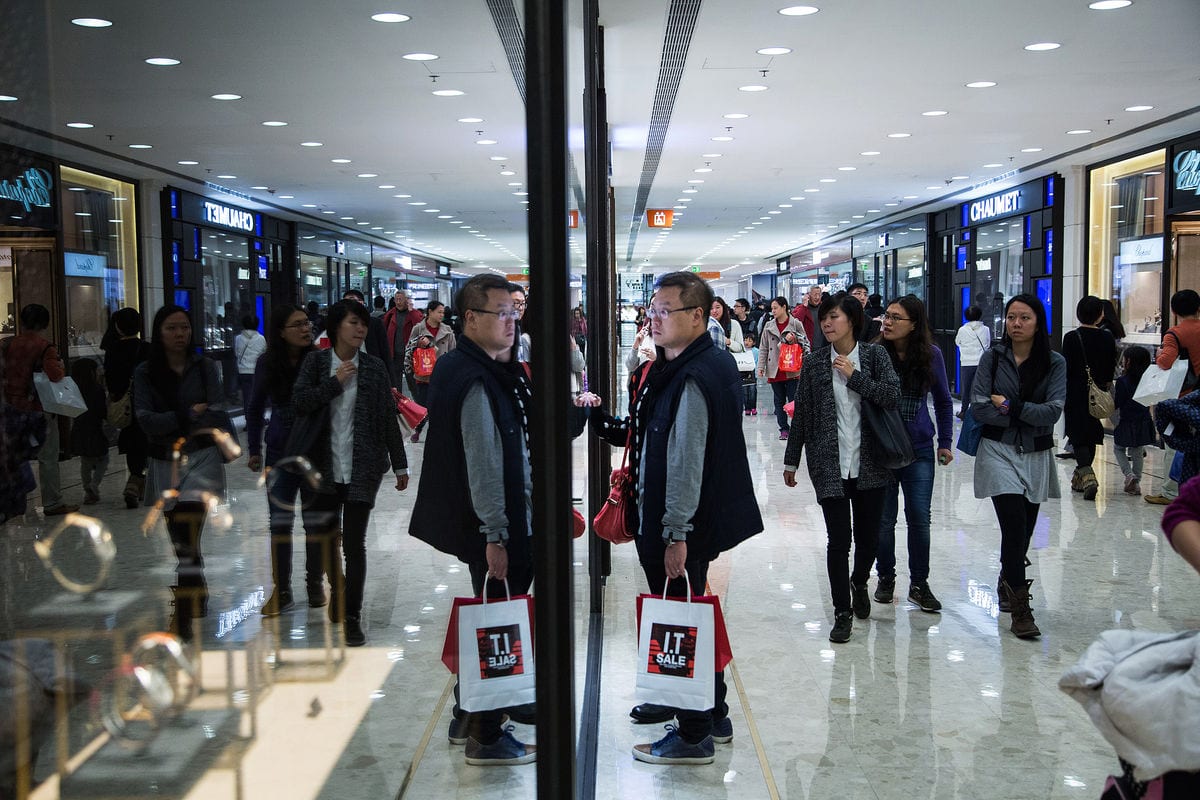
    While the Labour Day Golden Week did boost spending, it was not enough to reverse the fortunes of Hong Kong, which has been hit by the lack of Chinese tourists and subdued local sentiment.

    Clothing and jewellery sales continued to drop, while health and beauty as well as furniture sales had a soft recovery. The grocery sector continued to be positive, as it has been for three months, yet its growth rates cooled off significantly.

    “Continuous slowdown in spending from mainland China, along with stubborn deflation, has led to the unrelenting depressed state of Hong Kong retail since the middle of 2014,” says MasterCard Advisors senior VP for market insights, Sarah Quinlan.

    “Deflation has continued as retailers offer discounts in order to stimulate sales. We expect this contraction to continue as the macroeconomic factors that would increase consumer confidence and spur domestic spending have not yet turned positive.”

    Analyzing local retail performance and spending, the macroeconomic report uses aggregated and anonymous transaction data, along with all other payment forms including cash, to offer insight into consumer spending trends.

  • Pizza Hut Asia to test Pepper the robot

    Pizza Hut Asia to test Pepper the robot

    Pizza Hut Asia and MasterCard have partnered to bring Pepper, SoftBank Robotic’s humanoid robot, to restaurants by the end of this year to enhance in-store customer service.

    Pizza Hut Asia will be piloting Pepper for order-taking and what MasterCard describes as “personalised engagement”. This marks the first commercial application for Pepper, according to MasterCard.

    Pepper, which was unveiled on Tuesday, will be powered by MasterPass, the global digital payment service from MasterCard that connects consumers with merchants, enabling them to make digital payments across channels and devices.

    MasterPass extends the robot’s ability to integrate customer service, access to information and sales into a seamless and consistent user experience.

    “Consumers have come to expect personalised service, customised offers and simple and seamless processes both in-store and online,” said Tobias Puehse, vice president, Innovation Management, Digital Payments and Labs, Asia/Pacific, MasterCard. “The app’s goal is to provide consumers with more memorable and personalised shopping experience beyond today’s self-serve machines and kiosks, by combining Pepper’s intelligence with a secure digital payment experience via MasterPass,” Puehse said.

    Pepper robot Pizza Hut

    A consumer will be able to initiate an engagement by simply greeting Pepper and pairing the consumer’s MasterPass account by either tapping the Pepper icon within the wallet or by scanning a QR code on the tablet that the robot holds. After pairing with MasterPass, Pepper will be able to assist cardholders by providing personalised recommendations and offers, additional information on products, and assistance in checking out and paying for items. Pepper will be able to initiate, approve and complete a transaction by connecting to MasterPass via a Wi-Fi connection and the entire transaction happens within the wallet.

    “We are excited to welcome Pepper to the Pizza Hut family,” said Vipul Chawla, managing director of Pizza Hut Restaurants Asia. “Core to our digital transformation journey is the ability to make it easier for customers to engage, connect and transact with Pizza Hut. With an order-and-payment-enabled Pepper, customers can now come to expect personalized ordering at our stores, reduce wait time for carryout, and have a fun, frictionless user experience,” Chawla said.

    The app was built by the MasterCard Labs team in Singapore, one of the company’s eight research and development centers across the globe. The Pepper application adds to ongoing MasterCard programs that bring payments to any consumer gadget, accessory or wearable – from fitness bands to refrigerators and now robots. The integration with Pepper, MasterCard stated, has the potential to open up opportunities in the world of retail such as personalised shopping and concierge services, in-aisle checkout and the ability to buy in store but get the goods delivered at home. The same capability would also be applicable to other consumer engagement locations such as hotels, banks, airports, and other customer service industries.

    The app is being showcased at the Pepper Partners Europe event hosted by SoftBank Robotics Europe (a SoftBank Robotics Holdings group company) in Paris until May 26.

  • Hong Kong retail sales ‘worst in history’

    Hong Kong retail sales ‘worst in history’

    A MasterCard spending survey released ahead of the official government data this afternoon shows March Hong Kong retail sales declined at the worst rate in the history of the survey.

    “Overall retail sales in Hong Kong contracted by 18.5 per cent year-on-year, reflecting the deepest decline since 2014,” according to the latest MasterCard SpendingPulse Hong Kong Report.

    Clothing and jewellery sales in March dropped by more than total retail sales, while only grocery outperformed overall retail sales. The March results brought the year-on-year Q1 retail sales decline to 11.7 per cent from the same period in 2015.

    Sarah Quinlan, senior VP of market insights for MasterCard Advisors, said the sharp decline was a result of the contraction in spending from Mainland Chinese tourists and in discretionary spending by domestic Hong Kong consumers.

    “The early Easter holiday did nothing to stimulate spending as consumer confidence remains subdued.

    “Overall our outlook for Hong Kong retail sales remains weak as the slowdown in spending from Mainland China continues to negatively impact the Hong Kong retail economy,” said Quinlan.

    Analysing local retail performance and spending, the macroeconomic report uses aggregated and anonymous transaction data, along with all other payment forms including cash, to offer insight into consumer spending trends, providing an early overview of market indices to help retailers, investors, card issuers, banks and government agencies in their decision-making processes.

    Launched by MasterCard Advisors, a unit of MasterCard, the SpendingPulse report is available to subscribers the third week of every month and shares quality insights on consumer spending. The monthly report also includes an overall retail sales and price index, so that subscribers can understand whether spending growth is truly being driven by increased shopping or by inflation or increased promotions.

    SpendingPulse is currently available to subscribers in Australia, Brazil, Canada, Hong Kong, Japan, the UK and the US, and is delivered ahead of retail spending figures provided by other sources. It is one of the most quoted reports on macroeconomic trends in the US and is often used as a source of reference by major international news outlets.

    In preparing the report, MasterCard analyses the transactions processed by the MasterCard Hong Kong payments network and uses statistical models which take into account the trends of other payment methods (cash) to produce accurate and efficient reports.

  • Deals just got personal

    Deals just got personal

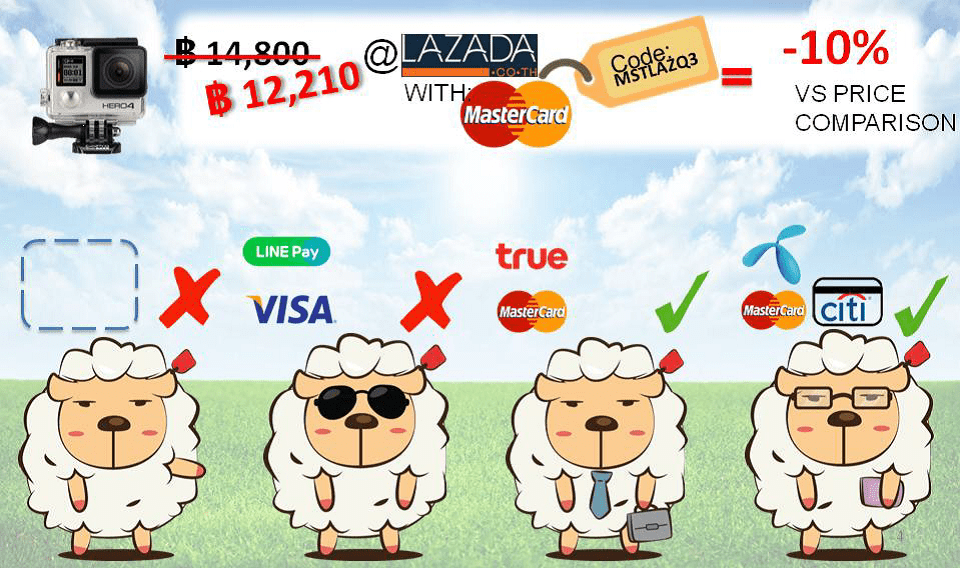
    A GoPro costs the same for everyone? Wrong. Having a MasterCard might easily save a shopper additional 50 dollars on the best price. Because with many big online-shops like Lazada, that MasterCard allows the shopper to use special coupon codes for an extra discount.

    “In the last 6 months, we have slowly seen the death of the one big “blockbuster deal” for everyone.”, explains Dealsheep co-founder David Appold. “More and more, the best deals and promotions are restricted: You can only get them if you fulfill certain conditions.” Needing a master card is just one possibility; extra savings might also hinge on whether you have phone provider A rather than phone provider B, an account with a specific bank, or having installed payment apps like LINE Pay on your phone.

    ds 2

    Online shopping used to be so simple: Price comparison found best deal for everyone.

    The downside: Finding the best deal has become a lot more complex. “Instead of just comparing the prices at different shops, shoppers now need to take into account which promotions and coupon codes they can and cannot use.”, said Pomme Upaiboon, co-founder and head deal hunter at dealsheep.com.

    But people are unique and so is the “best deal”: It might look different from one person to the next.

    The startup’s solution: Help users figure out which deals are available to them personally. “The best and cheapest deal does not help you, if you do not actually have meet the conditions for buying it.”, added Ms. Upaiboon. “So we figured we should give our users an easy way to see which deals work for them.”

    “For the user it is actually quite simple.”, explained Mr. Appold. “They set up what we call their ‘privilege portfolio” on our platform: The credit cards, bank accounts, and phone providers they have. That takes around 30 seconds.

    From then on, we do the rest and know exactly which deal works for the user and can tell him or her which discount coupon code and shop is the cheapest for the product they want. Of course, we do not need their actual credit card numbers and other personal information. All we need to know is whether they have that MasterCard or dtac phone or not, because that is what determines which coupon codes work for them.”

    Keeping track of all relevant coupon codes and their conditions can be overwhelming.

    The startup first premiered the new feature during the Mobile Challenge Asia Pacific (MCAP) held on Hawaii, USA, where the team represented Thailand. Since then the team has refined the feature which appears to be new-to-the-world and has so far not even been attempted by more mature players in the deal hunting and coupon code space in the US and elsewhere. Dealsheep plans to go live with the deal personalization within May.

  • MasterCard launches Contactless Card in Myanmar

    MasterCard launches Contactless Card in Myanmar

    The latest of MasterCard’s efforts to better serve the people of Myanmar, the CB EasiTravel Prepaid MasterCard Contactless card provides consumers with a more convenient way to pay when travelling abroad without compromising security.

    U Kyaw Lynn, CEO and Vice Chairman, CB Bank said, “More Myanmar citizens are making trips to neighbouring countries than ever before, buoyed by the recent relaxing of entry visa restrictions. This trend will continue as the economy grows and gains traction. CB Bank is always looking for ways that will bring convenience to Myanmar travellers. CB Banks’s newly issued MasterCard Contactless card will give added convenience when making payments internationally.”

    Latest projections by the International Monetary Fund put Myanmar’s economic growth at around eight per cent for 2016. As well as seeing a growth in outbound tourists, inbound tourism is set to significantly contribute to Myanmar’s growth in the coming years.

    According to the inaugural MasterCard Asia Pacific Destination Cities Index launched earlier this year, Myanmar’s former capital Yangon is expected to see very strong growth in inbound tourism. Of the 167 cities ranked, Yangon has the third highest compound annual growth rate of 45.7 per cent for total inbound tourist expenditure over the period 2009-2015, just behind Kandy of Sri Lanka (47.3 per cent) and Okinawa of Japan (49 per cent).

    Antonio Corro, Country Manager, Thailand and Myanmar, MasterCard said, “Earlier this month, it was announced that four foreign banks were issued preliminary approval to operate in Myanmar. It is great to see the government taking further steps toward opening up Myanmar’s economy and we are optimistic that this will provide an excellent foundation for commerce to thrive. The people of Myanmar are also optimistic about the future of their country. MasterCard’s latest MasterCard Index of Consumer Confidence recently revealed that people in Myanmar have the most positive outlook on the future of any Asia Pacific market. With the launch of the first MasterCard contactless card in the country, we are continuing to develop the local payment landscape and look forward to more partnership opportunities that allow us to further financially empower the people of Myanmar.”

    Currently, more than 2,800 restaurants, retail outlets and hotels in Myanmar accept payment card

    According to MasterCard’s latest research, 61 per cent of people in Myanmar (also known as Burma) are seeking to travel abroad more in the next 12 months, a stark increase from just 25 per cent two years ago. To meet this growing demand for travel and cross-border spending, MasterCard together with Co-operative Bank Ltd (CB Bank) have launched the CB EasiTravel Prepaid MasterCard Contactless card.

  • WeChat launches mobile wallet service in Hong Kong

    WeChat launches mobile wallet service in Hong Kong

    WeChat has launched its payment service WeChat Pay in Hong Kong, including the new Wallet in-app payment feature.

    Wallet allows WeChat users to connect their MasterCard or Visa credit cards with their accounts to allow them to pay for products and services without having to exit the WeChat app.

    Users will be prompted to create a six digit PIN that must be input before any payment is authorized.

    Wallet currently supports payment for tickets, transportation services and travel products, and more product and service categories will be added soon.

    WeChat has partnered with local merchants to offer Hong Kong users exclusive promotions and campaigns over the messaging service.

    “We are so excited to bring WeChat Pay, a new mobile experience that allows users to pay on the go in the simplest way, to Hong Kong,” commented Norman Tam, head of the Hong Kong and Taiwan office of WeChat owner Tencent‘s international business group.

    “Customized for Hong Kong users, WeChat Pay provides a seamless and secure payment experience to users while providing our partners with the benefit of a direct connection to WeChat’s massive community that other payment platforms cannot provide. This is truly a triple-win for us all.”

  • MasterCard and IBM make Big Data available to small retailers

    MasterCard and IBM make Big Data available to small retailers

    IBM and MasterCard have partnered to offer smaller retailers real-time, analytics-based market insights on revenue, market share, customer demographics and competitors.

    The solution integrates IBM Watson Analytics with insights based on aggregated and anonymous MasterCard transaction data through MasterCard Advisors Local Market Intelligence (LMI).

    The data will be available to retailers who accept MasterCard – on subscription – from mid-2016 for specific locations or across multiple locations for those with store networks.

    Eric Schneider, senior VP with MasterCard Advisors, says there is an increasing wealth of data today that merchants can leverage to better understand their market and customers.

    “However, smaller merchants often don’t have the resources to maximise the insights. That’s the value of this platform turning Big Data into smarter data that is easily accessible and actionable.”

    Yashesh Kampani, financial services sector leader with IBM ASEAN, says the service will help smaller merchants understand their business and competition better, and increase the strength and value of their customer relationships.

    “Through this new service, merchants will discover just how easy leveraging Big Data can actually be with the analytical tools that IBM and MasterCard are making available.”

    IBM says the Watson Analytics data discovery tool is designed to deliver cloud-based guided analytics, data visualisation and predictive analytics “without complexity”.

    With its natural “language-based cognitive abilities”, Watson Analytics recommends starting points for the user to follow based on his questions and automatically serves up insights and visualisations that enable the user to discover new patterns in their data such as customer buying and behaviour trends and untapped campaign opportunities.

  • South Korea’s card spending jumps 16 pct in Jan.

    South Korea’s card spending jumps 16 pct in Jan.

    South Korea’s card spending rose sharply in January, data showed Friday, on the back of increased consumption for the Lunar New Year holiday and a gradual recovery in domestic demand.

    Purchases made with plastic cards reached 56.1 trillion won (US$45.4 billion) last month, up 15.9 percent from a year earlier, according to data compiled by the Credit Finance Association (CREFIA).

    The data includes transactions on credit, debit and prepaid cards. Cash advances, overseas spending and card loans were not included.

    Of the amount, credit card spending went up 15.9 percent on-year to 44.79 trillion won, while those of debit cards advanced 16.2 percent to 11.2 trillion won over the cited period, according to the data.

    “This year, the new year holiday started earlier than last year, which mainly led to the growth in January’s credit card spending,” a CREFIA official said.

    The retail sector, including department stores and big retail chains, enjoyed a 20.4 percent surge in credit spending on-year to 6.7 trillion won, the data showed.

    In particular, purchases made by credit cards in convenience stores spiked 56 percent thanks to the increase in small families and the solid growth in sales of their private-brand products, according to the association.


  • China quick to adopt digital wallets

    China quick to adopt digital wallets

    Nearly half of consumers in China who took part in a new survey shop with digital wallets.

    Overall, the study shows that digital wallets are the fastest-growing payment technology in the region, with one in five of those surveyed using the technology.

    MasterCard’s latest mobile shopping survey shows that digital wallets are used by 19.5 per cent of respondents in Asia Pacific, a two-fold increase from two years ago (9.7 per cent).

    Emerging markets are leading the way with 45 per cent of smartphone users surveyed in China using digital wallets, 36.7 per cent in India and 23.3 per cent in Singapore. The results are based on interviews with 8500 people aged between 18 and 64 years across 14 markets in October and December.
    While mobile banking apps (31.8 per cent) are still the most widely used, among new mobile technologies such as in-app shopping and mobile NFC payments, digital wallets have had the fastest uptake over the past two years.
    Also, 48.5 per cent of respondents overall have used their smartphone for shopping in the three months before the survey. India tops the region at 76.4 per cent – up 29.3 per cent from two years ago – followed by China (76.1 per cent), South Korea (62 per cent) and Thailand (61.1 per cent). After India, growth has been most marked in Vietnam (up 17.7 per cent from two years ago) and Singapore (up 17.1 per cent).
    “New forms of mobile payment technology, such as MasterCard’s digital wallet MasterPass, are making transactions easier and safer, online, in-app and in-store,” says MasterCard’s Asia Pacific group head for digital payments, Raj Dhamodharan. “As more and more merchant apps provide shopping and services, consumers need a digital wallet that provides the best balance between security and convenience.”

    For example, consumers in Singapore are using their MasterPass wallet to pay bills and book taxis.
    Across Asia Pacific, 53.9 per cent of respondents cite convenience as the key driver for shopping on their smartphone. Other motivating factors include the ability to shop on the go (42.9 per cent) and the growing availability of apps that make it easy to shop online (41.4 per cent).
    Clothing and accessories (35 per cent), personal care and beauty products (20.9 per cent) and movie tickets (20.4 per cent) are the top mobile purchases. In China, 64.6 per cent of respondents use their smartphones to buy clothing and accessories, followed by 42.5 per cent in India and 42.1 per cent in Korea.

    Nearly half of consumers in China who took part in a new survey shop with digital wallets.

    Overall, the study shows that digital wallets are the fastest-growing payment technology in the region, with one in five of those surveyed using the technology.

    MasterCard’s latest mobile shopping survey shows that digital wallets are used by 19.5 per cent of respondents in Asia Pacific, a two-fold increase from two years ago (9.7 per cent).

    Emerging markets are leading the way with 45 per cent of smartphone users surveyed in China using digital wallets, 36.7 per cent in India and 23.3 per cent in Singapore. The results are based on interviews with 8500 people aged between 18 and 64 years across 14 markets in October and December.
    While mobile banking apps (31.8 per cent) are still the most widely used, among new mobile technologies such as in-app shopping and mobile NFC payments, digital wallets have had the fastest uptake over the past two years.
    Also, 48.5 per cent of respondents overall have used their smartphone for shopping in the three months before the survey. India tops the region at 76.4 per cent – up 29.3 per cent from two years ago – followed by China (76.1 per cent), South Korea (62 per cent) and Thailand (61.1 per cent). After India, growth has been most marked in Vietnam (up 17.7 per cent from two years ago) and Singapore (up 17.1 per cent).
    “New forms of mobile payment technology, such as MasterCard’s digital wallet MasterPass, are making transactions easier and safer, online, in-app and in-store,” says MasterCard’s Asia Pacific group head for digital payments, Raj Dhamodharan. “As more and more merchant apps provide shopping and services, consumers need a digital wallet that provides the best balance between security and convenience.”

    For example, consumers in Singapore are using their MasterPass wallet to pay bills and book taxis.
    Across Asia Pacific, 53.9 per cent of respondents cite convenience as the key driver for shopping on their smartphone. Other motivating factors include the ability to shop on the go (42.9 per cent) and the growing availability of apps that make it easy to shop online (41.4 per cent).
    Clothing and accessories (35 per cent), personal care and beauty products (20.9 per cent) and movie tickets (20.4 per cent) are the top mobile purchases. In China, 64.6 per cent of respondents use their smartphones to buy clothing and accessories, followed by 42.5 per cent in India and 42.1 per cent in Korea.

  • MasterCard says Australian retail sales ‘worrisome’

    MasterCard says Australian retail sales ‘worrisome’

    MasterCard’s Sarah Quinlan says a cooling property market is hitting retail sales. Australian retail sales will rise in 2016, but slowing wages growth and a cooling property market here and in China is dampening growth. That’s the prediction based on MasterCard’s first monthly analysis of millions of card payments made on card terminals.

    It began tracking retail sales in Australia last year based on all transactions at terminals and claims this gives more accurate data than that provided by the Bureau of Statistics, which relies on surveys.

    MasterCard’s first monthly survey of payments in Australia predicts retail spend will drop further. Photo: Jim Rice

    Sarah Quinlan, MasterCard’s New York-based senior vice-president of market insights, said retail sales year-on-year in Australia grew 3.2 per cent in value in January compared to a year earlier.

    Year-on-year sales growth in January 2015 was running at about 6 per cent.

    She said growth at the moment is due to inflation because of a depreciating Australian dollar and the trend down is being driven by real wages growth declining. This has been reinforced by house prices cooling because regulators have capped investor lending.

    A big slowdown in spending by Chinese tourists and investors is the other main factor which is hitting all countries.

    “You could have absolutely predicted the real estate outcome,” she said. “There’s two things I watch in spending; I watch consumer confidence and wage growth.”

    MasterCard's first monthly survey of payments in Australia predicts retail spend will drop further.

    Growth due to importing inflation

    In the US, she said, wage growth has been poor, but consumer confidence is higher than in Australia now.

    “They are absolutely confident they are going to hold their job now or they can find a job if they want to switch. It is the opposite of what’s happening here,” Ms Quinlan said.

    “While you still have a positive growth rate in your spending in Australia, it is of a worrisome nature because it is more due to importing inflation due to a 35 per cent drop in the Australian dollar [versus the US dollar] since 2012.”

    The pullback of Chinese money, she said, is due to a property bubble there and numerous senior officials being hit with corruption allegations.

    “We can tie exactly back to the day back in August 2013 that [politician] Bo Xilai was arrested for corruption and there’ve been 100,000 people arrested for corruption subsequently. So they are just not showing their wealth now,” she added.

    “And this debt bubble up there is huge right now, it makes ours pale by comparison. By our calculations around 75 per cent of the economy in China is owned by state-owned enterprises. So the state has been running this huge bubble.”

    As well as Australia, MasterCard produces a monthly report called SpendingPulse based on 160 million transactions per hour on its network for the US, Japan, Canada, Brazil, Hong Kong and Britain.

  • 2C2P helps Myanmar revolution

    2C2P helps Myanmar revolution

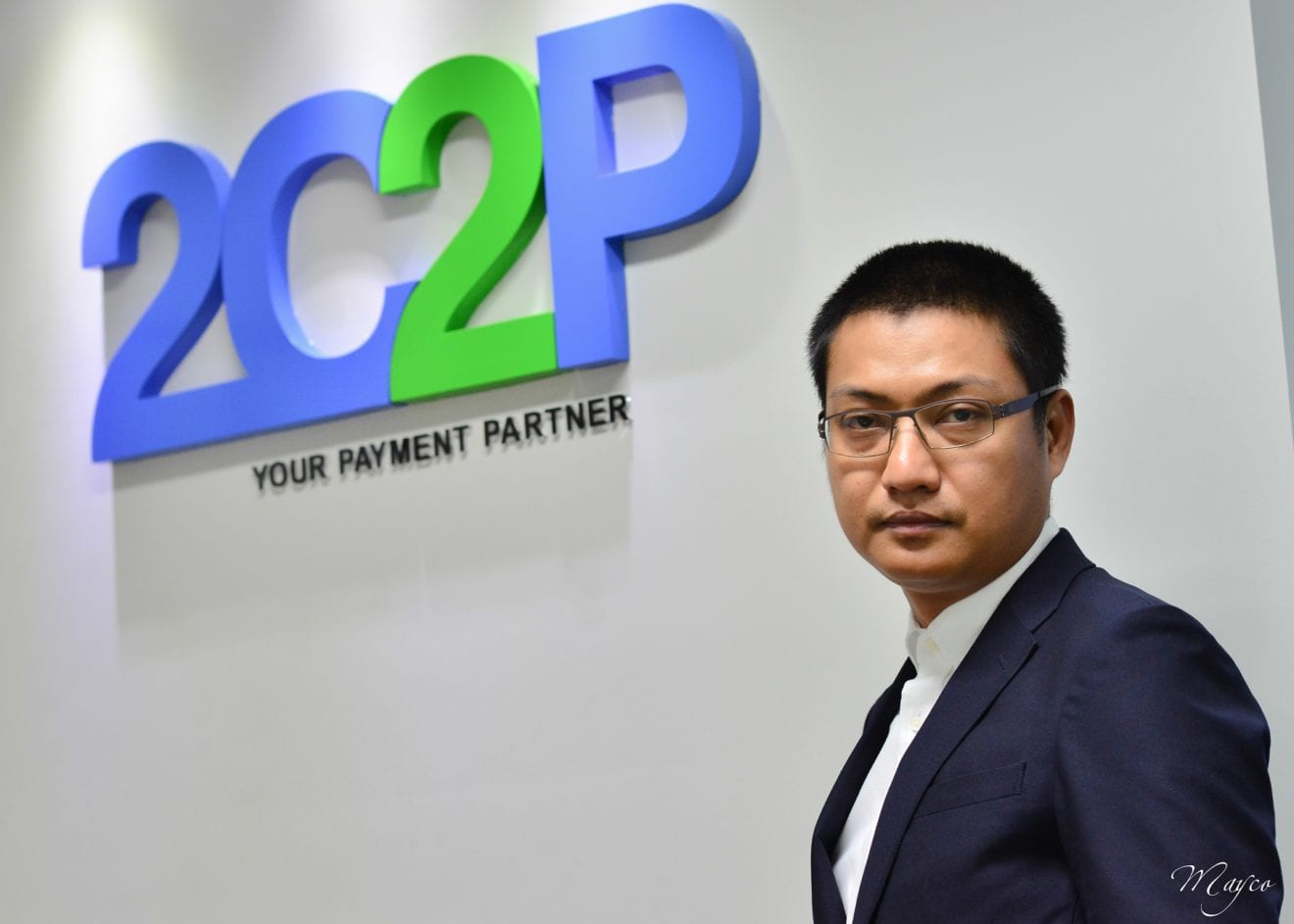
    Southeast Asia payments company 2C2P of Singapore, with its Burmese founder and CEO Aung Kyaw Moe, has taken a step to modernise Myanmar’s economy with the country’s first co-branded debit card so its citizens can shop with international merchants.

    The new UnionPay and Myanmar Payments Union (MPU) co-branded debit card is being introduced along with the launch of 1-Stop, a cash acceptance network of sellers and buyers, bringing digital commerce to Myanmar, especially helpful for its rural communities. Also a partner of the debit card is Myanmar’s Asia Green Development Bank (AGD Bank).

    Anyone in Myanmar can now set up a microbusiness to sell goods and services online. Domestic transactions are processed by MPU, while international transactions go through UnionPay International, which is recognised by more than 4000 merchants domestically and more than 26 million across 150 countries, as well as at 1.8 million ATMs internationally.

    MPU is Myanmar’s national payment network, authorising the issuance and acceptance of all payment cards within the country, of which there are more than 1.2 million. With UnionPay International, a subsidiary of China UnionPay, cardholders can shop with international merchants for the first time. UnionPay is the largest global payment card company with more than five billion cards issued.

    Myanmar is expected to quadruple the size of its economy from $45 billion in 2014 to $200 billion by 2030 (McKinsey), with a reboot of its cash-based economy seen as the key to growth. This will be driven by Myanmar’s young population (47 per cent of its 51.4 million citizens are 24 years old or younger). The World Bank pegs Myanmar’s annual growth rate as leading Asia at 8.3 per cent annually between 2014 and 2017.

    Myanmar’s millennials are also responsible for the country’s spike in outbound tourism. This sector grew from $29 million in 2002 to $257 million in 2012, a rise of 24 per cent, according to the World Trade Organisation.

    “2C2P is committed to support Myanmar’s financial institutions,” says CEO and founder Aung Kyaw Moe. “We do this by bridging the gap between local and international infrastructure.

    “We bring our robust platform, as well as our experience and knowledge in international payments, making it possible for Myanmar’s banking and financial institutions to innovate – offering new services that leapfrog legacy financial technologies.”

    AGD Bank customers can download an app to manage card transactions in real time with online support. A loyalty program offers discounts and privileges from more than 4000 merchants domestically, across food and beverage, retail, hospitality, and travel and tourism.

    “We are committed to innovate, offering Myanmar’s young, fast-growing and connected population the financial services that meet their evolving needs,” says AGD Bank chairman U Than Ye.

    Meanwhile, 1-Stop’s network has more than 3000 locations through 2C2P’s strategic partnerships with the country’s largest distribution network for the agriculture sector Myanmar AWBA Group, retail and convenience store chains Capital Hyper Mart and Grab & Go, mobile stores eCity, Lu Gyi Min andMr.Fone, as well as independent stores.

    It is aiming to contribute to modernising the economy through its online-to-offline commerce approach in a market with relatively high smartphone penetration but limited e-payment infrastructure.

    Myanmar is the fourth-fastest growing mobile market globally, according to Ericsson. In the third quarter of last year, it accounted for nearly 6 per cent of the world’s 87 million new mobile subscribers. Research firm Ovum estimates mobile subscriptions in Myanmar grew by 87.4 per cent in 2014 to 10.7 million. This is forecast to grow at a 21 per cent compounded annual growth rate to reach 38.5 million by the end of 2019 as networks expand to rural areas.

    Last year, 2C2P also launched easyBills, the country’s first online bill-payment system. Previously, along with Myanmar Citizens Bank, 2C2P launched the Citizen Card, a reloadable prepaid card accepted by MasterCard and merchants globally.

    2C2P has offices across Southeast Asia, including Cambodia, Indonesia, Laos, Malaysia, Myanmar, Singapore, Thailand and The Philippines, as well as in Hong Kong.

  • MasterCard to take payments by wearable devices

    MasterCard to take payments by wearable devices

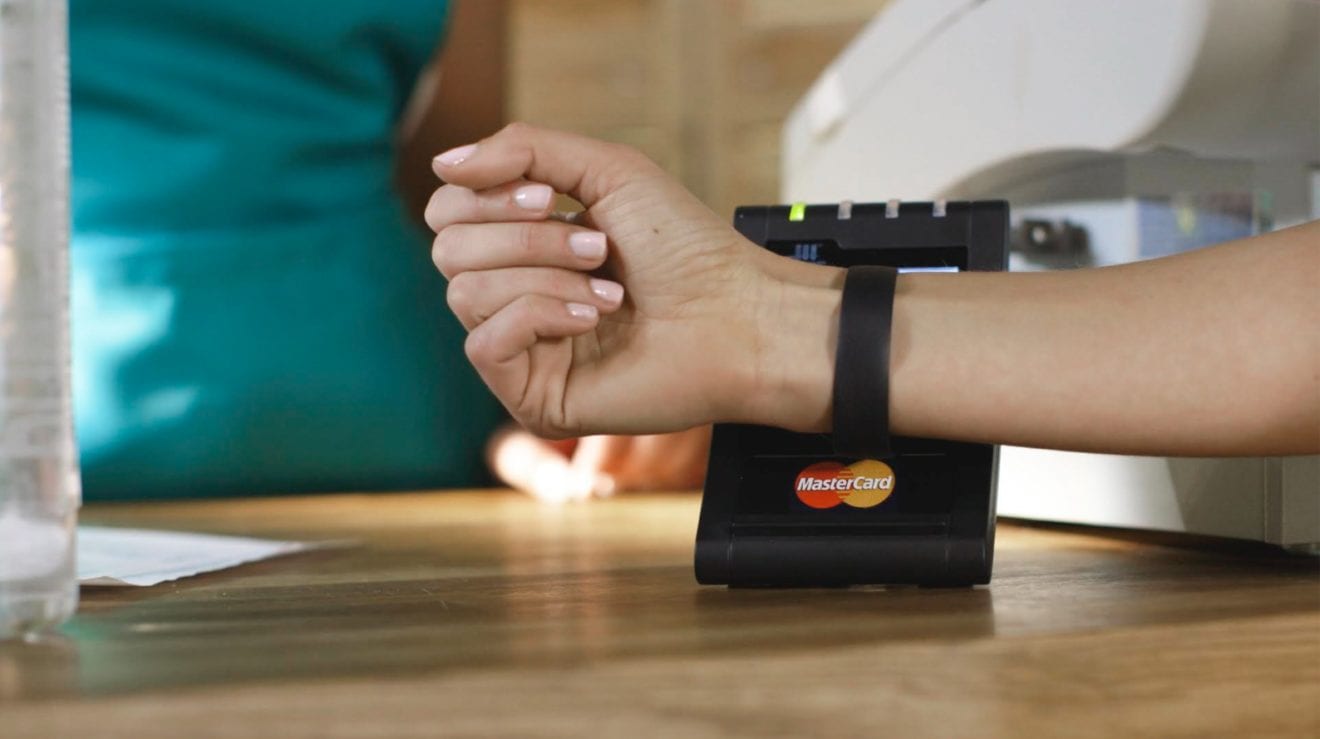
    MasterCard and secure payments company Coin have teamed up to make the credit card available for buying a wide range of fitness bands, smartwatches and other wearable devices.

    This collaboration builds upon the MasterCard announcement in October of its Commerce for Every Device program, aimed at enabling any consumer gadget, accessory or wearable to become a payment device.

    Atlas Wearables, which designs advanced fitness trackers, Moov, a personal fitness coach on your wrist, and smartwatch manufacturer Omate are the first set of companies working with MasterCard and Coin to include payment technology in their products.

    “We are adding payment functionality to items that consumers are already using – fitness bands, jewellery, clothing, watches,” says MasterCard’s senior vice-president for digital payments, Sherri Haymond.

    “This makes the products more useful for consumers and enhances the value device manufacturers can deliver to their customers. Coin complements that approach and enables us to reach an expanded set of device partners.”

    Coin will provide hardware and software technology for embedding MasterCard payments into devices.

    “Coin’s Payment of Things platform is a turnkey solution to enable payments for the wearable device industry,” says Coin co-founder and CEO Kanishk Parashar.

    “By leveraging Coin’s technology, device manufacturers will benefit from significantly reduced costs and time to market.”

    He says the wearable domain is projected to grow to $53 billion by 2019.

  • MasterCard online identity checks enhanced

    MasterCard online identity checks enhanced

    MasterCard has introduced a new online Identity Check, a suite of technology solutions that use advanced technologies to prove a consumer’s identity and simplifies the online shopping experience.

    The credit card system provider says existing methods to prove the identity of online shoppers often take consumers away from a retailer’s website, adding to the time it takes to shop online, too often leading to payments being declined or cart abandonment.

    MasterCard says Identity Check “will put identity verification at the cardholder’s fingertips” using technologies such as biometrics and SMS-delivered one-time passwords.

    “Today, people shop on all sorts of devices, and they expect technology to simplify and secure the transaction,” said Ajay Bhalla, president of Enterprise Security Solutions, MasterCard. “This is exactly what Identity Check delivers.”

    MasterCard Identity Check represents a shift in strategy from a reliance on what the consumer knows (passwords), to what they have (mobile phone or other smart device) and who they are (biometrics). Hundreds of cardholders in the Netherlands began using biometric-enabled payments last month, while a similar trial is also underway in the US.

    US financial institutions can choose to participate in MasterCard Identity Check beginning in the middle of 2016, with a global expansion in 2017.

    MasterCard research shows 53 per cent of shoppers forget crucial passwords more than once a week, losing more than 10 minutes when they reset their accounts. People in Singapore estimate that they lose more 15 minutes every time they have to reset a forgotten password.

    “As a result, more than a third of people abandon an online purchase, while six in 10 said it led to missing a time-sensitive transaction like buying concert tickets, and more than one in two in Australia and Singapore have been locked out of a website because of this,” MasterCard reports.

    On average, people have to enter passwords eight times per day for the 10 different online accounts or applications they regularly use every week. People in Japan and India enter passwords 11 and nine times a day, respectively, above the global average.

    More than one in five people use the same password for everything, while a further 58 per cent rely on only a few different variations – despite warnings it puts them at greater risk from fraud. In Singapore, nearly one in three people use the same password for all their accounts.

    Globally, more than half of people want to see passwords replaced by something more convenient, while continuing to deliver the same levels of protection and peace of mind.

  • Asia travel spending trends revealed

    Asia travel spending trends revealed

    Hong Kong consumers continue to be the most well-travelled tourists in Asia Pacific, with 84 per cent of respondents having travelled internationally for leisure during the past 12 months.

    That’s well above the regional average (41 per cent) and ahead of Singapore (80 per cent) and China (74 per cent).

    According to the latest MasterCard survey on Consumer Purchasing Priorities, during international leisure travel, Hongkongers spent an average of around HK$12,895 per person per trip, compared to $13,412 in the second half of 2014. The biggest share of travel expenditure remains transportation (26 per cent), followed by accommodation (23 per cent) and eating out (17 per cent). Despite a drop in travel spending, more than eight in 10 international travellers (86 per cent) planned to travel more or the same level in the next 12 months, second only to China (92 per cent) in the region.

    Dining out is a common habit among local consumers in Hong Kong. Almost all respondents (99 per cent) ate out in the past six months, while 94 per cent  intended to dine out the same or more in the next six months, ranking number one in the region together with China (94 per cent). Before dining, they tended to seek credit card promotions (44 per cent), feedbacks from acquaintances (44 per cent) and online reviews of dining outlets (43 per cent) while more than two-thirds of respondents (69 per cent) asked if there was any credit card promotion when paying the bill.

    Hong Kong consumers are big fans of luxury shopping, with 75 per cent of respondents planning to spend more or the same on luxury goods in the coming year, ranking number two in Asia following China (77 per cent). While China ($38,126) remains the biggest spender on luxury goods, Hong Kong secures its fourth place in the regional chart with an average intended spending of $23,845 in the next 12 months, after Japan ($32,253) and Korea ($25,771). While designer clothes and leather goods (29 per cent) are the most desirable items among local consumers, there is also significant preference for jewelry (23 per cent) as well as designer accessories and footwear (23 per cent).

    The survey also studied the saving behavior of Hongkongers, among whom 91 per cent intended to save the same or more in the next six months. Although spending on overseas holidays (48 per cent) was claimed to be the first item cut back in the event of a loss of household income, it is also the top spending priority of local households if they receive additional monthly income. Compared to Taiwan (86 per cent) and Singapore (83 per cent), only 74 per cent of local parents in Hong Kong regularly saved for their children’s education while the average proportion of monthly household income saved to serve this purpose was 12 per cent, slightly below the regional average (13 per cent).

    Other findings about Asian travel spending include:

    • Japan (67 per cent), South Korea and Taiwan (both 44 per cent) remain the top three travel destinations in the next 12 months.
    • Airline websites (54 per cent), travel agents (52 per cent) and coupon sites or applications (40 per cent) are the most preferred sources of travel information and deals among local travellers.
    • The most visited dining places among local consumers are fast food restaurants (79 per cent), mid-range family restaurants (76 per cent) and food courts (73 per cent).
    • Cash is generally used for purchases at fast food restaurants and food courts where meals tend to cost less than $300.
    • Millennials (18-29 years old) from China intend to spend on average $34,024 on luxury goods over the next year, significantly more than the Asia Pacific average of $20,155.
    • Promotions play a significant role among online shoppers in Hong Kong, with 74 per cent of respondents claiming to buy luxury goods on websites that offer discounts.
    • Hongkongers (32 per cent) are less interested in attending education courses in the next 12 months than those in China (42 per cent) and Taiwan (36 per cent).
  • Chinese millennials: the new big spenders

    Chinese millennials: the new big spenders

    Chinese millennials – China’s new rich – are looking to spend double the Asia-Pacific average on luxury items in the next year.

    The millennials – those aged 18 to 29 – are already China’s biggest spenders on luxury goods in Asia Pacific, followed by those in South Korea and Hong Kong.

    According to research from MasterCard, the most popular luxury items are high-end tech gadgets, with 25 per cent of millennials in Asia Pacific planning to buy an item such as a smartphone or tablet computer in the next year. This is followed by designer clothes and leather goods (17 per cent) and jewellery (17 per cent).

    Overall, most millennials in the region take approximately a month to consider and research their luxury purchases. More millennials in Asia Pacific (a quarter) buy on impulse than those aged over 30 (a fifth).

    Meanwhile, over a third of millennials in the region prefer Western brands over regional or local, however there is a marked difference across the region. While more than half of millennial shoppers in China, Vietnam, South Korea and Hong Kong prefer Western brands, the majority in India and Indonesia would rather buy local. The top three reasons for preferring Western brands were reliability of quality, followed by value for money and brand loyalty.

    When choosing where to buy luxury goods from, the majority of millennials still prefer purchasing from local brick and mortar stores (64 per cent), instead of local eCommerce sites (nine per cent). Meanwhile a fifth prefer to buy luxury items in-store when travelling overseas, this is especially true of Chinese millennials, 51 per cent of whom are most likely to buy a luxury item in-store while travelling.

    The results are based on interviews that took place between May and June 2015 with 2272 millennials across 14 Asia Pacific markets.

    More findings:

    • Millennials from China intend to spend on average US$4362 on luxury goods over the next year, nearly double that of the Asia Pacific average of US$2584. South Korea (US$2638) and Hong Kong (US$2584) round off the top three.
    • Overall, the majority of millennials in the region will take under a month to research and consider a luxury item before buying it (44 per cent), led by those in India (64 per cent), China (51 per cent), South Korea (48 per cent) and Taiwan (48 per cent).
    • Thai (60 per cent) and Indonesian (50 per cent) millennials are the most impulsive shoppers in the region with at least half buying luxury goods on impulse, above the regional average of 26 per cent.
    • The most careful millennial shoppers are from Vietnam – the majority will only buy a luxury item after two to six months of extensive research (45 per cent), more than the regional average of 20 per cent.
    • Over one-third of millennials across the region prefer western brands to local and Asian brands. More than one in two millennials in China (66 per cent), Vietnam (60 per cent), South Korea (59 per cent) and Hong Kong (52 per cent) would pick a western luxury brand over a local or Asian luxury brand. However, in Indonesia (61 per cent) and India (50 per cent), a large majority of millennials would rather buy luxury goods from a local brand.
    • Most millennials in the region purchase luxury goods in-store rather than online – this is especially so when they are on sale locally (43 per cent) compared to when they are at full price (23 per cent). Only a small percentage of millennials in the region shop for luxury goods on local (nine per cent) and overseas sites (four per cent).
    • Chinese millennials are the most likely to buy luxury goods in-store when travelling overseas (51 per cent), whereas the majority of consumers in India (81 per cent) and Indonesia (50 per cent) buy luxury goods locally in-store at full price.
    • Millennials in Indonesia are the most likely to spend more on luxury goods in the next year than the year before (47 per cent). Across Asia Pacific, most consumers (40 per cent) intend to spend the same amount as they did the year before, 22 per cent plan to spend less while 19 per cent plan to spend more.