Tag: mastercard

  • Avid Myanmar Travelers Can Now Pay with Mastercard and CB Bank Credit

    Avid Myanmar Travelers Can Now Pay with Mastercard and CB Bank Credit

    As Myanmar continues to see positive economic growth projections[1], its people are increasingly seeking overseas destinations. The latest Mastercard research revealed that Myanmar is the fastest growing outbound travel market in Asia Pacific with a growth projection of 10.6% for the next five years.

    In light of this, Mastercard has once again partnered Co-operative Bank Ltd (CB Bank) to launch Classic, Gold and Platinum Mastercard cards, which will be made available to Myanmar residents and citizens when traveling abroad. 

    Mr. Kyaw Lynn, Executive Vice Chairman and CEO of CB Bank said: “As more Myanmar residents and citizens travel abroad, it is crucial to have convenient and secure access to their funds wherever they are. A cashless society is an important goal for CB Bank. Although still a work in progress, we are working hard with like-minded partners such as Mastercard to achieve that goal by expanding the payment options, increasing usage of ATMs, POS terminals and enhancing e-commerce capabilities. For starters, we are already seeing a great shift from cash to electronic payments. And on average, there are 9,000 transactions being made monthly via electronic payment at the point-of-sale.”

    Mr. Antonio Corro, country manager, Thailand and Myanmar, Mastercard, said: “For a country that had only opened its doors not too long ago, Myanmar’s economic and outbound travel projections are very encouraging. To meet the increasing demands for travel, we have deepened our partnership with CB Bank to launch our first credit card in the country. This signifies a big step towards the greater development of the electronic payments infrastructure and it also means that consumers are able to make more secure and convenient payments for their purchases when travelling abroad.” 

    Supporting Myanmar in Its Journey to Greater Inclusion

    Since entering the market in 2012, Mastercard has strived to assist Myanmar in its nascent journey towards financial inclusion. In October 2013, Mastercard and CB Bank had launched Myanmar’s first ever payment product, a prepaid travel card for locals called the CB Bank EASI Travel Prepaid Mastercard card, which has seen a healthy take-up rate. Approximately seventy new card applications on average are received every day, according to Mr. Kyaw Lynn. The latest of their efforts include the launch of Mastercard’s first contactless card in Myanmar. 

    With less than 10% of the population holding bank accounts, there is still so much that needs to be done to bring more citizens into the financial system and it is widely acknowledged that the journey to financial inclusion in Myanmar will not be a smooth one.

    In a report by The Fletcher School, Tufts University – conducted with the support of Mastercard and the Myanmar Development Resource Institute’s Center for Economic and Social Development (MDRI-CESD) – one of six key findings point to trust playing a key role in increasing adoption of financial services.

    This means there a stronger impetus and opportunity for Mastercard to assist in rebuilding the financial sector and bringing greater financial access to the population. 

    “Building consumer trust in electronic payments is crucial. In line with our financial inclusion strategy in Myanmar, we will continue to provide support in educating locals on the benefits of electronic payments and increasing access and acceptance to financial services and infrastructure,” Mr. Corro added. 

    The number of ATMs in Myanmar which accept Mastercard has been growing at an astounding rate, from over 140 ATMs in 2013 to almost 1,800 ATMs in just three years, marking a near 13-fold increase. The number of point-of-sale (POS) acceptance terminals grew from 72 to over 3,800 in the same period, which signify a strong adoption of cashless payments. At present, more than 3,200 restaurants, retail outlets and hotels in Myanmar accept payment cards.
  • MasterCard Myanmar issues travel card

    MasterCard Myanmar issues travel card

    MasterCard Myanmar and CB Bank have announced their first payment product, a prepaid travel card.

    The CB Bank Easi Travel Prepaid MasterCard is reloadable and is designed for Myanmar residents travelling outside of the country. It is the first such card product for Myanmar and is part of its evolving electronic payments ecosystem.

    CB Bank executive vice-chairman/CEO Kyaw Lynn says the bank continues to pioneer the electronic payments sector in Myanmar.

    Mastercard Southeast Asia president Matthew Driver says that part of the allure of a frontier market like Myanmar is in seeing the vital steps of financial inclusion play out. “By far, most people in Myanmar remain unbanked and don’t have access to financial services, but the payments infrastructure is rapidly developing with ATMs, POS terminals and now prepaid cards.”

    It is expected that more than 500 restaurants, retail outlets and hotels in Myanmar will be accepting payment cards by the end of the year.

    Overall consumer optimism is high in Myanmar (96 points on the latest MasterCard Index of Consumer Confidence). A MasterCard survey has shown that nearly two-thirds of people who have travelled abroad intend to do so again within the next 12 months.

  • Mastercard launches credit card in Myanmar

    Mastercard launches credit card in Myanmar

    MasterCard and CB Bank have announced their first payment product in the country – a prepaid travel card for locals called the CB Bank EASI Travel Prepaid MasterCard card.

    The reloadable prepaid card will be made available to Myanmar residents for when they travel outside of the country. It is the first such card product to be launched in Myanmar and is yet another stage in the evolution of the electronic payments ecosystem.

    MasterCard has been working very closely to enable CB Bank (which it licensed in September last year) to roll out its very first prepaid MasterCard card. CB Bank is already certified and has undergone full system testing as part of its efforts to be connected to the global payments network.

    Mr. Kyaw Lynn, Executive Vice Chairman and CEO of CB Bank said, “CB Bank continues to be first in the electronic payments sector in Myanmar and we are pleased to be able to collaborate with MasterCard to launch this travel prepaid card. Just as our country is opening up to the world, at the same time, the world is opening up to our countrymen and we’re seeing more and more locals travel abroad. We are so glad to introduce this travel prepaid MasterCard card to help make their travels safe and hassle-free without the worries of carrying large amounts of cash.”

    According to Matthew Driver, president, Southeast Asia, MasterCard, “Part of the allure of operating in such a frontier market is in seeing the vital steps of financial inclusion play out: a vast majority of people in Myanmar remain unbanked and don’t have access to financial services. But the payments infrastructure is rapidly developing – from the rollout of ATMs, point-of-sale terminals, and now the introduction of prepaid cards.”

    “This presents an alternative option for the growing number of locals who’ve had to carry wads of cash when they leave the country for business or leisure travel. It offers them a safe and secure payment method while abroad.”

    Overall consumer optimism is at an extreme high in Myanmar (96.0 Index points according to the latest MasterCard IndexTM of Consumer Confidence). According to the MasterCard survey of Consumer Purchasing Priorities, nearly two-thirds of people who have traveled abroad intend to do so again within the next 12 months, making the introduction of a prepaid travel card timely for the market.

    “Part of our financial inclusion strategy in Myanmar is to educate the local population about the value of electronic payments – we would like to help them understand the benefits of doing away with cash,” Driver added.

    The launch of a new prepaid card marks another vital step forward in the country’s reform of its banking and financial system. MasterCard was the first international payments network to issue a license to a Myanmar bank in September last year, paving the way international payment cards to be accepted in the country for the first time. In November, MasterCard and Co-operative Bank Ltd (CB Bank) teamed up to launch the first ATM transaction at one of the bank’s Yangon ATMs.

    It is expected that more than 500 restaurants, retail outlets and hotels in Myanmar will be accepting payment cards by the end of the year, following the rollout of Point-of-Sale (POS) terminals in March this year with CB Bank.

  • Cybercrime rising Asia as cashless payments rise

    Cybercrime rising Asia as cashless payments rise

    Cashless payments are growing rapidly in Asia-Pacific and so is cybercrime, costing the region an estimated $US 81 billion.

    With new combinations of malware customised for local markets, phishing and social engineering attacks as well increasing e-commerce and ATM fraud, businesses are increasingly at risk for payment data theft, according to the PCI Security Standards Council.

    Singapore’s cards and payments market is one of the most competitive and attractive in the Asia-Pacific region. Already, 69 per cent of consumer spending in Singapore is made through electronic payments.

    It’s against this backdrop that global payment and cybersecurity experts met at the PCI Asia-Pacific Community Meeting in Singapore to collaborate on helping businesses prevent, detect and respond to cyberattacks that can lead to payment data breaches and fraud.

    “We simply must work together to advance payment security,” PCI Security Standards Council (PCI SSC) international director Jeremy King told attendees.

    “New technologies are driving adoption of cashless, mobile and digital commerce in Singapore and the Asia-Pacific region, and it’s critical that we ensure consumers remain confident in the security of their financial information with every payment transaction. As payments evolve, businesses must prioritise data protection with robust security standards and practices.”

    The PCI SSC has reinforced its mission to foster secure transactions globally and emphasised that as new cyber threats emerge, and advances in technology change the way payments are conducted, PCI Standards will evolve to protect the next generation of payments. Regional and industry experts speaking at the event included representatives from the PCI Security Standards Council, Interpol, Verizon, Diners Club Singapore, Foregenix, Beijing Information Technology and Pen Test Partners.

    Presentations and discussions addressed a mix of regional and global topics ranging from new threats via the Internet of Things; cybersecurity trends in Asia-Pacific; Point-to-Point Encryption for protecting payment data throughout the entire processing environment; preventing skimming at ATMs and the future of mobile and digital commerce.

    PCI SSC GM Stephen Orfei said the Asia-Pacific region has made tremendous advances in payment security in the past decade.

    “More and more companies in the region are making cybersecurity a top priority.  With the rapid growth in mobile payments, now, more than ever, we must join forces to devalue payment data and make it useless to criminals.  It is very encouraging to see industry and public-private partnerships in Asia-Pacific working together to address the ever expanding cyber threats from around the world.”

    The PCI Security Standards Council is a global forum that is responsible for the development, management, education, and awareness of the PCI Data Security Standard (PCI DSS) and other standards that increase payment data security.

    Key focus areas at the PCI Asia Pacific Community Meeting included:

    • Devaluing data with point-to-point encryption: More and more solution providers in Asia-Pacific are encouraged to adopt the PCI Point-to-Point Encryption (P2PE) Standard to provide solutions that devalue data and simplify security and PCI DSS compliance efforts for businesses.
    • Simplifying security for small merchants: The PCI SSC Small Merchant Task Force urged banks, technology providers and security assessors with small business customers to adopt and disseminate newly published PCI Payment Protection Resources for Small Merchants.
    • Improving security of online and mobile payments with stronger authentication: PCI SSC chief technology officer Troy Leach discussed the newly released device standards (PTS POI v5 and HSM v3) that support online and mobile payment security. PCI SSC is collaborating with EMVCo to support 3-D Secure 2.0 (3DS 2.0), which provides a way for consumers to directly authenticate their card with the card issuer when shopping online.
  • Cashless society push will speed smart city development in Malaysia

    Cashless society push will speed smart city development in Malaysia

    Malaysia’s Malaysian Global Innovation & Creativity Centre (MaGIC), smart city enabler Cyberview and Mastercard have signed an agreement to support the Malaysian government’s push towards a cashless society.

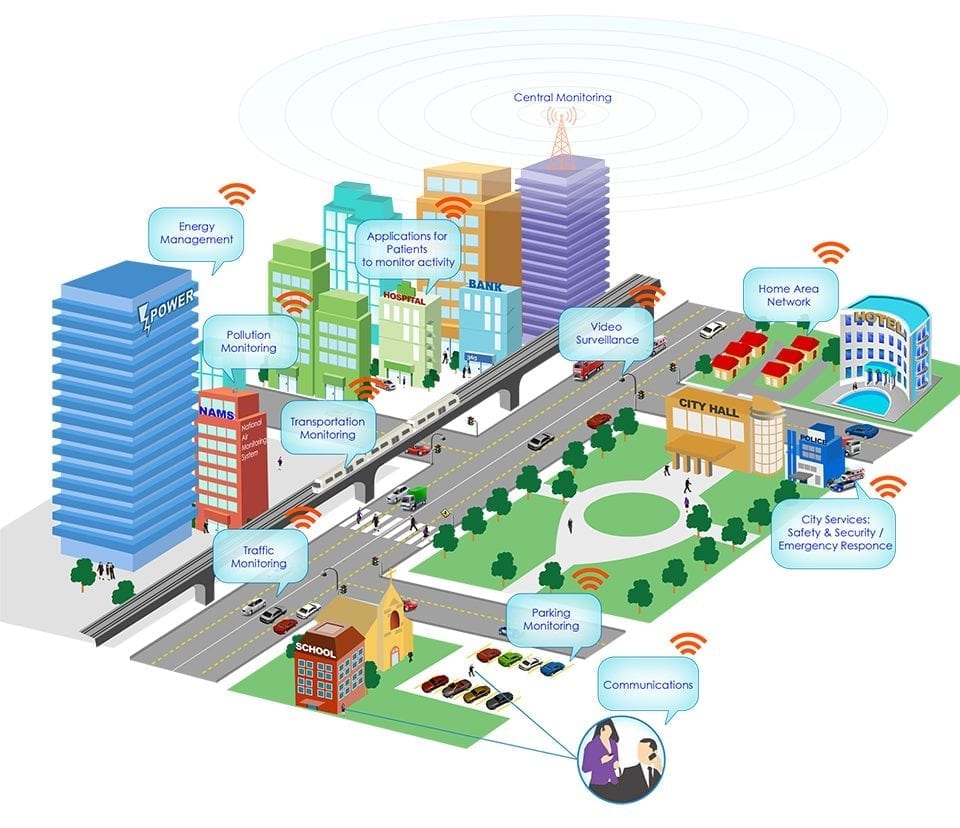
    During the recent signing of the memorandum of agreement at the Smart City Expo World Congress in Barcelona, Cyberview’s managing director Dato’ Faris Yahaya said that a cashless society drive would help to strengthen smart city development in Cyberjaya.

    Faris said the agreement is the latest in a series of milestones achieved by Cyberjaya in its continued evolution as a Smart City.

    Recent achievements include the deployment of a city-wide long range (LoRA) network to offer an IoT lab and the establishment of its City Innovation Council (CIC) to allow startups to test out prototypes.

    “Cyberview has spearheaded the continued development of the city under its Smart City and Living Lab initiatives – development pillars designed to increase its operational efficiency, improve the quality of life for the people of Cyberjaya and contribute to growing the local economy,” added Faris.

    “We continue to do this by incorporating technology into every facet of the township through collaboration with our many partners, and this is eminent from our push in transforming Cyberjaya into a cashless city by working hand in hand with MaGIC and Mastercard,” he said.

    Cyberview, MaGIC, Mastercard
    (From left) Carlos J. Menendez, President Enterprise Partnership, MasterCard; Dato’ Faris Yahaya, Managing Director, Cyberview Sdn Bhd; Tan Sri Dr. Mohd Irwan Serigar, Secretary General of Treasury, Ministry of Finance Malaysia; Perry Ong, Country Manager for Malaysia and Brunei, MasterCard and Mr. Ashran bin Dato’ Ghazi, Chief Executive Officer, Malaysian Global Innovation & Creativity Centre (MaGIC) during the Memorandum of Understanding Ceremony at the Smart City Expo World Congress in Barcelona.


    “The reason why we’re doing this is because we understand that payments are the heart of a city’s economic activity – forming the core of every economic flow including salaries, consumer spending, business procurement, and taxes,” said Faris.

    Cashless ecosystem

    This latest agreement lists several initiatives to be rolled out by the partners to develop a cashless ecosystem in Cyberjaya.

    He said some of these include integrating Mastercard’s digital payments service Masterpass to make everyday transactions for consumers faster, simpler and more secure as well as providing city authorities and urban planners actionable data-driven insights into the retail industry and to better inform their marketing campaigns for visitors.

    These activities are in line with the government’s Economic Transformation Programme and Bank Negara Malaysia’s (BNM) vision to transform Malaysia into a cashless society.

    Ashran Dato’ Ghazi, chief executive officer of MaGIC said: “MaGIC will support the Cyberview Smart City initiative in a collaboration with both Cyberview and Mastercard. Through the Corporate Entrepreneurship Responsibility (CER) platform, MaGIC will play a key role to facilitate the partnership between players in the corporate sector like Mastercard and local entrepreneurs to design and build smart city infrastructure, services and solutions in Cyberjaya.”

    Perry Ong, country manager for Malaysia and Brunei of Mastercard, said, “Through the Economic Transformation Program, an electronic payments agenda is embedded through a structural reform known as the Payment Card Reform framework where the payment industry is working together in efforts to broaden market access and to dampen cash transactions. It is imperative that we recognise the great control, transparency and efficiency electronic payments offers to society.”

    Ong added that Mastercard will be providing the horizontal payment construct across all the vertical clusters in the Smart City including urban mobility, lifestyle, finance, health, supply chain and education among others.

    He said this will  ensure an integrated payment ecosystem for a better commerce experience with digital solutions such as “Masterpass,  which helps Malaysians to enjoy simpler, safer and smarter digital payments across any device and channel anywhere  – be it online, in app and in-store with contactless.”

    “By embedding digital payments into our core infrastructure and harnessing the data that electronic payments generate, cities can deliver on their promise to create smarter, more welcoming spaces, and empower their citizens to lead greater, more rewarding lives,” said Cyberview’s Faris.

    He said an AllianceDBS Research report earlier this year projected that the ‘cashless’ system in Malaysia will grow by 15 per cent, five-year compounded annual growth rate (CAGR), as Bank Negara Malaysia (BNM) pushes for reform in the country’s payment system.

    “We will continue to collaboratively work with our numerous ecosystem partners, including MaGIC and Mastercard to enhance the liveability of the city and provide the people of Cyberjaya with everything they will need to improve their lives,” Faris said.

  • Testing times: Singapore’s retail scene shows four signs of weakness

    Testing times: Singapore’s retail scene shows four signs of weakness

    Rents in the Central region may fall 6-8% in Q4.

    The outlook for Singapore’s retail sector for the last three months of the year remains subdued, with weak retail rents made worse by retailers consolidating outlets to streamline cost.

    Average island-wide prime retail rents moderated in Q3 2016, with that of Orchard Road falling for the first time since Q2 2015 on the back of the tougher retail climate, reports Knight Frank (KF).

    The average gross rents for prime spaces was $31.20, which represents 2.2% decline YoY and 0.2% dip on a quarterly basis. Average Orchard Road prime rents, meanwhile, declined by 0.1% YoY and 0.5% QoQ.

    According to KF, average rents in the Central Region are envisaged to fall by 6.0% to 8.0% y-o-y by Q4 2016, while the more resilient prime rents to moderate downwards by up to 3.0% y-o-y in the same period.

    “The expected fall in rents takes into account not only the projected weakened demand from retailers, but also the likelihood of landlords readjusting the rental structures to help their tenants tide over down cycles of the market in order to maintain healthy occupancy status,” it said.

    An estimated 1,072,000 sq ft of net lettable major retail space is slated for completion in the whole of 2016. KF noted that out of this, 38.2% (409,000 sq ft) was ready in the first half of 2016, with the remaining 663,000 sq ft to be completed in H2 2016.

    “In addition to this is the cautious stance taken by retailers towards business expansion, and island-wide occupancy is likely to fall from 92.8% in Q4 2015 to between 90.0% and 92.0% in Q4 2016,” said KF.

    KF’s bearish outlook on Singapore’s retail sector is supported by the following indications of weak overall spending:

    1. Singapore’s consumer confidence entered the pessimistic range.

    According to the Mastercard Index of Consumer Confidence, Singapore saw a significant decline of 10.7 points in H1 2016 from H2 2015. The degree of decline lagged behind only Indonesia (-14.7 points) and Hong Kong (-12.4 points), of the 17 countries within the Asia Pacific region tracked by Mastercard.

    2. The overall Retail Sales Index (excluding motor vehicles)(seasonally adjusted, at constant prices) improved by 3.5% m-o-m in July 2016 compared to the preceding month. All retail trades saw improvement with the exception of Food & Beverages, which declined by 1.5% monthon-month (m-o-m) over the same period. However on a year-on-year (yo-y) basis, the overall retail sales (at constant prices) declined by 3.7% in July 2016, with Computer & Telecommunication Equipment (-18.7% y-oy), Watches & Jewellery (-16.6% y-o-y) and Food & Beverages (-9.7% yo-y) trades seeing the steepest falls.

    3. Employment in the wholesale and retail trade declined by 1.8% in H1 2016 compared to H2 2015. This could be attributed to the weaker retail sales and greater caution in manpower deployment by retailers.

    4. Total visitor arrivals for the period of January to July 2016 increased by 11.5%, compared to the same period last year, to reach 9.8 million. While visitors from China and Indonesia rose by 49.2% y-o-y and 6.8% y-o-y respectively in the first seven months of 2016 compared to the same period in 2015, visitors from Malaysia dropped by 1.6% y-o-y.

  • MasterCard deploys biometric verification

    MasterCard deploys biometric verification

    Mastercard has deployed Identity Check Mobile in Europe, a new payment technology application that uses biometrics like fingerprints or facial recognition to verify a cardholder’s identity.

    The technology is now being introduced across 12 markets in Europe including the UK, Germany Austria, Belgium, Czech Republic, Denmark, Finland, Hungary, the Netherlands, Norway, Spain, and Sweden.

    Aimed at simplifying online shopping, the deployment follows a series of successful trials in the Netherlands, the US, and Canada. The technology will be rolled out across the world in phases in 2017.

    The move comes after trials and research discovered European consumers prefer biometric payments to current systems that rely on passwords.

    While existing identity verification methods typically take shoppers away from a retailer’s website or mobile app, where they are often required to remember and enter a password, Mastercard Identity Check Mobile eliminates the need for cardholders to recall passwords, dramatically speeding up the digital checkout experience while also improving security. Instead, cardholders can verify their identities by using the fingerprint scanner on their smartphone or via facial recognition technology by taking a “selfie” photo.

    “We are relentlessly focused on making the online payment experience near frictionless, without making any compromises on safety and security,” said Ajay Bhalla, president of Enterprise Risk & Security, Mastercard.

    “This is a significant milestone in the evolution of payments. Shopping in person has been revolutionized thanks to advances like contactless cards, mobile payments and wearables, and now we are making Identity Check Mobile a reality for online shopping in Europe, and soon, the world.”

  • Mastercard Appoints President for Indonesia, Malaysia and Brunei

    Mastercard Appoints President for Indonesia, Malaysia and Brunei

    Now he will also be in charge of encouraging the implementation of digital payment technology.

    Previously based in Kuala Lumpur, Khan and his division will now be headquartered in Jakarta. Mastercard considers this a move towards recognition of Southeast Asia’s developing countries, whose economy has been predicted to be worth billions of dollars.

    The move was also triggered by the formation of ASEAN Economic Community (AEC), where the ongoing economic integration gives a potential for Mastercard to gain influence.

    “AEC stands as a landmark to integrate the region’s economy. Safdar Khan’s appointment would serve as evidence of Mastercard’s focus in building a strong, relevant and influential business in Southeast Asia. This appointment shows our continuing commitment to empower the great leaders who can encourage innovations and inclusion in a meaningful and interconnected way,” Mastercard Asia Pacific co-president Ari Sarker said.

    Sarker also appreciated Khan’s profound knowledge about the customers, regulators and government bodies.

  • Bangkok tops Global Destinations Cities Index

    Bangkok tops Global Destinations Cities Index

    Bangkok is the top-ranked destination city by international overnight visitor arrivals, according to the annual Mastercard Global Destinations Cities Index.

    Ranking 132 cities, the index projects visitor volume and spend estimates while delivering insights into how people travel and spend around the world.

    As cross-border travel and spending continue to grow at a faster pace than the world GDP, the world’s cities continue to be engines of broader economic growth, says Mastercard.

    According to the study, Bangkok is projected to receive 21.47 million international overnight visitors this year, just ahead of London (19.88 million visitors).

    Also in the top 10 cities are:

    • Kuala Lumpur, 12.02 million visitors

    • Paris, 18.03 million visitors

    • Istanbul, 11.95 million visitors

    • Dubai, 15.27 million visitors

    • Tokyo, 11.70 million visitors

    • New York, 12.75 million visitors

    • Seoul, 10.20 million visitors

    • Singapore, 12.11 million visitors

    Hong Kong was 11th.

    “The way people travel and spend across borders indicates just how interconnected and important the world’s cities are,” says Mastercard president of international markets Ann Cairns.

    As well as the top 10 cities, Mastercard names the top 10 fastest-growing destinations, which indicates the increasingly importance of Asia Pacific to the global economic landscape.

    Osaka new star

    Osaka has shown the strongest growth in international visitors (24.15 per cent) over the past seven years. Other cities that make the fastest-growing list:

    • Chengdu, 20.14 per cent

    • Taipei, 14.53 per cent

    • Abu Dhabi, 19.81 per cent

    • Xi’an, 14.2 per cent

    • Colombo, 19.57 per cent

    • Tehran, 12.98 per cent

    • Tokyo, 18.48 per cent

    • Xiamen, 12.93 per cent

    • Riyadh, 16.45 per cent

    For the first time, the index explores whether visitors travel for business or leisure, giving broader insights into spending on dining, lodging and shopping. The index shows that more people are travelling to the top 20 cities for leisure with Shanghai being the sole exception.

    Visitors to the top 20 cities overwhelmingly spent more on shopping, as opposed to dining, says the index.

    Asia Pacific dominates both the global top 10 (five cities) and top 10 fastest-growing destination cities (seven cities).

    Public data is used in deriving the international overnight visitor arrivals and their cross-border spending in each of the 132 destination cities for the index. Mastercard volumes or transactional data is not considered.

    The full report can be downloaded here.

  • Why retailers should embrace showrooming

    Why retailers should embrace showrooming

    Trends eventually stop being trendy and either disappear into obscurity or become part of everyday life.

    The trends which end up only being fads often come in with a bang and leave with a thud, leaving embarrassing photos and fashions in their wake. Remember those 80s hairstyles?

    The other trends — the ones that create a whirl of buzz and actually manage to stick around — can often change social, cultural and political landscapes. When it comes to the world of retail, trends are often born and die in a single day. This isn’t without good reason.

    Consumers now control the retail landscape. Your competitors are now only a click or tap away. Lower prices, more sizes and dynamic shopping experiences are waiting in the shopper’s purse or pocket as they navigate your retail spaces.

    This specific shift in consumer behavior has led to one trend that has now become part of nearly every shopping experience.

    Love it or loathe it, showrooming is a behaviour that retailers need to embrace.

    Many retailers have taken a defensive stance against consumers visiting their physical stores to research items they find and often plan to purchase only online.

    Headlines encouraging retailers to “battle” or “combat” showrooming conjures images of war.

    Going against the tide of consumer behavior will rarely lead to success. Especially when you consider MasterCard’s recent Mobile Shopper study, which found that nearly one-third of shoppers in Singapore (31.9 per cent) will use their phones to research product costs and details while in a brick and mortar store.

    Understanding the reasons consumers want to showroom can help you to find ways to embrace this consumer behaviour and connect with your shoppers in a way that encourages them to buy when they are ready.

    Retailers must consider the catalysts for showrooming, the information consumers seek and how to position their brand as a source for everything they need to be an informed consumer.

    Let’s look at a few of these behaviours more closely.

    Research purchases

    A primary reason shoppers showroom is to research items they have discovered online. The knowledge that better deals and desirable products are so easily accessible has motivated consumers to become informed shoppers.

    Retailers can meet this showroomer need by ensuring product pages are optimised for mobile devices and that the information on these pages is comprehensive. Communicate product specifications as well as other value propositions that help your brand stand out. Are your materials locally sourced or all natural? Let your shoppers know! Have your handbags been carried on the red carpet? Share the photos!

    Help the in-store consumer to reconnect with the items they shopped online by making the shopping cart accessible on a mobile device and include details such as SKU, product number, brand, style, size and color as potential search criteria.

    Finding a lower price

    After viewing an item in your store, the shopper may try to find a lower price at one of your competitors. If price is not a differentiator, other shopper services could cause the showroomer to stray.

    Promote information about low price guarantees as well as return and exchange policies. Show perks such as repeat buyer discounts or loyalty program rewards.

    Tout services such as ship from store or in-store pick up at nearby locations. These also include low-price guarantees, in-store pick up, loyalty rewards and international shipping.

    phone, shopping mall, hand

    Look-alike items

    Many showroomers may use your app to locate an item in your stores. Give the shopper more reasons to buy from your brand by including product recommendations based on their shopping, buying and profile information.

    This level of customer intelligence is now more accessible to marketers and packs a lot of power to keep the showroomer engaged with your brand while helping to raise your average order value.

    Virtual store representatives

    Lastly, think of all the ways your store shoppers interact with your store staff.

    What questions do the shoppers ask? What concerns or problems do they encounter in your stores? Your site needs to serve as a virtual store representative by being making all of this information easily accessible.

    Consider how many times you’ve asked a store representative if they have an item in a different size only to find out they don’t have your size in stock. Now consider that 32 per cent of global respondents to PWC’s Total Retail 2016 study said they would be happier shoppers if they could check stock levels at other stores while in a store. That’s nearly one in three shoppers in your stores that want this kind of information.

    Make sure they can find answers! Additional areas to cover are product reviews, manuals, detailed specifications, installation information, warranties, demos, product videos… anything that answers the most commonly asked questions in your stores.

    Rather than seeing showrooming as a threat to your sales, accept the fact that this is how today’s consumer will shop — so find ways to use this behaviour to your advantage, keeping shoppers engaged.

    Shifting your perspective to empower today’s multi-device, multi-channel shopper will only help to boost sales and show your shoppers that you care.

    *Benjamin Glynn is managing director for Southeast Asia with Emarsys.

  • Singapore makes cashless payments push

    Singapore makes cashless payments push

    In 2014 Singapore was one of the first countries in the world to build a 27/7, real-time interbank fund transfer system, called Fast.

    However, cash in circulation is 8.8% of GDP, compared to 4.4% in Australia and 2.12% in Sweden. Nearly 13 cheques per person were written in the country in 2014, compared to seven in Australia and effectively none in Sweden.

    According to research from the Monetary Authority of Singapore and KPMG, the social costs of this heavy reliance on cash and cheques is around 0.5% of GDP, or S$2 billion a year.

    In a speech, MAS managing director Ravi Menon says that the fact that Singapore is so far behind these other countries shows that the Fast infrastructure is “grossly under-utilised”.

    One of the key reasons for this is that people do not know the bank account numbers of people that they want to send money to. Therefore, MAS and the country’s banks are developing a Central Addressing Scheme (CAS) that will allow payments to be made through Fast using only a recipient’s mobile number, or NRIC number, or Unique Entity Number.

    “If all goes well, by this time next year, we will no longer need to remember bank account numbers for a majority of our electronic fund transfers,” says Menon.

    In his speech, the MAS MD also says that cost is holding back the take up of Fast among small businesses. Some banks charge up to S$10 to transfer funds through the system while cheque payments are free.

    Menon also bemoaned Singapore’s complicated point-of-sale situation, which sees many stores cluttering up counters with multiple terminals to accept different cards.

    To tackle this, the country is pushing ahead with a unified POS terminal that can read all kinds of cards at retail and hospitality outlets. About 1000 of them have been deployed at convenience stores such as 7-Eleven, with more to follow.

    Meanwhile, Singapore’s Land Transport Authority is teaming up with MasterCard for a pilot that will see participants pay for their train and bus journeys by tapping their contactless credit and debit cards.

    On MAS’s own role, Menon says that the central bank will streamline and strengthen the payments regulatory framework to create a single and modular regime that will be applied on an activity basis, rather than specific payment systems.

    KPMG’s report also recommends strengthening the governance model and creating a national payments council that fosters innovation, competition and collaboration, coordinating key initiatives, such as promoting interoperability and adopting common standards.

  • First JCB card in Myanmar Introduced by Ayeyarwady Bank

    First JCB card in Myanmar Introduced by Ayeyarwady Bank

    Ayeyarwady Bank (AYA Bank), a major commercial bank in the Republic of the Union of Myanmar (Myanmar), Myanmar Payment Union Public Co.,Ltd (MPU), and JCB International Co. Ltd. (JCBI), the international operations subsidiary of JCB Co., Ltd., today announced that AYA Bank has launched the first JCB credit and debit card as AYA Universal MPU-JCB Co-Brand cards in Myanmar. Myanmar is the 4th country in the Mekong region where JCB cards are issued, along with Thailand, Vietnam and Laos.

    The Universal AYA MPU-JCB Co-Brand Card combines the MPU brand and JCB brand. Cardmembers can use MPU’s nation-wide merchant network in Myanmar and JCB’s international merchant network with over 31 million locations globally.

    The card has 4 different kinds of product, Universal Platinum credit card, Universal Gold credit card, Universal Silver credit card, and Universal debit card. All the cardmembers can enjoy JCB privileges such as JCB Plaza, and special offers at selected merchants all over the world. JCB offers Platinum cardmembers exclusive JCB Platinum services, such as JCB Platinum airport lounge service, JCB Platinum Concierge Desk, and Special JCB Platinum Hotel Services.

    U Zaw Zaw, Founder and Chairman of AYA Bank commented, “The bank has always been committed to providing our customers higher quality service and experience. This co-brand arrangement will enable cardholders to have more flexible options for their payments in foreign countries. This is another milestone in Myanmar card payment market, to promote the country’s transition to a cashless economy.”

    Kimihisa Imada, Deputy President of JCB International said, “Myanmar is an important market for JCBI. With its growing economy and population, Myanmar has great potential for growth in the card payment market. With the start of JCB card issuing in Myanmar, cardmembers can have a new choice of payment and experience the convenience of shopping abroad with JCB’s worldwide merchant network.”

  • Apple Pay makes its debut in Hong Kong

    Apple Pay makes its debut in Hong Kong

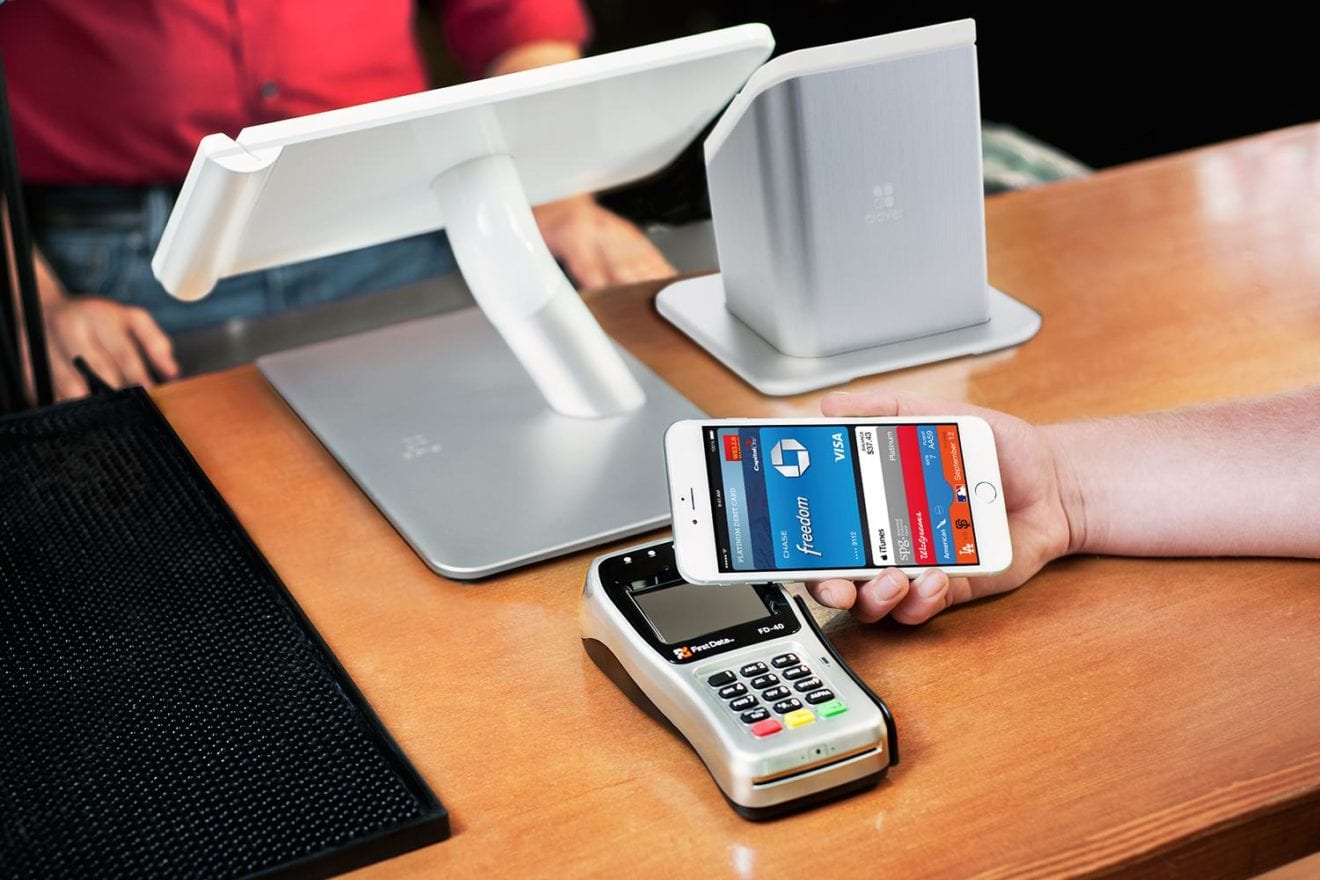
    Visa, MasterCard and American Express have all introduced support for Apple Pay in Hong Kong.

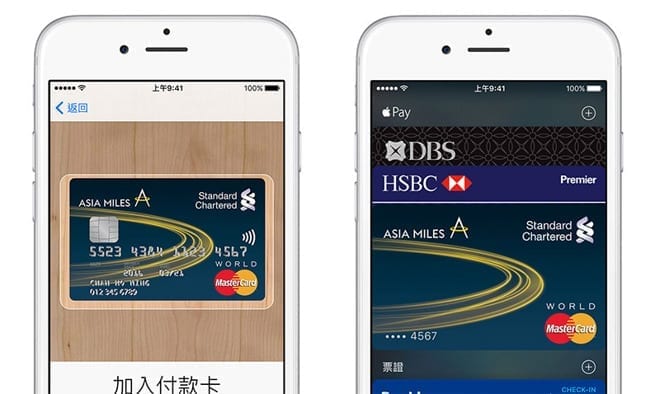
    Holders of credit and debit cards from the three companies issued by Bank of China, DBS Bank, HSBC, Standard Chartered, and Hang Seng Bank are now able to take advantage of the mobile contactless payment service.

    Apple’s Hong Kong website states that support for Bank of East Asia and Tap & Go cards is also “coming soon.”

    17613-15292-160719-Apple_Pay-HK-l

    In Hong Kong, Apple Pay is currently available in Apple’s own stores, as well as those from 39 other major chains, including 7-Eleven, APITA, KFC, McDonalds, Starbucks and Genki Sushi. It is also supported by a number of apps including Cathay Pacific, Deliveroo and Foodpanda. Support for Uber is coming soon.

    Apple Pay’s contactless payment technology aims to improve security by not storing credit card numbers on the device or sending credit card details to merchants. Payments can be authorized using the Touch ID fingerprint authentication system.

    Apple Pay is supported by the iPhone 6s and newer, the Apple Watch paired with an iPhone 5 or newer, as well as the iPad Pro, iPad Air 2 and iPad mini 3 and 4.

    “In Hong Kong contactless payments have become a necessity for everyday life, consumers and retailers realize the greater convenience and faster checkouts for busy people on the go,” Visa Hong Kong and Macau country manager Caroline Ada said.

    She said research from the company shows that 77% of respondents are willing to try out or adopt new ways of paying, and 78% are ready to use smartphones as the device for making everyday payments.

  • Apple Pay Launched in Hong Kong With American Express, Mastercard Support

    Apple Pay Launched in Hong Kong With American Express, Mastercard Support

    Apple Pay has arrived in Hong Kong, allowing the Apple users to use the company’s mobile payment system.

    Apple’s payment system has been rolled out to American Express, Visa and MasterCard cardholders in Hong Kong. Other participating banks are Standard Chartered, DBS, Hang Seng Bank, HSBC, Bank of East Asia, and BOC Credit Card, a subsidiary of Bank of China (Hong Kong). Apple’s website notes that the system would be compatibile with BEA and HKT touchless payment network Tap & Go in the future, as reported.

    Apple users can add their cards to Apple Pay by just tapping “Add Credit or Debit Card” option in the Wallet app on devices running the iOS 8.1 or higher. Hong Kong’s Apple Pay works fine with the iPhone 6, iPhone 6s, iPhone 6 Plus, iPhone 6s Plus, and iPhone SE. It is also available on the iPad Air 2, iPad mini 3, iPad mini 4, and both iPad Pro models. However, iPhone 5, 5c, and 5s users need an Apple Watch to make Apple Pay work.

    Greg Hingston, the head of retail banking and wealth management at HSBC in Hong Kong, said the number of HSBC’s active mobile banking customers has increased by almost 50 percent over the past three years, according to the South China Morning Post.

    “We expect this to rise as customers continue to migrate to digital banking and as we roll out innovative offerings such as Apple Pay. Digital is an integral part of our strategy as technology and mobility are changing the way our customers access information, products and services,” Hingston said.

    In Hong Kong, Apple Pay can be used where contactless payment is accepted and at a wide range of retail partners, including 7-Eleven, KFC, McDonald’s, Pizza Hut, Pacific Coffee, Su-Pa-De-Pa, Taste, ThreeSixty, Uny, and more.

    The Cupertino-based company’s payment system has also debuted in France, which is compatible with Mastercard and Visa credit and debit cards issued by Carrefour Banque and Ticket Restaurant as well as Banque Populaire and Caisse d’Epargne, an assemblage that includes France’s second largest banking group.

    Apple Pay is now available in nine countries including the United States, the United Kingdom, China, Australia, Canada, Switzerland, and Singapore. In addition, Apple plans to launch Apple Pay to Spain through a partnership with American Express later this year.

  • Singapore’s EDB, MasterCard enter smart city alliance

    Singapore’s EDB, MasterCard enter smart city alliance

    The Singapore Economic Development Board has entered an agreement with MasterCard to help Singaporean companies build innovative solutions in urban mobility, tourism and trade.

    The announcement was made at the World Cities Summit 2016 being held this week at the Sands Expo & Convention Centre, Marina Bay Sands in Singapore.

    The two parties said they will focus on tackling some of the biggest urban challenges of our time in the next two years: how to promote mobility, tourism and trade while enabling seamless experiences and sustainable growth.

    MasterCard and the EDB in partnership with other Singapore-based companies plan to work together to design and build technology platforms in the three mentioned.

    In tourism, the goal is to help Singapore residents and visitors navigate the city state’s attractions easier and in a more connected way. In urban mobility, the platform will strive to ensure that residents and visitors have an easy time using the local transit system. In trade, the goal is to digitize and automate how companies buy, sell and pay each other.

    For each of these three areas, solutions will be designed and developed out of Singapore, further enhancing Singapore’s ability to create innovative products and services which are exportable and can be globally deployed.

    “We are happy to work with MasterCard to enable the creation of new solutions in the identified themes. This is in line with EDB’s drive for Singapore to be a hotbed for innovation and creation of new businesses, which in turn will contribute to economic growth and the creation of good jobs,” said Kelvin Wong, assistant managing director at EDB.

    In major cities around the world including London, Athens and Bogota, MasterCard is already working with local authorities and other technology companies to make public transport more accessible and more efficient.

    Ari Sarker, co-President MasterCard Asia-Pacific: “For many years, Singapore has been setting the benchmark for what it means to become a smart city and a smart nation.

    Since 2012, Singapore has been one of MasterCard’s global R&D Centers (MasterCard Labs) – which most recently launched the first commerce application for SoftBank Robotics’ humanoid robot Pepper.

    Earlier this year, MasterCard also teamed up with IBM to offer smaller merchants in Singapore and across the Asia-Pacific region market insights that integrate IBM Watson Analytics with insights based on aggregated and anonymized transaction data through MasterCard Advisors Local Market Intelligence (LMI).