Tag: Metro

  • Germany’s Metro chain withdrawing from Japan

    Germany’s Metro chain withdrawing from Japan

    Metro aims to cease the operative business by the end of October 2021, whereby all 10 stores and the delivery business will be closed. The company has thoroughly analysed alternative options but sees no path to profitable growth and a leading wholesale position in the Japanese market. The exit of METRO Japan business will lead to one-off costs in Q4 2020/21 and one-time free cash flow gains through asset sales over the next 2 years. The recurring annual impact is positive on both P&L and cash flow. METRO Japan will make every effort to assist its employees through the transition in a fair manner and act fully in line with employer practice standards.

    “In each market it is operating in, METRO aims to achieve a leading market position as food wholesaler. METRO Japan has been under pressure for quite some time. We finally made the decision that we do not see the opportunity to achieve the necessary scale in Japan and thus to reach our profitability targets and sustainable growth in sales. Hence, we have concluded that METRO Japan is not a strategic fit for the company’s long-term objectives,” explains Dr Steffen Greubel, CEO of METRO AG. “On behalf of our Management Board I want to extend my sincere appreciation to our Japanese colleagues for their diligent work, enduring passion and commitment in serving our customer over the past 20 years.”

    With 10 wholesale stores all situated in the Greater Tokyo area, METRO Japan has been serving predominantly professional customers in the hospitality sector for the last 20 years. However, an unfavorable market position coupled with increasingly competitive landscape limited the company’s growth potential and weighted on profitability. METRO Japan has undertaken numerous attempts such as adjusting store formats, improving the assortment and expanding the delivery business to reposition the business. These attempts didn’t show reasonable results due to lack of scale and highly competitive market characteristics.

    METRO Japan will cease its business operations by October 2021, while the real estate portfolio in Japan will be sold. The portfolio includes 6 owned land plots with stores and 3 locations with long-term leases. As the result of this transaction, METRO expects a recurring uplift of approx. €15 million in FCF1 and up to €5 million in EBITDA. The company expects a negative one-off impact of between €30 million and €50 million on EBITDA in Q4 FY20/21. Overall, the proceeds from selling the real estate are expected to clearly surpass the one-off cash-outs for the wind-down, making the transaction cash-positive.

    The Japanese operations of Classic Fine Foods (CFF), the foodservice distribution specialist of METRO, are not affected by this decision, CFF will continue to operate in Japan.
  • Hanoi metro tickets to cost $0.35-0.65

    Hanoi metro tickets to cost $0.35-0.65

    Fares on Hanoi’s first metro will range from VND8,000-15,000 ($0.35-0.65).

    City authorities have also decided that a day pass on the Cat Linh – Ha Dong metro line for unlimited trips will cost VND30,000.

    A monthly pass will cost VND200,000 and half that for students and workers at industrial parks.

    For businesses buying the monthly pass for its employees, the rate will be VND140,000.

    Travel will be free for seniors, children under six, people with disabilities, and people designated by the government as poor.

    Fares are subsidized to boost the use of public transport, city authorities said.

    People using non-cash payment methods will get a discount of VND500 per trip.

    Travel will be free for the first 15 days after the metro begins operation, though the start date has not been announced yet.

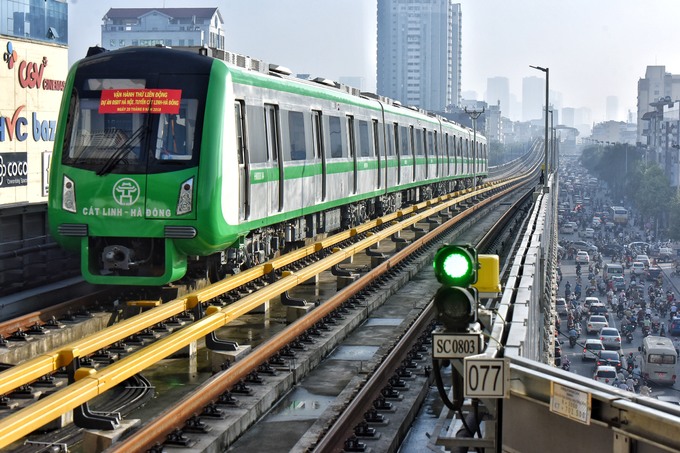
    The full trip from Cat Linh to the south-western district of Ha Dong through 12 stations will take 25 minutes.

    A train can carry 960 passengers.

    Trains will run from 5 a.m. to 11 p.m every day.

  • Hanoi to take over metro operation in May

    Hanoi to take over metro operation in May

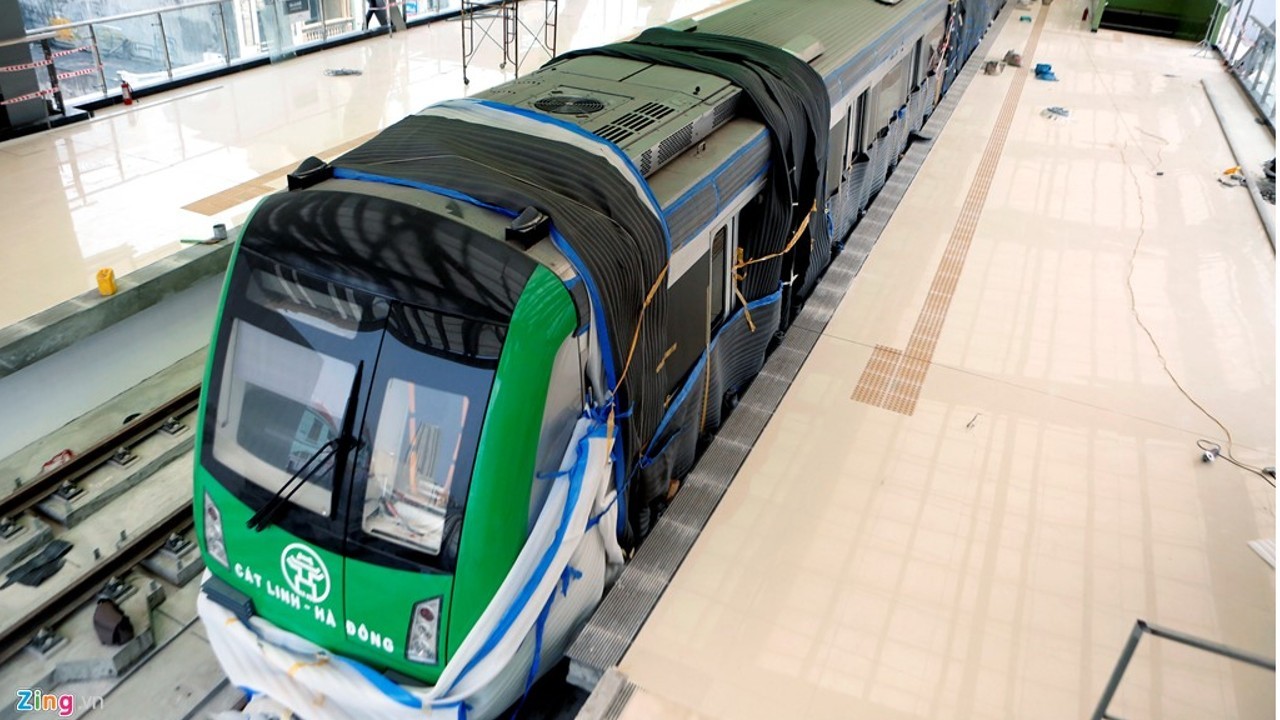
    Hanoi’s first metro line Cat Linh – Ha Dong is set to be handed over to city authorities in May for commercial operation.

    The company that built it, China Railway Sixth Group Co Ltd., on Wednesday began the process of handing over the Cat Linh – Ha Dong Metro Line to local authorities.

    The handover will take three to four weeks.

    Deputy Transport Minister Nguyen Ngoc Dong told reporters Wednesday that since January, Hanoi authorities have been working to finish the last details of the project, like setting up signs for disabled passengers, installing a device to prevent the conductor from falling asleep and adding more staff at each station to supervise and assist passengers embark and disembark.

    Each train on the route will be capable of carrying 960 passengers. A one-way trip will take 23 minutes, including a 30-second stop at each station.

    There will be a train every 10-15 minutes in the initial period, with higher frequency during rush hours.

    The Cat Linh – Ha Dong Metro Section is set to be the first such project to operate in Vietnam. It runs 13 kilometers on elevated tracks through 12 stations from downtown Dong Da District to Yen Nghia in Ha Dong District in the southwestern part of the city.

    The project has been delayed for years and missed several commercial operation deadlines with the Ministry of Transport blaming the Chinese contractor for its inexperience.

    Last year, its safety evaluation was delayed several times because the Chinese and French experts who had returned home late January and were unable to return to Vietnam since international flights were grounded due to the Covid-19 pandemic.

    The section, one of eight lines planned in the city of 8.3 million, is expected to partly resolve chronic traffic congestion and motivate more residents to use public transportation.

  • Decathlon store replaces old Metro at Singapore’s Orchard Rd

    Decathlon store replaces old Metro at Singapore’s Orchard Rd

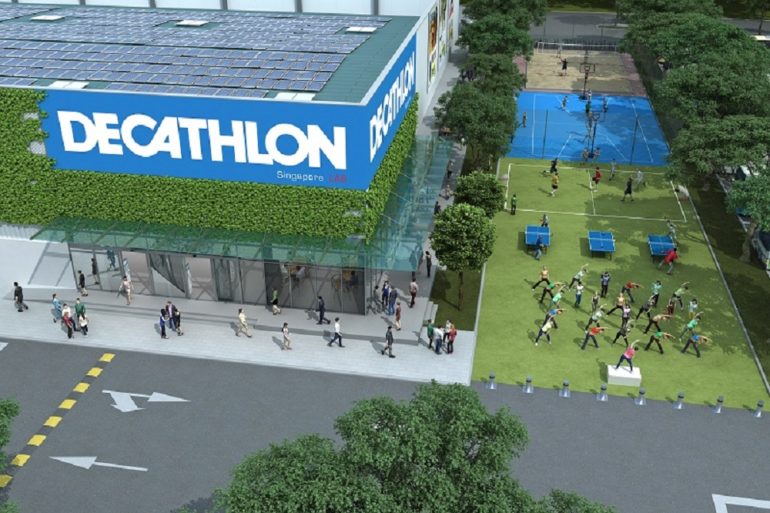
    Decathlon Singapore is opening a new experience store in Orchard Rd, the brand’s fifth experience store in the city.

    Located at the Centrepoint shopping mall, Decathlon Orchard spans two floors, occupying a 3200sqm area. The store will feature some 5000 products spanning more than 50 sports.

    In the new Decathlon Singapore experience store, customers will be able to test products before purchasing with in-store “innovative solutions”. According to the company, the store will feature several interactive concepts including virtual reality test zones and free sport events

    Based on the photos the brand has shared on their social media channels, the fit-out process is still underway, but the store is scheduled to open on September 12.

    The new Decathlon store location takes up space previously leased to the Metro department store.

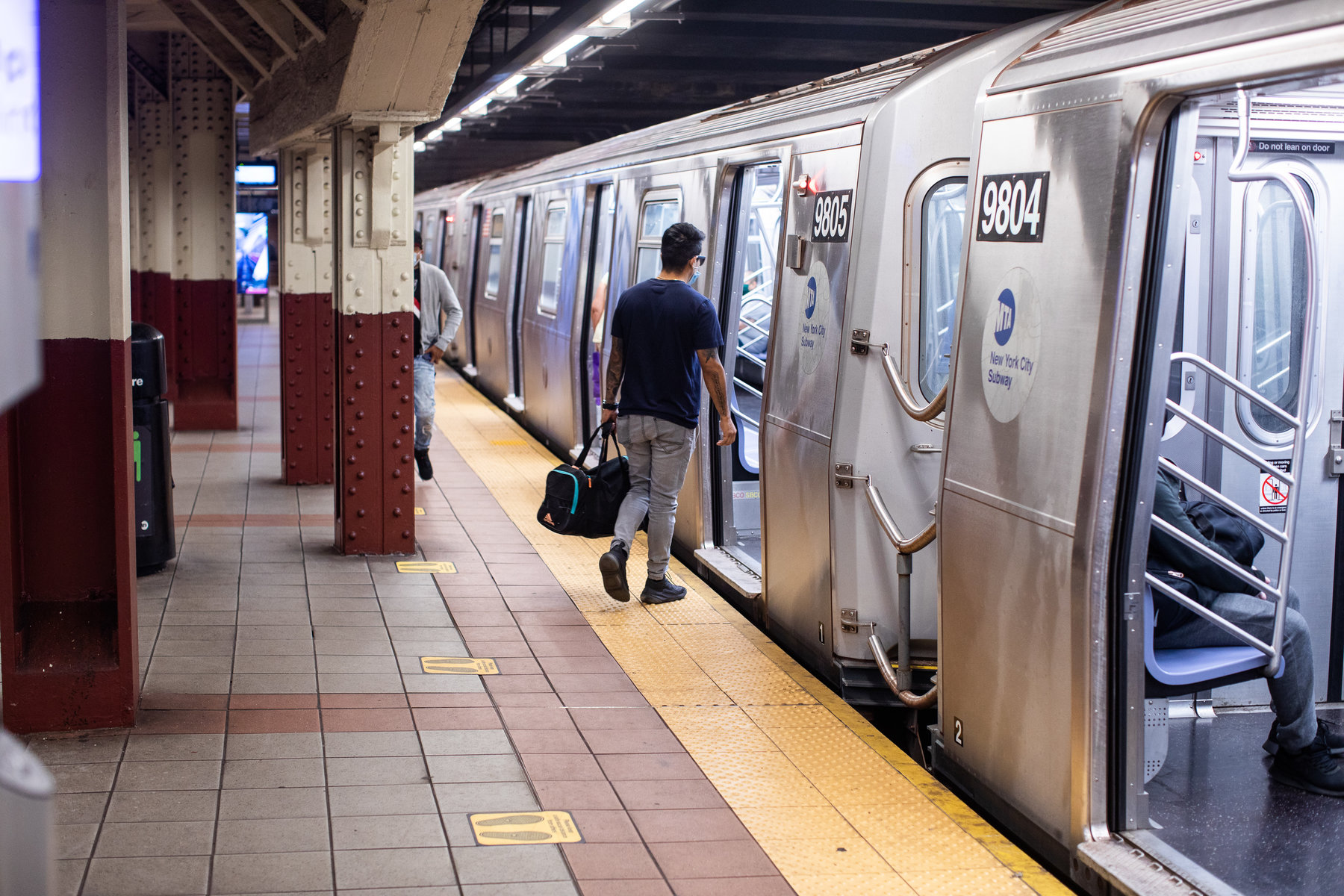
  • NYC commuters with an iPhone are risking COVID exposure just to unlock their devices on the subway

    NYC commuters with an iPhone are risking COVID exposure just to unlock their devices on the subway

    Apple iPhone users worldwide started to get frustrated when global agencies suggested that face masks be worn as a preventative measure against the spread of COVID-19. That’s because those iPhone models using Face ID couldn’t verify the identity of the person holding the phone because of the mask. As good as Face ID is in matching a person’s face even if he/she grows a beard, wears glasses, or gets a haircut, Apple couldn’t anticipate when developing the feature that users would be wearing a mask when going outside.

    Mask wearing iPhone users would have to wait to get the passcode screen, eating up valuable time. So in iOS 13.5, Apple added an algorithm that quickly detects when the phone’s owner is wearing a mask and brings up the passcode screen after a swipe up from the bottom of the display. But apparently, the faster transition time from Face ID to the passcode screen is not fast enough for some New York City commuters.

    Patrick Foye, the chairman of the Metropolitan Transportation Authority (MTA), sent a letter to Apple CEO Tim Cook that was obtained by the Associated Press. In the letter, Foye says that he has seen commuters removing their masks to log-in to their iPhones. During a pandemic that continues to infect and kill Americans, removing your face mask to satisfy Face ID is not suggested, especially on a crowded subway platform or on the train itself. Apple also added Apple Pay Express Transit which allows riders of some subway and bus lines to use an iPhone or Apple Watch to pay without having to wake the device.

    In New York City, all bus and train riders must wear masks and maintain social distancing. The MTA says that 90% of its customers are wearing some type of face covering which means that quite a few iPhone users could be exposing themselves to the virus by lifting or removing their masks to get Face ID to work (if you’re familiar with the New York City subway system, you know that they might be exposing themselves period).

    In his letter to Cook, Foye wrote, “We understand Apple is working to address the issue and know that Apple has a range of technologies at its disposal as a global leader among tech companies. We urge Apple to accelerate the deployment of new technologies and solutions that further protect customers in the era of COVID-19.” The MTA chairman added that he would be willing to work with Apple on a promotional campaign to alert riders about the changes made in the latest iOS update.

    Apple responded by sending an emailed statement. “There’s nothing more important to us than the health and safety of our customers,” the tech giant wrote. “We are fully committed to continuing to work with the MTA to support their efforts to prevent the spread of COVID-19.”

    The MTA isn’t asking Apple to develop new technology or update the passcode screen. It merely wants to work with the tech company to put up display ads or otherwise inform riders on MTA vehicles and subway cars that they don’t need to take off their masks even for just the short time it takes Face ID to work.

    While subway ridership in New York City plunged by 90% at the pandemic’s peak, the numbers are rising although they are still well below pre-pandemic levels. New York City was once the global COVID-19 epicenter, the city has not seen over 1,000 new cases on a daily basis since May 30th. New York City’s success in beating back the virus’ spread might leave commuters less diligent which would also be a good reason for the MTA and Apple to collaborate on a message that can be promoted to commuters riding the MTA bus and subway lines.

  • Metro Retail Stores show strong profit growth

    Metro Retail Stores show strong profit growth

    Metro Retail Stores Group in the Philippines has reported a 21.5-per-cent growth in income to US$20.80 million (Php1.06 billion) last year.

    The growth was driven mainly by an 11.3-per-cent increase in sales to $722.31 million (Php36.8 billion) with operating expenses rising by a lesser rate of 9.3 per cent.

    Additional insurance recoveries relating to a serious fire the previous year saw non-core income increase by $4.29 million (Php218.7 million), offset by the net impact of the new PFRS 16 accounting standard of $7.13 million (Php363.7 million).

    Metro Retail Stores’ operating income, as well as net income, would have increased by 13.7 percent and 18.0 percent respectively excluding the impact of PFRS16.

    The firm says that increasing its store network to serve emerging cities and municipalities in Visayas, Central Luzon and the Bicol region was vital to the home-grown retailer’s strong performance.

    In 2018, the company recorded a 1.2-per-cent drop in net income due to the closure of a hypermarket and the temporary suspension of a supermarket following a fire, along with other factors.

    Metro Retail Stores Group is owned by the Gaisano family based in Mandaue City, Cebu. It has 53 department stores and hypermarkets in the Visayas Region.

    The company’s supermarkets, hypermarkets and pharmacies are all continuing to trade to provide much-needed basic goods and services as the Philippines struggles with the Covid-19 outbreak.

  • Metro Cash & Carry India plans more stores

    Metro Cash & Carry India plans more stores

    European wholesale group Metro Cash & Carry will launch five new locations in India by the end of the year.

    The firm is also building its supply partnerships with local small-scale “kirana” stores, and has already secured 2000 partners in Bengaluru, Hyderabad, and Delhi. It has provided these small businesses with specialized point-of-sale devices outfitted with an app to help owners order items from Metro online, as well as generate daily sales and profit reports and track sales data.

    “We believe in helping kiranas in increasing their sell-out,” said Metro Cash & Carry India MD and CEO Arvind Mediratta to ETtech, “not just sell to them because if their sell-out improves, and if they think Metro can help increase their sell-out, we automatically become their preferred supplier.

    “The whole idea is how to make a kirana store smarter in terms of usage of technology, by running business more efficiently, targeting more customers using data analytics, drive more customer traffic and make it more successful and profitable.”

    Metro’s devices allow the kirana stores to trade using e-payment services. The firm is also offering loans for remodelling costs to help modernise these outlets.

    The firm’s five new cash & carry stores will be established in Karnataka, Andhra Pradesh and Telangana. It currently operates 27 such outlets in 17 cities within the territory.

  • Saigon metro to test run in Q3

    Saigon metro to test run in Q3

    An elevated section of Ho Chi Minh City’s Ben Thanh-Suoi Tien Metro Line 1 will be tested out within the third quarter this year.

    This elevated section crosses Ho Chi Minh City’s District 9, spanning from central Binh Thai Station to Long Binh Depot, a train maintenance center, the HCMC Management Authority for Urban Railways (MAUR) said in a report to the city’s People’s Committee.

    Once testing is complete, MAUR said it would test another section between Binh Thai and Van Thanh stations in District 2.

    The city targets project completion to advance to 85 percent before the end of this year, to officially enter operation by the end of 2021, it was added.

    The first locomotives and trains for the line, produced by Japanese manufacturer Hitachi, are set to arrive in HCMC from Japan in June.

    Hitachi is currently testing out two trains to deliver first, then will send over another 15, all of which will have three carriages each, as Metro Line 1 is being completed, the MAUR said.

    All 17 trains are part of a $370 million package signed with Hitachi in 2003, which includes delivery of other equipment such as signaling and communication, electricity generation, and electronic fee collection systems.

    On Monday, the city removed a barrier between the metro line’s two underground segments, integrating the entire length of Ben Thanh-Suoi Tien Metro Line 1. Removal of the barrier, erected to facilitate construction of both segments, paves the way for the next phase of the project – equipment installation, officials said.

    When completed, HCMC’s Metro Line 1 will span 19.7 kilometers from Long Binh in District 9 to Ben Thanh in District 1 with a total of 14 stations.

    Work on the line started in August 2012, with the elevated segment cleared in June 2018.

    It was approved in 2007 with a total investment of VND17.4 trillion ($747 million). This was raised to VND47 trillion ($2.02 billion) in 2010 after design changes and fluctuations in the exchange rate of the Japanese Yen, though the increase was not approved by relevant ministries.

    Last November, the National Assembly allowed HCMC authorities to approve a new total investment of VND43.6 trillion ($1.87 billion).

  • Wumart wins bidding war for Metro China

    Wumart wins bidding war for Metro China

    Chinese retail group Wumart has won a lengthy bidding process for the Metro China business.

    The German grocery and hypermarket retailer commenced a search for a buyer for the business in March, with various sources reporting an asking price of between US$1.5 billion and $2 billion. As many as eight bidders were in the running with a short list culled several times before non-binding bids were due in June.

    “This partnership includes the sale of Metro’s entire indirect participation in Metro China to a subsidiary of Wumei for an enterprise value of approximately US$2.1 billion,” Metro said in a statement.

    However, Metro will retain a 20-per-cent stake in the Metro China-Wumart joint venture. The deal is subject to regulatory sign-off.

    Metro China has 95 stores in the territory as well as real estate assets in several major cities, including Beijing and Shanghai.

  • Decathlon moving into old Metro store at Singapore’s The Centrepoint

    Decathlon moving into old Metro store at Singapore’s The Centrepoint

    After five years at The Centrepoint, Metro Department Store will shutter its flagship next month.

    The announcement heralds the latest in a series of closures at the 36-year-old mall, which has close to 10 vacant units with more already expected to come.

    However, Frasers Property has since confirmed that sports-goods retailer Decathlon will take over at least part of the Metro space, scheduled to open in the first part of next year once fitout is complete.

    Metro’s September 15 withdrawal from the mall will leave only two of its Singapore outlets open, at Paragon and Causeway Point respectively. Staff of the store have yet to be briefed as to whether or not they can expect to be employed at the other outlets.

    “In recent years, Metro has been rationalising its retail business in response to changing market conditions,” said a spokesperson for the firm. “Metro continues to focus on its core businesses of retail in Singapore and Indonesia, together with property investment and development.”

    Adding Decathlon to the tenant mix will provide a significant drawcard to the troubled mall which is seeking to morph into a lifestyle destination with experiential retail concepts targeting younger consumers.

  • FamilyMart Taiwan rolls out small railway-station stores

    FamilyMart Taiwan rolls out small railway-station stores

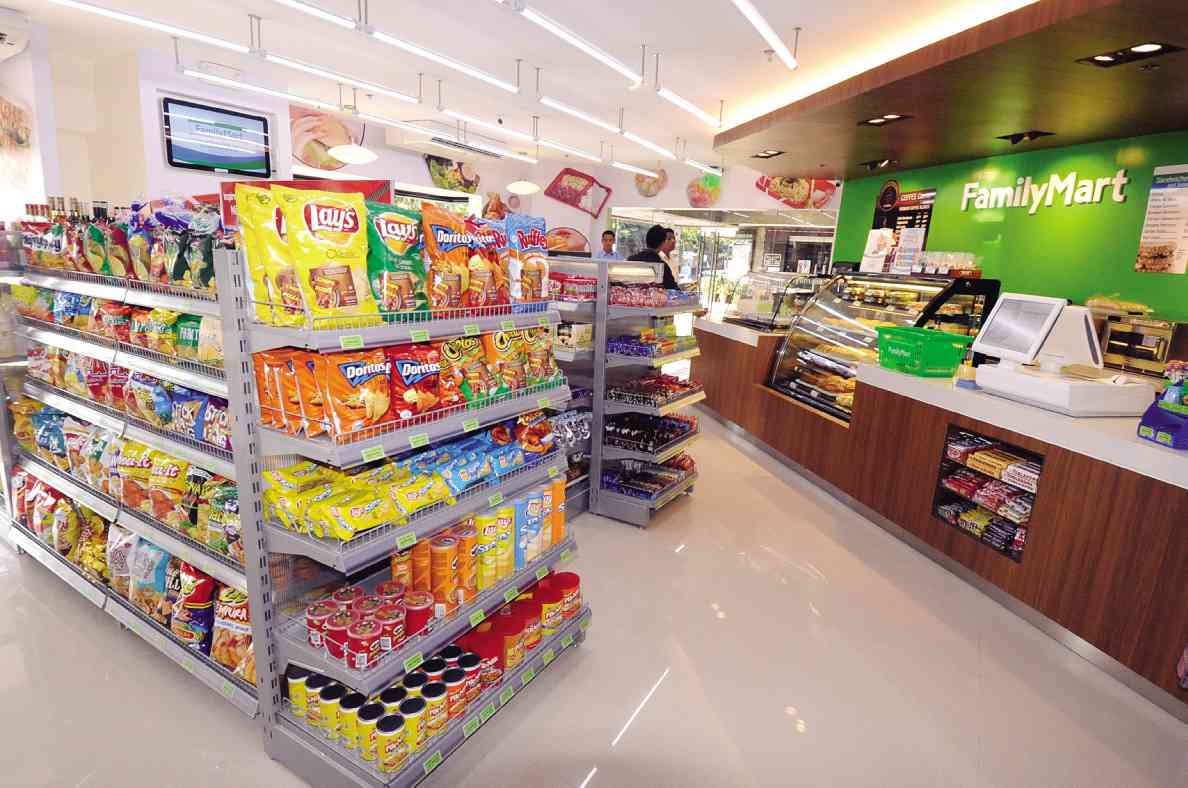
    Convenience-store operator FamilyMart Taiwan plans nearly 40 new stores in railway stations this year.

    The Japanese-headquartered company has just opened three new outlets in Taiwanese stations at Badu, Wanhua, and Luodong. Two more are about to open at the main Taipei station, with another 32 planned for 23 stations within two months. Once complete, the network will serve 20 million rail travelers per year.

    FamilyMart Taiwan is also catering to local tastes by selling snacks in partnership with various Taiwanese firms, such as bakery shop Master Fang, which will sell desserts at Kaohsiung Railway Station.

  • Metro Wholesale Myanmar Looking for Expansion

    Metro Wholesale Myanmar Looking for Expansion

    The German-headquartered wholesale food-and-grocery retailer is looking to open in Mandalay, Nay Pyi Taw, Taunggyi and other major metropolitan locations in the region.

    “We are constantly expanding our customer base and have set a very ambitious target. You will see good news in the very near future,” said Metro Wholesale Myanmar CEO Jens Michel. “The market response to our launch in March has been absolutely phenomenal. We have experienced huge customer interest in what we are doing, and have seen an enormous amount of new customers coming.”

    The firm now has more than 300 customers in the region’s hotel, restaurant and catering industries. The majority of Metro’s customers are local companies, including mega-hotel groups and big names as well as small and medium-sized enterprises.

    “We are here in a highly emerging market,” said Michel, “and do not underestimate its potential. We are always looking at how to achieve our target by working closely with local partners and our customer base.

    “We are conducting general and modern trade. This will enable our customer base to benefit from a wide range of products. We help customers to spend more time on their own businesses, focus on their own vision and strategies, while we take care of all food and non-food items they require as well as delivery to their businesses.”

    Metro Myanmar currently has a 5800sqm warehouse in the Thilawa special economic zone, and employs 150 staff of which 92 per cent are locals. It has invested about €10 million (US$11.33 million) and intends to keep boosting its investment in the territory.

  • Eight bidders left to Take Over Metro China

    Eight bidders left to Take Over Metro China

    Eight, not four, bidders have until June 10 to lodge a non-binding bid for the cash-and-carry business.

    Yonghui Superstores – part-owned by Dairy Farm Group – is among at least eight bidders shortlisted by Metro AG to tended for its Chinese business.

    The Metro China business is estimated to be worth between US$1.5 and $2 billion, but with eight consortiums in the running, the price is more likely to be at the higher end of the scale.

    Alibaba – in partnership with Taiwanese retailer RT-Mart International – and US retail giant Walmart, which already has 400 hypermarkets in China, are also on the shortlist.

    The other finalists are Suning Holdings, supermarket chain Wumart Stores, private equity group Primavera Capital, a consortium of Boyu Capital and property developer China Vanke and fresh-food delivery group Meicai.

    None of the shortlisted companies commented about the Metro China sale.

    With the sale process shrouded in secrecy, there have been differing reports to date on the progress. Last month, four companies were shortlisted.

    The sale process is expected to be completed in September, with the shortlisted bidders given until June 10 to lodge non-binding offers.

  • 600 Vietnamese staff trained for Hanoi’s metro line Opening

    600 Vietnamese staff trained for Hanoi’s metro line Opening

    Operational staff for Hanoi’s first metro line has been trained, but its opening date remains up in the air. 86 of them are in the driving department, with 46 main drivers. The rest are substitute drivers and technicians. All drivers have been trained and have practiced in Beijing, China for a year. Their experience ranges from driving 5,000-20,000 kilometers.

    “To prepare for the commercial operation, we have done both practical training and simulator training, including dealing with unexpected events,” said driver Tran Thanh Long.

    Over 500 people will work in the operating center to manage trains, maintain infrastructure, distribute tickets and discharge other responsibilities. Over this and next month, they will run drills for emergency evacuation, handling a large number of passengers and dealing with malfunctioning trains. The Vietnamese staff has been trained by Chinese experts. A representative of the contractor said that “most Vietnamese staff have met training standards and can operate the metro line immediately.”

    Another reason was that the Chinese contractor, China Railway Sixth Group Co., Ltd, has not submitted necessary documents to authorities for a final inspection, a source said then. But it is still unclear when the metro will start its commercial operations. The city’s long delayed Cat Linh – Ha Dong metro route missed last month’s deadline for commercial operation since construction was still not complete.

    Work on the metro started in October 2011 and was originally scheduled for completion in 2013. But several hurdles, including loan disbursement issues with China that were only resolved in December 2017, stalled it for years.

    The original estimated cost of $553 million ballooned to more than $868 million, including $670 million in loans from China.

    When completed, Hanoi’s first metro line will run from Cat Linh Station in downtown Dong Da District to the Yen Nghia Station in the south-west Ha Dong District.

  • Four Bidders shortlisted in Metro China sale

    Four Bidders shortlisted in Metro China sale

    Germany’s Metro has shortlisted four prospective bidders for its China business, including two of Mainland China’s largest retail groups.

    The Metro China sale has been in planning since last September, with formal bids invited in March as the German retail giant looks to quit the challenging market.

    Metro AG has invited Suning Holdings, Yonghui Superstores, Wumart stores and Meicai to submit bids before a deadline of late May, early June. Some of the bids may be lodged in partnership with private equity investors.

    Meicai is an unexpected inclusion in the shortlist. A local startup that acts as a conduit between farmers and restaurants, Meicai was founded by Liu Chuanjun, a local entrepreneur in 2014. According to a Bloomberg News report last October, the startup last year raised at least $600 million in a funding round led by Tiger Global Management and Hillhouse Capital, which would have valued the business then at about $7 billion.

    The Metro China sale is expected to net the Germany owner about $1.5 billion. The cash-and-carry business has 95 stores and reported $3 billion last financial year.