Tag: Metro

  • Metro to open first store in Jinan

    Metro to open first store in Jinan

    European supermarket chain Metro plans to open its first store in Jinan, Shandong province in August 2017.

    Located in Jinan’s Huaiyin district, Metro’s new supermarket started construction on November 15, 2016. So far, its main steel structure has been completed and main ceiling installation is nearly completed. With an area of 7,900 square meters, this new store is expected to open in August 2017.

    Metro’s entry into Jinan will boost Jinan’s business community and its cash and carry business model will lift the grade and competitiveness of the service industry of the city.

    Metro entered Shandong province in 2001; however, the company only opened one store in Qingdao over the following ten years. After 2010, Metro accelerated its development in Shandong and opened stores in cities like Yantai, Zibo, Linyi, and Weifang.

    At the same time, Ikea‘s new store in this area of Jinan will also start operation in August 2017.

  • HCM City metro projects short on capital

    HCM City metro projects short on capital

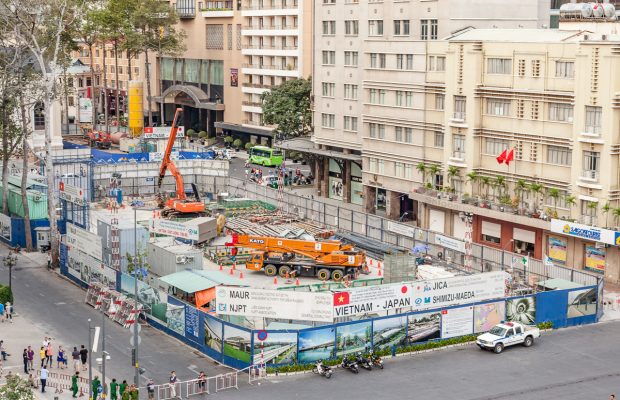
    A shortage of capital is the key problem of both Line 1 (Ben Thanh – Suoi Tien) and Line 2 (Ben Thanh – Tham Luong) urban railway projects.  The Ho Chi Minh City People’s Committee is the developer responsible for the two projects. At the Metro Ben Thanh-Suoi Tien project, the developer has been slow to pay contractors and may have to pay interest on late payment.

    According to a report submitted to the Ministry of Transport at the beginning of March 2017 by Le Van Khoa, deputy chairman of the Ho Chi Minh City People’s Committee, the payments for four construction packages have been delayed since September 2016.

    The reason is that the ODA capital provided for Ho Chi Minh City was only VND592.693 trillion ($26 million), a much lower amount compared to the VND1.95 trillion ($85.17 million) payable for the contractors.

    To deal with the current shortage, Ho Chi Minh City had to withdraw VND600 billion ($26.3 million) from the city budget to pay in advance for the consulting companies and contractors.

    With the current progress, although package No. 1a was started in November 17, 2016, the authority cannot pay the contractors as promised.

    Accordingly, by February 15, 2017, Ho Chi Minh City’s Urban Railway Management Boardwould have to pay in advance the amount of VND571 billion ($25 million).

    In case the developer fails to pay, the contract will be extended, which will result in numerous incurred additional expenses.

    Khoa said that the estimated ODA capital for Metro Line 1 is VND2.119 trillion ($93 million) in 2017.

    However, the project’s capital has not been added to the country’s plan on using ODA, which significantly affected the construction progress.

    By the end of February 2017, package No. 1b, used for the constructions of the stations between Saigon Opera House and Ben Thanh, was 41 per cent completed, while package No. 2 toconstruct the 17.1-kilometre stretch plus depots between Ba Son and Binh Duong was 65 per cent completed.

    Package No. 3 for the purchase of electromechanical equipment, locomotives, carriages, and railway tracks was 12 per cent completed.

    In general, the total disbursement of the project is VND10.9 trillion ($477 million), of which VND9.712 trillion ($425 million) is sourced from ODA.

    If the Japanese and Vietnamese contractors progress as scheduled, the total value of the completed parts in 2017 may reach VND5.320 trillion ($233 million).

    “The project should receive more ODA. It is essential to ensure the project’s progress as committed, as well as to avoid other incurred expenses, late payment penalties, and lawsuits from foreign contractors,” said the report.

    The 19.7-kilometre Ben Thanh-Suoi Tien Line goes through District 1 (Binh Thanh), District 2 (Thu Duc), District 9, and ends in Binh Duong Province (Di An District).

    Of the total, the underground parts are 2.6 kilometres, and the overhead parts are 17.1 kilometres long.

    The total investment after three adjustments has increased from VND14.415 trillion ($631 million) to VND47.325 trillion ($2.07 billion).

    The construction of the overhead part has been on-going since August 2012.

    The maximum speed along the line will be 80 kilometres per hour on the underground sections and 110 kilometres per hour on the bridge. It is forecasted to begin test runs in 2019 and be officially put into operation in 2020.

    Metro Line 2 in a worse spot

    Although Metro Line 1 is in slow progress, at least it has a forecasted launching period, while Line 2, which is also managed by Ho Chi Minh City’s Urban Railway Management Board, is struggling with investment adjustments and updating bid documents.

    Accordingly, the total investment of Metro Ben Thanh-Tham Luong is proposed to be VND47.605 trillion ($2.152,36 million), an increase of 56.6 per cent compared to the initial planned investment in 2010.

    The three biggest increases derive from land clearance, which rose from $119.38 million to $197.88 million; installation and purchase, which went from VND748.11 billion ($33 million) to VND1.198 trillion ($52 million); and reserves, which increased from $263 million to $368 million.

    By the end of February 2017, after six years of construction works, the disbursement was only VND700 billion ($31 million), including VND572 billion ($25 million) of ODA capital, which is equivalent to three per cent of the expected sum total.

    A representative of the Ho Chi Minh City Urban Railway Management Board admitted that implementation was slow compared to the promised schedule because the design has been adjusted.

    Additionally, the different instructions issued by the sponsors and the Vietnamese government on picking contractors and the elongated time for collecting feedback from sponsors also contributed to the slow going.

    As the most important Metro line in Ho Chi Minh City, the Ben Thanh-Tham Luong line will go from the new urban area Thu Thiem (District 2) and end in An Suong (District 12). It is forecasted that by 2025, it will handle 481,700 passengers a day.

    Besides the sharp increase in capitalisation, the launch will be delayed to 2024, despite initial promises to complete works by the end of 2016, as specified in Decision No 4474/QD – UBND approved by the Ho Chi Minh City People’s Committee.

    “The Ho Chi Minh City People’s Committee should review the implementation progress of each package used in these projects and have appropriate solutions to avoid the extension of process, which may lead to an increase in total investment, administration, and interest expenses, exchange rate risks, and fluctuations in construction material prices,” an expert said.
  • Singapore’s Yoma and METRO join hands for wholesale distribution in Myanmar

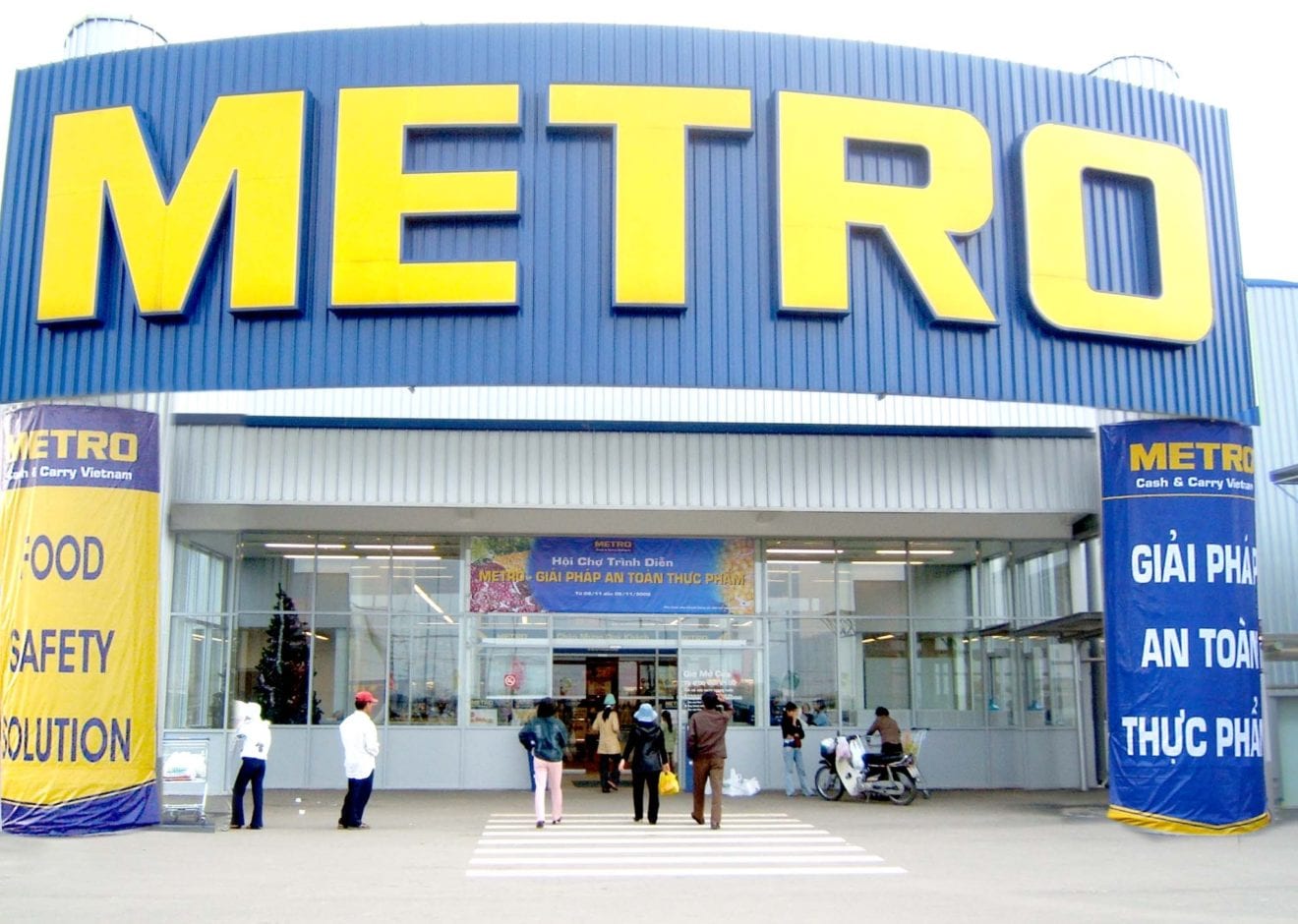
    Singapore’s Yoma and METRO join hands for wholesale distribution in Myanmar

    A new entity, METRO Wholesale Myanmar Ltd aims to “address the evolving needs of the local professional customers” for those who demand quality supplies.

    Yoma Strategic will hold a 15 per cent stake in the new business and the remaining 85 per cent will be taken by METRO.

    “METRO Myanmar will leverage on METRO’s procurement capabilities and Yoma Strategic’s existing logistics, warehousing and fleet leasing businesses to fast track its growth,” as mentioned in the release.

    METRO Myanmar is looking at improving the whole supply chain in the country.

    They will be offering more than 3,300 food an non-food items to customers like hotels, restaurants and independent small retailers.

    In Myanmar, retailers need to source their products in different ways from local distributors and importers and METRO is looking at creating a one-stop wholesale distribution platform. One popular wholesale center is named as Gandamar wholesale and is said to be supported by military backed Union of Myanmar Economic Holdings. We are confident that our partnership with METRO will bring global know-how in modern wholesale distribution and contribute to bringing reliable and safe food to the people in Myanmar,” said Melvyn Pun, CEO of Yoma Strategic.

    The wholesale and food specialist company operates in 35 countries with sales reaching about Euro 37 billion in 2015-16.

    Their B2B wholesale division METRO Cash & Carry serves across Europe and Asia to hotels, restaurants, small retail and catering firms. Just in recent years, they started to upgrade their competence in the hospitality industry, specifically, in the food service distribution work.

  • Moto boosts retail presence with 2 Moto concept stores

    Moto boosts retail presence with 2 Moto concept stores

    MOTO’S Philippine expansion remains at full throttle, with the opening of two new Moto Concept Stores in Metro Manila.

    Say #HelloMoto to two new stores located at the 4th level of Cyberzone areas in SM North EDSA Annex and SM Megamall both operated by MemoXpress.

    “The Philippines is a very important market for Moto, and we remain committed towards bringing the Moto experience to more Filipinos through our two new Moto Concept Stores. By offering greater product and service visibility, Moto is definitely on its way towards taking the Filipino digital lifestyle by storm,” said Dino Romano, Country Manager, Lenovo Mobile Business Group Philippines.

    As part of its goal to become the definitive #3 player in the global smartphone market, Lenovo is building scale and efficiency by expanding its Moto line across emerging markets, including the Philippines. Currently the fastest growing smartphone market in ASEAN, the Philippines has seen a total of 3.5 million smartphone shipments in the first quarter of this year, based on International Data Corporations (IDC)’s June 2016 report.

    Both Moto Concept Stores carry the newly-launched Moto smartphone lineup: its flagship line composed of Moto Z, Moto Z Play and the Moto Mods; its mid-range family, which consists of Moto G4 Plus, Moto G4 Play and Moto G Turbo; and the entry-level Moto E3 Power.

  • Cross-border eCommerce ‘set to skyrocket’ in China

    Cross-border eCommerce ‘set to skyrocket’ in China

    Cross-border eCommerce (CBEC) is set to skyrocket in China according to a new report from international think tank Fung Global Retail & Technology.

    To capitalise on this, international retailers need to complement their existing expansion strategy with online sales platforms, says Fung Global MD Deborah Weinswig.

    Cross-border eCommerce is the most efficient platform to reach increasingly affluent and sophisticated Chinese shoppers seeking products from overseas, says the report, The International Retailers’ Guide to Cross-Border E-Commerce in China.

    With Chinese authorities relaxing the rules, online purchases of overseas products are expected to increase to US$285 billion in value in 2018, up from US$136 billion last year.

    As well as authenticity being less of a concern, eCommerce purchases attract less taxes so are cheaper for consumers, writes Weinswig. As a result, it is projected that a quarter of the population will shop on foreign sites or through third parties in 2020, up from 15 per cent this year.

    “We expect CBEC will drive the next leg of eCommerce growth as Chinese eCommerce companies and international retailers launch globalised versions of their portals. By selling through CBEC, international retailers can reach Chinese shoppers regardless of whether or not they have a physical presence in China.”

    China is already the largest eCommerce market in the world, with the use of CBEC via such marketplaces as JD Worldwide and Tmall Global being attributed to the continuing rise of the upper middle class with its growing use of the internet and belief that international brands are of higher quality.

    Regulations formalised

    Most shoppers seek items related to wellbeing such as cosmetics and organic foods, expensive or hard to find domestically, says the report. Many foreign eCommerce companies have launched Chinese websites, and since late 2014 authorities have been formalising regulations including tax reforms and expediting customs clearances.

    Japanese companies in particular are targeting Chinese CBEC shoppers, using mobile apps such as Rakuten and China’s Wandou.

    Choosing the right platform is crucial, writes Weinswig. Options include…

    • Online marketplaces such as Alibaba’s Tmall Global, a third-party eCommerce platform that lets brands open a storefront. International distributors using this platform include Macy’s, Metro, Shiseido and Uniqlo.
    • Online direct sales such as Amazon.cn, Jumei Global Store, Kaola.com (for smaller brands) and Vipshop. Distributors buy from the retailers to resell to consumers.
    • Hybrid eCommerce platforms such as JD Worldwide that combine elements of an online marketplace and online direct sales. JD Worldwide partners include eBay, Lotte, Rakuten and Unilever.
    • Overseas shopping platforms.

    “To succeed in the Chinese market, international retailers are advised to have a strategic plan for CBEC that complements their China strategy,” writes Weinswig. “International retailers will need to decide which cross-border channels to sell on, driven by considerations of each platform’s targeted clientele and product category, costs, track record and suite of value-added services.”

    Fung Global Retail & Technology is based in Hong Kong, London and New York.

  • Vietnamese consumers prefer the ‘Made in Thailand’ label

    More than ever, consumers in Vietnam are looking for the ‘Made in Thailand’ label when purchasing consumer goods, and they’re willing to pay a premium for these products, according to experts.

    The high domestic demand for Thai products, they say, was the driving factor that resulted in the Thai Central Group earlier this year acquiring a controlling interest in 33 Big C Vietnam supercenters (and 10 convenience stores) and later Thai BCJ Group’s purchase of 19 Metro Vietnam superstores.

    The majority of Vietnamese consumers are willing to pay more for many key product categories, from baby food and appliances to electronics and apparel, as long as these goods were produced in Thailand, say the experts, reported Thai News Bureau.

    In each of the key categories, they say, at least 50% of domestic consumers are willing to pay a premium of more than 10%.

    More surprising, however, is the fact that the prices of Thai products are often lower than the prices of Vietnamese products of similar size and quality.

    Vu Dieu Thuan, a customer at Metro Ha Dong, says after careful consideration she chose to buy 5kg of Thai rice at US$4.71 (VND105,000) over Dien Bien rice at US$4.93 (VND110,000) because it tastes better.

    Experts say, many Vietnamese consumers report they regularly choose Thai made products over Vietnamese goods regardless of price on a regular basis.

    An assistant at the Metro in Ho Chi Minh City, points out that customers regularly purchase condensed milk from Thailand, which is US$.27 (VND 6,000) less expensive per can than Vietnamese milk.

    Only Thai clothing items are routinely more expensive than similar items made in Vietnam, says the assistant.

    Experts express the view that Thai products are positioned well in the domestic market. On the one hand they are less expensive than Japanese and Korean products of equivalent quality. On the other hand, they are of much better quality than Chinese products.

    To top it all off, they are aesthetically more appealing than Vietnamese products say the experts, adding that domestic consumers on the whole perceive Thai-made products as being of higher quality than local products. In fact, even when comparing Vietnamese and Thai products of similar price and quality, the majority of domestic consumers would still buy the Thailand-made items, they say.

    Still other experts disagree vehemently and say not so fast. Vu Vinh Phu, president of the Hanoi Supermarket Association, says Thai products are benefiting from better placement in stores like Big C and Metro.In these supercenters, says Mr Phu, the placement of retail products on shelves favors Thai products over Vietnamese products. One commonly used phrase in retail is “eye level is buy level”.Meaning that products positioned at eye level are likely to sell better. Stores like Big C and Metro are putting Thai products at eye level or just below, which is the best location and this explains in part why their sales are better.

    The location of goods within an aisle is also important, says Mr Phu. Vietnamese goods are being placed at the start of an aisle and don’t sell as well as Thai products placed in the center of the aisle. As well items placed at the end of aisles sell better because of higher visibility and Thai products are given these choice locations as well, says the Vietnam Association of Seafood Exporters and Producers (VASEP). The battle between supercenters and their placement of Vietnamese produced goods continues, says VASEP, adding they are urging Big C and Metro to give better visibility and placement to Made-in-Vietnam products.

  • Unicom trials ADVA’s G.metro technology

    Unicom trials ADVA’s G.metro technology

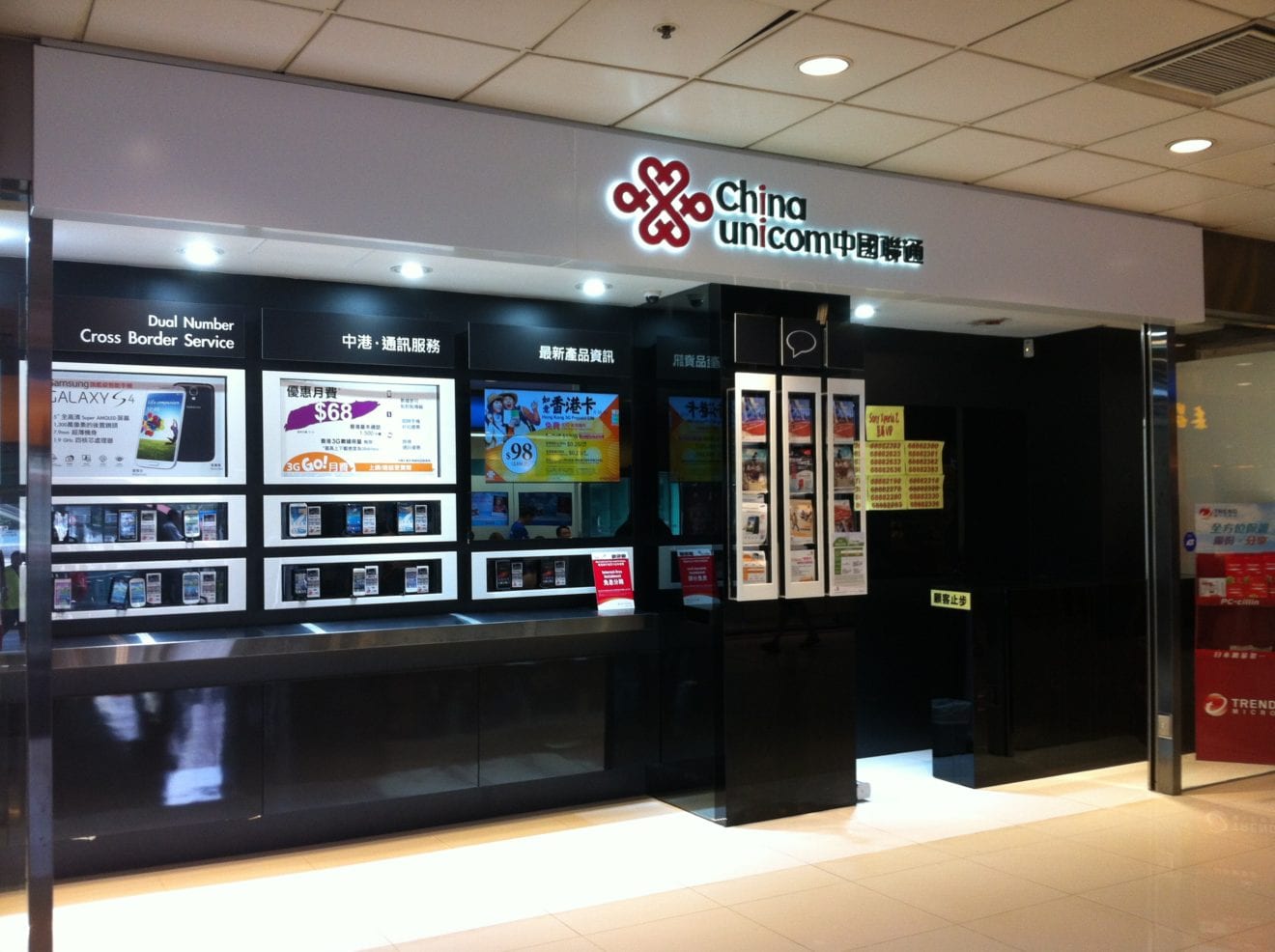
    China Unicom has completed a field trial of ADVA Optical Networking’s prototype G.metro (WDM-PON) technology in a fronthaul network.

    The operator demonstrated the use of a prototype technology involving using a single bidirectional fiber link between head-end and tail-end equipment during a lab demonstration in Beijing.

    The prototype uses autonomous transponders to help reduce the costs and complexity involved in metro access network applications.

    “Due to booming demand for mobile data, it’s become essential that we find innovative ways to increase capacity. Converged metro-access networks are key to this, but so are reducing complexity and improving operational efficiency,” China Unicom network technology research institute director Guangquan Wang commented.

    “During the trial, the prototype was installed in one of our central offices in Tianjin to replace the transmission link of one of our working LTE stations. The results showed that the new technology integrated seamlessly with our current wireless equipment and had no impact on services whatsoever.”

    G.metro directly distributes DWDM wavelengths to remote radio units, base stations, desktops or end users, enabling up to 40 DWDM wavelength channels with a 100GHz grid. Each channel is able to transmit data at 10Gbps over a 20km fiber distance without optical amplification.

  • Singapore Golden Week targets shoppers

    Singapore Golden Week targets shoppers

    Singapore Retailers Association (SRA) is launching the inaugural Singapore Golden Week (SGW), a lifestyle event to be held over three weekends from September 30  to October 16.

    Its aim is to heighten Singapore’s appeal as a lifestyle destination with a suite a retail privileges, shopping reward and pampering experiences as enticement.

    Global payment network UnionPay is the official card for the event, with special privileges for cardholders across more than participating outlets including retail, F&B, beauty and wellness, and hotels and attractions.

    As well as exclusive discounts, cardholders are offered gifts when making purchases at participating merchants using their cards. The merchants involved include department stores Isetan Scotts, Metro and Robinsons, clothing labels Dockers, Dorothy Perkins, Karen Millen, Levi’s, TM Lewin, Topman, Topshop and Warehouse; and attractions such as the Alive Museum.

    There is also a game in which cardholders can win shopping vouchers and prizes worth more than S$10,000 (US$7388) in all, based at Ion Orchard.

    Visitors – not just cardholders – are also welcome at the UnionPay Golden Pampering Lounge in Ion Orchard’s atrium, which offers gourmet coffee and free-flow gourmet cookies.

    Cardholders can access the VIP area, which has massage chairs plus gourmet coffee sprinkled with edible gold dust.

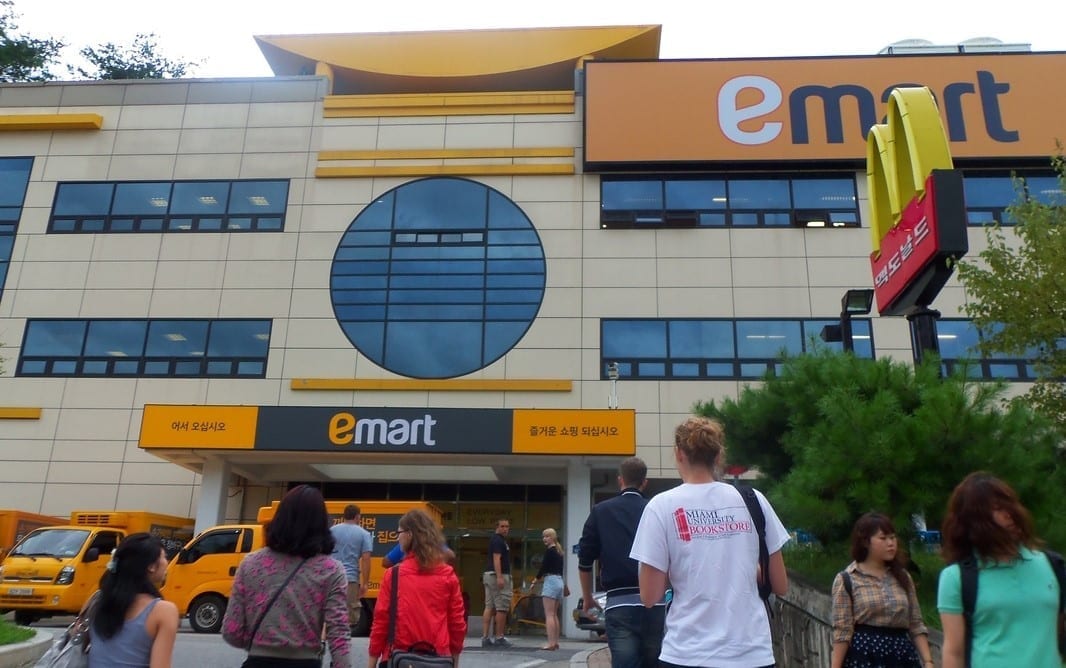
  • South Korean retailer E-mart to invest $200m for retail chain ops in Vietnam

    South Korean retailer E-mart to invest $200m for retail chain ops in Vietnam

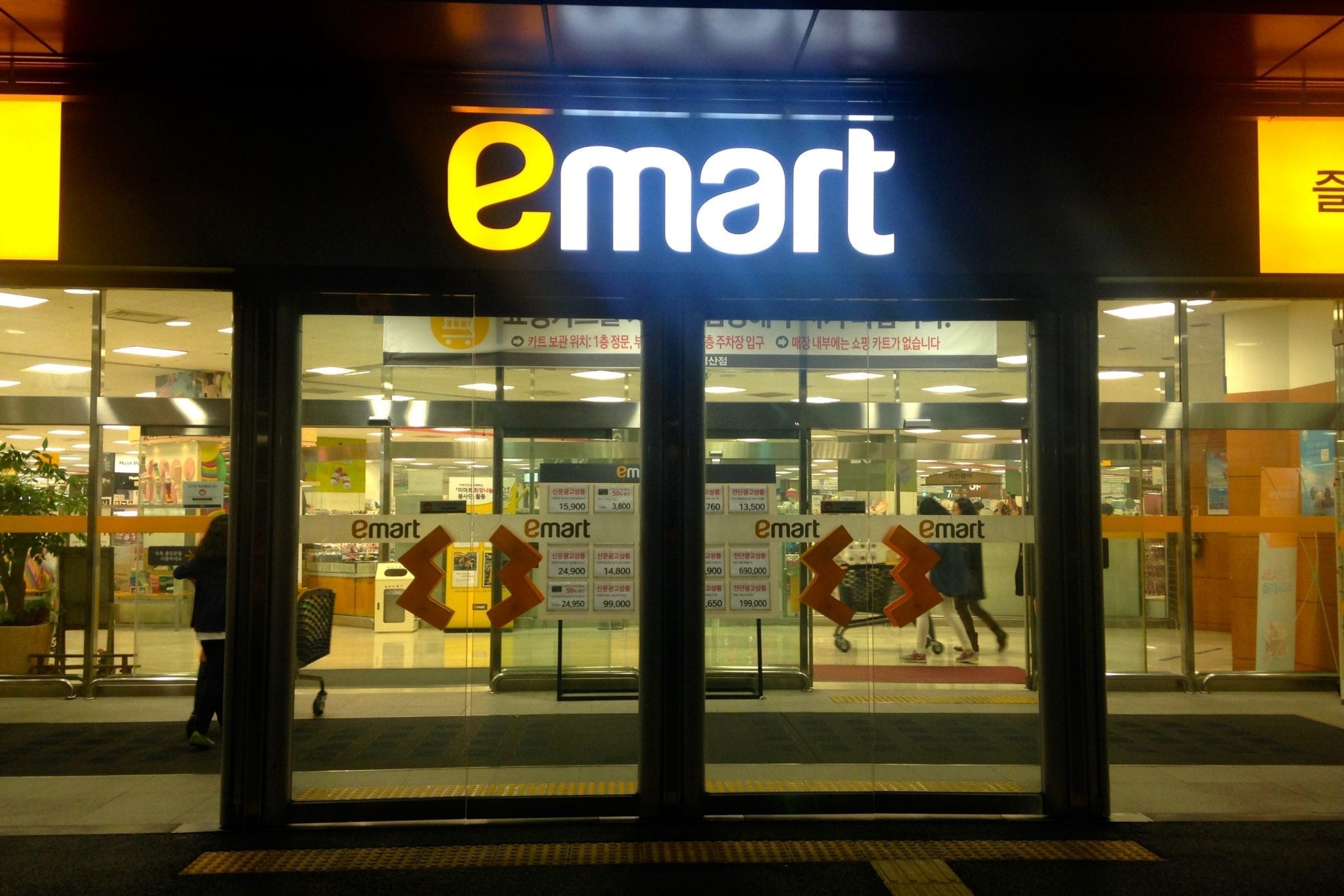
    A memorandum of understanding between E-mart and Vietnam’s Ho Chi Minh City was signed on September 9. Emart will make the investment over the next four years.

    The investment is expected to be used for building new supermarkets and commercial facilities, as well as local social development. E-mart opened a supermarket worth $60 million in Ho Chi Minh City last year, in addition to a toy library in the city.

    The Korean company had earlier said it planned to open 52 stores in Vietnam by 2020.

    E-mart is betting the country’s rapid growth, averaging 5.2 per cent since 2013, driven by a young and urban demographic with higher spending power.

    Vietnam’s growth was the highest among Southeast Asian peers featured in the 2016 Global Retail Development Index conducted by US management consulting firm AT Kearney. Vietnam was seen as the 11th fastest emerging retail market, up from 28th spot two years ago.

    Government data showed that retail sales in the country rose 7.4 per cent year-on-year in August 2016. Consumer spending rose to $116.2 billion, while the retail market was forecast to be worth $109 billion in 2017.

    Free trade pacts signed by Vietnam have encouraged foreign retailers to tap into this liberalizing market. Vietnam fully opened its retail industry in 2015, which is coupled with a lot of tax preferences for investors.

    Japan’s Takashimaya and Miniso have set up retail shops in Vietnam in July. Meanwhile, 7-Eleven is planning a local presence through the franchising route.

    Existing players are opening new outlets, as well as acquiring local businesses. Vingroup, the most active domestic company which launched over 90 stores in 2015, aims to introduce twice as many in 2016. It acquired Maximark and Vinatexmart, two Vietnamese operators, as part of this strategy.

    Thailand’s Central Group had acquired Big C Vietnam for $1.05 billion, along with electronics store chain Nguyen Kim and e-commerce site Zalora Vietnam. Other M&A deals include TCC Holdings buying Metro Cash&Carry Vietnam, and AEON acquiring Fivimart and Citimart.

    Central has since announced that it has halted further investment in  the country and would focus on consolidation.

  • Metro China launches chain’s first green store

    Metro China launches chain’s first green store

    German retail and trading giant Metro China has launched its first global green store in the Pearl River delta city of Dongguan.

    It aims to upgrade its sustainable development in the Chinese market, where it had double-digit growth in its latest fiscal year.

    Metro China president Jeroen de Groot says the green renovation of its Dongguan Wanjiang store is estimated to help it cut its annual energy consumption by as much as 50 per cent. It makes full use of clean energy, namely solar and wind power.

    The renovation cost more than 5 million yuan (US$75,700), and Metro plans to convert all its mainland stores to become green.

    “Innovation and change have always been the driving forces for sustainable growth at Metro, and the green renovation of the Dongguan Wanjiang store is our new endeavour in the field of energy conservation and environment protection, aiming to promote long-term social sustainability,” says de Groot.

    Metro opened its first mainland store in Shanghai in 1996 and now has 84 stores employing more than 11,000 people in 58 Chinese cities. Its annual sales volume reached €2.66 billion (US$3 billion) during the fiscal year to September 30 last year, up 17.4 per cent.

  • Private-label deal for E-mart Korea

    Private-label deal for E-mart Korea

    Discount seller E-mart Korea has signed an agreement to supply its private-label items to Metro China.

    It is introducing four items from its No Brand range, to be sold from next month. It is the first time for E-mart to export to an overseas offline store.

    E-mart’s private-label products already sell in Mongolia and Vietnam. Sales of its No Brand range at its Ulaanbaatar branch, which opened last month, have already reached 600 million won (US$533,000), accounting for about 7 per cent of total sales. No Brand contributed 3 per cent of sales at its Vietnamese outlet, which opened in December.

    Introduced in April last year with nine items, No Brand now has more than 300 products, from butter cookies to car window wipers, and posted 63.8 billion won turnover in the first half of this year.

    Metro is a German retailer that is the third-largest franchise globally following Walmart and Carrefour. It has more than 2200 outlets in 33 countries, with 88 in China.

  • Metro Retail to invest P10 B to double network

    Metro Retail to invest P10 B to double network

    The Gaisano family’s Metro Retail Stores Group Inc. (MRSGI) is pouring in P10 billion to double the size of its network in the next five years.

    The plan is to increase the network to 800,000 square meters in terms of gross floor area.

    So far, the company has already secured about 40 percent of the target, which will open in the next two years.

    In the first half, MRSGI has added 30,000 sqm of GFA, bringing its store network to 49 covering 24 supermarkets, 13 hypermarkets and 12 department stores.

    The company reported a net income after tax of P262 million in the first six months of the year, up 24 percent year on year.

    MRSGI posted a 10-percent all-stores growth, fueled by the strong performance of the hypermarket segment. It registered same stores sales growth of five percent.

    Frank Gaisano, chairman and CEO of MRSGI, said the company would continue to cement its presence in the Visayas region by capitalizing on its existing locations and adding new stores in prime locations.

    “Despite challenging conditions, we are encouraged by our bottomline and same store sales growth led by our hypermarket format. This was achieved by our familiarity with the Visayas region and the markets that we serve,” Gaisano said.

    The company has partnered with property giant Ayala Land Inc. for the establishment of its stores in four new Ayala commercial developments.

    These comprise a department store and supermarket in Bacolod City, Negros Occidental; a supermarket in Iloilo City, a supermarket in Cebu City, and a department store and supermarket in Pasig City.

    MRSGI likewise entered into a lease agreement with a local government unit in Negros Oriental to set up its first store in the province.

    For its supply chain and logistics requirement, MRSGI inaugurated a distribution facility in Cebu with advanced storage and technology features.

    Gaisano remains optimistic about its growth prospects.

    “The continued development and growth in the country this year as well as the resilient OFW remittances and BPO industry are fueling domestic consumption. Aligned with this development, we are ahead of schedule in doubling our footprint by 2020, with more than 40 percent of this target already currently secured,” Gaisano said.

  • Globe to provide free Wi-Fi in LRT1 stations

    Globe to provide free Wi-Fi in LRT1 stations

    The Philippines’ Globe Telecom has agreed to provide free Wi-Fi services in all 20 stations of metro Manila’s Light Rail Transit System-Line 1 (LRT1).

    The company has agreed to provide Wi-Fi services to the roughly 400,000 daily LRT-1 passengers as well as Light Rail Manila Corp (LRMC) employees.

    Globe will also provide a fiber network extending the length of the system, covering all LRT-1 stations and LRMC’s depot in Pasay City, and deploy cell sites in each station to improve wireless connectivity.

    Globe Network Technical Group’s SVP for program governance Joel Agustin said the company will use its newly-acquired spectrum in the 700-MHz, 1800-MHz and 2600-MHz bands to provide the capacity required to handle the massive mobile traffic volumes at the stations.

    “As the purveyor of the Filipino digital lifestyle, we, at Globe recognize customer demand for constant connectivity even as they are on the go,” he said. “We are confident that the deployment of free Wi-Fi services in all LRT stations will bring better communication or even improve work productivity for our customers.”

    The operator separately announced that data traffic through the Globe Telecom network grew 35% year-on-year in the first half of 2016 to 151 petabtyes.

    Mobile data revenues surged 46% over the same period to 17.8 billion pesos ($3.66 billion), the operator revealed in its recent results. This comprised 39% of total mobile revenues, up from 27% in 1H15.

  • Scion of Metro store family facing drugs charges

    Scion of Metro store family facing drugs charges

    A member of the family which founded Singapore’s iconic Metro department stores, Ong Jenn, is facing more than half a dozen charges related to the possession, consumption and trafficking of cannabis – which is a Class A controlled drug.

    Ong Jenn

    According to court documents obtained, the alleged offences happened in October 2014.

    For the amount of cannabis Ong has been accused of trafficking, he faces between five and 20 years’ jail and five to 15 strokes of the cane for each charge. For the possession and consumption of a controlled drug, the 41-year-old could be jailed for up to 10 years and/or fined up to S$20,000 per charge. His case has been scheduled for a pre-trial conference on Aug 19.

    Court documents detail how on or before Oct 30, 2014, Ong allegedly conspired with Mohamad Ismail Abdul Majid to traffic cannabis. On that date at about 4.20pm, along Jurong Port Road near bus stop B05, Mohamad Ismail was in possession of one block of “not less than 92.68 grams of… cannabis” and another block containing “385.1 grams of fragmented vegetable matter which was analysed and found to be cannabis mixture”.

    The charges allege that Mohamad Ismail had the two blocks so they could be delivered to Ong.

    At about 1.20pm the next day, in a car parked at Ngee Ann City, Ong was found in possession of a vaporiser, which is an inhalation device. According to the charge sheets, he allegedly intended to use the vaporiser to consume a Class A drug. Ong is also accused of consuming “11-nor-delta-9-tetrahydrocannabinol-9-carboxylic acid”, which is a component of marijuana.

    Authorities found Ong allegedly in possession of one block of cannabis weighing 75.32 grams and one block of cannabis mixture weighing 284.7 grams at a home in Bishopsgate at 2.10pm. He is accused of having these for the purpose of trafficking.

    Ong is represented by a team from law firm WongPartnership, including Senior Counsel Tan Chee Meng. Ong’s lawyers declined to comment as proceedings are ongoing.

    According to his LinkedIn profile, from 2003 until August this year Ong was a Business Development Manager at Metro Holdings, whose core businesses are retail, property development and investment. The retail interests include three Metro stores in Singapore. He’s also the founder of Tompang, a peer-to-peer retail platform operator.

    Metro’s latest annual report lists Ong as a “substantial shareholder” in Metro Holdings as at Jun 13. Ong is the son of the late Jopie Ong Hie Koan, who helmed Metro from 1973 until his death in February this year.

  • Retail changes hit Vietnamese labels

    Retail changes hit Vietnamese labels

    After acquiring supermarket chains in Vietnam, Thai retail groups have started strengthening the distribution of products from Thailand to the detriment of Vietnamese labels.

    Central Group and BCJ Group now have more than 50 supermarkets and convenience stores in Vietnam, and VietnamNet reports that more than half of the retail market share in Vietnam is now in Thai hands.

    Metro wholesale supermarkets, which have changed from German to Thai ownership, now feature Thai products in a special area by the main entrance, including household appliances, clothing, processed food and cosmetics.

    VietnamNet says the volume of Vietnamese goods in supermarkets and shopping malls has dropped two-thirds, being replaced by Thai products.

    Vietnamese manufacturers have complained about the volume of their products being cut back after Metro changed hands. Vietnamese goods have reportedly also been replaced at other retail chains, including Big C and B’s Mart.

    Saigon Food general director Le Thi Thanh Lam says that foreign-owned retail chains always demand high discount rates from suppliers.

    Vietnam High-quality Product Association chairperson Vu Kim Hanh says Thai goods will become a major rival for Vietnamese.