Retail News CRM

Tag: michael kors

  • Global Brands to Sell US Licensing Businesses to Differential Brands

    Global Brands to Sell US Licensing Businesses to Differential Brands

    The move, announced at the release of its annual results yesterday, will allow it to cut debt, pay a modest special dividend to shareholders and free capital to grow “a more focused business”, the company said. It will also result in about half of its 7000 staff leaving the company.

    Global Brands Group is currently carrying about $1.1 billion of debt, much of it related to its 2014 spin-off from Li & Fung and subsequent listing.

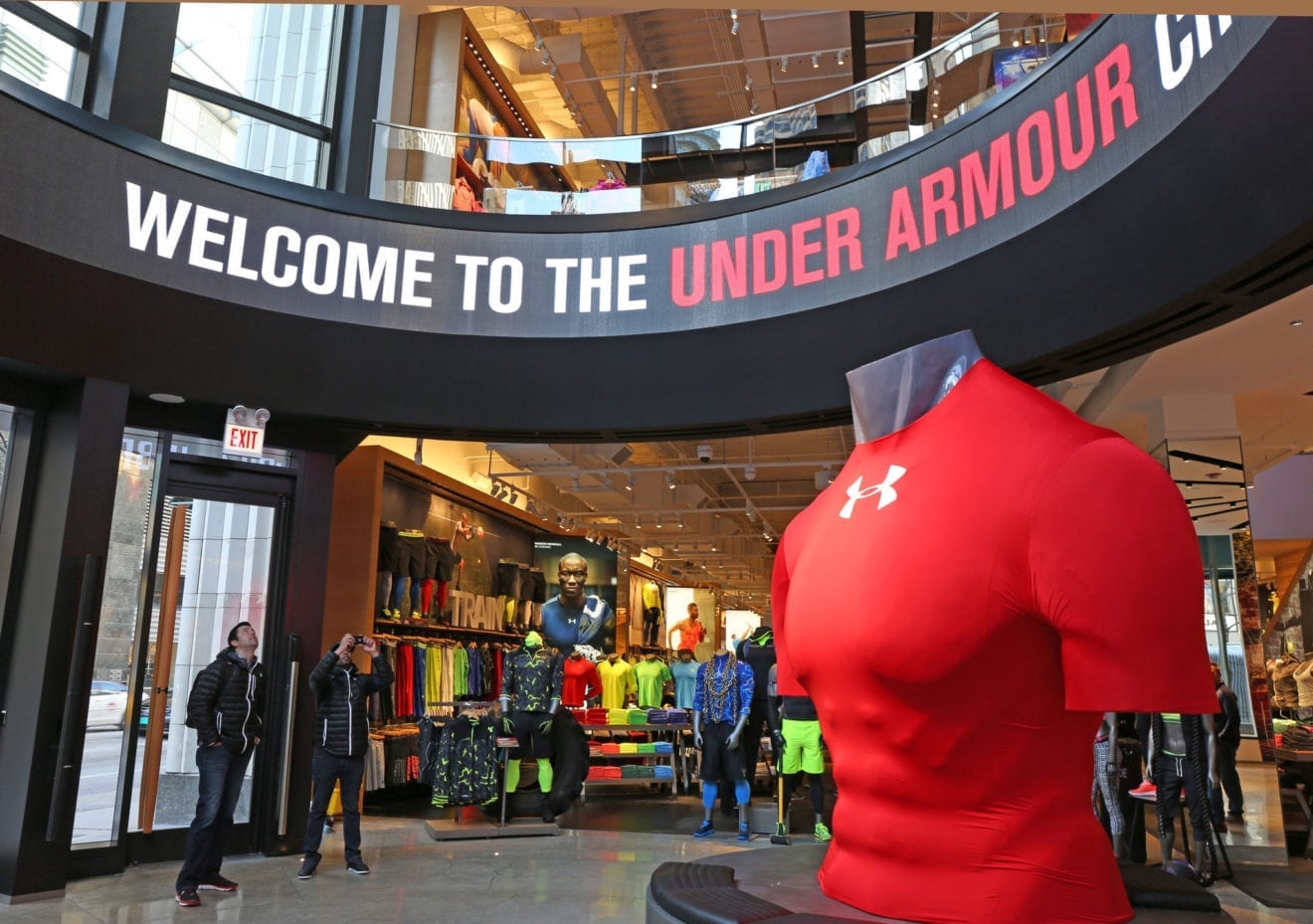
    The assets to be transferred include licences for Disney, Star Wars, Calvin Klein, Under Armour, Tommy Hilfiger, Bebe, Joe’s, Buffalo David Bitton, Frye, Michael Kors, Cole Haan, Kenneth Cole and the BCBG Max Azria label which it bought last year for $27.4 million after the company filed for bankruptcy.

    CEO Bruce Rockowitz said the sale was the outcome of a strategic review of the business.

    “We concluded that divesting the portion of our business that has a high present-day value, was the way to move forward. With this transaction, the group will be able to improve our balance sheet significantly and simplify our organisation, while focusing on the less established lines of business where we see high growth potential going forward.”

    Subject to shareholder approval, the deal will see Global Brands Group become “simpler, flatter and more nimble”.

    The company said that on the branded product side, the group’s European and Asian businesses will remain as before, while its US business will now focus on footwear and its remaining fashion business. Brand Management will continue to be managed on a global basis.

    “Looking ahead, we will continue to attract new licenses to our portfolio with a tighter and deeper focus on our businesses,” said Rockowitz. “At the same time, we will continue to improve the efficiency of our existing businesses, delivering synergies across our platforms. In addition, we have embarked on a significant cost reduction program across the organisation and we are committed to improving our cash flow via a combination of tighter working capital management, and even stronger cost discipline.”

    Revenue up but write-downs cost

    For the year to March 31, Global Brands Group increased its revenue by 3.4 per cent to $4.023 billion.

    However sales were impacted by Coach taking its footwear business in-house after their licence expired in June last year, and the cessation of the Quiksilver kids fashion licence when the company declared bankruptcy.

    Total margin increased from 28.5 per cent to 31.2 per cent, however operating costs increased by 37.3 per cent to $1.254 billion, driven largely by transition costs for new licenses in men’s and women’s fashion and additional operation expenses for running the new brands.

    The group also made one-off, non-cash adjustments in relation to impairments from the write-off of a receivable arising from a loan made by the company, and various intangible assets, which totalled $94 million.

    “In addition, taking into account this strategic divestment, the external market condition and business performance, the group performed an impairment test and recognised a non-cash goodwill impairment of $1.05 billion during the financial year,” the company said. That resulted in a net loss of $887 million for the year, however earnings before interest, taxes, depreciation and amortisation was steady at $379 million.
  • Michael Kors sales up 11%, driven by Jimmy Choo revenues

    Michael Kors sales up 11%, driven by Jimmy Choo revenues

    Michael Kors Holdings recorded $1.18bn in the crucial fourth quarter, close to an 11% gain on last year, a revenue result driven most by sales brought in from Jimmy Choo, the luxury shoe business it acquired last summer for $1.2bn.

    Like-for-like sales during the three months to end of March were up 2.3%, besting expectations for a 1% decline, marking the first time in two years that Michael Kors reported a comp sales rise. For the same period last year, comp sales were down 14.1%.

    By brand, Michael Kors sales hit $1.07bn, the rise in sales at its own stores helped offset the decline in wholesale

    Less discounting also boosted operating margins and helped the company swing back into the black. Net income was $44.1m, or 29 cents a share during the quarter, compared to a net loss of $26.8m or 17 cents per share last year.

    For the year, the company reported profit of $591.9 million, or $3.82 per share. Revenue was reported as $4.72 billion.

    In light of sluggish in-store retail sales, Kors has been trying to overhaul its business as shoppers shift many of their purchases online, where there’s an abundance of luxury goods at lower prices.

    The company said it also closed some locations during the quarter, cutting some costs.

    Looking forward, the American company reiterated that it remained on the lookout for further acquisitions following the Jimmy Choo deal.

    “We will continue to explore acquisitions to complement our existing luxury portfolio,” said chairman and chief executive John Idol.

    For the current quarter ending in July, Michael Kors said it expects revenue in the range of $1.14 billion

    The company expects full-year earnings to be $4.65 to $4.75 per share, with revenue expected to be $5.1 billion and flat same-store sales.

  • Asia safes Michael Kors performance

    Asia safes Michael Kors performance

    Asia proved the strongest growth market for premium apparel and accessories retailer Michael Kors last year, offsetting ongoing weakness in its largest market, the Americas.

    Asian sales increased 17.5 per cent to US$137.7 million in the fourth quarter and were up 33.7 per cent to $469 million for the year.

    Michael Kors sales and profit numbers released overnight included a better than expected fourth quarter, but flat forecasts for the year ahead disappointed analysts.

    Net income for the three months ended March 31 was $44.5 million, a significant improvement over a $26.8 million loss during the same period last year.

    Fourth-quarter comparable Michael Kors sales were up 2.3 per cent on strength in accessories, footwear and men’s categories, but fell 1.7 per cent on a currency-corrected basis.

    Michael Kors has been investing heavily in transitioning its business model following the acquisition of Jimmy Choo last year, with chairman and CEO John D Idol saying a solid foundation had been created.

    “We created a global luxury group with the acquisition of Jimmy Choo and completed the first year of our Runway 2020 strategic plan for the Michael Kors brand, ending the year significantly ahead of our expectations,” he said.

    “Looking to fiscal 2019, we have a number of initiatives planned to drive growth in both of our luxury brands.

    The company expects building momentum to deliver first quarter revenue of around $1.13 billion, with a $140-$145 million contribution from Jimmy Choo’s 182 stores.

    Neil Saunders said the addition of Jimmy Choo had masked weakness in Michael Kors sales figures for last year.

    “While the headline growth number from Michael Kors looks strong … it is flattered by the addition of Jimmy Choo sales; when these are stripped out, the growth plummets to a lacklustre 0.6 per cent,” Saunders said.

    “This anemic underlying growth rate comes off the back of a dire performance last year when revenues plunged by 11.2 per cent. Taking account of all these things, the fashion brand is ending its fiscal year with soft growth.”

    Store renovations, expansion into new luxury concepts, a renewed focus on e-commerce and the launch of a new loyalty program have emerged as key pillars of the company’s 2020 strategic plan.

    In comparison, Americas sales declined by 2.5 per cent to $342.8 million in the fourth quarter and by two per cent to $1.67 billion for the year.

    “Perhaps the most damning figure is the Americas retail sales number,” Saunders said.

    “A particularly worrying outcome given the 18 per cent decline posted in the prior year. In our view, this number clearly indicates that Michael Kors is not back to full strength and still has a lot of work to do on its proposition.”

    Encouragingly, retail growth and the addition of Jimmy Choo bolstered margins, resulting in a 14.5 per cent increase in gross profit.

    Jimmy Choo sales were $107.9 million worldwide in the fourth quarter and $222.6 million for the full year, with Europe and the Middle East driving turnover.

    There were 1011 stores in Michael Kors business as at March 31, including 829 Michael Kors stores.

  • Michael Kors numbers is worrying

    Michael Kors numbers is worrying

    The latest numbers from Michael Kors are far from being a good result, indicating a distinct lack of momentum at the brand.

    In some divisions, the Michael Kors brand has experienced a reversal of fortunes since the last reporting period and the results highlight the company was not one of the winners this holiday season as it was not able to capitalise on heightened consumer spending and confidence.

    An overall sales growth of 6.5 per cent might look reasonable enough, however, this is inflated by the addition of revenue from Jimmy Choo, which contributed $114.7 million during the quarter. Remove this, and revenue fell by 2 per cent. Even this number is flattered by some favorable currency movements; take these into account and revenue dipped by a rather more depressing 3.9 per cent.

    Admittedly, part of the decline at the core brand is down to a pullback from unfavorable sales channels. However, as this process has been ongoing for a long period, it cannot be used to explain away the weak performance entirely.

    Michael Kors has full control of its retail business, where it reported modest growth of 1.1 per cent. However, that number hides some worrying weaknesses: all of the growth in retail came from the opening of 32 new stores over the past year. And at a regional level, only Europe and Asia increased revenue. Within the Americas, retail sales decreased by 4.5 per cent and the poor store performance contributed to a global comparable sales dip of 3.2 per cent. Worryingly, all of the growth numbers are materially worse since the prior quarter. In other words, while the overall retail and luxury market strengthened, Michael Kors’ performance deteriorated.

    The sales softness might be acceptable if the company could point to a stronger bottom line. However, this is not the case. Operating margins were static in the retail group and fell for the Michael Kors division as a whole. As a consequence, operating income fell by 8.3 per cent over the prior year. With its relatively weak margins, Jimmy Choo did little to offset this.

    Despite attempts to revive the brand, it is clear that Michael Kors has lost momentum and is now heading in the wrong direction. This does not mean the strategy is entirely wrong; indeed, we would argue that the company is stronger now than it was a couple of years ago. However, Michael Kors needs to review its positioning and think about how it can connect more effectively with consumers.

    One of the issues is that Michael Kors is a fairly brash brand that lacks the softness of classic luxury labels. This plays well in some segments, but it alienates others – and that alienation is growing as consumers increasingly look for authentic and unassuming products. Admittedly, this is a difficult balancing act for Michael Kors, as it needs to be edgy and distinct, but at the same time generate broader appeal. However, we believe the balance is currently wrong.

    Jimmy Choo has been more successful at squaring this circle and has a playbook that Michael Kors should look to emulate.

    Overall, we do not see Michael Kors unfavourably, and we believe management has addressed many of the weaknesses that previously plagued the company. That said, it is clear there is a lot more work to be done before better results come through.

    -Neil Saunders

  • Xidan Joy City’s new zone unveiled to mark 10 year anniversary

    Xidan Joy City’s new zone unveiled to mark 10 year anniversary

    Beijing’s iconic Xidan Joy City celebrated its 10 year anniversary today by unveiling its newly renovated Rose Garden relaxation zone. The celebration also marks the completion of the first phase of a significant upgrade of the mall’s interior and public areas that will continue until 2019.

    Mall owner COFCO has commissioned Woods Bagot to lead the interior design of renovation works as part of its wider strategy to deliver a new generation of Joy City malls that continue to stay ahead of changing lifestyles and interactive digital technology in China.

    Already a favourite destination among Beijing’s trend-setters and fashion-conscious youth, the 185,000 m2 mall is arranged over 12 floors in an established downtown shopping district and is home to a range of global brands including Apple, Kate Spade, Michael Kors, Sephora and Zara.

    When the renovation is complete in 2019 the mall’s leading brand portfolio will be showcased across eight diverse thematic areas, providing a change of pace and an engaging journey for visitors as they move through the space.

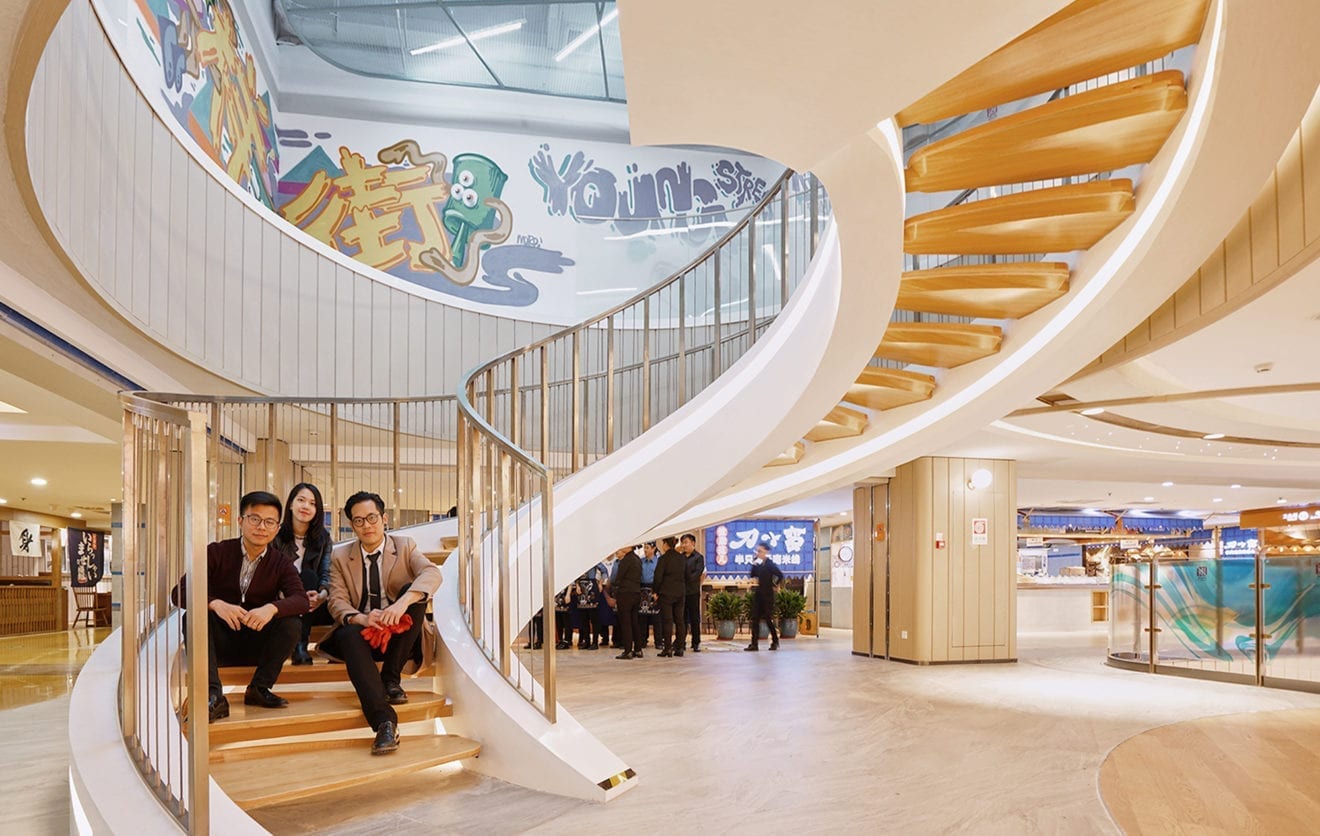
    Xidan Joy City’s reimagined Rose Garden is a spacious relaxation area within the F&B zone featuring a spectacular organic-form wood and glass spiral staircase as its focal point.

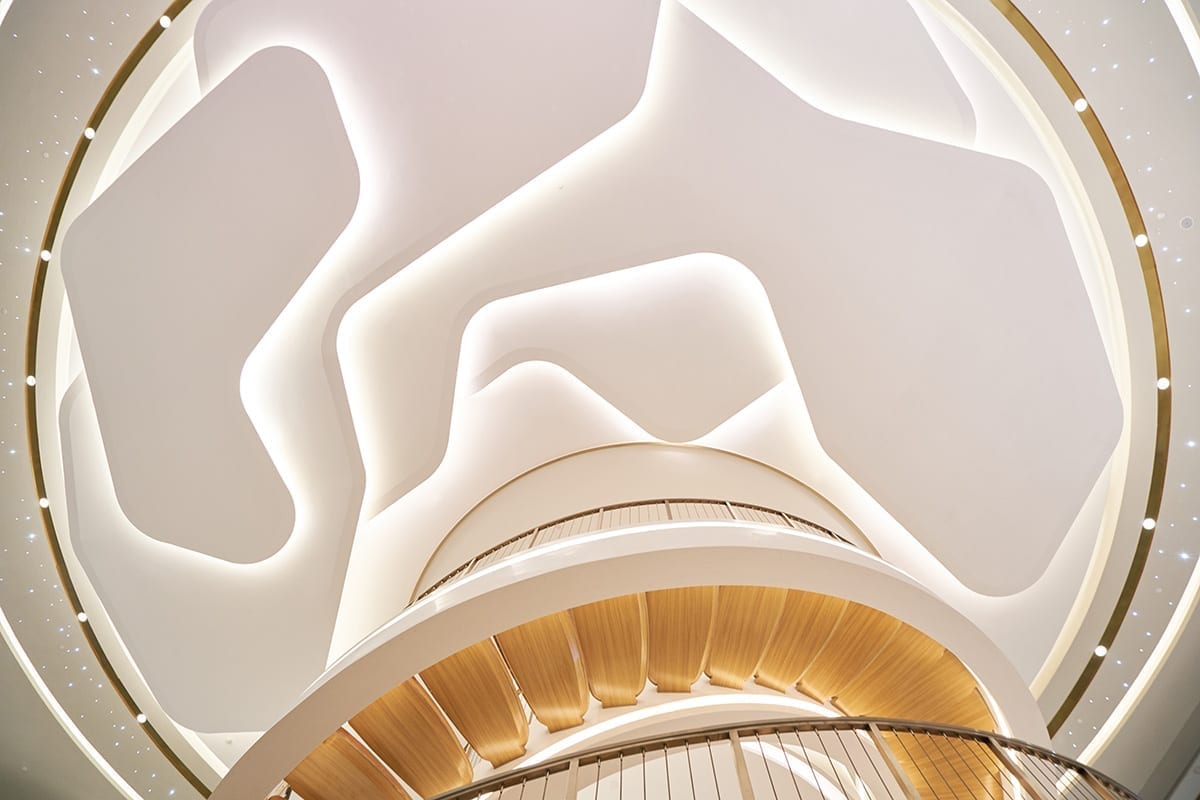
    The Rose Garden offers breathing space in an outdoor-themed environment, bathed in abundant natural light during the day and lit dramatically from above at night by an abstract rose ceiling light fixture. Different-height seating scattered with foliage and greenery gives shoppers a unique line of sight to enjoy a more natural and personal experience as they relax.

    Billy Ip, Woods Bagot, said:

    “Beijing’s youth market has evolved greatly over the last decade, with social, economic and technological developments driving new trends, desires and lifestyles. Visitor experience is the new battleground for this sophisticated audience who seek to spend time in unique, engaging environments.

    “For Xidan Joy City’s many fans, the Rose Garden is a space where many happy memories have been made. We have honoured this sentiment by creating a place for visitors old and new to both recall and build new memories.

    “Woods Bagot’s concept for the revived Rose Garden provides an avant-garde interpretation of an energising and peaceful ambience, and we look forward to sharing our creative direction for the other spaces as works progress over the next year.”

  • Michael Kors Asia sales down with 30 per cent

    Michael Kors Asia sales down with 30 per cent

    Michael Kors Asia sales soared 30.4 per cent in the second quarter as the US luxury fashion company continued to progress its Runway 2020 strategic growth plan.

    Sales in Asia – the group’s fastest-growing market, totalled US$124 million, up 33.5 per cent when measured on a constant currency basis.

    Globally, sales rose a more modest 5.4 per cent to $1.15 billion and earnings rose 37 per cent in the quarter to September 30.

    “This is a transformative time for Michael Kors Holdings Limited as we established our global fashion luxury group with the recently completed acquisition of Jimmy Choo,” observed John D Idol, the company’s chairman and CEO, said.

    “We believe that bringing together these two iconic brands further strengthens our growth opportunities, increases our product and geographic diversification, and importantly, creates a platform for future acquisitions. We look forward to capitalising on the great opportunities that lay ahead for our brands and believe that we are well positioned to drive long term growth as we expand our global fashion luxury group.”

    Idol said the results were better than expected, crediting the Runway 2020 strategy aimed at being more innovative in product, brand engagement and customer experience.

    Analysts seemed to agree: “Michael Kors has been on a long journey of reinvention, but these latest numbers suggest the brand is starting to reach its destination of re-establishing itself as a well-regarded premium player,” said Neil Saunders, MD of GlobalData Retail.

    “The sales line bears witness to this, with revenue in most regions and divisions up over the prior year. Perhaps this isn’t surprising given the very soft comparatives from 2016, but this is the first time in over a year that sales in the Americas, for example, have grown – proof the company is clawing back some of the ground it has lost.”

    Michael Kors’ turnaround has been in part spurred by an expanded product offer, with the new autumn season offer up by 40 per cent. The company says it delivered higher average unit retail sales across multiple categories through innovative fashion and reduced discounting and promotional activity.

    Footwear sales rose in double-digit figures. Social media engagement grew to more than 38 million followers and e-commerce sales improved, especially in Asia, North America and Europe. During the quarter, the brand opened a net 56 new stores, driving its direct retail sales up by 8 per cent.

    In China, Michael Kors’ image was boosted by the appointment of actress Yang Mi as its first brand ambassador. She is considered one of the most influential trendsetters in China.

    Not catching Coach just yet

    While impressed with the improvement, Saunders believes the process of rebuilding is gradual, and Michael Kors is not yet achieving the kind of momentum from which Coach is benefitting.

    “The same-store sales numbers hint at this, as while the -1.8 per cent decline is better than in previous quarters, it underlines the fact that Michael Kors still fails to pull in custom.

    “One of the reasons for this is that Michael Kors is much more directional than a brand like Coach and, as such, its appeal is not as wide. The latest fall and winter collections are a case in point. While these contain some staple items like the Mercer handbag with its classic silhouette, they also feature edgy products like floral lace dresses and studded bomber jackets aimed at a more particular type of customer,” said Saunders.

    “This targeting is not wrong. Indeed, it is what a good brand needs to do. However, it limits growth and means that Michael Kors likely has more difficulty in connecting with customers across the US in a way that more middle-of-the-road Coach does not. That said, as Michael Kors widens its product range and becomes more of a lifestyle brand, we expect it to pick up more custom from consumers who will shop around the edges of the offer. This will help trade as the firm moves into 2018.”

    Saunders said the addition of Jimmy Choo to the Michael Kors empire should add around $105 million of incremental revenue to the next quarter’s sales line.

    “As useful as this near-term benefit is, it is the longer-term objectives for the iconic shoe brand that are most interesting. Michael Kors has a difficult balancing act between trying to expand its new addition and retain the exclusivity that is at the heart of its success. The aim of moving to $1 billion of revenue suggests an aggressive push to open new stores and expand e-commerce.”

    He said that strategically, the decision to buy Jimmy Choo and its latest Michael Kors collections suggest the company is looking to move into a more exclusive and distinct part of the luxury market.

    “As much as we support this tactic, we caution that it means progress will remain slower than at other brands and that it will ultimately limit the size of the business.”

  • Michael Kors reopens Makati flagship store

    Michael Kors reopens Makati flagship store

    Affordable luxury leather goods brand Michael Kors has finished renovating its flagship store in Manila, reopening to the Filipino customer in October 2017.

    Located at Greenbelt 5, the improved Makati store unveils a new play on metal accents — as seen on shelves and fixtures – for the US brand.

    The New York handbag and accessories retailer is locally distributed in the Asian nation by Stores Specialists Inc. (SSI), and is looking to ramp up sales in the Philippines.

    “Michael Kors has contemporary styling and great value. It is very up to date with trends interpreted in a way that resonates with every kind of style,” SSI Group president Anton Huang, told local media.

    According to Huang, Michael Kors bags, accessories and footwear remain the Philippines’ most sought after item.

    However, Michael Kors Philippines has witnessed an increase in sales for ready-to-wear lines, adding the brand’s success is rising as more customers adopt a sophisticated lifestyle.

    “Ready-to-wear apparel has become more important to our customers. It  is been successful. For apparel, there’s growth season after season.”

    In addition to the newly reopened Makati flagship, Michael Kors has other stores in the Philippines located at Central Square on Bonifacio High Street, Newport Mall, Power Plant Mall, Rustan’s Makati, and Shangri-La Plaza Mall.

    Kors had been grappling with declining sales in recent quarters as more people shop online. The firm has faced over-distribution of its products and a reliance on promotions to boost sales also eroded some of Kors’ brand value and its appeal.

    However, in August 2017, Michael Kors Holdings reported better-than-expected profit for the first quarter as it cut down on promotions and sold more premium handbags, it said.

    Looking ahead, the company expects fiscal 2018 revenue of about $4.28 billion, slightly higher than its earlier forecast of $4.25 billion.

  • Michael Kors Philippines updates Makati flagship

    Michael Kors Philippines updates Makati flagship

    Michael Kors Philippines has completed the renovation and reopening of its flagship store at Greenbelt 5 in Makati.

    The US affordable luxury brand is distributed in the Philippines by Stores Specialists Inc (SSI) and has other stores at Central Square on Bonifacio High Street, Newport Mall, Power Plant Mall, Rustan’s Makati, and Shangri-La Plaza Mall.

    “Michael Kors has contemporary styling and great value. It is very up to date with trends interpreted in a way that resonates with every kind of style,” says SSI Group president Anton Huang.

    He says Michael Kors Philippines has noted a recent upturn in sales of ready-to-wear lines, while bags and accessories and footwear are the most popular categories in the local market. “Up-to-date, ready-to-wear apparel has become more important to our customers. It’s been successful.

    “For apparel, there’s growth season after season.”

    Huang says the brand’s fortunes are rising along with the evolving sophistication of Filipinos’ lifestyles.

  • Michael Kors exclusive goes high-tech at DFS

    Michael Kors exclusive goes high-tech at DFS

    Luxury travel retailer DFS Group is launching a Michael Kors exclusive collection for its DFS and T Galleria by DFS stores.

    Going on sale on Friday, the Michael Kors x DFS collection draws its inspiration from the jetset lifestyle and New York’s urban jungle, says the retailer. It features 14 women’s and men’s styles including ready-to-wear, accessories, sunglasses and watches.

    The campaign for the capsule collection, the second Michael Kors has launched with DFS, is headed by Chinese actress Yang Mi. The collection features an exclusive Mercer bag, the Sloan Editor Medium Chain Shoulder Bag, the Kent Backpack and a Packable Puffer Jacket. To mark the launch, DFS and Michael Kors have designed a pioneering augmented- and virtual-reality in-store experience that offers customers the experience of jetsetting into DFS locations to discover adventures inspired by the collection, which is available at six stores across Hong Kong, Macau, Singapore and Hawaii.

    During this “journey” guests can compete in two VR games to hunt for the collection in a pink jungle, and also go in the draw for a trip to New York City. They can also capture the experience to share on social media.

    The Michael Kors x DFS collection will be available in 22 DFS and T Galleria stores across 13 countries.

  • Michael Kors to buy luxury shoemaker Jimmy Choo for $1.2 billion

    Michael Kors to buy luxury shoemaker Jimmy Choo for $1.2 billion

    Michael Kors has been struggling in recent quarters with declining same-store sales as fewer people visit its shops. U.S. retailer Michael Kors has agreed to buy luxury shoemaker Jimmy Choo for $1.2 billion, snapping up a British brand launched in the east end of London and made famous by celebrity fans including Princess Diana.

    Founded in the 1990s by bespoke shoemaker Jimmy Choo, the brand is known for its stiletto heals and accessories and sells in cities from London to Paris, New York and Tokyo.

    It put itself up for sale in April after its majority owner JAB signaled its intention to focus on consumer goods. At 230 pence in cash per share, the group is receiving a premium of 36.5 percent to its share price before the sale process was announced.

    Michael Kors, once the hottest name in affordable luxury with a hugely popular handbag range, has been struggling in recent quarters with declining same-store sales as fewer people visit its shops.

    In response, it has expanded into dresses and menswear, and invested in its online business. It said Jimmy Choo would continue to operate as it does today, under its existing management team.

    “Jimmy Choo is an iconic premier luxury brand that offers distinctive footwear, handbags and other accessories,” said Michael Kors, honorary chairman and chief creative officer.

    “We admire the glamorous style and trend-setting nature of Jimmy Choo designs.”

    Jimmy Choo floated on the London Stock Exchange at 140 pence in 2014. It closed on Monday at 195 pence.

  • Michael Kors eyes 100 more China stores on new retail strategy

    Michael Kors eyes 100 more China stores on new retail strategy

    Michael Kors plans to open around 100 new stores in China in next three years, as the US brand continues to plan for mass global retail closures, forming part of its recently revealed “Runway 2020” restructuring program to turn dwindling sales around.

    Michael Kors’ initial restructuring announcement came in early June, after the brand posted a double-digit same-store sales percentage decline in the fourth quarter ending April. It was here that Michael Kors said it would shutter 125 stores worldwide.

    “We think that the [accessories market] is down slightly in North America. We think it’s flattish in Europe. We think it’s up slightly in Asia,” John D. Idol, Michael Kors’ chairman and chief executive officer, told WWD in a recent interview.

    The New York-based luxury leathergoods and accessories added that its main growth drivers moving forward will be its retail presence in Asia and its surging men’s category — each of which have the potential to become $1 billion segments of the brand.

    Growth in Asia is the main, most achievable goal, according to Idol, with plans for 100 stores to be added in China alone and more elsewhere in the region over the next few years. There are 111 Michael Kors stores in Asia in operation now.

    In addition, some 100 global stores will be renovated to sell better a new Michael Kors luxury collection, and reposition the high-end factor of Michael Kors to a bored clientele. Speciality salons for shoes are another area of planned growth for the brand.

    The company also wishes to minimise wholesale, aiming for a revived Michael Kors brand that is 30 per cent wholesale and 70 per cent retail.

    With the aforementioned retail and product changes in put in place, Michael Kors said it expected revenue of $4.25 billion for fiscal year 2018 and also forecasts a high single-digit drop in same-store sales.

    For the fourth quarter ended April 1, total sales fell 11.2 per cent to $1.06 billion. Analysts had expected $1.05 billion.

  • Michael Kors to shut over 100 stores

    Michael Kors to shut over 100 stores

    Michael Kors, the once-popular retailer that has been trying to turn itself around, said it expected same-store sales to continue to fall in 2018, and that it would shut more than 100 full-price retail stores in the next two years.

    Shares of the company slumped nearly 11 percent to $32.38, their lowest in more than five years.

    Michael Kors Holdings Ltd, once the hottest name in affordable luxury, has been grappling with declining same-store sales for the past seven quarters as fewer people visit its stores, flocking instead to rival Coach Inc and shopping online.

    Kors said on Wednesday sales at stores established for more than a year fell 14.1 percent in the fourth-quarter ended April 1. Analysts had estimated a fall of 13.4 percent, according to research firm Consensus Metrix.

    To deal with the lull in sales, the retailer has been expanding into dresses and menswear, investing in its online business, and reducing supplies to department stores, which have been discounting heavily to bring back shoppers.

    These efforts, however, are yet to show the results that investors are looking for. Kors said it expected revenue of $4.25 billion for fiscal year 2018 and also forecast a high single-digit drop in same-store sales.

    Analysts on average had estimated revenue of $4.37 billion. “If you walk into a Michael Kors store, they basically have the same handbags over and over again,” said Gabriella Santaniello, founder at research firm A-Line Partners.

    “It is basically an entire wall of the Mercer handbags -small and large – and another wall of Hamilton bags,” she said, referring to Kors’ flagship handbag lines.
    The company said on Wednesday it would close 100-125 full-price stores over the next two years due to intense price competition from other retailers. It expects to take $100 million-$125 million in related one-time costs.

    For the fourth quarter ended April 1, total sales fell 11.2 percent to $1.06 billion. Analysts had expected $1.05 billion.

    Excluding certain items, Kors earned 73 cents per share, while analysts had expected 70 cents per share. Kors, whose shares have fallen nearly 16 percent this year, also said it would buy back $1 billion worth shares.

  • Closing shop on China’s e-commerce platforms

    Closing shop on China’s e-commerce platforms

    The closures of a number of retail and luxury brand giants on China’s e-commerce platforms indicate that retail competition is no less fierce online than offline.

    It is old news that the Chinese market is highly competitive and unlike any other market in the world. What may sell on the high street in London is not guaranteed to sell in China. The rainbow-lensed promises of e-commerce seem to be an easy way to access China’s 770.4 million working population, 0.2 per cent or over 1.5 million of which have an average income of US$500,000.

    Political concerns and falling sales: Lotte

    In 2015, Lotte Group Retail opened a Tmall store, hoping to widen its reach in China, where over 60 per cent of its overseas stores are located. The large South Korean multinational conglomerate has had a presence in China for over 20 years, with 115 supermarkets and five shopping malls.

    But on January 12 this year, Lotte closed its Tmall store – along with three brick-and-mortar stores in Beijing – after rising political tension between China and South Korea. In December, Lotte’s China headquarters admitted that the company was facing investigations for tax, fire control and safety issues. However, the closure of its Tmall store seems to have stemmed also from the fact that China is Lotte’s only international market where growth is stymying. Sales fell during the last three months of 2016, year-on-year.

    While Lotte remains in the market through its physical shopping malls and supermarkets, and on the JD.com website, the company has not announced whether it will be reopening its Tmall store at any future date.

    Heavy local competition: Asos

    Asos, the UK’s largest online fashion retailer, entered China in 2013 with high expectations. The company announced it was investing RMB 100 million (US$14.5 million) towards the market, importing British styles and developing a sales force. Its business model relied exclusively on e-commerce, with its own website, as well as a Tmall store.

    However, Asos failed to attract enough customers and was running a loss of GBP 4 million (US$5 million) by April of 2016, when it announced that it was shutting down its China operations.

    Asos faced a number of problems in the Chinese market, from operations to marketing. When it first started, the company encountered issues with shipping though China Post, with customers paying import taxes on clothes. Eventually, Asos obtained a local warehouse, but then it encountered complex clothing trade regulations in China, particularly in regards to correct labelling. As a result, Asos had to spend additional funds on restitching to comply with local code, contributing to higher than expected start-up costs.

    Effective marketing was also a major issue for Asos, with the company failing to distinguish itself from local, more affordable brands. While it may be a major player in the US and Europe, Asos was relatively unknown to Chinese millennials, its target consumer base.

    Tmall concerns for luxury brands: Coach

    Coach was one of the first US luxury handbag brands to launch a Tmall store, creating a pop-up store from December 2011 to January 2012, and then an official one in 2015. However, citing a shifting operational strategy, Coach announced that it was leaving the platform just one year later in September 2016.

    China is a critical market for luxury goods, as sales in the US and Europe steadily decline. Many brands see e-commerce as a way to directly access customers and receive greater exposure, which is why many have moved onto online platforms en masse. Despite this, online platforms have always been a concern for luxury brands, who fear appearing too mass market. Moreover, Alibaba has been criticised by brands for not doing enough to remove fake goods, despite a counterfeit removal program. In 2016, Gucci and Michael Kors quit the anti-counterfeit coalition as protest against the program’s inefficacy.

    Coach still remains in the Chinese market through its WeChat account, an avenue that is growing in popularity amongst luxury brands. Cartier, Longchamp, and Montblanc all have WeChat shops with WePay functions. Some companies believe that WeChat offers a more personalised shopping experience, as well as greater control over its brand.

    For many luxury brands, online platforms are more for marketing and building brand image, rather than sales. However, official Tmall flagship stores do not receive priority listing on searches. In fact, according to a 2016 study by L2, only 12 per cent of first page Tmall search results were through the official Coach shop. The only luxury brands that controlled more than 80 per cent of first page search results were Ports 1961, Burberry, Tommy Hilfiger, Calvin Klein, and Tumi.

    Key Takeaways

    E-commerce is a high-growth sector, with online retail sales totaling US$581.61 billion in 2015, and it is estimated to grow 20 per cent annually by 2020. China is now the biggest online retail market in the world, and Chinese consumers make up almost half of all online sales globally.

    Companies looking to take advantage of China’s market size and sell to Chinese consumers often mistakenly believe that e-commerce offers a shortcut to success. While a misconception, this idea is understandable. There are fewer licensing requirements to operate through e-commerce, and customs clearance is faster.

    However, as has been demonstrated through high-profile store closures in 2016, e-commerce requires extensive pre-entry knowledge of current regulations, a realistic logistics plan, and a local marketing strategy. Those who enter the market blindly do so at the risk of expensive learning curves and wasted efforts.

    • This article was first published on dezshira.com.  Since its establishment in 1992, Dezan Shira & Associates has been guiding foreign clients through Asia’s complex regulatory environment and assisting them with all aspects of legal, accounting, tax, internal control, HR, payroll, and audit matters. For inquiries, email [email protected].
  • Sales up, revenue down for Michael Kors Holdings

    Sales up, revenue down for Michael Kors Holdings

    While retail net sales grew 9.2 per cent to US$836.7 million for luxury lifestyle brand Michael Kors in its third quarter, ended December 31, its revenue decreased 3.2 per cent to $1.35 billion.

    It sales growth was mainly driven by 193 store openings since the end of the third quarter, including 143 stores associated with the company acquiring its the previously licensed outlets in Greater China and South Korea. This resulted in licensing revenue dropping 22.9 per cent to $43 million, but revenue in Asia growing 89.1 per cent to $112.3 million.

    At the end of December, the company had 816 retail stores, including concessions, compared to 623 at the same time the previous year. There were also 128 retail outlets run by licensing partners.

    Chairman/CEO John Idol says the company believes Asia represents a $1 billion opportunity over the long term.
    For the first nine months ended December 31, the company saw retail net sales increase 9.6 per cent to $2 billion while comparable store sales fell 6.6 per cent. Wholesale net sales dropped 15 per cent to $1.32 billion. Gross profit eased 2.8 per cent to $2.04 billion.

    “More work to do”

    Neil Saunders, MD of research company GlobalData Retail, says the poor holiday quarter shows that Michael Kors has a lot more work to do before it is back on track.

    “The numbers provide a marked contrast to those of Coach, a company going through a similar brand reinvention, which had a much more positive third quarter. To be fair, the overall decline is partly because of the decision to cut back on distribution through department stores and other channels, which Michael Kors believes have been undermining its brand through excessive discounting, ” says Saunders.

    While the resulting 17.8 per cent slide in wholesale revenues and 22.9 per cent drop in licensing revenues was painful. “We believe the decision to dial back is a necessary step in making the brand less ubiquitous, and driving higher margins.

    “However, the issue is that the reduction in the number of doors through which Michael Kors is available is not immediately translating into an uplift in sales through its own stores. With a 9.2 per cent rise in retail sales, the numbers look robust enough, but most of this is down to store openings and the shops acquired in Asia where Michael Kors bought out the brand licence.”

    Saunders says the underlying comparable sales tell a more revealing story. “These remain weak and have actually deteriorated since the previous quarter. Only a small element of this decline is because of the stronger dollar; indeed, on a constant currency basis same-store sales are still down by 6.4 per cent.

    “As much as we believe that Michael Kors is headed in the right direction, and that its new lines are generating interest, it has much more work to do in reconnecting with customers who have been alienated by the overexpansion of the brand. As yet, it is simply not exciting customers in the same way that Coach or Kate Spade are. ”

    Saunders says that reconnecting customers with the brand is particularly important as Michael Kors expands its range.

    “The new Access smartwatches and fitness trackers, and the new fragrance lines are sensible additions to the portfolio. However, they will only really drive sales as part of a strong lifestyle brand that consumers want to buy into. In our opinion, on this front Michael Kors has more convincing to do. ”

  • Fossil wearables offering doubles

    Fossil wearables offering doubles

    Fossil Group will double its Fossil wearables production this year to 300 new products, plus add new brands.

    • Fossil Group has announced it will double its Fossil wearables production this year to an unmatched 300 new products, plus add new brands.
    • New connected products were also revealed by the US group’s brands…
      Armani Exchange has entered the wearables market with Armani Exchange Connected, a collection of hybrid smartwatches.
    • Fossil has extended its Fossil Q hybrid smartwatch line with Fossil Q Accomplice, with the brand’s slimmest case to date.
    • Skagen has introduced Hald and Jorn hybrid smartwatches, offering thinner cases.
      Misfit has unveiled Vapor, the brand’s first touchscreen smartwatch featuring heart rate, GPS and standalone music access.

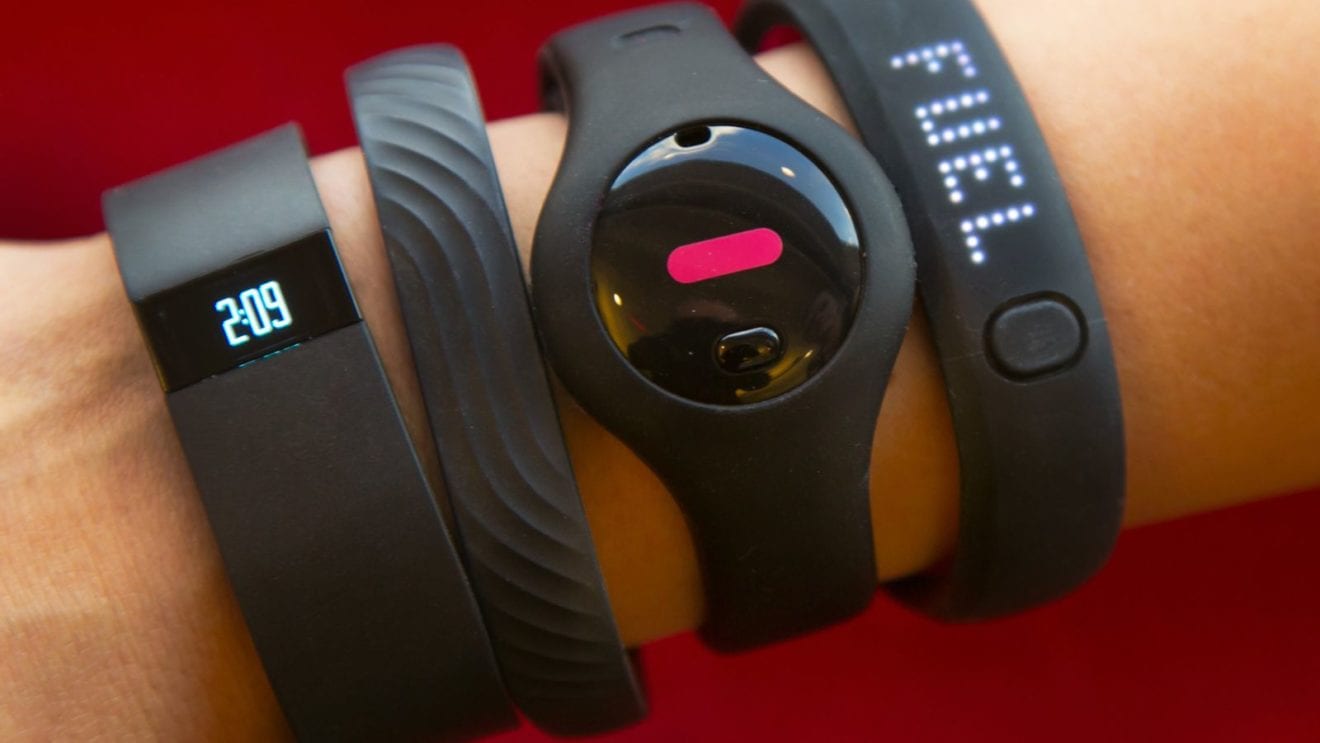
    Fossil Group’s wearables include touchscreen smartwatches, hybrid smartwatches and activity trackers.

    “Customers crave connectivity that doesn’t compromise style,” says Fossil Group chief strategy and digital officer Greg McKelvey. “We’re creating more options to seamlessly integrate desired tech features into our customers’ style and lifestyle.

    He says the group’s design, scale, speed to market and portfolio of fashion brands, coupled with its cloud and app platform plus tech and hardware innovation “have pulled us ahead of the wearables pack”.

    Fossil Group last year launched more than 140 wearables across Chaps, Diesel, Emporio Armani, Fossil, Kate Spade New York, Michael Kors, Misfit and Skagen brands throughout 40 countries and in 20 languages.

    “The success of our hybrid smartwatches has proven that our consumers want a balance of function and fashion,” says McKelvey. “We’ve effectively filled that gap in the market. Hybrids pack the power needed to efficiently accomplish daily tasks in a beautifully crafted timepiece.”