Tag: Mobile

  • Mobile money industry reached record $1 trillion in 2021

    Mobile money industry reached record $1 trillion in 2021

    Mobile money adoption and use saw continued growth in 2021, processing a record $1 trillion annually, according to the GSMA’s 10th annual “State of the industry report on mobile money”.

    The industry enjoyed a substantial increase in the number of registered accounts, up 18% since 2020 to reach 1.35 billion globally. The volume of person-to-person transactions were up to more than 1.5 million every hour. The report reveals that one of the most significant drivers of growth was merchant payments, which almost doubled year on year. It also highlights how mobile money continues to act as a core pillar of financial and economic inclusion, particularly for women.

    Providing significant growth in merchant payments

    Mobile money diversified its value proposition beyond person-to-person transfers and cash-in/cash-out transactions in 2021. It is now playing an important role in the daily lives of people and businesses, especially in low and middle-income countries (LMICs). The growth of ecosystem transactions such as merchant payments, international remittances, bill payments and bulk disbursements, together with interoperable transactions, are accounting for a more significant share of the global mobile money transaction mix.

    Merchant payments were instrumental in the growth of the mobile money industry in 2021. The value of merchant payments almost doubled, reaching an average of $5.5 billion in transactions per month. Providers are demonstrating that they can attract businesses to their platform with better incentives, such as efficient remote onboarding processes. For example, since Safaricom’s M-PESA began allowing companies to register for an account online in Kenya, more than 18% of new merchants are self-onboarding.

    “2021 was the year mobile money started to really diversify to B2B services. Beyond traditional person-to-person transactions, such as transferring money to family or friends, the industry is now central in helping small businesses operate more efficiently, and serve their customers better” said Max Cuvellier, head of mobile for development, GSMA.

    Increasing financial inclusion for women

    Mobile money has also been a driving force for financial inclusion for the world’s most vulnerable, particularly women. Mobile money is empowering women to take more control over their finances and purchase goods that they urgently need. Additionally, 44% of  providers responding to the GSMA Global Adoption Survey now offer credit, savings or insurance products, creating opportunities for underserved individuals to invest in their livelihoods and futures.

    With the gender gap in mobile money account ownership raging from 7% in Kenya to 71% in Pakistan – there remain some barriers to vulnerable people benefitting from mobile money. Owning a mobile phone is an obvious pre-requisite to using mobile money, and women across LMIC’s are 7% less likely than men to own a mobile phone. Overall, 143 million fewer women own a mobile than men. Additional barriers to mobile money access include a lack of awareness of mobile money and a deficit in perceived relevance, knowledge and skills.

    While some progress has been made, the report makes clear that more must be done to address the mobile money gender gap across LMICs. Concerted action is required from policymakers, the private sector, donors and other stakeholders to learn from success stories, address the issue and ensure that existing gender inequalities are not further entrenched, especially in light of the COVID-19 pandemic.

    Mobile money enables access to humanitarian aid, utilities and agricultural solutions

    As highlighted in the report, in 2022, the number of people needing humanitarian assistance is predicted to soar to 274 million. Mobile money is expected to play an increasingly important role in both donations – where it makes delivery systems more efficient and transparent for humanitarian actors and donors – and the receipt of aid.

    The UN Refugee Agency sent $700 million in cash and value assistance (CVA) to 8.5 million recipients in 100 countries in 2020. They have set up digital payment programmes in 47 countries,15 of which use mobile money. In many humanitarian settings, the digitisation of CVA via mobile money has the potential to promote agency and dignity, and foster financial inclusion.

    Mobile money also helps to enable access to basic utility services and agricultural solutions in LMICs. And to ensure this work continues, the mobile industry and humanitarian sector must keep working together to advance inclusive digital and financial inclusion even further for those who need it most.

  • Netflix subscribers are getting more free mobile games this month

    Netflix subscribers are getting more free mobile games this month

    Netflix’s games library is getting bigger every month, as the streaming service signs new partnerships with mobile game developers and publishers. The latest batch of games coming to Netflix subscribers include a variety of genres yet are made by just two studios.

    The first two games are hitting Netflix games platform today, while a third title will be available at a later date. Starting today, Netflix subscribers will have access to Shatter Remastered and This Is A True Story, developed by PikPok and Frosty Pop, respectively.

    Shatter Remastered is a brick-breaking game that mixes classic action with interesting twists and challenging boss battles. It seems to draw inspiration from the retro Arkanoid games. As the name suggests, this is an updated version of Shatter, a game that was originally released on PlayStation 3 back in 2009.

    This Is A True Story is a narrative puzzle game that tells the true story of a Sub-Saharan African woman’s daily struggle to get water for her family. According to developer Frosty Pop, the game is based on actual interviews and experiences and has been designed to allow players to explore beautiful scenery while surviving a windstorm or catching poachers.

    Finally, a third title, Into The Dead 2: Unleashed, is coming soon to Netflix. The sequel to hit zombie action game Into the Dead promises multiple chapters, dozens of stages, as well as hundreds of challenges.

    All games can be downloaded directly from the Netflix mobile app or from the Apple or Google app store. Also, all three are available on both iOS and Android platforms.

  • iPhone 14 Pro rumored to replace notch with dual pill and hole cutouts

    iPhone 14 Pro rumored to replace notch with dual pill and hole cutouts

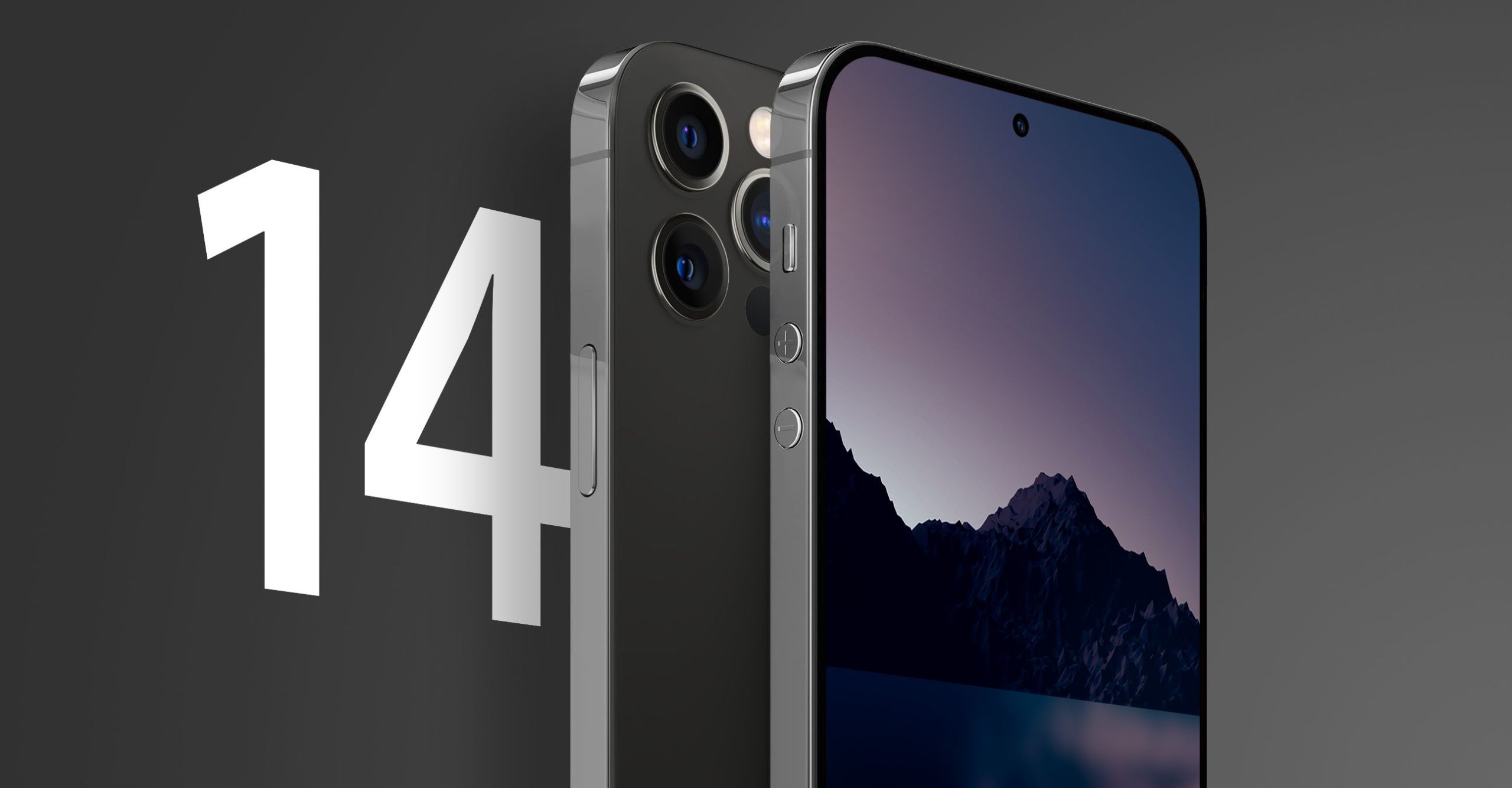
    It can now be said with a fair amount of certainty that Apple’s next premium iPhones – the iPhone 14 Pro and iPhone 14 Pro Max – will ditch the notch that debuted on 2017’s iPhone X in favor of a hole-punch cutout.

    That’s only part of the mystery solved, as, unlike Android flagships, the iPhone also features a complex Face ID system that requires a lot of modules and sensors. Display Supply Chain Consultants’ CEO Ross Young, who has an impressive track record when it comes to leaks, seems to know how Apple plans on going about it.

    In September of last year, Twitter leaker ShrimpApplePro, who tweets from the handle @VNchocoTaco, shared a concept image visualizing what the screen could look like from behind. Young also believes that that’s what the front of the Pro models will look like, meaning a pill-shaped cutout on the center-left will house the front camera and the infrared camera, and the circular hole will have the dot projector.

    If that sounds like a lot of holes, keep in mind that they will still take up less screen estate than the notch. Assuming the leak is legit, it puts to rest a recent rumor that claimed Apple would place the Face ID hardware beneath the display.

    ShrimpApplePro, the leaker who first talked about the design, had also said if Apple managed to put the Face ID system under the screen, it would do the same with the camera. Young thinks that we shouldn’t expect to see an iPhone with an under-display camera until at least 2024, which is not bad news at all, given that the handful of Android phones that feature the tech has failed to impress.

    iPhone 14 Pro’s screen design will not simply be a cross between the Galaxy S10 Plus, which has two hole-punch cameras, and Huawei models with a pill-shaped cutout, but will rather be unlike anything we have seen, or so implies Young.

    This year’s lineup will reportedly consist of two standard models – 6.1-inches iPhone 14 and 6.7-inches iPhone 14 Max- and two Pros – 6.1-inches iPhone 14 Pro and 6.7-inches iPhone 14 Pro Max. The Pro models will reportedly replace the current versions’ 12MP main camera with a 48MP main camera. The series will likely be powered by the slightly more powerful A16 Bionic chip.

    Given how relatively rare it is for Apple to introduce design changes and new camera sensors, it’s safe to assume most fans will love the new phones and make them one of the top smartphones of 2022.

  • Netflix brings three new mobile games to its subscribers

    Netflix brings three new mobile games to its subscribers

    Netflix’s games program doesn’t work like traditional games services since it doesn’t require users to pay a monthly subscription. However, you do have to be a Netflix subscriber to have access to several mobile games in its library.

    When it launched early last month, the program offered to Netflix subscribers a pretty short list of mobile games they could play for free: Stranger Things: 1984, Stranger Things 3: The Game, Shooting Hoops, Card Blast, and Teeter Up.

    Less than two weeks ago, Netflix added two new games to the lineup: Gameloft’s Asphalt Xtreme and Bowling Ballers. Today, three new games are added to the roster: Dominoes Café, Knittens, and Wonderputt Forever.

    Although these might not be as appealing as the previous titles, they’re free to play and don’t include ads, additional fees or in-app purchases. If you want to play any of the games offered by Netflix and you’re using an Android device, you can do so via the dedicated games row and games tab.

    On the other hand, members on an iOS device will see a dedicated games row where they can select any game to download.

  • Nokia deploys 5G standalone core network for Taiwan Mobile

    Nokia deploys 5G standalone core network for Taiwan Mobile

    Nokia announced that it has deployed its 5G standalone core network for Taiwan Mobile Co. to enable the operator to provide the most advanced 5G applications for enterprises and businesses, and to strengthen its network services and performance.

    The timely deployment includes Nokia’s voice core, cloud packet core, subscriber data management, signaling, network exposure, policy controller, cloud infrastructure, and security management for radio transport. With a 5G standalone core network, Taiwan Mobile can readily provide the most advanced 5G services such as network slicing and smart city solutions that require ultra-low latency and reliability.

    Nokia and Taiwan Mobile are long-standing partners and Nokia, as the sole supplier of Taiwan Mobile’s 5G network, is supporting the operator’s ‘Super 5G strategy’ focused on sustainability and digital transformation.

    Nokia leads the market in core network deployments, with 25 of the top 40 communication service providers relying on its core network products.

    Tom Koh, Senior Vice President and Chief Technology Officer, Technology Group, Taiwan Mobile, said: “Introducing SA to unleash the full potential of 5G beyond high-speed to further realize innovative use cases enabled by ultra-low latency and massive IoT is our strategic mission in the 5G era. We are delighted to reach this milestone with Nokia to bring the first true 5G network into Taiwan. Owning the agility of network slicing to swiftly customize the network for accommodating different use cases, Taiwan Mobile will be able to accelerate time-to-market to provide a wide variety of services for everyone and everything and to free enterprises to embrace Industry 4.0. The SA technology is built from cloud architecture, infrastructure-agnostic by design, which paves a critical step to a full software agile virtualization network. It unlocks the use cases with distributed cloud for low latency service with local breakout needed. Taiwan Mobile’s true 5G network will become the innovative engine for consumers to experience as well as verticals to deploy applications without limits.”

    Susanna Patja, Head of Cloud & Network Services, Greater China, Nokia, said: “We are very pleased that the Nokia 5G Standalone Core network is now up and running, on schedule, for Taiwan Mobile. This provides Taiwan Mobile with exceptional capabilities in terms of machine-to-machine communication, extreme automation, and reliability that enables critical 5G uses for enterprises; and does so with the knowledge that this standalone network will continue to function seamlessly with non-standalone networks.”

  • Tesla Updates Mobile App With New User Interface & Features

    Tesla Updates Mobile App With New User Interface & Features

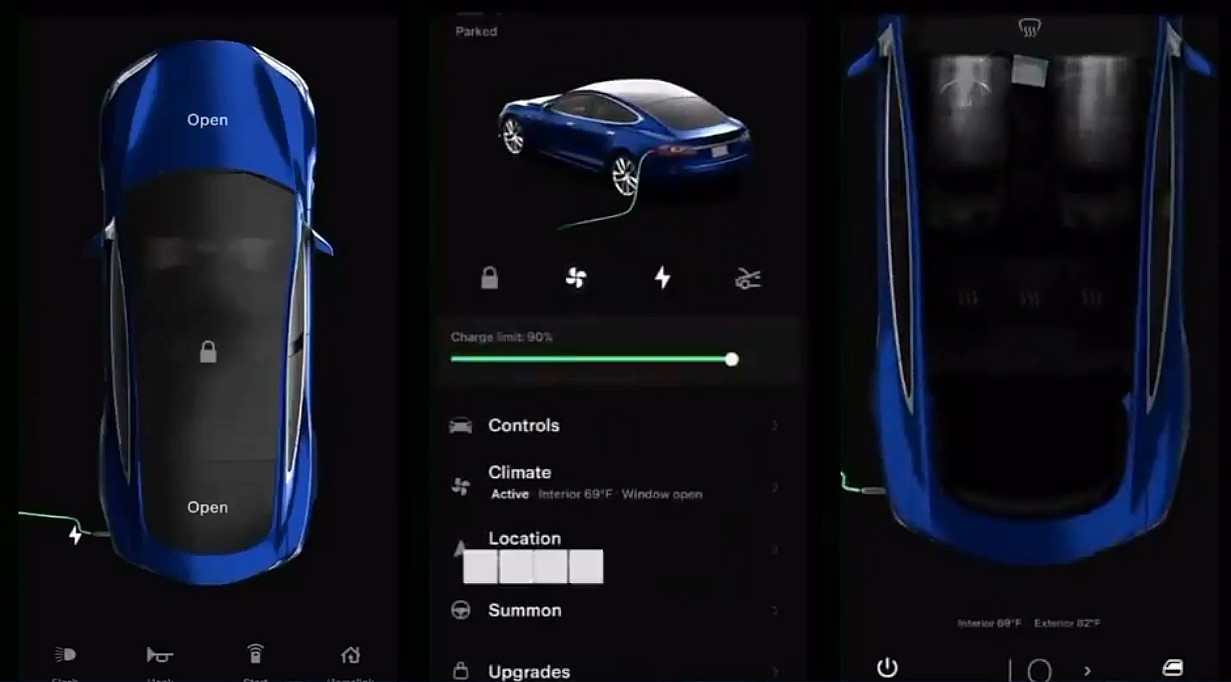
    Tesla has released version 4 of its mobile app which receives a massive overhaul of the user interface and adds a ton of new features. Users can unlock their vehicles using the app and remotely also manage the climate control system of the car apart from many other connected car functions. Version 4 is clearly the most comprehensive update to the app.

    Via the app users can also access the after-sales experience and book the car for servicing and repairs. It also lets users know the charge levels of the car remotely which is quite critical.

    Here are the new features that Tesla lists in its official release notes:

    — Refreshed vehicle and energy homepage
    — Streamlined Summon experience
    — Enhanced phone key support – vehicle no longer needs to be selected
    — Send commands to vehicle immediately upon opening app
    — Use Go Off-Grid to seamlessly disconnect your home from the Grid with Powerwall
    — Shop the Tesla catalog and view and manage your orders (available in select countries)
    — View Supercharging history and ability to pay outstanding Supercharging or service balance (available in select countries)

    Tesla is one of the first automotive companies to push over the air updates and has its own app.

    Tesla has also added support for widgets on iOS which was introduced in iOS 14 last year. Tesla has also added the supercharger billing experience in the app which comes at a time when the manufacturer is opening up the network to third-party vehicles.

    This update comes at a time when Elon Musk has said that it is close to rolling out its full self-driving software to users who opted for the package. Musk estimates after the release of the next beta, in 4 weeks the software update should be rolled out to users.

  • Ez4EV Launches EzUrja Mobile Charging Stations

    Ez4EV Launches EzUrja Mobile Charging Stations

    Ez4EV Private Limited, a battery storage & charger development company is all set to launch its innovative mobile charging solution EzUrja for electric vehicles to mitigate the range anxiety of EV owners and to instantly up the missing infrastructure for EV charging points in the country. These mobile charging stations follows an innovative EV ‘Charging-on-Demand’ approach and is managed as an Internet of Things (IoT) device, allowing for remote condition monitoring and organization of operations. Ez4EV plans to deploy multiple EzUrja’s servicing EVs in cities and highways of the country more so as a product for smaller towns by creating better EV connectivity.

    Satinder Singh, CEO, Ez4EV said, “EV development prerequisite is the charging point availabilities. In our country where customer delight is on a door-step delivery basis, we complement the same by providing India’s first Charging-on-Demand to ease the ride of an EV owner”.

    The fully charged EzUrja Mobile guarantees a seamless energy supply for the entire range of slow or fast chargers supporting two-wheelers to commercial vehicles to premium EVs. More importantly, it ensures stabilized flow of energy with zero variables or surges 24×7 on call.

    At the core the Lithium-Ion Manganese Phosphate battery provides the element to make a robust business case, which was not possible with other comparative battery chemistries. Ez4EV is introducing an innovative battery technology from C4V/iM3 New York, for initiating localization of ‘Battery Energy Storage Systems based on their success cases in USA’. Lighter weight, green chemistry characteristics and longer cycles makes the C4V cells as the most ideal battery fulfilling the clean India mandate.

  • Microsoft optimizes all Office mobile apps for Samsung’s new foldable phones

    Microsoft optimizes all Office mobile apps for Samsung’s new foldable phones

    The announcement of the new Galaxy Z Fold 3 and Galaxy Z Flip 3 marked a few premiers for Samsung’s flagships. For example, there are the first smartphones that allow users to seamlessly transfer all their WhatsApp chat history when they switch from an Apple iPhone to an Android phone.

    This WhatsApp feature only works on the Galaxy Z Fold 3 and Galaxy Z Flip 3, but its availability will soon be expanded to most Android and iOS devices. Another interesting premiere revealed this week focuses on Microsoft’s Office mobile apps, which have been fully optimized to work on Samsung’s new foldable phones.

    The Redmond-based giant announced a new partnership with Samsung to perfect the way its Office mobile apps work on the Galaxy Z Fold 3 and Galaxy Z Flip 3. Also, the partnership between the two companies has expanded to further integrate Teams and Outlook into the foldable smartphone experience.

    Starting with these two foldable phones, you’ll be able to run multiple apps at the same time via the Multi-Active window. For example, running Microsoft Excel and PowerPoint dragging and dropping a table right into your presentation will be a breeze now. Even running two instances of the same app will be possible.

    Samsung Galaxy Z Fold 3 and Galaxy Z Flip 3 are now available for pre-order for $1,800 and $1,000, respectively, with availability expected August 27 starting from the United States and Europe. You can pre-order either of the two flagships via the widgets below.

  • AT&T to move its 5G mobile network to Microsoft’s Azure cloud

    AT&T to move its 5G mobile network to Microsoft’s Azure cloud

    Microsoft and AT&T announced they inked a deal to provide the carrier with increased productivity and cost-efficiency of its 5G network services. Under the new partnership, AT&T will move its 5G mobile network to the Microsoft Azure cloud, while the Redmond-based company will gain access to the carrier’s intellectual property and technical expertise to grow Azure for Operators, its top-tier telecom offering.

    Furthermore, Microsoft confirmed that it will purchase AT&T’s Network Cloud platform technology, which the carrier’s 5G core network runs on. Furthermore, Microsoft will buy AT&T’s engineering and lifecycle management software that is typically used to design and deploy network cloud platforms specifically made for carriers.

    Regardless of the acquisitions announced today, AT&T will continue to operate its network and manage customer relationships, it’s just that it will now use Microsoft’s infrastructure.

    Naturally, Microsoft will be responsible for deploying both the software development and the carrier’s Network Cloud, as well as for bringing AT&T’s existing network cloud to Azure over the next three years. The announcement mentions that neither company is disclosing details on financial terms.

  • Rakuten Mobile partners Cisco to advance network for 5G and IoT services

    Rakuten Mobile partners Cisco to advance network for 5G and IoT services

    Cisco and Rakuten Mobile, Inc. today announced a major milestone for Rakuten Mobile’s network infrastructure in support of efforts to build a better, more inclusive internet for the future.

    Rakuten Mobile operates the world first’s fully cloud-native mobile network. It launched 4G service in Japan in April 2020, and launched 5G non-standalone (NSA) services in September 2020 in record time. With four million subscribers today, Rakuten Mobile continues to advance and scale its network to support new demands driven by the growth of remote and mobile workers.

    With the implementation of Segment Routing over IPv6 (SRv6) and Cisco Routed Optical Networking, Rakuten Mobile plans to expand its capabilities to support enterprise customers with 5G and IoT services. To support its future 5G SA services with network slicing capabilities, Rakuten Mobile will introduce SRv6 micro-segments, an extension to the SRv6 network programming model that is key to addressing multi-domain 5G deployments across its network. Cisco Customer Experience (CX) will plan and implement the overall architecture and design.

    Transitioning to SRv6 will help Rakuten Mobile increase network resiliency and support a wider range of Service Level Agreements (SLAs) that are foundational for upcoming 5G and IoT services. With Cisco Routed Optical Networking, Rakuten Mobile can consolidate coherent pluggable optics into a router, making the entire network more automated to deploy services faster (from 100 days down to 40), reduce power consumption by nearly 30 percent, and increase profitability through high-quality services at a competitive price.

    “Reimagining mobile networking is at the very heart of Rakuten Mobile’s strategy, and our decision to go full-speed ahead on SRv6 and Cisco Routed Optical Networking demonstrates our effort to take advantage of technology innovation at every layer of the stack,” said Tareq Amin, Chief Technology Officer, Rakuten Mobile. “We knew that Cisco would walk in lock-step with us as we worked through each phase needed to implement this new technology and align it to our business goals.”

    “Cisco and Rakuten Mobile are on a path to profoundly change the way network infrastructure is built, in order to connect as many people as possible to quality internet services,” said Jonathan Davidson, Executive Vice President and General Manager, Mass-Scale Infrastructure Group, Cisco. “Rakuten Mobile continues to mark important milestones to take its network to the next-level, and together we are showcasing the blueprint for the internet for the future to support our world of wireless and cloud- powered experiences.”

  • Woolworths to recycle batteries, mobile phones

    Woolworths to recycle batteries, mobile phones

    Supermarket Woolworths is further hastening its consumer-facing sustainable initiatives by announcing a battery recycling initiative, with collection units to be placed in every Woolworths store around the country.

    The units will accept used batteries, as well as mobile phones, in an effort to bump up Australia’s rate of battery recycling – which currently sits at around 10 per cent, lagging behind other developed nations.

    “We’re working towards a better tomorrow by reducing our own environmental footprint, while also making it easier for our customers to do the same,” said Woolies’ head of sustainability Adrian Cullen.

    “By offering customers a convenient place to drop off batteries and phones as part of their regular weekly shop, not only can we help prevent batteries going to landfill, but also reduce at home stockpiles which can be a safety risk.”

    The program is operated in partnership with battery recycler Ecobatt, which will collect and process the batteries and phones. It also comes as the Federal Government produced additional funding for the Battery Stewardship Council, of which Woolies is a member, to support schemes such as this.

    “Convenience is often one of the key elements to changing consumer behaviour, so it’s wonderful to see Woolworths providing their customers drop off points for used batteries,” said Federal Minister for the Environment Sussan Ley.

    Used batteries can often leak harmful chemicals into their surroundings, and can be recycled to extract useful metals such as copper, aluminum and steel.

  • Rakuten to boost mobile activities with $2.2 billion capital injection

    Rakuten to boost mobile activities with $2.2 billion capital injection

    Japanese e-commerce and tech company Rakuten has sold a 13% share amounting to $2.2 billion to Japan Post, Tencent and Walmart. Japan Post will invest $1.4 billion into Rakuten, thereby owning 8.3% of the company’s total share to become its fourth-largest investor. Tencent will invest $0.6 billion to own 3.6% of the company’s total share, while Walmart will invest $0.15 billion to own a 0.9% share.

    Japan Post’s investment in Rakuten is aimed at strengthening ties between the two Groups and maximizing synergies by leveraging the resources and expertise of both Groups. The alliance will branch into mobile, logistics and digital transformation, with consideration to enter into financial services and e-commerce together.

    There are plans to create shared logistics centers, seeking new collaborations and initiatives between the pair to expand usage of Rakuten Fulfillment Centers and Japan Post’s “Yu-Pack” parcels.

    For the mobile sector, Rakuten will tap onto Japan Post’s nationwide chain of post offices to create customer counters to accept new signup applications for Rakuten Mobile’s marketing campaigns. Meanwhile, Rakuten Group will dispatch specialists to Japan Post to bolster its digital transformation plans.

    Last week, Rakuten Mobile announced that the total number of applications for its UN-LIMIT service plan launched on 8 April 2020 has surpassed 3 million. This week, Rakuten Mobile announced the signing of a Memorandum of Understanding with Airspan Networks for the latter to offer its complete vRAN hardware and software platform OpenRANGE on the Rakuten Communications Platform (RCP).

  • Singapore offers best mobile experience in South East Asia

    Singapore offers best mobile experience in South East Asia

    At a country-level, Singapore won in all metrics tested, with the most important win being the highest Excellent Consistent Quality in South East Asia, with 84.5% of connections having a network experience suitable for use-cases like 1080p video streaming, real-time mobile gaming and HD video calling. Singapore also had the highest Core Consistent Quality in the region at 94.4%.

    Consistent Quality is a set of metrics that Tutela has developed to objectively evaluate when connections are (or are not) enabling users to do the things they want to on their mobile devices. There are two sets of thresholds, Excellent and Core. A connection that hits the Excellent threshold is sufficient for use-cases like 1080p video streaming, HD video calling, and multiplayer gaming, while a Core connection should be sufficient to stream standard-definition video or handle day-to-day activities like web browsing or uploading photos to social media. The percentages seen in this report represent the percentage of tests for subscribers on a given operator that was above the Excellent or Core thresholds.

    Singapore also had the fastest download speed at 26.2 Mbps, the fastest upload speed at 14.7 Mbps, and the most responsive network with a latency result of 9.0 ms. However, Vietnam was always very close behind, with second-place winnings for both Excellent Consistent Quality (72.3%) and Core Consistent Quality (86.1%).

    The report was released by Tutela Technologies, a global crowdsourced mobile data company, and evaluated over 55 million speed and latency tests, conducted on the smartphones of real-world users of national mobile operators within Common Coverage Areas, between August 1st and January 31st, 2021.

    Per country findings were as follows:

    Singapore:

    • By operator in Singapore, StarHub dominated in four of the seven metrics tested, including the highest Excellent Consistent Quality with 87.3% of users having a network experience suitable for 1080p video streaming or HD group video calling.
    • StarHub also had the highest Core Consistent Quality, Tutela’s measure of whether a connection is good enough for everyday uses, like email, social media, and SD video streaming, the fastest download speeds, and the most responsive network in the country.

    Indonesia:

    • Telkomsel won six out of the seven metrics tested, with Indosat Ooredoo being the only other operator to make it onto the leaderboard in Indonesia with the fastest median upload speed.
    • Telkomsel was in first place for Excellent Consistent Quality with 65.0%, and also in first for Core Consistent Quality with 83.5%. However, there was only a 3% difference between the operator and second-place Indosat Ooredoo.

    Malaysia:

    • In Malaysia, the leaderboard was shared by at least four operators, with U Mobile offering its users the best mobile experience in the country. The operator won the highest Excellent and Core Consistent Quality, and fastest upload speed.
    • Digi had the fastest median download speed in Common Coverage Areas across Malaysia with 10.6 Mbps but came third in the upload speed test with 6.2 Mbps. Maxis had the most responsive network in the country, while Celcom had both the best 5G/4G coverage and total coverage.

    Thailand:

    • By operator in Thailand, AIS won in four of the seven categories tested, including the highest Excellent Consistent Quality and most responsive network. However, TrueMove was also on the leaderboard in three of the seven categories including the highest Core Consistent Quality and both the fastest download and upload speeds.
    • With only two operators in the Philippines to compare, Smart outperformed Globe in six out of the seven categories tested, with Globe taking out one category with the best total coverage.

    Vietnam:

    • Viettel Mobile in Vietnam offered the best mobile experience to its users, winning in five categories and tying for first place with Vinaphone for fastest median download speeds.
    • MobiFone was on the leaderboard in one category with the highest Core Consistent Quality.
  • High band 5G mmWave takes 5G to the next level

    High band 5G mmWave takes 5G to the next level

    As 5G technology becomes increasingly widespread, attention is veering towards high band 5G mmWave spectrum to deliver greater capacity and faster performance levels for data-intensive 5G mobile communications such as video communications, as well as virtual and augmented reality.

    With mobile experiences become more sophisticated, networks are pressured to expand wireless spectrums to support large bandwidths and high data rates for 5G systems to drive technology evolution. For mobile operators, 5G mmWave presents an opportunity to deliver unparalleled performance benefits for fixed wireless, enterprises and industrial applications for a broad set of use cases such as smart factories, supply chain visibility and indoor navigation.

    Even though high band mmWave is not new, it fell short previously owing to challenges such as high propagation losses and sensitivity to blockages by human bodies and buildings. But these issues can be resolved as mmWave combines line-of-sight (LOS) and non-line-of-sight (NLOS) signals with distributed antenna designs and advanced beamformers to expand a network’s coverage.

    While 5G low bands deliver 5G coverage over long distances, 5G high bands or mmWave deliver optimal coverage over short distances, and best complemented with low and mid bands for improved capacity and coverage. The earliest adopter of 5G mmWave is the US, which opted for high band spectrum first in its 5G strategy. This is contrary to most countries, which opted for mid-band spectrums first, before pursuing high band mmWave.

    For mmWave to pick further momentum now, stakeholders such as regulators, mobile operators and vendors must come together. For regulators, it means embracing 5G and freeing up mmWave bands to mobile operators to grow their coverage beyond low- and mid-band spectrums, and hence enable high capacity delivery and enhanced handling of peak rates. By fuelling 5G performance levels, countries that make digital transformation a priority can yield greater economic benefits in the long run. Likewise, vendors must support this evolution by continuing to roll out suitable and even improved mobile devices and customer premises equipment (CPE) that are accessible and affordable.

    According to GSA, about 106 operators in 20 countries and/or territories hold public licenses of 5G networks utilizing mmWave spectrum. Of which, only about 24 operators in 15 countries and/or territories are using mmWave to power deployed 5G networks. In November 2019, World Radiocommunication Conference (WRC-19) identified new frequencies for IMT. While 5G mmWave is more predominant in the US and Europe, Asia Pacific is slowly coming into the picture, with Japan being the earliest adopter, followed by South Korea.

    Other countries such as Singapore and Thailand have just awarded mmWave allocations last year. Of which, Singapore Infocomm Media Development Authority (IMDA) awarded three mobile operators 800 MHz of 26 GHz and 28 GHz mmWave. One of the operators, Singtel, has switched on mmWave in certain areas in the city, with dedicated experiences zones to provide users 3.2 Gbps streamed content powered by 5G mmWave. The mobile operator will also be working with enterprise customers to develop autonomous guided vehicles and mixed reality.

    Meanwhile, Thailand’s National Broadcasting and Telecommunications Commission (NBTC) auctioned 26 GHz to three mobile operators, namely AIS, Dtac and TrueMove H. In the region, Australia is the latest to open applications for auction of 26 GHz and 28 GHz mmWave spectrums. India is very likely to carry out 5G spectrum auctions soon.

    On the other hand, in anticipation of the rise of mmWave in the region, Taiwan-based semiconductor firm MediaTek recently unveiled M80, its first mmWave-capable modem. Launched in the same month, M80 will be in direct competition with Qualcomm’s new Snapdragon 5G modem.

    Also competing in the emerging mmWave space, NEC leverages on its expertise in digital beamforming technology and Massive-MIMO in launching a distributed-MIMO technology that delivers three times the number of simultaneous connections and transmission capacity in the 28 GHz mmWave frequency band – using a large number of distributed antennas rather than in a single tray.

    It also helps that there are new technologies to support a denser and more cost-effective 5G mmWave network to deliver the desired low latency and high speed. Using integrated access and backhaul (IAB), base stations not only provide wireless access for users, but also wirelessly backhaul from nearby base stations using the same mmWave spectrum. This results in improved performance, greater efficiency of spectrum resources and lower costs, thereby allowing operators to expand their mmWave networks readily and more affordably.

    Even though APAC is behind in terms of mmWave adoption, when compared to the US, some countries are quick in catching up. Taiwan, for instance, claims the first spot in launching a smart factory powered by a private 5G mmWave network.

    According to Research and Markets, the global mmWave technology market is predicted to grow from US$1 billion in 2020 to US$3.4 billion by 2025. During this time, APAC is projected to grow at the fastest rate. Clearly, 5G mmWave is an important criterion worldwide, and particularly in APAC as countries grow their network bandwidth and capacity to enable full-fledge 5G services and experiences.

  • Twitter begins testing new grouped follow feature on Android

    Twitter begins testing new grouped follow feature on Android

    Twitter is constantly testing out new features across its mobile apps. Most recently it made some changes to its automated cropping feature and started testing a ‘read before sharing’ prompt on iOS.

    Today, the social media platform has announced another test.

    Available to a select number of Twitter for Android users, the latest Twitter feature involves a suggestion to follow a group of relevant accounts on the profile page of someone you’ve just followed.

    The accounts can all be followed at once with a simple tap, or users can choose to remove the ones they aren’t interested in. Twitter’s algorithm presumably generates the list of accounts based on what content each one shares.

    The feature replaces the existing suggestion box which lists three users and provides the option to see more relevant accounts.

    Twitter has provided no further information about the test, but if it proves popular among users the feature could eventually makes it way over to iOS through testing before expanding to all users.