Tag: Mobile

  • Despite strength from Huawei, smartphone shipments are expected to drop in China

    Despite strength from Huawei, smartphone shipments are expected to drop in China

    The world’s largest smartphone market is going to report a drop in shipments during the current quarter. The report states that the Q3 decline will show up both year-over-year and month-over-month (aka sequentially) and would appear following a huge sequential second-quarter surge of 104.6%. The strong smartphone market in China during the three months covering April through June was fueled by the lessening of negative impacts from the coronavirus, economic stimulus measures, and the launch of new handset models. While the growth in second-quarter smartphone shipments was in triple digits compared to Q1 deliveries, on a year-over-year basis the Q2 growth in smartphone shipments was a puny 1.4%.

    The top five smartphone manufacturers based on shipments in the country during Q2 were Huawei, Vivo, Oppo, Xiaomi, and Apple. The top five were responsible for 98.1% of smartphone deliveries in China from April through June, up 1.4 percentage points from the previous quarter. For the current quarter, Digitimes expects smartphone shipments in China to contract 7.9% as some of the effects of the stimulus measures imposed in the country have started to fade.

    Despite the expected decline in shipments, Huawei’s shipments are supposed to remain strong in the current quarter. During Q2, research firm Canalys said that Huawei overtook Samsung to become the largest smartphone manufacturer globally. In 2016, the head of Huawei’s consumer division, Richard Yu, predicted that Huawei would become the top smartphone manufacturer in the world by 2021. Despite losing access to its U.S. supply chain and the Google ecosystem, Huawei has become number one thanks to its own rapidly growing Huawei Mobile Services.

    700 million people are using Huawei’s ecosystem and with that number growing, Huawei is expected to own nearly half of the Chinese smartphone market during the third quarter.

  • OCBC Bank is first in Singapore to enable use of SingPass

    OCBC Bank is first in Singapore to enable use of SingPass

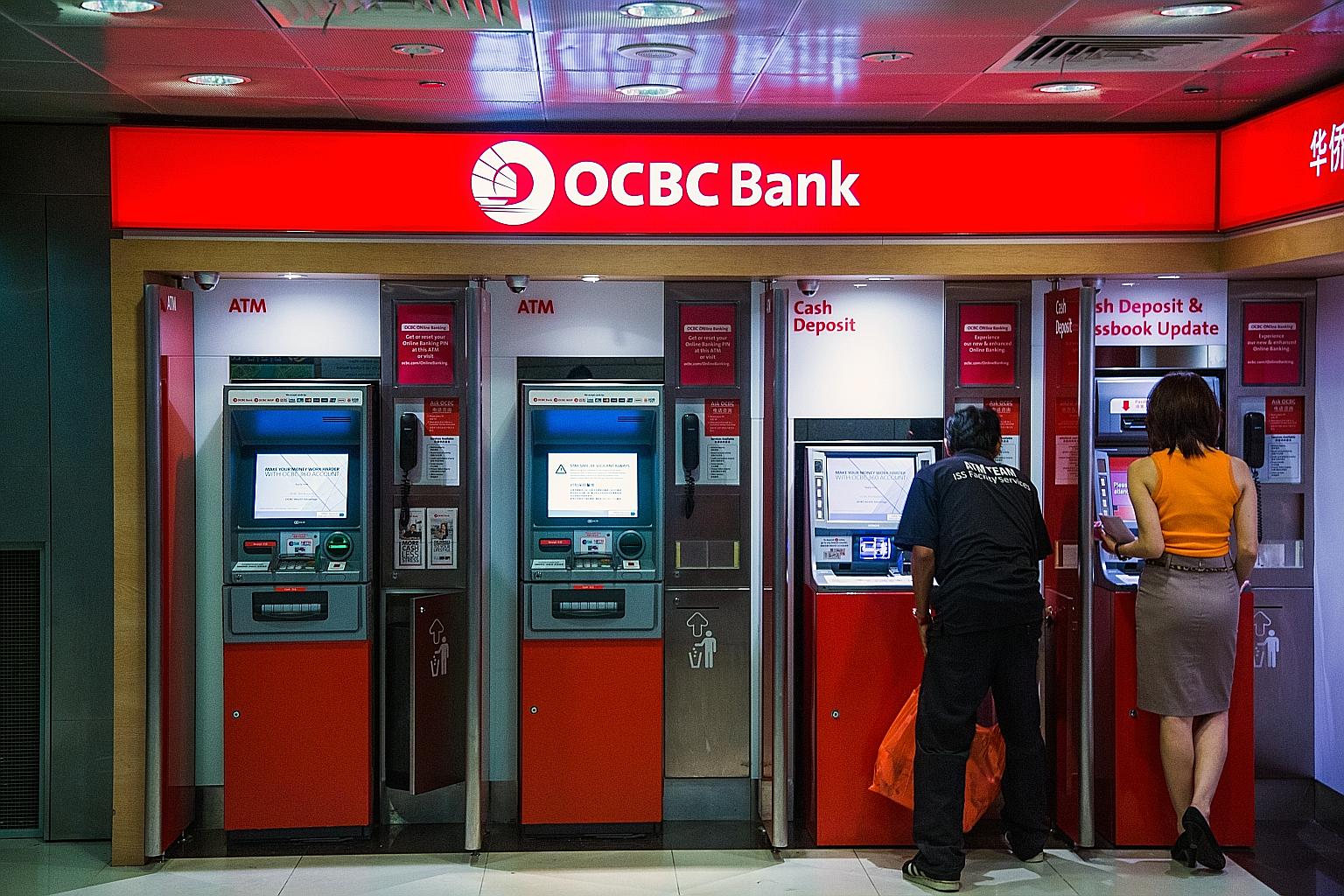
    Since 4 July 2020, OCBC Bank’s 1.8 million digital customers in Singapore have been able to use the SingPass Mobile app as an alternative login to access the full suite of digital banking services via the OCBC Mobile Banking app or Internet banking.

    Using SingPass Mobile as an alternate login will especially benefit customers who currently use an access code and PIN instead of fingerprint or facial biometrics to log in to OCBC Bank’s digital banking platforms. The need to remember multiple access codes and PINs is eliminated while enabling customers to securely access digital banking services. This market-leading service has been enabled for OCBC Bank customers by integrating digital banking access with Singapore’s National Digital Identity (NDI) platform.

    SingPass Mobile login will further accelerate digital banking adoption

    Since the Covid-19 outbreak in Singapore, digital transactions among OCBC Bank customers have surged as the pandemic accelerated digital adoption.

    Close to 100,000 ‘digital debutantes’ have started using digital banking for the first time this year. There has been a 40% jump in digital transactions performed by those aged 50 to 64, while those above 64 years old clocked a 48% increase in digital banking transactions from last year.

    Managed by the Government Technology Agency (GovTech), the SingPass Mobile app allows users to transact with over 60 government agencies online securely. More than 1.6 million Singapore residents today use the SingPass Mobile app to access government e-services including checking their Central Provident Fund (CPF) account balances, filing taxes and applying for public housing. Many now also use the app for SafeEntry logins at venues to facilitate contact tracing.

    Mr Aditya Gupta, OCBC Bank’s Head of Digital Business for Singapore and Malaysia, said: “Inclusion and accessibility have been core to our digital transformation narrative. I believe that offering SingPass – a trusted and widely used mode of digital authentication in Singapore – as an alternate login, will give more of our customers the confidence and convenience to bank with us digitally. We have partnered with GovTech to pioneer the co-creation of a trust ecosystem for Singapore’s banking industry using the national digital identity platform, which will radically improve how our customers access and experience our digital services.”

    Mr Kwok Quek Sin, Senior Director, National Digital Identity, GovTech, said: “OCBC Bank is known for many of its innovative efforts in leading digital transformation and has been one of the early adopters of our National Digital Identity strategic platform. This month, OCBC Bank has started to offer SingPass as an alternative login to access their digital banking services. We are happy to be able to support our Singapore companies in their exciting digitalization journeys. GovTech will continue to push out more products on the national digital identity platform to help businesses enhance digital service delivery, improve customer experience and bring about productivity gains.”

    Mr Sopnendu Mohanty, Chief FinTech Officer, Monetary Authority of Singapore (MAS), said: “The foundation of the digital economy is the seamless integration of public digital infrastructures with essential services. We are delighted that OCBC Bank has broken new ground by enabling access to financial services with SingPass Mobile. MAS has been working closely with the financial industry to foster the adoption of foundational digital infrastructures such as national digital identity for seamless integration with the growing digital economy. With the convergence of SingPass Mobile, MyInfo, and PayNow, customers can open bank accounts, access banking services and make payments online seamlessly yet safely.”

    OCBC Bank at the forefront of leveraging National Digital Identity infrastructure for digital banking services

    In June 2018, OCBC Bank became the first in Singapore to enable instant deposit account opening using MyInfo – the national data repository – integrated with the Bank’s proprietary real-time digital know-your-customer process (e-KYC).

    A year later, in May 2019, OCBC extended the use of MyInfo and OCBC Bank’s e-KYC process to online applications for cards, personal loans and lines of credits. This was then extended to home loans and car loans in Feb 2020.

    Within three months of launch, digital card applications grew 3.5 times, while online personal loan applications grew nine-fold. Three in 4 credit cards are acquired digitally, and 3 in 4 deposit accounts are opened digitally leveraging MyInfo. The integration of MyInfo in the digital product application process has enabled OCBC Bank to offer 60-second approvals for car loans, and 60-minute approvals for home loans. One in 3 home loans and 2 in 3 car loans have been approved and accepted via this process within four months of its launch.
  • Here’s how much of an impact 5G has on battery life

    Here’s how much of an impact 5G has on battery life

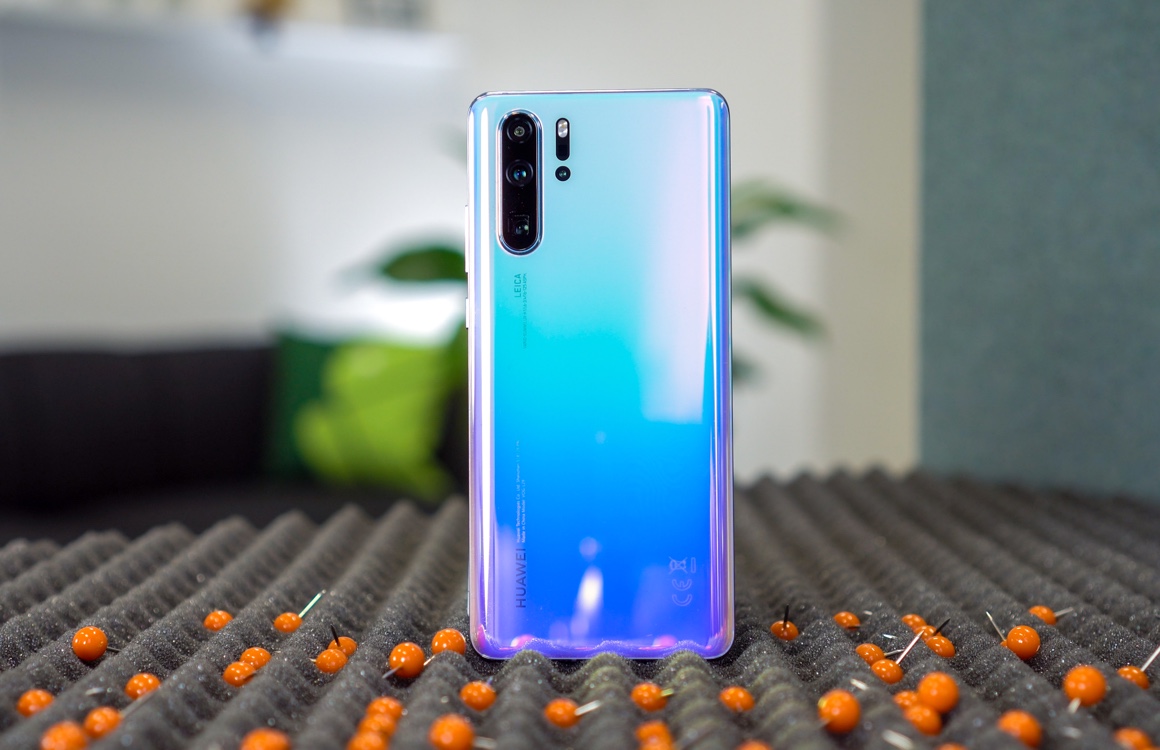
    Just how much of an impact does 5G have on a phone’s battery life over 4G? Lu Weibing, general manager of Xiaomi sub-brand Redmi, took to Chinese microblogging site Weibo to explain. In his post, he points out that the power consumption of Qualcomm’s 800 series of chips is about 20% greater than that of the 700 series, and a 5G phone consumes 20% more power than a 4G phone.

    Mr. Weibing’s statement comes only days after the 5G-capable Redmi K30 Pro was announced. The phone is powered by a Snapdragon 865 chip, and despite that huge 4700mAh battery inside it, Redmi’s estimates are rather modest, saying that the phone is designed to last one day.

    The Samsung Galaxy S20, Galaxy S20+, and Galaxy S20 Ultra are also among the newest Snapdragon 865 phones with 5G support. They have battery capacities of 4000, 4500, and 5000mAh respectively – a significant boost compared to last year’s S10 series, and surely one related to increased power demand by the 5G hardware inside them.

    As 5G is making great global progress compared to 4G LTE in its early days, phone manufacturers will need to start adapting to the overall increase of power consumption required for this new technology. And while 5G matures and Qualcomm strives to optimize the power consumption of their 5G chips, things are bound to get better with time.

  • Microsoft’s Your Phone app possibly getting Drag and Drop

    Microsoft’s Your Phone app possibly getting Drag and Drop

    Microsoft’s Your Phone app has been growing in popularity over the past several years. The app offers a link between your Windows 10 PC and your Android smartphone (requires a phone with Android 7 or newer), providing useful features for managing your phone.

    Recently, Microsoft added support for RCS messaging for selected Samsung smartphones. Now, a Tweet by Aggiornamenti Lumia suggests that a new feature may be coming soon: Drag And Drop from your PC to your smartphone.

    We do not know whether the rumored Drag and Drop feature will be officially released or when, and whether it will be exclusive to selected Samsung devices.

    Other features of the Your Phone app include reading and sending text messages from your PC, as well as managing your notifications and calls. The functionalities available only for select Samsung devices are Content Transfer (copy and paste between PC and Android phone) and Phone Screen, which allows you to interact with Android apps and phone content while visualizing your smartphone’s screen on your PC.

    You can find whether your phone is supported on Microsoft’s Your Phone app help page which offers a list of supported phones for every referenced app function.

  • International merchants embracing Chinese mobile payments, says report

    International merchants embracing Chinese mobile payments, says report

    A new survey by Alipay and Nielsen has found overseas merchants are actively exploring digital operations via Chinese mobile payments to increase sales and customer traffic.

    The jointly released survey reveals the latest trends in Chinese outbound tourism and the consumption habits of Chinese travelers for the third consecutive year.

    The results were demonstrated by nearly eight out of 10 (78 percent) of UK merchants surveyed, saying they are likely to recommend Alipay to their peers, especially for using digital operations to improve efficiency and turnover.

    Surveying 4837 Chinese travelers and 547 overseas merchants, the report found that Chinese tourists’ usage of mobile payments while traveling overseas continues to increase, with Singapore, South Korea, Japan, Australia, France, Thailand, New Zealand, Canada, the UK, and the US ranked as the “top 10 countries where Chinese tourists love to use mobile payments in 2019.”

    In Singapore, an early adopter of Chinese mobile payment solutions, almost all merchants (97 percent) indicated steady improvement compared to the previous year in terms of mobile payment usage and the amount of mobile spending by Chinese tourists.

    “Chinese mobile payments engagement level and the depth of usage among Chinese tourists continued to increase, indicating a more in-depth development of Chinese mobile payment solutions globally,” said Nielsen China president Justin Sargent. “As such, overseas merchants are showing a more open attitude towards the application of Chinese mobile payment platforms and digital operations. More overseas merchants may deepen their use of Chinese mobile payment platforms to go digital.”

    Regions such as the UK are accelerating the acceptance of Chinese mobile payments. Overseas merchants are also going beyond payment to explore more digitalized solutions including digital marketing, with nearly 70 percent of UK merchants surveyed saying they have already used additional services other than payment in Alipay.

    The improved acceptance of mobile payment solutions has made it possible for Chinese tourists to bring less cash, with data showing that the amount of foreign currency exchanged by Chinese tourists before leaving for Europe last year fell by 16 percent.

    Last year, 100 per cent of Chinese tourists surveyed had Alipay on their mobile phones while traveling overseas. On average, Chinese tourists surveyed used Alipay in nearly four transactions during their most recent trip overseas.

  • Mobile dominates Southeast Asian internet, says Google’s Year in Search report

    Mobile dominates Southeast Asian internet, says Google’s Year in Search report

    Google has released its Year in Search 2019 report for Southeast Asia, showing that 90 percent of the region’s 360 million internet users now connect primarily via mobile phones.

    The report offers five key search insights for brands in the territory seeking to drive business impact in the new year.

    The Year in Search notes that Southeast Asian consumers are becoming increasingly sophisticated consumers with higher expectations, seeking high-quality products and services that improve productivity; expect convenience at a relatively low cost; are using search to make comparisons, ultimately guiding their purchase decisions. Indonesian consumers are increasingly searching for “best” products, while Malaysian consumers are more proactively researching what goes into their food and beauty products.

    Southeast Asian consumers are increasingly dependent on the internet as a source of entertainment and trusted advice, turning to search in higher numbers to seek reviews before making purchases and as a platform for entertainment. Thai users have shown a huge surge in “near me” related queries for food.

    Users in the region are increasingly socially conscious and concerned with the social impact of their purchase decisions. From trending search terms, Google’s Year in Search report shows that users are increasingly influenced by environmental news and regulations around them.

    The report also discovered growth opportunities beyond metros, with more people living in rural areas fast catching up with the urban population on the use of the internet. Google expects its potential to grow to be twice as fast in areas outside the big cities, bringing all Southeast Asians on board with online retail.

    Finally, the report identified growth in digital financial adoption as influencing the way consumers make their payments. According to Google, the digital financial services sector is set to grow in Southeast Asia and strongly shape the way consumers pay for their goods and services.

  • One-Third of Chinese Tourist Payments Made Through Mobile

    One-Third of Chinese Tourist Payments Made Through Mobile

    The mobile payment’s penetration of the Chinese tourist market continues to grow with 3.4 times out of 10 transactions made through the channel in 2019.

    Whilst the user base remained stable, usage increased compared to 2018 when 3.2 out of 10 transactions were made through a mobile payment platform, according to a report jointly released by Nielsen and Alipay. This was in spite of the fact that Chinese tourist was increasingly shifting travel destinations from popular East Asian countries in favor of more distant locations where cash is more prominent.

    «In contrast to Asian tourism markets where Chinese mobile payment solutions were adopted earlier, some European countries are witnessing an acceleration of the acceptance of Chinese mobile payment solutions,» the report explained.

    In the U.K. and France, for example, the percentage of Chinese tourists who used mobile payments increased to 65 percent in 2019 while per capita mobile-based spending rose about 10 percent.

    Despite only being ranked as the sixth most popular travel destination for the Chinese in 2019 (9 percent), Singapore was a leader in mobile payments (77 percent).

    Unsurprisingly, the city-state is reaping the rewards from its early and collective efforts including the government’s decision to name e-payments as a national priority in its 10-year plan for a «Smart Nation». And 66 percent of the surveyed merchants in Singapore hopes to run more digital retail operations and improve marketing through mobile payments platforms, the report added.

    Rounding out the remaining top five Chinese tourist mobile payment leaders are South Korea, Japan, Australia and Thailand.

  • Singapore Tops List For Mobile Payment Usage

    Singapore Tops List For Mobile Payment Usage

    Singapore is ranked global leader in mobile payment usage among Chinese tourists, fueled by the country’s maturity in mobile payment solutions, according to a joint report by Nielsen and Alipay. The availability of mobile payment is among the top three factors affecting Chinese tourists’ overseas shopping habits.

    The Southeast Asia region maintains its leadership in mobile payment usage among Chinese tourists, with Singapore and Thailand positioned at #1 and #6 in the global ranking, reflecting the region’s maturity in mobile payment solutions. Other countries on the list of «Top 10 countries where Chinese tourists love to use mobile payments» include South Korea, Japan, Australia, France, New Zealand, Canada, the UK, and the U.S.

    In Singapore, an early adopter of Chinese mobile payment solutions, almost all merchants (97 percent) indicated steady improvement compared to the previous year in terms of mobile payment usage and the amount of mobile spending by Chinese tourists. «Chinese mobile payment engagement level and the depth of usage among Chines tourists continued to increase…as such, overseas merchants are showing a more open attitude towards the application of Chinese mobile payment platforms and digital operations,” said Justin Sargent, President of Nielsen China in a media statement.

    These results are encouraging more overseas merchants to deepen the use of Chinese mobile payment platforms as they go digital. Nearly seven out of ten (66 percent) surveyed merchants in Singapore, South Korea, and the U.K. hope to carry out more digital store operations through Chinese mobile payment platforms and hope to further their promotional and marketing activities leveraging Chinese mobile payment platforms.

    «The trend of more overseas merchants going beyond payment to adopt more digitalized services is a promising one, as it helps brick-and-mortar businesses become better integrated with the digital economy while bringing more personalized experiences for consumers around the world,» said Angel Zhao, President of Ant Financial’s International Business Group. Slightly under two-thirds of merchants surveyed in Singapore, South Korea and the U.K. (63 percent) said that they are likely to recommend Chinese mobile payment systems to their industry peers.

    Surveying 4,837 Chinese travelers and 547 overseas merchants, the report provides a new look at the digitalization trend of the overseas retail sector at a time when online and offline businesses are increasingly merging and Chinese tourists are poised to have even more influence as they travel abroad.

    Destination related insights

    • Among all the countries surveyed, the usage of Chinese mobile payments in Singapore, South Korea, and Japan was highest, with Singapore in the leadership position.
    • 77% of Chinese tourists in Singapore use mobile payments for their transactions.
    • Total spending via mobile payment of Chinese tourists increased significantly in countries where Chinese mobile payment adoption is relatively mature.
    • In Singapore, Malaysia, Thailand, Japan, and South Korea, the usage rate of mobile payment among Chinese tourists was high, reaching 70% in both 2018 and 2019.
    • Correspondingly, the total amount spent by Chinese tourists increased by 14% in Singapore and Thailand and 23% in Japan and South Korea between 2018 and 2019.

    Merchant related insights

    • More overseas merchants intend to deepen the use of Chinese mobile payment platforms as they go digital.
    • 66% of surveyed merchants in Singapore, South Korea, and the UK hope to carry out more digital store operations through Chinese mobile payment
    • 66% hope to further their store’s promotional and marketing activities leveraging Chinese mobile payment platforms.
    • 97% of surveyed merchants in Singapore indicated steady improvement compared to the previous year in terms of mobile payment usage and the amount of mobile spending by Chinese customers.
    • 63% of surveyed merchants in Singapore, South Korea, and the U.K. said that they are likely to recommend Chinese mobile payment systems to their industry peers.

    Tourism-related insights

    • In 2019, destinations located a four-hour flight away such as Japan, South Korea, Thailand, and Singapore, remained the most popular choices for Chinese tourists.
    • In addition, the U.S., Australia, U.K., and Canada were also among the top 10 countries, which indicated that Chinese tourists were fairly keen on traveling to English-speaking countries.
    • Thailand and Singapore were among the Top 10 overseas destinations visited by Chinese tourists in 2019 and the Top 10 Countries for Overseas Travel Plans in 2020.
    • In 2019, compared with last year, Chinese tourists born in the 1990s spent nearly 12% more on a single overseas trip while those born in the 1980s spent 15% more. An underlying reason for the increased travel expenses may be the desire for a more in-depth experience of local cultures.
    • Top three factors affecting Chinese tourists’ overseas shopping habits are:
      • Payment methods accepted by the merchant (37%);
      • Product variety and quality (36%); and
      • Product price (36%)
  • Mobile phone retailer Vien Thong A shuts up shop

    Mobile phone retailer Vien Thong A shuts up shop

    Vien Thong A, one of Vietnam’s earliest mobile phone retail chains, has shut all outlets after two decades of operation.

    All its Ho Chi Minh City shops were closed as of Thursday, some featuring “property for lease” signs while others held nothing but empty shelves.

    Vien Thong A, established in November 1997, operated 240 outlets nationwide at its peak, some inside supermarkets like Big C, alongside 100 maintenance stations.

    The chain was listed among Asia Pacific’s top 500 retailers by market researchers Euromonitor and business magazine Retail Asia, with revenues quadrupling from $102 million in 2013 to $416 million in 2017.

    In the same year, CEO Hoang Ngoc Vy announced a plan to restructure the company, seeking investors to expand the business.

    In September 2018, the company’s legal representative was replaced by Mai Thu Thuy, a senior Vingroup employee.

    Vingroup, Vietnam’s largest private conglomerate, confirmed it had acquired the chain in November 2018, managing a total 242 Vien Thong A shops as well as electronics chain VinPro as of September last year.

    However, Vien Thong A outlets started to close down soon after Vingroup announced it would dissolve VinPro to focus on technology and manufacturing in December last year.

    Vietnam’s consumer electronics retail market reached revenues of $609 million last year, a year-on-year increase of 15 percent, and is estimated to expand by 11.7 percent this year, according to German data portal Statista.

  • Oppo Thailand opens Bangkok flagship Store

    Oppo Thailand opens Bangkok flagship Store

    Consumer electronics firm Oppo Thailand has opened a flagship at the Emquartier Mall in Bangkok

    The store was launched by Oppo Thailand executive VP Khun Chanon Chirayakul and The Emporium Group senior VP Manathet Annawat, who announced the brand’s intentions to penetrate a more premium market with higher levels of experience and service.

    The store offers a superior retail experience heavy on IoT and 5G innovations and a premium aesthetic interior design, allowing customers to experience interactions ranging from big-screen to smartphone-screen scale technologies. Drones, cameras, Bluetooth speakers, wireless headphones, flash chargers, AR/VR smartwear and robots make up part of the product range on offer.

    The Oppo Thailand Super Flagship offers exclusive services to users with a one-hour repair service, software upgrades and delivery service for customers.

  • OCBC Joins Singtel’s Mobile Payment Alliance

    OCBC Joins Singtel’s Mobile Payment Alliance

    OCBC became the first Singapore bank to join Singtel’s VIA mobile payment alliance, boosting the mobile operator’s regional payment network. Thailand’s Kasikornbank has also joined the alliance earlier.

    By the first quarter of 2020, OCBC Bank customers will be able to go cashless when they travel to Thailand or Japan. They will be able to make QR code payments at more than 1.7 million merchant partners on VIA’s network using the OCBC Pay Anyone app, in Singapore dollars and at competitive and transparent exchange rates.

    This long-term partnership with Singtel is another key milestone in our journey to drive digital payment adoption among our customers and address their digital payment needs. Customers will have the ability to travel overseas and use OCBC Pay Anyone at over 1.7 million merchants’ acceptance points, reducing their need to carry cash, said Ching Wei Hong, OCBC Bank’s Chief Operating Officer in a media statement on Monday.

    The partnership would help the bank’s customers eliminate the hassle of changing and carrying foreign currencies, said Arthur Lang, CEO of Singtel’s International Group.

    OCBC customers stand to enjoy the ease and familiarity of using their local app for cashless purchases when they travel, in turn boosting the customer base of our VIA merchants. Our partnership with OCBC comes from a shared vision to offer a seamless payment experience that caters to the needs of consumers and drive the growth momentum for cross-border mobile payments in Asia, said Lang.

    Currently, the OCBC Pay Anyone app enables OCBC Bank customers to make QR code payments to merchants, and peer-to-peer e-payments leveraging QR codes, any recipient’s Singapore mobile number or PayNow, directly from the customer’s bank account.

    From November 2019, OCBC Bank customers in Singapore who are Singtel Dash users will also be able to top up their Dash accounts quickly and seamlessly with OCBC Pay Anyone integrated on the Dash app. We look forward to deepening our collaboration with OCBC as we build the financial services ecosystem together, added Lang.

    Moving forward, Singtel and OCBC will also explore linking their rewards and merchant programs. The VIA alliance, which was launched in October 2018, aims to unify the region’s fragmented payment scene by creating an interoperable network in the Asia Pacific, both companies said.

    Currently counting AIS GLOBAL Pay and NETSTARS among its alliance members, VIA is expanding to include Thailand’s Kasikorn Bank’s K PLUS, Axiata Digital’s Boost Malaysia and Indonesia’s LinkAja. This will see the alliance grow to reach some 50 million consumers and 2.1 million merchants across Singapore, Thailand, Malaysia, Indonesia, and Japan.

  • India has world’s cheapest mobile data rates

    India has world’s cheapest mobile data rates

    Cable.co.uk analyzed 6,313 mobile data plans from 230 different countries from October to November 2018.

    For India’s market, 57 mobile data plans were analyzed and found that the lowest rate per 1GB in the country was 1.41 Rupees ($0.02) while the highest was at 98.83 Rupees ($1.41).

    “A country whose young population has a particularly high technological awareness, India offers a vibrant smartphone market, with strong adoption and many competitors. Data, therefore, is quite staggeringly cheap,” the report mentioned.

    India is home to more than 430 million smartphone users and is the second-largest smartphone market in the world, with China being the first.

    Other countries with cheap mobile data packages include Kyrgyzstan at $0.27, Kazakhstan at $0.49, Ukraine at $0.51, and Rwanda at $0.56.

  • Microsoft confirms Gears of War mobile game drops this month

    Microsoft confirms Gears of War mobile game drops this month

    Unveiled more than a year ago, Microsoft’s Gears of War mobile game will be released on August 22, just a few weeks before Gears 5 hits PC and consoles in September. Dubbed Gears Pop!, since it’s a collaboration between Microsoft and Funko Pop!, the game will be available on both Android and iOS devices, Microsoft announced earlier.

    After a brief soft-launch, Gears Pop! will be fully available for everyone around the world with a compatible phone. The game features more than 30 Gears of War characters, ready to take your orders, all brought to life from authentic Funko Pop designs.

    In Gears Pop!, you’ll be building your squad mixing and matching COG and Locust units, use ultimate abilities, as you strive for supremacy on popular Gears maps. You can play against AI opponents to try out new squads before you take on real players.

    Since this is a free-to-play game, expect Gear Pop! to be heavy on in-app purchases, especially if you want to build a pretty solid team of Gears of War heroes and villains. You can still pre-register for the game via Google Play Store and App Store before the game launched on August 22.

  • Comcast tweaks Xfinity Mobile data plans

    Comcast tweaks Xfinity Mobile data plans

    Comcast announced earlier today a handful of changes to its Xfinity Mobile data plans. The most important is the addition of a $20 fee per month for subscribers who want to stream HD video with an unlimited data plan. The move isn’t a surprise since Comcast revealed plans to introduce such a fee last year when it capped video resolution on unlimited plans to 480p.

    To stream HD video with an unlimited plan, you’ll have to buy an HD Pass, which costs $20 month. The new pass will upgrade to HD video resolution on Unlimited lines (720p on phone and 1080p on tablets) and allow subscribers to access faster speeds when the network is congested.

    Also, the announcement contains information about new Xfinity Mobile customers who will be able to customize the new data options and features. The new “By the Gig Shared Data” plans will allow users to pay per gigabyte and select a minimum amount of cellular data each month shared across all lines on an account.

    Xfinity Mobile offers 1GB for $12, 3GB for $30, and 10GB for $60. With the addition of the “by the gig” plans, the 480p video resolution cap has been completely removed, as video will stream in HD if you choose any of the option mentioned above.

    Last but not least, Xfinity Mobile introduces a $10 per month per line pass, which offers customers unlimited calls to Mexico and Canada.

  • Singapore Telcom Debuts Mobile Payment in Japan

    Singapore Telcom Debuts Mobile Payment in Japan

    Singtel launches its cross-border mobile payment capabilities in Japan, joining a handful of sectors outside of finance making a run at market share in the payments business.

    Singtel’s VIA, cross-border mobile payment alliance in Asia, debuts first in Tokyo’s Haneda Airport before expanding to the rest of the city and beyond in popular tourist locations such as Osaka, Kyoto, and Hokkaido. NETTERS is the participating network enabling payments.

    The VIA network enables tourists from Singapore (mobile wallet: Dash) and Thailand (mobile wallet: AIS Global Pay) to make payments in Japan using QR code in the local currency at a «competitive rate», the release said.

    In Southeast Asia, digital payments are gaining widespread acceptance and fast replacing cash as the preferred transaction mode,» said Arthur Lang, CEO of Singtel’s International Group, adding that announcements of more wallets joining would be made in the coming months.

    This is a big step in further bridging the digital economies of Japan and Southeast Asia, facilitating travel for our customers and connecting Japanese merchants to more consumers, he added.