Tag: Mobile

  • Japan bans handset-mobile service bundles

    Japan bans handset-mobile service bundles

    The Japanese government has passed a new bill aimed at reducing mobile prices for consumers and stimulating competition in the mobile market. The new bill includes provisions banning operators from offering bundled device and mobile plans under a single price package.

    The new law, which is due to take effect as early as the third quarter, is aimed at addressing a practice that consumers and lawmakers have complained make it difficult to compare prices between operators.

    Incumbent operators NTT Docomo, SoftBank and KDDI have been under pressure to reduce their mobile charges to help alleviate the financial pressure on consumers. As part of its efforts, the government has been seeking to address the issue of mobile operators offering device subsidies in exchange for relatively high prices for mobile services.

    Responding to this pressure, Docomo last month introduced a simplified fee structure that it says will have the effect of reducing mobile rates by up to 40%, and its rivals are considering following suit.

    The amended legislation also introduces new penalties for companies using misleading sales tactics, as well as a new registration requirement for handset retailers for regulatory purposes.

  • Apex Legends is coming to mobile

    Apex Legends is coming to mobile

    Respawn’s wildly successful battle royale shooter, Apex Legends, is likely getting a mobile version, EA revealed in its quarterly earnings report. Unsurprisingly, the game was a huge hit and turned into “the fastest-growing franchise we’ve ever had,” the report says.

    During today’s call, the publisher said that it has entered “advanced negotiations to bring Apex Legends to China and to mobile.” This is a strategy that both PUBG and Fortnite—Apex Legends’ biggest competitors in the battle royale genre—followed to great results, so it’s no wonder that EA is looking to replicate their success and keep Apex’s momentum going.

    Fortnite’s approach is unique, however, as it is essentially the exact same game across mobile devices, consoles, and PC, which allows for seamless cross-platform play, while PUBG’s mobile outing is a separate entity that’s limited to smartphones and tablets. Unfortunately, it is yet unclear which approach EA is planning to take with the mobile version of Apex Legends, or when the game is going to release. Seeing as how the publisher has entered an advanced stage of negotiations to port the title to mobile devices, we might see something by the end of this year, though it depends entirely on how scalable the experience is going to be.

    Respawn Entertainment, the game’s developer, further added that it is committed to “updating the game with seasonal updates, with a focus on the quality of content over novelty or speed of release.” This seems to be in an attempt to address complaints that the game is not getting enough new updates.

  • Vietnam cashless transactions among lowest in ASEAN

    Vietnam cashless transactions among lowest in ASEAN

    Cash transactions remain highly popular in Vietnam compared to other ASEAN countries as it has low banking penetration. A new Standard Chartered report says Vietnam has the lowest bank account ratio in six ASEAN countries at 30.8 percent of the population aged 15 and up.

    This ratio is 34.5 percent in the Philippines, 48.9 percent in Indonesia and 81.6 in Thailand. Credit card ownership in Vietnam accounts for only 4.1 percent of the population, compared to 9.8 percent in Thailand. The debit card ownership ratio, meanwhile, is 26.8 percent, lower than Indonesia at 30.9 percent and Malaysia at 73.8 percent.

    Only 3.5 percent of the Vietnamese population have a mobile money account, while this ratio is 10.9 in Malaysia.

    Even though the country’s e-commerce industry has been growing at a double-digit rate in recent years, 90.2 percent of online purchases are paid with cash, the report said. This ratio is highest, compared to only 47 percent in the Philippines where the percentage of the population with bank accounts is only slightly higher than that of Vietnam.

    “Although there is a rise in alternative electronic means of payments in the region, cash still dominates. Apart from Singapore, the more traditional means of banking and payments remain more popular for the rest of ASEAN,” the report said.

    The reasons for high cash usage, Standard Chartered said, is a lack of understanding of how digital payments methods work and how to start using them.

    Others included concerns over the confidentiality of financial records and the perception that cash is still the simplest and most straightforward payment method, the bank said.

    But there is still a lot of potential for cashless payment to grow in Vietnam, the report said, noting that with over 70 million mobile users and 64 million internet users, e-wallet payments are set to gain more traction in the coming time.

    There are over 20 e-wallet apps in Vietnam, while foreign operators such as Samsung Pay, Alipay, and Amazon have also entered the local market to tap the large potential, the report said.

    The value of e-wallets transactions in 2017 exceeded VND53 trillion ($2.2 billion), an increase of 64 percent from the previous year, according to the State Bank of Vietnam.

    The government is striving to increase cashless payment in the country. A resolution issued in January recommended that cashless transactions made viable for all urban household bill payments by the end of this year, prioritizing mobile payments and payment via card readers.

    Ho Chi Minh City this week has instructed all schools, hospitals and many others to accept non-cash payments.

  • Spectrum cash grabs could hinder 5G’s potential

    Spectrum cash grabs could hinder 5G’s potential

    Poorly designed 5G spectrum auctions could seriously hamper the potential of the 5G era before it even begins in earnest, the GSMA has warned.

    A new Auction Best Practice by the industry body highlights some key concerns from recent 4G and 5G spectrum allocations, including a trend towards governments artificially inflating spectrum prices.

    This could have the effect of limiting subsequent network investment, thus harming consumers and delaying the potential of 5G from materializing.

    The GSMA has also outlined policy recommendations for governments including ensuring that the top priority for spectrum auctions is supporting affordable, quality mobile services for consumers.

    According to the regulator, spectrum auctions are not always suitable and should not be the only award process considered.

    Where an auction model is used, the auction design should not create unnecessary risk and uncertainty for bidders and should include adequate lot sizes with flexible packages of the spectrum.

    GSMA Intelligence estimates that the socio-economic impact of 5G will be $2.2 trillion over the next 15 years. But these benefits will depend on a favorable regulatory and policy environment for 5G.

    “Auctions can and do fail when poorly designed. We’re seeing a worrying trend of badly run spectrum awards that could seriously impact the potential of 5G before we get started. It’s time for policymakers to work more closely with stakeholders to enable more timely, fair and effective awards,” GSMA head of spectrum Brett Tarnutzer said.

    “This is a crucial time in the development of 5G. Spectrum is an essential to fuel for mobile networks and its ineffective use will only lead to bad consequences for consumers. The most important objective of awarding frequencies should not be about making the most money, but rather about ensuring consumers benefit from the best mobile connectivity.”

  • China Mobile USA’s license application denied

    China Mobile USA’s license application denied

    As expected, the US Federal Communications Commission today voted to deny China Mobile’s application to provide telecom services between the US and foreign destinations. The vote was unanimous.

    China Mobile USA filed an application back in 2011 requesting authority to provide international facilities-based and resale services in the US, but it wasn’t until last year that the government made a recommendation on behalf of the executive branch to deny the application due to national security and law enforcement concerns.

    In the order adopted today, the FCC said it found that China Mobile USA did not demonstrate that its application was in the public interest. In fact, the FCC found that due to several factors related to China Mobile USA’s ownership and control by the Chinese government, granting such an application would raise substantial and serious national security risks.

    Several commissioners also called on the agency to do more in terms of protecting the nation’s telecom security, especially in light of 5G coming down the pike.

    Commissioner Brendan Carr said the Chinese government owns a number of other carriers that already are operating in the US, including China Unicom and China Telecom, and those companies hold the same Section 214 authorization that China Mobile sought. “Our national security agencies should examine whether the FCC should revoke those existing Section 214 authorizations, and the FCC should open a proceeding on those matters,” he said.

    Commissioner Geoffrey Starks said the need for strong FCC action to address security vulnerabilities has never been greater. “As we move into a world of 5G and the Internet of Things, and our network grows larger and more interconnected than ever, real risks and the potential harm of telecom network vulnerabilities will grow exponentially,” he said, before raising a number of questions he said need to be answered, including how to address the continued operation of 2G and 3G networks with known cybersecurity flaws.

    Commissioner Jessica Rosenworcel also made a call to action. “We are at an inflection point as the world races to deploy next-generation wireless networks,” she said. “With 5G service, we will have wireless capability built into the world around us. This will provide a whole new range of opportunities for civic and commercial life. But as they multiply, this will vastly expand our surface exposure to attack.”

    Chairman Ajit Pai was part of a US delegation that last week attended an international conference on 5G network security hosted by the Czech Republic. There was a broad consensus at that meeting that network security is not only a priority but a necessity, he said. The conference produced a set of 5G security principles that reflect a common understanding of the importance of security in 5G.

    Pai also joined several other Administration officials yesterday in a detailed briefing of members of the Senate Select Committee on Intelligence, and while he said he can’t discuss what transpired in the meeting, “I can say that at the intersection of national security and communications lies a strong bipartisan consensus in favor of proactive measure to protect our networks at the front end, not as an afterthought,” he said.

    Separately, the commission adopted a Notice of Proposed Rulemaking (NPRM) that proposes to reallocate the 1675-1680 MHz band for terrestrial fixed and mobile (except aeronautical mobile) use on a shared basis with existing federal users. The NPRM also seeks comment on appropriate service and technical rules for the band.

  • Retailers trust Mobile Device Data for Retail Network planning

    Retailers trust Mobile Device Data for Retail Network planning

    Retailers have found a new way to conquer the challenge of limited data availability in many Asian markets by using Mobile Device Data.

    Yes, location-powered Mobile Device Data is the latest and most powerful tool for analyzing customer origins and movement patterns.

    With both population growth and growing disposable incomes, as well as an appetite for many retail formats, numerous Asian countries are becoming increasingly attractive for global retailers. But the Asian market is both enormous and very diverse, so customer profiling is essential for any retailer wanting to target its growth strategy to the most lucrative opportunities.

    Enter Mobile Device Data – the new frontier in the trade area, customer analysis and retail network planning.

    Mobile Device Data as a technology can be used to cost-effectively deliver a range of network planning functions, including:

    1. Understanding population densities and movements at a small area level, for both daytime and evening populations
    2. Identifying gaps for new business opportunities
    3. Forecasting trade area overlaps and sales cannibalization
    4. Creating targeted local store marketing and advertising opportunities.

    Increasingly retailers are moving to cloud-based mapping tools like GapMaps to help them make the best possible decisions in a data-driven, cost-effective manner. Instead of running customer origin surveys, which can incur huge costs and chew up lots of time for data entry, fieldwork and analysis, retailers are now looking for location intelligence platforms which are dynamic, global, flexible and cost-effective. Most importantly, Mobile Device Data can also generate more accurate results, drawing on massive volumes of customer data collected over years, rather than a small sample survey conducted over a few weeks.

    That’s exactly what GapMaps offers. GapMaps is a global platform which is leading the way in Mobile Device Data analysis. The platform has successfully integrated device data as a new layer on its network mapping platform, providing deep insights into customer visitation patterns and movements during both daytime and evening. The GapMaps technology has been successfully used in many countries by a number of leading global retailers in quick service restaurants, fast food, cafes, petrol retailing, health and fitness, child care and many other sectors. The platform is also widely used by many developers in these various sectors.

    Where can you use GapMaps Mobile Device Data?

    GapMaps can help any client analyse Mobile Device Data for any location in the world where mobile phones are extensively used.

    Many GapMaps clients in India, Indonesia, Hong Kong, and Taiwan are already using Mobile Device Data to define trade areas. The following example shows the mobile device density during the day in New Delhi, India.

    The data can be used for any location that attracts significant numbers of visitors, be it an individual retail store or shopping centre, quick service restaurant, gymnasium, sports arena, museum, entertainment venue or tourism precinct.

    Real-time, large scale, and cost-effective Mobile Device Data

    Harnessing GPS information based on mobile phone activity at and around any selected location, the data are collected from mobile phones (devices) via one or more of hundreds of popular apps. These apps collect the data and feed it back to a central collection point.

    GapMaps founder and managing director, Anthony Villanti says: “Mobile Device Data is a game changer in terms of how retailers can substantiate network planning decisions and model their catchment areas. Mobile devices observed in specific locations, such as a retail store, can be linked with their common evening and daytime locations, such as ‘home’ or ‘work’, for example. When the data is visualized in the GapMaps platform, it’s a really effective tool.”

    Mobile Device Data offers the powerful combination of being real-time, Big Data, continual, flexible, easily replicable across locations or time periods, and cost-effective, because

    1. The observations are time stamped and therefore any period of analysis can be selected.
    2. The analysis can be easily repeated for multiple time periods and multiple locations. There are no limits.
    3. Any site or location can be analyzed, including any competitor sites – no permissions are required.

    The data is easily deployed via the user-friendly GapMaps platform, enabling insightful analysis (both tabular and pictorial) to be conducted and presented by any user – no technical expertise is necessary.

    Combining such Mobile Device Data with demographic, government and industry statistics in India, Indonesia, Hong Kong, Taiwan and other countries throughout Asia, GapMaps can be used to inform and guide network strategy. It is already being used by hundreds of companies across a wide range of industries – from childcare and fast food to fitness, cafes, aged care, fashion retailing, entertainment destinations, financial services and more.


  • Globe Q1 profit grows 44%

    Globe Q1 profit grows 44%

    The Philippines’ Globe Telecom has reported a 44% year-on-year increase in net profit for the first three months of 2019 to 6.7 billion pesos ($129.1 million), partly as a result of strong data revenue growth.

    The company reported revenue for the quarter of 36 billion pesos, up 13% year-on-year. Growth was mainly fueled by increasing data usage across the operator’s service offerings.

    Mobile revenue grew 11% to 27 billion pesos, with mobile data revenues reaching 16.5 billion pesos, representing 61% of gross service revenues. Total mobile data traffic surged to 370 petabytes for the quarter.

    But mobile voice revenues fell 15% to 6.3 billion pesos, with SMS revenues down 22% to 4.2 billion pesos.

    Globe’s home broadband business reported 21% higher revenue of 5.2 billion pesos, with the company’s total subscriber base increasing 22% year-on-year to 1.7 million. Of these, 63% are fixed wireless subscribers. Enterprise data revenues grew 16% year-on-year to 2.7 billion pesos.

    Globe’s capex for the quarter reached 8.8 billion pesos, representing 24% of topline revenues.

    “As we continue to invest in our LTE network, we are also excited with the growth opportunities of our 5G commercial pilot launch in June this year,” Globe CEO Ernest Cu commented.

    “Through this launch, we will be able to offer our customers a whole new ecosystem of devices to enhance the way they experience data to the home. This is in line with our proven strategy of making our customers a priority, by providing them a superior digital and network experience, despite all the industry challenges that we face ahead.”


  • ZTE debuts China’s first 5G smartphone

    ZTE debuts China’s first 5G smartphone

    ZTE has launched the first 5G smartphone in China, the ZTE Axon 10 Pro 5G. The vendor’s flagship 5G smartphone is ready for commercial use on China’s upcoming 5G networks.

    The device has achieved downlink speeds of 2Gbps under China’s 5G experimental network based on EN-DC technology in April, and achieved 100Mbps speeds over 5G at a launch event for the device yesterday.

    ZTE said the ZTE Axon 10 Pro 5G includes a number of innovations designed to overcome the technical challenges involved in supporting 5G networks, including liquid cooling technology and composite phase-change thermal materials to allow the CPU to operate at a high frequency for extended periods.

    In addition, the device includes innovations in electromagnetic compatibility, antenna design and power consumption.

    The device is the first commercial smartphone to use the Qualcomm Snapdragon 855 5G chipset with the chipmaker’s Snapdragon X50 5G modem. It sports up to 8GB of RAM and 256GB of ROM, runs on the Android P operating system and includes a large 6.47”, 2340×1080 AMOLED display.

    “ZTE is always active in promoting and accelerating the 5G end-to-end commercialization process. We have submitted over 3,500 5G patent applications, among which including thousands of terminal-related 5G patents,” ZTE Mobile Devices CEO Xu Feng said.

    “ZTE is keeping open in 5G ecosystem development by cooperation with leading carriers worldwide and industry-chain partners to let 5G happen in the near future.”

  • Mobile phone sales drive wireless power market

    Mobile phone sales drive wireless power market

    It used to be that wireless charging was a nice-to-have but not got-to-have feature. These days, however, high-end smartphones have started to pick up on the interest and including this as standard feature.

    So when IHS Markit made its forecasts of the wireless power market, the analyst made it clear that mobile phones were an important factor driving the growth in this segment in 2018, comprising 71% of all receiver units shipped.

    The latest IHS Markit Wireless Power Market Tracker report put annual unit shipments of wirelessly charged mobile phones up by nearly 40% in 2018, reaching 300 million units, mainly driven by flagship models. The growth is expected to build in the mid-range smartphone category, as mobile phone companies plan to extend the adoption of wireless charging in that price band.

    Fortified by the growth in the sales of wirelessly charged mobile phones, global shipments of wireless power receivers and transmitters across all applications and product segments grew by 37% in 2018 to 600 million units, compared to the previous year. Global shipments will continue to grow to approximately 2.1 billion units in 2023, according to HIS Markit.

    “Wireless power technology continues to evolve rapidly, with reach expanding beyond smartphones to wider applications and product segments,” said Dinesh Kithany, wireless power and power supplies analyst, IHS Markit. “Wireless power technology is also undergoing further sub-segmentation, with regard to wider power levels and distance range.”

    He noted that wireless charging feature is used as a market differentiator to promote flagship models. “For example, Huawei and Samsung both included some cool innovations in their smartphones, with features like reverse-charging, wireless power-sharing, multi-device charging and the introduction of NFC wireless charging,” Kithany said.

    Opportunity outside mobile

    Beyond the mobile ecosystem – which also includes smartwatches, wireless earphones, and wearables – wireless charging is expanding into computing devices, smart home devices, IoT sensors, medical devices, small home appliances, power tools, robots and drones, augmented reality and virtual reality devices, gaming applications, industrial sector, 5G applications, electric vehicles and public infrastructure.

    “This wireless charging expansion creates opportunities for emerging wireless power solutions such as high-frequency-based resonant and radio-frequency, infrared and other uncoupled solutions to gain entry into the overall wireless power market,” Kithany said.

    According to IHS Markit, the smart home devices market is an especially promising segment for wireless power, because of the opportunities it presents to manufacturers and the benefits that accrue to consumers. Led by smart speakers, the wireless charging enabled smart home market is expected to grow to more than 100 million units in 2028.

    “Smart thermostats, air-control devices, electronic door locks, garage-door systems, intruder alarms, video cameras, video doorbells and other smart home devices will follow,” Kithany said. “The IoT sensors market alone is expected to add more than one billion wireless charging devices to this market in the next five years.”

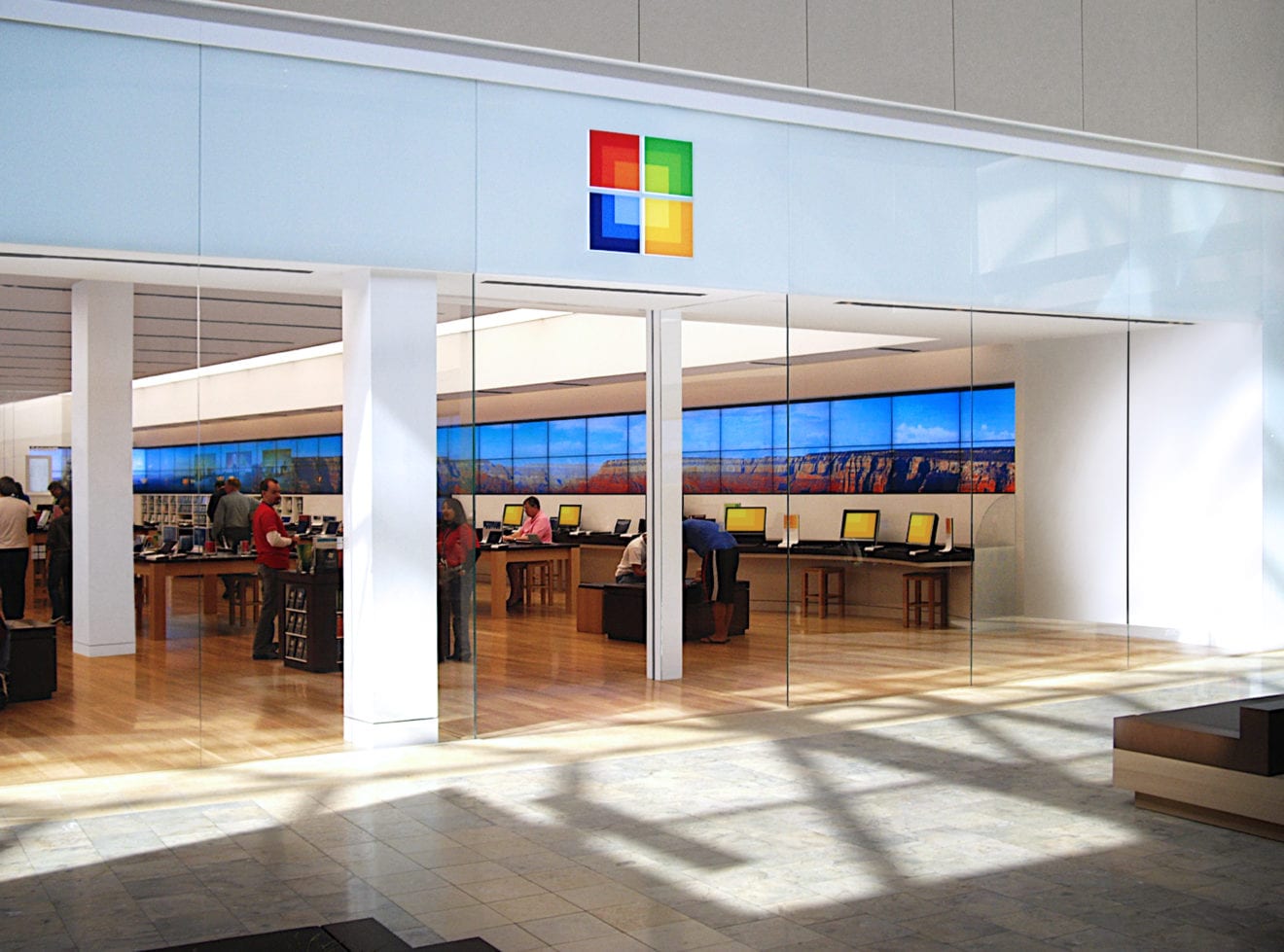
  • Microsoft does something Unexpected

    Microsoft does something Unexpected

    You didn’t have to be a techie, a fan boy or wealthy investor to enjoy the two-horse race last year between Apple and Amazon. Both companies were neck and neck in a race to be the first publicly traded U.S. firm to reach a trillion dollar valuation. Last August 2nd, Apple hit the milestone first, followed by Amazon almost exactly one month later. And that’s why it was such a surprise when Microsoft finished 2018 as the most valuable public company in the U.S.

    Even though Microsoft finished on top as last year ended, it was the beneficiary of a sharp market correction that took Apple and Amazon down 32% and 27% from their 2018 highs, respectively. But the software giant had never actually joined Apple and Amazon in the trillion dollar club; that is, until today. A positive earnings report released by the gang in Redmond after the market closed last night has propelled the stock sharply higher. This morning, Microsoft’s shares reached a high of $131.37 and at that point, the company was worth $1.007 trillion dollars.

    Microsoft investors have taken some profits, allowing the stock to drift back to $129.64 as we write this. That takes the company under the $1 trillion mark but doesn’t remove the accomplishment from the history books. Meanwhile, Apple and Amazon’s shares have recovered enough from last winter’s drubbing to make another run at a $1 trillion valuation. Apple, which reports earnings next week, is currently worth close to $975 billion. Amazon reports earnings later today and is currently worth $944 billion.

    While some might say that Microsoft has failed miserably in the mobile industry with Windows Mobile and Windows Phone, others might point out the success it has had with the Surface Pro high-end tablets. And more importantly for Microsoft, it owns a slew of Android-related patents that bring in a huge sum of money every year.

  • SoftBank JV to invest $125m in Project Loon

    SoftBank JV to invest $125m in Project Loon

    Japan’s SoftBank has announced that its joint venture HAPSMobile will invest $125 million in Google’s Project Loon to advance the use of high-altitude vehicles to carry mobile base stations.

    HAPSMobile, the joint venture between SoftBank and US-based unmanned aerial vehicle systems company AeroVironment, was established in 2017 to conduct network equipment research and development for the high-altitude platform station (HAPS) business.

    Under the agreement with Google, Loon has been given the right to invest the same sum in HAPSMobile at a later date.

    The two companies have also agreed to actively explore commercial collaborations to accelerate the development of high altitude network connectivity solutions, such as the network of stratospheric balloons that Loon is trialling to deliver internet access to unserved areas of the world.

    Potential areas of collaboration being negotiated include enabling flight vehicles from each party to connect and share the same network connectivity in the air, as well as the establishment of a wholesale business that would allow HAPSMobile to utilize Loon’s vehicle and technology, and allow Loon to utilize HAPSMobile’s in-development unmanned aircraft.

    Other possibilities include a jointly developed communications payload that is adaptable to multiple flight vehicles, a common gateway or ground station that could be deployed globally and used by both companies to provide connectivity over their platforms, and adapting Loon’s fleet management system and temporospatial SDN for use by HAPSMobile.

    “Building a telecommunications network in the stratosphere, which has not been utilized by humankind so far, is uncharted territory and a major challenge for SoftBank,” SoftBank CTO Junichi Miyakawa said.

    “Working with Alphabet’s subsidiary Loon, I’m confident we can accelerate the path toward the realization of utilizing the stratosphere for global networks by pooling our technologies, insights and experience. Even in this current era of coming 5G services, we cannot ignore the reality that roughly half of the world’s population is without Internet access. Through HAPS, we aim to eliminate the digital divide and provide people around the world with the innovative network services that they need.”

    “We see joining forces as an opportunity to develop an entire industry, one which holds the promise to bring connectivity to parts of the world no one thought possible,” Loon CEO Alastair Westgarth added.

    “This is the beginning of a long-term relationship based on a shared vision for expanding connectivity to those who need it. We look forward to what the future holds.”

  • Vietnam is fastest growing market for m-payments

    Vietnam is fastest growing market for m-payments

    Vietnam has seen the highest growth in mobile payments in the past year, according to the Global Consumer Insights Survey 2019 conducted by PwC.

    The survey, which covered more than 21,000 respondents from 27 territories, showed that the percentage of consumers using these services in Vietnam increased to 61%, up from 37% in 2018. The 24 percentage point increase was also the largest in the six Southeast Asian countries that took part in the survey.

    In Singapore, mobile payments climbed 12 percentage points from 34% in 2018 to 46% in 2019. Since the government began encouraging digital payments in late 2017, the latest results indicate a payoff in the efforts by the government and other mobile payments players.

    The rest of Southeast Asia also saw increases in mobile payments with Thailand up 19 percentage points to 67%, Malaysia up 17 percentage points to 40%, and Philippines up 14 percentage points to 45%, respectively. Indonesia reflected the slowest increase in the usage of mobile payments at just 9 percentage points to 47%.

    In the Middle East, which was the second fastest growing in mobile payments adoption globally after Vietnam, the percentage increased by 20 percentage points to 45%. China remains unchanged at 86%. Across all territories, 34% of consumers paid for purchases using mobile payments, up from 24% a year earlier.

    Buying through social media

    According to the survey, consumers in Asia are more socially engaged online than those in Europe and the Americas. Respondents in Thailand, Indonesia and Vietnam led the pack globally in making purchases directly through social media posts on platforms like Instagram and Facebook, with 50%, 49% and 48% of survey respondents indicating they do so, respectively.

    Globally, only 21% of respondents made purchases directly through social media. Among product and service categories, the survey found that social media is most likely to affect purchasing decisions related to fashion.

    Charles Loh, Southeast Asia Consumer and Industrial Products Consulting Leader, PwC, said: “Social media platforms are already mature in Southeast Asia. The trend in online shopping, moving forward, is the consolidation of e-commerce players with fewer big players providing that gateway. There seems to be a consolidator present in every market.”

    Voice technology

    In the survey, 9% of global consumers said they use voice technology to shop online weekly or more frequently. As shopping by voice continues to catch on, companies should be thinking beyond mobile to consider how voice technology in homes, cars, and elsewhere will affect customer experience. The bar for brand leadership will continue to shift as organizations launch increasingly consumer-friendly technologies.

    Charles Loh, Southeast Asia Consumer and Industrial Products Consulting Leader, PwC, said:

    “Voice technology is widely used in instant messaging communication platforms. It’s only a matter of time that we see adoption here in Southeast Asia”

    Shirish Jain, payments director, Strategy, said: “Asia remains the powerhouse in leading the customer shift to mobile payments with the report reflecting eight Asian nations in the top 10, and six are in Southeast Asia, as the results show. Vietnam, with its relatively low penetration in 2018, has registered the highest growth as mobile platforms demonstrate a significant increase in convenience over traditional means of commerce.

    “This contrasts with Singapore that also shows strong gains. However, the sophisticated and established traditional ecosystem, as well as abundant and potentially confusing number of choices in mobile payments can also slow down adoption.

    “This finding highlights a timely confluence of four principal factors: stages of economic growth cycles driving affluence and disposable income; the availability of platforms that address local demographic needs including support for cash-on-delivery; the lower cost for retailers and providers; and a marked increase in convenience.”

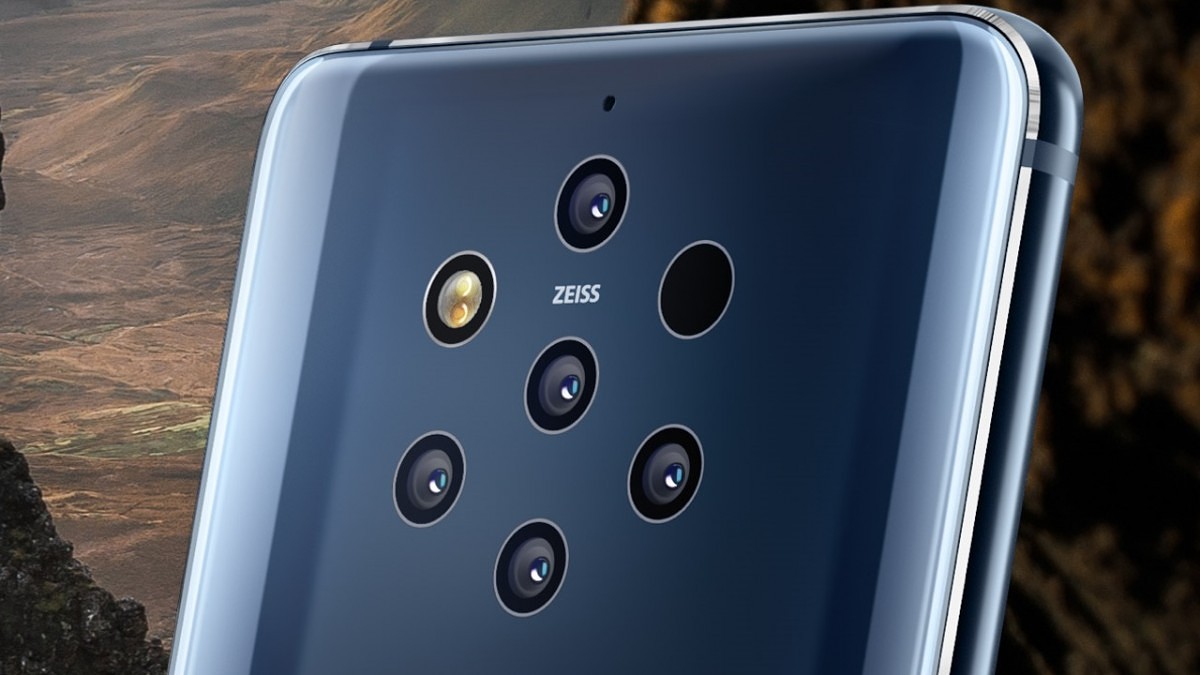
  • Nokia 9 PureView update fixes one issue and Creates a new One

    Nokia 9 PureView update fixes one issue and Creates a new One

    Last week, the Nokia 9 PureView received a software update which was meant to fix the unreliable fingerprint sensor. And while bad reads are now far less frequent, we won’t go as far as to say that the fingerprint reader works better. Over the weekend, reports emerged on Twitter that after the update, users were able to unlock the Nokia 9 with unregistered fingerprints. Naturally, we put our unit to the test as well. Unfortunately, we can confirm that it is possible to unlock it with an unregistered finger.

    The false positive appears to be somewhat random, it’s not just the phone mistaking another fingerprint for the real one consistently. There’s no way to always force the error, but it didn’t take too much time before we were successful with our attempts. This means that if someone gets a hold of your phone they’ll likely be able to unlock it eventually. The most likely explanation for the vulnerability seems to be that Nokia tweaked the fingerprint reader algorithms to give a positive read with less certainty of a match.

    Original article:

    You might have read our review of the Nokia 9 PureView from earlier this month and noticed that we gave the phone a score of “4” out of 10. We discovered that the optical in-display fingerprint scanner would not always register our attempts to unlock the phone. Sometimes it requested that we press harder, or told us to try again. But help is on the way to those Nokia 9 PureView owners who have suffered from the same problems.

    A tweet disseminated on Friday by HMD chief product officer Juho Sarvikas revealed that an update is being pushed out to improve the in-display biometric reader on the phone. The message suggests that after the update is installed, Nokia 9 PureView users should register their fingerprints again for the “best experience.” The executive also notes that while the update is being sent out in stages, it is already available in most markets.

    One Nokia 9 PureView owner who already received the 250.4MB update says that he saw a big improvement after installing it; he was able to unlock the phone using the in-display fingerprint scanner 9 times out of 10 without having to press hard. The update also improves the quality of photographs taken with the phone’s cameras and speeds up the processing of such photos. It also boosts the color accuracy and contrast of the display and includes the April Android security patch.

    If you own the device and have yet to receive the update, you can always try the face unlock option to open the handset. However, as we pointed out in our review, it is not as secure as the fingerprint scanner and can’t be used to validate payments. In addition, facial recognition on the Nokia 9 PureView is not only slow, but is also a hit or miss proposition. Using a PIN might be the best bet until the update is received.

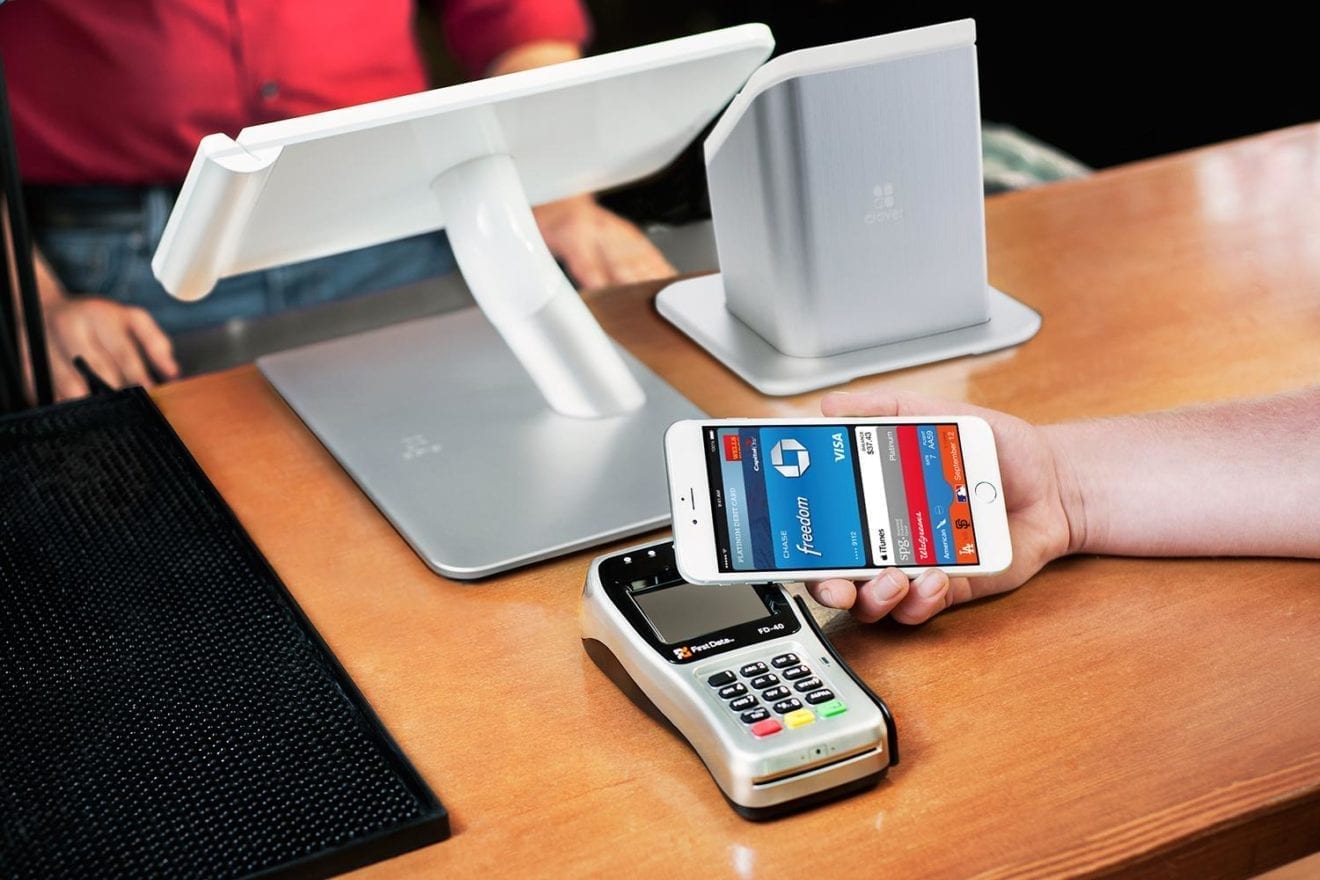
  • US retailer removes Apple Pay support after two years

    US retailer removes Apple Pay support after two years

    JCPenney has finally released an official statement. This offers a technical explanation for the retailer’s decision to “suspend all contactless payment options until a later date.” While that suggests there’s a good chance Apple Pay support will be reactivated at some point in the future, JCPenney is also hinting at modest popularity for the digital wallet app in its stores, claiming the “vast majority” of shoppers continue to rely largely on “inserting or swiping their physical credit cards at point-of-sale terminals” to complete their transactions. Original article follows.

    While Apple is still selling plenty of iPhones, iPads, and smartwatches around the world, the tech giant’s “services” and software are suddenly growing at an unrivaled pace, generating revenues of nearly $11 billion between October and December 2018, up from $9.1 billion during the final three months of the previous year. Apple Pay, Apple Music, and the iOS App Store are by far the most successful and lucrative such services, at least until the Apple Arcade and TV+ platforms actually become available for end users.

    Released less than five years ago, Apple Pay powered a mind-blowing 1.8 billion transactions in the last 90 calendar days of 2018, continuing its aggressive expansion stateside and worldwide with a long overdue debut in Germany, as well as major new partnerships with the likes of CVS, Target, and Taco Bell.

    Curiously enough, another big US retailer confirmed on Twitter over the weekend its “decision to remove Apple Pay for our stores.” JCPenney’s move is certainly unusual (if not unprecedented), as there are still a few holdouts in Apple’s race to US ubiquity, but we can’t really remember anyone that supported the digital wallet platform for a couple of years to then reconsider without offering any sort of justification.

    While not the earliest supporter of the increasingly popular app, JCPenney did embrace the service back in 2017, helping it reach 74 of the top 100 US retailers by revenue as of January 2019. That included Target and Taco Bell, so we’re guessing the count is now down to 73. That’s still an impressive number, as is the 70 percent touted by Tim Cook as the platform’s target for later this year as far as all US retailers are concerned.

    Hopefully, we’ll get an explanation from JCPenney soon as to what made the department store chain pull the plug on Apple Pay support in both its retail locations and iOS app.

  • YouTube Music free on Google Home smart speakers

    YouTube Music free on Google Home smart speakers

    Google has just announced that its YouTube Music service is now available on all Google Home smart speakers. Starting today, those who own a Google Home smart speaker will be able to enjoy all the benefits offered by the music streaming service, but there’s a catch.

    Only the first tier YouTube Music experience is available on Google Home smart speakers, which means you you’ll have to put up with ads. Still, if you don’t mind getting a free, ad-supported music experience on your Google Home, you just need to say “Hey Google, play techno vibes,” and your smart speaker should do the rest.

    But that’s not all, if you upgrade to YouTube Music Premium for $9.99/month, you’ll be getting even more control when listening music on smart speakers in the YouTube Music mobile app. For example, you’ll be able to request specific albums, songs, artists, and playlists on-demand.

    Also, you get access to easy-to-use player controls, including unlimited skips and song replay.Besides the benefits mentioned above, a YouTube Music Premium tier will also let you background play music through the YouTube Music app while using other apps, and allows downloads for offline listening when you’re on the move.

    To start using YouTube Music on your Google Home smart speaker, simply open Account Settings in your Google Home app, go to Services and select Music. Then, choose YouTube Music as the default music service, or you can choose YouTube Music as the default music service during the setup process.

    Now, the free service is available not available everywhere yet, so here are the first countries that will get it starting today: United States, Canada, Mexico, Australia, Great Britain, Ireland, Germany, France, Italy, Spain, Sweden, Norway, Denmark, Japan, Netherlands, and Austria. The good news is Google will bring it to more countries soon, so there’s that.