Tag: Mobile

  • Vietnam telcos ready to pilot mobile money

    Vietnam telcos ready to pilot mobile money

    Vietnamese operators MobiFone, VNPT and Viettel have all submitted proposals to participate in pilot mobile money services.

    Vietnam’s prime minister Nguyen Xuan Phuc has directed the telecommunications ministry and the State Bank of Vietnam to develop a project that will allow operators to pilot mobile money services not linked to customers’ bank accounts.

    The three operators have submitted applications to launch mobile money services that will allow customers to transfer money using mobile phones, including Vietnam’s unbanked population.

    According to the report, the operators believe they have the capital, infrastructure and user base necessary to launch mobile money services and contribute to the development of non-cash payment in Vietnam.

    The market could represent a promising avenue for expansion for the operators – Vietnam’s fintech market is set to reach $8 billion in 2020, with digital payment solutions accounting for around 89% of the market. Meanwhile only around 40% of the population have bank accounts, but mobile penetration is well above 100%.

  • China Mobile, ZTE launch maritime broadband solution

    China Mobile, ZTE launch maritime broadband solution

    ZTE and the Zhejiang branch of China Mobile have jointly launched commercial trials of a new maritime broadband satellite solution.

    The solution, Heweitong, is designed to help solve common problems of maritime communication, such as poor coverage, slow data rate, and high cost.

    It will allow people at sea to communicate and access the internet by merely installing a mobile app on their smartphones.

    During the trial period, China Mobile and ZTE are offering the solution for free. Once commercially launched, the companies expect the cost to be 90% lower than traditional marine communications solutions.

    Heweitong has already undergone verification testing involving more than 50 ships and nearly 300 users in the Bohai Sea, the East China Sea and the South China Sea.

    The project forms part of China Mobile’s goal of offering ubiquitous connectivity via an integrated space, sky and land based communications solution.

  • Mobility driving China’s economic growth

    Mobility driving China’s economic growth

    China’s mobile ecosystem added 5.2 trillion yuan ($750 billion) in value to the country’s economy in 2018, according to a new GSMA report.

    Mats Granryd, director general of the GSMA says the report confirms how China’s mobile industry has been a key driver of economic growth, inclusion and modernization – creating a new generation of digital consumers and transforming industry and society.

    Grandryd says China’s mobile operators will invest a further 401 million yuan with the rollout of 5G.

    Numbers speak volumes

    • China is the largest mobile market in the world with 1.2 billion unique mobile subscribers at the end of 2018, about 82% of the country’s population;
    • 69% of mobile connections in China are smartphones, with smartphone adoption expected to reach 88% by 2025;
    • 4G networks cover 77% of China’s connections peaking in the coming years before falling as consumers migrate to 5G services;
    • By 2025, there will be 460 million 5G connections – this will, however, only account for 28% of China’s total network connection;
    • By 2023, mobile connection will contribute 6 trillion yuan to the economy, up from 5.2 trillion yuan in 2018;
    • China’s mobile ecosystem directly and indirectly supported 8.5 million jobs in 2018 and contributed 583 yuan in tax revenue;
    • The number of licensed cellular IoT connections in China stood at 672 million at the end of 2018, supporting various industrial and smart cities applications.


  • Westpac introduces Apple Pay in New Zealand

    Westpac introduces Apple Pay in New Zealand

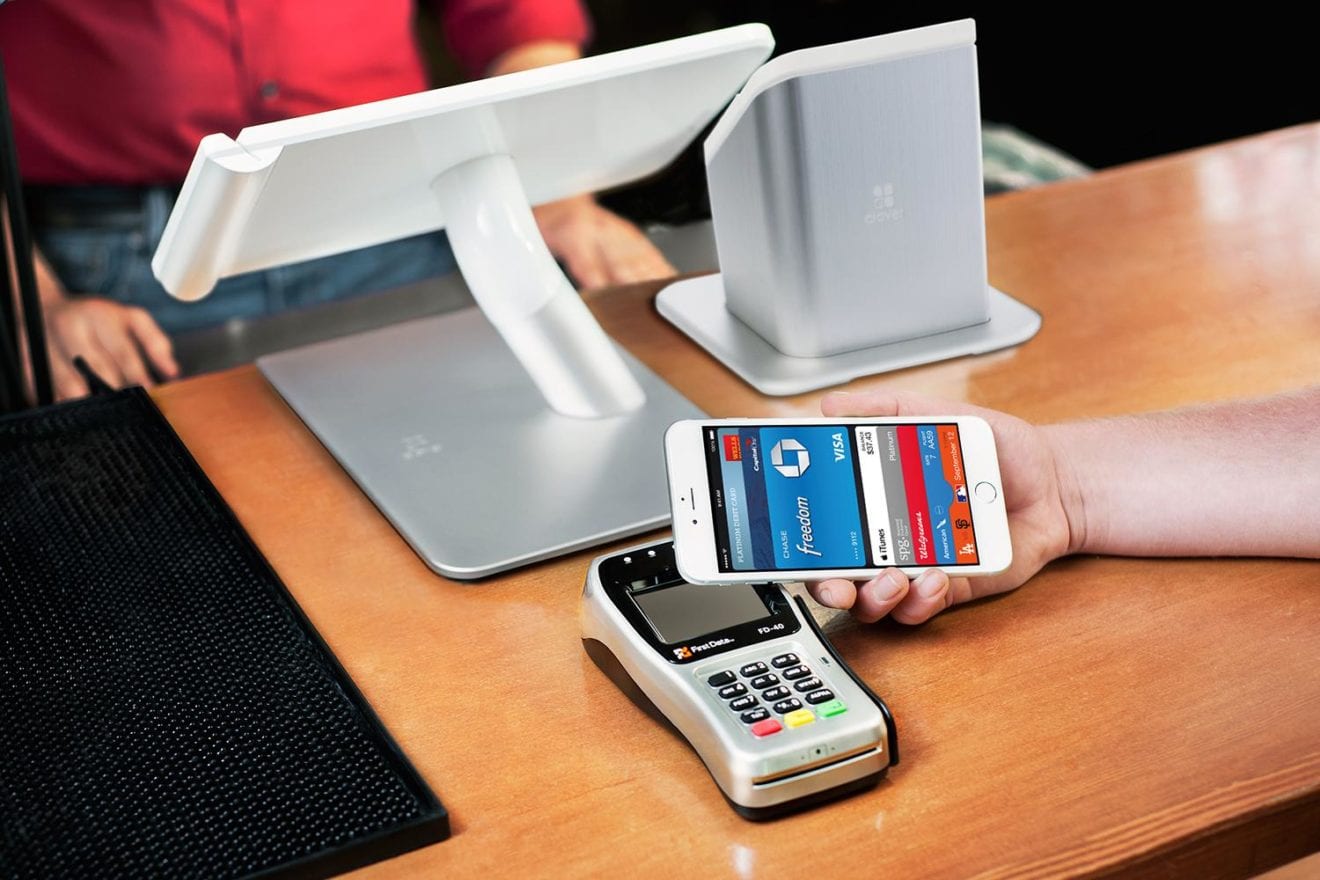
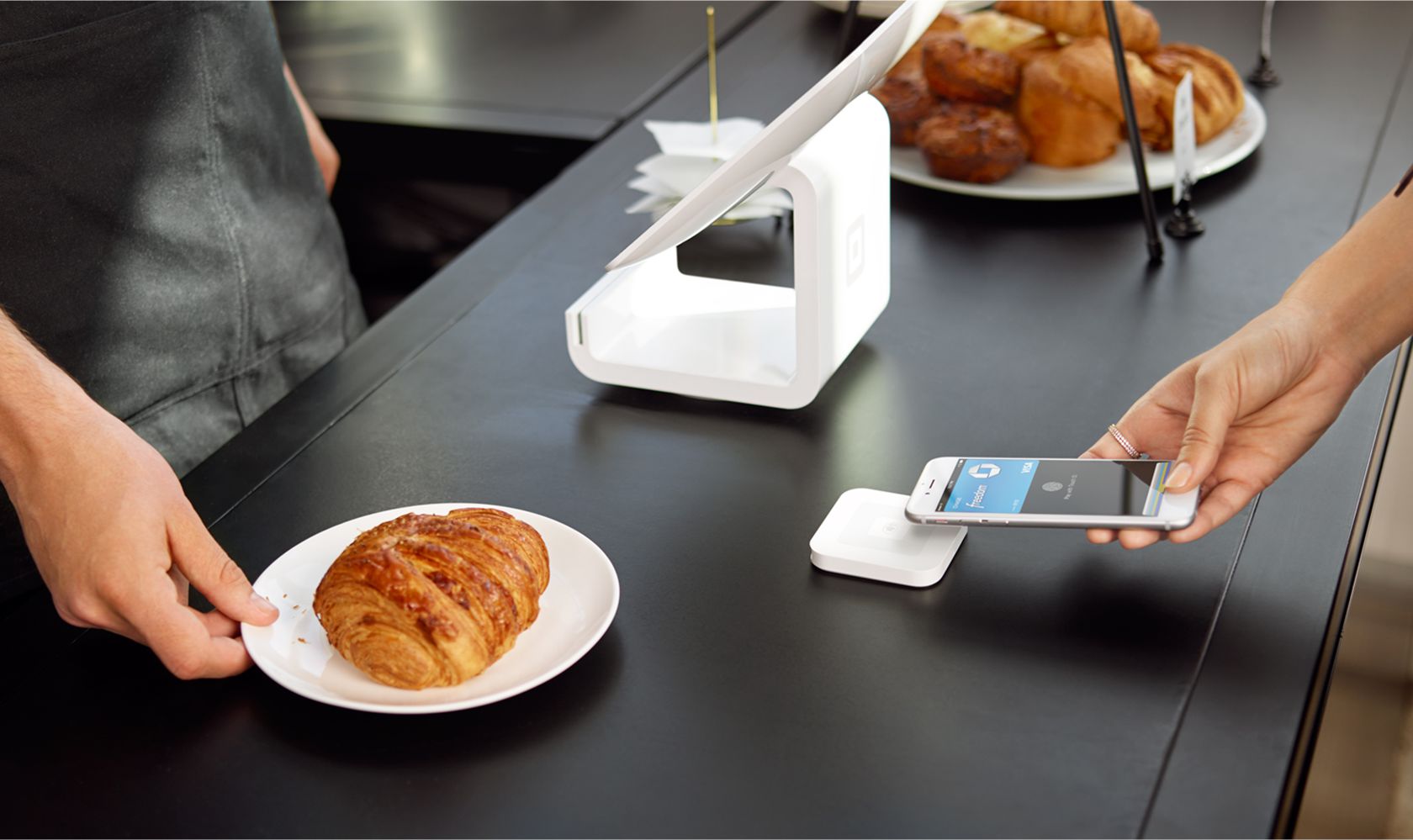
    Westpac New Zealand customers can now use Apple Pay wherever contactless payments are accepted.

    This reflects the findings of a recent study by Allied Market Research, which found that younger consumers appreciate the simplicity of mobile payments.

    The mobile payment market is expected to reach $4.5 trillion by 2023, according to the research firm, which also notes the market is growing with a “lightning-fast” rate in Asia-Pacific.

    However, even mobile payments are beginning to be superseded.

    The report noted that near field communication (NFC) and QR technology is fast becoming standard in various parts of Asia-Pacific, and various market players are already investing in this new technology.

    Westpac is celebrating the launch of Apple Pay by donating $2.50 for every customer who uses Apple Pay five times before May 2, 2019, to charity. Each customer will also receive a one-off payment of $10.

    “It is yet another reason for our customers to get excited about Apple Pay,” Shane Howell, Westpac’s chief experience officer, said.

    The four charities that will benefit from the initiative are the Mental Health Foundation, Shine, Sustainable Coastlines, and New Zealand’s rescue helicopter services.

  • HTHKH to buy full control of mobile business

    HTHKH to buy full control of mobile business

    Hutchison Telecommunications Hong Kong Holdings (HTHKH) has arranged to buy out Japan’s NTT Docomo‘s share of its mobile businesses for $60 million.

    Under the agreement, HTHKH will acquire Docomo’s 24.1% interest in Hutchison Telephone Company Limited (HTCL) and its 24.1% stake in Hutchison 3G Hong Kong Holdings (H3GHK), making both companies wholly-owned subsidiaries.

    In an announcement, HTHKH said acquiring full control of its mobile business will increase the value of HTHKH shares, enhance operational efficiency and save costs by eliminating resources expended on shareholder communications.

    The transaction is expected to close on May 31. HTHKH plans to use the proceeds from the disposal of its fixed line business in 2017 to pay for the purchase.

    HTHKH and Docomo have agreed to discuss potential ways of extending their mutually beneficial relationship despite no longer being tied through a shareholder relationship.

    The companies have agreed to enter a consultation and cooperation agreement upon the closing of the transaction to explore the feasibility of collaboration in the field of mobile telecommunications products and services.

  • China Mobile Hong Kong holds 5G experience showcase

    China Mobile Hong Kong holds 5G experience showcase

    China Mobile Hong Kong (CMHK) and property company Sino Group have jointly held what they are calling Hong Kong’s first in-mall 5G experience showcase at the Olympian City 2 mall.

    The Future is Now 5G Experience Showcase, which was held over four days ending yesterday, comprised six experience zones intended to introduce ad demonstrate 5G technology.

    These zones were based around concepts including autonomous vehicles, smart glasses and a machine that purports to be unbeatable at janken (also known as rock paper scissors) by using 5G leased lines and a sensory system to detect gestures as they are thrown.

    Other zones highlight the speed improvement between 4G and 5G, the potential of 5G technology in smart city development and a start-up exhibition based on IoT technology.

    “Out of Hong Kong’s many mobile carriers, CMHK is the first network provider to receive the 5G trial permit, and has succeeded in engineering Hong Kong’s first end-to-end 5G network testing as well as the first Commercial Equipment Field-Testing of 28GHz 5G base stations,” CMHK chairman Dr Li Feng said.

    “In the future, CMHK will continue to adhere to the concept of ‘4G changes lives, 5G changes society’ by presenting “5G+ Project” in three agendas: firstly, to complement the existing 4G network with 5G infrastructure; to promote 5G with new networking technology; and develop more comprehensive 5G ecosystems to maximize the value of 5G.’

  • Subway Launching online ordering platform

    Subway Launching online ordering platform

    Fast food chain Subway is planning to launch a mobile app and website to support online ordering by mid-2019. A Subway spokesperson told that the company is in the final stages of testing the platform before launching it in Australia.

    “Our app will allow our guests to order their favourite sub, salad or wrap from the convenience of their office or home, for collection at their local Subway restaurant,” the spokesperson said.

    “We are also looking at further opportunities to integrate our ‘Fresh’ sites with both social media and our app in the near future.”

    Subway recently unveiled a brand refresh to modernise its offerings and a new website that highlights key supplier stories and educates customers about the chain’s fresh ingredients. According to Subway, the “Real Fresh” website aims to give guests a look behind the scenes at some of the 80 local growers and suppliers who support the business from all over Australia.

    Ben Miles, senior manager for brand marketing at Subway, said the sandwich chain is a strong supporter of Aussie produce.

    “We’re committed to supporting farmers, growers and producers around the nation,” Miles said.

    “We wanted to shine a light on the incredible work they do, bringing the fresh factor to our restaurants multiple times a week.”

    Miles said many of the company’s customers are unaware that their fresh vegetables are sliced and prepared in-restaurant before serving, so this information is also shared on the site.

    “Subway was the pioneer of freshly prepared sandwiches,” he said. “We estimate we’re one of the largest national purchasers of fresh produce in Australia.”

    “Our guests understand that the provenance of our ingredients is important, and we’ve been making considerable changes to our menu to deliver the best possible quality ingredients for our subs, salads and wraps.”

    Subway supply partners include local Echuca tomato business, Kagome and Minto-based bakery, Suprima. It has also partnered with South-East Queensland farms.

    Subway’s Real Fresh website was recently awarded a Gold Ava Digital Award, an international competition recognising excellence in website design.

  • Sony Mobile insists the end is not near after it closes a smartphone plant

    Sony Mobile insists the end is not near after it closes a smartphone plant

    While Sony’s fall from grace in the global mobile industry hasn’t been as dramatic as those suffered by Nokia, BlackBerry, and even HTC, it’s more than obvious the Japan-based tech and entertainment behemoth needs to do something about its smartphone division. Unfortunately, as the company’s various attempts at revising and transforming the Xperia portfolio over the last few years have failed to turn a profit, the time has come for more drastic austerity measures.

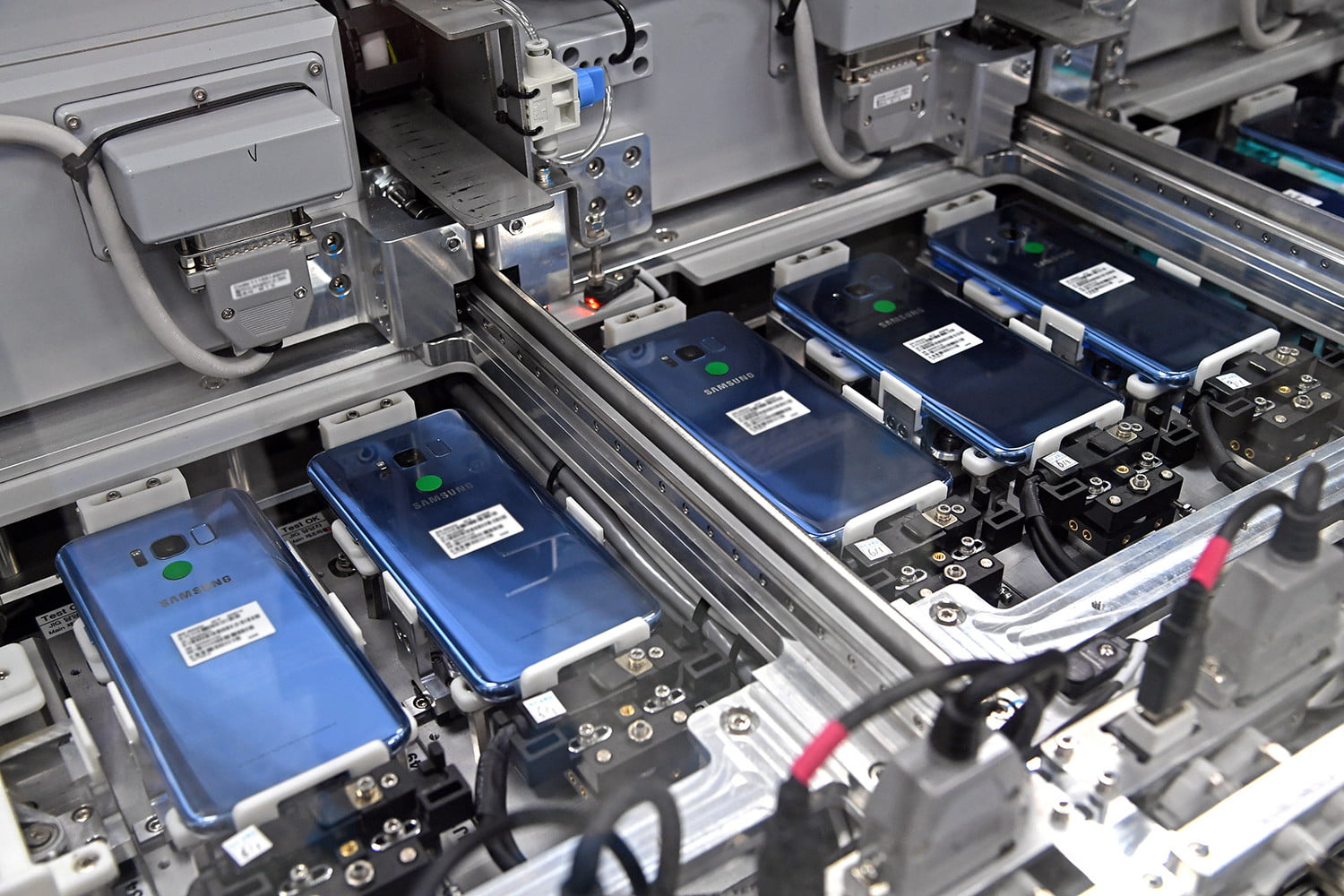
    After laying off 200 employees in Europe to cut costs across a number of mobile business areas, Sony has confirmed long-rumored plans to close an entire factory in China earlier today. The Beijing plant will reportedly cease all smartphone manufacturing activities in “the next few days”, although Sony does intend to “shift production” to a different factory in Thailand in a move expected to greatly contribute to reducing expenses by around 50 percent.

    The ultimate goal is to make the smartphone division profitable again as early as 2020 after years and years of bleeding serious money, but it remains to be seen how much of a mobile business Sony will be left with when that happens. According to the latest official estimates, yearly Xperia shipments are down to as little as 6.5 million units. To put that number into perspective, Samsung’s Galaxy S10 lineup was projected to hit 10 million global unit sales in just its first month of availability.

    Of course, Sony has repeatedly claimed in the past year or so it has no intention to abandon the smartphone market on the eve of a 5G revolution. Once again, the company is highlighting its strategic measures are simply meant to strengthen the business rather than killing it piece by piece. And while it’s definitely not unprecedented to see a major smartphone vendor cut its Chinese costs, it remains unclear exactly how much of Sony’s Bejing operations will “shift” to Thailand.

    Either way, this probably won’t impact the Xperia 1 launch or even the rumored Xperia 2. What comes next, however, is anyone’s guess.

  • Telstra awarded 131 cell sites under Black Spot program

    Telstra awarded 131 cell sites under Black Spot program

    Australia’s Telstra has announced it has been awarded 131 sites as part of the fourth round of the government’s Mobile Black Spot program.

    The operator will deploy a mixture of new mobile base stations and small cells at the 131 locations, and will contribute $23.3 million of the $55.6 million co-investment required to fund the new sites, with the remainder coming from the federal and state governments.

    The new sites will include 49 in New South Wales, 23 in Western Australia, 22 in Victoria, 19 in South Australia, and 18 in Queensland.

    Telstra said it has so far deployed more than 550 new mobile base stations across regional and rural Australia as part of the Mobile Black Spot program.

    Meanwhile the operator expects to have spent a total of around A$8 billion ($5.66 billion) in total mobile investment over the five years ending in June, with nearly A$3 billion of this spent in rural areas.

    “Our investments will help towns and communities relying on mobile connected devices more than ever before,” Telstra CEO Andy Penn said.

    “The partnerships we have formed with Governments at all levels are providing connectivity and services to many areas of Australia where it was otherwise uneconomical to do so.”

    He said Telstra’s mobile network now spans nearly 10,000 base stations covering more than 2.5 million square kilometers.

    The announcement came shortly after the government revealed it has allocated a further A$160 million for the Mobile Black Spot program, which has now been extended to a further two rounds.

  • Vietnam tops world in growth of mobile payments

    Vietnam tops world in growth of mobile payments

    The number of Vietnamese people making mobile payments in stores this year has grown fastest globally by 24 percent. A survey by the audit, tax and consulting services provider PwC found 37 percent of the respondents making mobile payments in 2018, but it went to 61 percent this year, placing Vietnam fourth below China at 86 percent, Thailand at 67 percent and Hong Kong at 64 percent.

    In terms of growth, the Middle East ranked second at 20 percent, said the Global Consumer Insights Survey 2019, which polled 21,000 online consumers in 27 territories.

    “Mobile payment is becoming a new trend with the rise of technologies such as QR codes, contactless payments, and the tokenization of card information,” Nghiem Thanh Son, deputy director of the Department of Payments at the State Bank of Vietnam (SBV), had said earlier.

    The Vietnamese government is working to accelerate the use of cashless transactions. In a resolution released January, it tasked the central bank to come up with solutions that would promote the use of e-wallets, which allow users to deposit cash into their e-wallets without the need for a bank account.

    However, Vietnam is still far away from becoming a cashless society, given low financial literacy and the lack of an ecosystem, experts say.

    The use of cash in Vietnam remains high. World Bank’s statistics released last year showed that Vietnam had the lowest percentage of cashless transactions in the region with only 4.9 percent, while this value for China and Thailand were 26.1 percent and 59.7 percent respectively.

  • Samsung Galaxy A20 goes official with solid features

    Samsung Galaxy A20 goes official with solid features

    Samsung is determined to completely overhaul its Galaxy A line, but the amount of device the South Korean company plans to launch in the remaining of the year is a bit overwhelming. We know of at least four Galaxy A phones that should be unveiled in the coming months, and three that have already been launched on the market – Galaxy A10, A30, and A50. Specs-wise, the Galaxy A20 sits between the A10 and A30 and so does in terms of price.

    What’s really amazing about this phone is that it retains some of the features that make its bigger brothers, the Galaxy A30 and A50, so appealing such as the massive, high-quality display and camera setup.

    It retains some of the “premium” features of its bigger A30 and A50 brothers

    The main selling points of the Galaxy A20 are no doubt the Super AMOLED display and the dual-camera on the back side. Of course, there are other important specs that make the Galaxy A20 an interesting budget choice for those who can’t afford a mid-range or flagship device, so let’s take an in-depth look at what the phone has to offer. First off, if you’re one of the many people who absolutely hate notch, the Galaxy A20 is not for you.

    Although it includes a minimally invasive waterdrop notch, it’s still there to bother your sense. However, if you don’t mind the compromise, the Galaxy A20 has a great 6.4-inch Super AMOLED display, which features 720 x 1560 pixels resolution. It’s the same display that Samsung included in the Galaxy A30 and A50, but you’ll be getting this one much cheaper.

    As for the other selling point of the Galaxy A20, it’s no longer unusual for mid-tier phones to include dual rear cameras, Samsung’s new handset is no exception. The dual camera consists of 13 + 5 megapixels sensors, but there’s also a secondary 8-megapixel camera in the front for selfies. Since this is a budget offering, Samsung included a less powerful chipset inside, the same packed inside the cheaper Galaxy A10. The Exynos 7884 is a new addition to Samsung’s line of chipsets and should be on par with Qualcomm’s Snapdragon 450 processor in terms of performance.

    Android 9 Pie & Samsung One UI on a budget

    Even though it’s the most powerful smartphone out there, the Galaxy A20 ships with the latest Android 9 Pie operating system on board and Samsung’s One UI overlay. It’s too early to talk about Android Q since the new version of the OS hasn’t been released yet, but the Galaxy A20 has the required hardware for a software upgrade if Samsung decides to go for it. Samsung’s proprietary SoC (system-on-chip) is paired with 3GB RAM and 32GB internal memory, which can be further expanded up to 512GB via microSD card. That’s the standard memory configuration for a mid-tier smartphone these days, but we’re surprised Samsung did not launch more than one models based on the amount of memory.

    We’re happy to see that Samsung understood how important is for customers to be able to use their phones for longer times without being forced to recharge them. The Galaxy A20 is powered by a massive 4,000 mAh battery, which should be enough for at least a few days of average use.

    Finally, we noticed a fingerprint sensor on the back side, a nice addition for a budget offering. We’re also told that Samsung Galaxy A20 comes with NFC (Near Field Communication) support, which means you’ll be able to use mobile payments services while on the go.

    Samsung Galaxy A20 price, release date, availability

    As far as the price and availability go, Samsung Galaxy A20 is only available for purchase in Russia for the moment, but we expect the smartphone to arrive in other European countries in the coming weeks.

    Price-wise, this is a cheap device for what it has to offer, as customers can buy one for around $215 outright. It’s also worth mentioning that phone prices in Russia tend to be slightly higher than the rest of Europe, and clearly higher than US prices, so a less than $200 price is definitely possible.
  • ADLINK, Charles Industries demo mobile edge AI/ML solution

    ADLINK, Charles Industries demo mobile edge AI/ML solution

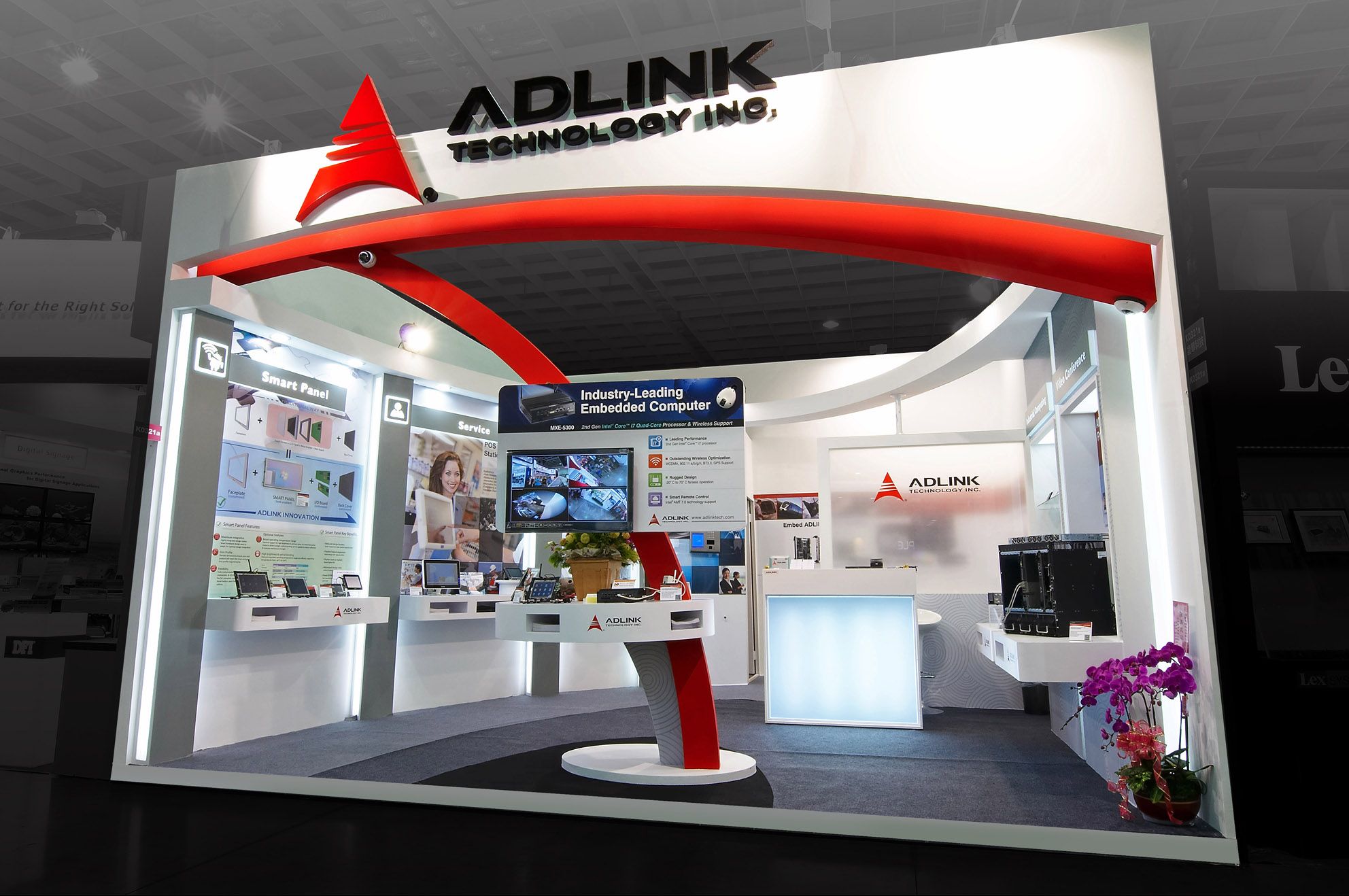
    Test and measurement company ADLINK Technology and telecoms, marine and industrial manufacturer Charles Industries have developed the industry’s first pole-mounted multi-access Edge AI and machine learning solution.

    The solution, a complete micro-edge low latency AI, machine and deep learning solution can be co-located on LTE small cell poles or 5G radios, is specifically designed for outdoor telecoms use cases.

    The solution, which can be either pole or wall mounted, integrates ADLINK’s latest AI Edge Server with a Charles Industries Mico Edge Enclosure.

    According to the companies, the solution has the potential to enable a range of new and advanced services, including autonomous vehicles/pods, virtual and augmented reality applications, and vision analytics.

    ADLINK’s mobile edge computing platform has been designed to fully comply with the Open Data Center Committee’s Open Telecom IT Infrastructure standard to meet the 5G requirements of ultra-low latency, high bandwidth, and real-time access to the radio network.

    The companies are showcasing the solution at the NVIDIA GPU Technology Conference in San Jose in the US this week.

  • Konnectivity to buy out remaining shares of M1

    Konnectivity to buy out remaining shares of M1

    Konnectivity, the joint venture buying out Singapore’s M1, has revealed plans to embark on a multi-year transformation of the operator to enhance its competitiveness in the market. The venture revealed it will compulsorily acquire the remaining shares in M1 after securing a 94.55% stake.

    Konnectivity, which is jointly owned by Keppel Corporation and Singapore Press Holdings, announced it will exercise its rights to acquire all remaining M1 shares at the offer price of S$2.06 ($1.52) per share, and then take the company private.

    After the compulsory acquisition, Konnectivity will own 80.69% in M1, while Keppel Corp subsidiary Keppel Telecommunications and Transportation will own the remainder.

    After the acquisition closes, Keppel Corporation and SPH plan to work with M1 on a transformation strategy focused on the three prongs of innovation, technology adoption, and digitalization to help Singapore’s smallest operator better compete with larger rivals Singtel and StarHub.

    “As a member of the Keppel Group, M1 looks forward to working closely with the Keppel Group and with SPH to accelerate the changes needed to deliver even more innovative and compelling products and services, to stay ahead of the competition,” M1 CEO Manjot Singh Mann said.

    “M1 shall endeavour to transform to be at the heart of convergence of various digital services and technologies that present day consumers and enterprises demand. Keppel and SPH bring with them their organisational strengths and stability, which will help us chart our growth plans aggressively, while seeking significant opportunities of synergy with them.”

  • Motorola is taking pre-orders on the phone it says will last up to three days

    Motorola is taking pre-orders on the phone it says will last up to three days

    If a huge battery is the most important feature you want on a new smartphone, you are in luck. Motorola has started accepting pre-orders for the Moto G7 Power. The phone’s claim to fame is the 5000mAh battery that Motorola says will keep the phone running as long as three days on a single charge. Hence, the use of the word “Power” in the phone’s name. With Turbo Charge, you’ll get up to 9 hours of battery life in just 15 minutes. The device is priced at $249.99.

    The Moto G7 Power comes equipped with a 6.2-inch LCD panel carrying a resolution of 720 x 1570 (HD+) and an aspect ratio of 19.63:9. The Snapdragon 632 Mobile Platform is under the hood along with 3GB of RAM and 32GB of native storage. A 512GB capacity microSD slot is available for those seeking additional storage. A 12MP camera adorns the back of the device (f/2.0 aperture) and there is a front-facing 8MP selfie camera. The phone is protected from spills, light rain and sweat thanks to P2i’s nano coating process.

    The Moto G7 Power is available in Marine Blue, and is priced at $249.99. If you finance the purchase, you’ll make 24 monthly payments of less than $11 each. And if you live in the states, the handset is compatible with each of the four major U.S. carriers including Verizon, AT&T, T-Mobile and Sprint. Pre-order the Moto G7 Power directly from Motorola, and you will get a $20 coupon to use on a future Motorola.com purchase.

    The Moto G7 Power is expected to be released on March 22nd.

  • Credit cards declining, Australians switch to new methods

    Credit cards declining, Australians switch to new methods

    A new report from data and analytics firm ilion suggests there is a mass-shift underway in the way Australians finance their purchases.

    According to its inaugural credit card report released on Sunday, Australian consumers under the age of 30 hold over half of all buy now, pay later accounts but just 10 per cent of total credit cards.

    One reason for this may be that banks are traditionally reluctant to give credit cards to younger consumers, who they view as a “more risky demographic group”. This coincided with new, alternate payment methods.

    “With evolving forms of repayments offering consumers more choice in an increasingly fragmented and competitive credit system, Australia is at the tipping point of its credit card cycle,” illion chief executive Simon Bligh said.

    As the payments landscape changes, retailers need to consider whether they should offer alternate payment options, if they haven’t already.

    “Retailers will need to respond to shifts in how consumers want to purchase and pay off their goods and services over coming years, particularly as younger Australians enter adulthood and constitute a growing and more influential proportion of the spending population,” Bligh said.

    While a majority of under 30s still hold a credit card (57 per cent), the long term trend is exponentially changing in the favour of BNPL options.

    Source: illion

    As the ilion report highlights, however, those under the age of 30 are twice as likely as their parents to fall more than two months behind in credit card payments.

    “[This suggests] they have a greater difficulty balancing spending and debt, regardless of their credit limit,” Bligh said.

    “Likewise, the likelihood of failing to pay off credit card debt on time increases if consumers have more than one card, and increases again if those cards are with multiple banks.”

    According to a recent investigation into the BNPL industry by the Australian Securities and Investments Commission, one in six users of the services had become overdrawn, delayed a bill payment or borrowed additional money to overcome payment obligations.

    This stems from the fact that both BNPL and credit cards allow customers to buy something that may be out of their price range, and easily put themselves in a position of becoming unable to meet their repayments.

    “The exponential growth in this industry, along with the risks we have identified, means this will be remain an ongoing focus for ASIC,” ASIC commissioner Danielle Press said.