Retail News CRM

Tag: Muji

  • Muji India set to make history

    Muji India set to make history

    Muji India  is about to become the first Japanese retailer to open stores in the nation.

    One is planned for Mumbai, the commercial capital, and another in Bangalore, the hub of the IT industry.

    This follows the forming of a joint venture by Muji owner Ryohin Keikaku, Tokyo, with Reliance Brands, based in Mumbai.

    Ryohin Keikaku is also the first-ever Japanese retailer to receive individual approval for a direct investment from the Indian government’s Foreign Investment Promotion Board.

    Its first venture will be the Muji Palladium. Opening in 2009, Mumbai’s Palladium is one of India’s largest shopping centres, attracting more than 24 million visitors every year. It has luxury retail brands, restaurants and a food court, and is next to a five-star hotel and cinema complex. The Muji India store, scheduled to open in August, will cover about 207 sqm.

    Muji’s second outlet will be in the VR Mall next to Phoenix Market City, which has fashion stores as well as a cinema complex and restaurants. Covering about 485 sqm, the Muji store is scheduled to open in September.

  • New Muji flagship store in Singapore in the works

    New Muji flagship store in Singapore in the works

    Japanese lifestyle brand Muji is planning a new flagship store in Singapore.

    Masaaki Kanai, chairman of Muji’s parent company Ryohin Keikaku, said on Tuesday (Mar 15) that the new flagship store is estimated to be around 3,300 square metres and will feature more lifestyle concepts.

    “Apart from the usual Muji products, the store will have an ‘Open Muji’ concept where community creators are invited to interact with us. This is in line with our objective to create an interactive society,” said Mr Kanai, who was speaking to the media at a roundtable interview following his keynote presentation at The Innovation by Design Conference in Singapore.

    Muji, whose full name Mujirushi Ryohin translates to “no brand, good quality”, declined to reveal the specific timeline for the opening of the new store.

    The Japanese retailer currently has 10 outlets in Singapore, including a travel-concept store Muji To Go located at Changi Airport Terminal 2 and Cafe & Meal Muji, which opened at Paragon last year.

    GLOBAL EXPANSION

    The plan to add to its stores in Singapore comes as the lifestyle brand, known for its unorthodox no-brand philosophy and focus on well-designed and practical household items, is carrying out a global expansion.

    According to Mr Kanai, by 2017 Muji will likely have more overseas stores than the 284 it has in Japan, as it seeks for growth outside its mature domestic market.

    Among the top two key growth markets are China and the United States.

    “China is leading the growth due to its big population, while we had a good start in the USA where we are seeing 300 billion yen in annual turnover,” said Mr Kanai, who has worked at Muji since its founding.

    Even as concerns continue about slowing growth in China and the spending power of its consumers, Muji remains upbeat about the world’s second-biggest economy, where it intends to increase its pace of store openings to 50 per year from 2017.

    Ryohin Keikaku had 128 stores in China as of end-May 2015, its biggest market outside Japan.

    “I’m not so worried because the generation born after the 1980s are relatively well-off and they emphasize on a good lifestyle, and that’s in line with our philosophy.”

    Despite the rapid worldwide expansion, Mr Kanai emphasized that the Japanese retailer does not intend to “grow too big” and prefers to stay as a “small and medium-sized enterprise (SME)” so as to stay true to its design philosophy.

    “When a company grows too big, it’s not a good thing because the management will tend to emphasize more on ensuring a profit. That’s not our objective,” the chairman said.

    “Our objective is still to offer something useful to our consumers.”

    BRACING FOR SALES TAX HIKE

    Back in its home market, Muji is keeping an eye on the planned increase in the consumption tax, from 8 per cent to 10 per cent, in April 2017.

    Aimed at reining in Japan’s massive public debt, the sales tax was first raised from 5 per cent to 8 per cent last April. The move, however, took a toll on consumer spending and the country’s retail sales.

    To combat the negative impact, Muji lowered the retail prices of its products following the tax hike, and opted for cost-cutting measures.

    When asked whether Muji is worried about the impact of a second increase in the sales tax, Mr Kanai said: “There was certainly an impact on profit and sales during the last sales tax hike in 2014. If there’s a raise again next April, retail sales will likely come down.”

  • JAJU continues quiet battle with Muji

    JAJU continues quiet battle with Muji

    The flagship store of JAJU, a retail brand by Shinsegae International, is all clean lines, muted colors and minimalist goods.

    Everything from notepads and diffusers to kitchen products, body cushions and clothes are on display for prices that make even the thriftiest shopper comfortable.

    JAJU is the first Korean lifestyle brand by a major conglomerate to offer a huge array of goods including housewares and daily supplies, a segment pioneered by brands like Japan’s Muji.

    Shinsegae International has never explicitly said it hopes to emulate the success of Muji, but the core brand concept – no-frills products at cheap prices – speaks for itself.
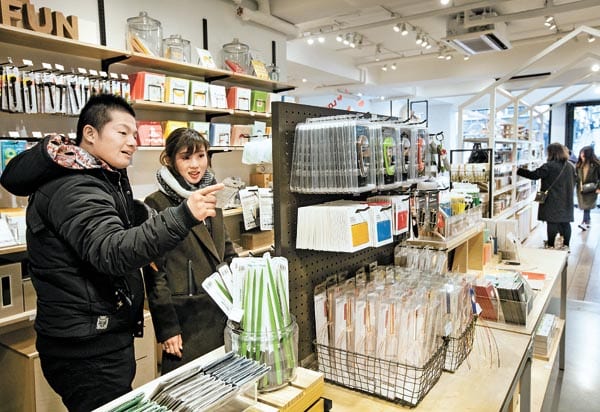
    The combination of simplicity, affordability and decent quality has boosted JAJU’s appeal among local consumers who appreciate a deal, but the similarities with Muji might hinder its expansion into the global market, which is Shinsegae’s ultimate goal.

    The five-story flagship store in the posh Garosu-gil area of Gangnam District, southern Seoul, symbolizes Shinsegae’s ambitions for the brand.

    “An average of 2,500 people visit this store each day on weekdays and some 4,000 to 5,000 people on weekends,” said Han Seung-min, head of the flagship store.

    In terms of sales, JAJU outperforms Muji in Korea thanks to its presence in stores like E-Mart, Shinsegae’s discount supermarket chain, and other shopping outlets.

    JAJU posted 175 billion won ($142 million) in revenue in 2014, while Muji Korea recorded 48 billion won.

    But the sales gap isn’t a big consolation for the local brand, since it operates a drastically larger number of stores.

    Muji has only 14 stores in the country whereas JAJU has 148.

    The brand maintained a humble presence only a few years ago, located solely inside of E-Marts.

    Until 2010, the brand name was Jayeonjui (which translates to “naturalism” in Korean) and was managed entirely by E-Mart.

    But since Shinsegae International, the fashion-oriented affiliate of Shinsegae Group, acquired the brand and changed its name to JAJU, the category of products has expanded.

    The company is also focused on diversifying the location of its stores beyond E-Mart to stave off the perception that JAJU is merely an in-house label.

    Along with the flagship store that opened in 2014, JAJU added an additional branch in the COEX Mall in Samseong-dong, southern Seoul.

    Still, E-Mart remains the largest channel, with 132 branches accommodating the shop.

    “We are looking for different properties to house JAJU to reach different customer bases,” said Park Cho-rong, a public relations representative of Shinsegae International.

    Appeal of simplicity

    The colors, patterns and materials of JAJU products are understated. But the plainness helps keep manufacturing costs low, resulting in lower prices.

    The prices of most goods at JAJU are low even compared to Muji, a major selling point of the brand.

    Muji’s socks start from 4,000 won ($3.25), but those at JAJU are in the 3,000 won range.

    Shinsegae said that the standard design and simple packaging pushes the prices lower, even though 90 percent of the products are made in Korea.

    And the plain-looking goods appear to be appealing to customers’ tastes.

    “When I place plain white dishes and cups together, it gives off a modern and pleasant vibe,” said Choi Hee-young, a 33-year-old woman who was perusing kitchenware at the JAJU flagship store.

    “Because they can form some kind of uniformity, they are easy to match together compared to fancy, carefully designed items with colors.”

    As part of its efforts to enhance design, Shinsegae tapped well-known designer Oh Joon-sik as the creative director for JAJU last year.

    Catering to Korea

    JAJU is trying to carve out a niche for itself by making its products more explicitly “Korean.”

    “Based on the understanding of the Korean lifestyle, JAJU tries to offer quality goods at affordable prices,” said Kim Woong-yeol, head of the sales division at JAJU.

    For example, the brand sells small onggi, or crock pots, designed to better keep traditional dishes such as kimchi and soybean paste. The pots typically come only in big sizes because they are placed outside in bulk.

    “This type of onggi is designed to keep temperatures so that the food inside is better preserved,” said Han, the head of the flagship store.

    “But now the size of households is becoming smaller, and we learned that there is a demand for smaller pots,” she said.

    JAJU stores gained insight into its consumers’ tastes by inviting stay-at-home moms to offer their opinions in the development stage.

    Their thoughts are particularly reflected in kitchenware and kids’ products.

    “Cooking spoons made by overseas manufactures are rather big, which is inappropriate for Korean users,” Han said, “So we surveyed the ideal size of cooking spoon for consumers and adjusted the size.”

    When the retailer revamped its brand in 2010, JAJU added a line of designer furniture, as well as items for kids and travel.

    To boost its furniture collection, JAJU teamed up with global furniture company Fritz Hansen and Sigga Heimis, a former designer for Ikea.

    Of its existing categories, JAJU has boosted aromatherapy, home decor and body care products in response to the growing demand.

    “With the rise of single-person households, we found that products used to decorate houses or as a little treat are really doing well,” Han said.

    “They are not essentials, but the items can cause a little joy or make for a more pleasant atmosphere.”

    Global ambitions

    Shinsegae International said in 2014 that it will develop JAJU into a global brand with annual sales of 500 billion won by 2020.

    The retail unit, headed by Chung Yoo-kyung, a daughter of Shinsegae’s founding family, has yet to elaborate on its global expansion plan.

    Some analysts predict JAJU will focus on local markets for the next year or two because the brand’s revenue drives sales growth for Shinsegae International.

    “JAJU plans to open 10 more stores by the end of this year,” said Yoo Jeong-hyun, an analyst at Daishin Securities.

    “Revenue that comes from each JAJU store is very high, and the combined sales account for 20 percent of Shinsegae International’s sales.”

    But industry insiders say JAJU needs a more distinctive identity and brand strategy to distinguish itself from the better-known Muji.

    The product categories overlap with those of Muji, and some products offer similar functionalities.

    “The key to success in the global market depends on how JAJU can create its own brand concept distinct from Muji,” said a retail analyst who requested anonymity.

    “But right now, the distinction is not enough to pull off the same success as Muji.”
  • Giant Muji Shanghai flagship store opens

    Giant Muji Shanghai flagship store opens

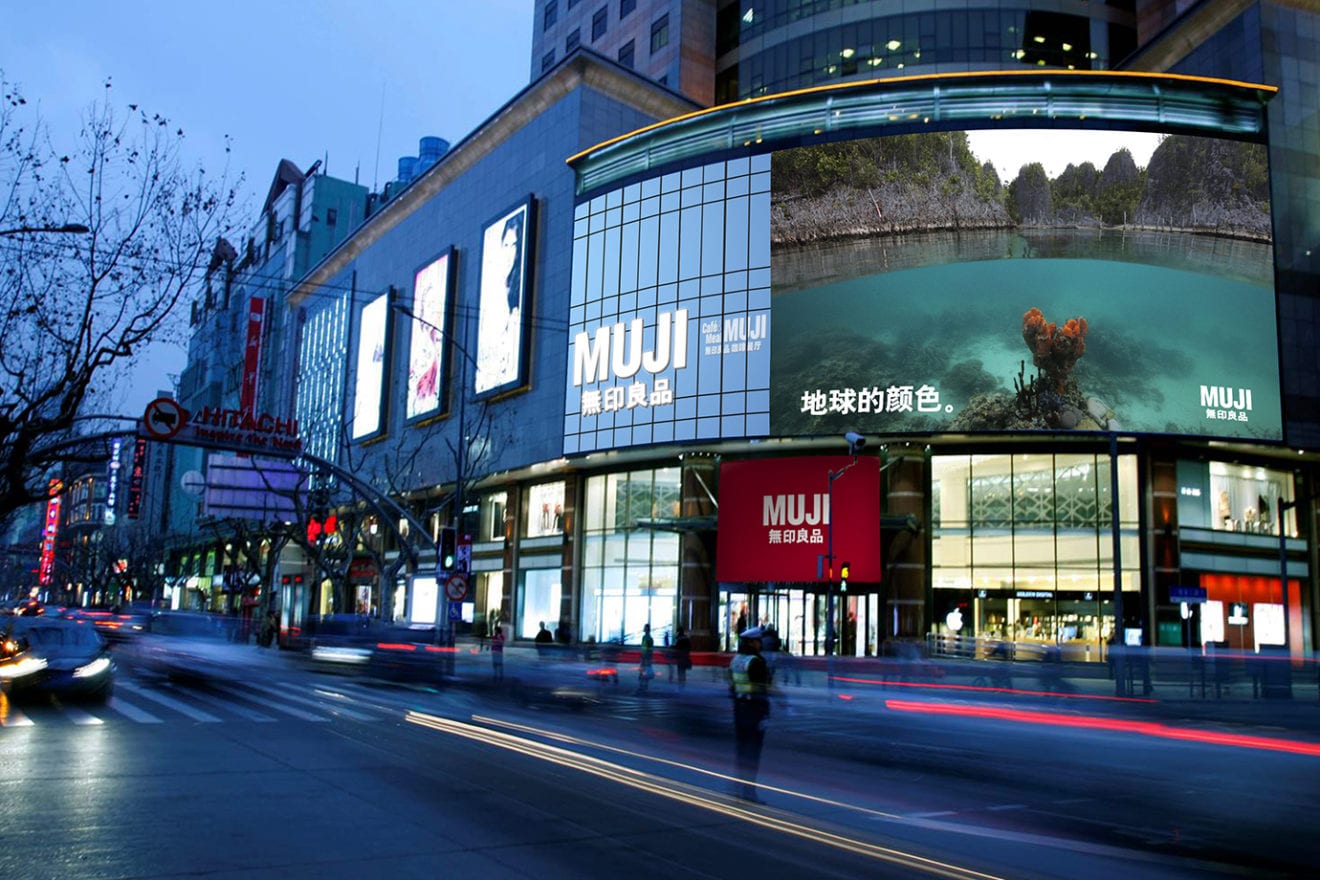
    The new Muji Shanghai flagship just opened marks the Japanese department store brand’s largest shop in China.

    Muji says it built the massive store so consumers in China “can experience the Muji lifestyle concept”.

    MUJI Shanghai Huaihai 755 - 6

    MUJI Shanghai Huaihai 755

    The new store is located at 755 Huaihai Rd, Shanghai’s premium high street shopping strip which is also home to flagships from brands as diverse as Uniqlo and Alfred Dunhill.

    MUJI Shanghai Huaihai 755 - 5

    MUJI Shanghai Huaihai 755 -1

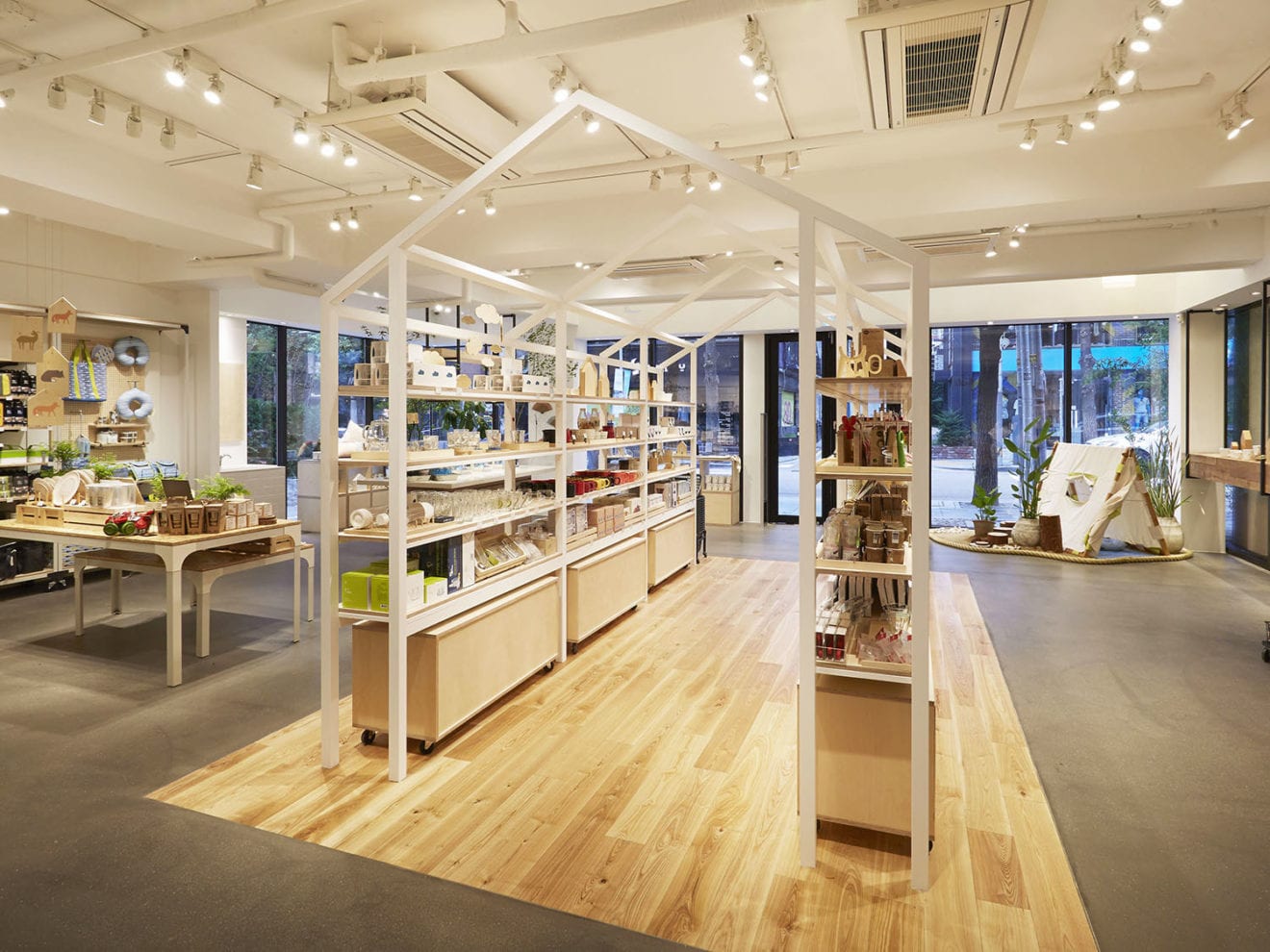
    From a design perspective, each of the store’s three levels uses a different natural material to create three unique, differentiated shopping environment: Wood, iron (metal) and glass (earth).

    MUJI Shanghai Huaihai 755 - 4

    The flagship also incorporates  the cafe & Meal Muji dining concept, for the first time in Shanghai.

    MUJI Shanghai Huaihai 755 - 10

    “We seek out food ingredients that are tasty as natural food, and produce menus that make use of the original tastes of those ingredients with simple cooking methods,” said a Muji spokesperson of the new eatery offer.

    MUJI Shanghai Huaihai 755 - 3

    And – for the first time in China – Muji Books has opened featuring a curated range of reading materials and stationery products.

    MUJI Shanghai Huaihai 755 - 7

    MUJI Shanghai Huaihai 755 - 9

    MUJI Shanghai Huaihai 755 - 2

    In one corner of the store, customers can create their own scents mixing and matching various essential oils for their own unique recipe.

    MUJI Shanghai Huaihai 755 - 8

    Muji says the store is large enough for it to host seminars and events for customers.

  • Cafe concept a huge boost for Muji Singapore

    Cafe concept a huge boost for Muji Singapore

    The recently opened cafe inside the Muji Singapore store on Orchard Rd has had a huge impact on the store’s overall trading.

    In an extensive feature written by the Straits Times and published online by Asia One, which details the trend of merging dining with traditional retail offers, Muji Singapore GM Jasmine Sng has revealed the store’s sales have increased 40 per cent since the cafe began trading.

    “Customer traffic has increased. The cafe draws customers to the store and, after a meal, they usually shop at the retail section too.”

    The 122 sqm Muji cafe opened in early September as part of an expansion and renovation of the Japanese lifestyle department store in the Paragon shopping centre.

    The brand operates its Cafe&Meal dining concept in 23 stores in Japan as well as in Chengdu, Taiwan and Hong Kong.

    The Cafe&Meal concept is described as “minimalist chic” (much like a lot of Muji’ anti-brand product range) featuring simple natural wood furniture in a plain, modern backdrop fitout.

    The menu will feature Japanese deli-style foods using locally-sourced ingredients, with a broad range of desserts.

    Customer Diana Low, 35, who visits a Muji outlet at least once every two weeks, told the Straits Timesthat Cafe&Meal has created a better shopping experience at Muji.

    “It completes the lifestyle concept of Muji and makes me want to linger longer in the store and spend more,” she said.

    Muji is just one of a growing number of stores adding a food and beverage offer to their retail space to enhance dwell time, broaden their product offer and to provide an in-store experience which cannot be replicated online.

  • Muji unveils the Muji Hut

    Muji unveils the Muji Hut

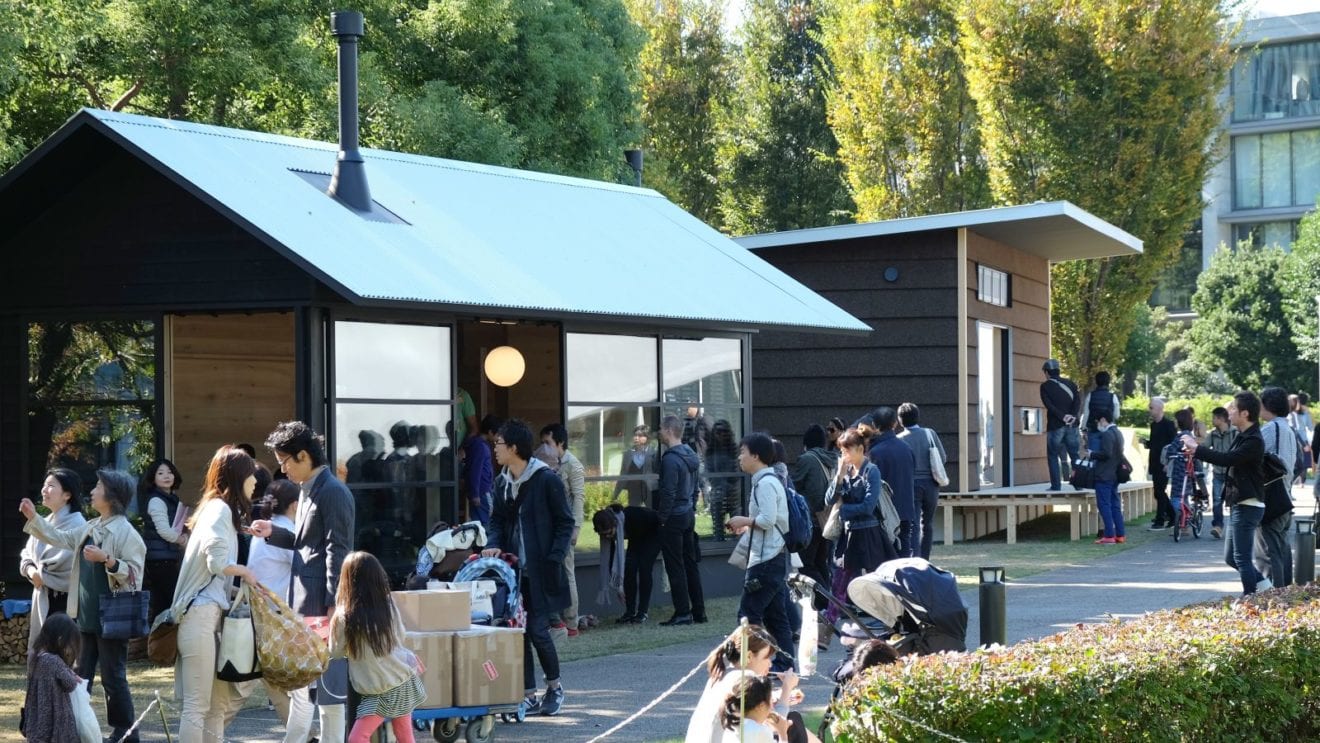
    Anti-brand department store Muji has opened a pop up store in Japan to unveil a prefabricated cottage it calls the Muji Hut.

    With a cult following throughout Asia for its simple, clean, brandless designs of homewares, its development of ‘Vertical Houses’ in Japan has drawn widespread attention for their innovative, quirky designs.

    This week the company unveiled the new Muji Hut concept at a pop-up design event in Tokyo.

    Muji Hut Japan 1

    The concept goes like this: In Japanese cities, people have learned to live in a compact home. But on the weekend, it’s time to get outside, enjoy nature, and cozy up inside a cabin.

    Muji Hut cork

    “We gather around the fireplace, enjoy each other’s company,” the exhibit’s welcome sign says. “Muji now invites you to slip away from the hustle and bustle of the city to a place where you can feel instantly at home and at ease.”

    Muiji Hut Japan 2

    Muji demonstrated three huts, ranging in size, complexity and materials. One has cork exterior, one wood and one aluminium.

    The largest, a cork hut, was designed by Jasper Morrison, who has long collaborated with Muji. The mini house includes a main room with fireplace, a bathroom with shower and a kitchen with a stove.

    Muji Hut

    Take a look at the concept on the website which features a full screen animated presentation. (Scroll down to see the Muji Huts).

  • Nike, Muji, Adidas apply for Indian retail rights

    Nike, Adidas and Muji are among eight global companies seeking single brand retailing approval from the Indian government.

    According to a report in The Indian Express the Department of Industrial Policy and Promotion (DIPP) has received eight applications from global brands including Skechers, Kiko International, Ryohin Keikaku (Muji), Nike, Adidas and Swarovski after foreign direct investment rules were relaxed in July.

    Foreign companies can now conduct business through more than one joint venture in India, according to the newspaper.

    Since then, ITaly’s Kiko International has applied to retail beauty and skin care products, apparel, jewellery and handbags. Shoe maker Skechers and glass creator Swarovski followed.

    Swarovski, along with Nike, have previously had applications turned down – in Swarovski’s case because it wanted to sell in both cash-and-carry chains and single brand retail stores. It was told to reapply with separate applications, The Indian Express reports.

    The identity of the other two companies was not revealed.

  • Muji heads to India

    Muji heads to India

    Japanese minimalist retailer Muji will open its first shops in India by the center of subsequent yr.

    Muji has sealed a cope with Reliance Industries to create an Indian operation, turning into Reliance’s 19th worldwide retail model.

    Muji’s information comes as fellow Japanese retailer Uniqlo is in discussions with potential companions to enter India.

    Famend for its unbranded, minimalist designs, Muji shops inventory items starting from attire and homewares to stationery, cosmetics and meals. About half its gross sales at the moment are furnishings and homewares.

    In some markets it operates cafes, however present laws prohibit in-store cafes in India.

    Reliance says the primary Muji shops will open in Delhi and Mumbai with footprints starting from 6000 sqft to 10,000 sqft.

    “Muji is simplicity – however simplicity achieved via a complexity of thought and design,” stated Reliance CEO and president Darshan Mehta in a press release.

    “Their merchandise are extraordinarily high-quality and have been designed to cater to the life-style of city dwellers. We’ve nice confidence that the Indian shopper will embrace the model.”

    “Worldwide enlargement is of utmost precedence for us and India is our subsequent massive Asian market with immense progress potential,” Satoru Matsuzaki, president and consultant director of Muji mum or dad Ryohin Keikaku, in an e mail interview with the Occasions of India.

    “We consider there’s a vital pool of cosmopolitan shoppers [in India] who’ve their very own sense of favor and who place product above model logos.”

    Reliance Manufacturers already companions with Diesel, Brooks Brothers, Steve Madden and Kenneth Cole, amongst others.

  • Muji confirms Sydney

    Muji confirms Sydney

    Japanese retailer, Muji, has confirmed it will open its first Sydney store at The Galeries shopping centre, on May 14.

    The Galeries’ store will be Muji’s third store in Australia, with the first launching in November 2013 at Chadstone Shopping Centre, followed by Emporium Melbourne in April 2014.

    The new store covers a total space of 1344.62sqm with 1022.84sqm floor space, and will stock Muji’s range of men’s, women’s and children’s apparel, and accessories, furniture, homewares, skincare products, stationery, bedding, and travel goods.

    Victor Gaspar, GM of Ipoh Management Services, is thrilled to welcome Muji to The Galeries.

    “The much anticipated flagship Sydney store reinforces The Galeries’ ongoing pursuit of an unique, world class cultural offering. This is the first of a number of new openings planned at The Galeries this year, which promises to enhance the unique retail experience already offered to our customers.”

    Muji Australia’s MD, Takuo Nagahara, says he looks forward to the launch in Sydney and expanding Muji nationwide.

    “We look forward to further developing and sharing our brand concept and activities with people across Australia.” Nagahara says.

    The Galeries’ store will bring Muji to a total of 703 stores worldwide.

    The company is planning to open additional stores in Australia as well as an online store in the future.

    In 1980, Muji was established as a private brand of Seiyu, beginning with a limited range of 40 products.

    These products were the antithesis to the trend at that time, when Japanese consumers placed too much emphasis on brand name products, paying premium price for the brand name rather than the value of the product itself.

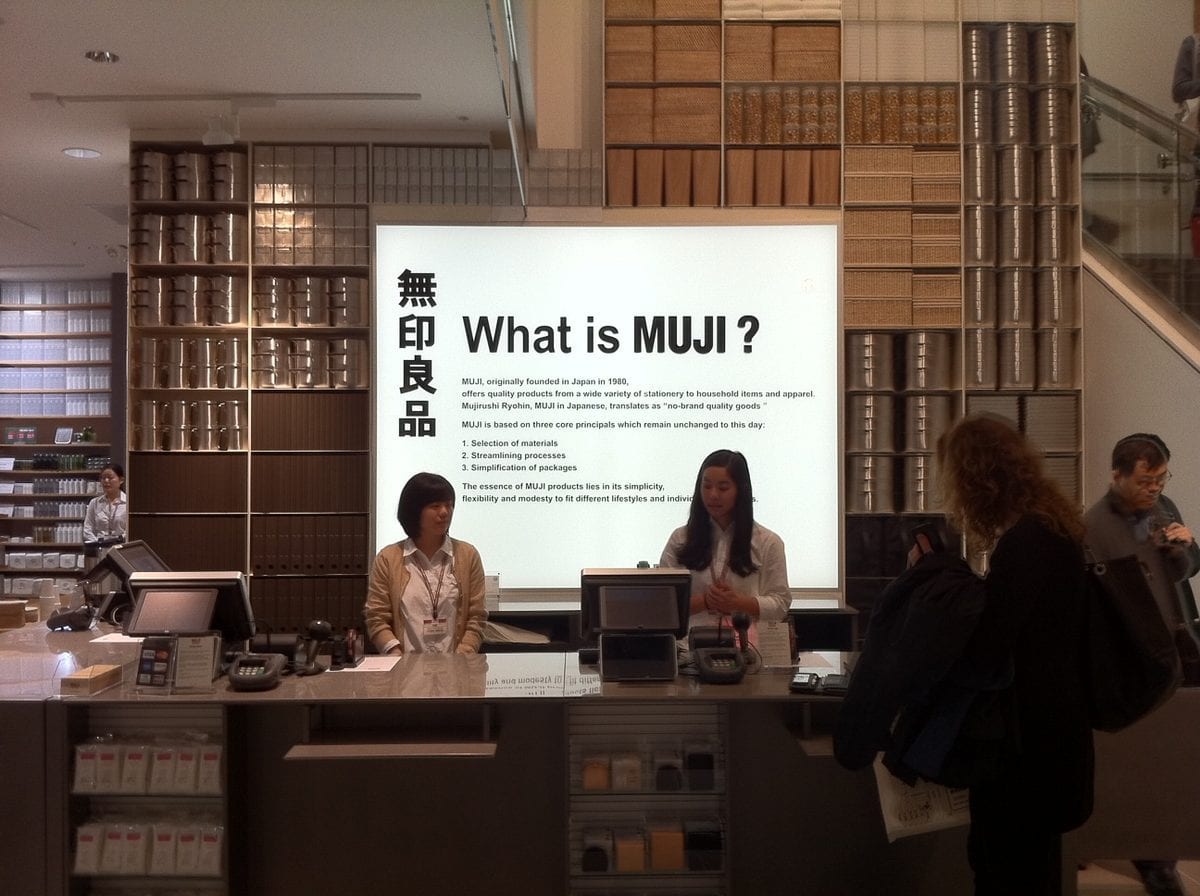
    Muji is derived from its Japanese name, ‘Mujirushi Ryohin’, which means ‘no brand quality goods,’ and the products are characterised by their simple aesthetic and eco friendly minimal packaging.

  • Muji moves on Sydney

    Muji moves on Sydney

    Japanese lifestyle retailer, Muji, has confirmed it will open its first store in Sydney.

    This will be the third Australian store for Muji, adding to its two locations at Chadstone shopping centre and Emporium in Melbourne.

    Retail News understands the store will be located at The Galeries shopping centre in Sydney’s CBD, replacing the former Freedom site, and will open by May.

    Dubbed “Japan’s answer to Ikea”, Muji stocks a range of categories from men’s, women’s, and children’s apparel and accessories; furniture and homewares; skincare products; stationery; and travel goods.

    The retailer is owned by Tokyo-based company, Ryohin Keikaku, and has more than 600 stores, including more than 200 international stores in Britain, France, the US, China, Taiwan, Thailand, Germany, Sweden, and Italy.

    Muji first launched in 1980 with a range of nine household products and 31 foods. Today, it sells more than 5000 products in Japan.