Tag: Muji

  • Muji expansion in Thailand at Siam Discovery in Bangkok

    Muji expansion in Thailand at Siam Discovery in Bangkok

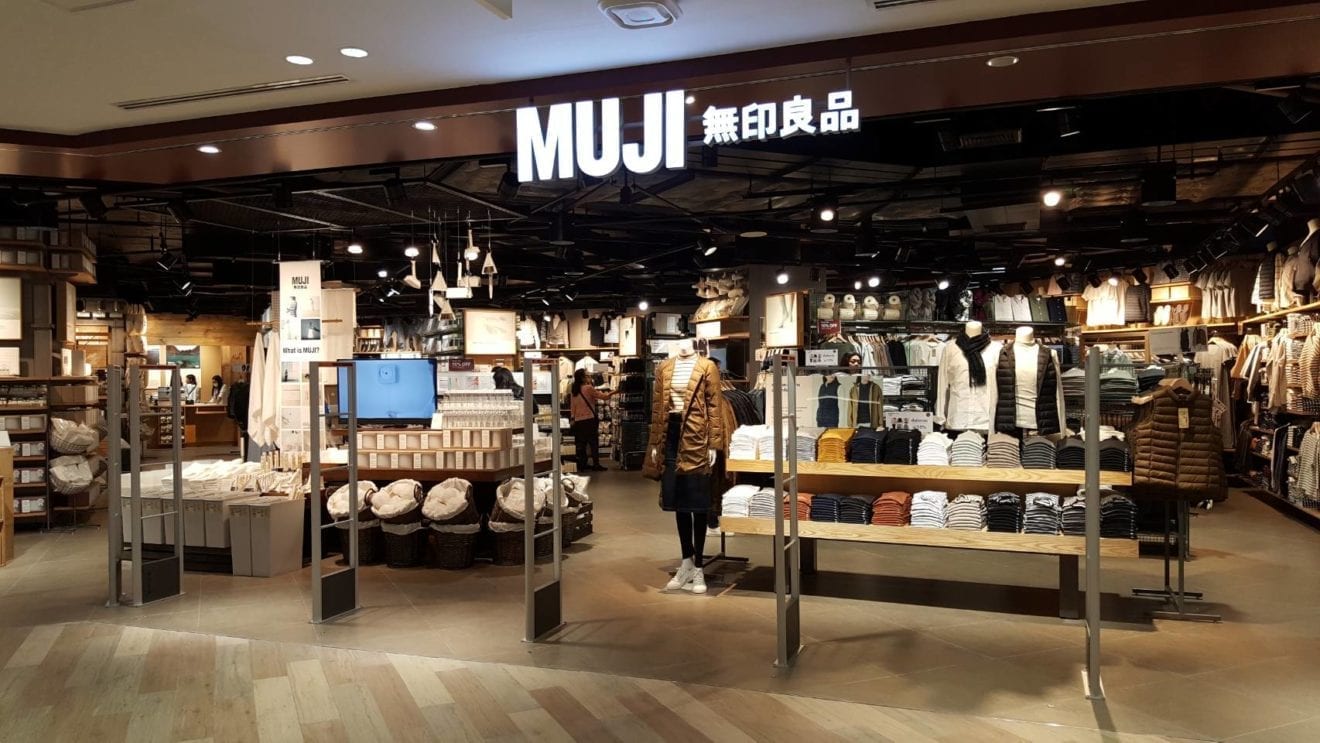
    Muji Thailand has opened another store in Bangkok, its second in little more than a month.

    On Wednesday, Muji opened its doors in the Siam Discovery shopping centre.

    MUJI at Siam Discovery_3

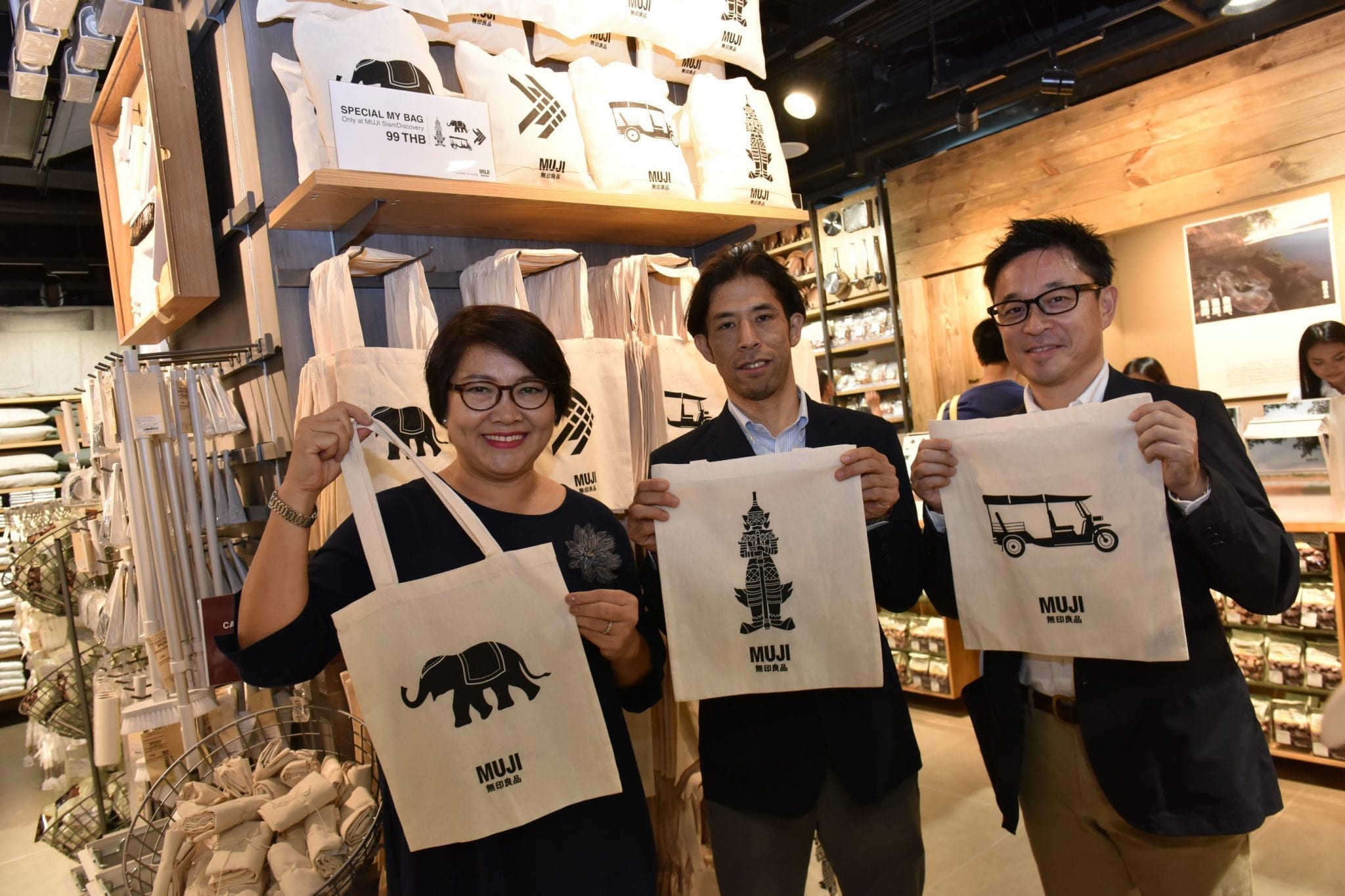
    Yuki Yamamoto, director and GM of Muji’s parent Ryohin Keikaku Co and Naratipe Ruttapradid, senior executive VP operations division with Siam Discovery’s parent Siam Piwat (pictured) performed the opening honours.

    Mr. Yuki Yamamoto, Director and General Manager, Ryohin Keikaku Co., Ltd.  along with Miss Naratipe Ruttapradid, Senior Executive Vice President Operations Division at Siam Piwat Co., Ltd. opened the new ‘MUJI’ store at 2 nd Floor, Siam Discovery. Customers will get special offer and can buy the special exclusive tote bags at Bath of 99 only at MUJI, Siam Discovery branch.

    Muji Thailand reopened its store inside the Zen department store at Bangkok’s CentralWorld shopping centre in September. That store, which originally opened on the fifth floor of Zen in 2012, has been relocated to the fourth floor.

    It is the largest of all Muji outlets in Thailand with a floor area of 878sqm.

  • New opening of MUJI at Siam Discovery

    New opening of MUJI at Siam Discovery

    Mr. Yuki Yamamoto, Director and General Manager, Ryohin Keikaku Co., Ltd.  along with Miss Naratipe Ruttapradid, Senior Executive Vice President Operations Division at Siam Piwat Co., Ltd.  opened the new ‘MUJI’ store at  2nd Floor, Siam Discovery.

    New opening of MUJI at Siam DiscoveryCustomers will get special offer and can buy the special exclusive tote bags  at Bath of 99 only at MUJI, Siam Discovery branch.

  • Muji Thailand opens CentralWorld flagship

    Muji Thailand opens CentralWorld flagship

    After a decade in Bangkok, Muji Thailand has opened a flagship store at CentralWorld.

    Covering 1000sqm, it is the Japanese brand’s biggest outlet in Bangkok, offering for the first time clothing lines like Found Muji, which borrows materials and techniques from around the world, Muji Labo, which offers everyday basics in neutral colours, and ReMuji, which revives vintage garments through indigo dyeing techniques.

    There is also the first Green Space, a corner devoted to plants ideal for tiny indoor gardens. The store also offers the Muji basics of toiletries, stationery, kitchenware, clothing and bedding.

    Meanwhile, the What is Muji? exhibition at Central Embassy mall showcases Muji’s brand philosophy through a range of products. It continues until October 1.

  • Muji Japan adds groceries, mini-house to flagship

    Muji Japan adds groceries, mini-house to flagship

    In a redesign, housewares company Muji Japan has added groceries and even a miniature house to its global flagship store in Tokyo.

    It draws its inspiration from the core necessities of survival: food, shelter, clothing and food, reports Curbed.com.

    “Among the basic lifestyle needs, food is the most fundamental and indispensable aspect,” says the store’s opening announcement.

    This is why the flagship is the first Muji store in the world with a fruit and vegetable market. All the produce, grown with little or no fertiliser or pesticides, is sourced directly from growers who add notes to customers near their items. There are also 300 grocery items such as spices and snacks.

    A second-floor cafe serves bread and soup made from the produce available downstairs.

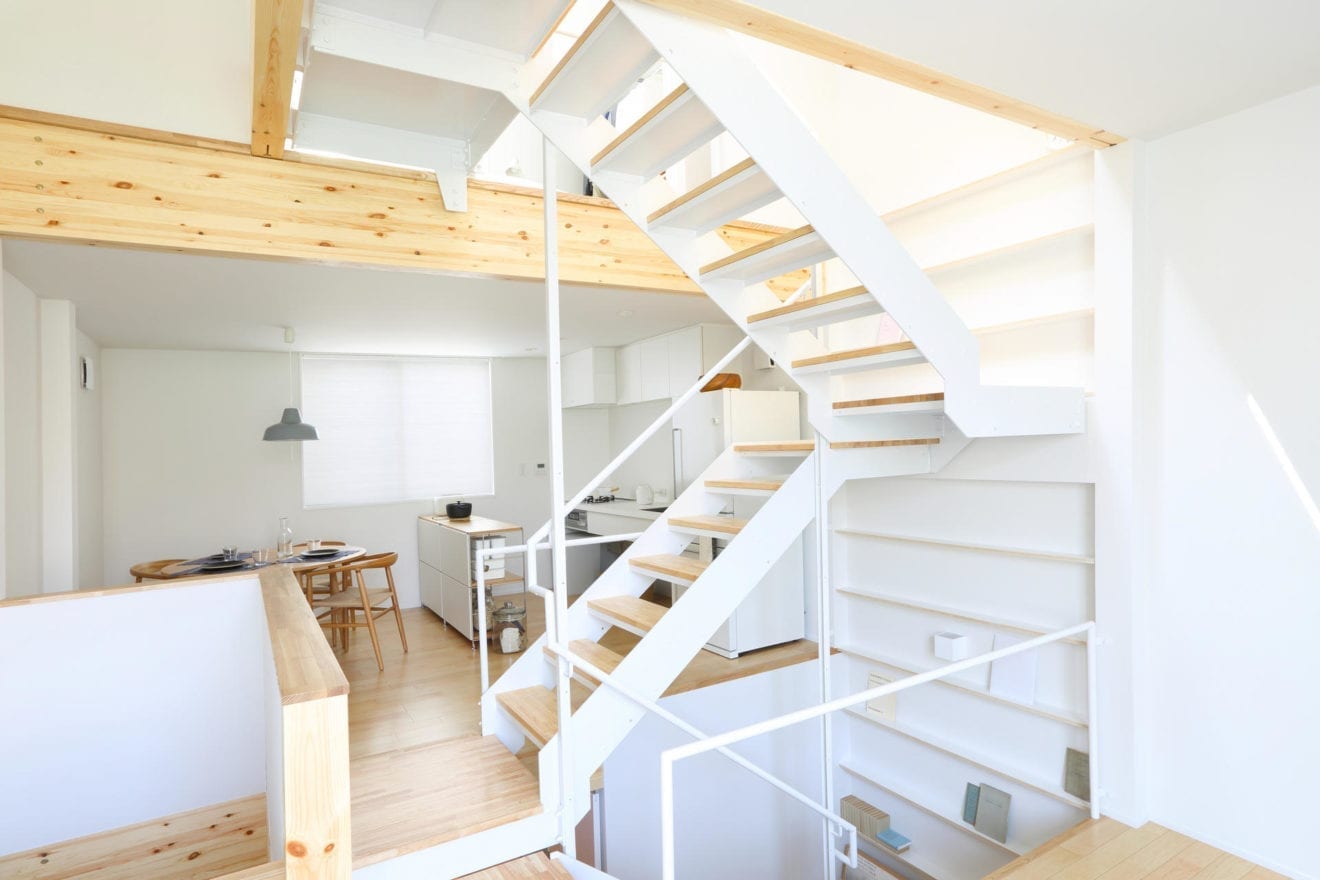
    On display is a simple Muji Hut – a tiny black timber house with interior designers on hand to answer questions. Its one room is fitted out as a music room and retreat.

  • Muji opens its 423rd store in Singapore

    Muji opens its 423rd store in Singapore

    Muji has just opened its 423rd store outside of Japan, officially beating the number of stores it has in its domestic market.
    The milestone was reached as it cut the ribbon on its Southeast Asia regional flagship, in Singapore’s Plaza Singapura mall on key shopping street Orchard Road.

    The new store, its largest in Southeast Asia, carries a wider product offer than any of the other 10 Muji stores in Singapore, including the Labo clothing line, the Found Muji label (which features home items from around the world) and Idée.

    It also has the firm’s third the third Café&Meal dining café and covers 1,640 sq m.

    Parent company Ryohin Keikaku’s President Satoru Matsuzaki told the Nikkei Asian Review that the company aims to accelerate its expansion in South and Southeast Asia after some time spent focusing on the east of the continent (China, Hong Kong, Taiwan and South Korea).

    That acceleration will see it entering Vietnam next year as well as expanding in the Philippines after its debut there earlier this year in a joint venture deal.

    The company will also focus on driving overseas revenue higher because, while store numbers abroad now exceed those in Japan, at ¥32.4 billion, revenue from those foreign stores is roughly half of that in its domestic market.

    Much of that figure came from China where it has 200 stores.

    Singapore is key to this strategy as it’s a regional hub and Matsuzaki said it will also help the company get experience it can apply in India and the Middle East.

    The company’s customers outside of Japan tend to be much younger than the Japanese shoppers it sees in its stores.

    But while these shoppers often have lower income levels than those older consumers in Japan, they also represent a chance to win customers at a young age and build brand loyalty that could last for years, analysts said.

  • Muji plans world flagship and hotel in Tokyo

    Muji plans world flagship and hotel in Tokyo

    The Japanese household goods and apparel company has announced its plans to open a hotel and world flagship in Ginza, Tokyo, in the spring of 2019.

    Developed by the Yomiuri Shimbun Tokyo headquarters and Mitsui Fudosan, a retail property developer of the Mitsui group, the 14,219 square metre, 13-floor building will feature eight floors dedicated to the Muji ‘world flagship’ store. Hotel accommodation will be spread across the top five floors of the building, and will be decorated with Muji furniture and products.

    The provisionally named ‘Muji Hotel’ will be developed as part of the “Marronnier x Namiki Yomiuri Ginza Project,” a retail complex in the upmarket area of Ginza, Tokyo, that Mitsui hopes will further revitalise footfall in the area. The building will be located close to the Marronier Gate Ginza, a commercial facility.

    The hotel is to be designed and operated by the UDS company of the Odakyu Group. Construction began in June 2017.

  • Muji opens first store in New Delhi

    Muji opens first store in New Delhi

    Fashion and lifestyle retailer Muji has opened its debut store in New Delhi, as the Japanese firm looks to increase its retail footprint in India.

    Located in the Indian capital’s Select Citywalk mall, the maiden Muji store follows successful store openings in Bengalaru and Mumbai in 2016

    Satoru Matsuzaki, president of Ryohin Keikaku, Muji’s parent company, attended the New Delhi opening, and praised Muji’s success in India, after opening two hit stores in the nation back in August and September, respectively.

    “After a tremendous response in Bengaluru and Mumbai, we are very excited to begin a new chapter of our Indian story with the launch of this store,” said Matsuzaki.

    In April 2016, Ryohin Keikaku announced it had entered into a joint venture with Reliance Brands for the distribution of Muji in India. Ryohin Keikaku also announced that it had become the first-ever Japanese retailer to receive individual approval for Foreign Direct Investment from the Indian government’s Foreign Investment Promotion Board.

    However, India’s domestic regulations do not permit Reliance to open formats like Muji cafes locally.

    At the New Delhi opening, Reliance Brands, president and CEO, Darshan Mehta said: “Muji’s unparalleled brand offering, both in terms of use and price appeal, is sure to attract consumers across age groups and mind sets, making it the go-destination store.”

    Based in Tokyo, Ryohin Keikaku Co founded Muji in 1980. The Japanese brand offers an extensive range of furniture, homeware, stationery, electronics, travel goods, beauty products and apparel and maintains low price-points by cutting costs in its packaging and processing, adding to the appeal of its minimalist aesthetic.

    Today, Muji boasts more than 700 stores worldwide, 13 of which are in the US. It plans to increase its shop count to 800, mostly by opening stores outside of Japan. Muji has already said it plans an aggressive expansion in China, where it will add 72 stores in the next year.

    According to the company’s midterm business plan, revealed in April, overseas stores’ contribution to total sales is expected to rise to 42% in 2020, from 35% today.

    Earnings released at the same time showed strong momentum, with group net profit growing 18.9% on the year to 25.8 billion yen ($235 million), and sales rising 8.3% to 332.5 billion yen.
  • SSI partners with Muji operator to bring Japan brand to Philippines

    SSI partners with Muji operator to bring Japan brand to Philippines

    Speciality stores operator SSI Group has signed a joint venture deal with a Japanese company to bring the Muji retail brand to the Philippines. SSI Group, through its wholly owned subsidiary Stores Specialists Inc. (SSI), entered an agreement with Japan’s Ryohin Keikaku Co. Ltd. (RKJ) to form a joint venture company called Muji Philippines, which will own and operate Muji stores in the Philippines.

    “The joint venture with RKJ is expected to strengthen the Muji brand in the Philippines and enable cost efficiencies,” SSI said in a disclosure to the Philippine Stock Exchange.

    Muji is a Japanese retailer which operates some 420 stores in Japan and 390 stores internationally as of October 2016.

    SSI will have a 51-percent stake in the joint venture while RKJ will hold the balance of 49 percent. SSI will infuse P89.25 million in Muji Philippines while RKJ will invest P85.75 million.

    Muji Philippines is expected to commence operations on April 1.

    “Any profits from the joint venture company shall be distributed pro-rata to the ownership in the company of each of SSI and RKJ,” SSI said.

    “SSI shall provide the joint venture company with operational knowledge and apparel and retail sales expertise specific to the Philippines, while RKJ shall provide the brand management expertise and retail experience specific to the Muji brand,” it added.

    One of the conditions needed for the closing of the transaction is for RJK to obtain a certificate of pre-qualification as a foreign retailer from the Board of Investments, the statement said.

    Specialty retailer SSI Group also has a presence in the convenience store segment through its joint venture with Ayala Land Inc. (ALI) and Japan’s Itochu Corp. to bring the FamilyMart convenience store chain into the country.

    In March last year, SSI and its joint-venture partner ALI sold Wellworth department stores at Fairview Terraces Mall and UP Town Center Mall to Gaisano-led Metro Retail Stores Group Inc. (MRSGI) for P499 million to minimize operating losses.

  • JV aims to boost Muji brand in Philippines

    JV aims to boost Muji brand in Philippines

    Specialty retailer SSI Group has signed a JV agreement with Japan’s Ryohin Keikaku in a bid to boost the Muji household supplies brand in the Philippines.

    SSI Group’s board of directors has approved the JV between its wholly owned subsidiary Stores Specialists and RKJ, dubbed Muji Philippines. It is expected to launch on April 1 with the mandate to own and run Muji stores in the Philippines.

    SSI Group says the move will enable cost efficiencies.

    Stores Specialists owns and runs specialty retailing boutiques for a range of international brands covering luxury, casualwear, fast fashion, footwear, luggage and accessories as well as personal-care brands. RKJ is engaged in the planning, development, procurement, logistics and processing of goods under the brand name Muji, as well as running Muji retail stores and wholesaling Muji goods.

    The deal is pegged at P175 million (US$3.5 million), with Store Specialists holding a 51 per cent stake. Store Specialists is investing more than P89.2 million, while RKJ is injecting up to P85.7 million.

  • Muji next expansion plan

    Muji next expansion plan

    Japanese lifestyle clothing and accessories brand Muji Canada is expected to expand to Vancouver next year.

    Known for its minimalist approach, Muji already has three stores in Toronto. It has about 300 stores outside Japan.

    Vancouver’s retail sector continues to outperform other Canadian markets with annual sales-per-square-foot at more than C$1000 (US$762). Toronto is second at about C$860.

    “Vancouver is a very young retail market and many brands have not yet opened street stores,” says real-estate group CBRE executive VP for retail in Vancouver Mario Negris. “We anticipate a vast number of new entrants into the downtown retail landscape.”

    Most brands entering Canada have their first outlets at Toronto’s Yorkdale Shopping Centre and Eaton Centre, says the Vancouver Sun. This is because of Vancouver’s relative lack of space.

    Brands such as Forever 21 and Victoria’s Secret actually made their Canadian debut in Alberta, while Vancouver is the preferred entry point for luxury brands such as Berluti, Jaeger-LeCoultre, Rolex and St Laurent.

    Other brands reportedly lining up to open in Vancouver next year include coffee boutique Nespresso and H&M’s Cos brand.

  • Uniqlo Canada takes it slowly

    Uniqlo Canada takes it slowly

    After the Japanese apparel retailer decided to open its first shop in Canada, Uniqlo Canada COO Yasuhiro Hayashi visited Toronto every month for nearly a year.

    During each visit he would spend the week taking notes on what people were wearing.

    “I didn’t expect that everyone was so unique and multicultural,” says Hayashi, who previously helped launch Uniqlo in Singapore and Indonesia. “That was very surprising in a very positive way. We don’t have a specific target customer – that’s our uniqueness. We say we are made for all.”

    Finally, the company is opening its first store in Canada on Friday, a 28,000-sqft (27,989 sqm) space in the Toronto Eaton Centre, between fast-fashion rival H&M and the newly arrived luxury retailer Nordstrom. A second store opening is planned at Yorkdale Shopping Centre in north Toronto on October 20.

    Even with more than 1000 stores worldwide, Hayashi says Uniqlo may not have the same name recognition in Canada as some of its international rivals before they entered the country. It is a challenges that needs to be overcome if it wants to continue expanding in Canada, but Hayashi says there is no rush.

    “We want to be very cautious,” he says. “Of course, I don’t want to give a name, but some other brands have had ambitious plans that didn’t work out. We want to make sure we serve the customers well and fine-tune the merchandise mix as well.”

    US retailer Target last year abruptly announced it was shutting down all its 133 Canadian stores only two years after arriving. Since then, several international retailers such as Muji, Nordstrom and Saks Fifth Avenue have taken a slower approach to opening locations in Canada.

    Hayashi says Uniqlo’s Toronto stores will largely be the same as its other locations, with a few nuanced differences for Canadian shoppers. Customers can expect more than usual plaid and flannel shirts. Most sizing will be for a North American fit, but there will also be some smaller sizes to reflect Toronto’s multicultural population.

    Uniqlo will also sell house slippers, commonplace in its stores in Asia.

  • Muji’s next bet is Southeast Asia, India with stores offering more than shopping

    Muji’s next bet is Southeast Asia, India with stores offering more than shopping

    Japan’s Ryohin Keikaku, operator of lifestyle retail store Muji, plans to introduce more in-store services and new concept stores in Southeast Asia, as consumers in the region gain more spending power and their spending habits become increasingly sophisticated.

    Satoru Matsuzaki, president of Ryohin Keikaku, told Nikkei Asian Review on Thursday that the company hopes to introduce “Muji Books” space, where curated books on themes such as fashion and interior design will be sold alongside Muji products, in its flagship outlet opening in Singapore next year.

    The new store will be the company’s largest outlet in Southeast Asia, and will serve as a showcase to introduce new in-store services in the region, such as home decor consultation, fashion styling and tasting events for new food products.

    The company just opened its 10th store in Singapore on Thursday. The 1,000 sq. meter outlet is the second in Singapore to house “Muji Cafe&Meal,” an eat-in space serving healthy meals and desserts. “We want to take this concept to other parts of Southeast Asia, such as Kuala Lumpur,” said Matsuzaki.

    The idea is to create a new retail experience to grasp the hearts of young consumers and gain a solid foothold in Southeast Asia’s retail scene. “Foreign brands come and go at a fast pace in Singapore,” Matsuzaki said.

    But he remained confident that there is a growing demand for Muji’s simple products as consumers in the region shift away from spending a fortune on luxury brands just to show off. “Consumers in this region are spending more on good-quality everyday items to enrich their everyday lives, and Muji can serve this need,” Matsuzaki said.

    Ryohin Keikaku’s Asia strategy has so far been centered around China, where the company plans to have 200 stores by the end of the year. While high-end brands are suffering from sluggish demand amid the economic slowdown, Muji stores in China have seen steady sales growth. The company has already has introduced Muji Books and cafes in China to cater to the changing consumer behavior.

    The company’s next bet is in Southeast Asia, where it runs a total of 38 stores in Singapore, Malaysia, Indonesia, Thailand and the Philippines. Southeast Asia’s store sales in the first six months of 2016 on an existing store basis logged double-digit growth year on year, faster than its growth rate in China. Stores in Singapore and Thailand are leading the pack.

    The company aims to open about two stores every year in each market in Southeast Asia, and is currently planning to enter Vietnam by the summer of 2017. A new store in Mumbai is set to open on Aug. 5, marking Muji’s first entry into India, followed by another store in Bangalore in September.

  • Muji US to test suburbs

    Muji US to test suburbs

    Japanese lifestyle brand Muji US will take its message of minimalism to the suburbs when it opens in New Jersey’s largest mall, Westfield Garden State Plaza in Paramus, next month.

    Its 8600 sqft (798 sqm) store, on the lower level of the mall, will be the first Muji store in the state. Muji has five stores in Manhattan, and some of its high-design housewares are sold at the Museum of Modern Art.

    Muji has 400 stores in Japan and more than 300 internationally, including 11 in the US. Muji’s first store outside of Japan opened in London in 1991, with its first US store opening in 2007.

    Founded in 1980, its original name, Mujirushi Ryohin, means “no brand, quality goods”. By “no brand,” Muji means no logos on its products.

    The company’s website offers a different view of marketing from that of the typical American retailer. “We do not make objects to entice responses of strong affinity like ‘This is what I really want’ or ‘I must have this,’” it says. Rather, it strives to trigger the response “This will do”, which it says expresses “conciliatory reasoning”.

    Muji USA president Asako Shimazaki says the vibrant setting of Garden State Plaza is a perfect location for the company to reach the New Jersey market and test its first store in a more suburban community.

  • Uniqlo Canada stores about to launch

    Uniqlo Canada stores about to launch

    Japanese lifestyle retailer Uniqlo Canada is close to opening its first two stores, in Toronto.

    Uniqlo Canada COO Yasuhiro Hayashi says the autumn collection to feature at the stores has special technology to provide warmth in Canada’s icy winter. The brand’s Heattech innerwear features moisture-wicking fabric that retains heat, and also has anti-odour properties.

    Women’s and men’s collections range from casual to dressy, including a variety of cashmere sweaters as well as lightweight down jackets and vests.

    Uniqlo’s first Canadian store will open in late September or early October at CF Toronto Eaton Centre. Between fashion retailers Nordstrom (opening on September 16) and H&M, which has had a major expansion, the Uniqlo store will cover about 28,000 sqft (2600 sqm) over two levels.

    Uniqlo’s second Canadian store will open at Yorkdale Shopping Centre in October, in a new $331 million 300,000 sqft wing anchored by Nordstrom. Uniqlo will occupy about 24,000 sqft over two levels and be a neighbour with fellow Japanese lifestyle retailer Muji.

    Hayashi says Uniqlo’s Canadian store expansion will be gradual, with the company seeking to create brand recognition before moving into new markets.

    Uniqlo’s Canadian broker, Jeff Berkowitz of Aurora Realty Consultants, says Toronto was picked as the brand’s introductory market, and he is now looking real-estate opportunities in western Canada.

    Retail consultancy HRD Advisory president Farla Efros says she thinks Uniqlo will be a big success in Canada as it fills a void in the retail landscape between upscale boutiques and fast-fashion.

    Meanwhile in Japan, Uniqlo’s same-store sales last month increased by 4.5 per cent year-on-year while own-store sales grew 4.7 per cent. Total sales, including online, rose 6 per cent. The company attributes the increases to higher temperatures this year.

  • Critics slam Miniso for Japanese image

    Critics slam Miniso for Japanese image

    Controversies continue to hound Miniso, a retail chain in mainland China that projects the image of a Japanese fashion brand.

    Critics have accused it of piggybacking on Japanese retail giants Daiso, Muji and Uniqlo, reports the Hong Kong Economic Journal Monthly.

    Also, the Guangzhou-based vendor of household and consumer items, which has already penetrated the Hong Kong market, has been accused by a Hong Kong designer of stealing his original design of stickers, which he says he found on smartphone cases sold in Miniso stores. But Miniso regional manager Mike Wong says there must be a misunderstanding as his company has no intention of infringing on others’ intellectual property as it can well afford the licensing fee.

    Miniso opened its first Hong Kong store in downtown Yuen Long in November 2014, expanding since into Tsuen Wan, Kwun Tong and Yau Ma Tei, boosting its network to 35 stores in less than two years. Its employee headcount is 450 and growing, with Wong aiming to double the number by the year’s end.

    By comparison, Muji and Uniqlo together have no more than 36 outlets in Hong Kong.

    A typical Miniso store is around 200 sqm and sells such goods as cosmetics, stationery, toys and kitchenware at prices as low as HK$15 (US$1.93). Most items are sourced from China.

    Sales are brisk enough that the brand needs less than eight months to recoup the initial investment, around HK$3 million, for each new store.

    Since 2013, Miniso has opened 1600 stores, with more than 1000 in mainland China and others in Hong Kong, Singapore, Taiwan, Thailand, the Philippines and the UAE. Aggregate sales will double from last year’s HK$5 billion.

    Wong, who once worked as a procurer for Swarovski, says the first time he visited a Miniso store he thought it was another brand under Muji. Now, with Miniso hiring Japanese designers and advocating a simple, low-carbon lifestyle, he says he sees no problem if customers “sometimes can’t tell us from other Japanese brands”.

    He also says that all items in its Hong Kong stores conform to intellectual property regulations. “You can’t say we are copycats.”

    However, he cannot deny the fact that customers in Hong Kong and the mainland trust a Japanese brand more than their homegrown offerings, and many find Miniso’s corporate identity misleading. Nevertheless, the group has four stores in Tokyo’s Harajuku, Ikebukuro and Shibuya districts.