Tag: nestle

  • Nestle confirms labor abuse among its Thai seafood suppliers

    Nestle confirms labor abuse among its Thai seafood suppliers

    Nestle SA, among the biggest food companies in the world, launched the investigation in December 2014, after reports from news outlets and nongovernmental organizations tied brutal and largely unregulated working conditions to their shrimp, prawns and Purina brand pet foods. Its findings echo those of The Associated Press in reports this year on slavery in the seafood industry that have resulted in the rescue of more than 2,000 fishermen.

    The laborers come from Thailand’s much poorer neighbors, Myanmar and Cambodia. Brokers illegally charge them fees to get jobs, trapping them into working on fishing vessels and at ports, mills and seafood farms in Thailand to pay back more money than they can ever earn.

    “Sometimes, the net is too heavy and workers get pulled into the water and just disappear. When someone dies, he gets thrown into the water,” one Burmese worker told the nonprofit organization Verite commissioned by Nestle.

    “I have been working on this boat for 10 years. I have no savings. I am barely surviving,” said another. “Life is very difficult here.”

    Nestle said it would post the reports online — as well as a detailed yearlong solution strategy throughout 2016 — as part of ongoing efforts to protect workers. It has promised to impose new requirements on all potential suppliers and train boat owners and captains about human rights, possibly with a demonstration vessel and rewards for altering their practices. It also plans to bring in outside auditors and assign a high-level Nestle manager to make sure change is underway.

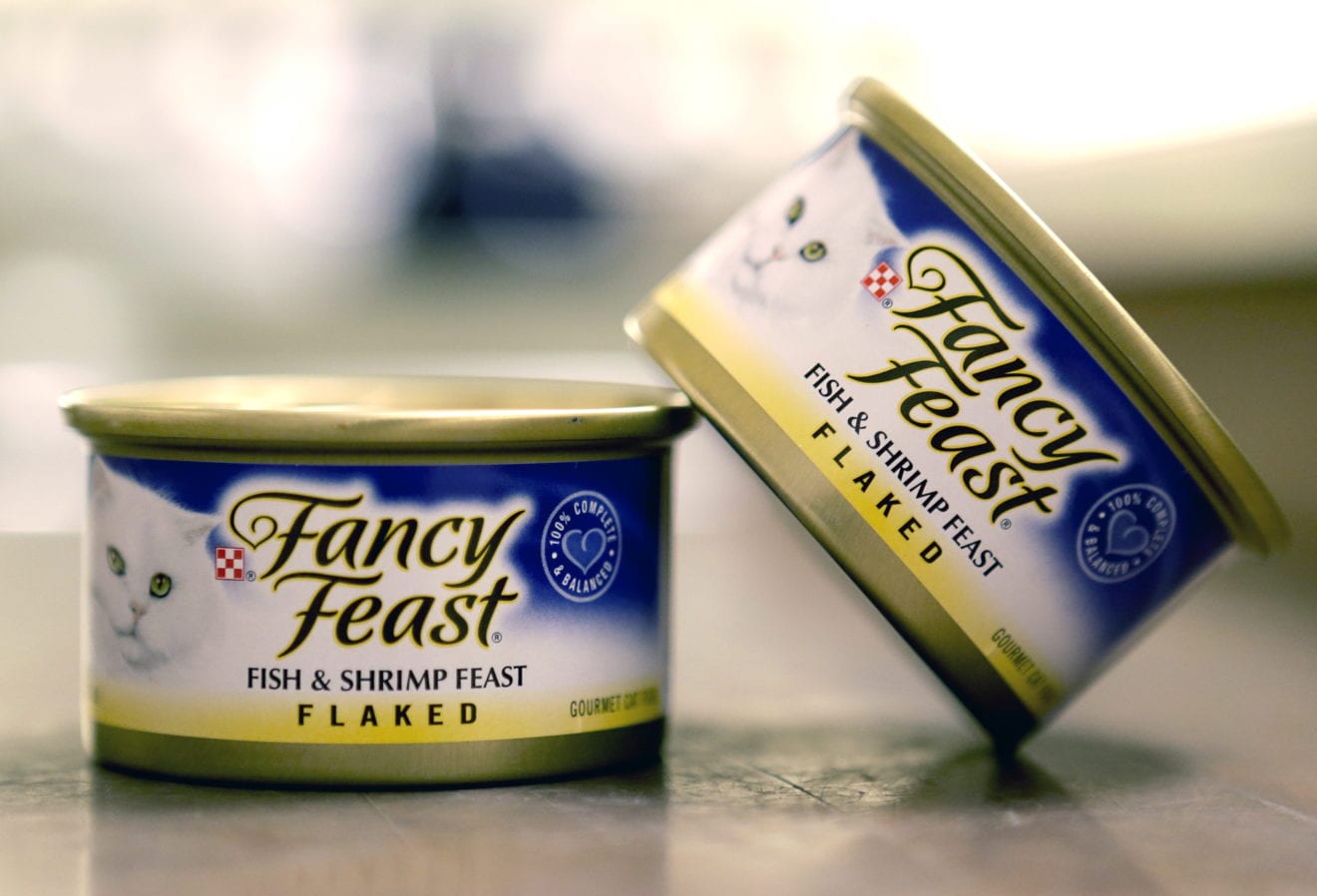
    “As we’ve said consistently, forced labor and human rights abuses have no place in our supply chain,” Magdi Batato, Nestle’s executive vice president in charge of operations, said in a written statement. “Nestle believes that by working with suppliers we can make a positive difference to the sourcing of ingredients.”Nestle is not a major purchaser of seafood in Southeast Asia but does some business in Thailand, primarily for its Purina brand Fancy Feast cat food.

    For its study, Verite interviewed more than 100 people, including about 80 workers from Myanmar and Cambodia, as well as boat owners, shrimp farm owners, site supervisors and representatives of Nestle’s suppliers. They visited fish ports and fishmeal packing plants, shrimp farms and docked fishing boats, all in Thailand.

    Boat captains and managers, along with workers, confirmed violence and danger in the Thai seafood sector, a booming industry which exports $7 billion of products a year, although managers said workers sometimes got hurt because they were drunk and fighting. Boat captains rarely checked ages of workers, and Verite found underage workers forced to fish. Workers said they labor without rest, their food and water are minimal, outside contact is cut off, and they are given fake identities to hide that they are working illegally.

    Generally, the workers studied by Verite were catching and processing fish into fishmeal fed to shrimp and prawns. But the Amherst, Massachusetts-based group said many of the problems they observed are systemic and not unique to Nestle; migrant workers throughout Thailand’s seafood sector are vulnerable to abuses as they are recruited, hired and employed, said Verite.

    Monday’s disclosure is rare. While multinational companies in industries from garments to electronics say they investigate allegations of abuse in their supply chains, they rarely share negative findings.

    “It’s unusual and exemplary,” said Mark Lagon, president of the nonprofit Freedom House, a Washington-based anti-trafficking organization. “The propensity of the PR and legal departments of companies is not to ‘fess up, not to even say they are carefully looking into a problem for fear that they will get hit with lawsuits,” he said.

    In fact, Nestle is already being sued: In August, pet food buyers filed a class-action lawsuit alleging Fancy Feast cat food was the product of slave labor associated with Thai Union Frozen Products, a major distributor. It’s one of several lawsuits filed in recent months against major U.S. retailers importing seafood from Thailand.

    Some of the litigation cites the reports from the AP, which tracked slave-caught fish to the supply chains of giant food sellers, such as Wal-Mart, Sysco and Kroger, and popular brands of canned pet food, such as Fancy Feast, Meow Mix and Iams. It can turn up as calamari at fine restaurants, as imitation crab in a sushi roll or as packages of frozen snapper relabeled with store brands that land on dinner tables. The U.S. companies have all said they strongly condemn labor abuse and are taking steps to prevent it.

  • Japan Kit Kat store wraps chocolate in gold

    Japan Kit Kat store wraps chocolate in gold

    The Japan Kit Kat store Chocolatory is selling the ultimate indulgence this Christmas: chocolate bars wrapped in real gold.

    And yes – they’re safe to eat… which essentially means consumers will quite literally end up flushing gold down the toilet.

    Nestle’s Kit Kat Chocolatory boutique store stocks a constantly changing array of flavoured Kit Kats produced for the fickle Japanese market, including at times strawberry, green tea and wasabi.

    The gold bars are essentially aimed at the Christmas gift market – but its release coincides with the one millionth customer of the single-brand store.

    The special bars – a limited run of 500 – will also be sold at eight selected upmarket department stores in several Japanese cities.

    Dubbed Sublime Gold Kit Kat, it will sell for 2016 yen (US$16) per finger. It is described (apparently without irony) as having “a rich, bitter chocolate taste”.

    “We have made it a luxury product,” said Nestle Japan spokeswoman Melanie Kohli.

    “Not like you probably remember from your childhood. It’s a special occasion, to celebrate the end of the year.”

    The bars come wrapped in a super thin layer of 24-carat gold foil.

    Kitkat store Japan


    It’s not the first time gold has been added to foodstuffs: several limited edition alcoholic beverages have been marketed with gold flakes inside, including cinnamon schnapps Goldschläger.

    Gold is harmless when ingested, passing through the body undigested.

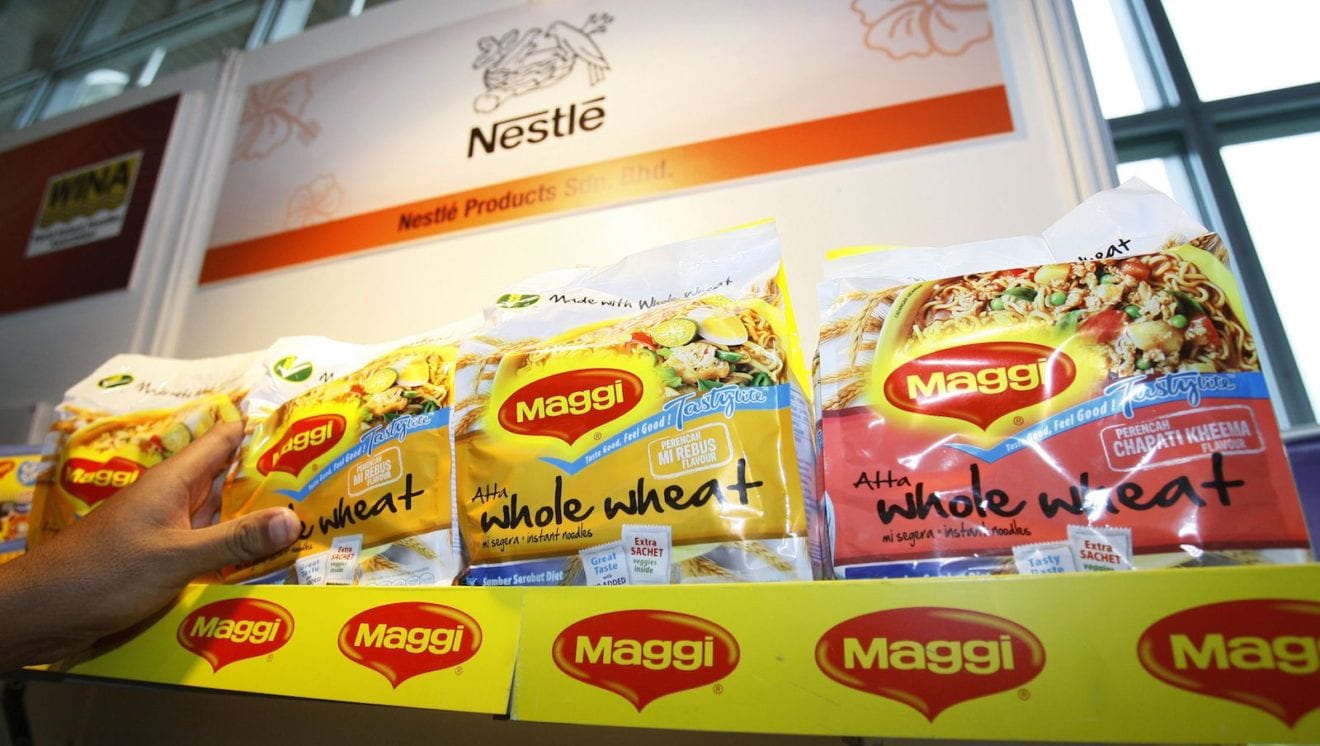
  • Maggi clears lab tests, to begin manufacturing noodles soon

    Maggi clears lab tests, to begin manufacturing noodles soon

    Nestle India, maker of the country’s highly popular Maggi, on Friday announced all samples of recently-banned instant noodles have cleared the tests conducted by three laboratories as mandated by the Bombay High Court.

    The move will now allow Maggi to be back on the shelves after it was banned over the presence of excess lead since June this year.

    “All the 90 samples, covering six variants, tested by these laboratories are clear with lead much below the permissible limits,” Nestle India said in a statement. “In compliance with the orders of the Bombay High Court, we will now commence manufacture and will start selling only after the newly-manufactured products are also cleared by the designated three laboratories.”

    The company said “it is committed to reintroduce Maggi into the retail market at the earliest”. However, analysts believe it could take up to six months to put back Maggi back on the shelves across India. “One of the challenges for Nestle is to fill up the pipeline again. From the day of production, it could take three to six months to reach out to the retailers in the far flung areas across India,” said Arvind Singhal, chairman of retail consultancy Technopak.

    Various countries, including the US, the UK, Singapore, Australia and others have found Maggi noodles safe for consumption. Nestle claims to have conducted over 3,500 tests representing over 200 million packs in both national as well as international accredited laboratories with all the reports clear. “It is never easy to build the trust again… But an excellent communication plan and a crisp ad campaign could be a way out,” said Srinivas K Reddy, director, center for marketing excellence, Lee Kong Chian School of Business, Singapore Management University.

    Retailers, however, reject the skepticism. “We missed Maggi because our customers missed it a lot,” said Darshana Shah, senior V-P, marketing, HyperCity, retail chain. “Despite the availability of many other brands, no brand was able to fill in the vacuum left by Maggi.”

  • Nestlé warns against China’s dreary economy

    Nestlé warns against China’s dreary economy

    Nestlé just became the fourth major Western brand in the past two weeks to report dreary Chinese sales during the year so far.

    According to the Swiss food and drink colossus, sales in the Asia, Oceania, and sub-Saharan Africa regions fell by 3.1%. A “slower sales recovery in China” took part of the blame.

    Overall sales dropped 2.1%, and the company’s stock opened Friday down by about 3%.

    But it’s not the first company to report dreary sales in China in October — and that says something worrying about the country’s economy.

    The Indian-owned UK carmaker Jaguar Land Rover described “continued accelerated slowing of economic conditions in China,” paired with damage to 5,800 cars stored at Tianjin during the colossal chemical explosion at the port. Sales of Jaguar Land Rover models slumped by 32% in China.

    Yum Brands also struggled to market KFC and Pizza Hut in China. KFC sales rose by only 3% year-on-year, and Pizza Hut sales actually fell by 1%. In a country where economic growth is apparently close to 7%, that’s a pretty miserable performance.

    On Thursday, Burberry also reported on discouraging Chinese sales, with overall revenue from the country falling and the share price of the luxury-clothes brand falling 16% at Thursday’s open.

    Nothing much connects KFC, Pizza Hut, instant coffee, Burberry scarves, and Land Rover cars — some products are pitching themselves at China’s growing middle class, while others are focused very much on the most elite sliver of society. Consumption fell or was weaker than expected across the board.

    It’s not all doom and gloom; there have been some positive indicators. Retail spending during China’s Golden Week holiday still surged, rising 11% on the previous year.

    A note from Goldman Sachs also said that while industrial commodities like iron ore and copper had seen their prices plunge, consumer-focused commodities like gasoline (and coffee) had seen rising demand in China over the past year.

    Analysts at the investment bank Jefferies referred to China’s “parallel economies” in a note on Thursday — on the one hand, there’s the “old economy” — industrial- and commodity-focused, reflecting China’s extremely rapid growth during the late-20th century and first 10 years of the 21st.

    On the other hand, there’s the new economy — consumer and services-focused, with higher incomes and less of an overwhelming emphasis on exports. The extent to which the country is able to transition from the old to the new will have a major impact, both for China and the Western firms operating there.