Retail News CRM

Tag: network

  • Accenture to digitally transform Bharat Petroleum sales and distribution network

    Accenture to digitally transform Bharat Petroleum sales and distribution network

    Bharat Petroleum Corporation Ltd. (BPCL) and Accenture are collaborating to transform India’s second-largest oil and gas company by digitally reimagining its extensive sales and distribution network. Accenture will use its capabilities in data, artificial intelligence (AI), and cloud technologies to build, design and implement a digital platform, called IRIS.

    This platform will integrate real-time data from across BPCL’s countrywide network, including more than 18,000 fuel retail outlets, 25,000 tank trucks, 75 oil installations and depots, 52 liquefied petroleum gas (LPG) bottling plants, and 250 additional industrial and commercial locations, to provide a consolidated view of its extensive operations.

    Driven by analytics based on AI and machine learning technologies, the IRIS platform will subsequently trigger automated alerts and actions, including rapid response to equipment failures or hazardous situations. It will also empower the BPCL workforce of more than 100,000 across the country to make faster and more accurate decisions, including preventative maintenance. This can help increase sales at fuel retail outlets by minimizing infrastructure downtime and ensuring consistent fuel quality, as well as improve the experience for customers.

    By embedding intelligence in BPCL’s sales and distribution network, Accenture is helping BPCL optimize its operational performance and efficiency, enhance security and safety and deliver a superior experience for its retail and commercial customers across the country.

    Arun Kumar Singh, director (marketing and refineries), BPCL, said, “Digital transformation opens up new opportunities for the oil and gas industry. As an organization passionate about embracing change and leading the charge, we look forward to leveraging technology to unlock tremendous value, sustainable growth, and improved efficiency.”

    “With the deployment of this highly automated command and control platform called IRIS, we will not only bolster our digital capabilities significantly but also improve customer experience and transform operations at scale. It will further ensure consistent and uniform delivery of BPCL’s brand promises of innovation, care and reliability to our customers,” said Rahul Tandon, head, digital transformation, BPCL.

    The new platform will be capable of accepting more than three million inputs per second from automated sensors, cameras, and Internet of Things (IoT) devices deployed at all key locations, tracking performance based on key parameters such as fuel stock, safety, compliance, equipment health and boosting asset uptime. BPCL’s field workforce and partner network will have a seamless experience thanks to supporting from a portal, mobile app and call centers in Noida and Chennai.
    The digital sales and distribution platform will use BPCL’s cloud infrastructure, making it more agile and scalable.

    “The future will belong to companies that purposefully combine advanced digital technologies with human skills and creativity,” said Piyush N. Singh, India market unit lead at Accenture. “We believe our industry expertise and extensive digital capabilities can help BPCL drive the next wave of growth and gain a distinct advantage in the market. The powerful combination of human and applied intelligence will facilitate transformative change to ensure BPCL’s operations are safer, more secure and more efficient.”


  • Standard Chartered Joins BlackRock’s Provider Network

    Standard Chartered Joins BlackRock’s Provider Network

    The bank will offer integrated front-to-back office investment management solutions to mutual clients across Asia, Africa, and the Middle East on the Aladdin platform.

    Standard Chartered has become the latest bank to ink a strategic partnership with BlackRock’s «Aladdin» provider network, a platform that helps assets managers check risk in their portfolios, trade, manage data management, and other operational tasks.

    The alliance builds on Standard Chartered’s ongoing relationship with BlackRock, leveraging the focus both organizations have on innovation and digitization and is part of the Bank’s longer-term strategic partnership with the global asset manager to provide an enhanced experience for our institutional clients, Standard Chartered said in an announcement on Wednesday.

    Aladdin – or asset, liability, debt, and derivatives investment network – was conceived by the New York-based firm in the late 1990s as an internal tool. Today, it is one of Blackrock’s most powerful tech tools that it sells to smaller rivals, in a bid to stave off pressure on its active management fund arm from cheaper index funds. Credit Suisse and HSBC adopted the platform in 2019 and 2020 respectively.

    Akiyoshi Takeuchi, head of BlackRock Solutions Asia-Pacific, said Standard Chartered’s adoption of the platform «underscores growing momentum in bringing innovative solutions deeper into emerging markets throughout Asia, Africa, and the Middle East.»

  • Nokia partners QTnet to launch local 5G network in Kyushu

    Nokia partners QTnet to launch local 5G network in Kyushu

    QTnet, which provides broadband and related services to customers, will now be able to launch new services using Nokia’s local 5G technology, thus creating a sizeable business opportunity. The private wireless network will be based on the Nokia Digital Automation Cloud, a high-performance, private wireless networking and edge computing platform that will power digital transformation across the Kyushu region.

    Together, Nokia and QTnet will also join forces with the Kyushu Institute of Technology to provide new local 5G-enabled services on the Institute’s university campus. This will be the first industry-academia collaboration in Japan to create a local 5G environment in a university campus setting. Services include self-operating stores, walking support for the visually impaired, cafeteria crowd monitoring, and new trials with partners and research labs.

    Sadao Mouri, Director and Senior Managing Executive Officer at QTnet, said: “Local 5G has the potential to enable new applications and business models while dramatically improving users’ quality of life. By deploying robust local 5G private wireless networks in Kyushu, we will enable anchor institutions like education, healthcare, and first responders to reach new levels of efficiency and productivity. Nokia’s track record in providing reliable local 5G networks will be an important milestone in creating new businesses.”

    Donny Janssens, Head of Nokia Enterprise Japan, said: “We are excited to work with QTnet on this 5G initiative, which is the first of its kind in Kyushu. With a high-performance 5G network, Kyushu institutions can take advantage of innovative new services and applications which will transform the way they operate. We look forward to expanding the local 5G private wireless ecosystem while delivering compelling 5G experiences.”

  • ZTE launches i5GC to support private 5G networks for vertical industries

    ZTE launches i5GC to support private 5G networks for vertical industries

    The solution introduces 5G capabilities such as large bandwidth, low latency, high reliability and multiple connections into various industries, and integrates technologies such as AI, IoT, cloud computing, big data and MEC to enable the digitalisation of whole industries and build fully-connected intelligent private 5G networks for vertical industries.

    At present, public 5GC is oriented to consumer applications, so it cannot meet industry users’ ultra-high requirements for security, latency, reliability, network control rights, energy consumption and usage environment. ZTE i5GC addresses this by deeply integrating and optimising 5GC functions. It uses 2U general servers to achieve the integration of multiple network functions (NF) and a plug-and-play one-stop deployment mode to achieve minimal space, minimal energy consumption and minimal operation and maintenance (O&M).

    This solution provides non-professional industry users with rapid and accurate 5G network access deployment and excellent service experience. In addition, ZTE i5GC can be flexibly customised according to a user’s diversified requirements for security, traffic processing and autonomy, and provide different function combinations and deployment forms for different scenarios. For instance, the user plane function (UPF) is deployed to the edge, traffic is forwarded nearby, and user data is locally managed. In addition, ZTE i5GC employs a 3GPP service-based architecture (SBA) to seamlessly interconnect with a 5G public network. It can integrate third-party multi-access edge-computing (MEC) applications through open interfaces to achieve flexible expansion and rapid iteration of edge applications, so as to explore and breed 5G killer applications in the vertical field.

    Towards the construction of business-grade 5G networks, ZTE has implemented in-depth 5G applications for use in vertical fields such as mines, medical treatments and ports. For example, for a 5G smart mine project, ZTE uses i5GC to deploy a complete set of 5G networks underground, meeting the mine’s compact space and explosion-proofing requirements, and achieving full coverage from key 5G networks. ZTE i5GC will continue to focus on industry projects, promote the understanding of industry requirements, work with enterprises and operators to build a 5G application ecosystem, help expand the ‘blue ocean market’ opportunity for 5G for business, and drive 5G large-scale commercial use and value monetisation.

  • Introducing Clubhouse, the invite-only alternative to Linkedin

    Introducing Clubhouse, the invite-only alternative to Linkedin

    Forget The Nice Guy or Soho House. The place to find Hollywood and Silicon Valley powerhouses during the pandemic has been on Clubhouse, the invite-only, audio-driven app that’s quickly gaining steam as a networking tool for those looking to make it in the entertainment and tech worlds.

    Hop on Clubhouse at any given time and you could stumble into conversations led by Wiz Khalifa, Tiffany Haddish, Ava DuVernay, Ashton Kutcher, Brian Koppelman or Scooter Braun, among several other celebs. Kevin Hart, in a story that’s already solidified in Clubhouse lore, recently took part in an hours-long conversation focused on whether he was, in fact, funny. And on the tech side, Clubhouse is packed with entrepreneurs like former Twitter CEO Ev Williams, Reddit co-founder Alexis Ohanian, and former Y Combinator President Sam Altman, along with a laundry list of angel investors and venture capitalists.

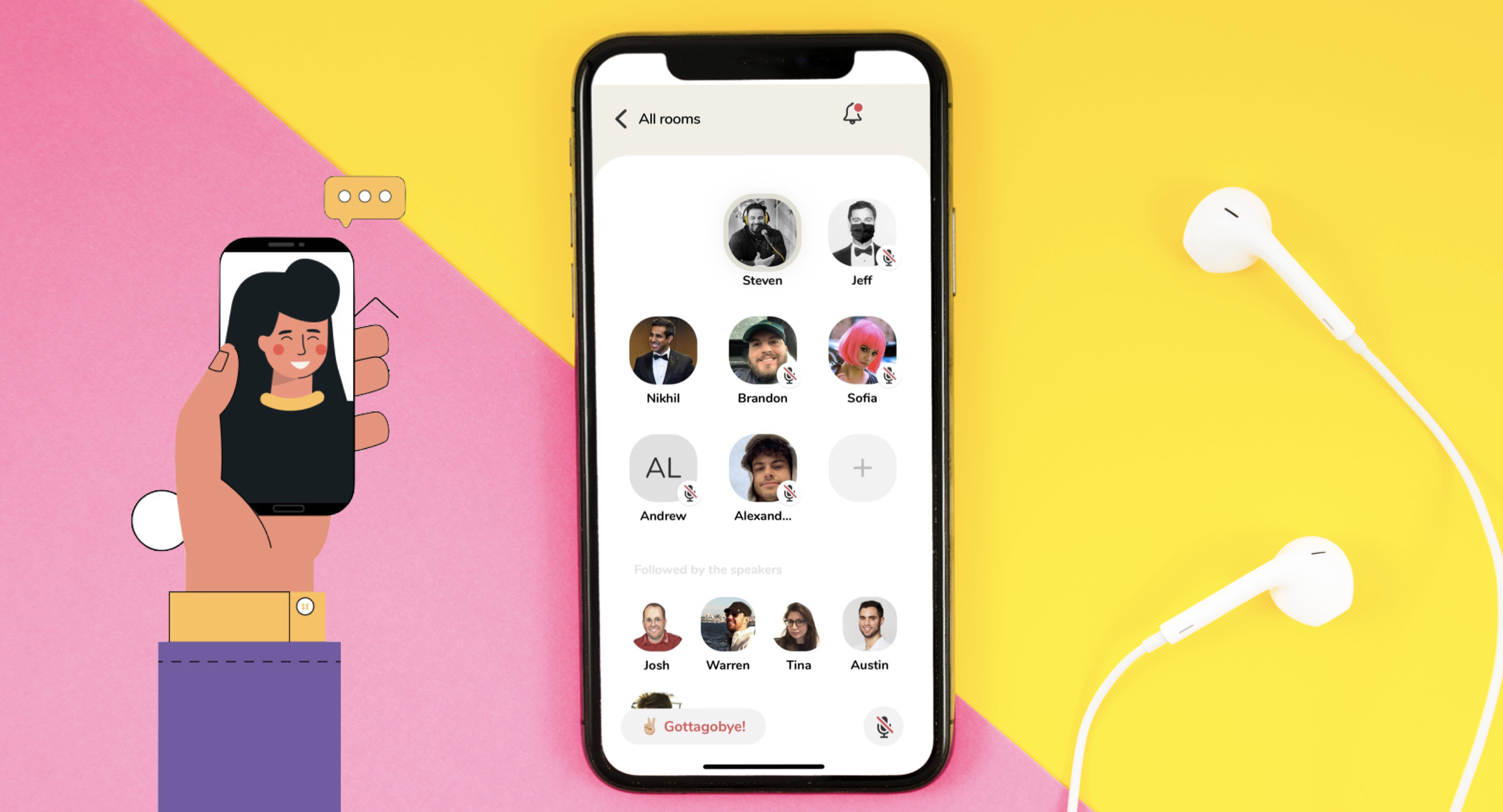
    Clubhouse isn’t complicated: Users can go on the app and join a “room” where a particular conversation is going on. Often, these conversations are focused on business and networking topics; “Pivoting from live events to virtual events + sponsorships” and “virtual writing cafe” were two rooms pulling in users on Monday, for example. Once inside, users can listen to the discussion and, if approved by the room moderator, chime in and join the conversation themselves. It’s not uncommon to see rooms with a few dozen speakers and a few hundred users listening in.

    Since launching in April, the app has grown to over 100,000 beta users, according to an individual familiar with the company’s internal metrics. The app’s early traction helped it land a $12 million round of funding from Andreessen Horowitz, valuing Clubhouse at $100 million.

    As the new, go-to spot to listen to entrepreneurs and stars, Clubhouse has also become the audio version of LinkedIn for those looking to make connections in Hollywood. Even in normal times, making it in the movie business is tough enough. But for Sade Sellers, a 31-year-old screenwriter from Burbank, California, one of the many problems tied to the pandemic has been the end to casual networking events — coffee meet-ups with executives, conferences and post-work drinks with people in the film industry — that have helped her career grow.

  • Facebook reports strong Q4 and 2020 top and bottom line growth

    Facebook reports strong Q4 and 2020 top and bottom line growth

    Facebook reported its fourth-quarter and full-year earnings numbers today. The controversial social networking site reported advertising revenue of $27.19 billion for the fourth quarter running from October through December. That resulted in a 31% year-over-year gain from the $20.74 billion in advertising revenue that the company earned during last year’s fourth quarter. For all of 2020, Facebook grossed $84.17 billion, up 21% from 2019’s total of $69.66 billion.

    During the fourth quarter, Facebook garnered a total of $28.07 billion compared to the $21.08 billion it took in during the same quarter last year. If you’re counting, that is a 33% hike on an annual basis. For all of 2020, the company collected $86 billion dollars producing a 22% increase from 2019’s top line number of $70.70 billion.

    Let’s move on to the bottom line. For the period from October through December (yes, also known as the fourth quarter), Facebook earned $11.22 billion or $3.88 per share. Net income was up 53% from the previous year’s $7.35 billion while the per-share figure reflected a hike of 52% from the $2.56 per share figure attained during Q4 of 2019. For 2020, Facebook reported profits of $29.15 billion or $10.09 per share. That’s an annual gain of 58% and 57% respectively over 2019’s figures of $18.49 billion and $6.43 per share.

    Facebook achieved 1.84 billion Daily Active Users for December 2020, an 11% gain year-over-year. As of the end of last year, the number of Monthly Active Users amounted to 2.80 billion for a 12% annual gain.

    For the first half of 2021, Facebook expects revenue to be stable, or show a slight gain. CFO David Wehner said that Facebook expects some issues with ad targeting. As you might recall, Apple and Facebook are fighting each other over Apple’s change requiring iOS users to opt-in to receive targeted ads. Wehner says, “We also expect to face more significant ad targeting headwinds in 2021. This includes the impact of platform changes, notably iOS 14, as well as the evolving regulatory landscape. While the timing of the iOS 14 changes remains uncertain, we would expect to see an impact beginning late in the first quarter.”

    Besides owning Facebook, the company owns Facebook Messenger, WhatsApp and Instagram. It also runs VR headset producer Oculus and makes the Facebook Portal line of smart displays.

    The earnings report failed to excite Wall Street investors. During the regular trading session, Facebook (FB) shares closed down $9.91 or 3.51% to $272.14. After the report was released slightly after 4pm ET, Facebook dropped another $5.14 or 1.89% to $267.

  • 7-Eleven warns of bogus ‘franchisor’ in Cambodia

    7-Eleven warns of bogus ‘franchisor’ in Cambodia

    Convenience-store chain 7-Eleven has warned of a bogus ‘franchisor’ in Cambodia. The company said it received reports that there is an unauthorized party representing itself as 7-Eleven’s master franchisee in the country and attempting to sell outlets.

    The reports promoted the company to issue an announcement confirming that Thailand’s CP All is the sole master franchisee in the market, having the exclusive right to open and operate 7-Eleven stores there.

    Last May, Thailand’s CP Group signed a master franchise agreement to operate the chain in Cambodia. The first store is scheduled to launch in Phnom Penh next year.

  • Inditex closing down 800 outlets worldwide

    Inditex closing down 800 outlets worldwide

    Spanish apparel retailer Inditex has temporarily shuttered almost 3800 stores in 39 markets internationally in the midst of the coronavirus outbreak.

    All Inditex locations in its home territory are currently closed for business.

    Affected stores include Zara, Pull & Bear, Massimo Dutti and Bershka-branded outlets, sales at all of which have been strongly affected by the virus.

    Retail takings for the group dropped 24.1 percent in the first fortnight of March.

    While the firm stated it is too early to predict the ultimate impact of the outbreak on its business, Inditex expressed confidence in its business model to weather the crisis, even as European countries begin to enforce government-mandated lockdowns.

    The firm has set up remote working systems at its Spanish head office and closed gym and bus services.

  • HanesBrands about to double Champion Asia store network

    HanesBrands about to double Champion Asia store network

    US apparel company HanesBrands plans to double its Champion Asia store network within two years.

    The company has just announced a partnership with LF Corporation in South Korea which will see its store network there expand from around 10 now to more than 30 by the end of next year, with a further five-year expansion program planned beyond that. LF Corporation will also develop an online offer there.

    LF Corporation directly operates more than 1400 stores in South Korea, including for fashion brands Daks, Hazzys and Lafuma.

    The South Korea Champion partnership is part of a broader strategy by HanesBrands to expand the brand’s store footprint throughout Asia. There are currently more than 200 Champion Asia stores and shops-in-shops across Asia, including in Japan, China, Thailand, Taiwan and Hong Kong, which represent two-thirds of its global network.

    HanesGroup says it wants to more than double the number of stores and shops in those markets within two years.

    Beyond Asia, the company is also continuing to open stores in Europe, the US and Australia, and is pursuing a distributor retail model to open stores in Mexico, Central America and South America.

    Jon Ram, HanesBrands’ group president of global activewear, described its new South Korean partner as “a highly accomplished large-scale distributor” that operates a large network of department stores, shop-in-shops, street shops and online platforms.

    “We are looking forward to the growth that we can generate through the growing power of the Champion brand combined with the retail, e-commerce and brand building expertise of LF,” he said of the ambitious Champion Asia plan.

    LF plans to locate retail stores and shops-in-shops near and in the country’s major department stores and shopping malls. In addition, LF will distribute Champion products to the company’s Around the Corner multi-brand lifestyle-apparel stores and to other parts of its online and store network.

    “Champion is a global leader in sports performance and athletic casualwear apparel and is particularly appealing to younger consumers in their teens and 20s,” said LF Corporation MD Yoo Hyosang. “We believe Champion has the positioning to be an upscale brand in Korea, and we plan to use a dual-distribution strategy of opening Champion stores and expanding points of distribution in other store channels and online platforms. We are eager to tap the growth potential of Champion in Korea.”

    Champion has doubled its global net sales in the past three years with strong double-digit compound annual growth rates in the US, Europe and Asia. Popular with celebrities, sports figures and pop culture artists, the brand has more than 7 million followers on Instagram and has collaborated on apparel offerings with other leading apparel brands, designers and retailers, including Todd Snyder, Kith, Supreme, Urban Outfitters and Vetements.

    Based in Winston-Salem, North Carolina, HanesBrands sells products under brands including Hanes, Bonds, Maidenform, Playtex, Bras N Things, L’eggs, Lovable, Wonderbra, Berlei and Gear for Sports.

  • Vodafone network outage affects several countries in Europe & Asia

    Vodafone network outage affects several countries in Europe & Asia

    Issues began at around 14:42 BST according to network monitor Down detector. Customers all over the UK reported issues and so did customers in Spain, Ireland, Italy, Germany, Greece, and Portugal.

    Many customers took to Twitter to express their frustration on the matter.

    Vodafone then acknowledged the outage and tweeted, “We are currently investigating a potential outage to our fixed and mobile services. We thank you for your patience as we work to get this resolved.”

    The company has around 19.5 million UK customers and around 444 million globally.

    Initially, it looked more like an isolated issue with customers in some UK cities thought to have been among those affected; however, Economics Correspondent Paul Cogan at Virgin Media TV noticed that Down Detector showed more maps with even more outages.

    He stated, “Vodafone’s problems don’t seem to be restricted to just Europe. Down Detector outage maps show problems in India, Australia, New Zealand, and Turkey.”

    The global disruption was then confirmed when Vodafone Ghana tweeted, “Vodafone Ghana wishes to apologize for the intermittent network challenges experienced by some of our mobile customers. Resolving it remains our topmost priority. We shall keep you updated. Thanks for your patience.”

    Vodafone then apologized for the inconvenience and said the services were back to normal. “This issue has now been fully resolved and normal service has been restored to customers. We thank you for your patience and sincerely apologize for the inconvenience caused.”

    The network outage comes a month after Vodafone set its launch date for its new 5G network in seven UK cities.

    The company last experienced an outage in October 2018.

  • India’s Grofers to convert 200 partner stores into its own brand network

    India’s Grofers to convert 200 partner stores into its own brand network

    Indian online grocer Grofers will convert around 200 service-partner stores into its own offline branded outlets.

    The move is intended to expand Grofers’ business without affecting online sales, and has already been put into effect in around 100 such “kirana” outlets, providing training in point-of-sale, retention and loyalty schemes, among other areas. Plans are also underway to expand the network into southern Indian markets.

    “We have converted several grocery stores into our own branded offline stores,” said Grofers VP and offline business head Yeshu Bansal, “around 100 kirana stores in Delhi-NCR have been a part of this effort that started somewhere in November last year. Our target is to have 200 such stores in the coming few months.”

    The firm is aiming to double sales to ₹5000 crore (US$726.7 million) this financial year and is planning an IPO within three years.

    “Using our forecasting tools and data science, we help the offline stores understand what items are selling more and what should he stock for,” added Bansal. “We are taking our experience and tech to the offline store … We are entering kirana stores in residential areas that has middle and the lower middle class population. The goal is to help the retailer scale up his business by getting more footfalls, and for us, it helps push their homegrown brands (private label products) as well.”

    Grofers partners with more than 6000 stores that deliver groceries to its customers.

  • Lawson Thailand plans Further Network expansion

    Lawson Thailand plans Further Network expansion

    Saha Group is opening a new wave of Lawson Thailand convenience stores in subway stations and airports.

    The firm is establishing a joint venture with its partner Japanese chain in collaboration with Thai advertising business VGI Global Media, which specialises in public transport facilities. The cooperative will launch this Friday with registered capital of THB20 million (US$645,000). Partnership Saha Lawson will hold 60 per cent of the venture, with VGI taking 30 per cent and Saha Group the remaining 10 per cent.

    Saha expects the brand’s focus on public transit customers will give the initiative an edge over leading competitor Charoen Pokphand’s 7-Eleven, which operates around 11,000 outlets. It plans to open 30 Lawson Thailand stores in transport facilities, joining its existing store network in Bangkok’s elevated mass-transit system BTS, by late February 2021.

  • China is reportedly behind huge hack of global cell networks

    China is reportedly behind huge hack of global cell networks

    Security research firm Cybereason reports that over the last seven years, hackers have been able to break into more than 10 cellular networks worldwide to gather information on calls made by at least 20 targeted individuals. The data obtained from this operation included the dates that calls were made, the times they were connected, the locations of the callers and more. The attack, dubbed Operation Soft Cell, has been active since 2012 and was spotted by Cybereason earlier this year.
    While the goal of the hackers was to obtain call detail records (CDR), other information obtained from this operation included usernames and passwords. According to the report, “the attackers worked in waves-abandoning one thread of attack when it was detected and stopped, only to return months later with new tools and techniques.” Cybereason says that it is very certain that this operation is a state-sponsored attack and is affiliated with China. The methods and tools used lead the security researcher to name APT10 as the so-called threat actor. This group reportedly works with Chinese Ministry of State Security (MSS).
    So why would the MSS go to all the trouble of hacking into 10 global cell networks? As Cybereason points out, when a nation runs an operation like this, it is not about the money. It is often done to steal intellectual property or obtain information about some of the carriers’ subscribers. The data that was stolen allowed the hackers to get call records that provided the destination, and duration of a call, information on the device used to make the call, the version number of the phone and its vendor, and the physical location where the call was made. With that data, the MSS (assuming that they were behind this) was able to learn who the individuals they were targeting had been talking to, the devices they were using to make such calls and where these people were traveling to. The security research company says that this is the type of information used to gather dirt on politicians and to track law enforcement.
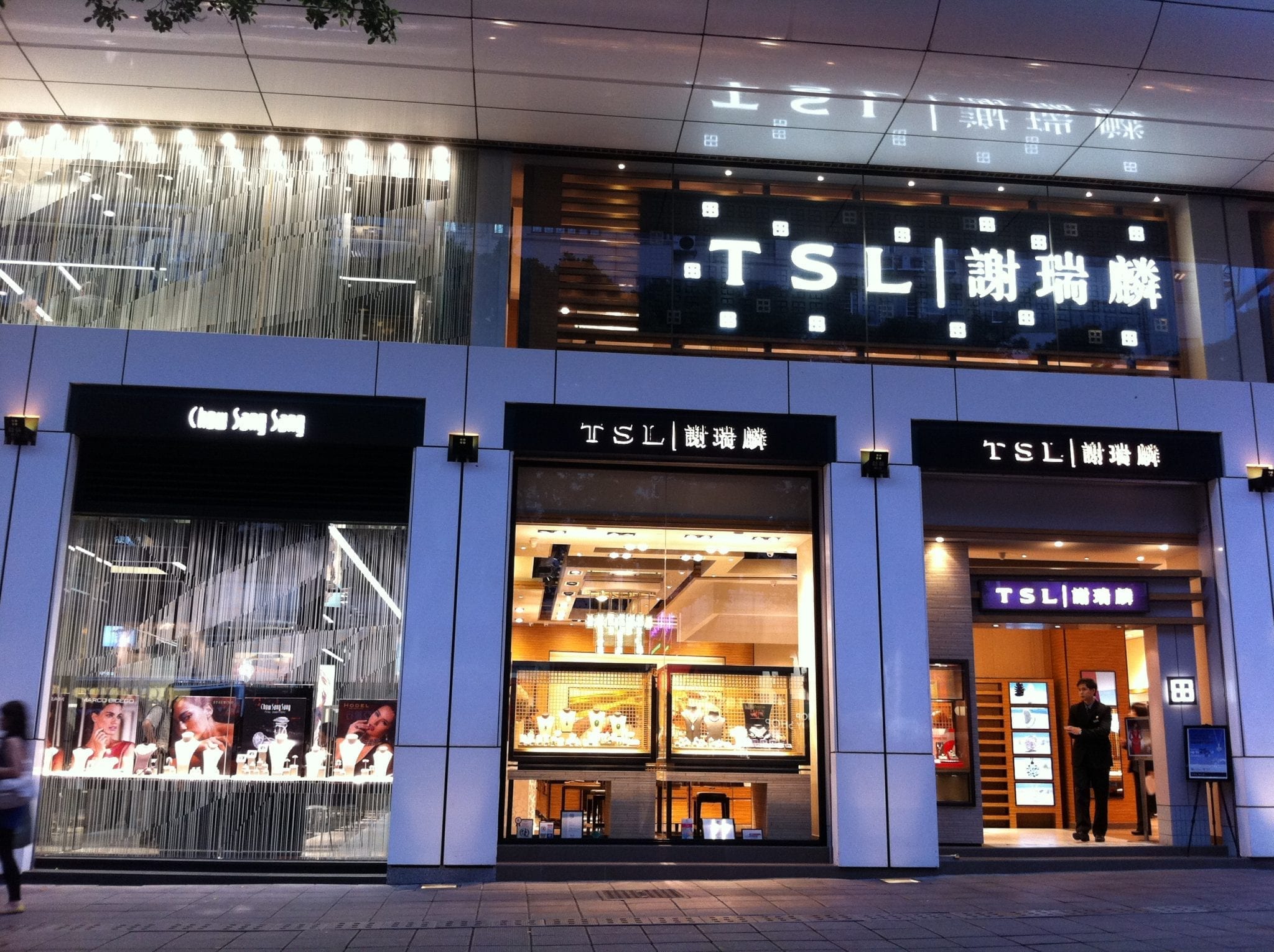
  • Tse Sui Luen store network expands Again

    Tse Sui Luen store network expands Again

    Hong Kong-headquartered jeweller Tse Sui Luen has reported a 9.6 per cent increase in profit for the full year, despite a marginal 1.7 per cent drop in group turnover.

    Profit attributable to shareholders was HK$54.2 million (US$6.9 million) on sales of $4.065 billion ($521 million).

    The Tse Sui Luen store network grew by 56 during the year, to reach 473.

    Chairman Annie Yau said sales rose in the first half of the year, reflecting the continuing upturn of Hong Kong’s retail sector. “However, conversely, towards the end of the year, the group started to feel the trickle-down effects of the trade dispute between the US and China which has adversely affected the market sentiment and consumer confidence and resulted in the depreciation in the Renminbi – all leading to a slowdown in the global economy and in local retail sales performance.”

    She said the fluctuation of the Renminbi value inevitably brought adverse impact on the second half. “The group is responding to these challenges with unique signature products and reinforcement of our market positioning as ‘Wedding Expert’, all aimed to offset the negative effects…”

    During the year, the group has demonstrated its vision to optimise its retail network across Asia and broaden its international presence through new store openings in Hong Kong, Mainland China and Malaysia. Going forward, we will continue to seize the opportunities for developing existing and new business channels and expanding our retail network in all the regions where we operate, while being cautious and keeping a close watch on any and all changes as and when they occur in the market,” she says.

    Same-store sales growth in Hong Kong and Macau was 2.8 per cent, and as a result of gold product promotions and an expanded product assortment, the average amount per invoice rose by 5.6 per cent.

    Tse Sui Luen took advantage of a general downward trend in store rental rates to improve rental cost effectiveness. It expanded the size of its stores at Times Square in Causeway Bay and Plaza Hollywood in Diamond Hill and opened a new store in MCP Central (Phase II) in Tseung Kwan O.

    Self-operated Tse Sui Luen store growth continued to be a key driver of the group’s Mainland China business, accounting for 36.6 per cent of its turnover during the year. Twelve new self-operated stores and 43 new franchised stores were opened on the mainland, expanding the network from 380 to 435.

    “We will keep on expanding our retail network in Mainland China with the intention of opening an additional 100 new stores over the coming two years,” said Yau.

    In Malaysia, turnover was stable the jeweller opened one new store, at Genting, taking its network there to five.

  • Tesco Thailand Planning to Open 750 new Stores

    Tesco Thailand Planning to Open 750 new Stores

    Tesco Thailand is evaluating opening as many as 750 more convenience stores, which would expand its overall network by about 50 per cent.

    No timeline was revealed for the move, which is one of several strategic growth options being considered by the British-headquartered grocery retailer. Another is the development of a premium supermarket offer in the UK.

    Tesco currently operates 1583 stores in Thailand, a mixture of large-format hypermarkets and a growing network of small compact stores for local communities.

    In light of the company’s success in Thailand and neighbouring Malaysia, the company is reportedly considering options for expansion in other Asian markets including South Korea and China. A move into South Korea would be surprising given the company sold its Homeplus-bannered hypermarket operations there in 2015.

    Developing a stronger convenience-store network in Thailand – and potentially Malaysia – would make a lot of sense given consumers across the region are losing interest in hypermarkets as a format in favour of more frequent visits to smaller shops, as well as buying goods online.

    Tesco has told its investors that Thais are migrating from traditional markets to hypermarkets, supermarkets and convenience stores as the country develops.

    The potential store expansion was outlined at a Capital Markets Day presentation to analysts and investors on the company’s future direction.