Tag: network

  • Apple’s 5G iPhone Using Samsung Modems to be released in 2020

    Apple’s 5G iPhone Using Samsung Modems to be released in 2020

    In one fell swoop, Apple cut the Gordian knot of 5G modem supply and it is smooth sailing from here, as it paid Qualcomm undisclosed amount to settle the patent litigation and secure a multi-year contract for 5G iPhones.

    “It’s personal. I don’t see anybody who can bridge this gap,” tipped the WSJ recently about Apple and Qualcomm CEOs relationship but the big boys ironed out their differences quickly. Apple could have tried Intel, Samsung or Huawei, but each of those choices comes with drawbacks.

    Intel threw in the towel on 5G modem development when it learned that Qualcomm resolved its patent issues with Apple, while America’s homeland security institutions would balk at Huawei’s involvement due to geopolitical considerations. Despite all rumors, Huawei company reps said during its Analyst Summit 2019 yesterday that they have “no communication with Apple on 5G modems.”

    Samsung, on the other hand, simply can’t make enough of its own 5G modems to exclusively supply huge customer like Apple. It recently declined Apple’s advances for its Exynos 5100 5G modem. Not only does the company need its production for the Galaxy S10 5G that is now shipping, but it could very well need it for the Note 10 Pro, too, and others down the line.  According to one “electronics industry official” there:

    Apple inquired about the supply of 5G modem chip from Samsung Electronics System LSI division. However, we know that Samsung Electronics System LSI answered that the supply volume of its smartphone 5G modem chip is insufficient.

    Well, the most renowned Apple supply chain analyst, Ming-Chi Kuo of TF International Securities, has spoken, and Apple will seemingly hedge its Qualcomm bets with Samsung as a side dish. If you are wondering why, Apple is most likely planning to use the more advanced Qualcomm modems in placed where mmWave spectrum 5G networks are being established, while Samsung’s likely cheaper solution will remain for the sub-6 GHz crowd.

    Apart from all these juicy dual supplier predictions, Ming-Chi Kuo is advocating for a fall 2020 release date of the future 5G iPhones. That’s the same timeframe as before but this time around, Apple is in a position to use the best that the 5G market can offer without triggering the NSA, CIA and other three-letter agencies’ wrath.

    South Korea just launched its nationwide 5G network, with the Galaxy S10 5G being its poster child. Upon the phone’s release there, Korea will have all of its largest networks offering 5G plans. In fact, Korea Telecom announced three 5G price tiers. Among those, there is a “Super Plan” that offers truly unlimited 5G data without speed caps, and this one will go for the equivalent of $70, a pretty good price no matter how you slice it. In fact, the Super 5G Plan is somewhat cheaper than the current unlimited 4G LTE plans in Korea, so the 5G future seems bright, and we are expecting more and more 5G handsets to enter the fray this year, especially towards the tail end of 2019.

    A true nationwide shift to 5G networks is not happening this year in the US anyway, so iPhone users won’t be missing all that much until then. Next year, however, most of the flagship phones of the spring season will probably have some sort of 5G connectivity support, be it with a Qualcomm, Samsung or Huawei modem, and Apple could feel the pinch in that regard.

    Had Apple gone alone in developing a 5G modem, either by acquiring Intel’s wireless modem assets, or starting from scratch, it would have taken it years to reach a sufficiently good unit that is worthy to put in millions of iPhones. Wireless connectivity modems are perhaps the most complex of chips in a phone, and 5G ones require so much filters and software control to avoid interference and still be backwards compatible that this option would have meant either a lot of extra expenses for Apple in order to deliver a 5G iPhone in 2020, or falling behind the competition by launching one that is a cycle or two behind.

    “Apple knows our phone number, we are still in San Diego,” tipped Qualcomm recently, giving a glimmer of 5G hope, and patching thing up with Qualcomm turned to be the smartest solution, just as we expected. There you have it – Apple resolves the bad blood between the companies, Qualcomm is likely to assist it with the 5G push, and Samsung will be its sidekick. The 5G future is so bright, we have to wear shades. According to Kuo, the launch of the 5G iPhone is expected to unleash a big upgrade cycle for Apple, and he upped his forecast for iPhones sold in 2020 to the whopping 200 million, from the current 190 million prognosis.


  • Qualcomm’s next Snapdragon processor could take 5G mainstream Easily

    Qualcomm’s next Snapdragon processor could take 5G mainstream Easily

    Support for 5G networks is currently limited to a handful of flagship devices such as the Galaxy S10 5G, LG V50 ThinQ 5G, and Huawei Mate 20 X 5G. This situation is unlikely to change anytime soon, but in order to boost the adoption rate, Qualcomm is apparently developing a 5G-ready chip that’ll make its way into future mid-range smartphones.

    Dubbed the Snapdragon 735, the upcoming chip is expected to succeed the recently-announced Snapdragon 730. Like Qualcomm’s flagship processors, this new one will reportedly be manufactured on the 7-nanometer manufacturing process. Concrete details about this are yet to be revealed, but compared to the older Snapdragon 710 it should result in a performance boost of up to 20% and an increase of 50% in terms of efficiency. Additionally, efficiency gains of up to 20% are to be expected over the Snapdragon 730.

    As mentioned above, the Snapdragon 735 will introduce support for 5G networks. But rather than utilizing the separate Snapdragon X50 modem found inside the Galaxy S10 5G, the Snapdragon 735 will apparently use an integrated 5G modem. This should result in thinner and lighter 5G smartphones. It should also reduce the overall cost associated with the technology.

    Moving on to some of the more technical details, the included CPU will boast an octa-core 1+1+6 setup. This will include six efficiency cores clocked at 1.6GHz, a slightly faster one at 2.4GHz, and a high-performance core clocked at 2.9GHz. There will also be an upgraded GPU in the form of the Adreno 620.

    Lastly, the Snapdragon 735 should allow manufacturers to build mid-range smartphones with as much as 12GB of RAM. Additionally, the chip will support 21:9 displays with 3360x1440p resolutions, 4K video recording at 60FPS, and a dedicated NPU that’ll help with AI features.

    The Qualcomm Snapdragon 735 is expected to arrive during the final quarter of this year, perhaps alongside the flagship Snapdragon 865. In terms of a release, the first Snapdragon 735-powered devices should arrive during the first half of 2020.

  • 5G to drive backhaul revenue growth through 2028

    5G to drive backhaul revenue growth through 2028

    The global satellite backhaul market is expected to reach over $32 billion in revenue by 2028, with 5G supporting one third of the overall market, according a new report released from NSR.

    According to the report, mobile wireless backhaul is the largest opportunity in this space, as satcom becomes a mainstream solution and 5G opens opportunities for satellite to seamlessly integrate with the global telecom ecosystem.

    Trunking also appears to be re-born via lower capacity costs and slowdown in fiber expansion, while hybrid networks represent a long-term play for emerging OTT content distribution models, the research firm said.

    The direct impact of 5G in satcom won’t be seen before mid-2020s, but growth will be sizable, generating one of every three new dollars for backhaul capacity revenues through 2028.

    The ground segment has a key role to play in the integration of satcom into 5G, by responding to new performance requirements and making the solution transparent and easy to adopt for mobile operators.

    “The combination of competitively priced capacity with advanced ground segment makes satcom a relevant solution for mobile network operators continually seeking new sources of revenue and who are increasingly capex-conscious and risk-averse,” stated Lluc Palerm, NSR senior analyst and report author.

    “The transition to broadband is accelerating in areas like Latin America, where for the first time in 2018, 4G generated the highest share of traffic over satellite versus 2G and 3G.”

    Satcom can also find the upside of OTT in hybrid networks.

    NSR said satellite is still king for content broadcasting, and as content moves to the edge to support the explosion on IP Video and new formats like UHD and eventually VR/AR proliferate, satcom will emerge as a key tool in the ecosystem.

    Business models are evolving quickly, resulting in the increased demand for managed services.

    “With MNOs focusing on core services and minimizing capex exposure, managed services are the perfect match between satcom’s streamlined operations for remote areas and the MNO need to continue expanding coverage profitably,” the research firm noted.

    “New technologies like small cells expand the addressable market into the most ARPU-constrained and remote locations, where revenue-sharing schemes are gaining traction.”

  • Telecom Fiji to deploy 10G PON

    Telecom Fiji to deploy 10G PON

    Telecom Fiji has announced it will deploy the first all-optical 10G PON fiber network in the South Pacific, in partnership with Huawei.

    The operator plans to use the network to deliver gigabit network services for both households and enterprise customers.

    Huawei has been contracted for the deployment, which is aimed at enhancing the operator’s customer experience while significantly reducing networks operations and maintenance costs.

    “By adopting this 10G PON solution, the competitiveness of our fixed broadband in Fiji has now significantly enhanced… We are fully confident to maintain our technological leadership in the South Pacific island markets,” Telecom Fiji general manager of sales and marketing Joseph Naua said.

    “We are also proud to work in partnership with Huawei on the deployment of the 10G PON network. At present, the 10G PON network deployment is moving on a fast track, and Huawei will continue to invest and innovate in the ultra-broadband domain.

  • Vietjet expands international network

    Vietjet expands international network

    Low-cost carrier Vietjet on Tuesday announced its operation plan for the Hong Kong market and the launch of a new route linking Phú Quốc and Hong Kong, one of Asia’s most well-known destinations.

    The Phú Quốc – Hong Kong route will operate return flights with a frequency of four flights per week, starting from April 19. With a flight time of two hours and 45 minutes per leg, the flight will depart Phú Quốc at 10:50am and land in Hong Kong at 2:35pm (local time) while the return flight will depart from Hong Kong at 3:40pm and arrive in Phú Quốc at 5:25pm (all local times).

    “After nearly three years of operating our HCM City-Hong Kong route, Vietjet has gained the love and trust of Hong Kong residents, business people and international tourists, and has contributed positively to the promotion of air travel and trade between Việt Nam and Hong Kong as well as across the region,” said Lưu Đức Khánh, Vietjet’s managing director.

    Khánh said the airline has thus far transported more than 300,000 passengers on this route, which includes a significant number of transit passengers who boarded in Hong Kong.

    The director said the new direct route between Phú Quốc and Hong Kong, the first direct flight connecting the two destinations, will enhance the flying experience and reduce travel time for passengers, as well as offer flight opportunities for millions of people.

    Victor Liu, deputy director of the General of Civil Aviation Authority in Hong Kong, said that Việt Nam and Hong Kong have enjoyed very good and long-standing economic and social relations.

    “With the addition of the direct passenger services between Hong Kong and Phú Quốc, it will no doubt further enrich the bilateral links between Hong Kong and Việt Nam,” he said.

    Known as “the Pearl Island”, Phú Quốc is the biggest island in Việt Nam. As one of the most talked-about tourism destinations in Asia with beautiful beaches and friendly local people, Phú Quốc in the southern province of Kiên Giang has attracted strong levels of investment in hotels and resorts in recent years and has become one of the most popular holiday destinations in the country.

    Adding to the island’s appeal, international travellers are exempt from visas for visits of 30 days or less.

  • Global public cloud spend to 17.5% in 2019

    Global public cloud spend to 17.5% in 2019

    Gartner forecasts worldwide public cloud services market will grow 17.5% in 2019 to reach a total of $214.3 billion, up from $182.4 billion in 2018.

    Cloud system infrastructure services, or infrastructure as a service (IaaS) is forecast to grow 27.5% in 2019 and reach $38.9 billion, up from $30.5 billion in 2018 (see Table 1). The second-highest growth rate of 21.8% will be achieved by cloud application infrastructure services, or platform as a service (PaaS).

    Gartner research vice president, Sig Nag, says “we know of no vendor or service provider today whose business model offerings and revenue growth are not influenced by the increasing adoption of cloud-first strategies in organizations. What we see now is only the beginning, though. Through 2022, Gartner projects the market size and growth of the cloud services industry at nearly three time the growth of overall IT services.”

    Gartner expects that by the end of 2019, more than 30% of technology providers’ new software investments will shift from cloud-first to cloud-only. This means that license-based software consumption will further plummet, while SaaS and subscription-based cloud consumption models continue their rise.

    “Organizations need cloud-related services to get onboarded onto public clouds and to transform their operations as they adopt public cloud services,” said Nag. Currently almost 19% of cloud budgets are spent on cloud-related services, such as cloud consulting, implementation, migration and managed services, and Gartner expects that this rate will increase to 28% by 2022.

    “As cloud continues to become mainstream within most organizations, technology product managers for cloud related service offerings will need to focus on delivering solutions that combine experience and execution with hyperscale providers’ offerings,” said Nag.

    He sees the complementary approach as driving both transformation and optimization of an organization’s infrastructure and operations.

  • Mobitel to invest $50m in 5G this year

    Mobitel to invest $50m in 5G this year

    Sri Lankan national mobile service provider Mobitel has revealed plans to invest $50 million this year to deploy a 5G network and upgrade its network infrastructure.

    The operator, a wholly-owned subsidiary of Sri Lanka Telecom, has commenced 5G trials ahead of a planned rollout.

    While Sri Lanka was the first country in South Asia to introduce 3G and 3.5G technology, Mobitel does not expect it to be the first to introduce 5G, the report states.

    Meanwhile Mobitel has been investing heavily to upgrade its 3G network to 4G, having spent around $100 million to convert around 100 3G base stations. The operator plans to continue the 4G upgrade, with plans to soon switch off its 3G network.

    Mobitel has now invested around $600 million over its 25 year history. But despite heavy investments and foreign exchange losses, the company managed to increase its revenue by around 10% last year.

    Mobitel is the second largest mobile operator in Sri Lanka after Dialog Axiata, with around 22.6% market share.

  • Shanghai launches 5G trial district

    Shanghai launches 5G trial district

    The City of Shanghai has launched 5G trials in the Hongkou district, which also has the distinction of having a gigabit broadband network.

    The 5G trial, backed by China Mobile, involves providing full coverage of the district.

    During a commencement ceremony for the trial, a 5G video call was placed using the Huawei Mate X foldable 5G smartphone.

    The city plans to deploy over 10,000 5G base stations by the end of the year, and over 30,000 by 2021.

    As part of the trials, the city also plans to provide support for over 100 companies developing 5G-related application scenarios.

    The wide-scale trial follows Huawei’s deployment of trial 5G services at Shanghai’s Hongqiao Railway Station in February.

    Other Chinese cities are also investing in taking an early lead with 5G deployments, including Chengdu in the Sichuan province and Wuhan in Central China.

    The latter city has deployed a trial 5G network encompassing over 100 5G base stations to explore developments in autonomous vehicles, drones and satellite-based positioning, the report states.

  • Healthy Life to join Go Vita network Immediately

    Healthy Life to join Go Vita network Immediately

    Australian retailer Healthy Life will join the nation’s largest health food store group, Go Vita, in the hope of strengthening the retail health channel.

    GoVita has more than 135 independently-owned and operated health stores in its network. Going forward, Healthy Life’s 50-plus store network will be co-branded as GoVita & Healthy Life, and both brands will retain their current identity.

    “In the face of an increasingly competitive and challenging retail environment, we believe this move will strengthen the retail health channel for the future,” said Healthy Life general manager, Craig Johnston in a statement on Tuesday.

    Healthy Life Group also plans to boost growth by investing further in its private label range for export.

    “By joining forces with Go Vita and shoring up the retail health channel we can both benefit from the significant growth that has seen the complementary medicine sector grow by 70 per cent in the last five years alone to an estimated $4.9 billion and the organic food market, which has grown by 88 per cent to an estimated $2.4 billion in Australia,” Healthy Life chairman Rolf Krecklenberg said.

    Go Vita CEO Terry Hughes said the move is great for both parties and will give Australians easier access to premium health and wellness products and services.

    “They Healthy Life have joined as members of Go Vita, enabling Go Vita to have a larger footprint to better serve the health & wellness sector across Australia with an increased store base just short of 180 stores nationally,” Terry Hughes CEO Go Vita told.

    “Health food stores play a vital role in the growth of Australia’s health and wellness industry. They are the incubators and launch pads for new, innovative products onto the Australian market and are a critical part of our retail landscape; ensuring consumers have diversity of choice about what they buy, and where they shop.”

    Commenting on whether there would be store closures in areas where Healthy Life/Go Vita store locations overlap Hughes said, “this will be reviewed on a case by case situation”.

    “If the Healthy Life store is within 1 km of the existing Go Vita store we will look to relocate the Healthy Life store.”

  • Rent reductions causes Bonjour Holdings a big loss

    Rent reductions causes Bonjour Holdings a big loss

    Bonjour Holdings sales fell 7.3 per cent last year as the health and beauty products retailer reorganised its store network.

    The company reported a loss attributable to shareholders of HK$39.6 million (US$5 million), which was a significant improvement on the previous year’s loss of $202.3 million.

    Same-store sales crept up 0.8 per cent, albeit that is a slower rate than the 2.3 per cent of 2017.

    The Hong Kong-listed group finished the year with 39 stores in Hong Kong, Macau and Guangzhou, a reduction of just one. But during the year it relocated some stores and negotiated more favourable rental deals from its landlords on others. That strategy saw rent, as a proportion of turnover, fall from 19.1 per cent in 2017 to 15.5 per cent last year, the total rent bill down from $368.8 million to $277.6 million.

    “Although the high-street shop rents started to raise slightly last year due to the recovery of the retail sector in the first half, the group has adopted an optimistic cautious strategic planning in its store network in response to the market changes,” the company said in its results announcement.

    “Stores were deliberately chosen at both tourists shopping hotspots and community districts or residential areas with high population density to cater to both tourists and local communities’ needs which also helped the group to increase the market penetration.”

    Tourist demographics change

    The structural change to the mix of mainland tourists during the last few years has impacted on the average ticket size at Bonjour Holdings’ stores. An increasing number of arrivals are now coming from lower-tier cities with less spending power. In addition, the weak RMB and uncertain economic environment dampened the attractiveness of Hong Kong goods to mainland shoppers that they became more cautious in their spending, the company said.

    Bonjour Holdings said pressure on profitability remained last year, despite the group increasing its profit margin by 0.3 per cent.

    E-commerce expansion

    One bright point in Bonjour Holdings’ results was the increase in online sales, up 9 per cent year on year.

    As well as upgrading its own online store, Bonjour has opened flagships on e-commerce platforms Tmall Global, Kaola and Xiahongshu to increase brand visibility, provide customers with more information on products, and launch timely promotions.

    “E-commerce keeps growing and social media continues to play a bigger role,” the company said in its results filing.

    “The group put more effort into digital media by distributing promotional videos on Facebook and Weibo pages and regularly launched online promotional activities and special events, including “Double Eleven”.

  • Huawei profit grows 25.1% Last Year

    Huawei profit grows 25.1% Last Year

    Huawei has reported a solid 25.1% increase in net profit for 2018 despite the continuing political challenges the vendor has been facing in the US and other markets.

    The Chinese vendor reported a net profit for the year of 59.3 billion yuan ($8.83 billion), on the back of a 19.5% increase in revenue to 721.2 billion yuan.

    Sales in the vendors’ core carrier business declined slightly to 294 billion yuan, but consumer business revenue surged 45.1% from 2017 to reach 348.9 billion yuan as Huawei carved out a higher share of the global smartphone market.

    Enterprise revenue also grew 23.8% to 74.4 billion yuan, due to demand for the company’s cloud, big data, AI and IoT solutions.

    Commenting on the results, Huawei rotating chairman Guo Ping appeared confident that the company can weather the impact of decisions by regulators in markets including the US, Australia and New Zealand  to restrict the vendor from providing equipment to segments of their respective markets over national security concerns.

    “Through heavy, consistent investment in 5G innovation, alongside large-scale commercial deployment, Huawei is committed to building the world’s best network connections,” he said.

    “Throughout this process, Huawei will continue to strictly comply with all relevant standards to build secure, trustworthy, and high-quality products. As we work towards this goal, we have been explicitly clear: Cyber security and user privacy protection are at the absolute top of our agenda.”

    He added that the company is “confident that the companies that choose to work with Huawei will be the most competitive in the 5G era, and countries that choose to work with Huawei will gain an advantage for the next wave of growth in the digital economy.”

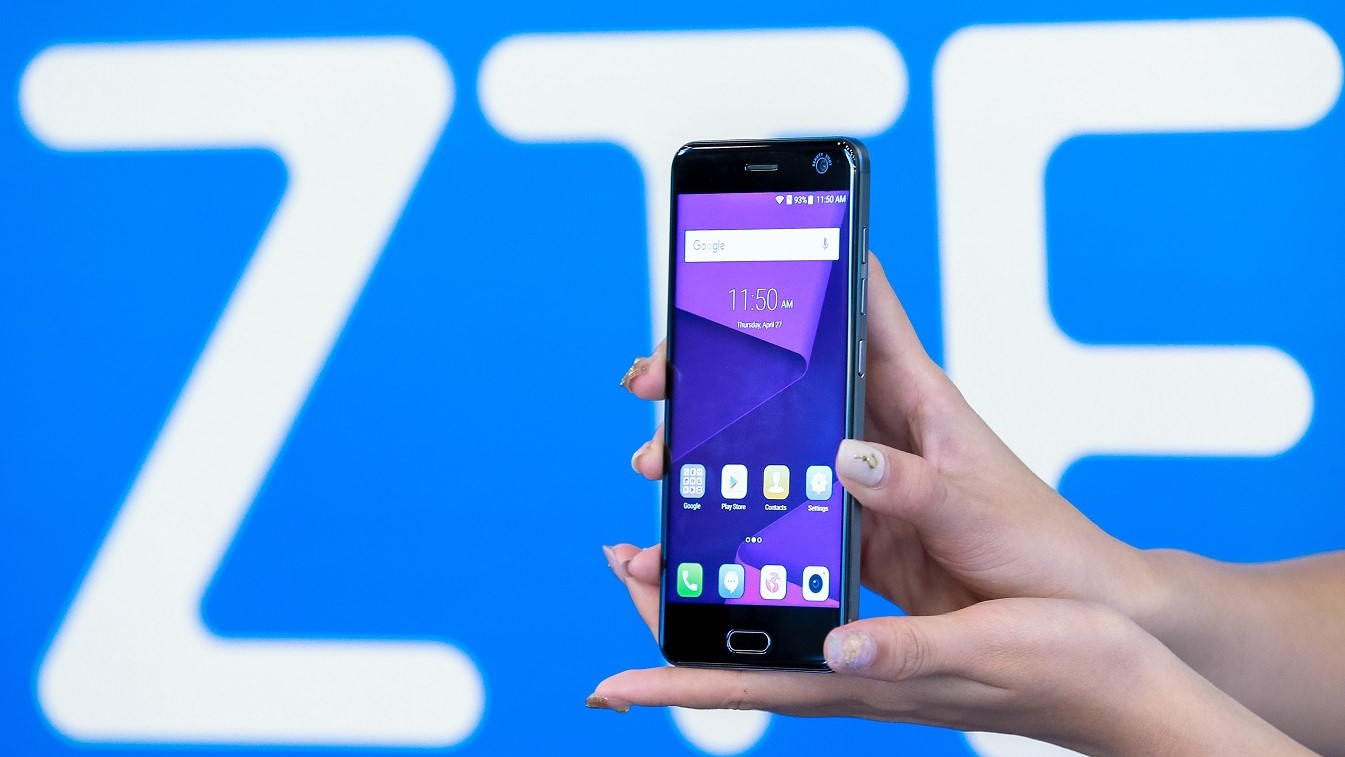
  • ZTE swings back to black in Q1

    ZTE swings back to black in Q1

    ZTE expects to have swung back to profit in the first quarter, after reporting an annual loss in 2018 as a result of the temporary ban on its import of components from US vendors.

    The Chinese vendor estimates a net profit for the first quarter of 800 million yuan ($118.9 million) to 1.2 billion yuan, which compares to a profit of 1.69 billion yuan in the first quarter of 2018.

    The first quarter results are nevertheless an improvement on the 6.98 billion yuan ($1.04 billion) loss the company recorded for the full year 2018.

    ZTE blamed its performance on the impact of the ban on the import of components from US companies imposed by the US government due to ZTE allegedly violating US sanctions on Iran by conspiring to sell equipment with US components in the market, as well as the $1 billion settlement agreement ZTE reached to have this ban overturned.

    Revenue for the year  meanwhile fell 21.4% to 85.51 billion yuan despite signs of recovery in ZTE’s major businesses of wireless networks, wireline networks and mobile devices.

    ZET has meanwhile announced it has been intensifying its investment in 5G research and development.

    The company has so far submitted more than 7,000 5G standard proposals and 3,000 5G patent applications to international organizations, and has declared over 1,200 standards of 5G standard-essential patents to the European Telecommunications Standards Institute (ETSI).

  • DHL Expands For Temperature Sensitive Shipments

    DHL Expands For Temperature Sensitive Shipments

    The WMX service in Mexico will expand by early Q2 2019 into 17 new origin cities, including Zapopan, Toluca, Cuernavaca, Cuatla, Pachuca, Saltillo, Aguascalientes, Puebla, Celaya, San Luis Potosi, Torreon, Morelia, Leon, Guanajuato, Jalapa, Orizaba and Durango.

    The integrated transportation solution, which DHL launched in Mexico in July 2018, facilitates the delivery of Mexico-based patient samples to U.S. central labs in less than 24 hours. This reduces transit times for these urgent temperature sensitive shipments from primary cities (beyond Mexico City) by an additional day.

    “Sponsor pharmaceutical companies have told us that the enhanced transit times have delivered significant improvements during prospective sample analysis, and improved testing results – particularly for Biomarkers and Flow Cytometry Assays,” says Brian Bralynski, Director Life Sciences Healthcare for DHL Express Americas. “Those types of gains are highly impactful and a direct benefit to patients requiring such treatment or sample analysis.”

    DHL can provide improved transit times, in part, due to its asset-based air-network and ability to export from multiple gateways in Mexico. DHL operates direct daily flights from Mexico City, Guadalajara and Monterey, linking to its regional hub at Cincinnati/Northern Kentucky International Airport (CVG), and then connecting to most U.S. cities and central lab locations the next morning and in less than 24 hours from patient draw time.

    For Mexico origins, exporters of record (typically sponsors or Clinical Research Organisations / CRO’s) will administer a one-time administrative change process, in order to authorise DHL to export samples on their behalf from three export points.

    “DHL Medical Express continues to meet the needs of the pharmaceutical industry and clinical research sectors with forward-thinking, intelligent healthcare solutions, while also expanding our wide range of services in Mexico,” said Mike Parra, CEO of DHL Express Americas. “At DHL, we focus on connecting healthcare stakeholders, deeply caring about the ultimate link of the chain – the patients, and to do so, we ensure we strictly comply with every regulation – global or local, and innovate in every front. A combination of responsiveness, transparency and cost-effectiveness will enable this service to be advantageous to all clinical trial stakeholders and, most importantly, clinical trials’ patients.”

    Qualified customers for the service receive a choice of temperature options (ambient, chilled and frozen) through specialised thermal packaging. Pre-determined contingencies circumvent delays, and DHL quality control centres monitor the shipments 24/7. The service is suitable for transporting laboratory kits and medical devices, biological samples, research products, vaccines and drugs for commercial and non-commercial use.

  • Vietnam to establish National Innovation Centre

    Vietnam to establish National Innovation Centre

    The Vietnamese government will tomorrow formally launch a project to establish a National Innovation Centre in Hanoi to help lay the groundwork for Vietnam to capitalize on the Industry 4.0 era.

    The project is set to break ground later this year and could be ready for operation by next year. It will be developed over a three year period.

    The NIC aims to lure 40 large technology companies, as well as 150 startups and SMEs and 15 venture investment funds, the Ministry of Information and Communication announced.

    It will initially focus on priority areas including network security, digital content and smart manufacturing and smart city technologies.

    The draft plan for the project stipulates the construction on a 23 hectare area of Hoa Lac Hi-Tech park, and calls for total investment of 1.9 trillion dong ($81.7 million). The project forms part of the

    The NIC is a part of the Ministry of Planning and Investment’s Vietnam Innovation Network initiative, and if the project is successful, the government plans to establish more such centers across Vietnam.

  • Rakuten using Red Hat technologies in mobile rollout

    Rakuten using Red Hat technologies in mobile rollout

    Japan’s Rakuten announced it has arranged to use open source technologies provided by Red Hat in its upcoming end-to-end cloud native mobile network.

    The network, which is scheduled to launch in October, will use Red Hat’s open hybrid cloud technologies, Rakuten announced at this week’s Mobile World Congress in Barcelona.

    Rakuten Mobile Network has built an NFV based network supported by Red Hat Enterprise Linux, the Red Hat OpenStack Platform and Red Hat Ceph Storage software-defined storage solution.

    The deployment will support the planned launch of 4G mobile services, and leave Rakuten Mobile Network well placed to roll out 5G services subject to government licensing approval.

    “Our vision is to build a network that innovates at the speed of software and scales at the speed of cloud, and with a culture founded in technical and operational innovation, we are uniquely positioned to achieve that. We are excited to work with leading partners from around the world such as Red Hat as we work to create the world’s first end-to-end fully virtualized cloud-native network,” Rakuten Mobile Network CTO Tareq Amin said.

    “End-to-end automation for both network and services is a pillar of our systems building strategy, and by using Red Hat’s open source technology we can achieve automation and auto-scaling, enabling more productive operations and allowing us to provide cost-effective services to our customers.”