Retail News CRM

Tag: network

  • Ericsson launches Accelerated Network Build

    Ericsson launches Accelerated Network Build

    Ericsson has launched a new solution the company said will allow operators to cut network build time in half.

    The new Accelerated Network Build process incorporates a series of technical innovations, including a cloud-based toolkit with automation functionality, to streamline the rollout process.

    Pilots with operators in developed and emerging markets indicate that Accelerated Network Build can cut build time by 50%, reduce the number of required site visits by 70% and offer 99% first-time-right delivery, Ericsson said.

    With 5G uptake expected to significantly outpace previous generations, operators will be under pressure to rapidly deploy networks to meet demand. Ericsson’s Mobility Report predicts that there will be over 500 million 5G subscriptions by the end of 2022.

    “”Fast time to revenue and reduced cost is a must have right now – it’s a pain point for operators that needs to be solved with innovation, Technology Business Research executive analyst Michael Sullivan-Trainor said.

    “New technologies are going to make things even more complex and it’s very timely that Ericsson is addressing how to fix the infrastructure deployment model now, both for today and for tomorrow when 5G and the Internet of Things will come.”

  • 7-Eleven Malaysia Continues to Expand Store Network

    7-Eleven Malaysia Continues to Expand Store Network

    The Group’s revenue for the current quarter of RM547.8 million grew by RM28.5 million or 5.5% against the corresponding quarter’s revenue in the previous year of RM519.2 million. The growth in revenue continued to be driven by the growth in new stores, improved merchandise mix and consumer promotion activity. This growth was achieved despite prolonged on-going retail market softness caused by weak consumer confidence/spending.

    Gross profit of RM169.0 million improved by RM9.2 million or 5.8% compared to the corresponding quarter in the previous year and this was mainly attributed to the revenue growth of 5.5%.

    Selling and distribution expenses for the quarter increased by RM14.8 million or 10.4%, mainly caused by new store expansion resulting in higher staff cost, rental cost, store depreciation expense and utility cost. In addition, the increase in the minimum wage effective 1st July 2016 has caused the store staff costs to rise by approximately 10% in the current quarter.

    Administrative and other operating expenses for the quarter increased by RM0.7 million or 3.3% due to higher staff cost, head office IT depreciation expense and amortization of intangible assets.

    The profit before tax of RM15.5 million decreased by RM7.0 million or 31.2% compared to the corresponding quarter in 2015 despite positive sales growth due to higher selling and distribution expenses caused by new store expansion and the impact of minimum wage increase effective 1st July 2016.

    For the 9 months ended 30 September 2016

    For the 9 months ended 30 September 2016, the Group’s revenue of RM1.58 billion grew RM73.2 million or 4.9% against the corresponding 9 months’ revenue in the previous year of RM1.51 billion. The growth in revenue was driven by the growth in new stores (total stores as at 30 September 2016: 2,057 stores), improved merchandise mix and consumer promotion activity.

    Gross profit improved by RM28.1 mil or 6.1% compared to the corresponding 9 months in the previous year and this was mainly attributed to the revenue growth of 4.9% and gross profit margin expansion of 0.4% points.

    Selling and distribution expenses for the 9 months period in 2016 increased by RM23.7 million or 5.7%, mainly caused by higher staff cost, rental cost, store depreciation expense and utility cost which is in tandem with new store expansion coupled with impact of minimum wage increase on the staff cost.

    Administrative and other operating expenses decreased by RM5.5 million or 8.5% vis-à-vis the corresponding 9 months in the previous year due to higher staff cost, head office IT depreciation expense and amortization of intangible assets.

    The profit before tax of RM58.8 million increased by 1.3% or RM0.8 million despite revenue growth of 4.9% and gross margin expansion by 0.4% points due to higher selling and distribution expenses from new store expansion and also the impact of minimum wage increase effective 1 July 2016 on the salary cost.

    Future Prospects

    The Board of Directors is of the view that the trading conditions for the remaining period of the current financial year is expected to remain challenging due to continued weak consumer confidence/spending and current macro-economic conditions. Despite this latest development, we remain positive of holding onto our market leading position.
  • University of Nottingham Malaysia deploys Wi-Fi network

    University of Nottingham Malaysia deploys Wi-Fi network

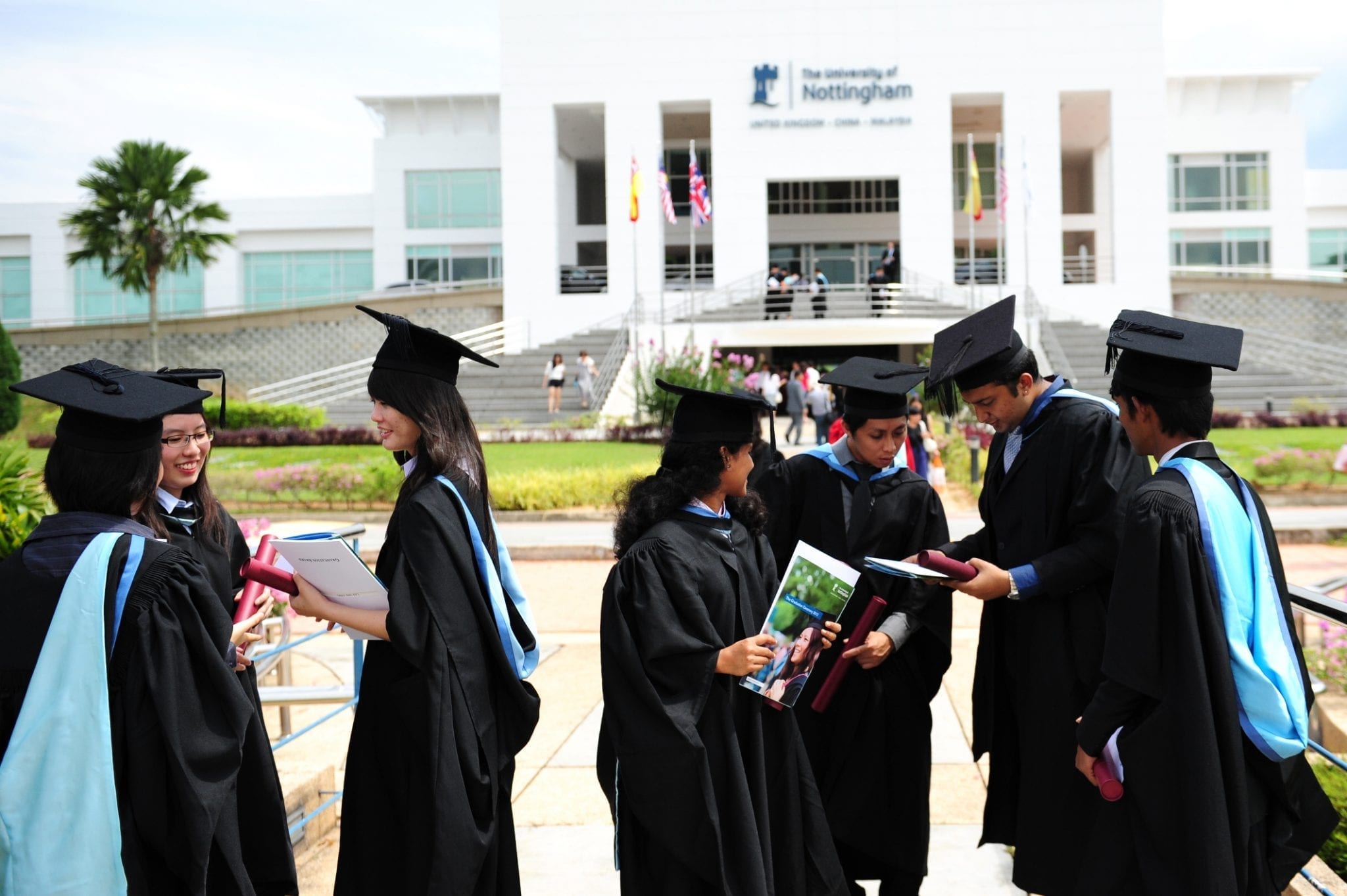
    The University of Nottingham Malaysia Campus (UNMC) has become the first site in APAC to implement a network combining Brocade network switches and Wi-Fi access systems from Ruckus Wireless.

    The new wired and wireless network, deployed under a managed service agreement, provides 2,400 on-campus students with coverage within UNMC’s student hostels.

    “One of our key strategies for competing for the best faculty and students is to provide them with best-in-class facilities, which is why we’ve invested in a complete infrastructure revamp to support our student network services,” said UNMC’s Director of Campus Services Nicholas Ching.

    Established in 2000, UNMC was the first branch of a British university in the country and one of the first to open outside Britain. It has been rated as “excellent” or Tier 5, making it the highest rated international university in Malaysia on a scale of Tier 1-6 by the Malaysian government.

    Ching said a key requirement for UNMC was to provide students with highly reliable Wi-Fi access, offering predictable performance and support for the latest 802.11ac Wi-Fi standard.

    The implementation team carried out a complete site survey across the 11 hostels to ensure seamless wireless coverage without any blind spots. The implementation utilizes Ruckus adaptive antenna technology and automatic interference mitigation, which is designed to deliver consistent, predictable performance at extended ranges, enabling strong wireless coverage in each student dorm room.

    “University students are all digital natives with high expectations about Wi-Fi access quality and a low tolerance for service failure,” said Abdul Aziz Ali, country manager for Malaysia, Brocade. “Accessing high-bandwidth video services, class materials, and social applications is a big part of engaging in campus life.”

    As part of the managed services agreement with UNMC, Brocade partner MYI Technologies will have a resident engineer on site for three years on a 24 by 7 basis. The engineer will also be responsible for supporting the Internet gateway and security components of the university’s student network services.

  • Brocade migrates BookMyShow to new IP network

    Brocade migrates BookMyShow to new IP network

    Brocade has migrated BookMyShow, India’s largest online entertainment ticketing brand, to a new IP network optimized for application performance.

    The deployment has further enhanced the booking experience offered by BookMyShow by enabling it to better handle increasing peak demands and roll out new services on the fly. The solution also provides it with a flexible foundation to continue its rapid market penetration in India.

    Alongside online movie ticketing, BookMyShow also offers non-movie ticketing for plays, sports, and live events, leading to a tremendous increase in its user base and the amount of data traffic across its platforms.

    To meet the growing scale of its operations, BookMyShow has been constantly upgrading its technologies and infrastructure at the back end to continue offering a seamless booking experience, especially during the release of blockbuster films and bookings for key non-movie events.

    “People in India are increasingly realizing the convenience and benefits associated with online ticketing,” said Viraj Patel, VP of Technology, BookMyShow.

    “This, coupled with increasing smartphone and mobile Internet penetration, is resulting in more users experiencing BookMyShow. Over 70% of our transactions are already through mobile. This makes it imperative for BookMyShow to pre-empt demand and traffic spikes to ensure that its infrastructure can continue delivering a consistent and seamless booking experience.”

    “Brocade has designed a solution optimized to our requirements, thereby preventing the surfacing of any new bottlenecks and, at the same time, enabling us to scale on demand while ensuring 100 percent uptime.”

    “Delivering 24×7 e-commerce availability is always a challenge and online ticketing, with its spikes in demand, takes things to an extreme,” said Edgar Dias, senior regional director for Brocade India.

    “With Brocade VDX 6740 switches and Brocade VCS Fabric technology, we have been able to provide BookMyShow with a network infrastructure that enables a more automated and dynamic operating model, allowing the data center as a whole to respond rapidly to changing patterns of demand. At the same time, this network architecture can be scaled to handle massive growth in online ticket sales in the coming years.”

  • Ciena aims to usher in age of self-driving network

    Ciena aims to usher in age of self-driving network

    Ciena has unveiled WaveLogic Ai, a programmable coherent modem that aims to serve as a  foundational enabling technology for a self-driving network.

    WaveLogic Ai sets new performance benchmarks designed to improve transport network economics and flexibility across a broad set of network applications.

    In metro and DCI applications, it drives 400G single carrier transmission with power and density metrics. In regional and long-haul networks, WaveLogic Ai establishes 200G and 300G as the new reference line rates for backbone transmission, doubling capacity and dramatically lowering cost per bit. In submarine networks, it provides maximum capacity with ultimate reach at distances up to 14,000 kilometers.

    WaveLogic Ai offers enhanced intelligence for new levels of visibility into the network that enables autonomous decisions to further improve network performance.

    Through open interfaces, it monitors and gathers critical networking data, including embedded real-time link measurements, to make intelligent capacity decisions in real time. For instance, WaveLogic Ai helps determine the optimal capacity for any path across the network and can tune to different capacity levels from 100G to 400G in 50G increments.

    WaveLogic Ai uses an advanced 400G-optimized technology engine with a higher baud rate to drive twice the capacity per channel, three times the distance at the equivalent capacity, and four times the service density at less than half the power. This scalability supports 400GE and flexible client services to best match service throughput to flexible line capacity.

    WaveLogic Ai is designed to calculate and then make available massive amounts of optical networking performance data through open interfaces that can be mined to build on-demand, programmable networks.

    To better match capacity to system margin, WaveLogic Ai provides unprecedented tweakability via open software interfaces that help drive automated and intelligent decisions to reduce operational expense and avoid manual errors.

    WaveLogic Ai provides access to real-time link monitoring information, thereby giving operators new levels of network visibility and the ability to accurately engineer the network for optimal capacity and maximum efficiency.

    The company says WaveLogic Ai will be available in the second quarter of 2017.

  • Globe Telecom expands Cartoon Network app in Philippines

    Globe Telecom expands Cartoon Network app in Philippines

    Globe Telecom in the Philippines is providing a major enhancement to its Cartoon Network Watch and Play app, allowing customers to livestream Cartoon Network and on-demand content via a new authenticated service.

    Globe customers will soon be able to log in to the free app using their username and password to unlock an array of value-added services, which includes livestreaming the channel on devices, games and access to full episodes on demand.

    In addition, Cartoon Network Anything – a micro-network that presents short-form content – is now offered as part of the Globe app bundle.

    “This partnership creates a truly unique and enjoyable second-screen brand experience for kids to enjoy and for parents to trust,” said Phil Nelson, Turner’s managing director in Southeast Asia.

    Both apps let kids enjoy their favorite characters and shows whenever. Fueling their imagination, they allow them to be a hero with Ben 10 and the Omnitrix, rule the Candy Kingdom with Princess Bubblegum, flip out with The Powerpuff Girls, or embark on mathematical adventures with Finn and Jake whenever they want.

    “Together with Turner, we are able to give our customers a more wonderful digital entertainment experience on mobile,” said Dan Horan, Globe senior advisor for consumer business.

    Dedicated data usage for the apps will be offset via a data wallet system, available via users’ subscription plans, meaning they won’t have to worry about eating into their monthly allowance.

  • HKBN Mobile launches Greater China 4G plans

    HKBN Mobile launches Greater China 4G plans

    Hong Kong Broadband Network’s new Mobile Services MVNO division has launched a line of Greater China 4G plans for corporate customers who frequently travel between mainland China, Hong Kong, Macau and Taiwan.

    The new mobile plans include data allocations shareable across the four markets via a single SIM. HKBN is using China Mobile Hong Kong’s 4G network to provide the service.

    HKBN secured an MVNO a license in July, and launched mobile services in September, introducing a range of consumer plans including a HK$446 ($57.50) unlimited 4G service.

    The new corporate 4G plans range from HK$198 for 1GB of data shareable across the four markets to HK$448 for 10GB of data.

    Each plan comes with unlimited voice calls and SMS, as well as free call management value added services during the contract period and free use of the MobileOffice Plus app, which allows smartphone users to remotely make and receive calls from their designated business number from anywhere.

    “With increasing business travelling between Mainland China, Hong Kong, Macau and Taiwan, cross-border data services are in high demand,” HKBN chief commercial officer for enterprise solutions Billy Yeung said.

    “By partnering with CMHK, we are best positioned to offer our customers high-value and cost-effective Greater China service plans.”

  • Vodafone plans to launch world’s first NB-IoT networks

    Vodafone plans to launch world’s first NB-IoT networks

    Vodafone has revealed plans to launch what it expects will be the world’s first live commercial narrowband IoT (NB-IoT) networks in early 2017.

    The operator will launch LPWA NB-IoT networks in Germany, Ireland, the Netherlands and Spain during the first three months of the year.

    Vodafone said it will be able to implement the NB-IoT rollout by way of a software upgrade to its existing 4G base stations, allowing the company to deliver nationwide coverage almost immediately in the four markets.

    The operator plans to roll out the technology to additional markets later in the year, and provide full coverage of the operator’s global network by 2020.

    In preparation for the launch Vodafone has been conducting testing of the technology. Last week Vodafone Spain completed the first test of an NB-IoT connected product on a commercial network, by burying a parking sensor in a space within Madrid’s Vodafone Plaza. A smartphone app was able to display that the space was occupied when a car was parked in it.

    “The questions of battery life and deep in-building penetration have now been answered by NB-IoT,” Vodafone’s director of IoT Ivo Rook said.

    “The low cost of the modules means we can expect a new wave of connected devices and soaring market demand. Vodafone’s world leading expertise and experience in IoT will prove invaluable in shaping this exciting market.”

    Singapore’s M1 has also announced plans to deploy a commercial NB-IoT network in 2017, but did not specify the time during the year that the company plans to launch.

  • China Mobile Hong Kong to upgrade network to 4.5G

    China Mobile Hong Kong to upgrade network to 4.5G

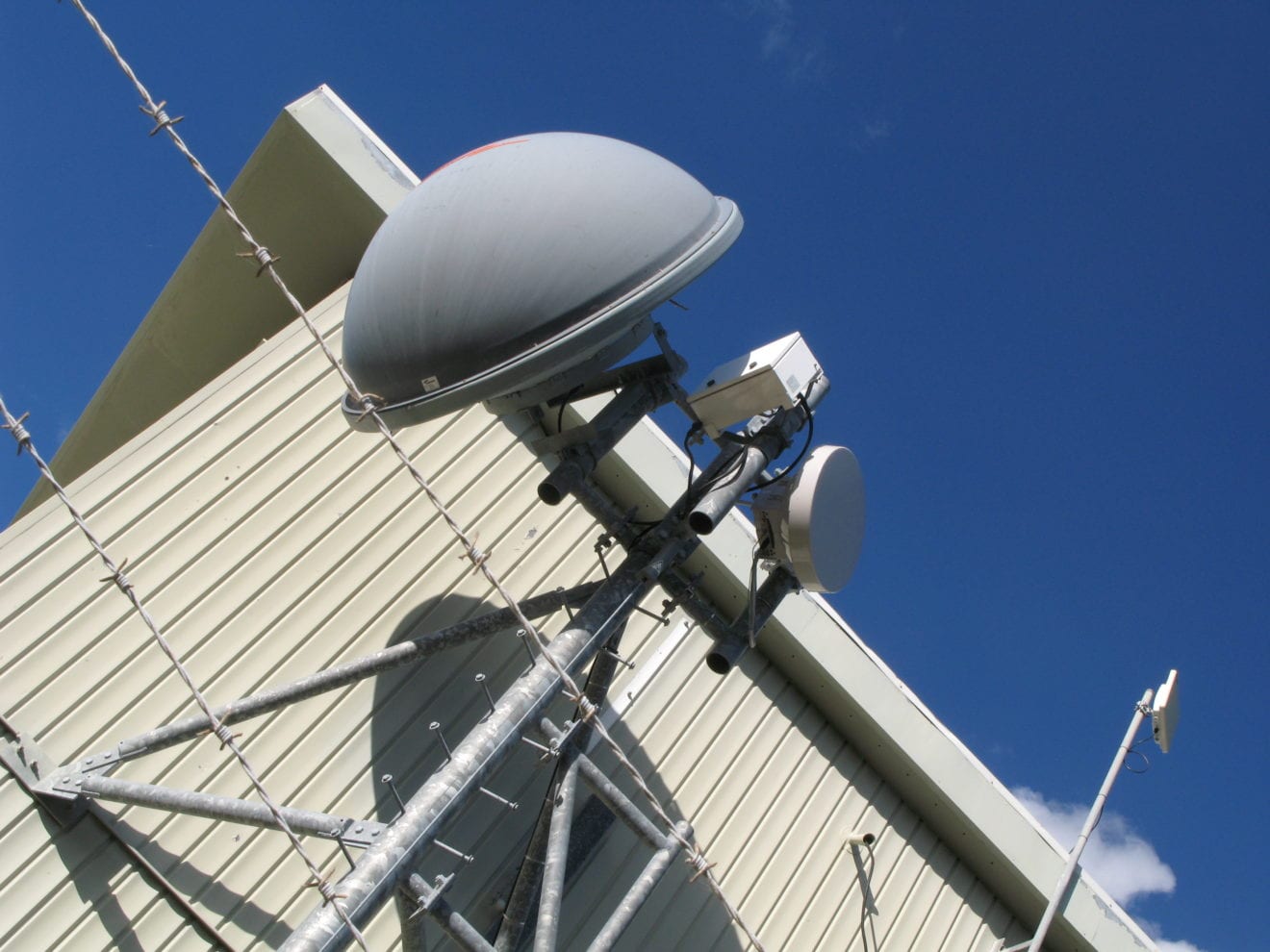
    China Mobile Hong Kong has contracted Huawei to fully upgrade the operator’s FDD/TDD converged LTE network to a 4.5G LTE-Advanced Pro network.

    The upgrade is aimed at offering customers a superior user experience and laying the groundwork towards a future 5G network evolution.

    In October last year, the 3GPP formally named LTE-Advanced Pro as the new LTE standard with the designation of 4.5G. China Mobile Hong Kong has commenced its network upgrade following a series of network optimization projects this year.

    “After stringent selection processes, we firmly believe that Huawei’s world leading network technology and equipment have made it the ideal partner for CMHK’s 4.5G network upgrade,” China Mobile Hong Kong director and CEO Sean Lee said.

    “We are very pleased to work with Huawei to upgrade our 4G mobile network to 4.5G for significant network capacity optimization and speed improvement, as well as achieving superior user experience for consumers and commercial customers.”

    Huawei president of carrier business Zou Zhilei added that the upgrade is aimed at reinforcing the operator’s market leading position.
    “Our advanced 4.5G technology will enable CMHK to capitalize on the emerging new devices, new businesses and new experiences, offering an excellent mobile video experience for customers in Hong Kong, as well as enhancing its capability in expanding enterprise and industry (B2X) segment,” he said.

  • Kaskus founder leaves company, says IT sector becoming too risky

    Kaskus founder leaves company, says IT sector becoming too risky

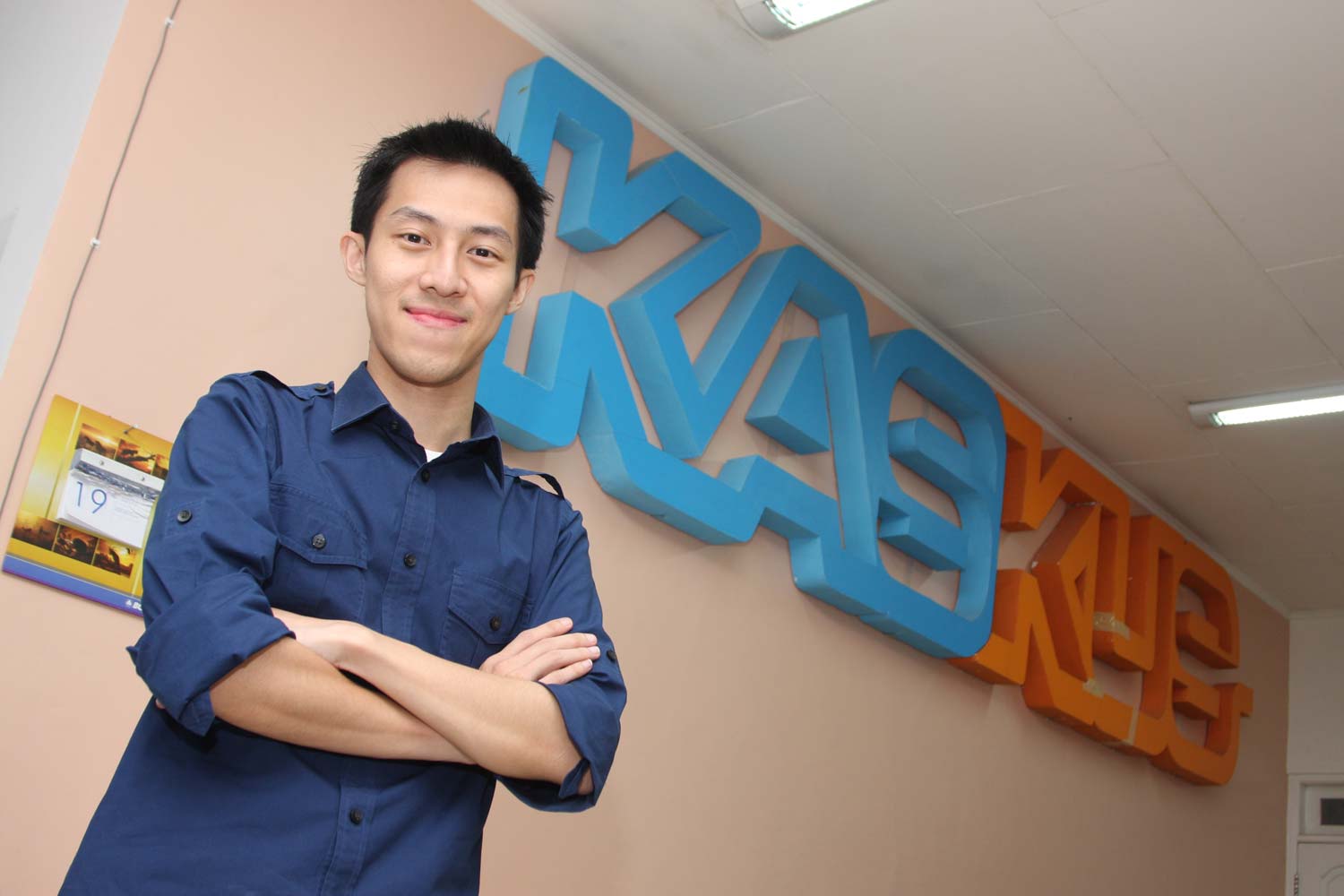
    Kaskus founder Ken Dean Lawadinata has resigned from his position as chairman of PT Darta Media Indonesia, the operator of the Kaskus online community. Ken plans to invest in property and commodities instead of Information Technology (IT).

    Ken released his shares in Kaskus to GDP Ventures.

    “That’s right, I have left Kaskus. I released all my shares to GDP,” he said on Saturday as quoted by kompas.com.

    Ken was one of the founders of Kaskus and elevated Kaskus to its current status as the biggest online community in Indonesia.

    Ken said that after Kaskus, he was not interested in the IT industry anymore. He has his eyes on property and commodity investments such as mining and timber.

    He said the IT industry in Indonesia was still growing and demand was healthy and new ideas kept emerging. However, Ken said the risks in IT were now too high.

    “IT was a sector with low-risk, high-return, but it has now become a high-risk, high-return sector. In this industry, US$10 million is now meaningless,” Ken said.

    Ken also founded Smartmama, a media company for mothers, and Tororo, an online baby products shop. He plans to hold on to these companies.

    “In IT, I will focus on Smartmama and Tororo,” Ken went on to say.

    Another Kaskus founder, Andrew Darwis, who is still chief commercial officer of Kaskus, offered his thanks to Ken for Ken’s dedication in growing Kaskus. He stated that Ken’s resignation would not disturb the company’s performance.

    “Kaskus is focusing on its mission to become the biggest social commerce platform in Indonesia,” Andrew said.

    Kaskus was founded in 1999 by Andrew, Ken and two other friends.

  • Nokia boosts True’s broadband network

    Nokia boosts True’s broadband network

    True Group in Thailand has deployed Nokia’s IP/MPLS routing technology to upgrade its broadband infrastructure in Bangkok.

    Surging demand for ultra-broadband fixed and mobile services, such as high-definition video and business services, have helped drive a dramatic increase in data traffic across True’s converged network, both in the city and its surrounding area.

    True is using Nokia’s IP routing technology to modernize its broadband infrastructure to improve the quality of experience and better support the growing high-bandwidth content demands of consumers and businesses.

    Nokia’s Service Router portfolio helps True to provide 4G LTE and 3G coverage to its 18 million mobile subscribers, high speed broadband to its 2.5 million broadband subscribers, and pay TV service to its 3.2 million TrueVision customers. The network upgrade was completed in May 2016.

    True can leverage Nokia’s infrastructure in the future to evolve to more dynamic agile services powered by Software Defined Networks and Network Functions Virtualization.

    True is using Nokia 7750 Service Routers (7750 SR) in Bangkok with the 7210 service access switch (SAS) being deployed in the northeast, east and central west regions of Thailand.

    “By leveraging Nokia’s expertise and leading routing technology,  we are able to provide seamless 4G LTE and 3G coverage along with quality, high-speed broadband data, voice and TV services to our mobile and fixed customers,” said Vichaow Rakphongphairoj, deputy CEO of operational development at True. “We can also deliver advanced high-speed residential, business and mobile services even more quickly and efficiently.”

  • Vodafone Australia to switch off 2G network in a year

    Vodafone Australia to switch off 2G network in a year

    Vodafone Australia has revealed plans to switch off its 2G network in just under a year to free up spectrum for 4G.

    The operator will decommission its legacy 2G GSM network on September 30 2017, following a 12-month campaign to move its remaining 2G users off the network.

    Announcing the decision, Vodafone said its 2G network currently carries less than 1% of the operator’s data traffic and around 2% of its voice traffic. By contrast, Vodadone’s 4G network carries nearly 80% of the company’s total data traffic.

    Vodafone first launched 2G services in Australia in 1993. More than 600,000 customers have been migrated from 2G since January 2013, but the company did not state how many remain.

    “There has been a natural drop-off of 2G traffic as 4G smartphones have become more affordable. This has led to many customers upgrading their phones of their own accord,” Vodafone CTO Kevin Millroy said.

    “We are continuing to enhance our network with features including Voice over 4G which provides clearer voice calls, shorter call connection times and the ability to use 4G data while making or receiving a call. With the IoT on our doorstep, it is paramount we manage spectrum efficiently and reallocate capacity to our more advanced networks to help more of our customers have a better experience.”

    Vodafone will be the last Australian operator to shutter its 2G network – Telstra plans to switch off its own 2G network in December, and Optus plans to follow suit in April 2017.

  • Huawei, ZTE launch pre-5G network components

    Huawei, ZTE launch pre-5G network components

    Huawei and ZTE have both announced the launch of pre-5G products to help operators prepare for the new technology.

    ZTE released its new Pre5G MIMO 2.0 product at the China International Information and Communication Exhibition in Beijing yesterday.

    The new product is aimed at the high-end market to help operators in developed countries meet the challenges of surging traffic demand and limited spectrum resources, by improving single-station spectral efficiency.

    ZTE announced it has started pre-5G network deployment for more than 20 operators in China and other counties.

    Huawei meanwhile unveiled what it said is the industry’s first 5G-oriented mobile edge computing (MEC) offering, MEC@CloudEdge.

    The vendor said the technology is designed to equip today’s mobile networks to meet the requirements of extremely low latency, content localization and ultra-high bandwidth that will need to be met in the 5G era.

    It relies on a cloud-based network architecture to optimize the user experience during activities such as augmented and virtual reality and ultra-HD video streaming

    “MEC@CloudEdge is the first 5G-oriented MEC solution emanating from our R&D labs. It uses new technologies that will enable operators to deploy 5G-oriented networks for sustainable development and to achieve best user experience and faster service innovation,” Huawei president of cloud packet product line Dai Jisheng said.

  • SoftBank to deploy LoRaWAN network

    SoftBank to deploy LoRaWAN network

    Japan’s SoftBank has revealed plans to roll out a LoRaWAN low power wide area (LPWA) network in the current financial year.

    The operator plans to use the network to provide end-to-end IoT services, ranging from device and application support to consulting.

    SoftBank will target the service at industry sectors that require low cost, low power network construction, including equipment monitoring and control for commercial buildings, automated gas and water meter reading, senior and child monitoring, infrastructure monitoring and logistics.

    In collaboration with LPWA specialist Actility, Hon Hai Precision Industry and LoRa technology developer Semtech Corporation, Softbank will aim to build a LoRaWAN ecosystem in Japan.

    Softbank said the LoRaWAN deployment represents the first stage of the company’s plans to usher in the IoT era.

    The company eventually aims to deploy the full set of LPWA networks, including Cat-M1 and narrowband IoT (NB-IoT), to ensure its IoT network can operate in different environments.

    LoRaWAN uses the unlicensed 920-MHz band in Japan and was designed to meet the low cost and efficiency requirements for the IoT. Main features include devices with battery life of at least 10 years, support for numerous simultaneous connections and a communication range of multiple kilometers.

    Specifications for LoRaWAN are developed by the LoRa Alliance, a collaboration between 391 IoT-related companies worldwide.

  • Australia may require mobile network sharing

    Australia may require mobile network sharing

    Australian competition regulator ACCC has launched an inquiry into whether to mandate the establishment of a wholesale mobile roaming service, particularly in regional areas.

    The regulator is considering declaring a wholesale domestic mobile roaming service, which mobile providers could use to provide coverage in areas where they do not operate their own network.

    The inquiry will seek to evaluate how consumer demands for mobile service are evolving and whether this differs in regional and urban areas.

    In addition, the ACCC will evaluate the likely investment plans of established mobile operators absent a declaration, as well as whether there are any barriers to extending the reach of mobile networks.

    While the ACCC has previously considered mandating the provision of mobile roaming in regional areas in 1998 and 2005, ACCC chairman Rod Sims said much has changed since this time.

    “Network coverage is clearly a key feature of a mobile service, and each of the mobile network operators has extended its networks since we last looked at this issue in detail,” he said.

    “We do think it’s time we look at the issue again in detail, and examine some of these key matters, including consumer demand, network investment, and barriers to competition. We consider the most efficient way to do that is to consider all of the issues carefully through a declaration inquiry.”

    But he stressed that the regulator has not yet formed any opinion as to whether the declaration is needed, and that the inquiry could instead find that consumers would be harmed by the introduction of such a requirement because it could give mobile operators less incentive to invest in expanding their networks.