Retail News CRM

Tag: network

  • Myanmar Net taps Ruckus Networks for carrier-grade Wi-Fi

    Myanmar Net taps Ruckus Networks for carrier-grade Wi-Fi

    Myanmar’s largest pure-play ISP Myanmar Net contracted Ruckus Networks to deploy a carrier-grade Wi-Fi network across all major townships in Yangon and Mandalay.

    Through the deployment, Myanmar Net is offering consumers and businesses internet access at speeds of up to 62Mbps and prices competitive with the mobile operators’ existing data plans.

    Ruckus Networks provided Wi-Fi access points that use its smart antenna system with 180-degree and 120-degee antenna patterns to provide wider coverage and more stable connectivity.

    Allen Miu, CTO of Myanmar Net parent company Frontiir, said the company was facing a number of unique challenges with the deployment, associated with Myanmar’s extreme weather, power fluctuations from the nation’s old and unstable power grid and high population density.

    “Besides AP density, the high population density is also a challenge as we anticipate huge demand for our services due to the very affordable prices we offer. One of the key initial concerns we had was whether Wi-Fi technology could hold up to the growth and demands on our network,” he said.

    “Being the first in Myanmar to deploy a wireless network for the general populace is no easy feat, and we are only able to make this a reality with Ruckus’ engineering expertise and knowledge.”


  • GS Retail to expand Lalavla network

    GS Retail to expand Lalavla network

    South Korean convenience store company GS Retail plans to grow its health and beauty store network by up to 300 this year.

    After running Watsons outlets through a 50-50 JV with AS Watson, GS Retail bought the balance of shares from the Hong Kong-based firm last year and launched its new Lalavla brand in February.

    “We have completed changing the storefront signs,” says a company official. “We will now focus on advertising our new brand and expanding our business.”

    There are now 191 Lalavla stores nationwide.

  • Leading logistics networks strike groundbreaking deal

    Leading logistics networks strike groundbreaking deal

    Elite Global Logistics Network (EGLN) has announced to its membership during its annual conference in Vietnam this week, that it has reached a formal agreement for WCA Ltd to acquire a majority interest in the rapidly-growing network. Formed in 2015, EGLN has seen its membership around the world flourish to now encompass 332 memberships in 131 countries. The acquisition by WCA will enable the network to move to the next stage of its development and provide member companies with increased opportunities for business expansion and organic growth.

    Roy Stapleton will remain as president of EGLN and will continue to set the network’s strategy as well as overseeing day-to-day operations. “This new agreement is unprecedented in the history of freight networks. EGLN is proud to become a part what we believe is a ‘win-win’ solution for our members and the network,” said Stapleton.

    “The suite of benefits evolved by WCA has allowed it to stand out as a networking leader, and EGLN members will benefit from these obvious synergies offered by this unique partnership.”

    WCA Chairman and founder David Yokeum stated that 2018 will prove to be an exciting year for EGLN, following the formal commencement of the agreement on 1 January.

    “Roy has, over many years, built a deservedly strong reputation for providing independent forwarders with high quality environment in which members feel secure and confident that their business will grow,” said Yokeum.

    “EGLN will retain its unique ethos and management style, but by adding many of WCA’s valued benefits and attributes, alongside strong backroom and financial support, EGLN has the tools to embark on an exciting new phase in its development.”

  • Nokia aims to stimulate fixed network innovation with Broadband Access Abstraction project

    Nokia aims to stimulate fixed network innovation with Broadband Access Abstraction project

    Nokia has teamed up with the Broadband Forum (BBF) to lead the new Broadband Access Abstraction (BAA) project, which aims to leverage open source software to drive the adoption of software-defined fixed access networks.

    The BBA project, which was created within the BBF under its Open Broadbandprogram, will define a software reference implementation for an open BAA layer. This will eliminate dependencies on vendor-specific equipment and proprietary software functions by providing standardized interfaces and decoupling implementation from the underlying hardware, Nokia said in a statement.

    Federico Guillén, president of Nokia’s fixed networks business group, said the BBA initiative is driving an agile and collaborative environment that produces reusable software for fixed access operators worldwide.

    “Open source software is a powerful tool that can make us more efficient as an industry. However, one of the biggest hurdles is simply getting started. By opening and standardizing the common, generic part of the network software, we avoid the need to re-write that same software for every technology, every vendor and every node,” the executive said.

    “In turn, we can now focus our efforts on developing new applications and capabilities that make the network faster, better, and smarter: for example, converging fixed and mobile networks; fronthauling 5G over fiber-access networks, automating operations and building self-healing and self-optimizing networks.”

    Guillén said Nokia is the first vendor partner to contribute open source code under the BAA project. The open source code delivers common management functionality, making it easier to operate multi-vendor, multi-technology access networks and letting operators and vendors focus on developing new innovative cloud capabilities instead.

    Robin Mersh, CEO of Broadband Forum, said the new initiative will help reduce the time and efforts needed to achieve interoperability and help operators to develop a framework for cloud infrastructure in the central office.

    “By aligning open source code to industry specifications, the BBF can effectively collaborate with the open source community to aid in development and testing,” Mersh said.

  • New Zealand expanding national fiber network

    New Zealand expanding national fiber network

    The New Zealand government plans to extend its Ultra-Fast Broadband (UFB) national fiber network to 190 more small towns.

    The government has announced plans to spend NZ$130 million ($93.4 million) to extend the network to 60,000 new households and businesses across the nation and complete the UFB deployment by 2022.

    A further NZ$130 million will be spent to expand the concurrent Rural Broadband Initiative (UFB) to bring non-fiber broadband to another 74,000 rural premises, and to extend mobile coverage to an extra 1,000km of rural highways as part of the Mobile Black Spot Fund.

    The RBI involves a combination of upgrades to existing fixed line infrastructure and fixed wireless infrastructure.

    “We started UFB in 2010 with the original goal of connecting 34 towns to world-class fibre-to-the-premises. Earlier this year we expanded it to 200 more towns and today’s announcement will bring us to 390,” New Zealand communications minister Simon Bridges commented.

  • DHL to build life sciences distribution network

    DHL to build life sciences distribution network

    Shanghai Pharma, one of China’s largest listed pharmaceuticals groups, has signed a Memorandum of Understanding (MOU) with DHL Supply Chain to prepare its logistics infrastructure for rapid global expansion.

    Under the MOU, the pharmaceuticals giant – which generated revenues of more than US$18 billion (RMB121 billion) last year – will partner with DHL Supply Chain to enhance quality control measures, streamline distribution processes, and strengthen compliance with local and international food and pharmaceutical regulations. A range of recent government initiatives, including the “two-invoice” or fapiao policy which was rolled out earlier this year, have put greater onus on China’s pharmaceutical sector to improve the transparency and efficiency of local supply chains.[1]

    “The quality and resilience of our logistics infrastructure will determine not only how successfully we adapt to new legislation like fapiao – which seeks to cut down on multiple distributors and mark-ups by only allowing two invoices per goods shipment – but also our ability to capitalise on the huge international growth opportunity for high-grade Chinese pharmaceutical products and medical devices,” said Cho Man, president and executive director, Shanghai Pharma.

    “China’s national market for drugs has grown rapidly in recent years to become the world’s second-largest with an estimated growth to around US$167 billion by 2020 [2]. Our partnership with DHL will help Shanghai Pharma to become one of the world’s foremost pharmaceutical manufacturers – supported by a global distribution network that combines world-class quality control with fast, seamless delivery.”

    To facilitate this planned expansion, the MOU will grant Shanghai Pharma priority access to DHL’s global logistics network including temperature-sensitive life sciences services to Europe. DHL Supply Chain will also support Shanghai Pharma’s supply chain optimisation needs as the manufacturer ramps up its overseas distribution and retailing efforts.

    “China’s pharmaceutical industry has historically suffered from high levels of fragmentation amongst its local customers and distributors, [3] an issue which recent legislative changes like the ‘two-invoice’ policy have sought to combat,” said Yin Zou, CEO Greater China, DHL Supply Chain. “In this regulatory climate, end-to-end supply chain management plays an increasingly crucial role in determining how effectively Chinese pharmaceuticals firms not only maintain sales locally, but gain traction abroad in a cost-effective and sustainable manner.

    “Shanghai Pharma already holds a formidable reputation as one of China’s leaders in pharmaceutical development, manufacturing, distribution and retail. With this partnership, we look forward to applying our global life science expertise to help them establish an efficient and agile supply chain network to provide consumers with reliable and convenient access to medications.”

    “This agreement puts Shanghai Pharma in a strong position to stand out from China’s highly competitive and cost-conscious life sciences industry4 with access to DHL’s market-leading logistics and value-added services,” said Cho Man. “We believe that our partnership will not only greatly benefit both parties, but raise the bar for quality control and supply chain efficiency across China’s entire pharmaceutical industry.”

  • Discovery signs up new partners in China, Japan

    Discovery signs up new partners in China, Japan

    Discovery Networks Asia Pacific has entered into two new partnerships across Asia, with VS Media and Tabilabo.

    VS Media is a multichannel network that super-serves digital natives in Greater China with more than 120 million subscribers and 320 million video views a month. Tabilabo is a digital media businesses in Japan.

    These initiatives are in keeping with Discovery’s ambitions to transform and accelerate its big growth across Asia Pacific, by providing access to amazing content that is being customized for “mobile-first” millennial audiences.

    Last August Discovery took a minority investment in VS Media. Together, they are now launching Tan Ba, a digital brand solution specifically targeting millennials who make up over a quarter of the Chinese population.

    Tan Ba aims to deliver smart entertainment through highly customized short-form video content that stimulates curiosity and new learning every day. Content is sourced exclusively from Discovery’s extensive global catalogue and localized by VS Media

    The partnership between Discovery and Tabilabo includes a commercial agreement that will enable collaboration to bring solutions to advertisers to reach their desired audience via true 360 opportunities across linear, digital, and on social platforms leveraging Tabilabo innovative advertising technology and formats, and Discovery’s world-class stable of advertisers.

    “These exciting digital-first initiatives are the first steps in Discovery’s long-term strategy to accelerate our growth in Asia with digital at the core,” said Arthur Bastings, president and managing director of Discovery Networks Asia Pacific.

  • NEC, Netcracker hold joint trial optical fibre network

    NEC, Netcracker hold joint trial optical fibre network

    NEC and Netcracker Technology have successfully conducted a trial, in collaboration with K-Opticom, for a system combining NFV and 10G-EPON technologies.

    The companies said the trial verified for the first time ever that virtualized customer premises equipment (vCPE) can be successfully applied to 10Gbps Internet connections.

    K-Opticom provides telecommunications services based on its independent optical fiber network. The company operates the “mineo” mobile phone service as a MVNO, and “eo denki,” an electric power retailing service for household use.

    VCPE provides CPE and other top-layer functions, such as Dynamic Host Configuration Protocol (DHCP) and Network Address Translation (NAT), from data centers via the Internet.

    Based on the results of this trial, further trials are being planned in preparation for the full-scale application of vCPE to 10Gpbs Internet services.

    Takamitsu Fukunaga, SVP for K-Opticom, said communication traffic volumes for home-use connections are increasing year by year, and K-Opticom estimates that these traffic volumes will continue to grow.

    “As a result, we are considering the provision of a 10Gbps service. We are engaged in continual efforts together with NEC to enable us to offer this service to our customers as soon as possible,” the executive said.

    NEC senior vice president Shigeru Okuya claimed the trial with K-Opticom is the industry’s first of its kind to validate that vCPE can be applied to 10G-EPON.

    “Moving forward, we will continue to proactively advance the development of solutions that contribute to the improvement of service quality for K-Opticom, and to make use of these results in providing SDN/NFV solutions globally,” Okuya said.

  • China Mobile HK migrates to cloud core network

    China Mobile HK migrates to cloud core network

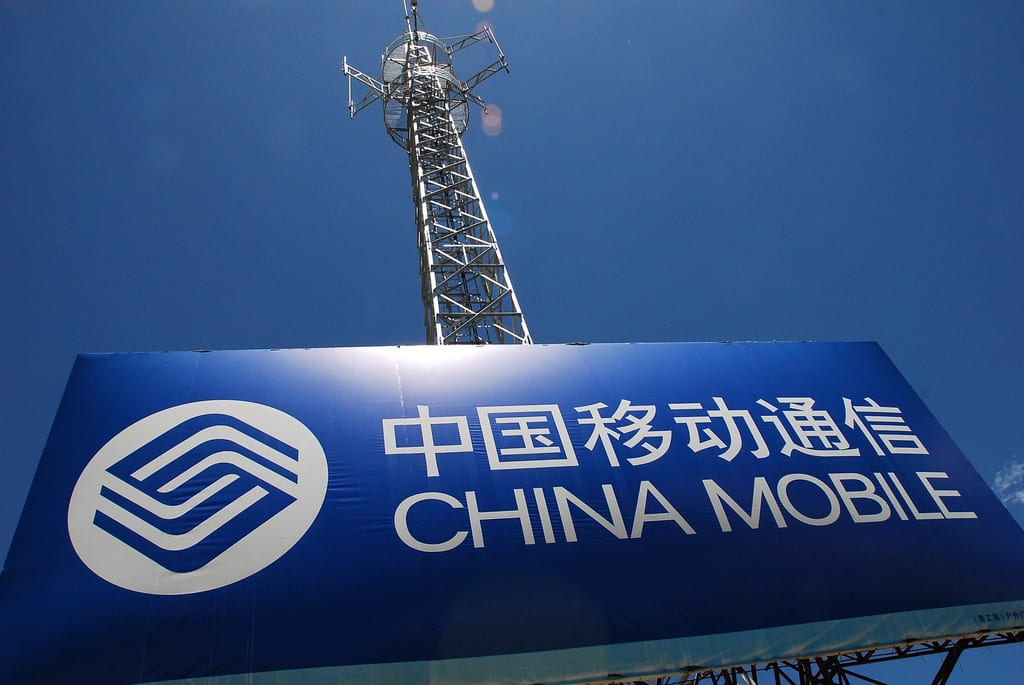
    China Mobile Hong Kong has migrated its services to an NFV-based cloud core network provided by Huawei.

    The operator has migrated its legacy networks to cloud networks based on the 3GPP system. Working closely with Huawei, the migration took only around six months, according to CMHK CEO Sean Lee.

    “The synergy between CMHK and Huawei is expected to ensure our entire cloud networks will be smoothly put into commercial use, bringing better service to our customers,” he said.

    CMHK’s new cloud core network provides services for more than 20 network systems including IMS, evolved packet core, mobile number portability, HSS/HLR and mobile switching center server.

    Lee said the migration will pave the way for CMHK’s eventual migration to 5G based on the Network 2020 vision.

    “On CMHK’s cloud network, network elements in [the] IMS, packet switched and circuit switched domains are co-deployed. VoLTE, VoWiFi and mobile data services are co-operated,” Huawei VP of cloud core networks Wang Yonge said.

    “Compared to legacy core networks, cloud core networks are more elastic and robust. CMHK and Huawei are jointly developing new technologies, such as network slicing and edge computing to lead the transformation to cloud networks.”

    News of the completion of the project comes shortly after CK Hutchison’s Three UK announced plans to deploy a fully integrated cloud native core network in collaboration with Nokia.

  • Ericsson, Cisco to virtualize VHA’s core, IP network

    Ericsson, Cisco to virtualize VHA’s core, IP network

    Vodafone Hutchison Australia (VHA), operator of the Vodafone Australia brand, has engaged Ericsson and Cisco to evolve and virtualize the operator’s core and IP network.

    Ericsson has won a contract to lead the transformation program, building the infrastructure as well as delivering an end-to-end operational system.

    The vendors will deliver a joint architecture solution comprising an Ericsson hyperscale data center system and software components, as well as Cisco’s WAN automation engine, network service orchestrator, IP network VNFs and security gateway.

    Through the project, VHA plans to simplify its network and infrastructure to enable the operator to become more agile and proactive in the way it brings services to market. The transformation also promises to reduce opex and capex and ultimately improve the customer experience.

    The deal marks the first major collaboration between Ericsson and Cisco on telecoms cloud infrastructure, and comes as part of the global business and technology partnership the two vendors formed in November 2015.

    “Ericsson and Cisco are our existing providers of core and routing functions making

    them good partners to move into a virtualized environment,” VHA CTO Kevin Millroy said.

    “This transformation allows us to introduce new applications to drive innovation and improve customer services and user experience. The new infrastructure opens the door to new business models and markets – such as IoT for Vodafone. We are excited about the future prospects this partnership offers.”

  • Equinix deploys Facebook-designed optical switches

    Equinix deploys Facebook-designed optical switches

    Equinix is collaborating with Facebook and the Telecom Infra Project (TIP) to deploy and test Voyager, the Facebook-designed packet optical switches, inside two of its IBX data centers.

    As part of the TIP “Open Optical Packet Transport” project group, Equinix is working closely with Facebook to field-test this next-generation packet optical networking technology.

    Voyager is the first step in Facebook and Equinix’s goal of developing the next-generation network ecosystem for hardware and software.

    Equinix said it will continue to work with Facebook and other vendors to include TIP-based hardware and software in their architectures as they deploy inside Equinix and develop the TIP ecosystem.

    By working as part of TIP, Equinix is helping to define the deployment, operational and support models for the new disaggregated and virtual networking infrastructure.

    Initial testing of the Voyager open packet-optical switch took place in Equinix’s SV3 and SV8 IBX data centers in Silicon Valley. Voyager is a combination of compute, switch, router and DWDM transport technologies. Preliminary results showed zero packet loss and significant overall cost savings due to this disaggregated hardware and software networking model.

    “This emerging world of disaggregated optical networking will need a physical aggregation point where all the hardware and software can come together,” Equinix CTO Ihab Tarazi said.

    Facebook director of engineering Hans-Juergen Schmidtkeat added that the Voyager ecosystem will serve as a first ever white box for switching, routing and DWDM in the wide area networks to exemplify a new way of open collaboration and innovation and has been contributed to the TIP community.

  • Banks expand networks to attract more customers

    Banks expand networks to attract more customers

    Along with promotion programmes, banks have been expanding their networks in an aim to reach their annual targets.

    In recent months, more bank transaction offices and branches have opened to welcome both individuals and enterprises as customers.

    For instance, the An Bình Commercial Joint-Stock Bank has opened 11 branches and transaction offices in Đà Nẵng and the provinces of Lạng Sơn, Nghệ An, Bình Dương and Gia Lai.

    Bắc Á Bank, by the end of last quarter, had expanded to include 100 transaction offices in 20 province and cities. TP Bank also plans to open more offices in provinces and cities nationwide.

    A leader from An Bình was quoted as saying in Người Lao Động (The Labourer) newspaper that expansion was one of the most important steps in becoming a leading bank in the retail market.

    An expert told the newspaper that estimated growth of the national credit market this year would be 17-18 per cent against last year, if growth increases by 3 per cent per month in the last few months.

    He said this was a good time for banks to expand and introduce promotions to reach their year-end targets.

    As the banking system is too small to fully meet demand, expansion would improve service quality at banks, he added.

    The representative from An Bình Bank said there was strong demand for bank expansion, as this is a traditional channel to approach customers in all regions of the country.

    Morever, demand for lending at the end of a year is very high, prompting banks to expand to serve more customers.

    However, with the opening of more branches and transaction offices, risks can increase as customers worry that service quality and technology will be inadequate. Human resources and management skills may not be ensured as well.

    Experts, however, said there was no need for concern as regulations on controlling expansion in the banking sector, in which banks must show profits and have no more than a 3 per cent bad-debt ratio, would lower the risks.

    Bank expansion will help improve quality and competitiveness as well as increase each bank’s market share, according to experts.

  • WCA launches e-commerce logistics network

    WCA launches e-commerce logistics network

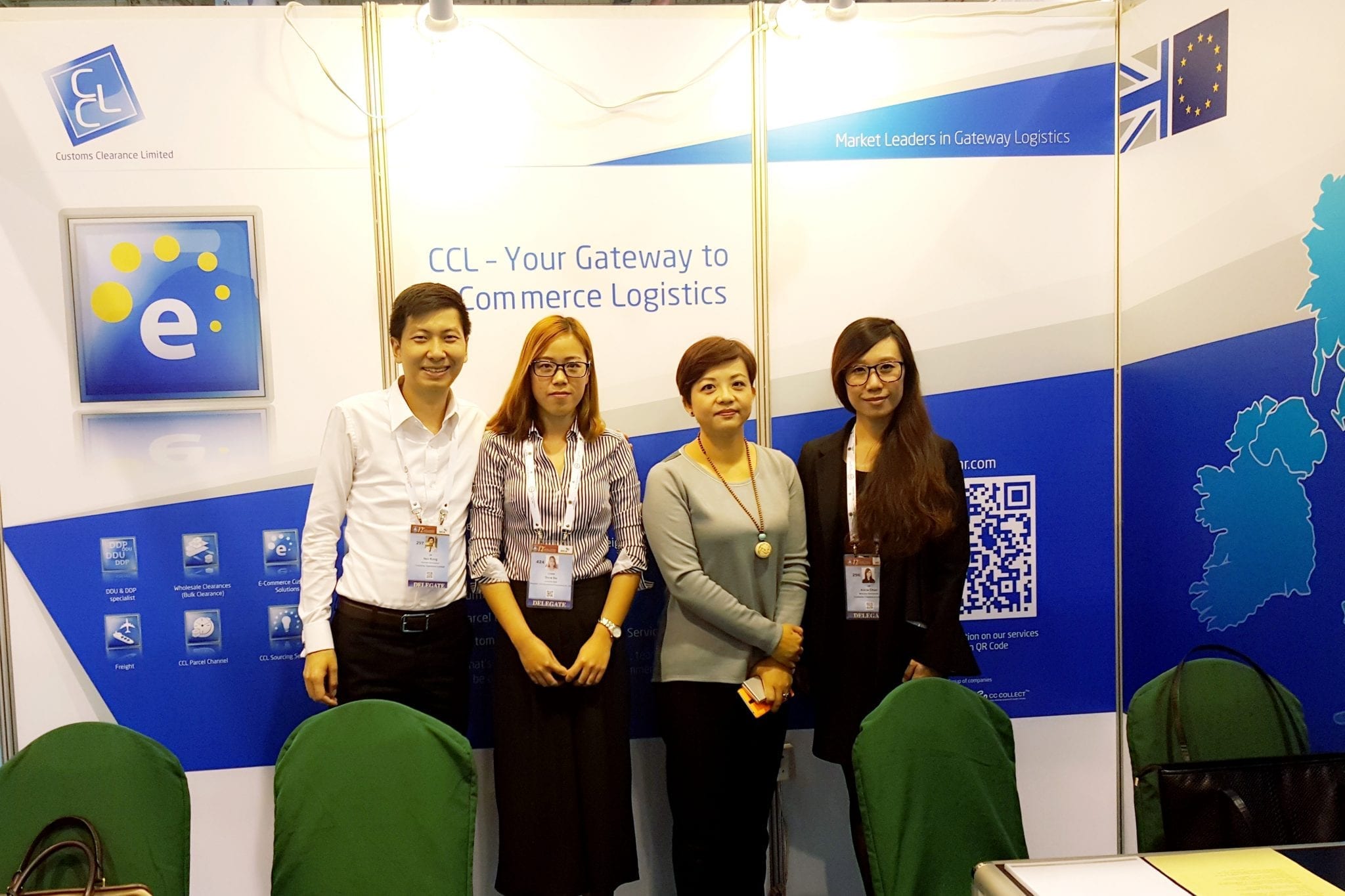
    WCA Ltd has launched the world’s first dedicated eCommerce logistics network in response to the changing global economy and a marked shift towards online consumerism. The network is open to all players in the cross-border eCommerce supply chain, according to WCA.

    By 2020 it is projected that freight forwarding will be 20 per cent eCommerce driven,” said David Yokeum, founder and chairman of WCA. “Our decision to become involved in eCommerce is a direct result of these projections. Our utmost concern is that network members are supported, and provided with the tools and opportunities necessary for them to become leaders in eCommerce logistics.”

    Launched in mid-October, the network has already seen over 100 logistics companies apply for membership and has attracted the interest of a wide range of companies within the supply chain. “The response has been phenomenal,” said Dan March, WCA chief executive officer. “We have been approached by a number of the world’s largest internet retailers and online marketplaces, all wishing to employ the network to meet their ambitious international expansion plans for B2B, B2C, and C2C business.”

    The WCA eCommerce network is open to all independent freight forwarders regardless of their knowledge or experience in the sector. Companies first join at the eMember level where valuable resources – such as webinars, training sessions and expert consulting – can be utilised to help them become proficient in eCommerce logistics. Once accomplished, eMembers may apply for certified eVendor status, allowing them to trade directly and build volumes and business with fellow eCommerce partners and eTailers.

    “To become a certified eVendor a member must undergo a comprehensive eCommerce capabilities audit,” said Alex Allen, WCA eCommerce’s managing director. “As an eVendor, the company is free to offer logistics services back to the network. The beauty for eVendors is that they are also fully covered by WCA’s industry-leading financial protection programme.”

    WCA eCommerce is the world’s only neutral platform; promoting product development, new partnerships, and business growth in the eCommerce sector. In 2017 WCA eCommerce plans to launch a range of additional benefits, including comprehensive eCommerce shipment insurance, a range of innovative eCommerce-specific IT solutions, preferred rates on global and domestic last-mile and courier deliveries, and regional eCommerce consolidation programmes.

  • Nokia intros open templating system for virtual networks

    Nokia intros open templating system for virtual networks

    Nokia has published the industry’s first complete templating system for VNF lifecycle management, designed to streamline and automate VNF onboarding, integration and lifecycle management processes.

    The company said  today’s methods for managing VNF lifecycles – instantiating, monitoring, repairing, scaling, updating and backing-up – are costly, cumbersome and time-consuming.

    To address this, Nokia said it has developed an open templating system, aligned with the latest industry standards and open-source tools, to streamline these processes.

    The template specifications allow service providers and VNF suppliers to take advantage of the automated lifecycle management capabilities of the Nokia CloudBand Application Manager, enabling them to integrate more VNFs faster while reducing the cost and time required to manage VNFs in the cloud.

    Nokia’s open templating system builds upon the ETSI NFV specifications (IFA011 and IFA014), Topology and Orchestration Specification for Cloud Applications (TOSCA) specifications and OpenStack tools. It provides key functionality to service providers, including VNF definitions for better integration and added support of complex structures, and eliminates the need for customization when providing VNF information to a generic VNF Manager and NFV Orchestrator.

    By supporting both Nokia and third-party VNFs, the system gives service providers a much wider selection of virtualized network services they can offer subscribers.

    Nokia is currently collaborating with fellow members of ETSI and TOSCA to complete development of VNF templating standards to benefit the entire industry.

    Ron Haberman, head of Nokia’s CloudBand product unit, said, ”One of the goals of NFV has been to foster an open ecosystem of VNF suppliers to give service providers maximum choice in the capabilities they integrate, and to offer subscribers the best available services.”

  • CIBN picks Irdeto for China DRM

    CIBN picks Irdeto for China DRM

    China International Broadcasting Network (CIBN) has become the first Chinese customer for Irdeto Rights with China DRM Support.

    CIBN is one of the seven broadcasting networks that is licensed to distribute over-the-top (OTT) content in China by The State Administration of Press, Publication, Radio, Film and Television of the People’s Republic of China.

    Irdeto will help establish CIBN as a frontrunner for premium content offerings, especially Hollywood content, through OTT distribution. This will also provide studios and content providers with greater confidence to enter the Chinese market.

    “We are delighted to partner with Irdeto to integrate its China DRM solution to our OTT applications and set-top boxes (STBs), which will safeguard premium content on our network and platforms,” said Fu Qiang, deputy general manager of CIBN.

    “We are confident that our collaboration with Irdeto will improve overall viewer experience for our customers and instill greater confidence for the studios and content providers to enter the Chinese market, which will in turn generate revenue growth for our paid OTT offerings,” said Fu.

    By implementing Irdeto Rights with China DRM support, CIBN will be able to get the content protection they need in order to securely stream content to their customers, including premium content such as 4K and UHD.

    The solution also allows CIBN to accelerate the release of content more efficiently, an essential component given the industry is evolving rapidly.

    Operators and content owners will need to continually adapt and evolve with changing times to improve their content offerings and ensure a seamless user experience.