Retail News CRM

Tag: network

  • Versace to expand Asian store network

    Versace to expand Asian store network

    More stores, broader range, fewer brands as fashion icon tries to double sales. Versace will open its largest store yet in China this week, part of a concerted plan by the fashion label’s new owners to expand its footprint globally.

    Capri Holdings, which also owns Michael Kors and Jimmy Choo, bought Versace from Donatella Versace late last year for US$2.2 billion. It is now implementing a plan to double the label’s worldwide sales with at least 112 new stores scheduled by 2022 along with a refurbishment program for the existing network. The new Beijing store – details of which are scant at present – is a key step in that plan.

    Worldwide, Versace has 188 stores currently and wants to reach 300 within three years. Asia will be a big benefactor from the plan, already accounting for more than half the network. China alone has 40.

    Along with new openings and revamps of existing stores, Versace will boost its product offer, adding more handbags, footwear and leather goods to its high-end clothing range. Accessories currently account for just 35 per cent of Versace’s sales and the company wants to lift that to 60 per cent.

    “It’s very clear: The productivity in our stores is not what it should be,” CEO Jonathan Akeroyd told an investors briefing this week. He plans to double the sales per square foot across the network.

    “We need to rapidly increase productivity and this will really be the real driver to take us to our US$2 billion revenue target.”

    Versace’s marketing strategy will be revised, with less focus on fashion shows in favour of a stronger social media presence.

    The company has quietly dropped its diffusion brands Versace Collection and Versace Versus and new stores will all bear the core Versace brand name alone.

  • Lulu Group’s Tablez plans 150 More Stores

    Lulu Group’s Tablez plans 150 More Stores

    Abu Dhabi-headquartered Lulu Group’s retail arm Tablez is moving to invest US$75 million into the Indian market with the aim of opening more than 150 stores in the territory by the end of next year.

    The move, if successful, is expected by management to nearly quadruple its market share in India.

    “We plan to exit this year with nearly 100 stores, and we would be scaling up with fresh investments in 2020 to arrive at a portfolio of 150+ stores in India,” said Tablez MD Adeeb Ahamed.

    “We will be adding five more brands – Corir, Desigual, GoSport, YOYOSO and OshKosh, taking the total number of our retail brands across various categories to 13 brands in India by the end of 2019,” he said.

    Tablez has more than 40 stores within India operating in several industry sectors from F&B to fashion.

    “To fuel further growth, we would be deploying about $75 million in capital over the next two years to scale our retail stores, enhance our people building capacity and create backend infrastructure and marketing,” he said.

    Tabelz currently markets a range of international and homegrown brands in the territory.

  • Homestay startup raises $4.5 million

    Homestay startup raises $4.5 million

    Luxstay has raised $4.5 million from South Korean retailer GS Shop and venture capitalist Bon Angels in its bridge round. A Luxstay representative said Wednesday that receiving funding from reputable international investors in this round is an important stepping stone for the enterprise to expand to other areas in the future.

    GS Shop is a South Korean multimedia retailer as well as a global leader in TV home shopping. It also established a retail chain called GS25 in Vietnam in 2018.

    Bon Angels Venture Partners is a South Korean venture capital firm investing in early-stage startups. It has invested in well known South Korean startups like Woowa Brothers, Daily Hotels, and My Real Trip.

    Luxstay has targeted an annual turnover of over $300 million and 30 percent of Vietnam’s home-rental market share by 2023, the representative said.

    It is also working with financial investors and strategic partners for the next funding round, a Series A round, which is expected to close in 2019, aiming to raise $15-20 million.

    Prior to this investment, Luxstay had raised a total of around $6 million from CyberAgent Ventures (Japan), Genesia Ventures (Japan), ESP Capital (Vietnam), Founders Capital (Vietnam) and Nextrans (South Korea).

    Launched in late 2016, Luxstay has a network of nearly 10,000 properties across the country. This is a short-term rental booking platform for apartments, villas and other homestay accommodations positioned in the mid and high-end segments of Vietnam’s real estate market.

    It also offers property management and maintenance solutions to assist and save time for homeowners who want to participate in the home-sharing market through its system.

    “In developed countries, home-sharing accounts for 10-20 percent of the home-rental market. This shows a huge opportunity for this industry in Vietnam, which is expected to reach $2-4 billion in 2025,” Luxstay said.

  • 5G will hit the IoT market in late 2020

    5G will hit the IoT market in late 2020

    5G will make its first appearance in the IoT market in late 2020 and struggle for years before it can become a mainstream technology, says a new report from Berg Insight.

    According to the IoT analyst firm, the first 5G cellular IoT modules will become available for developers this year.

    While this allows early adopters to create the first IoT devices based on the 5G standard, the report also states that it will take some times for 5G to become popular in the context of IoT.

    The technology will account for just 3% of the total installed base of cellular IoT devices by 2023, predicts Berg Insight.

    “5G still has some way to go before it can become a mainstream technology for cellular IoT”, said Tobias Ryberg, principal analyst and author of the report.

    Just like 4G when it was first introduced, the initial version of 5G is mostly about improving network performance and data capacity, he added.

    “This is only relevant for a smaller subset of high-bandwidth cellular IoT applications like connected cars, security cameras and industrial routers. The real commercial breakthrough will not happen until the massive machine type communication (mMTC) use case has been implemented in the standard,” explained Ryberg.

    The report also identifies homeland security as an area where 5G cellular IoT can have a major impact already in the early 2020s.

    “5G enables the deployment of high-density networks of AI-supported security cameras to monitor anything form security-classified facilities to national borders or entire cities”, said Ryberg.

    “How this technology is used and by whom is likely to become one of the most controversial issues in the next decade.”

    In a separate report, Berg Insight predicts the global number of cellular IoT subscribers will reach to 9 billion in 2023 from 1.2 billion in 2018, largely driven by the “momentum scale” of deployment in China.

  • BoConcept Asia continues Expansion

    BoConcept Asia continues Expansion

    Furniture and homewares retailer BoConcept has opened new stores in three Asian countries in recent months as it continues to expand its footprint in the region.

    The new stores are in Kyoto, Japan, Zhengzhou, China; and Ho Chi Minh City, Vietnam.

    BoConcept already has about 300 stores in more than 65 countries and is seeking to more than double its network within the next few years.

    The Kyoto store, which opened in March, is the brand’s 16th store in Japan and its 71st in Asia.

    The Zhengzhou store, in Henan Province, marks its 24th in China and the Vietnamese stores it’s sixth in the market. Both opened last month.

    The store is located in the suburb of Thao Dien, a popular area for expats.

  • SES Networks restores connectivity to PNG

    SES Networks restores connectivity to PNG

    SES Networks announced it worked with PNG DataCo to restore mobile and broadband services in Papua New Guinea following an outage caused by a major 7.2 magnitude earthquake.

    The earthquake near the town of Bulolo caused damage to critical terrestrial and subsea transmission nodes between Port Moresby and Madang.

    SES Networks’ contingency teams worked with DataCo to deliver an extra 1.5Gbps of bandwidth to ease network congestion on the operator’s damaged link. This additional bandwidth was made available within hours of receiving a request.

    “Together with DataCo, we are glad that connectivity has been restored swiftly to enable communications and critical disaster recovery services in the immediate aftermath of the earthquake,” SES Networks VP of global fixed data sales Imran Malik Khan said.

    “We recognize the importance of communications services in the event of natural disasters to facilitate quicker information transfer between families and communities, as well as to coordinate recovery and search-and-rescue operations. Our thoughts are with the affected communities, and we offer our well wishes.”

  • Consumers willing to pay a premium for 5G

    Consumers willing to pay a premium for 5G

    Despite concerns surrounding the commercial proposition of 5G technology, smartphone users are willing to pay an average of a 20% premium for 5G services, according to Ericsson.

    The company’s latest ConsumerLab report on the 5G consumer potential finds that half of the early adopters would be willing to pay as much as 32% more for 5G.

    But consumers’ willingness to pay a premium for 5G is reliant on operators introducing new use cases and payment models and providing a consistently high uplink and downlink speed, the report finds.

    Meanwhile, 5G is expected to drive usage behaviors that also promise to increase revenues. The study finds that 5G is expected to significantly increase video consumption, both by enabling streaming in higher resolutions and through the increased use of augmented reality, virtual reality, and other new formats.

    Ericsson predicts that one in five smartphone users’ data usage could reach more than 200GB per month over 5G devices by 2025.

    Consumers also expect that 5G will bring additional benefits such as reducing network congestion in dense urban areas and introducing more home broadband choices.

    Based on the research, Ericsson ConsumerLab has drawn up a consumer roadmap of 5G use cases involving 31 different applications and services.

    These applications are divided into six categories – entertainment and media; enhanced mobile broadband; gaming and AR/VR applications; smart home and fixed wireless access; automotive and transportation; and shopping and immersive communications.

    “Trough our research, we have busted four myths about consumers’ views on 5G and answered questions such as whether 5G features will require new types of devices, or whether smartphones will be the silver bullet for 5G,” Ericsson Research head of ConsumerLab Jasmeet Singh Sethi said.

    “Consumers clearly state that they think smartphones are unlikely to be the sole solution for 5G.”

  • Caltex profit falls amid rising competition

    Caltex profit falls amid rising competition

    Increased competition and the rising price of crude oil had a negative impact on convenience and petrol station owner Caltex’s first quarter earnings.

    The retailer announced that earnings from both its fuels and infrastructure business and its convenience business were down in Q1 on the same period in 2018, which contributed to a net profit of $94 million, a 42.7 per cent drop on the $164 million in net profit it saw last year.

    Fuel earnings before interest and tax (EBIT) fell to $109 million, down from $156 million last year, while convenience retailing fell by over 50 per cent to $40 million, compared to an EBIT of $90 million in the three months to March 31, 2018.

    “Our result shows the impact of both lower refiner margins and a challenging retail environment this quarter,” said Caltex chief executive and managing director Julian Segal.

    “Our businesses’ strengths, including a strong balance sheet and our extensive network, as well as our steady focus on the execution of our strategy provide the foundation for delivery of our strategy in 2019.”

    Caltex said it will move ahead with the transition of franchise sites into company-owned operations, with over 70 per cent of the retail network now owned internally. The retailer also noted that agreements are in place for it to operate 99 per cent of sites by 2020, allowing the business to “better standardise and optimise the site’s performance.”

    Segal laid out the retailer’s growth plans for the remainder of 2019 for shareholders at its annual general meeting on Thursday, May 9, stating a focus on execution and discipline would assist both facets of its business deliver a stronger result in a challenging retail environment.

    “Fuels and infrastructure will continue to grow its earnings through its international business, [and] we will continue to run Australia’s largest transport fuel network safely and reliably,” Segal said.

    “Convenience retail is refocusing on our core fuel offer and will improve the in-store experience across our network to ensure we attract and retain more customers in a competitive fuels market.”

  • Vodafone Idea taps Ericsson for cloud packet core

    Vodafone Idea taps Ericsson for cloud packet core

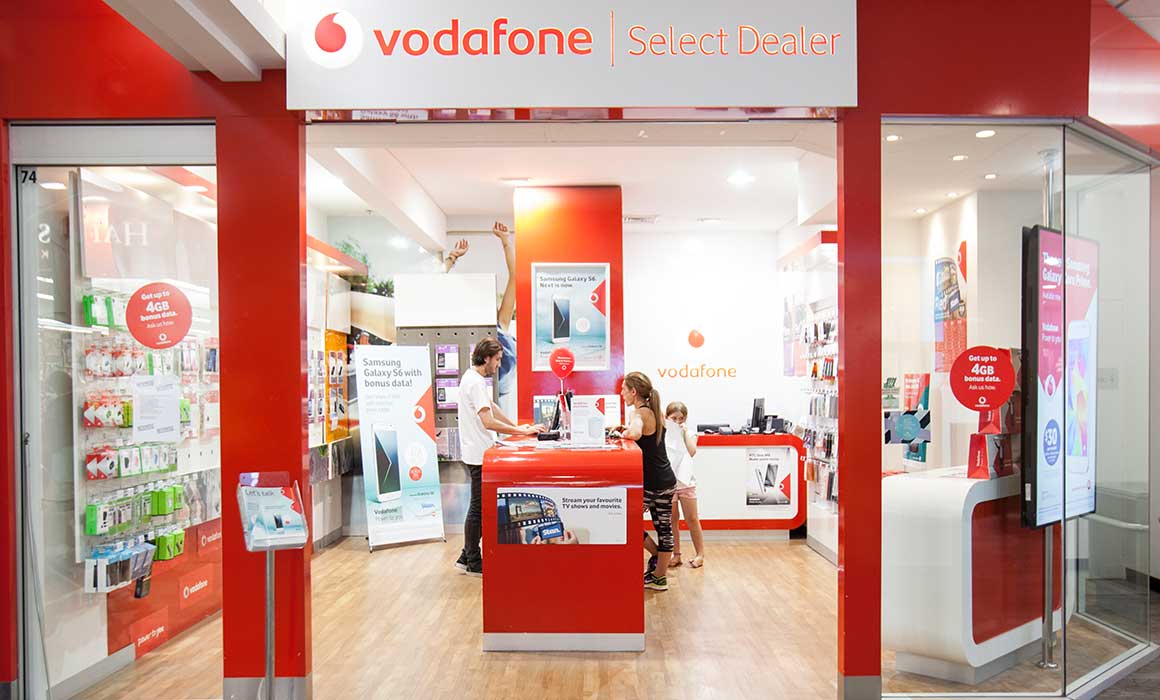
    India’s Vodafone Idea has contracted Ericsson to deploy a cloud packet core to enhance its existing core network.

    The deployment forms part of the operator’s ongoing network modernization program. It is aimed at enabling speedier introduction of new services and providing full-service continuity over the operator’s network.

    Under the agreement, Vodafone Idea will deploy Ericsson core network applications and network functions including the Ericsson virtual Evolved Packet Gateway (vEPG), Service Aware Policy Controller (vSAPC) and Virtualization Infrastructure (NFVi) solutions.

    The NFVi solution is designed to enable operators to deploy virtual telecom, OSS, BSS, IT and media applications at a low total cost of ownership.

    “Data consumption in India is growing rapidly and users are looking for new, richer experiences every day,” Vodafone Idea CTO Vishant Vara said.

    “At Vodafone Idea, we endeavor to stay ahead of the curve by investing in technologies and solutions to address the evolving demands of millions of our customers in India. We are confident that Ericsson’s vEPC solution will enable us to meet our strategic goals.”

    Ericsson head of digital services for SEA, Oceania and India Alvise Carlton added that the project is one of the vendor’s largest virtual evolved packet core deployments globally to date.

    “This will not only provide VIL the scale and reach to address the growing data traffic levels in India, but the advanced cloud infrastructure will also enable VIL to tap new revenue streams in SMEs and IoT.”

  • Vodafone’s reveal keeps the pressure on Huawei

    Vodafone’s reveal keeps the pressure on Huawei

    In this week’s news is yet another story about Huawei and security as European telecommunications operator and regulators continue to scrutinize the gear in advance of 5G deployments. This one is historical though. Apparently Vodafone found security flaws in Huawei gear its Italian unit bought back in 2011 and 2012.

    In the technical sense, this is hardly a surprise. Vulnerabilities and patches are an ongoing part of pretty much all software development, and in this case the problem came with the telnet protocol. There was a day when telnet was a thing for everyone, but these days it’s more a diagnostic thing. According to Vodafone, the flaw would not have been accessible via the internet and was quickly patched. All vendors have processes to handle exactly this sort of thing, and all have done so many times. So the fact that it happened eight years ago in this case is news today only because it was Huawei.

    But the pressure to block Huawei from 5G deployments continues unabated. The contention is that because China requires all its companies to help its national security apparatus and Huawei (like every major Chinese company) has deep ties to that apparatus. On the one hand, it’s easy to envision spies doing this sort of thing. On the other hand, it’s very hard to imagine such deliberate vulnerabilities remaining undetected for long in a suspicious world.

    The most recent development came a few days ago when KPN decided Huawei gear was fine for radios and antennas, but not when it comes to the gear in its core 5G network. They’ve got a deal in place, but with an exit clause in case regulators or lawmakers act to ban Huawei entirely. That seems to have emerged as the consensus response of European telcos to all this pressure, a way to keep Huawei in the mix while still mollifying critics and covering themselves legally.

  • Telenor Myanmar expanding reach of LTE network

    Telenor Myanmar expanding reach of LTE network

    Telenor Myanmar has announced it has nearly reached 100% of the nation’s townships with its LTE network, having rolled out over 6,100 LTE sites nationwide.

    The company’s LTE network now covers 307 townships, with the company having expanded to seven more townships during the first quarter.

    “Since the first quarter, the company has deployed 856 additional sites and aims to increase this to more than 1,100 by the end of the month,” according to Telenor Myanmar CTO Jai Prakash.

    “As per our commitment to bring the best possible things for Myanmar citizens, we have achieved our ambitious goal of establishing a network with 6100+ LTE sites in 2019,” he said.

    “We will keep upgrading our network for our customers with our best data network and also educating the population on how to use our service effectively and efficiently.”

    Meanwhile the operator has been working with Ericsson to prepare its network for 5G, having conducted a joint trial last year achieving 1Gbps downlink rates over its LTE network.

    In late November, the companies also commenced a pilot study involving the provision of IoT connectivity in Mandalay City.

  • Verizon expands 5G to 20 more cities

    Verizon expands 5G to 20 more cities

    Following the launch of 5G services in Chicago and Minneapolis, US operator Verizon announced 20 new cities where it will turn on its 5G Ultra Wideband network this year. Verizon previously said it will launch 5G services in parts of at least 30 cities in 2019.

    The new cities include Atlanta, Georgia; Boston, Massachusetts; Charlotte, North Carolina; Cincinnati, Cleveland, and Columbus, Ohio; Dallas and Houston, Texas; Des Moines, Iowa; Denver, Colorado; Detroit, Michigan; Indianapolis, Indiana; Kansas City, Missouri; Little Rock, Arkansas; Memphis, Tennessee; Phoenix, Arizona; Providence, Rhode Island; San Diego, California; Salt Lake City, Utah; and Washington, DC.

    Verizon also said it will roll out its fixed wireless 5G Home broadband service to some of those markets, but didn’t specify which ones would see the service. The 5G Home service delivers 300 Mbps to subscribers for $50 per month for customers with Verizon wireless service or $70 per month for those without.

    Verizon said it’s now taking pre-orders for the Samsung Galaxy S10 5G, the first 5G-capable phone to launch in the US. Verizon has a limited period of exclusivity for the phone before carriers T-Mobile and AT&T can begin offering the device.

    “The Galaxy S10 5G on Verizon’s 5G Ultra Wideband network will give our customers access to incredible speeds and the latest and greatest streaming, augmented-reality, gaming, and consumer and business applications that bring us into a future powered by 5G,” said Brian Higgins, Verizon’s vice president, device and consumer product, in a statement.

    Verizon is offering new and existing customers the opportunity to trade in an eligible smartphone and save up to $450 off the S10 5G, which retails for $1,300. Verizon is offering the 256GB version of the device for $54.26 per month for 24 months with its device payment plan; while the 512GB version is available for $58.33 per month for 24 months.

    Access to Verizon’s 5G network is available only to customers who have an “Above” and “Beyond Unlimited” plans and a 5G phone. Both plans include unlimited 5G Ultra Wideband data, hotspot and 4K HD video streaming in areas where the 5G network is available. During the company’s first 5G network launches in Chicago and Minneapolis, Verizon was charging customers an extra $10 per month, but the carrier will waive that fee for a limited as a promotion.

  • Apple’s 5G iPhone Using Samsung Modems to be released in 2020

    Apple’s 5G iPhone Using Samsung Modems to be released in 2020

    In one fell swoop, Apple cut the Gordian knot of 5G modem supply and it is smooth sailing from here, as it paid Qualcomm undisclosed amount to settle the patent litigation and secure a multi-year contract for 5G iPhones.

    “It’s personal. I don’t see anybody who can bridge this gap,” tipped the WSJ recently about Apple and Qualcomm CEOs relationship but the big boys ironed out their differences quickly. Apple could have tried Intel, Samsung or Huawei, but each of those choices comes with drawbacks.

    Intel threw in the towel on 5G modem development when it learned that Qualcomm resolved its patent issues with Apple, while America’s homeland security institutions would balk at Huawei’s involvement due to geopolitical considerations. Despite all rumors, Huawei company reps said during its Analyst Summit 2019 yesterday that they have “no communication with Apple on 5G modems.”

    Samsung, on the other hand, simply can’t make enough of its own 5G modems to exclusively supply huge customer like Apple. It recently declined Apple’s advances for its Exynos 5100 5G modem. Not only does the company need its production for the Galaxy S10 5G that is now shipping, but it could very well need it for the Note 10 Pro, too, and others down the line.  According to one “electronics industry official” there:

    Apple inquired about the supply of 5G modem chip from Samsung Electronics System LSI division. However, we know that Samsung Electronics System LSI answered that the supply volume of its smartphone 5G modem chip is insufficient.

    Well, the most renowned Apple supply chain analyst, Ming-Chi Kuo of TF International Securities, has spoken, and Apple will seemingly hedge its Qualcomm bets with Samsung as a side dish. If you are wondering why, Apple is most likely planning to use the more advanced Qualcomm modems in placed where mmWave spectrum 5G networks are being established, while Samsung’s likely cheaper solution will remain for the sub-6 GHz crowd.

    Apart from all these juicy dual supplier predictions, Ming-Chi Kuo is advocating for a fall 2020 release date of the future 5G iPhones. That’s the same timeframe as before but this time around, Apple is in a position to use the best that the 5G market can offer without triggering the NSA, CIA and other three-letter agencies’ wrath.

    South Korea just launched its nationwide 5G network, with the Galaxy S10 5G being its poster child. Upon the phone’s release there, Korea will have all of its largest networks offering 5G plans. In fact, Korea Telecom announced three 5G price tiers. Among those, there is a “Super Plan” that offers truly unlimited 5G data without speed caps, and this one will go for the equivalent of $70, a pretty good price no matter how you slice it. In fact, the Super 5G Plan is somewhat cheaper than the current unlimited 4G LTE plans in Korea, so the 5G future seems bright, and we are expecting more and more 5G handsets to enter the fray this year, especially towards the tail end of 2019.

    A true nationwide shift to 5G networks is not happening this year in the US anyway, so iPhone users won’t be missing all that much until then. Next year, however, most of the flagship phones of the spring season will probably have some sort of 5G connectivity support, be it with a Qualcomm, Samsung or Huawei modem, and Apple could feel the pinch in that regard.

    Had Apple gone alone in developing a 5G modem, either by acquiring Intel’s wireless modem assets, or starting from scratch, it would have taken it years to reach a sufficiently good unit that is worthy to put in millions of iPhones. Wireless connectivity modems are perhaps the most complex of chips in a phone, and 5G ones require so much filters and software control to avoid interference and still be backwards compatible that this option would have meant either a lot of extra expenses for Apple in order to deliver a 5G iPhone in 2020, or falling behind the competition by launching one that is a cycle or two behind.

    “Apple knows our phone number, we are still in San Diego,” tipped Qualcomm recently, giving a glimmer of 5G hope, and patching thing up with Qualcomm turned to be the smartest solution, just as we expected. There you have it – Apple resolves the bad blood between the companies, Qualcomm is likely to assist it with the 5G push, and Samsung will be its sidekick. The 5G future is so bright, we have to wear shades. According to Kuo, the launch of the 5G iPhone is expected to unleash a big upgrade cycle for Apple, and he upped his forecast for iPhones sold in 2020 to the whopping 200 million, from the current 190 million prognosis.

  • Qualcomm’s next Snapdragon processor could take 5G mainstream Easily

    Qualcomm’s next Snapdragon processor could take 5G mainstream Easily

    Support for 5G networks is currently limited to a handful of flagship devices such as the Galaxy S10 5G, LG V50 ThinQ 5G, and Huawei Mate 20 X 5G. This situation is unlikely to change anytime soon, but in order to boost the adoption rate, Qualcomm is apparently developing a 5G-ready chip that’ll make its way into future mid-range smartphones.

    Dubbed the Snapdragon 735, the upcoming chip is expected to succeed the recently-announced Snapdragon 730. Like Qualcomm’s flagship processors, this new one will reportedly be manufactured on the 7-nanometer manufacturing process. Concrete details about this are yet to be revealed, but compared to the older Snapdragon 710 it should result in a performance boost of up to 20% and an increase of 50% in terms of efficiency. Additionally, efficiency gains of up to 20% are to be expected over the Snapdragon 730.

    As mentioned above, the Snapdragon 735 will introduce support for 5G networks. But rather than utilizing the separate Snapdragon X50 modem found inside the Galaxy S10 5G, the Snapdragon 735 will apparently use an integrated 5G modem. This should result in thinner and lighter 5G smartphones. It should also reduce the overall cost associated with the technology.

    Moving on to some of the more technical details, the included CPU will boast an octa-core 1+1+6 setup. This will include six efficiency cores clocked at 1.6GHz, a slightly faster one at 2.4GHz, and a high-performance core clocked at 2.9GHz. There will also be an upgraded GPU in the form of the Adreno 620.

    Lastly, the Snapdragon 735 should allow manufacturers to build mid-range smartphones with as much as 12GB of RAM. Additionally, the chip will support 21:9 displays with 3360x1440p resolutions, 4K video recording at 60FPS, and a dedicated NPU that’ll help with AI features.

    The Qualcomm Snapdragon 735 is expected to arrive during the final quarter of this year, perhaps alongside the flagship Snapdragon 865. In terms of a release, the first Snapdragon 735-powered devices should arrive during the first half of 2020.

  • 5G to drive backhaul revenue growth through 2028

    5G to drive backhaul revenue growth through 2028

    The global satellite backhaul market is expected to reach over $32 billion in revenue by 2028, with 5G supporting one third of the overall market, according a new report released from NSR.

    According to the report, mobile wireless backhaul is the largest opportunity in this space, as satcom becomes a mainstream solution and 5G opens opportunities for satellite to seamlessly integrate with the global telecom ecosystem.

    Trunking also appears to be re-born via lower capacity costs and slowdown in fiber expansion, while hybrid networks represent a long-term play for emerging OTT content distribution models, the research firm said.

    The direct impact of 5G in satcom won’t be seen before mid-2020s, but growth will be sizable, generating one of every three new dollars for backhaul capacity revenues through 2028.

    The ground segment has a key role to play in the integration of satcom into 5G, by responding to new performance requirements and making the solution transparent and easy to adopt for mobile operators.

    “The combination of competitively priced capacity with advanced ground segment makes satcom a relevant solution for mobile network operators continually seeking new sources of revenue and who are increasingly capex-conscious and risk-averse,” stated Lluc Palerm, NSR senior analyst and report author.

    “The transition to broadband is accelerating in areas like Latin America, where for the first time in 2018, 4G generated the highest share of traffic over satellite versus 2G and 3G.”

    Satcom can also find the upside of OTT in hybrid networks.

    NSR said satellite is still king for content broadcasting, and as content moves to the edge to support the explosion on IP Video and new formats like UHD and eventually VR/AR proliferate, satcom will emerge as a key tool in the ecosystem.

    Business models are evolving quickly, resulting in the increased demand for managed services.

    “With MNOs focusing on core services and minimizing capex exposure, managed services are the perfect match between satcom’s streamlined operations for remote areas and the MNO need to continue expanding coverage profitably,” the research firm noted.

    “New technologies like small cells expand the addressable market into the most ARPU-constrained and remote locations, where revenue-sharing schemes are gaining traction.”