Tag: nokia

  • Sony Pictures signs VR content deal with Nokia

    Sony Pictures signs VR content deal with Nokia

    Nokia and Sony Pictures have inked a new multi-year worldwide agreement whereby the latter will use Nokia OZO hardware and software tools to explore the creative potential of virtual reality production and distribution.

    The studio will also integrate the OZO Player SDK into Sony Pictures Home Entertainment’s Privilege Plus app, available through Google Play.

    “VR is a fast growing medium that is rapidly changing how we communicate and bringing a deeper connection to how we experience content,” said Paul Melin, VP of digital media at Nokia Technologies. “We’re thrilled to partner with Sony Pictures and its talented storytellers to apply our technology and create experiences only possible with OZO — like 3D 360 live VR broadcast.”

    Nokia will collaborate with Sony Pictures and provide equipment and VR technology to support the creation of special VR content. Sony Pictures will also leverage OZO Live to transport fans to Sony Pictures events that they couldn’t otherwise attend.

    OZO Live allows content creators to produce fully immersive live experiences through 3D 360 degree video and audio playback technologies.

    While the OZO solution offers many advantages for content creators, it also extends several benefits for playback. OZO Player SDK will be integrated into Sony’s Privilege Plus app, which will bring unique content straight to fans.

    The OZO Player SDK allows professionals to create amazing VR apps and experiences on any major platform. The SDK supports the creation of immersive apps with the highest quality playback of OZO content including 360 spatial audio, while also providing support for standard VR video and audio formats.

  • Nokia closes handset brand licensing deal

    Nokia closes handset brand licensing deal

    Nokia has announced it has completed the transactions that will allow HMD Global to become the new brand licensee for Nokia feature phones, smartphones and tablets.

    HMD Global has secured an exclusive global brand license for a 10-year term. HMD was created by a group of former Nokia employees to revive the Nokia handset brand, and entered the exclusive licensing agreement with Nokia in May.

    The necessary transactions involved HMD, Hon Hai subsidiary FIH Mobile and Microsoft, following the latter’s ill-fated purchase of Nokia’s device business for $7.4 billion in 2013.

    HMD will continue to provide Nokia branded feature phones for emerging markets, and will also produce new Nokia smartphones and tablets for its device portfolio.

    Nokia will receive royalty payments on each sales covering both brand and intellectual property rights.

    “We’ve been overwhelmed by the enthusiasm shown around the world for the return of the Nokia brand to smartphones,” Nokia Technologies interim president Brad Rodrigues said.

    “The HMD Global team has the ambition, talent and resources to bring a new generation of Nokia branded phones to market, and we wish them every success. I’m sure our millions of Nokia fans will be excited to see their new products.”

  • Nokia unveils machine learning-powered customer experience solutions

    Nokia unveils machine learning-powered customer experience solutions

    Nokia has powered major updates to its Motive Customer eXperience Solutions (CXS) software portfolio, promising communications service providers with advanced machine learning capabilities to reduce costs and improve customer experiences.

    Nokia Motive Service Management Platform (SMP) 7.0 and Motive Care Analytics (CAL) 2.0 use machine-learning algorithms developed by Nokia Bell labs — advanced capabilities that give computers the ability to learn without being explicitly programmed.

    With support for machine learning in its CXS portfolio, Nokia aims to set a new standard for proactive care in the industry, dramatically improving the detection, troubleshooting and resolution of subscriber issues.

    Nokia Motive SMP 7.0 features Dynamic Intelligent Workflows, a new self-optimizing system that determines the ideal sequence of tasks that deliver the highest probability of resolving billing, subscription and network service issues in the shortest amount of time.

    By analyzing data from previous workflow executions, the network, customer premises equipment, and trouble tickets, this capability enables service providers to quickly find the optimal remediation to issues when subscribers contact help desk agents or use self-care.

    Nokia Motive CAL 2.0 is the first solution of its kind that automatically correlates customer help desk calls and self-care actions with network, service and third-party application topologies to identify call anomalies, such as unusual patterns in help desk calls that indicate the location of customer-impacting network and service issues.

    Together, Motive SMP 7.0 and Motive CAL 2.0 help service providers lower costs by reducing average help desk handling times 5% to15% and eliminating inappropriate truck rolls (dispatching a service technician to a customer location) related to network outages by as much as 90%.

  • Nokia, UAE to develop drone ecosystem

    Nokia, UAE to develop drone ecosystem

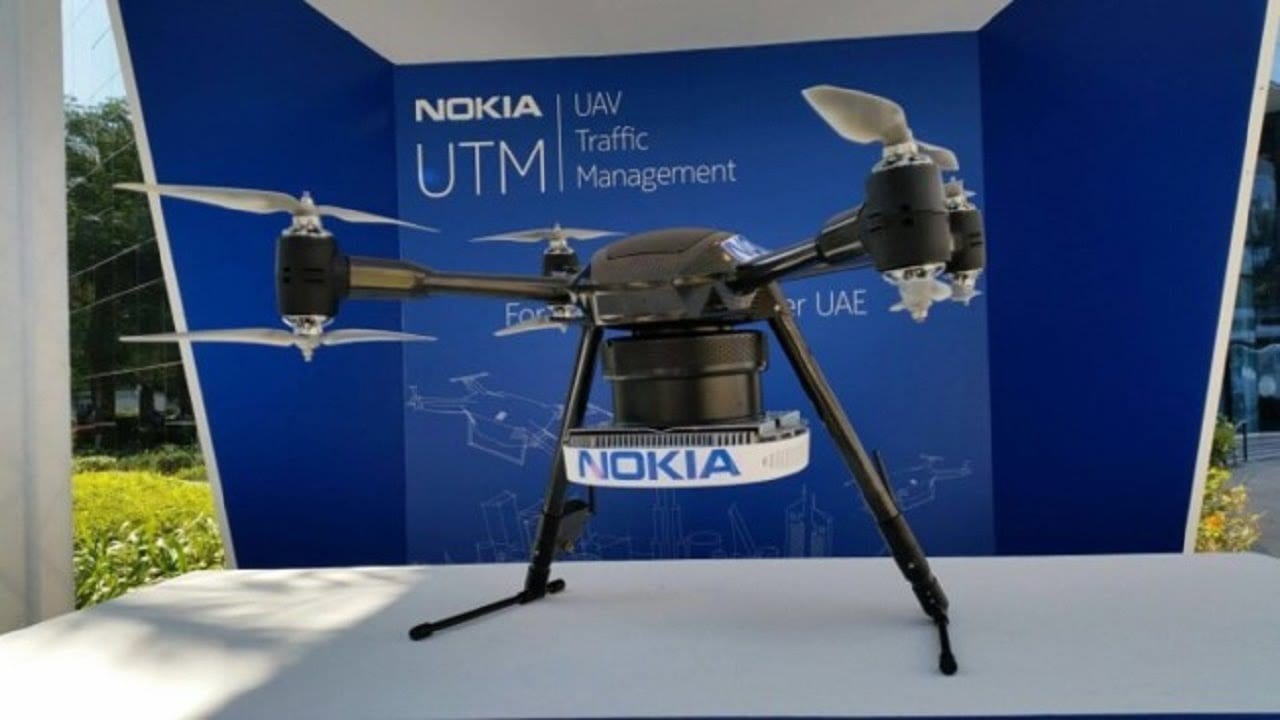
    Nokia has teamed up with the United Arab Emirates General Civil Aviation Authority (GCAA) to drive the development of an end-to-end Unmanned Aerial System (UAS) ecosystem.

    The collaboration will will make the UAE the first country in the world to allow the operation of drones by both businesses and government agencies in a safe, secure and managed environment.

    The project is part of an initiative by the GCAA to make Dubai one of the world’s smartest cities by 2017 and will allow Dubai government security network operator Nedaa to develop a next generation network for mission-critical and smart city services.

    At the heart of this new ecosystem will be Nokia’s UAV Traffic Management (UTM) concept, which is being developed to manage drones in and around cities, and coordinate their interactions with people, manned aircraft and an increasingly diverse array of connected objects.

    The Nokia UTM system will provide capabilities such as automated flight permissions, no-fly zone control and beyond-visual-line-of-sight (BVLOS) that are critical for the safe operation of UAVs in densely populated urban areas.

    The ecosystem will also serve as a testing ground for various applications of drone technology, which can be explored in a safe and controlled environment.

    Drones are quickly emerging as important tools for businesses and governments alike, providing substantial benefits such as infrastructure monitoring and maintenance, public safety applications, logistics and transport and much more.

    The GCAA has launched this initiative so businesses and local government can take advantage of these benefits, making the city smarter while minimizing any hazards that UAVs may present.

    Nokia’s UTM concept combines its expertise in 4G LTE and leadership in developing 5G and Mobile Edge Computing and related services – including managing the Network Operations Center, planning and optimizing the network for UTM connectivity and integrating UTM to other application platforms – to provide a platform that can support the extreme low latency and exceptional reliability and resiliency needed to manage UAV traffic.

    The system will be able to monitor airspace and flight paths, and share data between UAVs, operators, and air traffic controllers and establish no-fly zones that can be continually refreshed with the latest data.

    This agreement complements a recent Nokia’s initiative to establish and develop a UAV test facility at Twente Airport in the Netherlands.

    “The UAE is committed to making Dubai the smartest city in the world, and UAVs are expected to play a critical role in this process by supporting a wide variety of smart city services,” said Bernard Najm, head of the Middle East Market Unit at Nokia.

    Ismaeil Mohammed Al Blooshi, Assistant Director General of the UAE General Civil Aviation Authority, the UAE has superb aviation infrastructure and is qualified to play a key role in innovative aviation projects such as this drone collaboration.

  • Nokia to deploy first LTE-R network in Korea

    Nokia to deploy first LTE-R network in Korea

    Nokia has secured a contract to deploy the world’s first LTE-R (LTE-railway) LTE network in South Korea.

    The vendor will deploy the network on a railway line between Wonju and Gangneung as part of a line extension to prepare for next year’s Winter Olympics in PyeongChang.

    The network will support both operational and maintenance services on a high-speed commercial railway line operating at speeds of up to 250 km/h, providing high-speed connectivity between trains, stations and other railway facilities.

    Nokia said the project is intended to serve as a model for future deployments of LTE-R technology and help further define LTE-R standardization efforts.

    “South Korea has been a world leader in the use of mobile broadband technology to make public services of all kinds safer, more efficient and reliable,” Nokia head of Korea Andrew Cope said.

    “With a thirty-year history in the delivery of GSM-R mobile networking technology for railways, and as a pioneer in the development of LTE-R solutions, we are pleased to partner with KRNA to bring these cutting edge capabilities to the country as they prepare to host one of the world’s premier sporting events.”

  • Dtac taps Nokia to revamp core network

    Dtac taps Nokia to revamp core network

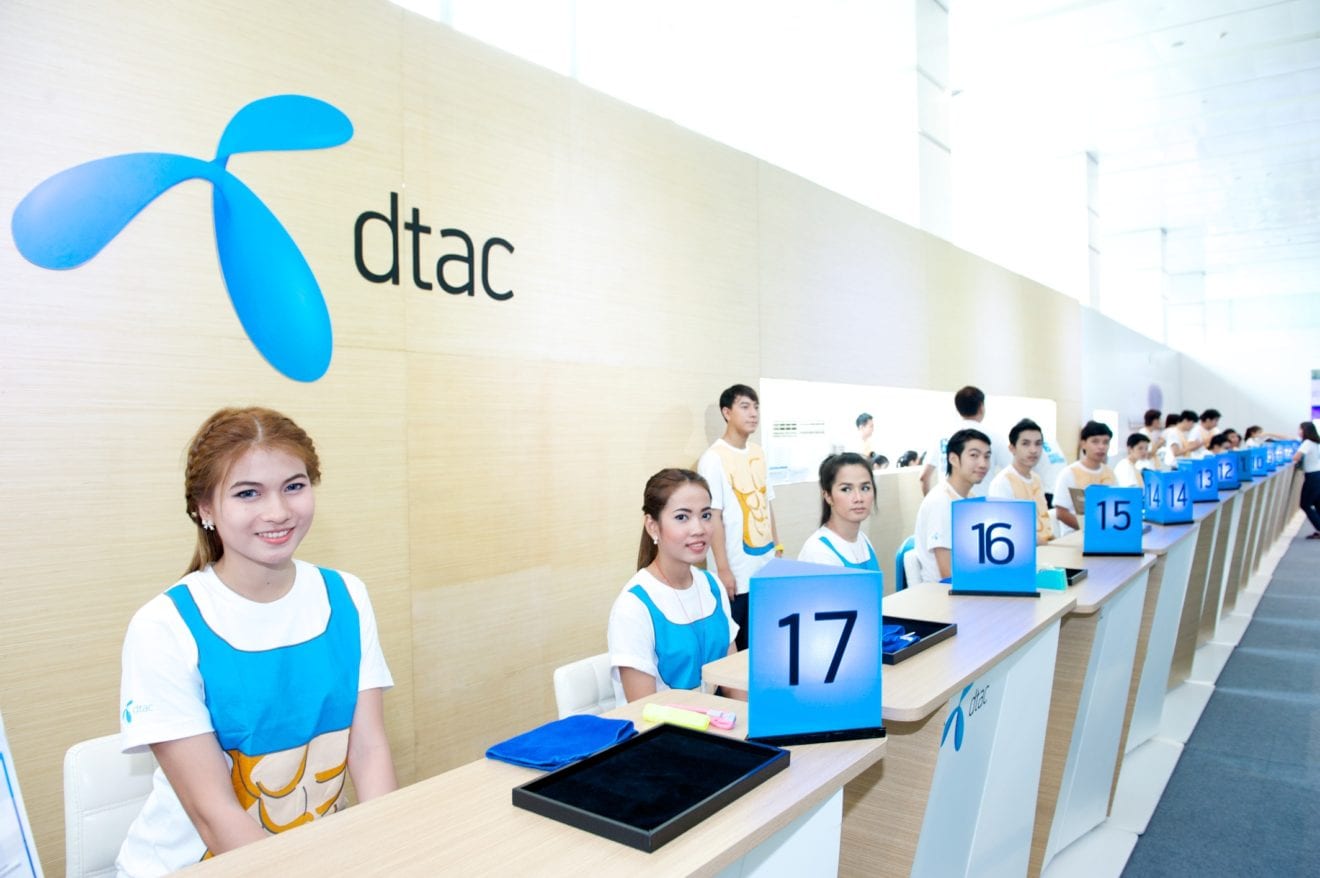
    Thailand’s Dtac has become the market’s first mobile operator to implement an SDN-ready IP/optical network using equipment from Nokia.

    Dtac is implementing the technology to replace its existing IP core routing and DWDM infrastructure, in order to achieve the capacity to serve Thailand’s fast-growing mobile subscriber base.

    The deployment also includes Nokia’s security gateway for Dtac’s LTE network.

    “Over the last two years we’ve seen demand for mobile broadband grow exponentially,” Dtac CTO Prathet Tankuranun said.

    “As we prepare for future advanced technologies we’ve made a strategic choice for an SDN-ready IP/Optical network because it gives us the control and agility needed to run an efficient network that can rapidly adjust to evolving demand patterns. This deployment with Nokia is an important next step in our migration towards full SDN automation.”

    Nokia Thiland head Sebastien Laurent added that the deployment “provides the foundation for an SDN-centric network and will allow dtac to implement on-demand services while also easing operation and maintenance demands.”

  • Nokia to supply Globe Telecom in the Philippines

    Nokia to supply Globe Telecom in the Philippines

    Nokia and Globe Telecom, a leading telecom operator in the Philippines, on 24 October signed two Memoranda of Confirmation frame agreements – one for wireless technologies and the other for IP, Optical and SDN technologies – under which Nokia will transform Globe Telecom’s current fixed and mobile networks into a more robust network that will help Globe meet the country’s burgeoning and future digital demands.

    This will enable Globe Telecom’s move to Cloud and IoT-ready networks and 5G.

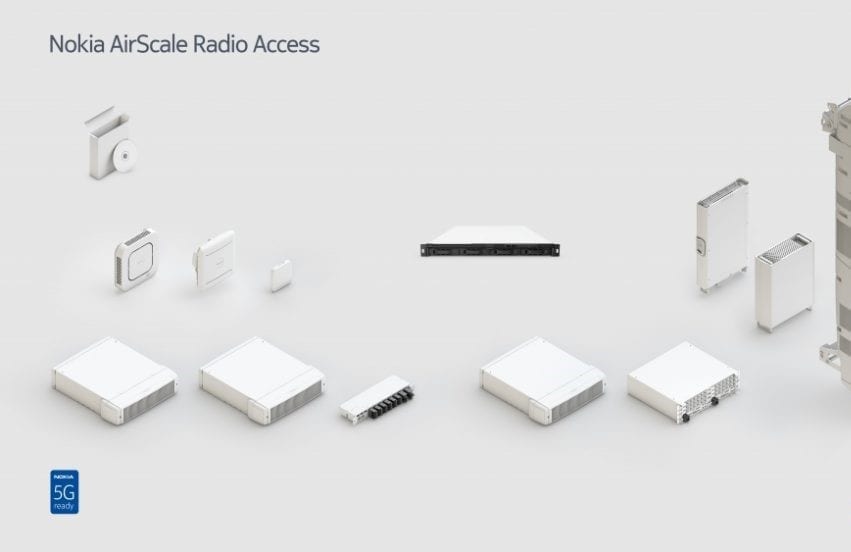
    Under the agreements, Globe Telecom will transition to a flexible cloud-based network infrastructure, with Nokia’s 5G-ready AirScale radio access and IP, optical and carrier SDN technology solutions providing seamless connectivity to consumers and enterprise customers. The modernized Globe network will also allow it to support the Philippine government’s initiative to further expand the availability of broadband services in the country.

    The mobile network frame agreement between Nokia and Globe Telecom follows the operator’s recent access to new LTE spectrum. Nokia will deploy its 4.5G Pro technology using the 5G-ready AirScale Base Station and Flexi Zone small cells, managed by NetAct, in the Visayas and Mindanao regions, providing broadband access to some areas in these regions for the first time. Globe will also be enabled to use Mobile Edge Computing and advanced carrier aggregation techniques to deliver virtually unlimited scalability and dramatic improvements in speeds and capacity that will deliver compelling new services. The technology will also enable lower power consumption, reduced operating costs, more network automation and enhanced network performance as it transforms Globe Telecom’s customer experience for a subscriber base growing at 10 percent annually, as well as meeting increasing demand from IoT devices.

    In the second frame agreement, Nokia will deliver its integrated IP and optical networking and carrier SDN technologies across the Philippines to enhance the agility, quality, performance, coverage and capacity of Globe Telecom’s enterprise data services network. This will allow Globe to deliver coverage to more regions including in the ARMM, such as Lanao del Sur, Maguindanao, Basilan, Sulu and Tawi-Tawi. Using Nokia’s carrier SDN platform, Globe will also be able to provide flexible data services such as bandwidth-on-demand nationwide, and expand its offer to thousands of enterprise customers, global service providers and local government agencies as well as those serving the Information Technology-Business Process Outsourcing (IT-BPO), hospitality, education, manufacturing, retail, healthcare, logistics and finance industries.

    “As the Philippines’ leading fixed and mobile service provider, we are devoted to improving people’s connected lives day-by-day. With Nokia’s innovative technologies, we are confident to lead the 5G and cloud network evolution,” said Ernest L. Cu, president and CEO of Globe Telecom.

    “This is a significant agreement with a longstanding technology partner, and strengthens Nokia’s position as Globe Telecom’s premier provider of end-to-end technology solutions. We are committed to delivering technologies that allow operators to transition smoothly to intelligent, future-proof networks, offering seamless connectivity and changing how people communicate and connect,” said Mike Wang, head of the joint management team in China at Nokia.


  • Nokia deploys network for Kuala Lumpur rail line

    Nokia deploys network for Kuala Lumpur rail line

    Nokia has deployed a mission-critical advanced communications network for Kuala Lumpur’s new railway line.

    The Kelana Jaya light rail transit (LRT) line extension is now supported by an advanced communications network  supporting high-speed voice, data and video traffic.

    The network the railway operations and passenger services for the line’s 13 new stations, which see a combined 350,000 passengers daily.

    Nokia also provided systems integration services to enhance safety and security through remote diagnostics and automated functions; constant situation awareness with video surveillance; Supervisory Control and Data Acquisition (SCADA); monitoring systems; telephone and radio communications services; automated fare collection (AFC); and public address and passenger information systems.

    The project was completed in conjunction with CMC Engineering Sdn Bhd.

    “As one of the National Key Results Areas (NKRA) under the Malaysian government transformation program (GTP), the Kelana Jaya LRT Line Extension project is another important government initiative to deliver an effective and seamless public transportation system for the Greater Kuala Lumpur area,” CMC Engineering CEO.Hazwan Alif Abdul Rahman said.

    Stuart Hendry, head of global enterprise and public sector for Asia Pacific at Nokia, said railway operations can benefit enormously from modern communications networks.

  • Nokia teams with Optus on 5G development

    Nokia teams with Optus on 5G development

    Nokia has signed an agreement with Australia’s Optus to collaborate on 5G development, and revealed it is working with KT to deploy the world’s first 5G commercial trial network in 2017.

    Optus announced that the two companies plan to jointly conduct a 5G trial using Optus’ 3500-MHz spectrum. Optus andNokia will develop an early 5G prototype in the spectrum by 2017.

    The companies have already conducted initial closed tests at Optus’ Sydney headquarters over a new 5G radio test bed on Nokia’s Airscale product, highlighting the capability of 5G to deliver virtual reality video content at the required speeds.

    “There is a global race to explore and develop 5G technology, and in Australia, Optus is well positioned to lead in this space with our ownership of 3.5GHz, and close partnerships with our vendors including Nokia,” commented Tay Soo Meng, CTO of Optus’ parent company Singtel.

    In a blog post, Nokia project manager for 5G development research Jani Moilanen separately detailed the steps Nokia and KT are taking to deploy a 5G commercial trial network in the 28-GHz band next year.

    Nokia Bell Labs and the Nokia Korea Advanced Technology Center have developed initial network plans using 3D maps, accurate ray-tracing simulations and other technologies to address the potential for blockages of the 28-GHz band, including human bodies blocking line of sight between device and base station.

    The company is also working to address other key network planning challenges, including sufficient non-line-of-sight coverage in outdoor areas.

  • Nokia boosts True’s broadband network

    Nokia boosts True’s broadband network

    True Group in Thailand has deployed Nokia’s IP/MPLS routing technology to upgrade its broadband infrastructure in Bangkok.

    Surging demand for ultra-broadband fixed and mobile services, such as high-definition video and business services, have helped drive a dramatic increase in data traffic across True’s converged network, both in the city and its surrounding area.

    True is using Nokia’s IP routing technology to modernize its broadband infrastructure to improve the quality of experience and better support the growing high-bandwidth content demands of consumers and businesses.

    Nokia’s Service Router portfolio helps True to provide 4G LTE and 3G coverage to its 18 million mobile subscribers, high speed broadband to its 2.5 million broadband subscribers, and pay TV service to its 3.2 million TrueVision customers. The network upgrade was completed in May 2016.

    True can leverage Nokia’s infrastructure in the future to evolve to more dynamic agile services powered by Software Defined Networks and Network Functions Virtualization.

    True is using Nokia 7750 Service Routers (7750 SR) in Bangkok with the 7210 service access switch (SAS) being deployed in the northeast, east and central west regions of Thailand.

    “By leveraging Nokia’s expertise and leading routing technology,  we are able to provide seamless 4G LTE and 3G coverage along with quality, high-speed broadband data, voice and TV services to our mobile and fixed customers,” said Vichaow Rakphongphairoj, deputy CEO of operational development at True. “We can also deliver advanced high-speed residential, business and mobile services even more quickly and efficiently.”

  • Unicom to deploy Nokia CR-B in more provinces

    Unicom to deploy Nokia CR-B in more provinces

    China Unicom has arranged to deploy high-capacity Nokia metro core routers in four additional provinces.

    Unicom is deploying Nokia’s high-end core router CR-B, powered by the extensible core routing system (XRS) platform, to help meet China’s future capacity demands.

    The expanded agreement now covers the provinces of Heilongjiang, Henan, Zhejiang and Hunan. Unicom has already deployed the technology in Beijing, Shandong, Jiangsu, Jiangxi, Inner Mongolia and Qinghai

    The deployment also forms part of the $182 billion Broadband China project to improve the speed and quality of internet service nationwide. The project aims to reduce the digital divide and provide national broadband coverage by 2020.

    “We are honored to continue our work with China Unicom in the CR-B core router segment,” said Mike Wang, head of the joint management team of Nokia Networks China and ASB .”Leveraging the Nokia 7950 XRS platform, China Unicom gains the bandwidth, flexibility and programmability necessary to manage its growing networks and to better meet the needs of the country’s ambitious broadband strategy.”

  • Nokia launches Mission Critical Comms Alliance

    Nokia launches Mission Critical Comms Alliance

    Nokia has joined a consortium of operators, public authorities and first response agencies in forming an alliance to formalize standards for the use of LTE in public safety.

    The Mission Critical Communications Alliance will work to inform and guide policy makers on the benefits of LTE in providing critical communications services.

    Vodafone Hutchison Australia and Japan’s Mobile Radio Center are among the founding members of the new alliance.

    “Having worked with the various Governments in the public safety field for over 60 years, we are happy to facilitate a broad group of stakeholders in the global public safety community to drive the adoption of LTE in critical communications,” Nokia chief customer operations officer Ashish Chowdhary said.

    “The Mission Critical Communications Alliance will work towards realizing the unique benefits of LTE in public safety, enabling national, regional and local authorities to provide a higher level of safety and security for their citizens, while creating innovative new business models for service providers.”

    The move comes shortly after Nokia and SK Telecom jointly announced the development of a portable public safety LTE system that is compact enough to fit in a backpack, and can provide 5km coverage and accommodate up to 400 users.

  • Nokia launches 5G Acceleration Services

    Nokia launches 5G Acceleration Services

    Nokia has launched a new service designed to help operators develop a plan for their 5G transformation.

    The new Nokia 5G Acceleration Services will help operators carry out the required business, network and operational transformation to prepare for a 5G programmable world.

    Operators will be able to develop a tailored transformation plan, prepare and design multi-vendor 5G networks and define the pace of investment and adoption of new technologies.

    Services will include collaborative customer workshops, technical and economic analysis, a 5G spectrum assessment, technology workshops and radio access network design support.

    IDC research director for EMEA Telecommunications commented that industry adoption of 5G will take a different path compared to 4G.

    “For one thing, this time the use cases are developing ahead of the technical standard. That’s healthy for the industry, but will also require networks to support myriad performance profiles fairly rapidly,” he said.

    “Operators thus have to make sure that their 5G evolution plans incorporate both upgrades to their networks and advancements in their operational capabilities. If they can start to monetize new use cases while still migrating toward 5G, so much the better.”

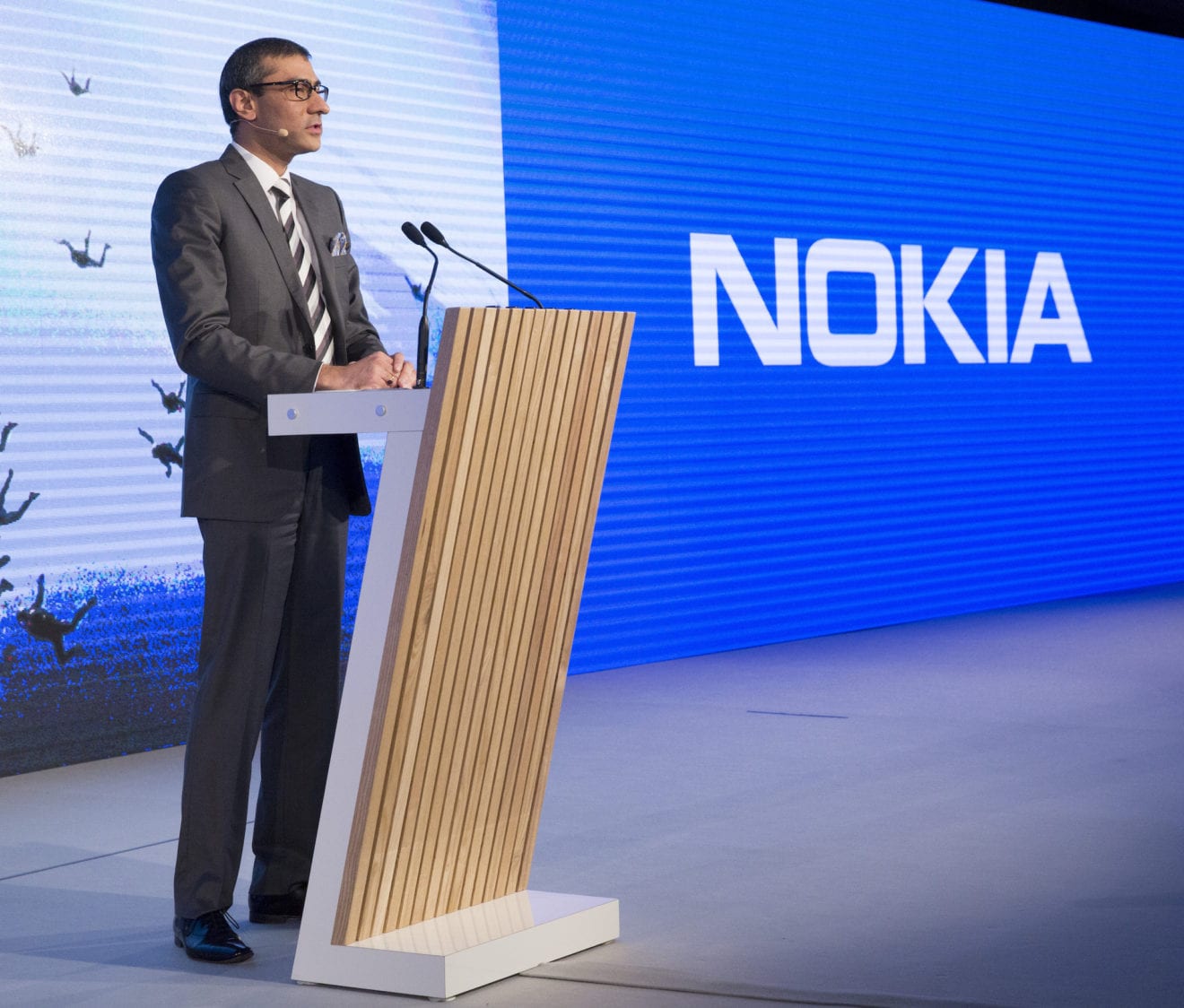
    At CTIA Super Mobility 2016, tomorrow, Nokia CEO Rajeev Suri plans to lay out the ways the vendor is preparing operators for the coming of 5G – including by commercially launching 4.5G Pro network technologies – and to highlight emerging use-cases for 5G.

  • China Telecom taps Nokia to expand 4G coverage

    China Telecom taps Nokia to expand 4G coverage

    China Telecom has contracted Nokia to enhance the operator’s 4G coverage and capacity to meet growing subscriber demand.

    The companies have signed an agreement to expand the deployment of 4G in 19 provinces nationwide, which will include preparing China Telecom’s network for the planned launch of VoLTE services next year.

    Nokia will provide equipment including its Flexi MultiRadio base stations for the deployment, as well as project management, network design and installation and hardware and software maintenance services.

    The agreement covers the provinces of Shanghai, Jiangsu, Shandong, Zhejiang, Hunan, Hubei, Guangxi, Fujian, Jiangxi, Shaanxi, Heilongjiang, Hebei, Henan, Sichuan, Anhui, Liaoning, Guizhou, Xinjiang and Inner Mongolia.

    China Telecom added 31 million 4G users during the first six months of 2016 alone, taking its total to 90 million from an overall mobile subscriber base of nearly 207 million.

    Last year 4G traffic meanwhile grew more than sixfold, and is expected to account for more than 90% of the operator’s total mobile data traffic by 2017.

    “This agreement with China Telecom builds on our long history of collaboration. Our deep-rooted knowledge of the Chinese market will enable China Telecom to meet the demands of an ever-growing and dynamic 4G subscriber base,” Nokia Networks China head Mike Wang said.

  • SKT, Nokia develop portable PS-LTE network

    SKT, Nokia develop portable PS-LTE network

    SK Telecom and Nokia have completed the development the first all-in one portable public safety LTE system for emergency first-responders.

    The system is compact enough to fit in a backpack, and comes with all the elements required for mobile communications, from a base station, switching system including an evolved packet core to push-to-talk technologies.

    It can be used to create an independent LTE communications network in the field for use by public safety and emergency services workers. The resulting network can be set up in less than three minutes, has a 5km coverage and can accommodate up to 400 users.

    SK Telecom and Nokia achieved the breakthrough of alleviating the need for PS-LTE systems to connect to a backhaul network by applying NFV technologies to the core networking elements. This has allowed the partners to fit the technology into a small rectangular-shaped server.

    The system can also support other communications services including group messaging for public service agencies.

    SK Telecom has announced it plans to trial the system within the year, and use the technology to expand the national disaster safety wireless network as well as its LTE-Maritime project in 2017.

    “The portable all-in-one PS-LTE system is a ground-breaking solution that enables communication among first responders by setting up an independent LTE network when regular communication networks are disrupted by disasters,” SK Telecom executive vice president and head of infrastructure Lee Jong-bong said.

    “SK Telecom will not only utilize the innovative system to build disaster safety wireless networks in Korea, but also plans to share its expertise and know-how with many other countries around the world.”