Retail News CRM

Tag: nokia

  • Nokia beats estimates with Q4 earnings

    Nokia beats estimates with Q4 earnings

    Nokia has reported a narrower-than-expected 64.6% year-on-year decline in fourth quarter net profit to $682 million, as the company’s efforts to expand its portfolio to compensate for a shrinking mobile equipment market bore fruit.

    The company’s ebitda declined 27% over the same period to $1.01 billion, but analysts had been projecting a decline to $850 billion.

    Net sales fell 14% year-on-year to €6.7 billion ($7.21 billion), in a result Nokia said reflects challenging market conditions during the quarter.

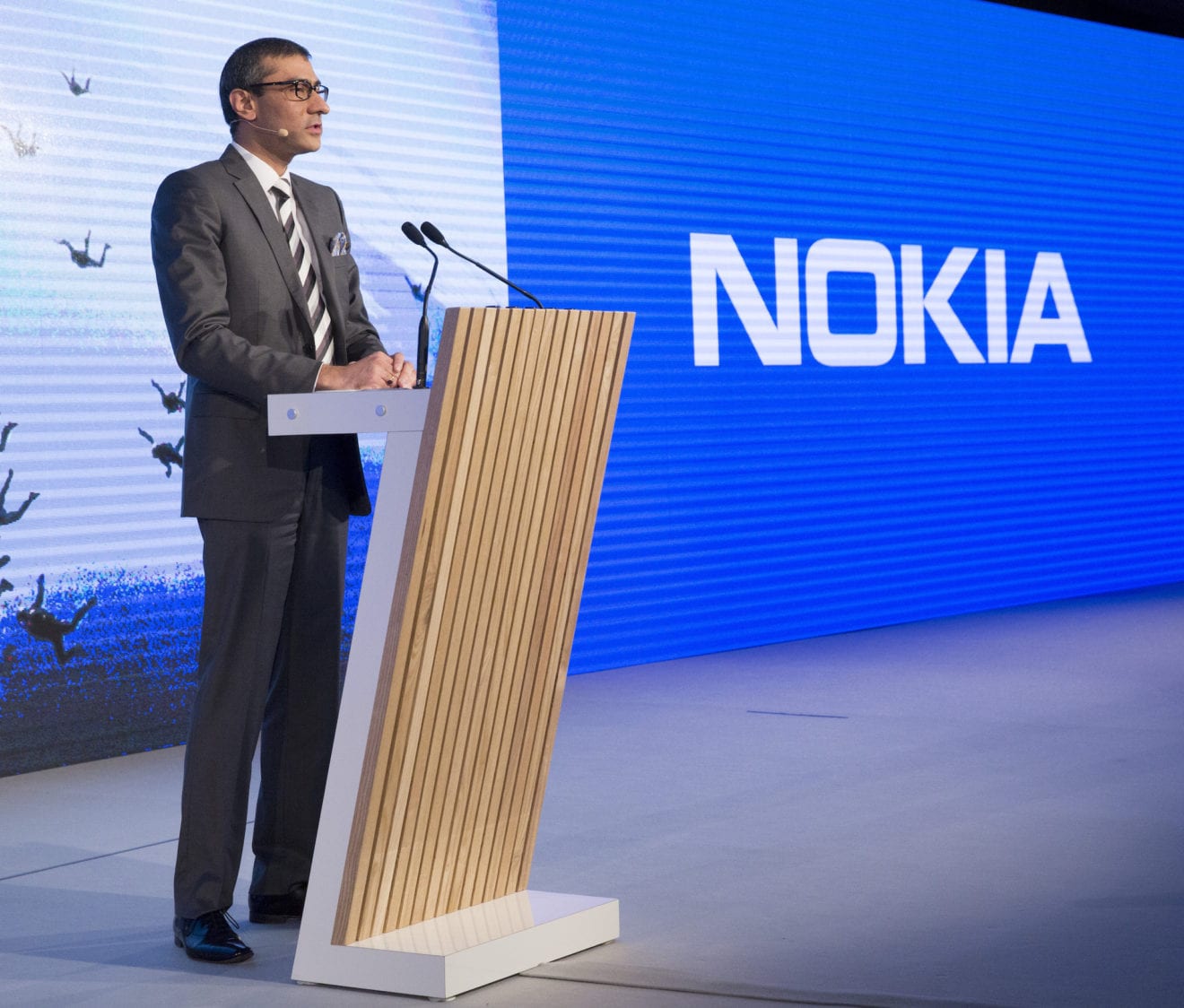
    But Nokia CEO Rajeev Suri said the company’s diversification strategy helped compensate for these conditions somewhat.

    “At the start of the year, Nokia was focused primarily on mobile networks,” he said.

    “We ended the year as a company with a complete portfolio spanning mobile, fixed, routing, optical, stand-alone software and more; with solid opportunities to drive higher returns through expansion into new customer segments; with emerging businesses in digital health and digital media; and with greatly expanded patent and brand licensing activities.”

    For the full year, net sales fell 10% to $23.94 billion, while operating profit fell 25% to  $2.17 billion.

    “Our ongoing intense focus on execution, cost management and pricing discipline was critical to offset the impact of challenging market conditions over the course of the year,” Suri said.

    “While I remain disappointed with our topline development in 2016, we continue to expect our performance to improve in 2017 and see the potential for margin expansion in 2017 and beyond, as market conditions improve and our sales transformation programs gain further traction.”


  • Nokia launches a digital assistant for telcos

    Nokia launches a digital assistant for telcos

    Nokia has announced the launch of MIKA, the first digital assistant customized for the telecommunications industry.

    MIKA (multi-purpose intuitive knowledge assistant) is designed to provide voice-activated access to information for telecoms engineers, to reduce the time needed to find essential information needed to maintain complex multi-technology network environments.

    MIKA is powered by the Nokia AVA cognitive services platform, and provides access to the AVA knowledge library of best practice gathered from Nokia’s network projecs around the world.

    The platform combines augmented intelligence with automated machine learning based on Bell Labs learning algorithms.

    “Finding the right information is a daily challenge for telco engineers tasked with boosting network quality,” Nokia head of global services Igor Leprince said.

    “MIKA taps into the power of the Nokia AVA platform to provide quick and accurate answers, avoiding time wasted on fruitless searches. MIKA is customized to support the specific needs of telecoms, and can deliver recommendations based on experience from networks around the world.”

    Nokia also introduced a new predictive repair service, which will enable operators to reduce costs by predicting hardware failures and recommending replacements up to 14 days in advance. The vendor said the service can achieve up to 95% accuracy.

    Predictive repair will be available to operators using Nokia’s 3G and 4G equipment.

  • Cambodia’s Cellcard to expand and modernize networks

    Cambodia’s Cellcard to expand and modernize networks

    Cambodia’s Cellcard has engaged Nokia to expand and modernize the operator’s 3G and LTE networks to help meet surging mobile broadband demand.

    As part of the agreement, Nokia will deploy around 1,500 new cell sites to expand the operator’s mobile broadband reach. Cellcard first launched LTE in Phnom Penh in 2015 and has since been expanding the network to other areas.

    Nokia will also provide its global services and Single RAN technology to allow Cellcard to host simultaneous 2G, 3G and 4G operations on a single platform, as well as IP edge routers to modernize the network in preparation for the arrival of 5G and the IoT.

    Cellcard will also use a Nokia microwave packet radio platform to help transform its legacy microwave transport network to keep up with Cambodia’s booming data consumption. The operator will meanwhile migrate its billing platform to Nokia’s convergent charging and billing solution SurePay.

    “We are proud to work with Nokia in our initiative to offer the best LTE coverage and services to our subscribers,” Cellcard CEO Ian Watson said.

    “The expansion of our state-of-the-art mobile broadband network will play a critical role in helping the government enable Cambodians to take advantage of mobile broadband. Nokia’s proven expertise will enable us to provide better coverage and quality of services to our subscribers.”

  • Youku picks Nokia for 3D 360 VR content

    Youku picks Nokia for 3D 360 VR content

    Youku in China has chosen the Nokia OZO VR ecosystem of technologies “to bring the most immersive” VR content to the more than 500 million monthly active users engaged in its online video platform which has daily views of more than 1.1 billion.

    Youku users and content creators are promised the ability to experience and share the highest quality VR content including natively captured spatial audio.

    “China is one of the most progressive VR markets in the world with an appetite for high-quality virtual reality experiences that is enormous and growing,” said Paul Melin, VP of digital media at Nokia Technologies.

    Youku will use the entire OZO VR solution, which includes the OZO Camera, OZO Software Suite, OZO Live and OZO Player SDK in the creation and distribution of content ranging from film and television to news and documentary, as well as professional user-generated content featuring Youku’s top talent.

    Youku will be the first Chinese content producer and distributor to have fully integrated the Nokia OZO ecosystem of technologies.

    Also, Youku will integrate Nokia’s OZO Player SDK and OZO Audio solutions, which are designed “to deliver a superior consumer experience,” into all its platforms, mobile apps and consumer offerings, enabling its enormous audience to enjoy 3D 360 degree VR.

    The OZO Player SDK allows VR professionals to create amazing VR app experiences on most major platforms with a single, unified development interface. Full-featured reference players are also included in the SDK for all supported platforms.

    The multi-platform OZO Player SDK is now available in a free version as well as a Pro tier with more features and larger deployment options.

  • Vodafone India hands Nokia managed services deal

    Vodafone India hands Nokia managed services deal

    Vodafone India has reportedly handed Nokia a multi-year contract extension worth €200 million ($210.5 million) covering the delivery of managed services in multiple telecoms circles.

    The scope of the contract has been expanded to cover managed services for 14 of India’s 22 telecoms circles, and field operations in the remaining eight, citing a person familiar with the matter.

    The source also said the contract has been expanded to cover the core as well as radio network.

    As part of the contract, Nokia will provide managed services, maintenance, system integration and other services. It represents a significant win for Nokia’s Indian operations, which cover the management of around 200,000 base stations across the country.

    Vodafone also recently awarded Huawei a three-year managed services contract worth between $180 million and $220 million covering three circles, as well as network operations in two circles, the report adds. In February, the operator contracted Ericsson to manage its fiber assets in 10 circles.

  • Nokia, Vodafone trial cloud-based RAN

    Nokia, Vodafone trial cloud-based RAN

    Vodafone has teamed up with Nokia to trial cloud-based radio access network (RAN) technology to see how it will stack up for the transition from 4G to 5G networks.

    During the trial, which occurred at the operator’s testing facility in Italy, Vodafone used Nokia’s AirScale Cloud RAN running on its AirFrame network functions virtualization (NFV) infrastructure.

    By combining cloud RAN with NFV, Vodafone was able to split baseband processing functionality between real-time and non-real-time functions allowing for time-critical functions to be performed close to the edge of the network.

    Non-time critical functions were then centralized and virtualized in the NFV infrastructure platform at the end of the RAN. Ethernet-based fronthaul was used to provide connectivity to the virtualized functions.

    The trial looked at peak data rates as well as download and upload speeds during a variety of different scenarios on the macro network using high-powered macrocells.

    According to Vodafone, the test demonstrated that a cloud RAN-based architecture can provide the same level of service as a conventional LTE network. In addition, the cloud RAN met the operator’s criteria for throughput, capacity, and resiliency while also providing additional flexibility and scalability.

    Santiago Tenorio, head of networks, Vodafone Group, said: “Working with Nokia on this trial we have seen how the application of Cloud RAN architecture can help the network react to changing demands quickly. It speeds up the delivery of services and will help with the transition to 5G.”

  • Nokia expands litigation against Apple to 9 more countries

    Nokia expands litigation against Apple to 9 more countries

    Nokia said Thursday it has increased the number of patent suits launched against Apple from 32 to 40, spread across 11 countries in US, parts of Asia and Europe.

    The move comes a day after Nokia revealing it was suing Apple for a number of patent infringements in the US and Germany, covering display, user interface, software, antenna, chipsets, video coding and other technologies used in devices such as the iPhone.

    On Wednesday, Nokia filed lawsuits in three German courts and two lawsuits in a US court in Texas.

    Nokia claimed Apple agreed to license some of its patents in 2011, but declined subsequent offers made by Nokia to license others of its technologies used by Apple products.

    “After several years of negotiations trying to reach agreement to cover Apple’s use of these patents, we are now taking action to defend our rights,” said Ilkka Rahnasto, head of patent business at Nokia.

    Nokia’s move comes a day after Apple filed on Tuesday an antitrust lawsuit against Acacia Research Corp and Conversant Intellectual Property Management, accusing them of colluding with Nokia to extract and extort exorbitant revenues unfairly from Apple.

    The lawsuits now extend to Finland (3 patents), UK (3 patents), Italy (4 patents), Sweden (3 patents), Spain (1 patent), The Netherlands (3 patents), France (1 patent), Hong Kong (1 patent) and Japan (2 patents), Nokia revealed on Thursday.

    In addition, Nokia has filed a complaint against Apple with the US International Trade Commission, which has the power to block the importation of products to the US if they are found to infringe patents. The USITC complaint covers eight patents.

  • Nokia sues Apple for patent infringements in US and Germany

    Nokia sues Apple for patent infringements in US and Germany

    Nokia said on Wednesday it has filed a number of complaints against Apple in Germany and the US, accusing the iPhone maker of infringing on Nokia patents.

    Nokia’s lawsuits cover 32 patents on technologies such as display, user interface, software, antenna, chipsets and video coding. These lawsuits stem from a disagreement between Apple and Nokia over licensing fees for Nokia Technology.

    “Since agreeing a license covering some patents from the Nokia Technologies portfolio in 2011, Apple has declined subsequent offers made by Nokia to license other of its patented inventions which are used by many of Apple’s products,” the company said in a statement.

    The Finnish telecoms equipment firm said it had negotiated for “several years” with Apple but is now “taking action.”

    “Through our sustained investment in research and development, Nokia has created or contributed to many of the fundamental technologies used in today’s mobile devices, including Apple products,” said Ilkka Rahnasto, head of patent business at Nokia.

    “After several years of negotiations trying to reach agreement to cover Apple’s use of these patents, we are now taking action to defend our rights.”

    Nokia has filed the lawsuits in courts in Dusseldorf, Mannheim and Munich in Germany and the US District Court for the Eastern District of Texas, and “is in the process of filing further actions in other jurisdictions”, it said.

    Nokia’s move comes a day after Apple filed an antitrust lawsuit against Acacia Research Corp and Conversant Intellectual Property Management, accusing them of colluding with Nokia to extract and extort exorbitant revenues unfairly from Apple.

  • Ericsson, Huawei, Nokia and Cisco join forces on NFV testing

    Ericsson, Huawei, Nokia and Cisco join forces on NFV testing

    Ericsson, Huawei, Nokia and Cisco have teamed up to launch a new initiative that aims to help telecoms operators address the challenges related to NFV deployment and cloud transformation within multi-vendor network environments.

    The four signed Tuesday a MoU to create the NFV Interoperability Testing Initiative (NFV-ITI), which will address NFV multi-vendor interoperability challenges for telcos, enabling them to optimize NFV deployment and integration costs, and reduce time-to-market for new services.

    While telecos are at different stages of implementing NFV into their networks, the deployment and integration of virtual network functions within today’s multi-vendor environments can introduce new interoperability challenges.

    To addresses these challenges, NFV-ITI members will cooperatively support the interoperability of NFV elements in specific customer situations to accelerate the commercial implementations, and to reduce the time-to-market for new applications and services.

    All existing NFV interoperability related testing activities are triggered by different industry needs, including the European Telecommunications Standards Institute (ETSI) NFV Testing WG, OPNFV testing projects, Network Vendor Interoperability Testing (NVIOT) testing, and the New IP Agency (NIA) interoperability testing.

    NFV-ITI will complement all existing NFV interoperability testing activities in the industry and focus on testing interoperability configurations of commercial NFV solutions used in the telcos’ networks, the companies said.

    It will recommend generic principles, including interoperability test cases, test criteria, processes, methods, guidelines, templates and testing tools, and will also apply best practices from all existing interoperability testing activities in the industry, such as NVIOT forum efforts.

    In addition, NFV-ITI will be well-aligned with the ETSI NFV Industry Specification Group and the OPNFV project.

  • Smart, Nokia conduct Philippines’ first 5G demo

    Smart, Nokia conduct Philippines’ first 5G demo

    The Philippines’ PLDT, through mobile subsidiary Smart, has completed the first showcase of 5G speeds in the nation.

    During the trial the companies achieved a peak speed of 2.5Gbps using 100 MHz of spectrum, as well as a latency of just 1ms.

    The demo was conducted at the Nokia Manila Technology Center in Quezon City, and demonstrated use cases for 5G including 3D 360-degree VR streaming and the Nokia AirFrame data center platform for distributed cloud architectures capable of supporting real-time IoT operation.

    “We are excited to work with Nokia in conducting cutting-edge research and development for 5G,” PLDT and Smart CEO Manuel Pangilinan said.

    “This is a key part of our efforts to transform the PLDT and Smart network into the country’s most future-ready data infrastructure delivering a wide range of gigabit digital solutions.”

    He said 5G will be critical to realizing Smart’s full vision for the IoT. The operator has a track record of investing in and helping drive the development of the IoT, including the founding the Philippines’ first Internet of Everything consortium in 2014.

    Nokia’s Bell Labs predicts that there will be up to 5 billion IoT devices connected through mobile networks by the year 2020.

  • Nokia intros open templating system for virtual networks

    Nokia intros open templating system for virtual networks

    Nokia has published the industry’s first complete templating system for VNF lifecycle management, designed to streamline and automate VNF onboarding, integration and lifecycle management processes.

    The company said  today’s methods for managing VNF lifecycles – instantiating, monitoring, repairing, scaling, updating and backing-up – are costly, cumbersome and time-consuming.

    To address this, Nokia said it has developed an open templating system, aligned with the latest industry standards and open-source tools, to streamline these processes.

    The template specifications allow service providers and VNF suppliers to take advantage of the automated lifecycle management capabilities of the Nokia CloudBand Application Manager, enabling them to integrate more VNFs faster while reducing the cost and time required to manage VNFs in the cloud.

    Nokia’s open templating system builds upon the ETSI NFV specifications (IFA011 and IFA014), Topology and Orchestration Specification for Cloud Applications (TOSCA) specifications and OpenStack tools. It provides key functionality to service providers, including VNF definitions for better integration and added support of complex structures, and eliminates the need for customization when providing VNF information to a generic VNF Manager and NFV Orchestrator.

    By supporting both Nokia and third-party VNFs, the system gives service providers a much wider selection of virtualized network services they can offer subscribers.

    Nokia is currently collaborating with fellow members of ETSI and TOSCA to complete development of VNF templating standards to benefit the entire industry.

    Ron Haberman, head of Nokia’s CloudBand product unit, said, ”One of the goals of NFV has been to foster an open ecosystem of VNF suppliers to give service providers maximum choice in the capabilities they integrate, and to offer subscribers the best available services.”

  • Sony Pictures signs VR content deal with Nokia

    Sony Pictures signs VR content deal with Nokia

    Nokia and Sony Pictures have inked a new multi-year worldwide agreement whereby the latter will use Nokia OZO hardware and software tools to explore the creative potential of virtual reality production and distribution.

    The studio will also integrate the OZO Player SDK into Sony Pictures Home Entertainment’s Privilege Plus app, available through Google Play.

    “VR is a fast growing medium that is rapidly changing how we communicate and bringing a deeper connection to how we experience content,” said Paul Melin, VP of digital media at Nokia Technologies. “We’re thrilled to partner with Sony Pictures and its talented storytellers to apply our technology and create experiences only possible with OZO — like 3D 360 live VR broadcast.”

    Nokia will collaborate with Sony Pictures and provide equipment and VR technology to support the creation of special VR content. Sony Pictures will also leverage OZO Live to transport fans to Sony Pictures events that they couldn’t otherwise attend.

    OZO Live allows content creators to produce fully immersive live experiences through 3D 360 degree video and audio playback technologies.

    While the OZO solution offers many advantages for content creators, it also extends several benefits for playback. OZO Player SDK will be integrated into Sony’s Privilege Plus app, which will bring unique content straight to fans.

    The OZO Player SDK allows professionals to create amazing VR apps and experiences on any major platform. The SDK supports the creation of immersive apps with the highest quality playback of OZO content including 360 spatial audio, while also providing support for standard VR video and audio formats.

  • Nokia closes handset brand licensing deal

    Nokia closes handset brand licensing deal

    Nokia has announced it has completed the transactions that will allow HMD Global to become the new brand licensee for Nokia feature phones, smartphones and tablets.

    HMD Global has secured an exclusive global brand license for a 10-year term. HMD was created by a group of former Nokia employees to revive the Nokia handset brand, and entered the exclusive licensing agreement with Nokia in May.

    The necessary transactions involved HMD, Hon Hai subsidiary FIH Mobile and Microsoft, following the latter’s ill-fated purchase of Nokia’s device business for $7.4 billion in 2013.

    HMD will continue to provide Nokia branded feature phones for emerging markets, and will also produce new Nokia smartphones and tablets for its device portfolio.

    Nokia will receive royalty payments on each sales covering both brand and intellectual property rights.

    “We’ve been overwhelmed by the enthusiasm shown around the world for the return of the Nokia brand to smartphones,” Nokia Technologies interim president Brad Rodrigues said.

    “The HMD Global team has the ambition, talent and resources to bring a new generation of Nokia branded phones to market, and we wish them every success. I’m sure our millions of Nokia fans will be excited to see their new products.”

  • Nokia unveils machine learning-powered customer experience solutions

    Nokia unveils machine learning-powered customer experience solutions

    Nokia has powered major updates to its Motive Customer eXperience Solutions (CXS) software portfolio, promising communications service providers with advanced machine learning capabilities to reduce costs and improve customer experiences.

    Nokia Motive Service Management Platform (SMP) 7.0 and Motive Care Analytics (CAL) 2.0 use machine-learning algorithms developed by Nokia Bell labs — advanced capabilities that give computers the ability to learn without being explicitly programmed.

    With support for machine learning in its CXS portfolio, Nokia aims to set a new standard for proactive care in the industry, dramatically improving the detection, troubleshooting and resolution of subscriber issues.

    Nokia Motive SMP 7.0 features Dynamic Intelligent Workflows, a new self-optimizing system that determines the ideal sequence of tasks that deliver the highest probability of resolving billing, subscription and network service issues in the shortest amount of time.

    By analyzing data from previous workflow executions, the network, customer premises equipment, and trouble tickets, this capability enables service providers to quickly find the optimal remediation to issues when subscribers contact help desk agents or use self-care.

    Nokia Motive CAL 2.0 is the first solution of its kind that automatically correlates customer help desk calls and self-care actions with network, service and third-party application topologies to identify call anomalies, such as unusual patterns in help desk calls that indicate the location of customer-impacting network and service issues.

    Together, Motive SMP 7.0 and Motive CAL 2.0 help service providers lower costs by reducing average help desk handling times 5% to15% and eliminating inappropriate truck rolls (dispatching a service technician to a customer location) related to network outages by as much as 90%.

  • Nokia, UAE to develop drone ecosystem

    Nokia, UAE to develop drone ecosystem

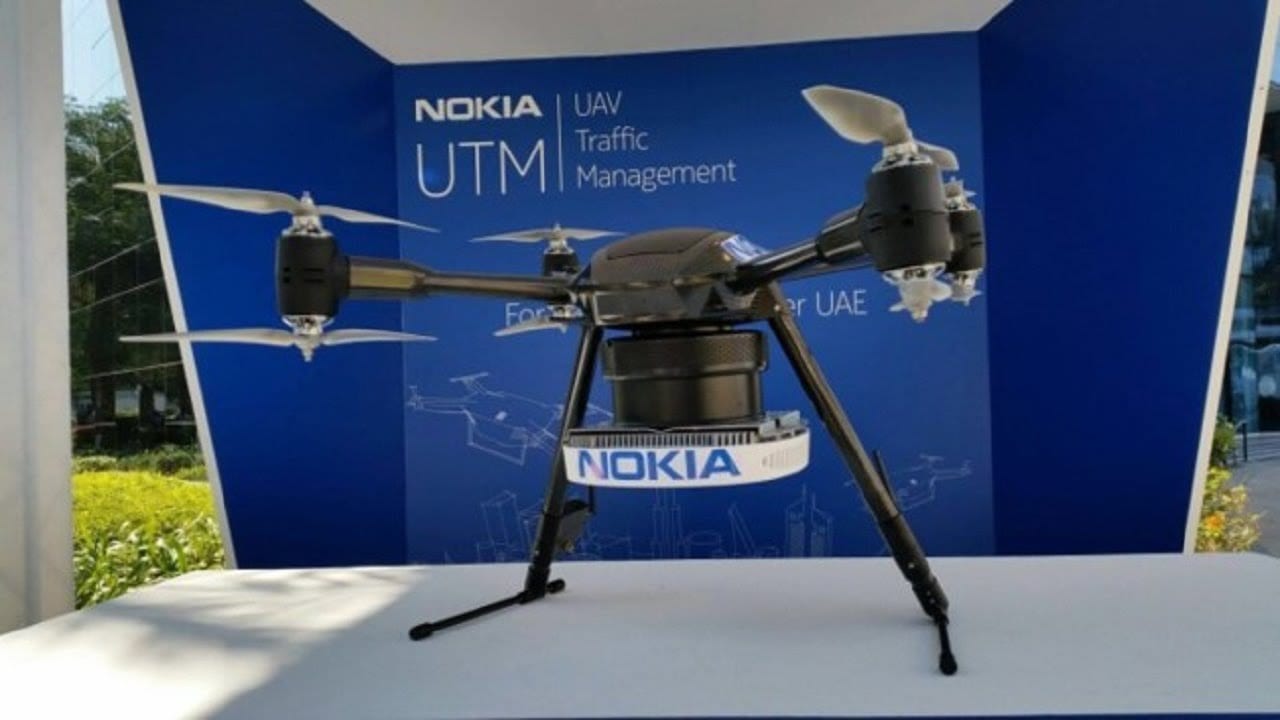
    Nokia has teamed up with the United Arab Emirates General Civil Aviation Authority (GCAA) to drive the development of an end-to-end Unmanned Aerial System (UAS) ecosystem.

    The collaboration will will make the UAE the first country in the world to allow the operation of drones by both businesses and government agencies in a safe, secure and managed environment.

    The project is part of an initiative by the GCAA to make Dubai one of the world’s smartest cities by 2017 and will allow Dubai government security network operator Nedaa to develop a next generation network for mission-critical and smart city services.

    At the heart of this new ecosystem will be Nokia’s UAV Traffic Management (UTM) concept, which is being developed to manage drones in and around cities, and coordinate their interactions with people, manned aircraft and an increasingly diverse array of connected objects.

    The Nokia UTM system will provide capabilities such as automated flight permissions, no-fly zone control and beyond-visual-line-of-sight (BVLOS) that are critical for the safe operation of UAVs in densely populated urban areas.

    The ecosystem will also serve as a testing ground for various applications of drone technology, which can be explored in a safe and controlled environment.

    Drones are quickly emerging as important tools for businesses and governments alike, providing substantial benefits such as infrastructure monitoring and maintenance, public safety applications, logistics and transport and much more.

    The GCAA has launched this initiative so businesses and local government can take advantage of these benefits, making the city smarter while minimizing any hazards that UAVs may present.

    Nokia’s UTM concept combines its expertise in 4G LTE and leadership in developing 5G and Mobile Edge Computing and related services – including managing the Network Operations Center, planning and optimizing the network for UTM connectivity and integrating UTM to other application platforms – to provide a platform that can support the extreme low latency and exceptional reliability and resiliency needed to manage UAV traffic.

    The system will be able to monitor airspace and flight paths, and share data between UAVs, operators, and air traffic controllers and establish no-fly zones that can be continually refreshed with the latest data.

    This agreement complements a recent Nokia’s initiative to establish and develop a UAV test facility at Twente Airport in the Netherlands.

    “The UAE is committed to making Dubai the smartest city in the world, and UAVs are expected to play a critical role in this process by supporting a wide variety of smart city services,” said Bernard Najm, head of the Middle East Market Unit at Nokia.

    Ismaeil Mohammed Al Blooshi, Assistant Director General of the UAE General Civil Aviation Authority, the UAE has superb aviation infrastructure and is qualified to play a key role in innovative aviation projects such as this drone collaboration.