Tag: nokia

  • Nokia extends wireless portfolio

    Nokia extends wireless portfolio

    Nokia is extending its enterprise wireless networking portfolio with new small cells, Wi-Fi, multi-access edge computing and cloud packet core capabilities.

    The new components aim to allow businesses to manage and operate their own private wireless networks to support their digital transformation initiatives.

    The company’s new virtualized multi-access edge computing (MEC) solution will allow operators to deliver private LTE networks to enterprises over their 4G network, and to allow enterprises to run MEC over commercial-off-the-shelf servers.

    Nokia has also introduced a new compact outdoor AirScale Wi-Fi access point and added a hybrid access gateway capability to the Cloud Packet Core.

    “We want to support the evolution toward the fourth industrial revolution by giving companies the ability to leverage private wireless networks for their critical communications needs and rapidly ramp-up business applications that improve efficiency,” Nokia head of advanced mobile network solutions Thorsten Robrecht said.

    “We continue to evolve our end-to-end solutions and services to allow enterprises to transition towards digitalization in a smooth and cost-efficient way in preparation for 5G automation in the future.”

  • Nokia expands development, deployment of 5G First

    Nokia expands development, deployment of 5G First

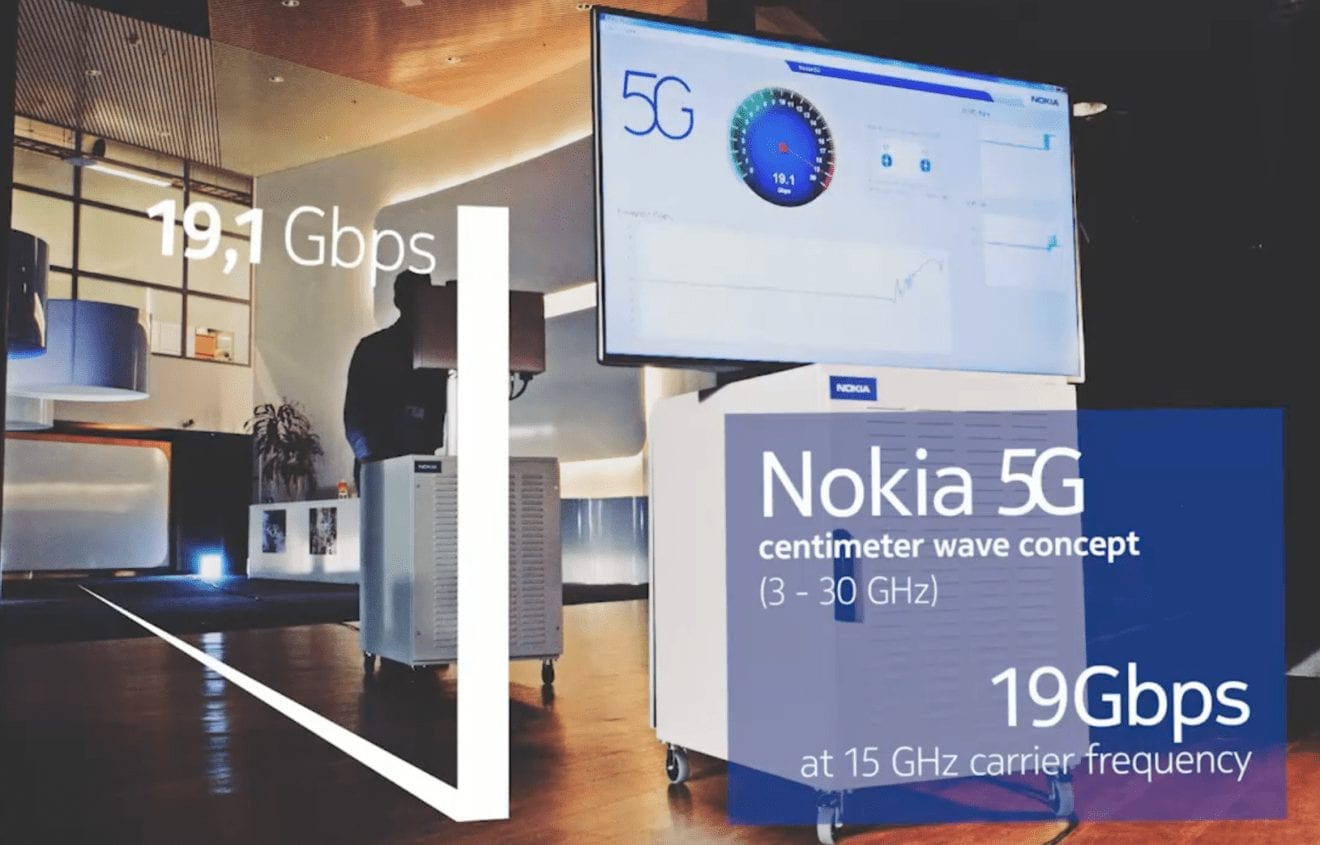
    Nokia has announced plans to implement early 5G specifications, enhancing its ‘5G First’ portfolio with the 3GPP 5G Phase I protocol, to meet growing interest for 5G mobility applications emerging from operators, notably in markets like US, China, Japan and South Korea.

    In a statement, Nokia said the vendor will push for accelerated 3GPP industry standardization while building on early customer experiences with its Nokia 5G First end-to-end solution, launched last February.

    This 5G NR (New Radio) air interface standard, which is due in early 2018, is designed to support a wide variety of 5G devices and services.

    Nokia said it is building on extensive field experience already gained with Nokia 5G First, which has generated valuable insights into areas such as the use of radio propagation in higher frequencies, massive MIMO and beamforming, integration with existing networks versus standalone implementations, the use of small cells in 5G deployments, and the importance of cloud native core and cloud RAN technologies.

    ”Through 5G First, Nokia is evolving its 5G strategy to drive the industry rapidly towards the adoption of standards-based commercial applications as early as 2019,” said Marc Rouanne, president of mobile networks at Nokia.

    “Doing so will require broad cross-industry support, and we call upon regulators and governments to free up and enable the use of spectrum at low-, mid- and high-frequency bands for trials,” said Rouanne.

  • Nokia narrows Q2 loss despite rough network market

    Nokia narrows Q2 loss despite rough network market

    Weeks after Ericsson reported a swing to a second quarter loss, Nokia has turned in results that also reflect the challenges facing the telecoms equipment market.

    Nokia reported a net loss for the quarter of €423 million ($494.2 million), but this was a significant improvement on the €726 million loss recorded during the same quarter year earlier.

    Net sales grew 1% to €5.62 billion, but sales from Nokia’s networks business fell 5% to €4.97 billion, with “ultra-broadband” sales down 8% to €2.16 billion. Global services sales were flat at €1.44 billion, and IP networks sales were down 4% at €1.36 billion.

    By contrast, Nokia Technologies sales – which include revenue from handset patent licensing agreements – surged 90% to €369 million due to the patent licensing and collaboration agreement with Apple reached in May.

    In a statement, Nokia CEO Rajeev Suri warned that the company expects its “primary addressable market with communication service providers to be slightly more challenging in 2017 than earlier forecast,” projecting a decline in the market of between 3-5%.

    “Despite these headwinds, I believe Nokia’s disciplined operating model puts us in a strong position to succeed in conditions of all kinds and continue to deliver solid shareholder value. In addition, we are seeing catalysts in the United States, China and Japan that point to an acceleration of 5G and the commencement of meaningful roll-outs in 2019.”

    Earlier this month, Ericsson reported a swing to a 1 billion kronor ($120.4 million) loss for the second quarter, with net sales down 8% to 49.9 billion kronor. CEO Börje Ekholm pledged to accelerate the vendor’s

  • Nokia wraps up Comptel acquisition

    Nokia wraps up Comptel acquisition

    Nokia said it has completed its acquisition of Comptel, a Finland-based telecommunications software company.

    Announced last February, the acquisition advances Nokia’s strategy to build a standalone software business at scale by expanding and strengthening its software portfolio and go-to-market capabilities.

    Comptel bolsters Nokia’s software portfolio by adding capabilities that help digital service providers bring new communications services to market faster, master the orchestration of services and order flows, capture data-in-motion and refine decision-making.

    When combined with Nokia’s OSS, BSS, analytics, security and cloud technology, Nokia will be able to offer the software intelligence and real-time network information to deliver better digital experiences and operations in a cloud environment.

  • Xiaomi, Nokia sign alliance and patent de

    Xiaomi, Nokia sign alliance and patent de

    Xiaomi and Nokia have signed new a multi-year business collaboration and a patent cross-licensing agreement covering each vendor’s cellular standard-essential patents.

    As part of the transaction, fast-growing Chinese handset vendor Xiaomi has also purchased patent assets from Nokia.

    Under the business cooperation component, Nokia will meanwhile provide network infrastructure equipment designed to meet the high capacity, low power requirements of large web providers and data center operators.

    The two companies will also work together on optical transport solutions for data center interconnections, IP routing based on Nokia’s new FP4 network processor and a joint data center fabric solution.

    Xiaomi and Nokia will likewise explore opportunities for further collaboration in areas including the internet of things (IoT), augmented and virtual reality as well as artificial intelligence.

    Xiaomi now has a presence in over 30 markets, and is a leading IoT player as well as smartphone vendor.

    “As a company seeking to deliver more exciting technological innovations to the world, we are excited at the opportunity to work more closely with Nokia in future.”Xiaomi is committed to building sustainable, long-term partnerships with global technology leaders,” Xiaomi CEO Lei Jun said.

    “Our collaboration with Nokia will enable us to tap on its leadership in building large, high performance networks and formidable strength in software and services, as we seek to create even more remarkable products and services that deliver the best user experience to our Mi fans worldwide.”

  • Nokia formally launches Nokia Shanghai Bell JV

    Nokia formally launches Nokia Shanghai Bell JV

    Nokia has announced the completion of the transaction with the China Huaxin Post & Telecommunication Economy Development Center to create the Nokia Shanghai Bell joint venture.

    The deal marks the official launch of the Nokia Shanghai Bell business, which combines the former Alcatel-Lucent Shanghai Bell with Nokia’s China business.

    But the two entities have effectively operated as one since January 2016, following Nokia’s purchase of Alcatel-Lucent in a $17 billion all-stock deal. Nokia and China Huaxin also signed a final agreement last month covering the integration of the two businesses and establishment of Nokia Shanghai Bell.

    China Huaxin is a state-owned industrial development company that owned half of the Alcatel-Lucent Shanghai Bell joint venture. Nokia owns a 50% plus one share stake in the Nokia Shanghai Bell joint venture, with China Huaxin owning the remainder.

    Nokia Shanghai Bell will become an integral part of Nokia’s global R&D operations, with around 10,000 researchers across six R&D sites in the nation. It will act as Nokia’s exclusive platform in China for the continued development of new technologies in areas such as IP routing, optical and 5G.

    Nokia Shanghai Bell also plans to support strategic R&D initiatives of the Chinese government and conduct long-term research projects as part of Nokia Bell Labs’ Future X Network program.

  • Nokia to expand its presence in China

    Nokia to expand its presence in China

    Nokia has announced plans to establish a dedicated unit to help major Chinese internet companies expand overseas.

    The new unit will focus on areas including data centers, cloud computing, IP routing, transport and services, as well as emerging technologies such as AI, machine learning and edge cloud.

    Nokia is taking the initiative as part of its efforts to expand its business beyond its core telecoms operator market, and to further augment its Chinese presence following the launch of the Nokia Shanghai Bell joint venture in China (formerly Alcatel-Lucent Shanghai Bell).

    Nokia separately announced it has completed the acquisition of telecoms software company Comptel. The acquisition was first announced in February and had a price tag of around €347 million ($396.8 million).

    The acquisition bolsters Nokia’s software portfolio by adding capabilities designed to help digital service providers bring new services to master faster and improve operational efficiency.

    Comptel’s suite of software will be added to Nokia’s OSS and BSS, analytics, security and cloud technology to provide a comprehensive suite of telecoms software designed to allow customers to deliver better digital experiences and operations in a cloud environment.

  • Nokia demonstrates XGS-PON for mobile fronthaul

    Nokia demonstrates XGS-PON for mobile fronthaul

    Nokia Bell Labs has announced the first successful demonstration of ultra-low latency 10G passive optical networks (PON) for mobile fronthaul.

    In the demonstration, Nokia Bell Labs showed how it is possible to use a commercial next-generation PON to transport ultra-low latency CPRI streams via a standard single fiber running between the Baseband Unit (BBU) and the Remote Radio Head (RRH).

    The proof-of-concept demonstration indicates how existing fiber networks can be used to cost-effectively transport mobile traffic, which could accelerate the transition to 5G.

    The trial used XGS-PON technology that runs on existing fiber access networks and allows operators to use GPON platforms to deliver high-capacity services.

    “This is an important milestone in the industry and in the advancement of 5G, showing for the first time how a PON network can effectively be used to support very high capacity, low latency applications,” Nokia Bell Labs head of access research Peter Vetter said.

    “It demonstrates the flexibility of PON to support traditional CPRI and evolving mobile specifications, such as fronthaul over simpler native Ethernets, and validates the readiness of PON for the 5G era.”

  • Nokia to launch world’s fastest router

    Nokia to launch world’s fastest router

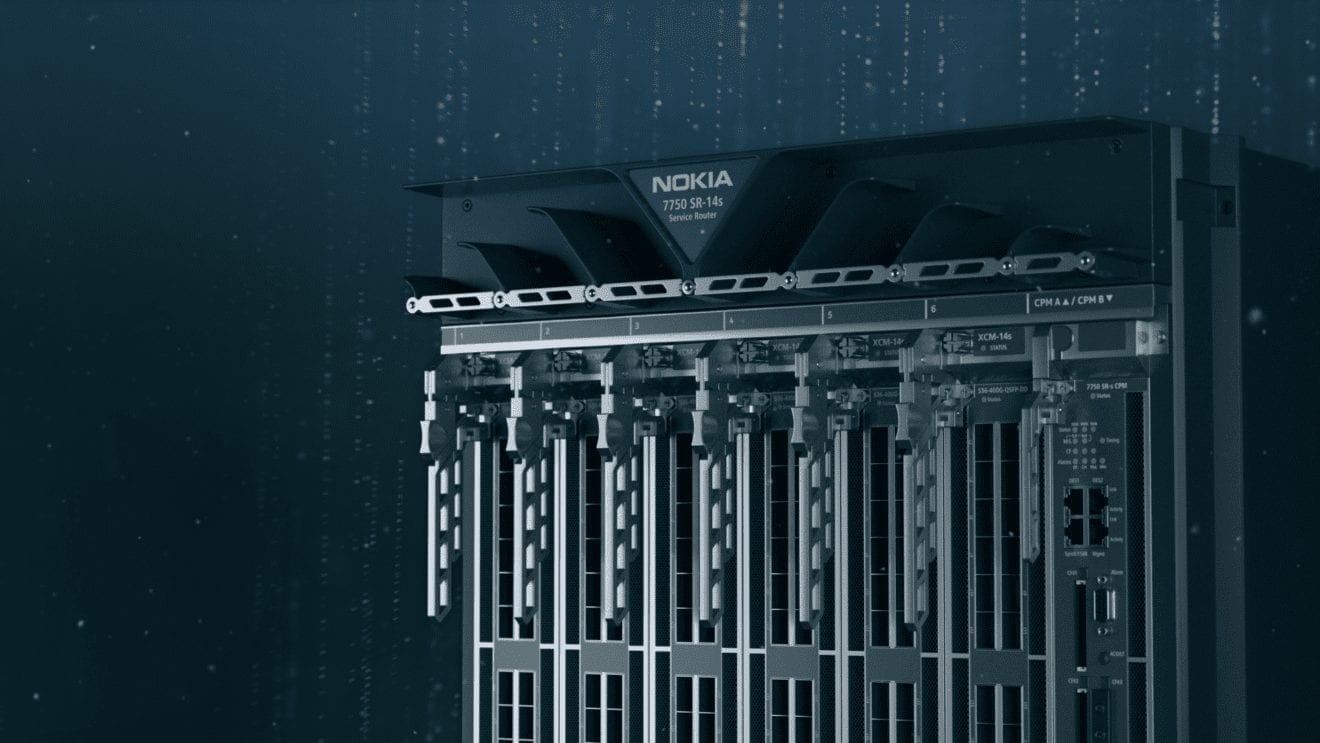
    Nokia has revealed plans to launch what it says will be the world’s most powerful network processor chipset, routing platform and router as part of its new IP routing portfolio.

    The company has unveiled new products based on its high-capacity FP4 silicon, featuring the first 2.4Tbps network processor, up to six times more powerful than processors currently available.

    A service router capable of supporting a 144Tbps configuration in a single shelf and an extensible petabit-class routing system scaling to 576Tbps in a single system using the new chipset will be launched in the fourth quarter.

    Nokia said these new platforms will be the industry’s first capable of delivering terabit IP flows, which will be a tenfold improvement over the existing 100Gbps links used for the internet’s backbone.

    The new routing platforms will have embedded packet intelligence and control technology that can be combined with Nokia’s Deepfield IP network analytics solution to minimize security threats such as DDoS attacks while improving network efficiency and 192.168.0.1 router management.

    “Nokia has managed to combine the raw horsepower required to run historic amounts of traffic between data centers with intelligent, secure and adaptable capabilities necessary for a cloud-connected environment,” ACG Research CEO and principal analyst Ray Mota commented.

    “The company has seemingly struck the right balance with silicon and systems innovations that address investment protection and now has the fastest router on the market.”

  • Spark taps Nokia to prepare network for 5G

    Spark taps Nokia to prepare network for 5G

    New Zealand’s Spark has contracted Nokia to upgrade the operator’s core infrastructure in preparation of 5G, ultra-fast broadband and the IoT.

    Spark will expand the capacity of its wireless network, which is primarily based on a Nokia IP/MPLS network, with a new router with terabit capacity.

    The three-year contract will see Nokia providing advanced IP and optical equipment and software for the Spark network. The agreement follows Spark’s recent launch of 200Gbps per wavelength fiber link using Nokia optical transport network technology.

    Spark general manager of partnering, procurement and vendor management Rajesh Singhh said the operator is committed to ensuring New Zealand is one of the first countries globally to be ready to adopt 5G. He said upgrading to 5G will help enable the government’s goal of improving broadband services in rural areas.

    “This strategic partnership is a key step for us to realize our vision of a data-driven future for New Zealand. Nokia is helping us to achieve worldwide leadership in preparing for 5G,” he said.

    “It will allow us to offer our customers the most advanced mobile and fixed broadband services anywhere, efficiently and securely.”

    “We are very pleased to continue our strategic partnership with Spark, which is committed to keeping New Zealanders at the cutting edge of technology,” added Kent Wong, head of Nokia’s Asia-Pacific IP business.

    “Spark’s investment will safely accommodate future growth as they benefit from Nokia’s global reach, expertise and agility. We are excited to help them be among the first customers to begin the move to 5G.”

  • Nokia, DoCoMo to test 5G in 4.5-GHz

    Nokia, DoCoMo to test 5G in 4.5-GHz

    Nokia and NTT DoCoMo have jointly announced plans to conduct interoperability testing of multi-vendor technology using the 4.5-GHz frequency band, as part of broader efforts to help develop Japan’s 5G ecosystem.

    The companies will be testing 5G applications using Nokia’s AirScale base station and 5G radio interface using the Intel 5G mobile trial platform.

    End-to-end applications will be tested over the air between the base station and the device using the 4.5-GHz spectrum, which is one of the 5G candidate frequency bands in Japan.

    Nokia’s AirScale active antenna with Massive MIMO technology and digital beamforming will be used to test applications including low-latency 4K video streaming.

    “This is a vital first step to allow us to ensure that we have the 5G network infrastructure available for when we commercially introduce the technology, with an ecosystem of device vendors to offer our subscribers the best possible choice and highest quality,” NTT DoCoMo CTO Seizo Onoe said.

    “This trial is an important milestone for the development of 5G in Japan, which will be one of the first countries in the world to adopt the technology,” added Nokia Japan head Jae Won.
    “Furthermore, the initiative is an important step forward in our collaboration with NTT DOCOMO, as well as other key technology partners, as we develop a technology that will meet the ever-growing demands of huge numbers of people living in megacities.”

  • Nokia, Apple bury hatchet in patent dispute

    Nokia, Apple bury hatchet in patent dispute

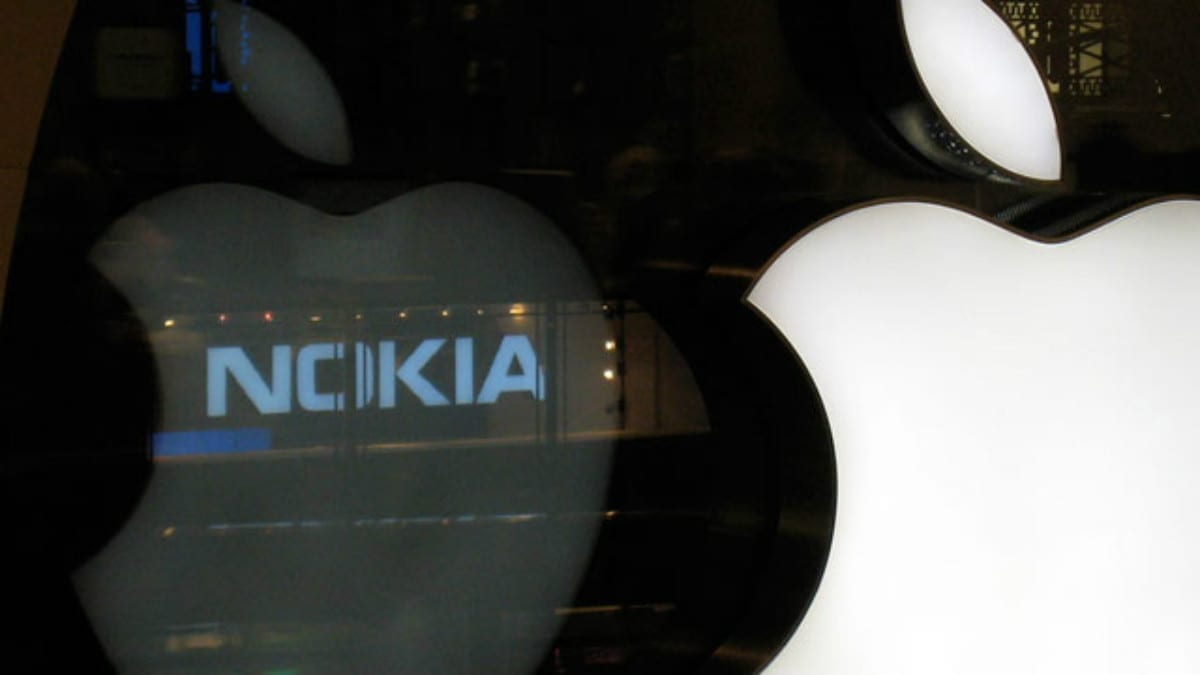
    It’s an upgrade in the relationship between two companies. Nokia and Apple said Tuesday they were burying the hatchet in a bitter patent dispute with a cooperation agreement and an undisclosed cash payment by the U.S. tech giant to the Finnish group.

    By settling their ongoing intellectual property dispute, the two companies would “move the relationship… from being adversaries in court to business partners,” Nokia’s chief legal officer Maria Varsellona said.

    Following years of clashes, Nokia and Apple originally signed a licensing agreement in 2011.

    But last December, the Finnish group, once the world’s top mobile phone maker, complained that Apple was using Nokia technology in many products without paying for it.

    And it filed lawsuits in Germany and in the United States.

    Concretely, the dispute concerned 32 patents for innovations related to displays, user interface, software, antennae, chipsets and video coding.

    The deal reached on Tuesday would put the two companies’ relationship back on an even keel, with Nokia providing “certain network infrastructure products and services to Apple,” the statement said.

    Apple would “resume carrying Nokia digital health products (formerly under the Withings brand) in Apple retail and online stores, and Apple and Nokia are exploring future collaboration in digital health initiatives,” it continued.

    “Regular summits between top Nokia and Apple executives will ensure that the relationship works effectively and to the benefit of both parties and their customers.”

    Apple’s chief operating officer Jeff Williams said the U.S. giant was “pleased with this resolution of our dispute and we look forward to expanding our business relationship with Nokia.”

    The two sides did not disclose the financial details of the deal.

    But Nokia would receive “additional revenues during the term of the agreement,” the Finnish group said.

    The up-front cash payment would allow Nokia to “provide a comprehensive update of its capital structure optimisation programme,” a restructuring plan launched in late 2015, which may now be lighter thanks to the payment by Apple.

    Nokia’s shares were showing a gain of more than seven percent stake on the Helsinki Stock Exchange at around 10:00 GMT, while the overall market was up by just 0.8 percent.

  • Retro Nokia phone hits the right buttons on return to Vietnam

    Retro Nokia phone hits the right buttons on return to Vietnam

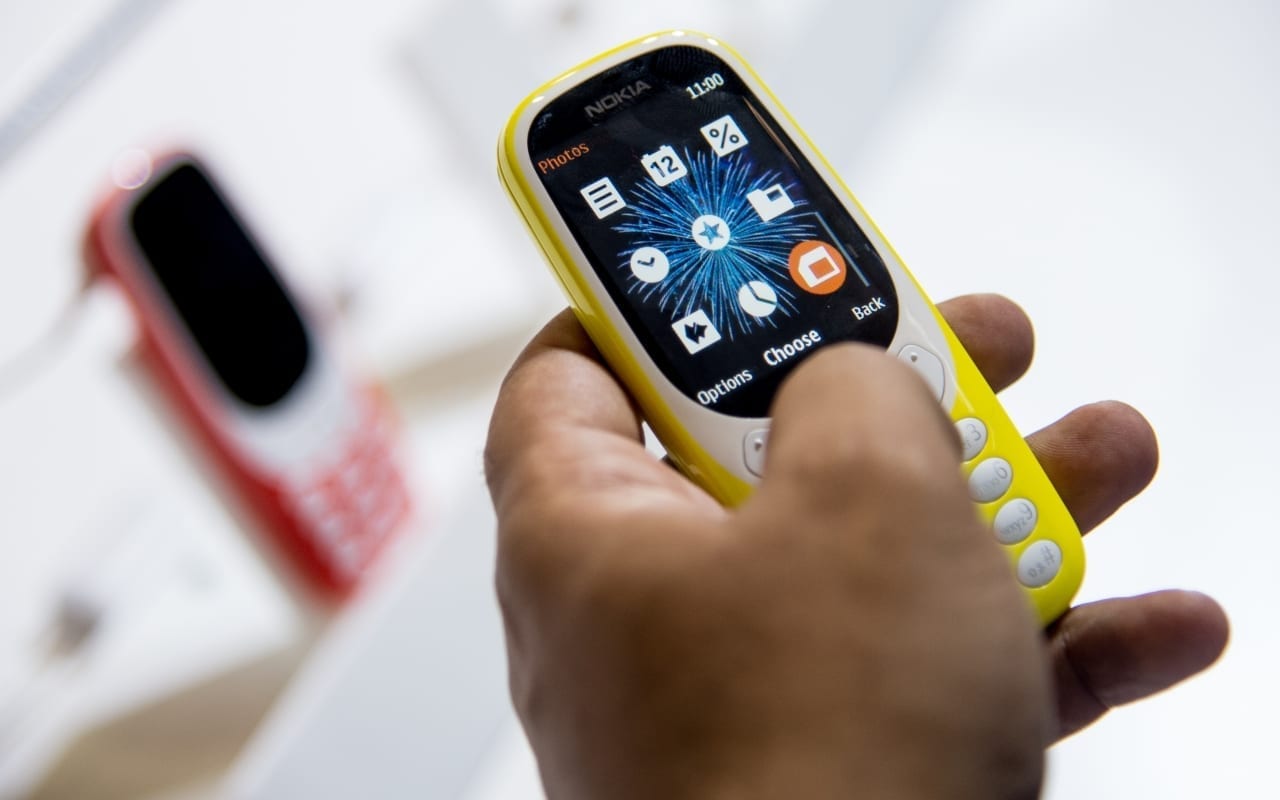
    Nearly two decades after being crowned the king of Vietnam’s cellphone market, Nokia’s classic 3310 has made a successful return to the mobile-crazy country, proving that its charms still work.

    The classic talk and text phone, which was reintroduced in a brightly colored version at the Mobile World Congress in Barcelona last February, hit Vietnamese shops on Monday and has already become a phenomenon.

    “It has triggered a hunt like when the iPhone first arrived in Vietnam,” said one customer who has been trawling the shops in vain for the revamped model.

    Many mobile retailers in Hanoi and Ho Chi Minh City said they had received limited supplies that sold out in a day. An independent shop in Hanoi was sent 20 phones while a retail chain received 500 for its more than 400 outlets.

    A source from the official distributor said that supplies will stabilize from next week. Many buyers have put deposits down for the phone, which costs VND1,059,000 ($46.67).

    Retailers said customers are buying out of a sense of nostalgia.

    The phone is a powerful reminder of Nokia’s popularity back at the start of the millenium, when the 3310 was one of the most popular models in many markets, including Vietnam.

    The original 3310 sold 126 million phones, the 12th best-selling phone model in history. Nine of the top 12 selling models were produced by Nokia.

    Many Vietnamese still consider the old model a benchmark for durability and battery life. The new model is designed for 22 hours of talk time and up to one month of standby time, which might heighten the phone’s appeal as a backup for smartphone users.

    Analysts hailed the 3310 launch as a smart retro gambit, but one which could overshadow the Finnish company’s re-entry into the global smartphone market. Nokia has also launched four moderately priced smartphones ranging from 139 to 299 euros ($156-336).

    Nokia sold its by-then ailing handset operations to Microsoft for $7 billion in 2014, leaving it with its network equipment business and a large patent portfolio.

    But last year, it gave the Nokia brand a fresh start by licensing its devices brand to HMD Global, a new company led by ex-Nokia executives and backed by Chinese electronics giant Foxconn.

    Industry analysts say the revived Nokia 3310 has the makings of one of the hit devices of 2017, appealing to older Nokia fans in developed markets looking for an antidote to smartphone overload, while also appealing to younger crowds in emerging markets.

  • Nokia recently announced its first Nokia smartphone – Nokia 3,5,6

    Nokia recently announced its first Nokia smartphone – Nokia 3,5,6

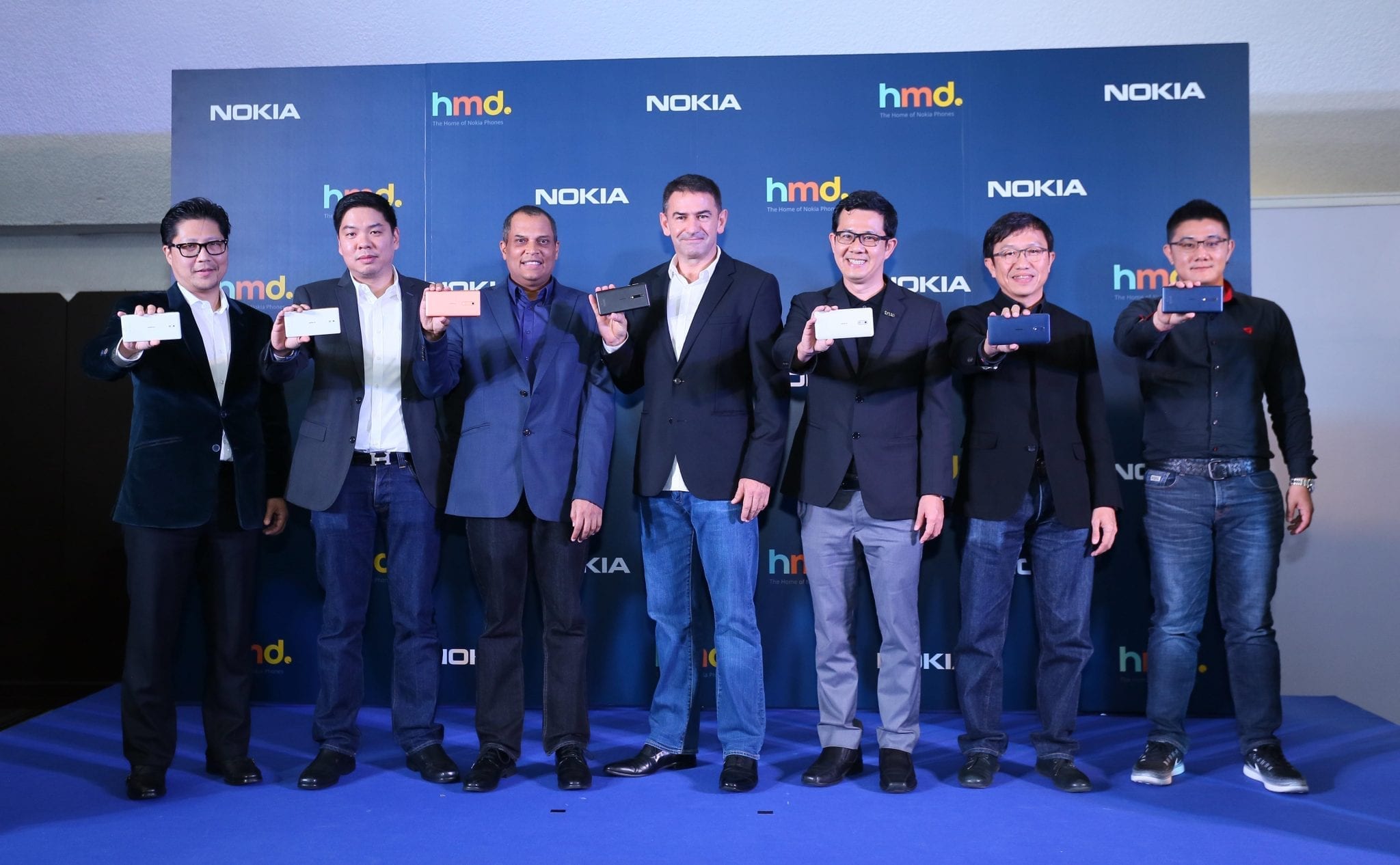
    HMD Global, the home of Nokia phones, recently announced at Thailand Mobile Expo 2017 that its first Nokia smartphone range, comprising of the Nokia 3, Nokia 5 and Nokia 6, will be available in all major operators and retailers in Thailand by end of June in 2017.

    Executives who attended the launch include (from left to right): Ponskorn Bencharongkul, Managing Director, Y.A.S Company, Arkapong Linpisarn, SVP, Head of Device Management Division,Total Access Communication, Sandeep Gupta, Regional General Manager, Thailand and Emerging Asia, HMD Global, James Rutherfoord, Vice President Asia Pacific at HMD Global, Tuantong Srivichian, Director, Device Product, True Corporation, Pairoj Thavornsapanant, Assistant Managing Director, TG Fone and Dusit Sukumvitaya , Vice President, Product, Jaymart Mobile

  • Nokia, Mitsubishi develop ultra-fast BTS amplifier

    Nokia, Mitsubishi develop ultra-fast BTS amplifier

    Nokia Bell Labs, Mitsubishi Electric and the Center for Wireless Communications at University of California San Diego in the US have jointly developed a new envelope-tracking power amplifier with the potential to significantly enhance the energy efficiency of next-generation base stations.

    The gallium-nitride power amplifier supports modulation bandwidth up to 80MHz, four times wider than the signals used in other envelope-tracking power amplifiers.

    This translates to a gain efficiency of 41.6% in wide-bandwidth operation, Nokia said, making it a promising candidate for 5G base stations.

    Next-generation wireless systems are using complex modulated signals with large peak-to-average power ratio and extra-wide modulation bandwidth, which will require power amplifiers to operate most of the time at backed-off power levels that are well below their saturation levels.

    But the efficiency of power amplifiers is generally significantly degraded at backed off levels. While envelope-tracking power amplifiers are considered a promising solution to this problem, so far the supply-modulator circuit has been the bottleneck limiting modulation bandwidth.

    The new prototype uses Mitsubishi Electric’s high-frequency GaN transistor technology and Nokia Bell Labs’ real-time digital pre-distortion system to help remove this bottleneck and achieve wider modulation bandwidth, the companies said.

    Technical details of the system will be presented during next month’s IEEE MTT International Microwave Symposium in Hawaii.