Retail News CRM

Tag: nokia

  • Nokia, University of Technology Sydney team on IoT projects

    Nokia, University of Technology Sydney team on IoT projects

    Nokia and the University of Technology Sydney (UTS) have signed a MoU under which Nokia will join the university’s UTS: Rapido, a new technology development unit.

    The two partners will collaborate on developing IoT-based business applications using high-speed, ultra-low latency technologies such as 5G.

    In the technology partnership with UTS: Rapido — established to help businesses unlock the potential of IoT — Nokia will work on advanced engineering projects that support the development of future network services to address the specific technological challenges of service providers and enterprises.

    Nokia and UTS will also explore the expansion of the advanced engineering activity into new areas of innovation and proof-of-concept development.

    The MoU covers the creation of a collaborative innovation and training facility at UTS, for which Nokia will provide IP routing, optical, fixed and 4G and 5G mobile network components, and applications and analytics platforms for project work and training. Nokia will also participate in the advisory board of the UTS Faculty of Engineering and Information Technology.

    In one of the first UTS: Rapido projects, researchers at the university are integrating video downloads filmed around the world using the Nokia OZO virtual reality camera into the UTS 3D Data Arena. This will show how operators could combine 3D footage with real-time data and graphics to explore new services and business opportunities.

    “This association will allow us to contribute our expertise in areas such as 5G, IoT and data analytics, through UTS: Rapido, to help Nokia’s customers unlock the potential of emerging digital capabilities,” said Myriam Amielh, associate dean for external engagement at UTS.

    Ray Owen, head of Oceania at Nokia, said the successful implementation of IoT and the connectivity of potentially billions of devices will rely on the deployment of technologies such as enhanced 4G and high-speed, low-latency 5G.

  • Nokia studies business case for 5G

    Nokia studies business case for 5G

    With the 5G era fast approaching, Nokia has released the findings of a series of studies into the potential benefits and return on investment for the emerging mobile technology.

    The vendor said in-depth analysis of how 5G will perform in real networks found the technology can increase capacity by 40 times compared to 4G.

    This makes 5G the only commercially viable technology for the delivery of a true immersive VR video experience to large audiences, and deliver the performance required for advanced industrial applications.

    In terms of RoI, the analysis indicates that investments in 5G to the home will break even after four years if the monthly average revenue per user remains above €40 ($42.90).

    Investments in 5G events and hotspots, in locations such as stadiums meanwhile have a one year RoI period assuming at least five events per month.

    “While market news has recently focused on the announcement of 5G technologies that drive increased network performance, it’s important to discuss how these low latency broadband connections will translate into customer value,” Mobile Experts principal analyst Joe Madden said.

    “With the publication of the two new studies and its 5G Acceleration Services, Nokia is showing operators and enterprises how they will be able to benefit from early 5G deployment.”

    Nokia’s 5G Acceleration Services aim to help operators and enterprises identify how the move to 5G will enable them to deliver transformational new services and create new revenue streams.

  • Australia’s nbn trials Nokia’s universal GPON tech

    Australia’s nbn trials Nokia’s universal GPON tech

    Australia’s nbn, the company in charge of rolling out the National Broadband Network, has achieved 102Gbps aggregate speeds during a lab trial of Nokia’s universal NG-PON fiber technology.

    Universal NG-PON (next-generation passive optical network) combines TWDM-PON (time wavelength division multiplexing PON), XGS-PON (10 gigabit symmetrical PON) and GPON (gigabit PON) technology on the same fiber to support blazing fast speeds.

    It is designed to serve as a simple upgrade path to the current fiber technology used in FTTP deployments, saving the time and additional costs associated with laying new fiber.

    During the trial at Nokia’s Melbourne laboratory, nbn tested TWDM-PON with 40Gbps symmetrical, XGS-PON with 10Gbps symmetrical and GPON with 2.5Gbps, achieving aggregate download and upload speeds of over 102Gbps over a single shared access fiber.

    “Our successful trial of NG-PON2 technology with Nokia is another example of our ongoing commitment to continually develop the capabilities and speed of the nbn network,” nbn CTO Dennis Steiger said.

    “While we continue to deploy the nbn network at pace with over 2 million end-users now receiving nbn services and nearly 5 million able to order a service, we also have a very sharp focus on the future. The NG-PON2 trials we have conducted with Nokia have shown us the huge potential this very exciting technology has in terms of helping us deliver on our future bandwidth and capacity requirements.”

    But the current government’s decision to abandon the previous government’s plan to use FTTP for around 93% of connections, in favor of a multi-technology mix incorporating last-mile copper technology purchased from incumbent operator Telstra, complicates the potential upgrade path to the new technology.

  • Nokia, Facebook set transatlantic efficiency record

    Nokia, Facebook set transatlantic efficiency record

    Nokia and Facebook have announced they have set a new spectral efficiency record over a transatlantic subsea cable using Nokia Bell Labs’ new probabilistic constellation shaping technology (PCS).

    During the trial involving a 5,500km subsea cable between New York and Ireland, shaped 64 quadrature amplitude modulation (64-QAM) was used to achieve record spectral efficiency of 7.46 b/s/Hz.

    PCS uses shaped QAM formats to flexibly adjust transmission capacity to near the physical limits of a fiber link.

    The results showed an increase of nearly 2.5 times more capacity than the stated limit of the system, indicating the potential to upgrade the cable to 32 Tbps per fiber.

    Transmission tests validated the successful transmission of 8-QAM wavelengths running at 200 Gbps and 16-QAM wavelengths running at 250 Gbps, a first for a transatlantic transmission.

    “Facebook wants to increase the pace of innovation and adoption of next-generation optical technologies,” Facebook global optical network architect Dr Stephen Grubb said.

    “This field trial with Nokia demonstrates that the scalable optical technology of PCS together with narrow linewidth laser sources can achieve capacities extremely close to the Shannon limit. This ensures that we are both maximizing our investment in submarine cable systems, as well as continuing to drive the cost per bit of submarine transport lower.”

  • Nokia, Ciena providing gear for Jio’s major 4G rollout

    Nokia, Ciena providing gear for Jio’s major 4G rollout

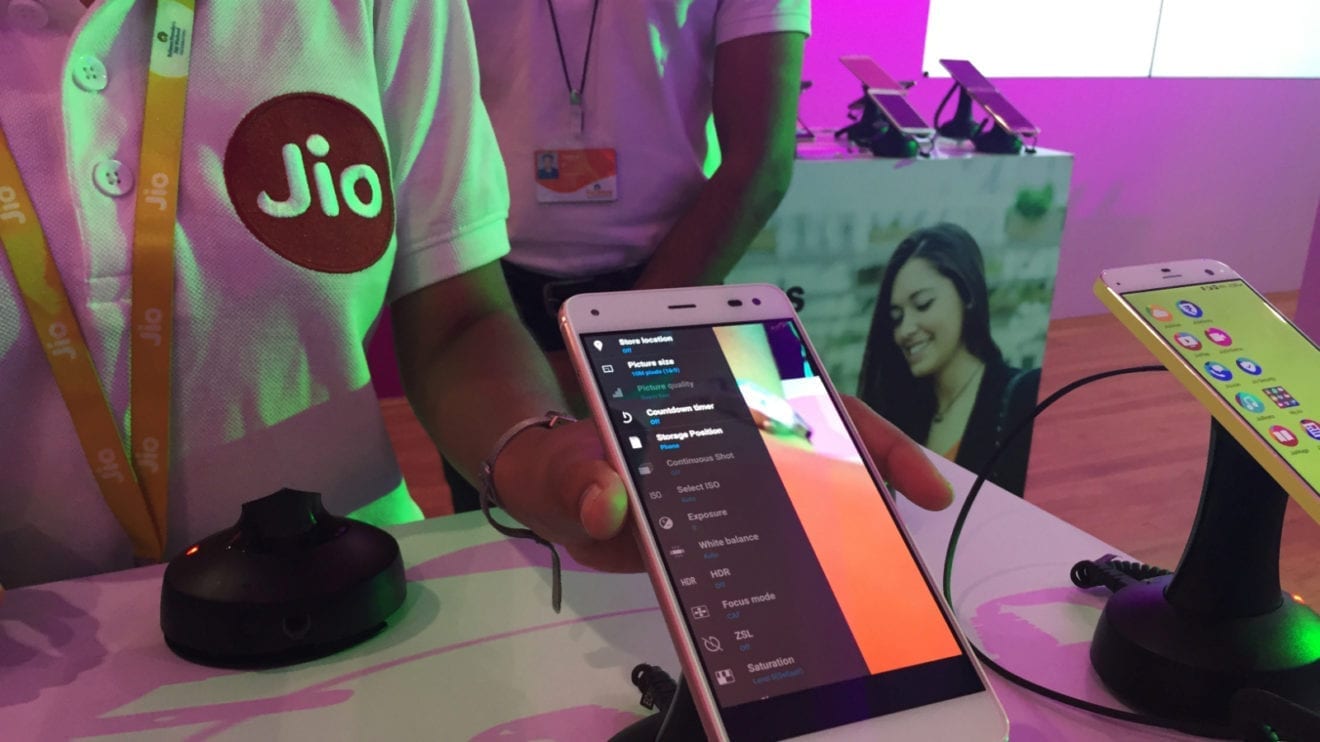
    Nokia and Ciena have both detailed their roles in providing equipment for disruptive Indian newcomer Reliance Jio Infocomm’s greenfield pan-India 4G rollout.

    Reliance Jio finally launched LTE services for the public in September last year, and has signed on 100 million new users in just 170 days due to its aggressive strategy of initially offering all services for free.

    Nokia announced that its optical deployment for Jio covers over 90,000km across India, making it one of the biggest 100G deployments in the world.

    The vendor provided switches with 100G DWDM capabilities as well as generalized MPLS intelligence to support capacity management and restoration

    “In only 170 days, Jio has signed on 100 million new users. With growth rates of this magnitude we had to ensure we deployed the highest capacity, most resilient transport network to build out the 4G network,” Reliance Jio president Jyotindra Thacker commented.

    “Nokia’s next-generation DWDM portfolio provides the ability to scale easily as Jio continues to expand the network to reach the underserved areas of India with digital services in key areas such as communication, education, healthcare, payments and multi-media entertainment.”

    Ciena meanwhile deployed multi-terabit converged packet optical technology for Jio’s 4G network core, operating at speeds of up to 200Gbps.

    The Ciena packet optical platforms use Ciena’s WaveLogic coherent technology for the core network, which connects all major cities of India.

    • “With Ciena we are not only able to provide robust scalability to offer new levels of data consumption, which is already 8 to 10 times above market levels, but also a supreme level of confidence in our network’s reliability and level of service that stands out in our marketplace,” Thacker said.
    • “Ciena’s coherent technological offerings and proven control plane technology is helping to make us the fastest growing 4G network in the world.”
  • Nokia announces major restructuring

    Nokia announces major restructuring

    Nokia has announced a restructuring of its mobile unit into two groups, focused on mobile networks and services respectively, in response to the planned departure of the company’s current mobile networks chief.

    The company said it will establish two units called Mobile Networks and Global Services respectively.

    The company’s current chief innovation and operating officer Mark Rouanne will lead up the mobile networks business group, which will be focused on areas including 4G, 5G, cloud core and small cells.

    The Global Services division will meanwhile be led by Igor Leprince, the current executive vice president of global services.

    These executives are taking over from current head of mobile networks Samih Elhage, who is leaving the company on April 1 but will stay on as an advisor until May 31. In a statement, Nokia CEO Rajeev Suri said Elhage has decided to leave now that the integration with Alcatel-Lucent is mostly complete.

    “From helping lead the transformation at Nokia Siemens Networks and creating a disciplined operating model that remains a competitive advantage, to being one of the driving forces behind the acquisition of Alcatel-Lucent and its fast and successful integration, Samih’s contributions to Nokia have been remarkable,” Suri said.

    “He has been a close friend and advisor through times both good and bad, and I fully support his desire for a change.”

    As part of the restructuring, the position of chief innovation and operating officer (CIOO) will be dissolved and the duties split. Responsibility for operations will be transferred to the newly-created position of group chief operating officer (COO), innovation will be taken over by Nokia’s chief technology officer (CTO) and incubation will be assumed by Nokia’s chief strategy officer.

    The group COO position is going to Monika Maurer, currently the company’s COO for fixed networks, while Marcus Weldon will retain the post of CTO and Kathrin Buvac will remain chief strategy officer.

  • Nokia providing IP/MPLS for Malaysia’s first MRT line

    Nokia providing IP/MPLS for Malaysia’s first MRT line

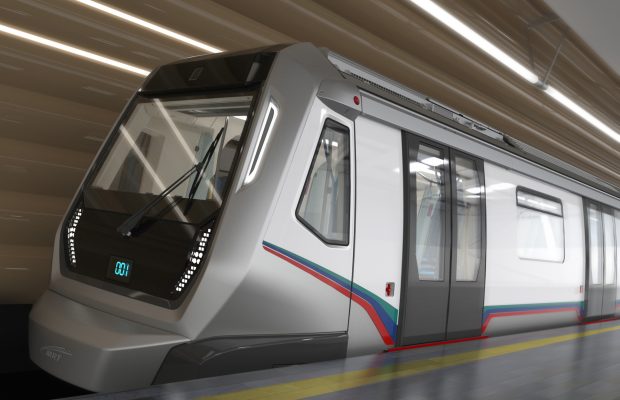
    Nokia has announced it has provided a mission-critical communications network for Malaysia’s first Mass Rapid Transit line.

    The company has supplied the network to systems integrator LG CNS as part of the project to provide railway operational support on the new SBK (Sungaii Buloh-Kajang) line.

    Nokia is providing an IP/MPLS network capable of providing scalable Layer-2 and Layer-3 VPN services for various railway sub-systems. The company is also providing its Network Services Platform for end-to-end network and services management.

    The northern section of the SBK line launched in December, and the southern and underground sections are due to be operational by the end of July.

    Once complete, the line will cover 51km and serve the 1.2 million residents in and around Malaysian capital Kuala Lumpur.

    “Nokia’s IP/MPLS solution for railways is designed to address railway operators’ demanding requirements in terms of performance, reliability and, most importantly, safety,” Nokia head of global enterprise and public sector for APAC Stuart Hendry said.

    “We are pleased to play such an important role in helping ensure safe, on-time and connected journeys for Kuala Lumpur’s residents.”

  • New Zealand’s Chorus extends managed services deal with Nokia

    New Zealand’s Chorus extends managed services deal with Nokia

    New Zealand infrastructure provided Chorus has extended its managed services agreement with Nokia for another three years.

    With the contract extension, Nokia will remain the operator’s sole managed services partner.

    The contract is based on Nokia providing fully managed end-to-end operations services aimed at improving the customer experience, operational efficiency and the quality of Chorus’ nationwide fixed line network.

    The initial managed services contract was signed in 2014. Under the agreement, Nokia is providing real-time end-to-end operations and network management from its Global Delivery Center in India.

    “Our decision to extend the existing agreement reflects our satisfaction with Nokia operations and support services,” Chorus CTO Ewen Powell said.

    “We need a partner that understands our business and can deliver simplicity over complexity, helping us launch innovative offerings to our partners and their customers while improving the overall reliability of our networks. Nokia has proven its capabilities to do that, so the extension was very straight forward.”

    Chorus was spun out of the infrastructure arm of former state-owned operator Telecom New Zealand as part of the demerger agreement that was a condition of its participation in New Zealand’s Ultrafast Broadband (UFB) state broadband project. The retail division was spun out into what is now called Spark.

    Chorus owns the majority of telephone lines and exchange equipment in New Zealand and is responsible for building around 70% of the UFB.

  • SK Telecom, Nokia team on quantum cryptography

    SK Telecom, Nokia team on quantum cryptography

    SK Telecom and Nokia have teamed up to conduct joint research and development in the field of quantum cryptography for network transport.

    The operators are collaborating to achieve interworking between SK Telecom’s Quantum Key Distribution System (QKD) and Nokia’s next-generation optical transport system by the second half of 2017.

    The first prototype from the collaboration – the Quantum Transport System – was shown off at Nokia’s booth at Mobile World Congress 2017 last week.

    SK Telecom said quantum cryptography is expected to replace existing security mechanisms in all areas at risk of data hacking, including national defense, finance, autonomous vehicles and the IoT.

    In line with this projection, SK Telecom and Nokia have also agreed to cooperate in the area of quantum random number generation, which will be required to apply quantum cryptography to IoT devices.

    SK Telecom has developed a quantum random number generator within the world’s smallest CMOS Image Sensor (CIS) based silicon, measuring just 5x5mm. The company expects to tape out engineering samples of the chip in the second quarter and commercially launch it by the end of the year.

    “Since opening Quantum Tech Lab in 2011, SK Telecom has been making constant efforts to develop quantum cryptography technologies,” SK Telecom CEO Park Jung-ho said.

    “Based on the cooperation with Nokia, SK Telecom will create a new paradigm and ecosystem in the field of ICT.”

  • A new era for Nokia smartphones

    A new era for Nokia smartphones

    HMD Global, the home of Nokia phones, today unveiled a new generation of Nokia smartphones, setting a new standard in design, quality and user experience throughout the range. The highly anticipated global portfolio features three new smartphones – the new Nokia 6, delivering performance and immersive entertainment in a premium and extremely robust design; Nokia 5, an elegant smartphone that fits perfectly in your hand; and Nokia 3, which delivers an unprecedented quality at an affordable price point. The new range of Nokia smartphones all run Android™ Nougat and offer a pure, secure and up to date experience and will all feature Google Assistant. Today also sees the return of a modern classic – the iconic Nokia 3310, reborn with a modern twist on design.

    The family of products announced demonstrate a belief that every consumer should have access to premium quality, not just those with high end flagship devices. Combined with a thoughtful design philosophy that focuses on improving the smartphone experience at every level, each technical component has been carefully considered and integrated into the phone design to have the biggest benefit on consumers’ daily lives. Drawing on the hallmarks of the Nokia phone heritage of quality, simplicity and reliability, the range is designed for a new generation of fans.

    With a commitment to deliver pure Android, users can expect a simple, clean and clutter free experience. Featuring the latest Google services, as well as monthly security updates, Nokia smartphones are safe, secure and up-to-date. The new Nokia smartphones feature Google’s most recent innovation, the Google Assistant, building further on a great Android experience. Our teams have worked together to ensure the Google Assistant is integrated, allowing for conversations with the Google Assistant to take place easily on Nokia smartphones.

    It was also announced that the world-renowned game Snake will be snaking its way back into people’s hearts with a new version available to play on Messenger, part of Facebook’s Instant Games cross platform experience. The new free Snake game is designed to be played with groups of friends making it even more playable than the first time around. 


    The new Nokia range of Android smartphones unveiled today ahead of Mobile World Congress includes:


    Nokia 6 is going global – combining superior craftsmanship and distinctive design with immersive audio and an impressive bright and colourful 5.5” full HD screen, the Nokia 6 delivers a truly premium smartphone experience. The unibody of the Nokia 6 is crafted from a single block of 6000 series aluminium. The smart audio amplifier with dual speakers allow consumers to experience a deeper bass and unmatched clarity, whilst Dolby Atmos® sound delivers a powerfully moving entertainment experience. Available in four colours – Matte Black, Silver, Tempered Blue and Copper – the Nokia 6 will retail at an average global retail price of €229.

    Nokia 6 Arte Black Limited Edition – celebrating the worldwide Nokia 6 portfolio is the Nokia 6 Arte Black Limited Edition. With 64GB storage and 4GB RAM, this special edition combines the best features of the Nokia 6 family in a stunning black high gloss package and will retail at an average global retail price of €299.

    Nokia 5 – a sleek and compact smartphone that nestles in your hand. The Nokia 5 has been precision engineered out of a single block of 6000 series aluminium to create a perfect pillowed body that flows seamlessly into the sculpted Corning® Gorilla® Glass laminated 5.2” IPS HD display. Powered by the Qualcomm® Snapdragon™ 430 mobile platform and the Qualcomm® Adreno™ 505 graphics processor, the Nokia 5 brings robust structural integrity, attention to detail and the quality of a high-end flagship to everyone. Available in four colours – Matte Black, Silver, Tempered Blue and Copper – the Nokia 5 will retail at an average global retail price of €189.

    Nokia 3 – a stunning new smartphone designed to deliver an outstanding experience with unprecedented value.  With a precision machined aluminium frame forged out of a single piece of aluminium, a sculpted Corning® Gorilla® Glass laminated 5” display and seamlessly integrated 8MP wide aperture cameras (front and back), the Nokia 3 packs a truly premium quality smartphone experience into its compact and elegant form. Available in four distinctive colours – Silver White, Matte Black, Tempered Blue and Copper White – the Nokia 3 will retail at an average global retail price of €139.

    Also announced today were:

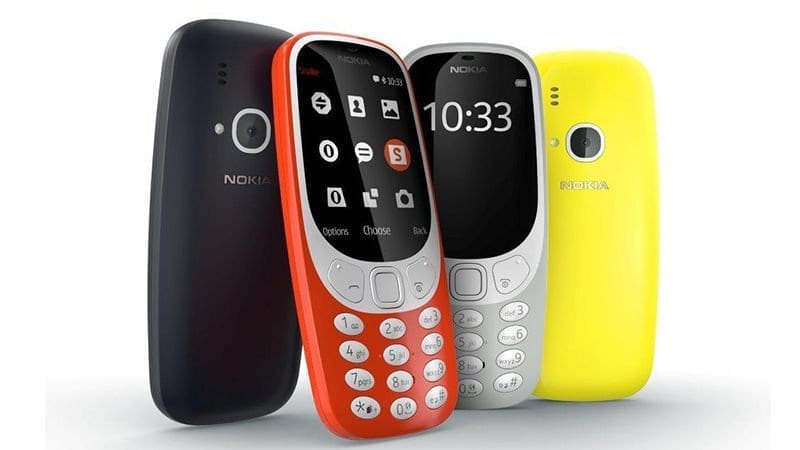
    Nokia 3310 a modern classic reborn. Thin, light and incredibly durable, the Nokia 3310 is a head turning modern twist on one of the best-selling feature phones of all time. Boasting an incredible 22-hour talk-time and month long stand-by, the Nokia 3310’s fresh, colourful, modern design brings it bang up to date. The Nokia 3310 is available in four distinctive colours – Warm Red and Yellow, both with a gloss finish, and Dark Blue and Grey both with a matte finish. The Nokia 3310 will retail at an average global retail price of €49.

    Accessories also introduced was a portfolio of Nokia accessories that follows iconic design philosophy. As perfect companions to these smartphones, the full Nokia accessories portfolio includes a range of headsets, portable and Bluetooth speakers, in-car chargers, cases and screen protectors.

    Arto Nummela, CEO of HMD Global, said:

    “Nokia has been one of the most iconic and recognisable phone brands globally for decades. In the short time since HMD was launched into the market, the positive reception we’ve had has been overwhelming; it seems everyone shares our excitement for this next chapter. Today’s consumers are more discerning and demanding than ever before and for us they will always come first. Our efforts in bringing together world class manufacturers, operating systems and technology partners sees us proudly unveiling our first global portfolio of smartphones with a Nokia soul, delivering the very best experience to everyone.”

    Florian Seiche, President of HMD Global, said:

    “Strategic and meaningful partnerships are essential to our success, both for the products and manufacturing. Equally we are committed to building the right kind of partnerships at a market level so we can reach and service all of our fans. The encouragement, support and excitement we have felt from the operators and retailers we’ve met globally so far has been humbling. The excitement and anticipation for our first global family of smartphones has been tremendous, and we’re delighted to offer fans the ability to register their interest for the new range at nokia.com/phones.”

    Juho Sarvikas, Chief Product Officer of HMD Global, said:

    “Nokia phones stir real emotions; people know them for their beautiful design and craftsmanship, together with a built-to-last quality that you can rely on.  Our new portfolio combines these classic Nokia hallmarks with a best-in-class Android performance and a new level of craftsmanship. For the Nokia 3310 we just couldn’t resist. We wanted to reward loyal Nokia phone fans and make a statement that rich heritage, innovation and modern design can go hand-in-hand.  Fundamentally, it is about making sure that right across our portfolio we are delivering this pure Nokia experience.”

    “We also believe that everyone deserves access to the premium quality and attention to detail that is usually reserved only for flagship devices. With our new range of Nokia smartphones, we aim to democratise technology and bring this experience to everyone.”

    Pekka Rantala, Chief Marketing Officer of HMD Global, said:

    “Consumers today are seeking relationships with brands that they can trust. The Nokia brand has over 150 years of heritage giving it an authentic, differentiating experience which we are proud to introduce to a new generation of fans.  Our new Android Nokia smartphone portfolio, together with the return of the iconic Nokia 3310, is a real statement of our ambition and commitment to honouring the hallmarks of a true Nokia phone experience.”

    Brad Rodrigues, interim President of Nokia Technologies, said:

    “What HMD has created is remarkable. We’re excited to see the launch of a new family of smartphones, built to the standards that Nokia is known for. We believe that their strong design and quality will appeal to Nokia fans around the world, and the return of the Nokia 3310 has us smiling too!”

    Enrico Salvatori, SVP and President, Qualcomm EMEA said:

    We are pleased to have collaborated with HMD on the Nokia 6 and Nokia 5 and look forward to working closely with them on future devices. The Nokia brand has a rich heritage in advancing mobile technology and to see new Nokia smartphones on sale is a welcome sight.  Both devices are powered by the Qualcomm Snapdragon 430 mobile platform which offers a rich feature set for smartphones: integrated X6 LTE, cutting-edge camera technology with dual-Image signal processors, next-generation Qualcomm Adreno 505 GPU all means Snapdragon 430 supports fast downloads and uploads, stunning graphics and photos with battery life to spare.”

    The new portfolio of Nokia smartphones and feature phones is on display at Mobile World Congress.  Local availability will be announced in markets in Q2, 2017. To get hands-on with the full range of Nokia phones, visit HMD at the Nokia stand (Hall 3, stand 3A).
  • Nokia makes big moves in 5G, IoT

    Nokia makes big moves in 5G, IoT

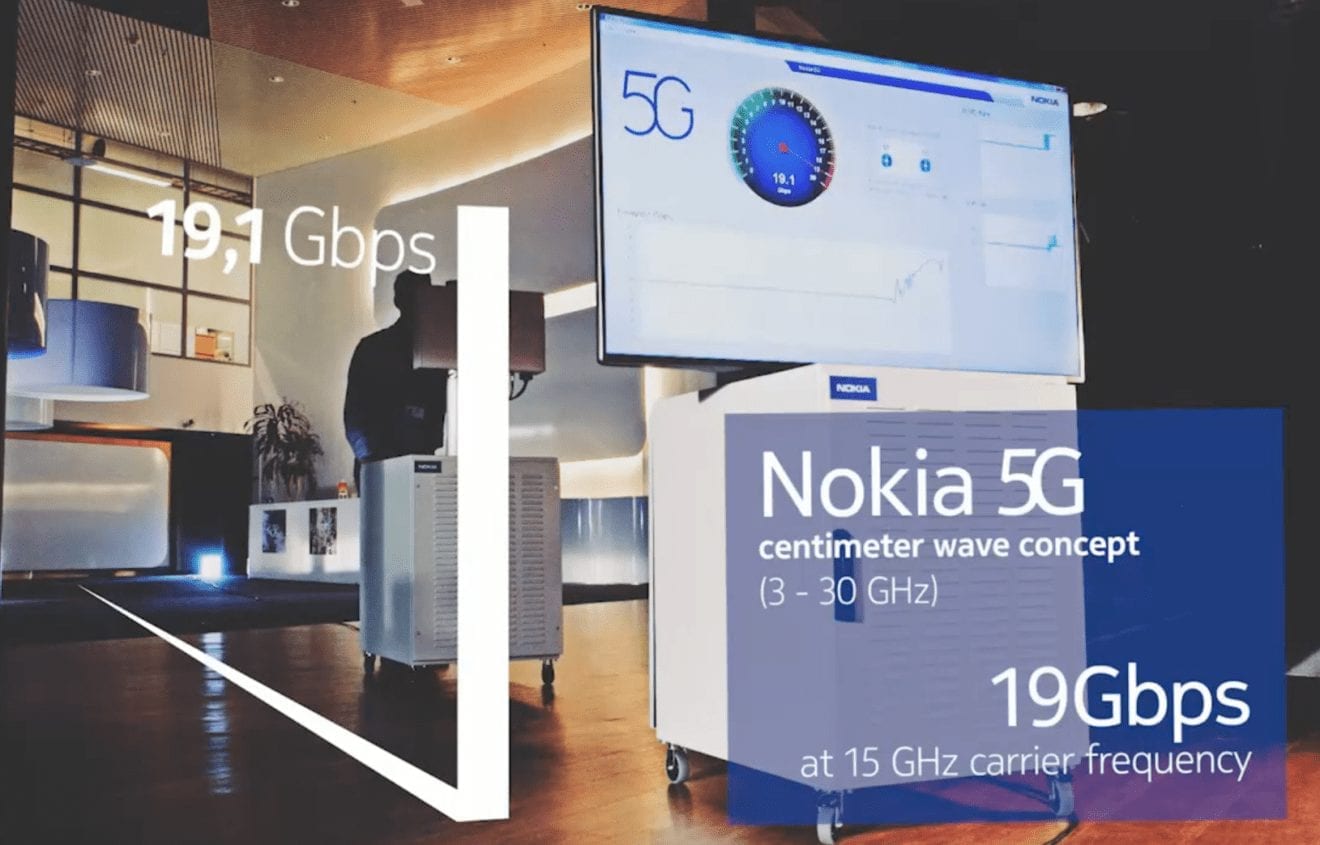
    Nokia is stepping up its efforts in 5G competition with the launch of 5G First, its debut 5G product.

    The 5G First, which will be available in the second half of 2017, helps mobile carriers prepare for 5G-ready architectures and gives them “first to market advantage”, Nokia said, adding that the 5G product is underpinned by technical specifications outlined by the Verizon 5G Technology Forum ecosystem.

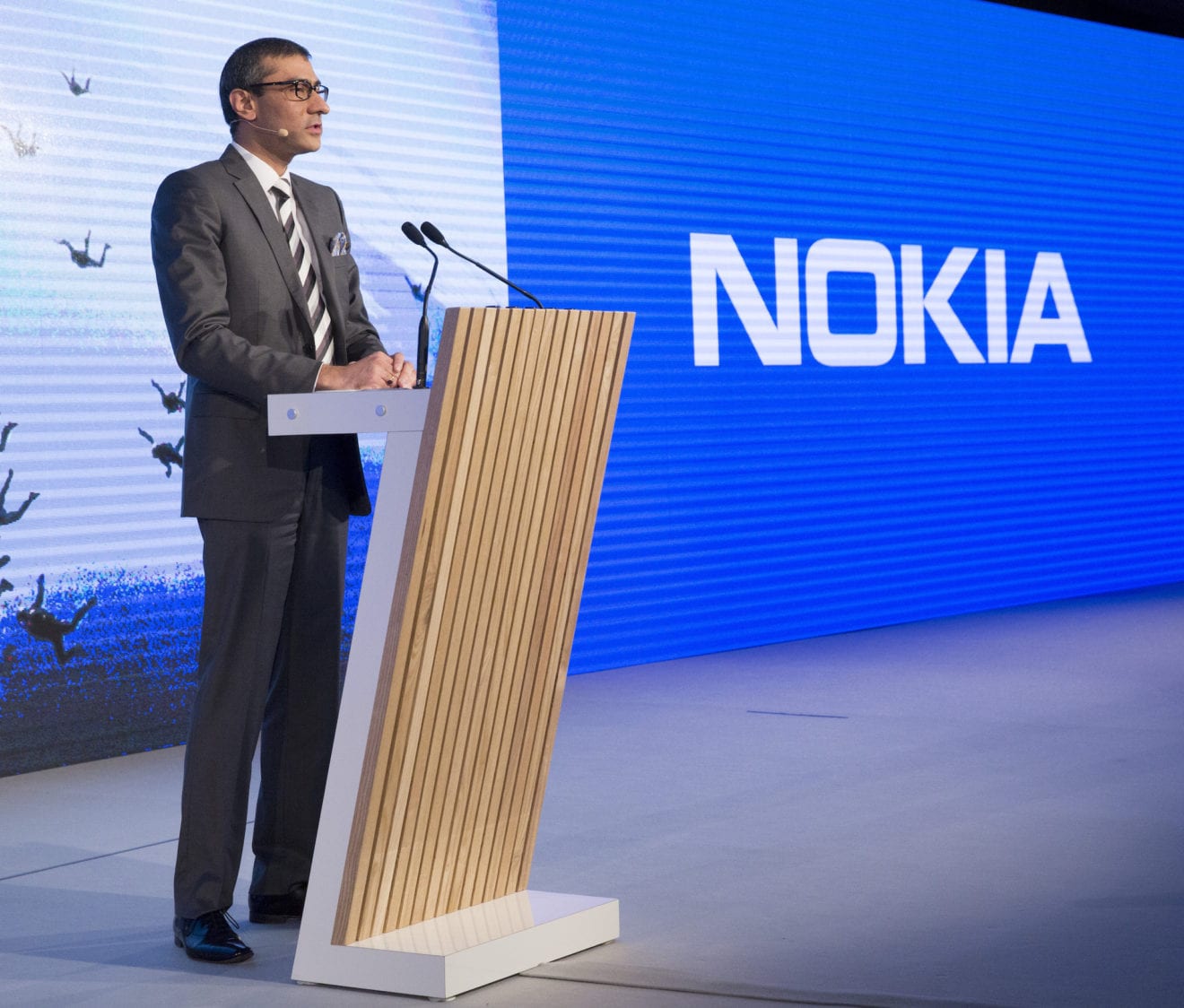
    Announcing the launch at a news conference ahead of Mobile World Congress in Barcelona on Sunday, Nokia president and CEO Rajeev Suri said “the 5G launch is not hype but soon to become reality.”

    He said Nokia is working with Verizon and Intel to supply equipment for pre-commercial 5G services to homes in select Verizon markets such as Dallas. The companies will also deploy 5G-enabled “next-generation video and entertainment services”, which are set to launch in Dallas later this year and expand to other US markets by the end of 2017.

    In addition, Suri predicted that investments in 4G, particularly advanced 4G technology, will pick back up this year in key markets, like Japan.

    “Even with 5G coming, the need for more capacity grows everyday with no sign of slowing,” the executive said.

    Suri also revealed that Nokia has won a three-year contract from Telefonica to boost the performance of its 4G networks in London as data demand grows. The deal includes Nokia 4.5G Pro technology, he added.

    Earlier this month, Nokia reported its profits for the fourth quarter of 2016 fell less than expected, helped by cost cuts and the acquisition of Alcatel-Lucent.

    The Finnish telecoms equipment vendor is also looking to broaden its footprint in faster-growing areas including software and the utilities and transport markets with IoT and cloud, in a bid to offset the weakening revenues from the telecoms sector.

    For example, Nokia has recently launched WING, its IoT network grid, which is aimed at providing a full-service model offering IoT connectivity across different technologies to manage a client’s IoT connectivity needs and assets.

  • Nokia showcases LTE drones for public safety

    Nokia showcases LTE drones for public safety

    Nokia has conducted a demonstration showcasing the use of LTE-enabled drones to facilitate efficient rescue operations in disaster areas.

    The demonstration involved the creation of an instant LTE network using its Ultra Compact Network portable base stations to establish connectivity between camera-mounted drones and a control center.

    Nokia conducted the demonstration at the UAE Drones for Good Award event in Dubai. The company said the drones can be used to stream video and other sensor data in real time from the disaster site to a control center.

    At this control center, data is analyzed using Nokia’s video analytics technology to help emergency responders make informed decisions to ensure efficient and safe rescue operations.

    “Nokia always strives to expand the human possibilities of technologies for the benefit of mankind. We are committed to corporate social responsibility, and with ‘Nokia Saves Lives’ we want to use our technologies with drones to show efficient rescue operations in collaboration with NGOs and network operators,” Nokia head of Middle East Bernard Najm said.

    “The selection of this initiative by the UAE Drones for Good Award for a public demonstration in Dubai clearly shows usefulness of this innovative initiative for smart disaster recovery.”

  • Nokia adds 10Gbps PON to mobile transport solution

    Nokia adds 10Gbps PON to mobile transport solution

    Nokia has added 10Gbps PON and point-to-point fiber to its access portfolio to help meet demand for high-capacity mobile transport in the 5G era.

    The mobile transport solution is designed to allow operators to use existing PONs used in FTTH deployments to gain the capacity and coverage 5G requires.

    The portfolio is also being used as part of a Bell Labs proof-of-concept to demonstrate the flexibility of 10G symmetrical PON networks for low latency applications such as mobile fronthaul.

    By adding gateway functionality, Nokia is able to convert mobile fronthaul CPRI signals to Ethernet, the company said.

    “The biggest opportunity on the horizon for fixed networks is the arrival of 5G. It’s clear that 5G will require very high capacity and low delay, but what is less certain is just how much capacity will be required for backhaul and what latency will be sufficient,” Nokia president of fixed networks Federico Guillen said.

    “We take the guesswork out of the equation. Our solution allows operators to access existing PON networks that have virtually unlimited capacity to meet their needs today, with the added flexibility to add 10G PON evolutions gradually as demand for more bandwidth and services increases. The massive throughput and cell densification strategy of 5G make it a perfect match for existing FTTH deployments.”

    Meanwhile Calix announced it has worked with New Zealand’s Northpower Fibre to complete the first demonstration of 10Gbps NG-PON2 technology in a live network.

    Northpower Fibre plans to deploy NG-PON2 technology based on Calix’s AXOS software-defined access architecture to help differentiate in New Zealand’s growing Ultra-Fast Broadband (UFB) marketplace stimulated by the government’s second phase of the UFB program.

    “New Zealand is undergoing a major broadband vitalization effort, and we see the emergence of NG-PON2 technology as a major enabler going forward,” Northpower Fibre CEO Darren Mason said.

    “As attention in the second phase of UFB shifts from the cities to bring fiber broadband to more rural areas, Northpower Fibre will be leading the way having committed to connect 12 new towns to fiber within the next four years.”

  • Nokia to launch its 4.9G technologies this year

    Nokia to launch its 4.9G technologies this year

    Nokia has announced plans to launch what it is calling its 4.9G technologies by the end of 2017, and to demonstrate its new Cloud Single RAN at Mobile World Congress 2017 later this month.

    The vendor said it will introduce new technologies including the 4.9G AirScale Massive MIMO adaptive antenna system by year-end to help operators meet rapidly rising infrastructure demands on the path to 5G.

    At Mobile World Congress 2017, Nokia plans to work with US operator Sprint to demonstrate the new technology using 3D beamforming software.

    The technology promises throughput gains of up to eight times uplink and five times downlink, with Nokia projecting peak data rates of 3Gbps using commercial TD-LTE devices..

    Also at the event, Nokia will demonstrate its Cloud Single RAN running virtualized 2G, 3G, 4G and 5G radios and 2G and 3G network controllers over commercial Nokia platforms.

    This year Nokia also plans to introduce a new component of its 4.5G Pro portfolio –  a micro remote radio head designed to allow operators to take advantage of unlicensed spectrum to enable gigabit speeds.

    “Nokia introduced 4.5G Pro and 4.9G last year to allow operators to implement network capacity increases where and when it made sense for them, Nokia head of mobile network products Frank Weyerich said.

    “Now we are delivering features that will maximize their resources, speed up deployment times and cut power and costs especially in the most densely populated locations. We are making 4.5G Pro a commercial reality now and working with customers to innovate with solutions to their network densification and evolution challenges in 4.9G and beyond.”

  • Nokia plans to buy Comptel to boost software portfolio

    Nokia plans to buy Comptel to boost software portfolio

    Nokia has revealed an interesting M&A move over in Europe this morning. The vendor has announced an intention to acquire Finland-based Comptel, launching a recommended cash tender offer for the company’s shares.

    The deal would bring Comptel’s service orchestration, data processing, customer engagement, and agile service monetization solutions under Nokia’s roof.

    There they would be combined with Nokia’s own software capabilities, which include Cloudband and Nuage. Those of course derive from the Alcatel-Lucent acquisition.

    The result would be the ability to offer end-to-end orchestration of complex NFV and SDN deployments, and thus make a more complete case to the carrier market going forward. One might see this deal as having a similar plan in mind as we saw in the Ciena/Cyan deal a year and a half ago.

    The price tag for Nokia is approximately €347 million, which derives in part from an offer price per share of €3.04 ($3.24), a 28.8% premium above the closing price yesterday. That price has been unanimously recommended by Comptel’s board of directors.