Retail News CRM

Tag: nokia

  • Jazz contracts Nokia for 4G network expansion

    Jazz contracts Nokia for 4G network expansion

    Pakistan’s Jazz has contracted Nokia to expand the operator’s 4G network capacity and coverage.

    Under the five-year agreement, Nokia will provide its radio solutions for Jazz’s network in the central and southern Punjab province as well as the Sindh and Baluchistan provinces.

    The rollout area will cover densely populated cities including Faisalabad, Multan, Bhawalpur, Rahimyar Khan and Sukkur, allowing Jazz to provide improved services for customers.

    The deployment will include Nokia AirScale base stations for expanded 4G coverage and Massive MIMO technology for enhanced capacity and speed.

    “Expanding 4G coverage across all cities and towns in Pakistan is one of the key strategic pillars of Jazz to fuel the consumption of broadband services,” Jazz chief technology and information officer Khalid Shehzad said.

    “Nokia’s advanced equipment coupled with its commitment to provide quality professional services will ensure that our subscribers enjoy superior service experience. It will help us maintain our growth momentum and attract new subscribers.”

  • Indosat Ooredoo picks Nokia for IP/MPLS upgrade

    Indosat Ooredoo picks Nokia for IP/MPLS upgrade

    Indosat Ooredoo has contracted Nokia to upgrade the Indonesian operator’s IP/MPLS network to meet fast-growing demand for fixed and mobile broadband services.

    Indosat Ooredoo is deploying a 100GbE IP/MPLS network as part of a three-year network transformation program.

    Nokia will provide a solution that includes its Nokia IP Anyhaul for Indosat’s mobile transport network, paving the way for its upgrade to 5G. The network will also carry services including metro Ethernet for consumer broadband and enterprise data services.

    The first year of the network upgrade project will concentrate on Jakarta, Jabodetabek and the rest of Java.

    “Indosat Ooredoo started an ambitious three-year program to transform our network to achieve the best customer experience, which will provide video-grade 4G coverage to more than 90% of Indonesia’s population,” Indosat Ooredoo CTIO Dejan Kastelic said.

    “The IP/MPLS network upgrade that we are undertaking with Nokia is aimed at providing a solid foundation for the network transformation, particularly in the most densely populated area of the country.”

    He said upgrading the company’s existing IP/MPLS network with a new Nokia network processor will help the operator both meet the growth in subscriber demand, while keeping capex costs down by extending the life of existing assets.

  • Nokia to open Cognitive Collaboration Hubs

    Nokia to open Cognitive Collaboration Hubs

    Nokia has announced plans to open a network of Cognitive Collaboration Hubs to drive collaboration between operators and enterprises on the development of AI-powered use cases. By hosting development on the Nokia AVA cognitive services platform, the hubs will reduce operators’ time to market and increase their return on investments in data analytics.

    The Cognitive Collaboration Hubs build on the success of Nokia Cloud Collaboration Hubs established in 2018, which have attracted substantial interest from operators to help them build new cloud-based capabilities.

    The hubs aim to provide a catalyst for operator strategy development and help them solve key challenges by applying analytics and AI techniques. Agile development processes are used to jointly create use cases, test and put them into operation within weeks.

    Typical application areas focus on network operations, network performance, customer experience and data monetization. 5G is another key focus, and Nokia is currently working with several US operators on the use of machine learning to improve 5G network planning – for example to help identify the best site locations or Massive MIMO beamforming configurations.

    “Network operators are eager to deploy AI to improve network operations and strengthen customer relationships,” GlobalData service director for telecom technology and software John Byrne said.

    “Nokia’s Cognitive Collaboration Hubs can help accelerate those plans by providing a space for operators, partners and enterprises to co-create new AI solutions utilizing a mix of data science and telco domain expertise.”

    Nokia is already engaged in a number of AI-based trials with operators worldwide. For example, in Turkey, Nokia and Türk Telekom are testing machine learning based artificial intelligence technologies on new generation mobile and fixed networks by using Nokia’s artificial intelligence assistant MIKA and AVA cognitive services platform.

    Nokia is also announcing a new innovation to improve road safety and passenger experience. Driver Behavior Analytics provides real-time analysis of data from commodity sensors delivering useful data insights for government authorities, the automotive industry and commercial enterprises.

    Advanced insights derived using a proprietary smartphone application to deliver information on aggressive driving, inadequate road conditions or dangerous junctions.

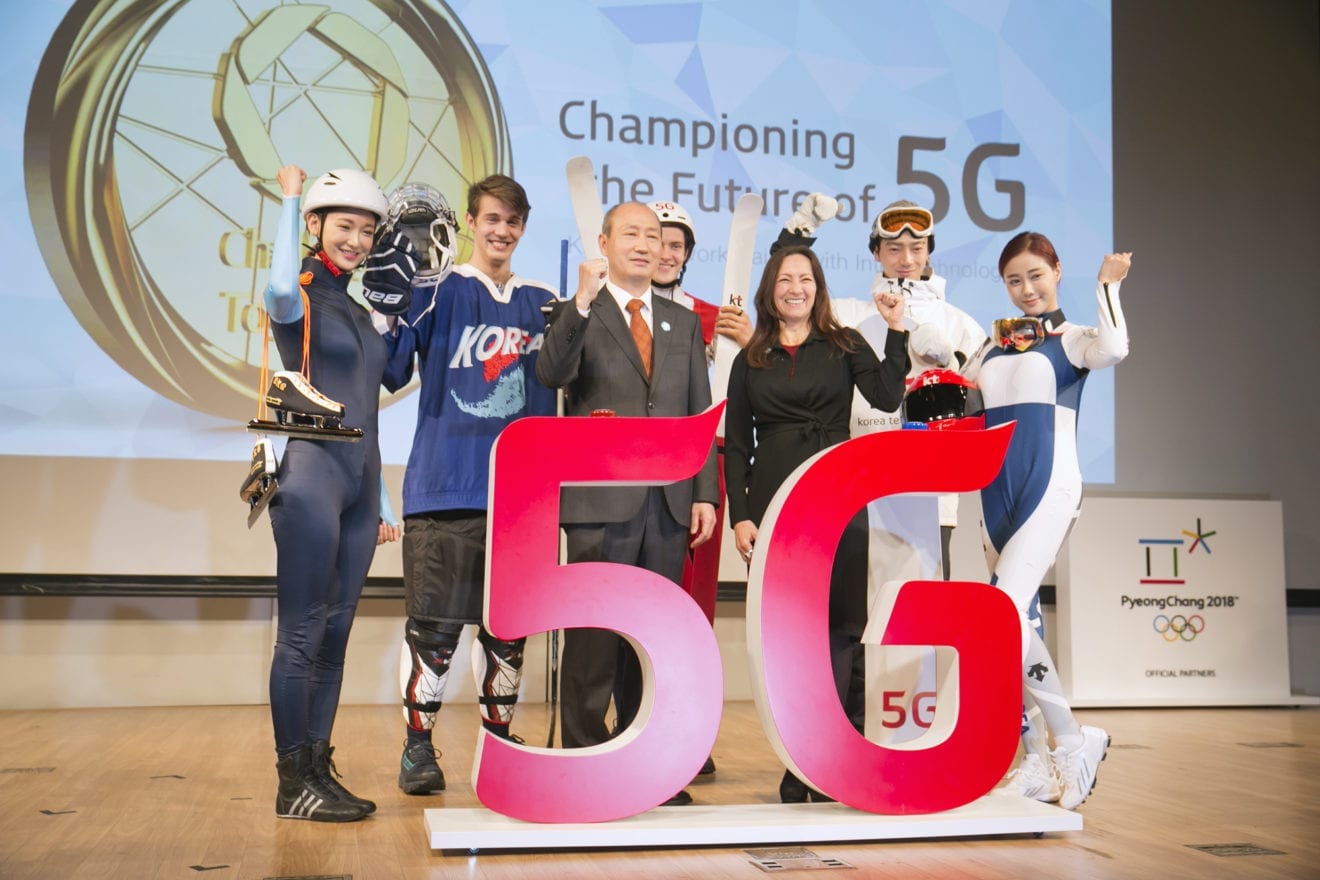
  • Korea’s KT skips Huawei for 5G

    Korea’s KT skips Huawei for 5G

    KT has chosen Samsung Electronics, Ericsson and Nokia as suppliers of 5G network equipment. As expected, Huawei was excluded from the list.  “In choosing 5G equipment providers, the company considered a wide range of factors: the level of technology, investment costs and management stability based on the compatibility with the existing LTE network,” KT said in a statement.

    The bid results, announced by the company Thursday, come a month after SK Telecom named Samsung Electronics, Ericsson and Nokia as its 5G equipment providers.

    This is the second time Huawei was left out despite having participated in internal tests along with the three selected.

    SKT and KT’s choices were anticipated because both had used equipment from Samsung, Ericsson and Nokia for their 4G LTE networks.

    Compatibility of equipment is an advantage for mobile carriers in terms of cost and maintenance, especially in the early stages when 5G equipment is not fully installed nationwide.

    LG U+ is the only one among Korea’s three mobile carriers that has not yet announced 5G equipment suppliers. The smallest mobile carrier is likely to include Huawei on its list. It partnered with the Chinese company for its 4G LTE network, along with Samsung, Ericsson and Nokia.

    An LG spokesman said Thursday that the company “does not have plans to openly disclose selected bidders for 5G network equipment at the moment,” as it is not mandatory.

    However, LG U+ Vice Chairman Ha Hyun-hwoi gave a strong hint at the parliamentary audit late last month when he gave a positive answer to a lawmaker’s question on whether it was “unavoidable” to use Huawei’s 5G equipment as its 4G equipment was from the same company.

    The biggest advantage of Huawei’s 5G equipment is cost efficiency. The Chinese company is known to charge prices that are 20 to 30 percent lower than other global competitors for high-quality 5G equipment. A factor that argues against Huawei is security concerns.

    Due to its ties to the Chinese government, there have been worries that the company’s equipment is being used for spying. In August, the U.S. and Australian governments banned Huawei from supplying equipment for their 5G wireless infrastructure citing security reasons. Britain said in July it “is less confident” about the integrity of Huawei products.

    The concern is shared by some local customers as well. Online petitions at the Blue House’s official website have been posted since June requesting a stop to LG’s adoption of Huawei’s 5G equipment. Huawei has been denying such allegations.

    In a press release last month, the Chinese tech company highlighted that, despite ongoing security concerns, there has been zero cases of actual information leakage in the past.

    “We have supplied LTE equipment for LG U+ since 2013, and until now, there were no cases of security accidents,” said the statement. “After multiple verifications by the government, it has been proved that there have been no problems.”

  • BSNL, Nokia to collaborate on public safety networking

    BSNL, Nokia to collaborate on public safety networking

    Nokia and Indian state-owned operator BSNL are expanding their relationship with an agreement to jointly explore opportunities in the public safety sector.

    Under the agreement, Nokia will become BSNL’s OEM technology partner for public safety projects in support of the government’s efforts to advance public safety standards in the country.

    The two companies will explore developing solutions for first responders based on Nokia‘s ViTrust line of critical communications products.

    This will include the Nokia Ultra Compact Network, a portable solution designed to allow the deployment of a mission critical LTE mobile broadband network within minutes of arrival.

    The companies will explore opportunities in industry segments including smart cities, border enforcement, and mines and quarries in remote areas, and will work with India’s National Disaster Response Force (NDRF) to augment public safety communications systems with LTE technology.

    “As a trusted telecom service provider, BSNL is committed to providing the best technology solutions for public safety professionals,” BSNL chairman and managing director Anuam Srivasta said.

    “Our technology partnership with Nokia is a crucial step in this direction. We have a longstanding working relationship with Nokia, and this project starts a new chapter in our journey. Nokia’s innovation and leadership in mission-critical communications will allow us to deliver a best-in-class public safety network.”

    Last week the two companies announced another collaboration aimed at using LTE technology to improve operational efficiency at Nokia’s Chennai manufacturing plant.

  • Nokia launches Fixed Access Health Index

    Nokia launches Fixed Access Health Index

    Nokia has announced it has developed a new metric for measuring the quality and performance of fixed access networks in a standardized way.

    The Nokia Fixed Access Health Index for service providers uses Nokia’s automation and analytics capabilities to benchmark the performance and health of fixed line networks against those of industry peers.

    It is designed to act as the foundation for network optimization programs, and measure their performance and progress over time through regular performance measurements.

    The index is already in use by multiple operators, including a major Asian service provider that used the tool to optimize the network health and quality of its recently introduced IPTV service.

    “The initial results we saw with our pioneering customers in this domain were so impressive that we decided to go for a ‘standardized’ approach, which can be replicated with other service providers,” Nokia president of fixed networks Federico Guillén said.

    “Based on a series of playbooks, each operator gets a personalized evaluation and improvement plan. To offer this kind of service, we build on our expertise in all 20 of the largest access networks globally, and with more than 300 fixed broadband customers worldwide, which gives us an endless source of knowledge to tap.”

  • BSNL helping to transform Nokia’s Chennai factory

    BSNL helping to transform Nokia’s Chennai factory

    Nokia and Indian state owned operator BSNL have announced a collaboration to use LTE technology to improve operational efficiency at Nokia’s Chennai manufacturing plant.

    The project, which the companies are billing as India’s first real world application of the Industry 4.0 concept, will see Nokia’s Chennai factory adopt advanced technologies to enhance operations and increase productivity.

    These technologies will include augmented and virtual reality, connected robotics, AI, big data analytics and IoT capability.

    Nokia deployed the LTE network using its Micro Core Network and Multi-access Edge Computing platform.

    Nokia and BSNL aim to use the project to demonstrate the ability to leverage automation across industries, and how the experience can be replicated in sectors such as oil and gas, mining, public safety and disaster management.

    BSNL has undertaken several initiatives to ensure India keeps pace with 5G evolution globally. Nokia is already one of our key partners in developing the 5G ecosystem, and now we are exploring use cases such as Industry 4.0 that can benefit tremendously with 5G,” BSNL chairman and managing director Anupam Srivastava said.

    “This network deployment for Industry 4.0 at Nokia’s Chennai factory that can be scaled to 5G demonstrates our preparedness to take advantage of new opportunities that will emerge with 5G and IoT in India.”

  • Nokia, STC to deploy LTE air-to-ground trial network

    Nokia, STC to deploy LTE air-to-ground trial network

    Nokia and Saudi Telecom Company subsidiary STC Business have teamed up to launch a pilot LTE-based air-to-ground network in Saudi Arabia. The agreement was signed at GITEX Technology Week 2018, and follows a successful trial of Nokia’s LTE-based air to ground solution on a flight from Riyadh to Jeddah in Saudi Arabia. Under the agreement, Nokia and STC will jointly work to build a commercial strategy for providing customers with in-flight connectivity, as well as on the network managed services and rollout of air-to-ground services across the STC Group.

    During the trial, Nokia provided a dedicated end-to-end network, including an air to ground RAN, core infrastructure and applications, while Nokia’s technology partner for aviation equipment Thales provided the onboard equipment.

    “The air-to-ground technology will enable STC to provide new and revolutionary services for their customers and add new revenue streams,” Nokia MEA head of end-to-end sales solutioning Mohamed Abdelrehim said.

    “With high-speed and low-latency broadband, airline passengers will be able to communicate with their loved ones or for business without any disruption because of air travel. Also, the airline crew will be able to improve operational efficiency because of better real-time communication between the flight crew and ground staff.”

  • Huawei insists it’s not a 5G espionage risk

    Huawei insists it’s not a 5G espionage risk

    Two Korean mobile carriers are trying to decide whether to choose Huawei as their next-generation 5G network equipment provider, and the Chinese electronics giant sent a press release Monday to downplay potential spying issues.

    Huawei said there has never been any information leakage over its devices and vowed to follow any Korean government demands for security verifications.

    “Huawei’s products and solutions are used by customers and consumers in over 170 countries, Fortune 500 companies and major mobile operators around the world,” said Huawei in the release. “Huawei is doing its best to offer stringent cyber security and has received zero complaints concerning the issue.”

    Huawei is now the world’s second-largest smartphone vendor after Samsung Electronics and the No. 1 maker of telecom network equipment. It noted in the release that it is “abiding by laws and regulations in the regions it offers ICT solutions.”

    The release came as KT and LG U+, the two smaller players in Korea’s mobile market, are set to announce which telecom equipment suppliers they have chosen for their 5G service. Announcements are expected this month.

    Given that LG U+ is already using 4G long-term evolution network devices from Huawei, it is highly likely Korea’s smallest telecom might choose the Chinese manufacturer for compatibility’s sake. It also uses network devices by Samsung, Nokia and Ericsson.

    LG is likely to choose all four, including Huawei, for its 5G networks.

    Sources say KT isn’t likely to opt for Huawei. The second-largest carrier in Korea has been using Samsung, Ericsson and Nokia equipment for its 4G LTE network.

    Deals involving trillions of won in orders were supposed to be closed by August but have been delayed. Korea aims to commercialize 5G network as early as next March, but Korean telecom authorities are in a dilemma over the Chinese issue.

    They realize Beijing could retaliate through trade sanctions if Korea decides not to choose the Huawei equipment.

    Korea’s top telecom, SK Telecom picked Samsung Electronics, Ericsson and Nokia as the suppliers for its 5G network equipment on Sept. 14 despite Huawei’s lower offer. Huawei is known to charge prices that are 20 to 30 percent lower than other global competitors for high-quality 5G equipment.

    Huawei’s security problem stems from its ties to the Chinese government, and the worry that its equipment being used for spying purposes isn’t confined to Korea. Britain’s National Cyber Security Centre said in July that it “is less confident” about the integrity of Huawei products.

    The U.S. and Australian governments in August banned Huawei and ZTE from supplying equipment to develop the country’s 5G wireless infrastructure for security reasons.

    One of the main reasons for the escalating trade war between the United States and China is their desire to win in the 5G race to become a global leader.

    Huawei is already a supplier of 4G networks in Australia and refuted the August decision, saying Canberra should not use the excuse of national security to erect trade barriers.
  • Rakuten completes 5G trials in 28-GHz with Nokia

    Rakuten completes 5G trials in 28-GHz with Nokia

    Japan’s Rakuten Mobile Network said it has completed over-the-air 5G trials in the 28-GHz frequency band using equipment provided by Nokia and Intel.

    The trials were carried out from June in a shielded room at the Nokia Kawasaki Technology Center located in Kanagawa Prefecture in Japan, using Nokia AirScale base station and the Intel 5G Mobile Trial Platform.

    During the trials, Rakuten Mobile Network and Nokia verified a number of 5G applications including 4K video and 3D 360-degree VR live streaming, the Japanese mobile carrier said in a company statement.

    Rakuten Mobile Network, which is the newly created mobile subsidiary of Japanese e-commerce giant, secured government approval to deploy 4G mobile services in the 1.7-GHz frequency band in April 2018. The company aims to launch its first mobile services as a mobile network operator in October 2019.

    Rakuten Mobile Network is teaming with a number of vendors including Nokia on the design and construction of its nationwide mobile network. The two companies will also work closely together on 5G technology testing and evaluation, Rakuten said.

    “The next generation of mobile broadband and the Internet of Things, enabled by 5G, will transform virtually all sectors of society and industry, and further accelerate the opportunities to advance in healthcare, education, energy services and agriculture, and within new industry applications,” Rakuten Mobile Network CTO Tareq Amin said.

    “The results of our trials highlight the importance of realistic 5G OTA testing and reinforce the potential of 5G networks, taking us a step closer towards actual deployment,” he added.

  • Nokia demonstrates smart city solution for Viettel

    Nokia demonstrates smart city solution for Viettel

    Nokia has completed a demonstration of its smart city management solution IOC for Vietnamese military-run operator Viettel in support of the government’s smart city ambitions.

    Nokia demonstrated its Integrated Operations Center to the operator during a trial in Hanoi.

    The IOC solution is designed to orchestrate smart city operations providing a unified real-time management of all smart city assets and services. Using a combination of automation and analytics, the solution aims to help cities improve productivity and identify new revenue and efficiency opportunities.

    Viettel will be able to use the solution to more effectively manage traffic in Hanoi by leveraging video analytics and video management solutions.

    The Vietnamese government plans to leverage Nokia smart city technologies to address a number of common city problems such as waste management, energy management and traffic management, while enabling better utilization of resources.

    “We are honored to help Viettel conduct this important demonstration. Nokia’s IOC is a proven solution to manage smart city infrastructure efficiently. This end-to-end solution provides a real-time view of the different applications, devices and systems used in the smart city. Its integrated analytics capability further opens up new revenue opportunities for the service providers,” Nokia Global Services head of public sector practice Alexander Van Overveld said.

    “Smart cities promise to provide sustainable living, and we are committed to enabling Viettel to deliver world-class use cases and solutions to its customers.”

  • Nokia, UTS to establish 5G skills accelerator in Australia

    Nokia, UTS to establish 5G skills accelerator in Australia

    Nokia has teamed up with Australia’s University of Technology Sydney (UTS) to launch a new training facility aimed at broadening the skills base of Australia’s communications industry in 5G and other advanced communications technologies.

    The new Nokia 5G Skills Accelerator will provide UTS students, staff, industry personnel and Nokia customers, business partners and employees with access to cutting edge 5G technologies and training practices.

    It will focus on technology domains that will underpin the delivery of fixed and mobile high speed communications. These areas will include radio access, IP routing, optical and core networks, fixed broadband access, security and IoT platforms.

    More than 1,000 students and industry personnel are expected to attend the Nokia 5G Skills Accelerator at UTS next year, Nokia said.

    “Australia will be among the world leaders in 5G adoption and can be a pacesetter in the development of new mission-critical services in areas like industrial IoT,” Nokia head of Oceania Zoltan Losteiner said.

    “We need to accelerate the development of the right skills and knowledge to ensure Australia can reap the full benefits, and Nokia is proud to partner with UTS in this new national training facility.”

    Nokia is also a member of the UTS Rapido program, a collaboration of more than 200 researchers in areas such as data analytics, cyber security, 5G and IoT. Nokia is also a key member of Nokia’s Australian graduate program.

  • Nokia completes 4G/5G dual connectivity data call

    Nokia completes 4G/5G dual connectivity data call

    Nokia has announced the successful completion of a 5G New Radio (5G NR) data call based on 4G/5G dual connectivity during a demonstration in China.

    The demonstration, conducted as part of China’s Ministry of Industry and Information Technology’s (MIIT) 5G R&D trials, involved a dual connectivity call conducted using a 5G NR system on the 3.5-GHz spectrum band as well as LTE in the 2.1-GHz frequency band.

    Nokia said the successful demonstration is an important step in the verification of 5G in sub 6-GHz frequency bands, which will be required for wide-area coverage.

    The data call used the Nokia AirScale Cloud RAN, Nokia AirScale baseband unit, Nokia 5G Massive MIMO Active Antenna, Nokia Cloud Packet Core and Nokia home subscriber service. PRISMA Telecom Testing provided a 5G end user equipment simulator.

    As well as the 3.5-GHz trials, Nokia also plans to work with the MIIT to trial 5G in the 4.9-GHz frequency bands.

    “We are pleased to showcase our end-to-end capabilities in 5G in this successful call and trial with MIIT,” Nokia president of mobile networks Marc Rouanne said.

    “Nokia is ready to support dual connectivity with the AirScale radio access portfolio as it is upgradeable via software to 5G and provides single RAN support for 4G, 4.5G Pro and 4.9G as well as legacy technologies. As a result we can help our customers meet their early 5G deployment schedules and initial coverage demands.”

  • Nokia buys SpaceTime to bloster IoT offerings

    Nokia buys SpaceTime to bloster IoT offerings

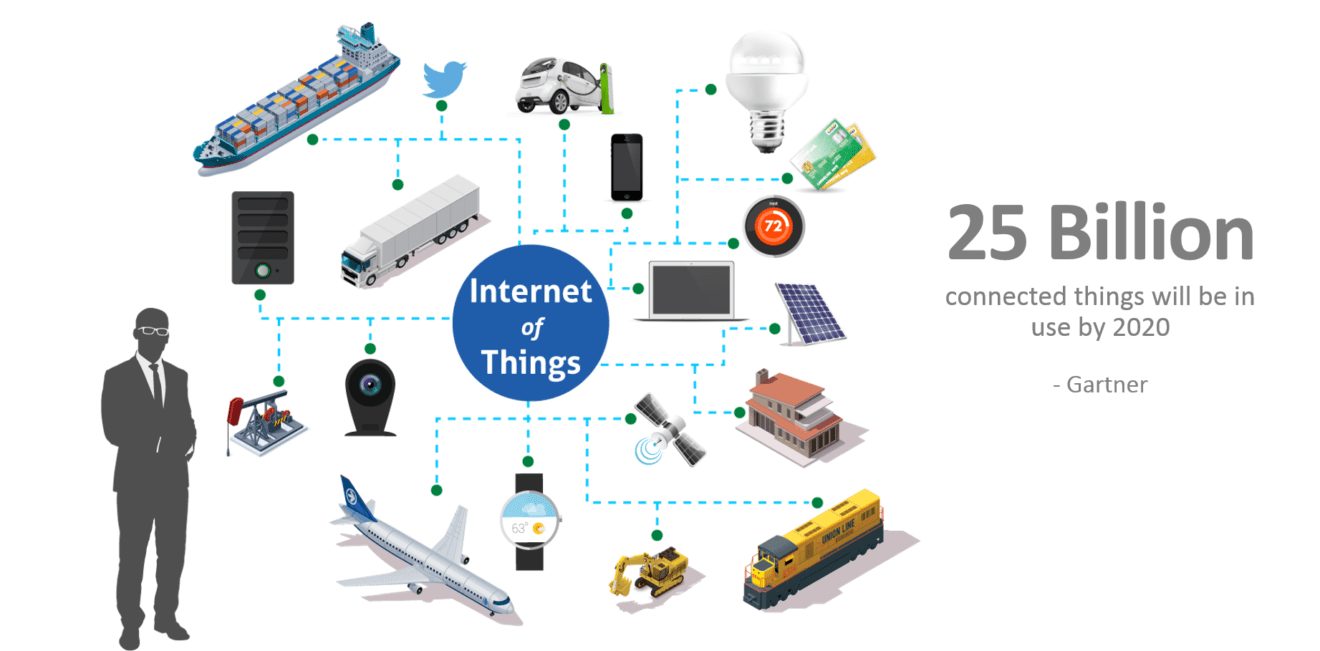
    Nokia has acquired US-based software supplier SpaceTime Insight in its latest push to expand its Internet of Things (IoT) portfolio and IoT analytics capabilities beyond the telecoms sector.

    The company did not reveal the financial terms of the deal.

    Based in San Mateo, California, SpaceTime Insight provides machine learning-powered analytics and IoT applications for asset-intensive industries like transportation, energy and utilities. Its clients include Entergy, FedEx, NextEra Energy, Singapore Power and Union Pacific Railroad.

    Nokia said SpaceTime Insight’s machine learning models and other advanced analytics predict asset health with a high degree of accuracy and optimize related operations, helping customers reduce cost and risk, increase operational efficiencies, reduce service outages and more.

    SpaceTime Insight and its CEO Rob Schilling will join the IoT product unit within the Nokia Software business group. The company has offices in US, Canada, UK, India and Japan.

    The acquisition will strengthen Nokia’s IoT software portfolio and IoT analytics capabilities as well as speed up the development of Nokia’s IoT offerings to deliver IoT solutions and services to new and existing customers.

    It will also broaden the company’s ability to deliver new, advanced applications for key vertical markets, including energy, logistics, transportation and utilities, Nokia added.

    Commenting on the acquisition, Bhaskar Gorti, president of Nokia Software, said “the addition of SpaceTime to Nokia Software is a strong step forward in our strategy, and will help us deliver a new class of intelligent solutions to meet the demands of an increasingly interconnected world.”

  • Nokia Q1 profit slumps 59%

    Nokia Q1 profit slumps 59%

    Nokia has reported a sharp 59% decline in net profit for the first quarter of 2018 to €86 million ($104.1 million) due to the ongoing weakness in the telecoms equipment market.

    Revenue for the quarter fell 9% year-on-year to €4.93 billion, with networks revenue down 12% to €4.32 billion.

    The vendor said sales and profitability for the quarter were primarily impacted by lower net sales in North America, but there were signs of improvement in terms of orders, suggesting that sales and profitability will improve over the rest of the year.

    Based on the orders received during the quarter, the company expects demand for 5G to accelerate further, particularly in North America where the first 5G fixed wireless access deployments are expected in the second half of the year.

    Licensing revenue for the quarter meanwhile grew 65% year-on-year, and the company expects further smartphone licensing opportunities in China, as well as brand licensing and in the automotive sector.

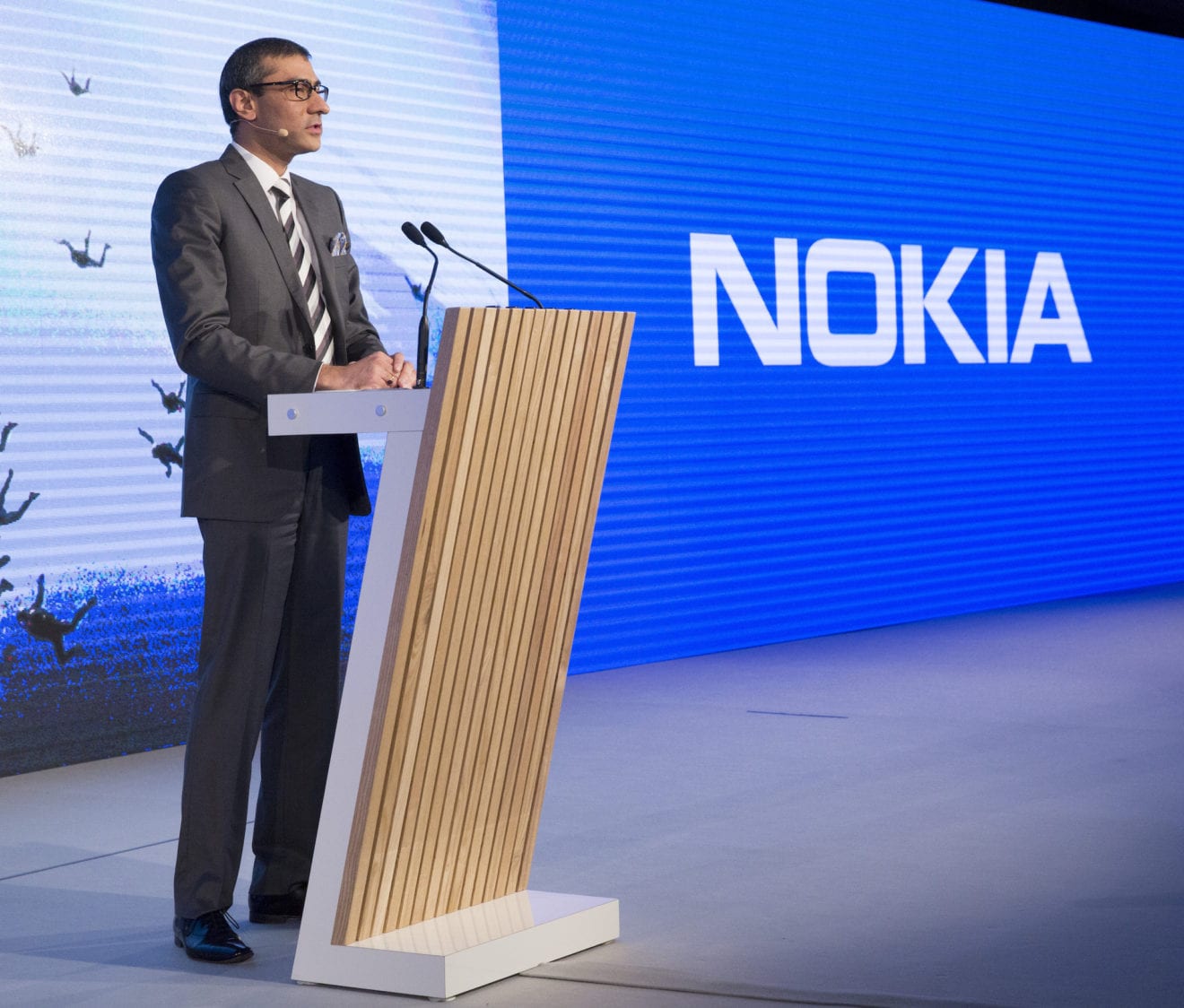
    “We see strong momentum building for the full year despite a slow start in networks. I have considerable confidence that Nokia is well-positioned to out-perform a strengthening networks market and meet our full-year 2018 guidance,” Nokia CEO Rajeev Suri said.

    These targets include an earnings per share of €0.23 to €0.27, with an operating margin of between 9% and 11%.