Retail News CRM

Tag: nokia

  • Nokia partners QTnet to launch local 5G network in Kyushu

    Nokia partners QTnet to launch local 5G network in Kyushu

    QTnet, which provides broadband and related services to customers, will now be able to launch new services using Nokia’s local 5G technology, thus creating a sizeable business opportunity. The private wireless network will be based on the Nokia Digital Automation Cloud, a high-performance, private wireless networking and edge computing platform that will power digital transformation across the Kyushu region.

    Together, Nokia and QTnet will also join forces with the Kyushu Institute of Technology to provide new local 5G-enabled services on the Institute’s university campus. This will be the first industry-academia collaboration in Japan to create a local 5G environment in a university campus setting. Services include self-operating stores, walking support for the visually impaired, cafeteria crowd monitoring, and new trials with partners and research labs.

    Sadao Mouri, Director and Senior Managing Executive Officer at QTnet, said: “Local 5G has the potential to enable new applications and business models while dramatically improving users’ quality of life. By deploying robust local 5G private wireless networks in Kyushu, we will enable anchor institutions like education, healthcare, and first responders to reach new levels of efficiency and productivity. Nokia’s track record in providing reliable local 5G networks will be an important milestone in creating new businesses.”

    Donny Janssens, Head of Nokia Enterprise Japan, said: “We are excited to work with QTnet on this 5G initiative, which is the first of its kind in Kyushu. With a high-performance 5G network, Kyushu institutions can take advantage of innovative new services and applications which will transform the way they operate. We look forward to expanding the local 5G private wireless ecosystem while delivering compelling 5G experiences.”

  • Nokia chosen by Globe Telecom for 5G rollout in the Philippines

    Nokia chosen by Globe Telecom for 5G rollout in the Philippines

    Under the terms of the agreement, Nokia will provide equipment and services from its comprehensive 5G AirScale portfolio to build out the Radio Access Network (RAN), including base stations and other radio access products. Globe Telecom will also use Nokia’s high-capacity AirScale massive MIMO Adaptive Antenna solution, which utilizes the latest 64TR radios, to boost coverage and performance.

    Utilizing the new 3.5GHz spectrum band for dense urban coverage, Globe Telecom will be able to provide end-users with high peak speeds typical on 5G network. The deal will also see the expansion of the existing FDD/TDD LTE network infrastructure. These solutions will enable Globe Telecom to roll out 5G services across the two major islands of the Philippines and offer customers superior speeds, capacity, and lower latencies while reducing complexity.

    Nokia will provide its NetAct solution for network management and seamless daily network operations as well as deliver digital design and deployment and optimization and technical support services.

    Nokia is an existing partner of Globe Telecom and provides a wide range of solutions including wireless, IP, optical, and fixed network products, and services.

    Ernest Cu, President and CEO, Globe Telecom, said:“We’re pleased to continue our partnership with Nokia to deliver compelling 5G experiences to our customers. We are going full steam ahead in delivering 5G in more areas, as this technology brings us closer to our goal of providing #1stWorldNetwork in the Philippines.”

    Tommi Uitto, President of Mobile Networks, Nokia, commented: “It’s exciting to be part of this project to deliver 5G services to citizens across the Philippines and see our industry-leading 5G RAN solutions underpin the network. The expanded and upgraded 5G network will deliver exciting new solutions to even more people and businesses and our technology will play a fundamental role in delivering these compelling connectivity experiences.”

  • Future Nokia smartphones could adopt a new naming scheme

    Future Nokia smartphones could adopt a new naming scheme

    A numerical branding scheme has been used for Nokia smartphones ever since the brand re-entered the market in 2017. This worked well in the early years but has become quite confusing in recent times, and soon it could be replaced.

    According to a trusted source starting this year HMD Global will shift Nokia smartphones over to a revised branding scheme that involves both letters and numbers.

    The end result should be similar to what Samsung and Motorola do with their devices. In fact, a leaked retail listing from Russia indicates that the first new model could be the Nokia G10, not to be confused with Motorola’s Moto G10.

    With subsequent model generations, HMD Global has two clear options. The most obvious one involves increasing the number, starting with Nokia G11 in 2022 and continuing that pattern for the rest of the decade.

    However, the source of this info seems to suggest that HMD might instead follow the branding pattern used by Nokia between 2009 and 2011. That could lead to models like the Nokia G10-01 in 2022 and Nokia G10-02 in 2023.

    Whether Nokia’s new branding scheme is going to be clearer than the current one will remain to be seen, but it certainly won’t be hard to achieve.

    At the moment, the latest model is known as the Nokia 5.4 But at the same time, the company is selling the Nokia 8.3 5G and Nokia 7.2, in addition to carrier variants like the Nokia C2 Tava and Nokia 2 V Tella, making it quite hard to determine when each model was launched.

  • Nokia partners University of Technology Sydney for 5G innovation facility

    Nokia partners University of Technology Sydney for 5G innovation facility

    The 5G Innovation Lab will enable Nokia, UTS and their partners to push the boundaries of 5G technology by testing exciting new 5G use cases with real world applications, including Industry 4.0, IoT and smart cities. While providing a live 5G test bed for commercial partners, the 5G Innovation Lab will also serve as an environment for new research opportunities within the ICT sector.

    This multi-year, multi-million-dollar investment by Nokia reflects the company’s commitment to Australian innovation and the essential role telecommunication plays in both securing critical infrastructure and fostering economic growth.

    Researchers and commercial partners will undertake projects to explore the capabilities of 5G and 6G technologies for Industry 4.0 applications such as industrial automation, agriculture and human-robot interactions, as well as ‘Internet of Things’ capabilities for Internet of Energy applications in smart grid, energy storage and management and wireless power transfer.

    The facility will include a 5G lab and a 5G use case demonstration area, with campus-wide 5G coverage planned to allow for the development & testing of potential 5G use cases in both the lab and the field. The new lab will also connect directly into the university’s anechoic radio frequency test chamber – the largest of its kind in the southern hemisphere – allowing researchers to test the potential of Nokia’s Massive MIMO and other innovative antenna technologies.

    Nokia and UTS are very excited to be partnering together to lead the way for 5G innovation in Australia.

    Ray Kirby, Associate Professor, Director of UTS Tech Lab said: “UTS Tech Lab is a unique facility that supports collaboration with industry on research and development projects, such as this partnership with Nokia, which will drive innovation and growth in 5G and 6G network infrastructure. Our cutting-edge equipment and world-class research talent combined with Nokia’s commitment to innovation and technology leadership, is a strong partnership to facilitate the development of new applications to unlock the huge potential of 5G and 6G.”

    Robert Joyce, Chief Technology Officer at Nokia Oceania, said: “We are pleased to collaborate with UTS on this exciting 5G adventure. This partnership builds upon the existing innovative facilities at the university’s Tech Lab and will enable researchers to develop, test and demonstrate innovative uses of 5G here in Australia. We are already exploring some exciting 5G use cases unique to Australia and look forward to demonstrating these soon.”

  • Ex-Nokia and Apple camera expert joins Microsoft’s Surface Team

    Ex-Nokia and Apple camera expert joins Microsoft’s Surface Team

    Ex-Apple employee Ari Partinen announced on Twitter that he has joined the Microsoft Surface Imaging team. A well-known name in the mobile camera industry, he’s worked for Nokia from 2017 to 2014 as an Image Quality engineer and later as the Lumia Photography Lead. After that he was hired by Apple for their camera team as a Senior Imaging Engineer from 2014 to 2015 and a Senior Manager of camera validation and testing from 2015 to 2018.

    Ari Partinen has worked on some incredible camera performers in the past. His work on the Nokia 808 PureView and its Windows Phone successor, the Lumia 1020, is his most notable accomplishment. Both devices were innovators in the camera department with their 41MP cameras breaking the limits of how good a phone camera could be.

    Since leaving Apple, he has been working as a Senior Manager at AAC Technologies, an electrical and electronic manufacturing company, until now.

    The Surface lineup has not been the greatest in the camera department. The Surface Duo had a disappointing 11MP camera on the front and none on the back. The device also had some other major flaws in the software, performance and battery departments. The Surface Duo’s starting price of $1,199 and the lack of 5G support didn’t help the company’s new mobile endeavor either.

    With the dual-screen device’s successor already in development, Ari Partinen could bring big improvements in camera performance in the Surface Duo 2. It is not yet clear if he is going to work only on the Duo or also on other Surface devices, like the successors to the well-known Surface Pro 7, Surface Laptop 3 and Surface Book 3 devices.

    The Nokia devices that Ari Partinen has worked on had innovative cameras, more megapixels and greater zoom performance. These achievements meant a jump in picture quality, especially in pixel quality, zooming and low-light performance. Many of the concepts these cameras experimented with are commonplace in high-end phones today.

    The Surface Duo 2 is expected to improve on its predecessor’s shortcomings, like the poor camera, software and battery performance. The lack of 5G is also expected to be addressed in the next generation of the device. It is not yet known when the device is going to be announced.

  • Android 11 update roadmap for Nokia smartphones leaks

    Android 11 update roadmap for Nokia smartphones leaks

    HMD Global did a little blunder recently when it decided to tweet the Android 11 update roadmap for Nokia smartphones and then delete it quickly afterward. That usually means that the company is not ready to commit to those dates highlighted in the document, so take the information with a grain of salt even if it comes through official channels.

    As many Nokia fans already know, HMD Global usually updates all its smartphones, regardless of the hardware inside. That being said, it’s no surprise that we’re seeing devices like Nokia 1 Plus and Nokia 1.3 on the list of devices eligible for an Android 11 upgrade.

    You can check the picture above to see when exactly your Nokia smartphone will receive Android 11, or you can read below if what’s in the image isn’t too clear for you. Just like every other year, HMD Global will push Android 11 in waves, so here is a quick rundown of the situation:

    • Nokia 2.2, Nokia 5.3, Nokia 8.1, Nokia 8.3 5G: Q4 2020 and early Q1 2021
    • Nokia 1.3, Nokia 2.3, Nokia 2.4, Nokia 3.4, Nokia 4.2: Q1 2021
    • Nokia 3.2, Nokia 6.2, Nokia 7.2: Q1-Q2 2021
    • Nokia 1 Plus, Nokia 9 PureView: Q2 2021

    Since HMD Global decided to take down the document maybe some of the estimates will be modified. Well, at least we have an idea of what to expect from the Finnish company when it comes to Android 11 updates.

  • Nokia will build U.S. Cellular’s 5G network throughout 2020

    Nokia will build U.S. Cellular’s 5G network throughout 2020

    U.S. Cellular, one of the smaller carriers in the country, has teamed up with Nokia to enhance its 5G network. Since Huawei is no longer an option, there are very few choices that US carriers have at their disposal whenever they need to deploy 5G equipment or upgrade new ones.

    Nokia and Ericsson would be the most obvious choices, but both offer more expensive services than Huawei did. In any case, U.S. Cellular wants to extend the capabilities of its 5G mmWave network with the addition of 24 GHz and 28 GHz spectrum bands, which are absolutely needed for 5G.

    In that regard, Nokia will be deploying its AirScale radio solution to support U.S. Cellular’s customers with 5G and IoT services. The discussion can get very technical going forward, so let’s just summarize and say that U.S. Cellular hopes to start providing 5G services to its customers in 2021.

    Nokia will work throughout 2020 on making sure that U.S. Cellular’s 5G network will meet the demand capacity and speed required. Good things are coming to U.S. Cellular customers, just not this year.

  • Nokia to enable Rakuten Mobile’s automated network operations

    Nokia to enable Rakuten Mobile’s automated network operations

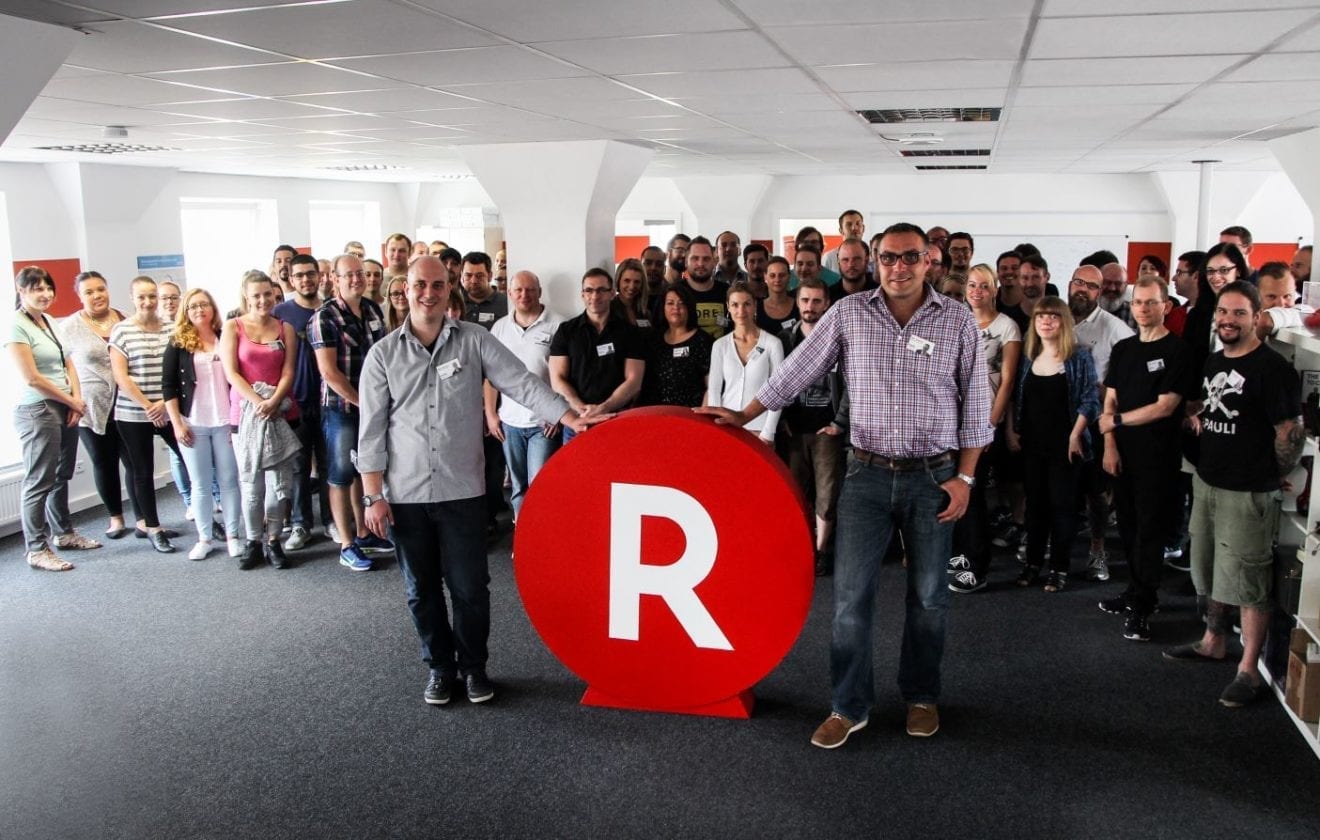
    Nokia and Japan’s newest mobile network operator Rakuten Mobile are working together to enable the operator’s implementation of a fully automated operations environment for the 5G era. Nokia will operate Rakuten Mobile’s virtualized core network to manage total cost of ownership (TCO). The agreement will allow Rakuten Mobile to focus on developing its portfolio of disruptive services and expanding its service footprint while developing operational maturity and automation capabilities.

    Rakuten Mobile is a disruptive new player in the Japanese mobile marketplace with ambitious objectives for the launch of its network and services, simultaneously deploying an innovative cloud-native greenfield LTE network which will rapidly evolve to enable 5G services. Nokia’s operational support services enable Rakuten Mobile to maintain their focus on growing LTE coverage footprint and 5G service capabilities while ensuring the reliability of launched services.

    Nokia is enabling groundbreaking levels of automation in network and service lifecycle management within the Rakuten Mobile cloud environment. This will accelerate the pace of service innovation and deployment while controlling OPEX. This managed services deal will ensure predictable OPEX costs to minimize financial risk while guaranteeing a secure, best-in-class cloud, incorporating network and IT operations. This will allow Rakuten Mobile to bring new services to market in the fastest possible way while assuring service reliability through a highly reliable telco cloud.

    Nokia is supporting over 160 virtual network function instances across two data centers in an industry-leading multivendor cloud environment. As an essential part of Rakuten Mobile’s operations organization, Nokia’s domain expertise and value-add will be incorporated into the core of Rakuten’s business.

    Friedrich Trawöger, Head of Operate & Managed Services Unit at Nokia, said: “By managing its telco cloud we can help Rakuten Mobile to focus on its objectives; to launch its mobile LTE network and to rapidly realize its vision as a 5G digital service provider. We support Rakuten Mobile in bringing new services to market quickly by utilizing the latest innovations in automated operations while focusing on the total cost of ownership.”

    Tareq Amin, Chief Technology Officer of Rakuten Mobile, Inc., said: “With Nokia supporting the operation of our cloud-native network, we can focus on service launch and expansion. Nokia is an integral partner in our network operations, and we look forward to future business opportunities that this partnership brings.”

  • Nokia’s partnership ecosystem prepares for local 5G and private wireless LTE in Japan

    Nokia’s partnership ecosystem prepares for local 5G and private wireless LTE in Japan

    Nokia has announced that its partnership ecosystem is preparing to introduce local 5G/private wireless LTE to industrial as well as government customers in Japan.

    By the end of December, the spectrum designated for local 5G will be released for enterprise use. The firm will help to boost IoT for industries in Japan by uniquely offering an end-to-end industrial-grade private wireless portfolio. By the end of 2019, the Japanese government will be launching the 5G spectrum specially designated for individual companies and local governments.

    The company has also formed a partnership ecosystem with five leading firms spanning a number of segments that includes Hitachi Kokusai Electric for smart social infrastructure and smart cities with video solutions, NS Solutions for factory IoT, Internet Initiative Japan for Full MVNO, Equinix for multi-cloud and global data centers and Marubeni for global IoT. With the help of these strategic alliances, enterprise customers get the opportunity to explore end to end, reliable, secure, low-latency connectivity powered by Nokia’s technologies and solutions.

    Earlier, Nokia and AT&T announced their partnership on a new innovation studio in Germany in order to boost the growing worldwide adoption of current and next-generation Internet of Things solutions. The studio will offer a chance to business to meet with experts and work together on solutions to global business challenges.

    Sanjay Goel, president of global services at Nokia said: “The collaboration will help set the stage for the evolution to global 5G and network slicing that allows a single network to be partitioned into multiple networks and deliver specific capabilities to certain IoT customers without impacting their entire network.”

  • Nokia Halts Legal Action Against Daimler With Mediation Offer In Patent Row

    Nokia Halts Legal Action Against Daimler With Mediation Offer In Patent Row

    Finnish telecoms equipment maker Nokia has suspended legal action against German carmaker Daimler in the hope that mediation will resolve their dispute over technology licensing fees.

    However, the decision drew a cool response from Daimler, which reiterated that the two companies had different legal opinions on the dispute.

    Nokia’s pursuit of fees from Daimler has thrown a spotlight on the wider battle between tech companies and the car industry over royalties for technologies essential for navigation systems, vehicle communications and self-driving cars.

    Daimler, along with Bury Technologies, Continental, Valeo and Thales-owned Gemalto complained to the European Commission this year about fees demanded by Nokia for patents related to car communications.

    Nokia has in recent years initiated 10 court cases against Daimler in Germany for alleged patent infringements. Daimler, meanwhile, has issued its own lawsuits against Nokia.

    However, Nokia said on Monday that constructive negotiation was the best way to resolve matters, having last week offered to enter into independent mediation as part of efforts to avoid an EU antitrust investigation.

    “To ensure there is time for this mediation to be successful, we have unilaterally chosen to postpone the pending hearing on 10 December in Germany,” Nokia spokesman Mark Durrant said.

    “We trust that Daimler and its tier 1 suppliers will now engage in these meaningful efforts to reach settlement. There is more to gain for all if we work together.”

    Daimler declined to comment on Nokia’s move, reiterating its previous stance.

    “We have a different legal opinion on the question of how to license essential patents for telecommunications standards in the automotive industry. Nokia has so far refused to license our suppliers directly on a comprehensive basis,” the German company said.

    EU antitrust chief Margrethe Vestager however welcomed the mediation efforts, saying the postponement of the court hearing was a positive move.

    “This is why we think it is a good thing that they now try mediation at the International Chamber of Commerce,” she told reporters. “It would be a good thing if there could be a mutual understanding.”

    Nokia has also offered to negotiate with the car parts makers instead of only Daimler on licensing fees.

    Carmakers argue that car parts makers should deal with the licensing fees rather than them and that patent holders should be open to negotiations with whichever company is interested in using their patents.

    Sources had told Reuters that EU competition enforcers had been poised to open an investigation into the matter until Nokia made the mediation offer.

  • Nokia will reveal its plans for 5G phones

    Nokia will reveal its plans for 5G phones

    A little more than a week ago, Nokia first teased that it will be launching its next smartphone on the 5th of December. Of course, no details were given — whether it would be a flagship or not is left to speculation. Luckily, we have a new leak that lets us speculate at will!

    Chief Product Officer Juho Sarvikas has tweeted out that he will be getting up on stage at the upcoming Qualcomm Snapdragon Tech Summit — the event where Qualcomm will talk about its future chips. According to Mr. Sarvikas, we will also get to learn about Nokia’s plans for 5G phones. The exact date when this would happen is Tuesday, December 3rd.

    So, Nokia is talking about its 5G plans on the 3rd and launching a new phone almost immediately, on the 5th of December. Could the latter actually be Nokia’s first 5G-equipped flagship?

    We’d wager chances are thin. Earlier rumors suggest that Nokia is, indeed, planning to release a value-priced 5G top-tier phone, but that’ll happen at MWC 2020. Heads up, though — that’s actually happening in late February, so it won’t be a long wait. The Qualcomm conference on the 3rd of December might at least reveal if this is really happening.

  • Nokia partners with Spark to bring 5G technology to New Zealand

    Nokia partners with Spark to bring 5G technology to New Zealand

    As one of the radio access network (RAN) equipment suppliers for Spark’s 5G upgrade, Nokia will deploy its AirScale RAN solution at more than 200 sites, allowing Spark to target both consumers and enterprises with new services and offers. Nokia will also deploy other products and services from across its end-to-end portfolio including digital design and deployment services.

    Spark New Zealand and Nokia have a long-standing relationship, which crosses multiple domains, including IP, optical and wireless. This new commercial 5G partnership marks the next chapter of the relationship between Spark and Nokia, providing New Zealanders with the technology that enables them to benefit from the fast-evolving digital world economy and applications.

    The agreement follows the launch earlier this year of New Zealand’s first 5G trial customer service. The trial, which took place in Alexandra, South Island, used the latest Nokia radio equipment to offer select business and consumer customers the opportunity to experience high-speed wireless broadband delivered by 5G. Nokia is currently working with Spark to deploy 5G capability to an additional 5 sites before the Christmas period.

    This Spark agreement demonstrates Nokia’s solid 5G momentum, which now reaches 50 commercial 5G contracts globally, including most early adopters. Nokia is currently powering 16 live networks globally.

    Rajesh Singh, General Manager of Value Management at Spark New Zealand, said, “We are delighted to be continuing our partnership with Nokia in building our 5G network across New Zealand. The local teams have collaborated extensively on a 5G solution that delivers on the outcomes we want to drive in 5G, not just in the RAN, but also in the end-to-end network.”

    Tommi Uitto, President of Mobile Networks at Nokia, said, “I am thrilled to see Nokia 5G equipment chosen to power 5G initially in Spark’s heartland areas. We are committed to keeping New Zealanders at the cutting edge of technology and are confident they will benefit from Nokia’s global reach, expertise and agility.

  • Nokia, Hitachi union will support local enterprises through 5G and private LTE solutions

    Nokia, Hitachi union will support local enterprises through 5G and private LTE solutions

    As part of the collaboration, the Nokia Digital Automation Cloud platform with its secure, reliable and low-latency connectivity will be used for applications including video analytics, AI, machine learning and IoT, as well as drones, group communication, and AR/VR. It will also enable autonomous transport vehicles, such as trucks, trains, forklifts and straddle carriers, to increase productivity at factories, utilities, airports and ports.

    The Japanese government is releasing 5G spectrum designated for individual companies and local governments (known in Japan as local 5G) at the end of 2019. This will enable enterprises, regional authorities and other organizations in Japan to deploy the next-generation of industrial-strength wireless connectivity based on LTE and 5G technologies to create local private, reliable networks.

    Nokia and Hitachi Kokusai Electric will collaborate to provide an eco-system of solutions to support the deployment of new digital automation services. Hitachi Kokusai Electric will share its expertise as a leader in driving the adoption of private LTE networks for industry use and disaster prevention in Japan. Nokia will lend its private LTE/4.9G and 5G wireless connectivity solutions, which have established a global marketplace footprint across energy, transportation, public sector, manufacturing and logistics.

    Kaichiro Sakuma, Representative Director, President and Chief Executive Officer of Hitachi Kokusai Electric, commented, “Industrial grade private wireless networks will be very important for our industry customers, helping them to become more efficient, automating dangerous operations, and improving worker safety. Our collaboration with Nokia is helping to speed the delivery of these innovative capabilities to the Japanese market.”

    John Harrington, Head of Nokia Japan, said, “Partnerships such as this help us to better serve the increasing needs of local 5G and digitalization technology in Japan. Collaborating with partners with in-depth knowledge and expertise across industry segments is critical to the widespread adoption of digital automation and private wireless solutions in industrial settings. Thanks to our comprehensive end-to-end-portfolio, we are ideally placed to support Hitachi Kokusai Electric and its customers to benefit from secure, highly reliable, ultra-broadband wireless networking.”

  • Nokia is trying to recover from a really bad decision it made about 5G chipsets

    Nokia is trying to recover from a really bad decision it made about 5G chipsets

    Last year when Nokia started planning its 5G networking equipment, it made a decision that came back to bite the company in the, uh, chipset. For Nokia’s line of “ReefShark” chips, used for its 5G radio, baseband and massive MIMO antennas, it decided to go with field-programmable gate array (FPGA) silicon. This type of chip can be programmed by the customer, thus giving Nokia an advantage in getting its 5G gear into the marketplace before the competition. But Nokia CEO Rajeev Suri had to admit that producing FPGA chips cost Nokia more money which reduced its profit margin for the component. As reported by FierceWireless, after reporting its Q3 numbers last week, Nokia lowered its full-year guidance

    Nokia wants to resume production of custom chipsets for its 5G products and to this end, it has hired 350 new employees in Finland to help it develop custom chips. Such development can take two years to complete. Nokia’s global head of Mobile Networks Marketing, Sandro Tavares, said that the company has been working on these SoCs for some time and has started shipping products with the SoCs replacing the FPGAs.

    Tavaras notes that the reasons that Nokia chose the programmable chip is because it can “put together the efficiency characteristics of an SoC but with the flexibility of being able to program via firmware. But it has the flip side of cost and power consumption. FPGAs do cost more in unit price, and they do use more power.” Additionally, Nokia at the time was working to integrate Alcatel Lucent and using FPGA, as previously noted, seemed like the best way to get to market quickly. Tavaras also points out that one supplier let them down. Nokia CEO Suri said that the company is not only designing its own custom SoCs, it also is working with a number of chipmakers including Intel. But the executive says that all of these actions won’t lower Nokia’s cost of building its 5G products until 2021.

    One analyst says that Nokia’s problems run deeper than just having to migrate from FPGA. Stefan Pongratz, senior director at Dell’Oro Group, says that 5G build-out is happening faster than expected and that competition is fierce. Pongratz says that “Nokia also has to deal with the consolidation of multiple platforms following the Alcatel Lucent merger.”

    Nokia has contracts with all four major U.S. carriers to deliver 5G networking equipment and the company was said to be responsible for Sprint’s delay in rolling out 5G service to four cities back in August. But this has been typical of the reputation that Nokia has when it comes to 5G. The company has been accused of lacking steady leadership and during a four-year period, it had three different people running the mobile networks division. That unit is now run by Tommi Uitto who earns nothing but praise from CEO Suri. “Tommi and his team have developed a comprehensive plan to ensure Nokia is competitive in 5G, and they are relentlessly executing against that plan,” Suri says. “Tommi is a strong leader, and he has my full support.” As for the 350 new employees being hired, Suri states, “We are repositioning our workforce to work on topics that are more critical for 5G development. We are hiring people in Finland and in other parts of the world and moving people from different programs to our 5G radio products.”

    Earlier this month, there was talk that the Trump administration had considered offering huge lines of credits to Nokia and its rival Ericsson. This would be done to help the two compete with the global leader in networking equipment, Huawei. The latter is considered a national security threat in the states and with funding from state-run Chinese banks, Huawei can offer generous financing terms to customers. Trump officials hoped to counter this advantage by arranging financing for Nokia and Ericsson, but outside of the initial rumors, there has been no word on whether the U.S. is still considering this option.

  • SoftBank turns to Nokia for commercial 5G offering

    SoftBank turns to Nokia for commercial 5G offering

    As an existing supplier of multiple technologies to SoftBank, Nokia’s selection for 5G Radio re-enforces the strong relationship between the two companies, as SoftBank turn to Nokia’s end to end portfolio for 5G.  Nokia’s 5G AirScale supports multiple frequencies, in both distributed and centralized architectures, giving SoftBank tremendous flexibility in its network evolution.

    Nokia’s 5G AirScale will be deployed across Japan, bringing 5G RAN to businesses and consumers alike. The 5G investment will benefit consumers by bringing them a 5G enhanced Mobile BroadBand (eMBB) service, with 5G Ultra-Reliable Low Latency Connectivity (URLLC) and enhanced Machine Type Communication (eMTC) enabling multiple new applications and services for industries in the 5G era.

    John Harrington, Head of Nokia Japan, said, “We are delighted to continue our long-term relationship with SoftBank and to be working with them as a trusted end to end partner at such an important milestone in the transformation to 5G. We are committed  helping SoftBank launch its commercial 5G network.”

    Nokia now has 38 5G commercial contracts, including 20 with named customers. These contracts well illustrate the vendor’s strong thought leadership in 5G. Nokia will continue to be one of the best partners for customers by providing an end-to-end solution and contribute to transform both networks and businesses.