Tag: Online

  • Online grocery space likely to witness traction: Nielsen

    Online grocery space likely to witness traction: Nielsen

    With consumers being increasingly preferring digital channels for their purchases, the online grocery space is likely to witness traction, according to market research firm Nielsen. Grocery is definitely going to start seeing traction as e-commerce picks up, Nielsen Executive Director Ajay Macaden said at the India Food Forum here. He, however, did not quantify the size of online grocery market.

    As per reports the online grocery market in India is expected to be US$ 5 billion by 2020, from US$ 1 billion in 2017.

    Macaden noted that packaged grocery is 40 percent in India versus a global average of 30 percent, while fresh groceries is around 41 percent against a global average of 26 percent which indicates that people are definitely picking up food online.

    Rs 3.4 lakh crore Indian FMCG industry is growing at 14 percent, is largely dominated by food that accounts for 55 percent (Rs 2.2 lakh crore growing at 15.1 per cent).

    In terms of contribution, general trade accounts for 90 percent of FMCG sales, growing at 13 percent, while the remaining 10 percent is from modern trade that is growing at 22 percent.

    In the food category, general trade accounts for 90.1 percent at a growth rate of 14.7 percent, while modern trade is growing at 19 percent.

    He observed that the FMCG industry which grew at 13.8 percent growth in 2018 was largely a volume led growth that was 77 percent of the total growth.

  • Optimistic about Indian market despite changes in new FDI policy: Walmart

    Optimistic about Indian market despite changes in new FDI policy: Walmart

    US retail major Walmart, which invested $16 billion in Flipkart, Wednesday said it is committed to the Indian market and is optimistic despite recent changes in the FDI policy for e-commerce firms in the country, according to a PTI report. The Bentonville-based retailing major’s statement came after a recent report by global consultancy firm Morgan Stanley, which had hinted that Walmart may quit Flipkart as the new foreign direct investment (FDI) policy came into effect, which would lower its profitability in the long run.

    Morgan Stanley, in a report titled ‘Assessing Flipkart Risk to Walmart EPS’ dated February 4, claimed that “an exit is likely, not completely out of the question, with the Indian e-commerce market becoming more complicated.”

    “Walmart’s and Flipkart’s commitment to India is deep and long term. Despite the recent changes in regulations, we remain optimistic about the country,” said Dirk Van den Berghe, Executive Vice President and Regional CEO Walmart Asia and Canada.

    He further added, “We will continue to focus on serving customers, creating sustained economic growth and bringing sustainable benefits to the country, including employment generation, supporting small businesses and farmers, and growing Indian exports to Walmart’s global markets.”

    Tightening norms for e-commerce firms having foreign investment, the government, from February 1, barred online marketplaces like Flipkart and Amazon from selling products of companies where they hold stakes and banned exclusive marketing arrangements that could influence product price.

    The revised policy on FDI in online retail, issued by the commerce and industry ministry, also said that these firms have to offer equal services or facilities to all its vendors without discrimination.

    Last year on August 18, Walmart had completed acquisition of 77 per cent stake in Flipkart for about $16 billion (Rs 1.05 lakh crore), a deal which gave the US retailer access to the Indian e-commerce market.

  • Indian consumers ask Amazon to resume Pantry service

    Indian consumers ask Amazon to resume Pantry service

    The Indian users of online grocery delivery service Amazon Pantry have taken to Twitter to urge the e-retail major to resume services ever since it was discontinued on February 1. “Currently, pantry items are not available on Amazon. Kindly stay tuned for more updates. Thank you for understanding,” Amazon responded to its Indian users in a tweet. The service became unavailable in India on February 1, the day revised norms for Foreign Direct Investment (FDI) in e-commerce came into force in the country.

    Following the new norms, Amazon has also removed from its website sellers such as Cloudtail India and Appario Retail Pvt Ltd in which it owns a stake.

    “I am missing Amazon Pantry service which catered to my monthly needs. It was super convenient,” tweeted a user.

    “What happened to Amazon Pantry? Please fix it,” read another user’s tweet.

    Under the Ministry of Commerce and Industry’s new guidelines issued on December 26, e-commerce platforms providing a marketplace are barred from exercising control or ownership over the inventory.

    They are also barred from allowing any company to sell its products exclusively on their e-commerce platforms alone.

    The Indian arm of the Seattle-based e-commerce giant did not respond to questions by IANS on the expected impact to its business in the light of the revised norms.

    While the company had earlier in a statement to IANS said that “it has always operated in compliance with the laws of the land”, it did not respond to queries on the changes it may have to make to its business model to suit the new norms.

  • E-commerce share to rise to 12pc from 2pc in 10 years: Walmart India CEO

    E-commerce share to rise to 12pc from 2pc in 10 years: Walmart India CEO

    Share of e-commerce is set to rise, despite the growth in brick and mortar or physical retail from 2 percent to 12 percent over the next 10 years, aided by pick up in Omnichannel format, said Krish Iyer, President & CEO, Walmart India and Chairman of India Food Forum, at India Food Forum 2019 on Tuesday. Gap between physical and digital needs to be bridged as the consumer is going digital in terms of experience as also his touchpoints, he said delivering the inaugural address at the two-day India Food Forum 2019.

    Sharing his insight at Walmart, Iyer said that by enriching customer experience, the consumer started buying Rs 180 over Omnichannel instead of buying Rs 100 from the store itself and later the ratio in the store was Rs 70 while digital was Rs 110. Calling for technology adoption as key to retail growth, Iyer enumerated four key challenges led by food security, safety & nutrition, food wastage and sustainability.

    “Feeding a rising world population of 10 billion from 7 billion amid rising death of infant children due to malnutrition, changing climatic conditions are key challenges. In India, phenomenal efforts are made on the regulatory front for safety and nutrition that will follow with awareness, compliance and enforcement of law. Significant investment amounting to Rs 92,000 crore in food processing in catchment areas is needed to overcome the wastage of 30 percent of all food and 40 percent of fruits and vegetables,” he said.

    Earlier, speaking at the forum, Ajay Macaden, Executive Director, Nielsen said, “Consumers have evolved now for omni-channel even for specific categories like milk and bakery. Increased internet and smartphone penetration has led to multiple shopping channels and change in consumer behaviour.”

    In markets around the world categories such as travel, entertainment (books, music, events) and durable goods (fashion, IT/mobile, electronics) are the front runners for consumers to enter the online retail sphere. Consumers are, however, also looking for e-commerce options for an increasing range of categories, as their more immediate needs for convenience and ease expands, Macaden said.

    Consumers in APAC (Asia Pacific) have even evolved to fresh grocery and packaged goods with China, India, Japan and Korea leading the market. In fact, packaged grocery food and fresh groceries are showing the highest percentage growth of all categories in 2018 in this region, he said.

    Other key speakers at the forum included Damodar Mall, CEO, Reliance Retail (Supermarketwala), Sadashiv Nayak, CEO Food business, Future Group, Mohit Kampani, CEO, Aditya Birla Retail, C. Gopalkrishnan, Founder, N. Supermarkets, Ramesh Menon, Former CEO, Hypercity, Mohit Anand, MD, Kellogg, India and South to name a few.

  • Amazon introduces self-driving delivery robot, Scout

    Amazon introduces self-driving delivery robot, Scout

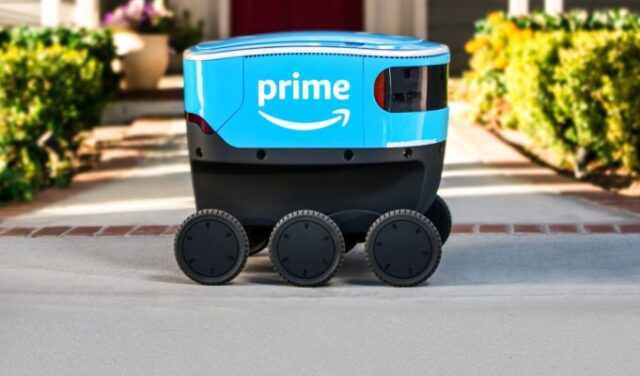
    Amazon has introduced self-driving delivery service dubbed Scout – an all-electric self-driving vehicle that will maneuver across sidewalks in order to deliver purchased items to customers. Scout is the size of a ‘small cooler’ and can roll along sidewalks, delivering packages safely to a customer’s doorstep. The device is currently operating in Snohomish County, Washington, the company announced Wednesday.

    “The devices will autonomously follow their delivery route but will initially be accompanied by an Amazon employee,” Amazon said in a statement. “We developed Amazon Scout at our research and development lab in Seattle, ensuring the devices can safely and efficiently navigate around pets, pedestrians and anything else in their path.”

    Customers in Snohomish County can order just as they normally would and their Amazon packages will be delivered either by one of our trusted partner carriers or by Amazon Scout.

    According to the release, Amazon is starting with six Amazon Scout devices, delivering packages Monday through Friday, during daylight hours.

  • Alibaba Group sales jumps high

    Alibaba Group sales jumps high

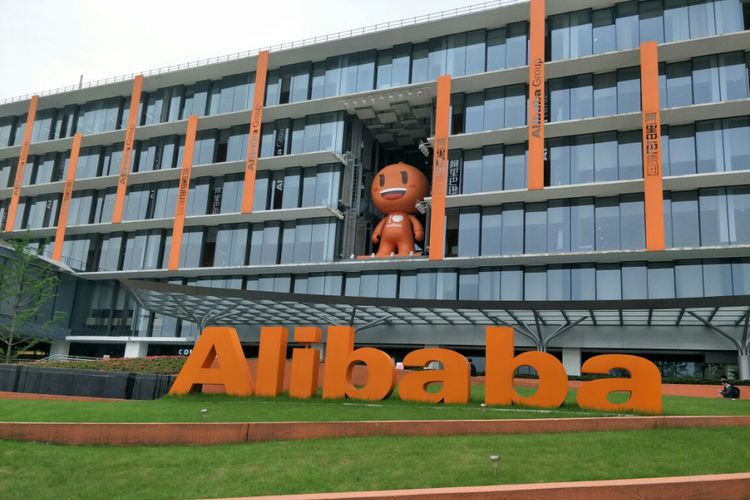
    Alibaba Group sales soared 41 per cent in the December quarter as its customer based neared 700 million. The Chinese company’s turnover for the three months reached US$17.057 billion and its net income attributable to shareholders $4.807 billion. “Our resilient operating and financial performance is a direct reflection of our persistent focus on better serving our growing base of nearly 700 million consumers across retail, digital entertainment and local consumer services,” said CEO Daniel Zhang. “Our growth is also driven by the power of Alibaba’s cloud and data technology that helps expedite the digital transformation of millions of enterprises.”

    Alibaba group sales from core commerce increased 40 per cent to $14.958 billion, while the cloud-computing division posted 84 per cent growth, turning over $962 million. The digital media and entertainment division achieved 20 per cent growth to reach $944 million.

    In a statement, Alibaba said its Taobao platform achieved “robust user growth and enhanced engagement”. Last December, its China retail marketplaces had 699 million mobile monthly average users, representing a quarterly net increase of 33 million. The annual active consumers on its China retail marketplaces was 636 million for the 12 months ended December 31, compared to 601 million for the 12 months ended September 30 last year, “reflecting successful user acquisition programs, such as referrals through the Alipay app”.

    More than 70 per cent of the increase in annual active consumers was from third-and-lower tier cities.

    Tmall thrives

    Alibaba said GMV on its Tmall business grew 29 per cent year on year in the December quarter, outpacing the industry.

    “This robust growth was driven by strength in the fast-moving consumer goods (FMCG), apparel and home furnishing categories,” the company said.

    During the quarter, Tmall signed up new brands to the platform including Valentino, Ermenegildo Zegna, Stuart Weitzman and Sergio Rossi which opened flagship stores and joined the Tmall Luxury Pavilion.

    Meanwhile, Alibaba’s proprietary grocery retail chain Freshippo (formerly Hema) continued to expand its footprint, “optimise its stores and introduce new initiatives that improve customer experience”. As of December 31, there were 109 self-operated Freshippo stores in China, primarily located in tier 1 and tier 2 cities, which continued to achieve “robust same-store sales growth” through the quarter.

    ‘Robust’ Lazada growth

    Alibaba’s Southeast Asian e-commerce platform Lazada achieved what the company described as “robust growth” in GMV. The company upgraded Lazada’s technology, which resulted in boosting the number of active users and achieved greater user engagement on Lazada’s mobile app.

    “We continue to invest resources to integrate Lazada’s business and technology operations into Alibaba with the aim of building a strong foundation for us to extend our offerings in Southeast Asia.”

  • Grofers crosses Rs 300 cr sales in single month

    Grofers crosses Rs 300 cr sales in single month

    Grofers, the low price online supermarket, announced the record revenue of Rs 310 crore in January 2019. With this, Grofers became the first online grocer to cross Rs 300 crore in monthly sales and also became the largest e-grocery company in the fast growing space. Aligned with its aim to drive the next wave of growth for e-commerce sector, the company has brought 2.5 lac new customers to its platform in January. The brand is eyeing a revenue target of Rs 2,500 crore for FY 2019.

    On the back of the industry’s biggest grocery sale – Grand Orange Bag Days, Grofers recorded an average of 14 lakh visits per day on the app. During this period, a total of 1.81 crore items worth Rs 207.5 crore were sold. With an average ticket size of Rs 2,640 and 20 items per cart, Grofers recorded highest customer engagement in Delhi NCR followed by Mumbai and Bengaluru.

    Speaking on the success Albinder Dhindsa, Co-Founder and CEO, Grofers said, “We are excited to emerge as India’s favourite e-grocer. We have received a tremendous response in the Grofers Orange Bag Days sale and we will sustain the momentum going forward. We are geared to bringing better priced grocery products to 100 million customers and this is just the start.”

    Customers received jaw dropping offers during Grofers Grand Orange Bag Days sale. Grocery and staples were the highest selling items followed by household items (detergents and dishwash bars) and personal care products. During this time period, Grofers recorded a 80 percent increase sales of Grofers branded products as well.

  • Reliance has true potential to evolve into India’s Amazon or Alibaba

    Reliance has true potential to evolve into India’s Amazon or Alibaba

    A week after Reliance Industries (RIL) reported a 8.82 percent rise in consolidated net profit for its third quarter at Rs 10,251 crore, global financial services firm UBS on Thursday said the Mukesh Ambani-led RIL has the true potential to evolve from an integrated energy company into a consumer giant like Amazon or Alibaba.

    In a comprehensive 100-page report, UBS said RIL can become a market leader in telecom and media, while gaining a significant share in retail/e-commerce.

    “Its success could be built on an ecosystem or bundling strategy, and a home-court advantage, similar to Alibaba’s success in China, beyond explicit or implicit policy support,” noted the report.

    RIL posted a net profit of Rs 9,420 crore in the corresponding quarter of 2017-18. The company’s consolidated revenue from operations during the quarter in consideration at Rs 1,60,299 crore jumped a massive 56.38 per cent over Rs 1,02,500 crore earned in the October-December quarter of FY18.

    According to the UBS report, its China Internet analyst, Jerry Liu, has listed some comparables between Alibaba and Reliance such as pursuing an ecosystem or a bundling strategy in a high-growth fragmented retail sector with lower online penetration and home-turf advantage.

    “Similarly, Eric Sheridan, our US internet analyst, thinks Amazon’s core value proposition to customers is its Prime subscription, which offers free shipping and video and music content,” the report noted.

    “Our assessment of the capital framework, regulations, business positioning and emerging trends in each of its consumer-facing business indicates RIL can lead in telecom and media and gain significant share in retail/ecommerce,” it added.

    The report found another similarity RIL shares with Amazon and Alibaba – an ecosystem strategy.

    “The biggest difference is that the Chinese and American internet platforms do not own telecom networks.

    “But based on the success of Amazon Prime, and similar memberships such as Alibaba’s 88VIP and JD’s Plus in China, we believe bundling of products and services is a tried and true strategy, and this should play to Reliance’s advantage,” the report highlighted.

    Addressing the “Vibrant Gujarat Global Summit 2019” on January 18, Reliance Industries Chairman and Managing Director Mukesh Ambani announced that Reliance would double its investment and employment numbers over the next decade.

    He said Reliance Jio and Reliance Retail would soon launch a new commerce platform for small retailers — a mega mission which will first be launched in Gujarat and then across the country, urging Prime Minister Narendra Modi to lead a fight against ‘data colonisation’.

  • SEA e-commerce market to grow at 23 per cent

    SEA e-commerce market to grow at 23 per cent

    Southeast Asia’s online retail market is expected to reach US$53 billion in the next five years, according to a recent analysis by Forrester Consulting. The report anticipated a compound annual growth rate (CAGR) for the industry of 23 per cent over the period, given the momentum of smartphone penetration and fast-growing economies in the region. Currently the area’s largest online retail market is Indonesia – which took 41 per cent of Southeast Asian online sales last year – followed by the Philippines with its strong base of social media users.

    The report identified fashion as the main driver of growth in Southeast Asia’s online retail market, while consumer electronics retains the greatest market share at 24.2 per cent. Fashion and cosmetics brands launched online are likely to be a more regular marketplace feature in the near future.

  • Global business leaders raise concerns over e-commerce policy changes in India

    Global business leaders raise concerns over e-commerce policy changes in India

    Several global business leaders have raised concerns over the evolving regulatory challenges concerning the e-commerce sector in India and said they want a stable policy regime to help this space achieve its robust growth and investment potential. According to a report, multiple business leaders attending the World Economic Forum Annual Meeting here said there are confusions in their mind in the backdrop of recent policy changes for e-commerce players having FDI in India.

    They did not want to be named, given the sensitivity of the subject and the evolving nature of the proposed rules, but said they have directly, or through their representatives, raised their concerns with the Government. They wanted to raise the issue directly with Commerce and Industry Minister Suresh Prabhu in Davos, but his plan to come here got changed at the last moment.

    At a session here at the WEF meeting, WTO Chief Roberto Azevedo also said there was a need for a global multilateral framework on e-commerce business.

    India’s FDI policy allows 100 percent foreign direct investment in marketplace model, but investors also want a stable policy and regulatory regime, a senior official of a leading online retailer said.

    An industry lobby group official said there is a fear that certain new rules proposed by the Government could lead to discrimination against investors as this policy is only for foreign players and not for domestic ones in the e-commerce sector.

    Another executive claimed it is being seen as a non-consultative approach even with investors who bring in huge foreign direct investment.

    However, Government officials rejected these allegations and said the new changes seek to safeguard competition and the interest of domestic players. The rules have been made after due consideration and consultations with concerned stakeholders, they added.

    The Commerce and Industry Ministry brought certain changes to Press Note 2 on December 26, 2018 which prohibited e-commerce companies from entering into an agreement for exclusive sale of products along with tightening norms for firms having foreign investment.

    The Government has also barred online marketplaces like Flipkart and Amazon from selling products of companies where they hold stakes and banned exclusive marketing arrangements that could influence product prices.

    The revised policy on foreign direct investment in online retail also requires these firms to offer equal services and facilities to all its vendors without discrimination. The policy would be effective from February 2019.

    In India, the policy as such does not permit FDI in inventory-based model of e-commerce.

    Companies have been seeking more time to implement the changes even as some of them have warned that these substantial modifications in the way they do business pose risks of derailing the e-commerce sector that has been a big job creator.

    Executives from another global retail major said the impact could also be felt by several connected sectors such as advertising, logistics, warehousing and manufacturing.

  • Walmart, Amazon India seek extension of Jan 31 deadline on e-commerce compliance

    Walmart, Amazon India seek extension of Jan 31 deadline on e-commerce compliance

    There is trouble in paradise. The Government’s drastic intervention in e-commerce at the behest of vested domestic interests and the powerful traders lobby has created consternation in the bulge bracket world of e-commerce in India. With the big players having reached out to the Government to give them breathing space on the new compliance measures beyond the January 31 deadline, the Industry ministry has not responded, leading to panic attacks across the board.

    Powerful stakeholders led by Walmart and Amazon from the e-commerce eco system have sought a six-month extension since lakhs of sellers – small and medium-sized – in the market place need to be educated, IT-enabled and connected to meet the statutory audit requirements. Moreover, contracts have to be re-negotiated so that the compliance measures remain ongoing with time being of the essence.

    It is believed that the DIPP or Industry Secretary Ramesh Abhishek, who was earlier encouraging the major players to ramp up their investments in India, has not responded to their pleas and petitions.

    The situation has become precarious primarily because the clarification to press note 2 was even more confusing. On a granular level, the market place cannot have any equity in the seller.

    Hence, Amazon which has five percent equity in Shoppers Stop has to comply with the new standards. The new government directive does not allow private labels, nor does it allow big brands to have commercial tie-ups with the market place. Basically, the rules of engagement have been turned on their head.

    Bain Capital reckons that the heavy lifting e-com players have generated three lakh jobs in India. Over and above this, there are lakhs of vendors.

    Further, the eco system has multiple spin-offs like advertisements, courier companies, logistics companies, supports innumerable manufacturing operations and caters to large scale supply chains. Flipkart has 80,000 employees, 80 fulfilment centres (warehouses), nearly one lakh plus sellers and artisans of all hues across the land. Ditto for Amazon, which has similar numbers across its business spectrum.

    Walmart paid US$ 14 billion for Flipkart stock with a promise of an additional US$ 2 billion in physical structure investment. So, there is a lot riding on these heavy lifters for both know that this is the last frontier in terms of a consumption market, since India consumes 67 percent of its own US$ 2.6 trillion GDP. Interestingly, Walmart runs Flipkart as a stand-alone entity.

    For Walmart this is a priority market and it is keen that the January 31 compliance window deadline is extended. Its commitment to the Indian market can be gauged from the fact that it recently got 100 acres in Bengal for warehousing as a pivot to the northeast market. Hence the size of the commitment is seeing enlargement almost daily.

    It is on the verge of closing another 100 acre fulfilment centre in Telengana to service the southern market. Remarkably, the Indian retail market is estimated to be US$ 650 billion, of which 90 percent is the kirana stores while nearly eight per cent is made up of Indian retail players and only two percent is e-commerce. However, since the biggies in e-com are global behemoths, impediments are being placed in their path.

    At the kernel of the government notification and clarificatory statement is the targeting of e-commerce giants who are quick to retort that they helping small sellers with a channel that is tech-enabled to put their products on the marketplace.

    At the time same time, even as they try and get the government to listen to their litany of woes on immediate compliance, the process of evaluation of sellers will continue and remain ongoing so that they are effectively compliant every single day. The government’s intervention is perceived to be through a non-consultative process and the global giants want more time for compliance and enhanced level of dialogue.

    The audit requirement on the sellers by opening their books to the marketplace in such a short time is reminiscent of the haste in the launch of GST, which threw small businesses out of gear.

    Many of the sellers will now have design IT systems and the marketplace cannot be liable for this. In parallel, there is no clarification on how to conduct the private label business.

  • Reebonz to use blockchain technology to assure authenticity

    Reebonz to use blockchain technology to assure authenticity

    Southeast Asian online luxury marketplace Reebonz is exploring blockchain technology as part of its strategy to demonstrate the provenance of products. Complementing the firm’s existing in-house team of ateliers who specialise in authenticating leather products, timepieces, gemstones and jewellery, Reebonz intends to incorporate all transactions on a blockchain to ensure the comprehensive traceability of all products sold within its ecosystem. The firm’s goal is to enable buyers to verify the authenticity of products on their own and stamp out losses and distrust generated by the global exchange of counterfeits.

    By establishing end-to-end traceability, customers will also be able sell their items back to Reebonz, which would allow the company to easily identify a customer’s purchase.

    “The Reebonz leadership team is extraordinary and has already developed a cutting-edge technology and platform”, said Tim Draper, senior advisor of Draper Oakwood Technology Acquisition and founding partner of Draper Associates.

    “The authentication of pre-owned luxury items using the blockchain is just one of many high impact innovations Reebonz is pioneering to improve the luxury shopping experience for customers across Asia Pacific.”

    “While we started as an online platform that helps consumers access affordable luxury, we have evolved into an ecosystem that connects buyers and sellers through the widest range of luxury,” added Reebonz CEO and co-founder Samuel Lim.

    “Identifying gaps and opportunities in the luxury e-commerce landscape and spearheading strategies that present innovative ways of redefining luxury consumption has made us a leader in this industry. As we continue to build out a thriving community of buyers, sellers and international boutiques, it will become critical for the industry to evolve, and for us to become a leading innovator of authenticity solutions. We are excited to use the blockchain technology to solve one of the key global issues that impacts our industry.”

  • Myntra India taps 9,000 kirana stores to boost last-mile delivery

    Myntra India taps 9,000 kirana stores to boost last-mile delivery

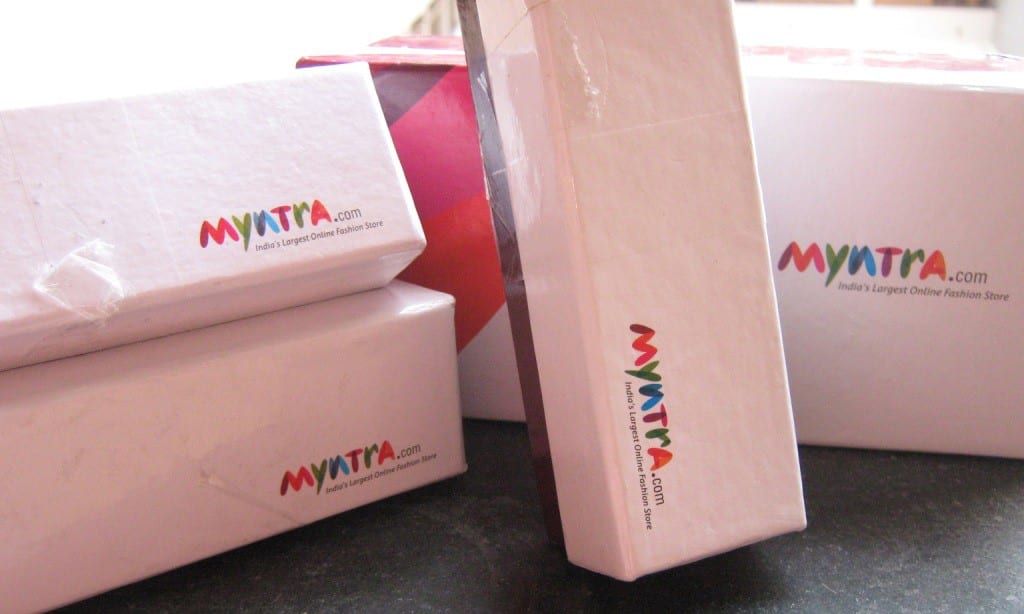
    Flipkart-owned ecommerce platform Myntra that saw 80 percent revenue fall in FY2018 has doubled down on last-mile delivery, tapping into over 9,000 kirana stores across 50 cities to fast deliver packages. Today, nearly 60 percent of all Myntra’s product pick-ups and deliveries happen through its ‘Kirana Delivery Programme’ — helping the company reduce delivery costs, the company said on Tuesday.

    “Myntra’s ‘Kirana Delivery Programme’ is a successful model introduced by the company to accelerate order delivery in the most efficient way possible, while ensuring we provide a good partnership opportunity to our kirana partners,” a company spokesperson said.

    “We will continue to innovate, expand and hope to register more kirana partners in the future as well,” the spokesperson added.

    The ‘Kirana Delivery Programme’ is an ingenious model introduced by the company to accelerate order delivery, while creating a platform for kirana stores to have an additional source of income.

    “A mutually beneficial model, it has helped Myntra achieve greater consumer satisfaction and is enhancing the standard of living of the owners of several ‘mom & pop’ stores across the country,” said the company.

    Several tailors and beauty parlour owners, among others, have also signed up with Myntra for the programme.

    The online fashion retailer narrowed its consolidated losses to Rs 178.7 crore for 2017-18, compared with a loss of Rs 655.8 crore in the previous fiscal.

    According to business intelligence platform Tofler, the company saw its income growing nearly threefold to Rs 427.4 crore in 2017-18 as against Rs 155.6 crore in the previous financial year.

    Ananth Narayanan, Chief Executive of e-tail portals Myntra and Jabong, stepped down from the post on January 14 “to pursue external opportunities”.

    The 11-year-old Flipkart Group, owned by US retail giant Walmart, includes e-tail sites Flipkart, Myntra, Jabong and digital payment platform PhonePe.

    In May last year, Walmart bought a 77 percent equity stake in the company for a whopping US$ 16 billion.

  • India’s Reliance to take on Walmart and Amazon online

    India’s Reliance to take on Walmart and Amazon online

    South Asia’s richest man Mukesh Ambani is establishing an e-commerce platform to compete with Walmart and Amazon in India. The Reliance Industries chairman will roll out services in Gujarat before extending them nationwide. “Jio and Reliance Retail will launch a unique new commerce platform to empower and enrich our 1.2 million small retailers and shopkeepers in Gujarat,” said Ambani.

    Reliance introduced the 4G Jio network in September 2016, a market disruptor with its free voice calls and cheap data plans. Its move into e-commerce will aggravate an already cut-throat battle between market leader Flipkart, owned by Walmart, and Amazon’s services in the territory.

  • Trends that coming in 2019 e-commerce

    Trends that coming in 2019 e-commerce

    Led by transformation in sales channels and customer demand, consumer trends for 2019 will center on subscription e-commerce, faster delivery, and eco-packaging, according to market experts. Subscription e-commerce, a field of business that involves curating products and delivering them on a regular basis, has been gaining popularity because it meets needs for tailored services, value, and convenience. From clean, neatly ironed business shirts to craft beers, you can get almost anything through a subscription service — now, even a car.

    Earlier this month, Hyundai Motor’s Genesis introduced a car subscription program that offers subscribers a choice of four Genesis vehicles for 1.49 million won (US$1,330) per month.

    “Our target group is drivers who want to experience a different variety of vehicle without having to worry about car management. The ultimate goal of our subscription program is to satisfy consumer needs amid shifting mobility trends,” Hyundai Motor said.

    According to industry data, subscriber-based businesses are undergoing an explosive expansion, having grown from 241 trillion won in 2000 to 470 trillion won in 2015, globally. Industry experts expect that number to surpass 594 trillion won by 2020.

    McKinsey & Company said in its “State of Fashion 2019” report that the subscription trend goes hand in hand with users’ desire for experiences, as they are more willing to spend money for a service that delivers tangible benefits along with personalized offerings.

    Meanwhile, over the past year, delivery has gotten faster for merchandise purchased via websites and apps. With services like Coupang’s Rocket Delivery, expecting one’s purchase to arrive the next day has become the new norm.

    Cutting down even further on delivery times will be a major sticking point for e-commerce businesses looking to stay afloat, market insiders said, with businesses now competing to ensure overnight deliveries, particularly of fresh food items.

    Overnight delivery is usually available only in Seoul and some parts of Gyeonggi Province and Incheon for now. Experts estimate that the market value of the industry will have reached 400 billion won this year.

    Lotte Mart currently plans to test-operate a 30-minute delivery service in the first quarter of the new year. Since September, it has offered a delivery service that moves products from its stores within three hours after purchase at an offline store.

    E-commerce company Coupang also plans to make a concerted effort to expand the overnight and even same-day delivery of fresh food products in 2019.

    “Our latest paid membership service, Rocket Wow club, which guarantees next-morning delivery for signed-up members, had already garnered almost 1 million members just two months after the service’s launch. We plan to expand the service to cover all customers across the country in the new year,” a Coupang representative said.

    The environmental packaging boom is set to continue well into 2019 as well. While plastic is not inherently bad, the way it is thrown away is problematic. As a result, an increasing number of consumers are rethinking their plastic use in an effort to cut waste.

    With environmental packaging campaigns spreading worldwide, manufacturers have been challenged to innovate their packaging methods.

    Since September, Starbucks Korea has replaced plastic straws with paper straws at some 100 of its stores in Seoul, Busan and Jeju, in an effort to reduce waste and protect the environment. All its paper straws are coated with soybean oil to make them more durable, the company said.

    The coffee franchise plans to eliminate single-use plastic straws from its 28,000 stores worldwide by 2020. Angel-in-us Coffee, the cafe chain operated by South Korean retail giant Lotte, also introduced special lids for cold drinks in an effort to reduce plastic use.

    “The throwaway culture is rapidly being challenged by increasing consumer awareness of the perils of plastic waste. A dramatic change in attitudes has occurred, forcing brands to rethink how they make better use of plastic in what they offer to consumers, who increasingly demand brands reduce, reuse and recycle plastic waste to better protect them and their world,” said Matthew Crabbe, a director of Trends APAC, in Global Consumer Trend report by Mintel.