Tag: Online

  • Flipkart secures more funding to face competition

    Flipkart secures more funding to face competition

    Indian e-commerce firm Flipkart has received US$201 million funding for its wholesale business from its Singapore-incorporated parent. The investment comes during a period of intensifying competition between the firm and its Amazon-backed competitor in a market estimated to be worth $18 billion. It signals a prioritising of sales growth by the retailer since its acquisition by Walmart.

    A report last year indicated that Flipkart has seen a more than 80-per-cent increase in transactions in recent months, prompting the company to expand into new business lines such as furniture and groceries over the next three years.

    Separate reports show that Amazon also looks to invest significant funds into the market in order to challenge Flipkart’s present lead in the territory.

  • Central Retail to double online after Shopee acquisition

    Central Retail to double online after Shopee acquisition

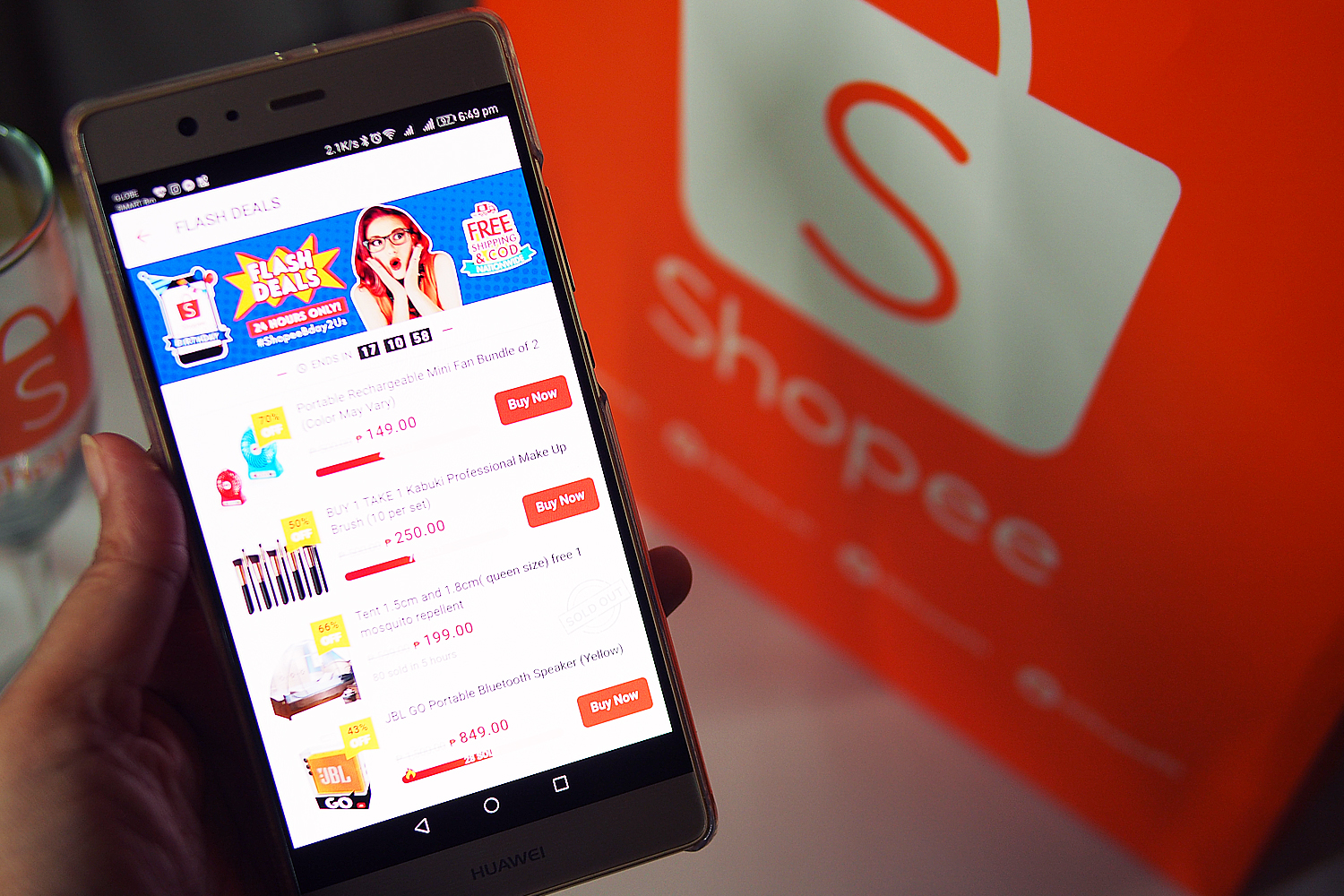
    Central Retail Corporation has announced plans to to double its online sales to THB10 billion (US$315.76 million) this year. Central’s CEO Nicolo Galante said the firm intends to lead in the omni-channel e-commerce business, overtaking Shopee. “Non-food businesses globally have been disrupted by digital transformation and are struggling against the likes of Amazon and Alibaba. As the biggest non-food player in Thailand, Central Retail pledges to move aggressively this year to tap into digital transformation,” said Galante in an interview.

    “We can be for Thailand what Amazon is in Western countries and Alibaba is in China. Everywhere in the world, the No.1 player in e-commerce and digital is always a new-economy company, but in Thailand it could be a company that is 71 years old.”

    In this regard, Central intends to launch an omnichannel platform of services distinctive from those of Lazada, Alibaba and Shopee, whereby the company will retail products and services both at physical stores and online. Central will assist partner brands who lack the resources to build their presence in the marketplace.

    It will launch the first such marketplaces for Central Department Store, PowerBuy and SuperSports within the next six months.

    “We will launch our omnichannel marketplaces for our retail business,” said Galante. “If there are some problems with the products, the customer can return the products to the store, get advice and other services at the store.”

    For apparel, Central will launch launch a “Reserve and Collect” service that allows buyers to reserve two or more sizes or colours of products online and choose which to buy after trying them in-store.

    The move is part of the firm’s considerable investment in technology, teams and new services in the hopes of taking the lead in the e-commerce business by 2021.

  • Indonesia to put tax on e-commerce transaction

    Indonesia to put tax on e-commerce transaction

    The Ministry of Finance said on Monday that it will impose new rules requiring e-commerce sellers to share data with the authorities, while also stressing that they must pay taxes. Surging smartphone use and a rising middle-class income in Indonesia, home to 260 million people, has made its e-commerce industry a battleground for foreign investors.

    Global consultancy McKinsey projects spending in the Indonesian e-commerce market to rise to as much as $65 billion by 2022, from $8 billion last year, similar to the growth trajectory experienced in China between 2010 and 2015, and the government is trying to squeeze more from a market that traditional retailers have alleged avoids taxes.

    From April, all operators of online marketplaces will have to detail each seller’s turnover and report this to the authorities, the ministry’s tax spokesman Hestu Yoga Saksama said.

    The rules would apply to all online marketplace operators in Southeast Asia’s largest economy, including Lazada and Tokopedia, which are both backed by Chinese e-commerce giant Alibaba, and Bukalapak, which counts China’s Ant Financial among its investors.

    The Directorate General of Taxes said an online seller that makes at least Rp 4.8 billion ($340,000) in turnover must charge value-added tax to customers and pay this to the authorities.

    A seller must also pay income tax of 0.5 percent of turnover if it is a small or medium business, or a 25 percent corporate tax of profit if it is big enterprise, bringing the sector in line with requirements for conventional retailers.

    There were no new taxes being applied, but the rules were put in place to clarify what taxes each player in a marketplace is obliged to pay and to “create an equal treatment with conventional businesses,” the tax office said.

    The Indonesian E-Commerce Association (idEA) criticized the new rules, saying online sellers would instead choose to sell their products through social media, CNBC Indonesia reported.

    Tokopedia and Bukalapak both said they are still studying the possible impacts caused by the rules.

  • Strawberrynet celebrate its 20th anniversary

    Strawberrynet celebrate its 20th anniversary

    Hong Kong online beauty pioneer Strawberrynet is celebrating its 20th anniversary. Since its launch in 1998, the e-commerce retailer has expanded to sell to more than 200 markets in 38 languages, with 24-seven pick and pack and customer services. The strawberrynet.com site carries more than 800 established international brands from Europe, the US, Japan and Korea, offering more than 30,000 items across a wide range of categories.

    Its 20-year business span makes it one of the longest-running e-commerce firms globally, launching in the same era as Amazon, eBay and PayPal. The site enjoys top rankings for a beauty-focused international platform on Alexa, ComCore and Internet Retailer.

    Strawberrynet began accumulating big data-style tracking since the early days of the science, making it an early adopter in using AI to understand not only its shopper behaviour, but also product trends for every category and region it traded in, allowing it to optimise and personalise offers for a better user experience.

    According to a statement put out by the firm, “Strawberrynet’s partnership with the world’s major platforms gives more shoppers around the globe access to products that are authentic, and offers that range from classic to chic and newly launched items”.

  • Vietnamese ecommerce Leflair receives US$7-million investment

    Vietnamese ecommerce Leflair receives US$7-million investment

    Vietnamese e-commerce firm Leflair has raised US$7 million in a Series B funding round from South Korea’s GS Shop and private equity firm Belt Road Capital Management. This investment is the first by GS Group’s online retail subsidiary GS Shop in a Vietnam startup, and is expected to increase the volume of South Korean products in Leflair’s inventory.

    “We are going to use this capital first to leverage as much as possible the strategic partnership with GS. It means investing in hiring the teams that will make this partnership a success and deploying resources in the areas of fulfillment, delivery, and technology,” says Leflair CEO and co-founder Loic Gautier.

    “This year will be one of regional expansion as we progress towards making the world’s best brands accessible to more consumers in Southeast Asia,” Gautier added.

    Founded in 2015, Leflair focuses on premium-branded products for women, men, kids, and homes. Since its launch, Leflair has raised US$11.8 million investment from angel investors and venture capital firms from the US, France, Italy, Singapore, Hong Kong, South Korea, and Cambodia.

    According to a recent EU-Vietnam Business Network report, Vietnam had about 51 million internet users in 2017. Vietnam’s e-commerce sector is forecast to continue growing at 14 per cent annually this year and next.

  • Sunshine department store Penang goes online via Shopee

    Sunshine department store Penang goes online via Shopee

    Penang department store Sunshine has launched on online shopping platform Shopee with expectations of doubling its income. According to Sunshine’s CEO Cynthia Hwang, the move to list initially 1500 products, as well as the brand’s in-house fashion label Iloveasap, on the platform would target 16 million users throughout the country while leveraging Shopee’s free shipping and Super Brand Day.

    “Further expansion into the online realm with the opening of an official store on Shopee will see a bigger contribution to the brand’s revenue growth,” she said.

    “As a whole, it is part of our aspiration to help to grow Malaysia in terms of providing more choices, better and easier accessibility for quality products and enable consumers to purchase from trusted sellers such as Sunshine Online,” added Shopee Malaysia category manager Tan Ming Kit.

  • Zuji Hong Kong goes bancrupt

    Zuji Hong Kong goes bancrupt

    Hong Kong-headquartered online travel agent Zuji collapsed on Friday owing HK$250,000 (US$32,000) to customers awaiting refunds. The firm – which was one of the first online travel agencies in Asia Pacific– failed to have its IATA agency licence renewed due to overdue payments to airlines for tickets sold to travellers.

    “Zuji is no longer a licensed travel agent and cannot continue to operate travel agent business in Hong Kong, but the company has the responsibility to properly handle all booked travel services,” said a spokesperson from Hong Kong’s Commerce and Economic Development Bureau.

    Zuji closed its business in Singapore in late November and shut down its website. But the company has said it will continue operations in Hong Kong. It has announced “technical difficulties” in refunding customers for the time being.

    The company has not explained how it will be able to continue operations without an IATA licence.

  • CASE Singapore warns consumers about LuxStyle International

    CASE Singapore warns consumers about LuxStyle International

    Singapore shoppers have been warned about dealing with LuxStyle International Sales. The Consumers Association of Singapore (Case) has released a consumer advisory notice updating its previous advisory on LuxStyle, reminding consumers that they are “not obliged to make any payment to a business for goods or services that they did not explicitly agree to purchase”.

    The Case advisory follows complaints it had received against the Danish online retailer dating back to 2016. The complainants held that LuxStyle had sent out payment notices to consumers who had not agreed to any purchase. According to consumer reports, site visitors were charged by the firm after having entered personal payment information for the purposes of viewing prices, even though they had not proceeded to make a purchase.

    Case issued a consumer alert against LuxStyle in May 2017, but has received a further 18 complaints against the business since then.

    Some consumers have now been contacted by a debt collection agency asking for payments claimed by the firm. According to the advisory, since contacting the collection agency Case has been assured all related debt recovery action has now been cancelled, and that any consumer who made payments on the matter should be fully refunded.

  • JD.com steps into entertainment industry

    JD.com steps into entertainment industry

    JD.com, China’s largest retailer, has joined forces with Paramount Pictures and global play and entertainment company Hasbro to celebrate the Chinese release of the new TRANSFORMERS movie BUMBLEBEE. On the run in the year 1987, BUMBLEBEE finds refuge in a junkyard in a small Californian beach town. Charlie (Hailee Steinfeld), on the cusp of turning 18 and trying to find her place in the world, discovers BUMBLEBEE, battle-scarred and broken. When Charlie revives him, she quickly learns this is no ordinary, yellow VW bug.

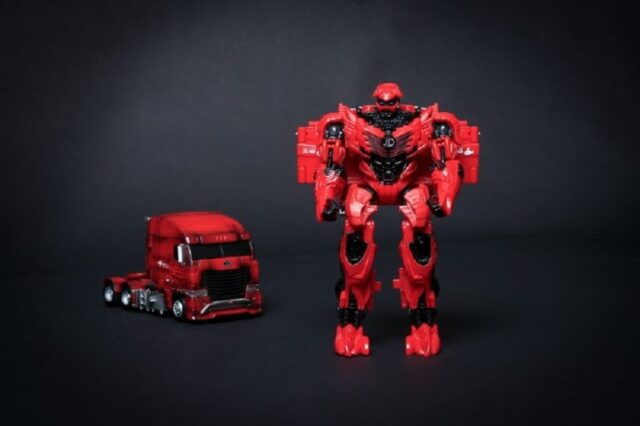
    JD first partnered with Hasbro and the TRANSFORMERS franchise in 2017, releasing a MISSION RED mini short that showed Optimus Prime and Red Knight – a special JD exclusive TRANSFORMERS character – fighting to protect the energon fuel source. This year’s celebration will be accompanied by a series of three mini shorts featuring Panasonic and Chinese menswear brand HLA in which Red Knight protects energon.

    JD and Hasbro are also bringing Red Knight to life by creating an action figure of this TRANSFORMERS bot. Released on Dec 29, 2018, the exclusive action figure is only available on JD.

    JD also launched a “Super BUMBLEBEE Day” sales promotion to coincide with the Jan 4 premiere of the film in China. During the promotion, JD’s more than 300 million customers were able to purchase BUMBLEBEE movie-themed merchandise from Hasbro, Panasonic, HLA, and more. JD has outfitted multiple delivery vans and delivery boxes across China with BUMBLEBEE-themed designs.

  • Last-mile delivery investment will boost sales

    Last-mile delivery investment will boost sales

    Increased investment by retailers in last-mile delivery is essential to uncover new revenue streams, according to a new study released by the Capgemini Research Institute. According to the report, 97 per cent of organisations believe that current last-mile delivery models are not sustainable for full-scale implementation across all locations, and that free shipping costs cannot be maintained unless delivery costs are reduced through automation.

    “Today, customers are neither satisfied with the quality of delivery services, nor willing to bear the total cost of last-mile delivery,” said Tim Bridges, global sector leader, consumer products, retail and distribution at Capgemini.

    “Therefore, the dilemma facing retailers is to provide last-mile delivery services that customers value, without damaging their own profitability. If done right, and their last-mile experience can win over customer satisfaction, retailers stand to gain loyalty, increased purchase value and frequency, while mitigating profitability risk through automation and optimisation of fulfillment locations,” he said.

    Among its conclusions, the report stated that with warehouse and product sorting representing one-third of supply chain costs, there is a significant opportunity in automation. Recognising this opportunity, 89 per cent of organisations are investing in the mechanisation and automation of store back-rooms to expedite fulfillment and deliveries.

    Speed boosts sales

    Fast and effective last-mile delivery were also shown to increase customer spend and loyalty. Seventy-four per cent of satisfied customers intend to increase spend by as much as 12 per cent with retailers they frequently purchase from. The majority (82 per cent) of customers have shared positive experiences with friends and family, and just over half (53 per cent) would be willing to purchase a paid membership for a good delivery service. However, despite 55 per cent of customers expressing that offering two-hour deliveries would increase loyalty, only 19 per cent of firms currently provide this compared to 59 per cent of firms that offer a delivery timeframe of more than three days.

    The report found that consumers are not satisfied with the current state of last-mile delivery with high prices (59 per cent), non-availability of same-day delivery (47 per cent), and late deliveries (45 per cent) driving delivery dissatisfaction.

    According to the findings, 97 per cent of organisations believe that current last-mile delivery models are not sustainable for full-scale implementation across all locations. As such, they must be viewed as a key investment for this year, with only 1 per cent of customers willing to absorb the total cost incurred for last mile deliveries.

    Despite low delivery costs being the top priority for half of all customers, only 30 per cent of organisations considered it a top priority for themselves.

    Recommendations for retailers

    The report closes with the following recommendations for last-mile delivery success:

    Optimise fulfillment locations: Increasing store-based deliveries by 50 per cent could potentially lead profit margins to soar by as much as nine per cent. Dark stores – retail outposts with store-like layouts intended only to fulfil online orders – can also process high delivery volumes and are 23 per cent cheaper than conventional stores for same-day deliveries. Additionally, if 30 per cent of deliveries and returns are routed through parcel locker collection arrangements, organisations could expect an eight percent increase in profit margins.

    Automate delivery options: Back-room automation could increase profits by up to 14 per cent by reducing the cost of click-and-collect orders and deliveries from store. Furthermore, automation offers a range of benefits including reduction of fulfillment errors and managing returns (which forms 26 per cent of the delivery cost).

  • Amazon to soon deliver packages right in customer’s garage

    Amazon to soon deliver packages right in customer’s garage

    To enhance its in-home delivery service, Amazon has launched new products and tools within its ‘Key by Amazon’ offering for Prime members, beginning with the US. The online retail giant unveiled ‘Key for Garage’ that will allow customers to monitor and control their garage door via the Key app. “In addition to receiving deliveries at home and in your car, eligible Amazon Prime members will soon be able to get deliveries in their garage,” Amazon said in a statement on Tuesday.

    ‘Key for Garage’ is made possible by integrating Key with CGI’s proprietary ‘myQ-connected’ technology.

    “We started with the idea of in-home package delivery and quickly learned that our customers found peace of mind from the control Key gives them over their most important place – their homes – even when they aren’t there themselves,” said Rohit Shrivastava, GM of Key by Amazon.

    The online retail giant unveiled ‘Key for Garage’ that will allow customers to monitor and control their garage door via the Key app

    Amazon launched ‘Key’ in 2017 and the in-car delivery facility later. The new delivery services are available to Prime customers in some markets at no additional cost.

    Other offerings include the new Schlage Encode Smart Wi-Fi Deadbolt — the first WiFi-enabled smart lock for Key.

    The smart lock offers an innovative option for any customer who wants to experience the magic of a keyless life without any additional hub or hardware.

    “Even with all the advancements in the category, we recognized there was still a gap in simple, secure, high performance and cost-effective, all-in-one access solutions,” said Lee Odess, Vice President, Solutions Providers Business at Allegion, maker of Schlage locks.

    ‘Key for Business’ is a smart fob for drivers delivering Amazon packages to commercial and residential properties.

    “The technology allows building owners and managers to give controlled access to delivery drivers to drop off Amazon packages to their residents, and eliminate the need for building staff to manually give access each time deliveries are made,” said amazon.

    The Schlage Encode Smart Wi-Fi Deadbolt is available for pre-order for US$ 249.99 or US$ 299.99 when bundled with an Amazon Cloud Cam. It will begin shipping to the US customers on March 5.

    Key for Garage will be available in the US in the second quarter.

  • Online Marketplaces India: Delivering fashion to the discerning masses

    Online Marketplaces India: Delivering fashion to the discerning masses

    The online fashion space in India is positively buzzing with private labels or brand partnerships. Recently, heritage American denim brand, Wrangler collaborated with Indian e-commerce giant, Flipkart to launch an exclusive sub-brand called Wrangler 20X. Myntra also launched its in-house plus size apparel brand, Sztori as well as House of Pataudi, an ethnic wear brand co-owned by Myntra, Exceed Entertainment and Bollywood actor Saif Ali Khan.

    Addressing Consumer Demand

    Wrangler 20X is targeted at the digitally-savvy youth who increasingly shop for fashion online and are seeking the perfect mix of trend and value. Gen Z are increasingly brand-aware and aspire to own brands with flaunt appeal. The denim brand aims to give them a brand that they would be proud to wear at prices they can afford.

    Known for democratising fashion across segments, the launch of both Sztori and House of Pataudi enables Myntra to go a step further and include profiles into the ambit of ‘fashion for all’. It champions inclusivity in fashion, evaluating and emphasising greater attention to styles, trends, designs, fit and fabric for plus sized apparel and fashion conscious consumers, in order to bring out the personality of the person wearing it.

    Sztori has been especially designed to suit a larger range of body shapes and sizes. It is essentially a designer wear in the plus size category, offering consumers the perfect fit and multiple style options. The apparel is made to suit plus size body types rather than prove to be a mere extension in size on existing profiles, thus breaking the existing age-old norm in the Indian market.

    Manohar Kamath, CXO and Head, Myntra Fashion Brands, says, “We are extremely delighted to announce the addition of Sztori to our portfolio of private brands. Plus size clothing is in great demand and it was time we offered something substantial in the category, opening up more avenues and possibilities for our customers.”

    The brand offers a range of products for men and women, including, tees, denims, tops, dresses and more in L to XXXXL (Large to 4 times Large) sizes. Shoppers can choose from over 225 styles and designs at prices ranging from Rs 799-Rs 1,999.

    Myntra identified a space opportunity in this segment and set out to design and develop merchandise under a new brand to cater to the category and make wearers look fashionable with multiple style options at affordable prices and opening new avenues in the industry.

    ‘House of Pataudi’ is a lifestyle brand for men and women that delivers fine taste and refinement to the discerning and the fashion conscious. Each piece not only exudes style but also narrates the rich story and history of the Pataudi heritage. The collection comprises traditional Indian wear, conceptualised inthe form of Rozana, every day wear with a contemporary ethnic touch; Jashn, festive finery with a regal charm; Riwayat, bespoke splendour for the classic Indian wedding; and a Special Edition, comprising collections inspired by the Pataudi trousseau.

    The range includes kurtas, sherwanis and Nehru jackets for men and kurta sets, lehengas and dresses for women. Products from House of Pataudi will be available exclusively on Myntra and Jabong, across a price range of Rs 1,500-Rs 15,000 for men and Rs ,000-Rs 20,000 for women. The brand’s design team has worked closely with Saif Ali Khan; inspired by his own personal style statement and has designed and perfected the line, modelling it on the Pataudi lineage and contemporary fashion preferences, to make it relatable for the modern fashion shopper. House of Pataudi is focused on changing the perception about ethnic dressing being limited only to festivals and occasions and bringing it back to everyday wear.

    Tapping the Market

    “Research estimates that the plus size segment will account for US$ 5 to 6 billion in the US$40 billion Indian online fashion apparel market, by 2020, which is approximately 10 to 12 percent of the overall market, making it an important proposition,” shares Manohar Kamath.

    Flipkart’s has aggressive plans to grow the fashion business and this maps well with Wrangler’s vision of meeting the needs of the young, online shopper. “We are delighted to partner with

    Flipkart on the launch of Wrangler 20X. The brand will be available exclusively on Flipkart and is designed for young, trend-aware digital citizens who aspire to buy Wrangler but are also looking for a more affordable value proposition. We look forward to working with Flipkart to make this a successful sub-brand of Wrangler,” comments Krishna Dorai, General Manager, Wrangler.

    Rishi Vasudev, Vice President, Flipkart Fashion says, “Men’s fashion is one of our fastest growing categories, where we have witnessed a 75 percent Y-o-Y growth, within which denims is one of the most successful categories. Crafted basis an understanding of what fashion shoppers are looking for, we are excited to launch Wrangler 20X, a denim-wear brand, from the house of Wrangler, exclusively on Flipkart Fashion. The range is specifically designed to off er the latest in fashion to the style conscious young men looking for the best in the value branded segment and we are sure, this range will be a massive hit, while it strengthens our men’s portfolio.”

    The Wrangler 20X collection features attractive style elements such as PU detailing on the pockets and belt loops, the shirts embrace printed designs with yarn-dyed fabrics and the tees receive a fresh colourful graphic spin. The sub-brand is currently available only for men.

    Ananth Narayanan, Ex-CEO, Myntra- Jabong, said, “We are clearly focused on a strong customer proposition and currently there is a huge gap in brand offerings in the ethnic wear space, especially for men. House of Pataudi is an ideal fit, being rich on tradition, heritage, design, and offers customers a slice of the world that we believe is lost, at price points that are highly affordable.”


  • Korea’s KT 5G bus hits the road

    Korea’s KT 5G bus hits the road

    Are you curious about all the hype over 5G? A ride on a 5G-powered bus may answer some questions. Mobile carrier KT announced Tuesday that people can sign up for free rides on its 5G bus. The bus will be connected to its ultra-fast 5G wireless network and will demonstrate devices that can be used to enjoy new media services like KT’s GiGA Live TV. GiGA Live is a head-mounted display – thick goggles with a screen embedded inside. GiGA Live supports virtual reality (VR) media services, including live sports broadcasts, as well as 360-degree films.

    VR and augmented reality (AR) are commonly cited as the technologies that have the most to benefit from 5G network. Because 5G promises up to 20 times faster speeds than LTE, it can transfer large volumes of data quickly in real-time, which is integral to the proper operation of VR and AR services.

    Those who want to take 30-minute sojourns on the 5G bus can apply online at www.kt5Gbus.com. The bus will run in the Gwanghwamun area from Jan. 15 to 24, and Gangnam Station from Jan. 25 to Feb. 2. Rides will be offered five times a day, excluding Sundays and Mondays.

    “5G network makes it possible to transfer huge volumes of information safely and in real-time,” said Park Hyun-jin, head of KT’s 5G business. “We will continue to offer innovative 5G services that can provide new experiences and value to consumers.”

    Earlier this month, KT added 5G-capabilities to its barista robot B;eat in Samsung Life Insurance’s Seocho District office. The robot, which looks like an advanced vending machine, can now recognize customers’ presence and send real-time footage of orders to human managers.

  • Hyundai Cars to go online – and have legs

    Hyundai Cars to go online – and have legs

    By 2022, all cars made by Hyundai Motor will be connected to the internet, the automaker announced during a press briefing held Monday in Las Vegas ahead of the 2019 Consumer Electronics Show (CES). “We aim to have 10 million active users of our connected-car services globally and apply connected-car technology to all vehicle segments in the global market by early 2022,” said Suh Jung-sik, senior vice president of Hyundai Motor Group’s ICT division.

    At the CES, the company also introduced a vehicle in which the wheels are attached to robotic legs with a wide range of motion. Hyundai’s concept of a truly connected car is a car smarter than a computer that can share information not only with other vehicles on the road but also with homes, surrounding infrastructure and cities.

    Using connectivity, the cars can offer real-time traffic and parking lot information to drivers and also alert drivers remotely of theft. Remote adjustments of in-car settings, such as temperature, will also be possible.

    While Hyundai is already offering early versions of its connected cars in Korea, the United States, China, Canada and Europe, the automaker said it will establish additional big-data centers to offer similar services in countries like India, Brazil and Russia.

    To offer better connectivity worldwide, the carmaker is currently developing an operating system, a cloud platform and network technology for connected cars. The company also announced a plan to introduce an open platform on which third parties can develop new technologies using big data shared by Hyundai.

    Hyundai is not the only carmaker that came to CES with grand ambitions to take leadership in the connected car business.

    BMW will introduce the BMW Intelligent Personal Assistant, which can interact with drivers and allow for video meetings, shopping and other digital services inside cars. Audi is introducing a virtual-reality entertainment service for passengers in back seats. VR games or travel content will match the actual movements of the car. In the long run, the carmaker said the videos will reflect real-time traffic conditions so that if a car stops due to red light, the video will show an obstacle.

    Other participants, including Mercedes-Benz, Nissan, Bosch and Continental, all shared their focus on connectivity.

    “In the future, cars will be categorized as cars with hyper-connectivity and those without,” Suh of Hyundai Motor Group added.

    Apart from connectivity, Hyundai said it will develop personalized electric vehicles for everyone by giving customers the freedom to select software and hardware for their vehicles.

    To bolster open innovation, the carmaker has been setting up global open innovation centers to collaborate with foreign start-ups. Already there are three centers, established in Korea, the United States and Israel. Two more centers are set to be established, in Berlin, Germany and Beijing, China this year.

    Hyundai Motor and its innovation center in Silicon Valley, the Hyundai Cradle, introduced the “Elevate” concept vehicle at this year’s CES. It has four robotic legs specifically designed for rescue in challenging environments.

    U.S. design-consulting firm Sundberg-Ferar was involved in the development of Elevate, which Hyundai calls the ultimate mobility vehicle. It can swiftly move around places inaccessible to existing rescue transport.

    Hyundai said the Elevate’s body can be switched depending on the mission and that the robotic-leg architecture has five degrees of freedom. The company added that the vehicles can also aid people with physical impairments.

  • Vietnam says Facebook violated cybersecurity law

    Vietnam says Facebook violated cybersecurity law

    Vietnam says Facebook has violated its new cybersecurity law by allowing users to post anti-government comments on the platform. “Facebook had reportedly not responded to a request to remove fanpages provoking activities against the state,” the official said, citing the Ministry of Information and Communication. In a statement, a Facebook spokeswoman said: “We have a clear process for governments to report illegal content to us, and we review all these requests against our terms of service and local law.”

    She did not elaborate. The ministry said Facebook also allowed personal accounts to upload posts containing “slanderous” content, anti-government sentiment and defamation of individuals and organizations, the agency added.

    “This content had been found to seriously violate Vietnam’s Law on cybersecurity” and government regulations on the management, provision and use of internet services, it quoted the ministry as saying.

    Facebook had refused to provide information on “fraudulent accounts” to Vietnamese security agencies, the agency said in Wednesday’s report.

    The information ministry is also considering taxing Facebook for advertising revenue from the platform.

    The report cited a market research company as saying $235 million was spent on advertising on Facebook in Vietnam in 2018, but that Facebook was ignoring its tax obligations there.

    In November, Vietnam said it wanted half of social media users on domestic social networks by 2020 and plans to prevent “toxic information” on Facebook and Google.