Tag: Online

  • Taxing the internet giants: Catch me if you can

    Taxing the internet giants: Catch me if you can

    Southeast Asia is experiencing rapid growth in digital technology, social media, mobile activity and internet usage. Like every other emerging market that is witnessing rapid smartphone adoption, Indonesia is seeing mobile phones increasingly chosen as the platform for digital content consumption. According to US research firm eMarketer, spending on digital advertisement is growing very fast in Indonesia.

    The world consists of hundreds of different nations and legal jurisdictions, each with their own set of tax regulations. In cross-border transactions, the interaction of domestic tax systems can leave gaps that result in income not being taxed anywhere.

    Google is the poster boy of companies successfully practicing “tax optimization”. In the last couple of years, there have been intense discussions on how foreign-based online businesses have apparently failed to pay their “fair share” of tax.

    Multinational internet corporations with the help of their financial advisers used the tax treaty network and international structuring regime to minimize their tax burden through various mechanisms. In the digital era, taxing multinational companies becomes a lot more complicated.

    First, under international tax rules, local corporate tax will usually be levied on a business in its home country. The target country has the right to tax under traditional international tax concepts, if a non-resident business has a permanent establishment.

    Permanent establishment typically requires a relatively strong physical presence or a relatively high number of activities before a state has source-based jurisdiction over income.

    Most online businesses do not need these to do business; their online presence and payment systems are sufficient. It is very easy for businesses to claim that they have no taxable presence in a country. It becomes more difficult to apply traditional concepts to link an item of income with a certain location.

    Second, having a taxable presence is only the beginning of the story; countries then have to determine how much profit is attributable to that entity.

    There is a lack of definite legislation for guidance on this. Tax authorities have often left it to the companies to bargain with them.

    However, while negotiating, both parties will also be looking over their shoulders at their home country.

    Especially companies from the US, such as Google and Facebook, would prefer any tax they pay in other countries to be deductible as a credit against taxes to be paid in the US.

    Another question is how the government could tax a large business that has not yet been monetized, meaning it does not really earn any money, like WhatsApp? It is pretty much playing on the valuation, and taxes are applicable only when the business is sold.

    Third, governments are often slow to adapt their tax laws to technology. Many countries are now struggling with how streaming video services like Netflix fit into their tax structure.

    Historically, the problem with the taxation of digital goods is that the sales tax was designed to be imposed on the sale of tangible personal property.

    The tax base has been expanded over time to include several specific services, but many digital products are a mix of an intangible product and a service. Most transactions do not systematically fit into existing tax laws.

    Indonesia’s government has tried to address some of these problems. The Communications and Information Ministry has issued Decree No. 3/2016, which stipulates that internet companies providing services in the country must establish a permanent establishment.

  • E-Commerce to Take Up 20% of the Indonesian Retail Market

    E-Commerce to Take Up 20% of the Indonesian Retail Market

    The Trade Ministry said that the e-commerce business has a chance of capturing 20 percent of the conventional retail market. The scouring of conventional retail markets is likely to happen given the fact that customers are now more familiar and accustomed with online shopping, due to its time and budget efficiencies.

    “This phenomenon must be supported by adequate policies and infrastructure,” Srie Agustina, the ministry’s acting director general of domestic trading, said during the Indonesian E-Commerce Summit and Exhibition in Serpong, Banten, yesterday.

    Srie estimated that the e-commerce industry will take over 20 percent of the conventional retail market share in the next four years. Right now, e-commerce’s share in the conventional retail market is five percent.

    At the E-Commerce Summit opening yesterday, President Joko Widodo warned local e-commerce businesses about the “attack” of foreign players. According to the President, the acquisition of Southeast Asia’s popular online shopping site Lazada by China’s e-commerce giant Alibaba two weeks ago is something that industry players must keep an eye on. “It’s a warning for everyone.”

    Alibaba announced that it has acquired Rocket Internet’s stake in Lazada worth US$1 billion (Rp13 trillion). The takeover strengthens Alibaba’s position in the e-commerce markets of Asia and the world. The acquisition allows Alibaba to reach 560 million online consumers in Southeast Asia, including Indonesia.

    To boost the quality the domestic e-commerce industry, the Trade Ministry will mandate online trade sites to register with the ministry.

    The Indonesia E-Commerce Association (IDEA) is planning for an accreditation of e-commerce sites, in a bid to improve the quality and credibility of local e-commerce players. The accreditation assessment will begin in June carried out on 200 sites online sales-and purchase businesses. The assessment categories include operational sites, clarity payment, and customer service aspects.

    Earlier, Minister of Communications and Informatics Rudiantara expressed his optimism that the retail e-commerce business this year can record a transactions deals total of US$20 billion or around Rp260 trillion.

  • Removing online commercial curbs can hurt consumers

    Removing online commercial curbs can hurt consumers

    Hong Kong manufacturers and retailers that increasingly use e-commerce may know that their contracts with EU companies may contain vertical restraints on online distribution. Competition authorities across Europe are currently discussing the appropriate treatment of such restraints under competition law.

    This is being done with a view to preventing distributors from imposing more restrictions on online retailers than on their rivals in traditional brick-and-mortar shops, Hong Kong Trade Development Council Research (HKTDC Research) has said in a report.

    The UK’s Competition and Markets Authority (CMA) commissioned a report from independent consultants in order to know why businesses use these restrictions and how these may affect consumers, both positively and negatively. The report surveyed 33 mostly small and medium-sized UK-based manufacturers and retailers. It was released on 30 March 2016 and will prove to be of interest to e-commerce users, HKTDC Research said.

    The businesses interviewed use a wide range of restraints in their contracts, with the most common being selective and exclusive distribution agreements (often excluding online retailers) and recommended retail prices (RRP) for retailers. The participants explained such restrictions by the need “to prevent free-riding” and to “protect brand image”.

    Free-riding may occur when customers visit ‘service retailers’ (e.g. providing free advice on products), but purchase the product from a cheaper retailer that does not provide any service support.

    Participants who mentioned maintenance of brand image said restrictions “helped signal the high quality of the product and maintain the image of the product (particularly for luxury brands)”.

    However, the report further shows that the restrictions are also “attractive because they limit the direct competition faced by the relevant manufacturers or retailers, particularly from online channels”, without any consumer benefit.

    Hong Kong companies may be interested in the conclusions of this report. In the long term, forbidding these restrictions “could bring about lower retail service standards and a poorer quality experience of the underlying product”. This is likely to hurt consumers, especially for high-tech products. On the other hand, especially in the short run, the absence of such restrictions could cut prices and widen product availability.

    The European Commission is also conducting an inquiry into the e-commerce sector. The inquiry was launched on 6 May 2015 and a Preliminary Report is due to be published in mid-2016.

    A sector inquiry is an investigation that is carried out by the European Commission into sectors of the economy and into types of agreements across various sectors, when it believes that a market is not working as well as it should, and that breaches of the competition law rules might contribute to the malfunctioning of that market.

  • Online wine sales in China rising fast

    Online wine sales in China rising fast

    JD.com‘s head of wine business, Zhao Dabin, told in an exclusive interview that the retailer sold 400m yuan (US$61.5m) of wine direct to consumers in 2015. That figure is expected to triple in 2016, he said.

    JD also hosts pages for individual merchants, acting as a gateway to a new generation of mainstream wine consumers in China – beyond the gift-giving between government officials that has been significantly curtailed by the present regime.

    Wine sales through these JD.com-hosted, online ‘shopping malls’ for merchants are expected to hit 1.5bn yuan this year.

    His comments tally with those from several wine importers and merchants in China, which are freeing up investment for e-commerce.

    Total online retail sales of physical, consumer goods in China rose by 32% in 2015, to reach 3.2tn yuan, or US$492bn, according to Chinese government figures. Online sales of tobacco and liquor products increased by nearly 13% versus 2014, to 196bn yuan.

    JD is seeking to compete with larger players in the market, such as Alibaba‘s Tmall and Taobao platforms.

    In wine, JD’s Zhao sees a lot of potential. ‘Most of our wine consumers are still at entry level,’ he said. ‘Only 3% to 4% of our registered users buy wines at the moment. There’s still plenty of room to grow.’

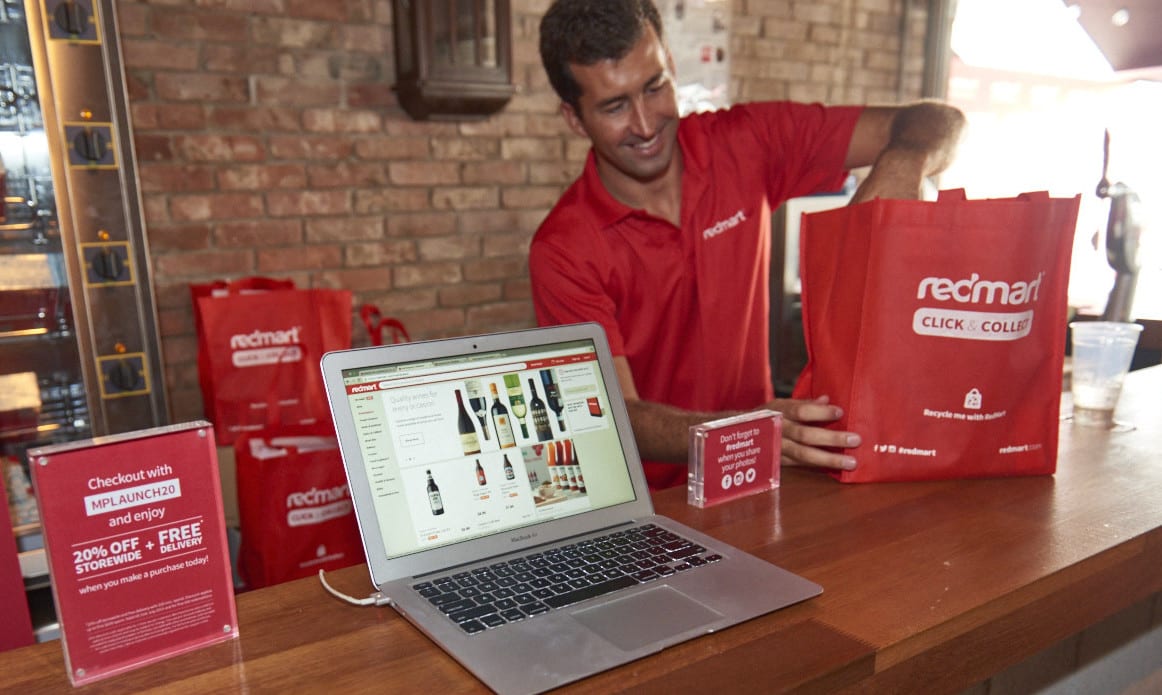
  • Online grocer RedMart eyes at Asian market

    Online grocer RedMart eyes at Asian market

    Singapore-based online grocery organization RedMart is near raising a huge $100 million Series C round to grow its services crosswise over Asia. The new subsidizing is relied upon to shut in the following couple months. The organization was established in November 2011 to convey online and on-demand shopping to Singapore. To date, RedMart has raised over $50 million from investors such as Garena, SoftBank Ventures Korea, Visionnaire Ventures, and Facebook co­founder Eduardo Saverin, with its latest raise a $26.7 million bridge round last year.

    Given the absence of Series C stores in Southeast Asia, this new round might well incorporate institutional and vital investors, however none of the participants were not unveiled at this point. The new financing will go towards growing the organization’s services into new markets in Asia, with Hong Kong liable to be the primary port of call, conceivably took after by Jakarta, Indonesia.

    RedMart CEO Roger Egan has been open about the organization’s craving to expand abroad, yet he and his group are determined that the organization should first lockdown its plan of action in Singapore — a nation of only five million people, but with a grocery market expected to worth around $16 billion every year. RedMart’s technique is to work its own particular logistics and distribution centers, a model that it trusts gives it more control of the client service cycle and will empower it to rapidly wander into different verticals later on.

    While it was apparently the first to pioneer online grocery sales in Southeast Asia, the scene is more focused today with investment supported new companies HonestBee ($15 million) and HappyFresh ($12 million) among a emerging pack of opponents.

  • Singapore male youth burn more money shopping online than women

    Singapore male youth burn more money shopping online than women

    About 5 in 10 say they spend more than $100/month. Singapore male youth spend more than women on online purchases, according to Singapore Polytechnic’s survey of 816 youth aged 15 to 35. About 5 in 10 (50.6%) males say they spend more than $100 per month on online purchases, compared to about 4 in 10 (41.3%) women.

    On the other hand, the survey revealed that women shop online more often. About 2 in 10 (20.4%) female respondents browsed for products and services online daily, compared to 14.5% of male respondents.

    More males (29%) also purchase from stores that stock limited edition items, compared to 32.5% of women. Meanwhile, female respondents (47.6%) purchase from online stores they liked or are subscribed to on social media, compared to 32.5% of male respondents.

    For male youth, the most popular purchase categories include apparel, technology, and movies. Meanwhile, young women’s top purchase categories include apparel, beauty, and travel.

    The survey also showed that Singapore youth prefer to keep their online shopping habits private. Almost 6 in 10 (59.5%) indicated that they shop online to purchase items without their friends or family knowing, while 57.9% do so to keep their identity private. Also, more male respondents (61.8%) agreed that they shop online as it gives them privacy, compared to women (54.1%).

    It was also revealed that young shoppers were more receptive to special online deals, peer influence and social media. Celebrity endorsements appeared to be the least effective sales strategy, as only 11.4% of respondents purchased from stores endorsed by their favorite celebrity.

  • How online and offline will dominate retail in Asia in 2016

    How online and offline will dominate retail in Asia in 2016

    Innovations in technology are predicted to make progressive strides related to online and offline commerce, thus improving the retail experience significantly in 2016.

    With new developments like Google’s Physical Web and Eddystone, we’ve started to get a glimpse of what the future might look like in a perfect online to offline marketing world. But is this futuristic new line of digital marketing really so far away, or are we on the cusp of a new reality?

    Here are major trends that I anticipate will lead to progressive shifts in how online retail addressed this year in the Asia Pacific region:

    1. Full integration of online and offline

    In my last column, I talked about Google’s Physical Web and Eddystone. Technologies like these will enable users and shoppers to communicate via their mobile devices with physical objects, sending their real-time location and behavior to marketers who can now identify them, in exchange receiving more personalized and customized experiences when visiting offline shops.

    With these new innovations, the traditional challenges of user anonymity are being resolved. Therefore, we can expect to start seeing user retail experiences that truly bridge the gap between offline and online (O2O) by the mid-2016.

    2. Deep customer insights meet highly targeted displays

    How to drive traffic the most effective and efficient traffic to your website is an ongoing challenge for marketers. By “most effective traffic,” I mean traffic that comes from the cheapest source, and “efficient traffic” refers to the frequency at which your traffic will eventually convert (ideally instantaneously).

    In the past, one solution was to use a large proportion of marketing budgets to acquire new customers using Google SEM. However, this has proven to be very expensive and less efficient in driving qualitative traffic to a website over time. It is also only focused on capturing demand.

    This has driven marketers and budgets to Facebook, where interest-based targeting could be used to find new users. And what happens when everyone does the same thing? Eventually the channel becomes more expensive and less efficient.

    Publishers can now address this challenge via the use of an Audiences feature. Both Google and Facebook now have Audiences as a core function in their display offerings, allowing advertisers to target more accurately when uploading emails or finding specific audience demographics. Such technology enables advertisers to deliver the right ads, to the right people, across devices.

    Many platforms also use sophisticated look-alike modeling, which lets advertisers target similar profiles of those already targeted, specifically by email. There are also retargeting technologies that can find people that have browsed a particular website, and present them with ads or even specific products from that site.

    To complete the value proposition, marketers are provided with reporting that highlights conversions and contributions to online sales. But here’s a little secret: revenue from abandoned carts contribute significantly to these sales numbers.

    How many times have you been presented with display ads for products that you’ve already purchased? Well, here is how this happens; let’s say someone has a basket full of goodies, but bounces over to a different site momentarily, before coming back to their basket and completing their purchase. This will cause a view-through conversion, which means that revenue will be attributed to the retargeting campaign, even if the purchase occurs without clicking on the display ad. Retargeting companies focused on pricing for cost per click (CPC) or cost per action (CPA) models make a lot of money this way.

    counting money youtube screenshot

    Going back to Google and Facebook, the ability to target someone specifically is great, however it is important to know the context in which a user/shopper is being targeted. How do we link both audiences and standard retargeting to the purchase cycle as well as to the interaction a user has with your brand?

    In 2016, we will start to see the emergence of more quality identification technology that is able to work across mobile devices and computers. Marketers will be able to find users and send contextual display ads that feature the right product or coupon, on the right device, with incentives based upon insight regarding what really makes the user tick. This delivery will also be matched with the right objective based on where the customer is in the lifecycle.

    In the beginning, identification will probably range between 30 and 50 percent of the users, but I predict we’ll see these numbers increase as the technology evolves. Though these advancements are on the horizon, this level of sophistication will only occur once matching email addresses to third-party cookies becomes feasible. More importantly, this cannot happen unless multifaceted user insights are aligned with intelligent advertising platforms.

    3. AI driven marketing

    Artificial intelligence will be one of the hottest topics in the tech industry in 2016. Just recently, Google launched TensorFlow, a very powerful artificial intelligence and machine-learning open source software.

    Added to this is a recent announcement to commit $1 billion to researching artificial intelligence from a group of Silicon Valley entrepreneurs, which includes Elon Musk, chief executive officer (CEO) of Tesla.

    How does all this come into play for the marketing landscape?

    Marketers today are very operative. First, they think about an idea or a campaign, then they automate it with either display ads, email campaigns, push messaging, social releases, and so on. After that, they test against it and continue to optimize. They go through this process again and again and again, and do so because of the vast amount of variables and data sets that need to be taken into account to get the best results. With this process, solutions rooted in artificial intelligence will change the lives of the marketers and their audiences, helping each make more informed decisions.

    Think about the type of software needed to create the customer journey and then execute after uploading all the necessary data and required content; this year, marketers can expect some of the functionality affiliated with this process to be automated. Expect this progress to in ways that will cover most of the operational decisions marketers make today, and for this evolution to continue over the next three to four years.

    4. Messaging dominates media activity

    Over the past five years, messaging has become one of the fastest growing online channels, according to Activate’s Tech and Media Outlook 2016. Messaging has developed more quickly than social media, coming only in second to the time spent online by users globally. By 2018, messaging is expected to grow by an additional 1.1 billion users.

    The global messaging space continues to be dominated by Facebook Messenger and WhatsApp. In the Asia Pacific region, local players include China’s WeChat, Japan’s Line, and Korea’s KakaoTalk.

    Messaging services are now accessible by third-parties, thus resulting in an explosion in of real-time offerings for services, including booking taxis, making payments for practical necessities like utilities bills, music and television entertainment, games, stickers, e-commerce capabilities, video, and live voice calls. The messaging app has transformed into a hub of communication and consumption of services for users, creating monetization possibilities for both for media owners and third-party developers.

    So, what can digital marketers ultimately expect for 2016?

    In conclusion, the integration of online and offline real-time marketing opportunities isn’t something we can hope to see somewhere in the future, as what was once a fantasy is finally materializing into reality. Now that these technological innovations have made linking these contrasting realms much easier, wise marketers and retailers will take advantage of this progress immediately….will you?


  • Online data disrupts how consumers buy cosmetics in Singapore

    Online data disrupts how consumers buy cosmetics in Singapore

    The global market research firm TSN just released the results of a study—The Connected Life—that found nearly nine out of every ten shoppers (88%) in Singapore research products before making a purchasing decision.

    “It’s unsurprising that Singaporeans are exceptionally good at shopping,” says retail expert Fabio Trabucchi of TNS Singapore, in his recent commentary piece for the Singapore Business Review. “With more high-end malls per capita than anywhere else in Asia, shopping is now a well-entrenched national past-time.”

    Pre-shopping

    A preponderance of personal care items consumers in Singapore investigates products and prices before actually shopping to buy.

    “Ever keen for a bargain, almost eight in ten (78%) shoppers say they do pre-purchase research for personal care products such as skin care, perfume, and cosmetics, and 66% for hygiene items such as deodorant and shower gel,” explains Trabucchi, referring to data from The Connected Life study.

    This marks a shift in consumer behavior that could inform brand strategy to good effect, aligning packaging, branded content and ingredient information with new consumer preferences.

    “Previously these categories used to be a prime area for impulse buying, but thanks to the ease of the internet, Singaporean shoppers are getting savvier about the products they chose and the rationale behind it,” remarks Trabucchi.

    Information age

    Getting informative content in front of consumers is the key to capturing shoppers’ attention and dollars today.

    Multinational companies are ahead of the game, producing beauty content that resonates with consumers. L’Oréal recently opened an in-house branded content studio in Canada , where employees can create dynamic messaging to reach consumers with information that matters.

    “As consumers in Singapore adopt a more considered approach to their purchases, brand owners and retailers can provide the information – and incentives – they need to make up their minds,” confirms Trabucchi in his post for the Singapore Business Review.

    “Whether online or offline, businesses need to understand researching behaviours and ensure they are providing shoppers with relevant content that informs their purchase decisions,” he believes.

    Concluding, “this means they must stop thinking in terms of advertisements and start becoming content providers that offer relevant information and offers at every stage of the shopper journey.”

  • South Korea Online Retail Market Outlook to 2019

    South Korea Online Retail Market Outlook to 2019

    Ken Research announced its latest publication on “South Korea Online Retail Market Outlook to 2019” which provides a comprehensive analysis of the retail market in South Korea. The report covers various aspects such as market size of South Korea online retail market, segmentation on the basis of product type and modes of distribution. The report is useful for government, industry consultants, online retailers, offline retailers, food and grocery stores, online electronic chains, apparel and footwear manufacturers, other stakeholders and new players venturing in the market.

    The demand in online retail market of South Korea has inclined at a substantial growth rate even after the economic slowdown in 2008. This demand has enhanced due to the increased usage of high speed internet, rising smart phone penetration and high proportion of old aged people in the country. These factors are expected to lead the growth in online retail backed by the improvements in the payment gateways, better packaging and delivering options. During the period 2009-2014, online retail market in South Korea has expanded at a substantial CAGR of 17.7%, which has marked the gross merchandise value at USD ~ billion during 2014.

    According to the research report, the South Korea online retail market will grow at a considerable CAGR rate thus exceeding USD 66.2 billion by 2019 due to the rising income level and growing influence of social media with increasing demand for clothing, fashion products, electronics and beauty products by a large number of middle aged people in the country who wish to upkeep with the trends and stay up-to-date in line with developments in the country.

    “While, rising disposable income, hike in middle aged population and increasing number of internet and smartphone users in the country will result in increased revenue from online retail in South Korea, Cyber crimes and frauds, higher competition and customers’ reluctance to pay high amounts online are few of the major challenges which will affect the growth of this industry in the future”, according to the Research Analyst, Ken Research.

    Key Topics Covered in the Report:

    South Korea Online Retail Market

    Market Size by Gross Merchandise Value, Number of Orders by Product Type, Average Order Size by Product Type Market Segmentation by Product Type Mode of Distribution Trends and Development SWOT Competition and Market Share Important Mergers and Acquisitions Important Investments Growth Drivers Government Rules and Regulations Pre-Requisites to Enter the Market Analyst Recommendation Cause and Effect Relationship Future Outlook Macro Economic Parameters

    Key Products Mentioned in the Report

    Online Clothing, Footwear and Fashion Products

    Online Books and Stationery

    Online Electronics

    Online Beauty Products

    Online Sports, Music and Entertainment Products

    Online Food and Grocery

    Online Baby Products, Household Goods, Motor Parts & Accessories and Garden Products

    Companies Covered in the Report

    eBay, GMarket, eBay Auction, 11 Street, Interpark, Lotte, Emart, GS Home Shopping, CJ O Shopping, Hyundai Home, Shopping, Lotte Home Shopping, Home and Shopping, NS Home Shopping, Fashion Plus, Dahong, Yesstyle.Com, Bershka.Com, Musinsa.Com, Fashionstart.Net, Elf Fashion, Hiphoper.Com, Etude House, Pore Lab, Thefaceshop, Missha, Roseroseshop, Moonshot-Cosmetics.Com, Naturerepublic.Com, Theskinfood.Com, Sokoglam.Com, Kyobo, Yes24, Aladin, Ypbooks.Co.Kr, Bandinlunis.Com, Libro.Co.Kr, Heyeonni.Com, Compuzone, Himart, Icoda, LG Electronics, B-Store.Co.Kr, Lots Etland, Hello Nature, KGC shop, Highstreet, Expatmart.Co.Kr, Fatbag.Co.Kr, Ezshopkorea.Com

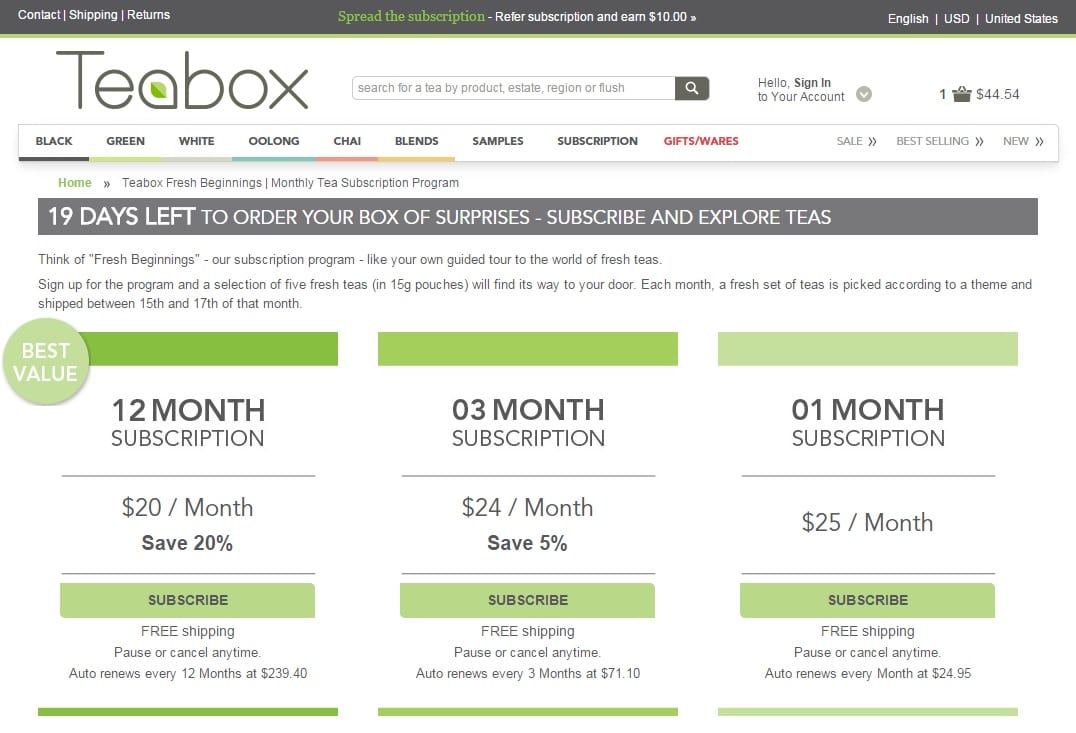
  • Teabox has the World’s first tea subscription service

    Teabox has the World’s first tea subscription service

    Indian online tea retailer Teabox the global eCommerce tea company, has launched the world’s first ‘Personalized Tea Subscription Service’.

    The program is powered by Teabox’s patent-pending ‘machine-learning technology’ that it says personalises and matches every individual’s tastes to a selection of teas.

    The Teabox subscription program allows tea drinkers to choose the kinds of tea they would enjoy by breaking down their ‘perfect cup’ into 75 different attributes, such as aroma, astringency,

    strength and body, into objective components which are matched to user preferences, habits and taste characteristics.

    When consumers sign up to the plan, Teabox has them take a quick five-question quiz online, the results of which are analysed by Teabox’s ‘prediction engine’ software.

    “Each user is assigned a ‘signature’ tea based on their responses. The machine ­learning algorithms look for patterns to identify a selection of teas best suited to go with this signature profile,” the company says.

    “And as the users repeat and share their experiences with our prediction engine, it improves its discerning capabilities thereby improving its understanding of a user’s choices and matches our teas to them better. This feedback loop enables a reinforced learning behavior of the system allowing it to fine tune itself to specific taste profiles as we go further,” said Teabox founder and CEO, Kaushal Dugar.

    “When it comes to taste preferences, there are no universals. One’s taste preferences are unique and theirs alone,” he said. “But the descriptions of teas, like wines, can be subjective. We understand this, and that’s why our prediction engine has been developed to break down subjective words like “floral,” “sweet” and “astringent” into over 75 quantifiable attributes.

    “This, coupled with the habits and preferences of our customers enables us to pick out teas perfectly suited to their palate – making our subscription program the most personalised tea experience out there.”

    Teabox ships a package of tea based on the user’s habits and preferences each month. The teas come from the company’s broad selection of tea gardens and suppliers and the company promises fresh teas.

    Teas are delivered within five days of ordering and subscription packages are priced from US$9.99 to $39.99 a month.

    Founded in 2012, Teabox sources fresh teas from 200 growers in Darjeeling, Assam and Nilgiri to the entire world. In two years, Teabox has delivered over 30 million cups’ worth of tea to customers in 80 countries.

    The company is backed by Jafco Asia, Accel Partners, Keystone Group and Dragonee Investment Group.

  • Chinese shoppers feel safer online

    Consumers across Southeast Asia and Greater China feel safer paying in a brick and mortar environment as opposed to online; sole exception is China

    According to the inaugural MasterCard Safety and Security Index, consumers across Southeast Asia and Greater China cited identity theft and ATM-related fraud as the top two security concerns when it comes to electronic payments.

    Some 42 per cent of consumers in Southeast Asia (Indonesia, Malaysia, Philippines, Singapore Thailand, and Vietnam) were most concerned with ATM-related fraud such as a stolen card, card cloning or skimming. In the Greater China markets (China, Hong Kong and Taiwan), this figure was 31 per cent.

    But the biggest surprise was in confidence in shopping online. The Index showed that in general, consumers across Southeast Asia, and the markets of Taiwan and Hong Kong still feel safer paying in a bricks and mortar environment than buying online. China differed, being the only market where consumers felt paying online was safer than in a physical store; even more so than in Singapore.

    Almost every consumer polled in the Greater China markets had made an online payment in the past year. Consumers in China (62 per cent) particularly favored the use of digital wallets in online electronic payments over those in Hong Kong (14 per cent) and Taiwan (29 per cent).

    Consumers across Southeast Asia (35 per cent) and Greater China (32 per cent) were almost as equally concerned about identity theft in relation to data breaches. This includes personal data such as bank details, personal IDs, addresses, and signatures that are stolen or compromised through websites. In both regions however, it appears that these concerns do not directly stem from consumers’ own personal experiences but rather, as a result of the perceived severity of fraud based on what was reported in the media.

    MasterCard chart1

    Meanwhile, the Index also reinforced that banks continue to play a critical role in ensuring payment safety and security for consumers in Southeast Asia. This is both, because of the high levels of trust consumers place in banks as well as the reliance that consumers have on banks to help them resolve issues that crop up in this area.  Banks are often the first line of defense and recourse for the affected consumer – nearly half of all consumers in Southeast Asia who experienced ATM fraud first approached their card-issuing banks for advice.

    “The fact that most cardholders have a primary relationship with their banks, has an obvious and deep-rooted correlation to their sentiment, around who they trust most when it comes to ensuring the safety and security of electronic payments,” said Ari Sarker, oo-president, Asia/Pacific, with MasterCard.

    “This was emphatically reflected in the feedback from all the markets in Southeast Asia and Greater China. However, in Singapore in particular, in addition to banks, consumers also placed significant trust in the government, which is a natural outcome given the country’s strong regulatory environment and overall reputation around safety and security.”

    None of the respondents surveyed in Southeast Asia placed any trust in local websites, suggesting that there is still a lot of work to be done by local eCommerce merchants to ensure that they meet global security standards for payments and build consumer confidence on this front.

    In Greater China, aside from banks and governments, merchants were also seen to have a growing responsibility in ensuring payment safety and security, with 28 per cent of consumers in these markets going to merchants as their first recourse in seeking resolution for payment safety and security issues. Furthermore, merchants in these markets were instrumental in solving 40 per cent of all online electronic payment disputes.

    These and other key findings of the MasterCard Safety and Security Index will be discussed at the MasterCard Global Risk Leadership conference in Singapore on August 26 – 27. The 20th edition of this conference will gather global payment risk leaders to share best practices in fighting fraud together, as an industry. The conference demonstrates MasterCard’s commitment in helping partners and customers fight fraud using the latest tools, processes, and technologies so there is no one weak link in the payments ecosystem.

    The survey was carried out across in six markets in Southeast Asia (Indonesia, Malaysia, Philippines, Singapore, Thailand, and Vietnam) as well as three markets in Greater China (China, Hong Kong, and Taiwan). A total of 6600 consumers and 100 merchants were polled online and face-to-face between January and May 2015 on questions relating to the payments security landscape, payments in brick and mortar and online, safety and security payment concerns and experience with payment fraud, among others.

  • China Finance Online Announces New Office in Beijing

    China Finance Online Announces New Office in Beijing

    China Finance Online Co. Limited (“China Finance Online”, or the “Company”, “we”, “us” or “our”), a leading web-based financial services company that provides Chinese retail investors with online access to securities and commodities trading, wealth management products, investment advisory services, as well as financial database and analytics services to institutional customers, announced that the Company has moved into a new office in 17th floor of Fuzhuo Plaza A, No.28 Xuanwai Street, Xicheng District, Beijing 100052, P.R.China.

    The office move would result in a substantial reduction to the Company’s current office rental expenses. It is also part of the efforts on team integration in order to improve product offerings and user conversion for iTouGu, the Company’s one-stop mobile platform for retail investors in China.

    About China Finance Online

    China Finance Online Co. Limited is a leading web-based financial services company that provides Chinese retail investors with online access to securities and commodities trading services, wealth management products, securities investment advisory services. The Company’s two prominent flagship portal sites, www.jrj.com and www.stockstar.com, are ranked among the top financial websites in China. In addition to the web-based securities trading platform, the Company offers basic financial software, information services and securities investment advisory services to retail investors in China. Through its subsidiary, Shenzhen Genius Information Technology Co. Ltd., the Company provides financial database and analytics to institutional customers including domestic financial, research, academic and regulatory institutions. China Finance Online also provides brokerage services in Hong Kong.

  • Singapore on-line trend retailer groups up with Qlik to launch in-store digital buying answer

    Singapore on-line trend retailer groups up with Qlik to launch in-store digital buying answer

    Visible analytics answer supplier Qlik stated on Wednesday that it has teamed up with Singapore on-line trend retailer Inverted Edge and Deloitte Digital, a design and improvement company to launch an in-store digital buying answer which supplies clients with a customized interactive digital purchasing expertise in retailer.

    Aside from housing high quality modern luxurious attire, the in-store answer features a regularly altering showcase of photographs and tales from clients, shared on social media, concerning the garments they put on and their associated tales. As a wearer provides a brand new garment or story, it’ll seem on the visible show, inspiring others and including to the thrill of discovering and sharing new seems to be, bridging trend and on a regular basis life from posts shared throughout social media platforms.

    At Inverted Edge we are proponents of ‘fashion that matters,’ or sometimes we call it ‘Slow Fashion’,” said Inverted Edge chief executive officer Debra Langley. “We believe that when you buy something you love, you should wear it and wear it in multiple places and in different ways and across multiple seasons. It’s not disposable, it doesn’t get thrown out after two months; it becomes something that has meaning. “As a garment is worn as part of a lifestyle, it takes on a life and emotional quotient all of its own, developing a story between the wearer and the items purchased. “We want to develop something that captures these relationships, and from a business standpoint, understand what fuels our shoppers’ purchasing decisions,” she added.

    Inverted Edge needed to create a significant expertise throughout a number of channels, notably in retailer, which displays this perspective, to vary the best way individuals store. They needed to seize tales which might be naturally created when individuals purchase trend gadgets that aren’t throw away quick items.

    Constructed on Qlik Sense and HTML5 mashups, Inverted Edge’s in-store digital answer faucets visualization and storytelling options in addition to easy, net commonplace APIs to ship an interactive and personalised digital expertise for patrons. With the uniquely responsive design, it scales merely and naturally from giant in-store touchscreen shows, to non-public units corresponding to telephones and tablets.

    The framework permits Inverted Edge to simply handle and research buying knowledge to determine key elements that drive clients’ selections to buy top quality gadgets which are designed to be worn for greater than a few seasons. This permits the corporate to find what it’s their clients are searching for and tailor their providers to buyer wants.

    “By reworking dry materials comparable to buying knowledge and buyer analytics into partaking, informative digital tales and conversations, Qlik is offering Inverted Edge with the power to deal with actual and vital issues that style retailers face in model new methods. Particularly, we’re enabling them to design recent technique of partaking with the tales we inform about ourselves, and the garments we put on and aspire to personal. It is a captivating strategy, and an ideal partnership for Qlik,” stated Donald Farmer, Qlik’s US-based Vice President of Innovation and Design.

    The digital expertise will later be replicated at Manifesto, Inverted Edge e-commerce associate’s new idea retailer carrying worldwide modern manufacturers in Singapore’s Capitol Piazza improvement. Specializing in integrating each on-line and offline initiatives, the 2 retailers are aligned on their want to create a brand new and totally different retail shopper expertise over the subsequent six months.

  • Middle-aged Koreans embrace mobile shopping

    Middle-aged Koreans embrace mobile shopping

    As grocery shopping through major retailers’ mobile shopping platforms is becoming a normal practice among Koreans, women in their forties are increasingly using mobile devices to buy their groceries.

    According to the Ticket Monster social commerce site, 73 per cent of the company’s female customers made purchases through the company’s mobile platform in the first quarter of the year.

    The figure represents a three per cent increase over the average for 2013 as a whole. Women in their thirties were the largest group of purchasers at 52.7 per cent, while women in their twenties and forties stood at 27.4 per cent and 16.1 per cent respectively.

    However, purchases among women in their forties increased the most, with growth of 3.5 per cent, while sales among those in their twenties actually declined by 4.8 per cent.

    These groups purchased groceries the most, including fresh food.

    Customers of both sexes in their thirties were the most frequent buyers of fresh food through the Ticket Monster mobile platform with a 51 per cent share, compared to 23 per cent and 21 per cent for those in their forties and twenties respectively.

    Ticket Monster saw its mobile platform fresh food sales grow threefold in the first quarter compared to the same period last year.

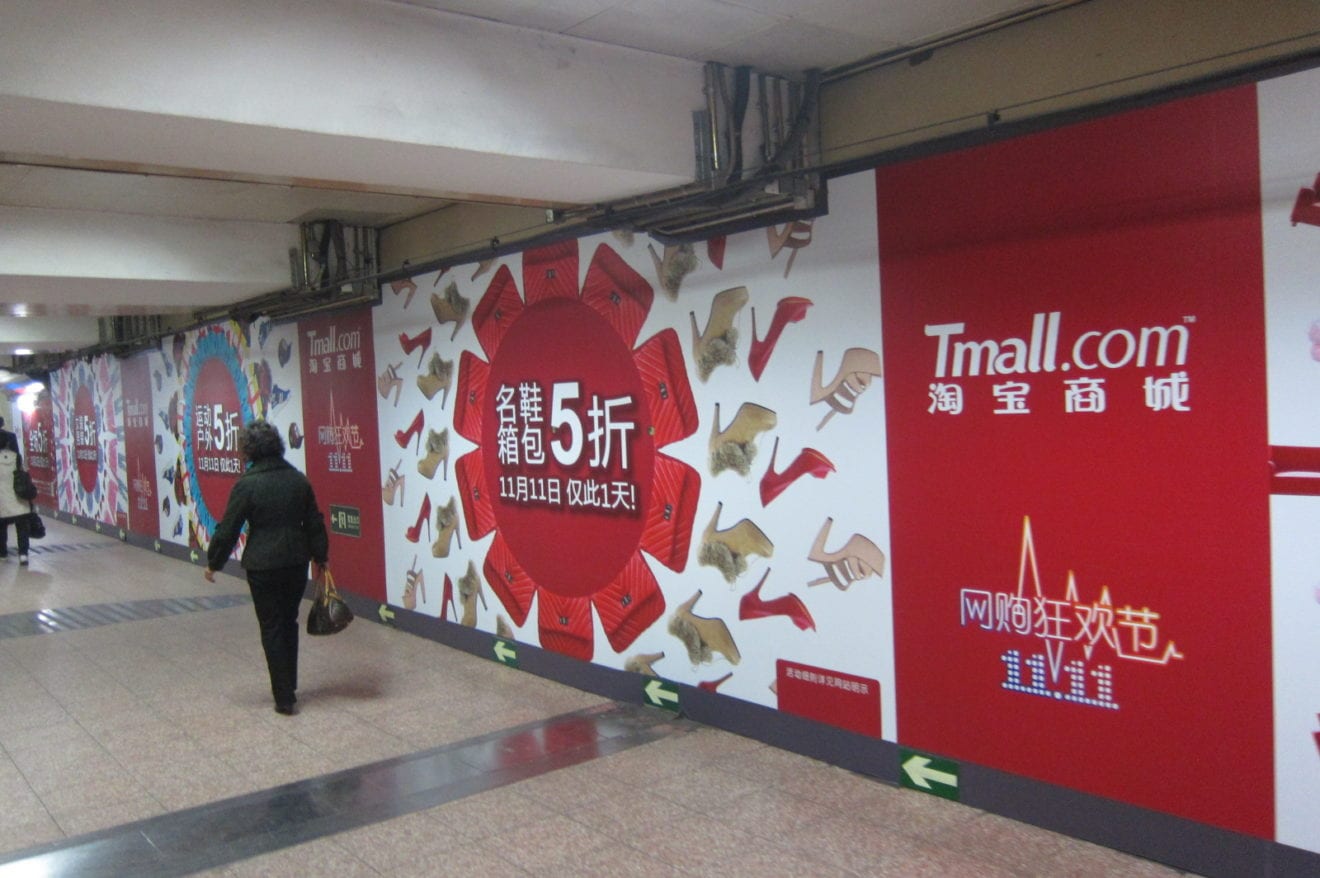
  • Tmall Global launches duty-free platform

    Tmall Global launches duty-free platform

    Alibaba’s Tmall Global is to launching a prepaid duty-free service for Chinese travellers going abroad in the hopes of boosting international eCommerce opportunities.

    Under the World Duty Free service, Chinese travellers can buy prepaid cards online before they go abroad, then purchase items from duty-free shops in the country they’re visiting. Tmall said the service will eventually allow customers to buy specific duty-free products online and pick them up at the airport.

    The service will launch with Thailand’s King Power duty free monopoly.

    Duty-free companies in South Korea, Japan and Europe are working with Tmall to open storefronts on the platform, Tmall says.

    “Cross-border e-commerce has great potential in China and Tmall Global will continue to help brands and retailers sell into China through innovative solutions, at the same time providing Chinese consumers a wide variety of product choice,” Tmall Global head Maggie Wu said in a release.