Tag: Online

  • More than half of millennials prefer online retailer info to in-store assistance

    More than half of millennials prefer online retailer info to in-store assistance

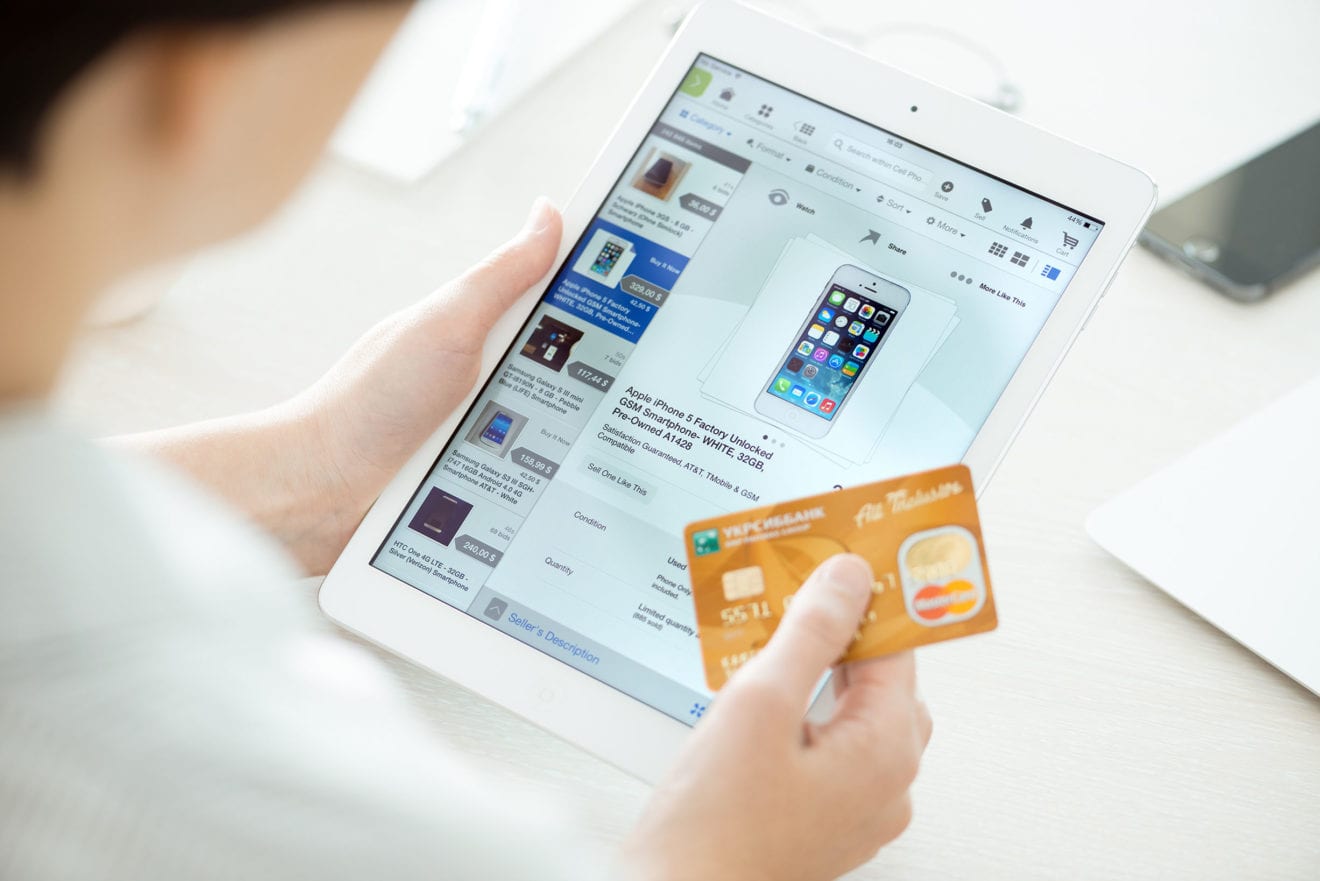
    More than half of millennial customers would rather look for retail information online than talk to a shop assistant, according to research.

    A survey of online marketplace OnBuy.com’s customers found that 53% of young people aged between 25 and 34 prefer to seek out details online rather than talk to store staff when they are in a shop.

    The younger generation also prefer to avoid shops when they need information, with 61% of the millennial age group saying they find it easier to chat to a retailer via digital communication channels such as text, online chat or messaging applications as opposed to visiting a physical location.

    Cas Paton, MD of Onbuy.com, said consumers increasingly want to see more retail technology in stores as well as an online offering.

    “As technology is evolving so rapidly, it is important that companies incorporate new technologies into their business to help keep up with the times,” said Paton.

    More than half of shoppers believe that in the near future they will increasingly be using mobile devices to make more of the in-store experience.

    The purpose of stores has been slowly shifting since the arrival of e-commerce – stores are increasingly becoming showrooms for consumers to try out products before buying them online, with many physical locations becoming experience centres instead of just places to buy goods.

    Younger consumers often demand more from the shopping experience because of their use of technology, and as well as using mobile devices for information in store, want to be able to buy products through social media. Also, more and more consumers want to be able to collect loyalty points through their smartphones.

    This change in customer behaviour over the past 50 years as technology proliferation has increased also makes it more difficult to retain customers – but, surprisingly, the older generation are more likely to change between brands than the more tech-savvy millennials, perhaps because there is less social pressure for them to be affiliated with particular brands.

    Onbuy.com found that just under half of customers between the ages of 18 and 40 could be persuaded to buy from a particular brand or retailer if its stores were more different or interesting. This was true of 65% of the millennials in the group, who would be more likely to be enticed by a more exciting store experience.

    Almost three-quarters of consumers said retailers will have to keep up with changes in the technology landscape if they hope to improve the consumer experience and keep customers loyal.

    Some retailers have been trying to address this shift to omni-channel by offering services such as voice-ordering through internet-connected home devices or click and collect.

    But some larger retailers struggle to implement these new technologies because of legacy technology, and some have begun to turn to startups to help them test and implement new technologies.
     

  • Ikea Singapore starts selling online

    Ikea Singapore starts selling online

    After about two years in the making, Ikea Singapore’s online store launches today.

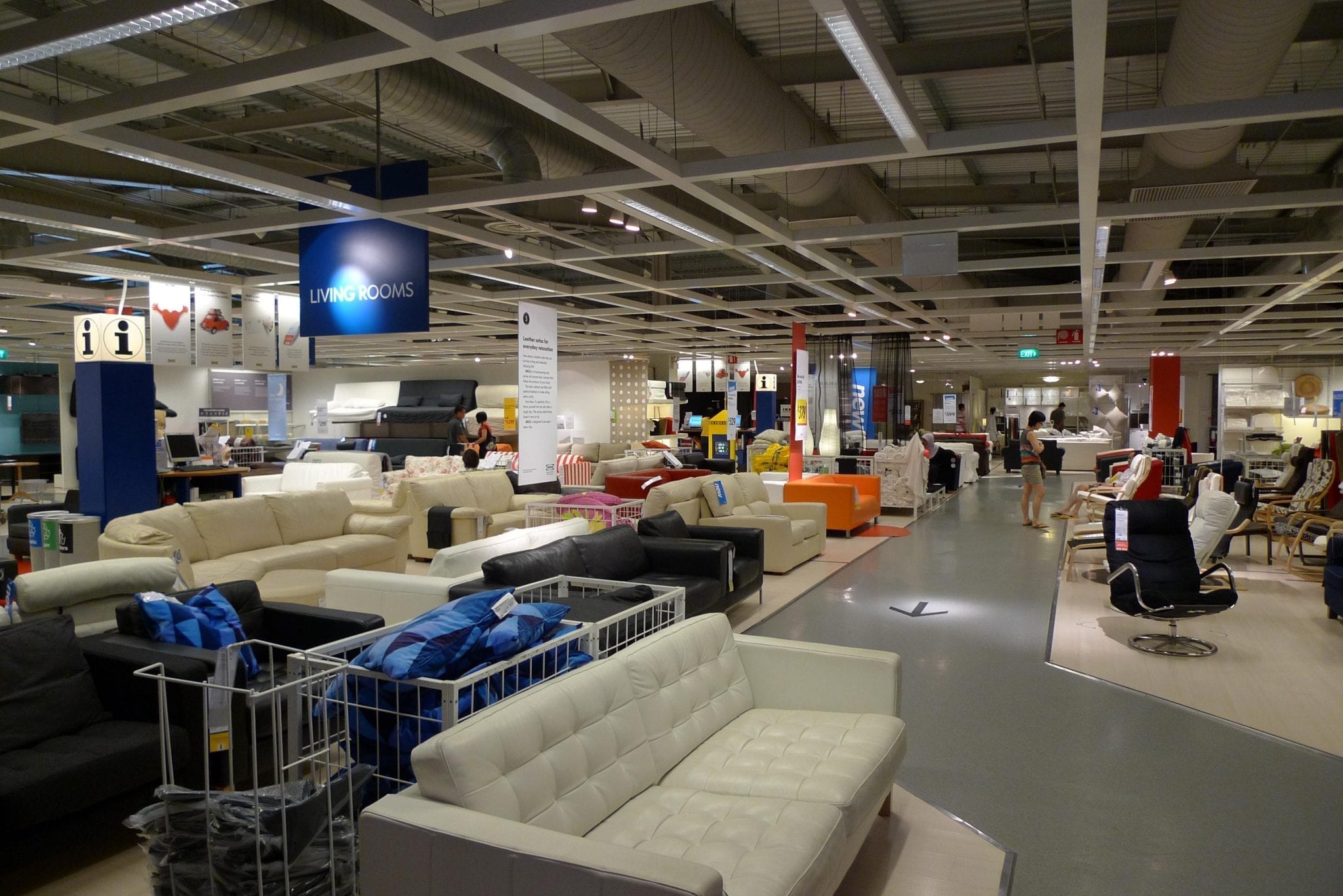
    Customers will no longer need to visit the Swedish furniture giant’s Tampines megastore or Alexandra Road outlet, but can buy at Ikea.sg and have the items delivered to their homes. As with the physical outlets, the online store has an inventory of about 7000 products.

    Online customers can pay via credit card or Nets. There is no minimum spend.

    Delivery charges range from $15 to $70 for bulky items. The delivery-service team members have been trained to also assemble the furniture, for an extra fee.

    Ikea Southeast Asia retail director Mike King says there have long been calls for an online store in Singapore, but the brand wanted to iron out all the kinks before launching one.

    Previously, Ikea Singapore’s website was a virtual extension of its print catalogue, showing mood shots of various rooms and offering product details.

    Mike King, Ikea Southeast Asia’s retail director, says there have long been calls for an online store in Singapore, but the brand wanted to iron out all the kinks before launching one.

    Previously, Ikea Singapore’s website was a virtual extension of its print catalogue, showing mood shots of different rooms and information about Ikea’s products. With online shopping now available, King expects greater demand for Ikea’s products but is confident there will not be a problem fulfilling orders.

    He says that during the past 12 months, Ikea has been affected by a global container problem (caused by South Korean company Hanjin Shipping going bankrupt) and port delays in Shanghai. “Those issues cause more problems rather than the added demand generated by e-commerce.”

    King says there are improvements ahead for the online store, which may include an option for customers to collect their online purchases from the two physical stores.

    An online Ikea store is also planned for Malaysia.

  • Lancome Travel Retail pushes digital presence online

    Lancome Travel Retail pushes digital presence online

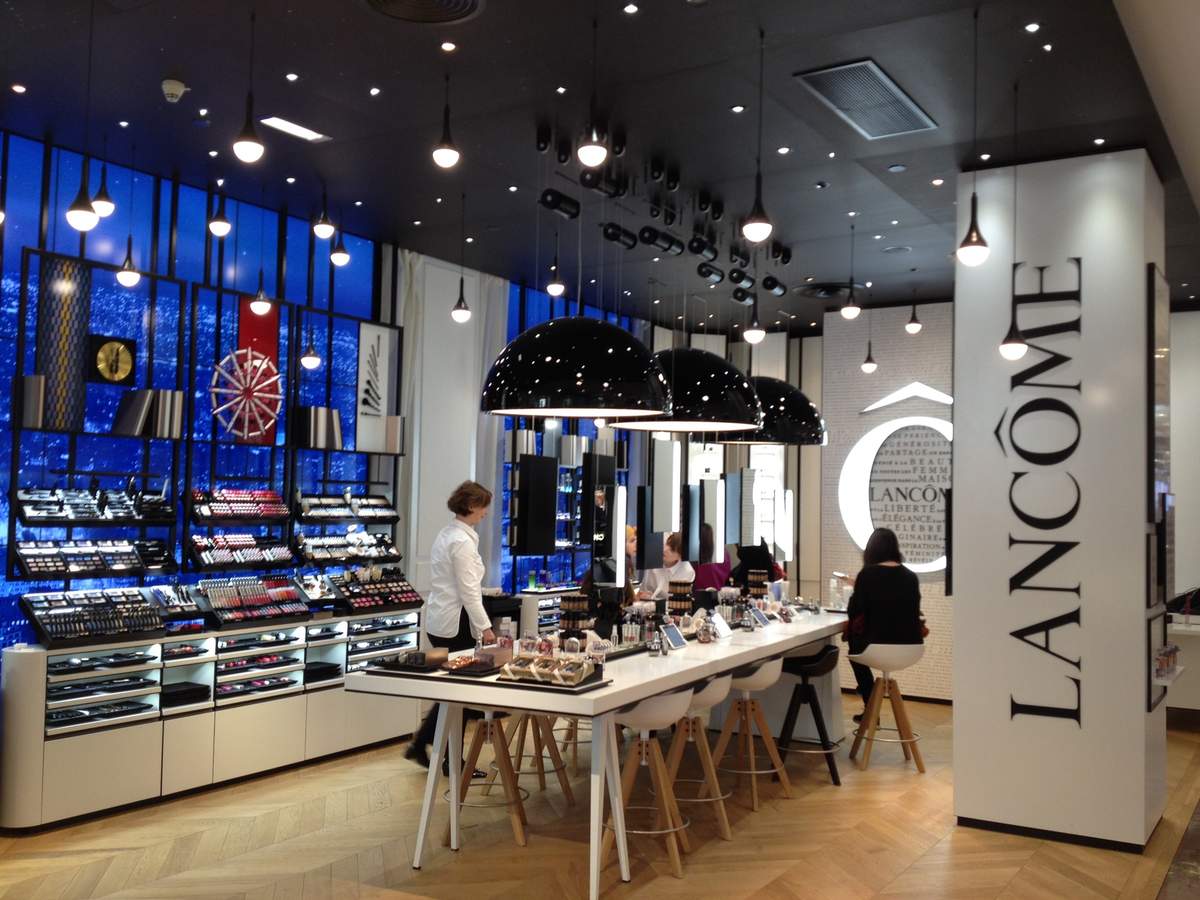
    Lancome Travel Retail Asia Pacific has launched a “Declaring Happiness” campaign aimed at strengthening its digital presence, with a focus on Hong Kong, Singapore, China and Korea.

    Celebrities and beauty opinion leaders are involved in the French luxury beauty brand’s  promotion, which converges offline and online retail experiences with the hope of engaging consumers.

    An event in the first 2020 concept store for Lancome Travel Retail Asia Pacific, at Lotte Hotel in Seoul, kicked off the initiative. Korean actress Kim Go-Eun was a special guest. The event was the company’s first venture into live streaming, with guests including 11 social-media influencers from China. They provided live coverage through Weibo of both the concept store event and the following cocktail party.

    Then the campaign moved to Singapore, with a Lancome Holiday Wonders pop-up store at Changi Airport, which is open until November 10. An exclusive at the pop-up is the Lancome Travel Retail Worldwide virtual mirror, which enables shoppers to try different makeup looks via a virtual makeover. Other attractions are a photo booth and a touchscreen game.

    Customers buying certain items at the store are offered a complimentary engraving service for the Lancome x Singapore luggage tag, an exclusive holiday collectible.

    The next stop will be at Haitang Bay in China this month, with the brand journey ending in Hong Kong next month.

    “We hope to continue creating moments of happiness for women by exploring different consumer-centric innovations at our events that allow us to foster a deeper connection and engagement with our customers,” says Lancome Travel Retail Asia Pacific GM Tao Zhang.

  • Online spending eases in June

    Online spending eases in June

    The growth rate for New Zealanders’ total online retail shopping eased back slightly in June, but spending was still up 10 per cent compared to June last year.

    According to the latest BNZ and Marketview monthly report on New Zealand’s online retail sales, purchases from offshore online retailers accounted for 44.5 per cent of the month’s online spending, and spending at these retailers was up 13 per cent on June 2016.

    A surge in spending on Computers and Electronics drove half of the increase.

    Clothing had a quieter month than usual, with purchases from offshore online retailers only up  per cent on June last year.

    Spending at local online retailers was up 9 per cent on June last year.

    “While slower than the double-digit growth rates we’ve generally been seeing since 2016, this level of growth is still more than double that of local bricks-and-mortar stores, which were only up 4 per cent on June last year,” said Gary Baker, director, institutional research, Bank of New Zealand.

    Food store-types drove approximately half of the growth at local online sites (June 2017 vs June 2016).

    Clothing purchases were also strong at local online merchants, up 16 per cent on last June.

  • Zara to launch online sales platform in India this October

    Zara to launch online sales platform in India this October

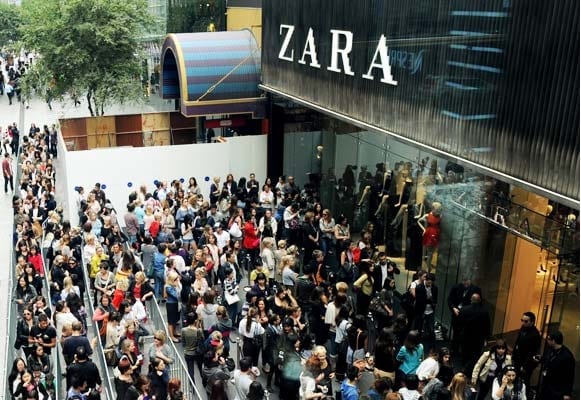
    As part of the ongoing international expansion of its integrated store model, Zara will launch its online store in India this October. This was confirmed by Inditex’s Chairman and CEO Pablo Isla while reviewing the company’s performance in 2016.

    Isla highlighted ‘solid, sustainable and integrated growth’ as key to the Inditex of the future.

    Besides launching Zara’s online sales platform in India, this August the Group’s brands, including Zara, Pull&Bear, Massimo Dutti, Bershka, Stradivarius, Oysho and Zara Home will open their first stores in Belarus.

    Speaking at the company’s Annual General Meeting in Arteixo, Spain, Isla defined Inditex as a company “focused on its people, devoted to creative talent and underpinned by an integrated offline-online store model.”

    In 2016, Inditex Group’s points of sale surpassed the 7,200 mark in 93 countries and 41 online markets. Group revenue reached €23.31 billion, underpinned by growth in all the regions in which it does business, while net profit amounted to €3.16 billion.

    At the end of the year, Inditex had 162,450 employees representing 99 different nationalities worldwide.

  • Foot Locker Launches E-commerce Platform

    Foot Locker Launches E-commerce Platform

    Foot Locker has launched its first Aussie e-commerce platform, opening a website that includes the shoe retailer’s full range of sneakers and apparel.

    In a statement, the shoe retailer said it anticipates the online store will further fuel the rise of sneaker culture in Australia.

    “We’re excited to expand into the online space and give our customers the opportunity to access our full range of product from anywhere in Australia,” said Natalie Ellis, VP GM Foot Locker Asia Pacific.

    The 24/7 website will house sneakers, apparel and accessories from brands including Jordan, Nike, adidas, Puma, Asics and Converse.

    Foot Locker said it’s built the e-commerce store to meet the needs and expectations from consumers and ‘to facilitate access to the best-of-the-best sneakers from anywhere in Australia’.

    Consumers will have access to the full range of House of Hoops, a-standard, Puma Lab and Converse Prime product that had previously been available for purchaseonly within flagship stores.

    The e-store allows free returns anywhere in Australia, free delivery nationally for orders over $150 and has a selection of over a thousand products.

    Foot Locker Australia, a subsidiary of the US corporation, Foot Locker Inc, was incorporated in 1994 and is based in Murarrie, Queensland. It operates approximately 100 stores across Australia and New Zealand.

    Sneaker culture appears to be a developing phenomenon, with Foot Locker’s British rival, JD Sports, recently asserting the success of its first local offerings.

    “The highly anticipated JD Sports Parramatta launch is expected to attract sneakerheads en masse, following the success of Melbourne Central’s flagship store, which went down as one of the largest launch days of any international territory within the JD Sports business,” said Hilton Seskin, head of JD Australia. The Parramatta store opened last week with over 500 customers queueing to get their hands on limited edition sneakers.

  • Brick-and-mortar stores with online presence have retail edge

    Brick-and-mortar stores with online presence have retail edge

    The growth of e-commerce may pose a serious threat to brick-and-mortar stores, but there is a silver lining for department stores here. A nationwide survey has found that department stores with both a physical and online presence can have a competitive edge over online-only stores.

    Department store customers who shopped via the store’s online channels – such as its website or mobile app – reported higher levels of customer loyalty than shoppers at e-commerce sites such as Zalora and Groupon.

    This was one of the findings of the latest Customer Satisfaction Index of Singapore released yesterday.

    “This would suggest that traditional brick-and-mortar stores could be better served and complemented by developing a robust omni-channel presence if they have not already done so. It can potentially give them a competitive edge over the e-commerce retailers,” said Mr Chen Yongchang, head of research and consulting at the Institute of Service Excellence (ISE) at the Singapore Management University, which compiled the index.

    The survey of 6,900 Singapore residents and tourists between January and April this year found that satisfaction levels in the retail sector remained similar to last year’s, with the retail sector scoring 72.1 points out of 100, up from 71.7 the year before.

    Of the four retail sub-sectors surveyed, the department store sub-sector showed significant improvement.

    This largely stemmed from more satisfied local shoppers, said Ms Neeta Lachmandas, ISE’s executive director.

    “This increase could be related to the revamps of various stores and product offerings, as well as increased promotional activities targeted at boosting sales.”

    Among department stores, DFS had the highest score of 73.6 while Metro was the only store whose score had increased significantly.

    DFS’ managing director for Singapore and Indonesia, Ms Wilcy Wong, attributed the retailer’s high score to its focus on providing “authentic and personal customer engagement. But at the heart of the DFS experience is of course our people,” she added.

    “We invest heavily in talent management programmes, as well as learning and development through our own DFS University to enhance our operations.”

    The fashion apparel, supermarket and e-commerce sub-sectors did not see any significant change in scores.

    A notable observation among supermarket customers was that those who frequently used self-checkout counters were more satisfied than those who mostly used manned cashier counters.

    The survey also looked at customer satisfaction for the info-communications sector, which scored a record high of 69.6 points out of 100, up 1.6 per cent.

    ISE found that service attributes relating to responsiveness, assurance and empathy were key drivers of loyalty among mobile telecommunications and broadband customers.

    This was in addition to the usual product-related attributes such as suitable subscription plans and fast data speeds.

  • Korea ranks number 1 in online grocery shopping

    Korea ranks number 1 in online grocery shopping

    South Korea ranked No. 1 in terms of e-commence for grocery shopping, far outpacing other major developed countries, an industry report showed.

    According to the report by industry tracker, Kantar Worldpanel, the percentage of fast-moving consumer goods shopping via online and mobile channels out of all purchases in South Korea between June 2015 and June 2016 came to 16.6 percent.

    FMCG refers to goods such as soft drinks, toiletries, over-the-counter drugs, processed foods and many other consumables.
    Japan came in second with 7.2 percent, followed by the United Kingdom with 6.9 percent, France with 5.3 percent and Taiwan with 5.2 percent, the report showed.

    For the United States, the share of e-commerce represented just 1.4 percent, Kantar Worldpanel said. However, with initiatives from Amazon and more established grocery retailers, the region is likely to catch up quickly.

    South Korea also ranked the highest in terms of the percentage of households that buy online FMCG products at least once a year.

    Industry watchers attributed the broadened digital shopping experience by South Koreans to an aggressive expansion of online-based fresh food delivery services by key e-commerce companies and related startups.

    The diversification of fresh food supplies and shortened delivery periods due to heated market competition has led to the overall increase of the transactions and improvement of online shopping services for consumers.

    The growing number of single-person households is another factor that has fueled the demand for online grocery shopping here, observers added.

    Along with many double-income families that have little time to shop at a supermarket, those who live and eat alone have shown a tendency to spend generously if they can have groceries delivered with a simple click.

    One-person households in Korea account for some 35 percent of the total population as of September 2016. The trend has prompted local retailers and e-commerce companies to scramble to launch fresh food delivery services.

  • Tesco aims to boost online sales

    Tesco aims to boost online sales

    Ek-Chai Distribution System Co, the operator of Tesco Lotus hypermarkets, has outlined strategies to serve omnichannel shoppers better.

    Due to the growth of mobile internet usage in Thailand, the boundaries between offline and online worlds are become increasingly blurry.

    Customer behaviours have shifted towards omnichannel shopping, where they receive information, converse with brands, do their research and finally shop both in brick-and-mortar stores and online, interchangeably, according to Mark Roughley, the company’s online director.

    Internet penetration in Thailand in 2017 grew to 67% from 56% in January 2016. Nearly 45 million Thais now access the internet on their mobile phones.

    Due to these trends, the customer journey has changed tremendously, and the new retail ecosystem now involves several parties and providers to facilitate the new customer journey and offer more choice, Mr Roughley said.

    “We have been witnessing an increasing number of omnichannel customers,” he said. “We know that convenience is key for these customers. And we also know that mobile and innovation is the secret to attracting and connecting with omnichannel customers.”

    To cope with this trend, the company continues to enhance its shopping fulfilment by extending more choices in terms of product delivery and shopping platforms.

    The customer journey has changed rapidly. The new retail ecosystem is much more sophisticated than the old one, which had only three or four key players, namely product manufacturers, distributors, retailers and customers.

    But the new retail ecosystem involves several parties and providers facilitating the new customer journey, from logistics providers to payment providers and price comparison platforms.

    “We plan to enhance our services for customers in this new retail environment,” Mr Roughley said. “For example, the company has partnered with Happy Fresh to deliver fresh food to customers in their homes within one hour, or they can choose Tesco’s delivery.”

    The retailer has also set a more comprehensive plan geared towards the e-payment system, in line with the government’s national e-payment scheme.

    Mr Roughley said Tesco Lotus will focus on providing e-payment channels for customers. The retailer is considering setting its own e-payment system or using those of partners it would recruit.

    The launch of the government’s national e-payment system will propel the country’s e-commerce industry and online shopping business. And the company can see that more customers are aware of e-payment.

    To prepare for the growing trend, Tesco Lotus is working with payment providers such as Rabbit Line Pay to facilitate mobile payments. The retailer’s e-payment module is expected to start sometime by the end of this year or early next year.

    This will support the online business of Tesco Lotus, currently a small portion of total sales. Mr Roughley declined to reveal the sales figures for Tesco, one of Thailand’s leading retailers operating 1,900 branches in all formats, including Tesco Express.

    “Online shopping in Thailand grew faster than our network in several countries worldwide,” he said. “We are seeing very strong double-digit growth in our online business since offering it in the past five years, and the growth will be stronger this year.”

  • Japanese retailer Aeon to launch English version of AeonEshop.com

    Japanese retailer Aeon to launch English version of AeonEshop.com

    Since entering the e-commerce market in January 2017 with the site AeonEshop.com, the Japanese supermarket Aeon has quickly gained the attention of customers thanks to its unique selling point compared to other e-commerce websites – high quality Japanese goods. To better serve customers, the firm is about to release the English version of AeonEshop.com.

    Success thanks to uniqueness

    AeonEshop’s initial success stems from its products’ variety and quality. With a focus on selling high quality Japanese goods to meet customers’ demand, the site has quickly established its foothold and become customers’ favorite shopping destination, while numerous other online sales websites have to be stopped after a short time of operation.

    AeonEshop’s operation has been pretty successful. Its products are always ensured to be updated and diverse to meet Vietnamese consumers’ needs and high standards.

    Recently, the site has made a big step by expanding its reach to the northern provinces of Vietnam like Hanoi, Vinh Phuc, Bac Ninh, Hung Yen and Hai Phong to satisfy customers who enjoy using Japanese goods.

    Hanoi is usually considered a difficult market due to geographic conditions, people’s traditional consuming habits and shopping culture. However, for those who are fond of Japanese goods, this is good news and marks a new beginning in AeonEshop’s attempt to access the northern region, which has a lot of potential for development.

  • More Filipinos adopt online trading at stock mart

    More Filipinos adopt online trading at stock mart

    Online accounts at the Philippine stock market grew 27.8 percent to 302,516 from 236,669 in 2015, according to the annual Philippine Stock Exchange (PSE) report.

    PSE reported also that the total number of stock market accounts, which include both online and traditional accounts, was at 8.5 percent, from 712,549 accounts in 2015 to 773,187 at the end of 2016.

    “Technology has played a big role in the growth of our investor base over the years. We are pleased to see that more Filipinos have continued to adopt online trading to invest in the stock market,” said PSE President and CEO Ramon S. Monzon.

    Investors with online accounts trade themselves, typing in their buy or sell orders on their online trading platform whereas investors with accounts in traditional stock brokerage firms have to call their broker to place their orders.

    The minimum required amount to open an account and the broker’s fee of online stock brokerage firms are usually lower compared with their traditional counterpart. Online investors are typically provided research materials by their online broker while investors of traditional firms also get research reports and they can discuss their investing options with their broker.

    The continued growth in online accounts also translated to higher trading activity. In 2016, 53.7 percent of total market transactions, measured in terms of number of trades, were accounted for by online accounts.

    This was the first year that online transactions were responsible for more than half of the market’s total transactions. Online trades registered a 41.4 percent growth in value turnover, which translated to a 9.3 percent share in the market’s total value turnover.

    Of the total stock market accounts, 98.2 percent, or 759,952, were held by local investors while the remaining 1.8 percent or 13,595 were accounts of foreign investors.

    The PSE’s 2016 Stock Market Investor Profile survey showed that among the retail investors using online and traditional brokering, 43.7 percent earn less than P500,000 annually. This was followed by investors earning above P1 million at 31.1 percent while investors with an annual income of Php 500,000 to Php 1 million made up 25.2 percent of the total retail investors.

    Meanwhile, close to 40 percent of investors were aged 30 to 44. The 45- to 59-year-old investors covered 26.4 percent of the total count and those who are 60 and above comprised 19.3 percent. The young millennials or those between 18 and 29 had accounted for 14.8 percent of investors.

    In terms of geographic location, a total of 96.1 percent of retail investors are based locally while the rest are based overseas.

    The concentration of retail investors continue to be in Metro Manila, which accounted for 70.6 percent of investors. Luzon cornered 16.4 percent of investors with Visayas and Mindanao making up for 6.2 percent and 2.9 percent, respectively. Overseas-based investors comprised 3.9 percent of retail accounts.

    “We are pleased with the continued growth of stock market investors in the market. Clearly, we have a long way to go and we at the PSE will continue our financial literacy programs to demystify stock market investing and make investing as understandable and accessible as bank or insurance products,”. Monzon said.

    In the past year, the PSE has intensified its market education efforts by doubling the number of its free seminars both in Metro Manila and in Cebu. To cater to the increasing number of tech-savvy Filipinos, PSE has been regularly conducting free webinars to discuss basic and intermediate topics. These webinars attract close to 500 participants per session.

    Online retail investors younger, more spread across the country

    The PSE survey results showed that close to three quarters of online retail investors are aged 18 to 44 years. Among online investors, 21.7 percent are in the 18 to 29 year old range, 52.9 percent are 30 to 44 years old, 18.4 percent are 44 to 60 years old, while the remaining 7.0 percent were 60 years and above.

    In terms of location, retail online investors are also less concentrated in Metro Manila compared to the geographical distribution of total stock market accounts. For online accounts, Metro Manila investors only accounted for 57.0 percent of the total online accounts, with Luzon, Visayas and Mindanao online investors making up a much bigger share of 26.0 percent, 6.8 percent and 4.2 percent, respectively. The share of overseas-based clients is also higher at 5.9 percent for online accounts.

    The survey also showed that online traders invest even with lesser incomes. Those earning P500,000 or less annually comprise 60.3 percent of the total online trading population. Meanwhile, 23.7 percent of online traders earn between P500,000 to P1 million per year and the remaining 16.0 percent have incomes of more than P1 million annually.

    “The numbers show that more investors are finding out that participating in the stock market is actually an affordable investment. We are also happy that our online brokers have been able to reach out to more Filipinos outside of Metro Manila towards making stock market investing more inclusive,” Monzon added.

  • Honestbee sweetens Thai operations budget

    Honestbee sweetens Thai operations budget

    Honestbee, a Singapore-based online grocery and concierge service provider, is boosting its presence in Thailand to capitalise on lucrative online shopping opportunities.

    “We are spending millions of US dollars in Thailand this year on increasing our local staff, upgrading our IT infrastructure, and adding marketing activities,” said Bounthay Khammanyvong, country manager of HonestBee Thailand.

    He said Thailand is the seventh market in Asia-Pacific for Honestbee since it began operations in 2015, following Singapore, Hong Kong, Japan, Taiwan, Indonesia, and Malaysia. The company is expanding into the Philippines soon, said Mr Bounthay.

    Just three months after it started operations in Bangkok this January, transactions at its Thai website ranked third among the seven countries where it has a presence.

    Honestbee provides online grocery concierge and delivery service through partnerships with leading supermarkets who have no online retail channel.

    Customers choose their products online and place their orders either via its local website — www.honestbee.co.th — or its mobile application through Google Play or the Apple Store. The company’s concierge shoppers then hand-pick their groceries for them.

    Honestbee earns a commission from its merchant partners. The company charges customers a flat rate of 30 baht with no minimum purchase requirements.

    The company has over 10,000 users in Thailand.

    Mr Bounthay said Honestbee’s service does not compete with offline retail stores, instead complementing their offerings to accommodate the shift towards online shopping.

    He said the company is focusing on improving the speed of its delivery service to reach customers’ homes in an hour.

    Its target customers are millennials, housewives, and multi-generational family households with high purchasing power.

  • Online retailers feed craving for fresh food on demand

    Online retailers feed craving for fresh food on demand

    Gmarket launched a service on Monday called Gtable that provides seasonal fresh food from farms around Korea. The online retailer will oversee the entire process, including selection of fruits and vegetables, washing and packing them, and delivery.

    For Gmarket, whose main business model is providing an online sales channel to individual merchants, the launch of an in-house service with such high degree of direct management is rare.

    “We noticed that more consumers were purchasing fresh food online,” said Park Young-geun, head of the fresh food team at Gmarket. “The service aim is not just delivery but to suggest a more healthy lifestyle to our users.”

    The service is starting with nine products including salads, oranges, nut mixes and vegetable sets, mainly priced between 10,000 won ($9) and 30,000 won.

    For the past decade, the dominant retail channel for fresh food has been brick-and-mortar discount chains. Buying groceries online, though, is becoming a more popular option, especially among young people living alone who don’t need to buy in bulk and childless couples who don’t consume as much as families with children. Both demographic groups are growing in Korea.

    As a result, many online retailers with fresh food services are packaging their groceries in small sets. Lotte.com’s Garak Store, for example, which delivers vegetables and fruit purchased from daily wholesale auctions at Garak Market, a traditional Korean marketplace in Garak-dong, southeastern Seoul, lets consumers buy in small quantities, even by the gram.

    The market for online groceries is a promising one. Last year, 1.73 million won worth of fruits, vegetables seafood and meat were bought online, according to Statistics Korea, a 20 percent increase from 2015.

    Among its peers, Auction was the first to spot an opportunity in selling fresh food online. In 2014, it launched the service Farmer Story, which directly connected producers and consumers. Farmer Story posted six-fold sales growth during last year’s second half compared to 2014.

    WeMakePrice was the next online retailer to enter the market, in October last year, with Sinseonsaeng, a portmanteau of “fresh” and “mister” in Korean. The company is targeting single-person households with its small packaged groceries and fast delivery. During the first nine weeks, the number of orders jumped almost fivefold and sales volume increased fourfold.

    Ticket Monster jumped on the bandwagon in January with Tmon Fresh. Apart from the small packaging that rival services offer, Tmon Fresh also gives customers the option of choosing when to receive deliveries. The company reported a 240 percent increase in grocery sales after Tmon Fresh’s launch.

    SK Planet, operator of online retail platform 11st, in December acquired the start-up Hello Nature, which runs a service that sends groceries to consumers within 24 hours.

    For a long time, fresh food has been considered an exception in an age when people can buy clothing, electronics and even daily necessities like diapers and toilet paper online. One concern is that something could go wrong with the produce during transportation. Another is prevailing convention that fresh food ought to be bought in person, where customers can thoroughly examine the produce themselves and ask vendors questions.

    This hesitance means credibility has become an essential differentiating factor for competing e-commerce grocers. On top of fast delivery, companies are making sure consumers know that their food teams are putting in extra effort to ensure product quality. WeMakePrice, for instance, touts its more than 2,000-square-meter (21,000-square-foot) refrigeration facility in Gwangju, Gyeonggi.

    “We believe online shopping platforms have a chance in the groceries market if they can prove that they can provide products of freshness and quality equal to the level of discount chains,” said Ha Song, head of the direct buying team at WeMakePrice.

  • Vietnamese prefer overseas sites for online shopping

    Vietnamese prefer overseas sites for online shopping

    Local consumers say global giants like Amazon and eBay offer a wider range of products and better return policies. Vietnamese online shoppers spend significantly more on overseas purchases than they do domestically as they believe international e-commerce platforms offer better products and service quality, a new report has said.

    The report, from the Vietnam E-commerce Association or VECOM, said that many global retailers like Amazon and eBay have made it easier for Vietnamese consumers to buy online.

    “Meanwhile, a majority of Vietnamese e-businesses, especially small- and medium-sized companies, have yet to make significant investments in market research catering to consumers,” said the report.

    Local online shopping sites are less competitive in terms of product diversity and quality, return policy, and order placement costs, the report highlighted.

    “I shop on both eBay and Amazon,” Quoc Hung, a reader said in a comment. “I can just send a product back if I don’t like it.”

    Most Vietnamese online businesses don’t offer free delivery and free return, another reader pointed out.

    Chinese online retail giant Alibaba is also attracting more Vietnamese customers. Internet company OSB, Alibaba’s authorized agent in Vietnam, said the company’s customer base in Vietnam has expanded to 500,000 after sharp increases over the past three years.

    The online shopping trend is growing rapidly in Vietnam, where 30 percent of the population will be buying goods and services over the internet by 2020, according to the Vietnam E-Commerce and Information Technology Agency.

    The agency, run by the Ministry of Industry and Trade, said revenue from online retail is expected to account for 5 percent of the country’s retail market in 2020, up from only 2.8 percent in 2015.

    Vietnam’s e-commerce market, which has one of the world’s fastest growth rates, jumped 37 percent in 2015 to around $4 billion, based on government statistics.

    The growth rate is about 2.5 times faster than that in Japan, based on some estimates by industry experts.

  • German supermarket Aldi opens online store in China

    German supermarket Aldi opens online store in China

    The soft opening of a bricks and mortar store meanwhile is scheduled for 20 March and the official grand opening will be held in Shanghai in April, the company said in a statement on its website.

    Most of the products will be sourced from its existing Australian suppliers to serve the China market with a focus on value.

    “For decades, the Aldi’s own brands have enjoyed the reputation of providing excellent value for money,” said Christoph Schwaiger of Aldi. “We are convinced that Chinese customers are also very interested in the quality and the reasonable prices we can offer them.”

    Terry von Bibra, general manager Europe of Alibaba Group, commented: “The name Aldi is a concept in many countries of the world and like Alibaba, the company is a pioneer in its industry. We are very pleased to support Aldi Sud at the Chinese market with Tmall Global, one of the largest e-commerce platforms for consumers in China, and to work as a strategic partner with Aldi  in other areas, such as B2C, B2B and marketing.”

    “Alibaba’s e-commerce platforms reach not only the approximately 443 million active users, but also serve the strongly growing interest of the Chinese middle class in products Made in Germany. The products of Aldi South will undoubtedly be very popular among consumers. ”