Retail News CRM

Tag: Online

  • India’s Jabong merges with Myntra

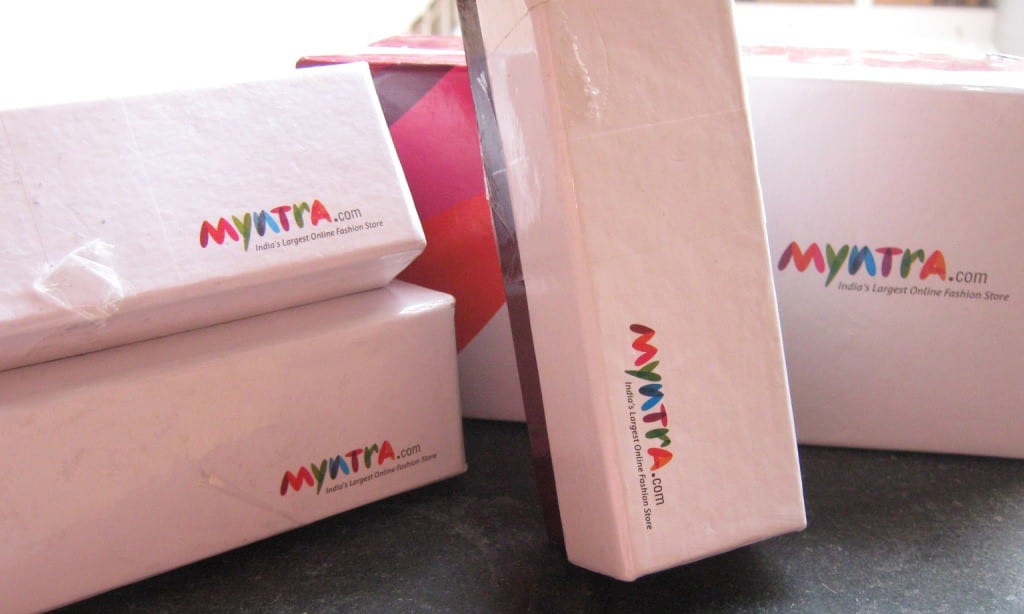
    India’s Jabong merges with Myntra

    Myntra has announced the integration of Jabong with the brand and Ananth Narayanan will continue to lead the team.“Since Myntra’s purchase of Jabong in mid-2016, the two brands have been steadily integrating key business functions and streamlining processes. This has resulted in revenue growth and a significant improvement in the customer experience. As the next step in this process, Myntra and Jabong will now fully integrate all the remaining functions including technology, marketing, category, revenue, finance and creative teams,” said company spokesperson.

    “The closer integration of Myntra and Jabong is a necessary step in our continuing development. To remain the leader in fashion eCommerce in India, we have to find ways to operate more effectively and innovate more quickly. By better aligning our resources with our long-term plans, we can put the best structure in place to serve our sellers and brand partners and ultimately benefit our customers.” it added.

    According to the company, Myntra’s independence as a business will be preserved. Myntra team will continue to operate independently to achieve even greater success.

    “We will continue to lead the market, serve our customers, and do what we do best,” according to the company.

    From a consumer perspective, the well-loved Jabong brand will remain.

  • India’s KOOVS.COM goes offline now exclusively at Central

    India’s KOOVS.COM goes offline now exclusively at Central

    KOOVS.COM, the ultimate fashion destination in India, has announced the launch of its first shop-in-shop presence exclusively at Central M.G Road, Gurugram, India. The launch saw Bollywood celebrity and fashionista, Kiara Advani walk the ramp in the brand’s latest collection marking the celebrations.

    Recognized for bringing latest fashion off international runways for both men and women to the country, KOOVS.COM now gives all fashion lovers an access to the collection offline. Customers can touch and feel the quality of the products, try them on to understand their best fit and buy their products from the store and get it delivered at their doorstep.

    Mary Turner, CEO KOOVS.COM, said “The brand is taking a step to get closer to our customer, by providing them the diverse range of the fresh fashion collection for both men and women. We are excited to see the response at the store and take customer interaction to the next level.”

    The venue was turned into mini London representing brand’s aesthetics and inspiration, resonating European fashion history and impressions of uber chic design philosophy.

    The brand is bringing alive the new trends in style through an aesthetic portrayal for the new age Indian consumers who have a global outlook and admire fashion in their everyday life.

  • JD.com starts marketing overseas properties to its buyers

    JD.com starts marketing overseas properties to its buyers

    Users of the service may find houses for lease with terms and prices verified as accurate.

    Other new partners include US Century 21 Real Estate and Beijing property search engine Zhuge. More than 1.7 million apartments in 100+ Chinese cities are already listed on the platform.

  • Online lending booms in Vietnam, but lack of regulations

    Online lending booms in Vietnam, but lack of regulations

    It is easy these days to find a site for online lending and borrow quickly with simple procedures. Companies have entered the peer to peer (P2P) online lending realm that directly connects borrowers, whether individuals or companies, with lenders, and get up to 2,000 customers a day, Can Van Luc, chief economist of the state-owned creditor BIDV, said.

    This lending format does not require the involvement of an intermediary. It is flourishing because there are always people who have need for loans or want to lend money, and the rapid growth of technology precludes the need to go through intermediary financial institutions, he said.

    “This model has several strong points, including low cost and quick disbursement time, but the worry is it is easy for investors to make use of it for other purposes. There are many lenders who come to the P2P platform not to find borrowers but to invest in other fields and the relationship between the suppliers of the platform, borrowers and lenders is unclear due to the lack of a legal framework.”

    And because of this, lenders have been using gangs to recover their loans and put up their interest rates much higher than the legal cap set by the State Bank of Vietnam.

    Luc said there is a risk for both borrowers and lenders.

    He said authorities need to create a legal framework for this model soon to meet the strong demand in the market for credit.

    Economist Nguyen Tri Hieu argued authorities should create legal regulations related to contracts, interest rate, fees, and other aspects to avoid problems.

    Nguyen Thi Hong, Deputy Governor of the central bank, told a government meeting early this month that online lending has more or less turned into loan sharking.

    It is a no-go area for the central bank but it would monitor and make recommendations to the government to regulate the market, she said.

  • Online retailers open brick and mortar stores

    Online retailers open brick and mortar stores

    While many traditional retail stores have embraced technology by having an online presence, online retailers are now opening physical stores (mainly concept stores) in Malaysia, in line with global trends, to gauge feedback on products.

    Retail consulting firm Retail Group Malaysia (RGM) managing director Tan Hai Hsin (pix) said there are still many customers who want to see, feel and touch the products before they decide to buy.

    “They cannot do this online. Customers do not want the hassle of returning products and re-ordering again. To meet this need, online retailers open physical stores,” he said.

    “Also, you can get better feedback on your products and services when you interact with your customers face-to-face. It is easy to give feedback online, but it tends to be short and not comprehensive,” he added.

    Tan said this is not just a trend in Malaysia, but also around the world, with the trend becoming common in the US, the most matured market for online retail.

    Online fashion retailers that have opened physical stores in Malaysia include Christy Ng (five stores), FashionValet (four stores), Bawal Aidijuma (22 stores), Poplook (three stores), Imaan Boutique (six stores), Reebonz (one store) and Finelycup (one store).

    Online foods & beverage retailers that have physical presence here include Fatbaby ice cream (one store), Foodmarket (one store) and Epic Fit Meals Co (three stores).

    Other online retailers that have joined the bandwagon include online grocery store Redtick (three supermarkets), electronics company Xiaomi (five Mi stores) and online jewellery store Jeoel (four stores).

    Tan pointed out that the main difference between (stores of) brick-and-mortar retailers and online retailers is that customers can order online while they are in the physical stores of online retailers.

    “Some customers may like a fashion item but the colour is not available in store but online.

    “They can order online immediately after they have inspected the product. Some customers do not want to carry the products with them after payment as they still want to walk around and visit other places. Some are buying the products for others and instead of carrying the items themselves, they can arrange for it to be delivered directly to the recipients,” Tan explained.

    In terms of locations, he said online retailers open their physical stores anywhere, with some choosing quality shopping malls to build their brand image. Some choose to open in shoplots that can be used as their office, distribution centre, central kitchen and/or storeroom. Some opt to open in locations where most of their customers are residing. Some select locations near their homes.

    “For traditional brick-and-mortar stores, the opening of physical stores by online retailers is seen as new competition to them. If they (brick-and-mortar retailers) do not offer e-commerce facility to their existing customers, they will be left out in the near future,” Tan said.

    Online retailers are setting up physical stores in shopping malls, but the number is still relatively low, he noted.

    “Retail trends change over time. Retailers need to change with time. Or else, they will be phased out.”

    Just like grocery trade in the last 50 years, Tan said it all started with provision shop, then evolving to mini-market, supermarket, overseas supermarket, foreign hypermarket, gourmet food hall, to today’s online grocery store.

    He pointed out that e-commerce would not be replacing physical stores anytime in the near future. In recent years, both sides of the retailing formats crosses over each other’s territory and this trend will continue.

    “The future of retailers should be multi-channel. A retailer is no longer able to operate solely based on physical store, they need to sell their products via other channels as well. Thus, winning retailers are those who are able to offer not only physical stores, but also online shopping sites,” said Tan.

  • Into the minds of Hong Kong’s online shoppers

    Into the minds of Hong Kong’s online shoppers

    Consumers in Hong Kong are accustomed to online shopping, with two thirds of shoppers completing purchases within the day if they were to complete the shopping journey, demonstrating decisiveness compared to shoppers in other markets.

    SAP Consumer Propensity surveyed Hong Kong shoppers to gain insights into their online shopping behaviour, including their motivation to purchase online, and their views on how brands can improve the overall customer experience.

    E-commerce companies looking to enhance the online shopping experience for people in Hong Kong should do three things:

    1. Provide easy exchange and return services (free return labels or nearby lockers) (58%)
    2. Include comparison tools to compare prices and specifications (50%)
    3. Offer different sizes or types of the item to try out before deciding which version to purchase (44%)

    Besides the wishlist provided by by customers, Hong Kong shoppers also shared what drive them to make the decision to purchase. The top three drivers are:

    1. Receiving discount or promotion notifications (56%)
    2. Receiving discount with purchase notifications (36%)
    3. Receiving timely response to a query (25%)

    However, when it comes to abandoning virtual shopping carts, 51% of Hong Kong consumers discard their carts sometimes or all the time, just as likely as other shoppers across Asia Pacific (52%) – ahead of the Americas (46%) and Europe (43%) on average.

    When probed further, around two-fifths (42%) of people surveyed said that they abandon carts because they are concerned with shipping costs.

    The second and third most common reasons was the lack of promotions or discounts (39%) and price-savvy customers preferring to use online sites for price comparisons only (39%).

    “Reviewing cart abandonment data provides a starting point for retailers to identify friction points in the consumer journey and make improvements to the overall purchasing experience for Hong Kong’s customers,” said Frank Zhang, General Manager of Greater China, SAP Customer Experience.

    “The results point toward a deeper demand from Hong Kong consumers for engaging yet simplified buying experiences tailored to their individual needs and lifestyles, which extends to ongoing service and support.”

  • More complaints over foreign purchases online and fraud

    More complaints over foreign purchases online and fraud

    As more South Korean consumers opt to make online purchases through overseas websites, complaints related to direct foreign purchases are also rising.

    A 305 per cent rise in complaints last year has been noted by the Korea Consumer Agency’s Cross Border Transaction Consumer Portal, with 1463 cases, up from 361 in 2016. Between January and May, 1306 cases were filed.

    The agency said many complaints regarded lodging, plane tickets and other services as well as consumer goods such as shoes and clothes.

  • Fashion reigns as Vietnam’s online shopping queen

    Fashion reigns as Vietnam’s online shopping queen

    With busy schedules occupying people’s lives, e-commerce sites are catching up with the rising demand. With e-commerce booming in Vietnam, shopaholics have been switching from walking from store to store to just sitting back and relaxing with their computers and phones to choose their favorite fashion items.

    Despite spending almost ten hours per day at work, Ha, an office worker in Binh Thanh District, HCMC, can still find the time to buy herself new clothes every month.

    Her computer is bombarded by advertisements for new fashion items that stream from the social media channel she uses to the news sites she usually follows since she searched online for a new dress.

    “I don’t have much free time to stop by every store to find the clothes I want, but I can easily do it online. Of course there are risks buying clothes online, but if I order products from shop and receive exactly what I expected, then I go back to that shop,” she said.

    The trend has become so popular that many Vietnamese women say they spend time almost every night watching online retailers livestreaming their products on Facebook.

    A survey released in October last year by Vietnamese market research firm Q&Me showed fashion standing on top of all products purchased online in Vietnam, followed by IT products, cosmetics, food and beverages, and books and stationary.

    Out of a pool of 966 respondents aged between 18 and 39, 73 percent said they went online to buy fashion products, the survey found.

    Tapping into this trend in Vietnam, online shopping platform Lazada has launched a partnership with Au Chau Fashion and Cosmetic Co. Ltd (ACFC), a distributor of world-leading brands such as Calvin Klein Jeans, Levi’s, Dune and Diesel.

    Lazada said the move expresses its ambition to boost the development of its clothing and cosmetics sector, and its target to become the leader in Vietnam’s e-commerce market by 2020.

    “Last year, Lazada’s revenue from fashion products doubled, and the number of fashion providers registering on its platform rose 4.5 times,” said Nguyen Thanh Thuy, director of brand marketing solutions at Lazada Vietnam.

    Vietnam’s e-commerce market grew by 25 percent last year and is expected to maintain its growth in the next three years, according to the Vietnam E-Commerce Association.

    Revenue from online retail is forecast to hit $10 billion by 2020, accounting for 5 percent of the country’s retail market, it said.

    The thriving market has attracted global giants.

    American e-commerce giant Amazon month entered the Vietnamese market last month, just four months after Chinese e-commerce conglomerate Alibaba officially entered Vietnam by investing in Lazada.

    Earlier this year, China’s second biggest online e-commerce firm JD.com Inc announced plans to invest in Tiki, a Vietnam-based online retailer that it intends to help with fulfillment, logistics and more. JD.com co-led the financing with Vietnamese entertainment and social media firm VNG Corp.

  • Justice about to launch online in Indonesia

    Justice about to launch online in Indonesia

    American girls fashionwear brand Justice, distributed by Kanmo Group, has launched an e-commerce store in Indonesia, Shopjustice.co.id.

    Kanmo has partnered with e-commerce agency SmartOSC to design and launch a user-centric experience. The new omnichannel feature enables customers to research and shop online with shipping to their homes or their nearest store for pick-up.

    The “Get a Look” feature enables customers to try experiment with different styles and share the results with their friends. There are also options to book a fitting or special consultation in-store. A blog has also been developed for users.

    With offices in Australia, Japan, Singapore, the UK, The US and Vietnam, SmartOSC is a strategic partner to such companies as Club 21, Courts, Nestle, Lotte, PayPal and Priceline Pharmacy.

    Formed in 2005, Kanmo Group has nearly 200 stores in Indonesia, mainly in the children and  baby segment, and has extended its retail portfolio to include fashion and accessories.

  • Warnings of ‘online catastrophe’ in domain name industry

    Warnings of ‘online catastrophe’ in domain name industry

    A long-simmering dispute between the .au Domain Administration (auDA), the industry self-regulatory body tasked with managing the country’s top-level domain, and its members has erupted this week, with some members calling for the resignation of the organisation’s CEO, Cameron Boardman, and three directors.

    Jim Stewart, chief executive of digital marketing firm StewART Media and a signatory to the letter calling for Boardman’s resignation, said the situation has become untenable and demanded a special general meeting to discuss Boardman’s position.

    The auDA in recent months has held public hearings and received submissions on the development of an implementation process to add a direct registration option to Australia’s domain space. This would allow website owners to register a domain ending in .au, rather than .com.au, .net.au, .org.au and so on.

    However, some auDA members say the panel has failed to make a business case for direct registration, nor has it fully complied with its obligation to include a peak industry body representative on the review panel, despite repeated calls to do so.

    “Business has not been consulted on this at all,” Stewart told.

    “The auDA were meant to have a peak industry body rep on a panel going over the .au proposals, but they only appointed someone last month, after submissions closed.

    “And the person they appointed works for Canstar…you wouldn’t call Canstar a peak industry body,” he said.

    Weighing up the costs and benefits

    According to Stewart, the implementation of direct registration could result in businesses disappearing from Google searches, cybersquatters claiming desirable .au domains and holding them ransom, widespread confusion among consumers and internet users and potential security issues.

    “Most people don’t fully understand the implications. For instance, a competitor may secure your domain name without the dot com. When the changes come into effect, any company can register say commbank.au or bhpcom.au causing confusion and cybersecurity issues. If a company was able to register their name.au and just switched it on that would be a disaster, you would lose all your Google search traffic,” he said.

    “By switching your current domain name (for example ‘.com.au’ to ‘.au’) you’re effectively creating a new website.

    “This means you run the risk of disappearing from Google searches. Imagine if you were an Australian retailer, what would that do to your business?”

    Stewart said the benefits – shorter, more appealing and memorable domain names, according to the auDA – pale in comparison to the risks. He also questioned the need for the change, noting that more than 100 million .com domains have been registered, compared to only around three million .com.au domains.

    Panel member resigns

    A spokesperson for the auDA told Inside Retail the reform is intended to preserve the value of the .au domain and pointed out that countries like Canada, the UK and New Zealand all offer direct registration.

    “Currently, Australia is among only a minority of G20 nations that do not offer a direct registration option. There is a risk that […] .au could diminish in value and usefulness,” an auDA spokesperson said.

    The auDA also said the review panel has consulted with a range of industry representatives and that the views and interests of business are always a leading consideration.

    However, a member of the review panel, Luke Summers, owner of The Lucky Country, recently resigned his position, citing a lack of confidence in the panel’s ability to act in the best interest of the Australian internet community.

    “The size and composition of the panel is entirely inappropriate for a policy review of this scale and significance,” he wrote in a letter of resignation to the panel chair, John Swinson, on 7 April.

    “I am greatly concerned that the panel lacks objectivity, and that stakeholder feedback is being overwhelmingly overlooked in favour of personal views held by some panel members.

    “Many of the policy reforms being pushed for by the panel are in direct opposition to the majority of views expressed by stakeholders; and should these reforms be implemented, then a large number of stakeholders’ concerns will ultimately be realised.”

    Acting in whose interest?

    There are two types of auDA members: domain name holders, which include internet users the general public, and domain name industry participants, which include registry operators, registrars and resellers.

    According to Stewart, the push for direct registration is being driven by the industry participants to the detriment of the other members.

    A law firm acting on behalf of the auDA responded on Tuesday to the letter signed by Stewart, saying the auDA is currently considering the request for a special general meeting.

    The panel is due to present its findings to the auDA board by the end of this year.
  • iPrice Thailand is profiling online shoppers

    iPrice Thailand is profiling online shoppers

    Thai online shoppers are most active before leaving the office or school, according to research from online shopping startup iPrice Thailand.

    Based in Kuala Lumpur, iPrice has a presence in seven markets across Asia and aims to uncover important e-commerce metrics from the perspective of thousands e-commerce practitioners, highlighting the differences and similarities in each market.

    Its research draws on its proprietary data from more than 1000 e-commerce players in Indonesia, Malaysia, Philippines, Singapore, Thailand and Vietnam.

    For Thailand, mobile traffic is the second-highest in Southeast Asia, where mobile traffic has grown by an average of 19 per cent in the past 12 months to now account for 72 per cent of overall e-commerce web traffic.

    Indonesia leads the field, accounting for 67 per cent in the third quarter of 2016 and 79 per cent in the second quarter last year.

    Therefore, mobile e-commerce traffic accounts for more than 70 per cent of overall web traffic, while desktop traffic is less than 30 per cent.

    Meanwhile, Thailand’s conversion rate is lowest in Southeast Asia (conversion rate is the percentage of website visits that result in a product purchase). Along with the Philippines, Thailand’s conversion rates are 20 per cent lower than average.

    The comparison between mobile and desktop conversion rates shows that mobile is 1.7 times higher on average. For Thailand, the desktop conversion rate is 1.3 times higher than mobile. However, there is an increasing trend of mobile e-commerce traffic.

    Thai basket size is fourth among the six countries in the study. This metric measures the average total amount spent for every order made by customer over a defined period of time. Singapore has the highest basket size of $91, with a GDP per capita of US$90,530; on the other hand, Vietnam was the lowest with a basket size of $23 and a GDP per capita of $6880. Thailand’s basket size is in the middle with the value of $42 and a GDP per capita of $17,000.

    On average, the basket size on desktop is slightly higher than the basket size on mobile. In Thailand, desktop conversion rate is 1.3 times higher than mobile, which implies that people in Thailand prefer using desktops over mobile phones when buying online.

    Also, Wednesday shows the highest peak in online shopping in Thailand. Taking Monday as a base value, e-commerce merchants have an increase in conversion rate on Wednesdays of up to 15 per cent, but it dips up to 30 per cent over weekends, which is consistent across the region. For Thailand, the Wednesday conversion rate increases 8 per cent above the average while the weekend conversion rate drops 19 to 22 per cent.

    For Thailand, orders increase in volume up to 53 per cent at 11am and reach up to 69 per cent at 3pm. A dip in conversion rate is noted across all countries between 5pm and 7pm.

    Bank transfer and offline POS are among popular payment methods in Thailand.

    Credit cards are used for 90 per cent of payments, but the credit-card transaction rate in Thailand is relatively low at 6 per cent, which is below the average of 9 per cent in Asean countries, according to Global Findex database 2014.

    To work around this issue, Thai e-commerce companies offer alternatives. For example, 81 per cent offer a bank transfer option such as ATM, making the country rank third in Southeast Asia. Also, 46 per cent of e-commerce sellers offer offline POS such as counter service at 7-11, ranking Thailand second place when it comes to frequency of using this type of payment.

  • More than half of millennials prefer online retailer info to in-store assistance

    More than half of millennials prefer online retailer info to in-store assistance

    More than half of millennial customers would rather look for retail information online than talk to a shop assistant, according to research.

    A survey of online marketplace OnBuy.com’s customers found that 53% of young people aged between 25 and 34 prefer to seek out details online rather than talk to store staff when they are in a shop.

    The younger generation also prefer to avoid shops when they need information, with 61% of the millennial age group saying they find it easier to chat to a retailer via digital communication channels such as text, online chat or messaging applications as opposed to visiting a physical location.

    Cas Paton, MD of Onbuy.com, said consumers increasingly want to see more retail technology in stores as well as an online offering.

    “As technology is evolving so rapidly, it is important that companies incorporate new technologies into their business to help keep up with the times,” said Paton.

    More than half of shoppers believe that in the near future they will increasingly be using mobile devices to make more of the in-store experience.

    The purpose of stores has been slowly shifting since the arrival of e-commerce – stores are increasingly becoming showrooms for consumers to try out products before buying them online, with many physical locations becoming experience centres instead of just places to buy goods.

    Younger consumers often demand more from the shopping experience because of their use of technology, and as well as using mobile devices for information in store, want to be able to buy products through social media. Also, more and more consumers want to be able to collect loyalty points through their smartphones.

    This change in customer behaviour over the past 50 years as technology proliferation has increased also makes it more difficult to retain customers – but, surprisingly, the older generation are more likely to change between brands than the more tech-savvy millennials, perhaps because there is less social pressure for them to be affiliated with particular brands.

    Onbuy.com found that just under half of customers between the ages of 18 and 40 could be persuaded to buy from a particular brand or retailer if its stores were more different or interesting. This was true of 65% of the millennials in the group, who would be more likely to be enticed by a more exciting store experience.

    Almost three-quarters of consumers said retailers will have to keep up with changes in the technology landscape if they hope to improve the consumer experience and keep customers loyal.

    Some retailers have been trying to address this shift to omni-channel by offering services such as voice-ordering through internet-connected home devices or click and collect.

    But some larger retailers struggle to implement these new technologies because of legacy technology, and some have begun to turn to startups to help them test and implement new technologies.


  • Ikea Singapore starts selling online

    Ikea Singapore starts selling online

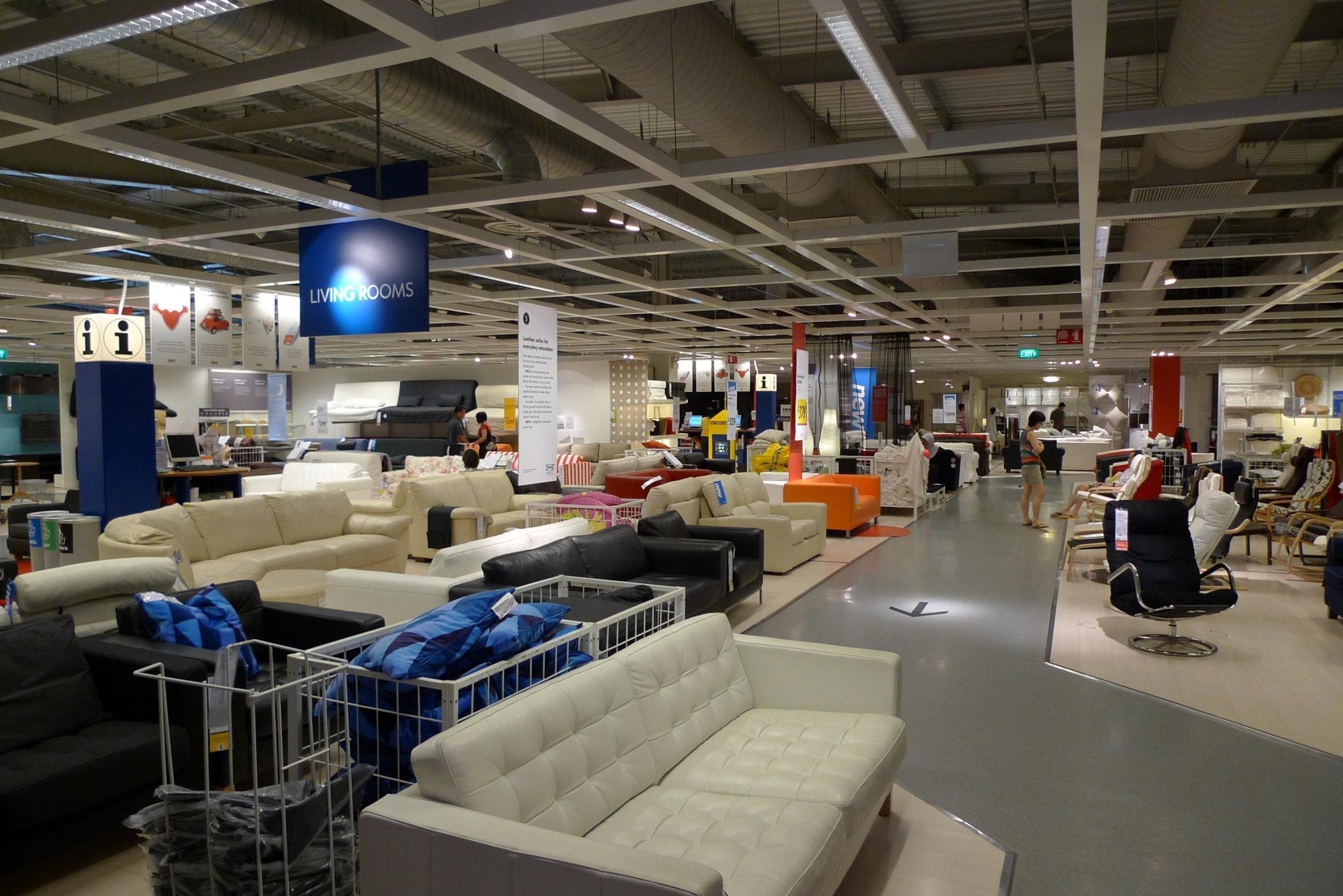
    After about two years in the making, Ikea Singapore’s online store launches today.

    Customers will no longer need to visit the Swedish furniture giant’s Tampines megastore or Alexandra Road outlet, but can buy at Ikea.sg and have the items delivered to their homes. As with the physical outlets, the online store has an inventory of about 7000 products.

    Online customers can pay via credit card or Nets. There is no minimum spend.

    Delivery charges range from $15 to $70 for bulky items. The delivery-service team members have been trained to also assemble the furniture, for an extra fee.

    Ikea Southeast Asia retail director Mike King says there have long been calls for an online store in Singapore, but the brand wanted to iron out all the kinks before launching one.

    Previously, Ikea Singapore’s website was a virtual extension of its print catalogue, showing mood shots of various rooms and offering product details.

    Mike King, Ikea Southeast Asia’s retail director, says there have long been calls for an online store in Singapore, but the brand wanted to iron out all the kinks before launching one.

    Previously, Ikea Singapore’s website was a virtual extension of its print catalogue, showing mood shots of different rooms and information about Ikea’s products. With online shopping now available, King expects greater demand for Ikea’s products but is confident there will not be a problem fulfilling orders.

    He says that during the past 12 months, Ikea has been affected by a global container problem (caused by South Korean company Hanjin Shipping going bankrupt) and port delays in Shanghai. “Those issues cause more problems rather than the added demand generated by e-commerce.”

    King says there are improvements ahead for the online store, which may include an option for customers to collect their online purchases from the two physical stores.

    An online Ikea store is also planned for Malaysia.

  • Lancome Travel Retail pushes digital presence online

    Lancome Travel Retail pushes digital presence online

    Lancome Travel Retail Asia Pacific has launched a “Declaring Happiness” campaign aimed at strengthening its digital presence, with a focus on Hong Kong, Singapore, China and Korea.

    Celebrities and beauty opinion leaders are involved in the French luxury beauty brand’s  promotion, which converges offline and online retail experiences with the hope of engaging consumers.

    An event in the first 2020 concept store for Lancome Travel Retail Asia Pacific, at Lotte Hotel in Seoul, kicked off the initiative. Korean actress Kim Go-Eun was a special guest. The event was the company’s first venture into live streaming, with guests including 11 social-media influencers from China. They provided live coverage through Weibo of both the concept store event and the following cocktail party.

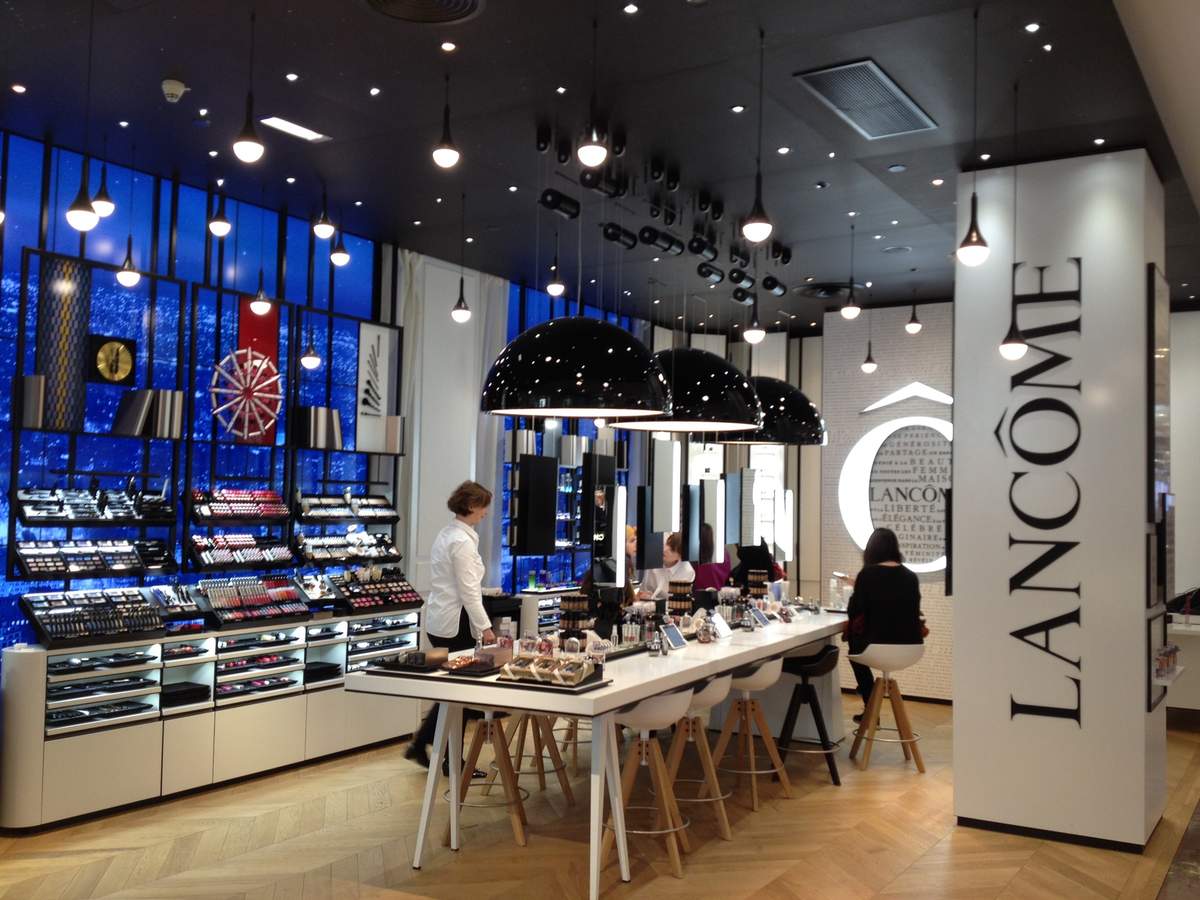
    Then the campaign moved to Singapore, with a Lancome Holiday Wonders pop-up store at Changi Airport, which is open until November 10. An exclusive at the pop-up is the Lancome Travel Retail Worldwide virtual mirror, which enables shoppers to try different makeup looks via a virtual makeover. Other attractions are a photo booth and a touchscreen game.

    Customers buying certain items at the store are offered a complimentary engraving service for the Lancome x Singapore luggage tag, an exclusive holiday collectible.

    The next stop will be at Haitang Bay in China this month, with the brand journey ending in Hong Kong next month.

    “We hope to continue creating moments of happiness for women by exploring different consumer-centric innovations at our events that allow us to foster a deeper connection and engagement with our customers,” says Lancome Travel Retail Asia Pacific GM Tao Zhang.

  • Online spending eases in June

    Online spending eases in June

    The growth rate for New Zealanders’ total online retail shopping eased back slightly in June, but spending was still up 10 per cent compared to June last year.

    According to the latest BNZ and Marketview monthly report on New Zealand’s online retail sales, purchases from offshore online retailers accounted for 44.5 per cent of the month’s online spending, and spending at these retailers was up 13 per cent on June 2016.

    A surge in spending on Computers and Electronics drove half of the increase.

    Clothing had a quieter month than usual, with purchases from offshore online retailers only up  per cent on June last year.

    Spending at local online retailers was up 9 per cent on June last year.

    “While slower than the double-digit growth rates we’ve generally been seeing since 2016, this level of growth is still more than double that of local bricks-and-mortar stores, which were only up 4 per cent on June last year,” said Gary Baker, director, institutional research, Bank of New Zealand.

    Food store-types drove approximately half of the growth at local online sites (June 2017 vs June 2016).

    Clothing purchases were also strong at local online merchants, up 16 per cent on last June.