Retail News CRM

Tag: Payment

  • Globe’s GCash debuts QR code payments

    Globe’s GCash debuts QR code payments

    Globe Telecom’s GCash has launched the Philippines’ first QR code payment service, which it has named GoPay.

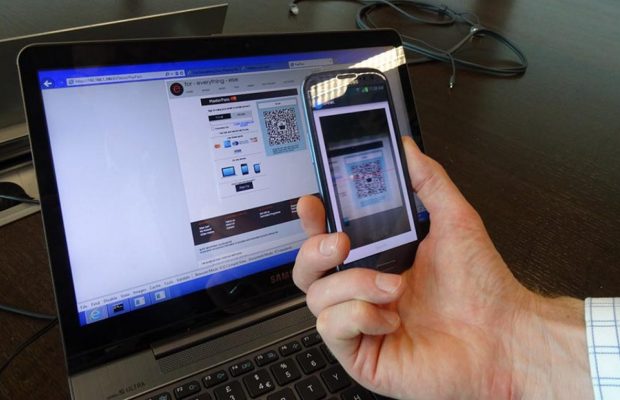
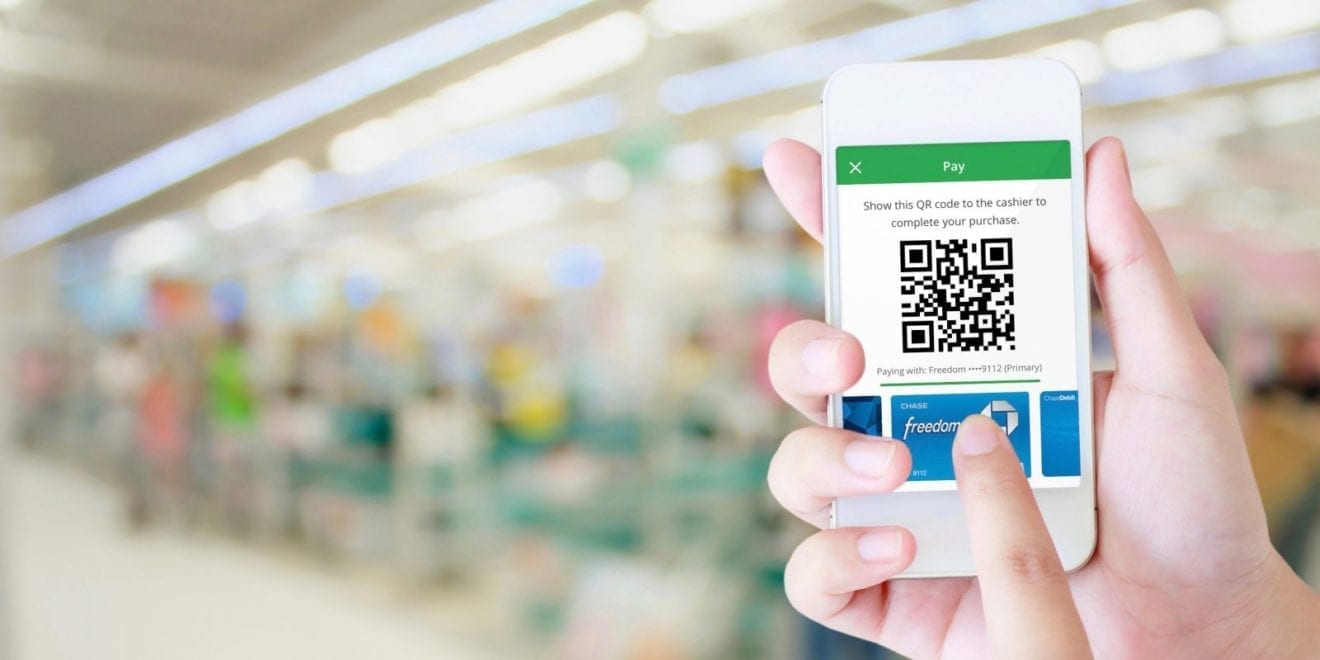
    The GoPay feature within the GCash mobile money app will allow customers to use their GCash account to pay for goods and services using their smartphones by scanning QR codes displayed by merchants.

    The service will enable merchants to accept mobile payments using their own GCash wallets, eliminating the need for eftpos machines. GCash said this will make mobile payment acceptance available even to roaming vendors and small neighborhood stores.

    Alibaba’s Ant Financial, which popularized QR code payments in China via its Alipay subsidiary, invested in GCash’s immediate parent company Mynt in February to help develop the Philippines’ digital money market.

    “Our goal has always been to make finance more inclusive by building a cashless ecosystem. GoPay QR payments solution will close the loop and drive merchants accepting GCash payments,” Mynt CEO and President John Rubio said.

    “We plan to extend this service from all types of retailers nationwide down to our favorite fishball vendor.”

    GCash is available for both Android and iOS, and users can deposit funds into their GCash wallet at over 12,000 partner outlets across the Philippines.

  • Payment deal boon to Vinomofo

    Payment deal boon to Vinomofo

    Vinomofo co-founder Justin Dry says a recent deal between payment giant Stripe and Chinese digital wallet providers Alipay and WeChat Pay is “very welcome news” for its Asian expansion plans.

    Stripe announced yesterday that its customers will now have access to millions of Chinese consumers, through a partnership with Alibaba’s Alipay and Tencent‘s WeChat Pay.

    Together the wallet services claim more than one billion users and are estimated to have processed sales of almost $3 trillion in 2016, according to a UN affiliated report conducted by Better Than Cash Alliance.

    Vinomofo co-founder Justin Dry, who runs 90 per cent of his business through Stripe platforms, said he sees WeChat pay being at the “core” of its communications with customers in China, noting that the extended services will be tools in the arsenal for the company’s plans in the region.

    “We can see WeChat Pay especially being at the core of our communications over there, it’s an awesome social platform with a massive user base, perfect for us as a content-led tribe retailer,” he said.

    Stripe, based in Silicon Valley, works with a variety of e-tailers Down Under, including Vinomofo, Catch Group and Shoes of Prey.

    Under the deal Stripe’s withstanding partnership with Alipay in North America will be expanded to the Chinese market for one-time payments and a beta-test will be kicked off on WeChat Pay support and recurring payments.

    Stripe co-founder John Collison said he hopes the deal will catalyse more trade between Australia and China, noting where consumers maintain high demand for Aussie products, particularly wine and produce.

    “There is already impressive demand among Chinese consumers for Australian goods and services, and this presents a vast growth opportunity for Australian internet businesses” Collison said.

    Chinese retail e-commerce sales were worth US$376 billion in 2016 and are projected to more than double to US$839 billion by 2021, according to data portal Statista.

  • Bank Indonesia is seeking to integrate electronic payment

    Bank Indonesia is seeking to integrate electronic payment

    Bank Indonesia (BI) is seeking to integrate electronic payment system of various banks and issuers on toll roads during the Eid al-Fitr homecoming in June.

    BI Transformation Center Executive Director Onny Widjanarko said that the central bank has done the trial on the electronic payment integration on the toll road between Surabaya and Sidoarjo. The next trial will be implemented in Cikopo-Palimanan (Cipali) toll booths.

    Onny added that the central bank has options to integrate electronic payment system on toll roads during homecoming. The use of hybrid cards is one of the options.

    The option will be taken if the integration of technical infrastructure for toll payments could not be realized in time before the homecoming season. However, Onny said that BI would need to consult with industry working group and another regulator i.e. the Public Works and Public Housing Ministry.

    “We had wanted to implement the integrated payment systems during lebaran (Eid) but we are still discussing it in the working group whether select toll gates could adopt hybrid cards but we have to consult with the government,” he said.

    Santoso, the director of private lender Bank Centra Asia (BCA), the issuer of BCA Flazz cards in Cipali, said the bank would allow other banks to join its toll road payment system.

    “In Cipali and Gresik, BCA has encouraged [other] banks to integrate their payment systems. Meanwhile, other toll roads which are operated by Bank Mandiri must first be discussed because Mandiri has a special partnership with other state-owned lenders and state-owned toll operator Jasa Marga,” Santoso.

  • Swift unveils industry’s first ever cross-border payments tracker

    Swift unveils industry’s first ever cross-border payments tracker

    SWIFT announces today the availability of its new cross-border payments Tracker that enables international payments to be traced in real-time. The Tracker is the cornerstone of SWIFT gpi – the cooperative’s new payments innovation service – which is revolutionizing the industry by combining real-time payments tracking with the speed and certainty of same-day settlement for international payments.

    Available since January 2017, more than 20 global transaction banks are using or implementing the SWIFT gpi service, with another 50 in the implementation pipeline. Hundreds of thousands of gpi payments have already been sent across more than 85 country corridors.

    “Uptake of SWIFT’s gpi service has been encouraging and the addition of the Tracker capability can only help build momentum and accelerate adoption of the service in international payments,” says David Bannister, Principal Analyst, Ovum. “The most common complaint from corporates is the lack of visibility on their payments’ status. With the Tracker capability, SWIFT gpi tackles that issue and will be a useful tool to help corporate treasurers to execute their core responsibilities.”

    SWIFT gpi enables companies engaged in international trade to get paid for services, or delivery of goods, in a more timely fashion, enabling a faster supply chain process. The highly innovative gpi Tracker provides corporate treasurers with a real-time, end-to-end view of their payments combined with a confirmation notice when the money reaches the recipient’s account. It also enables a more accurate reconciliation of payments and invoices, optimizes liquidity with improved cash forecasts and reduces exposure to FX risks with same-day processing of funds in the beneficiary’s time zone. The Tracker is available via an open API, making it compatible with proprietary banking systems worldwide – helping to ensure maximum impact of gpi benefits at a greater adoption speed.

    SWIFT gpi has garnered considerable industry support across the globe. More than 110 leading transaction banks have committed to the service, representing over 75% of all SWIFT cross-border payments. Recent joiners to SWIFT gpi include: Agricultural Bank of China, Bank of Communications, Banque Centrale Populaire, BayernLB, China Citic Bank, China Minsheng Banking Corporation, Commercial Bank of Kuwait, Denizbank, Ebury, Industrial Bank, Guangfa Bank, Lek Securities, Ping An Bank, Piraeus Bank, Postal Savings Bank of China, Shanghai Pudong Development Bank, Turkiye Cumhuriyeti Ziraat Bankasi, Westpac Banking Corporation and Yapi Kredi, and Zhejiang Rural Credit Cooperative Union. Click here for a full list of participating banks.

    The service is also compatible with and integrated into domestic payment market infrastructures(MIs) across the globe, facilitating local clearing and settlement of gpi payments. Banks can already exchange gpi payments over the 56 SWIFT-connected MIs as well as other MIs that have established local market practices for their participants that use the gpi service. SWIFT will also continue to actively engage with additional MI communities for future gpi compatibility.

    “Today’s announcement is a significant step towards a game-changing experience for corporates the world over,” says Christian Sarafidis, Chief Marketing Officer, SWIFT. “By taking advantage of the right technology, at the right time, with the right players behind us, SWIFT has successfully helped correspondent banking reach a significant milestone in its evolution.”

    Wim Raymaekers, Programme Manager for SWIFT gpi adds, “This is only the beginning for SWIFT gpi. We will continue to explore new technologies, such as blockchain, and deliver more value added payment services further transforming the international payments landscape and, in doing so, accelerating global trade.”


  • Standardized payment QR code to launch in Thailand

    Standardized payment QR code to launch in Thailand

    Top payment card companies Mastercard, UnionPay International and Visa have jointly introduced a standardized QR code for mobile payments in Thailand.

    The new standardized code allows merchants to easily accept electronic payments without the need to invest in physical point-of-sale machines. They need only have a piece of paper with their unique QR code for consumers to scan.

    Customers with a Mastercard, UnionPay, or Visa card can use a mobile application to scan the code using both smartphones and feature phones with a camera function.

    In future, the standards are intended to be globally interoperable and useable anywhere they have been expected.

    The standardized code is expected to be implemented by banks and merchants across Thailand by the third quarter.

    The initiative also meshes with the Thai financial sector’s Electronic Data Capture (EDC) expansion initiatives under the government’s National e-Payment Roadmap, which aims to support the nation’s transition to a cashless society.

    The launch of the Standardized QR Code signals exciting times for Thailand as consumers move quickly to adopt new payments technology,” Mastercard country manager for Thailand Donald Ong said.

    “Our own research, for example, shows that 50% of young consumers across South East Asia would use the QR code straightaway, and we believe this reflects the demand in Thailand.”

  • Citi India debuts paperless cross-border payments

    Citi India debuts paperless cross-border payments

    Citi India has launched new digital cross-border payment solution designed to eliminate the need for multiple, underlying physical documents for cross-border trade payments.

    The solution aims to substantially reduces time, effort and cost of each transaction by facilitating quicker trade payments.

    With Open Account import payments, Citi’s clients can now directly share import payment information with the bank, by simply quoting Reserve Bank of India’s (RBI) Import Data Payment and Monitoring System (IDPMS) number, as against the earlier process of sharing multiple documents to support a single payment.

    This function will be made available on Citi’s online banking platform CitiDirect BE for clients to initiate and authorize payments.

    Citi India worked closely with the Government of India and leveraged RBI’s IDPMS platform that digitally tracks imports to develop this solution, with the aim to reduce for cross-border payments to less than three hours from the earlier same day processing.

    Debopama Sen, Head of Treasury and Trade Solutions, Citi South Asia said, “This is a huge step towards simplifying cross-border trade payments which significantly improves efficiencies for our customers and enhances the digital experience.”

    Citi India handles trade transactions for over 6,000 large, medium and small corporates across industries.

  • Card payment compulsory soon for e-commerce businesses in Vietnam

    Card payment compulsory soon for e-commerce businesses in Vietnam

    E-commerce businesses may have to accept card payments as a way to offering more options of payment when shopping online, an official from the Ministry of Industry and Trade said.

    Võ Văn Quyền, director of the ministry’s Domestic Market Department, was quoted as saying that the department was studying amendments to e-commerce business which might include regulations about compulsory payment methods.

    Accordingly, accepting card payment might be compulsory for e-commerce firms.

    Việt Nam Banking Card Association’s statistics showed that e-commerce payments had seen breakthrough developments in 2012-16 period.

    Payment values by domestic-payment cards jumped 597 per cent and by international cards by 319 per cent in the five-year period.

    As of the end of 2016, payments by the former were worth totally VNĐ3.44 quadrillion (US$150.9 billion) so far and the latter by VNĐ13.4 quadrillion.

    The values are expected to increase rapidly if accepting card payment is made compulsory for e-commerce transactions.

    The ministry’s Department of E-Commerce and Information Technology in March said that e-commerce was growing rapidly in Việt Nam where 90 per cent of population had smart phones which were used at an average 24.7 hours online per week. On average, each Vietnamese used $160 for shopping online per year.

    However, according to the Payment Department under the State Bank of Vietnam, the payment infrastructure in the country remained under-developed and the ratio of online payment in e-commerce remained modest.

    The banking sector would improve the legal framework for e-payment while developing the infrastructure for card payment. In addition, security for online payments must be improved.

    Race for cashless payment, fintech

    Developing cashless payment methods inVietnam had significant room. The Government ofVietnam in a cashless payment project from 2016 to 2020 set a goal that only 10 per cent of transactions in the economy were made in cash.

    A recent survey by Visa Vietnam showed that Vietnamese were now on a trend of using less cash in payment with the ratio of cash payment dropping from 46 per cent in 2015 to 38 per cent last year together with improved trust in electronic payment.

    The survey found that there were 67.4 million banking accounts inVietnam as of 2016, significant increase compared to 16.8 million in 2014 but card payment accounted for just 3 per cent of personal consumption spending in six major cities. Only 50 per cent of e-commerce payment were conducted by card.

    Statistics of the Vietnam Banking Card Association showed that transactions at ATMs were mainly cash withdrawals (86.8 per cent of revenues conducted by domestic payment cards), reflecting the popularity of cash.

    The booming of e-commerce would drive cashless payments inVietnam.

    E-commerce was forecast to grow at 20 per cent per year to reach a revenue of $10 billion by 2020. The Department of e-Commerce and Information Technology said that the e-commerce revenue could be higher as currently the growth rate had reached 25 per cent.

    The association said that digital banking was also gaining popularity together with the application of tokenisation in improving security.

    There were 92.08 million domestic payment cards and 12 million international payment cards in 2016, the association’s statistics showed.

    Vietnam is also seeing a wave of fintech start-ups to promote cashless payment.

  • Cebu Pacific expands payment options

    Cebu Pacific expands payment options

    Cebu Pacific has rolled out more payment options for travelers in time for the summer peak period. Cebu Pacific has partnered with American Express (Amex), allowing its cardholders to book and buy their flights using their Amex cards. Amex, owned by global services company American Express, is the largest card issuer in the world based on purchase volume and one of the largest card networks in the world, with over 109-Million cards running on its proprietary network, including those issued by 148 partners in 160 markets across the world. In the Philippines, AMEX cards are issued by BDO Unibank. “CEB remains firm to its commitment of allowing more and more travelers to fly.

    We believe that by continuing to expand the payment options we offer, we empower more travelers to not only choose their flights among the numerous we offer, but also pay for these in the easiest and most convenient way for them. Our partnership with American Express enables CEB to offer simplified and efficient business-to-business solutions for corporate payments,” said Cebu Pacific Vice President for Marketing and Distribution Candice Iyog. Aside from Amex, Cebu Pacific also accepts credit card payments through Visa and Mastercard.

    Other easy online payment options include BancNet Online, PayPal and Alipay. For passengers who still prefer to pay in cash, CEB offers over-the-counter payments through over 1,700 branches of 7-11 and over 1,800 Cebuana Lhuiller outlets nationwide. Existing CEB payment centers, Robinsons Department Stores and SM Department Stores still accept payments for online bookings. For cash or over-the-counter payments, can book flights through the CEB website, and choose the “Pay Within 24 Hours” payment center option, upon reaching the payment page.

    CEB currently offers flights to a total of 37 domestic and 29 international destinations, operating an extensive network across Asia, Australia, the Middle East, and USA. Its 59-strong fleet is comprised of four Airbus A319, 36 Airbus A320, seven Airbus A330, eight ATR 72-500, and four ATR 72-600 aircraft. Between 2017 and 2021, CEB expects delivery of one more brand-new Airbus A330, 32 Airbus A321neo, and 12 ATR 72-600 aircraft.

  • Sesco introduces payment kiosks

    Sesco introduces payment kiosks

    Sarawak Energy’s operation and retail arm Syarikat Sesco Bhd (Sesco) introduced payment kiosks to members of public on Wednesday.

    According to a press release, the latest initiative from the state utility company is part of its continuous innovation and to further enhance customer services for the better.

    The introduction of payment kiosk machines will be an additional payment channel, allowing for real-time payment updates and it will be available at Sesco counters for added customer convenience.

    Through the kiosks, customers can make single or multiple payments (up to five bills) per transaction and also pay for collateral deposits. Payments can be made either by cash, cheque or any credit card issued by banks in Malaysia. Customers can also perform bill enquiries and print e-bills.

    This will provide an additional option for customers who can also choose from channels such as the “SEBCares” mobile app where customers can view and pay their electricity bills via online banking, credit or debit card or auto pay.

    Sarawak Energy Group chief executive officer (CEO) Sharbini Suhaili who officiated at theevent  at Wisma Sesco here on Wednesday congratulated the Retail team for applying technological advancement and innovation to enhance customer experience.

    “Please continue to innovate to improve on customers’ touch points especially through new technology,” he said.

    “This is an example of how we can simplify processes to deliver with speed and precision. Sometimes the simplest idea can bring meaningful change. Let us walk the extra mile to delight the customers and surpass expectations.”

    Adding on, Sesco chief executive officer Lau Kim Swee explained that the kiosk was part of the Retail team’s long-term vision for counter-less transactions.

    “Our customer service principle has evolved from merely providing services to delivering a truly outstanding customer experience. In doing so, we are always finding ways to implement initiatives that make it easier for our customer to do business with us. We constantly seek customers’ feedback and this payment kiosk is one of the requests made by our customers,” he said.

    In a briefing before the launch, vice-president for retail Yusri Safri gave an update on the company’s various customer service initiatives.

    “By introducing the kiosk, we will be able to reduce customers’ queuing time at the counters and enable the front-liners to focus more on handling other complex transactions and enquiries. We hope to extend this facility to the smaller counters in rural areas so customers can enjoy similar convenience as experienced in urban areas.

    “We are also looking into the idea of having the kiosks placed at strategic locations such as shopping malls for better customer convenience,” Yusri said, adding that this would extend the time customers could use the kiosks past traditional office hours.

    Also in attendance were Sarawak Energy Group chief operating officer Lu Yew Hung, executive vice-president for corporate services Aisah Eden and other members of the executive committee, senior management and staff.

    So far, four kiosks have been installed at Wisma Sesco and Pending in Kuching and another two at the Sibu office. Ten more kiosks will be installed in stages at Sri Aman, Sarikei, Sibu Civic Centre, Bintulu, and Miri counters as well as at UTC Kuching, UTC Sibu and UTC Miri.

    Apart from the services mentioned, the company is also looking at accepting payment through the kiosk for non-energy bills, electricity bill instalments, arrears bills and arrears instalments as well as payments for third-party bills in the next phase.

  • India debuts interoperable QR code payment system

    India debuts interoperable QR code payment system

    The Reserve Bank of India and the Indian Banks Association have launched Bharat QR, the world’s first interoperable QR code acceptance solution.

    The solution was developed by Mastercard in collaboration with National Payments Corporation of India (NPCI) and Visa. American Express will also adopt these payment standards.

    Bharat QR aims to provide both merchants and consumers with seamless and secure method for payment transactions.

    For consumers, Bharat QR eliminates the need to use multiple QR codes from different payment networks when transacting with any merchant. Similarly merchants need only display one single QR code at the storefront or through their respective acquiring bank’s mobile application.

    The Bharat QR solution will be rolled out across the nation in phases by banks, with the aim to foster adoption by 57 million small and micro businesses due to the purported low cost of deployment.

    A number of banks in India stand ready to deploy BharatQR, including Axis Bank, Bank of Baroda, Bank of India, Citi Union Bank, Development Credit Bank, Karur Vysya Bank, HDFC Bank, ICICI Bank, IDBI Bank, RBL Bank, State Bank of India, Union Bank of India, Vijaya Bank and Yes Bank.

    Several other banks are also at various stages of implementation.

  • Four big banks support Bank Indonesia’s National Payment Gateway

    Four big banks support Bank Indonesia’s National Payment Gateway

    In order to support Bank Indonesia’s (BI) plan for an integrated payment system called National Payment Gateway (NPG), four banks inked an agreement on interoperability and interconnectivity of debit cards and electronic money on Wednesday.

    The agreement was signed by state-owned lender Bank Rakyat Indonesia (BRI), Bank Mandiri, Bank Negara Indonesia (BNI) and the country’s largest private lender Bank Central Asia (BCA) that act as acquirers and represent 75 percent of debit transactions in the country.

    Besides the four banks, three switching companies, namely Artajasa Pembayaran Elektronis, Rintis Sejahtera and Alto Network also support BI’s plan to implement NPG.

    “NPG is expected to solve problems and increase efficiency of Indonesia’s payment system nowadays. Currently, the payment system infrastructure is deemed inefficient due to limitation of interoperability and interconnectivity between principals,” BI executive director of communications Tirta Segara said in a press statement.

    NPG is a system that processes payment transactions electronically through a variety of instruments, such as ATM cards, electronic money and credit cards. With NPG, people are able to carry out non-cash transactions from any bank in the country, using any kind of instrument or channel.

  • Payments innovation continues to drive growth in Thailand

    Payments innovation continues to drive growth in Thailand

    Demand for innovative payment solutions is on the rise in Thailand, according to global payments technology company Visa, as the value of transactions made by Thai cardholders continues its high-growth trajectory.

    Total payment volume for all Visa cards rose by 9.3 percent last financial year, with growth coming from Visa debit cards at 18 percent and Visa credit cards at 8.6 percent. Meanwhile, the value of eCommerce transactions conducted on Visa cards rose by 24 percent. 

    “While such growth is not new to the payments industry, we are at a tipping point of innovation. New forms of commerce in the digital and hyper-connected world are emerging. When our clients issue Visa cards, they are issuing more than a card, they are issuing a Visa account that enables their customers to use Visa anywhere, anytime, with any connected device,” said Suripong Tantiyanon, Visa Country Manager, Thailand.  

    To support payments innovation in Thailand, Visa has launched the Visa Developer platform, transforming VisaNet, the world’s largest retail payment network, into an open platform for payments and commerce.

    Developers at merchants, financial institutions, technology companies and startups will have self-serve access to some of Visa’s most popular payment capabilities available through APIs, SDKs, and relevant documentation.

    One example of a solution developed and launched in Thailand is a global loyalty mobile application, using the Visa Direct API to provide real-time payment services. The product allows direct transfer of reward points to users’ Visa cards.

    The Visa Tokens Service (VTS), is another API that enables financial institutions to issue tokens – essentially digital accounts that enhance the security and simplify the consumer purchasing experience when shopping on a mobile phone, tablet, personal computer or other smart device. 

    Visa is also expanding the acceptance of electronic payments across the country. The number of merchant outlets that accept Visa cards has grown to almost half a million in 2016, particularly outside of Bangkok. The number of active mobile point of sale (mPOS) devices is almost close to fifty thousand, buoyed by insurance sales.

    “Enormous potential exists for technology to transform the entire payments experience. Many businesses are still relying on legacy systems in a world where customers want everything now – and, customer experience matters. Visa strives to extend the reach and value of electronic payments in ways that can power these changes,” added Mr. Suripong.

  • More companies delaying payments, says Singapore Commercial Credit Bureau

    More companies delaying payments, says Singapore Commercial Credit Bureau

    Fewer Singapore companies are paying their bills on time, according to data released on Monday by Dun & Bradstreet Singapore’s (D&B Singapore) Singapore Commercial Credit Bureau.

    Prompt payments fell 8.9 percentage points from 51.1% in 3Q15 to 42.2% in 3Q16. At the same time, slow payments increased by 8.1 percentage points to 46.4% from 38.3% a year ago.

    Compared with the previous quarter, prompt payments fell by 3.8 percentage points to 42.2%, and slow payments rose by 3.8 percentage points to 46.4%.

    Partial payments increased by 0.8 percentage points to 11.5% from a year ago but fell by 0.03 percentage points over 2Q16.

    The data was compiled from over 1.6 million payment transactions of Singapore firms operating through the bureau.

    Prompt payment is defined as having 90% or more of total bills paid within the agreed payment terms while slow payment is defined as having more than 50% of total bills paid later than 30 days beyond the agreed credit terms.

    Delays in payment increased across all industries — construction, wholesale trade, services, manufacturing, and retail — during the quarter.

    However, the biggest proportion of slow payments came from the construction sector, where payment delays increased by 10.8 percentage points from a year ago and by 4.2 percentage points from a month ago to 50.8%.

    On a quarterly basis, special trade contractors had the greatest increase in slow payments of 5.9 percentage points to 48.8%, while the heavy construction sector had the highest proportion of slow payments of 52.7%. Delayed payments also increased in the building constructor sector by 4 percentage points to 52%.

    The wholesale trade sector had some of the greatest increases in payment delays due to the declines in local and foreign wholesale trade. Slow payments increased 4 percentage points over the quarter and 8.3 percentage points over the month to 41.2%.

    In particular, slow payments by wholesalers of durable goods jumped by 4.5 percentage points q-o-q to 41.4%, while that of wholesalers of non-durable goods rose by 2.5 percentage points q-o-q to 40.4%. per cent in Q3 2016.

    Retail had the second highest proportion of slow payments, but registered the smallest q-o-q increase during the current quarter, after a large spike in 2Q16. Delayed payments rose 2.9 percentage points q-o-q and 6.8 percentage points y-o-y to 49.4%.

    Retailers of building materials and garden supplies had the highest increase in slow payments from 53.1% in 2Q16 to 61.2% in 3Q16, followed by retailers of general merchandise, with a 6.8 percentage point increase and automobile retailers with a 6.3 percentage point increase.

    Audrey Chia, D&B Singapore’s Chief Executive Officer, noted that the weaker performance in payment was a “clear indication that firms here are feeling the impact of a credit crunch”.

    To provide some relief to cashflow problems, Chia added that firms should seek alternative measures including rigorous credit checks on customers and the diversification of funding through non-traditional financing institutions.

  • Grab adopts Adyen for payment platform

    Grab adopts Adyen for payment platform

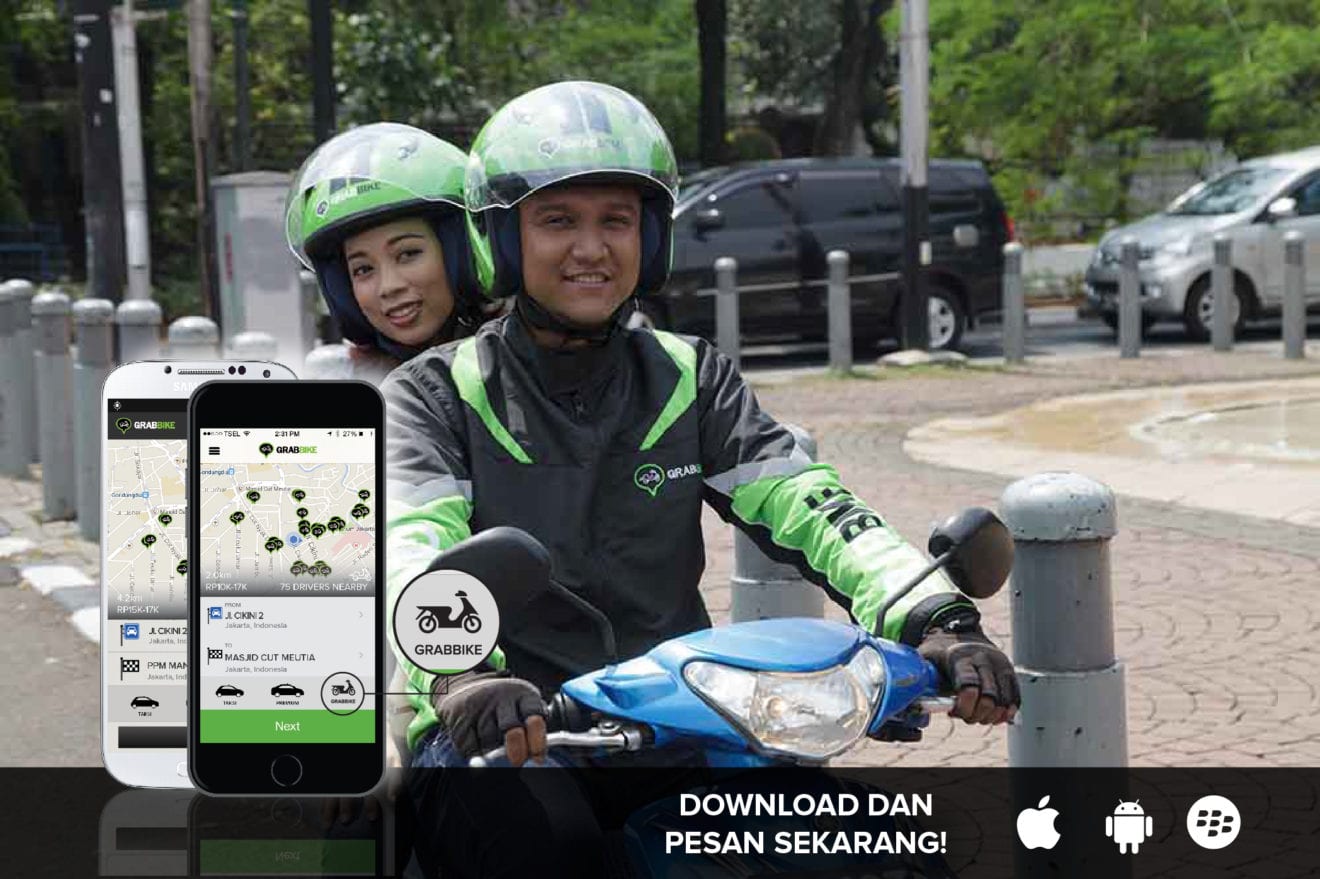
    Ride hailing platform Grab has adopted Adyen to extend the capabilities of its payment platform in Indonesia, Philippines, Thailand and Vietnam.

    The two companies aim to deliver a consistent, frictionless payment experience for customers traveling across markets regardless of device or payment method.

    Grab customers will be offered both traditional cards and, over time, country-specific payment methods, using Adyen’s expertise and data to expand payment options. Adyen supports around 250 payment methods globally.

    “As part of Grab’s drive to make ride-hailing even safer, easier and more accessible to everyone in Southeast Asia, providing trusted, seamless mobile payments is crucial for the overall customer experience. Grab wanted a partner who could support a variety of traditional and alternative payment methods to support our growth across the region,” Grab head of payments and commerce Joel Yarbrough said.

    Business travelers who work within the region can also easily tabulate their business ride spending with Grab through the Grab for Work portal, and companies can automatically pay for their employees’ rides through the use of corporate cards.

    “Southeast Asia is a diverse and highly fragmented region and there is no one preferred method of payment. However, mobile penetration in the region remains high and drives several key trends including the rise of mobile payments and platforms as a service,” Adyen president Warren Hayashi said.

    “Partnering with a fellow innovator and disruptor such as Grab, we are eager to empower commuters in Southeast Asia with the same convenience of hailing a ride seamlessly as paying for their Grab ride with equal ease.”

  • Apple said to plan iPhone for Japan that supports FeliCa

    Apple said to plan iPhone for Japan that supports FeliCa

    Apple is reportedly planning to launch an iPhone in Japan that supports FeliCa, the contactless mobile payment standard widely used in the market.

    Sources told that a future iPhone designed for the market will include a FeliCa chip to support payments using the Sony-developed standard.

    FeliCa is used in multiple public bus and train pass payment systems across Japan. The standard dominates in Japan over the NFC standard used in Apple Pay – there are an estimated 1.9 million FeliCa payment terminals in the country handling around $46 billion worth of transactions per year.

    According to the report, Apple plans to work with multiple transit card providers on the launch, and is currently planning to store virtual representations of transit passes within the iPhone’s wallet app.

    Apple is said to currently plan to introduce the FeliCa functionality into the next iPhone models bound for the market, although the introduction could be held back to next year if talks with Japanese payment networks stall.

    One hurdle that could complicate the plan is the fact that FeliCa chips are designed to process transactions in a tenth of a second to accommodate Japan’s very busy transit system, whereas transactions using Apple Pay currently go through servers and require bank approval.