Retail News CRM

Tag: payments

  • Visa and Lianlian Pioneer AI-Driven B2B Payments in Greater China

    Visa and Lianlian Pioneer AI-Driven B2B Payments in Greater China

    In a pioneering move, Visa and Chinese fintech company, Lianlian, have successfully completed the first-ever business-to-business (B2B) transaction facilitated by artificial intelligence (AI) in Greater China. The transaction, which marks significant progress towards a future where AI agents independently facilitate purchases and make payments, was executed using LoopXPay, an AI agent developed by Lianlian.

    In a single workflow, the agent sourced a product sample from a vendor, identified the purchasing requirement, suggested suitable suppliers, compared options, placed the order, and securely executed the payment. This process was conducted within predefined spending limits and approval ranges allowing control over the transaction to be retained, while much of the procurement process was delegated to the AI. The development exemplifies the potential for AI to progress beyond information gathering and assistance to include commercial decision-making and financial transactions.

    Establishing Trust in AI-Mediated Payments

    The progression also raises a fundamental question for Visa: how can merchants and financial institutions verify if an AI agent initiating a transaction is authentic and authorised to spend? In response to this, Lianlian’s LoopXPay has been registered in Visa’s Agentic Directory, a tool that allows businesses and merchants to recognise validated AI agents.

    The infrastructure aids Visa’s Trusted Agent Protocol, built to offer identity, transparency, and controls for agent-facilitated transactions. “As businesses increasingly look to incorporate intelligence into purchasing and payment experiences, trust will become an essential driver of adoption,” stated Darren Parslow, Global Head of Visa Commercial Solutions.

    The initiative intimates a potential new function for payment networks. As autonomous AI systems become capable of commercial decision-making, payment providers will increasingly need to establish rules governing identity, authorisation, and spending controls for machines acting on behalf of businesses.

    Expanding Applications for AI Agents

    Visa and Lianlian are already exploring additional applications for AI agents beyond the first transaction. These include procurement, digital advertising optimisation, and payments on B2B platforms.

    Lianlian views payments as a crucial element of the emerging infrastructure supporting what it refers to as the “Agent Economy.” “AI is transforming the entire commercial value chain, where a growing number of business activities will be independently carried out by AI agents, with payments serving as the critical infrastructure linking them to global commerce,” explained Zhang Zhengyu, founder, chairman, and CEO of Lianlian DigiTech.

    The collaboration between Visa and Lianlian arrives as payment networks, banks, and fintech companies progressively explore how autonomous AI agents could revolutionise commerce. If adoption accelerates, the competition may extend beyond who processes a payment to who provides the identity, trust, and authorisation infrastructure enabling AI agents to transact initially.

    Questions & Answers

    What was the nature of the transaction conducted by Visa and Lianlian?
    The companies completed a B2B transaction driven by an AI agent. This marked a significant step towards autonomous AI systems facilitating purchases and making payments.

    How do Visa and Lianlian ensure that AI-driven transactions are legitimate?
    LoopXPay, the AI agent used for the transactions, is registered in Visa’s Agentic Directory. This tool allows businesses to verify AI agents, ensuring that they are legitimate and authorized to conduct transactions.

    What is Lianlian’s view of the role of payments in the future of commerce?
    Lianlian sees payments as a vital component of the infrastructure supporting the “Agent Economy.” They believe that AI is transforming the commercial value chain, with payments serving as a critical link connecting autonomous business activities to global commerce.
  • Stripe and Advent Propose $53 Billion Deal to Acquire PayPal: A Giant Leap in Payments Industry

    Stripe and Advent Propose $53 Billion Deal to Acquire PayPal: A Giant Leap in Payments Industry

    In significant financial news, payment giant PayPal Holdings Inc has reportedly received a joint acquisition bid from payments provider Stripe and private equity powerhouse Advent International. The offer, which values PayPal at a staggering $53 billion USD, was allegedly initiated earlier this month.

    The proposed offer places PayPal’s share value at $60.50, marking an impressive increase of around 28% on PayPal’s closing share price last Tuesday. This proposal leverages approximately $50 billion in committed financing from banking institutions, according to insiders.

    Under the proposed agreement, Stripe and Advent International would retain co-ownership of PayPal, with each party securing an equal share. This arrangement ensures that PayPal would continue operating as a unified entity instead of facing potential fragmentation.

    However, it’s important to note that these discussions remain in the early stages, and there is no assurance that this preliminary approach will actualize into an official transaction. The individuals providing the information have chosen to remain anonymous due to the confidential nature of these ongoing negotiations. Official representatives from Advent, PayPal, and Stripe have yet to issue public comments on the subject.

    PayPal’s first-quarter performance reported a promising 7% increase in revenue, amounting to around $8.35 billion. This figure comfortably surpasses analysts’ predicted average of $8.05 billion. Furthermore, on a currency-neutral basis, total payment volumes experienced an 8% rise over the past year, totaling about $464 billion.

    Questions & Answers

    What is the proposed offer for PayPal’s shares?
    The joint acquisition bid by Stripe and Advent International is proposing a value of $60.50 per PayPal share.

    How is the proposed acquisition to be financed?
    The proposed acquisition is backed by approximately $50 billion in committed financing from banking institutions.

    What were PayPal’s first-quarter performance figures?
    PayPal reported a 7% increase in revenue in the first quarter, amounting to $8.35 billion. On a currency-neutral basis, total payment volumes saw an 8% rise over the past year, reaching approximately $464 billion.

  • Tencent Revolutionizes Cross-Border Payments: Expands Remittance Services to Global Audience

    Tencent Revolutionizes Cross-Border Payments: Expands Remittance Services to Global Audience

    Tencent, the Chinese multinational conglomerate, has extended its cross-border payment service, TenPay Global, to non-Chinese citizens. This move allows overseas individuals to send money directly into China and avail themselves of WeChat-related services.

    Enhanced Access to Digital Transactions in China

    Tencent’s newly launched service, “Remit to China for Non-Chinese Citizens,” permits foreign passport holders to transfer funds directly from overseas to beneficiaries in mainland China. This expansion in Tencent’s service offerings is a significant move in making China’s highly digitalized payment ecosystem more accessible to international tourists, students, expatriates, and business travelers.

    With this service, overseas users can transfer funds to beneficiaries in China using mobile phone numbers associated with WeChat accounts. Upon receipt, the funds can be instantly used for a variety of services within the Weixin ecosystem. These include online shopping, mobile top-ups, utility payments, and other everyday transactions.

    This service is particularly beneficial for international students, workers, travelers, and expatriates in China. TenPay Global offers round-the-clock access and allows transfers to be completed within minutes.

    Strengthening Cross-Border Payment Connectivity

    This launch is part of Tencent’s broader strategy to bolster cross-border payment connectivity between China and international markets. The current TenPay Global remittance platform works in conjunction with over 60 international banks and money transfer providers, supporting transfers to China from more than 100 countries and territories worldwide.

    As cross-border mobility begins to recover across Asia, payment providers are concentrating on minimizing friction for international consumers seeking access to local payment networks.

    Tencent’s remittance service is a key component of the internationalization strategy for Weixin Pay, Tencent’s leading domestic payment platform. The company has also advanced its “Pay with Your Home E-Wallet” initiative, enabling foreign visitors to make payments in mainland China using digital wallets issued in their home markets.

    With over 40 global wallet providers, TenPay Global currently has 36 e-wallets from 13 countries and regions connected to Weixin Pay’s network.

    Tencent’s expansion is indicative of the ongoing efforts by Chinese tech companies to merge domestic payment platforms with international financial networks, simplifying transactions within China’s predominantly cashless economy for foreign users. This initiative also strengthens WeChat’s position as a hub for both payments and everyday digital services, extending its reach to a rapidly growing international customer base.

    Questions & Answers

    What services does Tencent’s “Remit to China for Non-Chinese Citizens” allow?

    The service enables foreign passport holders to transfer funds directly from overseas to recipients in mainland China. The funds can then be used for various services within the Weixin ecosystem, like online shopping, mobile top-ups, and utility payments.

    What initiative has Tencent expanded apart from the remittance service?

    Tencent has also expanded its “Pay with Your Home E-Wallet” initiative, which allows overseas visitors to make payments in mainland China using digital wallets issued in their home markets.

    Which countries and regions are connected to Weixin Pay’s network?

    Currently, 36 e-wallets from 13 countries and regions, including the United States, Singapore, Vietnam, Laos, and Mongolia, are connected to Weixin Pay’s network.

  • Expanding Real-Time Payments: ClearBank Joins Forces with Tazapay to Boost Fintech Connectivity in Asia and Europe

    Expanding Real-Time Payments: ClearBank Joins Forces with Tazapay to Boost Fintech Connectivity in Asia and Europe

    ClearBank, a prominent banking institution, has recently teamed up with Tazapay, a Singapore-based cross-border payments platform experiencing rapid growth. The move is a strategic effort to fortify payment processes between Asia and Europe.

    Notable Milestone for ClearBank and Tazapay

    This partnership signifies a notable landmark for both companies. ClearBank is now providing services to its first client from Singapore and its fifth non-resident customer from Asia this year. This trend underscores the escalating demand for instantaneous clearing abilities across the UK and Europe, particularly among regulated fintech companies.

    As part of the agreement, ClearBank will facilitate Tazapay’s access to UK and European payment channels, thereby enabling real-time settlements and compliant fiat interoperability. This integration will considerably augment Tazapay’s capability to serve its worldwide clientele by linking its platform to vital European payment corridors with the reliability of a bank.

    Tazapay’s Rapid Growth and Diverse Offerings

    Tazapay, headquartered in Singapore, has swiftly expanded its operations to support merchants and platforms in over 170 countries. Their services include access to over 80 local payment methods, multicurrency virtual accounts, and local payout capabilities in more than 100 markets. With an annual payment volume in the billions of dollars, Tazapay has witnessed a triple-digit surge in growth year-on-year.

    The union with ClearBank will see the integration of ClearBank’s cloud-based clearing infrastructure into Tazapay’s single-API payments platform. This will pave the way for more streamlined and compliant cross-border transactions while improving the pace and efficiency of international money transfers.

    Aligning with Tazapay’s International Expansion Plans

    This alliance also resonates with Tazapay’s wider global expansion strategy as the company holds regulatory licenses in Singapore, the United States, Canada, and Australia. It is also in the process of securing additional approvals across Europe, the UAE, and Hong Kong.

    Mark Fairless, ClearBank’s CEO, views the partnership as a strategic opportunity to support an internationally growing business while simultaneously bolstering the bank’s presence in Asia. He stressed that a combined focus on innovation and robust regulatory standards is crucial for a sustainable collaboration.

    Echoing similar sentiments, Tazapay’s CEO and co-founder, Rahul Shinghal, sees the agreement as a critical milestone in the company’s global growth trajectory. He pointed out ClearBank’s instant payment capabilities, comprehensive scheme access, and reliability as pivotal factors in choosing the partner. He also added that the company anticipates the relationship to escalate as transaction volumes surge.

    This partnership mirrors a larger trend in global payments where there is an increase in alliances between fintech firms and infrastructure providers to deliver quicker, more compliant cross-border solutions. As the demand for real-time, transparent payment systems continues to soar, collaborations like these are set to become central in shaping the future of international commerce.

    Questions & Answers

    What is the significance of the ClearBank and Tazapay partnership?
    The partnership signifies a critical milestone for both ClearBank and Tazapay. It helps ClearBank extend its services to its first client from Singapore and fifth non-resident customer from Asia this year. For Tazapay, it provides access to UK and European payment channels, enabling real-time settlements and compliant fiat interoperability.

    How does the partnership align with Tazapay’s global expansion strategy?
    Tazapay already holds regulatory licenses in Singapore, the US, Canada, and Australia, and is in the process of securing additional approvals across Europe, the UAE, and Hong Kong. The partnership with ClearBank aligns with Tazapay’s broader international expansion strategy and helps enhance its global reach.

    What is the broader trend reflected by this partnership?
    This partnership mirrors a larger trend in global payments where fintech firms and infrastructure providers are increasingly collaborating to offer quicker, more compliant cross-border solutions. Such alliances are likely to play a central role in shaping the future of international commerce.

  • OCBC Leads the Charge in QR Payments Integration, Dominating China’s Scan-and-Pay Market

    OCBC Leads the Charge in QR Payments Integration, Dominating China’s Scan-and-Pay Market

    OCBC Bank is set to be the first Singaporean financial institution to allow customers to scan and pay every major merchant QR code in Mainland China via its Singapore mobile banking application. This innovation is a significant leap in the integration of cross-border payments.

    Positioning for the Future

    This strategic move places OCBC in a strong position to tap into the increasing travel and expenditure flows into China, where QR code transactions are commonplace. The additional functionality is a result of an extended collaboration with UnionPay International, formalized in Shanghai on November 28, 2025.

    Streamlining Payments for Travellers

    The OCBC application will take advantage of NETS infrastructure to facilitate payments to vendors that accept Weixin Pay, also known as WeChat Pay, augmenting its current support for Alipay+ and UnionPay QR. The Weixin Pay feature will be rolled out in the first quarter of 2026.

    The upgrade offers OCBC Singapore clients a seamless experience within one of the globe’s most cashless economies. Users can effortlessly scan any Weixin Pay, Alipay+, or UnionPay merchant QR code and have the payment directly deducted from their OCBC accounts.

    Surge in Strategic Opportunity

    The update spares customers the inconvenience of downloading separate applications, refilling digital wallets, or standing in line for currency exchange. Instead, they can enjoy competitive real-time exchange rates and no additional charges.

    The Scan & Pay feature of OCBC is experiencing substantial growth. Payment volumes have increased by eleven percent year-on-year, with active users up by 67 percent. Mainland China has become the top destination for these transactions, which are frequently used for dining, sightseeing, and retail shopping, including duty-free products and jewelry.

    Travel Demand on the Rise

    The bank’s expanded QR acceptance aligns with the escalating travel demand. The number of arrivals from Singapore to Mainland China more than doubled in 2024, rising from 260,000 in 2023 to a projected 535,000, according to Oxford Economics.

    Questions & Answers

    What does this move mean for OCBC?
    By enabling customers to scan and pay every major merchant QR code in Mainland China, OCBC positions itself to capture increasing travel and spending flows into China, where QR code transactions dominate.

    How does this change benefit OCBC clients?
    The enhancement removes obstacles from one of the world’s most cashless ecosystems. Users can simply scan any Weixin Pay, Alipay+ or UnionPay merchant QR code and have payments debited directly from their OCBC accounts.

    How does OCBC’s Scan & Pay feature perform?
    OCBC’s Scan & Pay feature has seen robust growth, with payment volumes up eleven percent year-on-year and active users up 67 percent.

  • Alibaba Veteran Jia Hang Spearheads DCS Group’s Future; Set to Revolutionize Cross-Border Payments

    Alibaba Veteran Jia Hang Spearheads DCS Group’s Future; Set to Revolutionize Cross-Border Payments

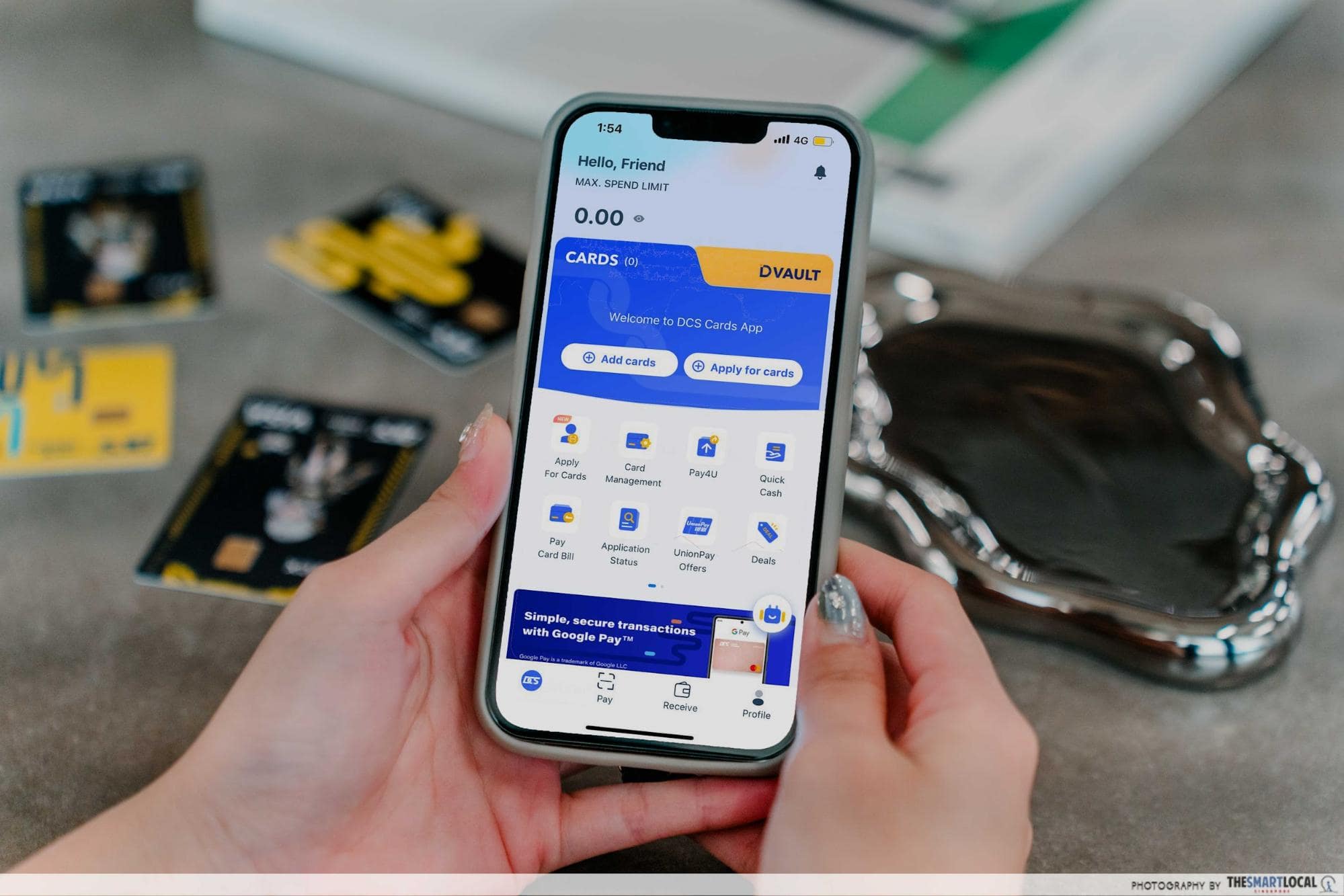
    DCS Group, previously known as Diners Club Singapore, has announced the appointment of Jia Hang as its new executive chairman. This represents the most senior leadership addition in the group’s history, underlining its ambition to revolutionise cross-border and cross-rail payments from Singapore.

    Jia Hang Takes the Helm

    Jia Hang will lead DCS Group, which includes DCS Fintech, its global business, and DCS Card Centre, the group’s core entity based in Singapore. His mandate will include strengthening DCS’s role as a trusted payment institution under the Banking Act and the advancement of its vision to create seamless, interoperable payment flows across both traditional and blockchain rails.

    The move strategically places DCS in a position to speed up its dual-rail strategy across traditional finance and blockchain ecosystems. This comes at a time when regulatory trust and infrastructure preparedness are becoming key differentiators in Asia’s digital finance landscape.

    Focusing on TradFi-Web3 Convergence

    As executive chairman, Jia Hang will oversee corporate direction, governance, and business development. He will focus on enhancing DCS’s dual-rail infrastructure and improving customer experience. He has been tasked with deepening the company’s collaborations with regulators and partners to deliver secure payment solutions for consumers and businesses.

    Global Experience in Payments

    Jia Hang discussed his appointment and stated, “At every stage of my career, I’ve been guided by one enduring question – how can payments connect the world more inclusively, seamlessly, and securely?” He added that DCS is uniquely positioned with the regulatory trust and operational discipline needed to “reimagine that future from Singapore outward.” His ambition is to build a next-generation payments network merging the reliability of traditional finance with the agility of emerging technology.

    Recent Milestones in DCS’s Transformation

    Jia Hang’s appointment comes on the heels of major milestones in DCS’s transformation journey. Last month, the company completed its largest asset-backed securitization program, a S$450 million transaction that achieved AAA ratings on senior tranches. Earlier this year, DCS launched the DeCard Visa card, which allows stablecoin-to-fiat conversion for everyday transactions, extending real-world utility to Web3 users.

    A Career Spanning Leading Digital Commerce Platforms

    Jia Hang brings with him extensive experience from major Asian and global payments ecosystems. His prior roles include senior leadership posts at Ant Group, where he led the expansion of Alipay+ across Southeast Asia and Europe. He also spent nearly a decade at China UnionPay and UnionPay International, where he launched and built UnionPay USA.

    DCS: A Next-Generation Global Payments Provider

    DCS, established over fifty years ago as Diners Club Singapore, has evolved into a Singapore-licensed financial institution with dual capabilities in card issuing and merchant acquiring. Its infrastructure supports both traditional and cryptocurrency-funded payments through regulated partners and is compatible with global schemes, including Visa, Mastercard, UnionPay, and Diners Club. The group continues to position itself as a bridge between traditional and decentralized finance, aiming to deliver secure, borderless payments with real-world utility for businesses and consumers.

    Questions & Answers

    What is the role of Jia Hang in DCS Group?
    Jia Hang has been appointed as the executive chairman of DCS Group. His role involves overseeing corporate direction, governance, and business development, with a particular focus on enhancing DCS’s dual-rail infrastructure and improving customer experience.

    What is DCS Group’s aim with the appointment of Jia Hang?
    With Jia Hang’s appointment, DCS Group aims to reshape cross-border and cross-rail payments from Singapore. The move positions DCS to accelerate its dual-rail strategy across traditional finance and blockchain ecosystems.

    What is the significance of Jia Hang’s appointment?
    Jia Hang’s appointment is a significant move for DCS Group, marking the most senior leadership addition in the group’s history. It also signals the company’s ambition to become a leading player in Asia’s digital finance landscape.

  • UBS and Ant International Pioneer Real-Time Global Payments: Unveiling Next-Gen Blockchain Solutions for Cross-Border Settlements

    UBS and Ant International Pioneer Real-Time Global Payments: Unveiling Next-Gen Blockchain Solutions for Cross-Border Settlements

    Swiss institution UBS has announced a strategic partnership with Singaporean fintech firm Ant International. The collaboration aims to build blockchain-based tokenised deposits to facilitate real-time global payments. This alliance marks a significant milestone in the rapidly transforming digital finance sector in Asia.

    Exploring Blockchain Solutions

    At UBS’ Singapore head office, both companies signed a Memorandum of Understanding to delve into blockchain solutions. These solutions aim to upgrade cross-border settlements and liquidity management for Ant International’s global treasury functions.

    As per the details released on Monday, Ant International plans to utilize UBS Digital Cash, a blockchain payment platform launched in 2024. The platform is designed to expedite, streamline and secure settlement procedures across multiple markets.

    Tokenised Deposits: A Central Element

    A primary focus of this partnership is the examination of tokenised deposits, which will link UBS Digital Cash with Ant International’s proprietary Whale platform. The Whale platform is a next-generation blockchain-based treasury management system.

    This combined infrastructure is designed to facilitate real-time cash flows across Ant’s worldwide entities, bypassing traditional cut-off restrictions and enhancing liquidity visibility across various currencies.

    Pioneering Digital Asset Innovation

    Young Jin Yee, co-head of UBS Global Wealth Management Asia Pacific and country head UBS Singapore, stated that the alliance with Ant International builds upon the momentum of UBS Digital Cash’s pilot launch from the previous year. The combined expertise in digital assets and Ant’s progressive blockchain technology would deliver a real-time, multi-currency payment solution that is both transparent and efficient.

    The partnership also underscores UBS’s commitment to augmenting client access to global markets via digital innovation.

    A Strategic Alliance

    Kelvin Li, general manager of platform tech at Ant International, expressed excitement about the partnership with UBS, a global bank with a solid reputation for blockchain innovation. Li highlighted the shared belief in the transformative potential of these technologies for cross-border payments, and the anticipation of creating a larger impact together.

    This alliance showcases the growing interest in programmable money, tokenised deposits, and real-time settlement infrastructure – areas financial institutions deem critical for the future of cross-border payments.

    Unlocking Capital Efficiency

    For banks, businesses, and wealth managers, the opportunity to instantly move liquidity across markets can unveil new heights of capital efficiency, risk management, and treasury automation.

    As Asia becomes a global hub for digital-asset experimentation, the UBS-Ant partnership epitomizes the region’s increasing influence.

    Questions & Answers

    What is the main goal of the partnership between UBS and Ant International?
    The alliance aims to develop blockchain-based tokenised deposits to facilitate real-time global payments.

    What is the role of Ant International’s proprietary Whale platform in this partnership?
    The Whale platform, a next-generation blockchain-based treasury management system, will be linked with UBS Digital Cash to facilitate real-time cash flows across worldwide entities.

    What potential benefits can banks, businesses, and wealth managers expect from this partnership?
    They can anticipate new heights of capital efficiency, risk management, and treasury automation, thanks to the ability to instantly move liquidity across markets.

  • Boku Leverages Singapore as Gateway to Revolutionize Global Payments Market

    Boku Leverages Singapore as Gateway to Revolutionize Global Payments Market

    Boku, a leading mobile payments company, has selected Singapore as the site for its latest Innovation Hub. This decision aligns with the company’s strategic plan to secure a portion of the rapidly expanding global payments market, which is projected to reach nearly $290 trillion by 2030.

    Introducing the Innovation Hub

    Boku’s new Innovation Hub is dedicated to developing advanced capabilities aimed at guiding businesses through the complexities of global monetary transactions. The company, founded in 2008 and currently headquartered in London, maintains a global presence with offices throughout North America, Asia-Pacific, Europe, and Latin America.

    Given the anticipated growth in global payments, Boku is focusing its efforts on addressing the key difficulties in foreign exchange, payouts, and the interoperability of digital wallets. These areas have become essential for businesses looking to scale internationally.

    The Rise of Local Payment Methods

    The transition from traditional card-based payment methods to local payment methods (LPMs) is progressing at a pace much faster than industry experts predicted. According to research conducted by Boku in partnership with Juniper Research, LPMs surpassed traditional card payments in popularity in 2025 and are predicted to comprise 59 percent of all global ecommerce transactions by 2028.

    Leadership of the Innovation Hub

    Yi Hahn Chin, former Citibank executive with over two decades of experience in transaction banking and cross-border payment innovation, will lead the Hub. Chin’s appointment underscores Boku’s commitment to marrying global expertise with regional proximity. He noted the persistent challenges of cross-border payments for digital merchants operating in multiple markets. According to Chin, basing the team in Singapore will enable closer collaboration with merchants and partners, resulting in capabilities that directly address the evolving needs of the market and improve commercial outcomes.

    Singapore as a Strategic Location

    Singapore was chosen as the location for Boku’s new Hub due to its abundant fintech talent, clear regulatory framework, and its pivotal role in the Asia-Pacific’s burgeoning mobile-first payment landscape. The Hub will leverage Singapore’s position to collaborate with fintech companies and merchants in designing and testing solutions aimed at minimizing cross-border complexities and broadening acceptance.

    Moving Beyond Traditional Payments

    Stuart Neal, CEO of Boku, emphasized the need for merchants to have access to a payment infrastructure that simplifies processes while extending reach. He indicated that the Innovation Hub will enable Boku to create and trial solutions in actual markets with real partners, and that basing the team in Singapore will be key to enhancing relationships with Asia-Pacific merchants and driving growth.

    Global Reach of Boku’s Network

    Boku presently offers over 200 local payment methods, reaching more than 7 billion consumer accounts across over 60 countries. The company processes transactions for over 100 million active users monthly, with digital wallets and account-to-account payments forming the backbone of the company’s growth. With the introduction of the new Singapore Hub, Boku is signaling its intention to climb higher up the value chain by not just linking payment methods, but also by facilitating smooth, data-driven cross-border trade.

    Questions & Answers

    What is the purpose of Boku’s Innovation Hub in Singapore?
    The Hub is intended to develop new capabilities to help businesses navigate the complexities of global monetary transactions, with a focus on addressing key difficulties in foreign exchange, payouts, and the interoperability of digital wallets.

    Who will be leading Boku’s new Innovation Hub?
    Yi Hahn Chin, a former Citibank executive with over 20 years of experience in transaction banking and cross-border payment innovation, will be leading the Hub.

    Why was Singapore chosen as the location for Boku’s Innovation Hub?
    Singapore was chosen due to its rich fintech talent pool, clear regulatory framework, and because of its central role in the Asia-Pacific’s burgeoning mobile-first payment landscape.

  • India To Implement Facial Recognition, Fingerprint Verification For Upi Transactions From October 8

    India To Implement Facial Recognition, Fingerprint Verification For Upi Transactions From October 8

    Starting October 8, India will incorporate facial recognition and fingerprint verification as methods for approving transactions carried out through the nationally renowned Unified Payments Interface (UPI), according to insiders with direct knowledge of the situation.

    The authentication process will employ biometric data stored within Aadhar, the Indian Government’s singular identification system, an anonymous source disclosed.

    This initiative comes after the Reserve Bank of India issued new guidelines allowing for alternative means of authentication. This marks a significant shift from the existing system, which necessitates a numeric PIN for transaction verification.

    The National Payments Corporation of India (NPCI), the entity responsible for operating UPI, intends to unveil this novel biometric attribute at the ongoing Global Fintech Festival in Mumbai, stated the sources who requested anonymity due to not being permitted to speak to the press.

    The NPCI has not responded immediately to requests for comment.

    Questions & Answers

    When will the new biometric features for payment approval through the UPI be introduced in India?
    The new features for payment approval which include facial recognition and fingerprint verification will be introduced starting October 8.

    What is the current system for approving transactions carried out through the UPI?
    The existing system of approving transactions carried out through the UPI requires a numeric PIN for transaction verification.

    Who operates the UPI and who intends to showcase the new biometric feature?
    The UPI is operated by the National Payments Corporation of India (NPCI), which plans to debut this novel biometric feature at the ongoing Global Fintech Festival in Mumbai.

  • APAC Instant Payments Expected to Surge to $170.2B by 2029, Says GlobalData

    APAC Instant Payments Expected to Surge to $170.2B by 2029, Says GlobalData

    It’s becoming clear that Asia is leading the charge in the world of instant payments. According to estimates by GlobalData, the instant payments market across 14 Asia Pacific countries is set to grow at a compound annual growth rate (CAGR) of 11.6% between 2025 and 2029, reaching a staggering valuation of $170.2 billion.

    Rapid Growth Driven by the Digital Shift

    This remarkable growth is fueled by several interlinked factors, including a consumer preference for electronic payment methods, advancements in payment infrastructure, and a growing financially aware population. Ravi Sharma, the lead banking and payments analyst at GlobalData, notes that countries like China, Japan, South Korea, and India have already established strong footholds in the instant payments market.

    China’s Dominance in the Market

    Leading the pack is China, which is projected to see its instant payments market value soar to $81.9 trillion by 2029. South Korea and Japan are expected to follow, with instant payments valued at $35.8 trillion and $31.5 trillion, respectively. Meanwhile, India, although trailing behind in terms of market value at $7.5 trillion, astonishingly leads in transaction volume. The nation is set to record a remarkable 191.5 billion instant payment transactions by 2024, primarily propelled by the impressive growth of its Unified Payments Interface (UPI), the national payment framework that has revolutionized digital transactions.

    Opportunities on the Horizon

    The surge in cross-border payment linkages is unlocking new business opportunities across the region. Sharma emphasizes that the future looks bright for the instant payments landscape in Asia Pacific. “As government initiatives continue to evolve, payment infrastructures improve, and QR code-based payments become more favored over traditional POS systems, consumer inclination towards electronic payments is expected to solidify,” he states.

    In this dynamic financial environment, it’s not just a race to digitize; it’s also a friendly competition of who can innovate faster. As consumers become increasingly tech-savvy, retail businesses must stay ahead of the curve to capture the evolving marketplace.

    Questions & Answers

    What is driving the growth of instant payments in Asia?
    The growth is primarily driven by increased consumer preference for electronic payments, enhanced payment infrastructure, and a more financially aware population.

    Which country is projected to have the highest value in instant payments?
    China is expected to lead the region, with its instant payments market projected to reach $81.9 trillion by 2029.

    How does India fare in the instant payments space?
    While India trails behind in market value at $7.5 trillion, it surpasses all other countries in transaction volume, with anticipated instant payment transactions reaching 191.5 billion by 2024.

  • China and Indonesia Launch Innovative Pilot Program for Cross-Border QR Payments

    China and Indonesia Launch Innovative Pilot Program for Cross-Border QR Payments

    In an exciting development for cross-border commerce, selected users from China can now engage in QR payments while visiting Indonesia, thanks to a collaborative pilot initiative between the two nations. This innovation allows users to make payments using the UnionPay and Alipay apps through Indonesia’s QRIS system, which stands for “Quick Response Code Indonesian Standard.” With more than 40 million QRIS merchants participating, this move promises to enhance the purchasing experience for tourists and business travelers alike.

    As part of this initiative, the pilot program allows not just Chinese users but also selected merchants from China’s UnionPay and Alipay networks to accept QR payments from a variety of Indonesian mobile payment applications. It’s almost like creating a financial handshake between countries, all facilitated by the convenience of QR codes.

    The payment processing will unfold in the local currencies of each country, adding another layer of efficiency to the transaction process, as confirmed in the recent press release. With the pilot phase currently underway, stakeholders anticipate that the QR payment system will be fully operational by 2025, making it a significant stride towards seamless cross-border transactions.

    UnionPay International (UPI) has laid the groundwork for this ambitious project by signing a memorandum of cooperation with the Indonesian Payment System Association, Ant International, as well as the Bank of China (Hong Kong) Jakarta branch. The move solidifies the partnership, which is further cemented through separate agreements with four Indonesian switch networks: Rintis, ALTO, Artajasa, and Jalin. As the program progresses, it could transform how payments are made between these two vibrant economies, potentially sparking interest from other nations to join the QR payment revolution.

    Questions & Answers

    How does the QR payment system work between China and Indonesia?
    Users from China can make QR payments in Indonesia using the UnionPay and Alipay apps, utilizing the QRIS system to facilitate transactions through 40 million participating merchants.

    What currencies will be used in these transactions?
    The QR payment linkages will be settled in the respective local currencies of China and Indonesia, ensuring a smooth transaction process for users.

    When is the QR payment linkage expected to become fully operational?
    The initiative is projected to be fully operational by 2025, following the current sandbox phase of the pilot program.

  • South Korea’s Payment Card Market Set to Hit $1 Trillion by 2025: A Game Changer for Retail!

    South Korea’s Payment Card Market Set to Hit $1 Trillion by 2025: A Game Changer for Retail!

    In a remarkable shift towards digital finance, South Korea’s payment card market—encompassing both point-of-sale (POS) payments and ATM withdrawals—is projected to grow by 3.8%, reaching an impressive $1 trillion (KRW1.4 quadrillion) by 2025, as revealed in a recent report by GlobalData. This growth is largely fueled by a burgeoning preference for digital payment solutions among consumers.

    Between 2020 and 2024, card payments in South Korea are anticipated to experience a robust compound annual growth rate (CAGR) of 7.8%, spiking to about $972.4 billion (KRW1.3 quadrillion) by 2024. In stark contrast, cash withdrawals from ATMs are expected to grow only marginally at 0.9%, as more consumers opt for card-based transactions over traditional cash withdrawals.

    “South Korea’s cards and payments industry is well-developed, with each individual estimated to hold more than six cards as of July 2025,” noted Shivani Gupta, a banking and payments analyst at GlobalData. Gupta also highlighted that the frequency of card usage is on the rise, increasing from an average of 86.2 transactions per card in 2021 to a projected 97.8 transactions per card by 2025.

    By 2025, POS transactions are expected to dominate the landscape, accounting for a striking 96.1% of all card payments, leaving a minuscule share for cash withdrawals. The total number of card payment transactions is forecasted to increase from 24.2 billion in 2021 to 30.7 billion by 2025, achieving a CAGR of 6.2%, and advancing further to 35.9 billion by 2029.

    Efforts to enhance card usage are evident in recent industry initiatives. In January 2025, payment company NHN KCP partnered with Verifone to launch the all-in-one POS terminal “KCP Terminal The Black,” specifically designed to assist small and medium-sized businesses. Additionally, a collaborative agreement signed in July on Jeju Island between six organizations, including the Korea Payment Service Promotion Agency, aims to broaden the use of contactless cards on local bus services. Who knew public transport could be this tech-savvy?

    Looking ahead, the payment cards market is expected to continue its upward trajectory, forecasted to grow at a CAGR of 3.6% from 2025 to 2029, ultimately reaching KRW1.6 quadrillion ($1.2 trillion) by 2029, according to Gupta.

    Questions & Answers

    What is driving the growth of the South Korean payment card market?
    The growth is largely attributed to a rising preference for digital payments among consumers, significantly influencing both POS payments and ATM withdrawals.

    How many cards does the average South Korean hold?
    As of July 2025, it is estimated that each individual in South Korea will hold more than six payment cards, reflecting the market’s robust development.

    What innovations are being introduced to enhance card usage?
    Recent innovations include the launch of the all-in-one POS terminal “KCP Terminal The Black” by NHN KCP and Verifone, aimed at supporting small and medium-sized businesses, as well as initiatives to expand contactless card use in public transport on Jeju Island.

  • DCS Launches Innovative Web3 Payment Platform, Revolutionizing the Retail Experience

    DCS Launches Innovative Web3 Payment Platform, Revolutionizing the Retail Experience

    DCS Card Centre is on the fast track to redefine its role in the financial landscape, transitioning from a traditional card issuer to a comprehensive global payments enabler. This transformation underscores a larger ambition to seamlessly connect the realms of Web2 and Web3 finance.

    Milestone Moments in Embedded Finance

    The company will showcase this evolution as the official payment provider for GastroBeats 2025. Dayna Leng, Chief Marketing Officer at DCS, stated, “This year, DCS has evolved into a global payments enabler, leading innovations that breach traditional finance and Web3 economies to facilitate everyday spending.”

    Once primarily identified with the Diners Club brand, this Singapore-based institution has significantly broadened its partnerships to include major players like Visa, MasterCard, and UPI. DCS’s evolution mirrors a broader regional trend, with embedded finance across the Asia Pacific projected to soar to US$255 billion by 2029.

    Redefining Payments for a New Era

    For DCS, the strategy now transcends simply issuing cards; it includes merchant acquisition and advanced payment services. “Card payments have undergone significant evolution,” Leng noted. “We’ve transitioned from debit to credit, to mobile and digital, moving from the confines of traditional finance to enabling real-time transactions across both physical and Web3 ecosystems.”

    Today’s consumers demand instant gratification, expecting payment solutions to be agnostic, borderless, and unhindered by limitations. This heightened expectation is prompting businesses to adopt innovative tools like virtual cards. These tools streamline accounting processes by consolidating expenses across teams, vendors, and merchants while also enabling multi-currency transactions, ultimately reducing foreign exchange costs.

    The Future is Regulated Yet Flexible

    “At the core of everything is the need for regulatory compliance,” Leng emphasized. She foresees a rapidly evolving digital payments landscape shaped by significant institutional involvement aimed at fostering a responsible digital lifestyle. One might say that while the future of finance is fast-paced and flexible, it must also tread carefully in regulatory waters — a balancing act reminiscent of walking a tightrope culinary experts skillfully navigate at a fine dining restaurant.

    Questions & Answers

    What is DCS Card Centre’s new role in the payments landscape?
    DCS Card Centre is shifting from a traditional card issuer to a global payments enabler, bridging traditional finance and Web3 ecosystems.

    How crucial is regulatory compliance in DCS’s strategy?
    Regulatory compliance is foundational for DCS, as the evolving digital payments landscape will require responsible frameworks to support new technologies.

    What is the significance of DCS’s partnership with GastroBeats 2025?
    DCS’s role as the official payment provider for GastroBeats 2025 marks a significant milestone in its ambition to integrate innovative payment solutions into everyday spending.

  • Card Payments Lead the Way as South Koreans Embrace Convenient Transactions

    Card Payments Lead the Way as South Koreans Embrace Convenient Transactions

    As the retail landscape in Asia continues to evolve at a rapid pace, the spotlight shines on innovative marketing strategies and the power of community engagement. Major players in the retail sector are embracing the digital age, maximizing their reach through targeted advertising, both online and offline. The potential for collaboration is endless, and businesses are beginning to understand the importance of crafting campaigns that resonate with their audience on multiple platforms.

    Reimagining Advertising in Retail

    In today’s vibrant market, retailers are not just sellers; they are storytellers, weaving narratives that captivate customers and build loyalty. An effective advertising campaign can make all the difference, and the right partnership can amplify these efforts. By combining print and digital strategies, brands can engage with their customers like never before, creating a seamless experience that bridges the gap between traditional and modern marketing.

    Creating Memorable Events

    Organizing engaging events—whether in-person or virtual—has never been more crucial. Retailers are discovering that the right event can spark creativity and collaboration. By bringing together industry leaders and innovators, brands can forge valuable connections and explore potential partnerships. These gatherings are more than just networking opportunities; they are platforms for inspiration and breakthroughs that could spark the next big trend in retail.

    Awards That Shine a Spotlight

    Recognition plays a vital role in motivating businesses to reach new heights. Retail awards not only celebrate achievements but serve as a benchmark of excellence within the industry. Participating in or sponsoring these awards can elevate a brand’s profile and foster a sense of community among peers. It’s a chance to showcase what sets a company apart—think of it as the retail equivalent of the Academy Awards!

    With the retail environment constantly shifting, staying ahead of the curve is essential. As businesses strive to innovate and connect authentically with their customers, there has never been a better time to invest in meaningful partnerships and campaigns that elevate the retail experience. After all, in the world of retail, it’s not just about selling products; it’s about creating memories and building relationships.

    Questions & Answers

    What are the key benefits of combining print and digital advertising?
    Combining print and digital advertising allows brands to reach a wider audience, engage customers in diverse ways, and create a cohesive brand narrative across multiple platforms.

    Why are events important for retailers?
    Events foster networking opportunities, stimulate creativity, and enable brands to connect directly with customers and industry leaders, paving the way for future collaborations.

    How do awards influence retail companies?
    Awards provide recognition, boosting morale and motivation within a company, while also enhancing its reputation in the industry and attracting potential partnerships.

    Isn’t it exciting to think about how retailers will continue to revolutionize their approach in an ever-changing marketplace?

  • ABN Amro Faces Significant Penalties for Controversial Bonus Payments

    ABN Amro Faces Significant Penalties for Controversial Bonus Payments

    The Dutch central bank has handed down a hefty €15 million fine to ABN Amro for awarding bonuses to senior executives, a practice strictly forbidden for state-owned banks since 2012. This punitive action stems from the bank’s decision to defy explicit warnings from regulators, much to their chagrin.

    Regulatory Backlash

    De Nederlandsche Bank (DNB) described this incident as a “serious violation.” The rationale behind the ban on bonuses for state-owned banks is clear: it aims to safeguard taxpayer money and ensure that government support does not enrich top executives. Although the law forbade bonuses for board members since 2012, its reach extended to certain senior managers, categorized as the “second tier,” in 2015.

    Between 2016 and 2024, ABN Amro managed to pay €1.5 million in bonuses to seven of these second-tier managers, along with awarding one executive two raises that notably exceeded established pay norms—all of which were prohibited. The fine, fixed in accordance with current regulatory guidelines, is seen as “appropriate and justified” given the size of the institution.

    A Warning Ignored

    The supervisory authority has long had its eyes on ABN Amro, having previously flagged the illegal bonus policy. After temporarily halting the practice, the bank bizarrely decided to reinstate it and even issue new bonuses, which directly contradicted instructions from the DNB. This blatant disregard for regulations has earned the bank a higher degree of culpability in the eyes of its overseers.

    “A professional market participant and licensed bank such as ABN Amro is expected to be aware of and comply with the applicable laws and regulations,” the DNB emphasized.

    Acceptance and Reflection

    In the aftermath, ABN Amro accepted the fine, claiming it had “interpreted and applied the legislation in good faith,” while conceding that this interpretation was flawed. The bank was nationalized during the 2008 financial crisis when it teetered on the edge of collapse, leading to a government bailout. Although the Dutch government has been gradually reducing its ownership stake since 2015, it still retains a 30 percent share in the bank.

    ABN Amro might now wish it had kept its bonuses under wraps because, as they say, money can’t buy you compliance!

    Questions & Answers

    What was the reason behind the fine imposed on ABN Amro?
    The Dutch central bank fined ABN Amro €15 million for awarding bonuses to senior executives, which is prohibited for state-owned banks to prevent taxpayer funds from enriching top executives.

    How long had ABN Amro been violating the bonus ban?
    The bank paid bonuses between 2016 and 2024, even after receiving warnings from regulators.

    What was ABN Amro’s response to the fine?
    ABN Amro accepted the fine and admitted that its interpretation of the legislation was incorrect, despite claiming it was applied in good faith.