Tag: Philippines

  • Shakey’s Pizza to open 20 more stores in Asia

    Shakey’s Pizza to open 20 more stores in Asia

    Philippines fast-food operator Shakey’s Pizza Asia says it plans to continue expansion across the region by opening 20 new stores this year. The openings will see the brand’s total outlets increase to 248 locations, according to a statement released by the firm on Wednesday. “We continue to see consumer spending fueling the Philippine economy, which is still one of Southeast Asia’s fastest-growing markets,” said president and CEO Vicente L Gregorio.

    Shakeys reached its target of opening 20 new stores last year, expanding mostly outside first-tier cities. “We are focused on expanding outside Metro Manila where we see great potential in terms of demand for the premium yet affordable dining experience we provide. We also tapped more local partners … to run our provincial operations and to ensure that we have on-the-ground accountability even in farther-flung areas,” said Gregorio.

    Shakeys has operated in the Philippines since 1975 under Shakey’s Pizza Asia, which has stores in several international territories and opened its second Dubai location last year with record-breaking first-day sales.

  • Chinese Smartphone Realme Eyes to Expand Southeast Asia

    Chinese Smartphone Realme Eyes to Expand Southeast Asia

    BBK Electronics’ budget smartphone brand Realme is eyeing expansion into Southeast Asia, Africa and Europe. The company’s online distribution strategy has brought it success in the Indian market and makes broader expansion possible, according to Realme global CEO Sky Li Bingzhong. “The company’s asset-light operations and focus on online sales allow it to keep costs low. That way, more young consumers can afford its products, which makes the brand more competitive in the market,” said Li.

    Realme launched in India in May last year with handsets priced at INR8,990 (US$129) – becoming the second top-selling smartphone brand during the Diwali festival season from October to November. The brand has joined a number of Chinese phone manufacturers seeking to build strength in the Indian market as they challenge more established international competitors in more saturated markets.

    BBK also owns the Oppo, Vivo and OnePlus brands, selling mid- to high-end models. Independent Realme runs its own R&D operations, but partners with Oppo in smartphone production. Its expansion moves are indicative of Chinese phone manufacturers’ larger strategy to deploy varying brands that each target specific markets globally.

  • Mr DIY mulls US$362 million float

    Mr DIY mulls US$362 million float

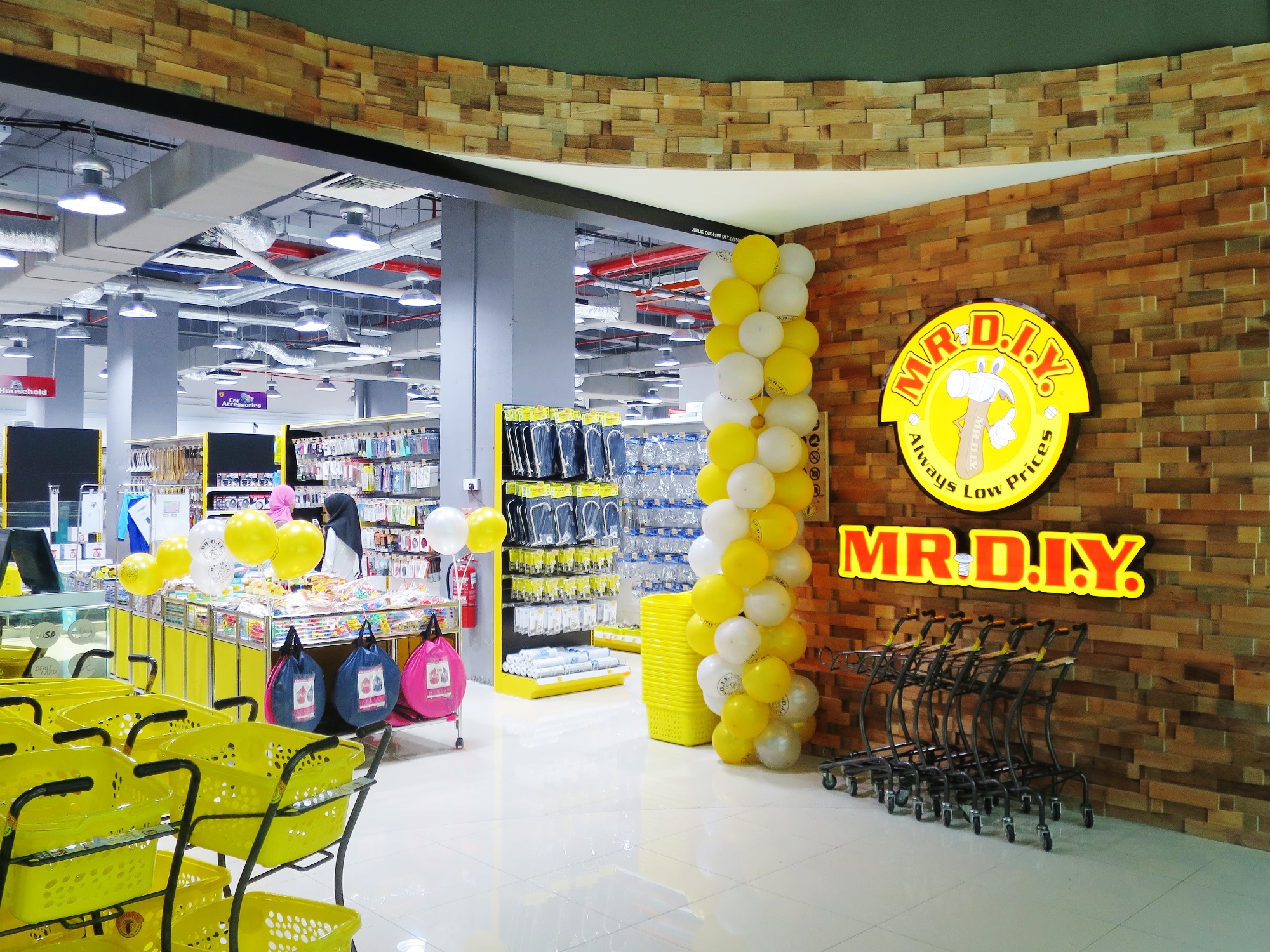
    Malaysian home improvement brand Mr DIY is considering an IPO to raise about MYR1.5 billion (US$362 million). An industry source has revealed that the firm intends to list its domestic operations later this year on either the Malaysian or Hong Kong exchange with backing from Malaysian private equity firm Creador, which invested in the brand over two years ago.

    A report stated the IPO could bring Mr DIY to a market value of MYR10 billion (US$2.426 billion).

    Mr DIY operates around 600 locations in Southeast Asia. Last October, the company revealed plans to open at least 1000 branches by 2020.

    Head of marketing Andy Chin said then: “We feel that our home improvement retail business model, offering a variety of goods at affordable prices, is suitable for better business growth in the country as well as the Asean market. At the end of this year, we target 700 global branches, and the number may reach 1000 or more by 2020. These will be based on an organic growth.”

    He added that the company’s prospect of Asean-level expansion will be focused on Indonesia, Thailand and the Philippines”.

    Mr DIY is the largest home appliance retailer in Malaysia with more than 20,000 SKUs.

  • Honolulu Cafe debuts in Philippines

    Honolulu Cafe debuts in Philippines

    Hong Kong’s Honolulu Cafe has opened its first branch in Manila. Renowned for its signature egg tarts with 192 flakey pastry layers (no, we are not sure who counted them!), the cafe also serves its own house-blend of coffee. The new store opened last week, January 5, at the SM Aura shopping centre. Honolulu Cafe dates back to 1940 when it opened as an ice cream parlour. Nearly 80 years on, the company now has stores in Singapore, Malaysia and Taiwan as well.

    Besides egg tarts and coffee, the cafes serve Hong Kong-style stocking-strained milk tea, pastries, buns, Cantonese-style roast meat, and fried noodles. The new outlet is on the ground floor of the Bonifacio Global City shopping centre.

  • Philippines stock jumps ahead of inflation data, Singapore slides

    Philippines stock jumps ahead of inflation data, Singapore slides

    Most Southeast Asian shares climbed on Thursday, with Philippine markets leading gains ahead of the release of inflation figures, while Singaporean stocks bucked the trend to fall sharply. Philippine stocks gained 1.04 percent, as industrial shares SM Investments Corp and JG Summit Holdings Inc propelled the index. A report shows that the country’s inflation is expected to cool to a six-month low in December, making it likely the Philippine central bank will leave policy rates unchanged this year.

    “The investors were mainly concerned about inflation during 2018,” said Rachelle Cruz an analyst at AP Securities in Manila.

    “So now we’re seeing some buying in the index stocks as there’s better expectation on earnings growth now, since that concern seems to be fading,” Cruz said.

    Local investors appeared to be buying more because some Philippine companies have reached “very attractive valuations,” she added.

    A surge in consumer goods stocks powered a 0.4 percent advance in Indonesian shares.

    Shares in Malaysia and Thailand also rose, by 0.56 percent and 0.71 percent respectively.

    In Kuala Lumpur tourist resort chain Genting Malaysia Berhad added 2.7 percent and palm oil producer Sime Darby Plantation Berhad rose 3.3 percent, while in Bangkok energy stocks provided the biggest boost to the benchmark.

    Meanwhile, Singaporean shares edged 0.81 percent lower, with Thai Beverage PCL dropping 3.3 percent and industrial conglomerate Jardine Strategic Holdings Ltd losing 1.4 percent.

    Vietnamese stocks also shed just above 0.8 percent, with most major sectors in the red. Real-estate stocks like Vinhomes JSC and Vingroup JSC, which powered a rally on Wednesday, fell around 2 percent apiece.

  • Jollibee aims for international growth

    Jollibee aims for international growth

    It’s been called the “McDonald’s of the Philippines,” and the late Anthony Bourdain dubbed it “the wackiest, jolliest place on earth.” Jollibee, a fast food chain based in the Philippines, has become one of the world’s largest restaurant franchises, with more than 4,000 stores in 23 countries, including 37 in the United States. (For comparison, McDonald’s has more than 37,000 worldwide and 14,000 in the U.S.)

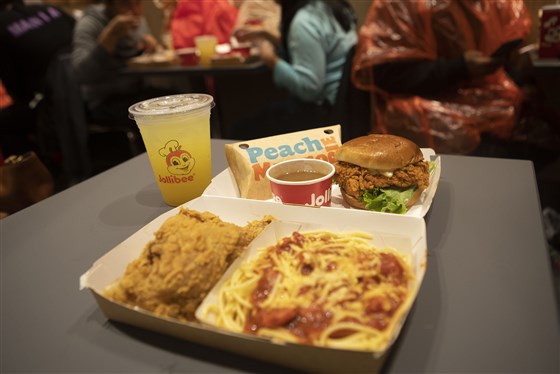
    Known for its fried chicken, sweet spaghetti and “Aloha burger,” Jollibee serves fast-food with a Filipino twist: The spaghetti, for instance, includes cheese and mini hot dogs, and the fried chicken is meant to be eaten with rice and gravy.

    While Jollibee first came to the U.S. in 1998, opening locations in areas with large Asian populations including California, Hawaii and Illinois, the company’s latest investments and openings, including one near Manhattan’s Times Square, are part of a new strategy that the company hopes will make it one of the “top five restaurant companies in the world.”

    Incorporated in 1978, the company started as a pair of ice cream parlors before adding hot meals to its menu when McDonald’s announced they were coming to the Philippines.

    “We told our friends back then that we wanted to compete with McDonald’s, and they told us not to confront the giant,” Ernesto Tanmantiong, Jollibee’s CEO and younger brother of founder Tony Tan Caktiong, said. “Instead of chickening out, we served Chickenjoy.”

    The company now owns 14 global brands. In February, it acquired stakes in Smashburger and fast-casual Mexican chain Tortas Frontera, both U.S.-based companies.

    Arthur Dong, professor of strategy and economics at Georgetown’s McDonough School of Business, said the acquisitions gives them “a bigger media footprint into the North American market, and a push into becoming one of the biggest companies in the world.”

    Dong added that Jollibee’s success in the North American market, as well as its other overseas locations, makes a huge impact on the Philippine economy.

    “Any success anywhere contributes to the company’s success overall and would make Jollibee at home more successful and endure a lot more things, in terms of their future expansion opportunities,” he said.

    Jollibee’s most recent opening in New York City was highly anticipated, with some customers lining up for 20 hours.

    Dong said that the New York opening is a wise move in line with what some economists call the “dense market theory,” which suggests that when a franchise opens a location in an urban area with populations that reside and work in high-rise buildings, it increases the chances of one’s success because of that population density.

    “It’s perfect because rather than putting a billboard up to advertise their brand, Times Square is like a billboards haven itself,” Dong said. “In cities, they go from zero to 60 very quickly because of the sheer amount of foot traffic. Because this new location is near Times Square, the result of that is they’re able to capture the attention of not only natives, but people who don’t even reside from New York City, and that gives exposure to the Jollibee menu and their concept.”

    Justin Callan from the New York City neighborhood of Coney Island said that, as a non-Filipino, he has always felt welcomed at Jollibee. He and his girlfriend, Faye, were the first customers in line for Jollibee’s Manhattan grand opening on Oct. 27. “All you have to do is open up the door and let the people smell it — that’s what got me,” he said.

    Jollibee executives hope to open 150 stores in the U.S. and 100 stores in Canada over the next five years.

    “This is our entry into the mainstream, not just Filipino, market — we are catering to a bigger spectrum, and want to keep strengthening our foothold both in the U.S. and globally,” Tanmantiong, the CEO, said.


  • China Slowdown, Trade Disputes Weigh on Asia Factory Activity

    China Slowdown, Trade Disputes Weigh on Asia Factory Activity

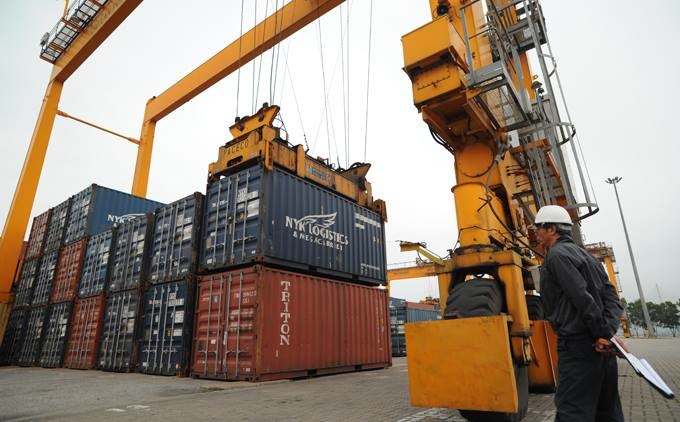
    Factory activity weakened across Asia in December as the Sino-US trade war and a slowdown in Chinese demand hit production in most economies, strengthening the case for a pause in interest rate hikes in the region in 2019. A series of purchasing managers’ indexes (PMI) for December released on Wednesday mostly showed declines or slowdowns in manufacturing factory activity across the region. In China, the Caixin/Markit PMI slipped into contraction territory for the first time in 19 months, broadly tracking an official survey released on Monday.

    China’s weakness spilled over to other Asian economies, with Malaysia’s manufacturing activity shrinking to its weakest pace of expansion since it launched the survey in 2012 and Taiwan contracting to its lowest since September 2015.

    Meanwhile, official economic data out of Singapore showed its gross domestic product grew more slowly than forecast in the fourth quarter as the city-state’s manufacturing sector contracted on a quarterly basis.

    In other regions, the eurozone was expected to post steady manufacturing activity growth, while US activity was seen a tad slower, but firmly in expansion territory, in a sign that so far China has suffered more bruises from its trade frictions than the United States.

    With growth slowing and inflation below or barely within the target in most countries, Asian central banks are unlikely to continue their tightening cycle this year, barring any shocks in currency markets.

    “We are really seeing a global slowdown into this year, and in Asia, particularly export-oriented countries are hurting,” said Irene Cheung, Asia strategist at ANZ.

    “Our expectation for central banks is that most of them won’t change policy in 2019 and these numbers coming out on the weak side won’t change that outlook.”

    The world’s two largest economies agreed at the start of December to a 90-day truce following tit-for-tat tariffs that have disrupted the flow of hundreds of billions of dollars of goods between the two countries.

    The two sides have pledged to hold frequent talks in the next two months, but uncertainty over whether they can bridge massive differences over commercial practices and intellectual property rights remains very high, despite US President Donald Trump noting “big progress” in a tweet.

    Tariffs are not the only drag on China’s economy. Beijing’s sustained drive to reduce debt risks in the economy has cooled the property market and curbed credit flows to the private sector. Meanwhile, the government’s intensified crackdown on pollution has dented industrial activity.

    In a key annual conference last month, China’s top leaders said they will boost support for the economy in 2019 by cutting taxes and keeping liquidity ample while promising to continue negotiations with Washington.

    “The People’s Bank of China may have to ease further to offset the impact of tariffs,” said Robert Michele, chief investment officer and head of fixed income, J.P. Morgan Asset Management.

    China’s economic growth slowed to 6.5 percent in the third quarter of last year, the weakest since the global financial crisis. As reported, government advisers had recommended a growth target of 6.0-6.5 percent for this year at the annual meeting, though the final figure won’t be made public until the annual parliament meeting in early March.

    Oil Drive

    A sharp drop in the crude price at the end of last year has helped sentiment in Asia’s oil-importing economies, where trade deficits are a key vulnerability.

    Indonesia’s PMI index, although still weak historically, rose to 51.2 from November’s 50.4, a four-month high. India’s declined to 53.2 from 54.0 but capped the strongest quarter for the country’s manufacturing sector since late 2012. Philippines PMI was also 53.2.

    But Malaysia, which relies heavily on oil revenues, saw its weakest reading ever at 46.8.

    Taiwan and South Korea, which are heavily focused on tech production, also saw their activity shrink. The US-China trade war affects chip orders and coincides with a slowdown in demand for smartphones globally.

    The contraction in South Korean manufacturing activity continued last month albeit at a slower pace, its PMI showed, with new export orders declining for a fifth consecutive month. Taiwan’s PMI, meanwhile, fell to its lowest since September 2015. Japan publishes PMIs on Jan. 4.

    Vietnam’s PMI fell to 53.8 from November’s 56.5, but the index’s 2018 average was the highest since the survey’s debut in 2011.

    The Southeast Asian economy is widely seen as benefiting from the US-China trade war as companies look to establish operations in the country to avoid the tariff crossfire.

  • AirAsia eyes Vietnam launch, turnaround India and Japan units

    AirAsia eyes Vietnam launch, turnaround India and Japan units

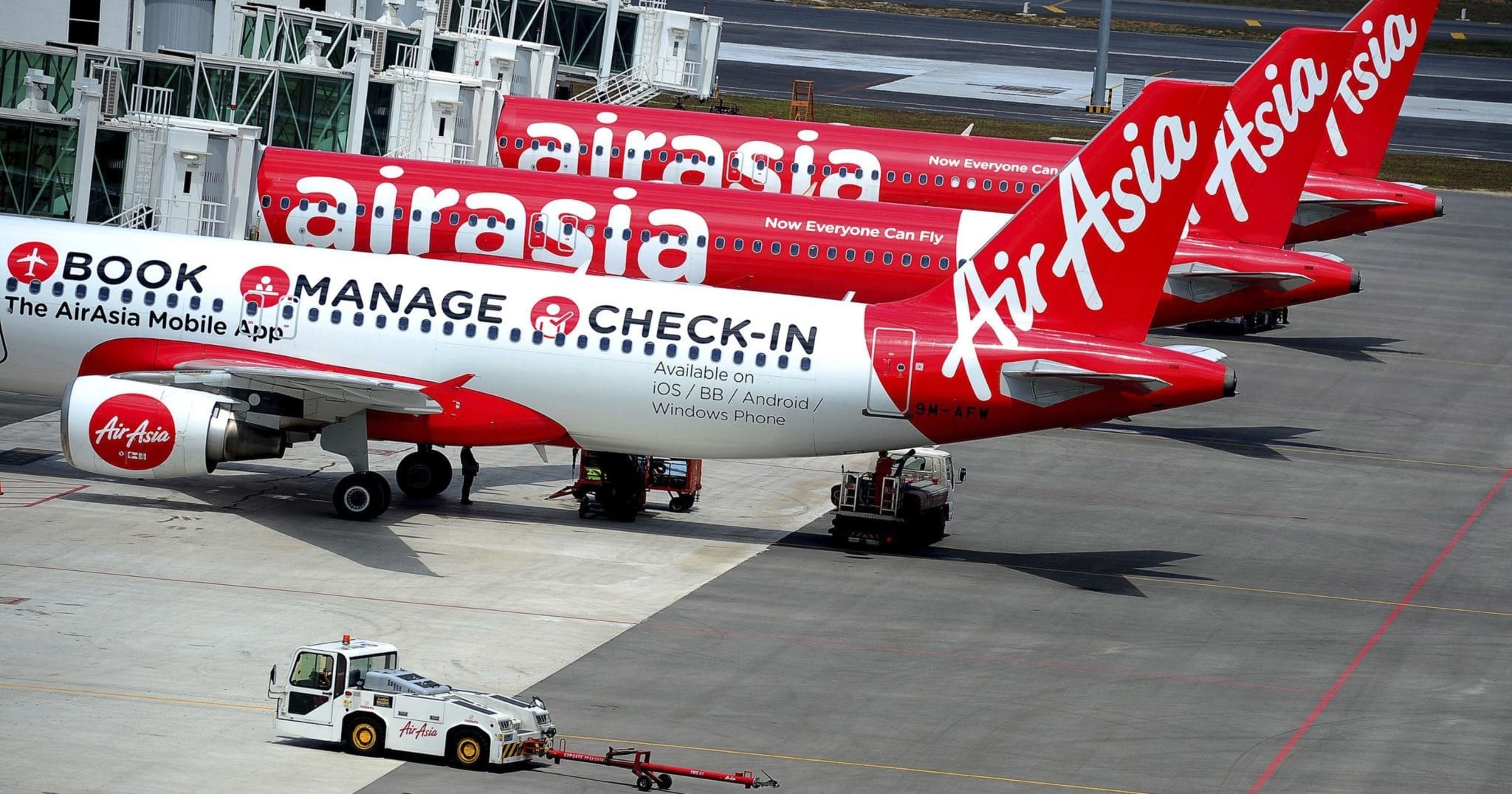
    AirAsia Group chief executive Tony Fernandes says the group has no plans to establish new subsidiaries over the next three years, apart from a unit in Vietnam. In a series of tweets, Fernandes says the low-cost carrier will focus its efforts on launching AirAsia Vietnam, as well as making Indonesia AirAsia and AirAsia Philippines “very profitable”. Last December, AirAsia signed a memorandum of cooperation with Thien minh Travel for a Vietnamese joint venture.

    Meanwhile, AirAsia‘s Indonesia and Philippines units, which have suffered losses over the years, have had their financials incorporated into the Group since the start of 2017. AirAsia has said that it is planning for a secondary listing for its Indonesia operations in fiscal 2019.

    Fernandes is also expecting AirAsia India and AirAsia Japan to be profitable by 2021. AirAsia India is working towards launching international services while AirAsia Japan plans to start connecting to points in North Asia.

    “We have a great seam[less] franchise. Indonesia, Malaysia, Thailand, Philippines and Vietnam… All the major populations and growing economies. Coupled with two great countries to enable us to cover the world – India and Japan.”

    The AirAsia Group previously had plans to launch a China unit and signed a MoU in May 2017. The pact with China Everbright Group and the Henan Government Working Group however lapsed in August 2018.

  • Hong Kong’s Hui Lau Shan debuts in Philippines

    Hong Kong’s Hui Lau Shan debuts in Philippines

    Hong Kong dessert chain Hui Lau Shan will launch in the Philippines in February. The franchise, best known for its mango-based treats,will open at SM Megamall in Mandaluyong City with a range of desserts that are expected to draw on local fruits. Mango desserts have proven popular in the region recently, with prominent social media coverage of long queues for mango floats.

    Hui Lau Shan is a heritage brand originating from a herbal tea & tea trolley that traded in Hong Kong’s Yuen Long back in the 1960s.

  • Jollibee buys out Smashburger with big deal

    Jollibee buys out Smashburger with big deal

    Jollibee has taken full ownership and control of US fast-food chain Smashburger after acquiring an 85 per cent stake in February. The Philippine company said it paid US$10 million to acquire the remaining 15 per cent of the company and that it has made management changes.

    Tom Ryan, Smashburger founder and CEO, will take on the additional title of chief product development advisor at Jollibee Foods Corporation globally, focusing on strengthening taste and quality aspects across key brands and enhancing their relevance across global markets.

    Jose “Pepot” Minana has assumed the role of Smashburger president, including daily operations, collaborating on strategy and brand direction, and lead the continuing integration of Smashburger into the Jollibee Foods portfolio.

    Smashburger has 351 stores and accounts for 7 per cent of Jollibee’s global sales which totalled $3.4 billion last year.

  • Alfamart to add 200 PHL stores

    Alfamart to add 200 PHL stores

    Mini-mart chain Alfamart will open 200 new stores in the Philippines next year, according to a Fitch Ratings report. It said Alfamart Philippines stores already has 400 stores in the country, of which 180 were opened this year in partnership with local operator and majority stakeholder SM Group. The 200 new stores will take its total network to 600 locations in the Philippines by the end of next year.

    “Alfamart’s investment risk for its Philippine expansion is mitigated by the strong presence of SM Group in the country … Fitch expects Alfamart to have access to SM Group’s large business network and tap its widely known brand”.

    SM Retail operates 1729 stores nationwide. Alfamart’s Indonesian parent has a 35 per cent stake in the Alfamart Philippines business.

    According to the report, “Both Indonesia and the Philippines are consumer-driven markets with young populations and expanding middle classes. Both economies have similar income levels of GDP per capita of US$3000-$4000. Consumers in both markets also prefer to buy small amounts of bundled products rather than filling grocery carts”.

    It described the mini-mart sector in the Philippines “as untapped and having limited competition … the existing players mostly operate convenience stores that carry more limited products. Alfamart’s stores offer additional products, such as fresh and frozen food, personal care and small household appliances, giving the company some competitive advantage in grabbing market share.

    “Alfamart chose to expand in the Philippines as it believes it has more potential than other Southeast Asian markets, such as Thailand and Vietnam.”

  • Jollibee opens first Malaysian outlet in Kota Kinabalu

    Jollibee opens first Malaysian outlet in Kota Kinabalu

    Jollibee Malaysia has opened its first outlet – in the beachside city of Kota Kinabalu. CEO Ernesto Tanmantiong said opening in Malaysia marked a new chapter for the group. “We invite Malaysians to come and see for themselves why people line up for hours.”

    Jollibee Foods head of international business, Dennis Flores, said Jollibee is beloved throughout Asia, because it appeals to diverse tastes and cultures.

    “This has propelled us to become the fastest-growing Asian restaurant company, and we are thankful for the overwhelming support. It drives us to do better for our customers, and to continue to serve delicious food with our signature warm service.”

    The Jollibee Malaysia opening follows the brand’s recent expansion into London and Manhattan as its rapidly expands its global store network to surpass 4300.

    After making its debut in the capital of Sabah, Jollibee Malaysia plans further outlets in major cities across the country.

  • Amorepacific boosts business expansion in the Philippines

    Amorepacific boosts business expansion in the Philippines

    South Korean cosmetics giant Amorepacific is ramping up its Asean expansion, opening the first Innisfree and Laneige Philippines stores. Amorepacific established Amorepacific Philippines in Metro Manila in August and has since opened the first Innisfree store, in Manila’s SM Mall of Asia.

    This week the company opened its first Laneige Philippines store, at SM Makati Department Store.

    Laneige has also launched on the nation’s largest e-commerce channels in the Philippines including Lazada.

    The upmarket Laneige brand will expand through both online and offline channels through next year, Amorepacific said in a statement.

    The company says the Philippines offers great growth potential, with its population of more than 107 million. It is particularly targeting the premium beauty market which is growing quickly there, along with the broader popularity of K-beauty.

    “By expanding into this promising market, Amorepacific aims to strengthen its presence in the Asean region, which is one of the important strategic business regions for the company,” the statement said.

    Amorepacific has already launched in Singapore, Malaysia, Thailand, Vietnam and Indonesia.

    “We are glad to finally make our way into the Philippines market and respond to its increasing need for our brands,” said Robin Na, head of Amorepacific Asean regional headquarters. “Through our differentiated, innovative products and premium brands, we will spread Asian beauty across the Philippines and satisfy the local customers.”

  • Bo’s Coffee plans big expansion ahead

    Bo’s Coffee plans big expansion ahead

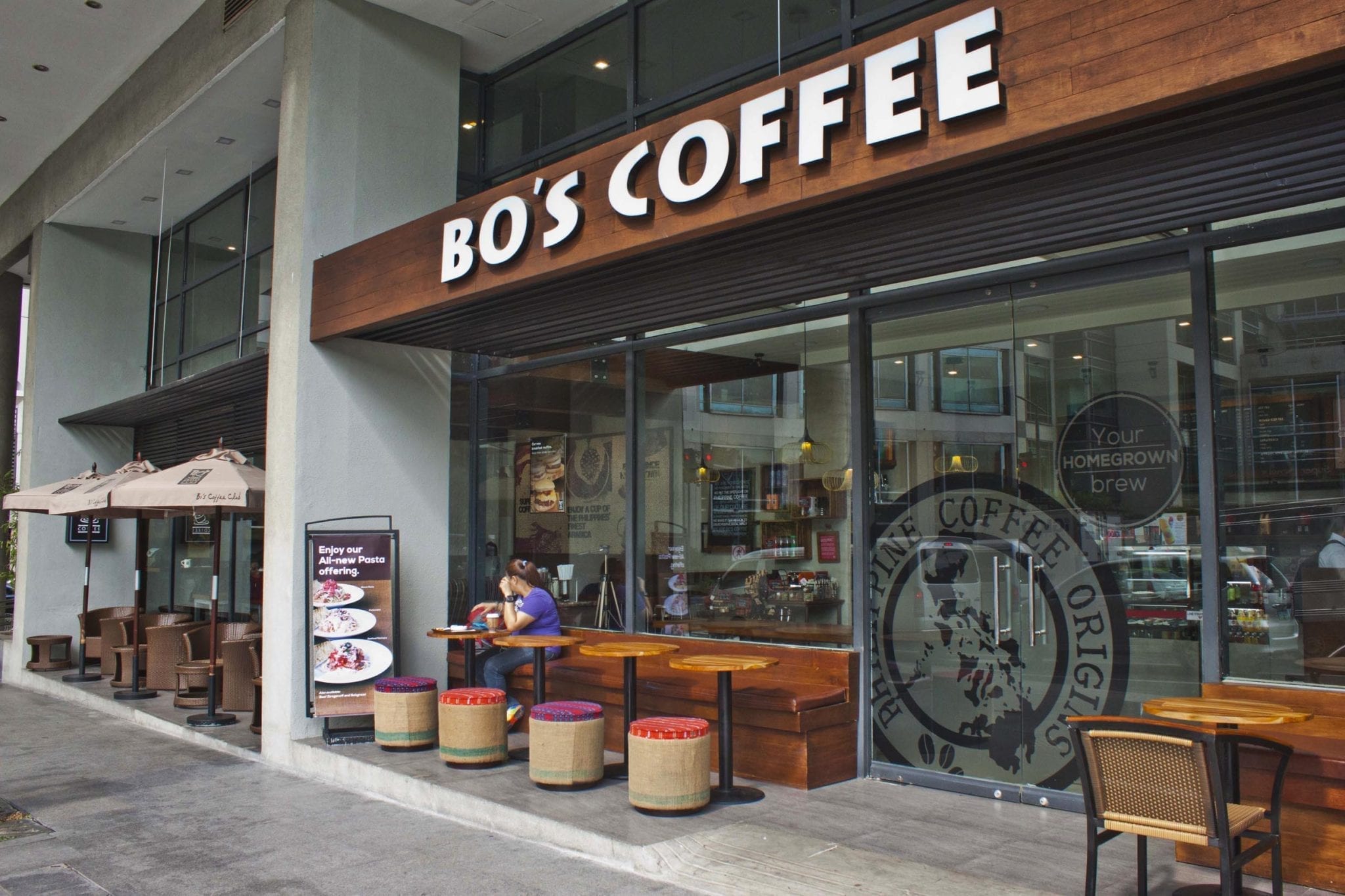
    Filipino cafe chain Bo’s Coffee plans to more than double its store network within four years and is also eyeing expansion into the Middle East. In an interview, founder Steve Benitez says the ambitious growth plan has been fuelled by strong local demand. With 103 cafes currently, Benitez is targeting between 200 and 250 by 2022.

    “Our job is to make sure that we are able to popularize coffee and be able to supply so much, not only in the Philippines but globally,” he said.

    In its home market, Bo’s Coffee, which was founded in 1996, will be targeting Luzon, especially given the brand has “only scratched the surface” there to date.

    In the Middle East, Bo’s Coffee plans to open a second store in Qatar shortly, followed by three more within two years. Other markets in the region are now in its sights.

    The expansion plans will be accelerated following an investment by Philippine-focused Navegar Fund which was attracted to Bo’s Coffee by its efforts to support local coffee-growing communities.

    “Seventy to 80 per cent of our coffee beans are sourced locally,” said Benitez. “We were trailblazers. We started featuring Philippine coffee and the other shops followed after.”

    Bo’s Coffee recently opened a 300sqm flagship store in Cebu which supports social enterprises by partnering with local micro-small entrepreneurs in their store interiors, products, and merchandise inside.

  • Innisfree lands in the Philippines

    Innisfree lands in the Philippines

    Innisfree Corp., budget cosmetics manufacturer under South Korea’s beauty powerhouse Amorepacific Group opened its first store in the Philippines with hopes to expand its presence in the bourgeoning Southeast Asian market. According to the company, the 148-square-meter store opened at SM Mall of Asia, the largest shopping mall in Manila.

    The naturalism-oriented brand plans to introduce skin-care products made of natural ingredients from Jeju Island such as green tea and volcanic pine mushroom and their effectiveness to consumers in the Philippines to satisfy beauty demand and experience.

    The Philippines is considered a potential market due to the high ratio of young people in their 20s and 30s interested in hallyu, or Korean wave, and Korean beauty.

    An unnamed official from Innisfree said that the company will introduce not only its flagship beauty items but also pore- and oil-treatment mask and powder products tailored for humid and hot climate. The official added that the company will also pursue its environmentally-friendly green life campaign in the Southeast Asian country.

    Innisfree, meanwhile, manages 655 outlets overseas including the latest store in the Philippines.

    The skin-care brand, which opened its first overseas store in China in 2012, has outlets in Hong Kong, Taiwan, Singapore, India, Thailand, the United States, and Japan.

    Innisfree also plans to open stores at three major shopping malls in Metropolitan Manila next year and launch online channel