Tag: Philippines

  • Tech boost for Asia’s rice sector

    Tech boost for Asia’s rice sector

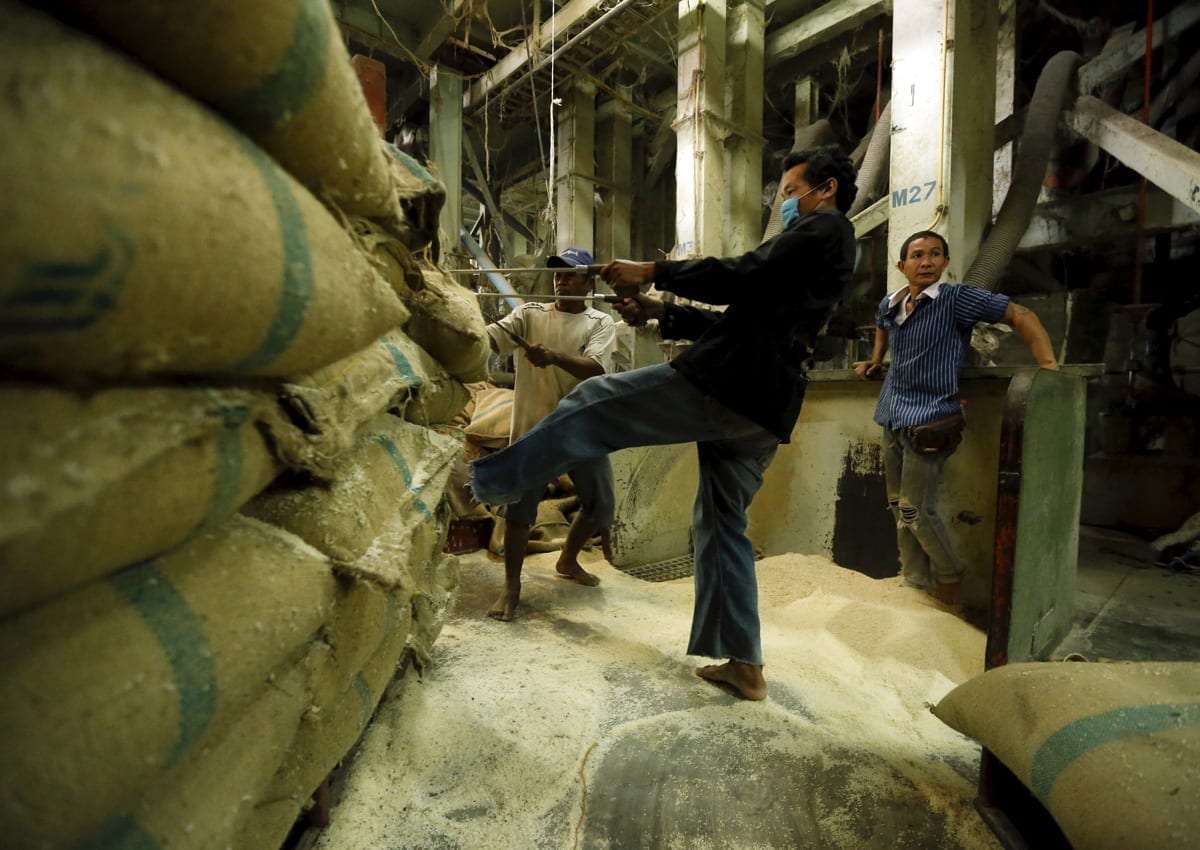
    A new initiative to provide rice breeders across the Asia Pacific region with advanced technologies is expected to help improve crop yields, sustainability and profitability in the vital agricultural sector.

    ‘Rice Action Agenda,’ introduced by the The International Rice Research Institute (IRRI) for the 16-member countries of the Council for Partnership on Rice Research in Asia, calls on parties to share germplasm, collaborate on investments, and exchange rice-breeding techniques.

    Bruce Tolentino, deputy director-general of the Philippine-based IRRI, says the new agenda is “crucial to developing the rice sectors” of the participating countries. He says the new agenda was a response to concerns about diminishing rice stocks in India and Thailand — the two top global exporters.

    IRRI noted in February that the combined rice stocks of India and Thailand were set to decline by almost three-quarters by the third quarter of 2016 as compared to 2013 numbers, mostly due to environmental reasons such as droughts.

    “Fears of another rice crisis early this year was the impetus for the Rice Action Agenda,” Tolentino said.

    Under a 10-point action plan the agenda will introduce superior, higher yield rice varieties; upgrade rice research and breeding pipelines; increase research into global rice varieties; invest in rice education and increase the sustainability of rice cultivation systems.

    The plan also calls for reducing crop losses using mechanised technologies; reforming policies to increase production efficiency; increasing investments in agricultural infrastructure; strengthening food security for consumers and working to implement the ASEAN Rice Breeding Initiative.

    IRRI proposes that participants take advantage of three programmes — the CGIAR Research Programme on Rice, the Sustainable Rice Platform, and the ASEAN+3 Rice Genetics and Breeding Platform. The last includes a suite of tools for fast-tracking germplasm development, including genotyping and molecular markers, high-throughput phenotyping, and breeding informatics.

    Tolentino notes that participating countries are expected to carry out the new Rice Action Agenda using internal funding sources. “The goal is for each of the member countries to adopt the recommendations into each of their own national rice-sector strategies and fund implementation from their own fiscal budgets.”

    Rajeev Varshney, a geneticist at the International Crops Research Institute for the Semi-Arid Tropics, Patancheru, India, tells SciDev.Net that rice is the “most important crop for food as well as nutrition security in Asian countries.”

    According to Varshney, the agenda is a “great opportunity to bring the entire value chain of actors together.” By combining the various programmes proposed in the plan, participants should be able to “make the rice sector stronger.”

  • Cebu Pacific passenger volume jumps 5% in January-October

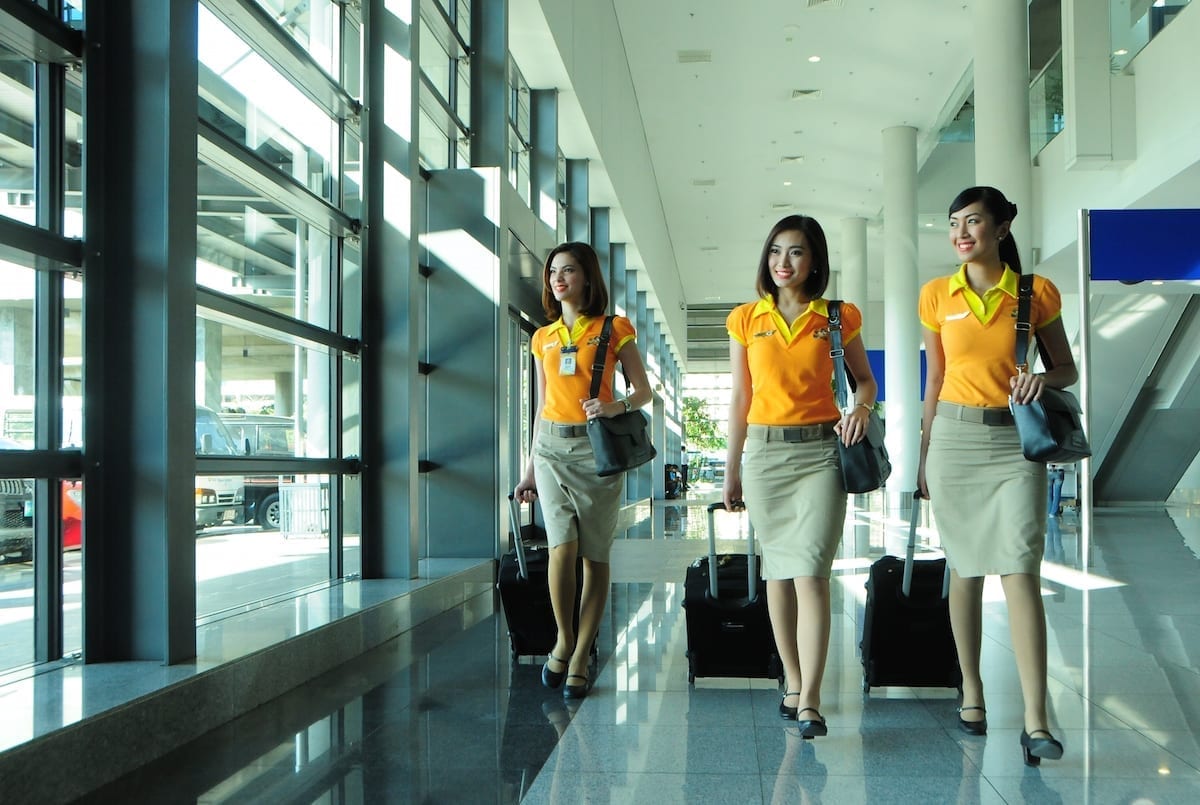
    Cebu Pacific passenger volume jumps 5% in January-October

    Cebu Air and its wholly owned subsidiary Cebgo, Inc. flew 5.1% more passengers in the first ten months of the year, as the budget carrier increased its load factor and added new planes.As of end-October, however, the tally showed passenger volume of 1.519 million, lower by 3% against the 1.566 million last year, amid lesser seat capacity, load factor and number of flights during the period.

    The group ferried a total of 15.996 million passengers from January to October from the 15.218 million recorded during the same period in 2015, according to the latest operating statistics uploaded on its Web site.

    Seat load factor in the 10 months to October stood at 85.9% compared to the 81.8% seen during the comparable period last year.

    Cebu Pacific mounted 110,467 flights from 111,091. The airline currently operates across 36 local and 30 international destinations with a fleet of 58 aircraft.

    Cebu Air President and Chief Executive Officer Lance Y. Gokongwei had said the budget carrier is seen flying 19 million passengers this year, a record passenger volume, driven by the airline’s low-cost, long-haul services and increased frequencies in key domestic markets from 18.4 million passengers in 2015 and also up from the 16.9 million passengers flown in 2014.

    The airline is targeting to ferry 20 million passengers next year, as the company expect the delivery of 48 additional planes in the next five years to 2021.

    Cebu Air, operator of budget airline Cebu Pacific Air, saw its profit double in the first nine months of the year to P7.1 billion from P3.56 billion a year ago, led by strong passenger volume, higher ticket prices and lower fuel costs during the period, it told the stock exchange in its quarterly report.

  • Bata: Shoemaker to the world

    Bata: Shoemaker to the world

    IT’S inevitable that the world’s first family in footwear, Bata, would partner with the Philippines’s premier retail family, the Sys of the SM Group.

    “First of all, their whole philosophy is business, their heritage coming from footwear. It’s particularly strong. Also, we have a friendship with the SM Group and the Sy family going on for some time. All these make them great partners, and we never hesitated. They were the only partner we were interested to work with in the Philippines,” Thomas Archer Bata said at the launch of the first Bata store in the Philippines, which can be found at the third floor of SM Megamall Building B.

    Ambassador; Bubblegummers; and Valtina Prima Ballerina

    The Bata Shoe Co., which is the biggest in the world, originated in Zlin, in what is now the Czech Republic, on September 21, 1894. It was founded by Tomás Bat’a. His son, Thomas J., propelled the company to greater profitability after suffering losses in World War II. The grandson, Thomas George, is currently in the management board with his sisters Christine, Monica and Rosemarie. Thomas Archer (who will be referred to as Mr. Bata from hereon in the article), the chief marketing officer, belongs to the fourth generation of cousins who add vigor and vitality to the company.

    Bata has 5,000 retail outlets in 70 countries. In Senegal, Rhodesia and Zimbabwe, Bata became the local name for shoes when in the 1950s, the company conquered the African continent. “Opportunities abound, everyone barefoot,” came one cable from a salesman to headquarters.

    It has a strong presence in Asia, particularly India. It also opened a factory in Thailand in the 1970s. But Bata’s entry into the Philippines came only recently. “To be completely honest, it’s because of legal reasons and legal complications related to our trademark here,” Mr. Bata bared. “It took many, many years to resolve. Fortunately, with the help of SM, we managed to resolve it and we’re back.”

    Mr. Bata, who strikes me as a mix of actors Chris O’Dowd and Aidan Quinn, is quite optimistic about his family’s prospects in the country. “We think our model and our proposal is very interesting. We think it’s fairly unique in the market today. We’re going to tread cautiously. We’re opening [between eight and 15 Bata stores in SM malls in Metro Manila], communicate and try to build our consumer base, teach people about our products. From there, we’ll see where we’re going to go.”

    The Bata business of “responsible capitalism” is guided by a “Moral Testament” left behind by its founder: The company should not be treated as a source of private wealth but, rather, as a public trust, a means of improving living standards within the community and providing customers with good value for their money.

    Bata prices curiously end in the digit 9. “Back over a hundred years ago, it was partially a marketing tactic to make the prices look even more affordable. It has been in our heritage and our blood ever since we started, and it’s just to emphasize the value [of our product],” Mr. Bata explained.

    The company has an “insistence on focusing on the local market not only as a matter of structure and strategy but, rather, as an essential aspect of the Bata brand and philosophy. Shoes always followed culture and climate.” Thus, the Weinbrenner sandals will be a hit for their tropical, outdoorsy appeal, in tune with the penchant of Filipinos who love flip-flops.

    By some quirk, towns with the company’s factories have the Bata name: Batanagar in India, Bataville in France, Bata-Kolonie in Switzerland, Batadorp in the Netherlands, Batapur in Pakistan, Borovo-Bata in Croatia and Batawa in Canada, a play on the capital Ottawa. If a factory were to be built here, it would most likely be in Batangas.

    “Never say never. You know, we have to see what opportunities come up. If we see the opportunity to produce shoes in the Philippines, it could happen,” Mr. Bata said of the possibility of Filipinos becoming “Batamen”, who are of every race, creed and nationality. A lot of the materials to produce the shoes come from Brazil. Italy is the source for premium products. Raw materials also come a little bit from China and India. These are the four main areas where Bata gets its materials from, depending on the shoes that you’re looking for.

    “We are very environment-friendly. Our factories on a yearly basis are audited for their sustainability. We manufacture our own shoes. We actually issue a Sustainability Report every year about the progress we’re making on reducing waste. We’re very lucky in so much, as our founder over a hundred years ago believed in sustainability, in producing as little waste as possible, and that exists till today. We always use environment-friendly materials, suppliers, recyclable papers in our boxes, to make as little negative impact on the environment as we can,” Mr. Bata assured.

    Bata has three creative teams, with the biggest one based in Italy. One is in Toronto, Canada and another in Singapore. “In the Philippines 50 percent of the products come from Italy, 30 percent from Singapore, 20 percent from Canada. Not all brands are here,” Mr. Bata said. “We’re bringing primarily Bata and a little bit of our other brands for the moment. We’re still very much in the learning stage for us, to see what the Filipino consumer likes the most before we commit to specific product ranges.”

    Are they open to designer collaborations? “Yes, absolutely. We’re interested to do that. We’re actually talking to potential partners in the Philippines to work on some collaborative projects.”

    What about celebrity endorsers? “It’s a possibility. We’ll see. We believe the best kind of endorsement is user experience and word-of-mouth. So we tend to focus on ‘loyalizing’ people who come to buy with us more than anything else. I won’t rule it out but for the time being, it’s not on the agenda.”

    Has the company learned that “bata” here means “child”? “Yes, I’ve heard that.” So is there a possibility to have a Bata Children’s Program here? “Very high probability. We actually intend to do that. It’s a big part of our legacy and it’s very important for our family. We have our own schools and, specifically, we focus on the education of young girls. So we’re actually planning and discussing this with SM, how we can roll this, especially in the rural communities in the Philippines.”

    Thomas J. Bata would often wear a different type of shoe on each foot as a way of constantly testing their products. At the launch, his grandson Thomas Archer wore a pair of leather brogues. “These are Bata shoes from our factory in India, in Calcutta. Very comfortable. It’s from the Ambassador line but not yet available in the Philippines, but they will be in a few weeks’ time,” Mr. Bata said with delight.

    Did you also learn how to make shoes? “Yes, I did. My holidays as a child were going to factories, making shoes and visiting stores. I’m lucky I grew up with shoes. I like shoes. Not everybody who grew up in the shoe business actually likes them!”

  • Government employees on official business to get Cebu Pacific discounts

    Government employees on official business to get Cebu Pacific discounts

    Government employees will get discounted fares from budget carrier Cebu Pacific starting January next year, following the signing of a Government Fare Agreement (GFA) on Monday.

    All government employees on official travel will be given discounts, with the processing fees waived.

    Government agencies across the Philippines will be able to tap into the discounted fares via the Philippine Government Electronic Procurement Service (PhilGEPS) of the Department of Budget and Management.

    “This is a huge step into our goal of getting the highest value for the hard earned money of our Filipino taxpayers. The DBM estimates savings for more than P1 billion in aggregate discounts and waived fees under the GFA,” Budget Secretary Benjamin M. Diokno said during the GFA signing in Pasay City.

    Cebu Pacific President and CEO Lance Gokongwei noted the agreement can foster financial and economic growth.

    “We are looking forward to flying more government employees as this will also cultivate financial and economic growth of the different regions and provinces in the Philippines,” he said.

    The airline offers flights to 36 domestic and 30 international destinations across Asia, Australia, the Middle East, and USA.

  • Five apply for Philippines’ new entrant auction

    Five apply for Philippines’ new entrant auction

    Five different companies have reportedly expressed an interest in bidding to become the Philippines’ third operator during next year’s planned new entrant spectrum auction.

    Companies including Philippines TMT company Now Corporation and ISP Converge ICT Solutions have declared their interest in participating. The three other companies have not been named.

    Now Corp secured a CMTS license in 2006, and plans to find a foreign partner for its bid to become the market’s third mobile operator, the report states.

    Both Now Corp and Converge ICT Solutions offer broadband services to corporate clients, with the latter also offering home and SME broadband services.

    Last month, the NBTC announced plans to hold the planned third entrant auctionin mid-2017.

    Spectrum in the 700-MHz, 2500-MHz, 800-MHz and 3500-MHz bands, surrendered as a condition of the $1.5 billion acquisition of San Miguel Corp’s telecoms assets by incumbents Globe and PLDT, will be put on the block.

    But any new entrant to the market will face an uphill battle disrupting the Globe-PLDT duopoly. The report cites Edgardo Cabarios, deputy commissioner of telecoms regulator NTC, as stating that a thrid entrant should invest at least 30 billion pesos ($604.1 million) over the first two years of operation on a nationwide rollout.

  • PLDT, Globe agree to cut interconnection rates

    PLDT, Globe agree to cut interconnection rates

    The Philippines’ two major telecom operators – PLDT and Globe Telecom – have agreed to reduce their voice interconnection rates to bring down the price of domestic mobile and fixed line calls in the country.

    Department of Information and Communications Technology (DICT) Secretary Rodolfo Salalima and National Telecommunications Commissioner (NTC) Gamaliel Cordoba witnessed the signing of the memorandum of agreement.

    The NTC said the decision to lower interconnection rates is in line with efforts to reduce communications costs, maintain and foster fair competition in the telecommunications industry as well as to make mobile voice service more affordable to the public.

    Under the agreement, the two companies committed to taking steps to lower retail rates for voice and to maintain a grade of service (GOS) in interconnection. This means ensuring that there is sufficient telecommunications circuits or routes for efficient transmission of calls.

    “We are confident that a reduction in the cost of interconnection for voice calls will eventually redound to a more robust economy, providing our customers with an affordable and easily accessible way of communication,” Globe chief technology and information officer Gil Genio said.

    The reduction of interconnection rates, however, will not affect international calls.

    The NTC has earlier issued a memorandum circular mandating a 38% reduction in the interconnection rate between the two networks, which should take effect not later than January 1.

    “We are supporting government’s efforts to bring down the cost of telecom services in the country. This agreement will translate in different ways to more affordable voice call rates for our subscribers,” PLDT director and head of regulatory affairs and policy office Ray C. Espinosa said.

    The interconnection rate for voice calls between the telco firms will be reduced to 2.5 pesos ($0.12) per minute across-the-board starting January 1, 2017. At present, mobile to mobile and landline to mobile voice calls cost 4 pesos per minute while mobile to landline voice calls cost 3 pesos per minute.

    PLDT Chief Revenue Officer Eric Alberto added that improving voice services will provide customers more options to connect with their family and friends, at home or on the go.

    The memorandum of understanding will serve as a guide to amending previous interconnection agreements.

    Earlier, the two telecommunication companies called on the government to streamline government policies and regulations to speed up the deployment of broadband infrastructure in the country.

    “We are calling for a national consensus to harmonize policies and regulations in support of building digital data infrastructure. We also hope to deepen understanding of our people, at the community level, how vital telecoms infrastructure are to our lives. When these facilities are damaged or stolen, this harms our welfare as surely as when roads and bridges are washed away,” said PLDT and Smart Communications Senior Vice President for Network Services Mario G. Tamayo in a speech at a summit hosted by the DICT.

    In anticipation of the continued growth of data traffic and digital services in the country, PLDT said it plans to increase the capacity of its data infrastructure by ten times come 2020.

    For 2016 alone, PLDT has allocated 48 billion pesos ($963.5 million) capital expenditure to fortify and expand its fixed and wireless networks, including the utilization of its recently acquired 700-MHz spectrum.

    Meanwhile, Globe Telecom emphasized the need for more cell sites in the country taking into account dramatic rise in mobile data demand. Genio pointed out the company’s quarterly data traffic increased exponentially to 98 petabytes in the third quarter of the year from only 9 petabytes in the first quarter of 2013 amid growing customer propensity for multi-media content.

  • AirAsia starts flying Philippines-Taiwan

    AirAsia starts flying Philippines-Taiwan

    The low-cost carrier’s Philippine subsidiary started flying direct from Manila to Taipei on 21 November, and then on 25 November it commenced flights between Cebu and Taipei.

    “We are aiming to go further across Asia by strengthening AirAsia’s presence in Taiwan. Today heralds… brighter and much closer ties between two countries to improve trade and tourism,” said Philippines AirAsia’s CEO, Dexter Comendador. He added that the new services would cater to “travellers, overseas Filipino workers and Taiwanese tourists”.

    The new Manila-Taipei route will operate daily with late night flights, while the Cebu-Taipei service will run three times a week (Wednesdays, Fridays and Sundays) with early morning departures from the Philippines.

    The AirAsia Group also operates direct flight to Taipei from Kuala Lumpur and Kota Kinabalu.

  • Cebu Pacific opens office in Seoul

    Cebu Pacific opens office in Seoul

    Local carrier Cebu Pacific opened Tuesday its regional office in South Korea as part of its regional promotion and expansion.

    In a statement, CEB said its office is located at 7th floor, Section B, Sesomunro 106, Jung-Gu, Seoul, Korea.

    CEB’s Korea branch office will provide tickets sales, reservations services and customer support. It will aid in boosting the airline’s promotion and marketing strategies in Korea.

    “CEB continuously looks for opportunities to expand services and target markets in the most convenient way. With the opening of CEB’s Korea branch office, we make ticket purchase and reservations more accessible to travelers while cultivating Cebu Pacific’s operations in the region. We remain committed to offering the most affordable air fares between the Philippines and Korea, and to contributing to the trade and tourism agendas of the communities we cater to,” said Michael Szucs, CEB Chief Executive Adviser.

    Currently, CEB operates daily to and from Incheon-Manila/Kalibo/Cebu, and twice weekly to and from Busan-Manila utilizing 180-seater Airbus A320 aircraft. The A320 is a proven and reliable aircraft with low operating costs, which means lower fares for our customers.

    CEB flew over 250,000 passengers between the Philippines and Korea from January and September 2016. Passengers from Korea can use CEB’s extensive network to visit the Philippines’ popular domestic destinations such as Boracay, Coron, Davao and Puerto Princesa via easy flight connections through Manila.

    CEB currently offers flights to a total of 36 domestic and 30 international destinations, operating an extensive network across Asia, Australia, the Middle East, and USA. Its 57-strong fleet is comprised of six Airbus A319, 36 Airbus A320, six Airbus A330, eight ATR 72-500, and one ATR 72-600 aircraft. Between 2016 and 2021, CEB expects delivery of 32 Airbus A321neo, two Airbus A330, and 15 ATR 72-600 aircraft

  • Chimes Boutiques opens ‘world class’ flagship

    Chimes Boutiques opens ‘world class’ flagship

    Chimes Boutiques has opened a new flagship store in its home town Davao city.

    “I never imagined 12 years ago that we would be able to deliver a truly world-class experience to our humble shores,” observed Chimes Boutiques CEO and SVP of Felcris Group, Cindy Yap at the store’s unveiling.

    Chimes was originally founded by the second generation siblings of the Yap family – founders of hypermarkets and convenience stores in Mindanao – who saw an opening for a channel selling luxury retail brands in Davao. With such a store, she figured,  Mindanao’s well heeled would no longer have to travel to Manila, or overseas, for fine fashion.

    chimes-chic-mb3

    “Change is a constant element in everyone’s life and [after 12 years] that moment came for us, as well. We decided to develop a selling strategy that would meet the wishes of our client – passionate travelers always on the lookout for something new,” she said.

    The 37,000 sqft Governor Sales Street store was completely refurbished – all the way to the new logo – in a project led by retail designers Cyndi and Happy Fernandez of Moss Manila.

    Chimes stocks more than 100 brands spanning beauty, accessories, ladies ready-to-wear, menswear, home and children. Among the labels: local brands Aranaz, Happy Skin, Rajo Laurel, Vania Romoff, Renegade Folk and Sunnies Studios.

  • Cebu Pacific plans Legazpi night flights

    Cebu Pacific plans Legazpi night flights

    Cebu Pacific said the upgrade of the Legazpi International Airport as a night-capable facility has allowed the budget carrier to operate flights even in the evening.

    In a statement, Cebu Pacific said it is the first carrier to operate night flights out of the Legazpi International Airport after being upgraded by the Civil Aviation Authority of the Philippines (CAAP) with necessary facilities and declared ready to accommodate evening flights.

    The upgrade allows airlines to offer more flights for passengers to choose from.

    At present, Cebu Pacific operates six daily flights to and from Legazpi via Manila and Cebu.

    Evening flights operated by Cebu Pacific’s wholly-owned subsidiary Cebgo, depart Manila at 6:15 p.m. and 7:20 p.m, and arrive in Legazpi at 7:40 p.m. and 8:45 p.m., respectively.

    The return flights meanwhile, leave Legazpi at 8:20 p.m. and 9:35 p.m., and land in Manila at 9:40 p.m. and 10:55 p.m., respectively.

    The upgrade is likewise seen to give a further boost to tourism in Legazpi which serves as a regional hub for business, education and government.

    Legazpi International Airport is the main airport of the Bicol region, serving provinces such as Albay and Sorsogon.

    As early as 2012, Cebu Pacific has been calling for the upgrade of airports to have night capability to allow airlines to offer flights in the evening and in effect, help ease congestion at the Ninoy Aquino International Airport (NAIA) runway during the peak

  • MManila 53rd most expensive retail property location in the world

    MManila 53rd most expensive retail property location in the world

    The Philippines has slipped by a notch on the list of most expensive retail property locations this world due to lower-than-expected sales volume so far in the year, a global real estate services firm said.

    In a report, Cushman and Wakefield said in Metro Manila dropped from the 52nd spot last year. It cited a slowdown in the sales of luxury properties.

    “The luxury segment experienced a slowdown as lower-than-expected sales volumes in existing stores led to upscale brands re-evaluating expansion plans,” the report said.

    In spite of the slowdown, Cushman and Wakefield noted the Philippine market continues to enjoy the support of international brands.

    “International brands continue to drive the Philippine retail sector, supported by the rising disposable income of a growing middle class population,” the report noted.

    Global mid-tier brands accounted for a significant volume of leasing activity in recent quarters.

    “In particular, fast fashion retailers and F&B operators are leading the growth of the segment as brands such as Uniqlo and H&M continue to aggressively expand their footprints within and outside Metro Manila,” Cushman and Wakefield said.

    Growing competition among mall developers has led to the formation of new retail concepts as a way of expanding market share.

    “There is also a shift in the tenant mix, where mall operators are increasing the share of F&B in their retail developments,” the report said.

    By region, the Asia Pacific retail market has been seeing a cautious 2016.

    “Overall, retailers continued to be cautious in their store expansion across the region due to a number of concerns including continued global economic instability, and we see this trend continuing well into 2017, said Cushman and Wakefield Asia Pacific Head of Retail Theodore Knipfing.

    Once retailers start expanding, the focus would be on high-performing malls and high streets with strong pedestrian traffic, Knipfing noted.

    “All in all, despite the cautious outlook across the region, major international and regional retailers will have to eye overseas growth, as their respective domestic markets reach saturation point and investors demand results,” Knipfing said.

    Moreover, Upper 5th Avenue encompassing 49th—60th Streets in New York, USA remains number one on the list of most expensive shopping locations in the world at $3,000 per square feet.

    This is followed by Causeway Bay in Hong Kong at $2,878 per square feet and Avenue des Champs Élysée in Paris France at $1,368.

    Retail rent in Philippines, particularly Rockwell and Century City in Makati, is at $57 dollars per square feet.

  • Air Asia Philippines cuts net loss to P1.2b

    Air Asia Philippines cuts net loss to P1.2b

    The Philippine unit of Southeast Asia’s largest budget airline said it reduced  net loss by 12 percent in the third quarter on higher passenger traffic.

    Air Asia Philippines said net loss amounted to P1.2 billion in July to September, down from the P1.4-billion loss it reported a year ago.

    Revenues increased 24 percent to P2.57 billion in the third quarter from P2.07 billion in the same period last year.

    “The increase in revenue can be attributed to higher passenger volumes which increased by 8 percent year-on-year and the increase in average fare by 21 percent year-on-year,” Air Asia Philippines said.

    Passengers carried by AirAsia Philippines increased 8 percent to 976,765 from last year’s 901,957, while load factor went down by 1 percentage point to 83 percent from 84 percent.

  • NBA legend Gary Payton to celebrate opening of NBA store in Cebu City

    NBA legend Gary Payton to celebrate opening of NBA store in Cebu City

    The National Basketball Association (NBA) announced Wednesday the fourth NBA Store in the Philippines will open Nov. 24 at the Ayala Center in Cebu City.

    NBA Legend and Hall of Famer Gary Payton will be on hand to meet and interact with fans at the store opening, which will celebrate the league’s first NBA Store in the Visayas region. To commemorate the occasion, the first 300 customers that purchase an item will receive an NBA gift.

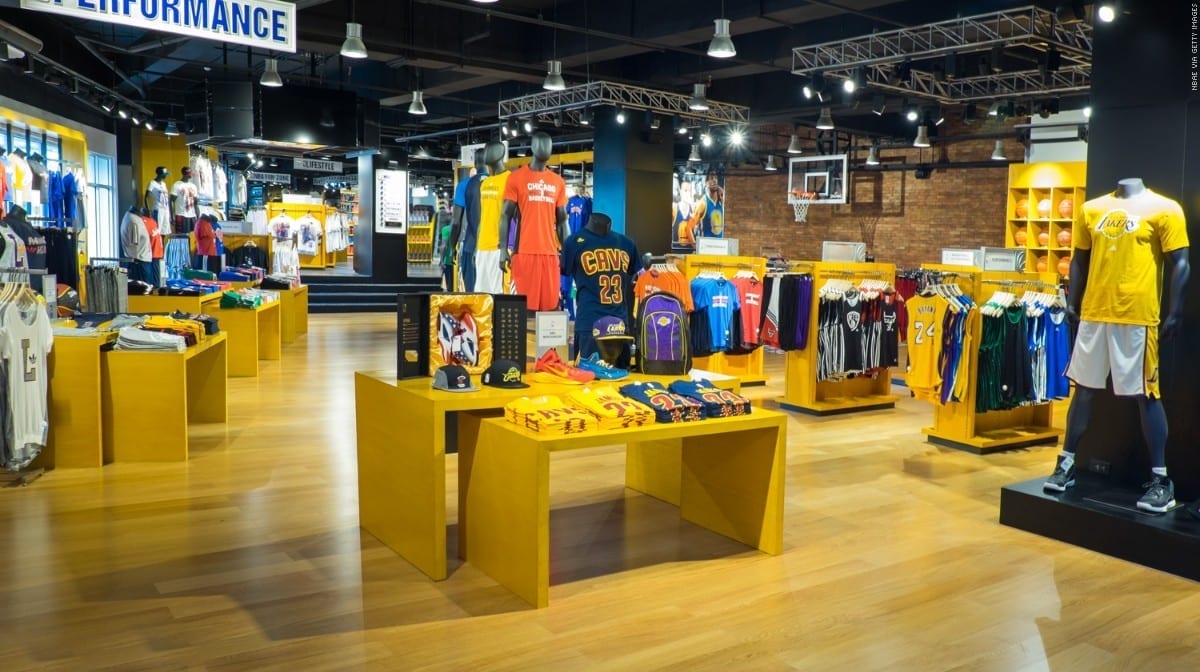
    Located on the fourth level of the Ayala Center in 452 square meters of retail space and managed by International Athletic Trading Company, Inc. (IATC), the new NBA Store will offer a wide selection of authentic NBA products from all 30 teams, including official jerseys, footwear, performance gear, lifestyle apparel, and non-apparel merchandise including basketballs, toys, collectibles, and more.

    The store will also offer personalized jerseys and will feature interactive elements including NBA 2K video game players where fans test their gaming skills and compete against each other, a Pop-a-Shot machine and a dedicated section for NBA memorabilia.

    “We had envisioned expanding the NBA footprint across the country and to have now reached the Visayas region is a milestone for us,” said IATC President and CEO Melvin Lloyd Lim.

    “We could not be more excited to open the first NBA Store in the second most populous metropolitan area in the Philippines after Metro Manila.”

    “The NBA and IATC are committed to bringing the NBA experience closer to all Filipinos nationwide,” said NBA Philippines Managing Director Carlo Singson. “The NBA Store in Cebu is the first outside of Metro Manila and is strategically positioned as a premier shopping destination for NBA fans within Central and Southern Philippines, offering an extensive range of authentic NBA products.”

    The NBA Store at the Ayala Center will carry products from brands including 2K Sports, adidas, Enterbay, Mitchell & Ness, New Era, Nike, Panini, Spalding, Spec Seats, Stance, and Under Armour. The regular store hours are 10 am – 9 pm (Sunday-Thursday) and 10 am – 10 pm (Friday-Saturday).

    On Nov. 22, Payton will also conduct a meet-and-greet with fans at the NBA Store in Glorietta 3 at 6 pm before visiting the NBA Store in Cebu City’s Ayala Center on Nov. 24 at 6 pm.

    The flagship NBA Store in the Philippines in Glorietta 3 opened in 2014, followed by the store in Mega Fashion Hall in 2015 and the store in TriNoma in 2016.

    For all the latest news and updates on the NBA, visit www.nba.com and follow the NBA on Facebook , Twitter  and Instagram.


  • One of SEA’s leading banks teams up with Powerman for two duathlon events

    One of SEA’s leading banks teams up with Powerman for two duathlon events

    Maybank, South East Asia’s fourth largest bank, and Powerman Philippines, the Philippine affiliate of the International Powerman Association (IPA), are hosting two duathlon race events in the Philippines this year.

    The first race, which was held last November 20, 2016 at the SM Mall of Asia by the Bay, Anytime Fitness Powerman Philippines Asian Invitational was co-presented by Maybank. Professional duathletes Jason Loh and Su Teoh from Malaysia and Airi Sawada from Japan flew in to be part of the race’s Elite Category.

    Maybank is also the title presentor of the Powerman Philippines World Series which will be held on December 3 and 4 at the Clark Freeport Zone in Pampanga. Ten professional duathletes including Powerman World from all over the globe including the two-time Powerman World Champion and Powerman Philippines Ambassador Gael Le Bellec three-time and defending Powerman World Champion Emma, and defending Powerman World Champion Seppe Odeyn will fly to the Philippines for this race.

    Aside from having a Powerman Short, this event will also feature the Powerman Classic (10 km run– 60 km bike –10 km run), the Powerkids (for kids ages 6-12) and the Powerteens (for teens aged 13-19).

    The Maybank Powerman Philippines World Series is also a qualifying event for the Powerman Duathlon World Championships to be held in Zofingen, Switzerland in 2017. The event attracts a host of professional and highly competitive age-group athletes, seasoned multi-sport athletes who want to take on a different challenge, and athletes who have just started in the multi-sport category.

    “Maybank welcomes this partnership with Powerman Philippines,” according to Richard C. Lim, Executive Vice President and Head of the Retail Business Group of Maybank Philippines, Inc. “Maybank prides itself in being at the heart of the communities we are present in. Being associated with this important sporting event, with almost 3,000 participants in both races, and leveraging on this type of sports sponsorship platform can definitely help elevate our brand in the Philippines. We are excited by the fact that the biggest event, the Powerman Philippines World Series, will be held in Clark where Maybank has one of its largest branches in North Luzon, an area where we have a strong branch network, the largest of any foreign bank in the country.”

    Mr. Lim added, “Endurance sports are gaining popularity in the country and Maybank wants to capitalize on this and become associated with the positive values that sporting events promote.”

    “The inclusion of Maybank definitely adds prestige to both Powerman events this year,” says Owen Gan, President of Powerman Philippines. “Being one of the largest banks in South East Asia, Maybank will definitely help Powerman in gaining popularity in the Philippines, and eventually in the region, especially now that there are more Powerman events lined up for 2017.”

    Part of the proceeds of Powerman will go towards buying bicycles and other gear for the Batang Tri Grassroots program that supports young individuals who do not have the financial means to enter the world of multi-sports.

  • H&M celebrates Black Friday with up to 70% off

    H&M celebrates Black Friday with up to 70% off

    Outside of traditional holidays like Christmas, Valentine’s and Mother’s Day, perhaps the most awaited day of the year in the United States, especially for shoppers and bargain hunters, is Black Friday, which is celebrated after Thanksgiving.

    After feasting on turkey with their families, Americans then head out to the nearest shopping center to get the best deals and bargains of the year, as most brands go on sale. And by sale, we mean really BIG discounts on a whole range of items.

    Black Friday is considered the starting point for the holiday shopping season, as Americans buy Christmas presents for their loved ones.

    As an early Christmas treat to shoppers and bargain hunters, international clothing company H&M is bringing the Black Friday frenzy to the Philippines for the first time this year!

    On November 25 to 27, H&M stores in the Philippines will be offering discounts on its new collection, with over 150,000 items sold at 50% to 70% off. Black Friday will be celebrated in the following H&M branches nationwide:

    1. SM Megamall
    2. SM Makati
    3. Robinsons Magnolia
    4. Robinsons Place Manila
    5. UPTown Bonifacio
    6. U.P. Town Center
    7. SM North EDSA
    8. SM Fairview
    9. SM City Clark
    10. Marquee Mall Pampanga
    11. SM City Seaside Cebu
    12. Ayala Center Cebu
    13. Centrio Mall Cagayan de Oro
    14. EVIA Lifestyle Center
    15. SM City Dasmarinas
    16. Festival Mall
    17. SM City Southmall
    18. Robinsons Place Ilocos
    19. Gateway Mall
    20. SM City Iloilo
    21. Abreeza Mall Davao

    All concepts — ladies, men’s, divided, kids, and home — will be part of this promo. Here are some of the items that will be offered at a discount: