Tag: Philippines

  • Indonesia wins three Aseanta 2016 awards

    Indonesia wins three Aseanta 2016 awards

    Indonesia has won awards in three out of the six categories of the ASEAN Tourism Awards (ASEANTA) 2016 at an event held in Manila, the Philippines, a minister said.

    “Wonderful Indonesia” won awards in three of the six categories of the ASEAN Awards, Tourism Minister Arief Yahya said in a press statement on Friday.

    “We have beaten some competing countries, including Malaysia,” Arief Yahya said.

    The three awards were in the categories of the Best ASEAN Tourism Photo, the Best ASEAN Cultural Preservation Effort, and the Best ASEAN Travel Article.

    “Morning in Bromo” by Agung Parameswara grabbed the award in the Best ASEAN Tourism Photo category.

    “Mang Udjo,” the Angklung bamboo musical instrument center in Bandung, Indonesia, was the winner of the Best ASEAN Cultural Preservation Effort category.

    And for the Best ASEAN Travel Article category, the winner was “The Perfect Wave,” published in Garuda Indonesia Color Magazine.

    “Meanwhile, Malaysia won two awards and Singapore only one award,” the minister said.

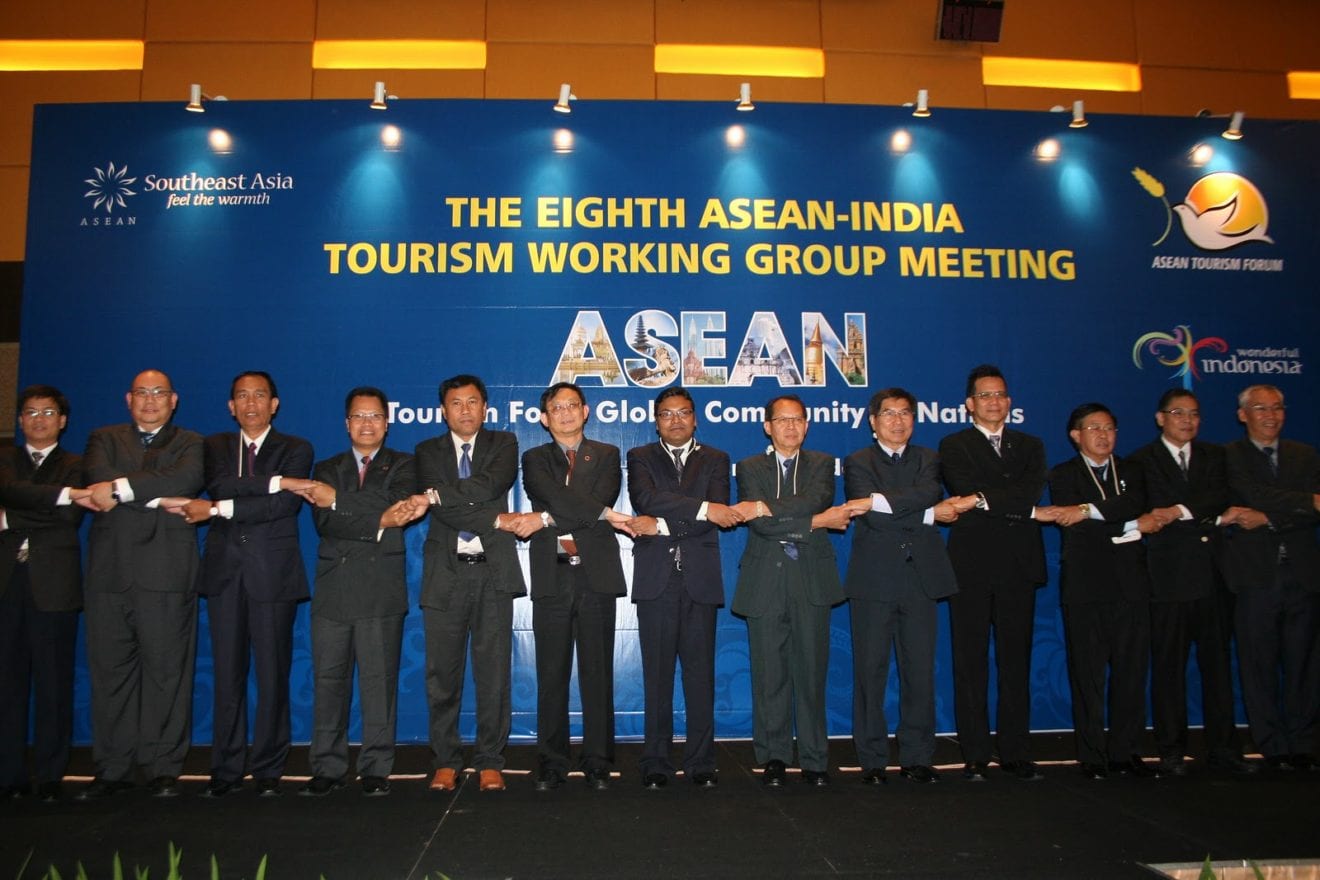
    Minister Arief Yahya was in Manila to attend the 35th ASEAN Tourism Forum (ATF), held from January 18 to 22, 2016.

    The ASEAN Tourism Forum is very strategic to Indonesia because the ASEAN market is the largest contributor to tourist arrivals, he noted.

    In the ATF held in Manila, tourism ministers from all ten member countries of ASEAN – Indonesia, Brunei Darussalam, Malaysia, Cambodia, Singapore, Thailand, the Philippines, Vietnam, Myanmar and Laos participated.

    He believed that the ASEANTA Awards would help promote Indonesian tourist destinations internationally.

    The three other ASEAN Award categories were the Best ASEAN Marketing and Promotion Campaign, the Best ASEAN New Tourism Attraction, and the Best ASEAN Airline Program.

    Filipino President Benigno S. Aquino III spoke before the ASEAN tourism ministers on Wednesday.

    He said that the number of tourist arrivals in ASEAN reached 105.1 million in 2014, a staggering 42.4 percent increase from 73.8 million tourist arrivals in 2010.

    Of those 105.1 million visitors, he said, 49.22 million came from within the ASEAN itself.

    “We belong to a region that holds vast potential in terms of tourism,” President Benigno was quoted as saying by the Philippine Information Agency (PIA).

  • Visa claims more Filipinos using contactless payments

    Visa claims more Filipinos using contactless payments

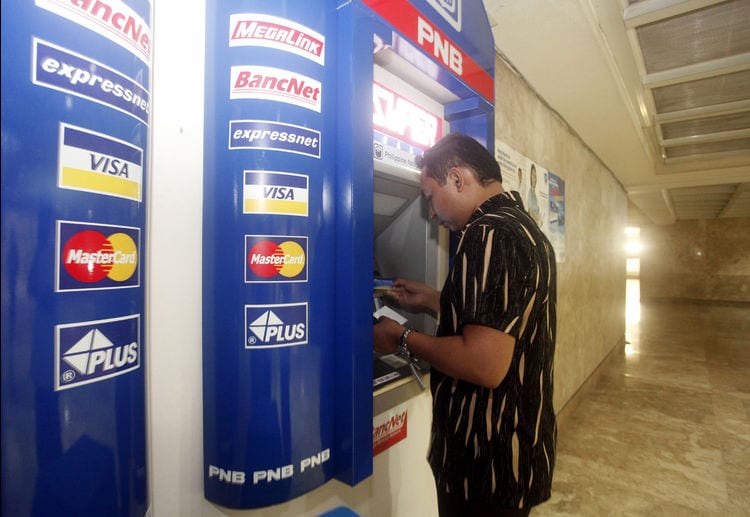
    More consumers in The Philippines are using contactless payments, according to the Visa Consumer Payment Attitudes Study 2015.

    It shows that 29 per cent of Filipinos have used contactless payments for transactions over the past year, up from 21 per cent in 2014. Cardholders cited the convenience of the system, security and ease of use among reasons for using contactless payments.

    Trends in payments behaviour and openness to using contactless payments were identified by the study which surveyed consumers in six Southeast Asian markets. Contactless payments are made by waving a credit or debit card or smartphone over a point-of-sale terminal, eliminating the need for cash, PIN number or signature.

    “As more Filipinos learn about the convenience, security and speed that contactless payments, such as Visa PayWave, bring to their lives, they are more willing to use them regularly,” says Visa country manager for The Philippines and Guam, Stuart Tomlinson.

    Filipinos’ awareness for contactless payments has risen 62 per cent in 2014 to 66 per cent last year. This has led to usage growing from 21 per cent last year to 29 per cent.

    Using contactless payments help save time, report 78 per cent of respondents (up from 58 per cent in 2014). The same percentage said system means they don’t need to carry cash (also up from 58 per cent), and 55 per cent said contactless payments are easier than using cash – a leap from 9 per cent in 2014.

    It was also revealed that Filipinos recognise contactless payments as being less hassle to use (41 per cent) and safer (36 per cent), while freeing them from queueing (34 per cent) and giving them a more enjoyable shopping experience (22 per cent).

    In The Philippines, contactless payments are mainly used for groceries plus food and beverage – 57 per cent for groceries, 37 per cent for F&B, 28 per cent for fashion and accessories, 27 per cent for beauty and cosmetics, 25 per cent for health and wellness services, 23 per cent for movie tickets, and 22 per cent for household electronics. Another revelation was that women are buying across all categories, however men use these payments more than women for transportation (8 per cent of total purchases). Other expenditures include books, CDs and DVDs (18 per cent), personal electronics (18 per cent), financial services (17 per cent), and events and concerts (10 per cent).

    Most respondents (80 per cent) said they prefer to buy products and services from retailers who offer contactless payments, and 84 per cent are interested in making payments with contactless wearables, such as smartwatches. Women would like to make such payments for groceries (67 per cent) while men prefer them for buying food and drinks (62 per cent).

    Users said security is also important, which is addressed by contactless cards having multiple layers of security including EMV chip technology and dynamic encryption. As they have a short read range, they are claimed to be virtually impossible to compromise. Financial institutions and credit card companies also monitor transactions to identify suspicious and unusual transactions.

    “Given growing awareness, use and openness to contactless payments among Filipinos over the past year, there is an immense opportunity for businesses to grow their market share by adopting the technology,” says Tomlinson.

  • Philippines Plans to Restrict Access to Cash-Mopping Tools

    Philippines Plans to Restrict Access to Cash-Mopping Tools

    The Philippines plans to close a loophole in regulation of trust funds, by restricting those overseen by banks from parking short-term cash at the central bank.

    Bangko Sentral ng Pilipinas is considering limiting lenders’ trust units from placing funds in its short-term deposit facility, monetary board member Felipe Medalla said Tuesday. Policy makers are reviewing access to its liquidity-mopping tools “under the overall framework” of its interest-rate corridor, Governor Amando Tetangco said Wednesday.

    Banks’ trust units have undue advantage over non-bank trust groups that aren’t allowed to put money in the central bank’s special deposit account or SDA facility, and also over lenders themselves that must comply with the reserve requirement, Medalla said in an interview.

    Placements in the so-called SDA facility, which the central bank uses to control liquidity, totaled about $16.8 billion as of December 29. The central bank is preparing to shift to an interest-rate corridor by the second quarter, a move intended to strengthen its policy tools.

    Limiting fund managers’ access to SDAs will make it a purely cash-mopping tool, said Eugenia Victorino, an economist at Australia & New Zealand Banking Group Ltd. in Singapore. In line with plans to shift to an interest-rate corridor system, “the central bank may be thinking of making SDAs a liquidity-management tool that should not be thought of as an investment vehicle.”

    At present, the central bank pays 2.5 percent for funds placed at SDAs, compared with its benchmark rate of 4 percent. The 91-day Treasury bill fetched 1.684 percent at the most recent auction.

    BSP has tools to ensure liquidity growth is healthy and is seeking comments on the proposal, Medalla said.

  • Ford Philippines delivers record sales in 2015

    Ford Philippines delivers record sales in 2015

    Ford Philippines sales last year jumped a record 25 percent to 25,372 units, firmly establishing Ford as the number three-selling automotive brand in the country.

    EcoSport, Everest and Ranger each deliver record full-year sales in the Philippines.

    Record December sales soar 48 percent to 2,824 units, capping record quarterly performance with jumping 50 percent to 8,691 units.

    The record sales year and continuing momentum helped Ford jump one spot to become the number three-selling automotive brand in the Philippines in 2015.

    “It’s been a breakthrough year for Ford in the Philippines. We launched more global Ford vehicles that showcased the very best of Ford, and expanded our retail presence across the country to make the Ford brand closer to our customers through a strong dealer network,” said Lance Mosley, managing director, Ford Philippines. “We’re truly proud of how the Ford brand is being embraced by our Filipino customers.”

    The EcoSport compact urban SUV’s continuing impressive run made it Ford’s best-selling nameplate in the Philippines in 2015. December retail sales of EcoSport rose 49 percent to 799 units, helping drive full-year sales up 67 percent to 8,702 units – the highest full-year total for a single Ford nameplate.

    The highly capable and versatile Ranger finished 2015 as the second best-selling pickup truck in the Philippines with total retail sales that increased six percent year-over-year to 8,445 units.

    “We launched the new Ranger here in August, and it really helped to build on an already strong reputation as the most capable, powerful and smartest pickup in the market,” explained Mosley.

  • Countries must improve ICT sectors

    Countries must improve ICT sectors

    Countries must continue to invest and pursue reforms in information and communication technology (ICT) to serve the nearly 60 percent of the world’s population who remain excluded from the digital economy, a new World Bank report said.

    In its “World Development Report 2016: Digital Dividends” report, the Washington-based lender noted that the internet, mobile phones and other digital technologies were spreading rapidly.

    “Digital technologies are transforming the worlds of business, work, and government,” said Jim Yong Kim, president of the World Bank Group.

    The anticipated digital dividends of higher growth, more jobs, and better public services, however, have fallen short of expectations, the World Bank said.

    To deliver fully on the development promise, it said countries must pursue “analog complements” to digital investments.

    This means regulations must be strengthened to ensure competition among business, adapting workers’ skills to the demands of the new economy, and fostering accountable institutions.

    Digital development strategies need to be much broader than ICT strategies, it added.
    To reap the greatest benefits, countries must create the right environment for technology, with regulations that facilitate competition and market entry, skills that enable workers to leverage the digital economy and institutions that are accountable to people.

    It noted that in the Philippines, business process outsourcing has few entry barriers and that firms use digital technology intensively, which is not the case for the retail sector.

    “The Philippine retail sector has substantial restrictions to domestic and foreign entry and is dominated by a few incumbent firms, while few firms use ICTs,” the World Bank said.

    Foreign retailers that aim to establish a commercial presence need to pass prequalification procedures, meet minimum capital requirements, deal with limitations to foreign equity participation, and have the majority of their boards comprised by Filipinos, it stressed.
    “Only about 20 percent of retail firms (with at least five employees) sell online in the Philippines,” it added.

    In contrast, the Philippine outsourcing sector is characterized by high entry rates and few regulatory barriers to competition.

    “It is intensive in ICT-related services such as software development, animation, contact centers and transcription. These ICT-specific services experienced high productivity growth in recent years and provided about 1.2 million jobs in 2015,” it said.

    Investing in basic infrastructure, reducing the cost of doing business, lower trade barriers, facilitating the entry of start-ups, strengthening competition authorities and facilitating competition across digital platforms were some of the measures suggested in the World Development Report.

    Digital technologies can transform economies, societies and public institutions, but changes are neither assured nor automatic, the report stressed.

    “Countries that are investing in both digital technology and its analog complements will reap significant dividends, while others are likely to fall behind. Technology without a strong foundation risks creating divergent economic fortunes, higher inequality and an intrusive state,” the World Bank said.

  • Top Japan bank buys 20% of Security Bank

    Top Japan bank buys 20% of Security Bank

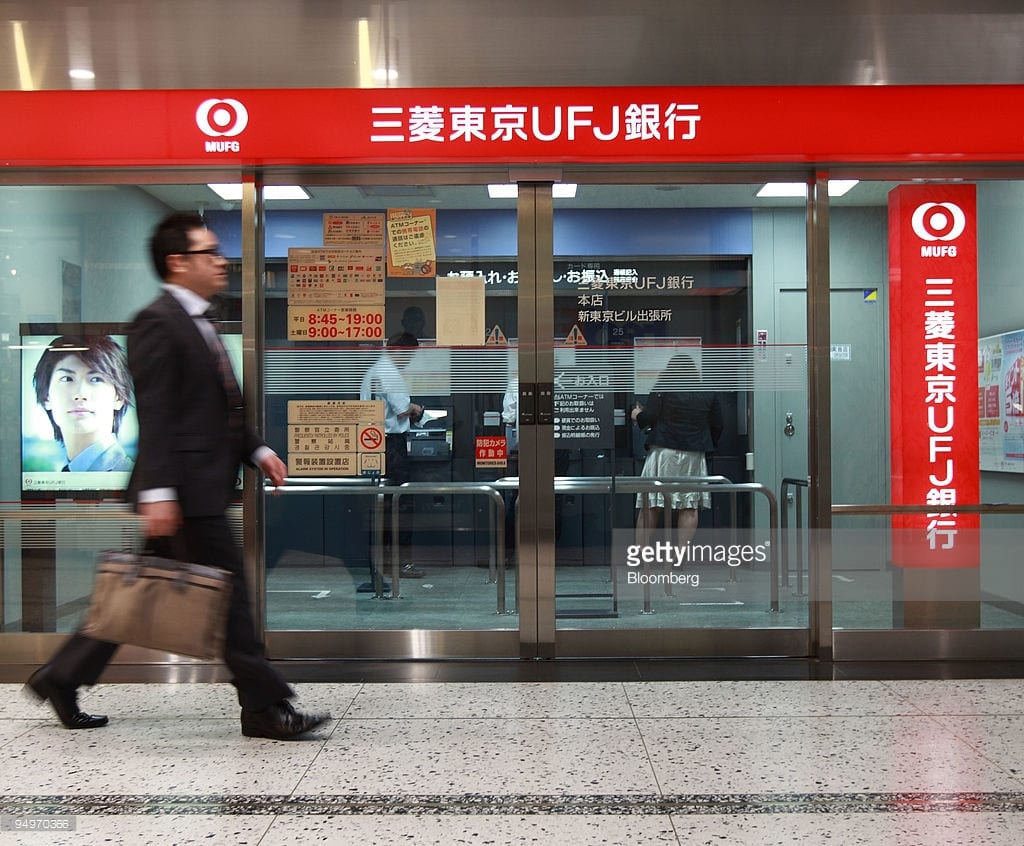
    Bank of Tokyo-Mitsubishi UFJ Ltd., Japan’s biggest bank, is buying a 20 percent stake in the Philippines’ Security Bank Corp. in a deal expected to expand both institutions’ market reach.

    Security Bank Corp. said the deal would infuse an additional P36.9 billion in capital with BTMU investing in newly issued common and preferred shares. The sale remains subject to regulatory approvals and other conditions.

    Described as the largest equity investment in a Philippine financial institution by a foreign investor, the stake sale will increase Security Bank’s shareholder capital from P52.4 billion as of September 2015 to P89.3 billion on a pro-forma post-transaction basis.

    “The additional capital will help us accelerate our strategy over the next three to five years of building our retail banking business as a third business pillar alongside wholesale banking and financial markets,” said Alfonso Salcedo Jr., Security Bank president and chief executive officer.

    Salcedo said the bank would be able to scale up its branch network much faster, from the current 262 to more than 500 branches by 2020.

    “We will be able to conveniently serve our customers with a larger network, offer them a comprehensive range of financial services, as well as make inroads into the Japanese business sector, tapping on BTMU’s expertise,” he added.

    The strategic partnership will result in BTMU, the commercial banking entity of Mitsubishi UFJ Financial Group, becoming the second largest shareholder of Security Bank.

    BTMU will be appointing two directors to Security Bank’s board, while Security Bank will become an equity affiliate of BTMU.

    The Dy Group will remain as the biggest shareholder of Security Bank with majority voting control.

    Through the partnership, BTMU aims to establish a comprehensive financial service platform, including retail banking, to meet clients’ needs in the Philippines. It has adopted similar equity alliance deals in Asia including Vietnam.

    Seeking to take advantage of the fast-growing Philippine market and the economy’s attractive fundamentals, BTMU expects to expand its business platform indirectly through the investment in Security Bank, which is known for its retail and small and medium business capabilities that will be new business areas for BTMU in the country.

    “BTMU has been focusing on Asia as one of its core markets for growth. It is a strategic intent for the bank to identify the right partner in the higher growth markets like the Philippines to deepen our presence, including through inorganic means,” said Go Watanabe, chief executive officer of BTMU for the Asia and Oceania region,
    “This strategic partnership with Security Bank reinforces our Asia strategy and enables both parties to offer more comprehensive financial services to a wider range of customers in the Philippines. We believe in Security Bank’s growth strategy and are keen to play a role and be part of its transformational journey, “he added.

    For Security Bank, the partnership with Japan’s largest banking group is expected to enhance shareholder value by accelerating the bank’s growth strategy, including the
    expansion of its branch network and increasing its retail market penetration.

    It also expects to tap BTMU’s extensive relationship with Japanese corporates, its global network, and diverse range of functions and expertise within MUFG.

    “We are elated to have BTMU as a strategic shareholder and business partner. The transaction will position Security Bank as a large independent bank supporting the growth of the Philippines’ economy, with the strength and capabilities to compete with other larger financial institutions,” said Alberto Villarosa, Security Bank chairman.

  • SM Cinema adds more cinema screens nationwide

    SM Cinema adds more cinema screens nationwide

    Beyond technology, SM Cinema extends its world-class experience to persons with disability (PWD) by providing dedicated areas for their convenience. SM Cinema also holds separate screenings of sensory friendly movies for those with special needs such as the blind and deaf, as well as children with autism and down syndrome.

    “We are very pleased to bring state-of-the-art cinema technology and a whole new movie experience out into the suburbs and provincial areas. We remain focused in providing the complete entertainment experience to every corner in the country,” SM Lifestyle Entertainment President Edgar Tejerero said.

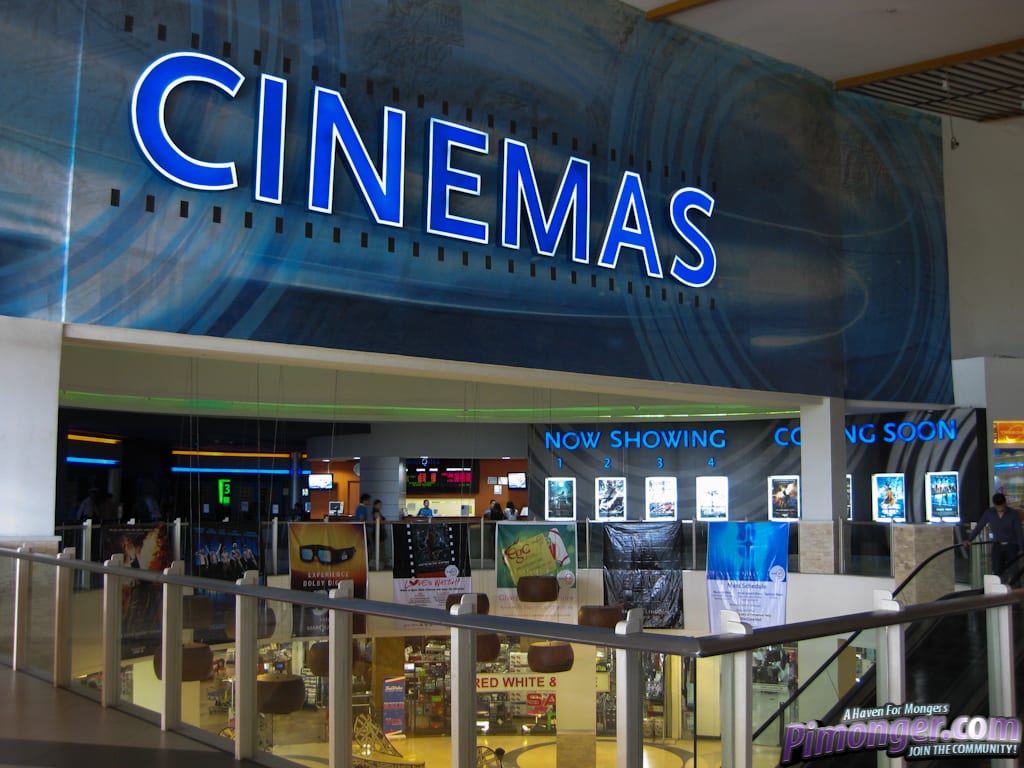
    For 2015, SM Cinema added four fully digitized cinemas in SM Center Angono in Rizal, its 55th branch. With digital surround-sound technology, the cinemas in Angono promise to deliver an optimum movie-watching experience. Each theatre will cater to 200 patrons in a stadium-like seating, making certain that all patrons will enjoy the view from any seat they choose.

    In Cebu, SM Cinema recently added the first laser projection system in Southeast Asia in its large screen cinema at the recently opened SM Seaside City, Cebu. This format uses the Christie® 6P laser projection system and features a super-sized screen almost 30% larger than the regular cinema screen size. The Christie® 6P laser produces the brightest images with 80% illumination and offers the best 3D platform that accurately reproduces the colors of the actual movie set, developing the most immersive cinema experience. The SM Large Screen Cinema also proudly uses the DOLBY ATMOS Sound System and the top-of-the-line Christie Vive Speakers, its audience fully immersed in surround-sound technology. SM Large Screen Cinema will house 351 guests in stadium-like seats.

    Earlier this year, SM Cinema also opened in Cabanatuan City through SM Megacenter and SM Cabanatuan; in Rizal Province through SM San Mateo and SM Angono; and in Caloocan through SM Sangandaan. SM Cinema also partnered with housing arm SM Development Corp to open its cinemas at Light Mall, the first theater available in an SM residential complex.

    Tejerero added that he is optimistic that ticket sales will be robust by the end of 2015 given blockbuster movies such as Heneral Luna, Star Wars: The Force Awakens, A Second Chance, Felix Manalo and movies shown during the Metro Manila Film Festival in December.

  • Gaisano bank takes in Korean partner

    Gaisano bank takes in Korean partner

    The Gaisano family has enlisted Woori Bank of South Korea as a strategic partner in thrift bank subsidiary Wealth Development Bank Corp. to boost the banking unit amid a competitive local banking landscape.

    Cebu-based Vicsal Development Corp. (Vicsal), parent firm of Wealth Development, announced the forging of an investment agreement with Woori Bank, creating a strategic alliance between the South Korean bank and one of the country’s leading thrift banks.

    The joint venture combines the global and technical resources of Woori Bank and Viscal. However, the statement did not disclose how much economic interest the South Korean partner would get in this venture.

    “It is a strategic initiative in response to the liberalization of the country’s banking sector,” WealthBank chair Edward Gaisano said.

    Gaisano said the deal was expected to increase the net worth of the thrift bank by threefold, strengthen its balance sheet and deepen its market reach and product offerings.

    WealthBank claims to be one of the country’s fastest growing independent thrift banks, expanding from just one branch in 2002 to 16 across the country today. The bank has close to P7 billion in assets.

    Under the partnership, WealthBank plans to ride on the world-class facilities and expertise of Woori Bank. It also targets to serve 1.2 million Korean tourists who visit the Philippines yearly and the 100,000-strong Korean expatriate community in the country.

    The partnership also seeks to allow WealthBank to cater to overseas Filipino workers in South Korea, as well as local and Korean small and medium enterprises.

    “This partnership with Woori Bank will unlock the huge potential of WealthBank. We are excited about the joint venture as it further underscores our commitment to growth through collaboration with world-class companies,” Gaisano said.

    Vicsal recently strengthened its strategic alliances through joint ventures with other leading global companies such as Ayala Land, Megaworld Corp. and Hong Kong Land.

    Retail unit, Metro Retail Stores Group Inc. (MRSGI), recently debuted on the Philippine Stock Exchange.

    The Cebu-based Gaisanos trace their roots to an entrepreneurial family with a long retailing heritage dating back to the 1930s. From one of the many branches of the Gaisano family sprang the lineage of Victor, who decided to go on his own and, with wife Sally, opened his first store in Colon, Cebu, in 1982. This marked the beginning of MRSGI, which didn’t use the storied surname as part of a deliberate strategy to carve its distinct identity and avoid mix-up with similar businesses operated by relatives.

    Aside from banking and retailing, Vicsal is also into real estate development through the Taft Property Venture Development Corp. and in financial management through AB Capital. Vicsal is also the majority owner of Filipino Fund Inc., a closed-end mutual fund listed on the local bourse.

    Viscal and its various businesses are now run by the second generation Gaisanos: Margaret, Jack, Edward and Frank.

  • Sari-sari stores in Davao City to thrive vs 7-Eleven

    Sari-sari stores in Davao City to thrive vs 7-Eleven

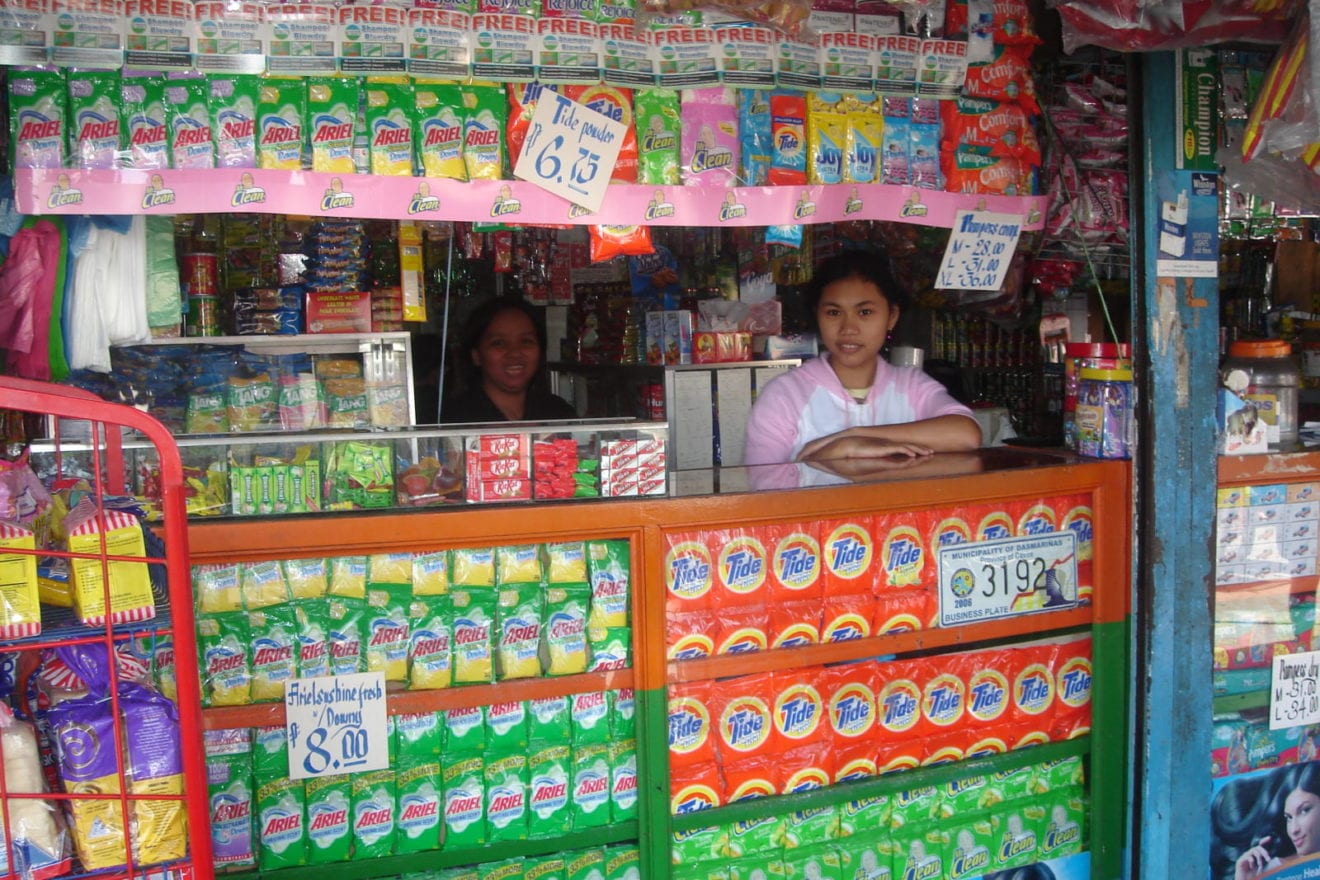
    Philippines’ corner stores called ‘sari-sari stores’ will be affected by growing competition from convenience stores sprouting in Davao City but they will continue to survive, according to a local government official.

    Ivan C. Cortez, officer-in-charge of Davao City Investment Promotions Center (DCIPC), said, in an interview with Sun Star Davao, that the increasing number of 7-Eleven stores in the city will affect small retailers’ sales especially those of the ‘sari-sari’ stores.

    However, Cortez said that ‘sari-sari’ stores will continue to thrive as their market is different from convenience stores.

    ‘Sari-sari’ stores, considered as neighbourhood stores, sell a variety of products in retail from a cigarette stick, shampoo sachets, to a small pack of peppercorn. They are ubiquitous in residential areas and sometimes offer goods on credit.

    The market of 7-Eleven and other convenience stores, on the other hand, are mainly young professionals.

    “7-Eleven is an upscale sari-sari store with 24 hours service, this will have an effect on local sari-sari store, on the survival rate, because 7/11 is getting the bulk the sales,” added Cortez.

    7-Eleven, the largest convenience store chain in the Philippines and operated by Philippine Seven Corp. (PSC), has more than 20 stores in the city.

    PSC aims to open 70 stores in Davao City in June this year and 120 stores by 2018 in the entire region of Mindanao.

  • Metro Retail starts expansion

    Metro Retail starts expansion

    Newly listed Visayan retailing giant Metro Retail Stores Group Inc. (MRSGI) is riding on the buoyant consumer spending in the country by expanding its delivery fleet and distribution infrastructure.

    “We aim to be a leader in retail supply chain management and meet our customers’ demand for world-class services,” MRSGI chair and chief executive officer Frank Gaisano said in a recent statement.

    Gaisano recently led the turnover of 37 new delivery trucks from Isuzu Philippines Corp. and 30 new delivery trucks from Hino Philippines to MRSGI’s logistics facility in Silangan, Laguna.

    In line with MRSGI’s objective to improve logistic capabilities, the company teamed up with Isuzu Philippines for the acquisition of 13 units of Isuzu FVM 10-wheeler trucks with aluminum wing van, 12 units of NKR71 with refrigerated van body and 12 units of NKR71 with aluminum body.

    The company also teamed up with Hino Philippines for the acquisition of 16 units of SH1E tractor head and 14 units of WU342L 6-wheeler truck with aluminum van body.

    The new fleet will be deployed to MRSGI’s 46-store network that serves over 250,000 customers daily, the company said.

    To ensure timely delivery of goods and improve overall cost efficiency, MRSGI plans to equip all its in-house delivery trucks with tracking devices that will enable real-time monitoring from the company’s control center. “Employing the latest technology is a key innovation that will drive our business forward,” said Gaisano, highlighting the company’s commitment to continuously upgrade its infrastructure.

    Alongside its investments in technology and equipment, MRSGI also plans to hire 130 personnel to join its team of engineers, mechanics, customer service representatives, traffic controllers, and cost and transport specialists who support the company’s growing logistics and supply chain network.

    MRSGI has also committed to train its drivers on safety, driving efficiency, and customer service delivery in line with its thrust to provide friendly and responsive service to its customers. “We have a comprehensive approach to improving service delivery,” said Gaisano, who explained that “good customer service does not stop with store associates, but is reflected in every aspect of the company’s operations, including supply chain management and back-end services.”

    Armed with fresh capital for expansion, MRSGI—which listed back in November—planned to open 50 to 70 new stores to double its nationwide retailing footprint in the next five years.  The group currently has around 400,000 square meters of gross floor area across its 46 stores, making it the largest retailer in Visayas and the fourth largest nationwide.

  • Philippine associations honor key professionals

    Philippine associations honor key professionals

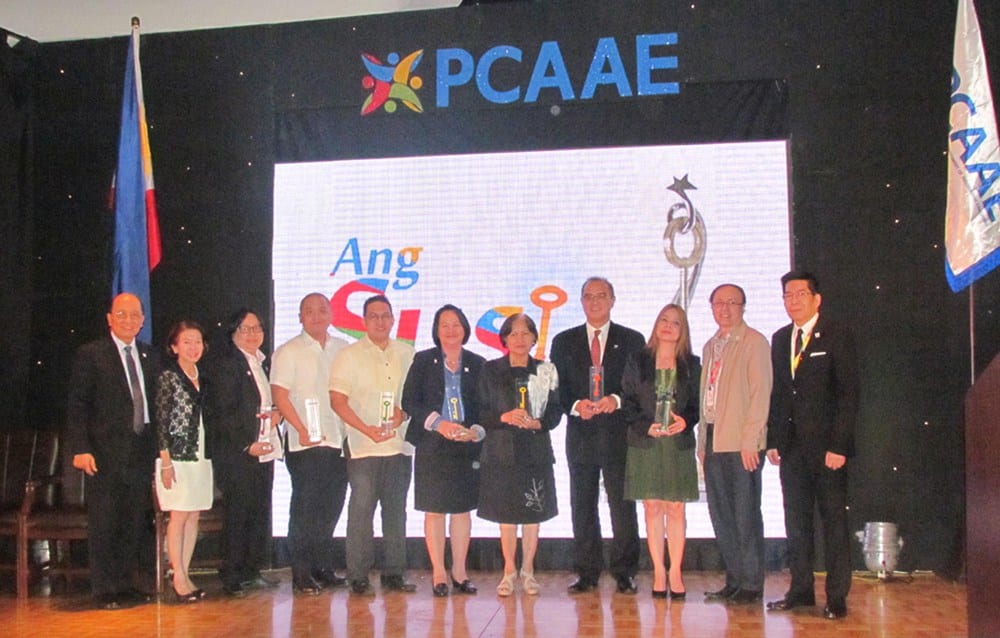
    The PCAAE’s inaugural Ang Susi awards open a new era for national organizations and the specialists who run them. PHILIPPINE association executives honored key members of their emerging profession at their inaugural Ang Susi Awards, this month. Organized by the 197-member Philippine Council for the Advancement of Association Executives (PCAAE), the awards recognized individials and institutions in seven categories at a beautifully catered gala at the Philippine International Convention Center.

    The highlight of the night was the warm applause for Evelyn Salire, when she was named Association Executive of the Year. She won the prize for her achievements as the Secretary-General of the Philippine Retailers Association. After decades of industry-building, behind-the-scenes event work, Salire is now a Philippine event industry role model.

    There were also six institutional categories, as follows;

    Environmental Impact Award Winner: Chamber of Furniture Industries of the Philippines (CFIP) Project entries: EU Due Diligence Guidebook and The Material Matters: A Sourcebook on Material Manipulation of the Homestyle Industry.

    The books show wood users are wood savers too, and provide the timber industry, (which supports one million households across the Philippines) with a concise and specific information on how to comply with the social, legal and environmental aspects for a sustainable timber industry. The EU Due Diligence Guidebook also came about in a time when international export markets demand, more than ever, verifiable standards of environmental compliance.

    In partnership with the Philippine Wood Producers’ Association, the Department of Environment and Natural Resources, the Department of Trade and Industry and the Global Forestry Services – and with funding from the EU and the UN’s Food and Agriculture Organization – the CFIP showed that it can make a difference in leading the timber industry and, in particular the furniture industry, in promoting good environmental governance and management practices.

    On the other hand, to repurpose and develop new applications of past raw materials used by the industry into new raw materials of mixed media, and to develop furniture products using innovations in the indigenous raw materials, CFIP has produced another publication entitled The Material Matters: A Sourcebook on Material Manipulation of the Homestyle Industry.

    The project brought about at least eight newly-manipulated raw materials undertaken by as many well-known designers in the country which were then used by small and medium enterprises to be applied in furniture design that consequently resulted in at least 16 furniture collections that are now being offered in the market.

    The project was conceptualized by CFIP and ably supported by the Design Center of the Philippines (DCP), a partnership that has led to fresh, durable and saleable designs and amplifies the world-renown talent and craftsmanship of the Filipinos.

    People Empowerment Award Winner: Girl Scouts of the Philippines (GSP) Project Entry: GSP Nationalization Scheme for Council Executives

    For 75 years, the Girl Scouts of the Philippines (GSP) continues to be the largest volunteer-led and girls-only movement in the country. With a complex governance structure, it has been a challenge for the GSP to promote and maintain responsible Council governance to ensure continuing relevance in achieving its organizational mission and vision.

    For instance, most Council Executives have been burdened with fund sourcing to pay for their own salaries, which distract their concentration in carrying out their functions. A further challenge is the need to further professionalize its CEs through capacity-building and granting of attractive remuneration. To meet these challenges, the GSP instituted the “Nationalization Scheme for Council Executives” with an aim to deliver both quality and quantity membership for the GSP. The scheme enables the Councils to focus more on effective program delivery by rationalizing the salaries of its CEs.

    Under the scheme, competent applicants and CEs are now starting to come in and join the GSP at the Council level as professional staff, due to the competitive salaries and better benefits being offered. As a result, GSP’s membership increased from 1.9 million to 2.5 million, a remarkable 24 per cent increase.

    Community Service Award Winner: National Federation of Women’s Clubs of the Philippines (NFWC) Project Entry: NFWC Learning Centers

    For the past 94 years, the National Federation of Women’s Clubs of the Philippines has believed that early childhood education is critical to people’s personal growth.

    From its beginning nursery classes initiative in a “learning while playing environment”, these educational support programs have expanded into full-blown learning centers in its own building and complemented by 91 other affiliated learning centers throughout the country, with teaching modules that are aligned with the K-to-12 program of the government.

    The NFWC Learning Centers nationwide were instrumental in the growth and development of pupils who were trained to become responsible citizens. The nursery classes in garages, living rooms and gardens of residences of NFWC leaders in 1935 are now housed in classroom-type pre-schools with complete teaching materials. At present, NFWC has continued to receive and assessing applications for accreditation of learning centers.

    Industry Development Award Winner: Philippine Retailers Association Project Entry: “Best Practices in Retailing Series”

    The Philippine Retailers Association (PRA) is the country’s recognized organization of retailers and suppliers to the retail industry.

    To assist and upgrade the capacities of its members and others in the industry, PRA embarked on a series of seminars that it provided to retailers outside Metro Manila, in the regions and provinces across the country, to level up their competitiveness and to update them with the latest trends and practices in the global retail system.

    PRA’s roadshow capacity-building project covered topics such as store operations, customer service, loss prevention and related subjects, and has helped more than 2,000 small and medium provincial retailers in Cebu, Pangasinan, Baguio, Cagayan de Oro and Davao.

    Technology Innovation Award Winner: Hewlett Packard Enterprise Project Entry: e-Health Center (Cloud-enabled Primary Healthcare Solutions)

    Hewlett Packard Enterprise (HP) leverages the power of the cloud to transform and transfer access to quality and affordable healthcare to the poor and underserved areas around the world.

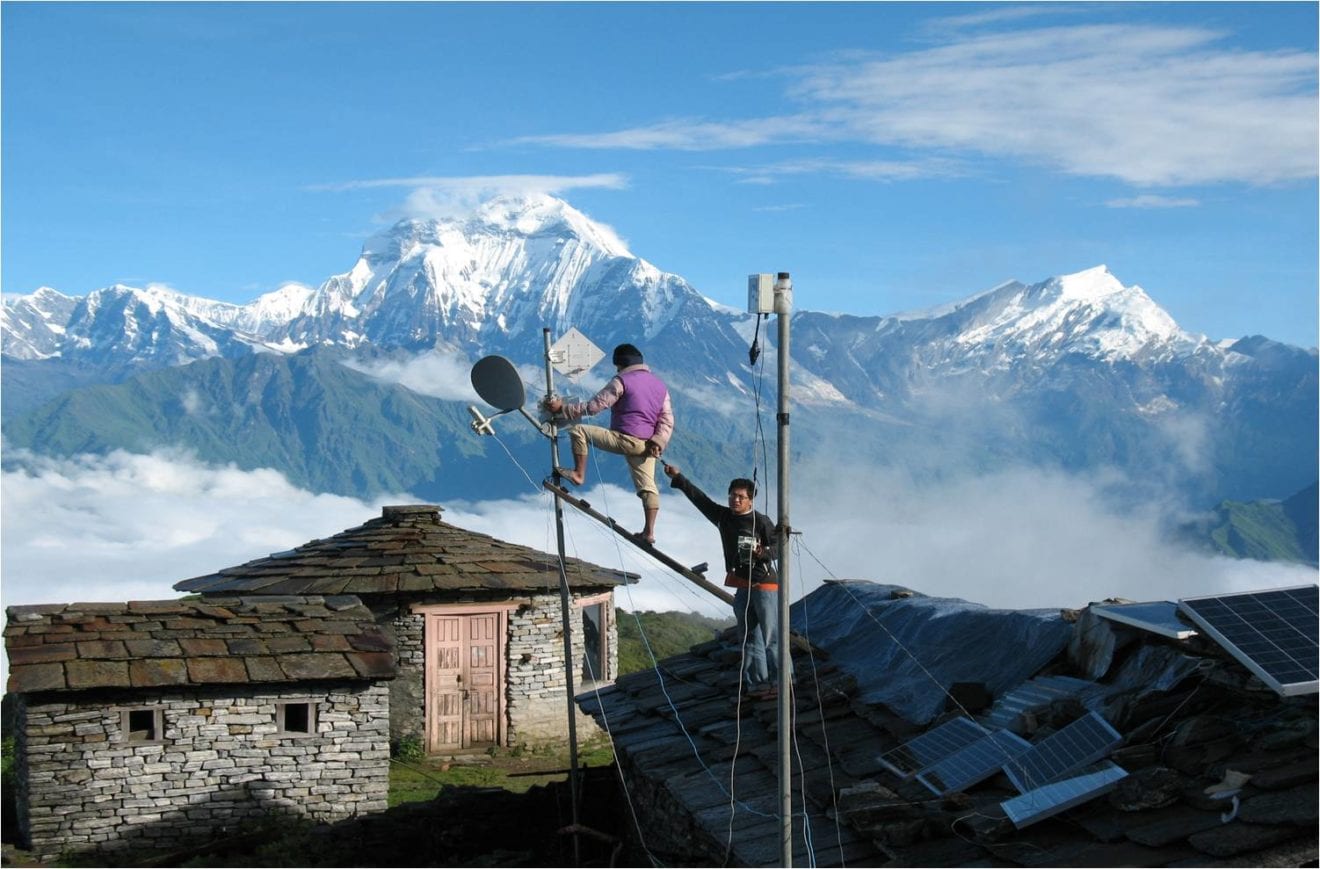
    The fully functional mobile facility can be easily mounted and is quickly and cost-effectively customized with workstations equipped software networking capabilities, an open and accessible web-based electronic medical records system and an essential diagnostic equipment integrated into the cloud. These cloud-enabled technologies provide the tools for on-site staff to perform routine diagnostic tests and make results available online so physicians hundreds of miles away can provide a remote diagnosis, thus reducing the need fo highly-skilled medics onsite.

    The project serves communities that often lack doctors, functional clinics, internet access or even electricity. Deployed initially in 14 states in India, now in Bhutan and replicable in many countries, including the Philippines, the project is poised to have both local and global impact, especially now that it is being expanded in collaboration with the Manila-based Asian Development Bank (ADB).

    Change Catalyst Award Winner: Philippine Institute for Supply Management (PISM) Project Entry: “GAWAD SINOP”

    The Philippine Institute for Supply Management is a 300-membership national association of professionals in the purchasing and supply management field.

    The PISM has used an awards program as a change catalyst to impart to its members the value and importance of setting the standard to which outstanding achievements in supply management must adhere to. It also emphasizes the critical role that supply management plays in the success of an organization.

    The “Gawad Sinop” Awards delivers the message of the contribution of supply management and its four pillars, namely, purchasing, demand and replenishment, logistics and customer service, to organizational competitiveness.

    The PISM, through this awards programme, demonstrates the world-class nature of the supply management professionals in the Philippines and furthers the wealth of knowledge and best practices, not only of the award winners themselves but also other members and to the public-at-large.

    The “Gawad Sinop” award is considered the highest honor given to supply management professionals and organizations who have contributed to the upliftment of the sector.

  • SM Prime Holdings mall business announces recent ISO 22301 certification

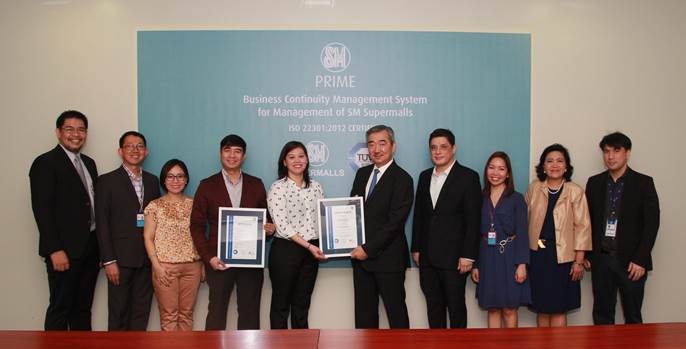
    ISO awarded the certificate to SM Prime for establishing and applying a Business Continuity Management program for its SM Supermalls. Likewise, the certification covers the Mall of Asia Arena Annex Building, the headquarters of SM Prime in Pasay as well as SM Megamall, one of SM Prime’s largest malls in the country.

    “This certification assures our stakeholders that the company will be able to respond to, recover from and continue its business after a disruptive event. For our customers, this means assuring their safety first and foremost, even as we provide access to basic necessities even at the onset of the calamity,” SM Prime President Hans T. Sy said.

    The ISO certification meant going through a series of detailed audits which included internal assessments to ensure readiness for certification and an external audit on the company’s Business Continuity Management System.

    “SM Prime is committed to make sure that business continuity is part of our operations especially after a calamity to provide continuous livelihood, not only to our employees, but to the employees also of our tenants, suppliers and all our stakeholders,” Sy added.

    The ISO is an independent, non-governmental international organization with a membership of 162 national standard bodies. It brings together experts to share knowledge and develop voluntary, concensus-based, market relevant international standards that support innovation and provide solutions to global challenges.

    The ISO 22301 certification covers the requirements for a robust business continuity management system, which will allow the company to minimise the risk associated with disruptions and to make certain that control is maintained at all times.

    In the last few decades, SM malls have integrated disaster risk reduction into their design and operations amid worsening effects of climate change. Aside from SM Megamall, good examples of these are SM City Cabanatuan in Nueva Ecija, SM City Marikina, SM City Masinag in Antipolo, Rizal, SM BF Paranaque, SM Angono and SM San Mateo in Rizal, SM Muntinlupa in Alabang, The SM Mall of Asia in Pasay and SM Seaside City in Cebu among others.


    Philippines: SM Prime Holdings mall business announces recent ISO 22301 certification

    Shown in the photo are (from left) Richard O. Regalado, Consultant, EIAN Management Consulting; John C. Ong, Chief Finance Officer, SM Prime; Myquel M. Regalado, Adviser, EIAN Management Consulting; Royston A. Cabunag, Assistant Vice President for Operations, Mall of Asia Annex Building; Femelyn Lati, General Manager, TŪV SŪD PSB Philippines; Hans T. Sy, President, SM Prime; Christian V. Mathay, AVP for Operations, SM Megamall; Eunice M. Sotto, AVP for Enterprise Risk Management, SM Prime; Anna Maria S. Garcia, President, Shopping Center Management Corp.; and Egbert T. Lim, Mall Manager, SM Megamall.

  • Philippines to launch new tourism campaign next year

    Philippines to launch new tourism campaign next year

    Following the success of the “Visit the Philippines Year (VPY) 2015” campaign, the country’s Department of Tourism (DoT) will launch a similar initiative again next year. The “Visit the Philippines Again (VPA) 2016” drive is part of DoT’s intensive marketing efforts to establish the Philippines both as a tourist and business destination.

    “Visit the Philippines Again 2016 is going to be a massive retail-focused effort. We are negotiating with tour operators and travel agents to give incentives to returning visitors to the Philippines,” DoT secretary Ramon R. Jimenez, Jr. said.

    Aside from the special packages for visitors, the DoT, together with its Tourism Promotions Board (TPB), has partnered with the private sector and local government units in promising a bigger, greater, and more exciting line up of events and tourism product offerings that showcase the country’s competitive advantage as a destination.

    Among these major events are the Asean Tourism Forum 2016, Routes Asia 2016, Madrid Fusion Manila 2016, 2016 Ironman 70.3 Asia Pacific Championship, MTV Music Evolution 2016, and the Travel Blog EXchange (TBEX).

    “Our VPA campaign will again highlight the Philippines as a multi-level experience destination with our warm Filipino people, exciting activities, and endless new discoveries in our award-winning destinations that are worth a repeat visit. We are also putting together packages and rewards, so that when a tourist returns to the Philippines for a second or fifth time, he will get discounts in several establishments,” the tourism chief added.

    Of particular note for the Middle East is the “Kids Stay Free Campaign”, which has been designed exclusively for families (both nationals and expatriates), living in the GCC and offers exceptional value.

    The campaign packages provide two children per family under the age of 11 with an exciting array of activities, food, accommodations and other experiences all on a complimentary basis. Additionally the packages allow families to twin the Philippines capital Manila with another exotic destination such as Cebu, Palawan, Boracay, Bohol, Davao or Bicol, allowing for both an urban and idyllic getaway experience.

    GCC nationals require no visa to visit the Philippines. The country’s many popular shopping experiences, tranquil beaches and numerous family-friendly attractions have resulted in an increasing number of GCC residents choosing to make the Philippines their holiday destination of choice, a statement said.

    A total of 65,642 visitors from the GCC visited the Philippines between January and September 2015, resulting in a 12 per cent increase compared to 2014 figures for the same period, data showed. Saudi Arabia accounted for the highest number at 40,453 travellers, an increase of 17 per cent compared to the year before.

  • Davao could be next retail hotspot

    Davao could be next retail hotspot

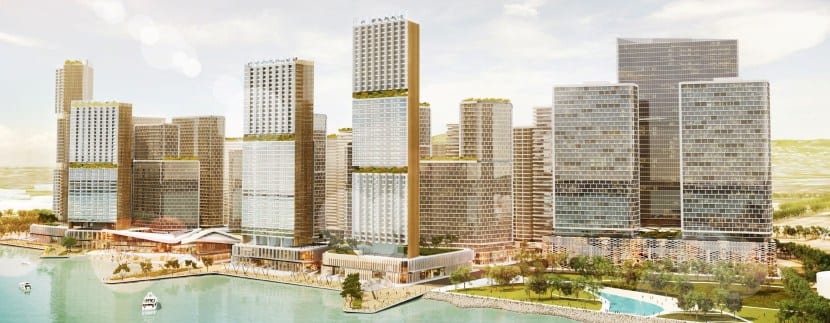
    With strong macroeconomic fundamentals driven by a burgeoning consumer market and supporting social infrastructure, Davao City is expected to be the Philippines’ next retail hotspot outside Metro Manila. A recent report by global real estate services group Cushman and Wakefield said such progressive environment has supported the recent expansion of retail space in the city and the influx of international brands.

    Cushman and Wakefield said Davao City exhibits the trends and qualities that make for a robust retail market.

    Some of these qualities are Davao’s increasing population, the city’s high income, massive regional consumer market, and strong tourism market.

    Cushman and Wakefield noted that the rapid influx of people into the city has turned it into the largest urbanized area in terms of population and land area outside Metro Manila. The city is estimated to have a population to date of about 1.63 million.

    It also said the uptrend in the city’s population is driven by the migration of people from other regions, mainly because of the incentives that Davao has to offer, such as good social
    infrastructure like easy access to quality schools, hospitals, and an international airport.

    The advent of the Information Technology-Business Process Outsourcing (IT-BPO) sector in the city has also served as a magnet for people to settle in Davao.

    “The outlook now is that we will be seeing retail integrated into workplaces and mixed-use township communities,” the report said.

    Citing the implementation of a stringent traffic management system, Cushman and Wakefield observed in Davao the absence of traffic and infrastructure woes that bug people in Metro Manila.

    “Further, complementing the population trend, we have seen housing subdivisions and residential options increase in urban Davao, encouraging people to choose to conveniently live in the city,” it added.

    Davao is also recognized as one of the top-five high-income cities in the country, according to data from the Bureau of Local Government Finance.

    The report said the economic gains of Davao City could also be gauged from the city’s transforming economic landscape, with buildings rising in every corner.

    “We see the emergence of infrastructure like high-rise residential buildings and mixed-use developments,” the report noted.

    Among the significant upcoming developments, it cited, are the mixed-township Davao Park District, Dusit’s luxury accommodations Dusit Thani Residences and DusitD2 Hotel, and the Lubi Plantation Resort.

    “Clearly, Davao City has proven and continues to prove to be an economically healthy emerging high-income city that offers the right incentives for business and investment,” Cushman and Wakefield said.

    The report cited that the city experienced a 16-percent increase in total capital from 2011 to 2014 alone.

    The report also said Davao City serves as the regional center of the entire Davao Region, which is known to be the fastest growing region in the country, exhibiting exceptional gross regional domestic product (GDRP) growth rate in 2014 at 9.4 percent from the 6.7 percent in 2013.

    The report said one of the main drivers of this growth is the region’s locational advantage as a financial and business hub in Southern Philippines, and with the emergence of IT-BPO parks in the region.

    “This motivated business expansion into the region, resulting in the increased demand for property in the form of offices and residential and retail spaces,” the report said.

    The report also pointed out Davao Region’s emerging signs of a maturing consumer market, even surpassing Metro Manila’s and the whole Philippines’ growth in terms of per capita spending.

    “Indicators show that purchasing power is increasing in the region and this presents ample opportunity for growth in retail,” the report said.

    It said the optimism toward Davao retail and developers’ consequent response of adding more retail spaces had ushered in an influx of retailers, including foreign brands.

    “We can now observe a very international mix of tenants, especially in the newer malls of Ayala and SM,” Cushman and Wakefield said. “This is a drastic departure from six years ago, when tenants were predominantly local brands.”

    The group noted that Davao’s biggest malls now have more international tenants, especially the established brands for general retail, 90 percent of which are fast fashion.

    Cushman and Wakefield said this is especially true for Ayala Abreeza and SM Lanang Premier, which post international tenant shares of 72 percent and 63 percent, respectively.

    Cushman and Wakefield said this is anticipated, as both Ayala Abreeza and SM Lanang Premier have always marketed themselves as the premier and upscale malls in Davao.

    The group said while there is no visible major shopping mall project in the city’s pipeline yet, future retail development is looking to take place in many of Davao’s mixed-use developments.

    “Major malls tend to evolve over time, more often not expanding retail space in the process,” Cushman and Wakefield stressed. “Many of the major mall developers in Davao, like SM and Ayala, have sizable land banks that allow for any form of expansion.”

    The group further noted that the rapid take-up of retail space in major malls is sure to keep occupancy rates at a high, with optimistic projections looking at close to 100-percent occupancy by 2016.

    A popular Philippine tourist spot, Davao breached the one-million tourist arrival benchmark in 2012, and has since been growing, even if 90 percent of the tourists were locals.

    “Domestic travelers have proven to be a strong market for retail tourism, as Filipino travelers tend to include shopping in malls in travel plans,” Cushman and Wakefield said.
    The firm said the past five years has been the most vibrant for Davao City in terms of retail, as retail developers see the opportunities for retail growth in the area.

    Some of the biggest shopping malls in Davao so far are: the Ayala Abreeza Mall by Ayala Land Inc.; Gaisano Mall of Davao by DSG Sons Group Inc; and SM City Davao and SM Premier Lanang both by SM Prime Holdings.

    “While Davao retail is already more dynamic, it will become even more vibrant, as new developers and retailers enter the market,” Cushman and Wakefield concluded. “With the right demographic fundamentals, the social infrastructure to support the demographic, and an energetic and fresh retail sector, Davao City is poised for further retail development and is surely a retail destination to look out for outside the capital.”

  • Photo fails… It’s more fun in the Philippines

    Photo fails… It’s more fun in the Philippines

    The more awkward, the better. The Department of Tourism (DOT) is now calling on netizens to submit entries for its new contest, which aims to award cringe-worthy photos of tourists in the country’s top tourist destinations.

    “From the almost picture perfect photos of white, sandy beaches mangled by poor cropping or a giant thumb on the lens, everyone is invited to upload his own version of photo fails on Instagram, Twitter, or Facebook with the official hashtag #Visitphilippinesagain2016,” DOT said.

    The contest aims to attract visitors, who already went to the Philippines once, by implying in a humorous way that there is always something they could do much better on their next visit in the country.

    The winner will be determined based on the following criteria: fun; beauty of the Philippines captured in the shot; and creativity.

    Interested participants may visit DOT’s official online accounts at itsmorefuninthephilippines.com, facebook.com/itsmorefuninthephilippines, and @TourismPHL for Twitter and Instagram accounts to get additional details about the promo.

    The deadline for the submission of entries is on Jan. 15, 2016.

    The contest will serve as the online launch of DOT’s Visit the Philippines Again (VPA) 2016 promotion campaign, which aims to repeat the success of the Visit the Philippines Year (VPY) 2015 campaign.

    Photo fails (Photo courtesy of 'It's More Fun in the Philippines' website)

    Photo fails (Screenshot from ‘It’s More Fun in the Philippines’ website)

    DOT officials earlier directly attributed the surge in the number of tourist arrivals this year to the VPY.

    “2016 will be a year of again. Our VPA campaign will again highlight the Philippines as a multi-level experience destination with our warm Filipino people, exciting activities, and endless new discoveries in our award-winning destinations that are worth a repeat visit,” Tourism Secretary Ramon Jimenez, Jr. said.

    Jimenez disclosed they are also coordinating with the tourism establishments in of the possibility of providing packages and rewards to tourists, who will visit the country multiple times.

    “Visit the Philippines Again 2016 is going to be the most massive retail-focused effort the Philippines has ever made. We are negotiating with tour operators and travel agents to give incentives to returning visitors to the Philippines,” Jimenez said.

    Among the major events lined up for the VAP is the ASEAN Tourism Forum 2016, Routes Asia 2016, Madrid Fusion Manila 2016, 2016 Ironman 70.3 Asia Pacific Championship, MTV Music Evolution 2016, and the Travel Blog EXchange (TBEX).