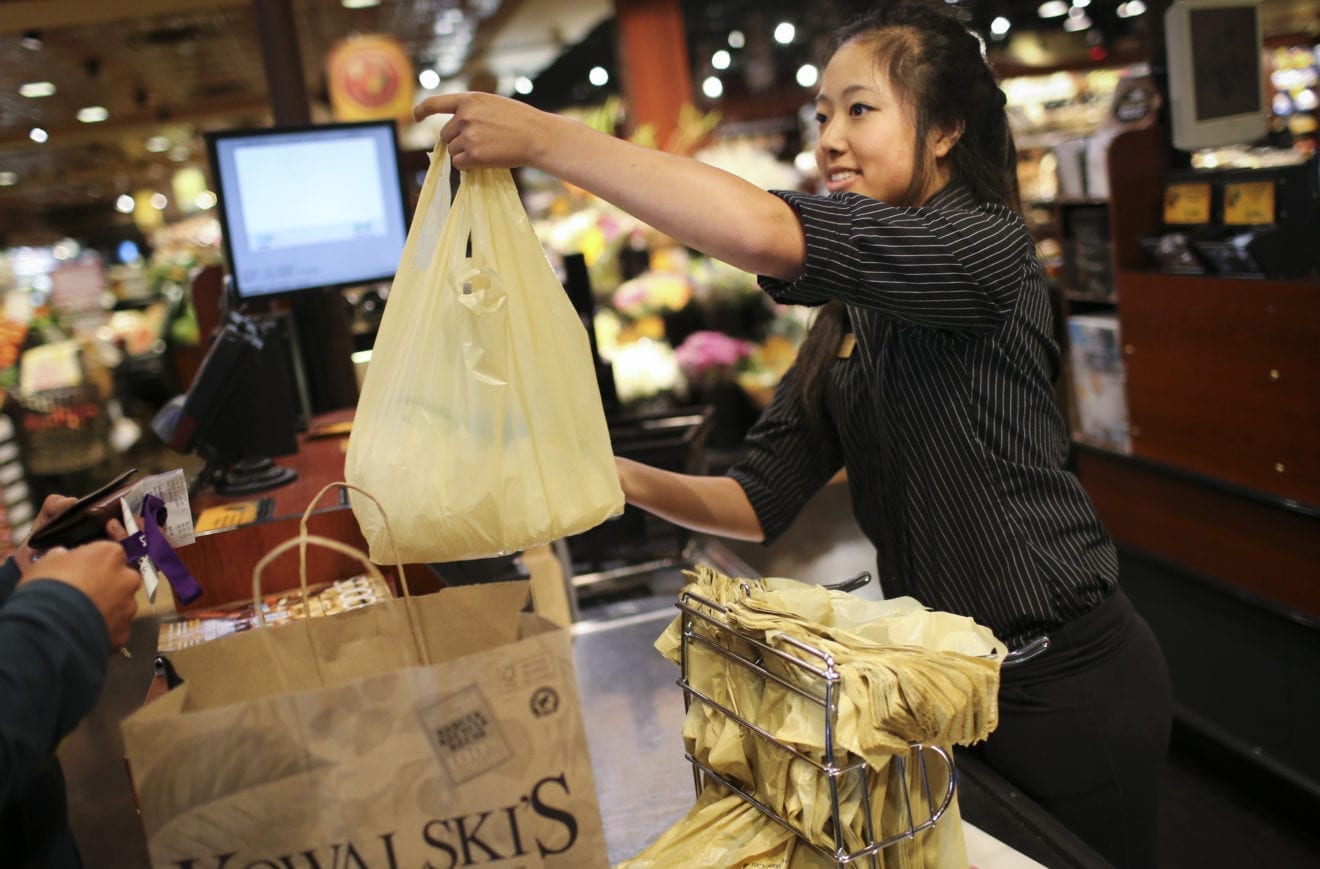
Most folks in Selangor are responding well to the ban on plastic bags despite some feeling that they still need more time to get used to it.
Some however felt more awareness must be created as to why it is necessary to ban plastic bags.
Copywriter Trinity Alexandra, said she fully supports the ban as it “forces” her to do her part for mother nature but admitted it has been a challenge.
“Even though I have recycle bags or containers in my car, I sometimes forget to take it out so I am forced to pay the 20 sen charge for the plastic bags,
“So the challenge is mainly to remind myself to lug the bags and containers around,” said Trinity.
Writer P. Deepika, 28, said more should be done on creating awareness about the reason for the ban.
“People need to know why they are doing something, otherwise you are not addressing the issue. We won’t achieve much at the end of the day.
“Having said that, I do think the ban is a necessary move,” she said.
Praveen Reginald, 33, said she has practised packing food in her own containers and bringing along cloth bags even before the ban was enforced.
She, however, felt merchants who are providing plastic bags with a price should be made to give out paper bags instead.
“I think it’s a good effort to ban plastic as it is very timely but I think the Government should pressure merchants to provide paper bags,” she said.
Selangor state exco member Elizabeth Wong said ample time had been given to retailers, traders and even consumers to get used to the No Plastic Bag Day campaign.
“Our enforcement units from the local councils will begin their rounds very soon,” she said.
“The maximum compound of RM1,000 will be imposed as it is the standard amount for any breach of licensing by-laws,” said Wong.
The campaign, she added, was “encouraging and positive so far”.
Malaysia Retail Chain Association president Datuk Garry Chua said its members were getting used to the ban, some of whom were now using environmentally-friendly bags.
However, he hoped that there would be a grace period for retailers and consumers to get adjusted to the ruling.
Fomca deputy president Mohd Yusof Abdul Rahman said the ban should be extended to all states via its local authorities.
“This is an important environmental issue and I don’t see why it should not be implemented nationwide,” said Mohd Yusof.
Ecotourism and Conservation Society Malaysia co-founder Andrew Sebastian said he hoped that any savings that the retailers and traders make from not giving out plastic bags could be channelled back to the environment.
Malaysian Nature Society president Henry Goh said it was in full support of using less plastic, adding that this should eventually lead to a total ban.