Retail News CRM

Tag: prada

  • Prada Philippines re-opens expanded Makati boutique

    Prada Philippines re-opens expanded Makati boutique

    Prada Philippines has reopened its high profile boutique in the Greenbelt Ayala Center in downtown Makati, Manila.

    The expanded and renovated store inside the prestigious mall was designed by architect Roberto Baciocchi, covers a total area of approximately 200 sqm on a single level. It houses women’s and men’s leather goods, accessories and footwear collections.

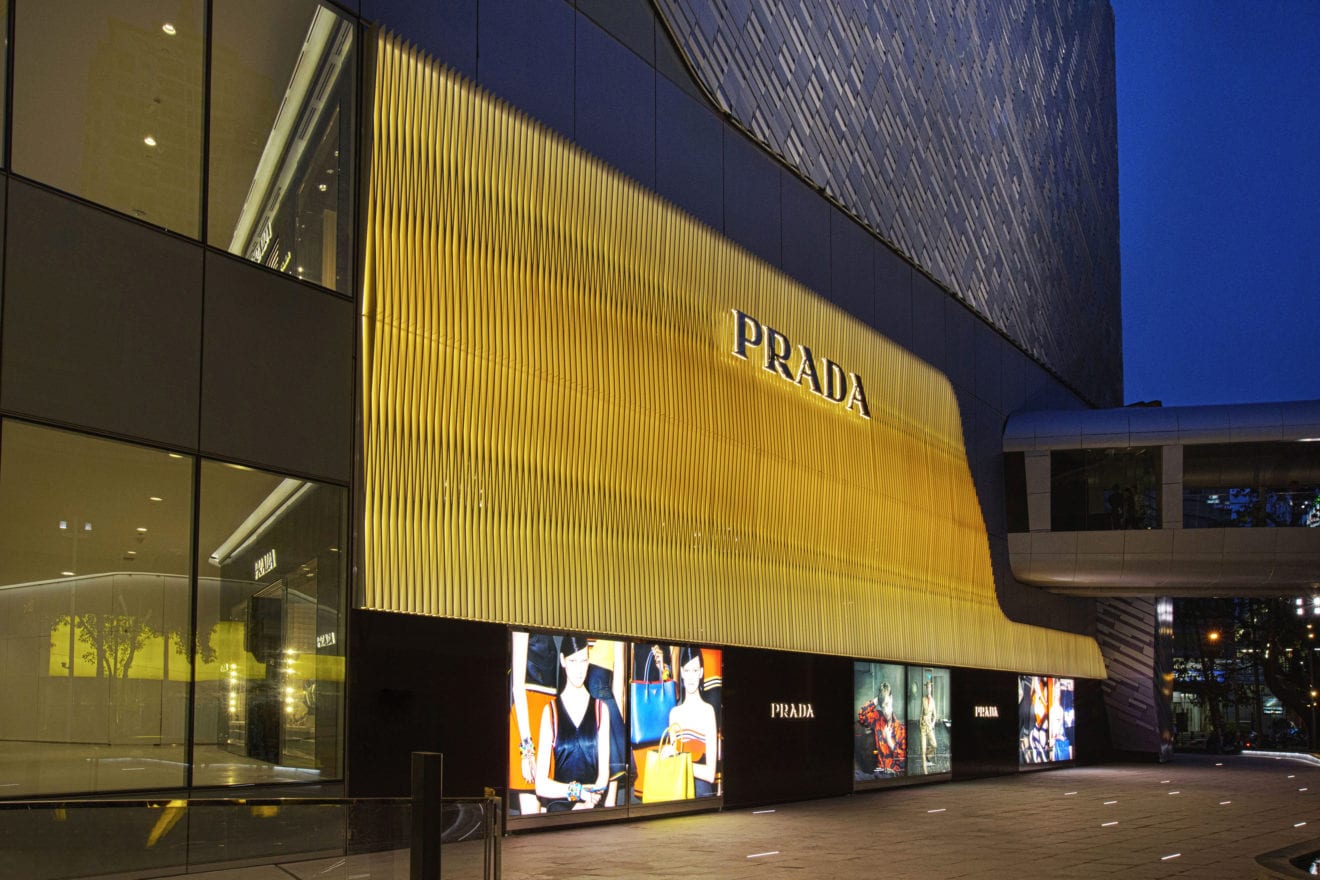
    pradaThe high-impact external facade is composed of an interplay of light-boxes, completed by a backlit white canvas curtain enclosed in a crystal box. The internal facade echoes the motif of the exterior and features two large entrances and a series of display windows.

    The first entrance, defined by the signature black-and-white marble chequered flooring – a legacy of Prada’s identity worldwide – opens up on an area dedicated to the women’s leather goods collections.

    A portal leads to a second space, where the women’s footwear collections is displayed. The entire area devoted to women is characterised by green fabric- clad walls with cut-in polished steel and crystal display niches. Steel and crystal tables with coloured display shelves and green velvet sofas complete the furnishing.

    The second entrance and the space dedicated to women both lead to a regularly-shaped area housing the men’s leather goods and footwear collections. Ebony floorboards and walls, crystal and polished steel display cases and chocolate brown carpeting define the space. Display counters with coloured saffiano leather detailing and light coloured leather sofas enhance the atmosphere.

  • High-end retailers in China no longer have the luxury of time

    High-end retailers in China no longer have the luxury of time

    In the heart of Guangzhou’s Yuexiu district, the shopping centre La Perle is a symbol of luxury living in the southern mainland city.

    The high-end shopping mall, which opened in January 2004, has long been the first stop for many international brands seeking to conquer China market.

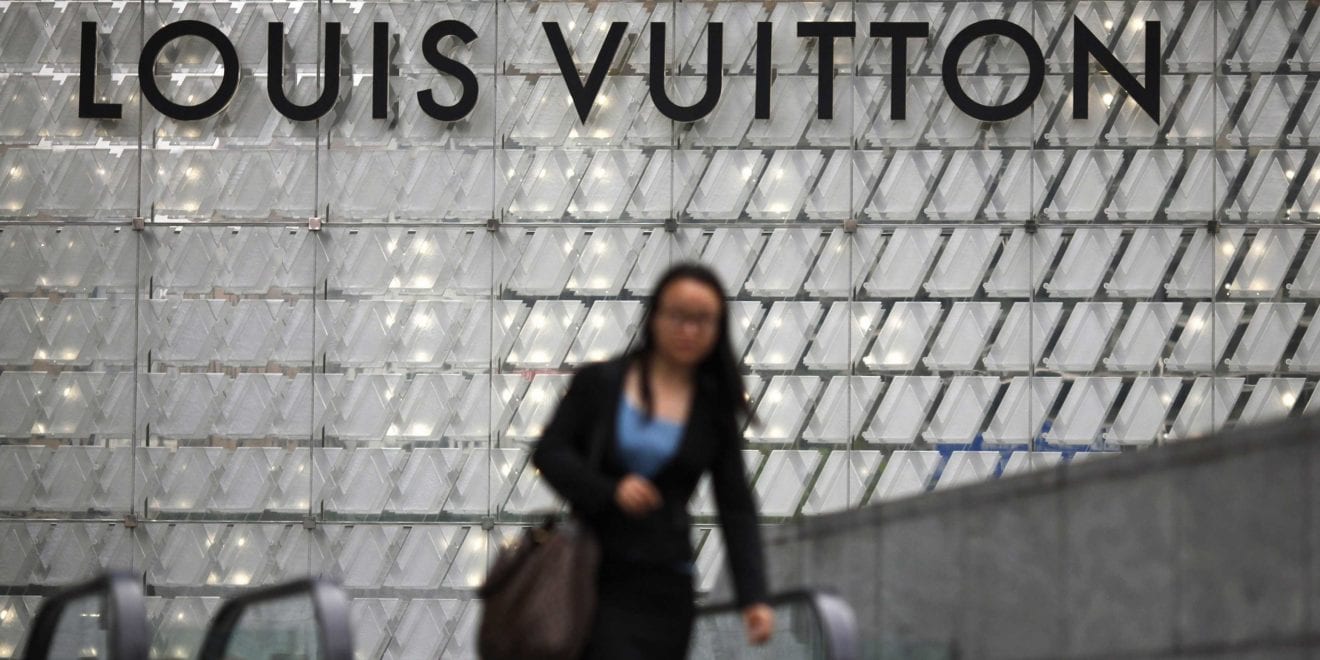
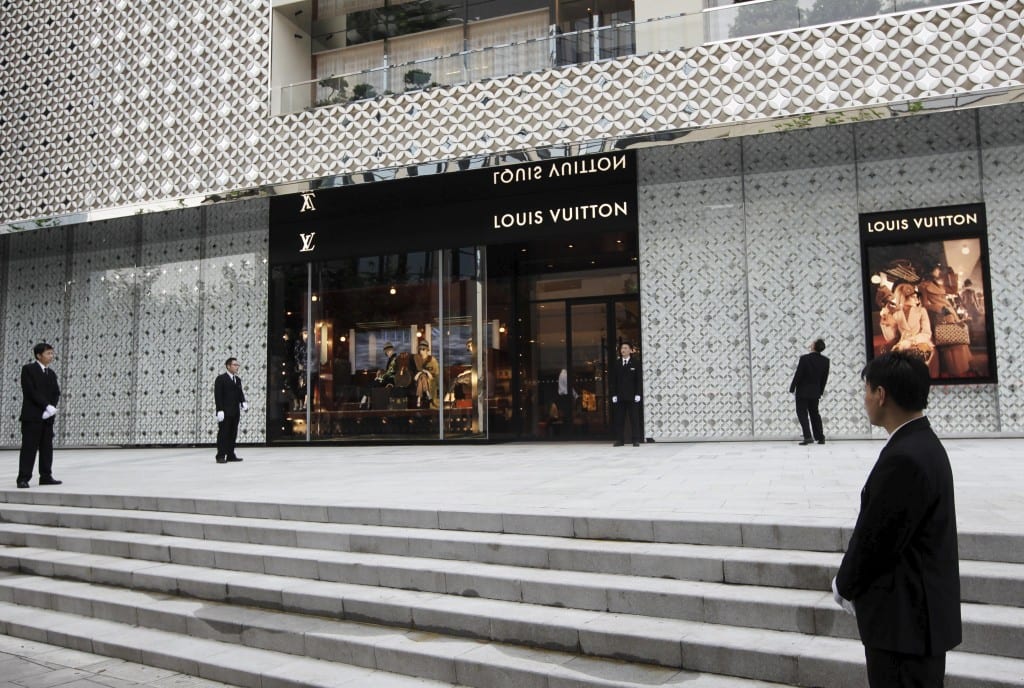
    But times are changing. A few weeks ago, La Perle lost one of its biggest tenants. Louis Vuitton. The French luxury retailer closed its store on the ground floor saying it would not renew its expired lease.

    This followed the shutting down of the two other LV stores – in the northeastern city of Harbin and the western city of Urumqi.

    The brand said the closures were part of a marketing strategy adjustment by headquarters.

    It’s a strategy that appears to have been taken on by many other international luxury brands.

    Following ten years’ aggressive expansion in China, they have been shrinking their physical presence in the nation to adapt to a cooling market plagued by a slowing economy, an ongoing anti-corruption campaign and Chinese buyers’ increasing overseas purchases.

    The Fortune Character Institute, a Shanghai-based market research unit, forecasts mainland luxury sales to grow 3 per cent to US$25.8 billion this year, much slower than the 11 per cent in the recovering global market.

    A study by the institute found that although Chinese shoppers consumed 46 per cent of luxury goods around the world, their purchases in their home market accounted for only 10 per cent of global sales, falling from 11 per cent in 2012 and 13 per cent in 2013.

    The sluggish growth is reflected in the expansion plans of luxury brands. They are opening fewer new stores and closing more.

    During the past two years, Burberry closed four stores on the mainland, Coach shut two, Hermes one, Armani five, and Prada went from 49 to 33.

    Regina Yang, of real estate consultancy Knight Frank Shanghai, said store consolidation would continue, especially in smaller cities.

    “Now the luxury brands do not need two or three outlets in one city. Those having three outlets will be cut to one,” said Yang.

    The situation is no better in Hong Kong, which relies heavily on mainland shoppers’ spending.

    In August, TAG Heuer, the expensive watch brand under LVMH, closed its Causeway Bay store while Coach closed its flagship store in Central due to high rent pressure and a falling number of mainland tourists.

    Store openings are no longer a major way for international luxury brands to expand in the China market

    Zhou Ting, Fortune Character Institute

    “Store openings are no longer a major way for international luxury brands to expand in the China market. Over the next two years we expect these brands to close even more stores than before,” said Zhou Ting, director of the Fortune Character Institute.

    “But if you think luxury brands are taking a totally defensive strategy in China, you would be wrong. The closures are only a small part of a thorough strategy adjustment they are undertaking in China.”

    While closing smaller and underperforming outlets, the top brands are investing more resources to upgrade and expand other stores and are even venturing into different industries to attract local shoppers. Considering Chinese buyers’ preference to shop online, they are also building e-commerce channels and closing price gaps between China and foreign markets to retain their consumption locally.

    “In the past, foreign luxury retailers had treated the China market like a money printer. They were busy opening stores to cover more cities. But their customer services and shopping experience were far from good compared to their stores in Europe. Now they have to pay a big cost for it,” said Zhou.

    The first batch of luxury brands entered into China in the 1990s. Most of them set up stores in five-star hotels and high-end department stores in big cities, targeting foreign businessmen, overseas Chinese and government officials.

    In 2004, as the Chinese government loosened restrictions on foreign retailers, luxury brands that had previously relied on local distributors started to engage in direct sales and expand into shopping malls.

    In the past, foreign luxury retailers had treated the China market like a money printer

    Zhou Ting, Fortune Character Institute

    The golden era came around 2009 and 2010 as a rising number of affluent Chinese consumers started to spend on high-end leather goods and jewellery, making the country the fastest-growing luxury market in the world.

    Encouraged by the fast growth and huge potential in the China market, luxury retailers rushed to open stores. Global consultancy Bain & Co estimated that the 15 top luxury brands it surveyed had opened more than 80 new shops during the first eight months of 2010.

    Meanwhile, the big brands’ aggressive expansion was also partly promoted by the increase in shopping mall construction.

    “Developers in second and third tier cities lured big brands as anchor tenants by offering them very flexible leasing terms,” said Kenith Kong, director and head of retail service at real estate agency DTZ/Cushman Wakefield China.

    A watershed for China’s luxury market came in 2013. Late that year, Beijing embarked on a long-term anti-corruption campaign and banned government officials from giving or receiving gifts. Such expenditure had previously been a major driver of domestic luxury consumption.

    More recently, the rapid growth of overseas purchases has also been worrying top-end retailers.

    Chinese consumers, who are travelling overseas more often, now spend more than 70 per cent of their luxury budgets in Europe, North America, Japan and other countries where the prices are lower, options are greater, and services better.

    The demand has even created a booming “daigou” or personal shopper industry, in which the daigou makes a living by purchasing products from overseas and selling them to buyers at home at a profit.

    All such developments are forcing luxury retailers to reappraise their business models.

    “We have noticed an upward trend on the portion of large stores opened by luxury brands in recent years,” said Frank Chen, research head of global real estate agency CBRE.

    The company observed that three quarters of renovations by luxury stores that took place between January 2013 and July 2015 in eight major cities were expansions.

    It also said the proportion of luxury stores with floor areas of more than 800 square metres climbed to 22 per cent in 2014 from 18 per cent a year earlier.

    “Larger sizes means luxury retailers can display more products and add more functions in their physical stores. Increasingly, they are displaying categories which were previously given little emphasis, such as shoes, household items, cosmetics and children’s apparel,” said Chen.

    In February, Louis Vuitton unveiled its newly upgraded store in the China World Mall in Beijing. The 3,000-square-metre shop not only offers various tailor-made services, it hosts a bookstore, an arts exhibition room and a Chinese tea zone.

    On July 31, the French luxury brand opened a new store on the bank of the West Lake scenic area in Hangzhou City, Zhejiang province, to tap the growing tourism market.

    Also taking an innovative approach in reaching out to local customers is Italian label Gucci. The brand opened a restaurant, 1921 Gucci, in Shanghai’s iAPM shopping mall.

    French fashion house Versace opened a cafe in one of Shanghai’s most expensive malls, Grand Gateway 66, which also hosts Burberry’s first beauty salon.

    Meanwhile, Hermes, Armani, and Dolce & Gabbana are expected to introduce their restaurants and cafes to China, providing a new engine for revenue growth.

    Such strategies create new forms of profitability based on experience-oriented consumption

    Frank Chen, CBRE

    “Such strategies create new forms of profitability based on experience-oriented consumption, as well as an additional sales opportunities for physical goods by attracting more shoppers to spend more time in their places,” Chen said.

    While reducing their physical presences, luxury retailers are embracing e-commerce despite their concerns that online channels cannot emulate the physical shopping experience.

    However, Chinese consumers’ increasing reliance on online shopping, especially on their mobile phones, has convinced brands to launch shopping sites or form partnerships with e-commerce firms.

    In October, Cartier launched its China shopping site. One month earlier, high-end brand Coach reopened its online store on T-mall.com three years after closing it.

    Other brands such as Burberry and Tag Heuer are working with local e-commerce giants like T-mall of Alibaba and JD.com to provide online selling services in addition to their own official shopping sites.

    “Many luxury brands have begun to close the retailing price gaps between China and other markets. One of their purposes is also to establish a comprehensive global pricing system and prepare for their future online expansion,” Zhou Ting said.
  • Retail landlords headed for another horrible year in 2016, says CBRE

    Retail landlords headed for another horrible year in 2016, says CBRE

    Retailing landlords will likely continue to feel the pinch in coming times, as the ongoing slump in tourism is poised to weigh negatively on capital values in prime shopping districts, thumping prices a further 20 per cent next year, on top of an expected 20 per cent drop this year, according to CBRE.

    But CBRE predicts the office market will be a bright spot next year as the potential launch of Shenzhen-Hong Kong Stock Connect will drive up demand from mainland firms.

    “Retail rents will continue to trend down as leases expire, but given a lower base of comparison, the pace of decline is expected to decelerate,” according to CBRE’s Hong Kong Commercial Real Estate Review & 2016 Preview.

    It predicts that rents will track the decline in capital values, tumbling as much as 35 per cent this and next.

    “Sales momentum of upmarket goods will remain slow but mass market sales should continue to have more resistance,” CBRE said.

    Symptomatic of the woes facing the luxury retail sector, on Friday high-end brands Prada, Miu Miu and Gucci unexpectedly offered up to 50 per cent discounts as a way to drum up sales and attract long queues of shoppers, including those from the mainland.

    In a stark contrast to the depressed retail market, CBRE expects overall office rents to increase 10 per cent for 2015, and a further 10 per cent next year.

    “Next year will be another year of landlords’ market but the rental cycle is approaching the peak,” CBRE said.

    In 2016 office rents in Central would register the largest year on year growth, climbing 10 per cent, after rising an estimated 15 per cent this year.

    The sector would also benefit from the limited supply with just 1.4 million square feet due for completion next year, it said.

    CBRE also expects the capital value of office real estate could rise as much as 10 per cent next year, after 5 per cent growth this year.

    Two noticeable office transactions in November offered an indication of the upwards momentum in the sector. Mainland developer Evergrande Real Estate agreed to buy the 26-storey Mass Mutual Tower in Wan Chai from Chinese Estates Holdings for a record-breaking HK$12.5 billion.

    On the same day, China Life, the mainland’s largest insurer, announced the purchase of an entire office tower with a two-storey retail block at One HarbourGate in Hung Hom for HK$5.85 billion from Wheelock & Co.

  • Prada Macau opens men only store

    Prada Macau opens men only store

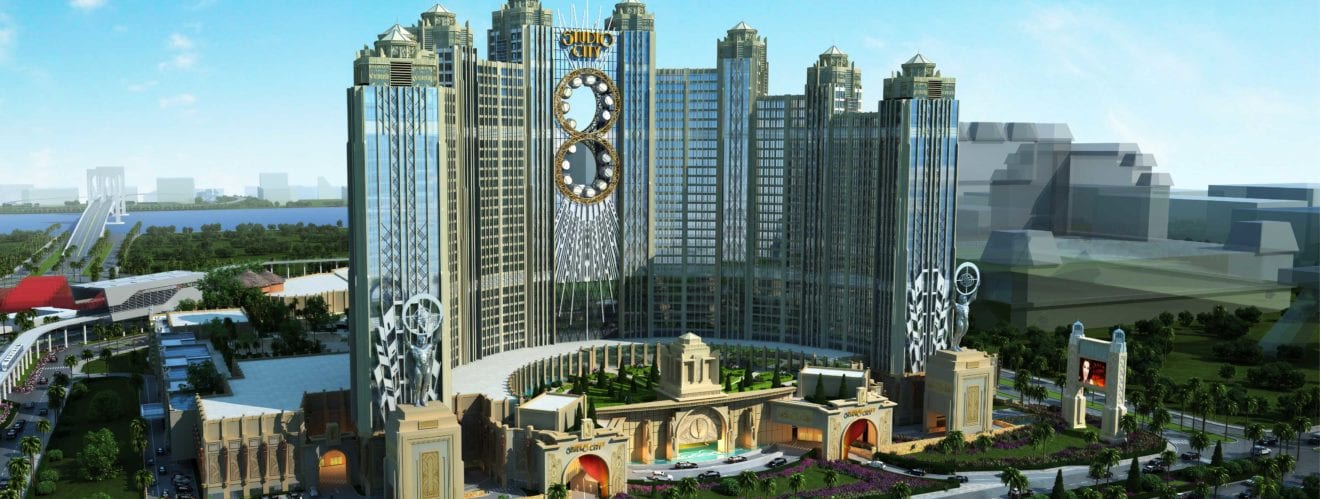
    Prada Macau has opened its fourth store – a menswear-only boutique at Studio City.

    The new space, designed by architect Roberto Baciocchi, covers about 500 sqm on a single level and houses the men’s ready-to-wear, leather goods, accessories and footwear collections.

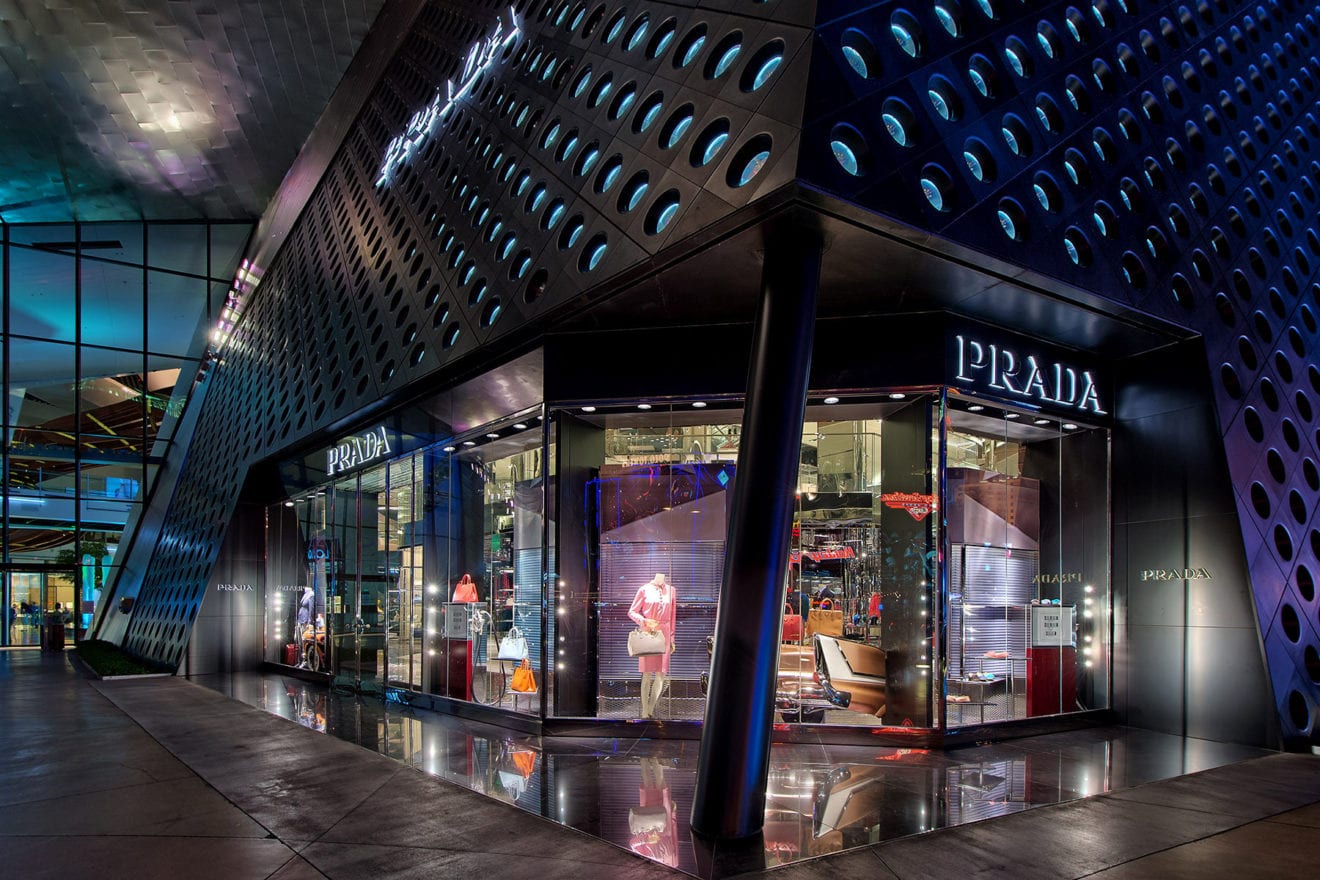
    A succession of light-coloured stone pillars and light boxes inserted into black granite volumes sets the rhythm of the external facade.

    The internal facade is clad in black granite, while slim burnished steel profiles frame the entrances, windows and light boxes.

    The two entrances open on an area defined by a succession of spaces, each featuring a different atmosphere.

    The area dedicated to the leather goods and accessories collections is characterised by Saint Laurent marble floorboards, ebony-clad walls and polished steel display cases and counters.

    An elegant sitting area, defined by cotto-coloured leather sofas, leads to the space where the men’s footwear and ready-to-wear collections are showcased.

    The space housing the footwear collections is defined by ebony floorboards and polished steel and crystal cases and counters with drawers covered in coloured saffiano leather exalting the product display. Cotto-coloured leather sofas complete the furnishing.

    The Last Room, dedicated to the ready-to-wear collections, is characterised by walls featuring orange encaustic painting, creating an elegant atmosphere.

  • Sports fashion demand drives Stella sales

    Sports fashion demand drives Stella sales

    Shoe marketer Stella International has reported increased sales in the second quarter on the back of growing demand for sports fashion footwear.

    In the three months to September 30, consolidated revenue from its China retail business and its manufacturing operations amounted to US$569 million, up 4.3 per cent year on year. For the nine months to September 30, revenues totalled US$1.366 billion, an increase of 7.9 per cent.

    “Looking forward, the group expects orders for the group’s footwear products will pick up further towards the end of this year and the beginning of 2016, as its customers continue to expand their global presence and as demand for sports fashion footwear continues to grow,” the company said in a stock exchange filing.

    “Order levels will also be supported by greater efficiency and improved utilisation at the group’s production facilities in inland China and Southeast Asia.

    “The group cautiously expects shipment volumes to reach 58 million pairs by the end of 2015.”

    Stella produces shoes for brands including Clarks, Deckers, Ecco, Rockport, Timberland, Wolverine, Cole Haan, Guess, Jones Group, Kenneth Cole and Michael Kors. It also designs, develops and manufactures footwear for high-fashion brands including Alejandro Ingelmo, Alexander Wang, Armani, Bally, Balmain, Brian Atwood, Givenchy, Kenzo, Marc by Marc Jacobs, Marciano, Miu Miu, Paul Smith, Prada, Sigerson Morrison, Via Spiga and Y3.

    And taking advantage of its manufacturing expertise, the wide acceptance of Stella’s products by brand customers, the company has successfully expanded into the Chinese and global footwear retail market through its own brands Stella Luna, What For, JKJY by Stella and joint-venture brand, Pierre Balmain.

    Stella says it will continue to implement strict cost controls and efficiency improvement measures to preserve its profitability. This includes placing a renewed focus on leveraging its competitive strengths to pursue new promising product segments, such as sports fashion footwear.

    “The group also remains committed to building the long-term competitiveness of its retail business with the opening of new standalone stores and shops-in-shops in quality locations. It will also continue to boost its branding efforts in Europe to further grow the value of its brands among Chinese consumers.”

  • Prada seeking lower rents in Hong Kong, Macau amid China slowdown

    Prada seeking lower rents in Hong Kong, Macau amid China slowdown

    Italian fashion house Prada is trying to negotiate lower shop rents in Hong Kong and Macau to reflect weak sales and the dwindling flow of wealthy tourists from mainland China, its chairman said last week.

    However, the Hong Kong-listed group does not plan to shut stores in China, which accounts for more than a fifth of its global sales and has been hit by a rout in stock markets and last month’s surprise devaluation of the yuan.

    China’s economic slowdown is hurting the two shopping hubs, forcing several luxury brands to close shops or at least attempt to lower sky-high rents – with little luck so far.

    “Like our competitors we’ve started re-negotiating rents for shops in weak spots such as Hong Kong and Macau but landlords are not being very receptive, they’re rather rigid,” Prada chairman Carlo Mazzi said.

    “China has gone from being an El Dorado to being an interesting market. We believe it can return to be a fairly good market but it’s hard to say how long it’ll take.”

    Asia-Pacific is Prada’s biggest market, representing 36 per cent of total revenues. Greater China alone accounts for 22 per cent, or €774 million (HK$6.67 billion).

    Betting on fast-rising Chinese consumer demand, Prada picked Hong Kong for its market debut in mid-2011 and used the cash to repay debts and fund a costly retail expansion, opening 260 shops worldwide in four years.

    But after being the growth engine of the luxury sector for years, China has become a headache for big brands as its economic growth began to slow. The main stock market index has slumped almost 40 per cent since a seven-year high in mid-June.

    The Milanese group has seen profit margins fall in recent quarters as revenue weakened while costs rose. Retail sales in the Asia-Pacific region fell 17 per cent at constant currencies in the three months to the end of April, rising marginally only thanks to the foreign exchange boost.

    Prada said last month trends in the Asia-Pacific region were little changed due to persistent difficulties in Hong Kong and Macau.

    “Boosting sales is not an easy goal at this time,” Mazzi said. “The phase of massive retail investments is behind us … We need alternatives to the shop network expansion,” he added, citing e-commerce and improving returns at existing shops.

    Luxury groups are still reeling from Beijing’s clampdown on lavish gift-giving and the blow to tourism in Hong Kong from last year’s pro-democracy protests.

    Mazzi expects sales in the former British colony, where Prada has 22 shops, to recover over time but growth rates are likely to be more modest than in the past.

    “We’re limiting expansion projects in Hong Kong and Macau,” Mazzi said.

    But “even with lower sales our Chinese stores continue to have positive – though much smaller – margins. Closing shops in China is not on the table,” he added.

    “Let’s not confuse China with South American markets, knocked down by falling oil prices. China is not down on its knees, it just needs to correct some issues it has with its economy.”

    Prada, which also owns brands Miu Miu and Church’s, has just over 600 stores globally, of which 94 are in Greater China. No clear alternative market has emerged and Mazzi said Prada was not targeting expansion in any particular country.

    “There are uncertainties that hold back investments in markets where we had planned to boost our presence, such as Africa,” he said, also mentioning logistical and political problems in India.

  • ‘Weak’ Hong Kong and Macau hits Prada

    ‘Weak’ Hong Kong and Macau hits Prada

    Continuing volatility in the market and the exchange rate landscape in Hong Kong, Macau and the Asia Pacific region (excluding Japan) has been blamed for Prada’s overall net profit fall of -23% to €188.6m ($212.7m) in the first half of 2015.

    Despite the big challenges in the Asia Pacific region which is Prada’s biggest market, the Milan-based fashion company first half-year revenue growth of +4.2%, thanks to more positive market performances in Europe, The Americas, The Middle East and Japan.

    Consolidated net current exchange rates on the corresponding period in 2014.

    The luxurygoods company says the increase is entirely attributable to the retail channel, as a result of its selective strategy aimed at further enhancing the of its Directly Operated Stores.

    All other regions reported good growth, although the company adds that the Asia Pacific market (excluding Japan) showed the same negative trend as it did in the first quarter of the year, offset by a positive effect.

    Patrizio Bertelli, COO said: “The luxury goods market is undergoing a period of significant change which must be met with a far-reaching, long-term strategy.

    “Our commitment remains centered on creative dynamics and the spirit of innovation, so that we can constantly increase the levels of excellence of our products.

    “In operational terms, we will continue with our thorough review of business processes in order to make them more efficient.”

    While its wholesale business declined by 13%, sales of the group’s retail network grew by 7.6% at current to €1,552.4m ($1,750.7m). The company reported that its 605 Directly Operated Stores (DOS) also benefited from a general improvement in sales performance.

    The European market grew by +12.4% thanks to a steady flow of tourists, together with a recovery in consumption by domestic customers, while the Japanese market outshone the rest of Asia with a +11.7% constant result. Sales in the Americas and the Middle East also improved considerably (both plus +15%).

    In terms of retail channel by brand, Prada recorded a 5.4% rise in sales thanks entirely to the effect, but was badly impacted by the negative economic situation in the Asian market.

    Miu Miu grew with revenues up at both current (+18.7%) and constant (+6%), enjoying a sales boost in the second quarter. The Church’s shoe business also grew by +18.6% and Car Shoe’s result was in line with the same period last year.

    EBITDA for the first half of the year was €440.1m ($496.3m) or 24.1% of net revenues, while EBIT came in at €293.2m ($330.7m) or 16.1% of consolidated net revenues.

    As mentioned, was reported down -23% at €188.6m ($212.7m) or 10.3% of consolidated net revenues.

  • Burberry, Gucci at Macau

    Burberry, Gucci at Macau

    Burberry, Prada and Gucci head a list of international fashion brands progressively opening at The Promenade shopping centre in the Galaxy Macau.

    The Promenade is part of the stage 2 development of the integrated resort, which opened its doors on May 27. But a number of retail spaces were not complete.

    But on Friday, high-flying British luxury apparel brand Burberry opened its new store there – its third in Macau. And Gucci will follow later this month.

    Prada will open a store at The Promenade in October.

    UK fashion brand Daks and Japanese denim labels Evisu and Moussy will also open stores soon, according to the Galaxy Entertainment Group.

    Louis Vuitton opened a store last month.

    “We are excited to be welcoming top luxury brands to Galaxy Macau for the first time, connecting our increasingly discerning guests with the most iconic retail brands from around the globe,” said Kevin Clayton, chief marketing officer of Galaxy Macau.

  • Studio City retail tenants revealed

    Studio City retail tenants revealed

    Studio City and Taubman Asia, have revealed the lineup of fashion brands that will open inside The Boulevard at Studio City.

    A mix of fashion-forward labels and internationally-renowned luxury brands include Macau’s first Balmain, Macau’s first Belstaff, and Tom Ford’s largest store in Asia, amongst many others. The selection was assembled by Taubman Asia and Melco Crown Entertainment’s combined team of retail specialists to meet Chinese consumers’ increasing desire to express their individuality through high quality, expertly crafted clothing and accessories. Bespoke and personal services will be offered to ensure our shoppers take center stage.

    Taubman says The Boulevard at Studio City will bring “an unparalleled shopping experience” to Studio City.

    “Unlike any retail offering to be found in Asia, the unique 35,000 sqm ‘immersive’ retail entertainment environment brings shopping to life by ‘transporting’ visitors to high-energy street-scapes and entertaining them at every turn with featured streets and squares inspired by iconic shopping and entertainment locations, including New York’s Times Square and Hollywood’s Beverly Hills,” Taubman said in a statement.

    “At the futuristic Times Square Macau, inside The Boulevard at Studio City, a variety of entertainment from ‘virtual’ musicians to film stars will be shown through holographic projections.

    “Leveraging our global expertise increating extraordinary retail environments, and our exceptional relationships with the world’s leading brands, our talented team in Asia has brought together an exciting mix of brands for The Boulevard at Studio City,” said René Tremblay, president of Taubman Asia.

    “Our merchandising and management services are the industry standard for performance and excellence. We are thrilled to welcome these brands to our latest project and are committed to supporting them for the long term.”

    List of brands:

    Aeronautica Militare
    Balmain
    Bank of China
    Belstaff
    Boss
    Bottega Veneta
    Bulgari
    Cigar Emporium
    Coach
    Cosmos Food Station
    Din Tai Fung
    Dunhill
    Emporio Armani
    Fendi
    Girard-Perregaux
    Givenchy
    Glashutte Original
    Graff
    Gucci
    Hide Yamamoto
    Hublot
    ICBC
    Trattoria Il Mulino
    Image Digital
    IWC Schaffhausen
    Jaeger-LeCoultre
    Jaquet Droz
    kate spade new york
    Kenzo
    Longines
    McCafe
    McDonald’s
    MCM
    Michael Kors
    Montblanc
    Philipp Plein
    Piaget
    Prada
    Rainbow
    Rimowa
    Roberto Cavalli
    Saint Laurent Paris
    Shiki Hot Pot Restaurant
    Starbucks
    Tag Heuer
    T Galleria Beauty by DFS
    Tiffany & Co.
    Tom Ford
    UM
    Vacheron Constantin
    Valentino
    Van Cleef & Arpels
    Versace Collection
    Ermenegildo Zegna
    Zenith

  • Prada Japan flourishes

    Prada Japan flourishes

    Prada Japan has posted a strong sales lift in the first half thanks to a burgeoning number of inbound tourists.

    Sales in the Japanese market grew by 12 per cent year on year current exchange rates and by five per cent on constant exchange rates. Tellingly, growth was stronger in the second quarter than in the first.

    In its half year results issued Friday, Prada reported net revenue for the six months to July 31 of euro 1.823 billion, a four per cent increase over the corresponding period in 2014. Wholesale sales fell 14 per cent, reflecting Prada’s strategy of rationalising its network of retail partners in favour of selling from its own stores.

    While Japan was a standout market, sales in Asia Pacific fell, offset by a positive rate exchange effect.

    “Hong Kong and Macau remain the main drivers affecting the performance in this geographical area,” Prada said.

    At current exchange rates, sales increased 15 per cent in both the Americas and in the Middle East.

    The European market has continued to grow with revenues up at both current exchange rates up 12 per cent and constant exchange rates up 11 per cent, thanks to a steady flow of tourists together with a recovery in consumption by domestic customers.

    By brand, Prada recorded five per cent growth at current exchange rates which is entirely attributable to the exchange rate effect, mainly because of the adverse economic situation in the Asian market.

    Miu Miu continues to grow with revenues up at both current exchange rates up 19 per cent and constant exchange rates up six per cent, showing an acceleration in the second quarter of the year. Church’s achieved sales growth of 19 per cent, with the volumes trend also remaining largely positive. Car Shoe has performed broadly in line with prior year.

    Prada Group CEO Patrizio Bertelli said sales in the first half of 2015 reflect an economic and exchange rate landscape that remains “rather volatile with the continuing weakness of important markets like Hong Kong and Macau and the uncertainty that is looming on other Asian markets”.

    “Our distribution structure, which has achieved an appropriate global presence, together with our awareness of the specific needs of the various markets, has enabled us to compensate for the drop in sales in Asia Pacific thanks to growth on markets which are currently more dynamic like Europe and Japan. We will continue to prioritise measures intended to sustain long-term growth focusing on our manufacturing tradition and innovation, as again confirmed recently by the success of our latest collections.”

  • Prada Jakarta opens doors

    Prada Jakarta opens doors

    Prada Jakarta has opened its doors, the luxury Italian fashion brand’s first store in Indonesia.

    The new 420 sqm single level store is located inside the upmarket Pacific Place shopping mall.

    The retail space, designed by architect Roberto Baciocchi, houses the women’s and men’s ready-to-wear, leather goods, accessories and footwear collections.

    The external facade is clad in black Marquinia marble, while slim polished steel profiles highlight the light boxes.

    The store has a corner location inside the mall, with slim strips of black Marquinia marble framing the entrance, display windows and large floor-to-ceiling windows that open up on the interior.

    The space is designed as a succession of rooms, each featuring a different atmosphere.

    The women’s leather goods area is defined by the signature black-and- white marble chequered flooring – a legacy of Prada’s identity worldwide – and green fabric-clad walls with alcoves housing displayed product, an original reinterpretation of Prada’s iconic display niches.

    The space housing the women’s accessories and small leather goods collections is characterised by black marble-clad walls and display counters with coloured saffiano leather detailing.

    The women’s footwear collection is showcased in an area defined by green fabric-clad walls with cut-in display niches. Beige carpeting and green velvet sofas create an elegant atmosphere.

    Green fabric-clad walls also characterise the area dedicated to the women’s ready-to-wear collection, where transparent perspex cases exalt the product display. Crystal tables and green velvet sofas complete the furnishing.

    The space devoted to men comprises an area dedicated to the leather goods and accessories collections and another room where the footwear and ready-to-wear collections are displayed. The area features masculine materials and finishes: ebony floorboards and walls, dark brown carpeting and cotto-coloured leather sofas. Polished steel display cases and counters with drawers covered in coloured saffiano leather complete the setting.

  • Prada China opens Wuhan retailer

    Prada China opens Wuhan retailer

    Prada China has opened a brand new retailer in Wuhan, inside the distinguished Worldwide Plaza purchasing centre.

    The 2-level, 950 sqm retailer area, designed by architect Roberto Baciocchi, homes the ladies’s and males’s ready-to-wear, leather-based items, equipment and footwear collections.

    The exterior facade pays tribute to artist Carlo Cruz-Diez.

    The massive entrance, mild bins and home windows are inserted into the decrease a part of the facade, which is clad in black granite and topped by an imposing gold and steel-coloured aluminium construction backlit to create a singular kinetic impact each day and night time.

    General, the facade stands 10 metres tall and stretches roughly 50 metres in size. The interior facade, the place the second entrance to the shop is situated, can also be clad in black granite.

    The inside is designed as a succession of areas, every that includes a unique environment.

    The doorway contained in the mall, outlined by the signature black-and-white marble chequered flooring, opens on an space housing the ladies’s leather-based items and equipment collections. Inexperienced fabric-clad partitions with Prada’s iconic cut-in niches with polished metal profiles outline the area.

    Inexperienced velvet sofas characterise the world devoted to ladies’s footwear.

    The ladies’s ready-to-wear assortment is showcased in an area outlined by inexperienced fabric-clad partitions and clear perspex show models.

    The lads’s leather-based items and equipment collections are set in polished metal show instances inserted into alcoves wrapped in black marble with inexperienced fabric-clad backdrops.

    The area devoted to the lads’s ready-to-wear and footwear collections is characterised by ebony floorboards and partitions, chocolate brown carpeting and cotto-coloured leather-based sofas. Polished metal show instances and counters with drawers coated in colored saffiano leather-based full the furnishing.

    Prada says it admires French-Venezuelan artist Carlos Cruz-Diez, whose paintings served as a place to begin for the design of the facade.

    The Prada boutique is situated in Wuhan Worldwide Plaza, 690 Jiefang Ave, Jianghan, Wuhan, Hubei.

  • Online store merger prods luxury goods makers towards internet

    Online store merger prods luxury goods makers towards internet

    The merger of the world’s two biggest online fashion stores, Net-a-Porter, or NAP, and Yoox, sends a warning to luxury brands to embrace the Internet with more vim after years of resistance.

    Top brands such as Prada and LVMH’s Christian Dior still baulk at the idea of selling clothing online as well as through their plush boutiques.

    “Considering the level of sophistication and image of our ready-to-wear, we feel the shopping experience has to remain immaculate and in-store,” says Stefano Cantino, head of marketing and commercial development at Prada.

    “You need the physical environment to try the product on and you need an exclusive service which you can only get in a boutique.”

    But as more people choose to buy through a website instead of going to Rue St Honore or New Bond Street, that position looks increasingly untenable. Brands whose goods are not available online risk losing customers to rivals.

    Luxury executives understand the Internet will be vital for future sales, particularly to so-called Millennials — web-savvy customers born between 1980 and 2000.

    Yet top brands such as LVMH’s Louis Vuitton, Hermes, Prada and Chanel have been slow to invest in e-commerce as other retail sectors have done in the last decade.

    Some have focused as much on the shopping experience as on the products themselves, spending heavily on worldwide expansion and revamping stores with help from famous designers.

    “Many luxury brands have not figured out yet how to be innovative and creative online,” said Anant Sharma of consultancy Matter of Form. “It looks like they are scared to try things out.”

    Sharma said many brands’ websites mimicked the appearance of Net-a-Porter’s black-and-white portal. “If they had the same approach to physical retail, we’d all be shopping in whitewashed rooms with clothes lined up against the four walls.”

    Immediately after the Yoox/NAP deal was unveiled last month, Chanel said it would start retailing online next year. This month, it is selling a new jewelry line exclusively through NAP for just three weeks.

    “The merger between Yoox and NAP sends the message that you need to be online or you may be out of the game,” Euromonitor luxury goods analyst Fflur Roberts said.

    Euromonitor expects 40 percent of all luxury goods sales will be made via the Internet in less than five years.

    Online annual luxury goods sales have been growing at 15-25 percent while the industry’s average growth rate has slumped to 5 percent this year from above 10 percent four years ago as brands have completed big global roll-outs.

    Analysts estimate that 5-6 percent of luxury goods are purchased online, although that jumps to around 8 percent for leather goods such as shoes and handbags.

    Designer websites vary in usability but few offer customers as much help as sites like NAP, which shows clothes on models, gives details of fit and sizing and carries styling tips.

    Prada’s e-commerce site carries no ready-to-wear, sticking to bags, shoes and other accessories.

    Kering’s Saint Laurent and Gucci have slicker sites, offering a wide range of clothing and proposing complete looks. Saint Laurent also features designer Hedi Slimane’s black and white photographs of musicians such as Marilyn Manson and Marianne Faithful.

    But Hermes’s iconic 8,000 euro Birkin or Kelly bags still cannot be bought online — and may take more than year to arrive after being ordered from a store.

    ?????????????????Department stores push

    While many big luxury brands are still figuring out an Internet strategy, high-end department stores already sell their products online.

    The Neiman Marcus chain, which includes New York’s Bergdorf Goodman, does 24 percent of its business online, up from 15 percent five or six years ago. Last year, it acquired German online fashion retailer My Theresa, aiming to better serve customers outside the United States.

    London’s Harrods, whose website gets 3 million visitors a month and sells brands such as Valentino and LVMH’s Givenchy, is also stepping up online investment.

    “Our customer demands an omni-channel shopping experience, and to remain at the forefront of luxury retail we need to respond to this,” Harrods managing director Michael Ward said.

    Chief Executive Bernard Arnault said at LVMH’s annual general meeting last week that “more and more products would be sold online” and the group was “currently adapting to this situation”.

    LVMH labels such as Fendi, Kenzo and Emilio Pucci already offer many products online — Fendi sells 750 euro baguette bags and 6,180 euro blue feathered dresses — but Louis Vuitton sells only accessories, pens, watches and jewelry.

    Richemont’s Cartier brand has sold jewelry online in the United States since 2010 and its online store now ranks third behind its two main flagships in terms of sales.

    Privately owned Patek Philippe, does not sell any of its 10,000 euro plus timepieces on the Internet, however, and told Reuters last month it has no intention of doing so.

  • New Prada Bangkok store unveiled

    New Prada Bangkok store unveiled

    Prada has strengthened its Bangkok presence opening a new 440 sqm store in The Mall Group’s new EmQuartier shopping centre.

    The store, designed by architect Roberto Baciocchi, comprises a single level destination and houses the women’s and men’s ready-to-wear, leather goods, accessories and footwear collections.

    Prada Bangkok EmQuartier 415-4

    The external façade stretches some 40 metres and blends into the mall’s modern architectural composition: a white canvas curtain enclosed in a crystal box and flanked by large light boxes creates a sophisticated atmosphere. Slim strips of black granite with polished steel profiles frame the large entrances, windows and light boxes.

    The first entrance, defined by the signature black-and-white marble chequered flooring, opens on an area housing the women’s leather goods and accessories collections. The space is characterised by green fabric-clad walls with sleek polished steel and crystal display cases. Polished steel counters with drawers covered in coloured saffiano leather complete the furnishing.

    Prada Bangkok EmQuartier 415-3

    The next space is defined by an intimate atmosphere, with green fabric-clad walls and transparent perspex display units exalting the display of the women’s ready-to-wear collections. The footwear collections are nestled in elegant alcoves that recall Prada’s trademark display niches. Green velvet ‘Clover Leaf’ sofas, designed by Verner Panton and reproduced exclusively for Prada, crystal tables and display counters embellished with coloured saffiano leather elements enrich the space.

    Prada Bangkok EmQuartier 415-4

    The entrance to the area devoted to men leads to a space characterised by the distinctive black-and-white marble chequered flooring and ebony-clad walls with precious polished steel display cases, hosting the men’s leather goods and accessories collections. The area dedicated to the ready-to-wear and footwear collections is defined by ebony floorboards and walls, ‘pony skin carpeting’ and coloured ostrich leather sofas.

    Prada Bangkok EmQuartier 415-5

    Additional furnishings, such as polished steel display units and counters with drawers covered in coloured saffiano leather, complete the setting.

  • Miu Miu Japan opens new flagship

    Miu Miu Japan opens new flagship

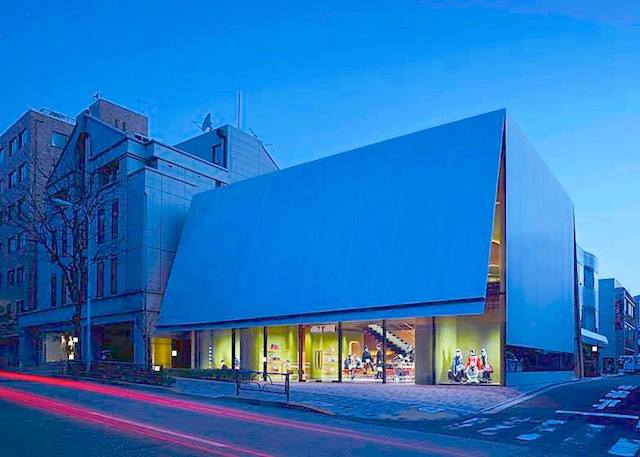
    Prada brand Miu Miu has unveiled a new project with Swiss architects Herzog & de Meuron, the centrepiece of its Japanese operations.

    The 720 sqm building on Miyuki St in the Aoyama District of Tokyo will be the cornerstone of the brand’s Japanese activities. Based in Paris, Miu Miu was established by Miuccia Prada in 1993 as a platform for design explorations beyond her legendary Prada line. Since opening its first boutique in Aoyama in 1999, Miu Miu has maintained a significant presence in Japan and now has 23 boutiques across the country including nine in Tokyo.

    Miu Miu Aoyama Tokyo 415

    Prada says the new building continues the company’s tradition of collaboration with world-class architects and re-emphasises Miu Miu Japan’s dedication to the Japanese market.

    The project for Miu Miu is sited diagonally across the street from the Prada Tokyo Epicenter – also designed by Herzog & de Meuron – in an elegant neighborhood that has, over the past two decades, become a showplace of architectural invention. In contrast to the transparency of the all-glass Prada building, however, the understated metallic surface of the Miu Miu façade is opaque, which lends a more intimate feel.

    Miu Miu in Aoyama Tokyo 415

    The architects say: “Contrary to expectations for a site that is home to so many luxury brands, Miyuki St in Aoyama Tokyo is not particularly beautiful or elegant. The architecture is heterogeneous – a hodgepodge of freestanding buildings of different heights and shapes, with neither historical tradition nor common standards.

    “Never meant to be a space of its own, the street is a purely technical and functional link between Omotesando and the Aoyama Reien cemetery farther down the road. Despite single trees here and there, the atmosphere is not inviting, like a boulevard or a plaza. Tokyo is pure, quintessential city, its territory exploited to the full with absolutely no leeway for the individuality that we take for granted in European cities.

    Miu Miu in Aoyama Tokyo.415

    “We already noticed this over 10 years ago when we were planning the glass building for Prada Aoyama,” they continued.

    “At that time, we were interested in counteracting the situation – on one hand, by placing a small plaza to the side of the building, and on the other, by making the structure completely see-through so that one can see into the interior from all sides and can also look out from inside at specifically targeted views of the city.

    “Over the past decade, the distinctive building has become a much-frequented location and it was therefore important to Prada, our client Prada Japan and also to us as architects to take this into account in planning the Miu Miu store located in the immediate vicinity on the opposite side of the street. We started out by trying several different architectural typologies. Since zoning regulations called for less height, we explored the potential of a smaller, more intimate building. We used the following thoughts to channel our ideas: more like a home than a department store, more hidden than open, more understated than extravagant, more opaque than transparent.

    Miu Miu in Aoyama, Tokyo 415

    “The typological model that best suited these considerations and specifications was a box placed directly at the level of the street, its cover slightly open to mark the entrance and allow pedestrians to look inside. Only then do they realise that the building is a shop.

    “Here, under the oversized canopy, the two-storey interior is visible at a single glance, as if the volume had been sliced open with a big knife, turning the inside out. The rounded, soft edges of the copper surfaces inside meet with the razor-sharp steel corners on the outside of the metal box, while the cave-like niches clad in brocade face the central space of the shop like loges in a theatre.

    “The shop on two tall storeys not only presents enticing goods on tables and in display cases; it is also like a spacious and comfortable home with inviting sofas and armchairs.”

    The façade has neither logo nor pomp; it is a polished, mirror-smooth surface, as if one single giant brushstroke had swept smooth the ordinarily matte surface of the steel panelled façade. This surface attracts the gaze and curiosity of passing pedestrians. But instead of affording a view inside, as in a shop window, the gaze is inverted; instead of the anticipated see-through window, viewers encounter self-reflection.

    Miu Miu in Aoyama Tokyo 415.