Retail News CRM

Tag: prada

  • Luxury brands Gucci & Zegna shutting shop as Chinese buyers turn thrifty

    Luxury brands Gucci & Zegna shutting shop as Chinese buyers turn thrifty

    It’s already happened to middle-of-the-road stores across high streets and main streets. Now the world’s biggest luxury stores are starting to shutter outlets. The culprit is the Chinese consumer, who is starting to rein in spending at home and abroad. The effect will be no less severe: expect more closures to come.

    Over the past decade, Chinese consumer demand and new store openings together turbo-charged luxury sales. New store space accounted for 55% of global luxury revenue growth over the past eight years, according to analysts at Mainfirst.

    As for Chinese nationals, they powered about two-thirds of luxury market’s growth over the past decade, according to Exane BNP Paribas.

    Now both of these forces are running out of steam. Given the slump in Hong Kong and the slowdown in China, stores there are the main focus of attention.

    MIXED BAG

    Gucci and Zegna were among luxury brands to cut their store footprint in the first quarter.

    Hugo Boss has already announced plans to close 20 of the 131 stores it directly owns on the mainland. It’s reviewing as many as another 20 of its least-profitable 430 stores globally.

    The company is in talks with its landlords, so not all of these outlets will close but it expects to announce a sizeable number of exits later this year.

    Prada won’t say where its selective store cuts might fall, but as it expanded aggressively in Asia, it’s a good bet that some will be there.

    And last week, Richemont, maker of Cartier jewelry and Jaeger-LeCoultre watches, said it was also reviewing its retail network in Hong Kong and Macau.This could include closures, moving to cheaper premises or lease renegotiations. Indeed, seeking rent reductions is an alternative to outright closure. Bloomberg Intelligence’s Patrick Wong ays rent reductions of as much as 50% says rent reductions of as much as 50% are possible in some locations in Hong Kong. But demand remains strong for space in premium malls, limiting the scope for discounts.

    In mainland China, tenants have the most bargaining power in new malls, particularly in second-tier cities , hit by a slump in demand and plentiful new supply, Wong notes.

    While the most attention might be on China, globally, brands are focusing on making their existing stores work harder. Rather than planning large scale openings, existing outlets are being refurbished.

    The luxury groups are right to halt their dizzying expansion, and start to cut back. As they do, there could be opportunities for more niche upmarket brands to expand. Kering’s Saint Laurent, LVMH’s Givenchy Fendi and Celine, and Swatch’s Harry Winston could all open stores at more attractive rents.

    Pandora, the affordable luxury chain, is one retailer that is still growing its store base, including in China. And here’s another trend that mirrors what is happening on high streets and main streets. As mid-market brands retrench, discount players move in. Pandora is hardly the same as Primark (its jewelry can cost 60 ($87) rather than 6 at its less upscale cousin). But the Danish jeweller offers cheaper, more accessible luxury.

    That’s still a winning formula in China, whether it is LVMH’s cosmetics and fragrance brands -or Pandora’s charms.

  • Asia drops Burberry profit

    Asia drops Burberry profit

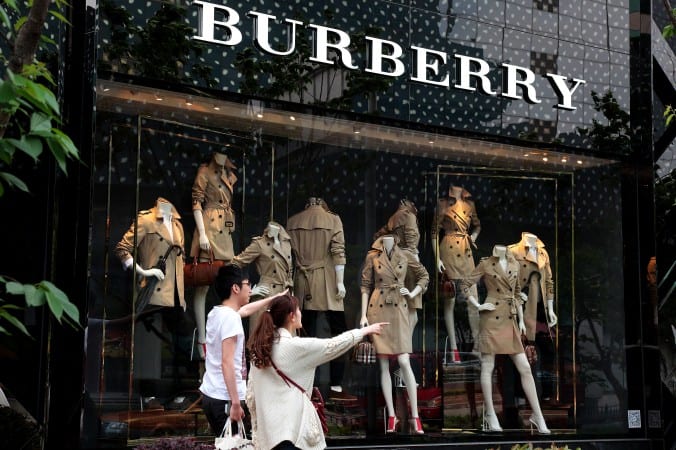
    Hong Kong has been blamed for a further decline in Burberry profit and a consequential cutback of staff and products.

    The British luxury goods brand has reported an 8 per cent fall in adjusted pre-tax profit to £421 million in the year to March 31 on flat revenue of £2.5 billion.

    In an earnings call, CFO Carol Drinkwater said trading in Hong Kong and Macau, which account for about 8 per cent of sales, remained tough, but the group’s stores there are still profitable, and all luxury brands were affected.

    “Conditions remain extremely challenging,” she said.

    As Andy Hall, explains, retail like-for-like sales were down by 1 per cent globally.

    But that was entirely due to falling demand in Hong Kong and Macau, where Burberry and its peers have had to contend with a collapse in demand for luxury goods. Excluding the two territories’ figures, same store sales rose a more respectable 3 per cent.

    “While the Burberry brand retains appeal globally, wider economic conditions and trading in traditionally lucrative Asian markets has dampened footfall, and hurt luxury players like Burberry the most,” said Hall.

    CEO Christopher Bailey is now looking to create a more efficient retail operation – with a £100 million cost reduction plan to be implemented over the next two years to restore profit growth and appease increasingly nervous shareholders while it weathers the Hong Kong storm.

    The company plans to cut between 15 and 20 per cent of its products across all its range, focus more on handbags and eliminate about 100 jobs.

    “I am mindful we are embarking on this plan at a time when our industry is facing significant challenges,” said Bailey, who has seen the company’s market value fall by about 37 per cent over the last 12 months.

    Handbags have higher margins and the company is not selling as well as rivals Louis Vuitton and Prada in that category.

    Furthermore, Burberry is aware it needs to increase its sales per square foot, currently estimated at around 1600 euros a year, a third that of Louis Vuitton and also well behind Moncler and Prada.

    Bailey has conceded Burberry is not as good as its rivals in “retailing basics”. It now plans to make its stores more productive by further tailoring ranges for local customers, improving customer service, increasing staff training and reviewing merchandise to highlight a reduced, simpler range of product.

    Hall says a renewed focus on in-store service and productivity would bring Burberry in line with the focus of luxury peers and would create a leaner, fitter operation with which to take the blows being dealt by a declining global demand.

    “Burberry’s decision to streamline its product ranges, at the same time as introducing some new products such as its Scarf Bar and new male fragrances, demonstrates its commitment to innovation, and attempts not to be left behind by other luxury fashion players.”

    Hall says Burberry has a lot of attributes in its favour and the collapse in demand in Hong Kong is unlikely to be its undoing.

    “However, with the retailer now re-focusing its efforts on retail (which accounts for 73 per cent of group revenue), it is crucial it continues to make pro-active improvements to the business. Examples of this – such as its reshaping of the fashion-show calendar, and imminent relaunch of its Burberry.com website, will help the brand to retain strong recognition, and ensure it holds its appeal even as the wider trading backdrop remains challenging,” said Hall.

  • Luxury prevails in Dubai’s retail space

    Luxury prevails in Dubai’s retail space

    Despite suggestions to the contrary, luxury retail spending is still rising in the UAE, albeit at a slower pace.

    Dubai, in particular, is leading the way. In a survey carried out before the World Retail Congress last month, Dubai Chamber said the retail sector in the emirate was expected to grow by 5 percent annually until 2017, by which point it was forecast to reach $55bn in value.

    The research, based on data from Euromonitor and an AT Kearney Research study, suggests luxury retail still offers multiple opportunities in the UAE.

    “There is growth of wealthy and ultra-rich consumers, the main potential customers of the luxury segment. All in all, consumption is going up and retailing in the UAE is a major sector, which is supportive of economic growth and offers a lot of business opportunities,” the analysis says.

    The research is supported by Savills, which ranked Dubai at number four in the world in its Global Retail Destination Index 2016, behind New York, London’s West End and Hong Kong.

    The report focused on Dubai Mall, and ranked it higher than London’s Regent Street, New York’s Fifth Avenue and the Champs-Elysees in Paris in terms of the overall quality of its retail facilities and amenities. Further enhancing Dubai Chamber’s findings, the Savills report says, “Dubai is forecast to report the strongest growth in retail sales over the next five years of the seven Global Cities examined, potentially challenging London’s West End’s current global position.”

    The growth is supported by a strong tourism sector, with 14.3 million overnight visitors to Dubai last year, according to the Mastercard Global Destination Cities Index 2015, which led to a total spend of $11.7bn, an average of $819 per visitor.

    “Dubai is now perceived as a top global retail destination,” says David Godchaux, CEO of Core Savills, the UAE associate of Savills. “But this is only the tip of the iceberg as we now start seeing developers trying to improve the shopping experience not only for tourists as in the past 15 years, but also for residents.

    “This trend of moving away from the ‘bigger is better’ approach, to more user and resident friendly retail developments, bringing a real city experience and European-style shopping to areas of Dubai similar to those found in London, Paris and Milan, is something that was much awaited by the market and that we see finally happening.”

    Dubai Chamber estimates the emirate’s retail market reached $35.4bn last year, and says it is expected to grow by 7.7 percent in 2016 and an average 8.1 percent annually between 2017 and 2020, when retailing sales turnover are expected to surpass $52bn.

     This predicted growth comes despite the backdrop of uncertainties surrounding economic conditions due to the drop in oil price, and the obvious currency effects of a strong dollar and a weak rouble affecting the number of high-spending visitors coming to the emirate.

    That effect was reflected in last year’s Luxury Goods Worldwide Market Monitor, compiled each year by Bain & Co, which said the luxury goods retail market in the Middle East had plateaued, driven by a reduction in tourism spending.

    However, the report’s author Cyrille Fabre, partner and head of Bain’s Retail and Consumer Products practices in the Middle East, said at the time the report was released: “Going forward, we expect the Middle East market to show new signs of life driven by mall openings, but the region’s growth will occur at a much slower level versus the last five years.

    “A sustainable high single-digit growth rate will become a new normal for the market with important implications of the required capabilities for success.”

    Knight Frank’s head of commercial and retail, Matthew Dadd agrees: “At the moment in the UAE, we’re not seeing much take-up of new luxury retail space.”

    The confidence in the luxury retail market, however, has been fairly evident at the city’s two key shopping malls, he says, with other cities keen to develop their luxury retail offerings as well, which have continuously lagged behind Dubai in the luxury segment.

    “Within the major malls there is the configuration-extension of the luxury segment offering, both within Mall of the Emirates and Dubai Mall,” he says. “Also, when you look regionally, there is the provision of quality, prime retail centres such as Mall of Qatar or the forthcoming Majid Al Futtaim centres in Riyadh regarding new luxury space for the market segments which have traditionally been under-served.”

    Looking to the year ahead, Dadd says the single-figure growth is quite likely, but confidence remained high. “It’s going to remain fairly stable in its current state, which has been more subdued than it has been in previous years,” he says.

    “We’ve still got a high GDP per capita for locals across the GCC. There is still a lot of personal wealth that can be spent in the luxury segment. You will see the mall developers looking to position themselves as the focal go-to destination of luxury spend and the access and the add-on amenities in terms of leisure that really make the mall appealing for the whole family will be paramount to obviously increasing the spend per head in these malls and retaining that spend within Dubai, UAE or the region rather than going internationally.”

    That confidence is also reflected in the ability of some malls to increase their rent.

    According to Knight Frank, Emaar Malls Group has 18.5 percent of the emirate’s 3 million square feet (sq ft) of retail gross leasable area. The publicly-listed company, 84 percent owned by Emaar Properties, said it raised rent prices for renewals by 25 percent in 2015. It is also planning to add 92,900 sq ft to its “trophy asset” Dubai Mall this year, further underlining its confidence in luxury retail.

    “The Dubai Mall, our trophy asset, is today the first choice for luxury retail for high net worth individuals [HNWIs] from a wider catchment area of the Middle East, Africa, South Asia and China, thus serving over 2.5 billion people,” chairman of Emaar Malls and Emaar Properties, Mohamed Alabbar said while announcing Emaar Malls’ annual figures for 2015. The division recorded a $451m net profit and rental income growth of 11 percent to $815m.

    However, Dadd says the rental increases have been limited to “the core markets”.

    “Across the markets, you’re not seeing exorbitant rent increases,” he says. “I think the market is being more realistic in terms of where spend is and it has got to be truly reflective of the overall performance of the mall before they can actually start putting in any increments.”

    The perennial issue for luxury retailers is exodus of HNWIs from the Gulf region to cities in Europe and the US, as they escape the desert summer.

    The Saudi government estimated that in 2014, tourists travelling outside the kingdom spent at least $20bn on shopping trips abroad every year.

    A report towards the end of last year, by the Travel & Tourism Intelligence Centre, said GCC outbound expenditure would reach $100bn by 2018, up from $65bn in 2013.

    Knight Frank’s recent wealth report emphasised the seasonal fluctuations of multi-millionaire ($10m-plus) populations around the world, showing a 571 percent difference in the number of multi-millionaires in Dubai between the winter and summer months (10,470 at peak, 1,560 at low).

    Maintaining brand loyalty has been an important facet when it comes to luxury retailers. Luxury brand public displays and activations are a weekly occurrence in Dubai’s malls. Dadd says it is important to enhance customer consumer experience in order to develop brand loyalty.

    “When you go into any shop, it doesn’t matter if it’s luxury or mainstream trade, your experience is paramount to your return visit,” Dadd says. “When you look at international brands that have local stores that experience has got to be the same level of standard and quality [as the home market] in terms of customer experience with the staff and the shop, the fit-out, the apparel or the merchandise that are being sold. So you’ve really got to ensure that is kept to a high standard when you’re talking about an international brand.”

    An extension of the brand loyalty is the need for luxury retail brands to implement an omni-channel experience into their customer engagement strategies, which means engaging in e-commerce.

    “If you’re looking at the base case scenarios of where online trends are at the moment, they’re obviously coming from a very low base,” Dadd says. “I think they are picking up and if you look at where the UAE is in terms of digital accessibility, it’s number three in the world after UK and US, so when you look at where the take-up is in terms of mobile access and access to retail platforms, that is growing very quickly.”

    While still in its infancy in the region, recent moves by high profile companies based in the Middle East have underlined the need to develop and grow an online presence.

    “You can look at where Marka VIP have launched their new online portal and obviously we see Mohamed Alabbar taking a stake in [European online luxury fashion site] Net-a-Porter to expand that across the Middle East. It’s showing how the market is developing, maturing and following the trends that we’re seeing in Europe, US and Asia.

    “But I still don’t think it will necessarily be of concern yet to any of the bricks-and-mortar of the retail industry, because it’s still very much an experience when you’re going to buy a luxury product.”

    A natural extension of that has been social media, in particular Instagram, which has become one of the most influential online tools for luxury brands.

    “Instagram is obviously a visual tool and when you’re looking at the luxury segment — IWC or Prada — these brands can very much sell a lifestyle through images which is a very quick and easy way of targeting large proportions of the population which has access to social media,” Dadd says.

    “The influence of Twitter can’t be underestimated in Saudi Arabia, which has the highest penetration of Twitter followers.”

    At the heart of brand loyalty — online or in the malls — is the customer.

    “Customer experience is paramount and it has to transcend everything — online or in-shop,” Dadd says. “The brand is core to any business, and in the luxury segment it is key. Brands have got to work a little bit hard to make sure they position themselves correctly throughout all platforms.”

  • Is Growth For Luxury Brands in China Over?

    Is Growth For Luxury Brands in China Over?

    China and the Chinese played a primary role in the growth of the luxury sector in the past decade. But what was once a boon for luxury goods brands is now turning around.

    Chinese consumers account for the largest portion (31 percent) of global luxury spending, up from only 1 percent in 2000, according to a study by consulting firm Bain & Company. And in the past decade, thanks to China and Chinese shoppers abroad, the luxury goods market worldwide grew by 72 percent in size.

    luxury goods

    (Statista)

    “The relentless expansion of the domestic economy that fueled China’s voracious appetite for the finer things in life has slowed,” Exane BNP Paribas analyst Luca Solca.

    “This only compounds the chilling effect that the government’s anti-corruption campaign has had on demand for luxury fashion and fine jewelry.”

    Many luxury goods brands opened up store after store to tap the Chinese market. The experts are now debating whether they are too exposed to China.

    In his analysis, Solca looked at whether each brand is over- or underexposed to the Chinese market based on the number of stores they have. Accordingly, Versace is the most over-exposed brand with 22 percent of its stores based in China. Moncler, Tod’s, and Dolce&Gabbana are among the overexposed brands as well.

    The only large brands underexposed to China are Hermes, Tiffany, and Michael Kors. And these brands still have some retail expansion opportunity in China, according to Solca.

    (Source: Exane BNP Paribas analysis, RE-Analystics, Business of Fashion)

    (Exane BNP Paribas analysis, RE-Analytics, Business of Fashion)

    Sales of luxury products in the mainland have started to slow down after Chinese regime leader Xi Jinping launched his political anti-corruption campaign in 2013. Many of the Chinese officials and their numerous cronies and associates notorious for using luxury items for bribes stopped shopping for those items.

    A slowdown in the Chinese economy since mid-2015 was the second blow for luxury brands. Some brands have already started closing stores in China.

    “A corollary to the drop in domestic sales is a reduction of the store footprint by most brands, with a greater focus on fewer, larger, and better-located stores” Bain & Company stated in its report on China’s luxury market in 2015.

    Louis Vuitton, which is the most valuable luxury brand in the world, closed six stores and opened two new stores in China in 2015. And the company recently announced the closure of two additional stores located in Shanghai and Shanxi.

    Meanwhile, Gucci closed five stores in China, Burberry closed two stores, and Prada closed four stores in 2015, according to the Bain report. Due to collapsing demand in China, brands are expected to shut more stores across the country in coming months.

    Adding to the industry’s woes, publicly traded luxury goods companies announced weaker than expected results in April 2016, caused by slowing Chinese tourism in Europe. Burberry Group Plc, Prada SpA,Kering SA, and LVMH Moet Hennessy Louis Vuitton SE all reported disappointing results following terror attacks in Europe.

    According to Bruno Lannes, a Bain partner based in Shanghai, luxury brands should place greater emphasis on exclusive and fashionable collections, digital platform engagement and digital content, as well as pricing, in order to remain competitive in rough times.

  • Hong Kong and Macau drag down Prada profits

    Hong Kong and Macau drag down Prada profits

    Difficult times on Asian markets, especially in Hong Kong and Macau with lower local demand and fewer tourists, have impacted Prada profits.

    “At the same time, social and political tensions worldwide further contributed to a general decrease in willingness to consume and in tourist flows,” the Milan-based group says in its annual results.

    The company plans to offset new shop openings with selective closures this year and next in an effort to shield profit margins from weaker demand, according to Business Insider.
    Prada profits fell by a larger-than-expected 28 per cent in the 12 months to January 31 – to 14 per cent of revenue, down from 20 per cent the previous year.

    After listing on the Hong Kong bourse in 2011, the group expanded its retail outlets in the territory. Now it has been hit by China’s economic slowdown as well as a crackdown on extravagant gift-giving. Similarly affected, luxury goods industry leader LVMH has just posted first-quarter sales below forecasts.

    CFO Alessandra Cozzani, who took over the role in February after the sudden resignation of Donatello Galli, says Prada will balance new openings with closures and work to keep operating expenses flat.

    “The retail network will remain the same for sure in 2016 and probably also 2017. We’re working on increasing the productivity of stores.”

    Prada’s directly operated stores (DOS) increased from 594 to 618 in the 12 months to January 31.

    Head of strategic marketing Stefano Cantino says the group will bet on eCommerce with the aim of doubling revenues over the next two years. It will start working with partners such as Yoox Net-A-Porter to sell its products on multi-brand e-shops.

    Digital and marketing initiatives will also be used to strengthen relationships with clients.
    Meanwhile, the Asia Pacific is still the group’s leading market, generating new sales of €1080 million (US$1.23 billion) during the year. However, net sales fell by 4.4 per cent at current exchange rates and by 16.1 per cent at constant exchange rates.

    In Japan, where there was a strong flow of tourists, the brand ended the year with net sales of €403.7 million, a 10.7 per cent increase.

  • DFS launches new Spring Galleria campaign

    DFS launches new Spring Galleria campaign

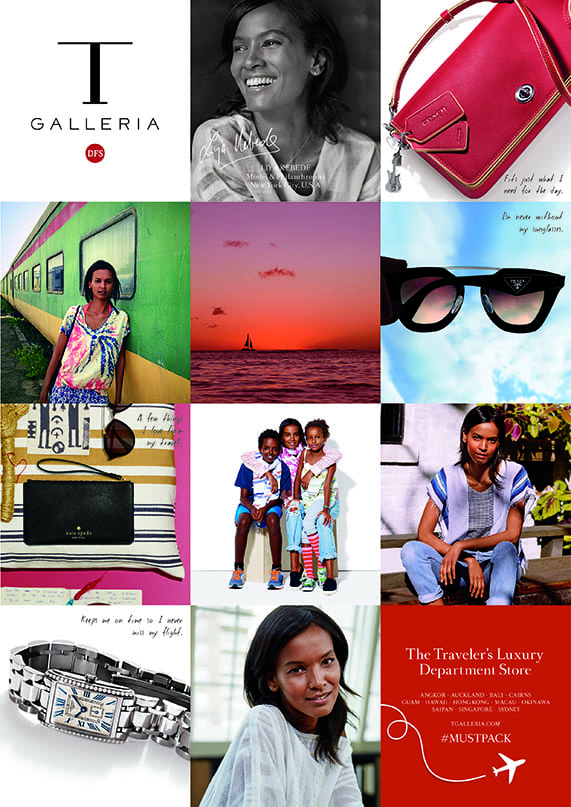
    DFS Group has announced its new Spring 2016 campaign tie up with three international influencers and global travellers to support and celebrate the launch of its new travel #mustpack concept – aimed at equipping travellers with the essentials ‘for wherever your journey takes you’.

    The new campaign features Ethiopian philanthropist and model Liya Kebede, Chinese model Zhao Lei and Chinese actress Chen Ran and is designed to provide DFS’ customers with a photographic inside track on these celebrities’ #mustpack journey choices, using photos and stories from their personal travels.

    DFS says that the campaign will run between March, April and May, allowing its customer to interact with the campaign in-store, online and through its social media channels.

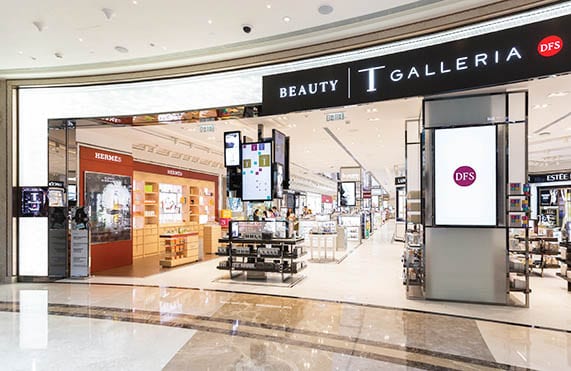
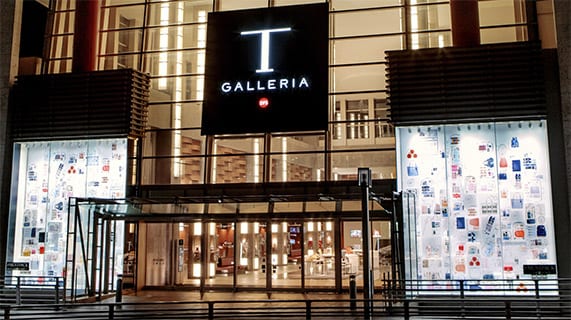
    T Galleria

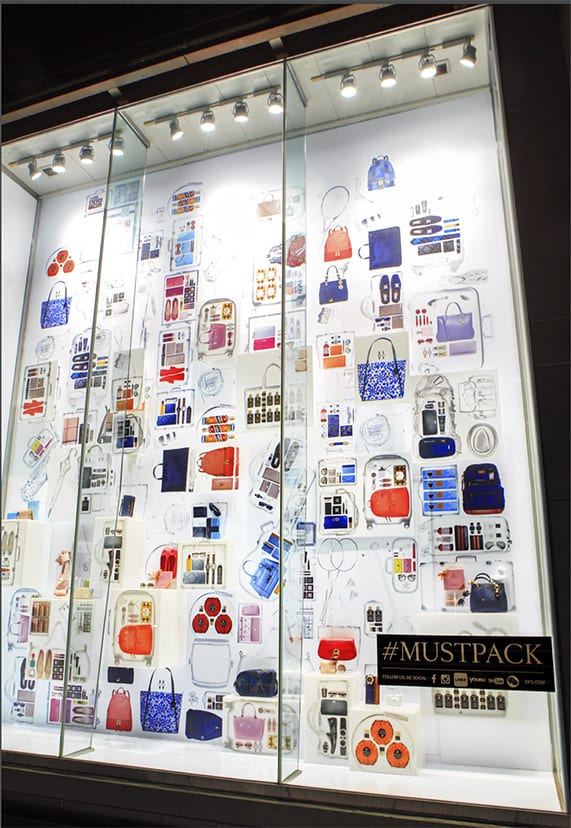
    How the new T Galleria front window displays look in Hong Kong.

    Mustpack window close up

    A close up of the #mustpack store window display.

    Customers will also be able to connect with each influencer, as well as their travel destinations, plus the selected #mustpack products that will be available for sale at T Galleria by DFS stores

    Commenting on the campaign, John Gerhardt, Senior Vice President, Creative Branding Direction, DFS Group said: “This season we were particularly inspired by those #mustpack items you have to have with you throughout your journey.

    “We wanted to bring that story to life by showcasing Liya, Zhao and Chen’s love of travel through their own personal travel photos, as well their true travel #mustpacks.”

    ‘IMMERSIVE’ DIGITAL EXPERIENCE…

    The retailer says that the new campaign is being shown utilising three videos featuring Liya, Zhao and Chen, plus ‘an immersive digital experience’ at TGalleria.com where customers can discover the videos and travel guides as well as the season’s #mustpack products.

    DFS’ customers in Hong Kong will also be able to meet the influencers, with Zhao Lei set to host a shopping night at T Galleria by DFS, Hong Kong, Canton Road on March 17 and Chen Ren attending the T Galleria Beauty by DFS, Hong Kong at Causeway Bay on April 14.

    The campaign brands feature #mustpack products from 15 of DFS’ most popular brands, including Estée Lauder, Givenchy, Prada, Bulgari, Rémy Martin and others and DFS says this is ‘just a sample’ of the from the 700 brands across its ‘five pillars of luxury’.

    Adding her comments, Sibylle Scherer, DFS Group President Merchandising and Consumer Marketing said: “Our Spring 2016 campaign’s celebration of travel as well those essential items you have to bring with you along the way, truly brings to life everything our customers love about DFS.

    Big 2 T Galleria by DFS Spring 2016 Campaign Featuring Liya Kebede_verticalSTORES ‘PACKED’ WITH #MUSTPACK PRODUCTS

    “From fashion and beauty to watches and wines, our stores are packed with the #mustpack products that complete your journey and we’re thrilled that Liya, Zhao and Chen have joined with us to share that story this season.”

    DFS adds that its store windows now show “x-ray” views into the various suitcases displaying this season’s collection, while in-store customers encounter highlighted #mustpack products at multi-category display tables.

    These are designed to simulate the experience of unveiling products through an airport security x-ray machine.

    DFS concludes that this campaign will also run on social media, with T Galleria by DFS teaming up with various influencers in key DFS locations, such as Gaile Lok in Hong Kong, Halley Elefante in Hawaii and Andrea Chong in Singapore. They will also be giving away the season’s best #mustpack products for dedicated followers of @DFSOfficial.


  • Prada Asia fortunes wane

    Prada Asia fortunes wane

    Prada Asia is the Italian luxury label’s achilles heel with the company reporting  a 16 per cent decrease in sales in the region in the year to January 31.

    “The economic situation of the Chinese market remains negative although there was some improvement in the final quarter,” Prada said in its earnings statement.

    “Consequently, in the 2015 financial year, the entire Asia Pacific area (excluding Japan) recorded a 4 per cent revenue decrease at current exchange rates and a 16 per cent decrease at constant exchange rates.”

    Japan proved a better market, for the label: for the fifth consecutive year, sales rose, this time by  11 per cent at current exchange rates, or 4 per cent at constant rates.

    Global sales changed little – for the second year in a row – largely due to the strengthening US dollar.  Total revenue was 3.552 billion euros (US$3.96 billion) in 2015. Sales in the US fell 9 per cent excluding currency fluctuations.

    “Throughout 2015, we had to deal with an economic environment characterised by extreme volatility in currency markets, as well as by the deteriorating geopolitical situation in many world regions,” commented said CEO Patrizio Bertelli, in a clear reference to the falling demand for luxury goods in China and the Paris terrorist attacks.

    “These two factors have made prices fluctuate wildly and diverted tourist traffic in sudden and unpredictable ways. Our retail network – now truly global thanks to investment in recent years – enables us to keep developing a direct relationship with our ever more demanding customer all over the world. In the coming months, the group will be focusing its energies on the development of new commercial and marketing initiatives to sustain organic growth, also by means of an extensive digital project to strengthen dialogue with our customers. These actions, taken against the background of rigorous and disciplined cost control, will enable us to consolidate our market position with satisfactory margins and returns on investment.”

    Prada is listed in Hong Kong.

  • Prada finance chief Galli resigns

    Prada finance chief Galli resigns

    Italian luxury goods group Prada said on Friday its finance chief was resigning with immediate effect, two days after the company reported almost flat full-year sales, held back by weakness in Greater China.

    Prada said in a statement to the Hong Kong stock exchange that Donatello Galli was stepping down for personal reasons to pursue new career opportunities, adding there had been no disagreement with the board during his tenure.

    “There is no other matter relating to his resignation that needs to be brought to the attention of shareholders of the group,” the statement said.

    Galli, who was also a board member, had been chief financial officer since joining the company in 2004.

    Hong Kong-listed Prada said Alessandra Cozzani, head of investor relations and executive director of the company, had been appointed to replace Galli.

    A search is also under way for a new board member, the company added.

    Prada, best known for handbags that retail for as much as 6,000 euros ($6,667), has seen earnings slump in recent quarters, hurt in part by costly investments in new shops in the face of softening demand for luxury goods.

    On Wednesday, the Milanese fashion house said net revenue totalled 3.55 billion euros in the year to Jan. 31, little changed from a year earlier.

    “We haven’t spoken to the company yet, but a management change is hardly surprising. The company’s been under a lot of pressure of late and has come down heavily from peaks,” said an analyst, who spoke on condition of anonymity.

  • Prada also experiences issues in China

    Prada also experiences issues in China

    Italian Prada Group‘s 2015 turnover dropped ever so slightly, blaming it on the lousy economic state China is in. The country is an important market for plenty of luxury brands, although the expensive dollar also had a negative effect.

    Strong growth in home territory

    Prada’s 2015 turnover dropped slightly, from 3.55 billion euro to 3.54 billion euro, with drops in Asia and the United States. Asian turnover fell 4 %, mainly because of China’s negative results, while American turnover dropped 9 % as the Italian fashion company struggled with the expensive dollar.

    Prada believes the European turnover growth (6 %) was thanks to the many Asian and American tourists, with a significant boost in Italy. Japanese turnover did extremely well, with an 11 % increase, the exact same number as in the Middle East.

    “Price variations and diverted tourist traffic”

    “Throughout 2015, we had to deal with an economic environment characterized by extreme volatility in currency markets, as well as by the deteriorating geopolitical situation in many world regions. These two factors have made prices fluctuate widely and diverted tourist traffic in sudden and unpredictable ways”, Prada CEO Patrizio Bertelli said.

    Prada will increase its focus on its retail network expansion. It already has 618 stores and retail turnover grew 76 million euro to 3.1 billion euro, while wholesale activities dropped 88 million euro to 444 million euro.

  • Hang Lung Properties’ net profit sinks 56 per cent on lower property sales in Hong Kong

    Hang Lung Properties’ net profit sinks 56 per cent on lower property sales in Hong Kong

    Hang Lung Properties chairman Ronnie Chan Chichung said on Thursday the developer cut its final dividend for the first time in 16 years amid weak sales in Hong Kong and the poor retail outlook in China would be a headwind over its prospects going forward.

    On Wednesday, Hang Lung said core earnings plunged 56 per cent last year -the largest fall in terms of percentage points since 2011 – to HK$4.38 billion.

    It owns a portfolio of eight shopping malls in the mainland which are occupied by high to mid-end retailers such as Apple, Prada, Louis Vuitton.

    “The cut in dividend was not because of the question of cash flow as we have cash reserve of more than HK$30 billion. The board wanted to send out a message to our shareholders about the grim market outlook,” he said.” We do not know when spring will come back.”

    The cut in dividend will only save HK$44 million.

    His remarks come a day after Apple forecast its first revenue drop in 13 years and reported the slowest-ever increase in iPhone shipments as the critical Chinese market showed signs of weakening.

    IPhone sales were expected to fall for the current quarter compared with the same quarter last year, chief executive officer Tim Cook said on a conference call with analysts on Wednesday.

    Hang Lung is the first to kick off result announcement among developers and analysts said its performance could provide a guide for the prospects of the retail industry in the months ahead.

    Other major developers who own and operate shopping malls in China include Sun Hung Kai Properties, Wharf (Holdings) and Henderson Land Development.

    Mainland Chinese rents account for 54 per cent of Hang Lung’s HK$8.94 billion revenue, down 47 per cent from 2014. It declared a final dividend of 58 HK cents, 2 per cent lower than 59 HK cents in 2014.

    The last time it cut its dividend was in 1999.

    Chan said he was told by clients that sales in the second half were worst than the first-half of last year.

    “It is not an encouraging sign as the track record shows sales in the second half year used to be better,” he said. Many high-end brands in the second-tier cities were facing difficult operating environments with decreasing sales.

    “Some even exited from the market entirely, causing occupancy of our Forum 66 in Shenyang and Center 66 in Wuxi to retreat to 87 per cent and 72 per cent , respectively,” the company statement said.

    Its mainland portfolio recorded a revaluation loss of HK$266 million mainly due to lower valuation of the malls at Forum 66 and Center 66 in Wuxi.

    Thomas Lam, head of valuation and consultancy at Knight Frank attributed the lower revaluation reflected the malls generated less rental income from previous year.

    “Landlords of mainland malls are reeling from a double whammy,” he said.

    During the year, Hang Lung said property sales plunged 88 per cent to HK$1.19 billion from the sale of 63 apartments and some car parking spaces.

    Chan, however, said Hang Lung gross rental income in Hong Kong and on the mainland still edged up 7 per cent to HK$7.75 billion last year due to the benefitting from various asset enhancement.

    Net profit declined 56 per cent to HK$5.09 billion as a result of smaller revaluation gains on investment properties.

  • Pranda Group expands in Vietnam and Indonesia

    Pranda Group expands in Vietnam and Indonesia

    Reporting from Pranda Group, the progress of its retail business expansion throughout the year 2015 in Vietnam and Indonesia; the country members of AEC has strengthened PRIMA GOLD brand by creating impressive experience to the target customers such as product perception, marketing activities, brand reinforcement, etc. Particularly in Vietnam, the marketing activities using brand ambassador made the output in Vietnam meet the company’s target. Moreover, Pranda Vietnam Retail recently increased new branches “Lotte Center” and “Vincom Center Nguyen Chi Thanh” in Hanoy to support the needs of consumers as well as extended distribution channels especially in the economic center of Vietnam. Presently, there are 8 branches located in the shopping malls of economic cities covering 5 branches in Ho Chi Minh and 3 branches in Hanoy.

    In 2016, the Company plans to expand one more branch at Saigon Center Department Store in Ho Chi Minh City, as  new Department Style of Viet Nam that the mix between the Plaza and Takashimaya from Japan. Over 57 square mates, Prima Gold sets a goal to make the Flagship store to create brand experiences and support to consumer needs.

    For the retail business in Vietnam where the rate of economic growth is attractive among AEC, Pranda Marketing Indonesia plan to increase channel and to expand its retail business in various brands. Recently, a new branch managed by Central Thailand in cooperation with PT Grand Indonesia was officially opened in Central Grand Indonesia. Pranda Marketing Indonesia aims to push forward PRIMA GOLD and Julia Brand to support consumers’ needs which have increasingly purchasing power. Currently, PRIMA GOLD has 3 branches, Julia 19 branches, and Lovelinks 8 branches. By the year 2016, the Company plan to expand 4 more PRIMA GOLD branches and 20 more Julia branches in order to accommodate a growing customer base and future growth.

    Pranda Group plan to expand in Asian jewelry market for leading to AEC 2016. The company is clearly to aim and extend to the retail network of Asian Economic Community or AEC. That integrates market to be a center of the region. Certainly, it will have a population more than 600 million people in this market. Pranda Group has consider in this market that sufficient to forward product, service, labor and open free market investment in this year. This is a chance to push forward ours brand to be recognized and opportunity to build our retail marketing channel to grow up.

  • Is Time Running Out For Luxury in China?

    Is Time Running Out For Luxury in China?

    In 1992 Louis Vuitton made its debut in China with a store in Beijing’s bustling shopping district of Wangfujing, becoming the first luxury brand to set foot in the Middle Kingdom. The timing was perfect. The Chinese economy was just coming into its own, embarking on a spectacular journey of double-digit economic growth. This was the start of the consumerist boom that would shape the fortunes of many Western brands in China.

    Louis Vuitton’s signature monogram soon became ubiquitous in China as the company expanded its footprint across the country, first in all the major cities like Beijing, Shenzhen and Guangzhou, and then in second and third-tier cities. Gradually China became a big contributor to Louis Vuitton’s revenues globally. In a 2009 interview with Reuters, Jean-Marc Lacave, the then North Asia chief executive for LVMH Watches & Jewelry, said that the company aimed to strengthen its presence in China’s third- and forth-tier cities and gain market share.

    Several years have gone by, and now the legendary Louis Vuitton monogram seems to be losing some of its sheen in China.

    In 2015, Louis Vuitton closed three of its stores in China, including its flagship store in Guangzhou. Rumor has it that the Paris-headquartered company will continue to shutter more stores in the country.

    Louis Vuitton is not the only luxury brand that has run into rough weather. For most luxury brands, China is no longer the cash cow it once was. Multiple reports suggest that the luxury retail business in China is shrinking, leaving several big brands in a quandary.

    Two decades ago, when the likes of Louis Vuitton and Prada entered China, they had the much-coveted first-mover advantage in a market that was just starting to come into its own. Data from Euromonitor shows that the retail luxury market in China has grown from a very low base to $135 billion by 2013. But the tide seems to be turning. The size of the retail luxury market in China contracted slightly to $134 billion in 2014. And by all indications, this is just the beginning of a bigger slump.

    The top 10 global luxury brands as per market research company Millward Brown’s latest BrandZ report—a list that includes names like Louis Vuitton, Hermes, Gucci and Chanel—saw 6% of their total brand valuation evaporate in 2015. “Following a strong recovery from the global financial crisis, the pace of sales flattened for several reasons, including the economic slowdown in China, Brazil and Russia. In addition, China’s anti-corruption regulations trimmed luxury gift giving in that country,” the report said.

    In the first quarter of 2015, Italian luxury brand Prada experienced a 19% slump in sales from the Greater China region. The group also reported a 23% plunge in net profit in the first half of 2015. Similarly Burberry has hit upon hard times. According to a Financial Times report, the Greater China area contributes 25% to the classic English luxury brand’s sales numbers. But in 2015, demand in China (and from China) has been hit. “Burberry’s like-for-like sales in Hong Kong fell by more than 20 per cent in the three months to the end of September as fewer Chinese shoppers travelled to the region. Like-for-like sales in China fell by a mid single-digit percentage in the quarter,” said the report. The company blames the overall disappointing performance to an “increasingly challenging environment for luxury, particularly Chinese customers”.

    Confronted with an unstable market performance, several luxury companies have started shrinking their store numbers. In the past two years Burberry, Armani and Prada have reportedly shut down four, five and 16 stores respectively. Hugo Boss shut seven stores in China and Chanel is down to 11 stores in China, half the number it had during the good days.

    End of a Dream Run?

    Some of the reasons for China’s luxury slowdown are obvious, such as the Chinese government’s crackdown on corruption under President Xi Jinping’s regime. Cases of bribery, gifting, lavish purchases and ostentatious show of wealth have come under the scanner hurting luxury good manufacturers. The overall slowdown in the Chinese economy is also leading to belt-tightening measures further slowing luxury sales.

    But there’s another less obvious reason for the slowdown in China’s luxury market, according to Benoit Garbe, Senior Partner at Millward Brown. Till the slowdown hit China, this was a market on steroids and brands were expanding like crazy resulting in oversupply. “It’s been an easy ride for many luxury brands over the past 5-10 years when there was fast growing demand. [For brands] it was all about growing their distribution footprint, opening new stores. Now the market is a real market with more intense competition, more sophisticated demand,” says Garbe. “The best brands would think strategically in terms of differentiation and building relevance, and will be the brands that win.”

    As Chinese luxury buyers become more sophisticated, they don’t want to have the same luxury brand being used by every second person on the street. They are looking for more exclusivity. Adds Timothy Coghlan, Associate Director of Luxury Retail at Savills, “There’s a lot of evidence that the Chinese customer isn’t loyal. They will change between brands depending on which brand is trendy.”

    Another big factor that has been denting the China sales numbers is the trend of consumers shopping for luxury overseas in order to avoid paying high import taxes in China. “High import taxes within China are a big incentive for shopping abroad—the same luxury handbag can often cost a third more in Beijing than in Paris, for example. But, holidays also encourage more extravagant spending habits,” writes Fflur Roberts, Head of Luxury Goods at Euromonitor, in an email response. If you look at the annual reports of several luxury brands, you may find weakened sales performance in China, but improved performance in neighboring countries like Japan and Korea, or even the brands’ countries of origin, such as France. Some of this is due to demand from Chinese travellers. Roberts adds that “wealthy Chinese tourists have been key drivers of global luxury goods sales for more than a decade. According to Euromonitor International, the Chinese made over two million trips to the US in 2014, an increase of almost 12% on 2013 and a massive 286% increase since 2009….”

    However, getting a good bargain doesn’t always require travel. Thanks to China’s e-commerce revolution, haitaos and daigous, or cross-border buying agents, have become popular. In the case of daigous (literally translated as “substitute buyers”), individual professional buyers usually stationed abroad can fulfill customized orders for consumers in China. Usually the daigous are Chinese students studying overseas, tour guides or air hostesses, in short, people who fly in and out the country frequently. Professional daigous will usually first take orders from customers and then procure and send the goods to China. In the case of haitaos, instead of individuals, companies do the buying. According to a report from Bain & Company, luxury purchases through daigous amounts to up to 15% of Chinese consumers’ total spending on luxury.

    Daigous and haitaos exist in a legal grey area as they skirt the government’s tariff regulations. The goods they ship to China somehow skirt Chinese import tax regulations. Daigous are not licensed sellers, which leaves issues of consumer rights in a grey area as well. While the Chinese government is starting to crack down on daigous, it will be a while before it has any serious impact on luxury sales via the proper channels.

    Luxury market infographoic

    Engineering a Bounceback

    Clearly, the problems luxury brands are facing in the Chinese market aren’t going away anytime soon. So what can brands possibly do to ease the pain? A few suggestions:

    Narrow the Price Differential:

    In March 2015, Chanel shocked onlookers by announcing its decision to increase prices in Europe by 20% and reducing them by a similar percentage in China. Prada was quick to follow suit by lowering prices in China. While it is hard to predict the impact this will have, it can be safely assumed that it will undo some of the damage done by high import taxes in China, and hence, help brands narrow the price differential between China and overseas. After all, in some cases, goods are 60% more expensive in China than they are in Europe. This will also help brands counter daigous who have been undercutting them with a vengeance.

    Customized Offerings:

    For the super rich price may not matter all that much. Some Chinese customers probably don’t feel that they are being overcharged: as long as they enjoy good customer service here, they won’t bother going overseas for a better bargain. “Buying a luxury product is more emotional than functional,” says Millward Brown’s Garbe. As Chinese customers become mature, they want exclusivity, privacy and service, and it’s not so much about price anymore. This is where brands need to think in terms of tailoring the experience accordingly. As Garbe puts it: “How do you make sure you know the customer very well, and then you deploy strategy and operations that allow you to, in-store, instantly recognize them? So they walk in the stores, [and] automatically on your iPad you know them, you know what they’ve bought, and you can really tailor your offer.”

    Adds Coghlan from Savills, “One of the things that I think is very important for brands is to set up a CRM program so they can track their customers globally. They can do it to some degree through WeChat or things like that.”

    Abroad at least, some brands are going out of the way to make important customers feel special. In some US stores, brands like Gucci, Prada and Louis Vuitton have created a special space for important customers. One of the Louis Vuitton outlets has “a rooftop area where guests can sun themselves and enjoy Champagne”.

    ‘Affordable’ Luxury:

    High net worth individuals are a very small group of people but the biggest consumers of luxury brands. There’s another demographic that cannot be categorized as super rich but is affluent nevertheless and aspires for luxury. Luxury brands can think of catering to this target group by rethinking their portfolio. The big three luxury groups, LVMH (owner of Louis Vuitton and Moët & Chandon Champagne), Richemont Group (owner of Cartier and Chloe) and Kering Group (owner of Gucci and Yves Saint Laurent) have all created or acquired lower profile brands for those who still want luxury, but a little more affordable and understated. Affordable luxury brands include the likes of Baume & Mercier (Richemont), Pomellato (Kering) and Loewe (LVMH). Another benefit of having a diversified portfolio, apart from profits coming from different streams, is offering the customer greater exclusivity. A Miu Miu, after all, can be far more exclusive than a Prada.

    Aligned Businesses:

    Some brands are going a step further and tapping into new categories altogether. Gucci, for instance, opened a full-service restaurant  in Shanghai. 1921 Gucci Café, as the restaurant is called, is connected to the Gucci store in the mall by an elevator. After browsing in the store, customers can stop by for an Italian lunch or dinner. Globally, Prada and Chanel have tapped into food as a category too. In 2014, Prada bought a stake in iconic Milan cafe Pasticceria Marchesi. The café “serves everything form breakfast and lunch to aperitifs, with custom-made fine china, it aims at creating a very luxurious experience for its customers.” Restaurants and cafes might help improve the customer experience or add to the brand, though not everyone agrees with this view.

    Tapping E-Commerce:

    A couple of years back the widespread notion was that e-commerce is not for luxury, mostly because e-commerce was associated with discounts, something that doesn’t go with the idea of luxury. “For many years there was this belief that digital was not for luxury brands… and there [was] a lot of resistance to it,” says Garbe. Also, shopping online almost certainly meant sacrificing the customer experience. As Garbe puts it, for lots of luxury brands “digital and e-commerce was all about price and discounts, it [was] not experiential as a store experience”. The tide, however, is starting to turn.

    The reality is that given Chinese customers penchant for shopping online, luxury brands can no longer afford to ignore e-commerce. According to a Bain study on luxury behavior, 73% of luxury buyers search online before they purchase. “If you think of Tmall or how consumers actually behave, they really seek for peer inducement or they seek for recommendation or reviews. In a way e-commerce is very important because consumers now shop based on the reading or what is being said on the brand. You need to start those conversations as well to be able to get the positive review from people.” says Garbe.

    The e-commerce or digital space also give brands opportunities to experiment with different scenarios. “I think Tmall or any online platform allows you to try different things, some of which will be added value offers, some of it will be experiential offers, maybe pricing. But again you try multiple ones and you see what works and you adapt and you change. That’s the beauty of online platforms: that you can really learn and experiment,” says Garbe.

    Once a luxury brand sets up an online shop, the physical and online stores will play separate roles in tandem with each other. “One of the opportunities is making your retail (physical store) as a full experiential center, where consumers get to touch, feel, be transported,…. Maybe you don’t need to have as much inventory in the store, you use the store as a brand building platform where people can go and buy online, but it should be the same price (as the physical store), and vice versa people could go screen [the] shop [online], but they still want to touch the product and then they can go and pick it up at a store and make sure this is what they want.”

    Tailor to China:

    For some brands, tailoring their products or experiences to China might work wonders for their sales. Tiffany has a “tailor for China” strategy. “The Tiffany Keys Collection, a jewelry collection tailored for China, [has] been one of their fastest growing items [here]. Again it’s tapping into that Chinese value of the key representing the possibility to unlock which is very relevant to many women who want to wear the keys for what it means and what it stands for in the mind of Chinese consumers.”

    Relating your products to Chinese culture is another way to get Chinese customers interested. Dolce and Gabbana (D&G) did this in their 2016 Spring & Summer collection, which was inspired by Chinese motifs from the 17th century. “They were using all those visual Chinoiserie or Chinese motifs to really bring into the DNA of D&G. In a way it’s a European brand saying: ‘How do we win in China?’” Designers of Burberry were also inspired by Chinese culture, and customized their products especially for the Chinese consumers. During the 2015 Spring Festival, they launched a scarf collection with the Chinese character for ‘prosperity’ embroidered on it. That move, however, backfired as Chinese consumers felt it made the scarf look like a knockoff. So while tailoring for China is great in theory, it needs to be done carefully.

    The bottomline is that the Chinese market is too big for luxury brands to ignore. They just need to find new ways to tap the opportunity here.
  • Burberry Hong Kong deep discounts for Christmas

    Burberry Hong Kong deep discounts for Christmas

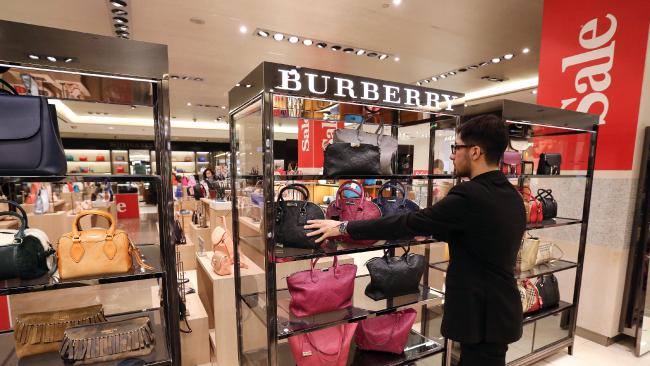
    Luxury fashion retailer Burberry Hong Kong has launched an unprecedented deep discounting campaign to move stock in the peak Christmas retail period.

    The British brand has reduced the prices on some lines by 50 per cent, the biggest reductions since the Individual Visit Scheme for Mainland Chinese tourists was launched in 2003.

    Typically, the highest discounts in the pre-Christmas sale is 30 per cent on limited lines.

    It is rare for high end brands like Burberry to offer such large discounts – but rivals Gucci and Prada have already discounted lines by similar amounts in Hong Kong, where such retailers lack an outlet channel for surplus or end of line stock.

    Industry observers say the level of discounting in such a peak retail period reflects the serious challenge faced by luxury retailers since the clampdown on gift giving in the Mainland took effect and the exchange rate fluctuations made it affordable for big spending Chinese travellers to travel to Japan and Europe to shop instead of Hong Kong and Macau.

    “A 50 per cent discount is unusual for big luxury brands like Burberry” Hayman Chiu, associate director at Cinda International, told the South China Morning Post.

    “The whole luxury industry is doing the same thing right now.”

    Burberry’s discounts apply only to a limited proportion of its stock, specifically about 10 styles of handbags and some clothing.

  • Hong Kong a drag on Prada

    Hong Kong a drag on Prada

    Luxury fashion group Prada says the Asia Pacific market continued to decline during the first nine months of the new financial year.

    And Hong Kong and Macau have taken the blame – again.

    During the last three quarters, sales in the region fell 4.9 per cent at current exchange rates.

    “This is due to reductions in both local consumption and tourist flows within the region, with Hong Kong and Macau particularly affected,” Prada said in its results statement.

    But Japan helped ease the pain. Prada sets Japanese sales apart from Asia Pacific sales, reporting a 10.4 per cent increase in sales at current exchange rates and 4.6 per cent at constant exchange rates, driven largely by the rising number of Chinese tourists – many of whom in previous years would have visited Hong Kong to shop for luxury goods.

    In Europe, too, the influx of Asian tourists boosted sales, which rose 8.6 per cent at current exchange rates and 7.6 per cent at constant exchange rates. The Italian market continued to stand out among the various European countries and recorded growth rates well above the average for the area.

    On the American market sales increased at current exchange rate by 8.5 per cent, but showed a negative underlying trend, down 7.6 per cent at constant exchange rates.

    “The significant strengthening of the US dollar over the period had an adverse impact on tourism, mainly from China and South America, but, at the same time, it encouraged a shift in American consumer spending towards Europe,” Prada said.

    By brand, Prada recorded a 2.1 per cent global sales  increase which was entirely attributable to the exchange rate effect. Miu Miu has grown with revenues up at both current exchange rates (+11.8 per cent) and constant exchange rates (+1.9 per cent). Church’s has also achieved sales growth (+17.6 per cent), a positive trend also on a like-for-like base.

    The licensing business (eyewear and fragrances) performed very well, with royalties for the nine months to October 31, totalling Euro 33.5 million, a 16.2 per cent increase, in large part thanks to the launch of the first Miu Miu fragrance.

    Prada Group’s consolidated revenue for the nine months was Euro 2.583 billion. This represents a 1.2 per cent  increase at current exchange rates on the corresponding period in 2014, entirely thanks to directly operated store sales. Wholesale revenues decreased as the group continues to reduce its presence in that channel.

    Net profit was Euro 235.1 million or 9.1 per cent of net revenue.

  • Prada shares hit all-time low as China’s slowdown hits sales

    Prada shares hit all-time low as China’s slowdown hits sales

    Prada shares have fallen sharply in Hong Kong, after analysts reacted negatively to the fashion company’s latest financial results which came in well below expectations.

    The Italian fashion house, which specialises in leather fashion and fashion accessories, shoes, luggage, perfumes, and watches, reported third -quarter sales of €747.7 million, down 6% from €792.3 million a year earlier, as sales in China deteriorated further and US sales were hit by the strength of the dollar which crimped tourist spending.

    The sales were well below analysts’ expectations of about €816 million, while earnings before interest, tax, depreciation and amortisation of €155 million came in below expectations of €170 million. Prada’s efforts to improve the efficiency of its supply chain boosted gross margin, but this was then more than offset by higher operating costs associated with its retail expansion.

    Retail sales were down 4% overall, with wholesale sales down 26%. Retail sales fell 17% in China, which the company blamed on the volatility in the Chinese stock market in August and September, and were down 4% in the Americas, offsetting rises of 2% in Europe and 8% in Japan. Middle East sales were down 3%.

    Those sales were flattered by the weakness of the euro, and were even worse at constant exchange rates. Chinese sales were down 26%, Americas sales down 13%, and Middle East down 4%. Japanese sales were only up 4%.

    Prada’s growth in Europe was also a marked slowdown from the 10% and 12% growth reported in the first and second quarters of the year, respectively.

    “Prada also commented that the recent attacks in Paris have deterred tourist traffic from Europe. Some improvements in mainland China were noted, but trends are difficult to extrapolate at this point, while the US sees continued weakness, with a promotional market into the seasonal period a further headwind,” writes Nomura Analyst Christopher Walker.

    He notes that Prada has pledged to better harmonise its global prices, with a target of reducing the price gap between China and Europe to about 10% to 15%. Prices of some new products in Europe have already been raised, but Walker thinks Prada “may need to take more immediate action on Asia pricing”.

    Nomura is retaining a Reduce rating on the stock, and has lowered its target price for the stock to 26 Hong Kong dollars.

    Prada’s shares fell 6.6% to HKD24.85 a share in Hong Kong on Wednesday, marking a new all-time low for the stock and meaning they’re down 42.9% so far in 2015.

    J.P. Morgan Cazenove has cut its earnings estimates for the year as a whole by a further 6% on the back of Prada’s third quarter report, and has reduced its target price for the stock to HKD33. The broker has a Neutral rating on the stock.

    Its analysts think Prada is compounding a tough environment for the luxury sector with brand-specific issues and high operating expenditure that it’s only just getting under control.

    They also think that Prada’s warning of a further deterioration in European sales since the terrorist attacks in Paris bodes ill for the luxury sector as a whole, although Prada looks like being among the worst hit. Most of the sales luxury goods companies make in European cities like Paris and London come from tourists.

    “The further deterioration in the trend is not a surprise: tourists are critical to the luxury goods sector and the Paris tragic events dent tourist flows (note that Japan Airlines announced that it was stopping its Paris-Tokyo Narita routes today until March after a 60% slump in bookings),” they write. “Peers though seem to have noticed mainly an impact in Paris and Brussels and not in other European capital cities.”

    The analysts think the fourth quarter of 2015 will be weak for the whole luxury sector, as the Paris attacks weigh on European sales. They think sales will remain strong in Japan; improve in South Korea; be slightly improved in Asia Pacific due to weak comparative figures from a year earlier; and remain weak in the US.

    Nomura and J.P. Morgan Cazenove weren’t the only analysts to cut target prices for Prada’s stock on Wednesday. Bryan Garnier slashed its target price to HKD41, from HKD52, and Bernstein cut its price to HKD25 from HKD26.50. Bocom International Securities reduced its rating to Sell, from Neutral.