Tag: price

  • Steel prices 20% lower than in May after falling again

    Steel prices 20% lower than in May after falling again

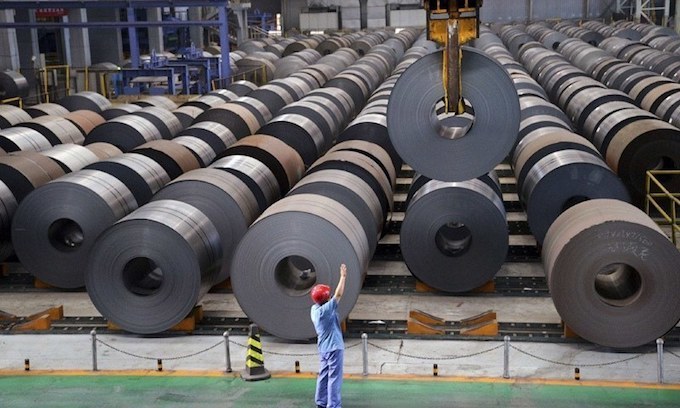
    Steel prices have dropped for a 14th time in a row since mid-May with the total decline adding up to nearly 20%.

    Many producers like Hoa Phat Group, Viet Nhat, Viet Y, and Kyoei cut prices by VND300,000-500,000 ($12.81-21.36) a ton this week.

    Prices have fallen by around VND3.5 million a ton in the last three months to VND14.4-15.7 million though they remain higher than last year’s VND12.5 million.

    The relentless fall comes amid weaker demand and falling production costs.

    Steel output last month was 2.25 million tons while demand was for 1.99 million tons, both down 13% year-on-year.

    Demand had fallen by 7.3% in the first six months of the year as the property market slowed on credit tightening by banks and falling demand in China.

    Demand is unlikely to return in Q3 since it is the construction low season, and with inventories being high as well, prices would not go back up, BIDV Securities (BSC) said.

    Mirae Asset Securities made a similar forecast citing high inflation. Steel output this year would fall by 10% to around 27 million tons, it added.

    But BSC said steelmakers’ profit margins would increase thanks to falling input prices.

    Data from the Vietnam Steel Association showed prices of iron ore 62% FE, a key raw material for making steel, have fallen by almost half since early May.

    Coking coal, steel scrap and hot-rolled coil have become 35-60% cheaper.

  • Gold plummets to 8-month low

    Gold plummets to 8-month low

    SJC’s gold price plunged by 3.1 percent to VND62.5 million (US$2,667.18) per tael Tuesday, the lowest in eight months, after recording a historic decrease Monday.

    The drop was the second biggest single-day decline for the safe haven metal after the 6 percent fall Monday.

    A tael equals 37.5 grams or 1.2 ounces.

    Global gold prices fell to their lowest in 11 months last week as the U.S. dollar has been gaining this year amid concerns of inflation and geopolitical tensions.

    But they rose by 1.1 percent Monday to $1,708.18 per ounce.

  • Industries hit hard by rising fuel prices

    Industries hit hard by rising fuel prices

    Sao Viet Bus, which operates on the northern route Hanoi – Lao Cai Province, is struggling to survive as the price of fuel, which accounts for 50 percent of costs, keeps rising.

    “If we do not operate regularly, we will lose our slots at bus stations, but the more we operate, the more we lose because of surging costs,” Do Van Bang, CEO of Sao Viet’s parent company, Minh Thanh Phat, said.

    Sao Viet has reducing the number of trips to cut costs.

    Bang said the only way to break even is to increase fares by 15-20 percent, but with competition being intense, the time is not right for it.

    But the company would not be able to absorb the losses for long, he added.

    The company is one of many to lose due to the 39 percent rise in fuel prices since the beginning of this year.

    Nguyen Manh Hung, CEO of transport firm International Logistics, said fuel accounts for 40 percent of costs, and so the increases in their prices has affected the company.

    It is not easy to negotiate price hikes with customers, he said.

    “We are trying to cut all other expenses to survive the fuel price surge.”

    Half of all fishing vessels in Vietnam have stopped going out to sea after diesel prices rose 1.7-fold since the end of last year, the Ministry of Agriculture and Rural Development said in a recent report.

    The cost of operating boats has risen by 35-48 percent, while seafood prices have only gone up marginally, it added.

    The chairman of garment company TNG, Nguyen Van Thoi, said its business has not been majorly affected by the fuel price surge as contracts have already been signed for the rest of the year.

    But it is seeing prices drop as consumer in its export markets are cutting spending due to inflation, he said.

    Huynh Thi My, general secretary of the Vietnam Plastics Association, said plastic companies are also in trouble as they cannot negotiate price hikes with foreign customers.

    Businesses are looking for new markets and suppliers with lower prices, she added.

    Businesses are petitioning for more tax cuts to lower fuel costs.

    The Ministry of Finance should reduce special consumption tax (currently at 10 percent) and value added tax (also 10 percent) on fuel so that businesses face no more burden, Bang of Minh Thanh Phat said.

  • Gold consumption up

    Gold consumption up

    Vietnam’s gold consumption rose 6 percent year-on-year in the first quarter as inflation concerns pushed people to invest in safer assets. Gold consumption hit 19.6 tonnes, compared to 18.6 tonnes in the same quarter last year, according to the World Gold Council (WGC).

    Demand for gold bars and coins rose 4 percent to 14 tonnes in the period, while demand for jewelry rose 10 percent to 5.6 tonnes.

    Andrew Naylor, head of ASEAN and Public Policy at the World Gold Council, said rising demand for gold in Vietnam happened as the dong weakened and inflation rose.

    The nation’s economic recovery also helped demand to rise, especially during Tet, the Lunar New Year holiday, Valentine’s Day and the God of Wealth Day in February.

    Vietnam was the Southeast Asia’s largest gold bullion and coin market last year and among the top 10 globally.

    Geopolitical tensions sent global gold prices surged to $2,070 per ounce, near an all-time high, in March.

    Louise Street, senior analyst at the World Gold Council, said that the first quarter of 2022 has been a turbulent one, marked by geopolitical crises, supply chain difficulties and surging inflation.

    “These global events and market conditions have solidified gold’s status as a safe haven holding, not just for investors but also for retail consumers, thanks to its unique position as a dual-natured asset class.”

  • Grab to increase all service fares

    Grab to increase all service fares

    Ride-hailing giant Grab will raise all fares from March 10, the first tech-based transport firm to do so amid record-high gasoline prices.

    GrabCar’s first two-kilometer fare will be raised by VND2,000 ($0.09) to VND29,000 for four-seater and VND34,000 for seven-seater vehicles in Hanoi and Ho Chi Minh City.

    That of each subsequent kilometer will be VND10,000, up VND500.

    GrabCar fares in other cities and provinces will also be increased by VND2,000-2,500 for the first two kilometers, and VND600 for each subsequent kilometer.

    For its bike ride-hailing and delivery services, the giant’s fares will go up to VND12,500-13,500 for the first two kilometers and VND4,300 for each subsequent kilometer.

    The tech-based transport firm cited surging gasoline prices as a reason for the adjustment.

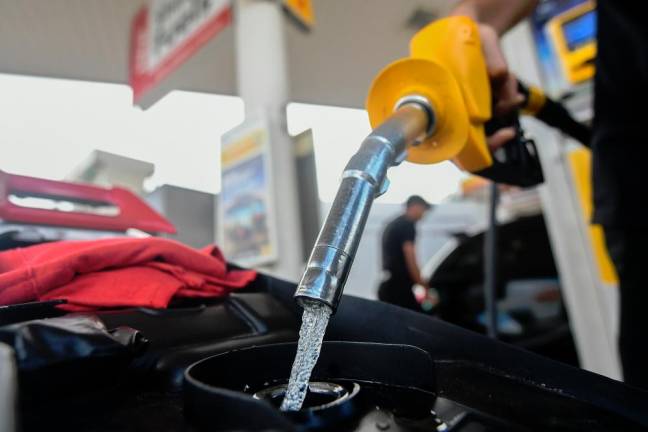
    Gasoline prices in Vietnam hit the all time high of VND26,830 per liter for popular RON 95 and VND26,070 per liter for biofuel E5 RON 92 last Tuesday, after authorities adjusted them upward for the sixth time in less than three months.

    The last time Grab increased its fares was at the end of 2020, after authorities raised value-added tax for tech-based transport services from 3 percent to 10 percent.

    Taxi firms expect to increase their fares if gasoline prices stay at the current all-time high.

  • Fuel, food push consumer prices up in February

    Fuel, food push consumer prices up in February

    The consumer price index (CPI) was up 1.42 percent year-on-year in February as Tet in early last month pushed up the prices of food, dining, and transportation.

    Gasoline prices surged 5.8 percent from January and transport prices increased by 2.35 percent as travel demand skyrocketed during Tet (the Lunar New Year), according to the General Statistics Office.

    Food and dining, beverages and cigarettes, and culture-entertainment-tourism prices rose 1.54 percent, 0.73 percent, and 0.51 percent, respectively

    Housing and construction material prices also increased due to an increase in prices of inputs such as kerosene, gas, and electricity.

    CPI in the first two months have risen by 1.68 percent year-on-year, said the GSO.

    Inflation in full-year 2021 was 1.84 percent, the lowest rate since 2016, the office said.

  • Rising gasoline prices further burden pandemic-hit economy

    Rising gasoline prices further burden pandemic-hit economy

    Duy Anh of Hanoi’s Cau Giay District started off this week by hanging a notice outside his cafe saying the price of coffee had been hiked by 25 percent.

    “I know customers will not like it, but I do not have any choice,” he said, explaining that the cost of ingredients and their delivery has risen by 20 percent due to rising gasoline prices.

    Many transport companies have either announced or quietly increased prices by around 10 percent last week as the government hiked gasoline retail prices to mirror the increase in global prices. A Ho Chi Minh City transport firm, which asked not be identified, has raised container transport prices by 11 percent and now charges VND3.2 million ($141) for a trip to the neighboring province of Dong Nai.

    Tran Duc Nghia, CEO of Delta International, said the transporter is set to hike prices by around 5 percent soon. Gasoline prices in Vietnam are now at an eight-year high, having risen by 11 percent in the last two months. Following the latest adjustment last Friday, the popular RON 95 variety is now close to a record high price.

    Global crude prices have climbed to a seven-year high and Vietnam’s biggest refinery Nghi Son has been forced to reduce its production from 105 percent to 80 percent due to a cash crunch. Nguyen Bich Lam, former head of the General Statistics Office, estimates that a 10 percent increase in fuel prices causes GDP growth to drop by around 0.5 percentage points.

    Lender HSBC last week raised its inflation forecast for Vietnam from 2.7 percent to 3 percent after factoring in the higher energy prices. The Asian Development Bank pegged the figure at 3.8 percent. Transport companies are between a rock and a hard place since price hikes are hard to sell in an economy hit by Covid-19.

    Hai Van International Shipping in HCMC, which transports goods and passengers, has seen revenues fall by up to 70 percent year-on-year in recent weeks due to declining demand.

    “We plan to increase fares, but we have yet to do that as there might be a decline in number of passengers.”

    Another transport company, Minh Thanh Phat, said the higher fuel price is another blow that put many operators to the verge of bankruptcy amid low demand.

    “Continuing to operate will result in losses, while suspending operations means we cannot pay loan interest to banks”.

    Economist Ngo Tri Long urged the government to lower special consumption and environmental taxes on gasoline to reduce the pressure on the economy.

  • Netflix’s price increase won’t affect T-Mobile customers

    Netflix’s price increase won’t affect T-Mobile customers

    As many of you probably know already, Netflix has raised prices of all plans in the United States and Canada. Starting this month, old and new Netflix subscribers will have to pay up to $2 more each month to benefit from the company’s streaming service.

    There are a few exceptions though, and if you’re a T-Mobile customer, we’re happy to report that the price hike won’t affect you. Assuming you already have Netflix included in your T-Mobile plan, the new pricing structure shouldn’t worry you at all. T-Mobile has just confirmed that “your Netflix is still on us,” which means that the Netflix benefit included in your plan remains on the carrier.

    If you’ve upgraded your Netflix on Us (to Standard or Premium), you will see Netflix’s price change reflected on your T-Mobile bill starting as their changes go into effect. However, if you wish to change your T-Mobile plan to start getting Netflix on Us, you can certainly do that in My T-Mobile.

    We previously reported that prices for all Netflix plans in the United States will increase from $1 to $2 per month. The new monthly price for the standard plan is now $15.50, exactly $1.5 more than last month. Also, the 4K Premium plan is now priced at $20 from $18. Finally, the basic plan will be $1 more expensive, so subscribers will now have to pay $10 per month.

  • Gold price hits 12-month high

    Gold price hits 12-month high

    Vietnam’s gold price climbed to a 12-month high Monday even as global prices dropped.

    Prices at state-owned Saigon Jewelry Company rose 0.05 percent from Saturday to VND57.98 million ($2,552.79) per tael Monday. A tael equals 37.5 grams or 1.2 ounces.

    Other companies sold their gold 0.17 percent higher at VND58 trillion, a 12-month high.

    Vietnam’s gold price is now VND10 million higher than global rates, widening from VND8 million a month ago.

    Global gold prices were subdued Monday over fears the U.S. Federal Reserve would start paring its stimulus this year despite Friday’s weak job data.

    Spot gold inched 0.1 percent lower to $1,755.68 per ounce.

    Spot gold may bounce into the $1,763-$1,768 range, before resuming its fall towards a support of $1,724, according to Reuters technical analyst Wang Tao.

  • Rising food prices make things harder amid Covid woes

    Rising food prices make things harder amid Covid woes

    Surging prices of essential goods are worsening the difficulties for people who have already been hit by job losses and travel restrictions.

    The last time Le Quang Hai of Hanoi’s Cau Giay District went to the market, the prices of eggs and most vegetables had doubled. He already could not afford meat.

    The price increases were a further financial burden for the 23-year-old delivery worker who has been unemployed for two weeks as his company cut the number of staff on authorities’ orders to limit the number of people commuting.

    His only income has been the VND1.5 million ($65) government support, which will soon run out.

    “I might have to borrow money from some friends as Hanoi has imposed social distancing for another two weeks. I hope the outbreak will be contained before I run out of money.”

    In Hanoi’s neighboring province of Hung Yen, Nguyen Hoang Yen, who tends plants in an apartment complex, has seen her work hours reduced by half for a week now due to restrictions on people coming in from outside.

    But rising food prices are creating more challenges for her family of three which depends mainly on the 50-year-old to put food on the table.

    “We try to keep our meals simple. There is not much we can do but to wait for all of this to be over.”

    Rising prices of meat, vegetables and groceries are adding to the challenges for low-income workers.

    Industry insiders say the closure of wholesale markets and retail outlets due to Covid-19 have pushed prices up in the capital.

    In Xuan La Market in Tay Ho District, the price of a kilogram of cabbage and squash have risen by a third to VND15,000 and by 20 percent to VND27,000.

    Hanh, a vegetable vendor, said since earlier this week she has been unable to buy from outside of Hanoi due to transport restrictions.

    Egg prices remain at around 50 percent higher than before the outbreak.

    “Rising demand and limited supply since most eggs are transported to HCMC have caused prices to rise,” Nguyen Thi Kim Dung, director of retail chain Co.op Mart Hanoi, said.

    The price hikes have placed a strain on both blue- and white-collar workers.

    Minh Tu, a graphic designer in Ba Dinh District, has seen his income cut by 30 percent as his company lost contracts.

    “I eat more carbohydrate and less protein to reduce my expenses. For the next few weeks there will be no fruits or desserts,” the 29-year-old said.

    To ensure enough supply and keep prices from rising, the city trade department plans to use bus stations, stadiums and empty plots of land as hubs for food to make up for the closure of wholesale markets.

    The city has also set up several mobile shopping sites to reduce crowds at markets and stabilize prices.

    Dam Manh Tuan, director of retail outlet Aeon Long Bien, said around eight tons of food would be distributed to four such points in Long Bien District at the same prices as at Aeon stores.

    Similar sales points are being set up in downtown districts.

    But for Quynh Anh in Hoan Kiem, who has been laid off from her job as an office receptionist, another two weeks of social distancing means prices will likely increase further.

    And, for the 25-year-old, finding a new job is almost impossible at this time.

    She said: “I’ve cut down spending to a minimum and my savings are almost gone. Things have never been this hard.”

  • Coffee prices surge to seven-year high

    Coffee prices surge to seven-year high

    Arabica coffee prices rose 10 percent more on Monday, after jumping nearly 20 percent last week, to their highest in nearly seven years as unusual cold weather threatens coffee crops in the world’s largest producer Brazil.

    Severe frosts last week damaged a large part of fields in the main Brazilian coffee belt and a new polar air mass is forecast to move over the same areas later this week, which will be the third strong cold front to hit crops this year.

    Coffee trees are extremely sensitive to frost, which can cause severe damage and even kill trees completely. If a farm needs to replant trees, production would take around three years.

    Preliminary estimates from the Brazilian government’s food supply agency Conab said that last week’s frosts had affected 150,000 to 200,000 hectares – about 11 percent of the country’s total arabica crop area.

    “This marks the first time since 1994 that the country has experienced such a weather event,” coffee trader I & M Smith said in a market update, referring to the July 20 harsh frosts.

    Arabica coffee futures prices on ICE rose sharply on Monday, with the September contract climbing to a peak of $2.1520 per lb, the highest for the front month since October 2014.

    “The extent of the damage is still unclear, however, estimates are now between 5.5 million and 9 million (60 kg) bags, up from 2 million to 3 million last week,” said Charles Sargeant, softs and agricultural commodity broker at Britannia Global Markets.

    Sargeant was referring to the 2022 Brazilian crop. This year’s smaller production has been mostly harvested. A good production next year in Brazil was seen as important in balancing the global supply.

    Arabica coffee futures have risen by about 35% since the end of June, raising the prospect that major brands may have to raise prices in the coming weeks.

    Starbucks, Nestle and JAB Holdings, which are among the largest coffee processors and retailers in the world, declined requests for comments regarding possible impacts to the industry and the prospect of reduced availability next season.

    Smaller players would certainly suffer, while consumers will have to pay more.

    “We have stocks only up to September. We raised prices already three times this year, following the market moves, but the situation remains difficult,” said Luciane Carneiro Mendes, a partner at Cafe Carneiro, a small roaster in Brazil.

    Coffee prices in Brazil, she said, have risen from 400 reais ($77.30) per 60-kg bag in December to around 800 reais this month, but there are estimates for further increases ahead to around 1.000 reais.

  • Higher shipping fees hurt smaller firms

    Higher shipping fees hurt smaller firms

    Vietnamese exporters are struggling to send goods abroad despite high demand because of a nearly five-fold year-on-year surge in container shipping costs.

    Shipping costs from Asia to Europe rose above $10,000 per container for the first time on record last week, a 485 percent increase year-on-year, according to the Drewry World Container Index.

    Ho Van Hiet, CEO of Prime Logistics Vietnam, said that while foreign direct investment giants with established contracts are mostly unaffected by the price increase, small and medium Vietnamese exporters were fighting to secure container slots for their shipments.

    “Exporters who used to send 10 containers per shipment are having to cut it to a few as most ships are filled up,” he said.

    Nguyen Dinh Tung, CEO of fruit exporter Vina T&T, said that that rising transportation costs has become a global issue and it has pushing smaller companies out of the market.

    A shortage of containers also means longer transportation time and this affects the export of some products like fruits.

    Mangoes from Vietnam, for instance, can be preserved for 35 days. Before, it took 25 days to deliver the product to Western buyers, but now it takes 30-35 days, Tung told local media, adding that many buyers have stopped importing because there is not enough time to sell the products.

    Industry insiders say that container transportation charges have risen as demand rises in the Europe and the U.S., with their economies beginning to recover from Covid-19 impacts. Companies are beginning to restock and make more purchases.

    Nguyen Thi Anh, the spokeswoman for a HCMC-based logistics company, said that as container costs rise so do related fees like storing and moving them out of ports.

    Since last year, many exporters have been struggling to negotiate logistics costs with buyers; some have either left the market or accepted losses in order to retain customers, she told local media.

    Some small exporters of garment products, furniture and seafood have stopped exporting altogether after not being able to negotiate a contract with buyers, she added.

    Hiet said he sees another increase in shipping rates in June, sending prices of shipping a 40-foot container from Vietnam to Europe to around $11,000, up 10 percent from now.

    The rates could go even higher as demand typically peaks in August and September, he added.

    The only solution for Vietnamese exporters is to book their delivery soon so to ensure they have secure container slots on ship, he said.

  • Beef prices rise as global supply gets ‘very tight’

    Beef prices rise as global supply gets ‘very tight’

    Beef prices are reaching record levels in some international markets with localized disruptions – including droughts and increased consumer demand in some countries – exerting a “dramatic impact” on global trade, according to Rabobank.

    In its Q2 Beef Quarterly research, the bank says a fundamental shift is underway in international beef market dynamics creating a “very tight” global market for beef cattle.

    The report’s co-author, Rabobank senior animal proteins analyst Angus Gidley-Baird, says local factors include the post-drought herd rebuilding in Australia which has reduced the number available for slaughter, and soaring demand in the US as restaurants reopen after Covid-related trading restrictions. Meanwhile, Chinese consumers are eating more beef.

    “Given the growth in demand (for beef) and global trade, pressures created in the system now mean that what may once have been considered slightly abnormal seasonal conditions (for example) are now causing major shifts to markets,” the report says.

    In the US, wholesales prices in April were running 18.5 percent higher than those of April 2019 and retail prices were up by 11.5 percent.

    “This is the result of a number of factors, including renewed competition between foodservice and retail triggered by the reopening US economy, combined with grilling season, high consumer incomes, and strong exports,” he said.

    In Australia, successive years of drought have forced farmers to liquidate stock resulting in the country’s smallest beef cattle herd in 30 years. East Coast cattle slaughter was down 30 percent in April, for example. These factors underpinned a 30-per-cent year-on-year surge in young cattle prices in February last year and a further 20 percent last February.

    But it is not all bad news for local farmers, said Gidley-Baird.

    “While lower volumes and higher prices make competing in the global market more difficult, the tight market situation is working in Australia’s favor and creating less resistance to our high prices,” he said.

    “We believe that current cattle prices in Australia will ease as cattle numbers increase and producer demand dissipates. However, as the supply chain overcomes the disruption here and consumers adjust their price expectations, we believe the market will adjust and a new baseline will be established.”

    In China, efforts to increase local beef production are failing to match increasing demand from consumers, forcing the country to rely on imported beef which is in short supply and commanding a higher price. Many Chinese consumers have switched from pork to beef after an outbreak of African swine fever.

    “While part of the beef consumed as a substitute for pork and will shift back when pork production recovers, we expect strong Chinese beef demand to remain as new markets have been established,” said Gidley-Baird.  “This will continue to drive Chinese beef imports from the global market.”

    Australia’s beef exports were down 22 percent in April and are running 11 percent below the five-year average. China accounted for just 17 percent of that, down from 24 percent in 2019.

  • Disney+ is raising its US prices today

    Disney+ is raising its US prices today

    Disney+, which as of this month has 100 million subscribers, is nothing short of a global phenomenon thanks to its huge catalog of Disney, Marvel, Pixar, Star Wars, and National Geographic content.

    That catalog keeps growing in size, though, so Disney+ has decided that now’s the right time to raise its prices in the United States, after already increasing them in Europe last month.

    Starting this Friday, March 26, the monthly cost of Disney+ is going up by $1 to $7.99 per month. The Disney subscription service is also raising the price of its yearly subscription plan, from $69.99 to $79.99.

    Disney offers a bundle subscription package that includes Hulu and ESPN+, in addition to Disney+. The ad-supported tier will go from $12.99 to $13.99 a month on Friday, while the ad-free version is going from $18.99 to $19.99 per month.

    The good news is that you still have time to get Disney+ at its original price. Today is your last chance to sign up to Disney+ for $6.99 per month or $69.99 a year. The same can be said for the Hulu & ESPN+ bundle.

    As a reminder, here are some of the popular movies and TV shows Disney+ offers:

    • The Mandalorian
    • Falcon and the Winter Soldier
    • WandaVision
    • Mulan
    • Soul
    • Incredibles 2
    • Avengers: Endgame
    • Marvel Studios: Legends
  • Shell’s 2020 Carbon Emissions Fall On The Back Of Fuel Sales Drop

    Shell’s 2020 Carbon Emissions Fall On The Back Of Fuel Sales Drop

    Royal Dutch Shell, owner of the world’s largest fuel retail network, said on Thursday its total greenhouse gas emissions dropped 16% in 2020 as oil and gas sales fell sharply due to the coronavirus pandemic. Shell said in its annual report that total emissions from its oil wells to forecourt fuel sales fell to 1.38 billion tonnes of carbon dioxide equivalent last year, from 1.65 billion in 2019.

    “One of the major causes of this larger than expected reduction in 2020 was lower demand for energy, especially for oil and gas,” it said.

    Shell said its total greenhouse gas emissions dropped 16% in 2020 as oil and gas sales fell sharply due to the coronavirus pandemic.

    Energy majors’ climate reporting differs in that some emissions data, for example, the data Shell released on Thursday, includes planet-warming gases from the combustion of fuels they produce themselves plus the oil products they sell but are produced by another company. Others, like BP, only cover the former: emissions from the combustion of fuels made from crude oil they produce themselves.

    Net carbon intensity, the main measure the Anglo-Dutch focuses on in its energy transition strategy, dropped last year to 75 grams of CO2 equivalent per megajoules, a 4% reduction from 2019, Shell said. Carbon energy intensity means a company can increase its fossil fuel output while offsetting its carbon emissions or adding renewable energy to its product mix.

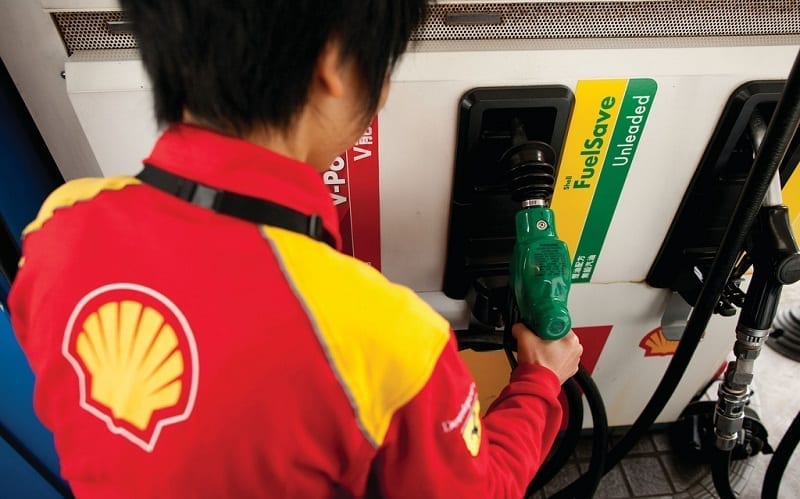
    Shell has begun a major overhaul to shift away from oil and gas to low-carbon energy, power trading and retail in order to reduce its greenhouse gas emissions to net-zero by mid-century, including the use of offsets for residual emissions. Shell runs around 46,000 retail fuel stations. Its executives’ pay is linked to its success in reaching its climate targets.