Tag: price

  • Gold prices hit new peak

    Gold prices hit new peak

    Vietnam’s gold prices continued their ascent Thursday to reach a new peak as global rates rose, driven by the latest escalation in U.S.-China tensions.

    State-owned Saigon Jewelry Company sold its popular SJC gold at VND54.2 million ($2,341) per tael of 37.5 grams (1.2 ounces), up 1.3 percent from Wednesday. The country’s largest jewelry company, DOJI, sold at VND53.7 million ($2,319), up 1.6 percent.

    Global rates went up by 0.3 percent to $1,873.97 on Thursday, the highest in nearly nine years, after the U.S. gave China 72 hours to close its consulate in Houston amid accusations of spying. China has vowed to retaliate.

    The fear of missing out “is driving a flood of speculative money into gold, piling on top of January-June’s heavy physical demand,” Bloomberg quoted Adrian Ash, director of research at BullionVault, as saying.

  • Diamond prices showing signs of revival

    Diamond prices showing signs of revival

    Asia is driving early signs of a revival in diamond prices amid an unstable global market affected by the Covid-19 crisis and protests.

    Rapaport, which monitors diamond trading trends, says the Hong Kong diamond market has regained traction as more demand comes from China, although there are concerns about tensions related to new Chinese security laws. Meanwhile, in the US, jewelry retailing is expected to remain subdued as the country experiences social unrest over police brutality and the on-going Covid-19 pandemic.

    Polished diamond prices remained stable in May, mainly focusing on online trading. Despite a significant drop since January, the RapNet Diamond Index (RAPI) for 1-carat diamond recorded a 2-per-cent increase in May.

    The industry has changed to adapt to new customer shopping behaviors, says the Rapaport report. More jewelry retailers have shifted their focus to online channels, predominantly offering classic models such as solitaire necklaces or tennis bracelets. Marketing strategies are changing to promoting diamonds as a symbol of values and emotional connection, the company says.

    Meanwhile, mining companies are also shifting to digital platforms and targeting markets less affected by lockdowns.

  • Gold Tumbles as Investors Scramble to Raise Cash

    Gold Tumbles as Investors Scramble to Raise Cash

    Gold was not spared on Thursday’s market rout, with gold futures on Comex falling by $52, or 3.2 percent, to settle at $1,590.30/oz.

    A drop in the stock market typically raises the safe-haven appeal of gold, but it is now the asset of choice among investors who want to raise cash, and a selloff on Thursday knocked back the yellow metal’s sharp rally that began in December.

    Gold traders are now selling «what they can amid a panicked marketplace,» said Kitco.com analyst Jim Wyckoff on Thursday in a roundup note.

    People are liquidating gold to cover margin calls they have in the equity market, Albert Cheng, chief executive of the Singapore Bullion Market Association, said, explaining the precious metal’s sharp losses.

    Gold is an easily liquidate asset, which again shows its value as a safe haven asset in times like this, Cheng said, noting similar behavior in the 1997 and 2008 financial crises.

    Wall Street endured its worst session since 1987’s «Black Friday» on Thursday, following the World Health Organization’s declaration of the Covid-19 outbreak as a pandemic and U.S. President Donald Trump’s address on Wednesday night, which has seemed to cause further unease about the situation, even as he assured the United States is «more prepared» to fight the pandemic than any other nation.

    At the start of trading on Friday, Singapore’s STI index fell 5 percent, the most at the opening bell since October 2008. Other stock markets also took large hits: Hong Kong’s Hang Seng index fell 5.8 percent, and Shanghai’s Composite Index fell 3.3 percent.

    Australia’s S&P/ASX 200 benchmark fell 7.1 percent in its biggest decline since 2008, and is on track for its worst week on record, while New Zealand’s S&P/NZX 50 index tumbled a record 7.4 percent. Japan’s Nikkei 225 index fell 9.4 percent, and Korea’s Kospi fell 7.6 percent.

  • Gold prices hit 7-year high

    Gold prices hit 7-year high

    Vietnam’s gold prices hit a seven-year high Friday as the coronavirus outbreak pushed investors to seek safer assets.

    The country’s second-largest jewelry company, DOJI, was selling gold at VND45.59 million ($1,964) per tael (1.2 ounces), up 1.3 percent from Thursday, the highest since January 2013.

    Phu Nhuan Jewelry, meanwhile, sold its gold at VND45.75 million ($1,971), up 1.7 percent.

    The domestic price surge followed a global rise in gold prices of 0.9 percent to $1,635 per ounce Friday, the highest in seven years.

    Gold has become a more attractive investment option as the ongoing novel coronavirus outbreak will have negative impacts on the global economy.

    The gold price rise has happened alongside a fall in stocks. On Friday, Vietnam’s benchmark VN-Index fell 3.5 percent from the beginning of the year to 933.09 points.

  • Pricerite closes stores, culls staff to weather downturn

    Pricerite closes stores, culls staff to weather downturn

    Furniture and housewares retail Pricerite has closed four stores and will cut staff and executive salaries as it rides out the combined impact of the protests and now the coronavirus on sales.

    Four stores have been closed, the company said in a statement, without identifying their locations. The leases on another eight stores are due to expire this year and management is evaluating which of these will be renewed.

    Store staff numbers have been reduced by 10 percent, but the company said this has not resulted in any effect on service quality.

    Wages of senior management have been cut by 20 percent and directors’ salaries by 40 percent, from now until May and June respectively. Logistic employees have been asked to take unpaid vacations.

    “Under the current economic downturn, the sales of local consumer goods such as furniture have been under great pressure,” said the chairman of Pricerite’s parent, Cash Group, Guan Baihao.

    “The flow of customers has been reduced by 30 percent in the past nine months under the influence of epidemics and social movements. The new retail model is convenient for customers to enjoy online shopping and delivery services. However, the supply of major furniture and household goods has also been affected by the impact of the epidemic, and the supply chain is almost terminated,” he said in a statement translated from Chinese.

    “Under the situation of severely affected supply and demand, if the economic situation does not improve in the short term, the group will be forced to take other measures, including further reduction of branches and layoffs.”

    Meanwhile, the company is negotiating with landlords for temporary rent relief.

    Baiho said the current series of cost-saving measures have gone far beyond the Sars crisis of 2003.

    Along with declining retail sales since the social unrest commenced last June, Buildings Department data shows that only 12,923 private homes were completed in the first 11 months of last year, a decrease of nearly 18 percent over the previous year and the lowest figures in three years. That in turn impacts on the sale of furniture.

    As of December 31, Pricerite had 28 branches across Hong Kong and employed 800 full- and part-time employees.

  • Vietnam gold price hits 6-year high

    Vietnam gold price hits 6-year high

    Gold prices in Vietnam soared to a six-year high on Monday amid rising military tension between the U.S. and Iran. The country’s largest jewelry company DOJI sold its SJC gold at VND44.44 million ($1,924) per tael (1.2 ounces) on Monday morning, up 3.78 percent from Friday.

    Another giant Phu Nhuan Jewelry also raised its selling price to VND44.3 million ($1,918), up 4.7 percent.

    It is the first time Vietnam’s gold price passed the VND44.4 million ($1,922) mark in the last six years.

    The surge came as global gold prices increased by up to 1.8 percent to $1,579 per ounce at a point on Monday morning, the highest in seven years.

    The sudden rush for safe-haven assets came after U.S. President Donald Trump ordered a strike that killed Iran’s General Qasem Soleimani, head of the Iranian Revolutionary Guard’s elite Quds Force, on Friday. Iran has vowed to retaliate.

    Gold prices had been surging throughout last year as trade tensions between the U.S. and China persisted.

  • Pork prices keep rising to new highs

    Pork prices keep rising to new highs

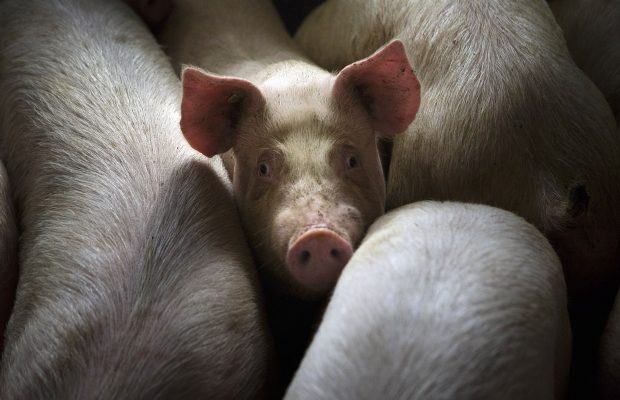
    Low supplies courtesy of the African swine flu epidemic have pushed pork prices up 29.6 percent from a month earlier.

    Small-scale farmers in the northern region were selling pork at VND92,000 ($4) per kilogram, up 29.6 percent from the five-year high of VND70,000 ($3) that was reached last month.

    Industry insiders said the rise followed price increases by major pork producers. The C.P. Group, which has been increasing its pork prices steadily, has a sales price of VND81,000 ($3.5) per kilogram now.

    At the Hoc Mon wholesale market in Ho Chi Minh City, pork supply has fallen by 23.5 percent from earlier this month to 287 tons a day.

    Nguyen Tri Cong, chairman of the Dong Nai Livestock Association, said farmers in the southern province were unable to increase supply despite a high profit margin of around 50 percent at current high prices.

    Authorities have been seeking to stabilize pork prices as Tet, the Lunar New Year, approaches (last week of January 2020). This is a time when demand for pork soars. One of the solutions proposed was to increase imports.

    But Doan Ngoc Tho, CEO of meat importer THO Group, said at a recent meeting that global supply of pork has also reduced. The FOB (freight on board) prices at Vietnamese ports have doubled to $4 per kilogram, excluding taxes, he said.

    Vietnamese importers also have to contend with China importing large quantities of pork from Europe, he said.

    Furthermore, Tho said, selling imported pork has become difficult because their prices are higher than domestic pork.

    The African swine flu has claimed the lives of 5.9 million pigs since it broke out in Vietnam in February, according to the General Statistics Office. As of October, the number of pigs in stock had fallen by 20 percent year-on-year, it said.

    The country will likely face a pork shortage of 200,000 tonnes by Tet 2020, according to the Ministry of Industry and Trade.

  • Pork prices push November inflation to 9-year high

    Pork prices push November inflation to 9-year high

    Rising prices of pork and processed meat raised the November consumer price index (CPI) a record 0.96 percent over the previous month.

    Dwindling supply of pork following the African swine flu outbreak in Vietnam saw prices of pork and other processed meat products to soar in November, leading to the biggest CPI increase in 9 years, according to the latest report by the General Statistics Office (GSO).

    However, over the last 11 months, the CPI had only risen by 2.57 year-on-year, the lowest increase in the last three years. The CPI in November, compared to December-end 2018, had increased by 3.78 percent.

    Speaking to VnExpress, merchants in Ho Chi Minh City said that prices of pork substitutes such as beef and seafood rose as customers made the switch, coupled with heightened demand as the New Year approaches.

    Vietnam has had to cull 5.9 million pigs infected with African swine fever since the beginning of the year, equivalent to 337,000 tons of pork, according to Phung Duc Tien, Deputy Minister of Agriculture and Rural Development.

    This has resulted in pork prices rising by 19 percent since last November and could rise by a further 10-15 percent by the end of this year with an expected shortage of 200,000 tons, according to the GSO.

  • Petrol, Diesel Prices Stable Across All Metros

    Petrol, Diesel Prices Stable Across All Metros

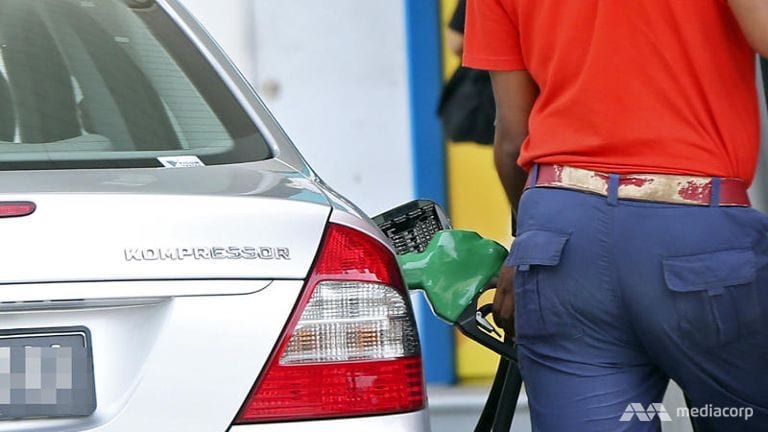
    Oil marketing companies have left petrol and diesel prices unchanged across the country on Wednesday. According to Indian Oil Corporation website, a litre of petrol costs Rs 74.76 in Delhi, Rs 77.44 in Kolkata, Rs 80.42 in Mumbai and Rs 77.72 in Chennai on Wednesday. Dies el costs Rs 65.73 a litre in Delhi, Rs 68.14 a litre in Kolkata, Rs 68.94 a litre in Mumbai and Rs 69.74 a litre in Chennai on Wednesday.

    The fuel prices are the cheapest in Delhi compared to all metros due to lower taxes. As per the daily pricing mechanism, the fuel prices are dependent on the global crude prices and the rupee-US dollar exchange rate as India imports almost 80 per cent of its crude requirements. The benchmark Brent crude was $62.98 per barrel in international market on Tuesday.

    Deputy vice president of Angel Broking, Anuj Gupta said: “The report of increase in crude oil stock in America has led to the decline in the international prices. This is likely to continue as talks on tariffs between the US and China are also going on which may lead to de-escalation of tensions.”

  • Petrol Prices Decline On 5th Consecutive Day

    Petrol Prices Decline On 5th Consecutive Day

    Petrol prices continued a downward trend for the fifth consecutive day on Tuesday, while diesel prices remained unchanged after a slight dip on Monday. Delhi, Kolkata, Mumbai and Chennai saw a reduction of 5 paise/litre in petrol prices. According to the Indian oil website , in Delhi, Kolkata, Mumbai and Chennai, the petrol rates were – Rs 72.60/litre, Rs 75.32/litre, Rs 78.28/litre and Rs 74.45/litre respectively. The diesel rates in these metropolitan cities were — Rs 65.75/litre, Rs 68.16/litre, Rs 68.96/litre and Rs 69.50/litre respectively.

  • Price Kaki to launched by Customers Association of Singapore

    Price Kaki to launched by Customers Association of Singapore

    The Consumers Association of Singapore (Case) has released an app rewarding users for sharing pricing information to allow comparisons while shopping.

    Users of the Price Kaki app, which is expected to launch at the end of this month, can submit photos of any prices they come across while shopping for hawker food or groceries, allowing other users to save costs. Contributors to the pricing information platform are eligible to claim rewards such as film vouchers.

    Price Kaki’s base pricing information will be updated daily by FairPrice, Giant, Sheng Siong and Prime Supermarket.

    Future updates to the app are expected to be broad-ranging and include other businesses such as cafes.

  • Mercedes-Benz India To Hike Car Prices By 3% From August

    Mercedes-Benz India To Hike Car Prices By 3% From August

    Mercedes-Benz India has announced an increase in prices for select model range in India. With effect from August 2019, select Mercedes-Benz cars will see an upward revision in prices, up to 3 percent across the model range. While the company hasn’t shared the list of models that will see the price hike next month, the carmaker does mention that the current increase in customs duty on automotive parts and additional cess and excise duty on fuel has led to the price hike.

    Martin Schwenk, Managing Director & CEO, Mercedes-Benz India said, “As the leading luxury automobile maker in India, we have been relentlessly working on offering the best of products and industry benchmark customer service and ownership experience. However, a hike in customs duty on automotive parts, compounded by an increase in excise duty, and cess on fuel have had a significant impact on our bottom line. We were left with fewer options, but to make some necessary price adjustments to our product range at the moment to offset the impact of the rising input costs.”

    Last time the carmaker announced a price hike in India was back in September 2018, along with several other carmakers, after the value of the Indian Rupee reaches almost 73 compared to the US dollar.

    Recently, Mercedes-Benz India also reported a sales decline of 18.60 percent in the Indian market in the first half of the calendar year 2019. The company has sold 6561 units in the January-June period this year against 8061 units which were sold in the same period a year ago.

  • Amazon cutting prices on thousands of online items

    Amazon cutting prices on thousands of online items

    Amazon Australia is holding its second mid-year sale, slashing prices on tens of thousands of products from Friday, May 31, through the month of June. The deals include up to 50 percent off select clothing, shoes and accessories from brands such as Calvin Klein, Berlei and Bonds; discounts on select TVs, video games and books; and 15 percent off household and pantry essentials when you spend $50 or more.

    Savings are advertised across all of Amazon’s 29 product categories, including kitchen, baby and pets.

    “With tens of thousands of products available at discounted prices and new deals going live every day throughout June, we hope our Mid-Year Sale provides something for everyone,” Rocco Braeuniger, country manager of Amazon Australia, said in a statement about the sale.

    Since launching in December 2017, Amazon Australia now claims to offer over 125 million products.

    This is the second time Amazon Australia has held a mid-year sale, joining many retailers in marking down stock for End of Financial Year (EOFY) sales during the month of June.

    Recent research from PayPal shows that EOFY sales are the most popular times for Aussies to pick up a bargain online, alongside Boxing Day.

    That same report also revealed that while some retailers are starting to move away from markdowns, most shoppers are still driven to purchase by discounts.

    PayPal found that 68 percent of Australian consumers are always on the lookout for an online sale or discount, and half of the consumers have waited for an item to go on sale before buying it online. Among Gen Z and Gen Y shoppers, that figure increases to 73 percent and 65 percent, respectively.

    But this doesn’t have to be bad news for retailers. According to PayPal, online sales present an opportunity for brands to build awareness and reach new customers: 39 percent of consumers have bought a brand online they wouldn’t usually buy because it was on sale, and 39 percent of retailers said online sales increase revenue.

    But it’s necessary to take a strategic approach. For instance, Amazon’s biggest sales – including its Mid-Year Sale, Prime Day sale, and Black Friday and Cyber Monday sales – are all about driving app downloads and Prime subscriptions. In turn, this drives more frequent purchasing on the platform.

    According to Retail Dive, Amazon saw more than 1 million consumers use its app for the first time on Prime Day 2018.


  • Tata Motors Group’s Global Wholesales Down By 5%

    Tata Motors Group’s Global Wholesales Down By 5%

    Tata Motors has officially come out with its global wholesale numbers for the month of March 2019, and the company has reported a 5 per cent de-growth. Last month, Tata Motors’ total wholesales, including Jaguar Land Rover sales, accounted for 1,45,459 vehicles, compared to the 1,53,114+ units sold by the company during the same month in 2018.

    The company’s passenger vehicle wholesales for the month stood at 88,314 units, witnessing a decline of 9 per cent, as against the 97048 vehicles sold during the same month last year. This also includes the combined global wholesales of Jaguar Land Rover and CJLR (JV between JLR and Chery Automobiles) which sold 70,171 vehicles in March 2019. CJLR contribution to this was 4,812 units. Furthermore, Jaguar wholesales for the month were 20,985 vehicles, while Land Rover wholesales for the month were 49,186 vehicles.

    On the other hand, global wholesales of all Tata Motors’ commercial vehicles and Tata Daewoo range in March 2019 reached up to 57,163 vehicles. The company bagged a marginal growth of 1 per cent in commercial vehicle sales, compared to the 57,740 vehicles sold in March 2018. As for the company’s performance in India, Tata Motors’ CV and PV sales combined, accounted for 68,709 units, witnessing a drop of 1 per cent, against the 69,409 units sold in March 2018.

  • Massive iPhone XR price cut in India

    Massive iPhone XR price cut in India

    While Apple continues to dominate the paramount US smartphone market in terms of both sales numbers and profits, the company’s trouble across two other key regions seems to be intensifying rather than ameliorating. Of course, the Cupertino-based tech giant is not sitting idly by as the likes of Huawei, Xiaomi, and even OnePlus are rendering its brand irrelevant in China and India, fighting back with long overdue price cuts.

    Following an unprecedented such move in the world’s largest smartphone market a few months back, Apple is reportedly discounting the iPhone XR in India right now by the equivalent of several hundred US dollars. Namely, a whopping $250 or so (17,000 rupees), which actually doesn’t make the company’s entry-level 2018 iPhone model quite as affordable as you might imagine.

    That’s because the iPhone XR was released in the region at a starting price of Rs. 76,900, equating to more than $1,100, which sounds ridiculous even by Apple’s standards. After the new discount is applied, the LCD-sporting 6.1-incher will cost Rs. 59,900 at authorized retail partners, which converts to $870 or so. That’s still more than what US buyers are typically charged, although the comparison is obviously not entirely fair.

    At the same time, it’s definitely worth pointing out that the Samsung Galaxy S10e starts at a lower recommended price of around 56,000 rupees ($810), no deals needed. As for the OnePlus 6T, which is one of the most popular “premium” handsets in India, it’s pretty obvious Apple has no intention to go as low as 38,000 rupees ($550) anytime soon.

    Still, this regional iPhone XR price cut could be the beginning of a beautiful global comeback for a company that must find ways to stop its recent sales decline. More iPhone discounts are likely to come to India in the near future as Apple ramps up local production of both lower-end and ultra-high-end models like the XS and XS Max. Speaking of, the iPhone XS Max continues to go for a preposterous $1,600 or so (Rs. 109,900) in a 64GB configuration. No wonder a measly 1.7 million iPhones were shipped in total in India last year.