Retail News CRM

Tag: profit

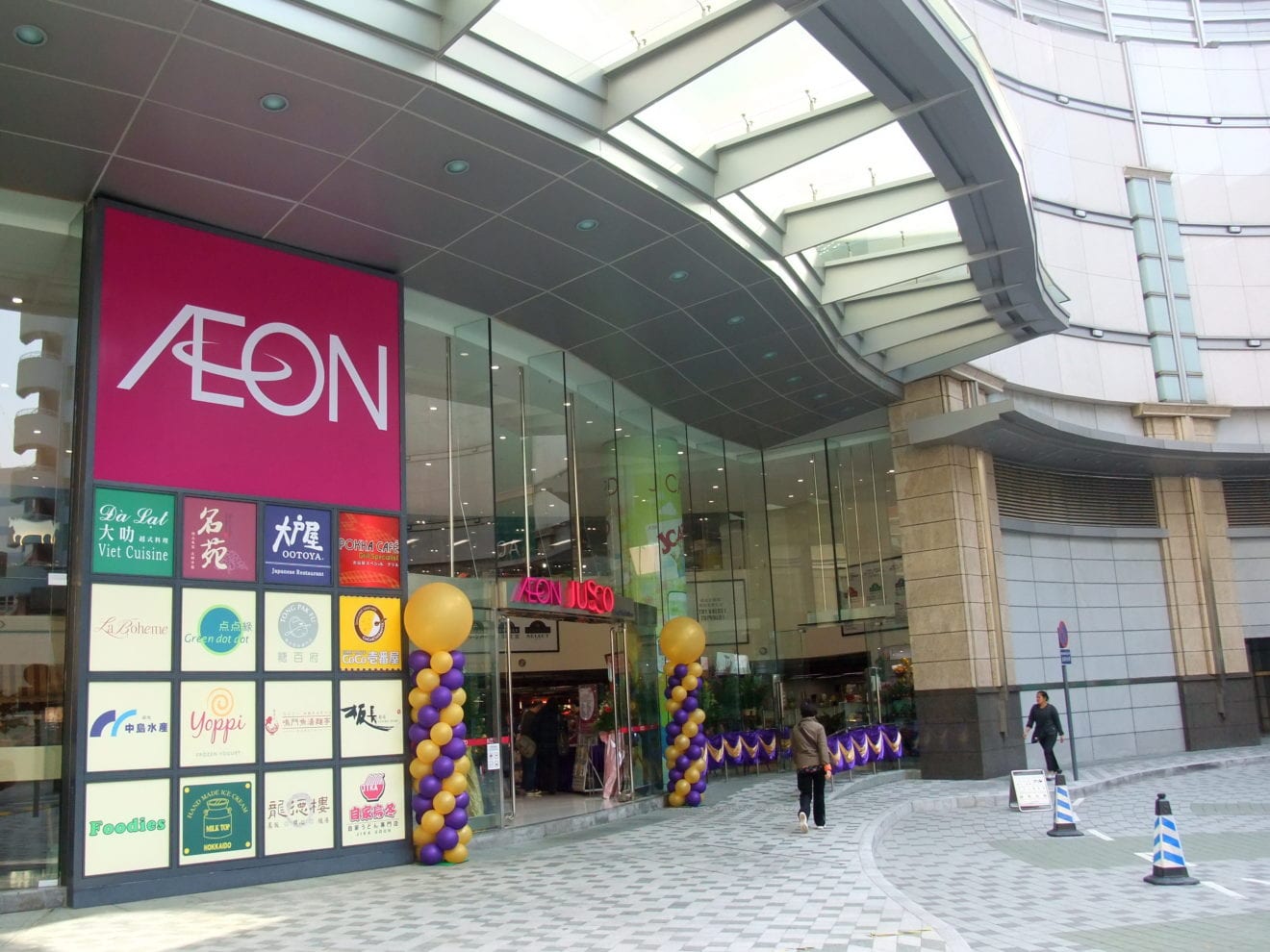
  • Aeon posts 1Q profit growth, sees challenging year

    Aeon posts 1Q profit growth, sees challenging year

    Aeon chairman Datuk Abdullah Mohd Yusof said nevertheless, the group remains confident in meeting the challenges head-on.

    “After consumers get used to the changes in the new tax system, they will start shopping again, especially in the upcoming festive periods,” he told reporters after the group’s annual general meeting yesterday.

    After enjoying four consecutive years of steady growth, Aeon saw its net profit for the financial year ended December 31, 2014 (FY14) drop 7.9% to RM212.71 million from RM230.96 million in FY13.

    However, its net profit rebounded for the first quarter ended March 31, 2015 (1QFY15), growing 5.4% to RM49.4 million or 3.52 sen a share from RM46.88 million or 3.34 sen a share a year ago. Revenue was up by 17.1% to RM1.11 billion from RM945.51 million in 1QFY14.

    Abdullah blamed the net profit decline in FY14 on the rising cost of living and operation costs, as well as an increase in its capital expenditure (capex) for expansion.

    “The [implementation of the] minimum wage also caused [the] costs to go up. The cost of doing business has risen. We have also been accelerating our expansion to have a bigger market share,” said Aeon managing director Nur Qamarina Chew Abdullah.

    Aeon has set aside RM700 million as capex for FY15, an increase from about RM670 million last financial year.

    Abdullah said the budget had been earmarked for the development of upcoming Aeon malls, namely in Shah Alam, Selangor and Klebang, Melaka, which are slated to open in 4Q15.

    The group will also open malls in Kota Baru, Kelantan by 2Q16, and Kuching, Sarawak in 2Q17.

    The overall occupancy rate of its malls currently stands at 93%, a number that Abdullah said is a “fairly good” average.

    Yesterday, Aeon shares closed 0.96% higher at RM3.16, with some 1.77 million shares traded. It closed with a market capitalisation of RM4.39 billion.

  • Osim profit plummets

    Osim profit plummets

    Lifestyle company Osim has posted a 53 per cent profit drop for the first quarter on declining sales.

    The retailer of massage chairs and other remedial devices, says sales fell 13 per cent quarter-on-quarter, blaming a lack of new products and a drop-off in mainland Chinese tourists into Hong Kong, a key market for the Singapore-listed company.

    Total first quarter sales were S$150 million, and Osim profit $18 million

    “This has been a challenging quarter where retail sales across the core countries has been
    soft and there have been no new major Osim product launches,” the company said in its earnings statement.

    “Despite these challenges, our dominant brand has enabled us to maintain a stable gross margin and highly cash generative business. We are continuing to invest for growth supported by a strong balance sheet.”

    Osim has 560 retail stores and China remains its largest market, where it has 252 stores in 45 cities.

    “Products including uInfinity Luxe, uDiva, uHip, uSqueez Air, uTrek and uShape Music have sustained our dominant position in the market. We have just launched a new massage chair uMagic in April with favourable response and will be introducing more innovative products this year.”

    Osim also operates 233 GNC/Rich Life stores and 44 TWG Tea stores, with plans for 15 more this coming year.

    “With the upcoming planned new product launches we remain positive about the outlook for
    the remainder of the year.”

  • Costs eat into Eu Yan Sang profit

    Costs eat into Eu Yan Sang profit

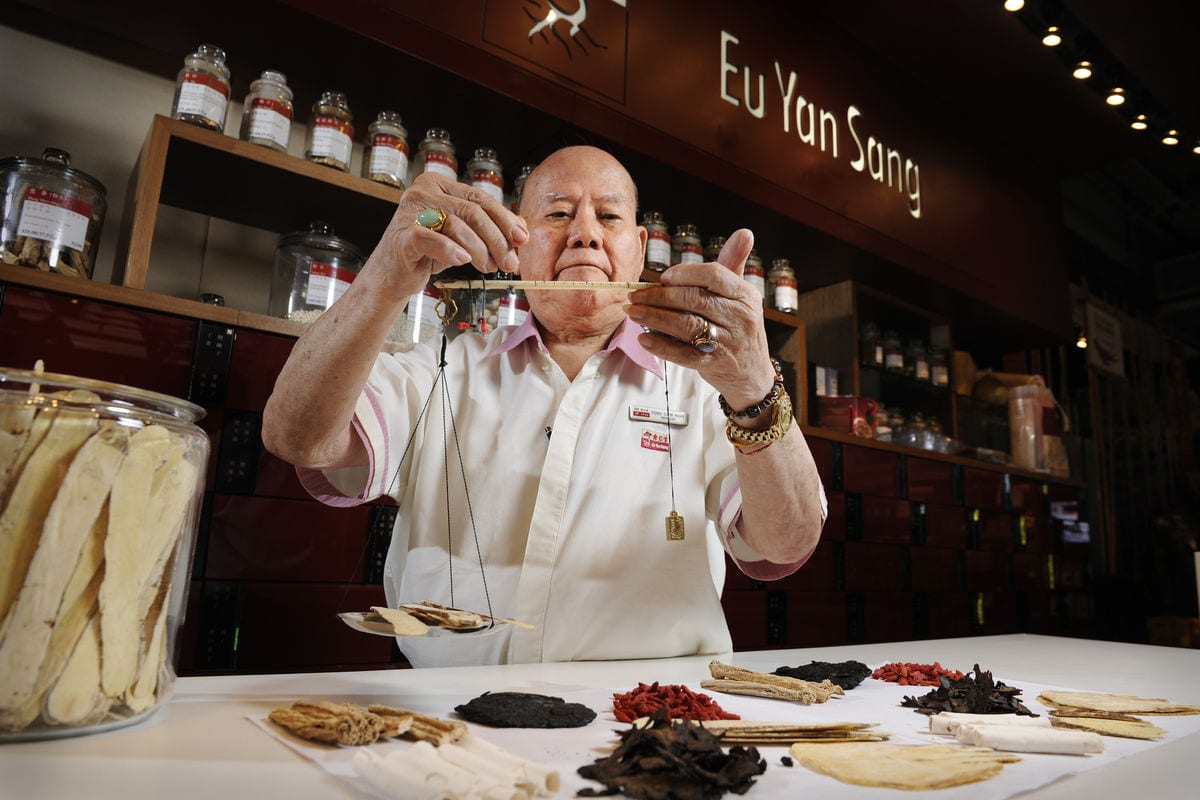
    Chinese herbal medicine retailer Eu Yan Sang has repoted a 38 per cent drop in profit on stable revenues in the first quarter of its current financial year.

    Eu Yan Sang posted a net profit of S$5.45 million on sales of $110 million.

    Improved sales in Australia, Singapore and Malaysia during the Chinese New Year, and in Malaysia where shoppers stocked up ahead of the introduction of GST on April 1, balanced a decline in Hong Kong, where the company says sales were soft due to the fall in mainland visitros.

    Gross margin for the quarter dipped 2.6 per cent due mainly to the impact of sales mix and longer lead time to Chinese New Year. Correspondingly, the group’s operating profit declined due to lower gross margin contribution and increased operating expenses.

    As at 31 March 2015, Eu Yan Sang had 258 company-operated retail outlets and 30 franchises in China, Hong Kong, Macau, Malaysia, Singapore and Australia.

    Group CEO Richard Eu said despite the challenging retail environment in Hong Kong and Macau, where retail revenue fell 21 per cent, most of the company’s key markets showed resilience.

    “Singapore, Malaysia and Australia markets have reported revenue growth. We see long-term opportunities especially in rising health awareness as consumers are becoming more discerning and better educated about wellness issues and are actively seeking for healthy food and natural health remedies. This is a space where we differentiate ourselves from others, where consumers understand product quality over pricing.

    “Rising disposable income in the region also played an important role to our business. In addition, our wellness offerings are easily accessible through ongoing introduction of new, exciting products and the extension of our wholesale channels,” he said.

    Retail revenue rose five per cent driven by increased consumer spending during the longer lead up period to Chinese New Year in Malaysia and Singapore, while the increased sales in company-operated outlets and improvement in same-store sales boosted retail revenue in Australia.

    The wholesale segment dipped by 32 per cent due to the slower offtake in trade as a result of the decline in mainland tourists’ spending in Hong Kong, which was caused by China’s recent move to restrict visitations of its nationals to Hong Kong.

    “In local currency terms, Australia showed the strongest improvement with a boost of 28 per cent in revenue,” the company said in its earnings statement. “This was in line with the increase in number of company-operated outlets and the increase in same-store sales.”

    For the rest of the year, the company expects the softer market to continue in Hong Kong, and in Malaysia where consumers are still adjusting to the impact of GST.

    But after two years of decline, Singapore is showing growth.

    “Given the recent regulations to limit Chinese tourists in Hong Kong and the enforcement of GST in Malaysia, the group expects a protracted recovery in these markets. We believe that the negative impact of GST on retail sales in Malaysia will be a short-term challenge.”

  • China’s JD.com posts 62 pct rise in quarterly revenue

    China’s JD.com posts 62 pct rise in quarterly revenue

    JD.com Inc, China’s No.2 e-commerce company, reported a 62 percent rise in quarterly revenue, topping analysts’ expectation as the number of active customer accounts across its sites nearly doubled from a year earlier.

    First-quarter revenue of 36.6 billion yuan ($5.90 billion) exceeded analysts’ estimate of 35.65 billion yuan, according to Thomson Reuters I/B/E/S.

    Gross merchandise volume (GMV), or the total value of goods sold on JD.com, nearly doubled to 87.8 billion yuan ($14.14 billion) in the quarter ended March, with roughly 42 percent of all fulfilled orders coming from mobile devices, the company said.

    Excluding certain items, losses widened to 2 cents per American depositary share, from 1 cent, as it spent heavily to broaden its inventory and on marketing.

    The Beijing-based company’s business, like bigger U.S. peer Amazon.com Inc’s, is built on selling products it purchases through its own logistics network. Alibaba Group Holding Ltd, on the other hand, has grown its business quickly by connecting sellers to buyers rather than stocking its own merchandise.

    The difference in business models has allowed JD.com to market itself as a purveyor of authentic goods, while its larger rival has wrestled with occasional, high-profile controversies over fake products.

    When JD.com announced in April that it would sell and warehouse clothes from Japanese giant Uniqlo, the e-tailer touted the deal as an example of its growing ability to offer customers mainstream labels and authentic clothes.

    JD.com last month launched its JD Worldwide cross-border online shopping platform, a challenger to Alibaba’s Tmall Global service.

    It also announced on Friday its participation in a $500 million investment in Tuniu Corp.

    The company’s U.S.-listed shares have risen close to 60 percent since its IPO last May.

    ($1 = 6.2089 Chinese yuan renminbi)

  • Matahari Putra Prima’s Q1 Revenue Rises 60% on Larger Gross sales

    Matahari Putra Prima’s Q1 Revenue Rises 60% on Larger Gross sales

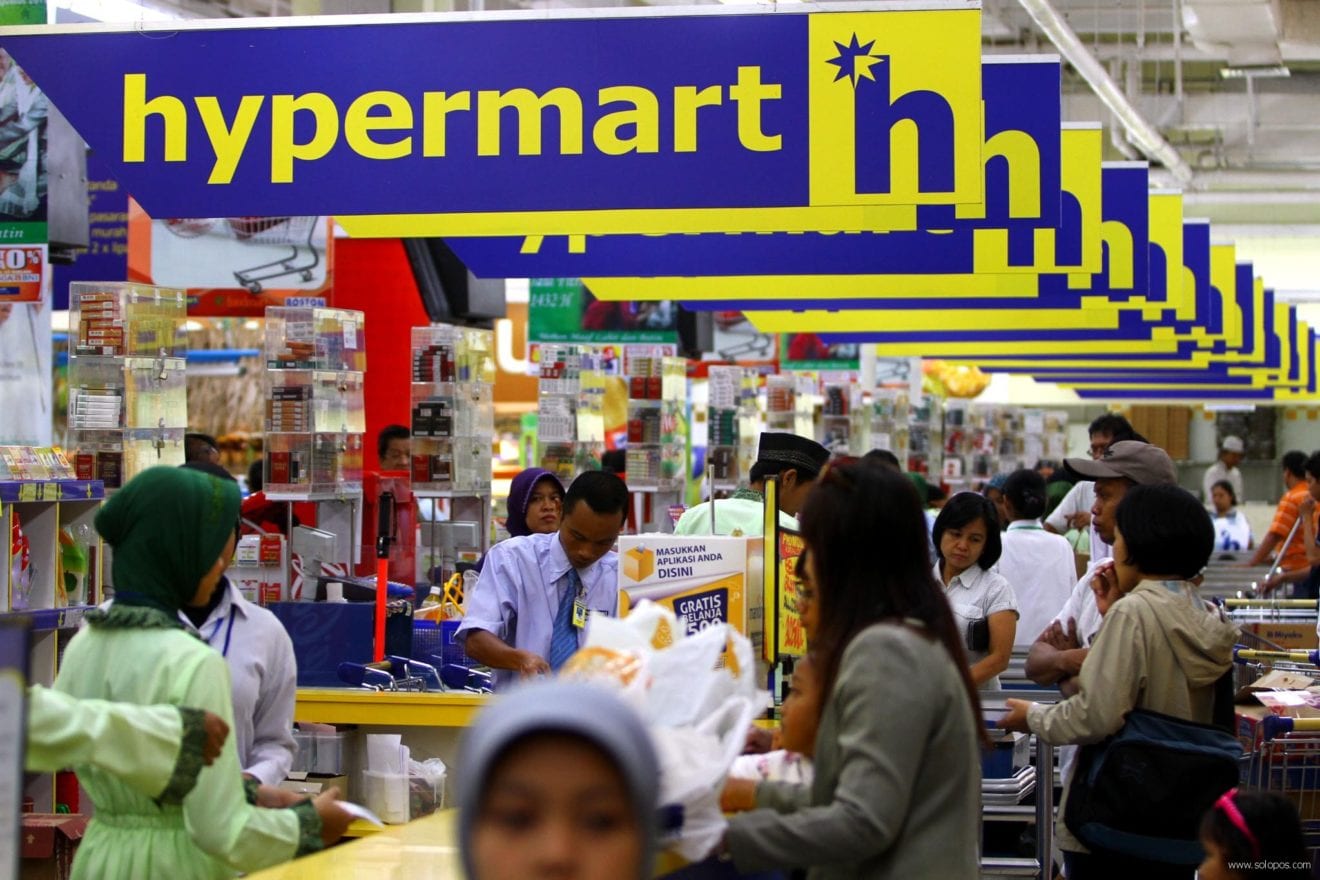
    Matahari Putra Prima — the operator of Hypermart, Foodmart and the Boston Well being & Magnificence retail chain — posted 60 % achieve in revenue within the first quarter, because of regular progress in gross sales.

    Internet revenue rose to Rp 81.6 billion ($6.three million) within the January-March interval from Rp 51.zero billion in the identical quarter final yr, the corporate stated in a press release final week. Internet gross sales rose 7.1 % to Rp three.35 trillion.

    “We’re happy with our internet revenue leads to the primary quarter regardless of a really difficult gross sales surroundings. our enterprise benefited from the productiveness measures taken and realization of expense saving packages initiated in mid-2015 by the administration staff,” stated MPP chief government officer Noel Trinder.

    MPP’s same-store gross sales progress, nevertheless, was 1.eight % decrease because of weak financial progress and aggressive setting amongst present shops in operation, the corporate stated.

    In the course of the quarter, MPP opened 14 new shops together with two for Hypermart, one Foodmart grocery store, 9 Foodmart Categorical and two Boston shops.

    These added to MPP’s 267 shops (107 Hypermart, 58 Foodmart and 102 Boston) in 67 cities throughout Indonesia as of Dec. 31 2014.

  • Omni-channel fulfilment critical for retailers to make financial returns on investments

    Omni-channel fulfilment critical for retailers to make financial returns on investments

    Despite increasing investments in omni-channel sales capabilities, many retailers and consumer goods manufacturers find it hard to fulfill omni-channel demand profitably, a new report says.

    The new report The Omni-Channel Fulfillment Imperative prepared for JDA Software Group, Inc. by PwC reveals that an enormous amount of money, energy and time retailers and consumer goods manufacturers are spending to improve their omni-channel sales capabilities. However, only 16 percent of companies say they can fulfill omni-channel demand profitably.

    This study is based on a global survey of more than 400 retail and consumer goods CEOs from around the world, conducted in late 2014.

    It finds that the high cost of fulfilling orders is eroding retailers’ margins as they sell and deliver products across multiple channels. A full 67 percent of respondents reported that these costs are growing as they increase their focus on selling across channels. Survey respondents reported their highest costs associated with omni-channel selling as:

    Handling returns from online and store orders (cited by 71 percent of respondents)
    Shipping directly to the customer (67 percent)
    Shipping to the store for customer pick-up (59 percent)

    The CEOs in the JDA study recognize that they need to continue investing in business improvements to enhance their omni-channel performance. However, reducing the associated logistics costs is not their primary focus. When asked to rank their top initiatives for improving business operations, CEOs’ number-one choice (57 percent) was spending capital on creating new customer experiences. Similarly, when asked to rank strategic growth enablers for the year, reducing/reformatting physical store footprints to focus on expanding the ecommerce business was the top choice at 53 percent.

    “Every time retailers receive an online order, they have a number of options to fulfill that demand. They can pull the product from a local store, send it from a centralized warehouse or ship it directly from the supplier. JDA’s new study demonstrates that most retailers lack the insight to make these decisions in a profitable manner – and are not sufficiently focused on this critical capability gap,” said Kevin Iaquinto, chief marketing officer at JDA. “They need intelligent logistics and fulfillment solutions that can reveal the hidden costs, and the customer service trade-offs, associated with every delivery option. In addition, to truly win in the omni-channel marketplace, retailers need the upfront demand forecasting tools to make sure products are already distributed across all locations in a manner that supports profitable delivery.”

    While they might not be focused on actions today to create profitable fulfillment and delivery schemes, the study shows that CEOs are aware of the importance of profitable omni-channel fulfillment to their future survival.

    Seventy-one percent of respondents said omni-channel fulfillment is either a high or a top priority. And these CEOs are planning to invest an average of 29 percent of their total capital expenditures for 2015 on improving their omni-channel fulfillment performance.

    The fulfillment capability most cited as needing attention was transportation and logistics, named by 88 percent of CEOs as a priority for the future. The second capability CEOs will focus on is improving inventory availability to fill orders, cited by 85 percent.

    “Having products available, then finding the most profitable way to deliver them – are critical activities that lie at the heart of supply chain excellence,” noted Iaquinto. “The CEOs in the JDA survey clearly understand the challenges they have ahead of them with regard to fulfillment, and they know they will have to innovate if they are to be profitable while meeting customer expectations across channels. The good news is that advanced technology can help retailers and consumer goods manufacturers master omni-channel fulfillment. However, until companies fully leverage these solutions, they will fail to realize positive financial returns on their omni-channel investments.”