Retail News CRM

Tag: profit

  • Citi Indonesia posts Rp 633 billion profit

    Citi Indonesia posts Rp 633 billion profit

    Citi Indonesia recorded Rp633 billion ( US$48 million ) in net profits in the first quarter this year, a 12 percent rise from Rp 567 billion in the same period last year.

    The profit growth was driven by a 10 percent increase in net interest income, as also reflected in the bank’s total assets as of March this year that reached Rp76.5 trillion, a 6 percent year-on-year ( yoy ) surge from the corresponding period last year.

    Citi Indonesia chief executive officer Batara Sianturi said,”We enjoyed higher quality of assets in the first quarter this year with our net non-performing loan [NPL] ratio staying as low as 1.15 percent,” adding that the bank’s loan loss provision ( CKPN ) had also improved by 25 percent to Rp 131 billion.

    Citi Indonesia also fared well, as seen in the third-party funds that reached Rp 51.2 trillion, a 4 percent increase yoy with the current account and savings account ( CASA ) taking the lion’s share of 71 percent and therefore contributing to the sustained net interest income.

    The bank also set aside a minimum capital requirement of 28.86 percent as of March, the company said in a statement.

    The bank’s financing ratio for small and medium enterprises account for 9 percent of the total credit as of March this year.

    “We will continue supporting Indonesia’s economic growth by implementing fund disbursements in accordance with the government’s priority programs, including in the infrastructure sector and other industries that bolster exports and loans being channeled to small and medium enterprises.”

    Last year, Citi Indonesia garnered Rp 1.5 trillion in net profits with an asset increase of 14.6 percent yoy.

    In the digital arena, the bank also developed innovations and services by launching four smart branches focusing on digital banking solutions.


  • XL Axiata swings back to profit in Q1

    XL Axiata swings back to profit in Q1

    Indonesia’s XL Axiata swung back to a net profit for the first quarter during what CEO Dian Siswarini said was a “promising start to 2016.”

    The operator reported a net profit of 20 billion rupiah ($1.5 million) during the period, which compares to a loss of 758 billion rupiah in the same quarter last year.

    Profit for 2016 was positively impacted by the strengthening of the rupiah against the US dollar this year, compared to a weakening in the first quarter of 2015.

    Revenue meanwhile grew 2% year-on-year during Q1 of 2016, with core usage revenue up 5%, driven by a 23% year-on-year growth in the data segment. Data traffic grew 94% year-on-year and total data users grew to 22.8 million, or 54% of XL’s total base.

    XL commented that LTE has become a key part of the operator’s mobile internet leadership strategy. By the end of the quarter, XL expanded its LTE footprint to cover 3,286 sites in 36 Indonesian cities and areas. The company’s total BTS footprint as of the end of March was 59,040.

    “We have made a promising start to 2016 with further improvements in our operating and financial performance, and we hope to build momentum as we execute on our transformation agenda,” Siswarini said in a statement.

  • Garuda Indonesia Denpasar Aims for 10% Growth

    Garuda Indonesia Denpasar Aims for 10% Growth

    PT Garuda Indonesia (Persero) Tbk. Denpasar Branch Office has targeted a 10 percent growth this year compared to 2015.

    Micky Irfandi, General Manager of Garuda Indonesia Denpasar Branch Office, said he is optimistic of achieving the target through a wide range of efforts, though he admitted that Q1 2016 sales has yet to show any positive signal.

    “In Q1 2016, we actually saw a decrease of 14 percent compared to the same period last year. One of the factor that affected the decrease was unstable global economy, which has made people and companies or agencies to be more efficient,” Micky said, Monday, April 18, 2016.

    Based on the data of Bali Statistic Agency, the number international departure from I Gusti Ngurah Rai airport in February 2016 was 2,423 flight departures. The figure was down by 2.73 from previous month of 2,491 flights.

    For domestic flights, the number of aircraft departed from I Gusti Ngurah Rai airport in February 2016 was 3,067 flight departures, or fell by 7.15 percent compared to the previous month of 3,303 flight departures.

    Moreover, Micky went on, another factor which has affected the growth figure was fuel price decrease which has forced his company to readjust ticket prices.

    “Fuel price decrease has resulted in lower ticket prices and it has reduced our revenue compared to previous figure,” Micky said.

    Garuda continues to launch various promotional efforts to attract foreigners to travel to Bali in line with the company’s support for the government program of 20 foreign tourist visits by 2019.

    “We continue to carry out various efforts to support the government programs also by opening new routes recently and increasing the number of seats for Denpasar-Hong Kong route. The route was previously using 737-800 aircraft with a capacity of 162 seats; we replaced it with A333 aircraft with 251 seats and adding 89 seats,” he explained.

    Micky added that Garuda is also mulling on increasing flight frequency of Denpasar-Beijing and Denpasar-Shanghai routes from three flights per week to four or five flights.

  • GM Korea Posts Worst-ever Net Loss of 986.8 Billion Won in 2015

    GM Korea Posts Worst-ever Net Loss of 986.8 Billion Won in 2015

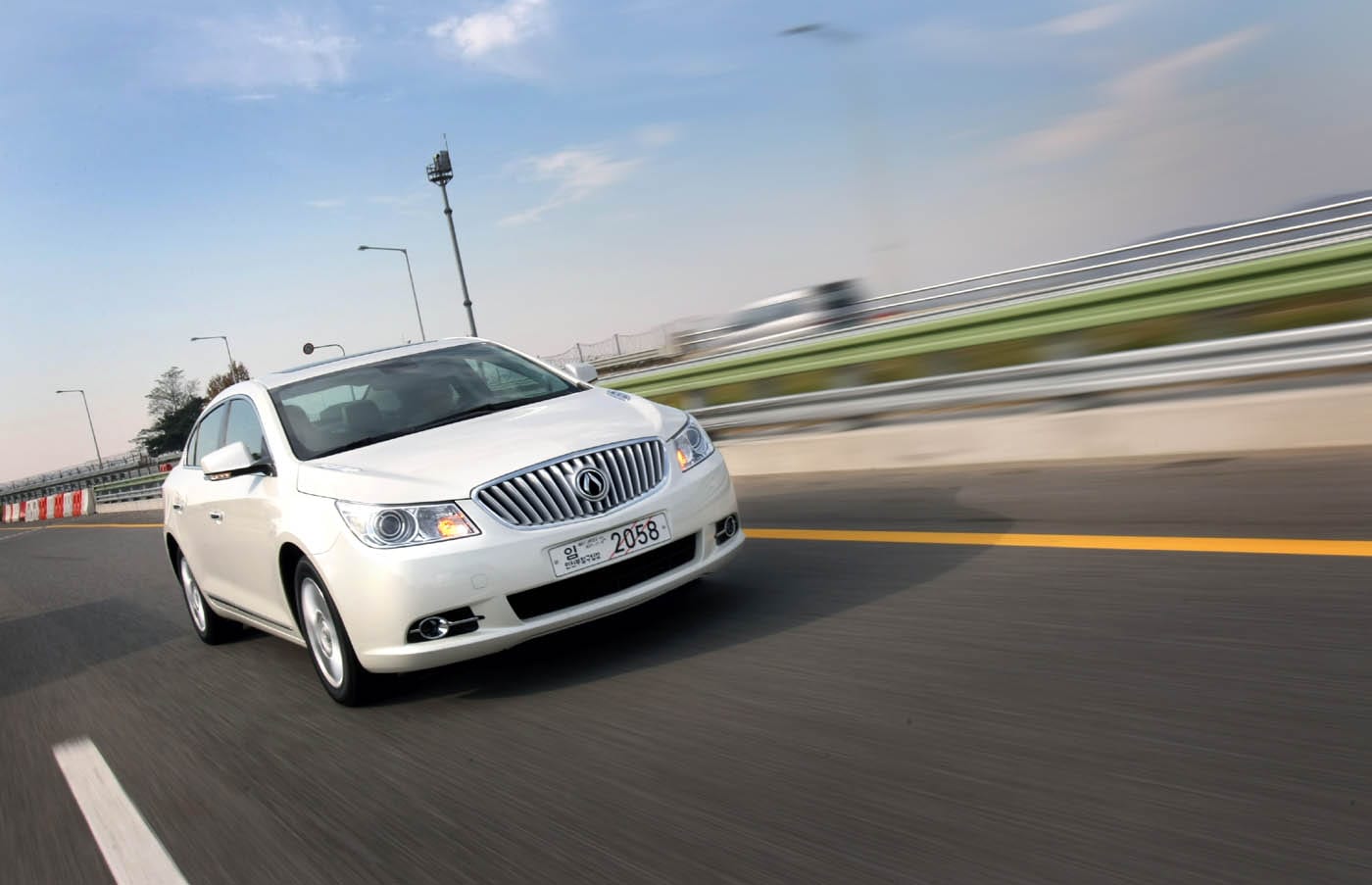
    According to industry sources on April 10, GM Korea reported 594.4 billion won (US$515.30 million) in operating losses and 986.8 billion won (US$855.48 million) in net losses last year. It is the worst-ever performance since its establishment in 2002.

    Industry watchers think that it is largely due to 186.9 billion won (US$162.03 million) of the equity method loss caused by its decision to shut its local factory following the withdrawal of the Chevrolet brand from Russia. GM Korea halted sales of the Chevrolet products in Russia last year.

    Last year’s poor performance is also attributed to the fact that the automaker had sold its mid-size sedan Cruze with a 1.8-liter engine for exaggerated fuel economy claims in the domestic market for five years. As GM Korea decided to pay Cruze owners up to 430,000 won (US$373) per person to cover the difference between the stated fuel economy and the actual one, the total amount of compensation reached as high as 37 billion won (US$32.08 million) last year.

    Moreover, higher labor costs despite the decrease in car sales also added to its worst-ever performance. The automaker shipped a total of 621,872 units at home and abroad last year, down 1.4 percent from the previous year. However, its labor union has strongly protested the company’s decision to continue importing all units of its full-size sedan Impala from the United States for sales in Korea despite strong sales at home.

    GM Korea is looking for various ways to improve its financial state. The automaker has decided to organize a special task force team with staffs across the company, including labor union and management, in a bid to prepare measures to revitalize sales in the local market. Starting in January, it has introduced a direct sales system that guides individual dealerships to sign direct contracts with the automaker unlike in the past when they were in touch with regional dealers. This change has simplified the overall retail structure of GM Korea and is expected to cut tens of billions of won of annual costs.

  • Philippine 7-Eleven profits surpass 1 billion pesos

    Philippine 7-Eleven profits surpass 1 billion pesos

    The Philippine 7-Eleven network of convenience stores recorded record profits in  2015, fuelled by new store openings.

    Parent, listed company Philippine Seven, says it surpassed 1 billion pesos (US$22 million) in profits for 2015.

    The 15.4 per cent year-over-year profit rise came on the back of an increase in stores from 1282 in 2014 to 1602 stores in 2015.

    Philippine Seven said retail sales of all stores rose by 25.3 per cent  to P25.8 billion from P20.6 billion compared with prior year.

    The company has been expanding its logistics infrastructure to support its

    unprecedented expansion in Visayas and Mindanao.

    “The rest of the country is relatively uncontested in comparison. We are virtually the only competitor with the critical mass to build out proper supply chains in areas logistically unreachable from GMA,” said Jose Victor Paterno, president and CEO.

    The expansion is  expected to support profitability in the medium term, through cashing in on underutilized warehouses and achieving dominant position in new markets.

    For 2016, the company plans to increase  capital expenditures budget to P3.5 billion to support its accelerated store expansion strategy. The bulk of this amount will fund new store openings, store renovations and equipment acquisition.

    Philippine Seven Corporation operates the largest convenience store network in the country. It acquired the master franchise licence from Southland Corporation (now Seven Eleven) of Dallas, Texas, in December 1982 and was listed in the Philippine Stock Exchange in February, 1998.

  • Samsonite profits up in 2015 but outlook ‘uncertain’

    Samsonite profits up in 2015 but outlook ‘uncertain’

    Luggage giant Samsonite on Thursday warned its outlook for this year was “uncertain” owing to the growth slowdown in key market China and a stronger US dollar.

    The firm said in a filing with the Hong Kong Stock Exchange that despite a tough trading year, it saw net profit rise 6.1 percent to $197.6 million last year thanks to record revenues of $2.43 billion.

    “Our business has emerged stronger from 2015… despite various headwinds around the globe,” chairman Timothy Charles Parker said in the statement.

    However, chief executive Ramesh Dungarmal Tainwala said the outlook for 2016 “remains uncertain, with challenging trading conditions expected in a number of our key markets including China, and the negative currency translation impacts from the strong US dollar expected to continue affecting our business”.

    The world’s second-largest economy expanded 6.9 percent in 2015, the worst performance in a quarter century and a far cry from the years of double-digit increases. The country’s luxury market also took a hit from a years-long corruption crackdown.

    “It is undoubtedly the case that the days of 20-30 percent growth in China are over,” Parker said.

    Shares in the company ended the morning session 1.54 percent up at HK$26.30 Thursday.

    The warning comes after Samsonite earlier this month said it would buy US luxury bag maker Tumi in a deal worth $1.8 billion, which analysts said would provide a foothold in the still-lucrative high-end market in China.

    The move follows the purchase last year of airport retailer Rolling Luggage and Italian accessories seller Chic Accent.

    Parker said the Tumi deal is expected to close in the second half of the year subject to shareholder and regulatory approval.

    “Tumi is a perfect complement for our business… We believe we are buying a strong, profitable and well-run business, with considerable flair and success behind it in the American market,” he said.

    Samsonite raised $1.25 billion in an initial public offering in Hong Kong in June 2011, one of several Western brands — including Prada and Esprit — seeking to use the city to boost their presence in fast-growing Asian markets, particularly China.

  • Huawei’s 2015 profit grows 33% to $5.7b

    Huawei’s 2015 profit grows 33% to $5.7b

    Huawei has reported a 33% growth in net profit for 2015 on the back of strong performance across the vendor’s carrier, enterprise and consumer business groups.

    The company’s net profit reached 36.9 billion yuan ($5.69 billion), with revenue increasing 37% to 395 billion yuan.

    Revenue from Huawei’s carrier business group jumped 21% to 232.3 billion yuan, with 4G network rollout revenue accounting for a large portion of the annual growth.

    Enterprise revenues meanwhile reached 27.6 billion yuan, up 44% year-on-year, while consumer revenue surged 73% to 129.1 billion yuan.

    “In part, Huawei owes its long-term growth to the sheer size of the ICT market, which is the driving force of digital economies around the world. However, our growth is also a direct result of strategic focus and heavy investment in our core businesses,” Huawei rotating CEO Guo Ping said.

    Huawei invested 59.6 billion yuan – or 15% of its annual revenue – in 2015 alone, he said. The company’s total R&D investment over the past decade exceeds 240 billion yuan.

    “Over the next three to five years, we will concentrate on enhancing connectivity, enabling the development of vertical industries, and redefining network capabilities, working closely with our customers and partners to maximize industry development opportunities,” Ping said.

  • China Telecom FY15 profit grows 13.4%

    China Telecom FY15 profit grows 13.4%

    China Telecom has reported a sharp increase in its net profit for 2015 thanks to one-off gains from the sale of telecom towers and related assets last year.

    Profit surged 13.4% year-on-year to 20.05 billion yuan ($3.07 billion) on the back of a one-time gain of 3.94 billion yuan from the transfer of towers and other infrastructure to China Tower, the JV formed by the three telcos last year.

    Revenues rose 2.1% to 331.20 billion yuan, while EBITDA fell 0.8% to 94.11 billion yuan, impacted by a number of regulatory changes and higher costs.

    In its 2015 annual results, China Telecom said revenue growth was mainly driven by its mobile businesses, with revenue rising 3.5% to 124.50 billion yuan.  Fixed service revenue increased 1% to 168.76 billion yuan.

    China Telecom finished the year with 58.46 million 4G customers, or more than a quarter of its total mobile subscriber base of nearly 200 million customers. The operator’s 4G ARPU stood at 78 yuan, against the 58.46 yuan of blended ARPU.

    The operator added more than 51 million 4G customers last year after it received government approval to provide a nationwide 4G service in February.

    Mobile data traffic doubled last year, with 4G contributing 51%.  Monthly average data traffic per 4G user increased by 25% year-on-year to 751 MB. By January-February this year, 4G customers averaged 850 MB per month.

    By comparison, biggest rival China Mobile had 312 million TD-LTE customers, while China Unicom, the country’s second largest mobile carrier, had 44 million 4G customers.

    China Mobile last week reported a 0.6% dip in its full-year net profit for 2015, while Unicom posted its first decline in net profit since 2010 for last year.

    Looking ahead, China Telecom said “2016 is a crucial year for the Company in building up a more favorable market position for the future,” adding that the company will strengthen the core competence in network and operation and grasp the opportunities from the scale-up and value enhancement of its 4G and fiber broadband businesses.

    China Telecom president and COO Yang Jie said China Telecom aims to add 60 million 4G subscribers this year. The operator plans to add 290,000 more 4G base stations by the year-end, bringing the total to around 800,000, as it expands coverage in towns and rural areas.

    China Telecom also plans to deploy 4G+ in all cities, start testing 800-MHz band spectrum and prepare for the launch of VoLTE in 2017.

    The company expects capex to fall to around 97 billion this year from 109 billion in 2015, with nearly half of spending going towards 4G.

    In addition, the operator will expand its FTTH network by another 50 million homes passed, to a total 270 million.

    China Telecom saw a strong growth in its FTTH business last year, with net additions of 28.38 million customers for a total 70.99 million of wireline broadband subscribers.

  • Telkom Books Rp102tn in Revenues

    Telkom Books Rp102tn in Revenues

    State telecom company PT Telekomunikasi Indonesia Tbk. (IDX: TLKM)—also known as Telkom—booked Rp102.47 trillion in revenues last year. The figure represents a 14.24-percent annual growth from 2014’s Rp89.70 trillion.

    “Telkom’s revenue growth to Rp102.47 trillion was mainly supported by a surge of income in the data, internet and IT services business lines,” Telkom President director Alex J Sinaga said in a press release in Jakarta, Monday, March 7

    Telkom’s 2015 revenue increase led to a net profit growth of 7.0 percent to Rp15.49 trillion.

    According to Alex, data, internet and IT segments contributed Rp32.69 trillion to the company’s revenue. This is a 37.5 percent increase from the year before.

    Telkom also noted an increase in the number of fixed broadband customers last year to 3.98 million subscribers, a 17.2 percent annual increase. This increase is attributable to the company’s newest service, IndiHome, which in 2015 pooled in more than a million new customers.

    In the cellular business, Telkom remains as the country’s market leader with 152.64 million subscribers

    The company’s earnings before interest, taxes, depreciation and amortization (EBITDA) in 2015 amounted to Rp51.42 trillion, a 12.6-percent year-on-year growth.

    Meanwhile, the company recorded an operating cost increase of 15.8 percent to Rp70.05 trillion. The rise in expense is mostly due to the company’s aggressive activities in building and modernizing its infrastructure, especially broadband facilities.

  • 7-Eleven Malaysia: more sales, lower profits

    7-Eleven Malaysia: more sales, lower profits

    Despite positive sales growth, 7-Eleven Malaysia’s profits have slumped by more than a fifth.

    Higher selling and distribution expenses from store expansion are blamed for 7-Eleven Malaysia Holdings net profit falling 22.21 per cent to RM13.94 million ($3.3 million) in the fourth quarter ended December 31, from RM17.93 million.

    Its revenue increased by 3.87 per cent to RM499.74 million from RM481.12 million for the same quarter the previous year, the group told the stock exchange.
    Its net profit also fell for the full year, by 11.53 per cent to RMB55.8 million from RM63.07 million, while revenue rose 5.98 per cent to RM2 billion from RM1.89 billion.

    7-Eleven Malaysia’s growth in revenue continued to be driven by introducing new stores, improving the merchandise mix and promotional activity, says the company.

    “This growth was achieved despite ongoing retail market negativity caused by the implementation of GST (on April 1, 2015) and weak consumer confidence and spending.”

    However, the group’s selling and distribution expenses for the quarter also increased by RM13.7 million, or 10.3 per cent, mainly because its new stores meant higher staff costs, rental costs, store depreciation expenses and maintenance costs.
    It believes trading conditions for the current quarter will stay challenging.
    “Despite this, we are positive of holding on to our market leading position, while our new store expansion plan remains on track,” says the company.

  • Telkom Nets Rp15.5tn Profit

    Telkom Nets Rp15.5tn Profit

    State-owned telecom operator company PT Telekomunikasi Indonesia (Persero) Tbk., booked a net profit of Rp15.5 trillion last year. The figure reflects a six-percent increase from 2014’s Rp14.4 trillion net profit.

    Telkom official says that the net profit climb was mainly supported by an increase in revenue.

    “Last year our revenue rose 14.2 percent to Rp102.4 trillion,” president director Alex J. Sinaga said in an official statement to the Indonesia Stock Exchange (IDX) yesterday.

    Despite the revenue increase, Telkom’s net profit achievement last year was held back by the 26 percent increase of operating, maintenance and telecommunications services costs. Interconnection charges also rose 21.6 percent.

    As a result, last year’s operating income only rose 10.9 percent to Rp32.4 trillion.

    Telkom is currently the only listed telecommunications operators Indonesia that still managed to book profits. Other operators have been noting losses or profit declines. PT XL Axiata Tbk (EXCL), for example, suffered a loss of Rp506 billion in the period of January-September 2015. Not unlike with PT Indosat Tbk (ISAT), who posted a loss of Rp733.8 billion in the first half of 2015.

  • Parkson Retail Asia profit down 71.6% in Q2

    Parkson Retail Asia profit down 71.6% in Q2

    Department store operator Parkson Retail Asia has posted a second quarter net profit of $2.9 million, down 71.6 per cent from the same period a year ago.

    Revenue in the three months to Dec 31 fell 12 per cent to $103.5 million, driven by a 7.3 per cent fall in same store sales growth in Malaysia and 5.2 per cent fall in same store sales growth in Myanmar.

    Some new stores were also in their first year of operations, which is an initial loss-making period, the group said.

    Earnings per share stood at 0.43 cents, down from 1.51 cents a year ago.

    Net asset value per share was 27 cents as at Dec 31, up from 22 cents as at June 30 last year.

    “The Malaysia operations for the next reporting quarter may encounter muted consumer sentiment, however, this drag will be buffered by progressive normalisation of sales post-GST (Goods and Services Tax ),” the group said in a statement to shareholders after market close on Feb 3.

    It said that it expects Vietnam’s retail environment to improve in the second half, while demand from Indonesia’s middle class will remain robust.

    “The Myanmar operations may be affected by the possible closure of FMI Centre, where the store is located, for re-development. However, the landlord has not confirm on the timing for the redevelopment,” the group added.

  • Hang Lung Properties’ net profit sinks 56 per cent on lower property sales in Hong Kong

    Hang Lung Properties’ net profit sinks 56 per cent on lower property sales in Hong Kong

    Hang Lung Properties chairman Ronnie Chan Chichung said on Thursday the developer cut its final dividend for the first time in 16 years amid weak sales in Hong Kong and the poor retail outlook in China would be a headwind over its prospects going forward.

    On Wednesday, Hang Lung said core earnings plunged 56 per cent last year -the largest fall in terms of percentage points since 2011 – to HK$4.38 billion.

    It owns a portfolio of eight shopping malls in the mainland which are occupied by high to mid-end retailers such as Apple, Prada, Louis Vuitton.

    “The cut in dividend was not because of the question of cash flow as we have cash reserve of more than HK$30 billion. The board wanted to send out a message to our shareholders about the grim market outlook,” he said.” We do not know when spring will come back.”

    The cut in dividend will only save HK$44 million.

    His remarks come a day after Apple forecast its first revenue drop in 13 years and reported the slowest-ever increase in iPhone shipments as the critical Chinese market showed signs of weakening.

    IPhone sales were expected to fall for the current quarter compared with the same quarter last year, chief executive officer Tim Cook said on a conference call with analysts on Wednesday.

    Hang Lung is the first to kick off result announcement among developers and analysts said its performance could provide a guide for the prospects of the retail industry in the months ahead.

    Other major developers who own and operate shopping malls in China include Sun Hung Kai Properties, Wharf (Holdings) and Henderson Land Development.

    Mainland Chinese rents account for 54 per cent of Hang Lung’s HK$8.94 billion revenue, down 47 per cent from 2014. It declared a final dividend of 58 HK cents, 2 per cent lower than 59 HK cents in 2014.

    The last time it cut its dividend was in 1999.

    Chan said he was told by clients that sales in the second half were worst than the first-half of last year.

    “It is not an encouraging sign as the track record shows sales in the second half year used to be better,” he said. Many high-end brands in the second-tier cities were facing difficult operating environments with decreasing sales.

    “Some even exited from the market entirely, causing occupancy of our Forum 66 in Shenyang and Center 66 in Wuxi to retreat to 87 per cent and 72 per cent , respectively,” the company statement said.

    Its mainland portfolio recorded a revaluation loss of HK$266 million mainly due to lower valuation of the malls at Forum 66 and Center 66 in Wuxi.

    Thomas Lam, head of valuation and consultancy at Knight Frank attributed the lower revaluation reflected the malls generated less rental income from previous year.

    “Landlords of mainland malls are reeling from a double whammy,” he said.

    During the year, Hang Lung said property sales plunged 88 per cent to HK$1.19 billion from the sale of 63 apartments and some car parking spaces.

    Chan, however, said Hang Lung gross rental income in Hong Kong and on the mainland still edged up 7 per cent to HK$7.75 billion last year due to the benefitting from various asset enhancement.

    Net profit declined 56 per cent to HK$5.09 billion as a result of smaller revaluation gains on investment properties.

  • Alibaba’s Q3 sales grow 23% and profits double

    Alibaba’s Q3 sales grow 23% and profits double

    Alibaba reported consumers bought 964 billion yuan ($149 billion) worth of goods on its Chinese online marketplaces in the quarter ended Dec. 31, an increase of 23% from the gross merchandise value, or GMV, of sales in the same quarter of 2014. Shoppers made 68% of those purchases on mobile devices.

    The value of purchases on Alibaba’s China marketplaces during the 12 months ended Dec. 31 totaled just under $449 billion, well above anticipated U.S. e-retail volume for 2015 of around $350 billion. Alibaba’s China sites accounted for about 76% of the $589 billion in China 2015 online retail purchases reported recently by China’s National Bureau of Statistics.

    “We had excellent results this quarter. We achieved impressive revenue growth as we are increasingly monetizing the user activity on our marketplaces, particularly on mobile devices. In this quarter, revenue grew 32% year over year and China retail marketplace revenue grew 35% year-over-year,” says Maggie Wu, chief financial officer of Alibaba Group. “Meanwhile, we generated strong free cash flow of US$3.7 billion this quarter. The fundamental strength of our core business gives us the confidence to invest in our strategic priorities.”

    Alibaba attributes the growth mainly to more consumers shopping its online shopping sites. Alibaba said active buyers, those who purchased in the past year, increased to 407 million in this quarter, a 22% increase from 334 million a year ago. Mobile active users who shop every month in December reached 393 million, up 48% from the prior-year period.

    While Alibaba derives most of its revenue from its big China web marketplaces—Taobao, Tmall and Juhuasuan—it also reported growth in international ventures.

    One of those is the Tmall Global marketplace, launched last year to allow foreign companies without a business license in China to sell online to Chinese consumers. Sales on Tmall Global increased 179% in the recent quarter, though Alibaba did not report the actual sales. Plus, more foreign companies that have obtained China business licenses opened branded stores on the main Tmall.com site. Among the more than 200 international brands opening flagship stores on Tmall during the quarter were Coca-Cola, Starbucks and Lululemon, Alibaba says.

    Alibaba also sells to online shoppers around the world through its AliExpress.com retail marketplace. Revenue from selling products to overseas consumers, mainly on Alixpress.com, totaled 632 million yuan ($97 million) in the quarter, an increase of 14% from 554 million yuan in the same quarter of 2014.

    Like U.S. e-retail powerhouse Amazon.com Inc., Alibaba’s fastest-growing business is its cloud computing service. AliCloud, which grew its sales to 819 million yuan ($126 million), representing a year-over-year increase of 126%, Alibaba said.

    “Alibaba reported results mostly above expectations, highlighted by strong revenue growth and impressive mobile monetization improvement,” Colin Sebastian, a senior research analyst at investment firm Robert W. Baird & Co., said in a note to investors today. “While slowing GMV growth is a potential yellow flag, we believe concerns about the effects of China’s macro conditions on Alibaba are largely overblown. Overall, we view these results as largely reinforcing a positive view of Alibaba, even in the face of a transitioning China economy.”

    For the fiscal third quarter ended Dec. 31, Alibaba also reported:

    • Revenue was 34.543 billion yuan ($5.333 billion), an increase of 32% year-over-year from 26.179 billion yuan in same period 2014.
    • Mobile revenue was 18.746 billion yuan ($2.89 billion), an increase of 192% from 6.42 billion yuan in same quarter of 2014.
    • Net income of 12.456 billion ($1.923 billion), a 108% increase compared to 5.983 billion yuan in the same quarter of 2014

    For the 12 months ended Dec. 31, Alibaba reported:

    • Chinese retail transactions increased 29.4% year over year to 2.95 trillion yuan ($448.71 billion) from 2.28 trillion yuan in 2014.
    • Revenue grew 33.3% year over year to 94.39 billion yuan ($14.35 billion) from 70.81 billion yuan in 2014.
    • Net income reached 66.44 billion yuan billion ($10.10 billion), a 146% increase from 27.05 billion yuan in 2014.
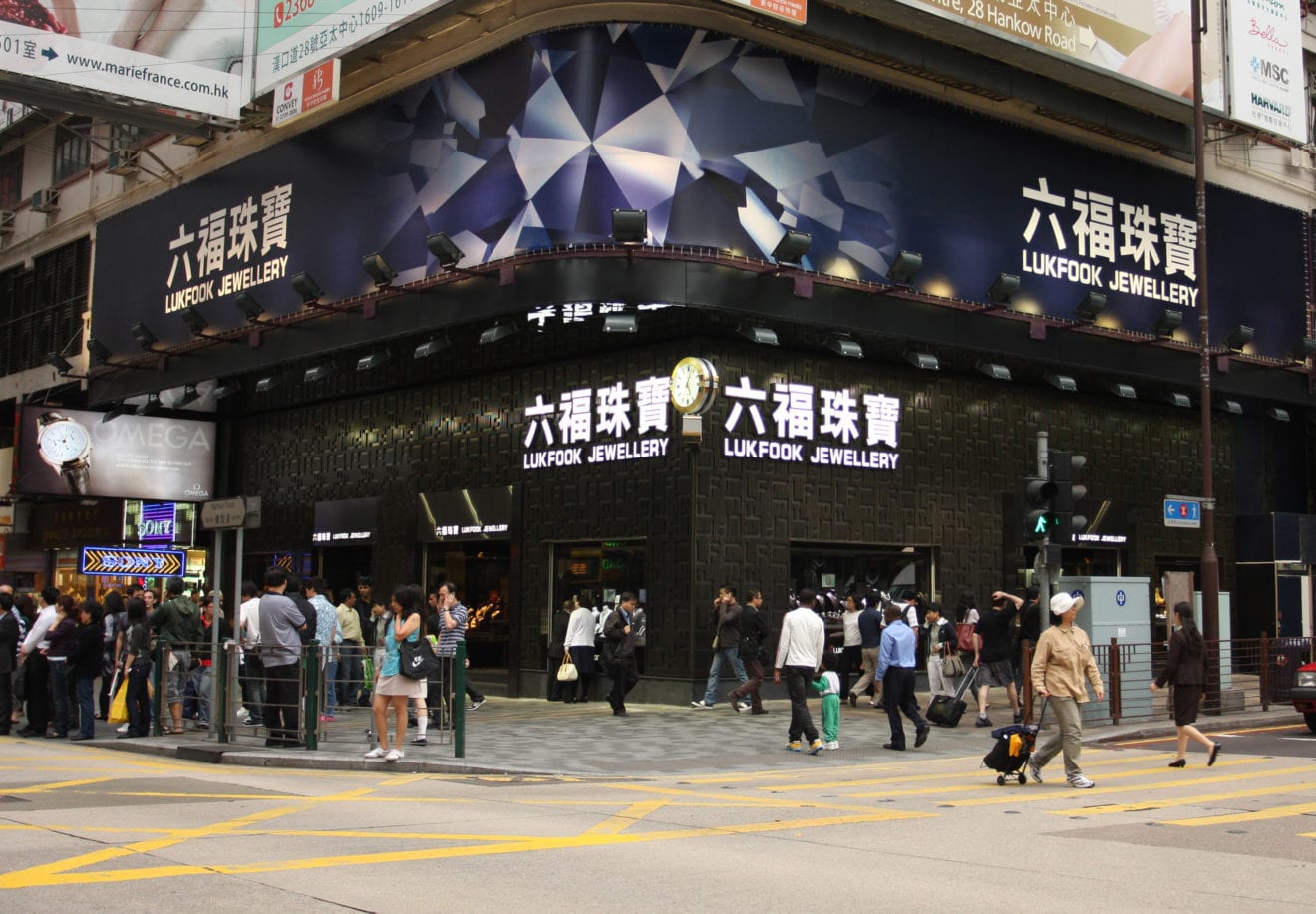
  • Luk Fook profits slump 42% on weak Hong Kong, Macau sales

    Luk Fook profits slump 42% on weak Hong Kong, Macau sales

    Jeweller Luk Fook Holdings is looking to Mainland China to restore growth after a heavy drop in profits due to the Hong Kong and Macau market slump.

    Lukfook Group says its sales declined 7.7 per cent to HK$6.965 billion in the half year to September 30 and profit attributable to shareholders slumped 42.4 per cent to $463 million.

    Same store sales across the business fell 11.6 per cent, largely due to falling sales of gem‐set jewellery products in Hong Kong and Macau. Sales fell 16.2 per cent in Macau alone.

    However in Mainland China, gem-set jewellery sales rose 17.5 per cent, marking the 10th consecutive quarter of positive growth in that market.

    Wong Wai Sheung, chairman and CEO of Lukfook Group said the slowing economic growth in Mainland China, relaxed visa requirements and currency devaluation in Europe, Japan and Korea as well as a strong Hong Kong dollar against other currencies had caused Mainland tourists to switch to overseas for consumption.

    “These adversely affected the retail industry in Hong Kong and Macau and hindered the recovery of the retail business of the group.”

    Hong Kong rents also took their toll on Luk Fook profits.

    “The decrease in revenue, together with the increase in total rental expenses mainly contributed by the high rental of the loss‐making new shops in certain Hong Kong prime locations, resulted in the increase in the total operating expenses to revenue ratio to 14.6 per cent (2014:13.0%),” the company said in its filing.

    The company opened a net total of 29 Lukfook shops (including 23 licensed shops and six self‐operated shops), and four 3D‐Gold self‐operated shops established by the new joint venture (the group has 51 per cent equity) with a licensee in Mainland China. The number of shops in Hong Kong and Macau and overseas remained unchanged. As at September 30, the group had 1412 Lukfook shops globally in Mainland China, Hong Kong, Macau, Singapore, Korea, the US, Canada and Australia; and four 3D‐Gold shops operated in Mainland China.

    Mainland Chinese visitors remained the primary customer group for the Hong Kong retail business, which contributes 60 per cent of the group’s turnover.

    Wong Wai Sheung said with continuing uncertainty in the global economy, the overall operating environment will remain challenging in the short term.

    “However, in the long run, as the per capita income in Mainland China increases, the group believes that there will still be strong customer demand for jewellery products, therefore the group remains positive about the mid‐ to long‐term business prospects. The group will continue to optimise the retail network, maintain the expansion strategy of focusing on the development in the Mainland China market, and further strengthen the cooperation with eCommerce platforms to expand our distribution channels, and also offer more fashionable and affordable jewellery products which are suitable for wearing in workplace, in order to attract middle‐class consumers.”