Retail News CRM

Tag: profit

  • BMW warns profits under pressure as car margins slip

    BMW warns profits under pressure as car margins slip

    BMW’s profit margins on cars fell in the third-quarter, hit by spending on more engineering staff and new electric car technologies against a backdrop of stiffer price competition in the U.S. luxury car market.

    BMW and its rivals are struggling to maintain profit levels amid heavy investment in new technology including electric and self-driving cars, cleaner diesel engines as well as new ride-hailing business models to rival Uber.

    The Munich-based carmaker reiterated its full-year target of a slight increase in group pretax profit but warned that margins would remain under pressure due to continued investment.

    “Costs generally rise towards the end of the year so we expect this to have a dampening effect on earnings,” Chief Financial Officer Friedrich Eichiner told analysts on a call on Friday to discuss BMW’s results.

    “Capital expenditure will also be higher in the last three months of the year, mainly due to the start of production and ramp-up of the new BMW 5 Series,” Eichiner said, adding that research and development spending would remain high into 2017.

    While sales of BMW, Mini and Rolls-Royce cars rose 7.1 percent in the quarter ending in September, the return on sales at BMW’s core automotive division fell to 8.5 percent from 9.1 percent a year earlier.

    By contrast, archrival Mercedes-Benz Cars’ (DAIGn.DE) third-quarter operating margin was 11.4 percent while Audi’s was 6.9 percent for the first nine months of the year.

    BMW’s shares took a hit in early trading, but had recovered by late afternoon to trade unchanged at 1530 GMT, outperforming German blue-chips .GDAXI which were 0.8 percent lower overall.

    BMW said the dip in automotive profits was mainly attributable to higher personnel expenses as staff numbers rose 3.6 percent, along with changes in the mix of vehicle models sold.

    Customers are migrating to less profitable smaller sport utility vehicles (SUVs) while BMW’s popular 5-series is at the end of its lifecycle and competing with a brand new Mercedes-Benz E-class.

    BMW said sales in the United States, a market where sales of highly profitable large sport utility vehicles has been strong, had fallen 3.6 percent in the quarter.

    “Pricing remains a challenge in North America in particular,” Eichiner told analysts.

    The more competitive sales environment has already forced German premium auto maker Audi to cut its sales forecast for the year and to warn that its operating margin would remain below its 8 to 10 percent target range this year.

    BMW said it plans to keep the return on sales at its automotive division between 8 and 10 percent, a goal it has achieved for the last 26 quarters in a row.

    At a group level, BMW said third-quarter earnings before interest and taxes (EBIT) were 2.38 billion euros ($2.6 billion), in line with a 2.37 billion consensus forecast in a Reuters poll and little changed from 2.35 billion last year.

    The group benefited from a profit boost from its financial services business and a gain from derivatives hedging.

    “Operational performance on a group level came in as expected but for automotive below expectations,” DZ Bank analyst Michael Punzet said in a note on Friday.
  • Garuda Indonesia books USD19.6 mil net income in Q3 2016

    Garuda Indonesia books USD19.6 mil net income in Q3 2016

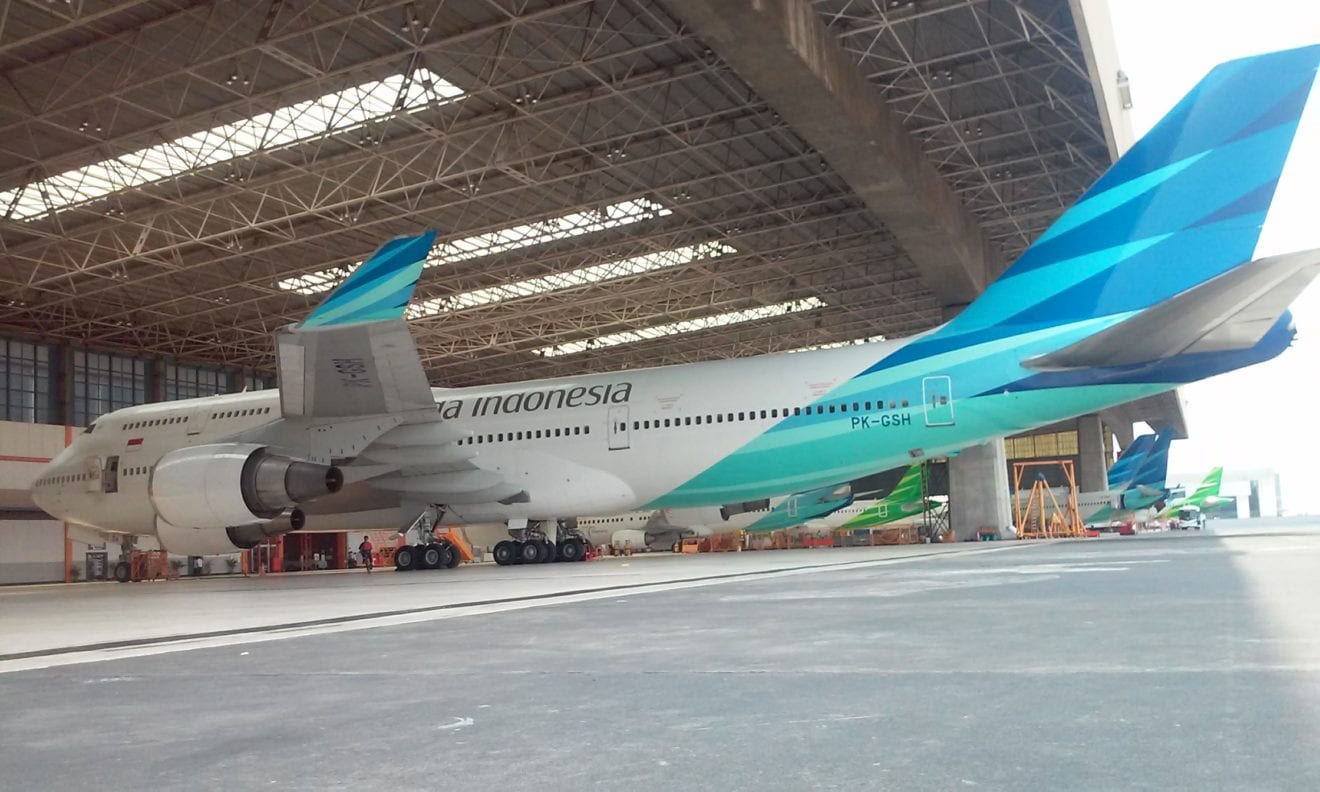
    Garuda Indonesia, booked net income of USD 19.6 million or IDR 254.8 billion (exchange rate IDR 13,000 per USD) during the third quarter (July – September period) of 2016 as an outcome of the initial implementation of the ‘Sky Beyond’ strategy, with a focus on Return Maximization as well as the continuous proportional implementation of the financial efficiency policy.
    “This positive result was achieved through non-stop hard work in implementing the ‘Sky Beyond’ business expansion strategy, which played an essential role in promoting the company’s performance the quarter.

    Despite the highly competitive season in the aviation industry, including the global economic deceleration which affected the national economic situation, we are quite optimistic of maintaining the positive growth of the company up to the end of this year,” stated M. Arif Wibowo, President & CEO of Garuda Indonesia, on Monday (31/10) at the media conference after the regular analyst meeting, in Garuda Indonesia’s headquarters in Jakarta.

    Arif explained that since the beginning of year 2015, Garuda Indonesia had been constantly implementing the proportional financial efficiency program. The predicted loss in the first semester of 2016 was projected to turn around in the next quarter by improving the whole performance during the peak season. The continuous financial efficiency program and the performance improvement in other aspects such as operational, services and commercial, are believed to have strengthened the company to achieve positive growth until 2020.

    Arif, accompanied by the entire Board of Directors of Garuda Indonesia and the president directors of the subsidiaries, also explained that the company had succeeded in increasing total revenue from USD 2.845 billion in 2015 (January – September) to USD 2.865 billion during the same period of 2016. Up to the third quarter of 2016, Garuda Indonesia Group (including Citilink) carried 26,043,138 passengers, which was an increase of 6.1 percent from the 24,551,594 passengers carried in the same period in 2015.

    From the total amount, Garuda Indonesia carried 17.81 million passengers (comprising 14.55 million domestic passengers and 3.26 million international passengers). Meanwhile, its subsidiary, Citilink Indonesia, transported 8.23 million passengers between January – September 2016, which was an increase of nearly 20 percent from the 6.86 million passengers carried over the same period in 2015.

    Garuda Indonesia and Citilink’s flight frequency in the domestic and international sectors during the January – September period rose to 204,182 flights, with an increase of 9.7 percent from the same period in 2015 with 186,052 flights. In addition, Availability Seat Kilometer/ASK increased by 13.3 percent to 43.91 billion from 38.75 billion ASK in the same period of 2015.

    Despite the challenging situation in operational aspects such as the domestic flights operations at the new Terminal 3 Soekarno-Hatta in early August, and the force majeur by unpredictable weather, Garuda Indonesia also suceeded in increasing its on time performance / OTP to 90.1 percent in the January – September period, from 88.2 percent in same period last year. The seat load factor / SLF of the period was 73.4 percent, with an aircraft utilization amount of 09:12 hours.

    In line with the continuous network expansion plan, in the third quarter of 2016, Garuda Indonesia started to serve new destinations in east Indonesia, namely Nabire, which was served directly from Biak, Papua, and Maumere, which served directly from Denpasar, Bali. The opening of these new routes was a strategic step to improve the connectivity between cities in Indonesia, as well as to strengthen its network in the domestic market.

    Concerning the highly competitive situation in the aviation industry – mainly in the Asia Pacific region – which influenced both domestic and international networks, Garuda Indonesia’s market share for domestic reached 41.2 percent, and 26.7 percent for international market share.

    “We still have time to maximize the power and potency of our strategy, particularly in facing this coming end of year peak season period. We believe that we can reach the continuous positive growth in the coming years, including our strategic plan for international network expansion in the near future,” Arif added.
  • Garuda Indonesia Posts Strong Net Income Growth in Q3

    Garuda Indonesia Posts Strong Net Income Growth in Q3

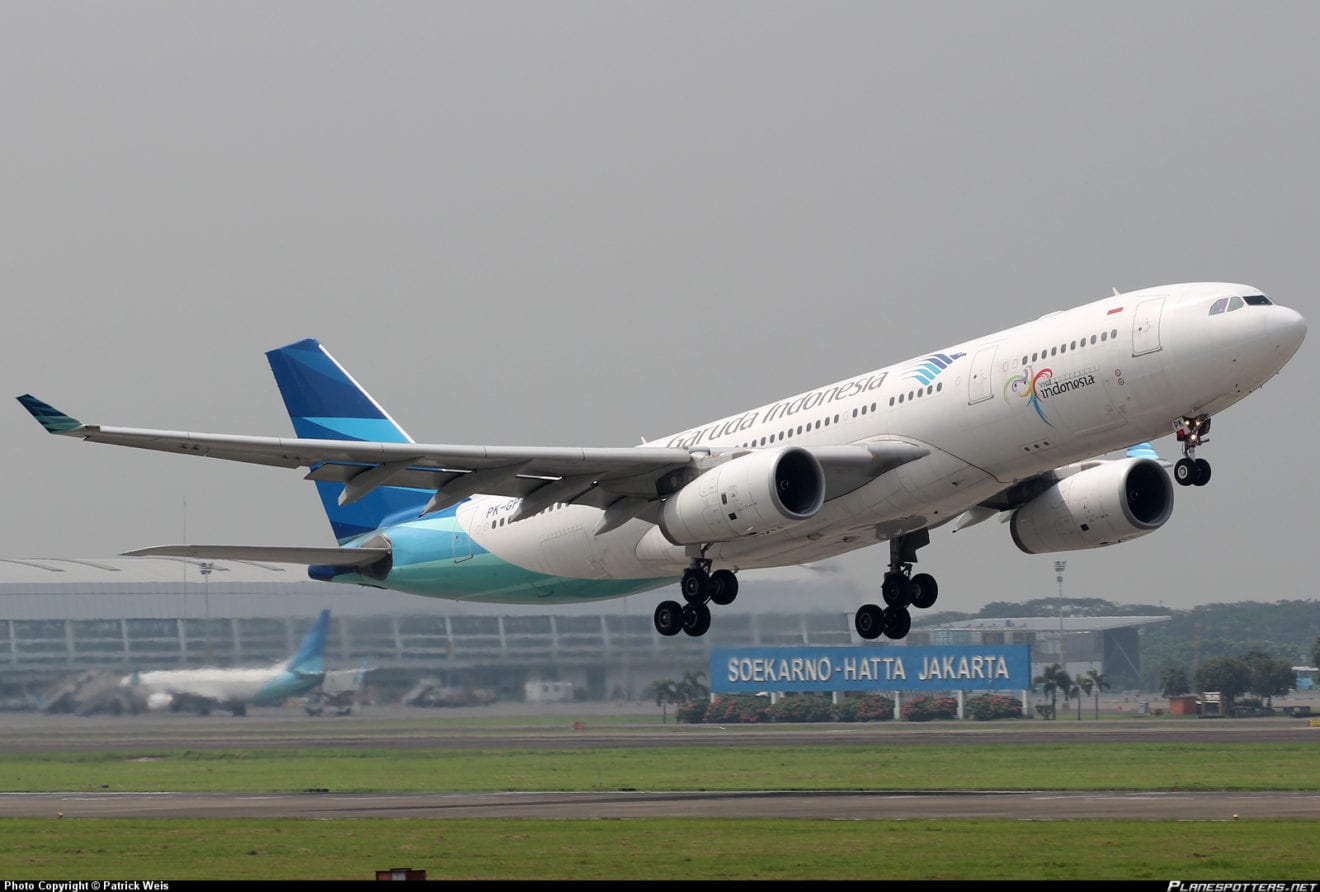
    Indonesia’s flag carrier, Garuda Indonesia, posted net income of US$19.6 million during the third quarter of this year as an outcome of the initial implementation of the ‘Sky Beyond’ strategy, with a focus on Return Maximization as well as the continuous proportional implementation of the financial efficiency policy.

    “This positive result was achieved through non-stop hard work in implementing the ‘Sky Beyond’ business expansion strategy, which played an essential role in promoting the company’s performance the quarter,” said M. Arif Wibowo, President & CEO of Garuda Indonesia, at the media conference after the regular analyst meeting, in Garuda Indonesia’s headquarters in Jakarta.

    He added that despite the highly competitive season in the aviation industry, including the global economic deceleration which affected the national economic situation, Garuda is quite optimistic of maintaining the positive growth of the company up to the end of this year.

    Arif explained that since the beginning of year 2015, Garuda Indonesia had been constantly implementing the proportional financial efficiency program. The predicted loss in the first semester of 2016 was projected to turn around in the next quarter by improving the whole performance during the peak season.

    The continuous financial efficiency program and the performance improvement in other aspects such as operational, services and commercial, are believed to have strengthened the company to achieve positive growth until 2020.

    Arif, accompanied by the entire Board of Directors of Garuda Indonesia and the president directors of the subsidiaries, also explained that the company had succeeded in increasing total revenue from US$2.845 billion in Q3 2015 to US$2.865 billion during the same period of 2016.

    Up to the third quarter of 2016, Garuda Indonesia Group (including Citilink) carried 26,043,138 passengers, which was an increase of 6.1 percent from the 24,551,594 passengers carried in the same period in 2015.
    From the total amount, Garuda Indonesia carried 17.81 million passengers (comprising 14.55 million domestic passengers and 3.26 million international passengers). Meanwhile, its subsidiary, Citilink Indonesia, transported 8.23 million passengers between January – September 2016, which was an increase of nearly 20 percent from the 6.86 million passengers carried over the same period in 2015.

    As a result of the cargo-focused strategy that commenced in early 2016 to strengthen the company’s cargo business in addition to passenger business, mainly by a new Director of Cargo who had only been serving for less than six months (a new tenure on the Board of Directors since April 2016), the amount of cargo transported in January – September period was 295,217 tons, or an increase of 14.7 percent from the same period in 2015 of 257,304 tons.

    Garuda Indonesia and Citilink’s flight frequency in the domestic and international sectors during the January – September period rose to 204,182 flights, with an increase of 9.7 percent from the same period in 2015 with 186,052 flights. In addition, Availability Seat Kilometer/ASK increased by 13.3 percent to 43.91 billion from 38.75 billion ASK in the same period of 2015.

    Despite the challenging situation in operational aspects such as the domestic flights operations at the new Terminal 3 Soekarno-Hatta in early August, and the force majeur by unpredictable weather, Garuda Indonesia also suceeded in increasing its on time performance / OTP to 90.1 percent in the January – September period, from 88.2 percent in same period last year. The seat load factor / SLF of the period was 73.4 percent, with an aircraft utilization amount of 09:12 hours.

    In line with the continuous network expansion plan, in the third quarter of 2016, Garuda Indonesia started to serve new destinations in east Indonesia, namely Nabire, which was served directly from Biak, Papua, and Maumere, which served directly from Denpasar, Bali. The opening of these new routes was a strategic step to improve the connectivity between cities in Indonesia, as well as to strengthen its network in the domestic market.

    Concerning the highly competitive situation in the aviation industry – mainly in the Asia Pacific region – which influenced both domestic and international networks, Garuda Indonesia’s market share for domestic reached 41.2 percent, and 26.7 percent for international market share.

    “We still have time to maximize the power and potency of our strategy, particularly in facing this coming end of year peak season period. We believe that we can reach the continuous positive growth in the coming years, including our strategic plan for international network expansion in the near future,” Arif added.

    Garuda Indonesia Group operates a total of 194 aircraft, consisting of ten (10) Boeing 777-300ER, twenty-five (25) Airbus A330-200/300, two (2) Boeing 747-400, seventy-six (76) Boeing 737-800NG, eighteen (18) Bombardier CRJ1000 NextGen, and fifteen (15) ATR72-600, with a 146 aircraft operated by Garuda Indonesia, and forty (40) Airbus A320 and eight (8) Boeing 737-300/500, or 48 aircraft operated by Citilink, with an average aircraft age of 4.6 years.

  • DoCoMo 1H profit grows 27.8%

    DoCoMo 1H profit grows 27.8%

    Japan’s NTT DoCoMo grew its net profit for the six months ending in September by 27.8% to 405.41 billion yen ($3.87 billion), on the back of a 3.3% increase in revenue to 2.29 trillion yen.

    DoCoMo attributed the revenue growth in part to recovery of telecoms services revenue as a result of the growth in mobile data consumption of segments of its postpaid subscribe base.

    Expanding demand for smartphones and tablets and the growth in the number of DoCoMo Hikari fiber customers, as well as the operator’s smart life and other non-core businesses, also contributed to the gains.

    Total telecoms revenue grew 2.7% to 1.86 trillion yen. DoCoMo’s mobile subscriber base grew 6.5% to 72.9 million, with LTE customers up 19.6% to 41.28 million, while total docomo Hilari subscriptions grew to 2.53 million.

    ARPU increased 6.8% to 4.380 yen, driven by a 7.5% growth in data ARPU to 3,140 yen. But voice ARPU also grew by 5.1% to 1,240 yen, and MOU was up 3.8% to 136.

    Capex meanwhile reached 246.1 billion yen, up 12% from a year earlier, as DoCoMo invested in expanding the reach of its “premium 4G” service.

    Looking ahead to the full financial year, DoCoMo said the competitive environment has changed significantly, with competition intensifying due to the government’s pro-competition policy, the market entry by MVNOs and other factors. Technological developments have also brought about active competition and collaboration with players from other industries.

    But the company has raised its projected net income for the full year to 655 billion yen. This would compare to a net income of 548.4 million in the prior financial year. Revenue is meanwhile expected to grow to 4.61 trillion yen, from 4.57 trillion yen a year earlier.

  • VW brand profit plunges, Porsche lifts group

    VW brand profit plunges, Porsche lifts group

    Volkswagen said third-quarter operating profit at its core brand plunged more than half, adding weight to management calls for cutbacks at VW’s biggest division.

    Operating profit at the VW namesake brand dropped to 363 million euros ($396 million) from 801 million a year earlier, VW said on Thursday, or just 1.5 percent of sales.

    The figure was well below a consensus forecast of 462 million euros in a Reuters poll of analysts.

    Europe’s largest automaker needs to make savings at high-cost operations in Germany to help fund a shift to electric cars and self-driving vehicles while facing billions of euros in costs from its diesel emissions test-cheating scandal.

    “The results reinforce the need for cost cuts at the VW brand,” said Commerzbank analyst Sascha Gommel, who has a “hold” recommendation on the stock.

    In the seasonally slow July-to-September period, business at the VW brand was marred by suppliers halting parts deliveries to protest against the cancellation of a contract by VW, curbing output of the top-selling Golf and Passat models at the Wolfsburg and Emden plants by about 20,000 units.

    Analysts estimated the supplier dispute shaved a three-digit million-euro amount off the brand’s quarterly profit and said the carmaker also offered incentives to offset the impact of its emissions scandal on sales.

    Year-to-date sales of the VW brand swung back to growth on a 6.7 percent gain in September and posted the strongest growth in two-and-a-half years last month at group level, helped by strong demand in China and Europe.

    The VW group raised its guidance for profit and revenue this year after posting higher-than-expected quarterly earnings of 3.3 billion euros, adjusted for special items, reflecting strong gains at premium brand Porsche.

    The group said it expected revenue to match last year’s 213 billion euros after predicting in July that revenue would fall by as much as 5 percent this year.

    The group’s operating margin may come in at the upper end of VW’s 5-6 percent target range before special items, the carmaker said. It previously forecast the profitability benchmark to fall within that corridor.

    The shares were trading up 0.1 percent at 126 euros as of 0804 GMT.

    “Despite major challenges and the negative impact of the diesel issue, the Volkswagen Group remains on a solid financial footing,” finance chief Frank Witter said.

  • Airtel Q2 profit falls 4.9%

    Airtel Q2 profit falls 4.9%

    Bharti Airtel has reported a 4.9% decline in net profit for its fiscal second quarter, as the operator cut tariffs to prepare for competition from disruptive newcomer Reliance Jio Infocomm.

    India’s largest operator by subscribers reported a profit for the quarter ending September 30 of 14.61 billion rupees ($218.5 million).

    Revenue grew 5.6% year-on-year to 246.52 billion rupees, with India revenues up 10.1% to 192.19 billion rupees.

    But while total ARPU rose to 201 rupees from 193 rupees the year before, aggressive price cutting led to a decline in voice ARPU to 140 rupees from 132 rupees.

    Mobile data revenues grew 21% year-on-year to 45.36 billion rupees, thanks largely to a 62.2% year-on-year growth in Indian mobile data customers to 41.3 million. Mobile data revenues accounted for 24.7% of Indian mobile revenues for the quarter, up from 21.5% a year earlier.

    Africa revenues meanwhile grew 4.7% on an underlying bases. Airtel has divested its operations in Burkina Faso and Sierra Leone over the past two quarters, reducing its African footprint to 15 countries.

    “Our strong focus on enhancing customer experience and building a robust network has resulted in continued acceleration of revenue market share. Overall revenue momentum in India has been sustained during Q2 with a growth of 10.1% year-on-year,” Airtel CEO of India and South Asia Gopal Vittal said.

    “This is primarily due to the strong performance of our non-mobile businesses, which grew in aggregate at 18.8% year-on-year, albeit our mobile business has experienced a slowdown in growth due to free services being offered by a new operator.”

  • SK Telecom Q3 profit falls 15.6%

    SK Telecom Q3 profit falls 15.6%

    SK Telecom has reported a 15.6% year-on-year decline in net profit for the third quarter to 322.1 billion won ($281 million), due to factors including the impact of Samsung’s Galaxy Note 7 recall.

    Operating revenue fell 0.4% to 4.24 trillion won due to a decrease in revenues at retail unit PS&M following the recall. ARPU also declined 2.1% year-on-year and 0.8% sequentially to 35,471 won.

    But revenue from SK Telecom and subsidiaries SK Broadband and SK Planet all increased quarter-on-quarter, and net income grew 10.7% over the same period due to equity-method income from semiconductor division SK Hynix.

    The operator added around 301,000 new subscribers during the quarter, taking its total to nearly 29.5 million. Of these, over 20.5 million are LTE subscribers, a penetration rate of 69.8% Monthly churn decreased by 0.1 percentage point to 1.4%.

    SK Telecom revealed that its mobile navigation T Map grew to reach 9.18 million monthly users by the end of September, around three months after its launch

    Looking ahead, the operator said it is focused on strengthening its core competitiveness as a mobile network operator, while using its nationwide LoRa and LTE-M IoT networks to deploy services that enhance customer convenience.

    “We expect that our strategy to fully open up major platforms including T Map and T Phone will lead to a successful outcome in the mid-to long-term,” SK Telecom CFO and head of strategy and planning Hwang Keun-joo said.

    “SK Telecom will accelerate its transformation into a next-generation platform company and keep developing customer-oriented products and services.”

  • M1 nine-month profit falls 12.6%

    M1 nine-month profit falls 12.6%

    Singapore’s M1 has reported a 12.6% decline in net profit for the first nine months of the year, due to slowing service revenue and depreciation and amortization costs associated with the operator’s 4G network.

    Net profit fell to S$117.9 million ($84.7 million), while service revenue decreased 1.4% to S$604.5 million as a result of the ongoing impact of OTT substitution on traditional telecoms services revenue.

    Mobile data revenue grew by 6.2 percentage points year on year to account for 54.2% of service revenue, with average postpaid smartphone data usage growing to 3.4GB per month in the third quarter from 3.3GB a month a year earlier.

    Fixed service revenue for the nine-month period meanwhile increased 26.1% year-on-year to S$77.1 million, or 12.8% of service revenue. M1’s fiber customer base increased by 7,000 to 152,000.

    Looking ahead, M1 said barring unforeseen circumstances, the operator expects a similar percentage decline in net profit for the full year as reported for the first nine months.

    Announcing its results, M1 said its planned of Singapore’s first nationwide commercial NB-IoT network, announced n August, will help open up a new growth market for the operator.

    “The needs and behavior of our consumers and corporates are changing rapidly. We will continue to make network investments to provide our customers with a superior and all-encompassing experience while also tapping into new growth areas in data analytics, IoT and other solutions,” M1 CEO Karen Kooi said.

  • BNI posts net profit of Rp7.72 trillion in Q3

    BNI posts net profit of Rp7.72 trillion in Q3

    State lender Bank Negara Indonesia (BNI) posted a net profit of Rp7.72 trillion in the third quarter of 2016, up 28.7 percent from the same period last year.

    The double-digit profit growth was fueled by net interest income after credits grew by 21.1 percent or Rp372.02 trillion year on year, BNI President Director Ahmad Baiquni said here on Thursday.

    The net interest income grew 15 percent to Rp21.87 trillion in the July-September 2016 quarter, up from Rp19.02 trillion in the same quarter a year earlier, he noted.

    Fee-based income, meanwhile, rose 20 percent from the same quarter last year, he added.

    He informed that the BNI recorded a 6.2 percent net interest margin from the amount of credits channeled in the third quarter of 2016 .

    The bank also saw its non-interest income rising 20 percent to Rp6.24 trillion in the third quarter of 2016, fueled by a rise in commission on trade financing, account management and insurance marketing cooperation.

    The amount of credits extended in the third quarter of 2016 grew 21 percent as the bank focused on financing infrastructure projects run by state-owned companies, he pointed out.

  • Cost-cutting isn’t cutting it anymore for Singapore’s struggling retailers

    Cost-cutting isn’t cutting it anymore for Singapore’s struggling retailers

    Profits plummeted by 30% over the last 5 years.

    Retail firms have been thinking out of the box in terms of cost-cutting to constrain cost growth, but they can only do so much on back of the struggling retail industry.

    According to a report by BNP Paribas, retail trade firms have seen persistent erosion of profit margins.

    “Aggregate revenue growth for the roughly 22,000 retailers has been hard to come by (5-year nominal CAGR of 1.2%). This likely reflects slower domestic growth and the impact of macro-prudential tightening,” the report noted.

    Additionally, retailers have also grappled with labour market policies spurring strong wage gains (5Y CAGR of 7%) and, more recently, rising debt service.

    “As a result, we estimate industry-wide pre-tax profits fell by 30% over the last 5 years,” the report added.

    Meanwhile, similar sinking trends in profit margins are also manifest in the services sector, as labour market data indicates firms are now attempting to pass the problem on to households by shedding jobs.

    “In turn, these developments allude to slower wage income growth and a potential vicious cycle as highly-indebted households struggle with their own debt service,” the report noted.

  • Esprit posts profit in major recovery

    Esprit posts profit in major recovery

    Esprit Holdings (0330) posted a net profit of HK$21 million for the financial year ended June, marking a sharp turnaround from a HK$3.7 billion loss in the previous financial year.

    Chairman Raymond Or Ching-fai said the company’s return to the black was driven by the strong performance of its online and offline retail channels, reduction in the cost of operations and an exceptional gain from the sale of office premises in Hong Kong.

    “We have achieved what we wanted to do, we have stopped the ‘bleeding.’ For the first time, we were able to stop the continuous decline,” said chief executive Jose Manuel Martinez Gutierrez.

    It returned to profitability even if revenue fell 8.41 percent year-on-year to HK$17.79 billion. Sales from Germany, its biggest overseas market, slid 5.9 percent to HK$8.56 billion. Revenue from the rest of Europe, representing 37 percent of the group’s total sales, amounted to HK$6.58 billion, down 7.4 percent.

    In the Asia Pacific, including Hong Kong, revenue dropped 17.6 percent to HK$2.65 billion. Or said the overall market conditions remain challenging. He said the clothing industry was going through significant changes fueled by the development of online [marketing] channels and aggressive price competition.

    Europe’s macroeconomic prospects look uncertain, while the Asian market has turned weaker than before, Or added. In the financial year ended June, Esprit closed down 185 retail stores globally, reducing its net sales area by 10.90 percent. Gutierrez said Esprit will step up the closure of loss-making retail outlets.Over the next two years, it also plans to cut operating expenses by HK$1 billion. He said he expects the strong growth momentum of its online business in Europe and in Asia Pacific to continue. Revenue from its online e-shop grew 6.9 percent to HK$4.15 billion.

    Online sales made up 23.3 percent of total revenue, up from 20 percent in the previous fiscal year. Earnings per share was HK$0.01 and no dividend was declared.

    Chief financial officer Thomas Tang Wing-yung said no dividend was declared as profit was not significant, but Esprit will consider giving out dividends if it makes better profit in the next financial year.

  • VW’s Audi posts 2.3 percent rise in July sales

    VW’s Audi posts 2.3 percent rise in July sales

    Audi sold 2.3 percent more cars in July on growing demand for the redesigned top-selling A4 saloon, though kept trailing behind German luxury rivals BMW (BMWG.DE) and Mercedes-Benz (DAIGn.DE).

    Audi’s global sales increased to 149,400 cars and sport-utility vehicles from 146,073 a year earlier, the Ingolstadt-based carmaker said on Thursday, with its year-to-date deliveries up 5.2 percent to 1.10 million cars.

    Daimler’s Mercedes-Benz last week posted a 9.4 percent increase in sales to 163,770 cars, its best-ever July result, compared with a 4 percent gain at BMW’s core brand to 153,392.

    After seven months, Mercedes-Benz is on course to become the world’s biggest luxury carmaker by sales, replacing BMW which has kept the lead since 2005.

  • AsiaSat reports flat profit and revenue for 1H16

    AsiaSat reports flat profit and revenue for 1H16

    Hong Kong based AsiaSat has reported largely flat profit and revenue for the first six months of 2016 amid challenging market conditions.

    The satellite operator reported revenue for the half-year period of HK$640 million ($82.5 million) and profit attributable to owners of HK$249 million. Contracts on hand also remained stable at HK$3.54 billion.

    During the period the company acquired a growing number of customers, including new customers of its new AsiaSat 6 and AsiaSat 8 satellites in mainland China, Bangladesh and Thailand.

    Construction of the operator’s newest satellite – AsiaSat 9, which is due to replace AsiaSat 4 – is meanwhile on schedule for completion early next year.

    AsiaSat’s chairman Ju Wei Min commented that the company expects business to remain flat for the remainder of the year.

    “We do not anticipate any significant changes in market conditions and believe that they will continue to pose a challenge not only for AsiaSat but the industry as a whole,” he said.

    He noted that AsiaSat expects not to have to deal with the increased competition from terrestrial providers that is affecting satellite operators in other parts of the world due to the lack of quality terrestrial networks in many parts of APAC.

    But he added that “the new contracts signed in the first half will only partially compensate for the expiry of short-term revenue from a to-be retired satellite and the termination of a number of contracts which will occur in the second half due to changes in regulations.”

  • Alibaba revenue grows 59% in June quarter

    Alibaba revenue grows 59% in June quarter

    The Alibaba Group reported a 59% revenue growth (reaching $4.84 billion) for the quarter ended June 30.

    Revenue from its China retail marketplaces ($3.51 million), including Taobao and TMall, also rose 49% from a year earlier.

    It is, however, in the area of mobile that the e-commerce giant had made huge strides.

    Alibaba Group’s Chief Financial Officer Maggie Wu reported that mobile monetization – the commission the group charges for each transaction –  reached 2.80% this quarter, surpassing the non-mobile monetization rate for the first time since the company commenced mobile monetization in the fourth quarter of 2013.

    Mobile monthly active users (MAUs) on the China retail marketplaces also grew to 427 million in the month ended June 30, compared to 410 million in the month ended March 31. This represents a net addition of 17 million MAUs in the quarter and a 39% increase from 307 million a year earlier.

    The company attributes its strong growth in mobile users to the increased adoption of mobile devices by consumers as the primary method of accessing its platforms. Daily and monthly active users ratio of the Taobao App, for example, was 40% in June 2016.

    Joe Tsai, co-founder and vice chairman of Alibaba Group, said during the earnings conference call, that the company overall growth was unprecedented since Alibaba became a public company.

    He noted the tremendous value proposition of the e-commerce platform with 434 million highly engaged customers in China that even its China retail marketplaces have done well against the backdrop of economic headwinds and reduced expectations from the industry.

    He said features that focus on community, sharing,  originality, immediacy, and data-driven customization are capturing the imagination of today’s generation of young consumers. Around 75% of users on the Taobao app, for example, are below 35 years of age.

    “Taobao has fully evolved from a transactional platform to a social commerce platform driven by China millennials,” said Daniel Zhang, Chief Executive Officer of Alibaba Group. “Mobile Taobao enjoyed daily active users (DAU) versus MAU ratio of 40% in June, which points to a high degree of stickiness among our mobile user base.”

  • Singtel Q1 profit grows 2%

    Singtel Q1 profit grows 2%

    Singtel has announced a 2% increase in net profit for the quarter ended in June to S$944 million ($701.5 million), on the back of strong mobile data and cyber security services revenue growth.

    Barring one-off gains in the same quarter last year, profit would have grown 7%, or 9% in constant currency terms.

    But total operating revenue for the quarter fell 7% to S$3.9 billion, largely as a result of mandated cuts to mobile termination rates in Australia, which affected the contributions from wholly-owned subsidiary Optus.

    Group consumer revenue declined 15.6% year-on-year to S$2.19 billion while group enterprise revenue grew 5.1% to S$1.58 billion.

    In Singapore’s consumer market, strong demand for mobile data offset declines in voice, text and roaming revenue. But operating revenue still fell 8.5% to S$558 million. Mobile revenue dipped 1.4% to S$323 million, but fixed broadband revenue was up 3.4% to S$55 million.

    Singtel’s Group Digital Life revenue meanwhile increased 34% due to solid contributions from its ICT subsidiaries. Particularly strong performers included digital marketing arm Amobee and the operator’s Trustwave security-as-a-service unit, which Singtel acquired for $770 million last September.

    Post-tax earnings from the Singtel Group’s regional mobile affiliates meanwhile climbed 19% as a result strong performances from Telkomsel in Indonesia and Bharti Aitel in India.

    The group’s combined mobile customer base grew by 8.2 million during the quarter to 613 million.

    Looking ahead to the full financial year, Singtel currently expects to report a slim 0.3% increase in net profit to S$944 million, but a 7.1% decline in group revenue to S$3.9 billion.